Developing an interprofessional education programme for a health
science faculty
F Delawala
orcid.org: / 0000-0002-7985-3684
Thesis accepted for the degree Doctor of Philosophy in Health Professions Education at the North-West University
Promoter:
Co-Promoter:
Prof CD Christmals Dr Y Heymans
Graduation: November 2022
Student number: 24965480
ii
PREFACE
This PhD thesis is presented in an article format according to the North-West University 2016 guidelines. The PhD student, Ms F. Delawala, conducted the research and wrote the manuscript under the guidance and supervision of Dr Christmal Dela Christmals and the co-supervision of Dr Yolande Heymans. The student wrote and submitted four manuscripts which are under review for possible publication in four different journals. The thesis is presented in seven chapters, with an introduction and conclusion for each chapter.
Permission was obtained from Dr Christmals and Dr Heymans to submit the dissertation for examination purposes. Consequently, the thesis meets the requirements for the North-West University's Doctor of Philosophy in Health Sciences with Health Professions Education degree at the Potchefstroom campus.
iii
DECLARATION
I hereby declare that this thesis is my work and that it has not been submitted earlier to any other institution or for any other qualification. I declare that the sources have been acknowledged and referenced according to the regulations in the bibliography.
I declare that this research has been approved by the Ethics Committee of the North- West University (NWU-00430-20-A1) and that it complies with all the ethical standards issued by the institution.
___________________________________________________________________
Farhin Delawala March 2022
iv
DEDICATION
This dissertation is dedicated to my father Ghulam, who has always given me the guidance I needed to achieve it all. Your wisdom has been the source that fuelled my determination, I love you papa.
My husband Yasin, your support means the world to me, and with you this road has become worth it. Indeed, your love has been selfless, and you have shown this repeatedly that is why, my better half, the love and respect I have for you, has grown so much. Thank you for teaching me what selfless love is all about, I love you!
I want to appreciate my family for supporting me and always believing that I can. Thank you for being my pillars of strength and helping me achieve this milestone.
v
ACKNOWLEDGEMENTS
This PhD journey has not been easy, especially during the pandemic when there is so much confusion. I had to overcome many barriers in attempting to complete my PhD timeously. Through the support and guidance of various individuals, my journey became all-the-more worthwhile.
• I wish to thank my Promoters, Dr Christmal Dela Christmals, and Co-Promoter, Dr Yolande Heymans, for their support and guidance throughout my PhD journey. I appreciate all that you have done to ensure my success.
• I thank my initial Promoter, Prof Gerda Reitsma, for assisting with my research during its preliminary stages.
• Thank you to David Salifu, my colleague from Ghana, for guiding me through different processes. I appreciate that you took time out of meetings to encourage me to push through. This was a journey and support from a colleague, who knew the exact challenges of a PhD, meant a great deal. Thank you so much!
• A special thanks to Paula Jardim, our administrator, for assisting me in many ways. Paula, you have done an outstanding job managing so much, not just for our CHPE but also for my studies.
• I'd want to thank Gerda Beukman, our faculty librarian, for assisting me with my databases and searches, as well as tracking down and delivering papers that I couldn't find.
• Thank you to all the IPE experts whom I interviewed. Your inputs were of the utmost value and contributed to the essence of what this study is all about.
• Thank you to all the Faculty of Health Sciences staff that contributed to the nominal group session. Your ideas and suggestions enriched the finalisation of the IPE programme for the NWU.
vi
SUMMARY
Despite the benefits of IPE, many healthcare professionals in institutions and countries continue to train them in traditional silos while expecting them to practice collaboratively across the health system. Several challenges with developing and implementing IPE programmes could be cited as contributing factors to the continuous training of health professionals in silos. The already demanding health professions curricula, curricula differences, time and scheduling problems; poor coordination and support; resource constraints; attitudes and stereotypes; student characteristics, and lack of teaching personnel are some barriers to developing and implementing IPE programmes. Also, educational (instructors' absence of skill, fixed and single curriculum use, and flaws in the present education), structural (monopolism, hierarchy of control, reduced learning basis, and lack of organisational support), and cultural (attitudes of executives, lecturers and students concerning IPE) add up to the challenges to the development and implementation of IPE.
Despite the universality of the challenges to IPE programme development and implementation, institutions in the developing world experience them to a greater extent than developed countries. Especially the lack of context-specific benchmarks and frameworks to guide its development. Not to be left behind, institutions on the continent are attempting to design and implement IPE programmes. This study sought to develop an IPE programme for a health science faculty in South Africa to support IPE efforts on the African continent.
This study employed a sequential multi-method research design carried out in five phases. In phase one, a scoping review was conducted to synthesise literature on the nature, development and implementation processes of IPE programmes globally.
Phase two involved a qualitative document analysis in analysing the characteristics of IPE programmes globally. In the third phase, a qualitative descriptive exploratory design was used to gather the perspectives of international experts on the development and implementation of IPE programmes, including challenges faced. In the fourth phase of the study, the findings of phases 1-3 were synthesised in addition to the results of a context analysis to design a draft IPE programme for the faculty of health sciences. The final phase included an exploratory qualitative method using nominal group technique to review the draft IPE programme.
vii
Due to the context of NWU, a three-year optional IPE programme was developed. The programme was designed in three-year levels, and each level in the content included common concepts, the modules that reflected those concepts, the outcomes and assessment criteria of each level, the proposed IPE activities and the resources needed to carry out those activities. The draft programme proposed how to implement the programme, i.e., who implements the programme, the policy and legislation to follow, promotion and administration of the programme, proposed hours required, suggested resources for the activities and reviewing of the programme. Aside from the programme developed, other useful outputs include a synthesised IPE programme development and implementation process and points to consider when planning IPE programmes.
It is recommended that institutions learn from the processes involved in this study to develop their programmes or adapt them for their context to increase the presence of IPE on the African continent. The advocacy of regional networks such as AfrIPEN on the continent needs to be intensified to stimulate the development and implementing of more IPE programmes. This will ensure a growing community of practice and sharing of expertise across the African context for the sustenance of the IPE programmes
Keywords: Interprofessional education, Interprofessional Collaborative Care; Health professions education programme, optimal healthcare, team-based care, undergraduate health professions students.
viii
GLOSSARY OF TERMS
Several terms have been used throughout this thesis. This glossary aims to provide a better understanding of the terms used when reading the thesis.
Confirmability Confirmability focuses on the researcher’s capacity to show or prove that the data was retrieved from the participants and is not the subjective opinions of the researcher (Korstjens & Moser, 2018).
Credibility Polit and Beck as cited in Cope, (2014) refer to credibility as the veracity of the information or views of the participants and the analysis and description of the participants by the investigator. Credibility is augmented by the investigator explaining the experiences and validating the research findings with those participating (Cope, 2014; Korstjens &
Moser, 2018).
Curriculum Conditions for students to obtain a qualification or part of it through different aspects such as knowledge, skills, and/ or work experience (South African Qualifications Authority, 2015).
Dependability Dependability describes the reliability of the gathered information under parallel circumstances, when one more researcher coincides with the ruling at each point or when the study can be easily replicated to achieve similar results (Cope, 2014; Korstjens & Moser, 2018).
Health
Professional
An individual trained in studying, diagnosing, treating and/or preventing illness, injury or impairment. The individual advises and applies healthcare through health promotion and reaching the healthcare needs of the individual and community (World Health Organization, 2013).
Implementability Implementability refers to the applicability of the programme developed - how feasible the programme is within the institution it was developed for (Klaic et al., 2022).
Interprofessional Education
Interprofessional Education (IPE) is a teaching and learning method in which associates or undergraduates of two or more health and/or social care professions participate in learning with, from and about each other to improve collaboration in the delivery of healthcare (Buring et al., 2009; Olenick et al., 2010; World Health Organization, 2010).
ix Interprofessional
Education Programme
A set of interventions and experiences provided to health professions’ students to learn from, with and about each other to function effectively in collaborative healthcare teams for improved healthcare outcomes (Darlow et al., 2015; Lê et al., 2008; World Health Organization, 2010).
Interprofessional Learning
Interprofessional Learning is the learning that occurs through the interaction of members or students of two or more professions through interprofessional education and collaborative practice (World Health Organization, 2010).
Nominal group technique
A method of retrieving important and new information to establish an order of shared opinions (Bitzer & Botha, 2011).
Primary Health Care
The method of addressing the optimal (mental, physical and social) health needs of a person throughout their lifetime.
This essential care service is provided through, but not limited to, vaccination, screening, diagnosis, treatment, prevention and control. Through primary health care, individuals, their families and the community are empowered to hold the reigns of their own health (World Health Organization, 2021).
Purposive sampling
Purposive sampling may be defined as a technique that identifies and selects individuals or groups that have the knowledge or experience about a certain phenomenon of interest (Creswell & Plano Clark, 2011; Palinkas et al., 2013).
Qualitative exploratory descriptive studies
Qualitative exploratory, descriptive studies are conducted to examine a phenomenon from the participants’
perspective (McCallum & Howes, 2018). It is conducted to determine the “who”, “what”, and “where” of an event (Kim et al., 2017).
Qualitative Document Analysis
Qualitative Document Analysis is defined as a systemic method for assessing or appraising documents through examining and decoding data to expand on its meaning and the development of empirical knowledge (Bowen, 2009).
Qualitative synthesis
Qualitative synthesis can be done by reviewing, interpreting, and drawing together data from various findings for rigour (Pearson et al., 2011).
Scoping Review A scoping review is conducted to summarize the breadth and depth of evidence in a field of study. Scoping reviews are either pre-systematic review or standalone review that
x
seeks to map the evidence in an emerging field of study (Christmals & Armstrong, 2019).
Social care A component or sector that is part of the health care system where the social aspects are seen as important in improving the quality of life and well-being of an individual (World Health Organization, 2011).
Thematic analysis
A thematic analysis is used to investigate the opinions, views, experiences or values from qualitative data gathered through interviews, surveys or other relevant sources (Caulfield, 2019).
Transferability Transferability is achieved when the outcomes have significance to people who are not engaged in the study, and those who read can connect the outcomes with their individual encounters (Cope, 2014; Korstjens & Moser, 2018).
Triangulation Triangulation occurs by testing the validity of the data that was combined from the various sources consulted (Carter et al., 2014).
Trustworthiness Trustworthiness in qualitative data focuses on the credibility, transferability, confirmability and dependability of the findings (Creswell & Plano Clark, 2018).
xi
ABBREVIATIONS AND ACRONYMS
Several abbreviations and terms are used throughout this thesis. The abbreviations and acronym list aims to provide guidance when reading the thesis.
ABBREVIATION MEANING
AfrIPEN Africa Interprofessional Education Network AIHC American Interprofessional Health Collaborative AIPPEN Australasian Interprofessional and Education Network
Au Australia
CAIPE Centre for Advancement of Interprofessional Education
CBL Case-Based Learning
CDC Center for Disease Control and Prevention CEPH Council on Education for Public Health CHBQ CAM Health Belief Questionnaire CHE Council for Higher Education
CHPE Centre for Health Professions Education CHSE Centre for Health Science Education
CIHC Canadian Interprofessional Health Collaborative Covid-19 Coronavirus disease
FAIMER Foundation for Advancement of International Medical Education and Research
FDP Faculty Development Programme
GWU George Washington University
HIC High Income Countries
HIV/AIDS Human Immunodeficiency Virus/Acquired Immunodeficiency Syndrome
HPCCPS Health Professional Collaborative Competency Perception Scale
HPE Health Professions Education
HPED Health Professions Education Department
ICCAS Interprofessional Collaborative Competency Survey
xii
ICF International Classification of Functioning, Diseases and Health
ICS Interprofessional Collaborative Scale
IEPS Interdisciplinary Education Perception Scale IndIPEN Indian Interprofessional Education Network IPA Interaction Process Analysis
IPAS Interprofessional Attitudes Scale
IPCP Interprofessional Education Collaborative Practice IPE Interprofessional Education
IPECP Interprofessional Education and Collaborative Practice IPEP Interprofessional Education and Collaborative Practice
(SU)
IPEP Interprofessional Education Project (GWU) IPEU Interprofessional Education Unit
IPL Interprofessional Learning
iRAT Individual Readiness Assurance Test
ISVS Interprofessional Socialisation and Valuing Scale ITOSCE Interprofessional Team Objective Structured Clinical
Examination
IU Indiana University
JIC Journal of Interprofessional Care
KII Key Informant Interviews
KCL King’s College London
KCN Kamazu College of Nursing
LMIC Low- and Middle-Income Countries MUSC Medical University of South Carolina
NEXUS National Center for Interprofessional Practice and Education
NIPNET Nordic Interprofessional Network
NGT Nominal Group Technique
NWU North-West University
NWU-HREC North-West University Health Research Ethics Committee
xiii
NWU-RDGC North-West University Research Data Gatekeeper Committee
PA Physician Assistant
PACT-novice Performance Assessment of Communication and Teamwork
PAR Participatory Action Research
PBL Problem-Based Learning
PCC Population, Concept and Context
PHC Primary Health Care
PL Practice Learning
PT Physical Therapy
QDA Qualitative Document Analysis
REIP Regional Network for Interprofessional Education in the Americas
RIPLS Readiness for Interprofessional Learning Scale
SA South Africa
SAMHSA Substance Abuse and Mental Health Services Administration
SAQA South African Qualifications Authority SAW-IT Structured Assessment Worksheet for
Interprofessional Teamwork
SBIRT Screening, Brief Intervention, and Referral to Treatment
SBL Skill-Based Learning
SDL Self-Directed Learning
SIPS Student Interprofessional Society
SM Supplementary Material
SU Stellenbosch University
tRAT Team Readiness Assurance Test
UFS University of the Free State UKZN University of KwaZulu-Natal
USA United States of America
UWC University of the Western Cape
xiv VPS Virtual Patient Simulations
WHO World Health Organisation
WISH Winnipeg Interprofessional Student-run Clinic WVGW 221 Know the World of Health
xv
TABLE OF CONTENTS
PREFACE ... ii
DECLARATION ... iii
DEDICATION ... iv
ACKNOWLEDGEMENTS ... v
SUMMARY ... vi
GLOSSARY OF TERMS ... viii
ABBREVIATIONS AND ACRONYMS ... xi
TABLE OF CONTENTS ... xv
LIST OF TABLES ... xxiii
LIST OF FIGURES... xxiv
CHAPTER 1: OVERVIEW AND INTRODUCTION ... 1
1.1 INTRODUCTION ... 1
1.2 BACKGROUND ... 2
1.2.1 The value of Interprofessional Education... 3
1.2.2 Interprofessional education programmes... 4
1.2.3 Designing an IPE programme ... 11
1.2.4 IPE programme implementation ... 15
1.2.5 IPE programme evaluation ... 16
1.3 PROBLEM STATEMENT ... 18
1.4 THE PURPOSE OF THE RESEARCH ... 20
1.5 RESEARCH QUESTION, SUB-QUESTIONS AND OBJECTIVES ... 21
1.5.1 Research sub-questions ... 21
1.5.2 Research objectives ... 21
1.6 SIGNIFICANCE OF THE STUDY ... 21
1.7 STRUCTURE OF THE THESIS ... 23
xvi
1.8 REFERENCES ... 25
CHAPTER 2: RESEARCH DESIGN AND METHODOLOGY ... 33
2.1 INTRODUCTION ... 33
2.2 RESEARCH PARADIGM... 33
2.3 RESEARCH DESIGN ... 34
2.4 PHASE 1: SCOPING LITERATURE REVIEW ... 36
2.4.1 Define and Align the Objective/s and the Question/s ... 36
2.4.2 Develop and Align the Inclusion Criteria with the Objective/s and the Question/s ... 37
2.4.3 Describe the Planned Approach to Evidence Searching, Selection, Data Extraction and Presentation of the Evidence ... 37
2.4.4 Search for Evidence ... 37
2.4.5 Select the Evidence ... 37
2.4.6 Extracting the Evidence ... 38
2.4.7 Analysis of the Evidence... 38
2.4.8 Presentation of the Results ... 39
2.4.9 Summarising the Evidence in Relation to the Purpose of the Review, Making Conclusions and any Implications of the Findings ... 39
2.5 PHASE 2: QUALITATIVE DOCUMENT ANALYSIS ... 39
2.5.1 Identify Additional Institutional Documents ... 39
2.5.2 Inclusion Criteria ... 40
2.5.3 Articulating Focus of Document Analysis... 40
2.5.4 Coding and Analysis of Documents ... 41
2.5.5 Verification and Analysis ... 41
2.6 PHASE 3: INDIVIDUAL INTERVIEWS ... 41
2.6.1 Population and Sample ... 41
2.6.2 Recruitment and Obtaining Informed Consent ... 42
2.6.3 Instrument: Semi-Structured Interview... 43
xvii
2.6.4 Data Collection ... 43
2.6.5 Data Analysis ... 44
2.7 PHASE 4: DESIGNING THE IPE PROGRAMME FOR THE NWU’S FHS . 44 2.7.1 Synthesis of results from the IPE scoping review, qualitative document analysis and qualitative exploratory, descriptive design ... 45
2.7.2 Synthesis of findings ... 46
2.8 PHASE 5: REVIEW OF THE IPE PROGRAMME ... 46
2.8.1 Population and Sample ... 47
2.8.2 Recruitment and Obtaining Informed Consent ... 47
2.8.3 Data Collection ... 48
2.8.4 Data Analysis ... 49
2.9 QUALITY AND RIGOR OF THE RESEARCH ... 49
2.9.1 Qualitative Research ... 49
2.10 ETHICAL CONSIDERATIONS ... 51
2.10.1 Phase 1: Scoping Review ... 52
2.10.2 Phase 2: Document Analysis ... 53
2.10.3 Phase 3: Individual Interviews ... 53
2.10.4 Phase 4: Designing the IPE Programme ... 53
2.10.5 Phase 5: Nominal Group Technique ... 54
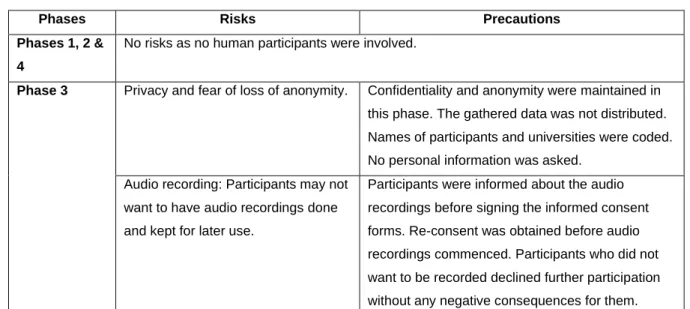
2.10.6 Risks, Precautions and Benefits ... 54
2.10.7 Data Management ... 55
2.10.8 Monitoring of the Data ... 56
2.11 REFERENCES ... 57
CHAPTER 3: ARTICLE 1: NATURE, DEVELOPMENT AND IMPLEMENTATION OF INTERPROFESSIONAL EDUCATION PROGRAMMES: A SCOPING REVIEW ... 62
ABSTRACT ... 64
3.1 INTRODUCTION ... 65
xviii
3.2 METHOD... 67
3.2.1 Design ... 67
3.2.2 Synchronising the research question and objectives ... 67
3.2.3 The inclusion and exclusion criteria ... 67
3.2.4 Literature search ... 68
3.2.5 Studies included ... 68
3.2.6 Data charting ... 70
3.3 ANALYSIS AND PRESENTATION OF THE EVIDENCE ... 70
3.3.1 Distribution of studies included ... 70
3.3.2 Nature of IPE programme ... 72
3.3.3 Development of IPE programmes ... 74
3.4 DISCUSSION ... 81
3.5 CONCLUSION ... 83
3.6 REFERENCES ... 124
CHAPTER 4: ARTICLE 2: CONCEPTUALISATION, DEVELOPMENT AND IMPLEMENTATION OF INTERPROFESSIONAL EDUCATION PROGRAMMES: POINTS TO CONSIDER ... 133
ABSTRACT ... 134
4.1 INTRODUCTION ... 135
4.2 METHODOLOGY ... 136
4.2.1 Setting the inclusion criteria ... 136
4.2.2 Document Search ... 137
4.2.3 Articulating focus of document analysis ... 137
Director, deputy dean, lecturer, field coordinator who were part of the IPEU. . 138
4.2.4 Analysis of document ... 147
4.2.5 Verification and data analysis ... 147
4.3 RESULTS ... 147
xix
4.3.1 How were the main stakeholders brought together and who were they?
147
4.3.2 Benefits of IPE ... 148
4.3.3 How did they define and implement a definition, values and standards of IPE? 149 4.3.4 What outcomes were formulated? ... 149
4.3.5 How was the participation and selection of students and faculty done? 151 4.3.6 Which themes were selected? ... 151
4.3.7 How was collaborating in case and activity design encouraged and how was mixing up the learning methods done? ... 152
4.3.8 What levels and stages were determined? ... 153
4.3.9 How was the learning facilitated? ... 153
4.3.10 How were the expectations and experiences of students raised? ... 153
4.3.11 How was the feedback assessed and utilised? ... 154
4.3.12 How was the intervention evaluated? ... 154
4.3.13 How were the experiences shared? ... 154
4.3.14 Challenges encountered ... 155
4.4 DISCUSSION ... 155
4.5 CONCLUSION ... 157
4.6 REFERENCES ... 158
CHAPTER 5: ARTICLE 3: DEVELOPMENT AND IMPLEMENTATION OF INTERPROFESSIONAL EDUCATION: GLOBAL PERSPECTIVES ... 162
5.1 INTRODUCTION ... 164
5.2 METHODOLOGY ... 165
5.2.1 Research Design ... 165
5.2.2 Sampling ... 165
5.2.3 Data collection ... 165
xx
5.2.4 Data Analysis ... 165
5.2.5 Ethical Considerations ... 166
5.3 RESULTS ... 166
5.3.1 Participant information ... 166
5.3.2 Themes and sub-themes ... 167
5.4 DISCUSSION ... 177
5.5 CONCLUSION ... 179
5.6 REFERENCES ... 181
CHAPTER 6: ARTICLE 4: DEVELOPING AN INTERPROFESSIONAL EDUCATION PROGRAMME FOR A HEALTH SCIENCE FACULTY IN SOUTH AFRICA: A MULTI- METHOD STUDY... 185
ABSTRACT ... 187
6.1 INTRODUCTION AND BACKGROUND ... 188
6.1.1 Theoretical foundations of the programme ... 189
6.2 METHOD... 191
6.2.1 Scientific and Ethics and Approvals ... 192
6.2.2 Scoping Review ... 192
6.2.3 Qualitative Document Analysis ... 192
6.2.4 Qualitative Exploratory Descriptive Design ... 193
6.2.5 Development and evaluation of the IPE programme ... 193
6.2.6 Evaluation of the draft programme ... 194
6.3 RESULTS ... 195
6.3.1 Summary of results from phases one, two and three ... 195
6.3.2 Development and evaluation of the IPE programme ... 196
6.3.3 The IPE programme for FHS-NWU ... 215
6.4 DISCUSSION ... 216
6.5 CONCLUSION ... 217
xxi
6.6 REFERENCES ... 219
6.7 SUPPLEMENTARY MATERIAL: AN INTERPROFESSIONAL EDUCATION PROGRAMME FOR NORTH-WEST UNIVERSITY FACULTY OF HEALTH SCIENCES ... 226
CHAPTER 7: SUMMARY, CONCLUSIONS, LIMITATIONS AND RECOMMENDATIONS ... 239
7.1 INTRODUCTION ... 239
7.2 SUMMARY... 241
7.2.1 Chapter 1... 241
7.2.2 Chapter 2... 241
7.2.3 Chapter 3... 241
7.2.4 Chapter 4... 243
7.2.5 Chapter 5... 244
7.2.6 Chapter 6... 245
7.3 OVERALL CONCLUSION ... 247
7.3.1 Research objective 1: To synthesise the nature, development and implementation processes of IPE programmes globally ... 247
7.3.2 Research objective 2: To analyse the characteristics of IPE programmes implemented globally ... 248
7.3.3 Research objective 3: To identify the challenges encountered in the implementation of IPE programmes ... 248
7.3.4 Research objectives 4 and 5 ... 249
7.4 CONTRIBUTIONS OF THIS STUDY ... 250
7.4.1 Contribution to theory ... 250
7.4.2 Contribution to practice ... 251
7.5 LIMITATIONS OF THE STUDY ... 251
7.5.1 Methodological limitation ... 251
7.6 RECOMMENDATIONS ... 252
xxii
7.6.1 Recommendations for further research ... 252 7.6.2 Recommendations for IPE ... 253 7.7 REFERENCES ... 254 ADDENDA ... 256 ADDENDUM A: ETHICS APPROVAL ... 256 ADDENDUM B: RESEARCH DATA GATEKEEPERS PERMISSION ... 258 ADDENDUM C: INVITATION FOR THE INDIVIDUAL INTERVIEWS ... 260
ADDENDUM D: SEMI-STRUCTURED INTERVIEW SCHEDULE FOR
INDIVIDUAL INTERVIEWS ... 261 ADDENDUM E: CHECKLIST FOR INDIVIDUAL INTERVIEWS BASED ON THE EL-AWAISI ET AL (2016) FRAMEWORK. ... 263 ADDENDUM F: INFORMED CONSENT FORM FOR PARTICIPANTS IN THE INDIVIDUAL INTERVIEWS ... 264 ADDENDUM G: INVITATION FOR THE ONLINE NOMINAL GROUP SESSION
………269 ADDENDUM H: INFORMED CONSENT FORM FOR PARTICIPANTS IN THE NOMINAL GROUP DISCUSSION ... 270 ADDENDUM I: PROOFS OF PAPERS SUBMITTED ... 275 Article 1: Under review ... 275 Article 2: Under review ... 275 Article 3: Under review ... 276 Article 4: Under review ... 276 ADDENDUM J: LANGUAGE EDITING CERTIFICATE ... 277 ADDENDUM K: SIMILARITY REPORT ... 278
LIST OF TABLES
CHAPTER 2
Table 1: Research strategy of inquiry: summary of methods……….. 35 Table 2: An explanation of the possible risks and precautions……….. 54
CHAPTER 3
Table 1: Data matrix………... 85
CHAPTER 4
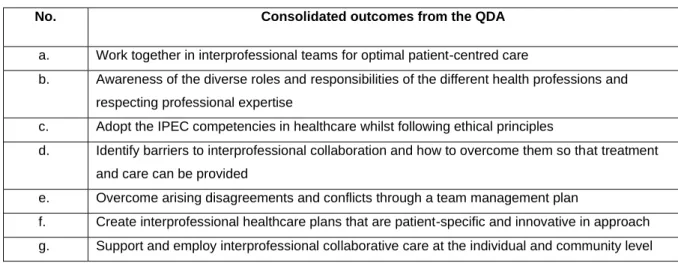
Table 1: Data matrix - Rational for selection.………... 138 Table 2: A consolidation of the outcomes from the universities………. 151
CHAPTER 5
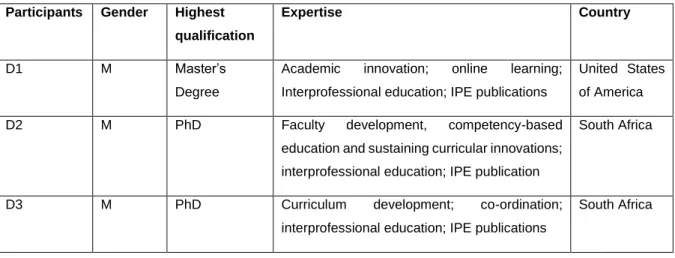
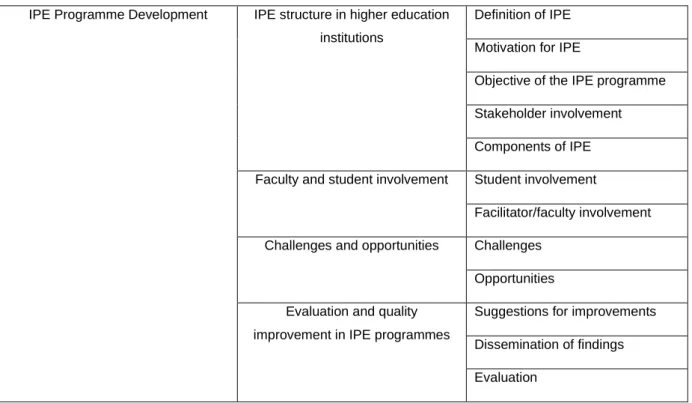
Table 1: Demographical information of the experts……….. 166 Table 2: A representation of the themes and sub-themes……… 168
CHAPTER 6
Table 1: Synthesis of findings from Scoping review, QDA and the KII…………. 197 Table 2: Consolidated IPE themes from the scoping review, QDA and KII…….. 204 Table 3: Health professions programmes on the three main campuses of the
NWU…………..……….. 208
Table 4: Shared modules across the different health schools at the NWU….... 210
xxiv
LIST OF FIGURES
CHAPTER 3
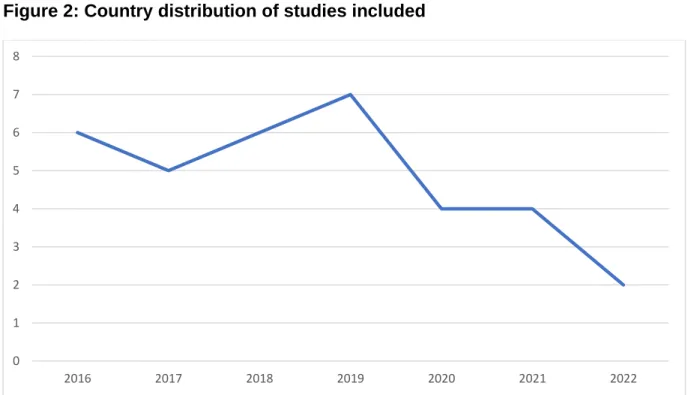
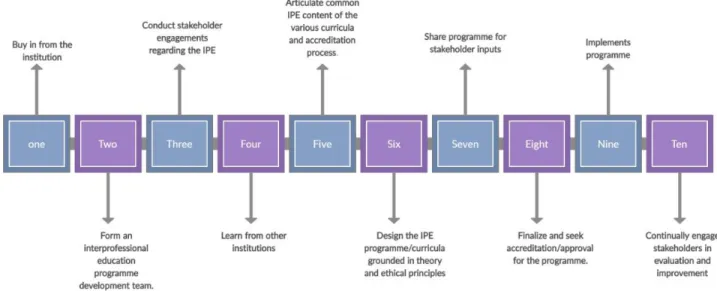
Figure 1: Search and inclusion process……… 69 Figure 2: Country distribution of studies included……… 71 Figure 3: Yearly distribution of studies included (January 2016-March 2022)…… 71 Figure 4: Interprofessional Education Programme Development Process…….... 75
CHAPTER 6
Figure 1: A consolidation of the NWU’s health professions modules to
implement the key concepts through IPE activities……….…… 211
1
CHAPTER 1:
OVERVIEW AND INTRODUCTION
1.1 INTRODUCTION
The introduction, background, problem statement, purpose of the research, research question, sub-question and objectives, significance of the study and structure of the thesis were presented in this chapter. The chapter further outlined interprofessional Education (IPE), its values, design and programmes. The referencing style and intext-citation used in this chapter was the APA 7th edition, and the reference list was presented at the end of the chapter.
Interprofessional Education (IPE) is when students from two or more health and/or social care professions participate in learning with, from, and about each other to acquire knowledge and skills to improve collaboration in the delivery of healthcare (Buring et al., 2009; Olenick et al., 2010; World Health Organization, 2010). Bainbridge and Wood (2012) explain that IPE learning occurs in classroom and practice settings. Learning from each other can include active listening and reflecting, trusting and having confidence in the other person, transferring knowledge, and the willingness to work with the other.
Learning with each other includes active engagement through interaction, reasoning, and discovery. Learning about each other entails watching, observing and shadowing the other in action (Bainbridge & Wood, 2012).
Some of the benefits of IPE include: developing personal relations, improved education, improved patient-care and improved job satisfaction (Carney et al., 2019). Kashner et al.
(2016) and Teodorczuk et al. (2016) posited that there was growing scientific evidence to support interprofessional team care for favourable health outcomes. In terms of health education, improvement and transformation over the years can be seen to facilitate holistic patient-care in learning and for collaborations within the health systems.
Furthermore, a shift from traditional siloed learning to patient-centred and team-based learning can facilitate a better understanding of different health disciplines (Birk, 2017).
In an interprofessional team, members from different and specialised fields share expertise, skills and values (Buring et al., 2009). WHO stated that IPE was “an innovative plan that will play a noteworthy role in shrinking the health personnel crisis globally”
(World Health Organization, 2010). Through IPE, students become prepared for
2
Interprofessional Collaborative Practice (IPCP), where health professionals from different health disciplines provide comprehensive services by working together and with the patients, their families, caregivers, and their communities to deliver the highest quality of care across settings (World Health Organization, 2010).
The South African health system was recognised for various challenges, for example, lengthy waiting time in health centres due to a lack of human resources; harmful incidents;
lawsuits due to preventable errors; lack of maintenance of health records of patients;
access to health services; social circumstances that affect health; shortage of health staff in rural areas; chronic health conditions (Benatar, 2013; Coovadia et al., 2009;
Maphumulo & Bhengu, 2019). Furthermore, finances, delivery of services and risks to patients thereof are also challenges in the South African health system (Malakoane et al., 2020). Poor attitudes and perceptions of members of different health professions were other challenges (Lash et al., 2014). Lumague et al. (2006) mentioned scheduling, lack of motivation and resources as general challenges. IPCP may contribute to overcoming these challenges, as different health professionals are required to work together in a team to meet health outcomes, sharing responsibilities and expertise. For health professionals to work collaboratively, they must be trained to work together in teams. IPE may aid in promoting positive attitudes of health professionals among each other, positive behavioural changes and delivery of better care and overall well-being to patients (Reeves, 2016).
IPE in undergraduate health professions programmes can be beneficial for both students and the health care system in the long term. Although, according to Thistlethwaite (2015), training institutions may experience challenges in incorporating IPE into their curricula.
Health Professions’ students are currently faced with limited opportunities to work with one another due to curricula designed to focus solely on mono-disciplinary education despite graduates needing to work collaboratively in interprofessional teams (Ateah et al., 2011).
1.2 BACKGROUND
Health professions’ students require effective training to familiarise themselves with the challenges as well as the demands of a healthcare system (van Gessel et al., 2018).
Thus, educators have to train students so that they become competent in a collaborative healthcare team (Browne et al., 2021). Siloed learning in health professions education
3
means collaborative competencies are limited due to the constraints of siloed learning curricula (Ho et al., 2022). Furthermore, siloed learning negatively affects the safety of patients (World Health Organization, 2010). So, to streamline health professions’
education to foster collaboration, the facilitation of IPE is needed (Anderson et al., 2016).
Olenick et al. (2010) add that IPE is an existing subject of interest, dialogue and consideration. According to Frantz and Rhoda (2017), IPE is a “vehicle” for tackling health and social challenges through collaboration. IPE accommodates learning through real- life settings so that there is an understanding of health and social complexities, facilitation of constructive professional relationships, and professional obligations (Anderson et al., 2016). Additionally, IPE assists with the reduction and elimination of professional stereotypes, preparing health professions’ students for collaborative practice through the integration of team-based learning (Chan et al., 2017). IPE can be incorporated into clinical, educational and community-based settings so student engagement can occur (Stubbs et al., 2017).
Prast et al. (2016) note that to benefit from collaboration, the components of IPE can be integrated into health curricula. IPE is a significant step for optimal healthcare generated through collaboration and health professionals respecting and realising the roles of others (Rajiah & Mari Kannan, 2016).
1.2.1 The value of Interprofessional Education
IPE aims to provide students with an environment where they learn how to work in an interprofessional team and convey information, skill and value in a potential work setting (Buring et al., 2009). This provides interprofessional patient-care through a collaborative health team with a focus on enhancing patient outcomes (Buring et al., 2009). IPE is beneficial in that it allows students to actively learn as a diverse health team by reducing the separation between health professions’ students to optimise healthcare and patient safety (Gill et al., 2017). This form of learning is described as Interprofessional Learning (IPL). IPL can be termed as the interaction of members or students of two or more professions through IPE or IPCP (World Health Organization, 2010). A study conducted by Carney et al. (2019) addressed the benefits of IPL, which included: (1) the progress of individual relations, (2) enhanced education, (3) better quality patient-care, and (4) enhanced job satisfaction (Carney et al., 2019).
Improved attitudes develop from early exposure to IPE and may influence competence and collaboration in the future (Zechariah et al., 2019). Also, IPE may build other
4
competencies, including teamwork, leadership, agreement and the skill to recognise and attain joint patient-care objectives (Buring et al., 2009). Chen et al. (2017) describe
‘communication’ as another important skill developed through IPE. They state that IPE supports collaboration so that healthcare in individual patients and populations may be maintained (Chen et al., 2017). The Interprofessional Education Collaborative (IPEC) identified four core principles for learning: interprofessional communication practices;
roles, and responsibilities for collaborative practice; collaborative practice values and ethics; and interprofessional teamwork and team-based practice, to move beyond isolated learning and involve the interaction between different health professions (Interprofessional Education Collaborative, 2016).
A member of an interprofessional team brings about discipline-specific knowledge and skills to allow a multi-dimensional approach to the varied health requirements of specific patients (Vanderwielen et al., 2014). Inuwa (2012) explains that once IPE has been introduced to the future health workforce, then collaborative practice can be encouraged in the workplace, resulting in attaining optimal health services and surely improving health outcomes. IPE can reinforce a healthcare professional’s practice and their collaborative role since isolated health professions cannot effectively meet the complex health needs of patients (Inuwa, 2012). Inuwa (2012) also suggests that improvements in relationships, trust, attitudes and a decrease in stereotypes can be seen during undergraduate IPL, which can impact positively on future practices.
1.2.2 Interprofessional education programmes
The design and implementation of IPE programmes differ from university to university, both nationally and internationally. To be most effective, IPE should be introduced early in training so that students can understand their roles and appreciate the roles of other professions. In this section, a short overview of some of the IPE programmes that are currently being presented has been given. This is by no means full scope of programmes but provides an insight into the field of IPE.
1.2.2.1 IPE globally
The George Washington University (GWU) in the United States of America (USA) has defined IPE using the WHO definition and mentioned that for all accredited schools in public health, IPE is a requirement of the Council on Education for Public Health (CEPH). Additionally, IPE was endorsed by the National Academy of Medicine and
5
WHO (George Washington University, 2021). The GWU Interprofessional Education Project (IPEP) formed part of their research initiative. It was a pioneering model, investigating the use of simulation and mentoring as clinical teaching approaches so that IPE could be endorsed by health students. The IPEP aimed to advance management capability, encourage collaborative performance, improve self-expression and liberation, and instil considerate mindsets in members of interprofessional teams (George Washington University, 2020). The IPEC core competencies were found to have played a role in learning outcomes whilst students engaged in IPE activities. The following IPE learning outcomes were stated in accordance with the IPEC competencies (George Washington University, 2021):
• Work with other professions to sustain mutual values and respect.
(Values/Ethics for Interprofessional Practice)
• Utilise the expertise of other professions and that of one’s own to study and investigate a patient’s health needs whilst promoting and advancing community health. (Roles/Responsibilities)
• Communicate with patients, families, communities and professionals in various fields whilst serving them through ethical means via teamwork so that health is encouraged and sustained as a disease is avoided. (Interprofessional Communication)
• The application of the elements of team dynamics (e.g., building relations) to ensure health services for individuals and the community may be carried out in a timeous, harmless, cost-effective, successful and fair manner. (Teams and Teamwork)
In the IPEP project, participants were selected from medical, nursing, Physician Assistant (PA), and Physical Therapy (PT) programmes as well as involving professionals from the Department of Clinical Research and Leadership and programmes in Health Care Quality. Students joined workshops and were coached in interdisciplinary teams. Primary research found that incorporating interprofessional students can improve team-based healthcare service, management capability and professional advancement at individual and group levels (George Washington University, 2020).
Western University of Health Sciences in the USA aims to produce healthcare professionals that exercise and foster collaborative patient-centred care (Western
6
University, 2020). IPE was planned by a committee, which included faculty, staff, and management. Discussions and meetings were held to brainstorm concepts, develop and implement IPE, and later on, an oversight committee was appointed too (Western University, 2020). A pilot programme was conducted to establish the best method of delivering case-based IPE and assess students' attitudes towards IPE (Western University, 2020). Western University of Health Sciences was the first institution to create a broad programme to help undergraduates from nine different health professions learn to work as a team (Western University, 2020). Similarly, the programme helped students to provide collaborative care through IPE. The outcomes included (Western University, 2020):
• Understanding the roles and responsibilities of others
• Understanding other professions, how they can improve healthcare security and value and can help to improve healthcare security and value
• Exercising and encouraging teamwork in healthcare.
Western University noted that as chronic conditions increased amongst the elderly, IPE became necessary in healthcare as the rise of contagious illnesses affected all health professions, meaning that timely treatment, reduction of costs, and maximising recovery would result due to IPE (Western University, 2020). Their programme was considered one of the largest in class size as well as participating health professions. The IPE programme focused on five competencies (Western University, 2020): communication, collaboration, teams and teamwork in healthcare, the scope of practice and one health.
Their case-based IPE programme addressed five chronic health conditions such as (1) diabetes/obesity, (2) cardiopulmonary disease, (3) degenerative neurological disease with long-term rehabilitation needs, (4) developmental neurological disease, and (5) cancer. These conditions were identified as prevalent areas that require collaborative care, and the programme was aimed at providing the skills to promote patient-centred care and collaboration once the health professions’ students graduate (Western University, 2020).
In England, the University of Southampton made use of the Centre for the Advancement of Interprofessional Education (CAIPE) definition of IPE, which states that IPE is when two or more professions learn with, from, and about each other with the objective of collaborative practice and improvement in quality-of-care (Chikwanha et al., 2009).
Because the institution emphasized the importance of understanding various health roles,
7
collaborative learning and performance were central topics in the programmes of their healthcare qualifications (University of Southampton, 2020).
IPE was presented in their first, second, and third years of learning. In their first year of IPE, the focus was placed on understanding one’s role and responsibilities and those of another profession, as well as understanding the term “professionalism”. In their second year, the focus was placed on the benefits of teamwork and its influence on safe and efficient health service. In their third year, the objectives included further development of their knowledge and skills in IPE, improving their understanding of collaborations and their benefits, reflection on their individual and team roles, and lastly, preparing to enter the workforce as professionals (University of Southampton, 2020). Students were issued workbooks that included certain activities and reflections for students to complete as part of the learning process. Student workshops were also held where they could collaborate to share expertise, develop skills and discuss patient-care (Chikwanha et al., 2009).
The Medical University of South Carolina (MUSC) in the USA implemented an IPE programme in 2007, leading to the growth of a Faculty Development Programme (FDP).
This programme was implemented to contribute to the interprofessional method for the university to thrive. It focused on IPE, teaching and learning, training, management and structural changes, and support of IPE, research and practice (Shrader et al., 2014). An evaluation was conducted of the FDP through qualitative and quantitative methods and the results obtained proved that participants recognised beneficial networking opportunities, involvement in interprofessional projects, and obtained training in managing and operating in interprofessional teams (Shrader et al., 2014). MUSC used frameworks such as the WHO framework, Interprofessional Collaborative Practice competencies, the National Center for Interprofessional Practice and Education (NEXUS), and the Institute for Healthcare Improvement (Medical University of South Carolina, 2021). MUSC made use of different IPE activities for student engagement that included an IPE competition around an interactive case study: 1500 students participating in an annual interprofessional day where they do different activities in smaller groups, and elective courses that focus on various topics, e.g., caring for the community; various pilot programmes through 2016-2021 were completed (Medical University of South Carolina, 2021). A fellowship was also offered by MUSC where students got an interprofessional engagement chance (Medical University of South Carolina, 2021). MUSC also established a Student Interprofessional Society (SIPS) to facilitate communication between disciplines in training (Medical University of South Carolina, 2021).
8
The University of Manitoba, in Canada, made use of the WHO definition of IPE (University of Manitoba, 2021). The institution established an interprofessional faculty development programme for the IPE initiative and created opportunities that resulted in generating Interprofessional Education and Collaborative Practice (IPECP) consciousness (Grymonpre, 2016). The initiative improved apparent interprofessional facilitation skills and stated that Interprofessional Collaboration (IPC) and IPE were interdependent (Grymonpre, 2016). The institution mentioned that collaborations improved the working environment, safety and quality of care (University of Manitoba, 2021). The institution further implemented a Winnipeg Interprofessional Student-run Health Clinic (WISH) so that the health and social needs of the community were met with the facilitation of an IPL environment for the students (University of Manitoba, 2021). Students took part in clinical learning and simulations, and clinical practice as part of collaborations (University of Manitoba, 2021). Post-evaluation results indicated that participants’ attitudes were favourable toward IPE and the benefits thereof. Participants agreed that working together to achieve a more operative healthcare team, with patients ultimately benefiting from the teamwork efforts so that health outcomes may be improved, was definitely determined through IPE (Grymonpre, 2016).
Findings from a study conducted in the context in which IPE had been established and developed in Western Australian universities suggested that IPE had a positive impact on the health system. The participants indicated reasons such as: (1) quality and safety of care; (2) understanding and respect for other disciplines; (3) better working relations;
(4) efficiency and cost-effectiveness; (5) commonality of skills and knowledge; and; (6) future health system’s needs, i.e. team-based care due to chronic illnesses, as amongst the reasons for IPE development (Nicol et al., 2013). Curtin University, for example, used a combination of learning experiences, such as lectures, online learning and so on, for students to work together to solve real-life problems (Curtin University, 2021). Workshops were implemented to allow students to engage in case-based learning (Curtin University, 2021). Simulated learning offered students the opportunity to develop skills, such as decision-making, needed for practice (Curtin University, 2021). Students could learn in a safe and supportive environment, collaborate with other professions’ students, and improve their confidence and communication skills. Curtin University focused on four aspects during IPE: collaborative practice, role clarification, conflict resolution, and team function (Curtin University, 2021). Students joined programmes such as Juniper Annesley, where they would go out in interprofessional teams to the elderly to provide
9
collaborative care. The programme received positive reviews from the patients (Curtin University, 2021).
1.2.2.2 IPE in Africa
In Uganda, at Makerere University, a community-based IPE programme was developed and implemented as part of a Master of Science in Reproductive Health qualification to prepare trainees with the required competencies to work in interprofessional teams (AfrIPEN, 2020). IPE was developed by a team that included faculty members from nursing, public health, medicine, gender studies, nutrition, and social sciences. To develop IPE, weekly meetings were held to brainstorm ideas, host discussions, and document these meetings. Stakeholders across the faculty recognized the importance of active participation during interprofessional training (AfrIPEN, 2020).
1.2.2.3 IPE in South Africa
Nationally, in South Africa (SA), many universities are at different stages in implementing IPE into their health sciences curricula. For example, the University of the Western Cape (UWC), the University of the Free State (UFS), the University of the Witwatersrand (Wits) and Stellenbosch University (SU) have implemented IPE programmes in their health education (Stellenbosch University, 2013; University of the Free State, 2020; University of the Western Cape, 2013; University of Witwatersrand, 2020).
UWC has an Interprofessional Education Unit (IPEU) to deliver IPE prospects and empowerment by creating appropriate core curricula, places of training for students, and providing services to populations (University of the Western Cape, 2013). The IPEU offers certain undergraduate modules, courses and programmes central to the interprofessional concept and health. UFS offers a Health Professions’ Education (HPE) programme, which includes qualifications in PhD (HPE), Magister in Health Professions Education (MHPE) and a Postgraduate Diploma in HPE (University of the Free State, 2020) that specifically focuses on IPE. When compared, UWC and UFS both offer direct community- based IPE so that students may train and develop their skills (University of the Free State, 2020; University of the Western Cape, 2013).
The Centre for Health Science Education (CHSE) at Wits has a unit for interprofessional education and research that encourages new and vibrant health science curricula (University of Witwatersrand, 2020). Stellenbosch University also has a CHPE in the Faculty of Medicine and Health Sciences, where the focus is placed on developing a
10
culture and competencies in working mutually to enhance patient outcomes and strengthen the health system whilst institutionalising Interprofessional Education and Collaborative Practice (IPEP) (Stellenbosch University, 2013). The focus of the SU IPEP lies in: (1) Creating core competencies for IPCP; (2) Presenting an interprofessional care and collaboration framework based on the International Classification of Functioning, Disability, and Health (ICF) as a mutual dialect between professions; and (3) Building confidence and capacity between faculty and service benefactors to model IPCP (Stellenbosch University, 2013). Using these focus areas, SU aimed to transform learning and interdependence education. The focus areas of SU also allow for social accountability through the IPEP strategy. In short, one can find IPE in (1) formal IPECP units, e.g., at UWC; (2) postgraduate qualifications in IPE (HPE with a specialised focus on IPECP), e.g., at UWC, SU, and UFS; and (3) research, e.g., Wits.
Likewise, results from an investigation conducted on the IPE programme at a university in SA by Van Wyk and De Beer (2017), using a sample of undergraduate students, indicated a noticeable improvement in patient-care. Other benefits to both the patient and team members (i.e. professional, social, and personal learning experiences) were experiencing teamwork, contribution and support of members, effective communication, and a respectful and non-judgemental IPE environment (Van Wyk & De Beer, 2017).
IPE is also promoted on other platforms and not only as part of higher education’s formal curricula. The University of KwaZulu-Natal (UKZN), for example, hosted a symposium at their institution in 2014 with health professionals and experts, led by the School of Health Sciences, and advocated for IPECP to reach health equality within the country (University of KwaZulu-Natal, 2017).
1.2.2.4 IPE networks and organisations
Professional associations provide a valuable platform for the promotion of IPE and IPCP.
An example is the Africa Interprofessional Education Network (AfrIPEN) and the Interprofessional.Global that adds value to the motive of IPECP (Interprofessional.Global, 2020). AfrIPEN, a member of the IPE World Coordinating Committee, founded in 2015, allies with institutions and individuals with the concept of establishing an IPECP in training health workers and in the effective operation of health systems in Sub-Saharan Africa.
Interprofessional.Global enables support and exchange between IPECP networks, creates associations with similar organisations and embraces and encourages new networks, that share the same objectives and principles (Interprofessional.Global, 2020).
11
Other bodies affiliated with Interprofessional.Global include Australasian Interprofessional Practice and Education Network (AIPPEN), Canadian Interprofessional Health Collaborative (CIHC), Indian Interprofessional Education Network (IndIPEN), Nordic Interprofessional Network (NIPNET), Regional Network for Interprofessional Education in the Americas (REIP), Centre for the Advancement of Interprofessional Education (CAIPE) and American Interprofessional Health Collaborative (AIHC) (Interprofessional.Global, 2020).
1.2.3 Designing an IPE programme
To establish IPE at North-West University (NWU), a programme or curriculum required development and implementation. In this study, the definition of an IPE programme was drawn from a few definitions and presented as a set of interventions and experiences provided to health professions students to learn from, with and about each other to function effectively in collaborative healthcare teams for improved healthcare outcomes (Darlow et al., 2015; Lê et al., 2008; Western University, 2020; World Health Organization, 2010). ‘Curriculum’ can be defined as conditions for students to obtain a qualification or part of it through different aspects such as knowledge, skills, and/or work experience (South African Qualifications Authority, 2015). Bitzer and Botha (2011) mentioned
‘curriculum’ in simple terms as something that should be learned, or that is worthy of being known. Through definition alone, one can gather that a programme encompasses a wider setting and allows IPE a better reach in undergraduate health education. Thus, in this case, a programme was a more holistic and inclusive approach in terms of IPE at the Faculty of Health Sciences (FHS) for NWU.
As explained by Olenick et al. (2010), certain aspects that determine the presence of IPE (p,77): active participation of two or more healthcare professionals in patient evaluation and/or administration; a socialization and an experiential learning method; a method where healthcare professionals from different disciplines participate in learning with, from, and about each other, within and throughout different health schools, through experience;
encounters that are non-hierarchical and decentralized; a value and knowledge-sharing practice; and joint, patient-centred care aiming for optimal health outcomes.
To develop an IPE programme for NWU, several publications on IPE frameworks were perused to find guidelines on what could be included in such a programme. Bridges et al.
(2011) compared three best practice models of interprofessional education, explaining how a didactic programme, a community-based programme and an interprofessional-
12
simulation experience were implemented at three different universities. The recommendations for best practices published in this article were useful to include in an IPE programme. However, they only provided a small section of what an IPE programme should look like. On the other hand, Hugh Barr, an internationally acknowledged IPECP expert, focussed on the theories related to a framework for IPE (Barr, 2013). He stressed the importance of grounding IPE initiatives in theory, referring to education, psychology, and sociology theories. Barr included concepts such as adult learning, practice theory and situated learning that would influence the learning process during IPE. Barr (2013) mentioned on pages 5-6 that this might guide the design of an IPE programme. D’Amour and Oandasan (2005) provided a frame of reference for interprofessional education that established linkages between different determinants and processes of collaboration at several levels (defined as stakeholders). They referred to the micro level (learners, educators, and professionals), the meso level (organisational links between teaching and health organisations) and the macro level (links between political, socio-economic, and cultural systems). D’Amour and Oandasan (2005) highlighted the importance of collaboration between these stakeholders in advancing interprofessionalism in IPE.
On a more practical level, El-Awaisi et al. (2016) listed certain steps to follow when developing, implementing, and commencing IPE in higher education. For this research, the steps listed by El-Awaisi et al. (2016) were used as a basic framework to inform the development of an IPE programme and were extended and elaborated on based on the guidelines provided by researchers such as Barr (2013), Bridges et al. (2011), D’Amour and Oandasan (2005) as discussed above. Each of the steps listed by El-Awaisi et al.
(2016) has been described or clarified in terms of developing an IPE programme below.
1.2.3.1 Getting started by bringing together the main stakeholders
Bringing together the main stakeholders, such as the representatives from the different health schools of the FHS, would allow them to compare their perceptions of IPE and consider ways in which IPE could be incorporated into the health curriculum, as mentioned by El-Awaisi et al. (2016). Once it has been modified, the stakeholders then look for evidence to support IPE. Other stakeholders might be discovered in the empirical research (e.g., the community, management, and so on).
13
1.2.3.2 Implementing a definition, values and standards
The WHO and CAIPE definitions of IPE guided different institutions with their IPE programmes. For this research, the definition of IPE was adapted to accommodate a wide range of components and guide the IPE programme for NWU through consolidation of the definitions from both the WHO and CAIPE:
“IPE is a teaching and learning method in which associates or undergraduates of two or more health and/or social care professions participate in learning with, from and about each other in order to improve collaboration in the delivery of healthcare” (Buring et al., 2009; Journal of Interprofessional Care, 2020; Olenick et al., 2010).
1.2.3.3 Formulating outcomes
El-Awaisi et al. (2016) added that decisions on learning outcomes must be taken prior to the IPE experience, and the outcomes must be realistic and reviewable. A pre-existing skill- or capacity-based collaborative framework can be used as a foundation to explain the IPE learning outcomes. The outcomes must be matched to the activities in a way that each profession can contribute.
1.2.3.4 Participation and selection of students and faculty
Students and facilitators of at least two or more health professions should be kept in mind when planning activity, as stressed by El-Awaisi et al. (2016). The environment of NWU’s FHS and the different health professions that are studying at NWU ned to be considered, then experienced individuals should be recruited to form the point of contact with the students and “patients” who can be considered as co-teachers during the activities.
Diversity should be encouraged, and students might be involved in the planning process.
1.2.3.5 Selecting themes
El-Awaisi et al. (2016) added that theme selection could be based on professional and interprofessional outcomes and overlapping of curricula should be considered for IPE.
Themes are incorporated so that students can have a focus area and collaborate to come up with health solutions. El-Awaisi et al. (2016) identified four example themes: (1) Chronic disease management, (2) Primary Health Care (PHC), (3) Mental Health and (4) Elderly care.
14
1.2.3.6 Collaborating in case and activity design and mixing up learning methods
Furthermore, El-Awaisi et al. (2016) mentioned that after logistical arrangements, the content and sessions should be developed. Activity planning needs to be done in advance so that meetings with the different stakeholders can occur and the activity can be developed satisfactorily. Learning methods, e.g., simulated learning, from the different health professions may be altered and implemented to fit interaction, reflection and patient-centeredness. The learning methods need to complement the outcomes of the session so that students can develop IPE competencies and come up with health solutions.
1.2.3.7 Determine levels and stages
Learning may be divided into three phases: exposure, immersion and mastery (Halupa, 2015). In the exposure stage, students are initially introduced to working with other health professions, and the activities follow a parallel approach. With immersion, health professions’ students commence with interactions and collaborations that are mostly conducted in a clinical setting. Activities in this stage may be concentrated on interactions and collaborations. Mastery focuses on the incorporation of collaboration into the daily life of a health graduate or practitioner, for instance, through working in a team-based setting within a community facing complex conditions such as Human Immunodeficiency Virus (HIV) or Acquired Immunodeficiency Syndrome (AIDS) in SA. A noteworthy part is determining how IPE will be immersed in a health curriculum, for instance, if it will be throughout undergraduate learning or be introduced in certain semesters.
1.2.3.8 Facilitating the learning
Facilitators may help the students improve mutual gratitude, awareness, and collaboration, as supported by El-Awaisi et al. (2016). Facilitators must be aware of their attitudes and perceptions and can invite a critical individual to observe and discuss the facilitators' roles in working with the students. Facilitators are to be given a guidance and training in their role during IPE activities. The facilitators should only guide the process and allow student-centric learning.
1.2.3.9 Raise expectations and experiences of students
Handbooks can also be issued to the students for preparation before the IPE sessions.
Students should be introduced to each other when possible so that they may enjoy