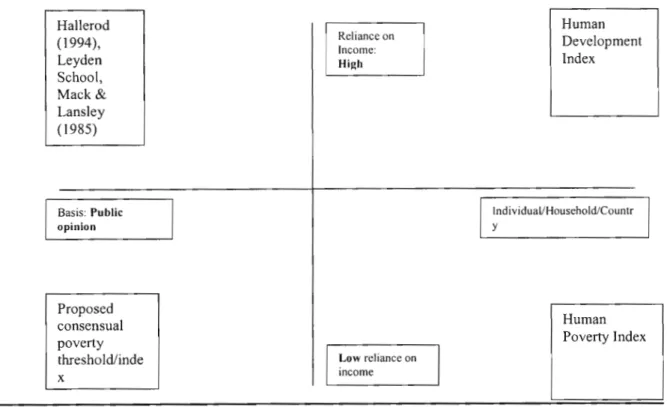
The final contribution of this thesis is the definition of a poverty line based on an asset threshold using the consensual approach as postulated by Mack and Lansley (1985): this thesis therefore proposes an asset-by-asset point index before. It is argued in this thesis that the Consensus Approach is informed by local conditions.
THE ECONOMY
The intention of the new plan was to focus on strategies to address the critical challenges of reducing inflation, generating foreign exchange, increasing capacity utilization. According to the Reserve Bank of Zimbabwe, inflation is 231 million percent (see table 1 below).
THE ORIGINAL CONTRIBUTIONS OF THIS THESIS
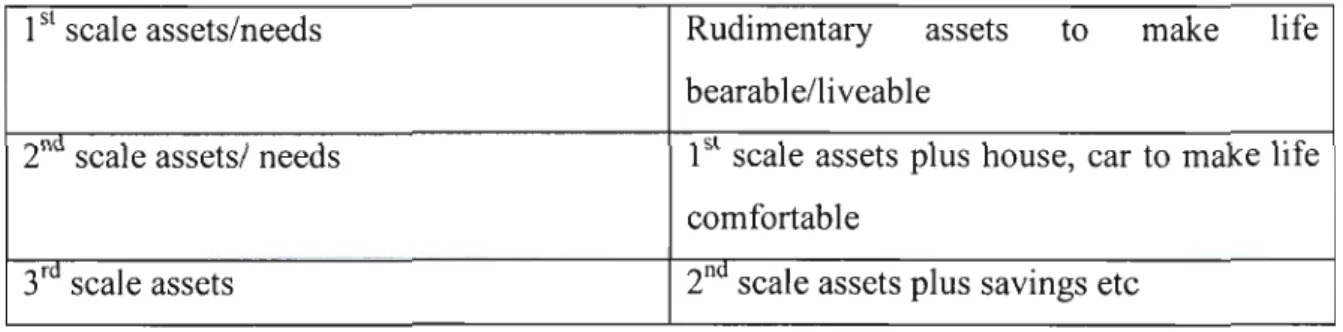
Another contribution of the thesis is the idea of scaling assets to enable the capture of the asset holdings of the poorest of the poor to form intensity scales on which an asset threshold is based. The introduction of the idea of enclavity within a family is another primary contribution of this thesis.
HYPOTHESIS AND RESEARCH QUESTION
AIMS OF THE THESIS
DATA AND EMPIRICAL METHODOLOGY .1 The research setting
In the countryside, the list consisted of 32 items, and in the city, 37 items. Chapter Sixl6 provides an extension of the Forter-Greer-Thorbecke index by introducing an index that takes into account assets, income and debt (liabilities) in measuring poverty.
CHAPTER TWO
THE POLITICAL CONTEXT
BACKGROUND
The basis of the partnership is win-win, tolerance, patience, shared vision and common goals among the social partners. As ZCTU's Secretary General (Morgan Tsvangirayi) argued, there is clearly a need to develop the thinking of the basis and scope of a social contract.
TNF WORK: A HISTORICAL PERSPECTIVE
Furthermore, what are the expectations of the most important stakeholders in terms of a workable social contract. What effect does a social contract have on the executive, parliament and cabinet.
RESEARCH OBJECTIVES The objectives of the research were
NOOs accounted for 11 percent of respondents, while academia accounted for 7 percent. Some questionnaires were placed at the respondents' workplace for self-administration.
RESULTS AND DISCUSSION
- Sprucing up the Tripartite Negotiating Forum
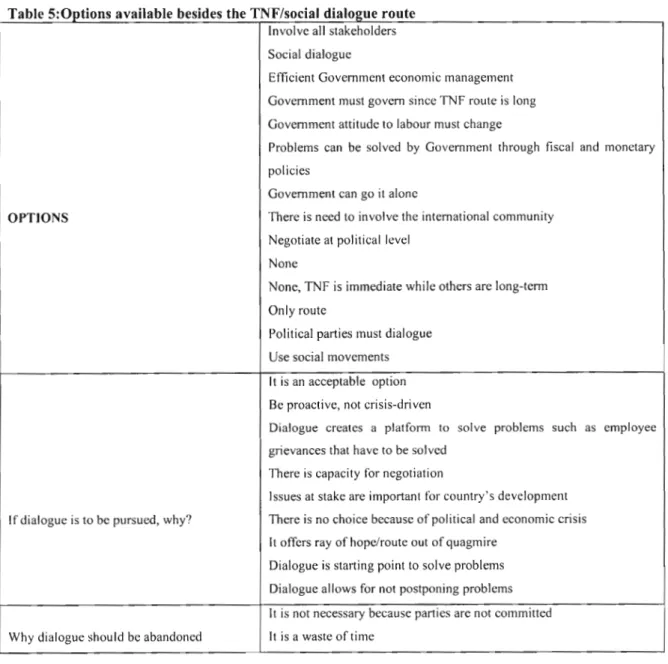
According to the survey, the interviewees were of the opinion that consultations with the constituencies (the public) are important. Key informants were of the opinion that the decisions of the TNF can be implemented through legislation.
CONCLUSION
The ILO should keep the debate alive for the elaboration of the nature, content, scope and issues related to the implementation of social dialogue in Zimbabwe. The bottom line is, if social dialogue is not sustained, the crisis facing the country will further deepen to the detriment of all the social partners and the generality of the population.
CHAPTER THREE
INTRODUCTION
SOCIAL SAFETY-NETS AND TARGETING IN ZIMBABWE
Related to the question of counting the poor is the question of how to reach the poor when providing poverty reduction. Social safety nets attempt to address the issue of reaching them with help, whether for moral, socio-political or humanitarian reasons. The interventions are not limited to only public activities, but the scope of social safety nets can be extended to include activities of non-governmental organizations, civil society, private companies as well as individuals.
OVERVIEW AND AIMS OF SOCIAL SAFETY-NETS
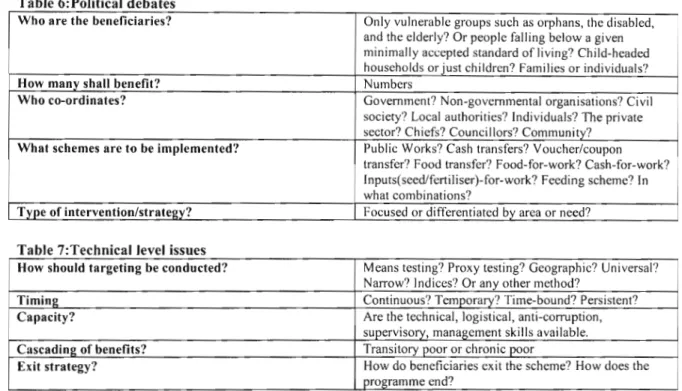
The issue of coordination of interventions is also crucial for the success of the programs. Additional elaboration of the debates is provided in Tables 6 and 7 in Appendix 1, but before critically examining poverty interventions in Zimbabwe, a brief historical perspective of social safety nets in Zimbabwe is provided.
A BRIEF HISTORICAL PERSPECTIVE OF SOCIAL SAFETY NETS Since the late '80s and early '90s social safety-nets have been used in Zimbabwe for
Governments are expected to provide some level of social protection and welfare to their citizens based on their constitution and social contracts and this is what the government of Zimbabwe has clearly tried to do.
THE PUBLIC ASSISTANCE PROGRAMME - CASH TRANSFERS The Public Assistance Programme is intended to assist destitute and indigent persons
SOCIAL DEVELOPMENT FUND
FREE FOOD DISTRIBUTION
THE GRAIN LOAN SCHEME
Transport and other logistical problems meant that beneficiaries were unable to receive grain in time for the planting season (Kaseke et al. 1997: 12). Moreover, seed and fertilizer transfers can increase agricultural production, but the inputs can end up in the hands of the non-poor.
CHILD SUPPLEMENTARY FEEDING PROGRAMME (CSFP)
According to Sithole et al. 1999) the problems encountered by these programs ranged from lack of coordination, problems of policy dissemination, lack of clear guidelines for implementation, poor targeting, distance and transportation problems, political interference, funding bottlenecks as well as sustainability problems (Sithole et al. 1999) and nepotism and favoritism when disbursing aid (Mbetu et al. 1999).
BASIC EDUCATION ASSISTANCE MODULE (BEAM)
Most schools reported that the dropout rate due to non-payment of school fees between 1993 and 1998 was very low (Sithole et al. 1999). The Regional Hunger and Vulnerability Program (2007) notes that some of the weaknesses of the program include steep increases in school fees and the fact that potential beneficiaries cannot be funded in the middle of the year. Yet the Regional Hunger and Vulnerability Program (2007) also notes that one of the weaknesses of this project is its focus on short-term solutions for social protection.
HEALTH ASSISTANCE
According to the Regional Program on Hunger and Vulnerability (2007), the Enhanced Social Protection Project aims to protect investments in human development and long-term productivity of very poor households in light of the current macroeconomic crisis by expanding and improving targeting. formal and informal mechanisms of social protection in the country. Some of the strengths of this project are: implementation covering both rural and urban areas; the fact that implementing partners are identified at national, district and community level; and that the project complements ongoing government initiatives (Regional Program on Hunger and Vulnerability, 2007).
NATIONAL AIDS COUNCIL (NAC)
BASIC COMMODITIES AND SUPPLY SIDE INTERVENTIONS
CRITIQUE OF THE PROGRAMMES
CONCLUSION AND THE WAY FORWARD
Availability of basic products and social safety nets: the case of Zimbabwe, a presentation at the Midlands Provincial Agricultural Show open day by Dr. Review of the Public Assistance, School, Examination and Health Fees Programs under the Ministry of Social Affairs and the Social Development Fund, advisory report prepared for the Ministry of Public Services, Labor and Social Affairs, funded by the Swedish Embassy in Harare, unpublished.
CONVENTIONAL APPROACHES TO POVERTY MEASUREMENT The problems of definition and measurement of poverty have preoccupied both scholars
PRE-SEN INDICES
While the population ratio shows the percentage of people who fall below the poverty line, the income gap ratio shows the percentage of the poverty line required to bring everyone below the poverty line. The Sen index brings the number of employees, the poverty gap ratio and the Gini coefficient into the index.
THE POST-SEN INDICES
To this end, they are detached from the experiences of the poor and, furthermore, do not take into account wages and social assets. An immediate shortcoming of the consensual approach, as used in Europe and North America, is the continued reliance on income (Minimum Income Question) and consumption (proportional.
TOWARDS THE NEW APPROACH
This chapter has attempted to expand the discussion on the measurement of poverty by revising the income threshold and supporting a notion of asset threshold for developing countries using the consensus approach. Secondly, it reflects on the income and non-income components of poverty and the measurement methods and brings out the importance of the asset threshold approach.
CHAPTER FIVE
HEALTH BELIEF MODEL (HBM)
They believe that taking action would reduce their susceptibility to the condition or its severity (perceived benefits). These are the constructs that motivate people to seek or not seek treatment for their illnesses or ailments.
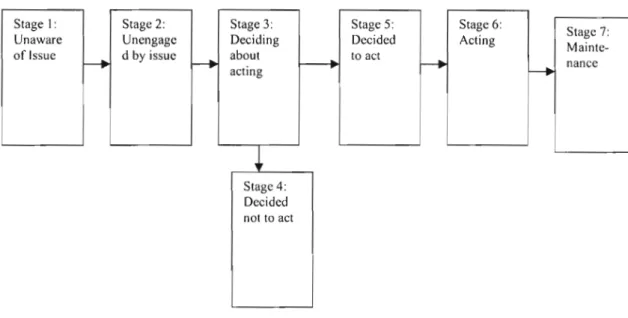
PRECAUTION ADOPTION PROCESS MODEL (PAPM)
This model states that people can choose or choose not to take action against their illnesses/habits. When they decide to take action, such as to quit smoking, they can do so and can quit smoking and maintain a non-smoking habit.
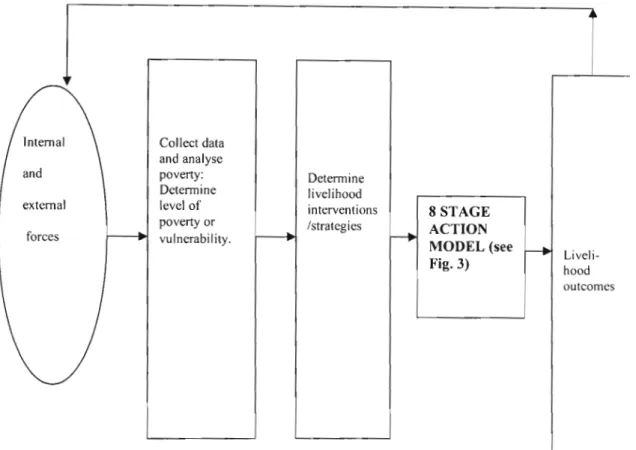
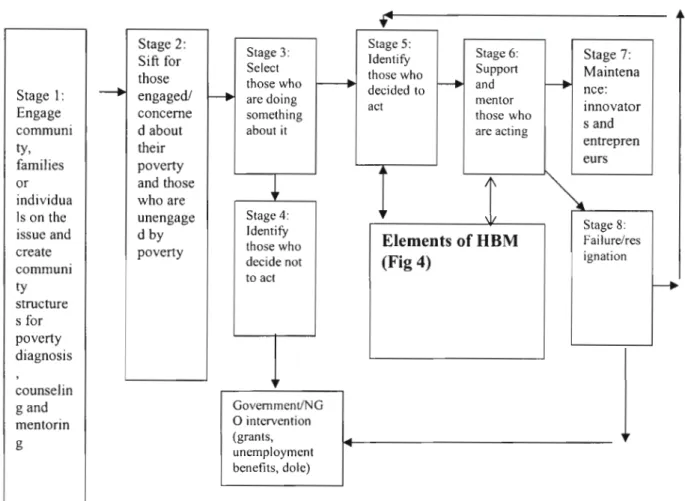
THE POVERTY DIAGNOSTIC MODEL (PDM)
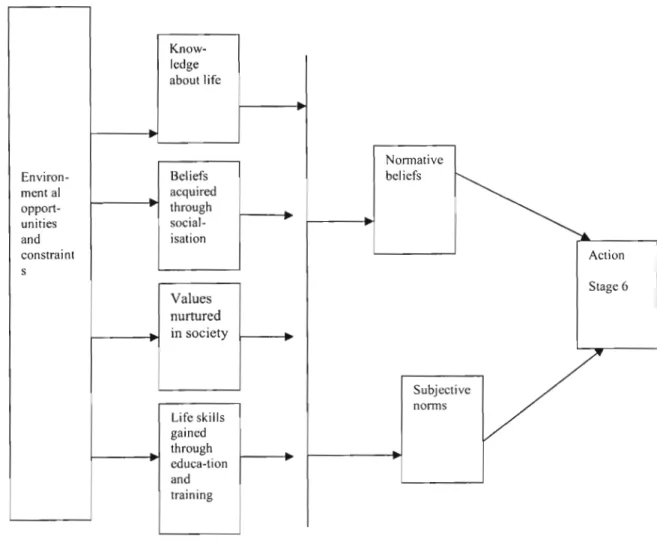
These beliefs must be taken into account in this action phase, especially in the eight-phase action model. Perhaps one-on-one interventions will become necessary to influence the perception of poverty among the poor, as is happening in the healthcare sector in the area of patient education.
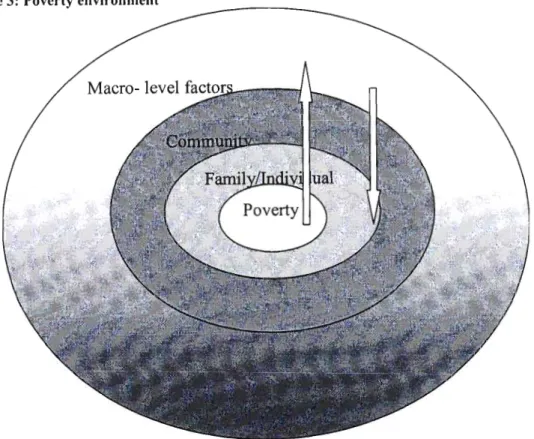
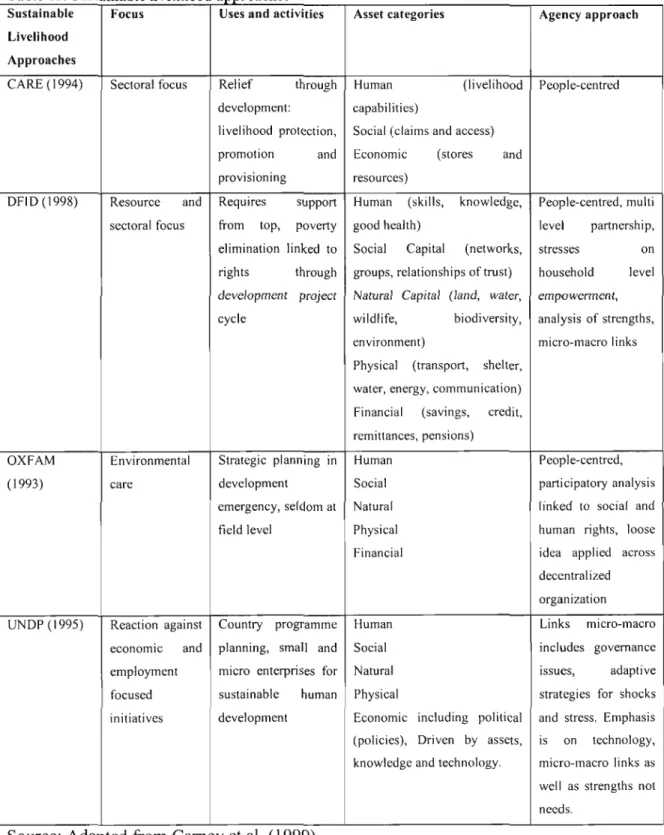
COMPARISON OF SUSTAINABLE LIVELIHOODS AND THE PDM
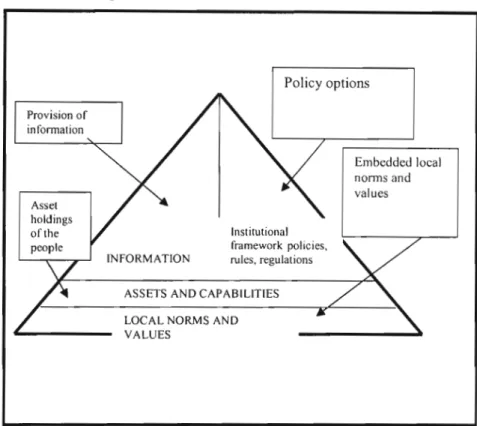
I will now do a comparative analysis of Sustainable Livelihood Approaches and the Poverty Diagnostic Model. While sustainable livelihoods approaches place more emphasis on the community as opposed to the individual, the community is not homogeneous (see also Narayan, 1999).
IMPORTANCE OF THE MODEL
Using the PDM will inform the decision to revise either behavior or perceptions for the good of the individual and society as a whole. Accompanying this is the derivation of the appropriate data collection methodologies as well as the derivation of appropriate poverty indices.
CONCLUSION
CHAPTER SIX
- BACKGROUND
- LITERATURE REVIEW
- MY VIEWS AND COMMENTS
- EXTENSION OF FGT MEASURES
- CONCLUSION
Adding the value of assets and income of a household yields the household's asset income value. The asset-income poverty line is a summary of the asset poverty and the income poverty lines.
CHAPTER SEVEN
EXPLORING LOCAL CONCEPTIONS OF POVERTY, WEALTH AND WELL-BEING: FIELD EVIDENCE FROM MASHONALAND
WEST PROVINCE OF ZIMBABWE 42
DATA AND EMPIRICAL METHODOLOGY
A mixture of in-depth interviews, focus group discussions (FGDs) and semi-structured interviews were used for data collection as described in Chapter One. People who participated in focus group discussions were different from those who participated in in-depth and semi-structured interviews as a way to reduce.
RESULTS
During data analysis, patterns were identified on a thematic basis and thus inductive qualitative analysis was performed on verbatim interview transcripts and focus group discussion notes. The key topics were: the definition of a poor person; definition of a rich person, typology of the poor, description of the most necessary items; strategies for getting out of poverty; causes of poverty and coping mechanisms.
DEFINING A POOR PERSON
- Lack of farming implements
- Lack of livestock
- Scavenging for food
- Husband and wife enclavity
- Poor dwellings
- A life of many struggles
- Other necessities of life
Lack of livestock seemed to be a common problem for most participants, resulting in the poor being unable to plant and harvest crops from their fields. This is also related to the lack of resources to climb the ladder of wealth accumulation.
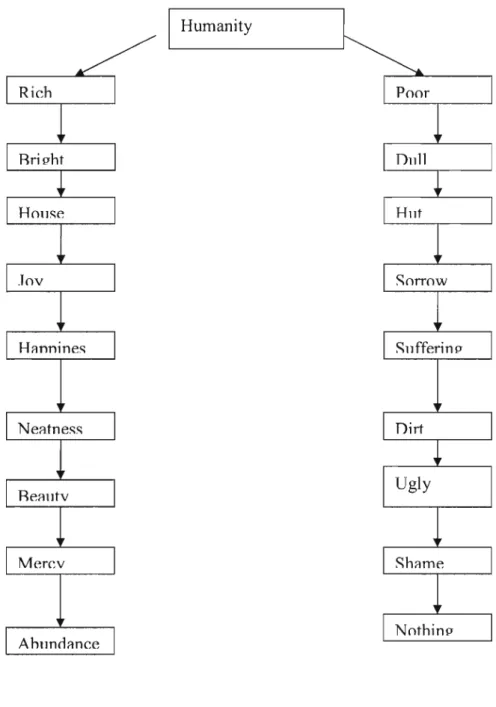
DEFINING A RICH PERSON
To conclude this section, let me say that in most of the FGDs, the main issues raised by the poor related to their fragile asset base, finding food and struggling for daily survival. Thus, ownership ensures the continuity of production and the achievement of a high survival status in the eyes of observers.
TYPOLOGIES OF THE POOR
According to the debaters, these are the things that separate the rich from the poor. The rich own the shops and receive remittances from their children locally and from the diaspora.
DESCRIBING MOST ESSENTIAL ITEMS
It will be entirely up to the individual to cultivate his plots of land productively after cultivating them [using the tractor]. Regarding the number of cattle that should be considered rich, most FGDs mentioned a range of 10 to 18 cattle.
STRATEGIES TO EXIT POVERTY
They can be used as a means of transport, for example when transporting grains for grinding into flour.
CAUSES OF POVERTY
- The 'economy'
Related to this is the economy, which has been mentioned as not helping the poor. Drought has been cited as one of the main causes of hunger and suffering caused by food shortages.
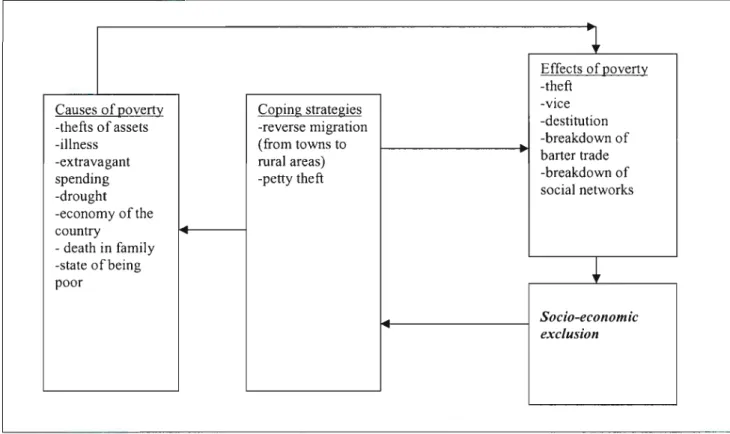
COPING MECHANISMS
In creating a poverty index, it is imperative to put assets at the core of the index. Report prepared for the Office of the Executive Vice President and the Interministerial Committee on Poverty and Inequality.
CHAPTER EIGHT
DEVELOPING AN ASSET THRESHOLD USING THE CONSENSUAL APPROACH: RESULTS FROM MASHONALAND WEST,
- FINDINGS
- STANDARD OF LIVING SETTING ASSETS
- DEFINING AN ASSET THRESHOLD
- DOES LOCATION MATTER?
- DRAWING THE ASSET POVERTY LINE
- DEFINING WHO IS POOR AND WHO IS NOT
- CONCLUSION AND IMPLICATIONS
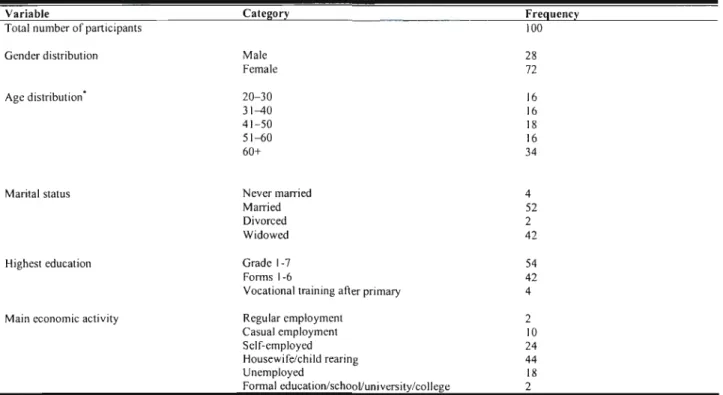
Forty-four percent of the participants were housewives and 24 percent were self-employed. Thus, a person who does not have three or more assets that determine the standard of living would be considered poor.
CHAPTER NINE
THE ASSET-BY-ASSET POVERTY INDEX 49
LITERATURE REVIEW 2.1 POVERTY INDICES
Bird and Shepherd (2003) designed a 'recovery index' in which people's perceptions of change over five years on a number of relevant dimensions were used to create the index. The recovery index measured 'the degree of perceived improvement or decline against It was labeled a 'recovery' index as it sought to measure households' rebound from widespread impoverishment associated with the 1991 drought in Zimbabwe.
THE POVERTY LINE
Second, the poverty line is defined in terms of minimum requirements in the dimension of interest identified in absolute terms, e.g. We still have to face the question of how many poverty lines are possible.
ASSET-BY-ASSET POINT INDEX
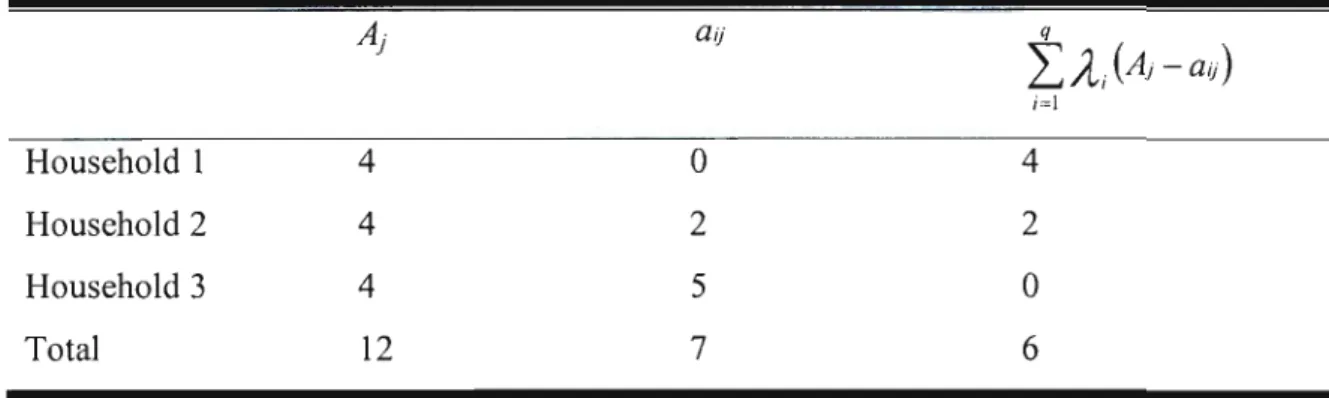
It may be noted that this index is indifferent to the distribution of assets among the poor. The average asset gap can also be expressed as a proportion of the asset poverty line thus.
CHAPTER TEN CONCLUSION
This thesis provided an extension of FGT which takes into account assets, income and debt (liabilities) in measuring poverty. The main aim of this thesis was to fill a gap in the measurement of poverty by defining a fixed bundle of context-sensitive assets - the minimum appropriate level of assets.