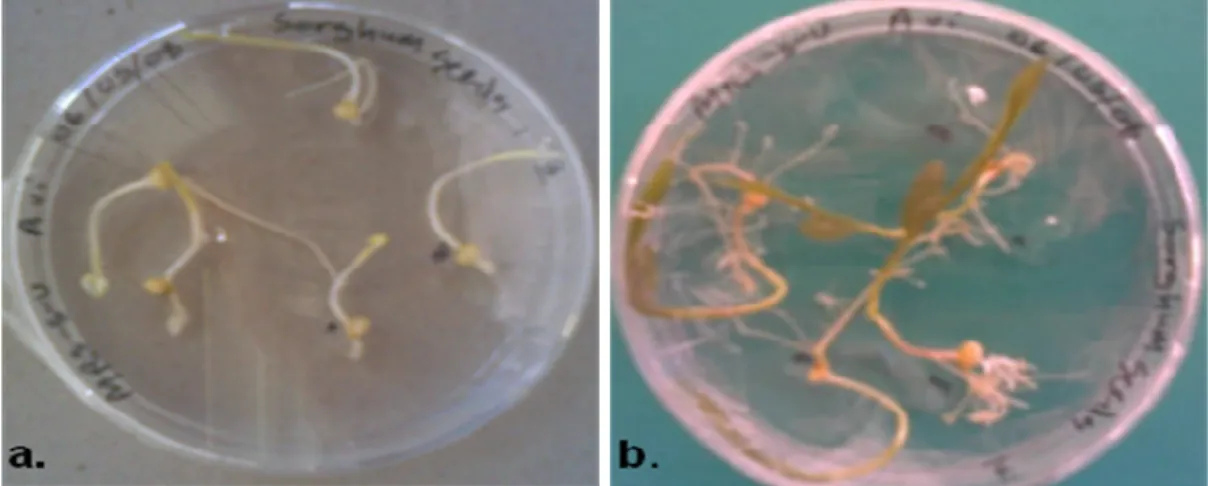
37 FIGURE 2.3: WEEKLY OBSERVATION OF SORGHUM DEVELOPMENT IN HAM-P CULTURE SYSTEM USING SMALLER SYSTEMS (90MM DIAMETER): A. 75 FIGURE 3.7: LC/MS GRAPHIC REPRESENTATION OF METHANOL BASE EXTRACTED UM PLANT.
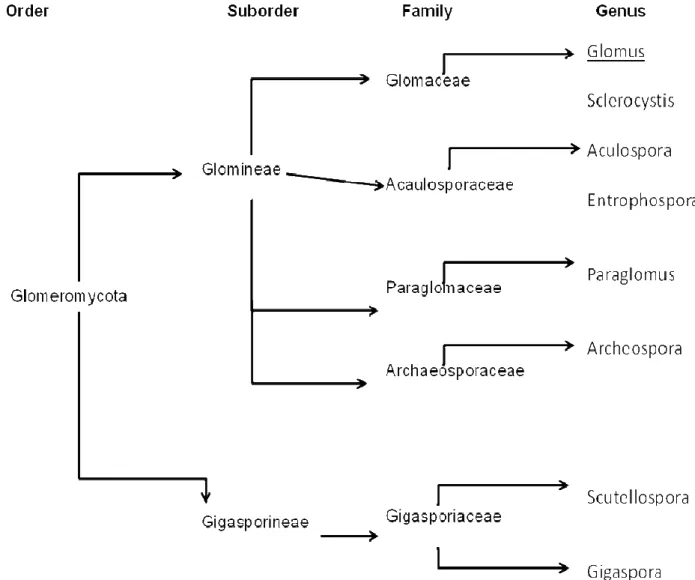
Introduction
In vitro culture systems
This project focused on optimizing HAM-P systems for sorghum development for the South African environment.
Sorghum Nutrition
This system was first developed to assess the spore production dynamics, intraradical root colonization, germination capacity and life cycle of AMF associated with potato seedlings (Voets et al. 2005). 18 Table 2.2: Various micronutrients affecting sorghum development under in vitro systems (adapted from Sprague, 1961 and Yawalkar et al. 1977).
Sorghum Development
At this stage all leaves are fully expanded, the head is full size and covered by the flag leaf sheath. Hard dough 8 85th At this stage approximately three quarters of the dry weight of the grain has been reached.
Materials and Methods
Medium preparation
Plant material
Development of an autotrophic culture system
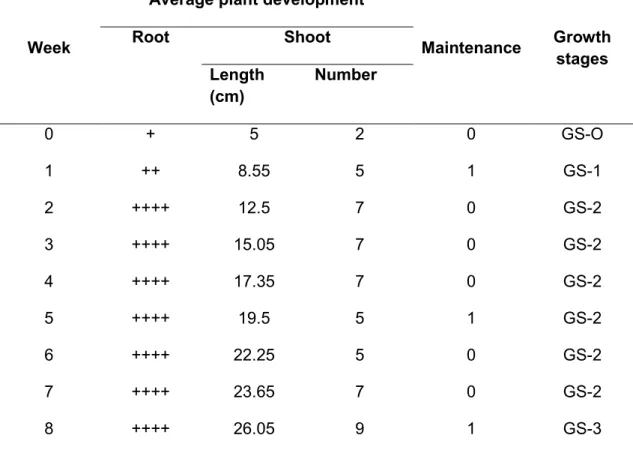
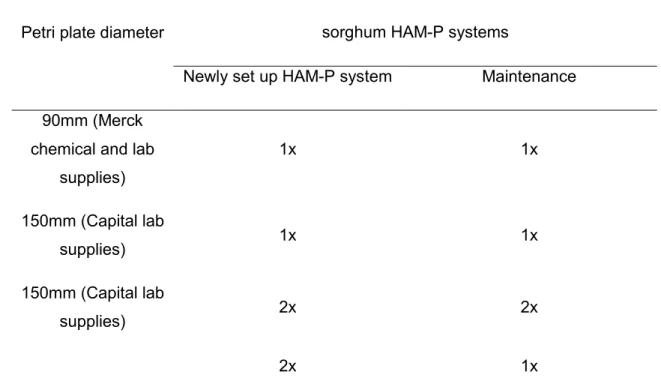
24 For this experiment, four different HAM-P culture systems were designed in order to determine the optimal growth of the sorghum plant (Table 2.5). The table above describes the Petri dish diameter size and concentration of MSR-S-V medium used in each experiment.
Results
Plant development in large HAM-P systems with varying nutrient
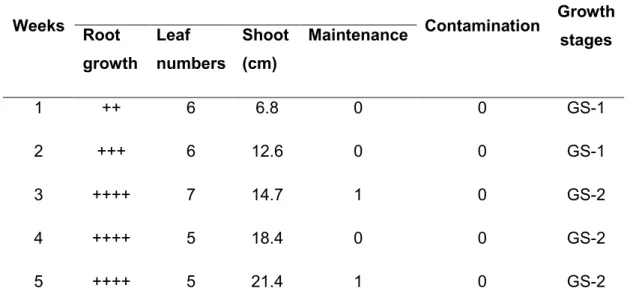
30 As shown in Table 2.8, a higher nutrient concentration was not necessarily beneficial for the development of plants in the different growth phases. The results in Table 2.8 indicated rapid plant development from week 1, when plant leaf length increased. 31 According to Table 2.8 and Figure 2.5, GS-1 remained present for two weeks and root development therefore increased during this period, while the leaves discolored due to a disturbed nutrient balance.
As observed in the average plant development of HAM-P culture systems in large Petri plates, with 2x concentration medium and maintained with 1x concentration medium (Table 2.9), plants required higher nutrient concentrations for germination and GS-0.
Discussion and Conclusion
Phosphorus was mainly taken up by roots and then transported to the rest of the plant; a lack of it led to the expansion of root systems in search of accessible Phosphorus (Devitt et al. 2006). 35 excess amino acids produced modified root uptake behavior, and thus nutrients required for plant development would be inaccessible to the plant (Pageau et al. 2002). There is then an inhibition of magnesium ion uptake, which leads to the plant suffering from chlorotic stress (Abida et al. 2007).
However, at GS-2, the plant required minimal nutrients, as this stage mainly involved root development and leaf maturation.
Figures
38 Figure 2.3: Weekly observation of sorghum development in the HAM-P culture system using smaller systems (90 mm diameter): a. 39 Figure 2.4: Weekly observation of sorghum development in the HAM-P large petri dish culture system (1x concentration medium). Leaf number and length increased gradually, but root development remained unchanged after the third week of plant growth.
In vitro systems are useful tools for investigating interactions between agricultural crops and endophytic plants under sterile conditions. Secondary metabolites produced by the association of arbuscular mycorrhizal fungi (AMF) species Glomus intraradices with sorghum under in vitro culture system conditions were investigated. Exudates produced by the plant roots associated with or without AMF were analyzed using high-performance liquid chromatography (HPLC), with retention time and mass spectrometry detectors.
The results showed in the third week that the root exudates act as chemoattractants that promote the germination and formation of AMF hyphae.
Introduction
To study exudates produced by plants for AMF colonization, in vitro systems are useful. Thus, this life cycle of the genus is well documented under in vitro culture systems (Dalpé et al. 2005). Many analytical methods are used to detect exudates produced by the plant and/or organism under in vitro systems.
Compounds can be detected in either one or both modalities at similar retention times (Kauppila et al. 2004).
Materials and methods
- Medium preparation
- Plant material
- Arbuscular mycorrhizal fungi cultures
- Development of an autotrophic culture system
- Association of AMF to autotrophic systems
- System observation
- Analysis of possible root exudates
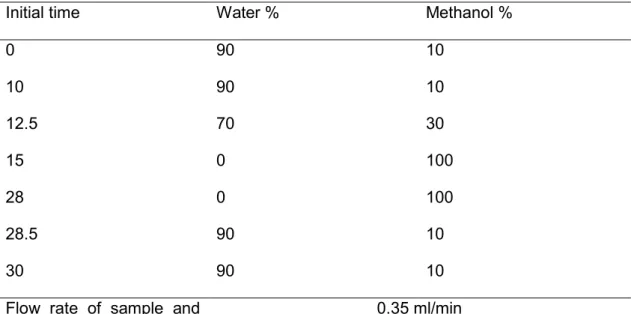
The samples were then washed with distilled water, followed by a minute acidification with 1% HCL (Merck Chemicals and Laboratory Supplies). At the second, third, fifth, sixth and eighth week, root samples were cut aseptically (using sterilized stainless steel scalpels (number 4) with sterilized stainless steel blades (number 24 )), out of the HAM-P systems and placed in a test tube containing 20 ml of 100% methanol (Merck Chemicals and Laboratory Supplies). These samples were then heated overnight in a water bath set at 60˚C in order to extract the free exudates that the roots had released.
Dried concentrated samples were then resuspended in methanol and centrifuged (Genfuge 24 D Progen table top centrifuge) at 10000 rpm for 30 minutes.
Results
Autotrophic culture systems
- Non-AMF plant systems (Control)
- AMF associated to sorghum under HAM-P in vitro culture
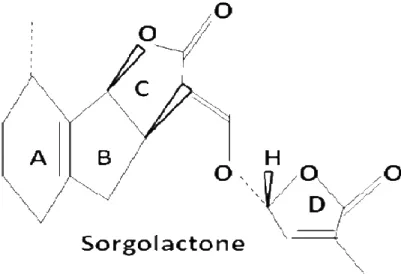
In ES-positive mode, other compounds with the molecular weights of 239m/z and 804m/z (Figure 3.2) were also detected. Compared to the two-week-old system (Figure 3.2), the results showed that additional compounds of different masses were produced. Similarly, comparing Figure 3.2b with Figure 3.4b, new exudates were detected at retention times between 1-13 minutes at low intensities.
The control plants were indicated to be nutrient deficient as leaf discoloration was observed (Figure 3.11a).
Discussion and conclusion
The results of Sato et al. 2003) were used as a reference point to identify potential unknown compounds in this study. The results of Sato et al. 2005) were similar to our results obtained by HPLC where masses of 242 m/z and 301 m/z were observed at high intensities in positive ES mode. Consequently, they recognize all foreign organisms (including symbiotic organisms such as AMF by recognizing their chitin wall) as pathogens, resulting in the death of all organisms surrounding the plant (Fries et al. 1997).
This communication is the result of signals produced by host root exudates, which must be produced in the correct concentration (Giovannetti et al. 1994).
Figures
70 Figure 3.2: LC/MS plot of a methanol-based root exudate extract from a two-week-old sorghum plant showing low molecular weight compounds appearing at high intensity: a. 76 Figure 3.7: LC/MS plot of methanol-based root exudate extract from three-week-old sorghum plant. 79 Figure 3.9: LC/MS plot of methanol-based extract of root exudate from five-week-old sorghum plant.
83 Figure 3.12: LC/MS plot of methanol-based root exudate extract from six-week-old sorghum plant.
In vitro enhancement of spore germination and early hyphal growth of vesicular-arbuscular mycorrhizal fungi by host root exudates and flavonoids. Optimization of seed surface sterilization method under autotrophic in vitro culture system for South Africa. In vitro systems have been developed to investigate the development of various agricultural crops under sterile conditions.
The optimization of the sterilization method provided new opportunities for maize research, such as nutritional development under in vitro culture systems.
Introduction
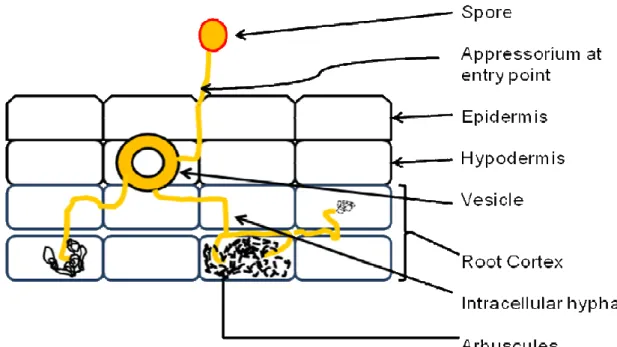
In vitro culture systems are used to investigate the plant-microorganism relationship without interference from other organisms. These systems allowed autotrophic plants and AMF to be grown together on a synthetic medium without sugar or vitamins. The synthetic medium contains all the macro- and micro-nutrients that the plant would require for development, and no excess nutrients are present, as the AMF must form an association in the plant root and thus form a symbiotic relationship.
This technique proved useful for AMF in terms of assessing the life cycle, metabolism, biochemical analysis, symbiotic relationship, environmental factors, mass production, exudates and molecular analysis of the fungus (Voets et al. 2005).
Materials and Methods
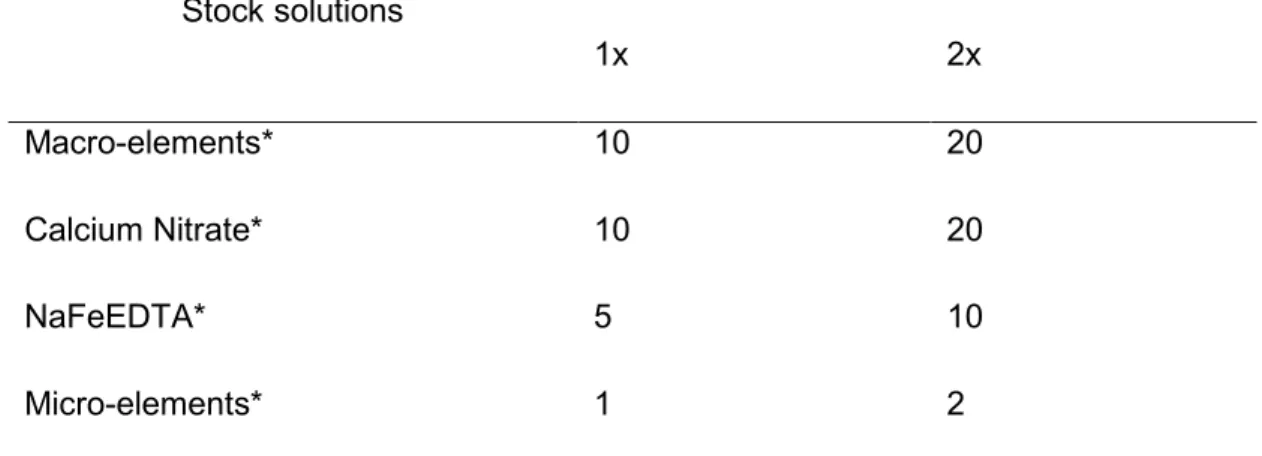
Medium preparation
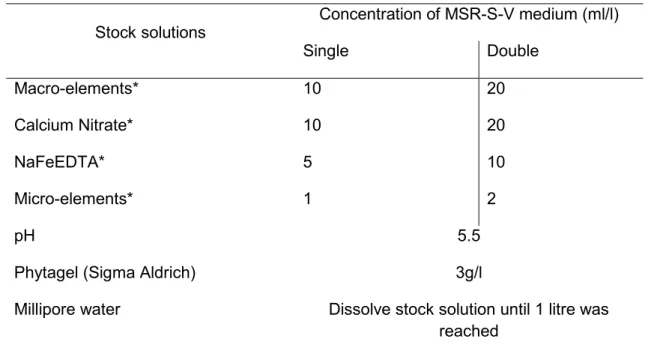
However, duplicating such systems has become tedious. 2006) developed in vitro culture systems, namely Half-closed Arbuscular Mycorrhizal Plant System (HAM-P), which were optimized for this study. The aim of this study was to develop a rapid sterilization protocol, which will produce culturable endophyte-free sterile plantlets. Millipore water was added to dissolve the constructs (Table 4.1) and brought to a volume of 1 liter, while the pH was adjusted to 5.5 using Microprocessor pH 211 meter (Hanna instruments).
Plant material
The surface sterilized seeds were then plated in Petri plates (Merck Chemicals and Laboratory Supplies, 90 mm diameter, 2-3 seeds/plate) containing single concentrated MSR-S-V medium, with the germination points of all seeds (Tip-cap) were placed in one direction. On the eighth day, plates of germinated seeds were incubated (upright - roots facing down and shoots up for growth) in a light phytotron (22˚C day/18˚C night) to allow photosynthetic tissue to develop in the plant. However, the surface sterilized seeds were plated in Petri plates (Merck Chemicals and Laboratory Supplies, 90 mm diameter, 2-3 seeds/plate) containing single concentrated MSR-S-V medium supplemented with antibiotics (Table 4.2), with the germination points of all seeds. (Tip cap) placed in one direction.
On the ninth day, the germinated seed plates were incubated (upright – roots facing down and shoots up for growth) in a light phytotron (22˚C day/18˚C night) to form photosynthetic tissues in the plant.
Development of an autotrophic culture system
Results
Plant material
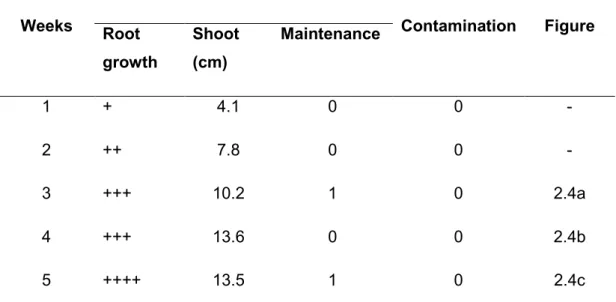
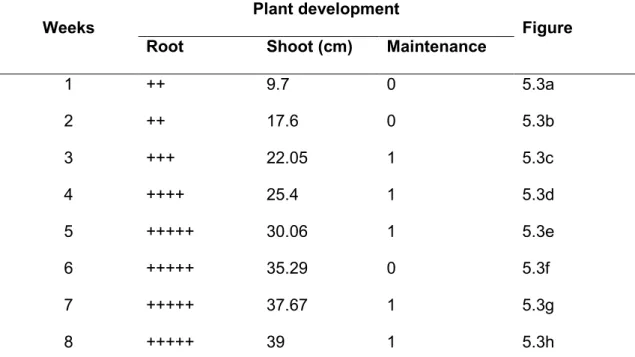
The results showed primary root development with multiple lateral roots in the first two weeks (Table 4.4 and Figure 4.3a-b). In the third week, roots were abundantly formed around the peripheral regions of the Petri dish (Figure 4.3c). No roots were observed in the first week of plant development within the HAM-P systems (Figure 4.4a and Table 4.5).
In the third week, the primary root formed with few lateral roots and the leaves elongated more rapidly (Figure 4.4c).
Discussion and Conclusion
During the first week, no root development was observed (Figure 4.4a), while during the second week, the primary root began to form slowly (Figure 4.4b). Due to the maintenance that took place during the third week, the plants appeared to have adapted to their environment by the fourth week, with numerous lateral roots and longer leaves observed (Figure 4.4d). This may be due to the endophyte using the nutrient supply in the medium after the emergence of the coleoptile.
This then slowed the growth of the plant in the first three weeks of its development.
Figures
A three-week-old system showing the entire system contaminated with a fungal endophyte, which caused the corn to die. A six-week-old system where secondary roots fill the entire plate; however, nutrient deficiencies were noted at this point.
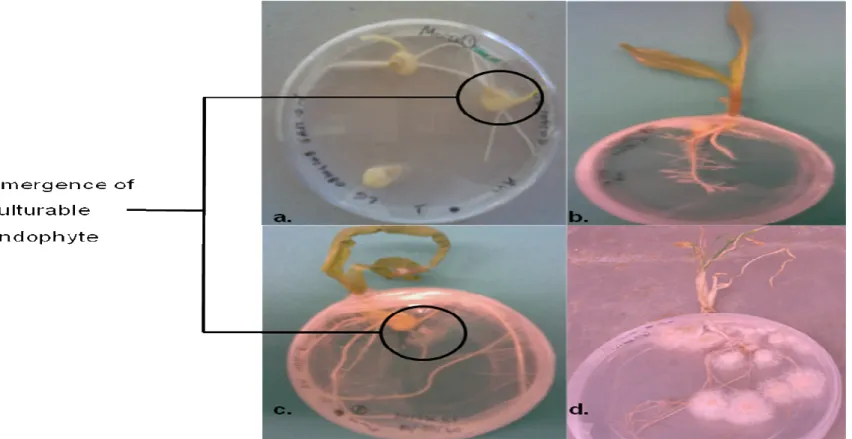
Out of the eleven growth stages, only four growth stages have been imaged under in vitro culture systems. It has been established that under in vitro culture systems, phytochemicals can be secreted by plant roots. The development and observation of maize under in vitro culture systems can focus on nutrient capacities and plant development.
Our results indicated that in vitro culture systems offered new opportunities for the observation of plant development.
Appressorium: An enlargement of the hyphae or germ tube that attaches to the host before penetration occurs. Chemoattractant: A chemical, secreted by the host, that causes external factors to move within the host. 132 Deficiency: A lack or deficiency of an essential substance or chemical required for the functioning of the host.
Endomycorrhiza: Mycorrhizas that produce their hyphae in plant tissue. Endophyte: Plant organism that lives in plant tissue and can be either a fungus or a bacteria.