THE DEVELOPMENT AND IMPLEMENTATION OF POLICY GUIDELINES FOR HEALTH PROMOTION I N THE
WORKPLACE
BY
GUGU GLADNESS MCHUNU
A thesis submitted to the School of Nursing, Faculty of Health Sciences, University of KwaZulu-Natal
I n fulfilment of the requirements for the degree of Doctor of Philosophy (Nursing)
Supervisor: Professor Leana R. Uys
SEPTEMBER 2007
DEDICATION
My family, Mthokozisi, Tumi and Sifiso. Thank you for all the sacrifices, love and sustenance. I love you!
II
ACKNOWLEDGEMENTS
My sincere thanks go to the following people and organizations for their contribution to my work:
• My children, Tumi and Sfiso, God gave me you for a reason. Thank you for your love and understanding when I was not there for you
• My husband, Mthokozisi, for all your love, understanding and support
• My family of origin (Manzi family), especially my mom, if it wasn't for you I wouldn't be in existence
• To all my friends, for your continued support, love and caring
• My supervisor, Professor Leana Uys, for your guidance and believing in me.
Words cannot describe how grateful I am
• National Research Foundation (NRF), for providing me with much needed finances at the beginning of this undertaking
• The Ford Foundation Fellowship program, for believing in me and helping me realize my dream. Thank you for all the much needed financial support
• Nyani for taking care of my children when I was away. Ngiyabonga. God bless you always
• My colleagues at the school of nursing UKZN, thanks for all the support!
• The faculty at Johns Hopkins University, School of Nursing
• All the organizations that participated in the study
III
DECLARATION
I declare that this is my own unaided work. It is being submitted for the degree of Doctor of Philosophy at the University of KwaZulu-Natal, Durban, South Africa. It has never been submitted for any other purpose. All the references used or quoted have been acknowledged by means of referencing.
Gugu Gladness Mchunu
Signed:
tJw^..."".... . a d ^ f J f e f S . H on this . .19... .day ofThis thesis has been read and approved for submission for evaluation.
Professor L. R. Uys
Supervisor
ABSTRACT
The three phased study aimed to develop policy guidelines for workplace health promotion based on an exploration of the current status of health promotion in South African workplaces.
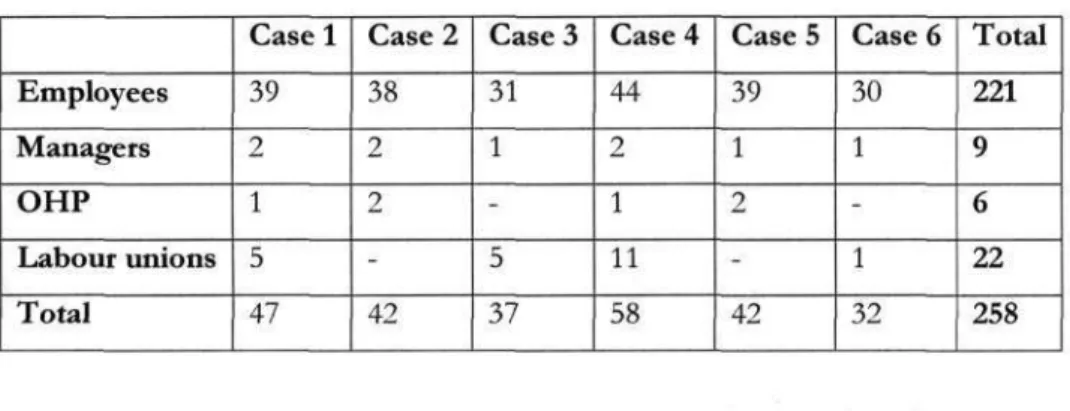
In the first phase of the study a case study approach was used to analyse the current situation of health promotion in the workplace. For this phase of the study the particular aim was to determine to what extent the participating workplaces were involved in health promotion, or were salutogenic in nature. A total of 6 organizations participated in the first phase of the study, with a total of 258 participants. The second phase aimed at developing policy guidelines for health promotion in the workplace. The consensus method, using the Delphi technique, was used in this phase, involving seven participants who were experts in the field of occupational health and health promotion. The third phase was an observation of the implementation of the policy guidelines. Implementation
analysis, which is part of evaluation research, was the methodology used. Two organizations from phase one participated in the implementation phase.
In summarising the findings on the current situation of employee health promotion programs the study showed that none of the participating organizations emerged as health promoting workplaces. Organizations that offered employee health promotion/wellness programs mainly focused on individual health and on HIV/AIDS and none of them was found to provide comprehensive holistic programs that aimed at providing healthy work environments.
V
In phase 2 of the study it emerged that there was a very strong concurrence between the findings from the experts and literature in terms of what needs to be included in health promotion policy guidelines. The key elements for health promotion policy documents were (1) organizational philosophy (2) stakeholder involvement and (3) the description of programs to be included in the policy.
During the policy implementation process it emerged that different strategies were used in the policy development process. This process was largely influenced by such factors as organizational size, type and internal structures. Recommendations include an emphasis on more legislative support for health promotion in the workplace, and for more concrete aids such as policy guidelines and educational preparation of occupational health
professionals for this component of their role.
VI
TABLE OF CONTENT
DEDICATION II ACKNOWLEDGEMENT Ill
DECLARATION IV ABSTRACT V TABLE OF CONTENT VII
LIST OF TABLES XVII LIST OF FIGURES XX LIST OF ABBREVIATIONS XXI
CHAPTER 1: STUDY BACKGROUND
INTRODUCTION 1 BACKGROUND TO THE PROBLEM 3
Multisectoral Approach to Health Promotion 6 Health Promotion in Different Sectors 9
PROBLEM STATEMENT 12 PURPOSE OF THE STUDY 13 OBJECTIVES OF THE STUDY 13 RESEARCH QUESTIONS 13 SIGNIFICANCE OF THE STUDY 14
WORK SETTING BASED HEALTH PROMOTION FRAMEWORK 15
Substantive Concepts Underlying the Framework 15
Salutogenic workplaces 15
The context, process, product and outcome 16 Underlying Assumptions of the Framework 22
Prepositional Statements 23
Relevant Studies 27 OPERATIONAL DEFINITIONS 30
OUTLINE OF CHAPTERS 33
CONCLUSION 33
CHAPTER 2: LITERATURE REVIEW 35 CONCEPTUALIZATION OF HEALTH PROMOTION 35
HEALTH PROMOTION, WELLNESS AND WELLBEING 38 HEALTH PROMOTION THEORIES AND MODELS 39
Individual Level Theories 41 Interpersonal Level Theories 44 Community Level Theories 48 Organizational Change Theories 50
Planning Models 52 Evaluation Models 55 DIFFERENT APPROACHES TO HEALTH PROMOTION 60
HEALTH PROMOTION IN THE SOUTH AFRICAN CONTEXT 70 EVALUATION OF HEALTH PROMOTION INTERVENTIONS 74
CONCLUSION 75
VIII
CHAPTER 3: METHODOLOGY 76
INTRODUCTION 76 PHASE 1: CURRENT SITUATION WITH REGARD TO HEALTH
PROMOTION 76 Research Design 76
Case protocol 78 An overview of the case study project 78
Unit of analysis 78
Sampling 79 Project objectives 85
Data collection procedures 86 Data collection instruments 87 Quality of instruments 91 Quality of research design 94 Guide for the report 97 Data Analysis 99
PHASE 2: DEVELOPMENT OF POLICY GUIDELINES 100
Research Design 100
Sampling 101 Identification of Participants 101
Sample size 101
Delphi Round 1 102
Data collection methods and instruments 102
Data Analysis 103 Delphi Round 2 104
Data collection and instruments 104
Credibility 105 Data Analysis 105 Research Ethics 106
PHASE 3: IMPLEMENTATION OF POLICY GUIDELINES 106
Research Design 106 Participants 107 Data collection and instrument 108
Data quality 110 Data Analysis 110
ETHICAL CONSIDERATIONS I l l
CONCLUSION I l l
CHAPTER 4: RESULTS, CROSS CASE ANALYSIS AND DISCUSSION
(PHASE 1) 112 INTRODUCTION 112 METHODOLOGY 112 RESULTS OF CASE 1 114
X
METHODOLOGY 114 Sampling 114 Data collection process 115
CONTEXT 116 Case description 116
Staff profile 116 Organizational characteristics 120
PROCESS 141 Program structure 141
Health promotion program approach 141 Health promotion program model 144 Health promotion program objectives 146
RESULTS OF CASE 4 149 METHODOLOGY 149
Sampling 149 Data collection process 150
CONTEXT 152 Case description 152
Staff profile 153 Organizational characteristics 157
PROCESS 175 Program structure 175
Health promotion program approach 175
Health promotion program model 178 Health promotion program objectives 178
RESULTS OF CASE 6 181 METHODOLOGY 181
Sampling 181 Data collection process 182
CONTEXT 183 Case description 183
Staff profile 183 Organizational characteristics 185
PROCESS 196 Program structure 196
Health promotion program approach 196 Health promotion program model 199 Health promotion program objectives 199
SUMMARY: CROSS CASE ANALYSIS 202
INTRODUCTION 202 SUMMARY OF STAFF PROFILE 203
SUMMARY OF ORGANIZATIONAL CHARACTERISTICS 206
PROCESS OF HEALTH PROMOTION PROGRAMS 215
CONCLUSION 216
CHAPTER 5: DISCUSSION OF CASE STUDY RESULTS 217
INTRODUCTION 217 WORKPLACE SETTING CHARACTERITICS 218
Staff profile 218 Organizational characteristics 220
PROCESS INVOLVED IN IMPLEMENTING HEALTH PROMOTION
INTERVENTIONS 226 CONCLUSION 231
CHAPTER 6: DEVELOPMENT AND IMPLEMENTATION OF POLICY
GUIDELINES (PHASES 2 AND 3) 233
INTRODUCTION 233 PHASE 2: DEVELOPMENT OF POLICY GUIDELINES 233
METHODS 233 DELPHI ROUND 1 234
METHODOLOGY 234 Participants 234
RESULTS 235 Health promotion policy 235
Employee awareness of health promotion programs 241
Type of health promotion programs 244
The context 245 Health promotion models and approaches 249
DISCUSSION 250 CONCLUSION 255 DELPHI ROUND 2 255
Participants 255 Data collection and instruments 256
RESULTS 257 SECTION A: FINDINGS OF ROUND 1 258
SECTION B: POLICY GUIDELINES 260 DEVELOPMENT OF POLICY GUIDELINES 262
CONCLUSION 263 PHASE 3: POLICY GUIDELINES IMPLEMENTATION 264
INTRODUCTION 264 SAMPLING 264 OBSERVATION OF POLICY GUIDELINES IMPLEMENTATION 266
CASE 2 267 Case definition 267 Data collection process 268
Implementation of policy guidelines 269
CASE 4 281 Case definition 281 Data collection process 282
Implementation of policy guidelines 283
DISCUSSION 290
POLICY GUIDELINES IMPLEMENTATION TOOLS 299
CONCLUSION 299
CHAPTER 7:SUMMARY, CONCLUSIONS AND RECOMMENTATIONS 301
INTRODUCTION 301 SUMMARY OF FINDINGS 301
Phase 1: Current Situation of Health Promotion 302 Phase 2: Development of Policy Guidelines 307 Phase 3: Implementation of Policy Guidelines 309
CONCLUSIONS 311 Phase 1: Current Situation of Health Promotion 312
Phase 2: Development of Policy Guidelines 327 Phase 3: Implementation of Policy Guidelines 331
STUDY LIMITATIONS 334 RECOMMENDATIONS 336
CONCLUSION 342 REFERENCES 345 APPENDICES 366 APPENDIX 1: INSTRUMENTS
Phase 1:
Instruments 1: Employee questionnaire
Instrument 2: Interview schedule for labor organizations
Instrument 3: Interview schedule for managers
Instrument 4: Interview schedule for OHPs Phase 2:
Instrument 5: Round 1 Instrument 6: Round 2
Phase 3:
Instrument 7: Observation guide for field notes Instrument 8: Checklist
APPENDIX 2: PERMISSION LETTERS Permission letter from UKZN ethics committee Permission letter from faculty research committee
Permission letter from Bioethics, Medical Law and Research Ethics committee Permission letters from organizations: cases 1 to 6
APPENDIX 3: EXAMPLES OF CONSENT LETTERS Consent letter for organizations
Consent letter for individual participants Consent letters for participants in phase 2
APPENDIX 4: DEVELOPED TOOLS
Policy guidelines for workplace health promotion
Algorithm for policy guidelines
Table 4.15: Explanation of policy in case 4 163 Table 4.16: Employee description of health promotion programs in case 4 167
Table 4.17: Health promotion programs identified by employees in case 4 171 Table 4.18: Employees' views on availability of health promotion
resources in their workplace in case 4 174 Table 4.19: Views on the aims of health promotion programs in case 4 177
Table 4.20: Employees' response to the statements about health
promotion programs, policies and safety in their workplace in case 4 180
Table 4.21: Job types in case 6 185 Table 4.22: Employees' explanation of health promotion policy in case 6 189
Table 4.23: Response to the statement "policies focusing on health
promotion are in place in this workplace" in case 6 189 Table 4.24: Employees' description of health promotion programs in case 6 191
Table 4.25: Employees' response to the statements on availability of
health promotion programs resources in case 6 196 Table 4.26: Views on the aims of health promotion programs in case 6 198
Table 4.27: Employees' response to the statements about health
promotion programs, policies and safety in their workplace in case 6 201
Table 4.28: Cross case analysis of age of participants 204
Table 4.29: Gender of participants in all 6 cases 205
Table 4.30: Highest level of education in all 6 cases 205
Table 4.31: Summary of organizational characteristics 207
Table 4.32: Health promotion programs in all 6 cases 209
Table 4.33: Health promotion programs identified in all 6 cases 210 Table 4.34: Awareness on health promotion activities by
employees at different levels of employment 211 Table 4.35: Employee involvement in health promotion programs by age 212
Table 4.36: Involvement in health promotion activities by race 213 Table 4.37: Involvement in health promotion programs by educational levels... 213
Table 4.38: Involvement and awareness on programs in different
levels of employment in all cases 214 Table 4.39: Employees' response to the statement "we need more
health promotion programs in this workplace" 215 Table 4.40: Cross case analysis of the process of health promotion 216
Table 6.1: Panel of experts (Round 1) 235 Table 6.2: Need for health promotion policy 236 Table 6.3: Structure of health promotion policy 240 Table 6.4: Awareness strategies for health promotion programs 243
Table 6.5: factors to be considered when designing health promotion programs... 244 Table 6.6: Employee characteristics for planning health promotion programs ... 246
Table 6.7: Stakeholder involvement in policy development 248 Table 6.8: Models for workplace health promotion planning 249 Table 6.9: Approaches to workplace health promotion programs 250
Table 6.10: Panel of experts (Round 2) 256 Table 6.11: Health promotion programs to be included in the policy 261
Table 6.12: Deciding on health promotion programs to be included 261
Table 6.13: Summary of policy guidelines implementation process 297 LIST OF FIGURES
Figure 1.1: Work setting based Health Promotion Framework 29
Figure 4.1: Health promotion programs in case 1 133 Figure 4.2: Identified health promotion programs in case 1 135
Figure 4.3: Reasons for non involvement in health promotion activities 138
Figure 4.4: Age of respondents in case 4 153 Figure 4.5: Age of distribution respondents in case 6 184
Figure 4.6: Health promotion programs in case 6 193 Figure 4.7: Reasons for non-involvement in health promotion programs in case 6 194
Figure 4.8: Aims of health promotion programs in case 6 199
LIST OF ABBREVIATIONS ARV(s) - Anti-Retroviral(s)
CIPP - Context Input Process Product CIPP- Context Input Process Product model EAP - Employee Assistance Program EWP - Employee Wellness Programs HFA - Health for All
HIV/AIDS - Human Immunodeficiency Virus and Acquired Immunodeficiency Syndrome
HP - Health promotion HR - Human Resources
MOSA - Machinery and Occupational Safety Act (Act No. 6 of 1983) NIOSH - National Institute for Occupational Safety and Health OHN - Occupational Health Nurse
OHP - Occupational Health and Safety
OHS Act - Occupational Health and Safety Act (Act No. 85 of 1993) PHC - Primary Health Care
PPE - Personal Protective Equipment RSA - Republic of South Africa SME- Small Medium Enterprise TB - Tuberculosis
WHO- World Health Organization
WHP - Workplace Health Promotion
XXII
CHAPTER 1 STUDY BACKGROUND INTRODUCTION
The health and safety of workers in the South African workplace is protected by the Occupational Health and Safety Act (OHS Act) (Act 85 of 1993) (Republic of South Africa 1993 a, p.l). This Act covers workers employees in both private and public sector organizations. There appears to be a huge difference in practice as far as the health and safety of employees is concerned in both these sectors. According to Khambula (2003), this problem may be linked to the fact that this Act came into operation only in 1993.
Before the OHS Act was introduced, other Acts focusing on employees' safety were in operation.
Between 1941 and 1983 the safety of employees was covered under the Factories Machinery and Building Work Act (Act 22 of 1941) (Piennar, Nathan, Wilson & Morton 1943, p.l). This Act focused mostly on the safety of employees and engineering, in the industry within the private sector.
From 1983 until 1993 the Machinery and Occupational Safety Act (MOSA) (Act 6 of 1983) was the only Act that focused on the safety of the employees (RSA 1993 b), but focused also on the private sector as the workplace. Female employees, mostly in the public sector, were covered under the Offices, Shops and Railway Premises Act 1963 (Commencement No 3) Order 1989 (Khambula 2003, Samuels 1963, p. 539). The OHS Act is therefore different in that it focuses on the health and safety of all employees in all work settings.
Current legislation suggests that employees in all sectors have to be treated equally as far as their safety and health is concerned. The OHS Act provides for "the protection of persons at work against hazards to and safety arising out of or in connection with the activities of persons at work" (RSA a
- 1 -
1993, p.l). The employee can be any person who is employed in any sector. The workplace is also defined in the OHS Act as "any premise or place where a person performs work in the course of his employment" (RSA 1993 a, p.l).
Men and women, in both public and private sectors are exposed to similar health hazards.. Literature reveals that men and women are equally exposed to heart diseases such as coronary heart disease, except that the incidence in women triples after menopause (Cheek & Cesan 2003, p.39). Due to the gender orientation of most workplaces, which focus mostly on men, health programs offered for the employees often do not focus on women's health issues. These issues include the need for such programs as those focusing on breast cancer, cancer of the cervix, cardiovascular disease,
reproductive health and so on. Some organizations, such as the health sector, have more female than male employees. These organizations still do not provide health promotion programs which target women's health problems, but the programs are generalized, such as HIV/AIDS programs and disease management programs. In the health sector, health promotion programs also focus more on clients than on employees. It might be argued that hospital employees know their health needs owing to being in the health care industry, but not all hospital employees are health care professionals. The needs of clerical staff, porters, general assistants and others need to be addressed.
The South African workplace is divided into public, private and parastatal sectors. The parastatal are a combination of both public and private sectors. The health services may fall under any of these sectors. The study will explore health promotion interventions in all these sectors.
- 2 -
BACKGROUND TO THE PROBLEM
Adult health is influenced mainly by three factors, namely, environmental impacts, risk behaviour and the lingering effects of health or ill health developed during childhood (Benatar, Doherty, Heunis, Mclntyre, Ngwena, Pelser, Pretorious, Redelinghuys & Summerton, 2004, p.239). In South Africa, unlike in the developed countries, the main causes of morbidity and mortality in adult population are a combination of lifestyle diseases, such as cardiovascular diseases, diabetes, HIV/AIDS and infectious diseases. In 2006 Statistics South Africa announced that obesity has
reached epidemic rates in South Africa, with women more at risk of dying of obesity-related diseases than men. This revelation is different from the statistics in the United States, where the leading cause of death, amongst others, is cardiovascular disease, cerebrovascular disease and diabetes (National Center for Health Statistics 1999, p. 2). Research has linked these diseases to sedentary lifestyles, poor eating and lack of exercise (O'Donnell 2002, p. 4). Furthermore literature shows that much of the disease burden in South Africa is due to preventable causes (Benatar et. al. 2004, p.242). In addition to this disease burden the South African population is faced with a very high number of HIV/AIDS related deaths, as this epidemic is the number one cause of death in South Africa.
The health of the South African workforce is put at risk due to their exposure to environmental risk factors and risky behaviours. Implementing employee health programs in the workplaces could be one way of assisting in targeting this adult population group for health promotion activities. Other related interventions can also be vital to curb the growing preventable disease burden. The OHS Act which formed the basis of this study aims to target workplace health and safety for all employees equally. This Act, which is meant to protect employees' health and safety, states that "every
employer shall provide and maintain as far as reasonably practicable, a working environment that is safe and without risk to the health of his employees" (RSA 1993, p.l).
- 3 -
Health promotion is arguably the most essential component of effective health care provision, at individual, family, community and society levels. It is debatable, however, whether the practice of this concept has been implemented to the same extent as it has been applauded. Five different approaches to health promotion have been identified, and these include (a) medical/preventive (b) social change (c) behaviour change/lifestyle (d) empowerment, and ( e) settings approaches. The settings approach is considered as the most important approach in achieving the goals of health promotion and health for all (Cullen 2003, p . l , Ewles and Simnett 1995, p. 36, Naidoo and Wills 2000, p. 261, WHO 1997 p.5). The settings approach to health promotion calls for the utilization of such settings as mega cities, islands, cities, municipalities, local communities, markets, schools, the workplace and health care facilities as settings for health promotion (WHO 1997, p.3, Chu, Breucker, Harris, Stitzel, Gan, Gu, and Dwyer 2000, p. 155). This approach suggests that any place where there are people interacting can be considered as a suitable environment for health promotion activities.
Since there is an interaction between the individual and his/her work environment (WHO 1988), health promotion interventions should not only be directed towards the individual but to the work environment as well. Chu et al. (2000) suggest that health promotion in the workplace should increasingly address individual, organizational and environmental risk factors. The proponents of workplace health promotion therefore strongly feel that health promotion programs should focus on the individual and his workplace.
The University of California Irvine (UCI) (2003, p. 2) health promotion centre argues that employees who are exposed to more health risks utilize more medical care and have more health related costs. Their assumption is that improvement in health behaviour will benefit both the
- 4 -
individual employees and the company. Most research done on health promotion interventions has hitherto focused on individual health behaviour and interpersonal behaviour and not much on the health behaviour within groups, organizations and even the whole community (Oldenburg, Glanz, &
Ffrench 1999, p. 503). Glanz and Rimer (1995, p. 35) argued that contemporary health promotion should focus not only on educational activities but also on advocacy, organizational change efforts, policy development, economic supports, environmental change and multi-method program.
With the South African workplaces, both public and private health and corporate sectors having undergone tremendous changes since 1994, it is not clear if settings approach to health promotion has been incorporated in the implementation of occupational health and safety programs in the workplace. Through informal conversation with representatives from different organizations, it emerges that most South African organizations (private and/or public) offer only some of the health promotion programs and there appear to be no fixed policies on health promotion in the workplace.
The South African Department of Health itself has failed to produce a formal health promotion policy document, although a draft policy has existed since 1994. So far, this department has tried to initiate health promotion programs in schools and most recently in the workplace, but again these projects are new and the department is still working out what needs to be done to make them successful (Strachan 2000, p.l).
South Africa is embroiled in the war against communicable diseases such as HIV/AIDS and Tuberculosis, which affect workers in all sectors. There is therefore a need for health promotion interventions focusing on improving the status of South African workplaces to be more health promoting. Presently, in South Africa, there is a dearth of research focusing on the evaluation of
- 5 -
health promotion initiatives or interventions in the workplace. The majority of health promotion interventions world-wide have been based on models focusing on individual and interpersonal health behaviour and much less attention has been given to models or theories which attempt to understand change within groups, organizations and even the whole community (Oldenburg, Glanz, and Ffrench 1999, p. 503). South Africa has been no exception to this trend, as there seems to be poor emphasis on an environmental rather than personal approach to health promotion interventions (Coulson 2000, p. 1).
Multisectoral Approach to Health Promotion
In the WHO (2001, p. 5) report on health promotion strategy for the African region, the regional director mentioned that with HIV/AIDS pandemic in this region, the WHO recognised the need to involve all people in addressing the broad determinants of health. One of the strategies that was identified was to mobilize new players, the non-governmental and private institutions to join in the effort to achieve health for all in the 21s t century and also in health development. One of the identified guiding principles in this WHO regional strategy was tapping in all sectors and creating partnerships between different sectors.
This WHO strategy suggests that for successful health promotion initiatives all sectors need to work together towards the same goal of promoting the health of their employees. These different sectors can be in the form of private corporate organization (the private sector), universities, which are semi- private, prisons and hospitals, either in the public sector or the private sector. This strategy also requires working with smaller institutions within the society in order to reach the people in different sectors. Wass (2000, p. 174) believes that since society at large is made of smaller institutions and within these institutions people are exposed to healthy or unhealthy environments, operating at
- 6 -
institutional level can have a forceful impact on people's lives. The argument is that the people who are employees are members of the society; hence working with institutional policies in order to influence healthy public policies can be another approach to heath promotion (Wass 2000, p. 174).
Healthy public policies, which are one example of health promotion initiatives, focus on the larger society and are common in most countries. South Africa is one country which has implemented such policy in the form of Tobacco Legislation. Healthy public policies are viewed as an infrastructure for sustainable health promotion interventions (Stachenko 1994, p. 107). The criticism of this kind of intervention has been that society is too broad and hence it is difficult to monitor the outcomes of such interventions (Wass 2000, p. 175). Working with smaller institutions within the broader society is therefore seen as an effective approach to health promotion initiatives.
The health sector is often excluded when exploring employee health promotion/wellness
interventions as it is assumed that health workers can take care of their own health needs. Maben and Macleod-Clark (1995, p. 1160) have argued that since the hospital has workers (health
professionals), patients and relatives, it can therefore provide a good setting for workplace health promotion. The WHO (1986, p. 3) also advocated that health services need to be reoriented so that they play a role in encouraging people to adopt healthy lifestyles and to make their living
environment more health promoting. They therefore initiated the Health Promoting Hospital Initiative in 1988, based on the Ottawa Charter (WHO 1996, p. 2). The WHO Health promoting hospitals initiative means that health promotion in the hospital should address the needs of everybody associated with the hospital, including staff, patients, and the broader community.
- 7 -
According to the White Paper On Transformation of Health Services (RSA 1997, p. 146), work related diseases include diseases related to (a) chemical agents, resulting for instance in skin problems, (b) biological agents, resulting for instance in Tuberculosis, (c) ergonomical hazards, resulting for instance in back pain, (d) psychological hazards, resulting for instance in stress and stress related diseases, and (e) physical agents, resulting for instance in noise induced deafness.
Jeebhay and Jacobs (1999) also outline that the most common occupational diseases outside the mining industry are noise induced hearing loss, major depression, dermatitis, and tuberculosis.
Except for the noise induced hearing loss, health workers are no exception to being affected or infected by these diseases. Hope, Keller, and O'Connor (1998, p. 440) argue that the nursing profession is a stressful one, with the major source of stress being the nature of the work itself, the role of the nurse, career aspects and organizational structures, and concern about infectious disease such as HIV/AIDS.
This evidence raises questions as to how much is being done to protect health workers in the hospital setting from being exposed to these risk factors. Runy (2000, p. 454) argues that nurses work long hours, are exposed to hazardous substances and believes that there is a need for a hospital risk management strategies. As much as this is true, the problem at this stage is that hospital risk management is mostly client-centred and is regarded as an extension of normal clinical
responsibilities (Young 2001, p. 1). Risk management is seen as involving "the development of strategies to prevent patient injury, minimize financial loss and preserve agency asserts" (Marriner- Tomey, 1996, p.454).
In the private sector the legislation and the unions are putting pressure on the importance of minimizing accidents and disease hazards in the workplace (Wolfe, Parker, & Napier 1994, p.23).
- 8 -
One such legislation in South Africa is the OHS Act. This Act emphasizes that employers should identify work related hazards and risks in the workplace and to prevent exposure of employees to such risks. Different organizations have responded to this Act by putting some health promotion interventions in place regarding employee health, such as employee assistance programs (EAP), HIV/AIDS programs, and continuous employee surveillance (Woods cited in Huiskamp 2003, p.6).
Some workplaces have, in addition to these programs, initiated smoking cessation programs, chronic disease management, weight control and physical fitness programs as part of their health promotion interventions. Woods argues that these health promotion activities perform a vital function in helping employees take care of their health in the midst of organizational change. It is, however, not clear whether organisational policies that focus on health promotion interventions do exist in these organizations as part of enhancing the health of employees and also to promote healthy
environments. One of the challenges identified by the WHO (2001, p. 5) on the implementation of health promotion is the lack of health promotion policies and guidelines for the coordination of different methods and approaches.
Health programs are not a statutory requirement, but, according to the WHO (1988, p.8),
occupational health services provide a focus for their implementation. Health promotion programs are based on humanitarian and economic value (WHO 1988, p. 12), and this is true for both the public and the private sector. It is therefore imperative to explore the health promoting activities in these sectors and to identify the existing health promotion programs and policies. This analysis will assist in identification of specific individual and/or organizational characteristics that can be utilized in health promotion policy development.
Health Promotion in Different Sectors in South Africa
According to Coulson (1999, p. 291), health promotion in South Africa is a multisectoral activity as in most other counties. The organizations involved include the government, non-government and private sectors. For South Africa, as part of the global market, health promotion is becoming more important. Chu et al. (2000, p. 155) argued that the concept of a health promoting workplace is becoming more important and relevant as more public and private institutions recognise that future access to the globalised marketplace can only be realised through healthy, qualified and motivated workplaces. For this reason, health promotion is gaining momentum worldwide (Huiskamp 2003, p.
56). In South Africa, the government is showing concern about the well being of working individuals. The dilemma at this stage is that there is not enough infrastructure in place as far as workplace health promotion is concerned. In her review of health promotion infrastructure, predominant approaches and the present capacity gaps, Coulson (1999, p. 289), focused on
government institutions. The review revealed that, in South Africa, health promotion focus was on environments such as the schools. Strachan (2000, p.l) suggests that even though South Africa has tried to put such initiatives in place, this country has so far failed to evaluate these interventions and to publish the results of the process and progress of such interventions.
The WHO (2001, p. 6) has emphasized the importance of health promotion action in different sectors as, they argue, this will contribute towards the achievement of priority programs of the WHO's African region. The objectives of these priority programs include, among other things (a) prevention of communicable disease such as HIV/AIDS, tuberculosis and Malaria (b) prevention of non-communicable disease such as mental illnesses, cardiovascular diseases, diabetes mellitus, and cancer and (c) fostering lifestyles and conditions that are conducive to physical, social and emotional well being (WHO 2001, p. 7).
- 1 0 -
The impact of communicable diseases such as HIV/AIDS in the workplace calls for strategies that will improve the deteriorating health status of the workforce in all sectors. These strategies can be in the form of psychosocial support for those who are already infected or affected by the disease or prevention strategies for those who are not infected. The HIV/AIDS pandemic requires reform in policies and institutional arrangements such as an integrated approach combining the core
interventions that include primary prevention and care and support of people living with HIV/AIDS
(Tawfik & Kinoti 2001, p. 4). Health promotion interventions can therefore be implemented as one of the human resource development strategies in the fight against HIV/AIDS pandemic.
There is a need to redirect health promotion strategies so that there is a shift from workplace health promotion to health promoting workplaces or healthy workplaces. Workplace health promotion refers to health promotion activities in the workplace. This approach focuses only on certain areas or individuals within the workplace and tends to focus on a single illness or risk factor, whereas healthy workplaces or health promoting workplaces means that health promotion programs have to focus both on individual risk factors and the broader organizational and environmental issues, starting from policies to management attitudes (Chu et al. 2000, p. 156).
P R O B L E M STATEMENT
Workplace health promotion has been applauded as a holistic approach, which addresses both individual risks and the broader organizational and environmental issues (Chu et al. 2000, p. 155, Wilson, De Joy, Jorgenson, and Crump 1999, p. 360). Literature review reveals that in South Africa, little research has been conducted to review the process of health promotion interventions in the workplace and other settings (Strachan 2000, p.l).
- 1 1 -
Although health promotion intervention have been implemented in South Africa, such as healthy public policies and the Health Promoting Schools Project, a program of health promoting
workplaces is yet to be reviewed (Coulson 1999, p.297). There is a lack of formal documentation on what is happening as far as health promotion is concerned and the existing policies are still draft policies (Coulson 1999, p.300). Reviewed literature indicates that to date the health promotion policy document still remains in a draft form. There is also no evidence of any evaluation studies conducted concurrently in public and private sectors, focusing on workplace health promotion. A report on the findings of the review of occupational health services in Department of Health facilities focused on the public sector (Vergotine 2003, p i ) . Furthermore, reviewed literature shows that health promotion research in the health sector is focusing on the health promotion of patients rather than on the human resources. There is therefore a need for a comprehensive research study, which will explore health promotion programs in different sectors, and focus on employees' health as part of the human resource development plan.
The National Directorate of Health Promotion has advocated the settings approach to health
promotion, but more attention has been paid to the health promoting schools projects and the health promoting workplaces initiative has not fully been initiated so far (Coulson 1999, p.297, Moodley 2003). For these changes to occur, guidelines applicable to the South African workplaces need to be developed. Therefore, evidence of workplace health promotion policies or programs in different sectors need to be explored, to assist in the development of health promotion guidelines for the workplace.
Literature review also reveals that little research has been done on wellness programs involving hospital employees (Pender 1987, p. 85). Personnel in hospital settings have a responsibility to care
- 1 2 -
for their clients. They have vast knowledge of health promoting activities and yet this knowledge is not often applied to their personal lifestyles. The majority of health promotion initiatives focus on the patients rather than on all the individuals in the hospital environment, including the staff (Pender
1987, p. 85).
There is therefore a need for a comprehensive study to explore health promotion programs and policies in all these work settings in order to develop policy guidelines for workplace health promotion, which will be applicable in all sectors.
PURPOSE OF THE STUDY
The purpose of the study was to develop policy guidelines for workplace health promotion based on an exploration of the current status of health promotion in South African workplaces.
OBJECTIVES OF THE STUDY
1. To describe the current situation in private and public organizations, in terms of a settings-based health promotion framework.
2. To develop policy guidelines to improve the functioning of workplaces as health promoting settings.
3. To evaluate the implementation of the guidelines in selected organizations.
RESEARCH QUESTIONS Related to objective 1:
1.1 What characteristics do work settings have which have influence on health promotion activities?
1.2 What process is involved in the implementation of health promotion interventions?
- 1 3 -
1.3 What is the organisation doing to support health promotion interventions?
Related to objective 2:
2.1 Who should be involved in developing health promotion policy guidelines, and how should they be involved?
2.2 What should be included in the health promotion policy?
2.3 How should the health promotion policy be implemented?
2.4 How should the health promotion program be evaluated?
Related to objective 3:
3.1 How do the organisations implement policy guidelines?
3.2 Who is involved, and what process was followed to involve them?
3.3 Which aspects were successfully implemented and which were not?
3.4 What are the barriers during implementation?
3.5 What are the support factors?
3.6 What are the short-term outcomes?
SIGNIFICANCE OF THE STUDY
There has been a concern that in South Africa even though workplace health promotion is one of the health priorities, according to the governments five-year plan submitted by the National Directorate for Health Promotion (RSA 1997), very little has been done at this stage to implement it (Coulson 2000, p. 1). In the White Paper for the Transformation of Health Services in South Africa, the government pledges "to create and sustain work environments which will support and sustain
- 1 4 -
positive health outcomes through policies and programs" (RSA 1997), but some government owned institutions have still not implemented workplace health promotion strategies.
The results of this study can therefore be utilized to assess progress on the implementation of workplace health promotion programs and to identify barriers and impediments to the
implementation of such programs. These results will be used to formulate guidelines to implement workplace health promotion policies in both the public and private sector, in order to bridge the gap between these two sectors. The findings can also serve as guidelines in policy formulation and in the implementation of health promoting hospitals in South Africa.
WORK SETTING BASED HEALTH PROMOTION FRAMEWORK
Owing to the lack of a relevant model or framework in the reviewed literature, a work setting based health promotion framework was developed, based on the literature, to address certain variables.
The framework draws from four different theories, namely Antonovsky's salutogenesis model (1983), Stufflebeam's Context Input Process Product (CIPP) model of evaluation (1983), Berrien's general systems theory (1968) and Nutbeam's outcome model for health promotion programs (2000).The work setting based health promotion framework consists of four distinct variables, namely, the salutogenic workplaces, the context, the process and the product.
Substantive Concepts Underlying the Framework Salutogenic workplaces
In this framework, the definition of a salutogenic workplace draws from Antonovsky's (1983) Salutogenic Model (Antonovsky, 1996).In the salutogenesis model the emphasis is on the
importance of a supportive environment in assisting the individual to cope with external stressors.
- 15-
The argument is that the health of individuals depends on their ability to cope and the supports or resources they can turn to for help. The resources can be internal, such as self-esteem, or external, such as the local environment and cultural influences (Royal College of Midwives 2002, p.l). The focus in this framework is on the external environment and the available resources as a form of support for the individuals. Salutogenesis focuses on the promotion of well-being or health creation (Macdonald, McDermott, Woods, Brown & Sliwka, 2000, p . l ; Cowley and Billings 1999, p. 994).
Macdonald et al. (2000, p.3) have linked salutogenesis to resilience because of its health promoting approach. These authors have further asserted that the term 'salutogenesis' extends beyond the psychological focus to be the enhancement of environmental health.
This framework depicts a salutogenic workplace as the one that is health promotive and provides a physical working environment that is supportive to the health of the employees - the focus being on the individuals', and their psychological and physical environment. Salutogenic workplaces also need to provide resources to support the health promoting programs offered in the workplace.
Effective health promoting workplaces provide appropriate resources to facilitate activities designed to improve well being and that a supportive environment is required to enhance the health promotion program in the workplace (Cowley & Billings 1999, p. 1001).
To define a salutogenic workplace further a definition of a health promoting workplace by The National Steering Committee for Health Promotion in the Workplace (1998, p.3) will be adapted, that is, a salutogenic workplace should provide educational, organizational and economic activities that are designed to improve the health of workers and therefore the community at large.
Furthermore, these health-promoting programs in the workplace should be distinct and separate from
- 1 6 -
the responsibilities which employers have in the implementation of occupational health and safety measures in the workplace.
The context, the process, the product and the outcome
The next four variables, namely the context, the process, the product and the outcome, are based on Stufflebeam's CIPP model of evaluation (1983), Berrien's General Systems Theory (1968), Donabedian's Systems Theory (1968) and Nutbeam's outcomes model (2000). According to the CIPP model the evaluation of an organization should focus on four domains namely, the context, input, process, and product (Stufflebeam, 1983 p. 122). According to Stufflebeam (1983) "the context evaluation is used to identify institutional context and its needs, the input evaluation is used to identify institutional needs and capabilities, process evaluation records and judges procedural events and activities and the product is aimed at describing and judging the outcomes and relating them to the objectives" (pl29).
Berrien (1968) in his general systems theory argue that a system consists of inputs, which are seen as information introduced to the system, the components which interact in order to produce an output (pi5), and the outputs, which are those energies, information, or products that components discharge from the system into the suprasystem. The workplace is viewed as a system with interdependent components that work together for the overall objective of a whole (Berrien, 1968 p.l 1). Berrien (1968 p. 17) argued that the components of the system should interact among themselves in some way on stimuli they receive to produce an output. According to the general systems theory (Berrien
1968 p. 17), components need not be homogeneous although homogeneity is not eliminated.
- 1 7 -
Donabedian (1969), on the other hand, views a system as composed of three components, namely, the structure, which consists of the inputs and organizational parameters; the process, which consists of content or throughput; and the outcomes which consists of end points or impact.
Donabedian in this model proposes a causal linkage between the structure, process and outcome variables that can be modified by intervening variables or feedback to the system (Albrecht &
Nelson 1993 p. 44).
Context
Stufflebeam (1983) views context evaluation as focusing on institutional context and identifying institutional needs (p.129). In this framework the context is viewed as a social context of an
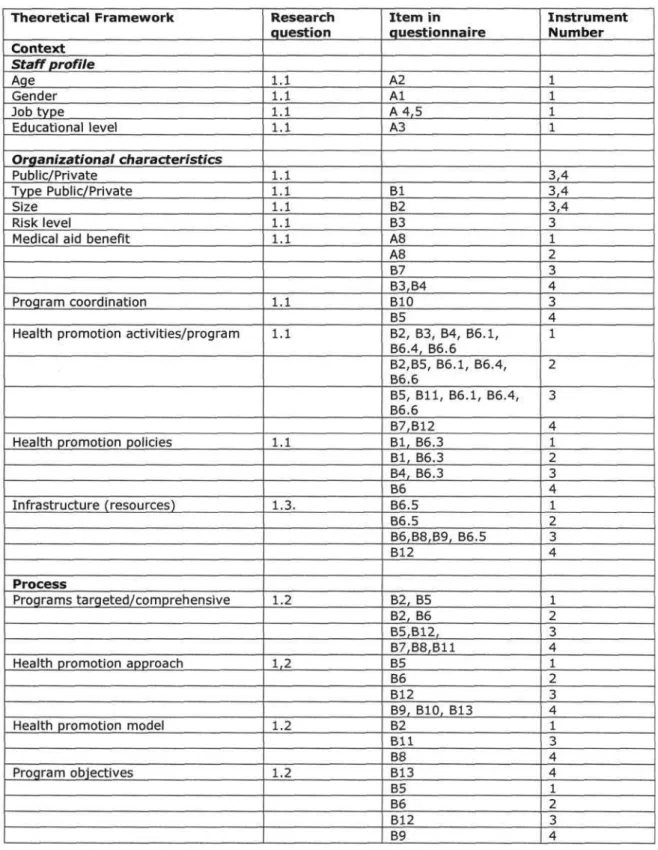
organization (Peltomaki et al. 2003, p. 116). This includes such characteristics as (1) employee staff profile (demographic characteristics) such as age, gender, racial/cultural background, job type, level of education, contract or full time employees; (2) organizational characteristics such as size, public/private sector, health promotion activities, medical aid, health promotion policies, type of industry, types of risks/hazards, infrastructure (availability of resources/facilities supporting health promotion); and (3) stakeholders comprised of any individual, groups or organizations who may influence the decision making within the organization. They are expected to provide support for health promotion programs. Such people will include employees, labour unions, occupational health practitioners and management.
Within this framework the context of workplace health promotion programs are examined in terms of what they are, and how they are offered. The existence of health promotion programs is explored through the identification of all health promotion activities offered in the workplace. The aim is to determine whether any health promotion programs or activities do exist in an organization.
- 1 8 -
Examples of such programs are (a) HIV/AIDS programs (b) employee assistance programs (EAP) (c) ergonomics (d) safety in the workplace (e) spirituality (f) weight control (g) nutrition and food (h) physical fitness (i) smoking/substance abuse cessation (j) stress management, (k) chronic disease management and others.
A policy is defined as a written document based on the philosophy of the organization, which stipulates the guidelines on how health promotion programs/activities are implemented in the workplace. This document will deal with such issues as smoking/substance abuse in the workplace.
The policy should stipulate who is responsible for execution of all health promotion activities.
Policies are expected to be accessible to all employees and managers and trade union members.
Infrastructure in this framework is understood as the presence of any facilities or resources that will facilitate the successful implementation of health promotion activities and /or programs. These include facilities for physical activity and exercise within the worksite, availability of low fat and low calorie food choices in canteens (Oldenburg et al. 2002 p.289), and financial support.
Process
Donabedian (1969) defines the process of a standard as "actions in implementing and monitoring the standard" (p.9). The process also deals with explaining the methods used to provide and carry out the procedure. Stufflebeam (1983) describes an objective of process evaluation as to record and judge procedural events and activities and hence to get an overview of how the program is operating (p.
133). The idea of conducting process evaluation is to gain more understanding of the phenomenon under study (Stufflebeam 1983, p. 133).
- 1 9 -
A health promotion program is defined based on the definition by Wilson et al (1999), where it is defined as "formal, planned sessions that address any health related issue" (p. 360) In addition to this definition, these sessions must involve employees at all levels and be offered within the workplace setting.
One crucial variable to be included under the process in this framework is the assessment of whether the programs are targeted or comprehensive health promotion programs. A comprehensive
workplace health program consists of three levels, namely, (a) awareness which involves educational opportunities that prepare an individual to change behaviour, (b) behaviour change which involves additional educational opportunities (c) a supportive environment is linked to behaviour change, in that if the behaviour change occurs in a supportive environment, that change is most likely to occur and be maintained (Schmitz, in Sol and Wilson 1989, p.9).
The variable health promotion program is again explored under the process. It is explored in terms of health promotion approaches, health promotion models and the health promotion objectives being used to execute these programs.
In assessing the health promotion approach, the existing health promotion activities are examined to see whether they are preventive in approach, that is, if the focus is mostly on the disease and the prevention of its occurrence (primary prevention), or slowing the existing illness (secondary prevention). Furthermore, it can be assessed whether the focus is on educating the employees about various diseases, that is, providing information and leaving the employees to make their choices, or on creating healthy environments for the employees, whereby the idea is to work with the
surrounding communities in creating healthy environments. The health promotion approach will also
- 2 0 -
be assessed if it is linked to the settings approach, where the aim is to render a healthy working environment for the employees.
The other approach may be behavioural change approach, whereby the aim is to persuade employees to change their lifestyles or their health behaviour and to adopt healthy lifestyles, such as healthy eating or physical activity. This approach utilises information, marketing, and public policies. The empowerment approach is employee centred. The health promoter facilitates the implementation of programs thereby empowering employees to identify their health concerns.
Product
According to the CIPP model the product is the feedback about what is being achieved
(Stufflebeam, 1983p.l34). The feedback is intended to define outcomes from the stakeholders and to look at the effects of the program (Stufflebeam, 1983 p. 134). In this framework, the product will be presented as the results of the study in the first phase and hence facilitate the formulation of
guidelines, which will lead to the outcomes. The product will be influenced by the findings of the study, that is, the feedback from the stakeholders and also by the context. The product will also influence the outcomes because they will be based on formulated guidelines.
Outcome
The Nutbeam (2000) outcome model for health promotion programs discusses health promotion program outcomes. The major concepts in Nutbeam's model are health promotion actions, health promotion outcomes, intermediate outcomes and social and health outcomes. The health promotion outcomes, from which this framework draws, are divided into (a) ultimate/long term outcomes, (b) intermediate outcomes, and (c) short term outcomes
- 2 1 -
(http://www.phs.ki.se/mphcourse/evaluationmodels.ppt). According to Nutbeam (2000, p.30) the short-term outcomes are (a) health literacy, (b) social action/influence and (c) healthy public policies and organizational practice. This study framework will focus only on the short term outcomes of Nutbeam's model. These short term outcomes are (a) health literacy (b) social action and (c) organizational practice.
Health literacy focuses on such attributes of the employees as awareness about health promotion interventions; health promotion related knowledge, attitudes and beliefs; motivation to get involved in health promoting behaviours; behavioural intention, to change unhealthy behaviours; personal skills available to change unhealthy behaviours; and self efficacy, that is belief in self that one can change to healthy habits.
Social action and influence include such changes in employees as employee participation in health promotion activities; and employee opinion, that is, what they feel about the health promotion activities.
Healthy public policy and organizational practice involves changes that take place in the organization itself. These include policy statements on health promotion programs, legislation and regulations on how health promotion programs will be performed and resource allocation
specifically for health promotion related activities.
Underlying Assumptions of the Framework
In the present study framework the workplace is viewed as a system with interdependent
components that work together for the overall objective of a whole (Berrien 1968, p. 11). Berrien
- 2 2 -
(1968, p.17) argued that the components of the system should interact among themselves in some way on stimuli they received to produce an output. According to the general systems theory
(Berrien 1968, p. 17) components need not be homogeneous although homogeneity is not eliminated.
The underlying assumptions of the work-setting framework are that:
1. The work environment is perceived to be operating as a system with interrelated components, and the interaction of these components yields outputs and these outputs influence the outcomes.
2. The social context is very significant in determining employee change in health behaviour.
3. The process of health promotion programs in the workplace will closely interact with the social context. For example, the presence of managerial support and trade union support will result in the presence of health promotion programs and hence employee involvement.
4. The outcome of health promotion programs depends largely on employees' demographic characteristics rather than on organizational characteristics
5. Organizational characteristics, such as the organizational size and type, will influence the presence of health promotion programs.
Propositional Statements
A system is viewed as a collection of parts that relate to one another in a direct and consistent manner (Gharajedanghi & Ackoff 1984, in Colarelli 1998, p. 1045). The parts of the system are therefore generally assumed to influence one another in a coupled manner, and therefore the relationship among the parts and outcomes is assumed to be stable and consistent over time
(Colarelli, 1998, p. 1045). The relationship between the parts of the system suggests that the different variables in the system approach will influence each other and consequently the outcomes. Health
- 2 3 -
promotion interventions are expected to enhance employees' health and therefore increase productivity. In a system, such as an organization, the components are not like machinery whose functioning can be predicted. Human beings, who are also part of the system, can change their behaviour and therefore act unpredictably. Human beings may or may not change their behaviour owing to their social context or other extraneous/extrinsic context, and this behaviour change, or lack of it, will largely influence the outcomes of the health promotion programs.
There exists a relationship between an individual's social context or demographic characteristics and his/her health behaviour. Variables such as gender, age, race/ethnicity will largely determine
whether an individual will change unhealthy habits or not, and hence affect the outcomes of the health promotion programs. From the sociological point of view, social class may be defined as a social relationship premised on people's structural location within the economy (Krieger et a l l 9 9 7 in Sorensen, Emmons, Hunt, Barbeu, Goldman, Peterson, Stoddarrd, and Berman 2003, p. 189).
Social class will determine one's prospects in life, access to social and economic resources and exposures to life stressors (Sorenson et al., 2003, p. 189). Individuals from different social classes and ethnic groups will seem to have different perceptions of health promotive behaviours owing to their different cultural backgrounds and the availability of resources. The individuals' willingness to get involved in health promotive activities and hence to change behaviour will be largely influenced by their social context.
Participation in health promotion activities is also influenced by other employee characteristics such as age, gender, level of education, and level of employment of the employee. Participants in such programs are likely to be younger, well educated, female, non-smokers and white collar workers (Harden, Peerman, Oliver, Mauthner, & Oakley, 1999, p.541, Peltomaki et al. 2003, p. 120).
- 2 4 -
Organizational characteristics would also have a large impact on the implementation and
sustainability of the outcomes of a health promotion program. The basis for determining the size of an organization can be based on its attributes such as the number of employees or the annual revenues (Wilson et al., 1999, p.358). In this present study framework the number of employees determined the size of an organization. Large organizations had more than five hundred employees, medium sized organizations had between one hundred and five hundred employees, and small
organizations had fewer than one hundred employees. Small and medium sized workplaces were expected to have higher rates of injury and ill health than larger workplaces, because of being disadvantaged by lack of infrastructure or human/financial resource barriers (Holman, Donovan, Corti, and Jalleh, 1998, p.330; Lusk, Kerr, Ronis, and Eakin, 1999, p. 541).
The type of an organization will also determine the outcomes of a health promotion program.
Holman et al. (1998) also argue that workers in the public sector experience a higher prevalence of healthy workplace than their private sector counterparts (p.330). In South Africa, though, the circumstances are different, and the other way round, with the public sector (the health sector in this case) not having any formal health promotion programs in place (Strachan 2000, p.l). The type of organization can determine whether the workplace has seasonal contract workers, irregular workers changing teams, is in the formal or informal sector, or has mostly blue collar workers or white-collar workers (Peltomaki et al., 2003, p. 121). The assumption is that employees in contract, irregular settings, small industries, the informal sector, blue collar workers and persons in risk- related jobs will be less likely to participate in health promotion programs owing to lack of infrastructure and work-related policies.
- 2 5 -
The presence of Medical Aid benefits that support health promotion activities will highly influence employee participation in health promotion programs. Employees with no health insurance or where benefits are limited to non- health promotive activities will be less likely to be involved in any health promotive activities, even if these activities are work based. If the health promotion services are outsourced the situation may be worse, because employees may have to make use of their own time to get involved in health promotive behaviour. It should therefore be made clear to the employees whether there is someone on site who is responsible for the health promotion of the employee. The organization needs to have separate personnel dealing with occupational health and safety, health promotion and the employee assistance program. The size of an organization and lack of resources may largely contribute to the absence of these personnel and hence affect the implementation and outcomes of health promotion programs.
Accessibility of policies will facilitate information sharing amongst employees and address many queries that employees might have. Lack of accessibility to policies will affect the process and therefore the outcomes. Poor implementation of health promotion policies will discourage employees from engaging in health promotion programs (Oldenburg et al. 2002, p.289).
Different stakeholders in an organization, such as management, employees, labour unions and other partners will largely influence the needs and goals of an organization (Peltomaki et al. 2003).
Support of health promotion programs by management, labour unions and occupational health services is of significance for positive outcomes, as their support will ensure active employee participation in planning and execution of such programs, and therefore the feeling of program ownership. Availability of infrastructure is essential because employees will be more likely to
- 2 6 -
participate in health promotion activities if they are aware of the availability and convenience of infrastructure facilities.
Health promotion models and approaches used will largely determine the product or outcomes of health promotion programs. An empowerment approach is likely to yield positive and sustainable programs since the employees will be involved in promotion of their own health and hence develop self reliance. The settings approach to health promotion will be more effective because it will also include the work environment, but effective health promotion means providing appropriate resources to facilitate activities designed to improve well being (Naidoo & Willis 2000, p.337). This implies that supportive stakeholders and infrastructure are required to enhance the health promotion program in the workplace.
Relevant Studies
The findings of a study conducted by Wilson et al. (1999) revealed that the size of the worksite had a huge impact on worksite type and extent of worksite health promotion programs. According to these findings, even though one in four small worksites had offered some type of health promotion
program, compared to 44% in large worksites, smaller worksites were less likely to offer programs such as nutrition and weight management (Wilson et. al., 1999, p.361). These findings were also similar to the study by Holman et al. (1998) which demonstrated that respondents from large worksites were more likely to have access to health promotion programs than those in small worksites (Holman et al. 1998, p.329).
Another study by Peltomaki et al. (2003) showed that the social context and work setting influenced employee participation in health promotion activities. The findings of this study showed that factors
- 2 7 -
that can be associated with the feasibility and sustainability of health promotion programs include demographic characteristics of the employee population, workplace characteristics and the type of work setting and the extraneous context, such as all operational partners, funding organizations and labour unions (Peltomaki et al. 2003, p. 120). These authors have concluded that support from management, occupational health services and trade unions are essential for health promotion programs to be sustainable. Other researchers are in agreement with these findings, but suggest that the workplace should also provide support in terms of making available the relevant facilities and policies (Oldenburg et al., 2002, p.289; Holman et al., 1998, p.326).
Harden et al., (1999) conducted a study to identify and review the evaluation of effectiveness of health promotion programs in the workplace. They argued that health promotion programs need to include different levels of the context, that is, the individual and organizational level. This approach, they argue, will result in evaluation of outcomes or outputs at different levels and can play a role in
sustaining behaviour change (Harden et al., 1999, p.543). The findings of the study showed that there is a relationship between outcomes at individual and organizational level. Changes at individual level are supported by changes at organizational level. For example, providing healthy food choices in the cafeteria will influence the willingness of employees to eat healthy foods (Harden etal., 1999, p.543).
Holman et al. (1998) have also concluded in their study that the approach or models being used in the execution of health promotion programs have implications for measurement of health promotion outcomes.
- 2 8 -
Salutogenic Workplace
CONTEXT c PROCESS c =C^=*PRODUCT OUTCOMES
Demographic Characteristics Individual
-Age -Gender -Race -Job Type -Education Level -Contact/Full Time
Organizational -Public/private -Size
-Type -Risk level
-Medical Aid benefit -Program coordination -Health promotion activities -Health promotion policies -Infrastructure
Objective Curative Preventive
Stakeholders
-Managers -Employees
-Occupational Health Practitioners
-Trade Unions
Health promotion Approach -Educational -Medical/preventive -Empowerment -Social change
-Behavior change -Settings
Health Promotion Model -Individual
-Interpersonal
-Community/organizational -Physical environment -Ecological
Health Literacy -Awareness, beliefs knowledge, attitudes -Motivation
-Behavioral intention -Self- efficacy
Formulation of guidelines
Social action
Employee participation Physical activity Employee opinion
Implementation of policy guidelines
Programs -Targeted programs -Comprehensive programs
Organizational