A study of the diversity, adaptation and gene effects for blast resistance and yield traits in East African finger millet
(Eleusine coracana (L.) Gaertn) landraces.
By
Eric Okuku Manyasa
MSc. Plant Breeding (University of Nairobi), BSc. Agric. Hons. Crop Science (KEMU), Diploma in Agric. (Egerton College)
A thesis submitted in partial fulfillment of the requirements for the degree of Doctor of Philosophy (PhD) in Plant Breeding
School of Agricultural, Earth and Environmental Sciences, College of Agriculture, Engineering and Science
University of KwaZulu-Natal Pietermaritzburg
Republic of South Africa
2013
ii
Thesis Abstract
Finger millet (Eleusine coracana) productivity in East Africa has remained low in all production agro-ecologies for decades owing to the low yielding potential of existing that are susceptible to the blast disease caused by the fungus Magnaporthe grisea (Hebert) Barr. and the limited research on the crop. The region holds large finger millet germpasm collections whose value is not yet been fully exploited.
However, with the ongoing breeding efforts through hybridization, there is a need to comprehensively characterize the germplasm to identify valuable traits to address biotic and abiotic stresses that affect finger millet productivity. Studies on gene action and inheritance of key traits that contribute to yield improvement are also required to help formulate an effective breeding strategy for finger millet improvement. The objectives of this study were to (i) determine the genetic diversity in a set of germplasm from East Africa (ii) determine association between grain yield and its component traits (iii) identify genotypes for target production agro-ecologies (iv) identify blast resistant finger millet genotypes for use in breeding and production and (v) generate information on the inheritance of blast, grain yield and yield components for the development of an effective breeding strategy.
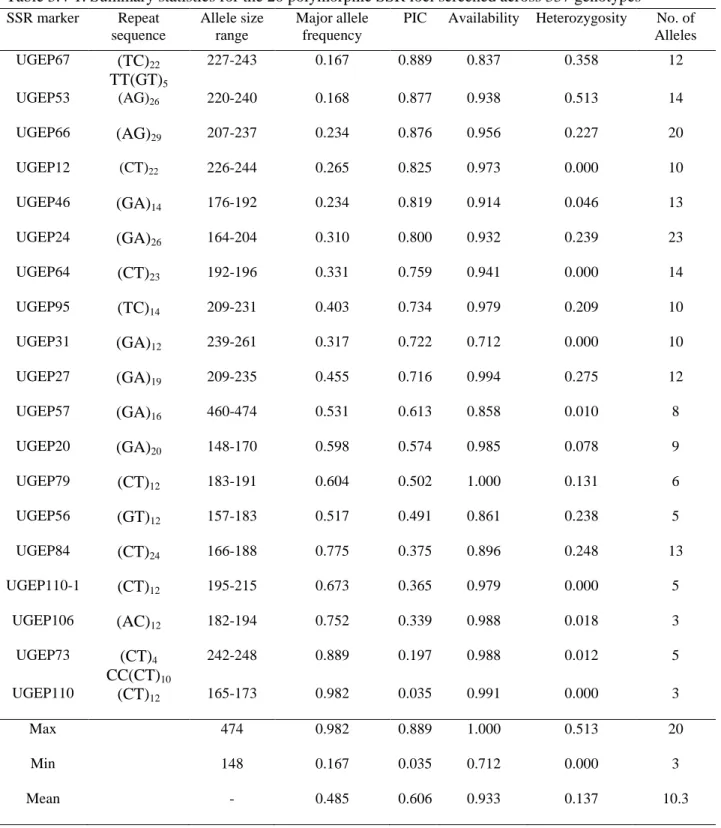
A total of 340 finger millet accessions were collected from three countries in East Africa: Kenya, Tanzania and Uganda and 80 global minicore accessions sourced from ICRISAT-India. High phenotypic variability in the germplasm was recorded for 23 quantitative traits, blast reaction and five qualitative traits. Both morphological and molecular characterization (using SSR markers) of the 340 accessions revealed higher diversity within than among the countries Kenya, Tanzania and Uganda. Seven morphological clusters and three major genetic clusters were detected. Morphological diversity delineation was largely influenced by leaf sheath length, plant height, peduncle length, panicle exertion and grain yield. The mean polymorphic information content (PIC) of 19 polymorphic markers was 0.606 with mean alleles of 195 with sizes that ranged from 148-474 base pairs. The Kenyan and Tanzanian accessions had higher diversity than the Ugandan with the Kenyan and Ugandan, and the Kenyan and Tanzanian accessions being closely related than the Tanzanian and Ugandan. The low diversity in the Ugandan accessions could be attributed to higher research intervention in the country leading to the promotion and use of improved cultivars. Efforts have to be directed towards collection and conservation of valuable diversity before it is lost. The diversity in plant height, maturity, yield and blast reaction and the cluster groups detected in the germplasm should provide a basis for finger millet improvement through hybridization and selection.
iii
Higher genotypic than phenotypic correlations were recorded for most of the traits studied with grain yield having high positive correlations with finger width, grains per spikelet, threshing percent, peduncle length and panicle exertion. Both grain yield and days to flowering had negative correlations with all three blast types (leaf, neck and finger). Path coefficient analysis revealed that productive tillers per plant, 1000 grain mass, grains per spikelet and threshing percent had positive direct genetic effects on grain yield with strong indirect effects from several of the other traits which necessitates simultaneous selection for those traits with strong direct effects and those with strong indirect effects for grain yield improvement. High broad sense heritability estimates and high genetic advance as percent of mean were recorded in fingers per panicle, flag leaf sheath length, 1000 grain mass, finger length, peduncle length, panicle exertion, number of leaves per plant and leaf sheath length probably indicating the predominance of additive gene effects in controlling these traits hence the potential for improvement through selection.
Adaptation and stability analysis using the GGE biplot model identified Lanet 2012 long rains, Serere 2012 long rains and Miwaleni 2012 long rains as the most discriminating environments for the low temperature, sub-humid mid altitude and dry lowland areas, respectively. Alupe 2012 long rains was the ideal environment for genotype discrimination for blast while Lanet 2012 long rains was best for grain yield. Genotypes G3, G5, G17, G25, G28, G36 and G71 were identified as being stable across environments and G1, G18, G19, G37, G54, G61, G74, G75, and G77 were found ideal for specific adaptation.
Disease severity scores were highly negatively (P<0.01) correlated with days to flowering and grain yield suggesting that early lines suffered more disease damage leading to reduced yield. Resistant genotypes were slow blasting (probably associated with horizontal resistance) which may enable them to withstand blast pathogen variability for longer periods. Nine genotypes were identified with high resistance to blast and will be useful for breeding as blast resistance sources. Resistant genotypes had low AUDPC values and disease severity rating for the three blast types and vice-versa for susceptible genotypes. Further investigations need to be carried out to determine the possibility of the three blast types being controlled by the same genes. Early maturing blast susceptible genotypes with good yield potential could be utilized in areas with low blast prevalence.
To understand the gene action for inheritance of the various traits 16 F2 families plus their four female and four male parents were evaluated at Alupe and Kakamega western Kenya under artificial blast inoculation. Significant additive genetic effects were recorded for all traits (except for finger width and grains per spikelet) meaning that improvement for these traits would be possible through the common
iv
selection methods for self pollinating crops. Parent lines KNE 392, and KNE 744 and IE 11 were found to be suitable for blast resistance breeding while Okhale 1 was found to be suitable for high grain yield and blast resistance improvement due to their high desirable GCA effects. Most of the F2 families showed transgressive segregation for the three blast types in either direction which gives hope for the development new pure lines with better blast resistance than the parents. Crosses IE 3104 x KNE 796, KAT FM 1 x Okhale 1, IE 11 x Okhale, IE 11 x P 224 and KNE 744 x KNE 392 have potential to generate lines with blast resistance due to their high desirable SCA effects. The F2 segregation distributions for blast indicated quantitative inheritance. However the one to four minimum number of genes (effective factors) detected for resistance control in all the three blast types was not in sync with the segregation patterns in the F2 families and further investigations are required. There were differences in segregation patterns between crosses which may suggest the presence of different resistance genes in the different parents used. This would call for gene pyramiding for durable resistance.
These results confirm the potential of sourcing valuable parental stocks in the local germplasm for the development of genotypes to improve finger millet productivity in East Africa. Already some of the high yielding and blast resistant genotypes identified here have been incorporated in the regional cultivar trials.
The diversity information generated will facilitate effective conservation and utilization of this germplasm. Results of gene action for inheritance of the various traits from this study will enable breeders to develop sound breeding strategies for finger millet improvement in the region.
v
Declaration
1. The research reported in this thesis, except where otherwise indicated, is my original research.
2. This thesis has not been submitted for any degree or examination at any other university.
3. This thesis does not contain other persons’ data, pictures, graphs or other information, unless specifically acknowledged as being sourced from other persons.
4. This thesis does not contain other persons' writing, unless specifically acknowledged as being sourced from other researchers. Where other written sources have been quoted, then:
a. Their words have been re-written but the general information attributed to them has been referenced
b. Where their exact words have been used, then their writing has been placed in italics and inside quotation marks, and referenced.
5. Where I have reproduced a publication of which I am an author, co-author or editor, I have indicated in detail which part of the publication was actually written by myself alone and have fully referenced such publications.
6. This thesis does not contain text, graphics or tables copied and pasted from the Internet, unless specifically acknowledged, and the source being detailed in the thesis and in the references sections.
Signed
………..
Eric Okuku Manyasa
As the candidate’s supervisors, we agree to the submission of this thesis:
………
Prof. Pangirayi Tongoona (Supervisor)
………..………
Dr. Paul Shanahan (Co-Supervisor)
………..………
Prof. Githiri Mwangi (Co-Supervisor)
vi
Acknowledgements
I am deeply indebted to my supervisors Professor Pangirayi Tongoona, Dr Paul Shanahan and Prof.
Githiri Mwangi for accepting to supervise my research work and for their guidance and valuable discussions throughout the research and write-up. Thank you Dr Mary Mgonja for in-country supervision.
I am grateful to the Director General ICRISAT Dr William Dar for approving my study and to the Director ICRISAT Eastern and Southern Africa Dr Said Silim for the administrative facilitation, constant encouragement and believing in me. The financial support of ICRISAT through the Harnessing Opportunities for Productivity Enhancement of Sorghums and Millets (HOPE) project is highly appreciated. Much appreciation to the Bio-resources Innovations Network for Eastern Africa Development (Bio-Innovate) project for supporting the molecular work. Thank you Dr Henry Ojulong for the professional discussions and valuable comments on some of the chapters and Peter Kaloki for your valuable professional discussions. To Patrick Sheunda, Daniel Otwani and Joseph Kibuka special thanks for your support in crossing and trials management especially during my absence. The field teams at Kiboko (Julius, Adam, Mary and, Lilian), Alupe (Wandera and Oyaya), Lanet (Hellen, Esther and Mwangi) and at Mtwapa (Mohammed), thanks for assisting in data collection. Much appreciation to Dr Chris Oduori (Kenya), Dr Nelson Wanyera (Uganda) and Mr Deo Kisandu (Tanzania) for the support in running some of the trials in your countries. Dr Santie de Villiers and your team (Vincent Njunge and Annis Saiyiorri), thanks for the technical support in the molecular work. To Dr Maina Wagacha, Ayub Kimani and Lucy Karanja thanks for your assistance with preparation of the blast inoculum. To Dr Abhishek Rathore, Biometrician at the International Crops Research Institute for the Semi-Arid Tropics (ICRISAT) and your team of Anil Kumar and Roma Das, thanks for the statistical support. To Dr D.
Nyamongo (Genebank-Kenya) and Lourance Mapunda (Genebank-Tanzania) thanks for providing the finger millet germplasm. Many thanks to Lynette Bwire (ICRISAT-Nairobi) for the valuable help in organizing the thesis draft plus administrative logistics. Dr Alfred Odindo (UKZN) thanks for your inspiring company and organizing my stay in Pietermaritzburg.
To my family: my dear wife Emily and my lovely daughters Maureen, Mercy, Mavis and Mona thank you for your patience, support and encouragement throughout the period of my study. Last but not least to all those who saved my life during the accident while returning from Alupe trial site, I say God bless you.
Thank you Almighty Lord for bringing me this far.
vii
Dedication
This thesis is dedicated to my dear parents, Mwalimu Gershom Manyasa (Late) and Mama Florence Nawesia and to all those who saved my life.
viii
Table of contents
Thesis Abstract ... ii
Declaration... v
Acknowledgements ... vi
Dedication ... vii
Introduction to Thesis ... 1
1. BACKGROUND ... 1
2. IMPORTANCE OF FINGER MILLET ... 1
3. FINGER MILLET PRODUCTION IN EAST AFRICA ... 2
4. CONSTRAINTS TO FINGER MILLET PRODUCTION AND PRODUCTIVITY ... 4
5. WAY FORWARD ... 4
6. STATEMENT OF THE PROBLEM AND JUSTIFICATION ... 5
7. RESEARCH OBJECTIVES ... 5
8. HYPOTHESES ... 6
9. THESIS STRUCTURE ... 6
REFERENCES ... 7
Chapter 1 ... 10
Literature review ... 10
1.1 Finger millet origin, botany and taxonomy... 10
1.2 Crop adaptation ... 11
1.3 Finger millet breeding and research in East Africa ... 12
1.4 Genetic diversity ... 15
1.4.1 Diversity studies in finger millet ... 16
1.5 Association between traits ... 18
1.6 Heritability and genetic advance ... 18
1.7 Blast disease of finger millet ... 19
1.7.1 Blast pathogen variability and distribution ... 19
1.7.2 Conditions for blast disease development and disease symptoms ... 20
1.7.3 Blast screening ... 22
1.8 Genotype x environment Interaction ... 23
1.9 Inheritance of blast resistance, yield and yield components in finger millet ... 24
REFERENCES ... 26
Chapter 2 ... 35
Morphological diversity in East African finger millet landraces ... 35
ABSTRACT ... 35
2.1 Introduction ... 36
2.2 Materials and methods ... 37
2.2.1 Experimental material ... 37
ix
2.2.2 Test locations ... 38
2.2.3 Experimental design and crop management ... 38
2.3 Data analyses ... 39
2.3.1 Qualitative diversity ... 39
2.3.2 Descriptive statistics ... 40
2.3.3 Principal components analysis ... 40
2.3-4 Cluster analysis ... 41
2.4 Results ... 41
2.4.1 Qualitative traits variability ... 41
2.4.2 Quantitative traits variability ... 43
2.4.2.1 Performance of accessions at individual and across locations ... 43
2.4.2.2 Sub-regional variability in performance ... 50
2.4.3 Trait variances and diversity indices ... 50
2.4.4 Principal component analysis ... 52
2.4.5 Cluster analysis ... 53
2.5 Discussion ... 58
2.5.1 Qualitative traits variability ... 58
2.5.2 Quantitative traits variability ... 58
2.5.3 Principal component and cluster analyses ... 60
2.6 Conclusion ... 61
REFERENCES ... 62
Chapter 3 ... 74
Genetic diversity in East African finger millet landraces based on SSR markers and some qualitative traits ... 74
ABSTRACT ... 74
3.1 Introduction ... 75
3.2 Materials and Methods ... 76
3.2.1. Germplasm ... 76
3.2.2. Growing plants ... 77
3.2.3 DNA extraction ... 77
3.2.4 PCR ... 78
3.2.5 Phenotypic characterization ... 78
3.3 Data analysis ... 79
3.3.1 Marker statistics and clustering ... 79
3.3.2 Genetic diversity ... 80
3.3.3 Analysis of molecular variance (AMOVA) ... 80
3.3.4 Phenotypic traits ... 80
3.4 Results ... 81
3.4.1 Marker summary statistics ... 81
3.4.2 Genetic relationships between countries and between sub-regions ... 85
3.4.3 Genetic differentiation ... 86
3.4.4 Diversity based on qualitative traits ... 87
3.5 Discussion ... 89
x
3.5.1 Marker summary ... 89
3.5.2 Genetic differentiation ... 89
3.5.3 Qualitative traits ... 91
3.6 Conclusion ... 91
REFERENCES ... 93
Chapter 4 ... 100
Correlations, analyses of path coefficients, heritability and genetic advance for quantitative traits in finger millet germplasm ... 100
ABSTRACT ... 100
4.1 Introduction ... 101
4.2 Materials and methods ... 102
4.3 Data analysis ... 103
4.3.1 REML ... 103
4.3.2 Correlation and path coefficient analyses ... 104
4.3.3 Phenotypic, genotypic and environmental coefficients of variation; broad sense heritability and genetic advance as percent of mean ... 105
4.4 Results ... 106
4.4.1 Correlation coefficients ... 106
4.4.2 Path coefficients ... 109
4.4.3 Phenotypic, genotypic and environmental coefficients of variation ... 111
4.4.4 Heritability and genetic advance ... 111
4.5 Discussion ... 112
4.5.1 Associations between traits ... 112
4.5.2 Path coefficients ... 114
4.5.3 Phenotypic and genotypic coefficients of variation ... 116
4.5.4 Heritability and genetic advance ... 116
4.6 Conclusion ... 118
REFERENCES ... 119
Chapter 5 ... 123
Genotype x environment interaction, yield stability and blast reaction in East African finger millet landraces ... 123
ABSTRACT ... 123
5.1 Introduction ... 124
5.2 Materials and methods ... 125
5.2.1 Experimental material ... 125
5.2.2 Test environments ... 126
5.2.3 Experimental design and crop management ... 127
5.3 Data analysis ... 129
5.3.1 AMMI ANOVA ... 129
5.3.2 GGE biplot analysis ... 130
5.3.3 Area under disease progress curves (AUDPC) ... 131
5.4 Results ... 131
xi
5.4.1 ANOVA across environments ... 131
5.4.2. Genotype ranking and environments rank correlations based on grain yield ... 133
5.4.3 GGE ... 135
5.4.3.1 Discriminatory ability and representativeness of test environments ... 135
5.4.3.2 Genotype ranking based on mean grain yield and stability ... 139
5.4.4 Blast screening ... 140
5.4.4.1 Disease severity and genotype reaction type under artificial inoculation ... 141
5.4.4.2 Disease progress curves for blast severity under artificial inoculation ... 143
5.4.4.3 Area under disease progress curves for blast severity... 146
5.4.5 Correlations ... 148
5.5 Discussion ... 149
5.5.1 General performance and ranking of genotypes ... 149
5.5.2 Correlation between environments ... 150
5.5.3 GGE ... 150
5.5.3.1 Discriminatory power and representativeness of test environments ... 150
5.5.3.2 Genotype ranking based on mean yield and stability indices ... 151
5.5.4 Blast screening ... 152
5.5.4.1 Genotype reaction type, area under disease progress curves (AUDPC) and disease severity ... 152
5.5.4.2 Correlations ... 153
5.6 Conclusion ... 154
REFERENCES ... 155
Chapter 6 ... 159
Gene action of blast disease reaction and grain yield traits in finger millet ... 159
ABSTRACT ... 159
6.1 Introduction ... 160
6.2 Materials and methods ... 161
6.2.1 Experimental material ... 161
6.2.2 Evaluation trial locations ... 162
6.2.3 Experimental design and crop management ... 163
6.2.4 Enhancing epiphytotic conditions ... 163
6.2.5 Disease severity scoring ... 164
6.3 Data analysis ... 165
6.3.1 ANOVA ... 165
6.3.2 Combining ability ... 166
6.3.3 General predicted ratio (GPR) ... 166
6.3.4 Minimum number of genes (effective factors) controlling blast resistance ... 166
6.3.5 Narrow sense heritability ... 167
6.4 Results ... 167
6.4.1 Blast reaction of the parents ... 167
6.4.2 Yield and yield components ... 168
6.4.3 Combining ability ... 170
6.4.3.1 Mean sums of squares for combining ability ... 170
xii
6.4.3.2 Leaf, neck and finger blast ... 170
6.4.3.3 Yield and associated traits ... 170
6.4.3.4 General combining ability effects ... 172
6.4.3.5 Specific combining ability effects ... 174
6.4.4 Segregation patterns based on blast severity and minimum number of genes (effective factors) controlling blast resistance ... 176
6.4.5 Narrow sense heritability ... 178
6.5 Discussion ... 178
6.5.1 Gene action ... 178
6.5.2 Combining ability effects ... 179
6.5.2.1 GCA effects ... 179
6.5.2.2 Specific combining ability effects ... 180
6.5.3 Segregation patterns for blast severity and minimum number of genes (effective factors) controlling blast resistance ... 181
6.5.4 Narrow-sense heritability (h2) ... 181
6.6 Conclusion ... 182
REFERENCES ... 184
Chapter 7 ... 188
Overview of the research findings ... 188
7.1 Introduction ... 188
7.2 Summary of the major findings ... 188
7.2.1 Genetic diversity in selected East African finger millet germplasm ... 188
7.2.2 Trait association, path coefficient analysis, heritability and genetic advance... 189
7.2.3 Genotype x environment interaction, yield stability and blast reaction in finger millet landraces ... 190
7.2.4 Gene action for blast resistance and grain yield traits in finger millet ... 191
7.3 Implications of the findings for germplasm conservation and utilization, breeding for high yield and blast resistance ... 191
7.4 Challenges ... 192
7.5 Looking ahead ... 193
REFERENCES ... 194
xiii
List of tables
Table 0.3-1: National finger millet production in Kenya, Tanzania and Uganda 2007-2011………..…….3 Table 2.2-1: Characteristics of the four test locations in Kenya ……….38 Table 2.2-2: Description and measurements for traits… ... ……….…39 Table 2.4-1: Proportion Of qualitative traits categories among finger millet accessions (%) per country and Shannon diversity indices ... .42 Table 2.4-2: Mean squares and CV% for 24 quantitative traits of finger millet accessions
evaluated over four locations……….……….44 Table 2.4-3: Twenty six accessions with best blast tolerance at Alupe under natural infection ranked according to finger blast severity ... 45 Table 2.4-4: Mean, minimum, maximum and ranges of 24 quantitative traits for three accession
groups (based on country of origin) and the minicore across four test locations ... 47 Table 2.4-5: Top 20 accessions ranked for grain yield, leaf, neck and finger blast, threshing % and agronomic scores across test locations…………..……… 49 Table 2.4-6: Variances of 24 traits for the three accession groups (based on country of origin)
and the minicore across four test locations ……….…...51 Table 2.4-7: Variances of 24 traits for ten accession groups (based on the sub-regions of the three
countries of origin) and the minicore across four test locations ... 51 Table 2.4-8: Shannon Weaver diversity indices (H') for 20 quantitative traits for three accession
Groups (based on the country of origin) and the minicore across four test locations ... 52 Table 2.4-9: First six principal components and the respective eigenvalues of the contributing 19
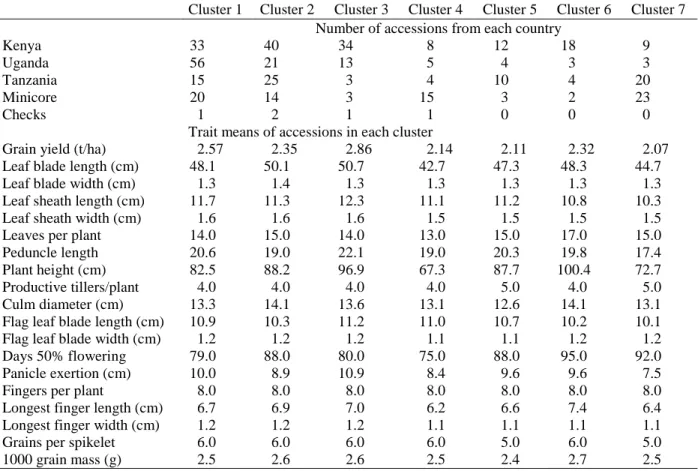
quantitative traits across country of origin and test locations ... 53 Table 2.4-10: Means of 24 traits within clusters determined from cluster analysis across country
of origin of accessions and test locations ... 55 Table 2.4-11: Inter and Intra-cluster distances based on Mahalanobis genetic distance (D2)
determined across country of origin of accessions and test locations…..……….55 Table 2.4-12: Inter and Intra-cluster distances based on Mahalanobis genetic distance (D2)
determined within the four accession groups across test locations ………...…..……..56 Table 3.2-1: Description and scoring for phenotypic traits……….79 Table 3.4-1: Summary statistics for the 20 polymorphic SSR loci screened across 337 genotypes ... 82 Table 3.4-2: Genetic diversity estimates for the 337 finger millet accessions at country and
sub-regional levels ………....……… 85
xiv
Table 3.4-3: AMOVA for between and within country variability of finger millet accessions
obtained from three East African countries ... 86 Table 3.4-4: AMOVA for between and within sub-region variability of finger millet accessions
Obtained from nine sub-sub-regions of three East African countries……….…..86
Table 3.4-5: Pairwise Fst estimates for East African finger millet collections between countries and sub-sub-regions of collection………..87
Table 3.4-6: Relative percentage representation per country and Shannon diversity indices (H') of qualitative traits………..………88 Table 4.2-1: Descriptors and measurements for traits……….………...……..…….…103 Table 4.4-1: Pearson’s correlation coefficients for blast severity with selected finger millet yield components at Alupe. ... ...106 Table 4.4-2: Phenotypic and genotypic correlation coefficients between 19 quantitative traits of finger millet evaluated across four locations………108 Table 4.4-3: Genotypic path co-efficients showing direct and indirect genetic effects of
18 quantitative traits on grain yield ... 110 Table 4.4-4: Genotypic, phenotypic and error coefficients of variability, heritability and genetic
advance (expressed as percent of the population mean) of 19 quantitative traits in finger millet... 112 Table 5.2-1: The 81 finger millet genotypes selected for G x E evaluation………...………...126 Table 5.2-2: Characteristics of the eight test environments used in the evaluation of the 81 finger
millet accessions in 2011 and 2012 ... 127 Table 5.4-1: AMMI ANOVA for grain yield (t ha-1) across eight environments ... 132 Table 5.4-2: AMMI ANOVA for finger blast severity across four environments……….………….…..132 Table 5.4-3: Mean, minimum, maximum, mean squares, CV% and SE± for three traits……….…132 Table 5.4-4: Ranking of the best 25 genotypes at each environment based on grain yield (t ha-1) ... .134 Table 5.4-5: AMMI ranking of the best four genotypes per environment based on mean grain
yield (t ha-1)………...135 Table 5.4-6: Spearman’s rank order correlations between environments for grain yield (t ha-1) ……...135 Table 5.4-7: Blast severity differences under natural (Alu12LR) and artificial (Alu12LR-IN)
inoculation ...…142 Table 5.4-8: Grain yield, plant height, days to flowering and blast reaction of resistant, susceptible
and stable genotypes………...…..……...….143 Table 5.4-9: Blast scores and grain yield for six resistant and six genotypes to neck
and finger blast at different stages after sowing under artificial inoculation ... 144
xv
Table 5.4-10: Area under disease progress curve (AUDPC) for final leaf, neck and finger blast severity for six resistant and six susceptible genotypes under artificial
infection (Alu12LR-IN)…...………...147
Table 5.4-11: Area under disease progress curve (AUDPC) for final leaf, neck and finger blast severity for six resistant and six susceptible genotypes under natural infection (Alu12LR)...……….148
Table 5.4-12: Pearson's correlations between final blast scores, grain yield, days to flowering, plant colour and panicle shape based on artificial inoculation data……….….…149
Table 6.2-1: Characteristics of eight finger millet genotypes used in the NCD II mating scheme……...162
Table 6.2-2: Description and measurement for traits……….………165
Table 6.4-1: Reaction to blast for parents in inoculated and non-inoculated conditions across two test locations………..….…………....…168
Table 6.4-2: Mean performance of parents and checks for different traits across two test locations…….……….………..169
Table 6.4-3: Mean squares for combining ability for 14 traits of finger millet across two test locations ... .171
Table 6.4-4: Percent contribution of (%) females, males and female x male to total sum of squares ... 172
Table 6.4-5: General combining ability effects of parents ... .173
Table 6.4-6: Specific combining ability effects of the 16 crosses ... .175
Table 6.4-7: Minimum number of genes (effective factors) controlling blast resistance per F2 parent pair………..……….……... 178
Table 6.4-8: Broad sense heritability for the 14 finger millet traits in the F2 generation….………….…178
xvi
List of figures
Figure 1.3-1: Map of Kenya showing geo-referenced sites of finger millet collections ... 13
Figure 1.3-2: Map of Tanzania showing geo-referenced sites of finger millet collections... 14
Figure 1.3-3: Map of Uganda showing geo-referenced sites of finger millet collections ... 15
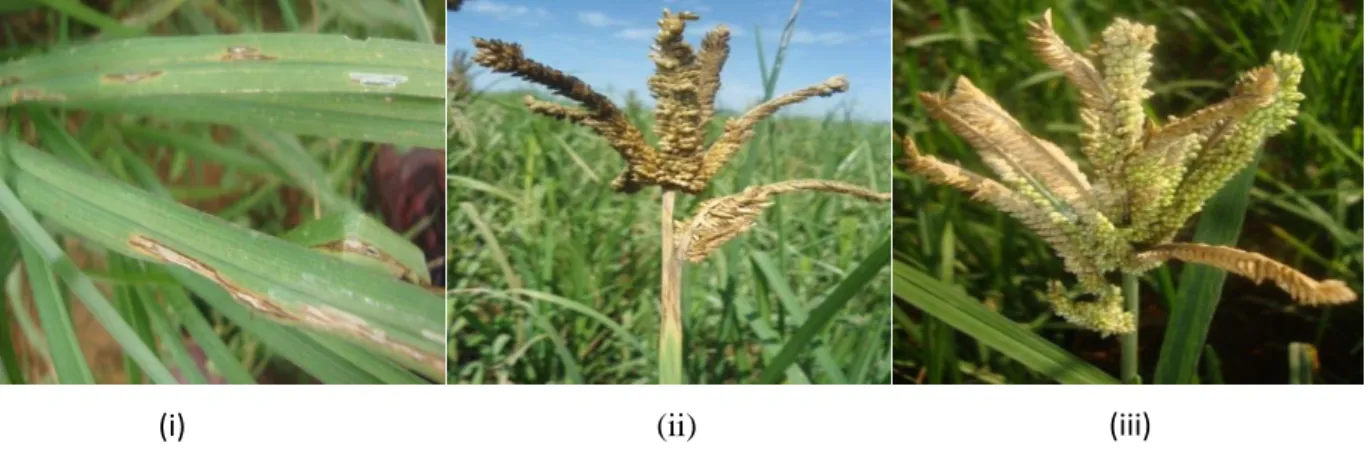
Figure 1.7-1: (i) Leaf blast (ii) Neck blast and (iii) Finger blast symptoms ... 21
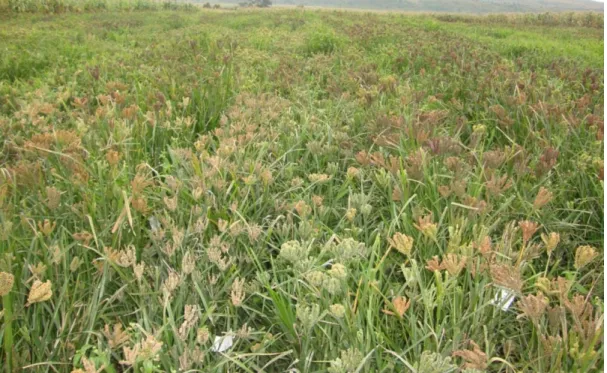
Figure 2.4-1 Morphological variability in the germplasm at Lanet test location ... 42
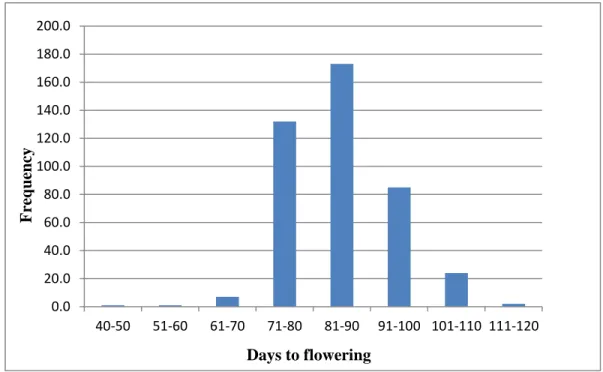
Figure 2.4-2: Frequency of Days to flowering classes based on across locations data across the four accession groups ……….47
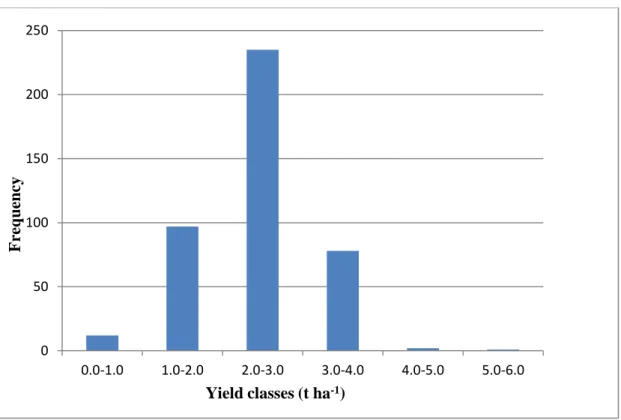
Figure 2.4-3: Frequency of grain yield classes based on across locations data across the four accession Groups ………...48
Figure 2.4-4: Dendrogram based on cluster analysis of quantitative traits across country of origin of Ac cessions and locations at which they were evaluated ... 57
Figure 3.4-1: Neighbour joining tree based on UPGMA genetic disimilarities for the 337 accessions ... 84
Figure 5.4-1: Discriminatory ability and representativeness of the eight test environments for grain yield (t ha-1) ... 137
Figure 5.4-2: Polygon view of the GGE biplot for grain yield (t ha-1)... 138
Figure 5.4-3: Descrimination of environments based on finger blast severity scores ... 139
Figure 5.4-4: Genotype ranking based on mean grain yield and stability across environments ... 140
Figure 5.4-5: Frequency distributions for leaf, neck and finger blast reaction categories ... 142
Figure 5.4-6: Grain yield and finger blast scores (at different days after sowing) for the most resistant (61-78) and the most susceptible (38-77) genotypes ……….………….……… 142
Figure 5.4-7: Leaf blast disease progress (severity scores) of six resistant and six susceptible genotypes under artificial inoculation at different intervals after sowing ………..…145
Figure 5.4-8: Neck blast disease progress (severity scores) of six resistant and six susceptible genotypes under artificial inoculation at different intervals after sowing ……….…....….145
Figure 5.4-9: Finger blast disease progress (severity scores) of six resistant and six susceptible genotypes under artificial inoculation at different intervals after sowing………….…..…146
Figure 6.2-1: An eight day old culture of Magnaporthe grisea, the pathogen that causes blast in finger Millet ……….……….……….164
Figure 6.4-1: Frequency distribution of blast scores (leaf, neck and finger) in the F2 generation of cross KNE 744 x KNE 392………..……….176
xvii
Figure 6.4-2: Frequency distribution of blast scores (leaf, neck and finger) in the F2 generation
of cross KAT FM 1 x KNE 796 ….……….….177
Figure 6.4-3: Differential frequency distribution of blast scores (leaf, neck and finger) within an F2 generation of cross IE 3104 x Okhale 1………..………177
1
Introduction to Thesis
1. Background
Finger millet (Eleusine coracana (L.) Gaertn) together with tef (Eragrostis tef (Zucc.) Trotter) belong to the grass subfamily, the Chloridoideae. It is a short day crop with the C4 photosynthetic pathway and thus has wide adaptability in diverse agro-ecologies of the tropics (Holt, 2000). It is largely a subsistence crop cultivated without supplementary irrigation by small-scale farmers and it plays an important role in the dietary needs and economy of these farmers. Africa is reported to produce 2 000 000 of the global 4 500 000 tonnes (National Research Council (NRC), 1996). Although still cultivated under traditional shifting cultivation systems in Zambia, Malawi and southern Tanzania, cultivation under modern agronomic practices is taking root in Kenya and Uganda (Oduori, 2008; Wanyera, 2007). Like any other crop finger millet in East Africa is subject to a number of constraints along the value chain. These constraints have to be addressed to improve finger millet production and productivity in the region. The potential to address abiotic and biotic constraints lies in the crop’s reported significant morphological and genetic diversity (Hilu and de Wet, 1976; Kumari and Pande, 2010; Upadhyaya et al., 2010) that can be exploited in breeding new genotypes with desirable traits.
2. Importance of finger millet
The importance of finger millet lies in its long storability without insect damage and its superior nutritional value compared to other cereals. Finger millet is mainly consumed as a stiff porridge (ugali-in East Africa), thin porridge (uji- in East Africa) and to make local beer. The grain is exceptionally high in calcium (358mg kg-1), iron (46mg kg-1) and protein (7.4%) and has good digestibility (NRC, 1996; Serna- Saldivar and Rooney, 1995) which makes it an important food for expectant women, breast feeding mothers, children, the sick and diabetics. The main protein fraction eleusinin has significant amounts of tryptophan (1.3 g per 16g N), cystine (1.7g per 16g N), methionine (2.9g per 16g N) and total aromatic amino acids (phenylalanine and tyrosine) (NRC, 1996). White seeded types have higher protein levels than brown and red types which contain higher levels of tannins. The grain is also used in malting and brewing because of its high amylase enzymes which convert starch into sugar and as an adjunct in beers made from maize (Zea mays) and sorghum (Sorghum bicolor) (Obilana and Manyasa, 2002a). Foods made from sprouted grain (malt) are easily digestible and provide good nutrition for children and the elderly (NRC, 1996). Finger millet foods also have a high satiety value derived from the high fibre
2
content (3.6% of crude fibre) which slows the digestion rate. The husks have fibre and are valuable in poultry feed. Being gluten free, finger millet has a global potential in sub-regions where demand for gluten free products is increasing (Lenné et al., 2007). The straw can be used as feed/fodder for livestock and contains up to 60% total digestible nitrogen (NRC, 1996). Commercialization of finger millet in East Africa is steadily increasing. There are a number of small, medium and large commercial millers who mill the grain into acceptable flours (pure finger millet, composite flour and porridge mixture) that are readily available in leading supermarket outlets (Obilana, 2002; Lenné et al., 2007). However for commercialization to grow sustainably, effort must be put into increasing the productivity and production of finger millet.
3. Finger millet production in East Africa
In East Africa, finger millet covers 50% of the area cultivated to both finger and pearl millets (Riley et al., 1993; Obilana, 2002). Regional domestic demand for finger millet grain coupled with increased regional trade and higher market prices relative to other cereals has seen a 25% rise in production over the last 30 years (Lenné et al., 2007). Finger millet is grown in over 800 000 ha in the three East African countries with Uganda having about 470 000 ha, Tanzania about 350 000 ha and Kenya about 77 890 ha (Table 0.3- 1) (ICRISAT, 2013). In Uganda, the districts of Tororo, Iganga, Kamuli and Soroti in the East and Apac, Lira, Gulu and Kitgum in the North produce about 60% of the total production (Waswa and Odelle, 1995;
Wanyera. 2007). These are also the districts where finger millet is the staple food. In Tanzania more than half of the production is from southern highlands sub-regions of Mbeya, Iringa, Ruvuma and Rukwa (Kisandu et al., 2007). In Kenya the crop is mainly grown west of the Rift Valley in Teso, Busia, Kakamega, Kisii and Rongai districts (Oduori, 2008). Average grain yields in Kenya and Tanzania are about 0.6 t ha-1, but yields are slightly higher in Uganda at 1.8 t ha-1 (Table 0.3-1). However, in the major finger millet producing districts of Kenya and Tanzania, yields of over 2.5 t ha-1 have been realized (Oduori and Kanyenji, 2007). The higher yields in Uganda are largely due to earlier research on finger millet that led to the release of several improved high yielding and blast resistant cultivars and the high regard for finger millet as a staple food in the main producing districts. However, the low attention given to the crop by the national and international research systems as well as indifferent government policies have contributed greatly to its productivity potential not being fully realized. With appropriate research and extension interventions, it is possible for farmers to realize the grain yields of 3-4 t ha-1 reported from on-station and on-farm testing in Kenya and Uganda (Odelle, 1993; Odouri and Kanyenji, 2007) and in Ethiopia and India (Mulatu and Kebede, 1993; Bondale, 1993). Amidst these low production volumes,
3
finger millet demand in East Africa is growing. One major finger millet processor in Kenya has a monthly throughput of 500-800 tonnes and 90% of this is imported mostly from Tanzania (Lenné et al., 2007).
Table 0.3-1. National finger millet production in Kenya, Uganda and Tanzania during 2007-2011
Country Year Area (hectares)
Production (metric tonnes)
Yield (t ha-1)
Tanzania
2007 270243 218897 0.81
2008 213972 149780 0.70
2009 398506 310835 0.78
2010 345855 349314 1.01
2011 350000 234500 0.67
Kenya
2007 89680 83719 0.93
2008 37209 26897 0.72
2009 73203 39492 0.54
2010 69387 37717 0.54
2011 77890 51377 0.66
Uganda
2007 437000 732000 1.68
2008 448000 783000 1.75
2009 460000 841000 1.83
2010 470000 850000 1.81
2011 - - -
Source- ICRISAT, 2013.
Most of the finger millet in East Africa is sold through local markets where prices are unstable depending on supply and demand conditions. Even where large processors are involved, grain is sourced through middlemen who buy from local markets or individual farmers. Ironically prices offered by the formal markets like the National Cereals and Produce Board in Kenya are usually lower than what the local markets offer (Mitaru et al., 1993). If the constraints along the production to consumption chain are adequately addressed, finger millet could form an integral part of the agricultural cash economy in the finger millet farming systems of East Africa.
4
4. Constraints to finger millet production and productivity
In spite of its salient role in the livelihoods of millions of households in East Africa for food security, nutrition and cash income generation, several constraints inhibit the crop’s potential productivity. Key among these constraints are limited understanding and utilization of the genetic diversity of the region’s germplasm, lack of high yielding improved cultivars for the different finger millet production agro- ecologies, high levels of blast disease caused by the fungus Magnaporthe grisea (Herbert) Barr, poor crop husbandry, infestation by the striga weed (Striga hermontheca (Del.) Benth) and lack of adequate policy support (Sreenivasaprasad et al., 2007). In East Africa blast was first recorded in Uganda in 1933 (Emechebe, 1975) and has subsequently been reported to occur in all finger millet growing areas of East Africa (Obilana and Manyasa, 2002b; Wanyera, 2007; Kisandu et al., 2007). It is the major biotic constraint in finger millet productivity in the three East African countries. Most cultivated landraces are susceptible with grain yield losses of up to 60% (Pande, 1992; Obilana and Manyasa, 2002b). Most of the cultivars grown by farmers are un-improved, with low grain yields and are susceptible to blast disease.
Research support for finger millet in the region has been dismal relative to what is accorded to maize, sorghum, rice (Orza sativa), wheat (Triticum aestivum) and industrial crops. Likewise international donor support has been negligible (Lenné et al., 2007) possibly because of the regard for finger millet as a low
‘value’ crop.
5. Way forward
The possibility of addressing finger millet productivity constraints through breeding has been demonstrated via selection for blast resistance and high yields in the local germplasm in East Africa. This has led to the release of a few blast resistant high yielding cultivars in the last two decades. Apart from the 5844 finger millet accessions kept in the global finger collection at ICRISAT (Upadhyaya et al., 2007), Kenya holds about 1000 accessions (Bennetzen, 2003) and Uganda was reported to hold over 2000 accessions by 1993 (Odelle, 1993). No official figures are available from Tanzania but based on reports by Chambo (1993), Kisandu et al. (2007) and Manyasa and Kisandu (2010), the national genebank could be holding up to 352 accessions. These germplasm banks are a repository from which to access key traits to address biotic and abiotic stresses that affect finger productivity like blast, low yield and poor agro- ecological adaptation. However, the germplasm held by the three East African countries remain largely unutilized due to limited characterization and evaluation. There is an urgent need to characterize the conserved germplasm as well as the new collections to understand the degree of genetic diversity and
5
value of the germplasm for use in breeding. Understanding variability should also be coupled with knowledge of the associations between traits that contribute to finger millet yield through well designed breeding. Knowledge of the diversity in the germplasm will also help in identification of diverse potential parents for hybridization to generate new cultivars with desired traits. However, understanding of gene action and trait inheritance of the target traits will be required to help formulate an effective breeding strategy.
6. Statement of the problem and justification
For a long time finger millet has been neglected by mainstream research and earned the name ‘orphan crop’. However, the crop’s growing importance in East Africa has enhanced its importance to researchers and other stakeholders along the production-supply chain. Socioeconomic surveys in Kenya and Uganda in 2002 and the Stakeholders Workshop in 2005 (Mgonja et al., 2007) did provide insight into finger millet production systems including farmers/industry practices and preferences, patterns of use, blast disease incidence/severity and other value chain constraints (Obilana and Manyasa, 2002b; Mgonja et al., 2007). Among the priority constraints were the poor understanding of the value of the region’s germplasm and limited or lack of blast resistant high yielding cultivars for the different finger millet agro-ecologies.
Although a large number of finger millet collections have been made, only a small fraction of the total available collections have been characterized and evaluated or used in breeding programmes. The value of the region’s finger millet germplasm is therefore not well understood. To help formulate an effective breeding strategy, an understanding of the breeding value of the landraces and the mode of gene action for the key traits is essential. Studies on inheritance and gene action for finger millet traits are limited in the region with the only study reported being that of Oduori (2008).
This study involved phenotypic and molecular characterization of finger millet germplasm from different production agro-ecologies in Kenya, Tanzania and Uganda as well as evaluation for adaptation, trait association, productivity and blast resistance. A genetic study to understand gene systems responsible for blast resistance, grain yield and yield components inheritance was also undertaken to help in the development of an effective breeding strategy.
7. Research Objectives
The specific objectives of the study were to:
determine the genetic variation in the germplasm for effective conservation and utilization;
6
determine the association between grain yield and its components and levels of heritability of traits;
identify blast resistant finger millet genotypes for use in breeding;
determine adaptation and stability of finger millet genotypes across contrasting production agro-ecologies,
determine inheritance of blast, grain yield and yield components in finger millet; and
determine combining ability for blast and grain yield and its components in East African finger millet germplasm.
8. Hypotheses
There is genetic variation among the finger millet landraces cultivated in East Africa.
There is differential productivity potential and reaction to blast disease among the landraces.
There is high association between grain yield and its components that could be utilized for indirect selection for grain yield.
Performance of finger millet for agronomic traits is stable across environments.
Genetic systems controlling blast and grain yield traits in finger millet are predominantly additive.
9. Thesis structure
The specific objectives were addressed in the various chapters that make up this thesis. Each chapter is an independent, potential manuscript for journal publication hence there may be some overlap in content and references. The chapters appear as follows:
1. Introduction to thesis 2. Chapter 1: Literature review
3. Chapter 2: Morphological diversity in East African finger millet landraces
4. Chapter 3: Genetic diversity in East African finger millet landraces based on SSR markers and some qualitative traits
5. Chapter 4: Correlations, path coefficient analysis, heritability and genetic advance for quantitative traits in finger millet landraces
6. Chapter 5: Genotype x Environment interaction, yield stability and blast reaction in East African finger millet landraces
7. Chapter 6: Gene action for blast resistance and grain yield traits in finger millet 8. Chapter 7: Overview of the research findings
7
References
Bennetzen JL, Dida MM, Wanyera NWM and Devos KM 2003. Characterization of genetic diversity in finger millet (Eleusine coracana).
[http://www.cerealsgenomics.org/documents/BennetzenProp.doc. Accessed 20/1/2011.
Bondale KV 1993. Present status of small millets production in India. In KW Riley, SC Gupta, A Seetharam and JN Mushonga (Eds), Advances in small millets. New Delhi: Oxford and IBH. pp 117-121.
Chambo HS 1993. Status of finger millet (Eleusine coracana) in Tanzania. In KW Riley, SC Gupta, A Seetharam and JN Mushonga (Eds), Advances in small millets. New Delhi: Oxford and IBH. pp 39-49.
Emechebe AM 1975. Some Aspects of Crop Diseases in Uganda. Department of Crop Science, Makerere University Printery, Uganda. 43 pp.
Hilu KW and de Wet JMJ 1976. Domestication of Eleusine coracana. Economic Botany 30:199-208.
Holt J 2000. Investigation into the biology, epidemiology and management of finger millet blast in low-input farming systems in East Africa.
http://www.wisard.org/wisard/shared/asp/projectsummary.asp. Accessed 12/01/2011.
ICRISAT 2013. Finger millet strategic plans Ethiopia, Kenya, Tanzania and Uganda 2012-2016.
Harnessing Opportunities for Productivity Improvement of Sorghum and Millet (HOPE) Project report. ICRISAT, Nairobi.
Kisandu DB, Ntundu W, Marandu WY and Mgonja MA 2007. Germplasm collection and evaluation of finger millet in Tanzania: Challenges and opportunities for improved production. In Mgonja MA, Lenné JM, Manyasa E and Sreenivasaprasad S (Eds). Proceedings of the First International Finger Millet Stakeholder Workshop, Projects R8030 and R8445 UK Department for International Development- Crop Programme, 13-14 Sept. 2005 at Nairobi. Patancheru 502 324, A.P. India. ICRISAT. ISBN: 978-92-9066-505-2. pp 49-65.
Kumari K and Pande A 2010. Study of genetic diversity in finger millet (Eleusine coracana L. Gaertn) using RAPD markers. African Journal of Biotechnology 9:4542-4549.
Lenné JM, Takan JP, Mgonja MA, Manyasa EO, Kaloki P, Wanyera N, Okwadi J, Muthumeenakshi S, Brown AE, Tamale M and Sreenivasaprasad S 2007. Finger millet blast disease management: A key entry point for fighting malnutrition and poverty in East Africa. Outlook on Agriculture 36:101-108.
Mgonja MA, Manyasa EO, Kibuka J, Kaloki P, Nyaboke S and Wandera G 2007. Finger millet in East Africa: Importance, blast disease management and promotion of identified blast resistant varieties in Western and Nyanza Provinces of Kenya. In Mgonja MA, Lenné JM, Manyasa E and Sreenivasaprasad S. (Eds). Proceedings of the First International Finger Millet Stakeholder Workshop, Projects R8030 and R8445 UK Department for International Development- Crop Programme held 13-14 Sept. 2005 at Nairobi. Patancheru 502 324, A.P. India. ICRISAT. ISBN:
978-92-9066-505-2. pp 34-45.
8
Mitaru BN, Karugia JT and Munene C 1993. Finger millet production and utilization in Kenya. In
KW Riley, SC Gupta, A Seetharam and JN Mushonga (Eds), Advances in small millets. New Delhi: Oxford and IBH. pp 247-254.
Mulatu T and Kebede Y 1993. Finger millet importance and improvement in Ethiopia. In KW Riley, SC Gupta, A Seetharam and JN Mushonga (Eds), Advances in small millets. New Delhi: Oxford and IBH. pp 51-59.
National Research Council 1996. Finger millet. In Lost crops of Africa: volume I: Grains. National Academy of Sciences, USA. pp. 39-57.
Obilana AB 2002. Overview: Importance of millets in Africa. Website: www.afripro.org.uk/papers/
Paper02Obilana.pdf.
Obilana AB and Manyasa E 2002a. Millets. In: Pseudo cereals and less common cereals: Grain properties and utilization potential. Belton PS and Taylor JRN (Eds.). Springer-Verlag: New York. pp.177–
217.
Obilana AB and Manyasa EO 2002b. Finger Millet Blast (fmb) Samples Collection in Kenya: Passport Data, Analyses of Disease Incidence and Report of Activities. ICRISAT/SAARI/HRI/QUB Finger Millet Blast project Report. A DFID Project Report. ICRISAT, Nairobi, Kenya.
Odelle SE 1993. Improvement of finger millet in Uganda. In KW Riley, SC Gupta, A Seetharam and JN Mushonga (Eds), Advances in small millets. New Delhi: Oxford and IBH. pp 75-83.
Oduori C and Kanyenji B 2007. Finger millet in Kenya: Importance, Advances in R&D, Challenges and Opportunities for Improved Production and profitability. In Mgonja MA, Lenné JM, Manyasa E and Sreenivasaprasad S. (Eds). Proceedings of the First International Finger Millet Stakeholder Workshop, Projects R8030 and R8445 UK Department for International Development- Crop Programme 13-14 Sept. 2005 at Nairobi. Patancheru 502 324, A.P. India. ICRISAT. ISBN: 978- 92-9066-505-2. pp 49-65.
Oduori COA 2008. Breeding investigations of finger millet characteristics including blast disease and striga resistance in western Kenya. PhD Thesis, University of Kwazulu Natal, South Africa.
Pande S 1992. Biology of and resistance to finger millet blast. Trip report of work done by ICRISAT/NARS collaborative project on blast disease of finger millet in Kenya and Uganda.
ICRISAT. 68 pp.
Riley KW, Gupta SC, Seetharam A and Mushonga JN eds (1993), Advances in Small Millets, Mohan Primlani for Oxford & IBH Publishing Co Pvt Ltd, New Delhi.
Serna-Saldivar S and Rooney LW 1995. Structure and chemistry of sorghum and millets: chemistry and technology (Dendy DAV, ed.) St. Paul, Minnesota, USA, American Association of Cereal Chemists. 100 pp.
Sreenivasaprasad S, Takan JP, Muthumeenakshi S, Obilana AB, Manyasa EO, Audi PO, Oduori CA, Coll R, Brown AE, Talbot NJ and Bandyopadhyay R 2007. Finger millet blast in E. Africa:
Pathogen Diversity and Disease management. In Mgonja MA, Lenné JM, Manyasa E and Sreenivasaprasad S. (Eds). Proceedings of the First International Finger Millet Stakeholder
9
Workshop, Projects R8030 and R8445 UK Department for International Development- Crop Programme held 13-14 Sept. 2005 at Nairobi. Patancheru 502 324, A.P. India. ICRISAT. ISBN:
978-92-9066-505-2. pp 34-45. .
Upadhyaya HD, Pundir RPS and Gowda CLL 2007. Genetic Resources Diversity of Finger Millet – a Global Perspective. In Mgonja MA, Lenné JM, Manyasa E and Sreenivasaprasad S. (Eds).
Proceedings of the First International Finger Millet Stakeholder Workshop, Projects R8030 and R8445 UK Department for International Development- Crop Programme 13-14 Sept. 2005 at Nairobi. Patancheru 502 324, A.P. India. ICRISAT. ISBN: 978-92-9066-505-2. pp 49-65.
Upadhyaya HD, Yadav D, Dronavalli N, Gowda CLL and Singh S 2010. Mini core germplasm collections for infusing genetic diversity in plant breeding programs. Electronic Journal of Plant Breeding 1:1294-1309.
Wanyera N 2007. Facilitating the promotion of improved and blast resistant finger millet varieties to enhance production. In Mgonja MA, Lenné JM, Manyasa E and Sreenivasaprasad S. (Eds).
Proceedings of the First International Finger Millet Stakeholder Workshop, Projects R8030 and R8445 UK Department for International Development- Crop Programme 13-14 Sept. 2005 at Nairobi. Patancheru 502 324, A.P. India. ICRISAT. ISBN: 978-92-9066-505-2. pp 49-65.
Waswa JM and Odelle S 1995. Finger millet research and technology transfer in Uganda. In: Mukuru Z and Ejeta G (Eds). Proceedings of a workshop organized to reestablish a sorghum and millets research network in the region 6-9 November, 1995, Kampala, Uganda.
ASARECA/NARO/ICRISAT/INTSORMILL. pp 199-207.
10
Chapter 1
Literature review
1.1 Finger millet origin, botany and taxonomy
Finger millet (Eleusine coracana (L.) Gaertn) has its centre of origin in eastern Africa and is thought to have been domesticated in areas extending from western Uganda to the highlands of Ethiopia (Harlan, 1971; de Wet, 1995). It later spread to Asia reaching India about 3000 years ago. It then spread to southwest India in the Himalayas, Nepal and along the hills of southern Asia and east China. It belongs to the family Poaceae and subfamily Chlorodoidae. There are two known sub-species, the cultivated Eleusine coracana subsp. coracana (L.) Gaertn and the wild type E. coracana subsp. africana (Kenn.- O'Byrne) (Upadhyaya, 2006). It is a tetraploid (2n = 4x = 36; AABB) (Dida et al., 2008). Two diploid species Eleusine indica (L.) Gaertn (AA) and either E. tristacya (Lam.) Lam or E. floccifolia (Forssk.) Spreng (BB) were thought to be the genome donors (Hilu and de Wet, 1976a; Hiremath and Salimath, 1992; Gupta et al., 2010). However, de Wet (2006) suggested that E. coracana was descended from E.
africana, a tetraploid, through mutation since the two species do cross to form fertile hybrids. Although genomic data has confirmed a close genetic relationship between E.coracana and E. indica, no evidence of genetic association with E. floccifolia has been found (Neves et al., 2005) thus strengthening the theory of mutation from E. africana. Based on vegetative, floral and seed morphology, Hilu and de Wet (1976b) classified finger millet into three eco-geographical races viz: African highland race that is found in the East African highlands, lowland race found in the lowlands of Africa and south India and the Indian race found in north east India.
Finger millet is an annual grass that grows to a height of 40-130 cm producing numerous tillers with diverse maturity periods ranging from two and half to six months [National Research Council (NRC), 1996]. This diversity attests to the versatility of finger millet in terms of production agro-ecolgies. The stems are prominently flattened, erect and hairy. Leaf blades are linear and tapering with ciliated margins.
The culms are typically green in colour with green or purple nodes. The inflorescence consists of spike- like main branches that are open, incurved or compact and arranged like fingers on a hand (Rachie and Peters, 1977). Purple plants with compact panicles have been associated with resistance to blast disease caused by Magnaporthe grisea (Herbert) Barr in finger millet (Takan et al., 2004). Florets are completely covered by glumes leading to near complete self-pollination. The florets are very small making manual
11
emasculation difficult which has over the years limited hybridization to generate new cultivars (Hilu and de Wet, 1980; NRC, 1996). Seeds are largely non-dormant although seeds of Eleusine indica (wild relative) exhibit dormancy and can remain viable in the soil for up to two years (Kulkarni and Basavaraju, 1976; Chuah et al., 2004). The grain is spherical with a pericarp that is not fused to the seed coat and varies from almost black, orange red to white in colour (NRC, 1996). Breeding success will largely depend on the genetic variability in the crop. High diversity for the various traits is expected in the East African germplasm since the region is the primary centre of origin of the crop. Success in finger millet improvement in the region through selection and hybridization of appropriate genotypes should be achievable.
1.2 Crop adaptation
Finger millet has a wide adaptation and is cultivated from 0-2 400 m above sea level within annual precipitation range of 500 to 1000 mm (Rachie and Peters, 1977) thus making it suitable for areas with short and long seasons and low and high temperatures (18-35°C). Differential adaptation to temperature has also been reported with two distinct classifications of lowland and highland races (NRC, 1996).
However, good rainfall distribution over the growing period with dry weather at harvesting for grain drying are essential. Heavy rains at flowering reduce seed set. The crop does best on lateritic and well drained alluvial soils and tolerates some degree of alkalinity but not water logging (Obilana and Manyasa, 2002a; de Wet 2006). In East Africa the finger millet production agro-ecologies have different biotic and abiotic stresses to finger millet productivity. In the Lake Victoria zone and southern highlands of Tanzania (close to Lake Tanganyika), high rainfall, humidity and temperatures favour blast disease development (Chambo, 1993; Kisandu et al., 2007; Wanyera, 2007; Oduori, 2008). These sub-regions require cultivars that are not only high yielding but also resistant to blast. In the cool high elevation production areas in the Rift valley, low temperatures at flowering affect pollen viability leading to poor seed set. These areas require cultivars that are cold tolerant. In the lowland areas of eastern Kenya, rainfall is low and erratic and the crop suffers moisture stress. These areas require cultivars that are early maturing. These limitations call for concerted breeding efforts to identify suitable cultivars for the various agro-ecologies for finger millet productivity. This requires use of sufficient test locations that reveal adaptive characteristics needed for target production areas (Andrews, 1993).
12
1.3 Finger millet breeding and research in East Africa
Finger millet research in East Africa started in the 1940s at Ukiriguru, Tanzania but regional research picked up in the 1960s at Serere research station in Uganda (Chambo, 1993; Odelle, 1993). Extensive germplasm collections were carried out in Kenya and Uganda in the 1980s but less so in Tanzania (Kisandu et al., 2007; Oduori, 1993; Wanyera, 2007) (Figures 1.3-1, 1.3-2, 1.3-3). Additional collections were made in 2010 in Tanzania and Uganda. However, much of this germplasm remains largely uncharacterized and hence its genetic value is not well understood. Crop improvement activities have largely been based on selection from farmer materials and introductions through regional crop networks in East Africa and from ICRISAT-India except in Uganda where both selection and hybridization have been used successfully (Odelle, 1993). Hybridization work in Kenya started in 2001 (Oduori, 2008).
Much of the success in selection and/or hybridization efforts were realized in the Ugandan program where a few high yielding cultivars with blast resistance among them P 224, Gulu E and U 15 were identified and have been released in the three East African countries. However, these cultivars have been in cultivation for a long time and are starting to succumb to blast (personal observation). There have been limited or no studies carried out to understand the association, inheritance and gene action for finger millet traits in the region that would help formulate an effective breeding strategy. Due to limited resources much of the selection and evaluation is confined to specific test sites without multi-environment testing thus limiting the realization of the potential of more general adaptation in some of the genotypes.
13
Source: ICRISAT (2010)
Figure 1.3-1. Map of Kenya showing geo-referenced sites of finger millet collections
14
Source: ICRISAT (2010)
Figure 1.3-2. Map of Tanzania showing geo-referenced sites of finger millet collections
15 Source: ICRISAT (2010)
Figure 1.3-3. Map of Uganda showing geo-referenced sites of finger millet collections
1.4 Genetic diversity
The role of genetic variation from traditional landraces and wild species in the improvement of cultivated plants has been well recognized (Thomas and Mathur, 1991; Rao and Bramel, 2000). However, the value of plant genetic resources largely depends on richness of the collection, extent of characterization/evaluation and access to information and the germplasm itself. Evaluation of germplasm for response to biotic and abiotic stresses and identification of farmer and market preferred traits are key factors in its effective utilization for improved crop productivity (Manyasa et al., 2008). Investment in studies to determine the genetic diversity is important, for this knowledge enables proper organization and
# Finger millet georefence sites Lakes
District boundary
N
70 0 70 140 210 Kilometers
###
###
###
##
#
##
#######
######
#################
##
###
##
#
##
####
##
#
####
#######
####
# ##
####
########
# ####
## #
## ### #######
#
##### ### #
##
# ###
######
##
#
##
## ##
# ##
#
#
#####
##
####
#
###
#####
###
#
###
# # ####
#
# #
##
#
# #
###
##
#######
### #
##
########
######
#########
######
#####
################
## #
##
####
###
####
##
##
#
#####
#########
###
#
##
####
####
#########
##
#####
#
####
###
#####
#############
###
######
#
#
######
############# #
#
####
###
#
########
##
#########
#####
##
#### #
####
##
#########
##
###
#####
###########
#####
###
#
#############
###
######
###
# #
#
#
###
##
###
#
##
####
#######
####
###########
#
#
##
####### ###
####
###########
##
######
##############
##
## ####
#########
###
####
###
####
##
##
#