i
DOCTORAL RESEARCH SUPERVISION EXPERIENCES OF BUSINESS EDUCATION
STUDENTS IN NIGERIA
MERCY OKOLI
2019
i DOCTORAL RESEARCH SUPERVISION EXPERIENCES OF BUSINESS
EDUCATION STUDENTS IN NIGERIA
MERCY OKOLI
2019
ii DOCTORAL RESEARCH SUPERVISION EXPERIENCES OF BUSINESS
EDUCATION STUDENTS IN NIGERIA
MERCY OKOLI (Student No.: 212562336)
Submitted in fulfilment of the requirement for the degree of Doctor of Philosophy
in the Faculty of Education, College of Humanities University of KwaZulu-Natal
Durban
March 2019
Supervisor: Professor Suriamurthee Moonsamy Maistry
iii
iv
Declaration
I, Mercy Okoli (212562336) declare that this thesis is my own work and has not been submitted to any other university for examination.
Signed: ………
Date: 28/02/2019 ………..
v
Acknowledgement
My unending gratitude first goes to the Lord Almighty God who sustained and preserved me all through the doctoral journey. I sincerely appreciate my supervisor, Professor Suriamurthee Moonsamy Maistry, whose valuable contributions made this work a success.
Special gratitude to my beloved husband whose encouragement, prayers, understanding and patience all the periods I have been away from home for this study remain an inspiration. Thanks to my two sons Marvellous Emeka Okoli and Divive Chidiebere Okoli, for their patience, love and prayers; you have been my joy.
Special thanks to my family, my mother, Mrs Caroline Olajide, my brother, Rotimi Olajide Adetolu, my mother-in-law Mrs Josephine Okoli, my sister-in-law Charity, and brother in-law Robert Okoli. Words cannot express my gratitude to you all for your prayers, financial support and emotional support. You are the best!
I want to thank my pastor – Professor Adewumi Aderemi and his wife Dr. Mrs Adewumi for the spiritual, moral and social support they gave me while doing this work. My appreciation goes to all my fellowship members, particularly the brother Peter Merisi and his wife Gladys Ayomiposi Merisi for being there for me always.
My appreciation goes to Dr Michael Olusanya for encouraging me to embark on the doctoral journey. God bless you and your family greatly for every sacrifice you made in securing my admission, accommodation and enhancing my settling down to study in South Africa. Many thanks to Dr Ezekiel Bangalu Arfo and family for their continual support and prayers.
To my wonderful friends Mrs Orhe Arek-Bawa, Dr Mrs Christiana Ogulu, and Mr Victor Nnadozie I wish to thank you for the immeasurable roles you played in the success of this work.
Finally, I appreciate Dr Matthew Copley for editing and formatting the final document.
vi
Dedication
This thesis is dedicated to my beloved husband, Daniel Chidozie Okoli whose sacrifice and support made this study a success.
vii
Abstract
Research supervision has been an integral process in doctoral education for the development of researchers or scholars. However, until recently this important pedagogical process has received little attention. The recent awareness of the centrality of research supervision in the development of new generation researchers and knowledge workers has been attributed to the global move towards a knowledge-based society where nations strive to produce quality intellectual human capital in order to be able to compete favourably at the level of the global knowledge economy.
The persistent high rates of doctoral attrition and late completions, as well as the declining quality of research outputs has sparked debates about ways to improve the quality of learning, student satisfaction, and research productivity. Although most advanced countries, in an attempt to make all stakeholders accountable, have now placed the focus on what has hitherto been regarded as a clandestine relationship or the supervision relationship little is known regarding the contexts in developing African countries. Research evidence has shown that, even though doctoral students are central to the supervision and knowledge production processes, their voices have been under- represented. Available studies in that regard have mostly focused on contexts in developed Western countries. Thus, there is an acute lack of research on the experiences of doctoral students with respect to research supervision in developing African countries such as Nigeria. The aim of this thesis was, therefore, to explore the research supervision experiences of doctoral students in Nigeria. To this end, this study used an interpretive research design which specifically employed the phenomenographic approach with which to explore the experiences of a purposive sample of fifteen doctoral students selected from four different universities in Nigeria. The need to obtain a broad range of student experiences related to research supervision led to the selection of participants from different stages of their candidature. The study was underpinned by the Ecological Systems Theory developed by Bronfenbrenner (1979) and draws on the Conceptual Framework of Research Supervision by Lee (2012) and the discourses of analysis of supervision by Grant (2005). The presented findings of my research thesis were based on the analysis of interview transcripts across the whole group of participants. The main findings of this study were that participants experienced research supervision in three qualitative ways – 1) as apprenticeship- like/power relationship; 2) as transacting in the social space; and 3) participants expressed a yearning for positive supervision relationship. These three ways of experiencing research supervision were found to be characterised by strong power dynamics that for the most part impacted negatively on the participants’ learning experiences. These findings, therefore, have important implications for opening up debates on the subject of power in academic supervisory relationships within the African context. The study concludes that in order to improve students’
learning experiences and productivity; and to align with international good practices, there is a need to disrupt the way in which supervision happens within the Nigerian context. By institutionalising and operationalising policies that empower postgraduate students to become more active in the supervision’s proximal processes, the ultimate personal, institutional and national goals of undertaking a doctorate would be realised.
viii Table of Contents
SUPERVISOR’S PERMISSION TO SUBMIT ... Error! Bookmark not defined.
Declaration ... iv
Acknowledgement ... v
Dedication ... vi
Abstract ... vii
Table of Contents ... viii
List of figures ... xiv
List of tables ... xv
List of acronyms and abbreviations ... xvi
Chapter 1 ... 1
Introduction ... 1
1.1 Background and Context ... 1
1.2 Rationale for the study ... 2
1.3 Statement of the Problem ... 3
1.4 Aim and Objectives of the Study ... 4
1.5 Research Questions ... 5
1.6 The Research Context ... 5
1.6.1 International context: developing PhDs/doctorates as an international agenda ... 5
1.6.1.1 PhD/doctoral research supervision and students’ experiences ... 8
1.6.2 National context: Challenges in university education and development of a PhD/doctorate programme in Nigeria ... 11
1.6.3 Institutional context: Research supervision in the business education programme 16 1.7 My personal motivation for this student research ... 18
1.8 My position within the research context – my outsider and insider roles ... 20
1.9 Research design and method ... 21
1.10 Demarcation of the Thesis... 22
Chapter 2 ... 24
Literature Review... 24
2.1 Introduction ... 24
2.2 The concept of research supervision ... 25
ix
2.3 Theoretical and conceptual framework ... 27
2.3.1 Conceptual approaches to research supervision ... 30
2.3.2 Research supervision discourses ... 35
2.4 Supervisory relationship ... 37
2.4.1 Power in a supervisory relationship ... 38
2.4.1.1 The master-slave relation in the supervision context ... 39
2.4.1.2 Abuse of power in the supervisory relationship ... 40
2.4.2 Collaborative relationship ... 41
2.5 Learning in doctoral supervision ... 43
2.6 Doctoral student experience regarding research supervision ... 48
2.7 Synthesis of the literature and its implications for this research ... 53
Chapter 3 ... 57
Methodology ... 57
3.1 Introduction ... 57
3.2 Research paradigm ... 57
3.3 Rationale for my choice of phenomenography as a research approach ... 60
3.4 Overview of phenomenography ... 62
3.4.1 What is phenomenography? ... 62
3.4.2 Types of phenomenography ... 64
3.4.3 Phenomenographic ontology ... 64
3.4.4 Phenomenographic epistemology ... 66
3.4.5 Aspects of an experience ... 67
3.4.6 Dimension of variation ... 67
3.4.7 Categories of description and the outcome space ... 68
3.5 Research design ... 69
3.5.1 Data collection: phenomenographic interview ... 69
3.5.2 Participants: sample size and recruitment ... 70
3.5.3 Participant demography ... 71
3.5.4 Interview question development ... 72
3.5.5 Pilot interviews ... 73
3.5.6 Main interview: Interview sessions with participants ... 74
x
3.5.7 Analysis of interview data ... 76
3.6 Ethical issues ... 80
3.7 Validity and reliability ... 81
3.8 Conclusion ... 83
Chapter 4 ... 84
Supervision as Apprenticeship-like / Power Relationship ... 84
4.1 Introduction ... 84
4.2 Overview of the categories of description... 85
4.3 Category one - supervision as apprenticeship-like/power relationship ... 86
4.3.1 Institutional/departmental context ... 87
4.3.1.1 Entrenched practices in admission procedure and issues of power in the supervision relationship ... 87
4.3.1.2 Participants’ conception that inadequate resources and infrastructure in the department/university inhibit learning ... 90
4.3.1.3 Impact of the shortage of academics (supervisors) on supervisors and supervisees ... 93
4.3.1.4 Favouritism in the scheduling of defence date by departmental administrative staff ... 95
4.3.1.5 Departmental practice of funding meals at defence presentations ... 97
4.3.2 Supervisee-supervisor relationship ... 98
4.3.2.1 Participants’ level of preparedness and experience in conducting research ... 99
4.3.2.2 Understanding and working in the master’s domain in research topic selection .... ... 101
4.3.2.3 Influence of supervisors’ socialisation on their supervision approach ... 104
4.3.2.4 Mismatch/misalignment in participants’ expectations and supervisors’ approaches... 106
4.3.2.5 Repressive silence in supervision ... 110
4.4 A Diagrammatic representation of category one: supervision as apprenticeship- like/power relationship ... 113
4.5 Conclusion ... 115
Chapter 5 ... 116
Supervision as transacting in the social space ... 116
5.1 Introduction ... 116
xi
5.2 Participants’ conception of supervision as transacting in the social space ... 117
5.2.1 Transacting with university-assigned supervisors ... 120
5.2.2 Participants’ transaction with group/co-supervisors ... 124
5.2.3 Participants’ transaction with supervisory panel/committee ... 130
5.2.4 Transacting with peers, colleagues and academics outside the university ... 136
5.2.5 Influences of university/departmental context on doctoral student transaction in the social space ... 139
5.3 Transacting in the personal space: Influences of personal social life on the supervision relationship ... 141
5.4 A Diagrammatic representation of category two: supervision as transacting in the social space ... 145
5.5 Conclusion ... 147
Chapter 6 ... 148
Student yearning for a positive supervision relationship ... 148
6.1 Introduction ... 148
6.2 Participants’ expression of yearning for a positive relationship ... 149
6.2.1 Participants’ conception about developing a positive relationship with supervisors . ... 152
6.2.2 Participants’ conception that pastoral care and support from supervisors promote a positive supervision experience ... 155
6.2.3 Positive supervision relationship as encouraging supervisees’ self-efficacy ... 157
6.2.4 Positive supervision relationship as a joint effort between participants and supervisors ... 159
6.3 Issues of power inherent in positive supervisory relationships ... 161
6.4 Gift-giving as a way for participants to express yearning for a positive supervision relationship ... 164
6.4.1 Gift-giving as a covert practice ... 164
6.4.2 Gift-giving as a culture-driven practice ... 165
6.4.3 Gift-giving as a student methodology for manipulating the education system .... 166
6.4.4 Gift-giving as supervisor extortionism and student exclusion ... 167
6.4.5 Gift-giving as an act of appreciation ... 168
6.5 A diagrammatic representation of category three – student yearning for a positive supervision relationship... 170
xii
6.6 Phenomenographic outcome space derived from all three categories of description .. 172
Chapter 7 ... 175
Discussion ... 175
7.1 Introduction ... 175
7.2 Supervision as apprenticeship-like/power relationship ... 176
7.2.1 Institutional entrenched practices in admission and supervisor nomination ... 178
7.2.2 Nepotistic behaviour compromises the integrity of the research endeavour ... 180
7.2.3 Positive and negative effects of power issues in the supervisee / supervision relationship ... 182
7.2.4 Repressive silence in supervision ... 185
7.3 Transacting in the social space ... 189
7.3.1 Participant transaction with group/co-supervisor enhances/inhibits learning ... 192
7.3.2 Student transaction with a supervisory panel affects student learning ... 196
7.3.3 Transacting in the personal social space: impacts of extenuating personal circumstances on the supervision relationship ... 199
7.4 Student yearning for a positive supervision relationship ... 202
7.4.1 Gift-giving as a means for students to express their yearning for a positive supervision relationship ... 204
7.4.2 Pastoral care and support enhance student satisfaction and student sense of self- efficacy ... 208
7.5 Understanding research participant experiences of supervision through the ecological model ... 211
7.6 Chapter summary ... 215
Chapter 8 ... 216
Insights, Implications and Conclusion ... 216
8.1 Introduction ... 216
8.2 Overview of the study ... 216
8.3 Delineating the findings ... 218
8.3.1 Research participant experiences of supervision as apprenticeship-like/power relationship and its impact on student learning and student development ... 218
8.3.1.1 Participant experiences of apprenticeship-like/power relationship ... 218
8.3.1.1.1 Institutional and departmental context ... 220
xiii 8.3.1.2 Impact of the apprenticeship-like/power relationship on student learning and
student development ... 221
8.3.2 Supervision as transacting in the social space ... 222
8.3.2.1 Impacts of participant experiences of transacting in the social space on student learning and student development in PhD student research ... 224
8.3.3 Research participant yearning for a positive student supervision relationship ... 225
8.3.3.1 Impacts of the ways that participants expressed student yearning for positive supervision relationship on student learning and student development... 227
8.4 Towards a framework for understanding the relationship between doctoral research supervision experience and doctoral student learning in the context of a developing country228 8.5 Implications of this PhD research ... 230
8.6 Limitations of this PhD student research ... 235
8.7 Concluding remarks ... 235
REFERENCES ... 237
APPENDICES ... 270
APPENDIX A: REQUEST TO CONDUCT RESEARCH ... 271
APPENDIX B: CONSENT FROM ABU UNIVERSITY ... 273
APPENDIX C: LETTER OF CONSENT FROM UNIVERSITY OF UYO ... 274
APPENDIX D: LETTER OF CONSENT FROM UNIZIK UNIVERSITY ... 275
APPENDIX E: LETTER OF CONSENT FROM UNIVERSITY OF NIGERIA... 276
APPENDIX F: ETHICAL CLEARANCE ... 277
APPENDIX G: LETTER OF CONSENT TO DOCTORAL STUDENTS ... 278
APPENDIX H: TURNITIN ORIGINALITY REPORT ... 280
APPENDIX I: INTERVIEW SCHEDULE ... 281
xiv
List of figures
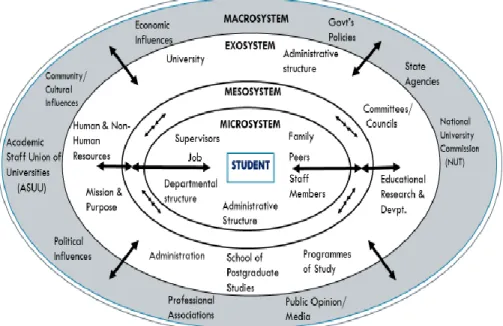
Figure 1. Various systems/variables in the doctoral student's environment. ... 29
Figure 2. NVivo 10 - a software structure showing imported interview transcripts ... 78
Figure 3. NVivo 10 - a software structure showing nodes/sub-nodes ... 79
Figure 4. Outcome space (Derived from the three categories of description) ... 174
Figure 5. Framework for understanding participants' supervision experiences ... 229
xv
List of tables
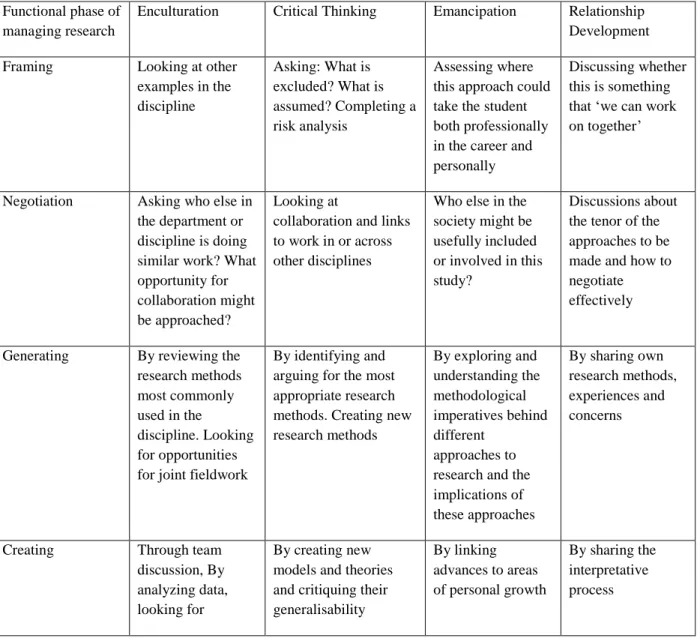
Table 1. Lee's framework in terms of the research process ... 34 Table 2. Demographic details of participants ... 72 Table 3. Participants' experience of research supervision as apprenticeship-like/power
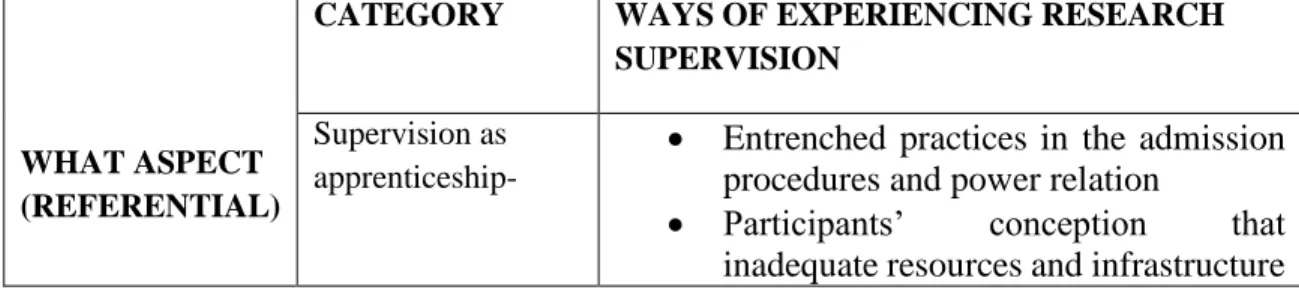
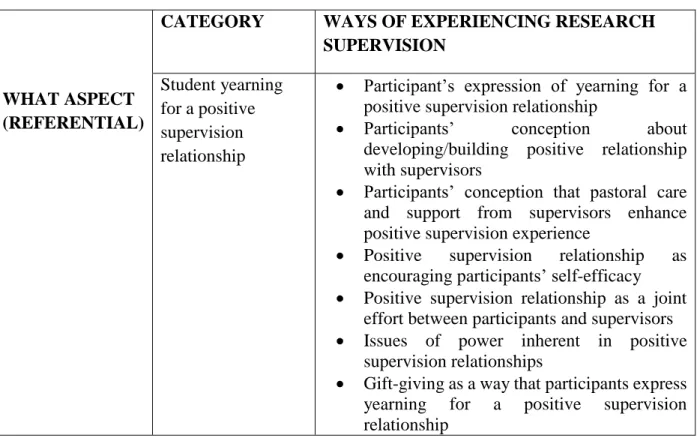
relationship ... 113 Table 4. Participants' experience of supervision as transacting in the social space ... 146 Table 5. Student yearning for a positive supervision relationship ... 170
xvi
List of acronyms and abbreviations
FME Federal Ministry of Education
N.C.E.S National Centre for Education Statistics NPE National Policy on Education
NUC National University Commission USSR University System Study and Review VTE Vocational and Technical Education
1
Chapter 1 Introduction
1.1 Background and Context
This chapter provides the background and context in which student experience of research supervision was studied. The chapter first highlights the rationale for the study, the research objectives and the critical question that guides the study. Then, international and national viewpoints/perspectives on doctoral (PhD) education and research supervision to contextualise the study are explored. The chapter then explains my motivation for the study, my role as the researcher, the research method used and concludes with a brief overview of the subsequent chapters in the study.
Intellectual human capital development is heavily dependent on higher education research and knowledge generation processes. One key process that has remained central to higher education knowledge production is the research supervision process (Ghadirian, Sayarifard, Majdzadeh, Rajabi & Yunesian, 2014), which enables research students (particularly at the doctoral level) to engage in high-level intellectual activities with the aim of producing new and useful knowledge and thus transform the novice researchers (doctoral students) into independent researchers/scholars (Neuman, 2002). With the increased international concern about high attrition, late completions and poor research outputs in higher education (Lovitts, 2008) which may largely be attributable to the quality of the supervision relationship, attention has heightened on providing quality supervision that can enhance better experiences for students (Baptista, 2011). Research evidence shows that understanding the perspectives of the direct recipients of supervision – the doctoral students, could contribute to the effectiveness of supervision (Hadingham, 2011). However, to date, the voices of doctoral students have been under-represented in research supervision scholarship, particularly in the Nigerian context (Hadingham, 2011; Okeke, 2010). Thus, the focus
2 is on exploring the supervision experiences of doctoral business education students in the Nigerian context.
This study sought, through the analysis of interview data generated from the participants/doctoral students1, to identify and to describe variations in the participants’ conceptions of their experiences of research supervision (the phenomenon of investigation) as well as how and why such experiences influence their learning and intellectual development in a particular doctoral (PhD) program.
1.2 Rationale for the study
It has been established from the body of literature on research supervision that, although research supervision in doctoral education is central, it has not received adequate attention for several decades (Armstrong, 2004). Only recently have researchers begun to focus specifically on the experiences that postgraduate/doctoral students receive from the process in the African contexts (Ganqa, 2012; Hadingham, 2011; Wadesango & Machingambi, 2011). Research evidence indicates that there is insufficient knowledge of research supervision experiences of doctoral students (Hadingham, 2011), particularly in non-Western contexts such as the Nigerian context (Okeke, 2010). Notably, the available literature on postgraduate/doctoral supervision in the Nigerian context, for instance from studies by Adeniyi & Oladejo (2012), Agu & Odimegwu (2014), and Oredein (2008), mostly adopt the positivist approach (quantitative perspective) (Lahenius, 2013, p. 31) which is mainly concerned with generalisation. Although these authors contribute to our knowledge of research supervision, their studies fall short of an in-depth explication of supervision experiences from the perspective of doctoral students themselves (Lahenius, 2013, p. 31).
____________________
1In this study, I use the term ‘participants’ and ‘doctoral students’ interchangeably to refer to the study’s subjects/respondents.
3 Thus, the apparent lack of qualitative studies that privilege the voice of doctoral students (Golde, 2006) makes it a niche area for research. Also, considering the current academic ranking of world universities, whereby ranking criteria such as quality research outputs in the form of publications of articles in reputable journals, publications of books, and others are used (Chiemeke, Longe, Longe & Shaib, 2009), only one university among all Nigerian universities made a ranking in the list of the one-thousand best universities in the world (Awojulugbe, 2016).
Arguably, therefore, exploring the perspective of doctoral students could be an appropriate way in which to respond to an earlier call to re-evaluate research and supervision in the Nigerian higher education context (Bako, 2005). Further, without knowledge of the accounts by doctoral students, it may be difficult to develop and implement supervision policies that can improve their learning and overall experiences within the doctoral experience.
1.3 Statement of the Problem
The deficit in senior academics in Nigerian higher education has drawn the attention of the Nigerian government to engage with problematic issues in this domain. Thus, there is an increased concern for the development of more doctoral/PhD fields and hence a greater number of doctoral students. However, examination of research supervision, which is a process that is globally recognised to be central to the raising of high-level intellectuals/scholars, has not received adequate empirical investigation. It is against this background, therefore, that the paucity of empirical research on research supervision (Bako, 2005), with specific reference to the experiences of doctoral students from the supervisory process, as noted by Okeke (2010) was echoed in a recent study asserting that “in many institutions it is not common to evaluate supervisory experience...”
(Agu & Odimegwu, 2014, p. 3). Also, although issues of the unsatisfactory quality of research outputs, and the late/non-completions of doctoral programmes are said to have affected the nation’s competitiveness in the global knowledge economy (Chiemeke, et al., 2009), this
4 unsatisfactory situation has been linked to the quality of research supervision that students receive, as attested to by the fact that “…doctoral supervision has remained a ‘black box’ but also a privatised space…” (Leonard, 2010, p. 39).
1.4 Aim and Objectives of the Study
This aim of this study was to explore the supervision experiences of doctoral business education students from four different universities in Nigeria. Thus, the main objectives of the study are as follows:
(a) To explore the numerous ways that doctoral business education students in Nigeria experience research supervision, in terms of the supervisory process, practices and relationship;
(b) To examine how the supervision experiences of doctoral business education students impact on their learning and development in their doctoral experiences; and
(c) To theorise doctoral supervision from the perspective of students, with a view to providing an insight into ways of improving the student experience regarding supervision.
In order to achieve the objectives stated above, Bronfenbrenner’s Ecological Systems theory was identified as a useful framework for addressing the issues. For objective one, Bronfenbrenner’s model offers a comprehensive framework that situates the developing individual within a system of relationships influenced by multi-layered environmental factors, which allows me to identify different experiences that participants have in the supervision space. For objective two, Bronfenbrenner’s model which explains how environmental variables exert influences on the developing individual who is also capable of shaping the environment (by-directional influences) enables me to understand the impact of supervision experiences on participants’ learning and development. Lastly, Bronfenbrenner’s model which is rooted in the constructivist theory allows me to draw some insights constructivist perspectives regarding research supervision perspectives of the doctoral students interviewed in this study.
5
1.5 Research Questions
(a) What are the ways in which doctoral business education students in Nigeria experience research supervision?
(b) How do the supervision experiences of doctoral business education students in Nigeria impact on their learning and development in their respective doctoral programmes?
(c) Why is it that doctoral business education students in Nigeria experience research supervision in the way that they do, currently?
1.6 The Research Context
This study is located within the international, national and institutional higher education contexts with a specific focus on doctoral student supervision.
1.6.1 International context: developing PhDs/doctorates as an international agenda
An increase in the global significance of knowledge (known as international knowledge economy) has resulted in the use of the knowledge production capability of a nation’s higher education institutions as an important index with which to gauge their economic development and competitiveness (Delany, 2008; Leonard, 2010; Okafor, 2011; Užienė, 2014). Consequently, most countries in the world are moving towards mass higher education, in general, and an increase in doctorates/PhDs, in particular (Louw & Muller, 2014). The doctorate/PhD is “the highest academic [research] degree that a university can” confer on a qualified recipient (Green & Powell, 2005;
Louw & Muller, 2014; Park, 2007, p. 4). Apart from the PhD (Doctor of Philosophy), other forms of doctorates (professional doctorate) have been introduced in recent times (Gill, 2009; Park, 2007). Notably, the idea of running a PhD/doctorate on the “notion of knowledge economy”, whereby knowledge is commodified (as something of economic value), is considered to be a neoliberal agenda (Adkins, 2009; Hopwood, 2010b, p. 829; Neumann & Guthrie, 2002) which is changing the traditional framing of the doctorate/doctoral experience. Traditionally, the doctorate is centred on an original contribution to the body of knowledge (Lovitts, 2005; Neuman, 2002), and that plays a critical role in the career path of academics (Lovitts, 2008; Park, 2007). The concern now, is that running a PhD based on a market-oriented ideology/mentality where
6 knowledge is commodified could shift the focus of doctoral education to the mere acquisition of certification and which could, consequently, limit the quality of learning - “authentic learning”
that is supposed to happen at the PhD level (Côté & Allahar, 2007; Waghid, 2006, p. 428). There are also debates about the nature and purpose of the doctorate/PhD (Leonard, 2010; Manathunga, 2005b) - whether a PhD should be about an original and a significant contribution to knowledge, or which it should about meeting the economic needs of the society (Albertyn, Kapp & Bitzer 2008, p. 750). It appears that most countries have tilted towards the neoliberal agenda of running a PhD. A study by Trigwell & Dunbar-Goddet (2005, p. 13) confirms that in the United Kingdom (UK), the PhD is now seen as a training for future researchers, rather than as a vehicle, within itself, for the generation of new knowledge. This has resulted in a “polarised debate” between a PhD as a product (focused on a thesis of high quality) and a PhD as a process (focused on developing the researcher) (Leonard, 2010, p. 40; Park, 2007, p. 6). But, with the current move towards a post-liberal ideology (Manathunga, 2009), the goal of doctoral education is increasingly recognised as being two-fold - “the production of creative scholars” and the completion of a thesis that makes “an original contribution to knowledge” (Khene, 2014; Lovitts, 2008, p. 297).
However, the major concern which has remained, statistically, as an international concern is the high rates of attrition and late completions in postgraduate/doctoral studies (Golde, 2000; 2005;
Lovitts, 2001; Manathunga, 2005a), which are roughly calculated to be in the range of 40 – 50%.
Research reports in the body of literature from various countries around the world provide evidence of this concern. For instance, a study conducted by Burnett (1999) revealed that nearly 50% of all the students who are enrolled in a doctoral programme, irrespective of the discipline, do not complete that programme. In the UK, a research study reports that between 40 and 50% of social science students do not successfully complete their dissertation/thesis (Armstrong, 2004).
Similarly, research in North America shows that 50% of the students that entered graduate programs do not complete their program (National Centre for Education Statistics (N.C.E.S), 2000;
Smallwood, 2004). In Asia, a study with a focus on one Malaysian university in 2005 reports the late completions of postgraduate and doctoral studies (Abiddin & Ismail, 2011, p. 16). Lastly, a study by Nkosi & Nkosi (2011) reports that approximately 45% of the students that enrol for doctoral programmes in South Africa do not complete the said programmes. Another concern is
7 the issue of quality of doctoral outputs, which for many developing countries is in decline (Louw
& Muller, 2014).
These challenges have resulted in increased external pressure on higher education by governments and funding bodies. Governments in most advanced countries have introduced accountability measures (Manathunga, 2005b; Park, 2007). These involve the tying of higher education funding to performance criteria, such as quality research outputs and fast completions; introduction of strict entry requirements to doctoral studies, and the provision of more structure to the doctoral program itself (Clarke & Lunt, 2014). But, some authors “are concerned that an increased focus on external accountability is already threatening academic autonomy and innovation” (Chiappetta-Swanson &
Watt, 2011, p. 5). Other authors have questioned the use of students’ past successes in undergraduates and masters’ studies as the yardstick for selection - as the purpose of earlier undergraduate and master’s degrees differ considerably from that of the PhD/doctorate (Lovitts, 2005; 2008; Tobbell & Donnell, 2013). However, the use of criteria that measure intelligence and creativity have been found to be useful in screening prospective candidates (Sternberg, 2007).
Research response to these challenges has resulted in many studies that aim to identify causes and to proffer solutions to enhance completions (Murphy, Bain & Conrad, 2007; Lovitts, 2008). Some of the contributing factors that have been identified relate to the student, for example, their academic background and experience, personal life events, (for example, marriage) psychological features, socio-economic situation, and potential lack of confidence (Buttery, Richter & Filho, 2005; Ho, Wong & Wong, 2010; Khene, 2014; Wilson-Strydom, 2011). Leonard et al. (2006), in their extensive review of the literature, itemised the following student personal factors/characteristics leading to university drop-out:
(a) the qualities of the student: persistence, time taken to decide on research topic, ability to write;
(b) personal problems: marital breakdown, accidents, having a baby; and
(c) problems inherent in the research: failure to gain results and having no alternative pathway with which to complete a PhD (Leonard et al., 2006, p. 36).
Although failures are usually blamed on the doctoral students (Lovitts & Nelson, 2000;
McCormack, 2005), research evidence consistently demonstrates that factors relating to the
8 institutional context, availability of infrastructure and research resources, the discipline and type of research, and the supervision also contribute to completion/non-completion of doctoral studies (Delany, 2008; Green & Powell, 2005; McCormack, 2005; Murphy et al., 2007). Lovitts & Nelson (2000, p. 49) argue that attrition problems may lie more with the institution/department than with the students. Lovitts & Nelson further explains that the institutional system that marginalises and silences students from voicing their complaints, account for most of the cases of attrition which go unnoticed. In another study that focuses on student performance, Lovitts (2008) finds that apart from the personal capital that students “bring to and develop during their graduate education”, other micro- and macro-environmental variables also contribute to students’ performance (Lovitts, 2008, p. 298). Thus, Lovitts recommends altering some of the micro- and macro-environmental factors in order to boost student performance.
Although many factors contribute to the success or failure of a doctoral student, it is widely acknowledged that research supervision is the single most critical factor. For instance, several authors argue that successful completion of doctoral studies depends almost entirely on the nature of the research supervision relationship, the quality of the supervisory process and the experience that students receive from that process (Abiddin, 2007; Ives & Rowley, 2005; Krauss & Ismail, 2010; Lee, 2008; Lessing & Schulze, 2002; McClure, 2005; Murphy et al., 2007; McCulloch, 2010; Pearson & Kayrooz, 2004; Petersen, 2007; Zhao, 2001). This awareness perhaps explains why most advanced countries now focus on what has hitherto been regarded as a clandestine affair – the supervision relationship (Manathunga, 2005b; Park, 2007), in order to “allow both the professor and the [doctoral] student to be thoroughly liberalised: to be rendered transparent, accountable, standardised, [and] observable” (Kendall, 2002, p. 137). Thus, this presents a critical area for in-depth investigation/research, particularly in African contexts where the research effort focused on research supervision is limited (Wilkinson, 2011).
1.6.1.1 PhD/doctoral research supervision and students’ experiences
Research supervision as a process of fostering the development of both the doctoral student research thesis and the doctoral students themselves is widely recognised as “the single most
9 important variable affecting the success of the research project” (Abiddin, 2007; Ives & Rowley, 2005; Krauss & Ismail, 2010; Lee, 2008; Lessing and Schulze, 2002; McClure, 2005; McCulloch, 2010; Murphy, Bain, & Conrad, 2007; Pearson & Kayrooz, 2004; Petersen, 2007; Wellington, 2010, p. 1; Zhao, 2001). However, until recently, this important pedagogical process has received limited attention and is still considered to be under-theorised or under-researched (Armstrong, 2004; Lee & Green, 2009). Over the last two decades, the research effort on postgraduate/doctoral supervision has increased significantly (Grant, 2005b and 2010; Chireshe, 2012; Golde, 2005;
Krauss & Ismail, 2010; McClure, 2005; Walker, 2010; Wilkinson, 2011; Zhao, Golde, &
McCormick, 2007). This is not unconnected with the recent changes in the international higher education landscape, brought about by the increased interest of governments in mass higher education and fast completions of postgraduate studies (Chiappetta-Swanson & Watt, 2011).
Studies that show how research supervision is affected by the wider political and social-cultural contexts have been well documented (Clark, 1998; Holligan, 2005; Taylor & Beasley, 2010;
Ylijoki, 2008).
With the widened access to higher education and increased enrolment for doctoral studies, there are now concerns on how to improve the quality of supervision and the experience that students receive, because these factors have been linked to success/failure in doctoral outcomes (Adkins, 2009; Douglas, 2003, p. 213; Wisker, 2005). The traditional one-on-one supervision model between the supervisor (master/guru) and the student (protégé/disciple) is now to be considered inadequate in responding to the challenge of student isolation that is commonly reported in the fields of social sciences and humanities (Nulty, Kiley & Meyers, 2009, p. 696; Zhao, 2001).
Considering that there is “a high proportion of doctoral students who do not fit the old mould”
(Yeatman, 1998, p. 23), Grant (2003) argues that the traditional one-to-one mode of supervision practice should be stopped (Grant, 2003). Similarly, Deuchar (2008) notes that the changes in the higher education landscape will “impact on the style of research supervision that academics adopt for a new knowledge economy” (p. 489).
The research response to these issues has resulted in studies that propose supervision styles/approaches from which supervisors can choose a particular style (Burns, Lamm & Lewis, 1999; Gatfield, 2005; Gurr, 2001; Lee, 2008; Maxwell & Smyth, 2010) - to be discussed in detail
10 in the next chapter. Also, alternative/complementary models of supervision have been developed, such as the team/group/co-supervision models (Hopwood, 2010a; Lee & Green, 2009; Pearson, 2000; Taylor & Beasley, 2005). Team supervision is believed to be advantageous, both to the supervisors in terms of relieving them, as they get to share supervision work with others (Manathunga, 2012), the mentoring of new supervisors (Spooner-Lane, Henderson, Price & Hill, 2007), and for the students in terms of enabling them to access a wealth of inputs. A study by Ives
& Rowley (2005) finds that most of the study participants with satisfactory supervision experiences were those in a co-supervisory relationship, where supervisors provided support and actively engaged with the students. However, other empirical studies on the team/group supervision model showed varied results. Some of these studies report challenges relating to power issues, a lack of agreement among supervisors, the giving of conflicting feedback or varied views on student work (Manathunga, 2012; Wellington, 2010). This could explain why Rehn (2006) discourages the use of multiple supervisors. To address these issues, most authors emphasise the setting of ground rules and the alignment of expectations. Other writers provide important guides on how to manage such a relationship (Philips & Pugh, 1994, p. 116-118), although most of those guidelines are seemingly rather generic and they may not address specific issues in certain contexts.
Another model which has received wide acceptance for the social dimension that it adds to research supervision (Wisker, Robinson & Shacham, 2007), is the collaborative cohort model such as the communities of practice as proposed by Lave (1991). Critics of this model, however, regard it as an extension of the master-apprentice model and they argue that important knowledge resides in practice by the doctoral student rather than in the master (Lindkvist, 2005). Grant (2009) argues that the master-apprenticeship portrayal of supervision does not sufficiently “…shed light on the troublingly asymmetrical institutional architecture of supervision” (2009, p. 129). Overall, no one researcher seems certain of which model works best and in what context, as studies in the literature indicate that there is no ‘best practice’ of supervision or a “one-size-fits-all” model (Gatfield, 2005;
Nulty et al., 2009, p. 695). In brief, it really is all about appropriateness, flexibility and responsiveness to the needs of the students (Calma, 2007; Lee, 2008; McCallins & Nyar, 2012;
Wright, 2007). Exploring different contexts may be correct pathway in terms of determining what works best in a particular context.
11
1.6.2 National context: Challenges in university education and development of a PhD/doctorate programme in Nigeria
University education in Nigeria is underpinned by the National Policy on Education (NPE) which provides educational goals and policy framework for administering universities in Nigeria (NPE, 2013). A part of the objectives of university education, as stated in the policy, is to contribute to national development through the production of a high-level manpower resource and the generating of knowledge by paying specific attention to teaching and research (NPE, 2013, p. 26, 28). Based on these objectives, doctoral education (which evidently is concerned with the development of high-level intellectuals) occupies a strategic place in Nigerian university education. In terms of structure, a PhD in Nigeria can be said to be structured after the USA model, whereby the programme is composed of a coursework component and a research component (Park, 2007, p. 4). This is in contrast with countries such as the UK and Australia where a PhD/doctorate by research is more favoured (Park, 2007), although the UK has in recent times added a coursework aspect to the PhD process (Louw & Muller, 2014). It is argued that, although Nigeria adopted most of its higher education policies from Western countries, it fails in terms of maintaining international good standards in its practices (Okeke, 2010). In line with that, there have been calls to re-evaluate the state of Nigerian higher education (Bako, 2005). With the current drive towards an international knowledge-based economy, Nigeria - like other developing nations - is making efforts to compete on a global level and to address its challenge of an intellectual manpower shortage (Ogbogu, 2013; Okafor, 2011), particularly at the doctoral level. One attempt by the government, was the broadening of access to higher education through deregulation of higher/university education, which allows both state and private entities to become involved in the provision of higher education. Presently, Nigeria boasts of over 147 universities, which are owned and run by federal and state entities, and also by private individuals and organisations (Okebukola, 2015a).
Because of this broadened access, enrolment for a university education, particularly at the postgraduate/doctoral level, continues to rise and this presents another challenge - as there is no
12 proportionate rise in the numbers pertaining to a body of qualified manpower - those with PhDs/doctorates (Ogbogu, 2011, p. 35). The former president of Nigeria, Dr. Goodluck Ebele Azikiwe Jonathan, in his 2012 remark, deplored the shortage of qualified manpower in Nigerian universities as he noted that “60% of Lecturers in Nigerian Universities do not have Doctorate Degrees” (Adeyemo, 2012). This challenge is further complicated by the issue of a brain-drain - as “about 500 lecturers from Nigerian tertiary institutions have continued to migrate each year, particularly to Europe, America and other African countries” (Okoye & Arimonu, 2016, p. 115).
This presents implications, in terms of limiting ‘mentoring’ of young researchers by established researchers, and in terms of reducing the quantity and quality of research outputs from Nigerian universities (Asiyai, 2013, p. 168). Also, the few qualified supervisors that are already overloaded with teaching and administrative work are now faced with the added pressure of supervision work (Douglass, 2003; Okebukola, 2002). Such disproportionate ratio of supervisor to student numbers may further exacerbate the issue of low research quality and research standards in Nigeria (Clark
& Olumese, 2013; Chiemeke et al., 2009).
With the deregulation policy - which is still a subject of debate in some quarters (Godwin, Pase &
Iheanyichukwu, 2011, p. 42-43), each university in Nigeria is autonomous and responsible for its own academic and administrative activities (Ogbogu, 2013). But, the federal government still reserves the sole responsibility for the monitoring and control of all universities in Nigeria. The federal government performs its monitoring role through the federal ministry of education (Ogbogu, 2013) and the National University Commission (NUC) which is a body charged with the responsibility of monitoring the establishment, accreditation of higher education institutions in Nigeria and ensuring quality (Godwin et al., 2011). While these structures contribute to the proper functioning of university education in Nigeria, it has been argued that the major challenge with realising the educational goal of universities in Nigeria is sometimes not so much about structures, but it is rather about the enactment and implementation of policies that are put forward by the federal government (Ogbogu, 2013).
The implementation of educational policies and the provision of quality education in Nigeria has been seriously constrained by funding (Okebukola, 2006). One of the reasons for the government’s deregulation of university education in Nigeria was the sharing of the responsibility for funding
13 university education between federal, state and private bodies (Ogbogu, 2013). For federal government-owned universities, undergraduate tuition fees are subsidised by the federal government, a privilege which most state-owned and private universities do not enjoy (Ekpoh, 2016). Despite the government subsidy, tuition fees are still considerably high, as most of the costs are shifted to students, particularly at the postgraduate level where students are made to bear the financial burdens of their education. Godwin et al. (2011) note that “there is no state or federal university in Nigeria that charges less than N 100,000.00 thousand naira for its undergraduate courses” (p. 43).
In addition, an inadequate infrastructure that supports learning and research has been identified – common examples are ill-equipped libraries, obsolete books and journals, intermittent electrical power supply, poor research facilities - slow/intermittent internet connections and lack of materials, among others (Asiyai, 2013; Duze, 2010; Ekpoh, 2016; Ogbogu, 2011, p. 35;
Okebukola, 2006). These factors increase the burden placed on doctoral students, who not only source for their own funding to pay their subscription fees, but also to provide research materials and resources for themselves. This is considered as a failure on the part of the Nigerian government in terms of investment in the development of its intellectual human capital, which is part of the reason that Nigeria has been unable to compete favourably at the level of the international knowledge economy (Akpochafo, 2009). This situation is said to be similar to situations in other African countries, whereby, doctoral students study within non-conducive environments (Harle, 2013, p. 6). However, most advanced countries are also experiencing funding challenges, due to the current system of mass higher education (Clarke & Lunt, 2014; Park, 2007), and their ability to invest heavily in higher education research has been rewarding in terms of positioning them as leading economies (Okafor, 2011).
With the issue of high rates of attrition and late completions in postgraduate/doctoral studies, funding presents a profound challenge in the Nigerian context in terms of national, institutional and personal costs (Agu & Kayode, 2013). This is further complicated by the excessively extended periods of stay in order to complete postgraduate programmes in Nigeria, which has been reported to involve periods of up to ten (10) and even to twenty (20) years, in some cases (Agu & Kayode, 2013; Ekpoh, 2016; Duze, 2010). Despite this alarming delay, very minimal research effort has
14 been directed in this regard. The available studies, which mostly employed the quantitative research approach, showed varied results, with some authors attributing the main reason for delay in postgraduate/doctoral studies to student-related problems which include student personal preparedness and student research and writing skills, while others found that institutional related factors, for example, institutional/departmental failure, and frequent labour-strike actions, contribute the most with respect to supervision-related problems being the least cited (Agu &
Kayode, 2013; Aina, 2014; Duze, 2010; Ekpo, 2016; Etejere, 2006; Igun, 2010; Okebukola, 2015b). The conclusions arrived at in these studies may be due to the quantitative approach that was adopted, which focuses more on generalisation. McCormack (2005) cautions that “the focus on broad categories of factors has tended to obscure the complex interplay of the constellation of factors that comprise a category and the meaning these factors have for individual students in their lives” (p. 234). Arguably, earlier studies fall short of illuminating some in-depth understanding of how students experience the different variables at play in the supervision context and the impact on their learning.
Concerns about quality have led higher education institutions to focus on the quality of candidates they recruit into doctoral education. This is because recruitment in higher education has been linked with throughput and fast completions (Park, 2007). In Nigeria, the recruitment processes/procedures are formally outlined with well-stated criteria for admissions (in terms of qualifications, etc.), which in most cases are found on university websites. Okeke (2010) however, notes that one aspect of the admission process into doctoral studies in Nigeria that has been neglected is student participation in the selection of supervisors. This is usually not the case in most advanced countries, as student participation /involvement in the selection of supervisors is considered critical to the supervision experience (Edwards, Aspland, O'Leary, Ryan, Southey and Timms, 1995, p. 6; McAlpine & Turner, 2012). Exclusion of students from being part of the decision-making process in the choosing/selection of supervisors has been found to contribute largely to issues of mismatch and a lack of alignment between supervisors and supervisees in terms of expectations, research interest, etc. (Okeke, 2010). Furthermore, the admission processes into higher education in Nigeria are sometimes compromised, as desperate candidates and parents offer financial inducements to academic and administration staff to secure admissions (Okebukola, 2015b, p. 22). This may not be unconnected with the high unemployment rate in Nigeria, whereby,
15 students after completion of undergraduate degree are unable to secure employment and they have to enrol for postgraduate/doctoral studies in order to be better positioned for employment (Ekpoh, 2016, p. 70). But, such an extrinsic motive, which is merely for certification, has been criticised in terms of limiting student learning (Waghid, 2006).
This may have contributed to the corruption challenges in Nigerian higher education, which are noticeable in reports indicating cases of examination malpractices, forgery of certificates, bribery, lobbying, favouritism of candidates in return for gratifications, gratification and inducement to manipulate the system, and plagiarism, among others (Okebukola, 2015b). These practices not only threaten the quality of learning in higher education but they also clearly contradict the high moral standards that are expected from institutions of higher learning (Waghid, 2014, p. 1448). A recent study that focused on corruption in higher education in Nigeria, confirms that although issues of corruption did not originate from Nigeria and research evidences show corruption cases in other higher education contexts (both developed and developing countries), corruption is also well-seated in Nigerian higher education (Idoniboye-Obu, 2015). The author differentiates between systemic higher education corruption (where corruption is seen as a norm) and non- systemic higher education corruption (where it is limited to one department). Considering how
“sorting” (a term which refers to bribery and other forms of corrupt practices) has become a cliché in the higher education context in Nigeria, it may be argued that higher education corruption in Nigeria is systemic. Akpanuko, (2012) argues that the issue of students engaging in “sorting” or
“sleeping” their way through the system (probably to obtain certification) may not be unconnected with societal influences, given that “the university system is a mirror image of the decay in the wider Nigerian society” (p. 94). Similarly, another study emphasises the influences of ‘socio- cultural’ practices of the larger society on higher education, thus:
The corruption level which directly and indirectly impacts on academic integrity is high in Nigeria, more so in the last eight years. We cannot have a saintly university system in an ocean of corrupt larger community reeking with persons with dishonest attributes, where parents are key agents in “sorting” by inducing lecturers for marks for their children and wards and admission officers bribed to secure admission placements (Okebukola, 2015b, p. 22).
16 This probably explains why the quality of education in Nigeria is believed to have fallen (Chiemeke et al., 2009). At the postgraduate level, “academic publishing in Nigeria, the concomitant and index of scholarly research, has declined in terms of output, quality and regularity of publications” (Olukoju, 2002, p. 1). Despite such evidences of corruption in Nigerian higher education, which are mostly associated with examination mal-practices in taught programmes, research malpractices also do exist. This is noticeable in the alarming plagiarism level in some institutions where 25% of doctoral theses failed a plagiarism test (Okebukola, 2015b).
However, only few studies have probed into issues of the corruption which might be happening in the supervision space in Nigeria, where knowledge is expected to be incubated.
1.6.3 Institutional context: Research supervision in the business education programme
The Business education programme provides the immediate context for my thesis. Business education is a programme of study under the vocational and technical education (VTE) department which was first introduced into a Nigerian university in 1965, at the University of Nigeria, which was later followed by the University of Zaria, which introduced the programme in 1979 (Ekpenyong & Nwabuisi, 2003, p. 34; Okoro, 2013). In the past, enrolment for vocational and technical education programmes (inclusive of business education) was low due to the wrong societal perception of the course as a programme for the student drop-out population and that resulted in a shortage of business educators (Ekpenyong & Nwabuisi, 2003; Lawal, 2013). Over the years, awareness of the relevance of vocational and technical education to both personal and national economic development increased and that changed the societal perception and government attitude to VTE (NPE, 2013; Ekpenyong and Nwabuisi, 2003; Oriola, n.d.; Usoro, Okon, Usoro, and Akpan, 2013). This is noticeable in the increased number of universities that now offer courses in a business education. Currently, a business education programme is being offered in almost all of the government universities in Nigeria, and at least at the undergraduate level (Usoro et al., 2013, p. 4). Chukwurah (2013, p. 61) states that, based on the JAMB brochure of 1999, sixteen universities in Nigeria have a department of business education. Although only very few universities currently offer the programme at the doctoral level, enrolment numbers for
17 PhD have drastically increased (Usoro et al., 2013). Business education at the doctoral level is undertaken either on a full- or on a part-time basis and takes the form of coursework and dissertation writing (Ekpoh, 2016, p. 67). For full-time students, the coursework component of the programme takes one year to complete, after which the research component commences. It is common in a business education programme, as with other social science and humanities programs that doctoral students work individually to create their research topic under the supervision of a university-assigned supervisor until completion (Ekpoh, 2016). The relationship mostly takes the form of an apprenticeship that is characterised by a power imbalance. This is unlike the pure/applied sciences where collaboration between supervisors and supervisees and mutual dependency are fundamental to the success of the project. With the shared goals, it becomes more natural to build the relationship on trust, thus, there may be more of a balance of power in the relationship.
In terms of scholarships on doctoral research supervision, there is little research evidence of studies that focus specifically on business education in Nigeria. Instead, studies in this context have focused more on infrastructural challenges in business education programmes, supervisors’ work- overload (Okereke, 2014; Okoro, 2013), improving teacher quality in business education (Amoor, 2010; Rotua, 2017), and instructional supervision of business education teachers (Amadi &
Johnwest, 2016; Clark & Olumese, 2013; Ohiwerei & Okoli, 2010). A similar concern was raised in an earlier study in the UK (focused on undergraduate supervision) that supervision in management education has not received the most-needed attention (Armstrong, 2004). Arguably, issues of supervision present a challenge to business education students. For instance, a study conducted in Australia on supervisor-supervisee relationship (again in undergraduate business education) found that students encounter challenges in supervision, which range from unmet expectations to breach of contract by the supervisors, which results in the low satisfaction and well-being of the students, decreased motivation, increased stress and anxiety, and a negative attitude towards learning (Bordia, Hobman, Restubog & Bordia, 2010). A recent study in the UK, that explores doctoral business and management students, and their supervisor expectations, from the supervisory process, considers Business and Management (a related field) to be a ‘niche’
discipline (Bui, 2014, p. 13), where further studies are required. Thus, my research thesis can
18 contribute to the body of literature by illuminating an understanding of doctoral supervision in the business education programme.
1.7 My personal motivation for this student research
My motivation for this student research is derived from my personal experiences and observations of the supervision process and practices during the duration of my masters’ degree in a business education programme in Nigeria. Although I was not directly victimised by my supervisor, I observed that the general atmosphere in the department imbues fear in students in such a way, that I personally could not assert myself in the supervision relationship which I thought, and I still do believe, that I should have had with my academic supervisors. While reflecting on my experiences, I realised that I was deprived of learning opportunities that, by my being somewhat assertive, could have been afforded me. One critical incident that happened in the department, which I still remember vividly, was the day I was to defend my thesis proposal. As usual, we were three students who were scheduled to defend on that day. I was initially told that I would be the first presenter, but then I noticed that there were some arguments among the supervisory panel members, and they later decided that another student should present first. After her presentation, the usual interrogation by the supervisory panel began, and in the process, one of her two supervisors, who probably had unresolved issues with the co-supervisor, told the panel that the co- supervisor who super-headed the work should be answerable for the work. Hence, that resulted in overt accusations and counter-accusations between the two supervisors. Due to the tense situation that had arisen, the defence was put to a halt and students were asked to leave the venue and to wait outside. Immediately after coming out of the venue, the student whose defence was interrupted broke down in tears. While that was happening, I became nervous, stressed and confused as I was not sure of what would become of my own defence. After waiting for several hours, the panel reconvened and gave their verdict that the first presenter should be failed. It was during this nerve-wrecking atmosphere and high-level of anxiety when I was called upon as the second presenter to defend my proposal. Although I managed to defend my work successfully, I was so traumatised by what had transpired earlier, that the situation left me with an unanswered
19 question about what can be done to make supervision a better experience for students, which partly accounts for why I opted to study for my PhD outside of Nigeria.
These experiences and observations significantly shaped the focus of my present PhD study – exploring the supervision experiences of doctoral business education students in Nigeria. Although I initially thought that my PhD research thesis could, perhaps, fix the problem that I noticed in the education system in my home country, I later realised through the guidance of my present supervisor and also via a thorough review of the literature, that a PhD is not solely about proffering solutions, but about it is about problematising, conceptualising, intellectually challenging and also about theorising certain important issues. As I embarked on my PhD student research, I was also aware of the trend in the body of social science literature that is described as “a crucial bias”
(Stanley, 2004, p. 2), whereby, studies on the doctorate are mostly conducted by supervisors and well-established academics, rather than by the doctoral students themselves. Notably, given the hierarchical nature of the supervisor-supervisee relationship that I had previously experienced, which is also evident in literature (Okeke, 2010), I believed that by conducting my research as a doctoral student, I stood a better chance to have some ease of access into other doctoral students’
deep experiences of supervision than the supervisors who may want to research on this topic. The fear of the likely consequences of students divulging information about their supervisors could be a major hindrance to data collection for the supervisors. In line with this view, Lee and McKenzie (2011) posit that “it has been difficult to elicit sustained feedback from doctoral students regarding their experiences of working with an individual supervisor, or even a supervisory panel…” (p. 69).
Unsurprisingly, it is argued that there is “far too little qualitative research on doctoral students, their work and training. [Thus] …important aspects of higher education remain stubbornly invisible” (Delamont, Atkinson & Parry, 2000, p. 134).
20
1.8 My position within the research context – my outsider and insider roles
It is necessary at this point for me to explain my dual position in the process of conducting this research (Reddy, 2010). As a Nigerian, studying for my PhD in South Africa positioned me as an outsider to my research context which is Nigeria. This outsider position was a major reason I had ease of access to the elicitation data from my study participants. Although some of the participants initially exhibited some fear that my kind of study is foreign/strange and could implicate them in something much deeper as a result, they later consented to be a part of my research. This was because they felt that since the recorded interview data would be taken outside of Nigeria, consequently, it will not be easily and directly traced to them personally. In that regard, my being an outsider worked well and to my advantage and as I had anticipated, it gave me ease of access to their knowledge about the phenomenon being investigated. On the other hand, being a Nigerian and having studied up to the masters’ level of education in Nigeria positioned me well as an insider with respect to my research context and, as aforementioned, this formed part of my motivation for focusing on the Nigerian context. I acknowledge that my being an insider may have influenced the way that my participants responded to some of the questions I posed to them during my initial face-to-face interview. This could be noticed in the way that some of the participants sometimes responded in an informal manner, rather than by providing answers to questions posed to them in a formal manner. For instance, one of the participants, while listing some of the items she purchased during her defence presentations, used her local/native language to express certain things like “Afufu” which I could not easily transcribe. Other participants sometimes made comments like “you know what I am talking about” instead of providing detail explanation. To clarify some of these issues, a follow-up interview was conducted. Arguably, the critical issues playing out here are the tensions between the dual position that I was occupying - one of being a Nigerian myself (an insider) and the other of being a researcher outside Nigeria (an outsider).
21
1.9 Research design and method
This is a qualitative interpretive study that employed the phenomenographic research approach to explore the supervision experiences of doctoral business education students in Nigeria. I purposively selected fifteen doctoral students as participants for this study who were drawn from the four universities in Nigeria which are offering the business education programme at the doctoral level when the data was generated. I used a semi-structured interview technique to generate data for this study, which is the main instrument for data generation in phenomengraphic studies (Marton & Pong, 2005) and I used an open coding approach to analysing the data. This enabled me to arrive at a qualitatively limited number of ways in which the participants experienced research supervision.
Phenomenography has become an influential approach for research in many disciplines across the USA, the UK and Australia (Stoodley, 2009). Notably, limited studies exist to date that have adopted the phenomenographic approach to explore the collective supervision experiences of postgraduate doctoral students with such as: Bruce & Stoodley (2013); Franke & Arvidsson, (2010) who adopted the phenomenographic approach to study supervisors’ experiences of supervision; and that of Lee (2008) that focused both on supervisors’ and students’ experiences of supervision being the only exceptions in this regard. The use of the phenomenographic research approach in the context of this doctoral student research provides a point of departure for my exploration of students’ supervision experiences. Phenomenography provided a useful tool for mapping the qualitatively limited number of ways in which research supervision was collectively experienced by the participants in this study, and then presenting the information in the form of an outcome space (Cope, 2004; Marton, 2000), which other qualitative research methodologies failed to achieve.
22
1.10 Demarcation of the Thesis
The thesis is demarcated as follows:
(a) Chapter One - Introduction
This chapter provides a brief introduction to the rationale for the study and its context. It ends with a synopsis of the subsequent chapters which are constitutive of the entire thesis.
(b) Chapter Two – Literature Review
This chapter provides a picture of the earlier studies that have been carried out in relationship to the phenomenon under investigation and identifies where the current study is positioned in the extant work on doctoral research supervision.
(c) Chapter Three – Research Methodology
This chapter describes the resear