ECONOMIC CHANGES AND GOVERNMENT POLICIES ON THE DEMAND AND SUPPLY OF CIVIL ENGINEERS IN SOUTH AFRICA. This dissertation discusses the above policies and the effects on the demand and supply of civil engineers, technologists and technicians in South Africa.
LITERATURE REVIEW
INTRODUCTION
STATEMENT O F PROBLEMS
- Overall problem statement
- Characterisation of Manifest Problem
- Formulation of Problem
- Subproblems
- Decomposition of problems into sub-problems
The changes in the economy and government policies will impact the supply and demand of engineers, technologists and technicians in South Africa. One reason that has contributed to this situation in the public sector is the government's policy on transformation, namely positive discrimination (AA).
OBJECTIVES
In order to adequately address the issues surrounding economic changes, the following sub-problems were developed, namely the reasons that affect economic growth, changes in infrastructure development, attitudes and cultural barriers in the public sector, and effects on the increase in boundary demarcation in Local Municipalities.
CRITICAL QUESTIONS
RESEARCH DESIGN
- Ethical Requirements
- Representative Sampling
- Data Analysis
- Limitation of the study
Ethical requirements for this research were obtained by writing to the South African Institution of Civil Engineers (SAICE) and the South African Association of Consulting Engineers (SAACE) asking them for permission to use their information. The other limitation is that the research could take so long that additional information would be required to fully address the objectives of this research.
OVERVIEW OF DISSERTATION CHAPTERS
- Introduction
A limitation of the project is the accuracy of the data, as the analyzed would be used to make recommendations to all relevant authorities and the government. Analyzes of research questionnaires and discussion of the current strategy in the eThekwini municipality.
LITERATURE SURVEY
- Introduction
- Survey of literature that relates to the theoretical framework of the dissertation .1 Structural changes in South Africa
- Demand and supply of civil professionals
- Strategic framework of local government and municipalities
- Staff retention strategies
- Affirmative Action
- Black Economic Empowerment
- Survey of civil engineering labour market
Affirmative action has played an important role in employment dynamics not only in South Africa but in many parts of the world. The structure of the research focused on two key themes: the demand for engineers in the labor market and tertiary institutions and the supply of engineering skills.
CONCLUSION
ECONOMIC CHANGES IN SOUTH AFRICA
- INTRODUCTION - THE SOUTH AFRICAN ECONOMY
- History of the South African economy
- STRUCTURAL CHANGES IN SOUTH AFRICA
- Introduction
- The Reconstruction and Development Programme
- The Growth, Employment and Redistribution Macroeconomic Policy Programme The RDP was an attempt to reconcile the vision of transformation. As mentioned above the
- Inflation Targeting and GDP growth
- Impacts of the structural changes on the demand for Civil Engineers
- SOUTH AFRICAN GOVERNMENT'S EXPENDITURE -1997 TO 2007
- Introduction
- Analysis of National Budget Expenditure
- CONCLUSION
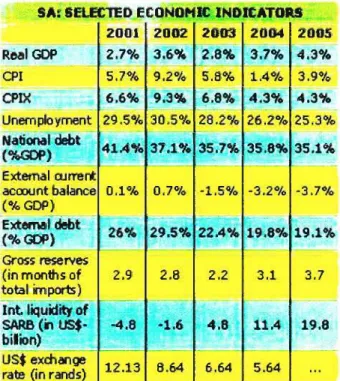
The South African economy was facing a serious structural problem at the end of the Apartheid era. There has been a slow decline in the number of civil engineering professionals (engineers, technologists and technicians) since the boom in infrastructure development in the 1960s and. South African government spending on infrastructure development showed a direct correlation with the demand for civil engineering professionals during the latter part of 2002.
Analysis of state budget expenditures is important from the point of view of infrastructure development and effects on the construction industry.
BLACK ECONOMIC EMPOWERMENT AND AFFIRMATIVE ACTION
- INTRODUCTION
- BLACK ECONOMIC EMPOWERMENT
- Background of Black Economic Empowerment
- Impacts of the Apartheid
- Government Interventions to support BEE
- BEE and the impacts on the civil engineering industry
- AFFIRMATIVE ACTION
- Justification for Affirmative Action
- South African Governments policy on Affirmative Action
- Affirmative Action - Advantages and Disadvantages
- Current situation in the Civil Engineering Industry
- Effects of Affirmative Action on the Civil Engineering Industry
- Future strategies - should AA still be implemented
- CONCLUSION
The South African government's affirmative action policy ensures that qualified individuals from designated groups have equal opportunities in the workplace. Affirmative action makes members of past or present dominant groups pay for past mistakes. Many white people expressed their concerns regarding affirmative action and its effects on the economy and industry.
The effect of affirmative action on the civil engineering industry and the over-enforcement of employment equity legislation has exacerbated the skills crisis according to service MEC Marius Fransman.
DEMAND AND SUPPLY FOR CIVIL ENGINEERS, TECHNOLOGISTS AND TECHNICIANS
INTRODUCTION
In addition, her findings indicated that the average working hours per week for civil engineering professionals in South Africa is 54 hours across all racial groups. Many senior staff work between 60 and 70 hours per week, which is considerably high when considering a 40 hour week. This is not surprising as the current number of civil engineers are doing almost twice their share of the work due to the limited number of civil engineering graduates and now due to the increase in infrastructure development.
Using the above situation as a background, completed questionnaires received from civil engineers, technologists and technicians at the eThekwini Municipality will be used to gain insight into the current situation.
SUPPLY OF CIVIL ENGINEERING PROFESSIONALS
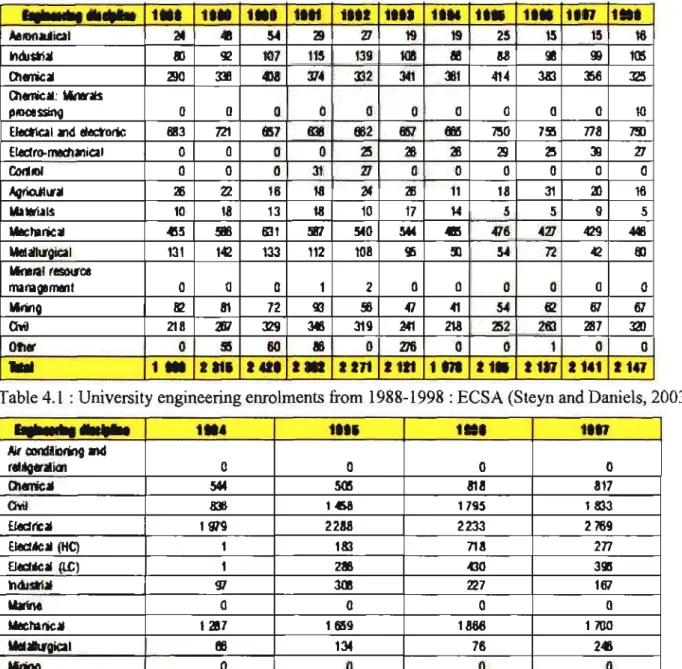
Since the emphasis is on construction, the percentage of enrollment in this major at the university and at the technical school was calculated, which is shown below in Tables 4.3 and 4.4. According to Lawless (2005), from 1999 to 2002, there was a slowdown in enrollment and a slight improvement in graduation in the construction industry. The supply of young graduate engineers, technologists and technicians is influenced by the following factors, namely high school graduates with good grades in mathematics and natural sciences, perceptions of the construction industry (long working hours, below average wages, poor to average career development), workforce mobility. graduates move into other industries, e.g. into banking.
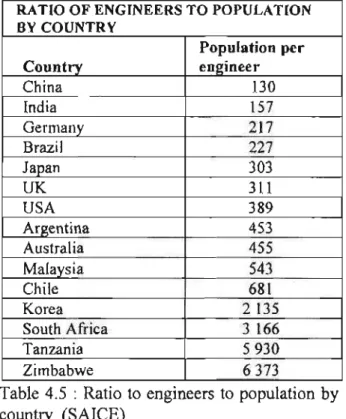
Sheath commented that construction is not a very attractive industry for young people, given that the average age of a consulting engineer in South Africa is 53.
IttMlft ittitm
DEMAND FOR CIVIL ENGINEERING PROFESSIONALS
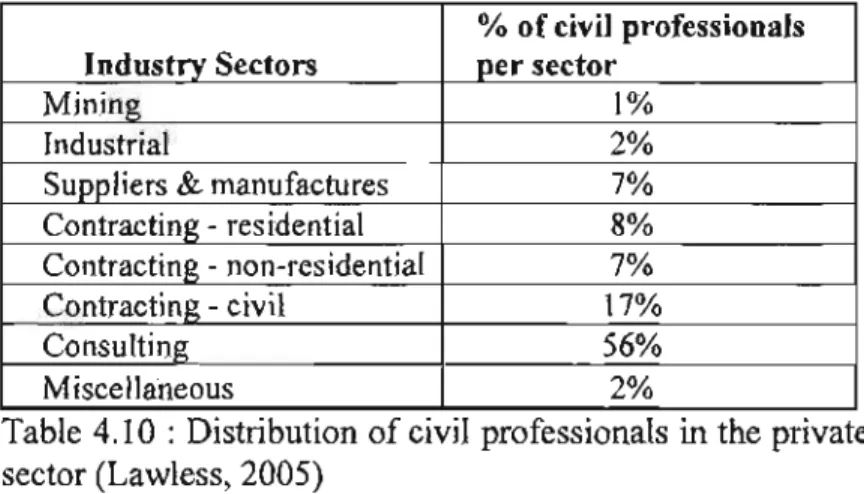
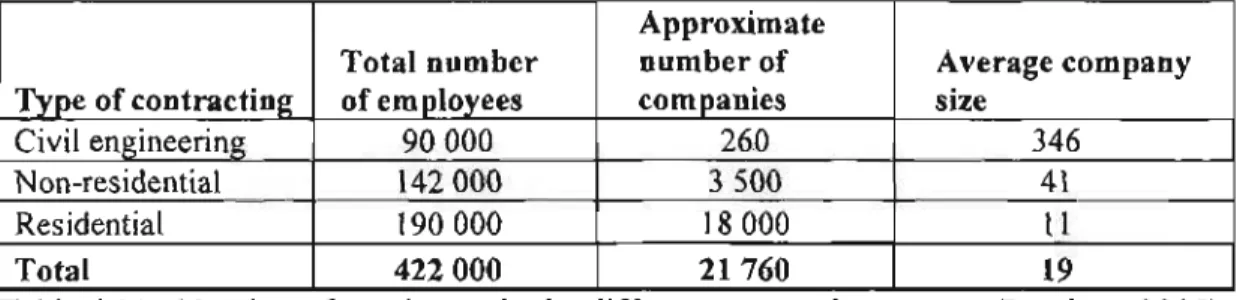
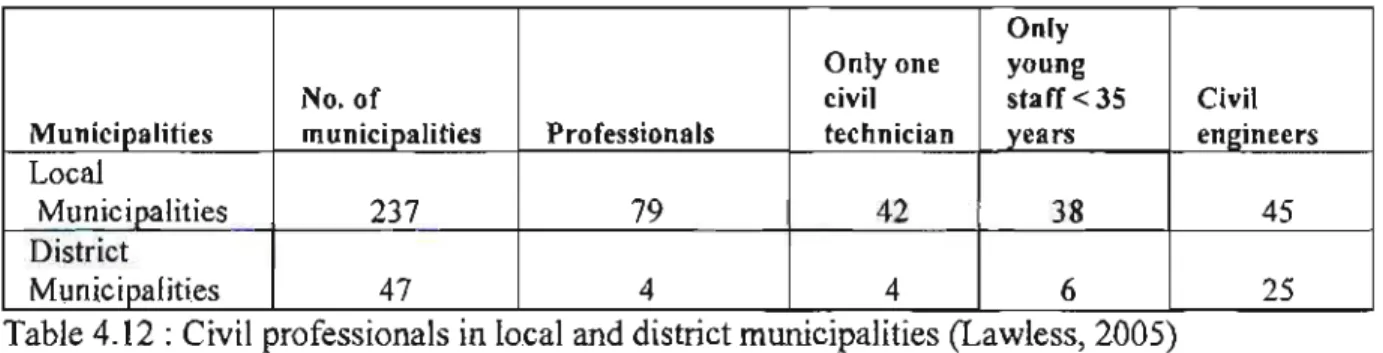
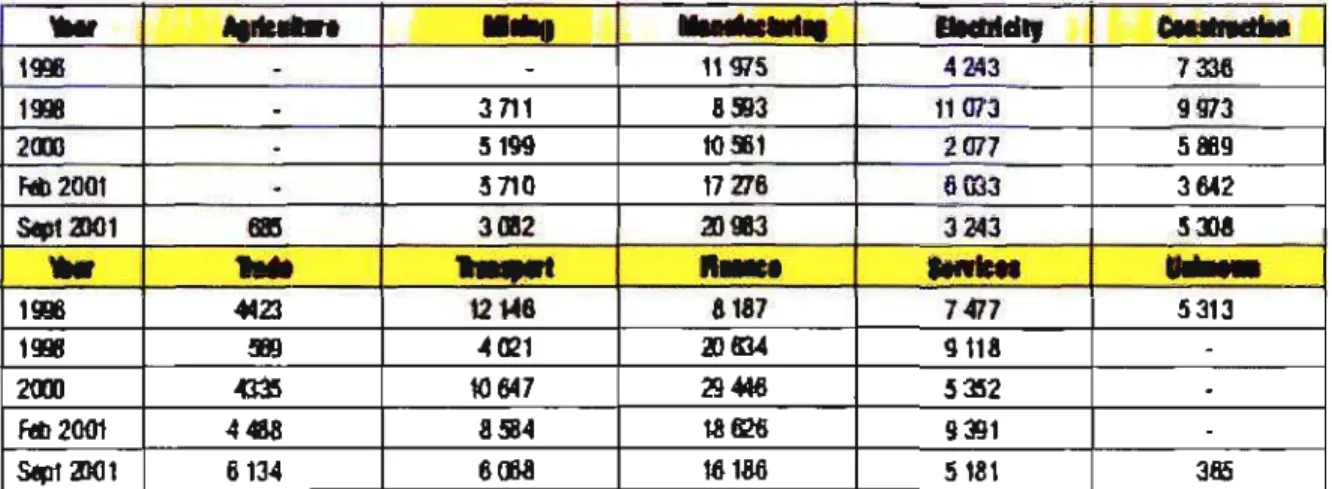
In the private sector, civil professionals are employed by consulting engineering or contract engineering firms. According to Lawless (2005), the demand for civil professionals in the public sector should increase rather than decrease as a result of the increase in area and population under councils' jurisdiction due to the new demarcations in 2000. A survey conducted in 2005 revealed the following construction statistics for civilian professionals in 284 local and district municipalities and metros.
It is said that the demand for civilian professionals in the metro cities is around 480 professionals to fill an average of 40% of the vacancies.
IMPACTS OF SALARIES ON THE DEMAND AND SUPPLY OF CIVIL ENGINEERING PROFESSIONALS
A shift in demand and/or supply in these curves will lead to changes in the wage rate and the number of hours of labor traded. There is a fall in the equilibrium wage rate as there is a surplus of labor at the old equilibrium wage rate, thus exerting downward pressure on wages until a new equilibrium is reached at Wi and an increase in the number of hours worked in the market Li. Over the past two decades, due to the decline in infrastructure development, the civil engineering industry in South Africa has shown a decline in demand for civil engineering professionals.
This resulted in the dramatic drop in the wage rate and led to a significant drop in the number of civilian professionals in the industry as many left the industry or the country.
ASSESSMENT OF TECHNICAL STAFF AT ETHEKWINI MUNICIPALITY
- Introduction
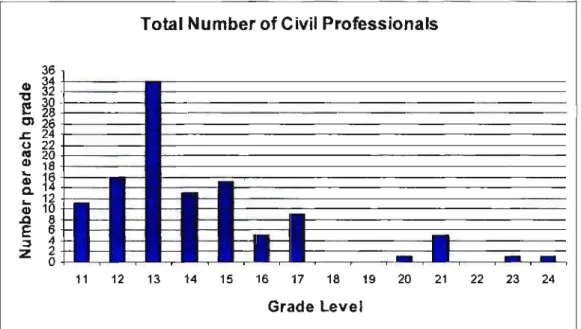
- Age Profile of Civil Professionals within eThekwini Municiplaity
I I 11 Hill 1
Vacancies within departments at eThekwini Municiplaity
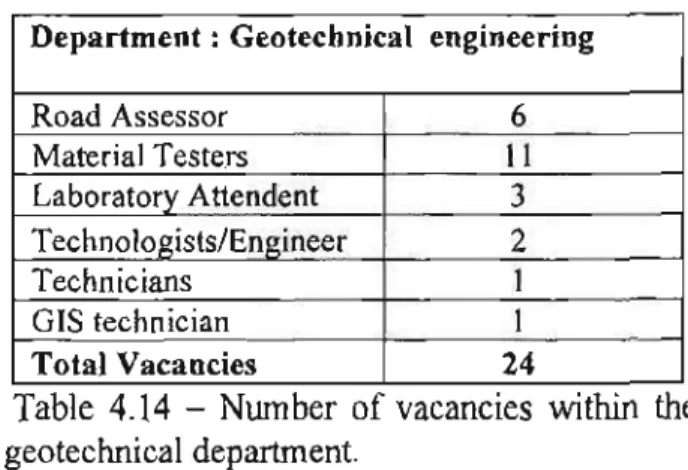
The development engineering department is smaller than the coastal, stormwater and catchment management department which has a total staffing requirement of 70. It is interesting to note that there are no engineering positions in this department, and that most of the technical staff are currently employed is and is vacant. are technician positions. The analysis of the above department's vacancies puts the number required by the municipality of engineers and technologists at 18 and 48 for technicians.
The first is that, due to the increase in the demarcation area of the municipality, a larger part of the budget is allocated to the improvement of services in these areas, which is why many jobs are still unfilled.
SURVEY RESULTS
INTRODUCTION
RESULTS
- Demand for civil professionals within departments
- Skills and abilities of civil professionals
- Job satisfaction, salaries and change of careers
- Mentoring within eThekwini municipality
- Professionals leaving South Africa
- Affirmation action on career and growth development
- Infrastructure development within KwaZulu-Natal
- Positions and qualifications at eThekwini municipality
- Conclusion
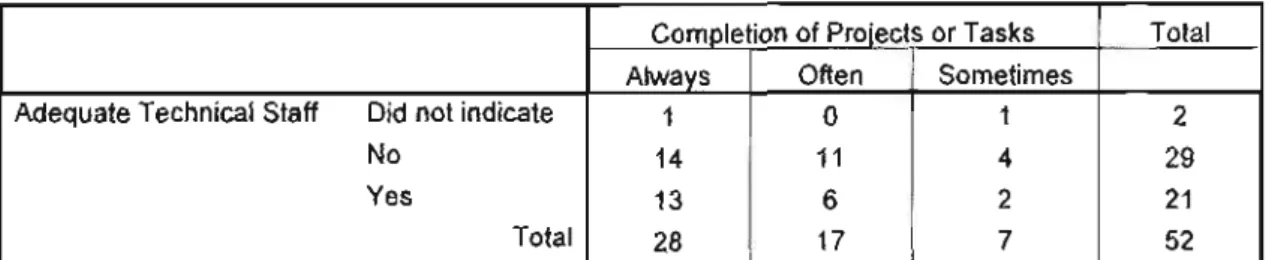
In this case of the 13 respondents, the respondents indicated that the quality of technologists and technicians is weaker to worse, with the reminder indicating no change. As far as salaries are concerned, a large part of the respondents fell in the category of R20 000 to R30 000. Out of the 52 respondents, Figure 5.3 shows a total of respondents who indicated that they had considered leaving South Africa.
Subsequently, 38.5% of respondents indicated that they have considered leaving South Africa as a result of the high crime rate, unstable job security, better job opportunities and higher earning potential abroad.
INTRODUCTION
ECONOMIC CHANGES AND THE DEMAND FOR CIVIL ENGINEERING PROFESSIONAL
The decline in infrastructure development over the past two decades has led to a drop in demand for civilian professionals. Much of the demand for civilian professionals is generated by central government spending on infrastructure development, usually covered by the private or regional public sector. The government must therefore find ways to reduce these recessions as this would create a constant demand for civilian professionals.
Currently, South Africa is in a growth phase which has created a high demand for civil engineering professionals.
SUPPLY OF CIVIL PROFESSIONALS
CIVIL PROFESSIONALS SKILLS REQUIREMENT
To improve this situation, it is suggested that although technical knowledge plays a major role in the civil engineering industry, soft issues such as social skills are becoming increasingly important as a result of integration into the new South Africa. Until now, institutions have provided relevant technical knowledge to civil engineering graduates, in line with the engineering projects of the 1970s.
PERCEPTIONS REGARDING CIVIL ENGINEERING
Understandably, due to the decline in infrastructure development, this was difficult to achieve, which is therefore all the more reason to initiate this process now, due to the many projects currently underway. The continuation of infrastructure development is imperative to create a change in the perception of the construction industry and reduce the immigration of many civilian professionals.
TERTIARY INSTITUTIONS RESPONSE TO CHANGE
In light of the above scenarios, the government therefore needs to support and promote the civil engineering industry as a 'lifeblood' of the economy. Institutions must have sufficient staff and facilities to ensure that students receive the best training and knowledge. Succession planning must take place to reduce the loss of knowledge from retiring academics.
Government and the private sector should consult regularly to monitor and advise institutions on their requirements so that appropriate graduates are provided to industry.
SALARIES WITHIN CIVIL ENGINEERING INDUSTRY
The increase in infrastructure development in South Africa has created a high demand for civilian professionals and highlighted the skills shortages that South Africa faces. Once the supply of civilian professionals exceeds demand, salaries are likely to decline. Therefore, a standard salary structure would prevent drastic salary fluctuations within the sector. The results of the survey show that not only job satisfaction and work challenges are important factors for professionals, but that salaries are also becoming an important factor for professionals.
However, a small percentage of professionals at the eThekwini Municipality indicated that low salaries in the sector encourage them to change their careers, leading to the conclusion that many civilian professionals enjoy their work at the municipality.
IMMIGRATION OF CIVIL PROFESSIONALS
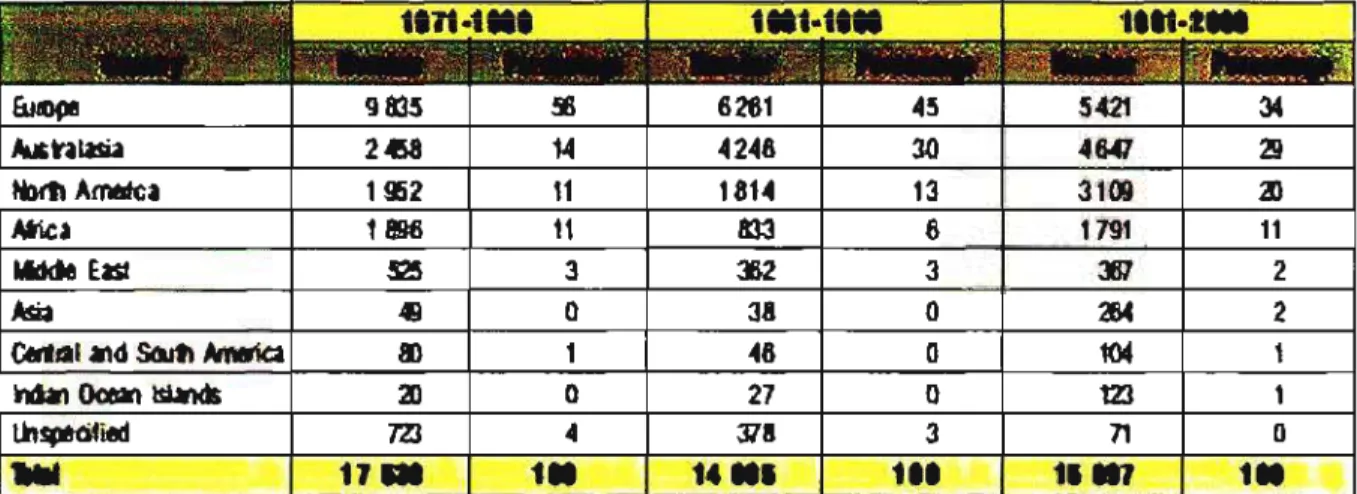
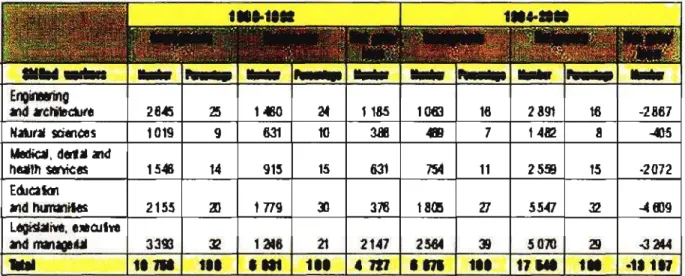
In terms of underemployment, the slowdown in infrastructure development meant that many civilian professionals wanted hardcore engineering work, such as building roads and bridges, dams and water treatment plants. This situation has led to many young and old civilian professionals wanting to leave South Africa to gain this experience abroad. Furthermore, due to the low salaries in South Africa, many civilian professionals leave due to the lucrative salaries offered abroad.
The affirmative action policy mainly contributed to many white civilian professionals leaving the country.
RETENTION STRATEGIES
South Africa has focused more on urban engineering rather than on the above engineering, with a few getting the opportunity to be involved in this type of work. Due to the skills shortages for civil professionals and the current scale of projects, the government needs to be more realistic and also tap into the talent pool of white professionals, rather than applying affirmative action policies too aggressively to the detriment of the economy. Young civilian professionals will be sent to different departments to gain experience and exposure in the different divisions.
In addition, career development plans will be developed to groom civilian professionals for future leadership positions.
FUTURE RESEARCH
Racializing Affirmative Action in Organizational Discourses: A Case Study of Symbolic Racism in Post-Apartheid South Africa. Language, development and reconstruction of education in South Africa International Journal of Educational Development, Volume 19, Issues 4-5, July 1999, Pages 301-313. The Communication Challenge in a Post-Apartheid South Africa: The Intercultural Agenda International Journal of Intercultural Relations, Volume 11, Issue 3, 1987, Pages 265-278.
The racialization of affirmative action in organizational discourses: A case study of symbolic racism in post-apartheid South Africa. International Journal of Intercultural Relations, Volume 27, Number 2, March 2003, Pages 157-187.
RESEARCH QUESTIONNAIRE
PRIVATE AND CONFIDENTIAL
VOLUNTARY QUESTIONNAIRE FOR CIVIL ENGINEERS
ETFIICAL CLEARANCE
UNIVERSITY OF
KWAZULU-NATAL