Motivation of the study 2
Focus and purpose of the study 4
The focus of the study was to understand the use of educational video to facilitate the learning of mathematics in two secondary schools in Durban, KwaZulu-Natal Province. This study was intended to explore educators' perceptions and the challenges they face in integrating EV in the classroom, as well as how they deal with their daily interaction with learners and in the transfer of information in the classroom and around the world through the use of EV.
The problem statement 4
Therefore, it is important to conduct an investigation such as this study into the approaches that will best serve the needs of students within the prevailing problem of mathematical content acquisition. This will provide suggestions that, if properly implemented, will introduce educators to different approaches that could be used to improve mathematics teaching in the country.
The Significance of the study 5
The study also hopes to benefit teacher educators by equipping them with the skills to use technology in teaching to improve classroom instruction, particularly in the teaching and learning of mathematics as outlined by the government in the draft White Paper (Pandor, 2003). Furthermore, this study is expected to add value to the literature on the use of educational video in mathematics teaching and learning.
Review of related literature 6
In addition, this report will benefit educators in general who are interested in incorporating video into their schools and universities by giving them insight and guidance to improve their teaching style and their approaches to teaching mathematics. The findings also show that using EVs helps teachers improve their mathematics teaching by observing how other teachers from other countries approach the same topic.
Theoretical framework 7
How teachers and students currently use EV in teaching and learning mathematics. What are the educators' views on the use of EV in teaching and learning mathematics.
Key research question 8
Methodology 8
This is because the researcher went into the setting to observe how educators and students used video in teaching and learning, and to interview both educators and students to understand their perceptions on the matter. In this case study, the researcher interviewed both educators and students from the two selected schools.
Data analysis 9
Trustworthiness of the research 9
Ethical issues 10
The previous chapter focused on various researchers' ideas about the use of video in teaching and learning mathematics. The purpose of the question was to gain insight into teachers' perceptions of the use of EV in teaching and learning.
Limitations 10
The structure of the study 11
This chapter describes the research problem, the intended research design and the methodology to be followed. It also presents the impact of technology on teaching and student achievement.
Conclusion 11
The chapter focuses on the benefits of video in the teaching and learning of mathematics, obstacles to its use, and the perceptions of educators regarding its use. The work of Marshall (2002) on the other hand was concerned with a variety of learning theory studies that investigated why the use of multimedia technology to present information is so affective in teaching and learning.
Technology in teaching and learning 13
Like other students, they can be motivated by using technology to achieve set goals. Brophy (2004) moved from the general discussion of what can influence the way students learn (which Hiebert and Wearne (1993) explore) to the specific use of technology and its contribution to teaching and learning.
What is Educational Video 15
To account for these differences, Dewey (2002) argues that the use of video in the classroom is essential. In this case study, the reality of using EV in the classroom to facilitate teaching and learning is explored.
Video in teaching and learning
Using Video in higher education 19
The use of video in teaching and learning benefits mathematics students not only in schools but also at the higher education level. The work of Hatfield and Bitter (1994) and Gutierrez (2004) focused on using video to train new teachers.
The use of Video in different teaching
As previously noted, the use of video in South African schools will be appropriate as students can learn a lot from other students outside the classroom. Findings based on teacher evidence show that using video in the classroom improves learning and retention, thereby improving test scores.
How educators and learners utilize EV
How video is presently utilized in
Focus of viewing 23
Video use in instructional situation 24
Video use in mass instructional 25
Video can be used as an instructional tool in presentations to a large number of learners, such as in lecture halls, either by using projection facilities that allow a very large image to be projected onto a central screen, or by television monitors on several points in the room so people can see the screen from wherever they are sitting in the venue. It is suitable where movement needs to be demonstrated or where elements of the outside world need to be brought into the teaching and learning situation, such as in the teaching of probability where the situation needs to be displayed on the screen for learners to observe.
Video use in individual learning 25
The role of educators is to create an environment for successful learning and to help students through discussions and recommendations, as well as to motivate and inspire them in the process. As this encourages learners to control the pace and manner in which they learn, learning packages are accessed in a way that is most suitable for each individual learner.
Group learning 27
In order to meet the demand for individualized learning, Ellington, Parcival and Race (1993) suggest that videos should be provided to students as key parts of learning packages.
Perceptions of educators and learners
Educators’ perceptions 28
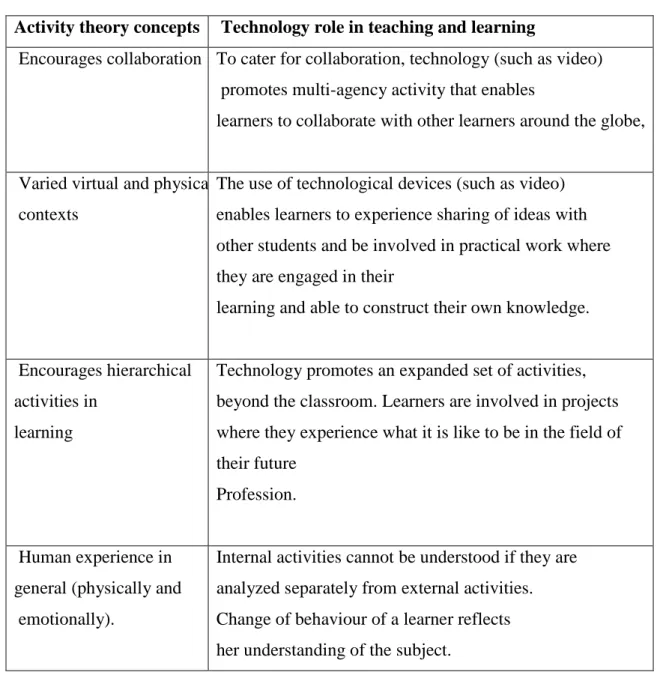
After integrating video into teaching and learning for a month, they realized that students understood better when they constructed ideas, and that they had the opportunity to explain and discuss in groups after learning part of a topic had viewed. Educators widely believe that video in teaching and learning provides students with the opportunity to work independently and promote collaboration among students as they work on problems beyond the normal curriculum;
Learners’ perceptions 29
My research is on “The use of educational video to facilitate student achievement in mathematics education in grade ten” (or any other grade). My research is on “The use of educational video to facilitate students' performance in mathematics education in grade ten”.
Challenges of educators in using EV 30
The enablers 31
Schools should provide quality technology equipment and online training to staff members to enable them to access online video. Additionally, educators should have access to professional development programs to enable them to master the skills to use technology in the classroom so that students can benefit from skilled facilitation in their learning.
Conclusion 31
The literature has also indicated the particular potential of EV as a tool in teaching and learning mathematics. In the next chapter, the focus will be on developing the theoretical framework of this case study.
Research design 33
The interest of the researcher was to understand the time allocated to mathematics lessons in the two schools. We need a refresher course on using video to achieve the objective of the lesson.
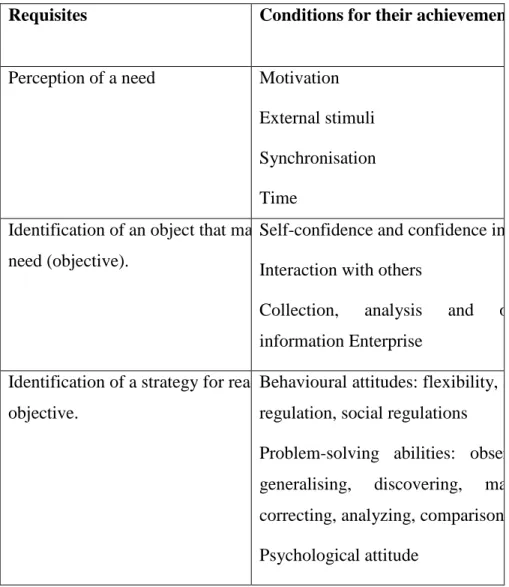
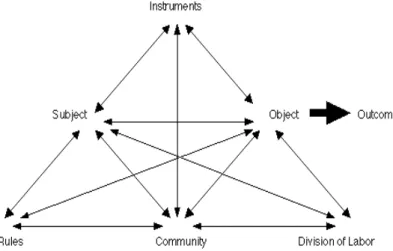
Concepts of the new theory
Model of a new theory 41
Conclusions 46
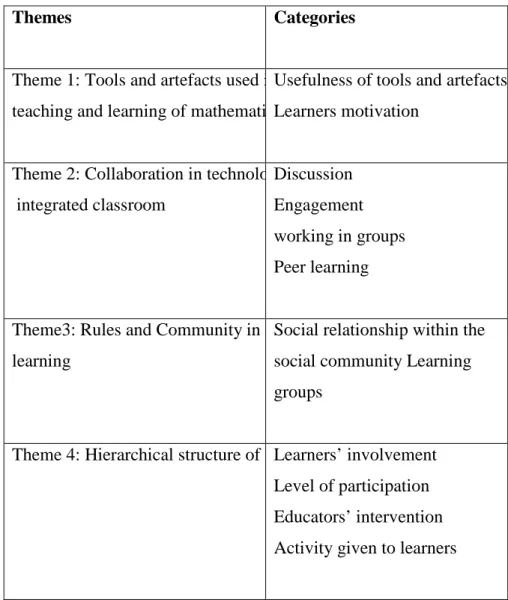
The principles of the new theory of the study will be used as themes in the discussion of data in chapter five of this current study. In the next chapter, the researcher deals with the methodology of the study, reasons for methodological choices and how it helped in the collection of data.
Research Design and Methodology 42
In this chapter there will be an investigation into the phenomenological approach used in this study to explain the central questions about the way people understand, interpret and use video in their daily teaching and learning of mathematics.
Interpretive paradigm 43
The interpretive paradigm is found appropriate for the study because it allowed the researcher to explore how integrating video into teaching and learning improves motivation and results in better performance in learning mathematics.
Qualitative approach to research 44
Case study methodology 44
The case study also enabled the researcher to record the experiences of teachers and students from the selected schools with the use of video in mathematics teaching and learning. What are the educators' views on the use of EV in teaching and learning mathematics.
Research setting 45
This is why the case study was deemed suitable as part of the methodology of this particular study, as it allowed the researcher to find in-depth data to explore the ways in which teachers and students experience the use of video in education. This case study was used as a methodology to enable the researcher to find in-depth data on the case under investigation.
Sampling 46
Purposive sampling 46
Systematic random sampling 47
Participants’ profile 47
Although John has never had any training on the use of technology in his training college, he has attended training workshops on the use of technology in teaching and has used video in teaching in both AET and FET (grades 7 to 9, and grades 10 and 12) ). They were able to connect the experience they had with using video at home with the use of EV in learning mathematics.
Methods of collecting data 49
- Semi-structured interviews 49
- Disadvantages on interview method 50
- Interviewing educators 51
- Interviewing learners 51
- Observation 51
- Limitations of observation 52
- Document analysis 52
- Disadvantages of document analysis 53
The researcher went back to the individuals involved to reschedule and this delayed the process. Another factor was the workshops the teachers attended, which disrupted the researcher's schedule.
Triangulation 54
Trustworthiness 54
Some other strategies used
In the second semester, the researcher returned and continued the data collection, which followed the confirmation of the findings. This ensured the accuracy of the findings and provided the researcher with more concrete information that allowed her to form interpretations.
Ethical issues 57
Proposed analysis of the data 57
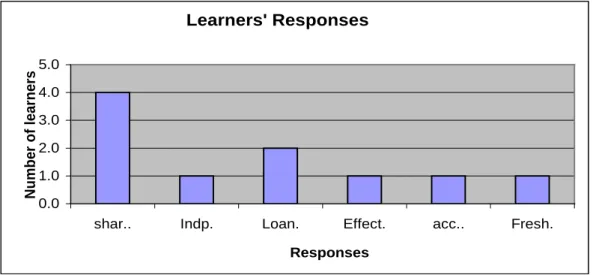
Concepts from both theories (engagement and activity) were used to interpret and analyze the data in this study by forming themes and relevant categories to allow discussion of the data collected. The data will be presented and graphically illustrated (using pie charts, graphs and bar graphs) in the next chapter.
Pilot study 58
Lankshear and Knobel (2004) argue that themes should be used to analyze multiple kinds of data.
Conclusion 58
The research aims to develop insight into the use of EV in the classroom, the perceptions and challenges that teachers encounter when using EV. The data is presented in a simple manner so that readers can observe and understand how teachers and students from the two selected schools in KwaZulu-Natal province use EV in teaching and learning in mathematics classrooms – both their perceptions and their challenges.
Data analysis 60
Qualitative data 60
In this chapter, the purpose is to analyze the data, followed by their interpretation, which is made based on the understanding of the researcher and the responses of the participants. Both the analysis and interpretation of this study are based on a guided approach and interpretation by the researcher, which is influenced by the aforementioned steps taken in the process of analyzing this data.
Presentation of data 61
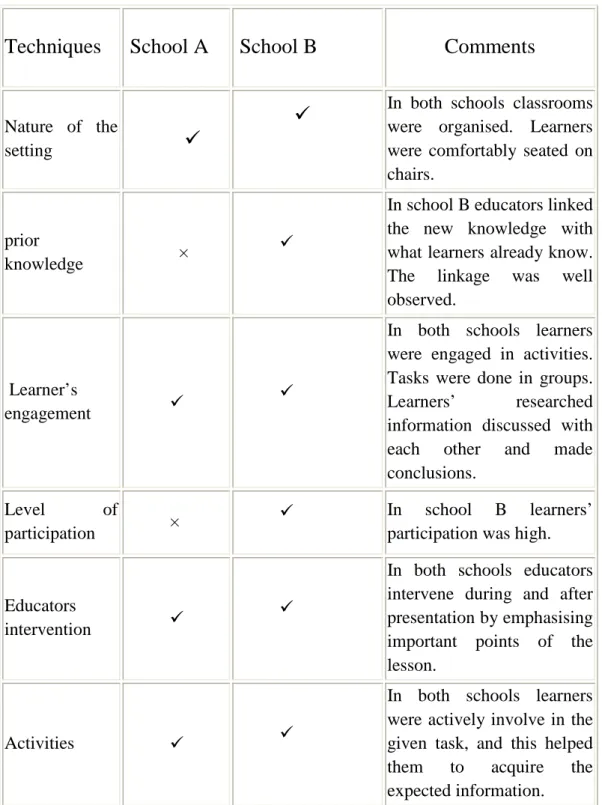
Two educators from the second school (Sekameng high school) show that integration of video in the teaching and learning of mathematics allows learners to work together with other learners and educators from other countries in the world. In both schools, learners were actively involved in the given task, and this helped them to obtain the expected information.
Interpretation of data 74
Introduction 74
The level of participation of the learners in the two schools was high as a result of the strategies that were followed in two schools. This was observed in the classrooms of the two selected schools, where learners were given a task to do as a basis for the new concept.
Discussion of the results 75
Implications 93
Teachers from the two schools in Durban appear to be comfortable using it to facilitate mathematics education. Although EV appears to be valuable in teaching and learning in the two selected schools in Durban, there are still discrepancies that need to be addressed to enable its effective use; these include difficulties with having partners to provide the necessary materials, a lack of facilities, practicing collaborative learning, professional empowerment, and preparing students for willingness to participate in curriculum design.
Conclusion 94
It is the desire of the researcher to propose measures that, if properly observed, would contribute to the purpose of this study. The chapter also sets out the theoretical framework that guided the study, the methodology used, the study's conclusions, the study's limitations, the researcher's concluding remarks, and a summary of the study's findings.
Theoretical framework 96
The analysis and interpretation of the data in this study revealed the need for certain measures.
Methodology 97
Conclusion of the study 97
One of the challenges that educators faced was that they were encouraged to teach mathematics in ways that many of them had not experienced first hand. Learners' answers confirmed this: "Educators are not sure about the use of video and it has a negative impact on our results in mathematics."
Limitations of the study 99
Cohen (1990) argues that teachers still need to acquire the skills to use and select videos to facilitate the learning context, as well as create achievable goals for student learning. The findings of this study showed that although teachers were satisfied with the use of electric vehicles, the challenge was that teachers still needed to be empowered with technology skills.
Closing remarks 100
The use of video in teaching in the two selected schools should be supported with funds for additional technological materials such as video cassettes and monitors. The purpose of the study is to ascertain the perceptions of educators and students regarding the use of EV in the classroom, and to investigate how educators use Educational Videos in the classroom to facilitate students' performance in Mathematics Education and the challenges they encounter in using Video. Educational. .