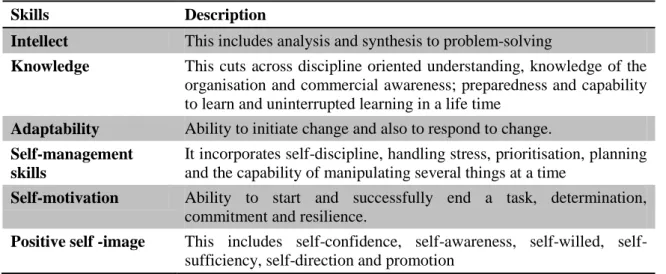
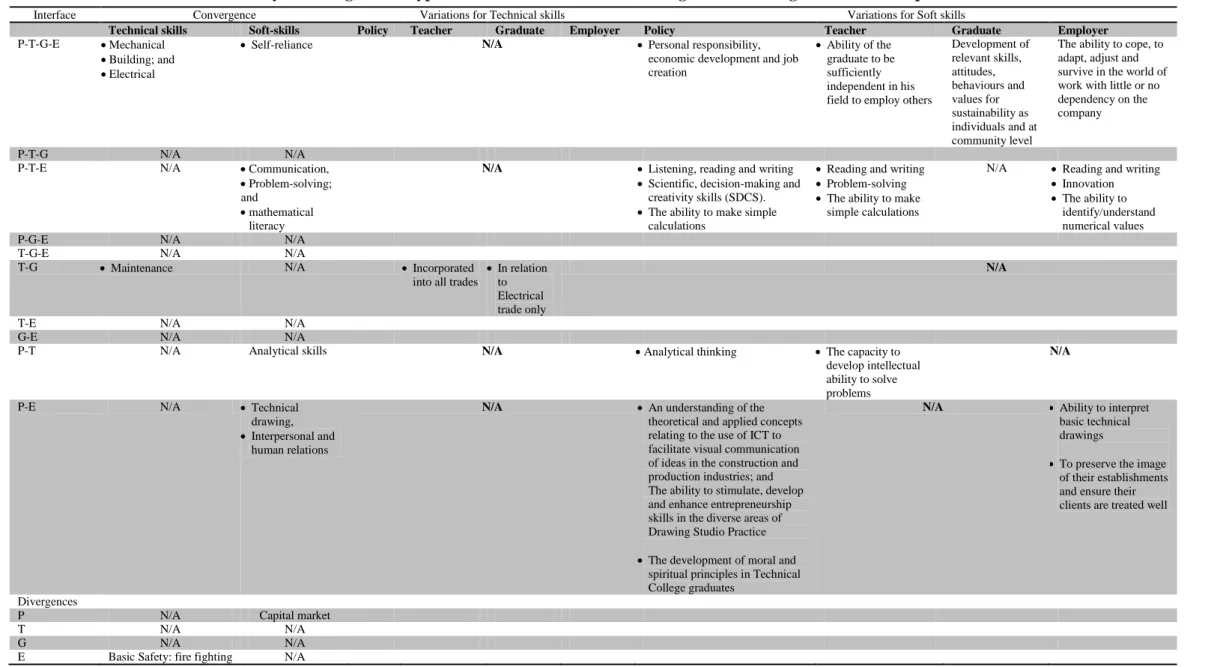
These trade skills have been identified by all stakeholders as essential skill requirements for Technical College graduates. With regard to the soft skills required by the stakeholders among graduates of the Technical College, four interfaces have been foregrounded.
AN OVERVIEW OF THE HISTORICAL ANTECEDANTS THAT PRECEDED THE TRIPLE HELIX III MODEL ________________________________________ 13
RESEARCH QUESTION ONE: EMPLOYABILITY SKILLS AS PERCEIVED BY TEACHERS AND GRADUATES ______________________________________ 78
INTRODUCTION
- CONTEXT AND RESEARCH BACKGROUND
- Technical and vocational education in Nigeria
- Importance of technical and vocational education
- RESEARCHER’S BACKGROUND
- PURPOSE OF THE STUDY
- OBJECTIVE OF THE STUDY
- RESEARCH QUESTIONS
- CONTEXT OF THE STUDY
- CLARIFICATION OF TERMS
The application of science and technology in the training of the modern craft led to it being referred to as technical and vocational training (NPE, 2004). River State is one of the thirty-six states of the Federal Republic of Nigeria.
The theoretical framework that guided this study
Outlined in this chapter are geographical and demographic description of Nigeria, a literature review by scholars on contentions, debates and current trends in
This chapter presents the research design and the methodology used in answering the research questions set for this study
Data gathered in this study were presented and analysed in this chapter to answer the first research question
Analysis of the second research question is presented in this chapter
Finally, this chapter provides the discussion and recommendations arising from the study
THEORETICAL FRAMEWORK
AN OVERVIEW OF THE HISTORICAL ANTECEDANTS THAT PRECEDED THE TRIPLE HELIX III MODEL
- Triple Helix I – Etatistic Model
- Triple Helix III
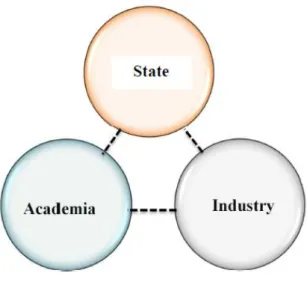
In contrast to the Etatistic and Laissez faire models, the academic world puts the Triple Helix model in the foreground for the university's strengthened role in innovation in the knowledge-based economy. The configuration of the triple helix of university-industry-government is such that the university is recognized as a central character in the analysis of the contributions.

Tri-lateral networks and
- Triple Helix III and its applicability to this study
- CONCLUSION
This chapter discussed an overview of the historical antecedents that preceded the Triple Helix III model. This chapter also discusses the applicability of the Triple Helix III framework to this research.
LITERATURE REVIEW
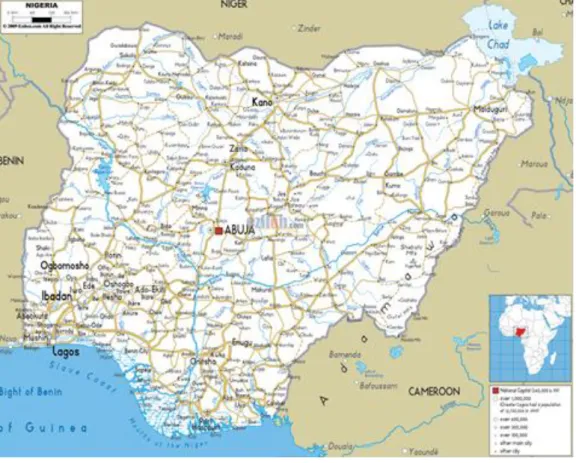
GEOGRAPHICAL AND DEMOGRAPHICAL DESCRIPTION OF NIGERIA Geographically, Nigeria is located in West Africa (Figure 4). It lies approximately
- Meaning of TVET
- National objectives of TVET in Nigeria
- Quality assurance
- Funding TVET in Nigeria
- TVET facilities and equipment
- The organisation and administration of TVET
- TVET curriculum reform and development
- TVET teacher education
- Staff development
- Relationship between TVET and enterprises
- Internship and cooperative work placement
- Industrial training
- Skill
- Clarification on the concept and definition of employability skills
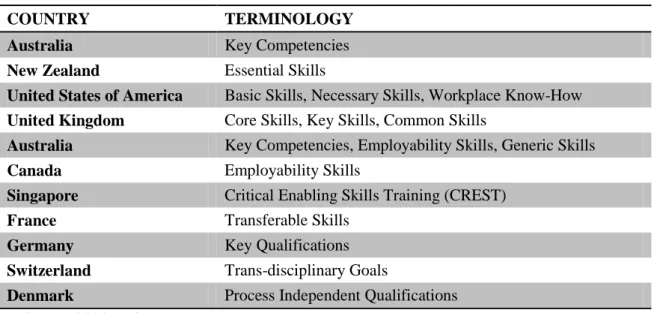
- Terminologies and employability skills
- Employability: The global experience
- Namibia
- Egypt
- Greece
- Australia
- Germany
- Canada
- Botswana
- India
- Nigeria
Part of the challenges encountered in the implementation of TVET policies have to do with school principals. These elements that are in the curriculum remain the same regardless of the subject being studied.
RESEARCH GAP
Okwori, Adamu and Moses (2013) conducted research on technical colleges in three zones of Niger State Nigeria. Find out the level of skills possessed by woodwork graduates in technical colleges in Niger state.
CONCLUSION
It was also observed in the literature reviewed that none of the studies carried out at both local and international level considered policy documents on the type of skills recommended with teachers, graduates and employers. This appears to be a major gap in the methodologies used in most of the studies, and it is this major gap that this study aims to address.
RESEARCH METHODOLOGY
RESEARCH DESIGN
According to Bak (2004, p. 25), “a research design provides an indication of the means to be used to achieve the research objectives”. Bak added that a research design summarizes the processes to be followed during the research and the sources of data collection.
RESEARCH PARADIGM
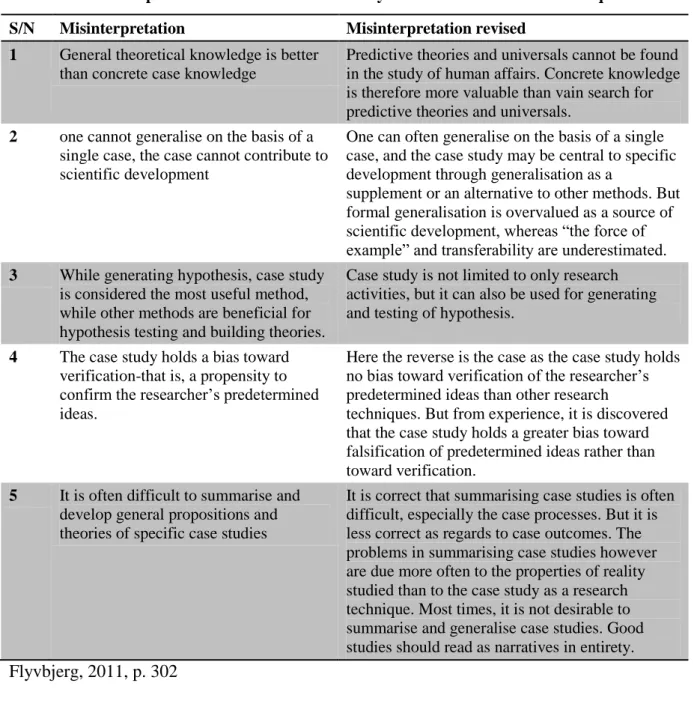
4 A case study is prone to verification – that is, it tends to confirm the researcher's preconceived ideas. The opposite is true here, as a case study is not biased towards testing the researcher's preconceived notions like other research.
DATA SOURCE
SAMPLE AND SAMPLING METHOD
They successfully completed a three-year vocational training program at one of the country's technical colleges (NPE, 2004). As already explained, the employers selected above form part of the multinationals in the oil and gas sector in ONELGA; therefore, their choice is necessary.
METHODS OF DATA COLLECTION
- Phase 1, Research Question One
- Document analysis
- Open ended questionnaires and focus group interviews
- Benefits of focus group interviews
- Administration of questionnaires to Technical College teachers
- Focus group discussion with Technical College teachers
- Administration of questionnaires to Technical College graduates
- Focus group discussion with Technical College graduates
- Administration of questionnaires to employers’ of Technical College graduates
- Focus group discussion with employers’ of Technical College graduates The focus group discussion with employers was held on the 13 th of March 2014
- Phase II: Research Question Two
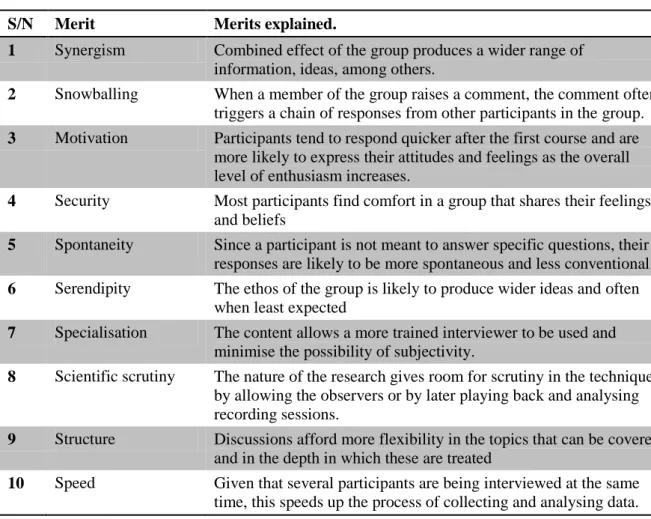
In addition, each of the focus group discussions was preceded by the administration of open questionnaires. The purpose of holding the focus group discussion with Technical College teachers was to determine their perception of the skills required by Technical College graduates to be actively employed.
FIELD WORK EXPERIENCES
- Visitation to Government Technical College
- Visit to State Ministry of Education
Bringing employers together for a panel discussion was one of the most difficult experiences I have encountered in the field. In the early hours of Tuesday, around 10:00, I met the state director of the ministry.
DATA ANALYSIS AND INTERPRETATION
- Phase I: Research Question One
- Stage II: Content analysis
- Stage III: Thematic Analysis
- Phase II: Research Question Two
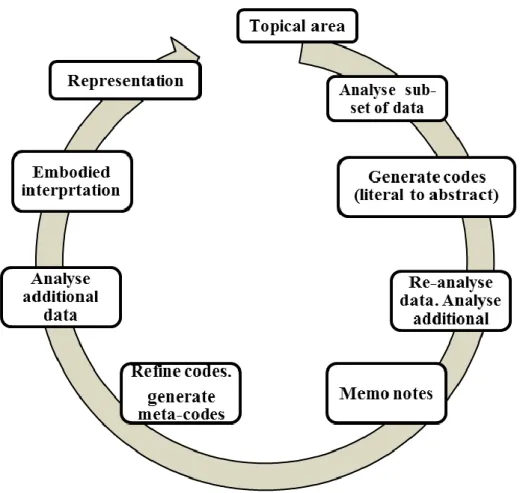
In the process, “the researcher generates new insight with varying levels of specificity, during each phase of the project, and uses this information to double down and gain more information” (Hesse-Biber & Leavy, 2011, p. 234). The final stage of analysis in this study involved using the theoretical framework to make sense of the data generated from findings of: policy.
RESEARCH VIGOUR
- Validity
- Credibility
- Triangulation
- Informed Consent
To ensure credibility of my study, there was a detailed description of the settings, participants and themes of my study (Creswell & Miller, 2000, p. 128). Informed consent entails that the participants participating in a study must have the legal and mental capacity to participate in a study, and also reserve the right to withdraw as and when they wish, especially when the purpose of the study does not clearly communicated to the participants.
LIMITATIONS OF THE STUDY
- Generalisation of result
All this was achieved when I gave an informed consent to the Principal of the Government Technical College, Ahoada, Rivers State, Nigeria, who sought permission to conduct research at the Technical College, and the teachers who participated in the research, who then informed me all gave their consent. . In accordance with the institution's research ethics, before entering the field for data collection, I applied for ethical approval from the University of KwaZulu-Natal Research Ethics Committee, which was subsequently granted on 30 January 2014.
CONCLUSION
DATA ANALYSIS AND INTERPRETATION
RESEARCH QUESTION ONE: EMPLOYABILITY SKILLS RECOMMENDED BY POLICIES
- National Policy on Education (NPE) 2004
- Senior Secondary Education Curriculum (SSEC) 2008
SKAV: What skills, knowledge, attitudes and values should be achieved through the policy recommendations; how will the recommendations made be implemented in practice? For the purposes of this chapter, which is the answer to research question one, the analysis will focus solely on the third factor, which is directly related to the skills, knowledge, attitudes and values to be achieved.
RESEARCH QUESTION ONE: EMPLOYABILITY SKILLS AS PERCEIVED BY TEACHERS AND GRADUATES
- Technical College teachers
- Technical College graduates
- Research Question One: Employability skills as required by employers
- Employers of Technical College graduates
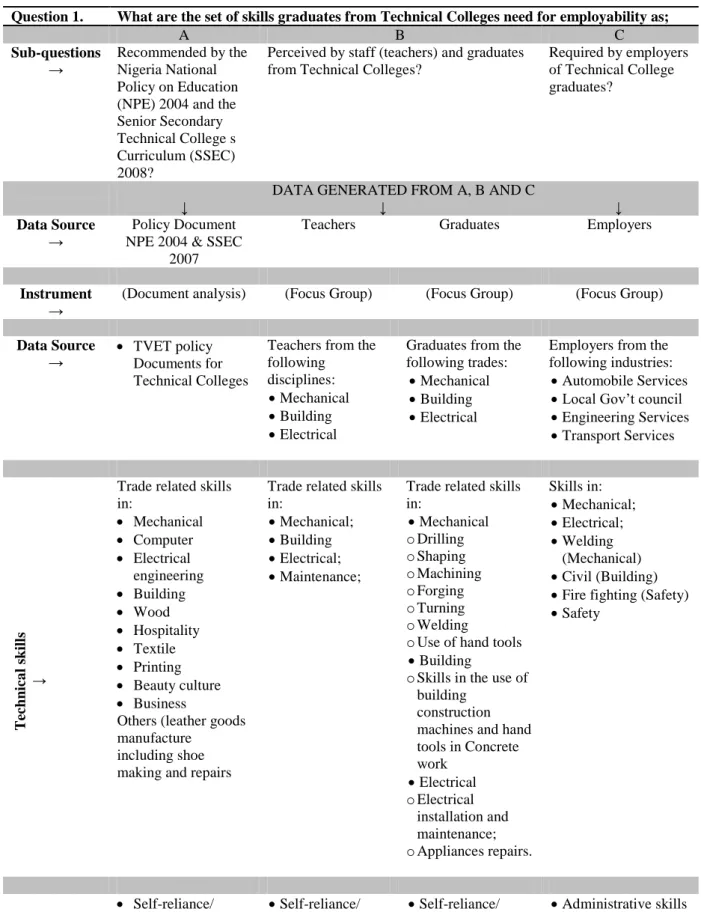
Participant responses from the extracts above indicate that TC graduates need technical skills to be actively employed in industry. The finding is in line with policy recommendations for TC trainees (NPE, 2004); although maintenance skills are clearly not included in the policy as part of the skills required for employability by technical graduates.
CHALENGES TO EFFECTIVE EMPLOYABILITY SKILLS DEVELOPMENT AS OUTLINED BY STAKEHOLDERS
- Technical College Teachers
- Lack Training Facilities, Building infrastructure and Modern Equipment Two among the four participants foreground lack of training facilities, building
- Overcrowded Classroom
- Poor Administration of Technical Education Due to Absence of Technical Schools Board and Qualified Personnel
- Lack of Funds
- Lack of Partnership amongst Government, Industry and Technical Colleges (TCs)
- Inadequate Qualified Technical Personnel and Poor Staff Development Two of the four participants lamented the lack of qualified technical personnel and poor
- Technical College Graduates
- Limited curriculum
- Lack of adequately trained personnel
- Lack of functional modern equipment
- Lack of training materials
- Lack of funds
- Technical College Graduates Employers
- Lack of Training Facilities and Modern Equipment
- Lack of competent teachers
- Lack of Curriculum Alignment Due to Absence of Partnership in Curriculum Design Process
- Theoretically Dominated Curriculum
- Review of Out-Dated Curriculum
In the second extract, it is indicative in lines 1-3, 5 and 7 that there is a lack of staff development with regard to teacher training. There is a clear indication from both extracts above that the Technical School curriculum is not aligned with industrial requirements due to lack of a collaborative partnership in the curriculum design process.
SUMMARY OF FINDINGS WITH RESPECT TO RESEARCH QUESTION ONE
- Summary on the findings about the employability skills required from Technical College graduates as recommended by the two policy documents
- Summary of the findings of Technical College teachers‟ perceptions of the employability skills required from Technical College graduates
- Summary of the findings of the Technical College graduates‟ perceptions of the employability skills required from Technical College graduates
- Summary of the findings of the Industry employers‟ perceptions of the employability skills required from Technical College graduates
Findings regarding teachers' perceptions of the types of employable skills required of technical college graduates were the following four technical skills. It is important to note the limited awareness among graduates of the skills required by technical faculty graduates for employability.
CONCLUSION
This implies that the planning of the programs of the Technical Colleges should not be left to the government, but should be a joint effort of all stakeholders involved: the teachers of the Technical Colleges, the employers from the sector and the government (with its policies ). In the next chapter, I juxtapose these intersections (i.e., similarities and mismatches) in the skills required and expected of College of Technology graduates, as drawn from the analysis presented in this chapter to answer the second research question .
ANALYSIS OF RESEARCH QUESTION TWO
RESEARCH QUESTION TWO: INTERFACES AND THEIR NATURE .1 Analysis of the Technical Skills Interface
- The Policy-Teacher-Graduate-Employer Interface
- Analysis of the Soft Skills Interface
- The Policy-Teacher-Graduate-Employer Interface
- The Policy-Teacher-Employer Interface
- The Policy-Teacher Interface
- Analysis of the nature of the interface of technical skills
- Analysis of the nature of the interface of soft skills
- Divergences
- Employer
These changes will be further explored in the analysis of the nature of interfaces in section 6.2.3. 6.1.3.1.1 The nature of the policy-teacher-graduate-employer interface There appears to be a 100% alignment in the policy-teacher-graduate-employer interface in relation to the trade skills expected of Technical College graduates. .
DISCUSSION OF THE FINDINGS
The first interface cut across all four stakeholders involved in the study and converged on self-reliance as a necessary skill among Technical College graduates. The variations in the interfaces formed also point to a focus on self-reliance by all four stakeholders.
CONCLUSION
For technical skills, data was not available for eight interfaces, while for soft skills, data was not available for six interfaces. However, the four interfaces between policy, teachers and employers are different and indicate weak collaboration between stakeholders.
DISCUSSION AND RECOMMENDATIONS
SUMMARY OF FINDINGS FROM RESEARCH QUESTIONS ONE AND TWO
- Summary of Findings from Research Question One
- Summary on the findings about the employability skills required from Technical College Graduates as recommended by the 2 policy documents explored
- Summary of the findings of Technical College teachers’ perceptions of the employability skills required from Technical College graduates
- Summary of the findings of the Technical College graduates’ perceptions of the employability skills required from Technical College graduates
- Summary of the findings of the Industry employers’ perceptions of the employability skills required from Technical College graduates
- Summary of findings from Research Question Two
It is important to note the limited awareness among graduates of the skills required of Technical College graduates for employment. The divergence between stakeholders in terms of the skills required of Technical College (TC) graduates has a negative impact on the employability of TC graduates.
THE CONSTRUCTION OF EMPLOYABILITY BY THE FOUR STAKEHOLDERS AND ITS IMPLICATIONS
- Employability as construed by Policy documents
- Employability as construed by Graduates
- Employability as construed by Employers
From the analysis of teachers' perceptions of the employability skills needs of Technical College graduates in Chapter 5 of this study; It was revealed that both trade-related (technical) and soft skills are needed to be actively deployed. All employers surveyed in this study emphasized the need to equip Technical College graduates with both technical and soft skills.
SILENT VOICES OF THE GRADUATES
The discussion on the silent voice of graduates was a reflection of the findings from Research Questions One and Two. This greatly influenced the nature of the interfaces formed; therefore, I will present in the following section the nature and effects of these interfaces and their implication for TAP in relation to Technical College programs in Nigeria.
EFFECT OF THE INTERFACES AND THEIR IMPLICATIONS FOR TVET IN NIGERIA
- Curriculum slippage
- Collaborative Curriculum Planning
- Effective Implementation of Technical College Programme
- Slippage in the Provision of TVET Facilities and Equipment
- Slippage in the Organization and Administration of TVET
- TVET Teacher education
- Relationship between TVET institutions and enterprises
This is clearly stated as the first objective of the Technical College program in the National Policy on Education (NPE, 2004). Employers in the study lamented the lack of detailed practical aspects of the Technical College's curriculum, and how this affected their job performance when employed.
REFLECTION ON THE TRIPLE HELIX THEORY
In line with this, Raimi and Akhuemonkhan (2014) suggest that one of the ways to revitalize TAP and thereby increase employability is to increase exchange programs with industry to enrich teachers' practical skills and bridge the gaps between theory and practice, as shown in industry. From the findings of this study, it can be concluded that the failure to achieve the objective of the Technical College program was because too much emphasis was placed on functional differentiation rather than on integration and cooperation between different actors.
RECOMMENDATIONS
This approach therefore contradicts the Triple Helix Theory ("Triple Helix Research Group). There is a need for the establishment of a separate Council for Technical Schools, different from the general School Council that covers both Technical and General Education in the state manages.
Paper presented at the Proceedings of the 1st International Technology, Education and Environment Conference (c) African Society for Scientific Research (ASSR). Some of the weapons recovered from the suspects include seven improvised explosive devices, one general purpose machine gun, three AK 47 rifles, five fully loaded magazines, 66 rounds of 7.62mm live ammunition and a can of petrol. the source disclosed.