Farmers face major challenges such as the ever-increasing costs of fertilizers, pesticides, natural disasters, climate change and many more factors that affect the quality and quantity of produce seasonally. Population growth also means the exponential increase in organic waste, estimated in South Africa at ten million tonnes per year. This organic waste often ends up in landfills, while containing valuable nutrients needed to improve the production of fresh food.
The spent grain and Spanish reeds, food waste and plant waste were used to produce organic compost using the Bokashi process. This research aims to demonstrate the yield obtained by applying different kinds of organic compost mixtures prepared using the Bokashi process. The compost was further used to grow vegetables such as chillies, peppers, Swiss chard and tomatoes.
It was discovered that compost of spent grain and Spanish cane and 90% Food waste showed a better yield over the vegetables grown and had the highest values of nitrogen, phosphorus and potassium. Using organic waste and turning it into usable compost was found to be a viable business solution and the compost provided the essential elements needed to produce fresh vegetables.
ABSTRACT
DECLARATION 1
DECLARATION 2
ACKNOWLEDGEMENTS
AWARDS AND ACHIEVEMENTS
As food waste is transported to landfills or incinerated, approximately one billion people remain malnourished every day. This research will use food waste as a viable organic fertilizer to produce fresh marketable vegetables. It is rare to find piles of plant waste in the city compared to food waste.
The temperatures of between 20 – 27℃ for four to five months in a year are the optimum conditions for growth in the soil with a pH range between 5.5 and 7 (Bolts Biz, 2021). The famous cultivar is long red cayenne pepper. . The seals of the buckets were broken, and the compost was spread evenly in the field with a rack, as shown in Figure 3-5. Although climatic conditions (heat stress) contributed negatively to the yield, the results indicate the positive use of food waste as indicated in Figure 4-9.
The demonstration of the feasibility of using food waste for the production of fresh vegetables was successful. The value of food waste was demonstrated in the production of nutritious compost and the use of compost in the production of fresh food that sold well in the market.
Contents
Introduction
The global indications show that 0.74 kilograms of waste is generated per inhabitants per day worldwide, resulting in 2.01 billion tons of municipal solid waste generated in 2016 and expected to grow to 3.40 billion tons by 2050 (Kaza Silpa et al., 2018). Worldwide, approximately 37 percent of waste is deposited in a landfill, 33 percent is open dumped, 19 percent is processed through recycling, composting and 11 percent is processed through thermal decomposition. Statistics show that 108 million tonnes (Oelofse, 2014) (Ministry of the Environment, 2012) of waste were collected and 98 million tonnes were deposited in landfills.
Food losses and waste are a growing reality, estimated to be 10.3 million tons in 2021, or 34.3% of domestic production. In 2013, the cost of food loss and waste to society was already R61.5 billion, equivalent to 2.1% of South Africa's Gross Domestic Product (GDP). Of this, 10.3 million tons, fruits, vegetables and grains accounted for over 60% of farm-to-consumer waste.
How can farmers preserve the nutrients in food waste and transfer them into the soil to increase food production. Food waste has become an environmental problem in South Africa, but food security and population growth remain unbalanced.
Literature review
- Types of manures used by farmers and their benefits
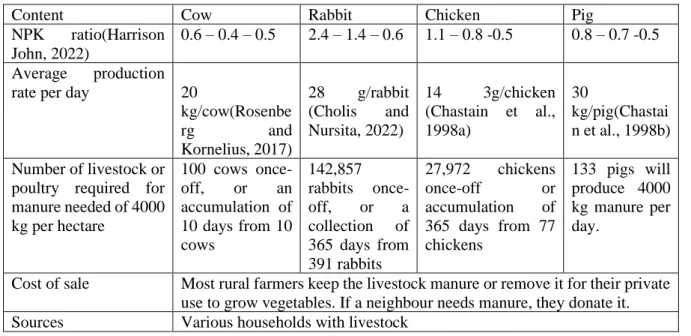
- Animal manure
- Plant manure
- Biochar
- LAN fertiliser
- Urea fertiliser
- Bokashi
- Waste collection
- Who are the majority producers of food waste?
- Where to source organic waste?
- What are food waste collection and transportation costs?
- Who is responsible for collection and required standards to meet?
- Crop yield of various vegetables
- Demand for vegetables and the market size
- Pest control when growing vegetables
Plants are more resistant to diseases if there is sufficient phosphorus in the soil. Biochar has been proven to increase crop yields, improve soil health and retain nutrients in the soil. Biochar costs approximately USD 2580 per ton (Laird David, 2022) in the United States of America markets, approximately R42,750/ton.
Ammonium nitrate is found as a naturally occurring mineral in the driest regions of the Atacama desert in Chile and is produced by mixing. It has been observed that canned water or soil dissolves lactic acid by losing protons to become lactate. The use of Bokashi compost made from food waste from various industries, from beverages to food preservation, brings a solution to how their waste can be disposed of and reused.
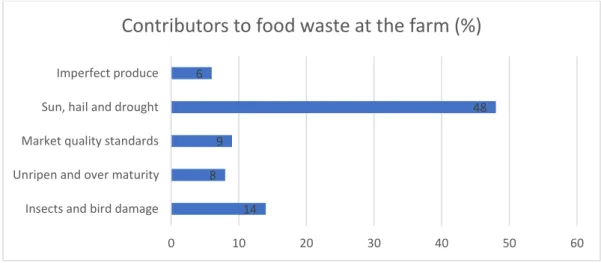
It has been noted that vegetables make up about 44% of 31 million tonnes of food waste in South Africa, which mostly occurs at the farms and retail stage. Other food waste producers are food processors, who package the food contents in low-carbon steel. Daily quantitative measures of food waste through a digital food waste tracking system have been proven to drastically reduce food waste.
The Durban fresh market in Clairwood produces 3,000 tonnes of food waste per month. This market day has attracted many customers in the area to buy as much fresh produce as possible on this day to increase the value of their hard earned income. The economy in the country does not favor low-income people and recipients of government subsidies as food prices have risen due to fuel prices.
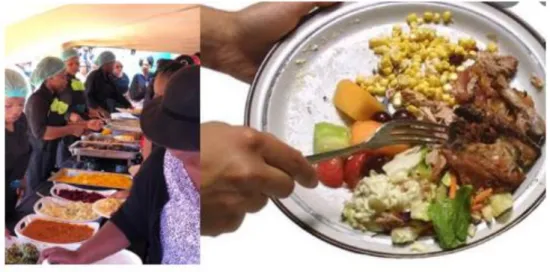
Weddings and other invitational events are more likely to have less food waste since they know the capacity of the people they are catering for and, in some cases, their preferred diet. Community members and businesses place their food waste in plastic bags or trash cans, as seen in Figure 2-7, and the paid service provider collects the containers at a composting, recycling, or landfill site. It is essential to note the type of waste to be collected, the quantities and the means to be used for collection (Department of Environmental Affairs, 2009).
Chili is often used in cooking to add a spicy flavor or mainly processed into hot sauces known in retail stores. Field drainage is essential and registered pesticides are used to eradicate disease before it spreads to many plants.
Research Methodology
Applied compost was allowed two weeks to allow the compost to release the alcohol produced during fermentation. Planting holes were dug in the field two weeks after the application of the fertilizer as shown in Figure 3-6, the seedlings were planted as shown below. There were planted approx. eight plants per treatment (plot) except Swiss chard, which had 10 plants per treatment as indicated in Table 3-2.
The plant spacing and plant population for each of the crop varieties were maintained according to Good Agricultural Practice (GAP).

Results and Discussion
- Yield analysis
- Chillies
- Bell Peppers
- Swiss Chard/Spinach
- Soil and nutrients in Bokashi
- Employment created
- Value proposition canvas
- Customer segment
- Value Proposition
- Business model canvas
- Customer segment
- Customer relationship (marketing)
- Distribution channels
- Value propositions
- Key activities
- Key partners
- Key resources
- The cost structure for one-hectare land
- Revenue streams
The application of organic manure at the 1× dose in the greenhouse increased root, shoot and fruit dry weights of chili pepper by and 79.7% respectively compared to the control values. The Department of Agriculture, Forestry and Fisheries also emphasized that peppers need an optimum temperature of 25/21℃ during flowering. According to Figure 4-7, peppers grown in Code 3 (50% food waste) had the highest yield, followed by Code 6 (100% Spanish Cane and Used Grain).
Although peppers require frequent irrigation, heavy rains have affected the flowering process due to low yields. Temperature plays a key role in the growth of vegetables, for peppers the best temperature range is 20 - 25 ℃. The equivalent of 2.25 tons of production per hectare was very low compared to the desired 6 tons according to the literature.
The aim of their study was to evaluate the organic production of two hybrid peppers (Bunjii red fruit and Shunghi yellow fruit) using five different sources of organic fertilizers (quails, turkey chicken, rabbit manure and compost). According to the compost analysis in Table 4-4, Code 1 (90% Plant) had the highest percentage of nitrogen, closely followed by Used Grain. The peppers were chosen to make calculations simpler for farmers at any scale and to make implementation easier to improve food security in South Africa.
The products are organic, nutritious, healthy, locally grown, which reduces transportation costs and is affordable for the public. The customers also get opportunities to sell organic waste to the entrepreneur to convert it into compost, resulting in a reduction of organic waste going to landfill. The value proposition for the customer is to supply quality vegetables at a wholesale price and transport the vegetables to the store free of charge.
Due to the high rate of rainfall in the KwaZulu Natal region, a proper greenhouse setup must be in place to protect seedlings and plants from being washed away. Owning a vehicle that will be used to collect seedlings, Bokashi and deliver products to the customers. The focus will be on the peppers as they remain in demand throughout the year.
Selling the peppers after 90 days for R18/kg gives a yield of R1 276 290 per month when a whole hectare has produced. To break even (cover operational costs), a crop of 3755 kg of peppers must be harvested and sold for R18.

Conclusion
Assessment of food waste generation and prediction of food waste in energy potentials of hospitals in Turkey: A global in-country analysis. URL https://www.allotment-garden.org/composts-fertilisers/npk-nutritional-values-animal- manures-compost/ (accessed 6.21.22). ZERO WASTE VISION HANDBOOK 62 8 FOOD WASTE IN SOUTH AFRICA Making Sense: Water Footprint and Cost.
The use of Bokashi compost as a soil fertility amendment to enhance the vegetative growth of organic tomato (Lycopersicum Esculentum Mill.). Here's how much it costs to buy a funeral home franchise like Doves or Martin's in South Africa | Business Insider [WWW Document].
Appendices
- Analysis for spinach samples
- Analysis for Bokashi compost