Examining Consumers Perceptions on Water Supply and Sanitation Services: A Case Study of Ohlange Township, Durban,
South Africa.
By PAUL KARIUKI
Supervisor: Dr. Esther Dungumaro
Submitted in partial fulfilment of the requirements for the degree of Masters of Development Studies, Faculty of Humanities, Development and
Social Sciences, University of KwaZulu-Natal July 2008
i
ABSTRACT
Governments in many developing countries have stepped up efforts to provide water and sanitation services sustainably to as many people as possible. In some instances, time frames for provision of services to all of their citizens have been set. While these are commendable efforts, the question whether these services are provided efficiently remains unanswered. In South Africa, although the government conducts consumer satisfaction surveys, seldom are citizens consulted for their views. While its efforts have been hailed as a success in the post- apartheid era, there have been many obstacles in the supply process. The assumption has been that the government knows what the citizens want and gives it them, irrespective of their concerns. This study interrogated this assumption as its overall research objective, aiming to evaluate whether a supply-driven approach is effective in satisfying the demands of the consumers.
As such the study sought to gain insight into the perceptions of Ohlange Township residents
in Inanda, Durban, regarding water supply and sanitation services. The study found out that
many of these residents could not afford to pay for basic services, although they are currently
expected to pay for some of the costs of service provision. However, in a resource-constrained
environment, the government can no longer sustainably provide these services without
recovering costs. In this case, the government faces the challenge of balancing its
constitutional mandate of providing all citizens with basic services and the demand by the
poor for improved services they cannot afford. In this case, supply-led delivery system is
severely limited in fully addressing consumer demands. This approach also results in poor
service delivery due to inefficient resource management. It also disempowers communities
because they are not involved in decision-making processes. Based on the study findings, the
demand-led approach, one that is consumer-driven, is recommended. This approach puts the
consumer at the centre of the delivery of basic services; allows consumers to participate in
decision-making processes and encourages them to honour their obligations by paying for the
services received.
ACKNOWLEDGEMENTS
I would like to thank:
My God, for His strength, wisdom and courage to pursue my dreams, My Wife, Miriam for her tremendous love and support in this journey, Dr. Esther W. Dungumaro, my supervisor for her guidance, mentorship and coaching throughout this project, I can never thank you enough. The School of Development Studies, for awarding me a grant to conduct my research. My Parents, for always believing in me and encouraging me to be the best I can be.
My friends, Jason Musyoka, Graham Sherbut and Tatenda Choto, for their encouragement and support. My lecturers at the School thank you for your commitment to share with us your wisdom and knowledge. My fellow students at the School, for all the input you gave in and outside the seminar room. Lesley Anderson, you are the best administrator in the world. Mary Smith, thank you for your commitment to serve the students anytime. The Board, Management and staff of the Durban YMCA for your support. Deanne Collins for editing my work. Lastly, but not least, I would like to thank the research assistants that worked with me during the data collection phase of the project and also Ohlange Township residents for their hospitality.
iii
DECLARATION
The work contained in this document was undertaken in the partial fulfilment of a Masters Degree from the School of Development Studies at the University of KwaZulu-Natal.
This is to declare that this research is my own work, and has not been used previously in fulfilment of another degree at this University, or any other. Any use of the work of others has been fully noted in the text.
Signed
Date / "7- Oj-QstiV
LIST OF ACRONYMS
ANC - African National Congress EWS - eThekwini Water Services
DWAF - Department of Water Affairs and Forestry DPSA - Department of Public Service and Administration HSRC- Human Sciences Research Council
RDP - Reconstruction and Development Programme UN - United Nations
UNDP-United Nations Development Program UNFPA - United Nations Population Fund
UN-HABITAT- United Nations Human Settlement Program WB - World Bank
WISA - Water Institute of Southern Africa WRC -Water Research Commission WSP - Water Sanitation Program
v
TABLE OF CONTENTS
Abstract 1 Acknowledgements ii
Declaration of Originality iii
List of Acronyms iv Table of Contents v List of Figures and Tables viii
Chapter 1: Context and Background
1.1 Introduction 1 1.1.1 The 1994-2001 period 5
1.1.2 The Period 2001 to the present 6
1.2 Definition of terms 7 1.3 Statement of the problem 7 1.4 The rationale of the study 8 1.5 Objectives of the study 9 1.6 Organization of the study 9 1.6.1 Chapter One: Context and Background 9
1.6.2 Chapter Two: Literature Review 9 1.6.3 Chapter Three: Methodology 9 1.6.4 Chapter Four: Findings and Discussion 10
1.6.5 Chapter Five: Conclusion and Recommendations 10 11
Chapter 2: Literature Review
2.1 Introduction 11 2.2 The global water and sanitation crisis 13
2.3 Consumer perceptions in water supply and sanitation 15 2.3.1 Theoretical Approaches Explaining Consumer Perceptions in Water Supply 15
and Sanitation
2.3.2 Consumer Perceptions Examined 16
2.3.2.1 Who is a Consumer? 16 2.3.2.1 Consumer Perceptions and Service Delivery 17
2.4 Water supply and sanitation services in South Africa 20 2.4.1 Brief history of water and sanitation supply in South Africa 20 2.4.2 Institutional arrangements and implementation strategy 22
2.4.3 The Impact of Policy on Consumers 24 2.5 Water supply and sanitation in the eThekwini Municipality 27
2.5.1 The eThekwini Municipality Water Supply Policy and Objectives 27
2.5.2 Sanitation services 28
2.6 Summary 29 31 Chapter 3: Methodology
3.1 Introduction
3.2 Characteristics of the study area 3.3 Sampling design
3.3.1 Case study 3.4 Data collection 3.5 Pilot testing
3.6 Data management and analysis 3.7 Ethical considerations
3.8 Limitations
31 31 31 32 33 37 37 38 39 40
Chapter 4: Findings and Discussion
4.1 Introduction
4.2 Socio-economic characteristics of respondents 4.2 1 Age Distribution of the Respondents
4.2.2 The household size
4.2.3 Educational level of the respondents 4.2.4 Occupational status of the respondents 4.2.5 Marital status of the respondents
4.3 People's attitudes and perceptions towards water supply and sanitation services as provided by the eThekwini Municipality
4.3.1 Perceptions about EWS as a provider of water supply and sanitation services 4.3.1.1 Infrastructure
4.3.1.2 Capacity of service delivery 4.3.1.3 Sanitation services
4.3.1.4 Inequality in service delivery 4.3.1. 5 Perception bias
4.3.1.6 Bureaucracy 4.3.1.7 Participation
4.3.1.8 Community responsibility 4.3.1.9 Water conservation 4.3.1.10 Cleaning services 4.3.1.11 Civic education
40 40 40 41 42 43 44 45 45 45 46 46 46 47 47 47 48 48 48 49
Vll
4.4 The extent to which Ohlange residents are involved in the water supply and 49 sanitation services delivery process
4.4.1 Community participation in the decision making processes concerning water 49 supply and sanitation services
4.4.2 Decision making on water supply and sanitation services 50 4.5 The state of water supply and sanitation services in Ohlange Township 51
4.5.1 The quality of water supplied 51 4.5.2 Is the water clear and clean? 53 4.5.3 Water interruptions in the township 54
4.5.4 Illegal connections of water 55 4.5.5 Sanitation - toilet facilities 55 4.5.5.1 Awareness of toilet emptying services in the area 56
4.5.5.2 Solid waste disposal 57 4.5.5.3 Quality of water supply and sanitation services provided in the area 58
4.6 Discussion of results 59 4.6.1 Consumer measurement of municipal delivery 59
4.6.2 Communication and information dissemination by the Municipality 60
4.6.3 Consumer participation 60 4.6.4 Perceived relationship with the EWS 62
4.6.5 Perceived willingness to pay 63 4.6.6 Effective management and maintenance of a clean environment 64
4.6.7 Civic education 64 4.6.8 Community responsibility 65
4.7 Conclusion 65 67
Chapter 5: Conclusion and Recommendations
5.1 Introduction 67 5.2 Consumer perceptions towards water supply and sanitation services as 67
provided by the eThekwini municipality
5.3 Community Involvement in water supply and sanitation services delivery 69 process
5.4 The state of water supply and sanitation services in Ohlange Township 70
5.5 Scope for further research 72
5.6 Summary 72 74
References
Appendix A: The Research Assistants' Orientation Workshop held on 5 May 93 2007
Appendix B: Research Questionnaire 96
LIST OF FIGURES AND TABLES
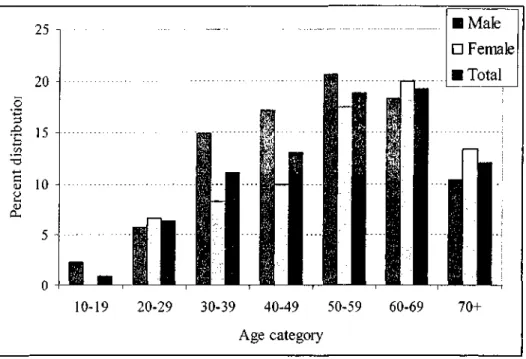
Figure 1: Percent distribution of age of respondents 41
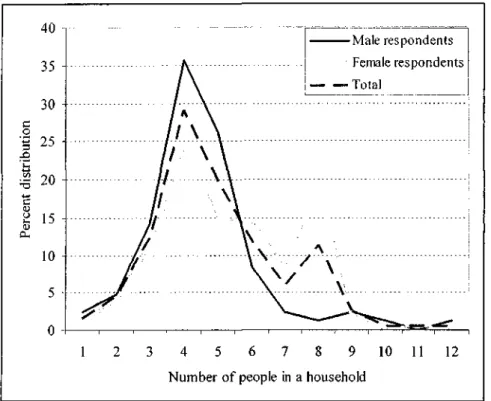
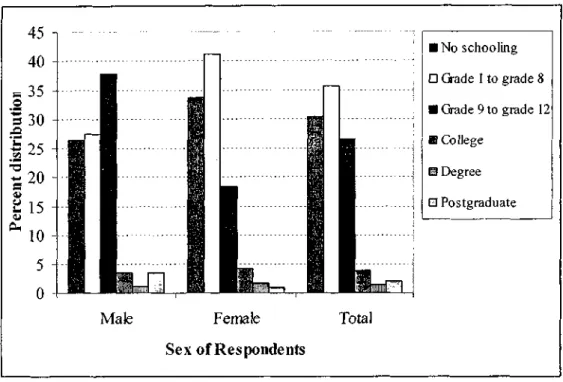
Figure 2: Number of people in a household 42 Figure 3: Percent distribution of education of respondents 43
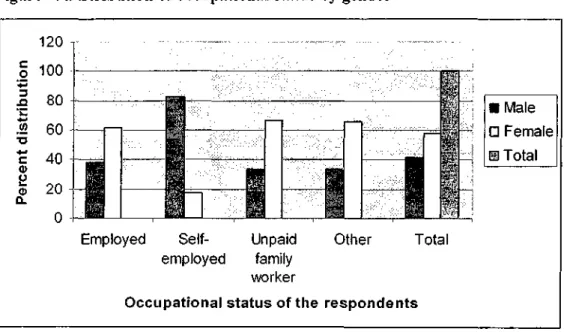
Figure 4: Distribution of occupational status by gender 44 Figure 5: Percent distribution of awareness of community
forums by gender of the respondents 50
Figure 6: Knowledge of whether water is clear and clean by genderofthe respondents 53
Figure 7: Methods of solid waste disposal 57Table 1: Percentage distribution of occupational status of the
Respondents 44
Table 2: Percent distribution of the marital status of the respondents 45Table 3: Decision making authority for water supply and sanitation services
in the area 51
Table 4: Quality of water supplied by EWS 51Table 5: Quality of water and the gender of the respondents 52 Table 6: Distribution of payment of water bills by gender of the respondents 52
Table 7: Source of drinking water of the household by gender of the respondents 54
Table 8: Causes of water interruptions by gender of the respondents 55 Table 9: Percent Distribution of households with toilet facilities by type of sewer 56
Table 10: Percent Distribution of type of toilet facility by type of sewer 56
Table 11: Distribution of emptying systems 57 Table 12: Ranking of the quality of EWS services over the past five years 58
Table 13: Ranking the quality of water supply and sanitation services 59
ix
CHAPTER ONE: CONTEXT AND BACKGROUND 1.1 INTRODUCTION
A clean water supply and adequate sanitation are prerequisites for a reasonable standard of living.
(Kibata, 2000). Governments across the world are faced with the challenge of ensuring that all their citizens have access to a safe water supply and adequate sanitation. It is estimated that 1.1 billion people have no access to safe drinking water, 2.6 billion people have no access to proper sanitation and more than five million people die from water-borne diseases each year (WISA, 2007). Malaria, unclean water and poor sanitation are among the world's biggest killers of children. It is estimated that 1.8 million children die from diarrhoea each year
Continuous access to clean water and adequate sanitation is also critical for sustainable development1. Not only does public health suffer if clean water is not accessible, but economic activities such as agriculture and industry are also affected (Otieno, 2007). This may lead to the disintegration of societies that have been built over centuries.
In the past 50 years, the world's population has increased more than two-and-a -half times to about 6.4 billion (World Bank, 2007). During the same period, the demand for fresh water increased fourfold (UNDP, 2004). On a global scale, it is estimated that 3.4 trillion m3 of fresh water are drawn every year, with agriculture the biggest user (UNDP, 2007). The United Nations (UN) has predicted that up to seven billion people in 60 countries may face water scarcity by the year 2050 (WISA, 2007). Developing countries are likely to experience problems on an even larger scale.
South Africa has limited water resources, which are unevenly distributed across the country (Earle et al, 2005; Seetal and Quibell, 2004). The needs of development and the natural cycles of drought and floods place current resources under even more pressure. The challenge facing the South African government is the need to deliver quality and improved living conditions for the poor, while at the same time maintaining opportunities for economic growth. In order to reverse the apartheid legacy there is also a need to ensure that this scarce resource is distributed equitably.
South African water service providers are faced with a number of key challenges. The first is backlogs. Under the previous government, Black people were denied access to services (DWAF, 2002). The backlogs are massive, a situation compounded by the curtailing of the national
This is development that meets the needs of the present without compromising the ability of future generations to meet their own needs (WISA, 2007:32).
budgetary allocations to the municipalities who have been constitutionally mandated to provide these services (Robbins, 2005). Some municipalities are able to deliver quality services while others are struggling due to lack of capacity (Earle et al, 2005). Associated with this challenge is the issue of cost recovery. The unevenness of South Africa's economy, which is characterized by vast income disparities, means that many consumers struggle to pay for basic services (Naidoo and Mosdell, 2004).
The situation has been further exacerbated by the inefficiency of most local municipalities in delivering quality water and sanitation services (Coates and Sansom, 2001). The failure of many municipalities to instil a service ethos has led to protest action (Smith, 2003). Poor customer service results in a lack of communication on the part of utilities, lack of feedback mechanisms and slow response to customer complaints.
The Batho Pele principles aim to improve and transform public sector service delivery, and encourage utilities to acquaint and reorient themselves in favor of the customer (DPSA, 1997). The Water Services Act stipulates that "every water services authority has a duty to all consumers or potential consumers in its area of jurisdiction to progressively ensure efficient, affordable, economic and sustainable access to water services" (Naidoo and Mosdell, 2004: 4). It is clear that customer service is a critical success factor in providing a quality water supply and sanitation services.
The concept of customer service and satisfaction in water supply and sanitation services has received inadequate attention in South Africa (Earle et al, 2005). This is partly explained by the fact that these services were provided on a discriminatory basis prior to 1994 (Goldin, 2005). There has been insufficient understanding of the importance of examining consumer perceptions as a tool to improve service delivery.
It is against this background that this study sought to gain insight into the perceptions of Ohlange Township residents in Inanda, Durban, with regards to water supply and sanitation services.
BACKGROUND OF THE STUDY
The UN emphasizes that provision of adequate, clean water and sanitation services is of critical importance. In September 2000, the United Nations Millennium Declaration, which was endorsed by 189 countries, set out Millennium Development Goals (MDGs) to be reached by 2015 (Cassels, 2004). The seventh of the eight goals on development and poverty eradication aims to halve the number of people without sustainable access to safe, clean drinking water (UNDP, 2007). Around
2
1.2 billion people do not have access to safe water and 2.6-billion lack access to basic sanitation (Cairncross et al, 2003). The UN acknowledges the importance of providing an adequate water supply and proper sanitation facilities and services for all people (Sachs and McArthur, 2005). The benefits of such provision, the UN asserts, include reducing the burden of disease from water- related ailments as well as the creation of an equitable, sustainable use and management of water resources for poverty alleviation and socio-economic development (Rheingans et al, 2006). Hutton et al (2004) further contend the provision of clean water and sanitation will allow people to live longer, healthier lives and become more productive.
The MDGs have helped countries to set their own targets for water and sanitation service delivery.
The South African government has committed itself to meeting the basic needs of all its citizens as well as ensuring that its entire population has access to adequate sanitation (Pape and McDonald, 2006; DWAF, 2002)2. The government intends to improve on the MDGs and hopes to completely remove the water and sanitation backlog by the year 2010 (DWAF, 2002). Mechanisms to remove the backlog and raise service delivery levels across the nation, especially in previously disadvantaged areas, have been initiated (Hemson, 2004). However, it is argued that additional resources are needed if this goal is to be realized. Hemson (2004) argued further that although social spending on health, education, welfare, housing and other social services has risen from 52.9 percent a decade ago to 58.3 percent of non-interest expenditure in the current fiscal era, considerable additional spending is necessary to provide full access to these services. This will be necessary to meet the stated goals of the Reconstruction and Development Programme (RDP) and specific targets in water and sanitation in South Africa's bid to reach its MDGs (Hemson, 2004J.3
The development and implementation of water and sanitation policy in South Africa can be divided into three distinct periods:
1.1.1 The pre-1994 Period
Prior to the end of apartheid in 1994, government policies were geared towards the needs of the few, mostly the minority white group. These policies were reflected in water supply and sanitation.
According to the DWAF (1994), the development of the country's water resources was linked to
* Sanitation refers to the principles and practices relating to the collection, removal or disposal of human excreta, household waste water and refuse as they impact upon people and the environment ( WRC, 1998: 5). Good sanitation includes appropriate health and hygiene awareness and behaviour and acceptable, affordable and sanitation services (WSP, 2001).
The government intends to halve the sanitation backlog by 2015, by completely removing the backlog by the year 2010 (DWAF, 2002).
The RDP is the government's key policy framework that provides guidelines on the delivery of all basic services such as housing, electricity, water and sanitation services ( Robbins, 2005: 63).
support for the growth of the agricultural sector, rather than poverty alleviation in Black communities. Water was used as an instrument for stimulating economic growth in both the mining and agricultural sectors. This was further exacerbated by political and administrative systems that were racially skewed (Goldin, 2005). The provision of water and sanitation services was thus conditioned by political patronage and allegiance to the state (DWAF, 2002). Government was the sole provider and subsidizer of these services to municipalities (McDonald, 2002a). This ultimately resulted in the inequitable distribution of these services. It is worth noting that the due to the
"riparian principle"4, access to water was dependant on access to land, which was politically controlled (Turton and Earle, 2005).
During this period the country was divided into eleven different "homeland" administrative and political areas (DWAF, 2002). This led to a fragmented approach to service provision with no cohesive strategy, guidelines or support structures to guide the provision of water and sanitation services (Robbins, 2005; Hemson, 2004). Both the former "Black" urban and rural areas had little or no water and sanitation services, and where the services were provided they were often in a bad state of disrepair (DWAF, 2002). Services provided to Black areas were inferior to those given to white communities (Earle et al, 2005). According to Mackay (2003), white local authorities kept separate revenue accounts from those of the Black townships under their jurisdiction. Townships and rural areas were left on their own (DWAF, 1995). In most Black townships, water was provided through a stand-pipe. Those who had the privilege of an in-yard or in-house connection paid a monthly rate for the services they received. As the political situation continued to be volatile, the majority of the Black people began withholding payment for services such as water and electricity (DWAF, 1996). This culture of non-payment for municipal services led to civil disobedience (Goldin, 2005). Interestingly, the government accepted this practice and carried on providing services in a bid to prevent political tension escalating any further (MacDonald, 2002a). Local municipalities that were led by Black people were meant to raise their own revenue and provide services, but they also "became a point of contention between various civil and political groups"
(Earle et al, 2005:9).
In addition to lack of capacity in these areas, there was also no institutional framework that established clear responsibilities. There was also an overlap of institutional boundaries and many of the areas in greatest need were excluded (DWAF, 2002). Hemson (2004) further contends that the
This was a method of allocating water, whereby owners ofland could take as much water as they could use
beneficially and if they could afford it, they could impound all the surface water (MacKay, 2003:55). This method of water allocation, afforded unfair opportunities to minority whites, to control the country's resources (Earle et al, 2005:8).
4
provision of sanitation services focused primarily on building toilets, sewer systems5 and maintenance, with little consideration given to community needs (Hemson, 2004). As a result, those who had inadequate sanitation were forced to continue using the bucket system, rudimentary pit toilets or the veld.
1.1.2 The 1994-2001 Period
The transition to democracy was not easy. By the late 1980s, the political situation was becoming increasingly challenging for the apartheid government. The townships posed a formidable challenge and the war in Angola was draining the government coffers (Buzan et al, 1998). Finally, political parties were unbanned and political prisoners released. This led to the first democratic elections in 1994 (Rakodi, 2007). In order to make democracy a reality, the provision of water and sanitation to all people was placed high on the political agenda (DWAF, 2002). Provision was to be based on the
"principles of equity and sustainability" (MacKay, 2003:52). Equity received priority.
A fundamental issue was to ensure that all South Africans had "access to essential basic water supply and sanitation services at a cost which was affordable both to the households and country as a whole" (Earle et al, 2005:13). For its part, the DWAF (1994:3) also acknowledged that equity was fundamental and it argued that the line that divided those with adequate access to water from those without was the same dividing the "rich from the poor, the hungry from the well fed, the line of race and privilege".
This period saw the compilation of the White Paper on Water Supply and Sanitation Policy (DWAF, 1994). This paper was drawn up in the context of the absence of a coherent policy for water supply and sanitation (Bayliss, 2002). A range of legislative provisions was drafted to transform local government, which would assume the responsibility of providing water and sanitation services (Robbins, 2005). The White Paper asserted that development should be demand- driven and community-based; that basic services are a human right; that water has an economic value; that the user pays and that local governments should provide water and sanitation services to their residents.6 According to the 1997 White Paper on the National Water Policy for South Africa, the government was meant to "take the necessary legislative measures, within its available resources, to progressively achieve the constitutional mandate of supplying water and sanitation services" (1997:8).
These are systems of conduits used to remove and carry sewage (human liquid waste) and to provide drainage (DWAF, 2002).
6 See http://www.dwaf.aov.za/dociiments/policies/WSSP.pdf accessed on 3/11/2007.
1.1.3 The Period 2001 to the Present
Since 1994 considerable progress has been made in addressing under-servicing (Robbins, 2005).
Local government has been extensively restructured to meet these challenges and fulfil the stated developmental mandate (Bayliss, 2002). However, demand for the expansion of municipal infrastructure continued to exceed supply, leading to rising backlogs in some services and limited progress in the elimination of backlogs (DWAF, 2002).
At the beginning of this period (2001) the national backlog of persons without access to adequate water and sanitation services was estimated to be 18 million or three million households (DWAF, 2002). The majority of persons falling in this caiegory live in rural areas, peri-urban areas and informal settlement areas (ibid). It is also estimated that up 26 percent of households in urban areas and 76 percent of rural households have inadequate sanitation. This backlog was reduced during the next year (2002) by 2.4 million persons (ibid). The National Sanitation Programme, an initiative of the Department of Water Affairs and Forestry, aims to eradicate the backlogs in the rural, peri- urban and informal settlement areas by the year 2010. In addition, eradication of the bucket system (currently estimated at about 428 000 households) is aimed to be achieved by 2007 (DWAF, 2002).
Previously under-developed areas have now been incorporated into metro cities, which have extremely high standards of living and full conventional reticulated water supply and sewerage systems. Addressing imbalances has been identified as a major challenge (eThekwini Municipality, 2005). The eThekwini Municipality has entered into two project agreements with private sector firms, in order to carry out research into and the development of arrangements to provide water and sanitation services to the poor (eThekwini Municipality, 2006).
While the South African government has made strides in improving the provision of water and sanitation services, many obstacles still stand in the way. These include inadequate public participation in water and sanitation issues (Naidoo and Mosdell, 2004). Consumers' experience with respect to services rendered, how adequate they are and the problems encountered in the process, are critical to improving service delivery.
The importance of ensuring a meaningful public participation in water issues has been documented in detail by Dungumaro and Madulu (2003). They cite the advantages gained by public participation, which include the sustainability of water projects. The inequities that exist in service provision in urban settlements are well-known and documented (Vargas, 2002) and these pose a formidable challenge to improving water supply and sanitation services. There is also a growing 6
recognition that government at all levels must act on this imperative (Inocencio, 2006).
Recent studies have re-emphasized the need for adequate water supply and sanitation service provision in areas where such services were non-existent or poorly covered under apartheid (Pithouse, 2006; Robbins, 2005; Hemson, 2004; Morris, 1991). Smith (2003) points out that under apartheid Black South Africans received inferior and inequitable services or no services. The emergence of the new South African democracy in 1994 brought with it expectations of equalization across racial, gender, socio-economic and geographic boundaries. It also included fair and just delivery of services as well as access to basic services, with the hope that all citizens could own their freedom and dignity. This objective was central in South Africa's RDP, which was translated into national legal obligations, including the 1996 Constitution that states, "everyone has the right to have access to sufficient... water" (Republic of South Africa (RSA), 1996). As a starting point for the realization of this constitutional objective, it is essential to explore people's perceptions and attitudes towards the delivery of water supply and sanitation.
1.2 DEFINITIONS OF TERMS
Various terms have been used in this present study.
The term 'consumer' is used in a broad sense to mean both individual customers and communities as consumers of water and sanitation services (Dorrian, 2007). In the same vein, the phrase 'customer service' is used in a narrow sense to imply water services viewed as an economic service, where water is seen as a 'product to be traded' (Naidoo and Mosdell, 2004). In this study 'reliability', refers to a consistent and steady supply of water, while 'quantity' refers to considerable amounts of water provided to consumers daily by a particular utility, in this case the EWS (Raju et al, 2006). 'Quality' refers to the water, which is being supplied to consumers meeting the required standards set by the South African Bureau of Standards (SABS). "Adequacy' refers to people's opinion that the availability of water is sufficient (Raju et al, 2006). Lastly, "supply-driven"
approach refers to a top-down approach where the government as the principal agent, assumes it knows what the people want, and it gives them, irrespective of the actual demand (Franceys, 2008).
It has also been referred to as "predict and provide" approach (WSP, 2000). Demand-driven approach refers to an approach that "allows demands of the consumers as individuals and as a community to guide key investment decisions" (Mulenga and Fawcett, 2000:1).
1.3 STATEMENT OF THE PROBLEM
Developing countries are faced with the challenge of providing adequate water and sanitation for all their people (Dungumaro, 2007). The United Nations has set a goal to halve the proportion of people without sustainable access to water and basic sanitation by 2015 (Merrett, 2007). In many developing countries, including South Africa, millions of people do not have access to water and sanitation services. The inadequate provision of water and sanitation has an adverse impact on the health of the people and the economy of these countries (Hrudey and Hrudey, 2004). Countries have taken steps to ensure that people have an adequate supply of water and basic sanitation.
However, this goal is far from being realized. A number of factors contribute to the failure to realize this goal. One of these is inadequate involvement and understanding of the consumer perceptions of the services rendered (Dorrian, 2007). This study sought to establish consumer perceptions of customer service quality in the context of water supply and sanitation services in Ohlange Township, Inanda.
1.4 THE RATIONALE OF THE STUDY
The provision of water and sanitation services is critical to the economic and social wellbeing of any nation. In South Africa, the central government is both the custodian and supplier of the country's water and sanitation services, a responsibility tasked to the national Department of Water Affairs and Forestry. In terms of the Constitution, the responsibility for the supply of water and sanitation services to citizens belongs to local government since it is the sphere of government closest to the people. Whilst local government has this responsibility of supplying water and sanitation services it is the central government's responsibility to ensure that this happens in terms of the norms and standards described in the its policies.
The provision of water and sanitation services is largely supply (government)-driven. Everything is centrally-planned, with an assumption that the government "knows what the people want and provides for them irrespective of actual demand" (Franceys, 2008: 264). Therefore, the supply-led delivery system exists to provide as many people as possible with basic services However, in recent times there have been growing concerns and dissatisfaction among citizens with regards to the pace and quality of the services provided by the local government (Naidoo and Mosdell, 2004). This underlines the need to investigate consumer perceptions. Members of the public are the end users of these services. Gaining an understanding of their perceptions provides critical information, which could be used to improve delivery of these services. This information is a developmental asset and can be used for making appropriate interventions. In addition to a better customer response, citizens
8
become more empowered since they engage the local government in service provision. Water availability and sanitation services are still poor in many parts of the eThekwini Municipality. One of the ways of improving delivery of water and sanitation services is by examining and understanding consumer needs and making appropriate responses to those needs. The findings of this study will be used to make recommendations that could assist in an effective and efficient delivery of water and sanitation services in the eThekwini Municipality.
1.5 OBJECTIVES OF THE STUDY
Objective 1
To investigate consumer perceptions of water supply and sanitation services provided by the eThekwini Municipality.
Objective 2
To investigate the extent to which Ohlange residents are involved in the delivery process of water supply and sanitation services.
Objective 3
To investigate the state of water supply and sanitation services in Ohlange Township.
1.6 ORGANIZATION OF THE STUDY 1.6.1 Chapter One: Context and Background
This chapter discusses the context and the background of the study. It presents the research problem, rationale and the objectives of the study.
1.6.2 Chapter Two: Literature Review
This chapter reviews related literature on the topic, which includes research reports and publications. It also reviews literature on consumer perceptions and other related aspects of consumer service.
1.6.3 Chapter Three: Methodology
This chapter focuses on the study's research design and methodology. It discusses in detail the process followed to collect the data for this study, the research techniques applied, the process of analysis and the methods applied as well as the limitations that were encountered during the data collection period.
1.6.4 Chapter Four: Findings and Discussion
This chapter presents the findings of the study. Both quantitative and qualitative methods were applied in the analysis of the data collected and the findings reported accordingly.
1.6.5 Chapter Five: Conclusion and Recommendations
This chapter summarizes the key findings of the study and suggests recommendations based on the findings.
0 10
CHAPTER TWO: LITERATURE REVIEW 2.1 INTRODUCTION
A safe water supply and adequate sanitation is a pre-requisite for any populace (Kibata, 2000). In the developing world, it is estimated that 1.1 billion people have no access to safe drinking water, 2.6 billion people have no access to proper sanitation and more than five million people die from water-related diseases each year (Otieno, 2007; Gleick, 1998). This is 10 times the average number of people killed in wars each year (Otieno, 2007). According to the 2006 Human Development Report, the world water and sanitation situation calls for urgent attention from all governments (UNDP, 2006). The failure of the international aid community, nations and other development agencies to satisfy these basic human needs has led to substantial, unnecessary and preventable human suffering (Water Policy, 2007). The majority of those affected are the poor (Pearson et al, 2002). Improving water supply and sanitation services to the poor not only improves their social and economic conditions, but also improves the health of the community in general (Davis et al, 1993). Without clean water, not only will public health suffer, agricultural and industrial activities will also be disrupted, leading to the disintegration of societies (Otieno, 2007).
This implies that governments and international and local development agencies should provide significant resources to improve water supply and sanitation services among the poor (Robbins, 2005). A number of empirical studies have discussed in great detail the water and sanitation situation in the world (Heines et al, 2004; Downs et al, 2002; Alaerts et al, 1999; Gleick, 1998;
Briscoe, 1995). However, there is a lack of empirical information regarding consumers' perceptions (Naidoo and Mosdell, 2004). This is partly related to the fact that water utilities often lack the capacity to provide quality services and partly because the concept of 'customer service' is relatively new in this sector (ibid). There is insufficient understanding of what customer service
involves and a lack of information on this topic (Bryne, 2002).
However, this concept is of critical importance in the context of improving basic service delivery because it embraces certain fundamental tenets, which are useful for improving the overall efficiency of water utilities. These principles include listening to consumers' views and taking account of them in making decisions about what services should be provided; treating them with consideration and respect; making sure that the promised level and quality of service is always of the highest standard; and lastly, responding swiftly and sympathetically when standards of service fall below the promised standard (DPSA, 1997). In the context of water and sanitation services, this concept also makes it easier for consumers to do business with the water service providers. Cant et al (2006) further contend that the concept not only builds loyalty and long-term financial
sustainability, it also reduces operational costs by assisting in planning and designing services that are in line with the needs of its varied customers. It also leads to increased satisfaction, improved understanding and retention of customers in the long run (Naidoo & Mosdell, 2004). With this in mind, water utilities must identify a range of information that will be required in order to develop appropriate measures that are targeted to meet the needs of their consumers satisfactorily. It is worth noting that consumer satisfaction is a function of perceived performance and expectations from a water service provider by the consumer (Kotler, 1997). This explains the importance of conducting regular consumer satisfaction assessments in order to match the quality of the services provided with the changing tastes and preferences of the consumers. As far as sanitation is concerned, quality of service is primarily about response times to complaints (DWAF, 2001).
The challenge and the onus of providing quality water and sanitation services lies with the service providers, who must understand their customers' needs. This is another reason for conducting consumer satisfaction assessment exercises regularly; for they allow the consumers to express their needs and any difficulties they may be experiencing. This feedback mechanism is important for improving services. This form of participation also empowers consumers. Local authorities become more accountable to the citizens, who in turn become empowered in asserting their interests as far as information access and involvement in basic service delivery are concerned. This notion of participation of communities as consumers also obligates the state or the local authority to provide an environment that makes the bottom-up definition of development objectives, including the provision of basic services possible (Rosemann, 2005). Furthermore, governance at the local authority level becomes more efficient and increasingly responsive to and interactive with communities (Osmani, 2001). In turn, the local authority provides its services increasingly in response to communities' demands and priorities (Blackburn, 2000). This phenomenon is likely to deepen the notion of democracy at the local level, providing a positive link between the local authority and communities as consumers of public goods such as water and sanitation (Oyugi, 2000). However, even though empirical evidence suggests that increased participation and accountability results in enhanced local governance7, the challenge remains to identify the conditions under which increased participation promotes equity, quality and efficiency (Robinson, 2003; Blair, 2000; Manor, 1999). This is critically important especially when the provision of basic services such as water is perceived as "a right and an entitlement" (Salman and Mclnerney- Lankford, 2004: 66).8
In this study, local governance means governing at the local level viewed broadly to include not only the machinery of government, but also the community at-large and its interaction with local authorities (Blackburn, 2000: 7).
8 McCaffrey (2004) argues that by recognizing the access to safe and affordable water and adequate sanitation as a human right to water, decision-makers whose decisions have an impact on the access and accessibility of water, are responsible for meeting this need to the best of their ability.
12
This chapter is set out as follows:
The first section provides a broad overview of the global water and sanitation situation. Issues concerning water supply and sanitation are discussed in detail.
The second section presents a brief review of literature concerning consumer perceptions. Empirical studies have shown that consumers are knowledgeable when it comes to service utilization and hence their views are critically important in enabling quality service provision (Naidoo and Mosdell, 2004; Schoeman and Magongoa, 2004; WRC, 2001; Tomlinson, 2001).
The third section presents the history of water supply and sanitation in South Africa, followed by a brief description of the policy, legislative and institutional framework in the sector.
The fourth section presents a brief description of water supply and sanitation in the eThekwini municipality. The Municipality's water supply and sanitation policy and objectives are presented.
The fifth section concludes the chapter by summarising the key issues discussed.
2.2 THE GLOBAL WATER AND SANITATION CRISIS
Water is a natural resource, a critical commodity, without which humans cannot survive (Gandidzanwa, 2007). It is critically important for the processes that sustain human needs and activities, especially in attaining socio-economic development goals (Dungumaro, 2007).
Across the globe, the demand for water is sharply on the increase due to rapid population growth as well as rapid growth in agricultural, industrial and urban development (Otieno, 2007). All too often, however, water is treated as an infinite free good, rather than as the precious resource that it is.
Where supplies are plentiful, the risks of pollution and rising demand are increasing. If water management and sanitation are not given priority, the world may be faced with a bleak future (UNWWAP, 2003) - a future characterised by severe water shortages and a polluted environment (Okun, 2005). The United Nations (UN) has predicted that up to seven billion people in more than 60 countries may face water scarcity by the year 2050 (Otieno, 2007).
This scenario is further aggravated by the ever-increasing levels of pollution of available fresh water resources (ibid). The World Commission on Environment and Development (2007) estimates
5
that approximately two million tons of waste9 is placed in receiving water channels daily. This is partly as a result of rapid human population growth, and also the consequence of increased economic activity in urban areas (Banes et al, 1996). This trend seems likely to continue in the next few decades given the increasing quest by developing countries to industrialize and actively participate in the global economy (Popat, 2003).
When water provision and availability is inadequate, people are forced to use insufficient and contaminated water (Dungumaro, (2007). This results in water-related diseases. In its 2005 Report, the World Health Organization (WHO) notes that nearly 250 million cases of preventable water- related diseases are reported every year, while approximately three million lives are lost annually from water-related diseases.10 It adds that millions of children are left physically and mentally impaired, underweight, vulnerable to diseases and generally in a very poor state of health as a result (Dowdeswell, 1998).
It is estimated that by the year 2025, the world's population will be 7.8 billion, of which 4.5 billion will be in urban areas (UNFPA, 2006). Van Damme (2001) notes that since universal water supply and sanitation coverage by 2015 is now a widely acknowledged goal, this means that in urban areas an additional 1.9 billion people will need a water supply and 2.1 billion will need sanitation services.
The UNDP (2002) has called on governments, and international and local development agencies to act urgently and proactively to address this situation. Effective waste management methods need to be adopted to reduce pollution levels. Public education on the importance of water conservation would encourage people to use water in more efficient ways (Linn, 1982). Failure to implement such measures might mean that the Millennium Development Goals (MDGs),11 especially with regards to water supply and sanitation might not be attainable.
If the importance of safe water and adequate sanitation is recognized both nationally and internationally, why are improvements in water supply and sanitation so slow? Why do some countries succeed in promoting the need to provide safe water and adequate sanitation, while others do not? In most of Africa, Latin America and Asia, people still do not have access to a safe and adequate water supply and sanitation (DFID, 2004; Gleick, 2000). Research has shown that the importance poor people place on cleaner water and better sanitation does not always result in action by governments (DFID, 2004; UNDP, 2002). Water supply and sanitation are given low priority in
9 This includes industrial waste, chemicals, human and agricultural waste.
Of the 3 million deaths, approximately 2 million are young children from developing countries (HSRC,2002).
1' Cited from DFID policy paper, 2004.
4 14
the national budgets of many governments (DFID, 2004). The challenge therefore is to encourage national governments to include water supply and sanitation in their national budgets and also to ensure that the political momentum generated by the MDGs leads to action on the ground (Short, 2002; Cain et al 2002).
Concerted efforts are needed to encourage national governments to make the effort to understand the demands of the poorest people in their societies and to ensure that these demands are reflected in their policies and in their budget allocations. Research has shown that poor people consistently rate a better water supply and sanitation as one of their highest priorities (Cain et al, 2002).
Governments need to design and implement policies that improve the provision of clean water and an adequate supply for low-income households (Patel, 2004). This will also involve creating an enabling system of governance.
The next section briefly reviews consumer perceptions in relation to water supply and sanitation.
2.3 CONSUMER PERCEPTIONS IN WATER SUPPLY AND SANITATION
2.3.1 Theoretical Approaches Explaining Consumer Perceptions in Water Supply and Sanitation
Adequate provision and access to clean water and sanitation is beneficial both to the economic growth of a nation and the health of its citizens (Dungumaro, 2007). As consumers of these services, citizens have become increasingly instrumental in shaping policy and service delivery.
This is because they are experts on what it feels like to use a particular service (NCC, 2007). Many of the current systems of provision of water supply and sanitation in most countries (both developed and developing), are supply-driven (Saywell and Cotton, 2002). This means that the approach to providing these services is a 'top-down'. It is primarily government-driven, where the government decides what the people need and goes ahead to provide it.
Consumers rarely contribute to these decisions and are therefore not in control of what is being offered. As Rakodi (2000) notes, the government sets the policy goals, allocates the necessary resources, secures the services of a government agency, and then delivers the service. This approach has been described as inefficient, resulting in wasteful investment that achieves neither basic needs, nor equity goals and operational sustainability (ibid). Critics of public-sector provision argue that even though urban water supply has features that may lead to market failure, water is a private good 15
(Kessides, 1993; Fox, 1994). This implies that water can be both "rivalrous" (there is less available for another person because one is consuming it) and "excludable" (it can be provided for one person without being available for everybody) (Rakodi, 2000: 367). This argument generates the view that it is right to charge consumers (users) and to exclude non-payers, when water is provided through the market.
The demand-driven approach is the opposite of supply-driven approach (Balogun, 1998; Saywell and Cotton, 2002). In this approach, service provision is guided by what the consumers' needs are (Raju et al, 2006). Consumers also have a choice about whether or not to consume water (Fox, 1994). However, this approach may be constrained by poor people not having enough purchasing power to gain access to water and improved sanitation, note Guy & Haller (2004). Even though this may be the case, this approach allows consumers to voice their concerns and complaints. It is consumer-friendly, and enhances the accountability of the service providers (Jolly, 2002).
These two approaches suggest that a principal-agent relationship exists between the consumers and the service providers. It is clear that the services that consumers have become accustomed to have a significant influence on their expectations and their attitudes towards service providers. It is therefore feasible to argue that the supply and demand-driven approaches in urban water supply reflect the contractual relationships that exist in service provision. On the one hand, consumers have an entitlement to basic services. On the other, governments have a moral and political responsibility to provide basic services. However, consumers' willingness to honour this contractual relationship, regardless of the approach followed, depends on the delivery of services, which are perceived by them to offer "value for money," (Rakodi, 2000: 386).
2.3.2 Consumer Perceptions Examined 2.3.2.1 Who is a Consumer?
According to Cant and Brink (2006), a consumer is anyone who directly experiences services. This also includes 'potential customers', people who could use a service but don't. Consumers are dynamic individuals whose tastes, preferences and choices change from time to time. It is for this reason that all sectors and institutions must not only study their markets but also their consumers' changing needs and perceptions. Peter and Oslo (2007) argue that institutions must constantly conduct customer surveys in order to gain understanding of their behaviour and needs. Failure to do so results in frustration. Consumers become dissatisfied with the services they are receiving, while the service provider overextends itself or misdirects its efforts (Solomon, 1996).
.6 16
The world is overflowing with countless sensations. People are bombarded with colours, sounds and odours. As members of a global community, people are never far from product packages, advertisements, billboards, and radio and television commercials, all clamouring for their attention.
All these sensations affect the way people define their world and how they interpret their meaning in order to respond to them.
Perception can be defined as the process by which people select, organise and interpret stimuli, paying attention to them and giving them meaning in order to respond appropriately (Plessis et al, 2003; Peter et al, 2007; Schiffman et al, 2007). It is the process by which "individuals become aware of the environment and interprets it so that it will be congruent with their own frame of reference" (Cant et al, 2006: 193). The process of perception with regards to water supply and sanitation is subjective (Guy and Haller, 2004). Cant et al (2006) noted that consumers' perceptions are subjective because they are influenced by their uniqueness as people, biases and needs,
2.3.2.2 Consumer Perceptions and Service Delivery
As noted above, consumers are continuously making decisions about what products and services to consume. They make these decisions in order to satisfy their needs and desires. Consumer behaviour is largely triggered by needs and services, often in an attempt to remove a state of tension caused by a particular need. Ariely (2000) argues that a problem occurs only when consumers perceive a difference between their present situation and what they want.
It is this unfulfilled need, which creates a state of tension that must be eliminated by the fulfilment of that need (Cant et al, 2006). As far as service delivery is concerned, consumers will often agitate when these tensions between what they are experiencing at present and what they should have are not addressed. Problem recognition in service delivery is thus an awareness of the need to change the existing state to conform to the desired or ideal state (Kasper, 1988). It is predominantly a perceptual phenomenon (Cohen et al, 1990). It is the difference between the existing and desired state of affairs that triggers a particular type of behaviour such as riots and other forms of unrest.
These problems are exacerbated by the fact that consumers are never involved in the decision- making processes. In most cases, the outcome of non-involvement is dissatisfaction (Cant et al, 2006).
Too often in the past, planning for water and sanitation services occurred without fully understanding the needs of the service beneficiaries themselves. Mulenga & Fawcett (2000) argue 7
that this has always led to the failure of supply-driven approaches that do not take into account the expressed needs of the users. According to Hogrewe et al (2003) this phenomenon is as a result of institutions structured to provide services in a supply-driven manner. It is for this reason that institutions and organizations ought to conduct periodic consumer surveys and ensure that their services meet the expectations of their clients. Gaining such insights enables organizations to effectively deliver quality services as well as making informed interventions where they are lacking.
It also enables proper communication between service providers and consumers. This in turn heightens the consumers' confidence in the services and products that they are receiving.
Cant et al (2006) claim that understanding changing consumer preferences enhances service delivery. Any responsible utility that is serious about its customers attempts to keep them satisfied.
Research conducted elsewhere suggests that there are a number of important reasons why water services institutions ought to integrate customer relations into their broader business strategy (Coats
& Sansom, 2001; Naver and Slater, 1994; Cook, 1994). These include:
• increased customer satisfaction;
• improved profitability, to allow for expansion of service coverage;
• improve the corporate image in the eyes of the customers;
• minimise customers' sensitivity to prices of water and sanitation services;
• maximise the number of customers who will "sell" the organisation through word-of-mouth communication;
• develop internal customer/supplier relations;
• enhance its reputation as a good employer;
• ensure products and services are delivered promptly;
• improve staff morale;
• increase productivity;
• reduce costs;
• encourage employee participation;
• bring about continuous improvements in the operation of the company (Naidoo and Mosdell, 2004: 11).
It has been noted that satisfied consumers become increasingly loyal to the service provider. This creates a ripple effect in the utility's revenue collection (Naidoo and Mosdell, 2004). Customer satisfaction is demonstrated in the following ways (Naidoo and Mosdell, 2004: 11):
• Willingness to pay for services, leading to increased revenue for the utility;
• Increased business dealings with the utility - customers may be more inclined to apply for
18
additional services or increase their consumption of existing services;
Word-of-mouth recommendations attract potential new customers, thereby increasing revenue.
Consumer Satisfaction/Revenue Cycle
(Cited in Naidoo and Mosdell 2004:14)
This cycle demonstrates a perfect scenario when each of the parts functions as expected. However, in some instances the cycle can be broken. For instance, lack of communication can lead to serious problems such as non-payment of accounts or delayed billing. The chain is as strong as its weakest link, each part complementing the other. Since every action in the cycle is interconnected, utilities should take cognisance of these synergistic effects that impact on their ability to provide superior service to their customers. They should also recognize that each of the above actions in the chain adds value to the overall quality of service that a utility renders to its customers. This in turn influences consumer expectations of the services they expect from the utility. It is these expectations that should serve as guidelines for creating and sustaining consumer satisfaction (Dorrian, 2007).
The following section discusses in detail water supply and sanitation services in South Africa.
2.4 WATER SUPPLIES AND SANITATION SERVICES IN SOUTH AFRICA
2.4.1 Brief History of Water and Sanitation Supply in South Africa
The scale of water and sanitation provision has been hailed as a great achievement of the African National Congress (ANC)-led government. Since 1994 the new government has embarked on a plan to equitably supply water to all people, irrespective of their socio-economic condition (Alcock,
1999). These intentions were written into the Reconstruction and Development Programme (RDP).
One of the RDP's main objectives was to attain not only economic growth but also equity in basic service delivery (Morris, 1999).
Historically, the apartheid government provided water and sanitation services disproportionately across the racial divide (Abrams, 1996). It initiated vast water schemes during the second half of the 20th century, mainly for irrigation purposes. The primary user of water in those early years was agriculture (Abrams, 1996). The policy functions of the Department of Water Affairs and Forestry (DWAF) prior to the 1994 elections were constrained exclusively to water resource management (ibid). The Department did not regard itself as responsible for ensuring that South Africans had access to water and had no political mandate for such responsibility (DWAF, 1994).
As a consequence of apartheid separate development policies, the country was divided into independent homelands (Morris, 1999). The DWAF had no jurisdiction in these areas (Abrams, 1996). More than 87 percent of the population lived in these areas and subsisted on 13 percent of the land (Coning, 2006). Ninety five percent of water resources were used by industrial farmers who were mostly White, leaving only five percent for small-scale Black farmers (Van Koppen, 2002). Mobility outside homelands and entrance into white neighbourhoods was restricted for Black South Africans because of the way residential neighbourhoods were organized (Mazengia, 2004).
Although the homelands were abolished in 1998, segregation in terms of service delivery still persists (ibid). This is because low-income housing was built in the homelands in order to
"preserve" the residential character of predominantly White neighbourhoods and to ensure that
"high densities do not cause depreciation of adjoining properties" (Cashdan, 2000: 4-5).
The consequences of the apartheid government's separate development policies were far reaching.
It was estimated that 12 to 14 million people were without any formal water supply while 21 million people had no basic sanitation (Mazengia, 2004). Without formal services of known capacity and reliability, and without responsible and capable authorities, communities in these hinterlands were left to fend for themselves (DWAF, 2002a). This phenomenon had two-fold
>0 20
consequences: it facilitated the growth of poverty, especially in rural areas, and increased urban migration (Abrams, 1996).
As a result of the fragmented nature of South African society, and a noted absence of an institutional framework, as well as a lack of clear guidelines, strategies, support structures or common policy to address the vast needs of South Africans, the challenges that lay ahead were enormous ( Hemson, 2004; Robbins, 2005). Where these services were provided, they were often in a bad state of disrepair (DWAF, 2002). Those who had inadequate sanitation, for example, were forced to continue using the bucket system, rudimentary pit toilets or the veld (Hemson, 2004).
The disproportionate provision of basic services was reflected in the different Human Development Indices (HDIs) between White and Black South Africans (Mazengia, 2004). The HDI of White South Africans in 1995 was 0.92, which was the same as that of developed countries like Canada compared to an HDI of 0.67 for black South Africans (UNDP, 2003).
Since 1994, the ANC-led government has made commitments to provide services and improve access to resources (State of the Nation, 2006). One of the recovery actions taken by the government was the management and provision of water services (Van Koppen, 2002). In 1996, the South African Constitution was ratified; specifically stating that water is a basic right (Abrams, 1996). This provision was contained in the Bill of Rights in the Constitution of the Republic, which stated that "everyone has the right to have access to sufficient food and water" and stipulated that
"the state must take reasonable legislative and other measures, within its available resources, to achieve the progressive realization of these rights" (South Africa, 1996). In addition, the Water Services Act of 1997 set the standard of quantity and quality of water and sanitation services South Africans were guaranteed to receive and identified the institutions that would be responsible to carry out those tasks (South Africa, 1997).
In 1998, the National Water Act was ratified. Throughout the Act, "redress the results of past racial and gender discrimination" is mentioned as the main reason for reforming the management: and provision of water resources (South Africa, 1998). By ensuring equitable allocation of natural resources to all South Africans, the water policy was seen as a necessary part of the government's economic development programme (Goldblatt and Davis, 2002).
Since South Africa is a water scarce country, this policy was also intended to conserve water (Bond, 2001). Empirical studies indicate that half of the rainfall in South Africa falls on only 13 percent of the land, located in the South-eastern part of the country, while half of the country's land only
receives a quarter of the rainfall (Mazengia, 2004). In addition, since South Africa has very little groundwater or lakes, it relies heavily on fresh water from rivers and streams (ibid). Due to rapid population growth, increased usage of irrigation for agriculture, as well as high rates of evaporation, the amount of water available to be distributed to consumers is critically insufficient. Allan (2003) calculates that South Africa has 1 110m cubics of water available per person compared to an average of 7 045m cubics per person globally.
The South African government chose to control the provision of water and sanitation in order to ensure equitable provision takes place (Schreiner and Naidoo, 2000). The government also had to ensure that previously marginalised people, including the poor, would participate in the management of the country's water resources (ibid). Local government was seen as the ideal agent for the provision of water services in order to ensure the promotion of social stability (South Africa, 2005). Furthermore, the government made a commitment to provide 25 litres of free water per person per day, which amounted to about 6 000 litres per household per month. This was to ensure that poor people received the WHO recommended minimum amount of water to maintain their well-being (Mazengia, 2004). The system of provision that the government chose ensured that water required to meet basic human needs would be provided, while requiring people to pay for additional consumption at a rate which reflects its value and scarcity (Reed and de Wit, 2003).
The following section briefly focuses on the institutional arrangements available to facilitate the government's water policy.
2.4.2 Institutional Arrangements and Implementation Strategy
Since 1994 the South African government has made considerable progress in ensuring that every citizen has access to clean water and basic sanitation. As discussed earlier, given the unique political history of the country, there are some areas where water and sanitation services are remotely provided (Dungumaro, 2007) . In some of the poorer areas, water services are poor, and so is the infrastructure, which is inadequate, or nonexistent (Otieno & Ochieng, 2006). This is a considerable challenge to the DWAF. In 1998, with the establishment of the new water legislation and the abolishment of homelands, the DWAF assumed responsibility for managing the country's water resources and for guaranteeing that all citizens had access to water.
This Department was also tasked with the responsibility for formulating policies pertaining to national water usage (Mazengia, 2004). However, besides the DWAF as the main agency for water
Currently 15.7 million people have no basic water supply while 18 million have no basic sanitation (DWAF, 2006).
I 22
provision, other district and sub-district level water organizations13 were established to deal with residential and industrial users (James, 2003). These institutions were endowed with the authority to regulate how water was to be provided and who should provide it. Although the DWAF is the primary custodian of water resources, the provision of water services was decentralized to the municipal level, and consequently local governments were given the mandate to self-finance while ensuring that "basic human water needs" for the poor were met (Van Koppen, 2002). This model of service delivery was based on the assumption that because local authorities are elected by consumers, they would be obligated to cater for the needs of their constituency (South Africa, 2001a).
Municipal governments have also been given the power to determine how to distribute water services as well as set user fees within areas of their jurisdiction (Pollard & Toit, 2005). Although local governments receive detailed guidelines with options as to how to implement the free basic water service, they are given the discretion to make decisions that best serve the interests of their residents as long as they do not violate any national laws (Mazengia, 2004; South Africa, 2001a).
According to Cashdan (2000), it was argued that decentralization would lead to the efficient provision of these services by ensuring that they are financially sustainable because the pricing system would enable local authorities to be self-sufficient. This would be done through raising taxes as well as providing services for reasonable profit from wealthy residents (ibid).
The DWAF is tasked with the responsibility of endorsing the use of communal taps and low- pressure tanks with measuring meters as well as conventional house connections with prepaid metering to charge for additional water consumption (South Africa, 2001b). This is in line with the government's primary objective of providing free water to meet basic needs, which required designing a mechanism to measure and control the amount of water that is supplied free of charge.
In order to ensure the provision of free water, the Department designed three cost recovery measures: the rising block tariff, targeted subsidies and service level targeting (Mazengia, 2004).
The rising block tariff targets high and middle-income households, and is meant to cross-subsidize low-income households within the municipal government's jurisdiction. The subsidies targeting approach is supposed to be used in those municipalities whose residents are predominantly poor.
When these poor are identified, they will receive a full subsidy (South Africa, 2001b). Service level targeting is meant to be used by municipalities that have poor capacity and whose consumers are mostly poor in order to provide them with the required amount of basic water needs (ibid).
These institutions include district and rural councils, community-based organizations and water boards.
It is important to note that the financing of free basic water requires municipalities to utilize internal and external sources of funding. This implies that municipalities must liaise with other stakeholders, local and foreign, to encourage them to donate funds to sustain such initiatives.14 As far as external funding is concerned, local authorities can use the "equitable share" transfers and conditional grants they receive from the central government to subsidize water services for the poor (Mase, 2003).
Mazengia (2004) notes that the central government distributes the "equitable share" to provinces and municipalities based on a formula that takes into account household per capita income. This formula is meant to create equal allocation of resources in the provision of services. The government perceives this model as an important and necessary step in its efforts to correct the racial disparities of the past (South Africa, 2001b).
The Department acknowledges that the level of cross-subsidization local authorities can utilize depends on the ratio between wealthy and low-income consumers as well as that between industrial and domestic consumers (South Africa, 2001b). Local authorities are given the mandate to seek and gather appropriate and adequate information in order to determine the appropriate cost-recovery and control mechanisms (ibid). Finally, local authorities are discouraged by the DWAF from charging high prices to industrial consumers (Mazengia, 2004). The argument behind this policy position is the belief that in order to encourage and strengthen local economic development, it is critically important to keep the inpu