i
An exploration of the learners’ perceptions, awareness and satisfaction regarding the implementation of Integrated School Health Programme (ISHP) in selected
secondary schools in uMgungundlovu district, in Kwazulu-Natal, South Africa
A dissertation submitted in partial fulfilment of the academic requirements for the degree of Master of Nursing (Community Health Nursing), in the School of Nursing
and Public Health, College of Health Sciences, University of KwaZulu-Natal
By
Thabisile Rebecca Khoza 210540811
Supervisor:
Professor Gugu G. Mchunu
Protocol Reference Number: HSS/1750/015D
November 2017
ii
DECLARATION
I, Thabisile, Rebecca Khoza, declare that this dissertation entitled “An exploration of the learners perceptions, awareness and satisfaction regarding the implementation of integrated school health program (ISHP) in selected secondary schools in uMgungundlovu District in Kwazulu-Natal, South Africa” is my own work. It is being submitted for the degree of Masters in Nursing Community at the University of KwaZulu –Natal, Durban. It has not been submitted for any other purpose. All resources have been acknowledged by means of referencing.
Students Signature: ……… Date: ………...
Supervisor’s Signature: ………... Date: ………
iii
DEDICATION
This dissertation is dedicated to my Beloved mother, Bettina Sibisi, my siblings and my son Sizwe Khoza, my friends and Professor G.G. Mchunu for their love and encouragement.
iv
ACKNOWLEDGEMENT
I thank our God Almighty for guiding me through each step of the way granting me strength to complete this dissertation.
My sincere thanks to my Supervisor Professor G.G. Mchunu for all the support, guidance and encouragements, and for making time to supervise this dissertation.
My thanks to the academic and support staff of the Nursing Department of the University of Kwa-Zulu Natal, for all their support and encouragement, and who made me grow academically. Their contribution to my knowledge will always be remembered.
My special thanks go to the Principal of the KwaZulu-Natal College of Nursing who granted me permission to pursue my studies in Community Nursing Science.
I thank the Head of the Education Department at uMgungundlovu, Pietermaritzburg who granted the permission to conduct the study in four selected secondary schools in uMgungundlovu, District. I would also like to thank all the learners who agreed to participate in this project.
Lastly, I thank my colleagues and friends: T.O Zondi, N.E Sibiya, L. Mathanzima, Alex Outang, S Chandra Mohan and Steve for all their help, support and encouragement when it was needed.
v ABSTRACT
When learners are subject to adverse health risks, school attendance and academic performance are correspondingly affected. This phenomenon is a nationally and internationally recognized problem considering healthy youth productive to members of the society. The Department of Health (DoH) has introduced a re-engineering program for primary health care of which school health programs are one of three main areas of the primary health care services focusing on, but not limited to immunization, teenage pregnancy education about Human Immune Deficiency Virus /Acquired Immune Deficiency Virus (HIV/AIDs), and screening for health problem such as poor eyesight and hearing impairment.
In 2012, the new Integrated School Health Program (ISHP) was piloted in very poor schools in the provinces of KwaZulu-Natal, Gauteng and Limpopo.
This study examines the learners’ perceptions, awareness and satisfactions regarding the implementation of the ISHP services in uMgungundlovu, District, in KwaZulu-Natal, South Africa. A quantitative, non-experimental, descriptive design was used in this study to collect data from the four selected secondary schools to reach the following objectives: To determine the extent to which the ISHP is reaching people it is intended to effect; to describe learners’
perception regarding the implementation of ISHP; and to determine the learners’ level of satisfaction with the implementation of ISHP.
The total population of the study was expected to be 300 respondents from age 13-16 years which was calculated using a sample size calculator. The sample was 75 learners according to the percentages of the population in secondary schools and the grades of the study of the respondents. However, only 269 learners agreed to participate which left the response rate at 80.4 percent. Data was collected using a self-administered questionnaire after obtaining ethical clearance from the University and were analysed descriptively.
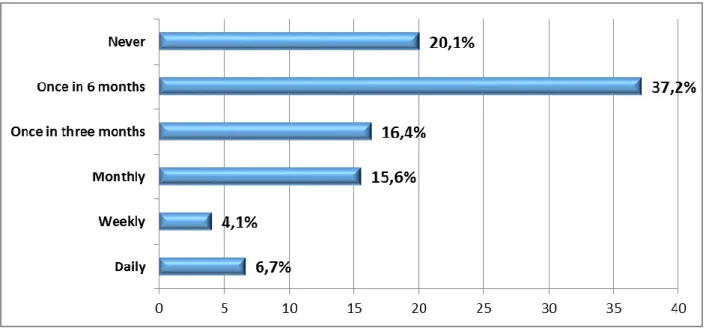
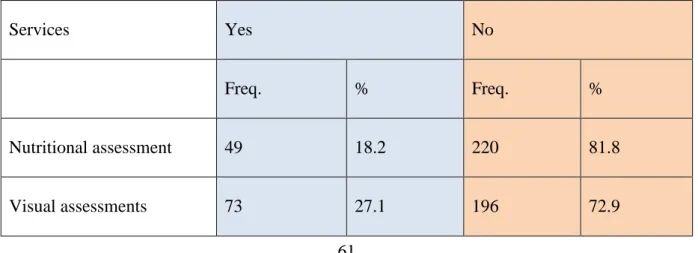
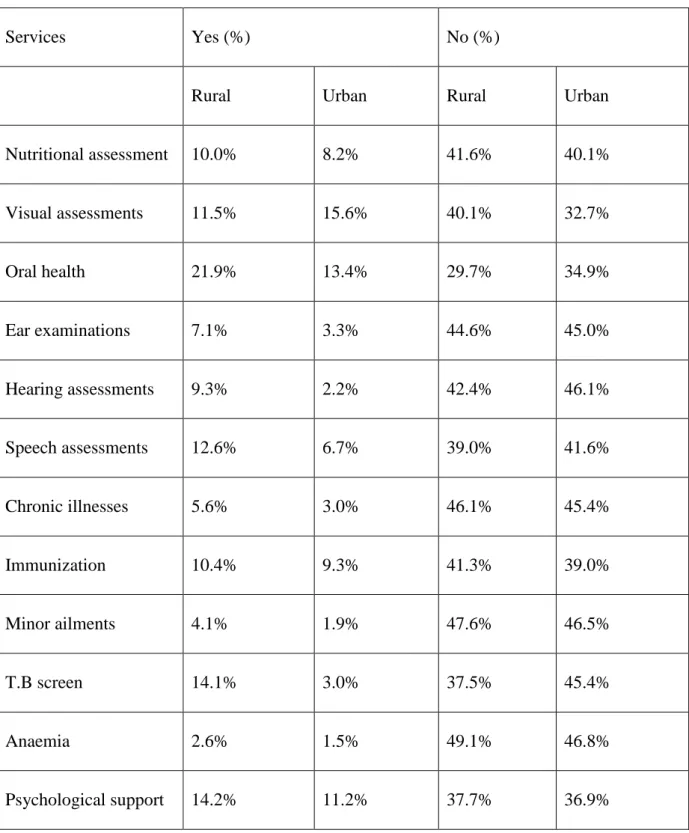
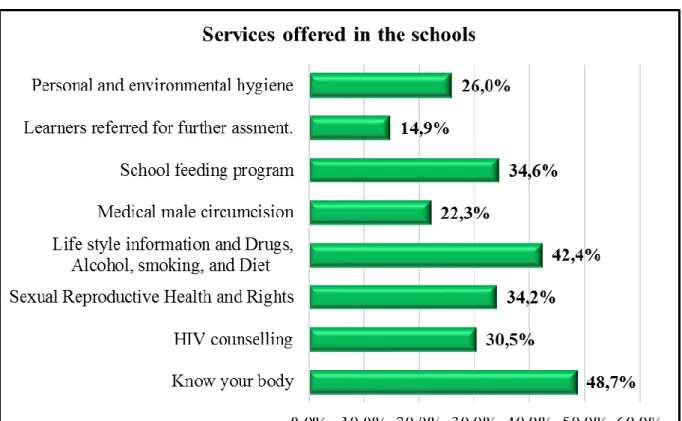
The findings revealed that participants perceived that school health nurses who are coming to visit the school once in 6 months only 20.1 percent had never seen school health nurses in the schools, 16.4 percent were learners and 4.1 percent were learners saying school health nurses visit weekly. According to the ISHP, oral health 35.3 percent were offered in their schools ,vision 27.1 percent ,immunization 19.7 percent, TB screen 17.1 percent and anaemia 4.1percent. This indicated that learners in rural areas were likely to receive oral care, hearing care, speech care and TB screening. Awareness about ISHP services offered in their schools as “know your body” revealed 48.7 percent of learners showed that they know about these
vi
services. HIV/AIDs 26.0 percent, medical male circumcision 22.3 percent, sexual reproductive 30.5 percent, and learner referral 14.9 percent. Learners were not sure about learners’ health problems, physically and emotional challenges educators are not equipped to deal with or do not have sufficient time to manage. It was found that 61 percent had a high perception, 31.5 percent, had a medium perception and 7.4 percent had a low perception about ISHP implementation in the school.
It was concluded that the implementation of the programme is not consistent with the objectives of the School Health Policy (ISHP, 2012). Due to lack of infrastructure and shortages of nurses, the ISHP did not cover all schools. These findings were not expected and they came as a surprise to the researcher. Conclusion made from the research findings, contributed to recommendation for nursing practice, nursing education and nursing research to enhance the quality of life of learners of ages between 13 to 16 years through comprehensive school health services.
Key Words: ISHP, Learner, secondary schools, perception.
vii
LIST OF ABBREVIATIONS
CBE: Community based Education
CBD: Community based development
CISHP: Comprehensive Integrated School Health Programme
CBD: Community Based Organisation
DoBE: Department of Basic Education
DOE: Department of Education
DoH: Department of Health
ENHPS: European Network of Health Promoting Schools
Freq: Frequency
HPSI: Health Program School Initiative.
ISHP: Integrated School Health Programme
ISHP: Integrated School Health Policy
KZN: KwaZulu –Natal
NGOs: Non–Governmental Organisation /s
NSDA: Negotiated Service Delivery Agreement
NASN: National Association of School Nurses
N: Population
PHC: Primary Health Care
n: sample size
SGB: School Governing Body
SPSS: Statistical Program for Social Science
YRBS: Youth Risk Behaviour Survey
UNICEF: United Nations International Children
UNESCO: United Nations Educational Scientific and Cultural Organisation
WHO: World Health Organisation
WWW: World Wide Web
X2: chi square
viii
OPERATIONAL DEFINITIONS The following operational definitions are used in the study:
Health Promoting School (HPS): In the current study, the HPS is taken as an effective way to improve learner’s health and their ability to learn as it is recognised globally and consequently as endorsed and supported by the World Health Organisation (WHO) and the National Department of Health (NDOH, 2014).
Implementation: The interventionist fidelity to the various elements of an intervention’s protocol, including consistency of delivery as intended and the time and cost of the intervention (RE-AIM, 2017).
ISHP: For the current study, ISHP is taken as outlining health departments’
responsibilities at national, provincial, district, primary health care facility and school levels. It thus recognises that strong partnerships between schools, communities and service providers are critical. In this regard, the policy describes how school health teams were based in primary health care clinics (PHC) and led by a professional healthcare staff (in this case a nurse), who may also be assisted by an enrolled nurse or nursing auxiliary.
The health care staff will coordinate the delivery of school health services, do learner assessments and provide services on the sites, while health education were delivered by the key health promoters/stakeholders or community health workers (Department of Health and Basic Education, 2013).
Program participants: In this study, these are the program key stakeholders; school teachers & the health staff that are meant to implement the ISHP and the learners that are participating in the ISHP.
Secondary School: The federally designated, graduation separated classification of grades 8-12, regardless of whether, or not they’re compiled together in one school or separate from the other grades.
ix FIGURES
Figure 1.1 Represents RE- AIM Evaluation Model………..….7
Figure.1.2. shows the three (3) elements of the Logic model………..…9
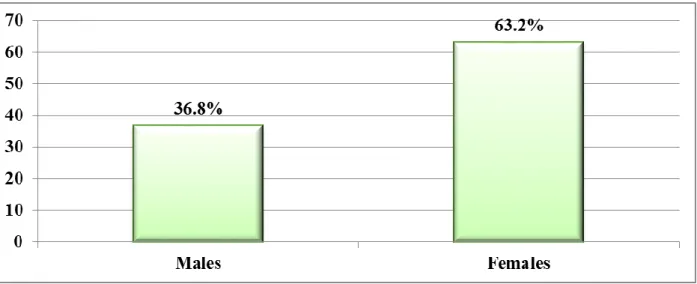
Figure 4. 1: Gender of the participants (n=269)………52
Figure 4. 2: Age distribution of the respondents (n=269)………..52
Figure 4. 3: Race of the respondent………...53
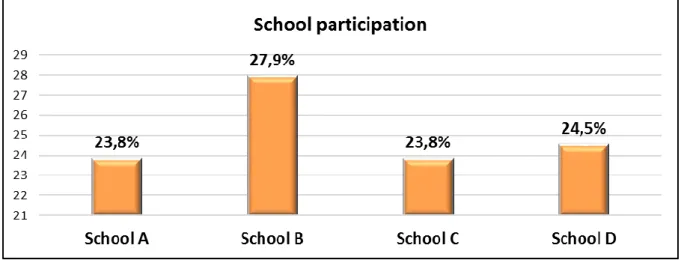
Figure 4. 4: School participation………53
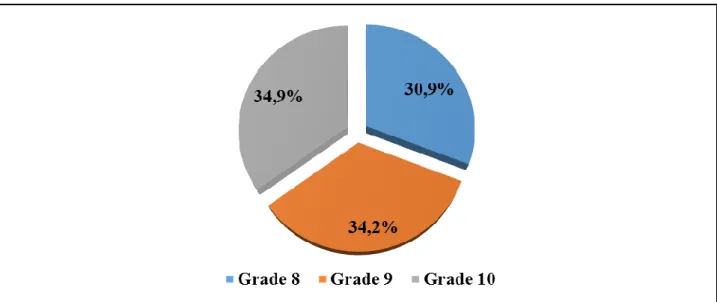
Figure 4. 5: Respondents school grade profile………...54
Figure 4. 6: Frequency of visits to schools by school health nurses………..41
Figure 4. 7: Services offered in the school……….58
Figure 4. 8: Level of satisfaction with the services offered………...59
Figure 4. 9: Health promotion activities needed at school ………60
Figure 4. 10: Histogram of perception about ISHP implementation……….66
TABLES Table 1.2: Illustration of the evaluation of Logic model………...12
Table 2.1: Health promoting school programs vs. Integrated School health and School health……...20
Table 4.1: Services offered in the Integrated School Health Programme (ISHP)……….41
Table 4.2: Cross tabulation of the school rural verse urban school location and services offered……42
Table 4.3: Perception about ISHP implementation………63
Table 4.4: Spearman correlation socio-demographic and perception about ISHP implementation…..50
x Contents
DECLARATION... ii
DEDICATION... iii
ACKNOWLEDGEMENT ... iv
ABSTRACT ... v
LIST OF ABBREVIATIONS ... vii
OPERATIONAL DEFINITIONS ... viii
FIGURES ... ix
TABLES ... ix
CHAPTER ONE ... 1
INTRODUCTION AND BACKGROUND OF THE STUDY ... 1
1.1. Introduction ... 1
1.2. Background of the study ... 1
1.2.1. PHC Engineering ... 2
1.3. Problem statement ... 2
1.4. Study Purpose and Objectives ... 3
1.4.1. Study objectives ... 3
1.5. Research questions ... 3
1.6. Significance of the study ... 4
1.7.Operational Definitions ... 5
1.8. Conceptual frameworks of the study ... 6
1.8.1. RE-AIM model ... 6
1.8.2. Logic Model ... 9
1.9. Preliminary literature review ... 15
1.10. School Health in Africa ... 16
1.11. School Health in South Africa ... 18
1.12. School Health Policy ... 20
1.13. Research Methodology ... 21
1.14. The Paradigm and the Approach ... 21
1.15. Research Setting ... 21
1.16. Research Population ... 22
1.17. Sampling of Schools ... 22
1.18. Data Collection Process ... 23
1.19. Data Analysis ... 24
1.20. Ethical Considerations ... 24
1.21. Management of research data and records ... 24
xi
1.22. Outline of the Dissertation ... 25
1.23. Summary ... 25
CHAPTER TWO ... 26
LITERATURE REVIEW ... 26
2.1. Introduction ... 26
2.2. School health programme ... 26
2.2.1. Health Promoting Schools (HPS) ... 27
2.2.2. On-site services ... 30
2.2.3. Comprehensive School Health Program (CSHP) ... 31
2.4. School health globally ... 31
2.4.2. Challenges facing School Health Programmes... 33
2.4.3. Expert recommendations for School Health Programme (DoH&DoBE,2012) ... 33
2.5. School health in Africa ... 35
2.6. School Health in South Africa ... 36
2.6.1. PHC Re-Engineering ... 38
2.6.2. School Health Policy in South Africa ... 42
2.6.3. The gaps identified in the reviewed literature ... 46
2.7. Summary of the Chapter ... 47
CHAPTER THREE ... 48
RESEARCH METHODOLOGY ... 48
3.1. Introduction ... 48
3.2. Research Methodology ... 48
3.3. Research Paradigm ... 48
3.4. Research Approach ... 49
3.5. Research Design ... 50
3.6. Research Setting ... 50
3.7. Research Population ... 51
3.7.1. Inclusion criteria ... 51
3.7.2. Exclusion criteria ... 51
3.7.3. Sampling of Schools ... 52
3.8.1. Respondents ... 53
3.8.2. Pilot Study... 53
3.9. The data collection process ... 53
3.10. Data Analysis ... 54
3.11. Ethical Considerations ... 54
3.12. Data Management ... 56
xii
3.13. Data Dissemination ... 56
3.14. Summary ... 56
CHAPTER FOUR ... 57
PRESENTATION OF THE FINDINGS ... 57
4.1. Introduction ... 57
4.2. Respondents’ Demographic Profile ... 57
4.2.1. Gender of the respondents ... 57
4.2.2. Age group of the respondents ... 58
4.2.3. Race of the respondents ... 59
4.2.4. School participation ... 59
4.2.5. School grades ... 60
4.3. Extent to Which the ISHP is Reaching the People it is Intended to Reach ... 60
4.3.1. Frequency of visits to schools by school health nurses ... 60
4.3.2 Services offered to the schools ... 61
4.4. Awareness of ISHP Services Offered at Schools ... 64
4.5. Level of Satisfaction With the Services Offered... 65
4.6. Health Promotion Activities Needed at School ... 65
4.7. Learners Perceptions About ISHP Implementation ... 66
4.8. Summary ... 74
CHAPTER FIVE ... 75
CONCLUSION, RECOMMENDATIONS AND DISCUSSION ... 75
5.1. Introduction ... 75
5.2. ISHP Delivery and Frequency of the Nurses to the Schools ... 75
5.3. Learners’ Awareness About ISHP Services ... 76
5.4. Learners’ Level of Satisfaction with the Implementation of ISHP ... 78
5.5. Learners’ Perceptions About the Implementation of ISHP ... 78
5.6. Limitations of the Study ... 81
5.7. Recommendations ... 81
5.7.1. Recommendations for nursing practice ... 82
5.7.3. Recommendations for nursing research ... 83
5.8. Summary of the findings ... 84
5.8.1. Findings in relation to the framework ... 84
5.8.2. Additional findings of interest ... 85
5.9. Conclusion of the Study ... 86
5.10. References ... 87
APPENDIX A ... 101
APPENDIX B ... 103
xiii
APPENDIX C ... 108
APPENDIX D ... 109
APPENDIX E ... 111
APPENDIX F ... 113
APPENDIX G ... 114
APPENDIX H ... 117
APPENDIX I ... 118
APPENDIXJ……….…120
1
CHAPTER ONE
INTRODUCTION AND BACKGROUND OF THE STUDY 1.1. Introduction
The dissertation examines the learners’ perceptions, awareness, and satisfaction regarding the implementation of the Integrated School Health Programme (ISHP) in selected secondary schools in uMgungundlovu District, KwaZulu-Natal in South Africa. Therefore, this chapter introduces the study by presenting the general background of the research; the research problem; purpose of the study; the research objectives; the research questions; significance of the study; preliminary literature review; research methodology; the structure of the research;
definition of key terms used in the study; the theoretical framework; the application of the study; and the study outline.
1.2. Background of the study
In 2011, the South African National School Health Policy was revised by the Department of Health (DoH) in collaboration with the Department of Basic Education (DoE). The revised policy made way for the launching of the Comprehensive Integrated School Health Programme (CISHP) which was published in 2012. It caters for all learners in grade R to 12.
This ISHP incorporated the principle of equity and human rights for learners, with specific consideration to the availability of resources required to cover all learners (Berry, Busch, De Leeuw, & Schrivers, 2013). The ISHP is a programme which has been developed over the last decade to address school health in a more comprehensive way. It represents a settings approach where different aspects of schools are considered to improve the health opportunities for learners (Lee, 2009 ;2014). In most cases, the Integrated School Health Programme is meant to incorporate school health services and school health education, and the school health environment as components (Murray, Low, Hollis, Cross, & Davis, 2007).
With regards to the aforementioned components, quite a number of education and health stakeholders are increasingly becoming interested in ISHP hence, they are involved in partnering with education institutions to protect and improve the health of learners and school personnel (Allensworth and Kolbe 1987; Allensworth 1995). This has necessitated the introduction of the PHC re-engineering strategy to further strengthen the implementation of ISHP.
2 1.2.1. PHC Engineering
PHC re-engineering is the strategy based on the Negotiated Service Delivery Agreement (NSDA) signed by the Minister of Health and numerous other Cabinet Ministers and Provincial Members of the Executive Council (Naledi, et al., 2011). According to Naledi et al. (2011), PHC re-engineering is the key to the success of the NSDA implementation process and seeks to shift the PHC system from a largely passive, curative, vertically and individual oriented system to one with more proactive, integrated and population based. The main focus of PHC re-engineering is to strengthen the district health system and do the basic better Health and Welfare Sector Education and Training Authority, 2011). The National Council has adopted the three streams to be implemented in the PHC re-engineering, they are: (a) the deployment of ward based PHC outreach teams; (b) strengthening of school health services;
and (c) deployment of district clinical specialist teams aimed at improving maternal and child health (NDOH, 2011). Naledi et al. (2011) state that one of the PHC streams envisaged is the effective implementation of national school-based PHC system led by nurses. One of the priority areas in the PHC re-engineering strategy is school health services, starting with the schools in the lowest socio-economic areas and crèches (Naledi, et al., 2011). Naledi et al.
(2011) conclude that the effective implementation of PHC re-engineering requires the mobilisation of strategic partners, including health workers, academic institutions, professional bodies, unions, the private sector, other government departments, civil society, and communities.
1.3. Problem statement
There are varying perceptions on how the school teachers are meant to be implementing ISHP programmes, and understand the revised school health promotion initiatives such as the ISHP. It is still not clear if schools in the KwaZulu-Natal Province are implementing the ISHP as stipulated in the DoH policy. Notwithstanding, the fact that ISHP has existed in SA schools since 2012, documented literature shows that there are only a few evaluation studies conducted to follow up on the progress of the implementation of such programmes in schools. Relevant literature has mainly revealed a lack of proper infrastructure and inequity in the distribution of resources in schools, revealing many disparities between urban and rural schools (Swart & Reddy, 1999). In this regard, the evaluation would be critical to monitor and document programme implementation and can subsequently, aid in understanding the
3
relationship between specific programme elements as well as improving the programme outcomes. This is made possible since the process evaluation data is used to fine-tune the programme, and hence, help to keep the programme on track. Thus, the evaluation may be used to confirm whether the intervention was indeed implemented before using resources to assess its effectiveness. (Scheirer, et.al., 2013; Bartholomew, et. al., 2011).
1.4. Study Purpose and Objectives
This study aims to determine the perception, awareness and satisfaction of the learners in the implementation of the Integrated School Health Programme (ISHP) in selected secondary schools in uMgungundlovu District of KwaZulu-Natal Province.
1.4.1. Study objectives
To reach the above aim, the study had the following objectives.
1. To determine the extent to which the ISHP is reaching the people it is intended to reach.
2. To describe learners’ perception regarding the implementation of ISHP in selected secondary schools in uMgungundlovu District.
3. To determine the learner's awareness regarding the implementation of ISHP
4. To determine the learners level of satisfaction with the implementation of ISHP in the selected secondary schools in uMgungundlovu District.
1.5. Research questions
The following research questions motivated the study.
1. What is the extent to which the ISHP is reaching the people it is intended to affect?
2. What are the learners’ perceptions regarding the implementation of ISHP in selected Secondary Schools in uMgungundlovu District?
3. What are the learners awareness of the implementation of ISHP?
4. What is the learners’ level of satisfaction with the implementation of ISHP in the selected secondary schools in uMgungundlovu District?
4 1.6. Significance of the study
It is normally a noble idea that after any programme has been initiated; it will need to be evaluated after some time in order to assess the successes and limitations of the initiative, and in order to determine whether the programme should continue (Polit & Beck, 2012). The proposed study is thus expected to provide answers that would have critical policy implications by enhancing or assisting with the improvement of the outcomes of the Integrated School Health Programme, and influence school health promotion policy training through the nursing curriculum and hence, recommend for future research. Consequently, the outcome would in the long run, be used to successfully convince policy makers to fund school health programmes. Therefore, a comprehensive system is needed to evaluate the value of these programmes to add value to the decision-making process by assisting decision makers through the clarification of various ways in which a given policy could influence health by making sure that health considerations are never overlooked (Thacker, et al., 1994;
Kemm, 2001). Furthermore, the majority of the policy makers and funders have become progressively concerned with allocating scarce resources to those programmes that are effective and efficient (Pluye, Potvin & Denis, 2004; Hall-Beyer, 2012).
Policy: The proposed study is thus expected to provide answers that would have critical policy implications by enhancing or assisting the Integrated School Health Programme, training, and future research. Consequently, the outcome would, in the long run, be used to successfully convince policy makers to fund school health programmes. It will benefit the country and it will influence the government of national unity to change policies in schools, which will promote health and well-being of the learners, thus improving, the health status of learners and decreasing morbidity rate.
Nursing Education: The study has the potential to help nursing educators to improve their teaching skills in school health nursing, thus bridging the gap between theory and practice.
The study may benefit educators and learners in identifying health problems affecting learners and ways to overcome them.
Nursing Research: The study has the potential to motivate other researchers to conduct more studies in mixed methods, thus gaining more knowledge and information on ISHP.
5
Nursing Curriculum: The curriculum needs to be revised to be in line with the Integrated School Health Policy to identify and meet the needs of the learners in disadvantaged communities.
Further Research: The researcher may benefit by gaining knowledge; the majority of the policy makers and funders have become progressively concerned with allocation of scarce resources to those programmes that are effective and efficient.
1.7. Operational Definitions
The following operational definitions are used in the study:
Health Promoting School (HPS): In the current study, the HPS is taken as an effective way to improve learner’s health and their ability to learn as it is recognised globally and consequently as endorsed and supported by the World Health Organisation (WHO) and the National Department of Health (NDOH, 2014).
Implementation: The interventionist fidelity to the various elements of an intervention’s protocol, including consistency of delivery as intended and the time and cost of the intervention (RE-AIM, 2017).
ISHP: For the current study, ISHP is taken as outlining health departments’
responsibilities at national, provincial, district, primary health care facility and school levels. It thus recognises that strong partnerships between schools, communities and service providers are critical. In this regard, the policy describes how school health teams were based in primary health care clinics (PHC) and led by a professional healthcare staff (in this case a nurse), who may also be assisted by an enrolled nurse or nursing auxiliary.
The health care staff will coordinate the delivery of school health services, do learner assessments and provide services on the sites, while health education were delivered by the key health promoters/stakeholders or community health workers (Department of Health and Basic Education, 2013).
Program participants: In this study, these are the program key stakeholders; school teachers & the health staff that are meant to implement the ISHP and the learners that are participating in the ISHP.
Secondary School: The federally designated, graduation separated classification of grades 8-12, regardless of whether, or not they’re compiled together in one school or separate from the other grades.
6 1.8. Conceptual frameworks of the study
A conceptual framework helps to guide the methods and interventions to be used in a process evaluation appropriately (Polit & Beck 2012). This study was guided by two conceptual frameworks which are; Reach, Effectiveness, Adoption, Implementation and Maintenance (RE-AIM) and Logic Models. An extensive description of each model follows below.
1.8.1. RE-AIM model
The RE–Aim model is used for evaluating public health interventions that assess five dimensions; reach, efficacy, adoption, implementation, and maintenance. Therefore, since the current study assesses and evaluates the school health programme, it was useful to apply the RE-AIM framework in assessing school health services and health-promotion programmes at schools. The model was successful in assessing the health promotion intervention of school children in America, and thus, is valuable as it had positive results (Glasgow et al., 1999).
Moreover, using this model allows for a comprehensive assessment of school children's health needs (DOH, 2011).
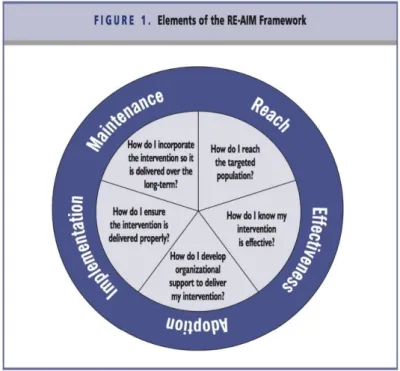
RE-AIM was developed to enhance the impact of health promotion interventions by evaluating the dimensions such as capacity to be considered. The most relevant to real world implementation reach underserved population and to be adopted within. A conceptual framework helps to guide the methods and interventions to be used in a process evaluation (Polit & Beck, 2012).This study will be guided by two conceptual frameworks that is RE- AIM and the Logic models. According to Glasgow, Vogt, and Boles (1999), the RE-AIM model helps in reminding us of the key purposes of public health and community interventions whereas the Logic Model is a set of parts which are coordinated in order to accomplish a set of goals (Churchman, 2002). Figure 1.1. Below shows the five (5) dimensions of the RE-AIM model. These elements can be used in assessing and evaluating the school health programme. Since the current study will be assessing and evaluating the Integrated School Health Programme, it will be useful to apply RE-AIM framework in assessing the ISHP.
The model was successful in assessing the school health programme intervention of school children in America and is valuable as it had positive results the (Glasgow et.al., 1999).
Moreover, using this model will be allowing for a comprehensive assessment of school children needs (DoH,2011).
7
Figure 1.1 shows the five (5) elements of the RE-AIM model. These elements can be used in assessing and evaluating the school health programme.
1.8.1.1. Elements of the Re-Aim Model
Reach: The absolute number, proportion, and presentation of individuals who are willing to participate in each initiative, intervention, or programme.
Effectiveness: Is the impact of an intervention on important outcomes, including potential negative effects, quality of life, and economic outcomes.
Adoption: The absolute number, proportion, and representativeness of settings (e.g., health departments) and interventionists (e.g. nurses, educators) who deliver a programme.
Implementation: The interventionist’ fidelity” to the various elements of an intervention’s protocol, including consistency of delivery as intended and the time and cost of the intervention.
Maintenance: The extent to which a programme becomes institutionalized or part of the routine organizational practices and policies.
A theoretical framework helps to guide the methods and interventions to be used in a process evaluation appropriately (Polit & Beck, 2012). In most cases, health promotion and education programs normally seek to made meaningful improvements in population health with limited resources. It is therefore a complex, multilevel challenge (Brown et.al; 2012; Green, 2005).
In this regard, currently there is little agreement on the criteria necessary to make concrete conclusion that a program has produced a significant public health impact (Glasgow, 2003; Des Jaris, 2004, Dzewaltowski, 2004). Hence, standard metrics that accurately summarize complex and multidimensional outcomes would be critical. In America for example, a current model used is the RE-AIM framework which offers a comprehensive approach to considering five dimensions important for evaluating any potential public health impact of an intervention (Glasgow ,1999,2003). The Re-Aim model is used for the evaluating any potential public health interventions that assesses 5 Dimensions: Reach, Efficacy, Adoption, Implementation and Maintenance. Therefore, since the current study will be assessing and evaluating the Integrated School Health Programme, it will be useful to apply the RE-AIM model in assessing the school health
8
services and health promotion in schools. The model was successful in assessing of health promotion intervention of school children in America and thus is valuable as it had positive results then (Glasgow et al. 1999). Moreover, using this model will be allowing for a comprehensive assessment of school children’s health needs (DoH,2011).
Figure 1. 1Represents RE- AIM Evaluation Model
9 1.8.2. Logic Model
Churchman (2002), describes a Logic Model as a set of parts which are coordinated in order to accomplish a set of goals. The Logic Model is complete when it covers all the processes, inputs, and outputs for example activities and participants’ outcomes impact of the implementation of the programme. The model, therefore, depicts the evaluation of the programme as three tiered.
Figure.1.2. below shows the three (3) elements of the Logic model. These elements can be used to monitor programme evaluation.
1.8.2.1. Elements of a logic model
Inputs: Are the resources that are made available for the planning, implementation, and evaluation of projects, for example, inputs are human resources, funding, facilitators, equipment, curricula, teachers and key informants.
Process: Process evaluation involves documentation and description of specific programme activities such as how much of what, for whom, when, and by whom. It includes monitoring the reach and participation by the target population. Process evaluation assesses if the programme reached the intended population.
Outputs: Are divided into activity outputs and are educational programme components e.g., classes, newsletters, demonstrations, and participant outputs are the demographics of the individuals, families, and communities who are reached.
Outcomes: Describe the changes that occurred because of the programme outputs. In this study, only short-term outcomes, namely, awareness and satisfaction with the programme will be explored.
10
The programme will be guided by study objectives in conjunction with the conceptual framework.
To determine the extent to which the ISHP is reaching intended people
To describe learners’ perception regarding the implementation of ISHP in selected secondary schools.
To explore the learners’ awareness regarding the implementation of ISHP.
To determine the learners level of satisfaction with the implementation of ISHP in the selected secondary schools in uMgungundlovu District.
An evaluation progress in the implementation of school health programmes will include Inputs, Processes, and Outputs and Outcomes in conjunction with study objectives to explain the evaluation of the progress towards the implementation of the programme.
Objective no1 will be aligned with the inputs which explains the resources that will be utilized in the programme. For example, policy support, evaluation programme sustainability, and people that will be dedicated to or influenced by this programme, laws and regulations, partnership, people and nurses.
Process/activities looking at:
Who are the beneficiaries of this programme?
What will the programme do?
Develop policies
11
Outputs are those things that we do (providing products, goods, services to programme customers), and the people we reach (informed consumers), knowledge, decision makers, what we do, who we reach. The output will refer to this programme reaching the people, clients, decision makers, and nurses. Describing our outputs allows us to establish linkages between the problem (situation) and the (intended outcomes). The people who the researcher will reach also are outputs of the programme and will be the centre of our model. They constitute a bridge between the problem and the outcome. Are the participants satisfied regarding the programme/activities that are implemented? How was it implemented? It is aligned with objectives 3 and 4?
Outcomes are short term and answer the questions. They are aligned with 4 objectives the programme intended to meet. What is the current situation that we intend to reach?
12 Evaluation
Objectives
Evaluation Question
Research Question
Data Collection Methods
Data
Collection/Tools
Respondents Responsible Time
What specific area does the evaluation
specifically targeted?
What do we want to know about this
program?
What are the questions
addresses this evaluation questions?
What data collection method will be
used to
measure the indicator?
What specific tool will be used?
Who will provide the information needed?
Researcher
To describe learners’
perception
regarding the implementation of ISHP
What are the learners’
perceptions towards ISHP
What are the learners’
perceptions regarding the program?
Self-
Administered questionnaire
Self-
Administered questionnaire
Learners/Participants Researcher
To explore the learners’
awareness
regarding the implementation of ISHP.
What are the benefits towards learners’
awareness regarding the activities that are implemente d in the ISHP?
What are the learners’
exploration regarding the implementation of ISHP
Self –
Administered Questionnaire
Self –
Administered Questionnaire
Learners /Participation Researcher
13 Table 1.2. Illustration of the evaluation of Logic model
To determine the
level of
satisfaction with the
implementation of ISHP
What are the learners’
satisfaction regarding the
implementat ion of ISHP
Learners provide
feedback on the program
Self-
Administered Questionnaire
Self-
Administered Questionnaire
Learners /Participants Researcher
To determine the extent which the ISHP reaching the people it is intended to affect.
Is the
programme reaching the intended recipient?
What are the
demographi cs
characteristi cs of the learners?
What is the extent to which the ISHP reach the people?
How is the program being implemented?
What are the activities being involved in the implementation?
Self –
Administered Questionnaire
Self –
Administered Questionnaire
Learner/Participants Researcher
14
Knowledge on how to be involved in these services/knowledge of customers to understand the cause of problems and potential solutions.
Awareness of the programme
Satisfaction about the implementation of the services.
Intention
Skills and competence are in place/customers possess the skills needed to resolve the situation
Improved policies of a sustainable workforce
Motivation of the customers to have the desire to effect change.
Attitudes of the customers who believe their actions can make a difference.
An evaluation of progress in the implementation of the school health programme will include implementing School Health and Educational policies that include multidisciplinary teams and stakeholders; the education sector including schools and teachers, the health sector and health promotion service providers, the students and health promotion researchers, parents and even the community at large in the programme (Parsons et al. 1996; Barnekow et al.
2006).
Whatever the misdistribution of policies and learning environments, not including the community to look after the school during school holidays, no meetings to include the community, no participation of the parents in the upkeep of the gardens, and no proper toilets which can lead to spread of diseases (DoH, 2012).Infrastructure improvement led themselves to HPS activities in parallel for an example is the “tippy tap” which facilitates hand washing as an avenue to hygiene education (Zanget et al., 2012).Novel sanitation in the form of environmentally friendly toilets links with clean water and environmental education and the prevention of diarrheal diseases. School based garden projects (Beery et al., 2014) foster a range of skill development in participating with children as evidenced by evaluation of the programs in the UK (Royal Horticultural Society, 2012).
Moreover, it shares some characteristics of evaluating the programme and implementation.
Intersectoral collaboration, multidisciplinary action and partnerships are important requirement of public health”(Sambo,2012,p.3).The necessity for such collaboration across sectors” in the context of HPS has been recognised previously (Verganin et al.,1998),development of HPS network identified as a way to encourage greater intersect oral cooperation (Swart & Reddy, 1999; Dharamsi et al., 2014; Lee et al., 2014),and experience of
15
this occurring in a university – driven South African HPS program reported (Preiser et al.,2014).
The focus would, therefore, be on key stakeholders involved in selected secondary schools as possible participants. The prospective secondary schools to be selected would have at least 700 or more learners; Grade 8 to 10 learners should be represented in the school; the secondary schools should represent learners between 13 and 16 years; and these schools should represent the socio-economic and cultural diversity of the uMgungundlovu District in the context of the research both in the rural and urban areas.
These evaluation models are aligned with the Logic Model that is used as the conceptual framework. The Logic Model looks at inputs, outputs, and outcomes. This study was shaped and guided by the conceptual framework as adapted from the logic model for programme planning and evaluation which was prepared by Karen Horsch, an evaluation consultant in October, (2002).
1.8.2.3. Application to the study
The evaluation framework was developed from the Logic model described here and is based on a health and education framework covering appropriate short indicators. The tool for evaluating the implementation of School Health promotion can identify methods by which the schools can be more effective as health promoting institutions and factors that influence this process. The Logic Model evaluates and assesses what was gathered from the schools using their own resources. (Churchman, 2002)
1.9. Preliminary literature review
In the early 1960s, several conferences and meetings took place between the World Health Organization (WHO) and the United Nations Education, Scientific and Cultural Organization (UNESCO) to determine how school health could be improved (Bradshaw et al., 1964; Ayila et al., 2014). A publication was released in 1966 which was one of the first international documents to pragmatically address the planning and implementation of school health programmes (Sibandze et al., 2014; Sinthumunye & Munyati, 2014). Gibbes et al. (2010) claim that many similar principles and recommendations that can be seen running through these documents. The building blocks of the Health Promoting School (HPS) and Comprehensive School Health Education (CSHE) frameworks which emerged in the 1980s
16
and 1990s had clearly been articulated many years earlier. Another influential stimulus for school health was to be found in the Declaration of Alma-Ata World Health Organization (Clay, 1988). This statement came out of a major International Conference on Primary Health Care held in Alma-Ata, which called on all governments "to formulate national policies, strategies and plans of action, to develop a multi-sectorial approach to involve citizens in forecasting, organization, operation and control of Primary Health Care, and to focus on education as a means of preventing and controlling health problems" (St. Leger, 1999;
Wardell et al., 2003; Strand et al., 2008; Oloukoi et al., 2014). Furthermore, the WHO reported:
The Declaration of Alma-Ata was the first international attempt at this high level to pinpoint the myriad of factors influencing health and thus provides emphasis for developing strategies by the member states of the WHO. The focus of the Declaration of Alma-Ata was that it brought in the idea of Health for all needs to be realized come the year 2000 (Ayila et al., 2014). This prompted a closer examination by governments and Health Authorities about how this could be achieved.
The Ottawa Charter for Health Promotion was another major milestone in influencing the direction of Health Promoting Schools (WHO, 1986). Its core objectives were to: (i) build health public policy, (ii) create a supportive environment, (iii) strengthen community action, (iv) develop personal skills and (v) reorient health services (WHO, 2013).
1.10. School Health in Africa
Within sub-Saharan Africa, health promotion initiatives have recently been facing several challenges. The health challenges facing children in African countries are recognised to be considerable while the resources available for both health and to provide for their education are in contrast limited. The gross inequities in health within and between countries present a challenge to the World to address the social determinants of Health (Marmot, 2005). For this reason, the World Health Organization (WHO) health promoting schools (HPS) model is a relevant concept for Africa as potential means of driving improvement (WHO REGIONAL OFFICE for Africa;2013), yet a 2004 review found no evaluations of HPS initiatives from Africa (Mukoma & Flisher,2004). However, potential of health promotion in the school health setting is flexible, inexpensive and effective intervention in sub-Saharan Africa, and low and middle-income countries elsewhere is evident. The activities of the WHO regional Office of Africa(WHO/AFRO) are driving change ,the Stellenbosch consensus statement on HPS provides a benchmark on HPS relevant to Africa (Macnab,2013,as are some reports of other global evidence on the effectiveness of HPS (Macnab et al., 2014), Health benefits can
17
be achieved in parallel with the recognized advantages of motivating girls and boys to pursue and value educational opportunities .The WHO/AFRO health promotion cluster provides leadership ,guidance and technical support in the formulation ,implementation, monitoring and evaluation of health promotion policies ,plans strategies and programs in order to accelerate the response to the determinants of health and address priority public health issues in the African Region(WHO Regional Office for Africa,2013).The focus is on priority public health issues include :maternal and child health ; HIV/AIDS,TB and Malaria ,diabetes hypertension, cancer ,violence, injuries and other non-communicable conditions;
environmental degradation; water sanitation and hygiene ;polio, leprosy and other neglected tropical diseases; and new threats to health( e.g. climate change ,pandemic influenza rapid urbanization),WHO,2013).In addition guidelines for interventions were generated, and training workshops held to promote use of tools to address prevention and control of non- communicable disease. Conference activities have resulted in declarations calling for and outlining priorities to improve health of several specific populations and the World Health Assembly has adopted a series of far reaching resolutions (WHO Regional Office FOR Africa ,2013) However the potential for applications of the WHO model to contribute to progress in sub-Saharan Africa has still as yet to be widely recognized in mainly countries ,and severe problems with health and development are occurring especially regarding educationally driven elements of development policy (Sippel et al., 2011) Challenges recognized to exist include variation in motivation and leadership from ministries in the context of promoting HPS initiatives (WHO,2012),and limited institutional relationships and partnerships in the community (Fawcett et al.,2010) In many countries in Africa the “health systems are subject to powerful social and economic influences that often pull them from their intended goals” (Sambo,2012,p.3), and education systems faces challenges due to recognized deficiencies in terms of infrastructure and resources and lack of motivation among teachers in schools (Swart and Reddy,1999,2014)..In fact, Lundqvist (1961) points out that the state of health in a majority of these sub-Saharan states is worse than in any other region, thus, earlier studies have indicated that the region is not actually on track in achieving any of the United Nation's Millennium Development Goals since focus has shifted away from the ideals of the Ottawa Charter to different countries' individualistic behaviour change approach (Lundqvist, 1961; Breebaart et al., 2001). Such shifts are as a result of political choices of governments which normally come with consequences such as those that have favoured technocratic approaches over harnessing the popular mobilizations that have been known to accompany national struggles (Lundqvist, 1961; Breebaart et al., 2001).
18
Health and education are in themselves beneficial and can be viewed as investments in human capital which, will in future lead to a higher standard of living. It has been reported that the people of Africa experience lower levels of both health and education than those prevailing in other regions of the world (National Health Policy, 2016; Krueger & Lindahl, 2000; Wittmer et al., 2010; Yuan et al., 2014). This reflects the lower level of economic development in Africa, hence, helps to explain the low level of development, and suggests a set of policies for improving Africa's standard of living. Overall, Africa’s life expectancies still remain at the bottom of the ladder, and the mounting epidemic of HIV/AIDS among others in most of sub-Saharan Africa and more so in central and southern Africa, threatens to reduce life expectancies in many of these countries in the future (; Still et al., 2003; Wittmer et al., 2010). This hence calls for a lot of emphasis on health promotion programmes. Thus, an evaluation of any existing health promoting initiatives becomes paramount.
1.11. School Health in South Africa
School health programmes have quite a long historical background in the Republic of South Africa (Bremner, 1965; Vergnani et al., 1998). The existence of school health services started way back in 1914 even well before there were marked inequities in the availability and provision of school health services during the unpopular racial isolation regime (Van Rooyen, 1983; Vergnani et al., 1998). As pointed out by Whittaker (1965) and Bazzaz (1975), there existed serious inequities in both the availability and provision of school health services. This was most evident in that school health services were provided effectively to all schools in white dominated areas several times a year, while schools in the disadvantaged, mainly former homeland areas dominated by the black majority, only received these services once every two to three years or not at all (Bazzaz, 1975). However, the new dispensations after the 1994 democratization have seen several initiatives focusing on developing networks of health promoting schools. Such initiatives are thus seen as a mechanism to address the historical inequities among children in South Africa (Swart & Reddy, 1999;2014).
The ANC government’s response to rapidly increasing health challenges due to lifestyle changes which are linked to urbanization including changes in diet, socio-economic, cultural and environmental factors have involved population-based approaches for prevention, such as campaigning for public health plus policy legislation related to substance (tobacco and alcohol) abuse, and identification of individual risk factors in high-risk persons (Witkowski
19
& O'Connor, 2012; Vorster, 2002; Mayosi, et al., 2009). Despite efforts at improving management and prevention of non-communicable diseases, such awareness campaigns often do not actually reach the intended audience, more so in rural areas and/or former black homelands. Similarly, lack of skills and training among health workers contribute to the aforementioned. In this regard, the Department of Health (DoH) has made health promotion as a priority area in its strategic plan, advocating the development of cost-effective and evidence-based measures in order to reduce the projected burden of disease (O'Connor &
Crow, 1999, 2012; Sekhwela, 2003, 2007; Crow, 2007). In fact, these days, several D0H and the Department of Education (DOE) policies which are aimed at addressing children's health needs among others have been put in place. These include policies such as the Health Promoting School Initiative (HPSI), formally a WHO initiative (Balayan et al., 1995; WHO, 2008; WHO, 2013). The is also the South African National Policy on HIV/AIDS for Learners in public schools, and learners and educators in further education and/or training institutions (Bredenkamp & Theron, 2013; Coombe, 2000), Youth and Adolescent Health Policy (DoH, 2012) and more recently, the South African National School Health Policy,2013 (Van Rooyen, 2012) are also some of those initiatives in place.
Breebaart et al. (2001) point out that South Africa has recently progressed from a triple burden of disease to four times the burden of disease consisting of poverty-related diseases, emerging chronic diseases, injuries and the impact of HIV/AIDS (Balayan et al., 1995;
United Nations Development Programme, 2013; Campbell & Mzaidume, 2001). Thus, such a burden places a high demand on existing health services that are already struggling to cope with limited resources and structural developments due to national health reform and calls for priority setting at national health policy level (Balayan et al. 1995; Campbell & Mzaidume, 2001). In this regard, an evaluation of health promotion programmes at local/regional levels would be important.
20 1.12. School Health Policy
The Department of Health in collaboration with Department of Basic Education revised the National School Health Policy in 2011.The Policy is aligned to the Negotiated Services Delivery Agreement (NSDA) 2010-2014; the government has therefore developed a programme of action for the promotion of long and healthy lives for all South Africans, as well as the Millennium Development Goals). (MDGS) which were replaced by The Sustainable Development Goals. (United Nations .2015).
Moreover, the revised policy made away for the Comprehensive, Integrated School Health Programme (ISHP) for Grade 0 to 12 learners which are implemented at sub–district level.
The ISHP implementation strategy incorporates the principle of inequity and human rights with specific consideration to the availability of resources required to cover all learners (DoH, 2014). The new ISHP which will replace the 2003 School Health Policy and implementation guidelines outline how school health services will be strengthened and expanded.
The new programme aims to ensure delivery of more services on-site and to ensure more systematic referrals and follow ups of learners. Furthermore, emphasises is placed on reaching full learner coverage beginning in the most disadvantaged schools (DoH, 2014). The school health policy consists of a vision, principles as well as objectives (Ramma, 2010). The policy will develop and address barriers to learning that will hinder the learners’ maximum benefit from education. It has been identified that the major health barriers to learning for children in South Africa are: (a) poor nutrition (b) poverty (c) environmental factors such as unclean water and sanitation and disabilities including gross locomotor dysfunction and improved vision and hearing. These factors impact on attendance at school and the learner's ability to concentrate on school activities. It causes poor pass and retention rates for schools and impacts negatively on the development of children and youth (WHO, 2011; Klugman, 2011). Other important health factors impacting on the development of children and youth of school going age include issues related to sexuality, HIV /AIDS, reproductive health, trauma and violence, substance abuse and mental problems (WHO, 2002; Eaton et al., 2003; Novello et al., 1992; Morojele et al., 2006). Such factors should be addressed through Health Promotion and Health Education activities and need to be incorporated into the life orientation area of the South Africa school curriculum.
21 1.13. Research Methodology
A quantitative, non-experimental, descriptive design was used to describe the learners' perception, awareness, and satisfaction towards the implementation of the Integrated School Health Programme (ISHP) in selected secondary schools. The descriptive design was selected to obtain the characteristics of the items being researched (Burns, Grove and Gray, (2012), Polit and Beck (2012) state that the purpose of descriptive studies is to describe and document an aspect of a situation as it occurs. According to Burns, Grove and Gray (2012), the descriptive approach was useful in providing greater insight into characteristics within a particular field of study, and may be useful in evaluating or justifying the current practice. It can be used in this study to describe the relationship among variables, instead of assuming a cause and effect relationship. By using a descriptive design, more information could be gathered regarding the characteristics of the learners in selected secondary schools.
1.14. The Paradigm and the Approach
The researcher will adopt a positivist paradigm for this study. A positivist fundamental assumption is that there are affixes, orderly and unbiased reality that can be objectively studied and uncovered and is often associated with quantitative research, (Polit & Beck, 2012). The positivist paradigm, sometimes known as logic positivism, serves as a guide in this study. The positivists’ scientific approach involves the use of orderly disciplined procedures with tight control over the research situation (Polit & Beck, 2012). Quantitative research is a formal, objective, systematic process for generating new information (Burns, Grove & Gray, 2012).
1.15. Research Setting
The data was collected at four selected secondary schools in uMgungundlovu district, KwaZulu-Natal, South Africa from grade 8, 9 and 10. The study was conducted to determine the implementation of the Integrated School Health Programme.
22 1.16. Research Population
Polit & Beck (2012) define a population as an entire aggregation of the case in which the researcher is interested in all the individuals with common, defining characteristics (Burns, et al., 2012). The population comprised of 500 learners in grades 8, 9 and 10 who enrolled in each of the four selected secondary schools. In KwaZulu-Natal, they were approximately 76 secondary schools with approximately 500 learners. In uMgungundlovu district the population of this study consisted of 300 learners at four selected secondary schools. The researcher was looking at 25 learners in each grade of four selected secondary schools that is grades 8, 9 and 10. To make up to 300 learners from different grades and schools to participate in the study. Each school consisted of 75 learners from three grades: learners in grade 8 there were 83, grade 9 were 92 and grade 10 were 94 out of 269 respondents.31 respondents some of them they refused to participate and some of the learners they did not return the assent and consent forms from their parents/guardians.
1.17. Sampling of Schools
The researcher selected four secondary schools in uMgungundlovu district, in KZN where data was collected. The four schools were selected using purposive sampling. The main goal of purposive sampling was to focus on the particular characteristics of a population that were of interest, which would best enable the researcher to answer the research questions.
Sampling units were selected based on their similar characteristics and were of particular interest to the researcher. The sample size was 300 learners from selected secondary schools.
Researcher was looking at 25 learners in each grade from 8,9 and 10 from four selected schools which make 300 learners, moreover some of the learners did not return the assent and consent forms from their parents which ends up with However, only 269 agreed to participate in this study and the response rate was (90 percent). Respondents were distributed according to their schools and grades in the four selected secondary schools. The recruitment strategies for this study, the researcher made an appointment with each of the Principal of the four selected secondary schools. The researcher was providing a protocol together with a letter from Ethics (UKZN) permission letter who granted a researcher to conduct her study.
The researcher had to explain every aspect about her study, the session will be taking only 10 to 25 minutes, and it will take place in the hall/classroom. The researcher will explain that the
23
study won’t harm anyone if the participants wants to withdraw from the study they were free to do so. . Confidentiality and anonymously will be maintained for the whole process. The researcher is looking for the learners from age 13 to 16 to participate from the study. In grades 8, 9 and 10. Consent forms were distributed to the learner to give their parents/guardians as they were minor below 18 years. As well as assent forms were distributed to be filled in by the learner, if they agreed to participate to the study. The researcher explained everything regarding the study.
1.18. Data Collection Process
The researcher obtained permission from the Department of Education as well as from the Principals of the four selected secondary schools. Assent forms were given to the learners to sign. Informed consent forms were also given to the minor learners’ parents or guardians to sign. Once all those who agreed to participate had been identified, a date for data collection was fixed with the Life Orientation teacher. Participants were approached in their classrooms, and the purpose of the study was explained detail. The questionnaires were distributed and the respondents completed the questionnaire on their own to ensure confidentiality and anonymity. The researcher took more than five to ten sessions in one school. Some of the learners they forgot to ask the forms from the parents/guardians. In other days you won’t be able to get other learners because they are exchanging their classes. The educators they want to cover their syllabuses because the exams were around the corner. Each and every school you need to comeback more than five sessions. Sometimes the educators were in the meeting you should wait to be asked a permission before you seen the learners. There were some challenges sometimes other learners are writing exams, tests and you need to comeback on the other day. The data collection took about four weeks due to other constrains and there were no biased during this session. The researcher explained and clarified questions and to any respondents’ queries. The respondents were asked to put the completed questionnaires into a box for security reasons. Codes and numbers were used instead of learners' names to ensure confidentiality. Out of 300 questionnaires distributed, 269 were collected after completion representing a response rate of 90%. Therefore, in the present study, a very good response rate of 90percent was obtained, providing the researcher with the opportunity to generalize about the total population.
24 1.19. Data Analysis
Data analysis was done with the assistance of the supervisor and the statistician from the Durban University of Technology. Data analysis was done using The Statistical Package for the Social Sciences (SPSS version 24.0). Descriptive statistics was used to describe the research phenomena. Table frequency, bar diagrams and pie charts and communication data (Polit & Beck, 2012) Cross tabulation was performed to determine the relationship between the variables.
1.20. Ethical Considerations
During this research study, permission and consent to conduct the study were duly obtained from the UKZN ethics committee and appropriate school authorities. Written and informed consent was obtained from respondents (Appendix D). Consents were granted by parents for learners, who were under the age of 18 years, however, if the parents did not respond, it would be treated as if they have consented. This included assent forms while the researcher was participated with minor learners. Respondents were well informed about their right to participate or to refuse to participate, and the right to opt out at any stage of the research process should they deem it necessary. Participants were also assured that any information gained from them was treated with the utmost confidentiality. Respondents were told not to write their names on questionnaires to ensure anonymity. Data will be kept under lock and key for 5 years and once the research process was completed questionnaires were disposed of by means of shredding. So, the UKZN ethical regulations and research practice were fully adhered to.
1.21. Management of research data and records
To further foster the commitment of the University of KwaZulu-Natal to openness in research, the data on which this dissertation is based will be made available for evaluation to the broader research community. Therefore, in conformation with the ethical code of the University, for confidentiality, and to protect the University's intellectual property rights, a safe storage has been arranged for all the data used for this research. These data are to be retained at the University for the next five years, after which they are expected to be destroyed if no publication based on the dataset appears within these years.