EXPLORING THE PRACTICE OF MENTORING STUDENT TEACHERS IN AN INTERNSHIP PROGRAMME
BY
BERNESE HYDE STUDENT NO: 894159419
Supervisor:
Prof. Carol Bertram
Date: December 2019
0
ABSTRACT
Mentoring is maintaining the delicate balance between an experienced practitioner and a novice teacher and giving them the opportunity to develop and grow to become a better teacher. In this study, the experienced practitioner is the mentor and the person working alongside the mentor is referred to as the intern. The mentoring practices were explored through the relationship, which developed, between a mentor and her intern in an internship programme in a private secondary school.
The interpretivist paradigm was used and a qualitative case study design was adopted.
Holistic understanding within a context through conversations with participants was undertaken through semi-structured interviews. Participants created collages, which were a reflection of their mentoring experience. The study used four data generation methods, semi-structured interviews, collages, focus group discussion and a written reflection.
A summary of the findings reveals that not only the mentors have an influence in the development of the intern’s teaching ability but the interns also play a vital role. The mentors had different views and beliefs on aspects of teaching and mentoring and this influenced the overall experience and the mentoring relationship. The interns were able to reflect on their experience and some felt cared for and supported. Mutual respect was shown in the relationships but some relationships were able to develop further than others were.
Hudson’s five-factor model (2004) was used to explore the mentoring practices and suggestions on how the model could be adjusted have been discussed together with recommendations on how the internship programme could be structured. Further research on the power dynamic and cultural diversity was recommended.
1
DECLARATION
Submitted in partial fulfilment of the requirements for the degree of Masters of Education in the Graduate Programme of Teacher Development Studies, University of KwaZulu-Natal, Pietermaritzburg, South Africa.
I, Bernese Hyde, declare that
1. The research reported in this thesis, except where otherwise indicated, is my original research.
2. This thesis has not been submitted for any degree or examination at any other university.
3. This thesis does not contain other persons’ data, pictures, graphs or other information, unless specifically acknowledged as being sourced from other persons.
4. This thesis does not contain other persons' writing, unless specifically acknowledged as being sourced from other researchers. Where other written sources have been quoted, then:
a. Their words have been re-written but the general information attributed to them has been referenced
b. Where their exact words have been used, then their writing has been placed in italics and inside quotation marks and referenced.
5. This thesis does not contain text, graphics or tables copied and pasted from the Internet, unless specifically acknowledged and the source being detailed in the thesis and in the References sections.
Student Name: Name of Supervisor:
Bernese Hyde Prof Carol Bertram
Date: 23 November 2019
2
ACKNOWLEDGEMENTS
● To my family for their love, support and encouragement. Thank you for giving me the time and space to complete this journey.
● To my supervisor for her guidance and suggestions.
● To my work colleagues who have offered support and encouragement along the way.
● To my dear friends who have been happy to lend an ear and to read draft after draft.
● To the mentors and interns who participated in this study.
3
C ONTENTS
ABSTRACT i
DECLARATION ii
ACKNOWLEDGEMENTS iii
Chapter 1 1
1.1 Introduction 1
1.2 Focus and Purpose of the study 1
1.3 Rationale 2
1.4 Background Information 3
1.5 Research Questions 4
1.6 Brief Review of Related Literature and conceptual framework 4
1.7 Methodology 5
1.8 Overview of the Dissertation 6
1.9 Chapter Summary 7
Chapter 2 8
Literature Review 8
2.1 Introduction 8
2.2 Initial Teacher Education 8
2.2.1 Teaching education policy in South Africa 9
2.2.2 Research on Teaching Practice Experiences 9
2.3 Conceptualisation of Mentoring 11
2.4 Mentoring in South Africa 12
2.5 Characteristics of the Mentor 14
2.6 Mentoring relationships 15
2.7 Benefits for the Mentor 17
2.8 Professional Development Benefits of Mentoring 18
2.9 Role of the Mentor 18
2.10 Conceptual Framework 19
2.11 Chapter Summary 23
Chapter 3 24
Research Design and Methodology 24
4
3.1 Introduction 24
3.2 Research Paradigm 24
3.3 Research Approach: Case Study 25
3.3.1 Case Study Strengths 26
3.3.2 Case Study Limitations 26
3.4 Sampling 27
3.4.1 Sample Size 27
3.4.2 Representation 27
3.4.3 Access to the sample 28
3.4.4 Sample Strategy 28
3.4.5 Context 28
3.4.6 Participants 29
3.5 Data Collection 29
3.5.1 Semi-structured interviews 30
3.5.2 Collages 30
3.5.3 Focus Group Discussion and Reflections 31
3.6 Data Organisation 32
3.7 Data Analysis 32
3.8 Ethical Issues 33
3.9 Trustworthiness 34
3.10 Chapter Summary 35
Chapter 4 36
Data Presentation and Analysis 36
4.1 Introduction 36
4.2 Profile of participants 36
4.2.1 The Mentors 36
4.2.2 The Interns 37
4.3 Understandings of mentoring 38
4.3.1 From the mentors’ perspective 38
4.3.2 From the interns’ perspective 40
4.4 Mentoring practices 40
4.4.1 Personal Attributes 41
5
4.4.2 System Requirements 41
4.4.3 Pedagogical Knowledge 42
4.4.4 Modelling 43
4.4.5 Feedback 44
4.5 Mentor’s Experiences/Reflections 44
4.6 The Mentor/Intern Relationship 45
4.6.1 Relationship 1: 46
4.6.2 Relationship 2: 48
4.6.3 Relationship 3: 50
4.6.4 Relationship 4: 52
4.7 Chapter Summary 53
Chapter 5 55
Summary, Discussion and Recommendations 55
5.1 Introduction 55
5.2 Summary of the research findings 55
5.2.1 What are the mentor’s understandings of her mentoring role? 55 5.2.2 What were mentor’s and intern’s experiences of the practice of mentoring? 56 5.2.3 In what ways do the five-factor mentoring model describe the mentor
relationship? 57
5.3 Discussion 58
5.4 Recommendations 62
5.6 Chapter Summary 63
References 65
Appendices 72
Appendix 1 72
Initial Interview Questions for Mentors 72
Initial Interview Questions for Interns 72
Appendix 2: 73
Second Interview Questions for Mentors 73
Appendix 3 75
Ethical Clearance 75
6
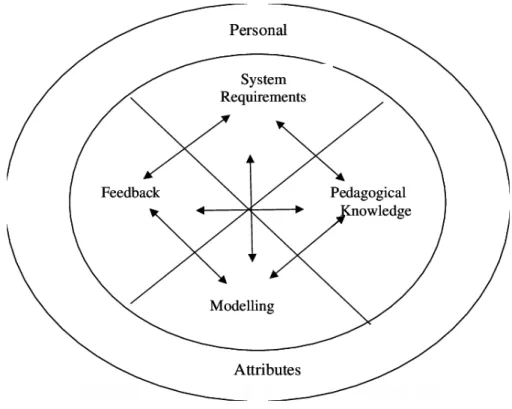
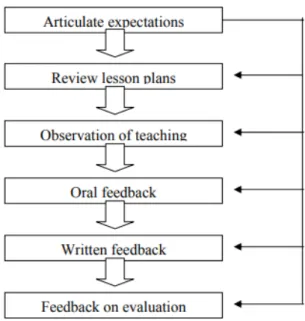
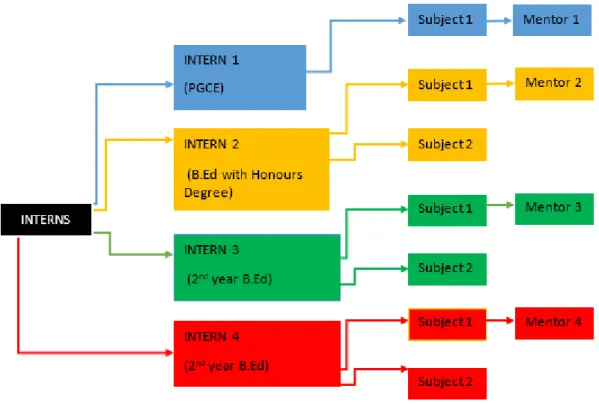
Figure 1: A five-factor model of mentoring for effective teaching . (Hudson, 2010, p. 32) 20 Figure 2: Step to follow when giving feedback (Hudson, 2004) 23 Figure 3: Table representing the selection of participants 29
Figure 4: Collage created by Mentor 1 46
Figure 5: Collage created by Intern 1 47
Figure 6: Collage created by Mentor 2 48
Figure 7: Collage created by Intern 2 49
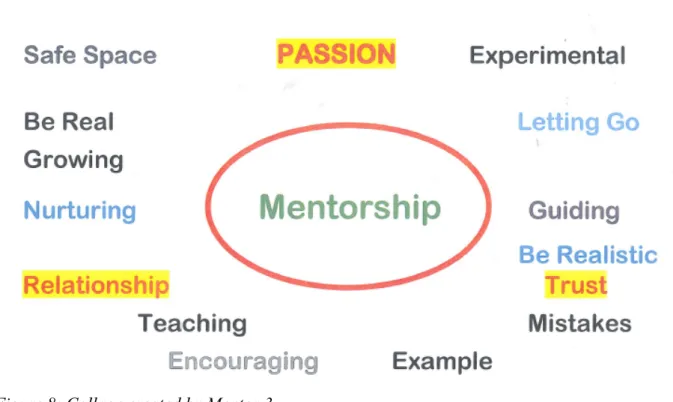
Figure 8: Collage created by Mentor 3 50
Figure 9: Collage created by Intern 3 51
Figure 10: Collage created by Mentor 4 52
Figure 11: Collage Created by Intern 4 53
Figure 12: Model created to show Relationship 1 59
Figure 13: Model created to show Relationship 2 60
Figure 14: Model created to show Relationship 3 60
Figure 15: Model created to show Relationship 4 61
Figure 16: Comparison of Hudson's five-factor model and the adjusted model. 62
7
8
C HAPTER 1
1.1 Introduction
In this study, mentoring practices were explored through the relationship, which developed, between a mentor and her intern in an internship programme in a private secondary school.
The interns worked alongside their mentors for the year while they completed their teaching degree through distance education. They were exposed to real life teaching experiences and were able to model their teaching on the practices of an experienced mentor who was there to guide and lead during the internship. This concept is not new and the practice of mentoring supported by the quote, “If teaching involves thinking on your feet and responding in appropriate ways to an ever changing situation, then one could learn to think like a teacher by working alongside an experienced practitioner who can articulate her internal dialogue with the situation” (Feiman-Nemser, 1998, p. 69). In this study, the experienced practitioner is the mentor and the person working alongside the mentor is referred to as the intern. A relationship between the two develops as they work with each other, observing and learning how to think and be like a teacher in the situation, which presents itself. A conversation evolves as the relationship develops and certain practices are adopted.
In this chapter, the focus and purpose of the study is outlined, a rationale explaining my interest in the topic of mentoring is explained. Background to the study, a summary of the literature that is reviewed in Chapter 2 is given, the theoretical framework is briefly explained and finally a brief motivation for the choice of methodology is presented.
1.2 Focus and Purpose of the study
The focus of this study was the mentoring relationship that existed between experienced teachers and student teacher interns who are part of an internship programme in a private secondary school. Interns in this context are young women who are pursuing a career in teaching. Either they are completing a Postgraduate Certificate in Education (PGCE) or they are enrolled for a Bachelor Degree in Education (B.Ed) through distance education. The aim of the internship programme is to form a partnership between the school and the intern and to provide an experience of the ethos of a school and opportunities to understand the day-to-day
1
running of the school day, while the intern has the opportunity to complete her studies and gain valuable work experience within the community.
The purpose of this study was to explore the mentoring practices, which take place in a relationship between a mentor and her intern. The intention of the study was to provide an understanding of the practices used by mentors so that the internship programme could be improved and training could be provided, were necessary, through the Professional Development of staff.
1.3 Rationale
The rationale for this study was based on the fact that an internship programme was introduced a few years ago but there was no formal training of mentors and there was no outline of mentor and intern requirements. As I am co-ordinating the internship programme I felt that there was a need to explore the mentor’s understandings of their mentoring role and I was interested to discover what the mentor’s and intern’s experiences were.
The internship programme, at the case study school, was introduced because there was a need to expand the role of the boarder mistress. A boarder mistress in this context was a young single woman who was happy to perform evening duties in the boarding establishment. In return, they receive board, lodging and a small stipend. She was employed during the day outside the school environment and was only required to be on duty outside of her normal working hours. Over the last two years, there has been a move to incorporate these young women into the academic part of the school so that they were able to develop meaningful relationships with the boarders and other staff members. By being part of the wider school community, they would have a better understanding of the mission and be more involved with the day-to-day activities. This was difficult to implement with the current boarder mistress model, hence the introduction of the internship programme. An intern, in this context, was a young woman who wishes to pursue a career in teaching. She either was completing a Postgraduate Certificate in Education (PGCE), Honours or Master’s degree or was enrolled for a Bachelor Degree in Education (B.Ed) through distance education. There were four interns at the school.
2
Interns were employed for a year and are integrated into the school environment. They were exposed to a variety of teaching styles, strategies and learning and this should better equip them to be teachers with influence and passion in their classrooms. In an inquiry into South African new teacher’s perceptions of their university education conducted by Gravett, Henning and Eiselen, in Gauteng, 268 questionnaires were completed and 38 interviews with school principals, teachers, HOSs and district officials were undertaken. The findings revealed that only 59% of the novice teachers reported that they were paired with an experienced mentor in their first year of teaching (Gravett, Henning, & Eiselen, 2011). This statistic alone motivates for the need for an internship programme and a better understanding of the practices, which take place within the relationship between mentor and intern.
The authors of the study also conclude that there was concern about the preparation of teachers for the realities of the classroom and that it was unfair to expect universities to be solely responsible for the preparation of new teachers (Gravett, Henning, & Eiselen, 2011).
The school community and therefore an internship programme, is the optimal setting for authentic, non-trivial and real life challenges, which are unique to South African schools.
Lastly, the findings of the study, conducted in the Gauteng Province, revealed that novice teachers were confident when it came to content knowledge and some aspects of pedagogy but their preparation for the social world of teaching and for its logistics is uneven. This was referred to by Hudson (2010) in his five-factor model of mentoring, as system requirements.
This study will therefore provide a good opportunity to explore the mentoring practices and to ascertain if any of the concerns expressed by Gravett, Henning & Eiselen are addressed.
The “theory-to-practice” divide should not be as great since the student teachers are part of an internship programme.
From a personal perspective, I am the co-ordinator of the internship programme and drew up the policy document, which was presented to the School Board. I therefore have a personal interest in the outcome of this study. I have selected the school that I work in for the case study because there has been resistance and negativity expressed from some of the teachers who have been allocated the role of mentor. This study explores the mentoring practices, which take place and the mentors should be able to use the results as a learning tool. Billet et al (cited in Flick, 2010, p. 421) states that “teacher learning is the reflection and action
3
through which teachers develop skills and acquire knowledge of experience.” Through the reflection and action taken due to the findings from this research, changes could be made to improve the internship programme currently running at my school and a policy framework can be used to facilitate learning and training for both mentors and interns. The mentor’s understandings of mentoring were highlighted so that the role of mentor was a positive learning experience rather than an additional task added to an already heavy load.
1.4 Background Information
The case study was situated in a private girl’s high school. The school encourages an education that is useful in all aspects of a girl’s future and as a result, the girls are prepared for the challenges of the real world. The teachers are employed as subject specialists and are not expected to participate in extracurricular activities. Each staff member is a member of a grade cluster and they are responsible for the grade activities. There is a strong academic ethos and the National Senior Certificate (NSC) results and sporting accolades are impressive. Against this backdrop there is a high expectation placed on teachers to perform at their best and to keep abreast with new advancements in education. Teachers have the opportunity to go to national conferences and to network with experts in their subject area.
They are also equipped with state of the art classrooms and technology to enhance their teaching. This environment presents many opportunities for an intern to gain experience from experienced teachers and there is an expectation that all teachers are involved in mentoring of colleagues or interns.
1.5 Research Questions
The following research questions directed the study:
1.5.1 What were mentor’s understandings of her mentoring role?
1.5.2 What were mentor’s and intern’s experiences of the practice of mentoring?
1.5.3 In what ways does Hudson’s five-factor mentoring model describe the mentor relationship?
1.6 Brief Review of Related Literature and conceptual framework
The literature that was relevant to the focus of the study, the nature of the mentoring relationship, which took place through the mentoring of students who are participating in an
4
internship programme at a secondary school, was explored. The key concepts, which are described further in Chapter 2 are initial teacher education, teacher learning, teacher development, conceptualisation of mentoring, mentoring in South Africa, characteristics of the mentor, the mentoring relationship, benefits to the mentor, role of the mentor and the conceptual framework.
The purpose of this study was to explore the mentoring practices, which took place in a relationship between a mentor and her intern. To achieve this a conceptual framework was used which functions as an epistemological guide, which aided the interpretation of data presented in this study. A five-factor model of mentoring which focuses on classroom practices and mentoring for effective teaching was identified by Hudson (2013). The mentoring attributes and practices linked to each factor were justified statistically with empirical evidence in other studies (Hudson, 2007, Hudson, Skamp, & Brooks, 2005).
Hudson’s five-factor framework provided a structure for me to analyse the practices, which were evident in a mentor/intern relationship during the internship programme. I used it to organise the research design and facilitate the questions used for the interviews. The five factors were used to analyse the responses from both the mentors and interns to explore the mentoring practices, which exist.
1.7 Methodology
The interpretivist paradigm was appropriate as interpretivists believe that there is not only one single truth but rather there are a number of ways to understand the social world (Cohen, Manion, & Morrison, 2007). The interpretivist paradigm was used in this study because the findings were explained through the mentor’s and intern’s views, which were gathered through semi-structured interviews, conducted in their social context, namely the school. The purpose was to understand how the participants made meaning of the phenomena through the participant’s eyes, in their social context and patterns of meaning were developed from the collection of data (Maree, 2007). Qualitative methods were underpinned by the interpretivist paradigm. A case study was used for this research because it is an effective way of providing meaningful data and exploring experiences of participants (Flick, 2010). Holistic understanding within a context through conversations with participants was undertaken (Cohen, Manion, & Morrison, 2007) in the form of semi-structured interviews and
5
participants were invited to complete a collage, which was a reflection of their mentoring experience. The study used four data generation methods, semi-structured interviews, collages, focus group discussion and a written reflection. The data collection process was conducted in three phases:
● Phase 1: Initial audio-recorded semi-structured interviews with both mentors and interns.
● Phase 2: Second audio-recorded semi structured interview with the mentors only, using Hudson’s five-factor model of mentoring for teaching as a guide for the question structure.
● Phase 3: Participants were invited to compile an individual collage which reflected their mentoring experience. The mentors participated in a focus group discussion in order to share their thoughts and reflections with the other mentors. The interns were asked to write a reflection of their experience.
Borg and Gall (cited in Ponte & Twomey, 2014) suggest richer data is collected when a smaller sample size is used. In order to understand the relationship experienced by mentors a relatively small sample set of four mentors and four interns was selected for this study. This provided a “deep understanding within the field of mentoring, rather than providing generalizable outcomes” (Ponte & Twomey, 2014, p. 24).
Triangulation was used to strengthen the rigor and trustworthiness of the data analysis by member checking, in which the codes, domains and interpretations were shared so that accuracy could be verified (Shoaib, 2016). Member checking is when transcribed interview data are returned to the participant to verify. Triangulation of data methods were used as two methods of data collection namely, interviews and collages were undertaken.
1.8 Overview of the Dissertation
There are five chapters in this dissertation. Each chapter is briefly outlined below.
Chapter One serves as an introduction to the study. The focus and purpose are stated together with the rationale. Some background information is given and the research questions are clearly stated. There is a brief summary of the literature review; the conceptual framework and methodological approach are presented. The chapter concludes with an overview of the chapters included in the dissertation.
6
Chapter Two outlines the literature, which has been reviewed. Five key concepts are described, namely teacher development with a focus on teacher learning, conceptualisation of mentoring, the role of mentor, effective mentoring relationships and finally the benefits of the mentor. The conceptual framework of Hudson’s five-factor model of mentoring for effective teaching (2013) is defined. Hudson’s five-factor framework provides a structure to analyse the relationship, which develops during the internship programme. It also helps organise the research design and facilitates the questions used for the interviews. The five factors are used to analyse the responses from both the mentors and interns to explore the mentoring relationship, which exists.
Chapter Three identifies the research design and methodology used in the study. The interpretative paradigm and qualitative approach were used together with a case study methodology. Semi structured interviews, collages were used as the data collection methods and purposive sampling was used. The methods for data analysis are explored to ensure trustworthiness. Ethical considerations are also explained.
Chapter Four examines the findings of the study. Themes are explored to find out what the mentor’s understanding of her mentoring role is. The relationship between the intern and her mentor is outlined using the five-factor model for mentoring and effective teaching and lastly the findings will be examined to see how the mentor’s and intern’s reflected on the mentoring process.
Chapter Five presents a discussion of the data in which the three research questions are answered. Recommendations and concerns following from the study are made followed by concluding comments.
1.9 Chapter Summary
The introduction chapter has given a brief overview of this dissertation in terms of the background, purpose, rationale of the study and the structure of the dissertation. Teaching requires you to respond appropriately to particular situations, this could be learned effectively by working with and being mentored effectively (Feiman-Nemser, 1998), this statement supports the value of mentoring and therefore the significance for research to be done in this
7
area. I have also discussed the concept that mentoring is mutually beneficial to both the intern and the mentor (Huling, 2001) and that through mentoring certain practices are adopted.
8
C HAPTER 2 L ITERATURE R EVIEW
2.1 Introduction
The purpose of this literature review was to explore the literature that is relevant to the focus of the study, namely, the nature of the mentoring relationship, which takes place through the mentoring of interns who are participating in an internship programme at a private secondary school. The literature was divided into seven themes, initial teacher education, teacher learning, teacher development, conceptualisation of mentoring, the role of mentor, effective mentoring relationships and finally the benefits for the mentor. This was followed by an exploration of the theoretical framework that informs this study. This provided a lens through which the research data collection and analysis was viewed, enabling an exploration of the mentor practices which took place during a relationship which developed between a mentor and an intern within a private South African school context. The chapter concludes with a summary, which outlines the purpose of the literature review and what has been covered in Chapter 2.
2.2 Initial Teacher Education
Initial teacher training is the starting point for the entry into the teaching profession. In a review of literature done by Darling Hammond et al. (2005) on Teacher Education and Teacher Learning (TELT), they suggested that there was no single best way to organise initial teacher experiences but there was a growing number of considerations when developing programs and strategies. These considerations suggest that teacher education must model practices; powerful learning experiences must be constructed; progress, understanding and practice must be supported; student’s progress and understanding must be carefully assessed and there should be a strong link between theory and practice (p. 441). In a successful mentoring relationship during an Internship programme, many of these considerations should be evident.
To ensure that teacher education programmes are successful Morrow (2007, p. 84) proposes four primary goals. These goals may be taught at different stages and different contexts.
Firstly, a well-supported conception of teaching needs to be developed which is grounded in 9
systemic learning. Secondly, subject knowledge should be made accessible through a good understanding of what is required. Thirdly, there needs to be an awareness of the impact that social, organisational and institutional context can have on teaching practices and lastly, course design needs to ensure that effective learning of relevant content can take place.
2.2.1 Teaching education policy in South Africa
In South Africa students may follow two paths to become professionally qualified: a Bachelor of Education degree (B.Ed.) over four years or a Bachelor’s degree which is followed by a one year Postgraduate Certificate in Education (PGCE). The Minimum Requirements for Teacher Education Qualifications (MRTEQ) (DHET, 2018) has given guidelines for the practice teaching period. For the PGCE qualification, 6 to 8 weeks supervised school based practice is required and for a B.Ed degree 20 to 32 weeks over four years is recommended with a maximum of 12 weeks per year with at least three weeks completed consecutively. The school based practice or work integrated learning (WIL) needs to take place in schools which are purposefully selected to ensure that students are provided with the required levels of support. Schools receive no funding for accommodating students or for mentoring the student teachers There are no policy prescriptions such as contracts or training on how universities and schools should collaborate (Robinson, 2016). Students
“move from observation and other forms of learning from practice to supported teaching to independent teaching (learning in practice)” (Department of Higher Education and Training , 2018, p. 25).
The Minimum Requirements for Teacher Education Qualifications (2018, p. 10) in South Africa, currently focuses on the different types of knowledge practices that form the basis for teachers’ practice while encouraging the idea of integrated and applied knowledge. Five types of learning related to acquisition, integration and application of knowledge are identified.
These are disciplinary learning, pedagogical learning, practical learning, fundamental learning and situational learning. However, many current student teachers were not exposed to these types of learning during their school career. Their learning tended to be focused on content and recall rather than actively processing information for critical thinking.
10
2.2.2 Research on Teaching Practice Experiences
There have been a number of studies on student experiences of teaching practices in South Africa. A study conducted in 2010 (du Plessis, Marais, Weeks, & Van Schalkwyk, 2010) where the views of 16 Unisa students were considered on teaching practice, concluded that a more systemic approach to learning should be adopted as many of the students were not clear about what was expected of them. They also found that it was important to understand the school context and identify what the institution had to offer the student teachers before the placements for practical teaching took place.
It is interesting to note that research done eleven years prior to 2009, had commented on similar problems. Rhodes and Bellamy (cited in Robinson, 1999) identify a number of reasons why reform in teacher practice experience is needed. They point out that school-based experiences are unsupervised and inadequate; students enrolled in the teacher education programmes are not motivated or passionate. There is little contact and lack of communication between the schools and the university faculty and there seems to be a perception that teacher education has a low status. In July 2009, a Teacher Development Summit was held in South Africa to address the challenges experienced in teacher education and development. The Summit was successful in bringing together many stakeholders from across the teaching profession, however, the challenges of policy implementation still remained (Robinson, 2016). Finally, teacher education faculties are seen to be idealistic and detached from the realities of schools in South Africa.
When describing the teacher learning which takes place for an intern it is necessary to acknowledge the influence of the learning community (Carpenter & Blance, 2007). In this learning community, they describe learning taking place in many settings. There is classroom learning, theoretical learning and learning from real life experiences. A three-way partnership should be formed between the intern, the mentor and the University (Carpenter & Blance, 2007). Calderhead and Shorrock (1997), define teacher learning as a multi-dimensional process of multi-directional movements. They emphasise that various skills are learnt in different spaces and through multiple processes. They state that the fundamental question is not “how student teachers learn” but “how do particular student teachers learn x in context y”
(p. 193). Calderhead and Shorrock (1997) would then agree that teacher learning is not linear
11
in process but very complex, taking into account the content, the context and the specific disposition of the learner. Wells (cited in Kelly, 2006, p. 513) would agree with this as he defines learning as “the transformation that continuously takes place in an individual’s identity and ways of participating through his/her engagement in particular instances of social activities with others.”
In a study, conducted by Robinson (1999), pre-service teachers from the University of the Western Cape were interviewed, the students were from historically disadvantaged groups, some of the student teachers commented that many of the schools they visited during their teaching experience “were very structured, like their own high school” (Robinson, 1999, p.
192). These students adjusted easily and “had very little problem slotting in”, however, this was not the case for all student teachers as they were expected to “learn to teach” in a “vastly different context from the one in which they were schooled” (Robinson, 1999, p. 192). In a study by Rusznyak (2009), University tutors found that student teachers they observed often had ideas about teaching that either reflected or reacted against the type of schooling they experienced. Good mentoring of these student teachers could change their beliefs about what is good teaching practice.
The importance of mentoring was an aspect that was identified by du Plessis, Marais, Weeks and Van Schalkwyk. The findings suggested that there needed to be clarity around what was expected of the mentors. Collaboration, discussions and training needed to be completed and mentors needed to understand that they “had an obligation to provide student teachers with emotional support and opportunities to develop their own identities as teachers” (du Plessis, Marais, Weeks, & Van Schalkwyk, 2010, p. 337). This will be elaborated on in the next section.
2.3 Conceptualisation of Mentoring
The traditional view of mentoring can be defined as a “one-on-one relationship” (Kennedy, 2005, p. 242) between a novice teacher and a more experienced, competent colleague.
According to Shank (2005) the mentoring relationship has shifted more recently and mentoring has been defined as a two way reciprocal flow of ideas and support from an experienced teacher to a novice teacher. Hobson (2009) adds to this definition by stating that
12
mentoring is primarily designed to develop and assist mentees and to facilitate in the induction process into the culture of the profession (teaching) and the local context (the school). Similarly, Long (2009) through the exploration of surrounding mentor programmes, in Australia, asserts that professional learning which includes mentoring should be part of a whole school approach which focuses on the school as a collaboration of learners. The mentoring programme becomes a catalyst for change and renewal within the school community rather than a separate programme for novice teachers. Mentors are encouraged to be problem solvers, innovators and leaders within their own communities, creating creative, autonomous, collegial practitioners who are willing to participate in critical dialogue to improve pedagogy and student learning outcomes.
Finally, a review of literature indicates that there are a number of reasons why mentorship programmes are introduced in schools. The main reasons given are to increase the supply of teachers; to encourage teachers to remain in the profession and mentoring can be used as an opportunity for growth and development for both the mentee and mentor (Hobson, Ashby, Malderez, & Tomlinson, 2009). In South African schools, the implementation of mentorship models has been inconsistent. While the government’s Integrated Strategic Planning Framework for Teacher Education and Development in South Africa 2011-2025 (Department of Education, 2011) emphasises mentoring in all stages of teacher education, full-scale implementation is not yet in place.
2.4 Mentoring in South Africa
“In South Africa, the supply of qualified and competent teachers remains a challenge”
(Mukeredzi, Mthiyane, & Bertram, 2015, p. 1). They also “indicate that mentoring is the single most powerful process in promoting competence and quality amongst teachers in South African schools” (Mukeredzi, Mthiyane, & Bertram, 2015, p. 2). Student teachers and novice teachers should be developed through the effective use of mentoring by South African Universities or by more experienced school based teachers. Unfortunately, this is not the case in all schools.
As teachers grow in experience in their careers, they would move from novice to master teacher as part of their teacher development. One of the roles of a teacher as outlined in the
13
Minimum Requirements for Teacher Education Qualifications (Department of Higher Education and Training , 2018) is that all teachers have a responsibility to mentor in their schools. The Integrated Quality Management System (Department of Education, 2011) also mandates that all teachers should provide pastoral care and mentoring as part of on-going professional development initiatives. This would form part of the Continuing Professional Development (CPD) learning programmes, which provide teachers with the opportunities to expand and develop themselves.
South Africa is faced with a challenge of rectifying inequalities created from the past education system where a substantial number of teachers were trained in underdeveloped teacher training colleges. Although the education system has recently undergone fundamental and multi-faceted changes, the opportunity for all student teachers to observe experienced teachers modelling conceptually deep, enquiry-based teaching is not available. In many cases, teachers teach as they were taught and unless they have been mentored through professional development programmes they will pass on these practices to their mentees.
Formalized mentoring programs are not common, informal unstructured mentoring takes place but this is not sustained. Many schools offer student placement opportunities for B.Ed or PGCE students; this is run for a ten-week cycle once a year and relies on the partnership with university tutors. More recently, schools offer learnerships or internship programmes. In a study completed by Henning and Gravett for the Gauteng Department of Education, 38 interviews were conducted with school principals, teachers, HODs and district officials. They concluded that “the expectation that universities should prepare teachers fully for practice is not feasible, since the school as a place of work is the optimal setting for getting to know, in an authentic and non-trivialising way, the hardships and challenges of what constitutes teaching in a country like South Africa” (2012, p. i).
Policy makers are attempting to formalise mentoring support programmes, which regulate mentoring in schools. The Norms and Standards for Educators specified that the role of a competent teacher should entail mentoring in schools (Department of Higher Education and Training , 2018). Mentoring programmes, which attempt to strengthen the relationship between universities and schools, have been established. An example of this is explored by Mawoyo and Robinson (2005), three schools were involved in the study, they were selected
14
because they were participating in a learnership programme with the Faculty of Education at the Cape Technikon. In particular, the study focused on the way the mentor and the student teacher managed and organised the process of learning to teach. They concluded,
“learnerships add value to student teachers and that learning has been shown to be more complex in practice than might have been envisaged. Learnerships are not generic in their implementation. Whilst at policy level there are certain expectations imposed on the mentor and the student teacher, in practice what happens can be very context-dependent and can actually constrain the student teacher's learning” (p. 114). Their findings revealed that only one out of the six mentors had received formal training and the mentors were relying on their own instincts and teaching experience, there were no clear guidelines given. The data collected during the study revealed that mentors put emphasis on different aspects of classroom teaching and therefore their assessment of the student teachers used different criteria.
The Department of Basic Education and the Department of Higher Education and Training have outlined plans to strengthen the partnerships by creating “teaching laboratories”
(Department of Education, 2011). It is proposed that Teaching Schools and Professional Practice Schools are developed as sites where students are placed for the practical components of their studies. Student teachers will engage in learning-from-practice, by observing best practice, participate in microteaching exercises and subject methodology courses (Department of Education, 2011). The document states mentors in Teaching Schools will be developed to be able to teach methodology courses within their areas of specialisation. Teachers at Professional Practice Schools will mentor initial teachers and provide them with appropriate support and guidance. While the Department of Education in South Africa sees mentors as playing a significant role in education, this is not necessarily the case in practice.
In a study conducted by Mukeredzi, Mthiyane and Bertram (2015), 20 students who had recently completed their PGCE, part-time, at the University of KwaZulu-Natal were interviewed. The findings of a study showed that there were three types of mentoring experiences highlighted by students. They identified subject-specific mentoring, which provided feedback related to the teaching of a particular subject, general pedagogical
15
mentoring which involved feedback on generic teaching strategies and classroom management and finally compliance mentoring which meant that the mentor simply completed documentation provided by the institution where the student is registered. The participants received different levels of mentoring, some received mentoring in only one area while others experienced a little of all the identified areas. This suggests a need for comprehensive mentor training (Mukeredzi, Mthiyane, & Bertram, 2015), however, Grossman and Davies (2012) argue that mentoring cannot be provided with a one-size fits all approach and recommend that mentoring should be a good fit for each mentee taking into account their backgrounds, needs and school context.
2.5 Characteristics of the Mentor
According to Mukeredzi, Mthiyane and Bertram (2015) a good relationship needs to be fostered between a mentor and mentee. This relationship needs to be based on trust and goodwill. Mentors need to display commitment, efficiency, responsibility and enthusiasm.
This leads to a description that the role of a mentor is multi-faceted. Guide, coach, supervisor, counsellor, role model, nurturer, advisor, critic and supporter are words that are used when describing this relationship (Mukeredzi, Mthiyane, & Bertram, 2015). This echoes what Long (2009) acknowledges when she states that to become a mentor requires understanding and commitment, skill and energy. She believes a mentor is responsible for structuring and managing a mentor programme and facilitating activities that encourage understanding of pedagogy. Reflection on practices should be established together with a relationship built on trust and respect. Tilley (2002) identifies certain qualities that he believes a mentor should have in order to be effective. Firstly, good interpersonal skills and the ability to listen attentively; be non-judgemental when dealing with differences of opinion; when asking questions it is better to use open ended questions and lastly, be flexible and keep the focus on the mentee.
The findings of a study, which interviewed three teachers form the KwaDukuza area (Ilembe District) and focused on the experiences of master teachers in their mentorship role, conducted by Pather (2010) revealed that master teacher mentors embraced the characteristics of collaboration, collegiality and critical dialogue in their mentoring relationship with their mentees. Long (2009) refers to the mentor as a supervisor, where progress and performance
16
assessment are undertaken. It is suggested the relationship between the mentor and mentee could change depending on how this role is handled. Hobson (2009) maintains that “the restricted range of approaches employed by some mentors serve to restrict their mentees’
learning and development in a variety of ways” (p. 211). In contrast to this Ponte and Twomey (2014) suggests that if the role of assessor or evaluator is acknowledged as an area of conflict it can be resolved. In their study, mentors were teachers who have at least three years’ experience and are committed to the programme for two years. They mentored students who were enrolled in a two-year site-based university teacher preparation programme in Hawaii. Ponte and Twomey (2014) believe that assessment and evaluation are inter-related (Watson 1994 cited Ponte & Twomey, 2014) and are central to the role of mentor. Tension can exist but “areas of conflict were often areas of growth for all involved”
(p. 24) In one situation to resolve the conflict the final mark was calculated as a combination of self, peer, mentor, principal and field supervisor assessments.
2.6 Mentoring relationships
There are a number of relationships formed through the mentoring process. The relationship with the mentee, the mentor, the school context and the university are examples of these. In Hobson’s (2009) report, on international literature available on mentoring beginner teachers, he states that mentoring should be fit for purpose and should consider individual learning styles together with strategies, which support learning and development. The objectives of the mentoring relationship need to be established and agreed upon and should be reviewed and modified if necessary. The literature suggests that if observations of lessons are conducted in a sensitive, non-threatening way where specific aspects have been identified, meaningful, constructive discussion can take place, which will lead to learning and development. There are differing opinions about the pairing of mentors and mentees, some literature suggest that there should be shared pedagogical beliefs, while others support the idea that different beliefs and styles allow both the mentor and mentee the opportunity to learn from each other (Hobson, Ashby, Malderez, & Tomlinson, 2009).
In order for a mentor to be effective, they need to draw on personal and interpersonal skills. A relationship build on trust needs to be maintained with the mentee, effective communication
17
is emphasised and professional and emotional support are valued (Moir, 2009; Moir et al., 2009; Udelhofen & Larson, 2002; Danin and Bacon, 1999 cited in Bird & Hudson, 2015).
In a study, conducted by Kilburg (2007, cited in Bird & Hudson, 2015) 149 mentoring teams participated and Kilburg found that those mentees who did not receive emotional support from their mentors showed signs of anxiety, insecurity and a lack of confidence. Glenn (2006) describes the mentoring relationship as “give and take,” where collaboration exists and there is mutual interest personally and professionally. The two-way relationship is consistent with Parker Palmer who describes the relationship as follows:
Mentors and mentees are partners in the dance of spiralling generations, in which the old empower the young with their experience and the young empower the old with new life, reweaving the fabric of the human community as they touch and turn (Palmer, 1998, p. 25).
Hobson (2009) outlines five areas where the effect of the relationship is not fully known because there is limited evidence. Firstly, the cost effectiveness of the mentoring process compared to other methods of support is important to acknowledge as this affects the school and university. Secondly, the mentoring relationship is dependent on the willingness of the mentee to be mentored. Thirdly, the impact of mentoring on the learners within the school is largely unreported. Fourthly, the impact of mentoring on the retention of expert teachers in the profession is unclear and finally, the effectiveness of training received by mentors is unknown. This study, which will explore the relationship, which develops, between an intern and a mentor will shed some light on the limitations Hobson has highlighted. In particular, the willingness of the mentee to be mentored will be explored and the need for mentor training will be examined.
2.7 Benefits for the Mentor
Recognising that mentors also gain benefit from mentorship is an idea that has been around for many years. In a study conducted by Hawk in 1986 (cited in Ponte & Twomey, 2014), 178 teachers were asked about their experiences as mentors and 66% responded ‘definitely’ when asked if they achieved positive professional growth through participation in a mentorship programme.
18
The mentor relationship is “dynamic and reciprocal” (Shank, 2005, p. 74) and there are a number of factors which influence the mentor experience. Maphosa, Shumba and Shumba (cited in Mukeredzi, Mthiyane, & Bertram, 2015) commented that the role of a mentor is multi-faceted and could include roles as guide, supervisor, counsellor, coach, adviser and supporter. Several studies have been undertaken to document the benefits on mentoring for the student teacher (Darling-Hammond, 2003; Feiman-Nemser, 1996; Greene, 1997; Manke, 1998; Rowley, 1999). According to Huling (2001) the benefits a mentor receives from mentoring may be equal or greater to those the novice teacher experiences. The concept of mentoring being mutually beneficial is one of the aspects that I am exploring through the focus on the mentoring relationship, which develops during the internship programme.
Mentoring benefits according to Huling and Resta (cited in Ponte & Twomey, 2014) have been documented in the following areas: professional competency, reflective practice, renewal, elevated sense of self, appreciation of collegial interaction and leadership skills. The research indicates that teachers improve through reflective questioning and cognitive coaching as they build a relationship with the mentee. There is a sense of renewal as the mentors listen to new ideas and strategies, which the mentees share with them; this may also prompt them to reflect on their own practice. The mentor embraces the relationship and the mentee begins to develop an elevated sense of self, as their ideas, teaching strategies and learning styles are validated by the mentee.
In a similar vein, Hobson (2009) contends that studies completed by Abell et al (1995) and Simpson et al (2007) cites mentors referring to gaining “new ideas” and “new perspectives”.
They also reported that learning new teaching styles and strategies improved their use of technology in the classroom. Mentors become self-reflective, their communication skills improved, they were more aware of the mentees needs and were reminded that they too were a novice teacher. They commented that they felt reassured when their ideas were embraced and they felt less isolated and enjoyed the collaborative relationship, which developed.
19
2.8 Professional Development Benefits of Mentoring
In the South African context two imperatives have been identified by Meyer and Abel (2015).
Firstly, there is a need to improve pedagogical content knowledge (PCK) and secondly there is a warning that once-off training without participation in a professional learning community (PLC) has limited impact on teacher learning. From a literature review, conducted by Meyer and Abel (2015) four insights and ideas were identified for continuous teacher development in South Africa. Firstly, teacher training and development are defined as complex,
contextually situated processes. Secondly, course-based training is ineffective if there is no follow up support in the form of coaching and mentoring. Thirdly, peer coaching has been proven a valuable form of support and lastly learner progression and promotion should not be the focus when considering the role of assessment but rather the teachers’ planning for
assessment should be critical.
2.9 Role of the Mentor
The mentoring roles may differ depending on the school and the mentor. Some mentors may emphasise different aspects of classroom management or teaching techniques. This could be seen as a good thing and allow professional independence, which is usually valued by mentors, however, it may also cause tension in the relationship. Feiman-Nemser (cited in Bullough, 2005) state that for mentoring to be beneficial certain criteria needs to be met and that mentoring must be intentional. This would indicate that a clear understanding of the role of the mentor would be advised for mentoring to be beneficial.
From a review of literature, the following points have been identified as helpful suggestions a mentor could note:
● There must be a high level of commitment to the responsibilities of the role (Bullough, 2005).
● The expectations of the programme need to be clear and understood.
● A strong and well-grounded concept of teaching is needed (Morrow, 2007).
● Create a balance between sufficient opportunities and overloading responsibilities.
● Ensure that content-specific or pedagogical content knowledge is discussed (Heeralal, 2014).
20
● Foster a relationship that is both supervisory and developmental.
● Provide the intern with both emotional and psychological support.
● Affirm the intern to build confidence, particularly when feedback is given.
● Meet on a regular basis and keep communication line open and relaxed.
● Allow interns to be part of the decisions and included in planning, work collaboratively.
● Observe lessons and ensure that feedback is constructive and developmental.
● Be a role model, provide support and direction.
● Help an intern learn their role as a teacher and establish their self-image or teaching style (Seriovanni and Starratt cited in Heeralal, 2014).
● Orientate the intern into the school culture to make them feel welcome and included.
When looking at the above list it could be suggested to sort the roles into areas of responsibility, Hudson’s (2010) five-factor model of mentoring for effective teaching, which has been used as the conceptual framework for this study, could to achieve this. This model is detailed in the next section.
2.10 Conceptual Framework
The purpose of this study is to explore the mentoring relationship that exists between a mentor and an intern. A mentor in this study is an experienced teacher. Mukeredzi, Mthiyane and Bertram (2015) support the notion that the mentor should offer constructive critique, appropriate coaching, inspire learning, show commitment, motivate and provide support. A mentee or intern is new to the profession and through the guidance of their mentor they should be able to develop personally and be able to integrate socially into the school environment. Management of teaching and learning and pedagogical knowledge should be improved through a relationship which develops between a mentor and her intern.
In order to describe this relationship, a conceptual framework will be used which functions as an epistemological guide to generate and interpret the data presented in this study. A five-factor model of mentoring for effective teaching has been identified by Hudson (2010) in the study which investigates a five-factor model of mentoring for effective teaching.
Evidence from the survey of 218 students teachers who had just completed their practical 21
teaching period, conducted by Bird and Hudson (2015) supports Hudson’s five mentoring framework that may be used as a benchmark for mentoring practices. The results indicated the five factors, namely, personal attributes, system requirements, pedagogical knowledge, modelling and feedback (Bird & Hudson, 2015). The figure below illustrates how the five factors fit together.
Figure 1: A five-factor model of mentoring for effective teaching (Hudson, 2010, p. 32).
Personal attributes are in a band around the outside of the other four factors because in order for a mentor to develop a relationship with an intern that was positive and supportive (Hudson, 2010) good listening skills, reflective discourse and a willingness to pursue an interns educational interests within the context of the classroom needed to be demonstrated.
The four factors in the centre of the circle have arrows pointing to each other, this indicated interaction between the factors and that they are not seen in isolation.
Hudson’s five-factor model of mentoring has been chosen for my research because it is a school-based mentoring model, with a focus on the development of new teachers and it is already a well-established and researched model. The five factors, namely, personal
22