FACTORS AFFECTING CAREGIVERS' PERCEPTIONS OF THE MODE OF TRANSPORT FOR SCHOOL GOING
CHILDREN IN RURAL AREAS: A CASE STUDY OF EMMAUSAREA
By
Thokozani Mbatha
Submitted in partial fulfilment of the requirements for the degree of Master of Arts in the Department of Sociology, Faculty of Humanities, Development and Social
Sciences, University of KwaZulu-Natal, Pietermaritzburg.
2005
Acknowledgments
Firstly, I would like to thank the National Department of Transport for financing my study through the Eastern Centre of Transport Development.
A special thanks to my supervisor, Ms Moya Bydawell for her advice, support and patience throughout my undertaking of this study.
Special thanks also to Mrs Darlene Holtz for her administration of finances required to conduct the study.
I would like to extend my appreciation also to the fieldworkers, Khanyisile Mkhize and Bonisiwe Hlongwane for their dedicating their time in the field, and also to all the respondents who took part in this study.
Special thanks to Miss Thokozani Nkomonde for her assistance and support.
Last but not least, I would like to thank my family for all the support they have given me over the years.
Table of Contents
Acknowledgements i
Abstract ii Chapter 1 2
Introduction 2 Objectives 2 Definition of key terms 3
Justification 5 Chapter 2 6
Literature Review 6 2.1 Accessibility and Mobility 6
2.2. Schooling in rural areas 12 2.3. Caregivers involvement in their children's education 15
2.4. Caregivers' views on children's mode of travelling 19
2.5. Study area 21
Chapter 3 23
Methodology 23 3.2. Sampling 25 3.3. Data analysis 27 3.4. Experiences in the field 27
Findings 29 4.1. Demographic Profile of Respondents 29
4.2. Socio-Economic characteristics of the respondents 30 4.3. Caregivers' experiences with the mode of travelling to school 35
4.4. Modes of Transportation 35 4.5. Profile of school going children 38 4.6. Parental participation in children's education 38
4.7. Children's experiences when travelling to schooling 42
4.8. Mode of travelling and schooling 50 4.9. Caregivers views' on the role of transport for school going children 53
Chapter 5 58
Discussion of Findings 58 5.1. Local modes of transportation 58
5.1.1. Children's experiences with traveling to school 60 5.1.2. Factors affecting the choice of the mode of transport 63 5.1.3. Parents and Teachers on children's education 64 5.1.4. Caregivers' position on children transport needs and safety 65
Conclusion 69
Appendices 76
A: Questionnaire 76 B: Area Map 86
Chapter 1
Introduction
It is one of the government's objectives to redress the inequalities that existed prior to the formation of the democratic state in South Africa. This is reflected in government national departments' policies, the National Department of Transport being one of them. Hence the vision of the National Department of Transport, as outlined in their policy, is to create transport infrastructure that is safe, reliable, effective and efficient to meet the needs of passenger customers (National Department of Transport Strategic Plan, 2002/2003). Yet, transport for learners in rural areas remain an overlooked issue in South Africa while the shortage of schools and classrooms is a well-recognized problem (Song, 2003).
It is argued that transport allows people to move more easily from one place another.
Transport enables people to reach social facilities like clinics, hospitals, work places and educational facilities much easier. Therefore without a fully developed transport infrastructure, people will find it difficult to access these facilities. Access to education is one priority by the South African government to ensure that children have access to education, regardless of their socio-economic background. The South African Department of Education aims to provide education of high quality for all learners; advance the democratic transformation of society and contribute to the eradication of poverty (South African Schools Act, 1996). The abovementioned policy objectives inform much of government's initiatives to remedy the inequalities of the past and to redistribute services to the previously disadvantaged. Transport can play a role in this regard. One cannot, however, presume that transport alone will ensure that children access schools easily in rural communities while overlooking other factors that also impact on how children experience education.
Objectives
> The objectives of the study were to investigate how caregivers in rural areas see the role and importance of transport in their children's education;
y To identify factors that determine caregivers' identification of possible modes of
Chapter 2
Literature Review
This section will be divided into different sub-sections dealing with literature on the following issues: the accessibility of major services in rural communities as well as issues affecting the mobility of rural people in order to access those services; issues that affect schooling in rural areas; the role of caregivers in a children's schooling as well as their views on the children's education and the mode of transport used by children to go to schools.
2.1 Accessibility and Mobility
Access to basic services is a major problem facing rural communities in South Africa.
Jordaan, (1997:02) defines the term 'accessibility' as referring to 'an ability of individuals or communities to afford access to opportunities that are connected by a transport network on which transport modes operate at certain levels of service'. Children who live together in a specific locality, for instance a village, would experience similar problems in terms of how they access educational facilities.
In their study conducted in various rural areas in the United States, Coleman, Thompson- Smith and Richards, (1999:01), observed that access to services is not a problem facing service providers and school districts, but it is a problem for parents and their children The inability of districts to provide services for parents and children in rural areas is a problem facing South Africa as well.
There are many obstacles that make service delivery in rural areas a difficult task. Coleman et al, (1999:01) maintain that terrain, climate, distance and funding are some of the major
remoteness of rural communities could also be a factor affecting service delivery in South Africa Another problem facing rural communities is inadequate transport infrastructure. It is said that access to transport is a fundamental issue that affects many aspects of our daily lives (Bucks CC-Economic Development, 2003). The South African government transport policy states that 'through transport, rural South Africans will be enabled to affordably and conveniently access markets, employment, economic activity, health care, welfare services, communication systems and retail services' (Moving South Africa, 2003). The government acknowledges the role transport can play in allowing people to access services. However, this vision is hindered by the lack of access roads to the main road networks in rural communities (ibid).
According to the Human Rights Watch (2004), lack of services also impacts on the availability of transport infrastructure in a given area. The document maintains that there is a connection between the availability of services and the improvement of transport infrastructure. Some rural communities do not have services, e.g. employment places, markets, retail services, which could facilitate the provision and upgrading of the transport infrastructure. Therefore this contributes to the shortage of the motorized modes of travelling operating in these areas. As a consequence, lack of services results in public transport not being available for rural school children to utilize as well (Human Rights Watch, 2004).
But the availability of services as a determinant in improving and upgrading the transport infrastructure will not alone result in rural people accessing these services, even if they are provided. For instance, Maunder, Davis, Bryceson, Howe, Mbara and Onweng, (2003) state that 'mobility of men, women, children and goods depends on the availability, affordability
useless if people can still not afford to utilize it. But what is more important is that the availability of transport infrastructure provides rural people with an opportunity to engage in different activities (Maunder et al, 2003). Transport can be an enabling factor for how and when people do certain activities e.g. looking for a job, transporting children to school, going to hospitals and so forth.
One of the problems facing transport planners is the operational cost of building and maintaining the transport infrastructure in rural areas (Doran, 1996; Roebuck and Burton, 2003). Transport infrastructure once built needs to be maintained so that people keep benefiting from it. Operational and maintenance costs can be minimized by finding other options in improving the rural transport infrastructure without these becoming a burden to the government. These methods require the full participation of local people in building and maintaining the roads, e.g. Zibambele Road Maintenance Project (Department of Transport, KZN). Doran, (1996:38) argues that labour intensive methods should be adopted instead of using expensive mechanized equipment and rural people could benefit by having income opportunities through working by constructing community roads.
In order to address the problem of mobility in rural communities, the government plans to create and improve the on-and-off the road transport infrastructure, for example low access bridges, footpaths and sidetracks (South Africa Year Book 2003/4). This is because most travel and transporting by rural people are done by along paths and tracks (Doran, 1996:38).
Improving and maintaining paths and roads by local people could also benefit children, as some have to travel along paths, which are not easily passable, thus exposing them to dangers.
Furthermore, trying to meet the rural communities' transport needs has prompted others to suggest the promotion of the non-motorized modes of transportation. Maganya (1997:02) suggests that 'even though in some countries (including South Africa) these non-motorized modes of transport are used, there has been little research aimed at improving the existence of these modes of travelling through deliberate and conscious programmes that encourage the use of these modes of transport'. Non-motorized modes of travelling can include animal drawn carts, bicycles, walking and rickshaws etc. Doran (1996:08) argues that the usage of these modes of transportation increases mobility. Moreover, former South African Transport Minister, Mr Abdulah Omar, also advocated the promotion of the usage of the non- motorized modes of transport (National Department of Transport Strategic Plan 2002/2003;
National Department of Transport Business Plan, 2002/2003).
According to Rama, (1999:65), transport planners have paid very little attention to walking.
This is significant as walking seems to be the dominant mode of travel for most school goers in rural areas. The reason being that walking as a mode of travelling, although requires physical energy, it is economically and universally accessible compared to other modes of travelling. Paul, (2002:60) however argues that even though walking is a safe and cheap mode of travelling, it can be subject to risks. In his study conducted in a Ugandan village, local people perceived risks associated with walking in a number of ways. These included accidental falling, injury from thorns and sharp objects, tripping over potholes and being bitten by snakes and insects (ibid). Walking, just like other modes of transportation, requires an improvement in infrastructure for it to be an efficient mode of travelling by rural people, particularly children. In addition, Turner,Apt, Grieco and Kwakye, (1998) argue that the relationship between walking and good health which exists in Western societies, does not
and girl children in rural communities cannot benefit from this mode of travelling, as they are primarily the ones who have to carry the loads while travelling long distances. The loads can be wood, water and other household's activities men rarely do.
Animal-drawn carts are another mode of travelling that has been proposed as an alternative in addressing the problem of mobility in rural areas. Mahapa, (2000:13) argues that carting has socio-economic benefits for the operator and the community and is the cheapest means of transporting goods in rural communities. Animal-drawn carts are seldom used to transport people, but mainly goods. Carts are cheaper to operate compared to the costs of operating motorized modes of transportation. Carting, as an alternative mode of travelling, has its operational problems. One of the problems is that it is the mode of transport that can often only operate seasonally. Mahapa, (2000:13) found that in the Northern Province most carters maintained that too much rain during the wet season, roads become impassable for animals and that creates dangers and carting therefore deteriorates. Carting, as a non-motorized mode of travelling, also requires an improvement in road infrastructure. Also this mode of travelling as it relies on animals for pulling, suffers during the dry winter months if animals do not have much to eat and therefore it cannot be relied upon during that time (ibid).
Bicycles have recently been advocated, in South Africa as means by which rural school children can benefit through their promotion and availability. Song, (2003.06) argues that bicycles could reduce the number of hours spent by children when travelling to schools therefore increasing their access to education and mobility. He further states that subsidising bicycles is ten times cheaper than subsidising school busses in South Africa (ibid). The promotion of bicycles as an alternative mode of transport is meant to minimise the cost of operating public transport for school going children in rural areas. By promoting bicycles as
an alternative mode of travelling, other family members benefit as the bicycles can be used after school, and as a result the whole household become mobile at the same time saving on other transport costs (Song (2003:09). However, gender differences within the household could influence how the household members use the bicycles.
The ownership and the usage of these modes of transport is an issue mat is often overlooked.
For instance, Doran, (1996:46) states mat 'those who have access to transport are entitled to use, whereas those controlling it determine who has access to if. In most cases, issues of power come into play in deciding who should or should not have access to a mode of transportation available in a household. Women tend to suffer the most as their affairs and mat of their children might be controlled by other household members; husbands, mothers- in-law and senior kin or groups outside the household (Ibid, 1996:46). Therefore, the need arises to ensure mat in promoting these non-motorized modes of transport, women and girl children's needs be taken into consideration. For instance, Turner, Apt, Grieco and Kwakye, (1998) argue that, "a fashion has begun within transport and development to promote non- motorised modes of transport' as an obvious good - a good which fits with environmental politics of Western societies - without due consideration being given to the need to move the rural transport burden of African women off their heads and away from their bodies."
((Mine: www, geocities. com/margaret_grieco/womenont/gen_tran.html)
Other problems relate to how women are expected to operate and use these modes of travelling. In his study conducted in Uganda, Iga, (2002:54) observed that African communities have different beliefs regarding how women have to sit while riding a bicycle or a motorcycle. Such beliefs prevent women and girl children from accessing these modes
modes of travelling, the community at large has its expectations and rules concerning how certain modes of travelling are used based on gender differences. Identifying these constraints is necessary as Turner et al (1998) argues that the social, cultural and economic organisation of a locality has consequences for its transport context and transport culture.
Such factors could have enormous effect regarding who has access to the abovementioned modes of travelling in some of the rural communities, with the larger segment of the population - particularly women and girl children - being denied access to these modes of travelling.
2.2. Schooling in rural areas
Access to education is a major problem facing children in most of the developing countries.
Wright (2001:15) estimated that there are approximately over 110 million school-age children in the world who are not attending school. He argues that this should be a matter of concern as it is a threat for a world that already has to cope with over 800 million illiterate adults (ibid). The majority of children who do not go to school are those from disadvantaged communities. In South Africa, there are an estimated 435,000 schooling age children in rural areas between the ages 7 and 15 years who are not attending school (Song, 2003:02). This despite the fact that the National Department of Education has put in place legislation that aims to provide quality education for learners that will enable them to realize their full potential so they can contribute and participate in developing the country (Department of Education, 1996).
A number of factors makes it difficult for government to improve schooling in rural areas as Song maintained, "Despite this prioritisation by the government, in many areas the state of education remains poor and the overall backlog in terms of provision of classrooms and
qualified teachers remains enormous, with an estimated 77, 000 teachers still un-or under- qualified and a total of 67, 000 additional classrooms required" (Song, 2003:01). Even if children do go to school, the quality of education they receive could not match up with the required standards set up by government. Lack of transport could influence the willingness by professional teachers to work in rural areas. In the context of India, distances and isolation from the centre or the nearest town are some of the barriers preventing qualified teachers applying for posts in rural areas (Miles, 2000). She further states that this is a predicament prevalent in all countries, not just India alone. As a result, children in rural communities do not receive the quality of education enjoyed by children in urban areas, as most qualified teachers prefer to work there (ibid).
Some children find it much easier to access education centres, while for others this is more difficult. For instance in most poor communities, learners may not be able to reach centres of learning because there are no transport facilities or the roads are not in good condition and this situation therefore violates their right to education (National Department of Education, 1997:12: Human Rights Watch, 2004). In her study conducted in Pietermaritzburg, Rama (1999:64) found that choice of the mode of travelling is related to race and locale. She found that walking and travelling by minibus taxi is more common among black school-goers in rural areas whereas travelling by private car is more common for white school-goers in urban areas (ibid). The reason for this may be as a result of higher private car ownership among White parents. Due to non-availability of public transport, in some places, bakkies have been adopted as means to transport school children. However, the KwaZulu Natal Department of Transport has indicated their intention to phase out the operation of bakkies as modes for transporting school children, as most of them are not roadworthy - therefore putting
Although race and locale determine the ownership and usage of these modes of travelling such as private cars, taxis or buses, other factors influencing the usage of these modes travelling cannot be ignored. Physiological differences, for instance, can determine the opportunities available to children and how they access facilities. Black children with physical disabilities are largely excluded from the education system because, among other reasons; the poor transport infrastructure in rural areas does not allow them easy access to the centres of learning (Department of Education, 1997:13; Integrated National Disability Strategy, 1997:32). These children are therefore excluded from enjoying the opportunities that education offers of which, according to Giddens (2001:492), education plays a function of infusing in people the values of the larger industrial society such as independence and participation in economic activities.
Household daily activities also influence how and when children access education. May, Woolard and Klasen, (2000) state that some children (girls particularly), especially those from poor households, are kept out of school to assist at home with household chores, such as collecting water and fire wood. Lack of transport makes it difficult for these children to carry out these activities easily as they often have to walk long distances while carrying the water or the wood on their heads. As a result, if the girls are expected to assume the roles of cooking, cleaning and child-care, this leaves them with no time for homework (May et al, 2000:33). Engaging in extensive household activities deprives the girl child access to education. In addition to this, there have also been reports of some girls not going to school because the remoteness of the area makes the young girls vulnerable to assault (Institute for Democracy in South Africa, 2004). Lack of transport to schools ultimately exacerbates this problem faced by young girls in rural areas in accessing education.
Poverty also plays a role in determining how children access education. Children in rural areas walk long distances sometimes with nothing in their stomachs (Wright, 2001). Hunger affects how children perform at school. It is difficult for children to learn if they are hungry, malnourished and have to walk long distances to school (Wright, 2001, May et al, 2000). As a result lateness, absenteeism, school dropouts increase. Many parents in rural communities, because of the abovementioned factors, may delay the time at which their children are supposed to enter school (Human Rights Watch, 2004).
Linked with poverty is the issue of affordability. In a study conducted by the Institute for Democracy in South Africa (2004) at eMsinga area in Northern KwaZulu Natal, children reported that "even if they did not have to pay for fees or buy uniforms, they would be unable to attend school for lack of transport/taxi fare, or because they would have to go to school on an empty stomach" (Institute for Democracy in South Africa, 2004). These children as a result are denied their right to educatioa
23. Caregivers involvement in their children's education
There is enormous literature on parental involvement in their children's education. But Mittler (2000:152) argues that many parents still feel excluded from decisions being made or proposed in schools their children attend, as well as those taken at local or central government levels. The South African National Department of Education legislated the involvement of parents in running the schools their children attend. Parents are elected to be part of the governing bodies that run the functioning of the school. It is stipulated that public school governance requires a partnership based on mutual interest and confidence among the many constituencies, which make up and support the school (Department of Education,
children's education will be met and that parents will not feel excluded in the decision- making processes affecting their children.
Engaging parents as co-governors is informed by the assumption that parents who feel cut off from school might believe the worst and accept misconduct as a norm (Stoll & Fink, 1996:163). Therefore parents who feel like partners would listen to school people and act as critical friends (ibid). However, this optimistic view of seeing parents fully engaging themselves in school activities overlook other factors that make it impossible for parents to assume these roles. Trying to involve parents in their children's education has made some parents to perceive themselves as being required to assume the role of a teacher. Beresford (1992:49) states for instance that, if parents perceive their involvement as assuming the role of being an educator, they tend to be isolated and full of doubts about their roles.
Feelings of isolation could emanate from many of their previous experiences. Belonging to a powerless social class, as can be the case here in South Africa, makes many people to experience public sector authority as intimidating and alien (Beresford, 1992: 49). Beresford further argues that these structured institutions (schools) can remind parents of their own anxieties and disempowering school days characterised by incomprehensible language and terminology (ibid). Feeling powerless is one of the factors preventing parents from interacting with school authorities. As a result parents are excluded from fully taking part in the matters affecting their children at schools.
Apart from being expected to take part in activities their children do at school, parents are expected by teachers to engage with their children at home. Parents are expected to assist their children with schoolwork. But this idea sometimes neglects the fact that learning at
home is not a one-way process (Goodie, 1987; Mayall, 1999). It is not always the case that parents teach children. Parents learn a lot from their children and their activities open a new vision for a new world for parents as well (ibid, 110). Learning from children can be more important for parents who have never been to school themselves. Illiterate parents have a problem helping their children at home as they do not have the basic skills. It is because of the nature of this learning within the family that makes parents not to see themselves as educators, but to assume the conscious role of being a parent (ibid). Mayall, (1999:205) further argues that 'at home socialization takes place in a social context governed by personal relationships within which negotiation is a legitimate and normal activity, which structures knowledge, activity and experience'. Parents would therefore partially engage themselves in monitoring what their children do, especially with regard to schoolwork. This is because mothers value their children's independent activity both as evidence that their children are becoming capable of doing things by themselves or because this independence relieves a burden on parents (Mayall, 1999: 205). As a result parents might not see a need to fully participate in what their children do.
Economic factors also prevent parents from fully interacting with the schools. This can be true for those parents who are financially disadvantaged. Mthembu, (1999:43) observed in her study conducted in Clermont Township, that parents were more reluctant to attend school meetings if that meant they had to donate some funds to the running of the school. This cannot be a problem faced by schools in townships only, but in rural areas as well. The reluctance by caregivers not to respond quickly when called upon to attend such meetings could emanate from the fact that the majority are unemployed - hence choosing not to engage with the school at all. Involving parents could be beneficial to both the child and the
to how and when parents participate in their children's development. For instance, unemployment could have an impact on how much time parents invest in their children school activities. In this regard, conditions at exosystem would have an impact on the conditions at microsystem, in this case the family relations between the parent and the child.
This could also affect how the parent would interact with the school, as has been indicated of parents who wouldn't attend parents' meetings if it meant they have to contribute financially to the running of the school. Hence deciding to keep away from the school as a result of these external factors, which in most cases are beyond their control, but indirectly affecting their contact with school and their contributing to their children's education
2.4. Caregivers' views on children's mode of travelling
The literature on how parents influence the choice of the mode of transport for their school going children is limited. In their study on rural school transportation in the United States, Howley and Smith (2000:10) observed that caregivers are seldom considered and hardly ever consulted when decisions are made about rural school transportation and planning. In the South African context, one can argue that transport for school going children is conceptualised based on caregivers' ability or inability to afford and organize the mode of transport. Although the issues of affordability by caregivers to finance the mode of transport need to be emphasised, other factors that might impact on the improvement and sustenance
of these modes of travelling by caregivers need to be explored.
Planning for the transport needs of school going children could depend on the level of participation, not only by individual caregivers, but also the community as a whole. Howley and Smith (2000:10) states that 'the interests of children, families, and communities remain largely unconsidered to an extent that the basis for evaluating related claims about the
influence of rural school transport have not been elaborated at all'. Initiatives at a general level include the formation of parents' councils, parental representation on school boards' management and in school planning (Hanafin and Lynch, 2002: 37). Most transport programmes do not encourage the participation of the community members in their planning and implementation, including those programmes aimed at improving school going children's mobility. Song, (2003) argues that for an outsider to define needs and priorities for a community is always difficult and usually unproductive. In most cases, communities are in a better position to recognise and define their own priorities; including the planning of transport programmes (ibid). Involving the communities in identifying their own priorities could assist the transport planners not to invest in transport infrastructure, which will later be neglected and, or not be sustained.
On issues affecting school going children and transportation, in most cases parents are required to assist in educating children on road safety matters. Educating parents to be responsible in teaching their children road safety is a right thing. But children who benefit the most from road safety programmes are mainly those from urban areas. Safety on the road for school children is believed to be the problem mainly prevalent in urban areas. But Flaherty (2001:06) states that in Papua New Guinea many parents in rural areas were concerned about the long distances their children have to cover on foot each day, due to the prevalence of sexual abuses on young girls.
Fear can also arise regarding the mode of travelling children use to go to schools, such as bicycles. Kwamusi, (2002:61) states that 'there is an element of risk and a lack of safety in rural transport in both cycling and walking'. He further indicates that collisions occur more
calls for full participation of parents and traffic officials to ensure that children using these modes of travelling are safe when using these modes of travelling.
There are also attitudinal factors preventing parents not to see the role transport can play in their children's education. Doran, (1996:50) states, for instance, that most rural women in Zambia do not see travelling long distances as a problem because, their mothers and grandmothers did it and survived. With such attitudes, transport for school going children is not given high priority.
2.5. Study area
An effort was made to try and locate specific information for communities from where respondents were sampled, i.e. KwaVimbukhalo, Situlwana, Mhlathuza and Endiya, without success. Information obtained from the census of 2001 provides demographic information for the whole of ward 12, i.e. Bergiville under which Emmaus falls (Statistics South Africa, 2001). There are 7 schools situated south of Emmaus Mission (Appendix B). Four of these are high schools and three of them are primary schools. With regard to educational level in ward 12, 915 adults over 20 years had no schooling, 945 had primary education, and 870 had secondary education, 543 had grade 12 and 363 had tertiary education (Statistics, South Africa, 2001). The predominant modes of travel for work or school are by foot 2754 and Minibus/Taxis 264 (ibid). In the case of Emmaus area, there is only one main tarred road (P394) and many untarred community access roads used by locals to access the main tarred road. The Emmaus area is mountainous and the majority of households still engage in subsistence agricultural activities and the keeping of livestock.
There are approximately 1587 households in ward 12. Of these, 1167 them are formal, 30 informal, and 381 traditional. Electricity is the main source of energy for lighting for most of these households (1038), followed by candles (489) and paraffin (42). Most households get water from the community stand over 200 metres away. 393 of the households have an annual income between R4801-9600 and 363 had none, while only 6 households get an annual income between six hundred and fourteen thousand rands. (Stats, SA. 2001).
Chapter 3
Methodology
3.1. Method
This was an exploratory study. To the researchers' knowledge, very few studies have been conducted on factors determining and, or influencing parents' choices of the mode of transport for their school going children in rural areas. Since exploratory studies rarely yield definite answers, the study therefore tries to formulate more precise questions that future research can answer (Neuman, 2000:21). Both the questionnaires and interviews were used to gather information. The questionnaire consisted of both closed-ended and open-ended questions. Closed-ended questions asked the respondents about their demographic information and the socio-economic information that could be quantified. Neuman, (2002:260), states that using both closed-ended and open-ended questions in a questionnaire help interviewers to create rapport with the respondents, thus allowing for more open and honest responses. Inclusion of open-ended questions allowed the respondents to elaborate on some of the responses given in the closed-ended questions for more in-depth information.
The researcher and two trained fieldworkers administered the questionnaire to the respondents. The questions were communicated in Zulu to the respondents as all the printed versions of the questionnaire were in English. This was meant to minimize misunderstandings as the respondents were asked questions and answered in their own language. Terre Blanche & Kelly (in Terre Blanche and Durrheim 1999:128) state that this method is helpful if some people feel uncomfortable filing in the questionnaire. Being uncomfortable could emanate from respondents either not understanding the questionnaire or being illiterate. The shortcomings of translating English to Zulu language could, sometimes,
make some words loose their contextual meaning when translated. Translating the questionnaire from one language to the other can be difficult for novice interviewers. For instance they may find it difficult to link what the respondents say in relation to the questions asked, as there is always a high possibility that the interviewers and the respondents could easily misinterpret the questions. For these reasons, care was taken to ensure that the researcher went through the questionnaire with the fieldworkers so they understood what each item required.
Two focus group interviews -using interview guides with open-ended questions - were conducted with the teachers from eZinyonyana Primary School and Mthende High School.
The aim of conducting focus group interviews were to obtain more information about the social processes in specific settings where people live (Neuman, 2000). Focus groups are also useful in exploratory studies - such as this one - either to generate ideas for hypotheses or to interpret results - in this case they will be used in the interpretation of results. In this study, the aim was to have teachers give their views on the role of transport in accessing educational facilities by children. Krueger (1994:19) argues that focus groups produce qualitative data that allow participants to give their views and perceptions on the matter under discussion without being restricted by closed questions that are characteristic of the quantitative strategy.
Not only did the researcher obtain verbal responses from focus groups, non-verbal data was obtained from the observations that were made by the researcher. These observations included non-verbal responses from the participants in the focus groups, their body language as well as listening not only to explicit responses, but implied responses as well.
Even though the interviews were tape-recorded, Neuman (2000: 361) provides that "a great deal of what researchers do in the field is to pay attention, watch, and listen carefully... The researcher becomes an instrument that absorbs all the sources of information." This then ensures that good qualitative field data is obtained.
3.2. Sampline
126 caregivers were interviewed from four communities - KwaVimbukhalo, Mhlathuza, Endiya and Situlwana - in the Emmaus area. A non-probability sampling technique was used to locate the respondents. This technique is normally used when there is no sampling frame available (van Vuuren and Maree in Terre Blanche and Durrheim 1999:279), as in this case.
In this study purposive and snowballing sampling techniques were used to locate the respondents. Snowball technique is a method used for identifying and sampling cases in a network (Neuman, 2000:199). With this technique the researcher begins with a few people who in-turn will refer the researcher to other people that are relevant to the topic. The technique appeared useful as the interviewers asked the respondents to help identify other households where there might be respondents with school going children. In the household, the respondents selected themselves based on whether they had school going children or not under their supervision.
Snowballing though has its own shortcomings, it did saved interviewers' time of knocking on the door for each and every household where there might not be children going to school or parents to be interviewed. It can be said that the interviewers had to trust respondents themselves in assisting the interviewers to locate other respondents for interviewing. Given
the nature of this rural area, the researcher felt that this technique would allow the interviewers to easily locate the respondents.
Purposive sampling technique was used to locate the participants (teachers) for interviewing.
Purposive method of sample selection is often used in exploratory research (Neuman, 2000:198). Neuman (2000) states that purposive sampling can be used when a researcher wants to identify particular cases for in-depth investigation without any intention of generalising to the larger population as well as in selecting members from a specialised population.
Permission to interview the teachers was obtained from Ihe principals from both eZinyonyana Primary and Mthende High schools. Each focus group consisted of four teachers. The vice-principal from eZinyonyana Primary selected the teachers who participated in an interview. Other teachers, according to the vice-principal, had already started teaching in their classes and therefore could not participate in the interview. All the participants in this group were females.
The teachers from Mthende Primary School were interviewed during teatime. Even though most teachers gather in the teachers' staff room during that time, only four teachers were willing to participate in an interview, others citing work that they still had to catch up with.
Of those who participated, three of them were males and one was a female teacher. The interviews lasted approximately thirty minutes as the teachers had to rush back to their classes. The tape recorder was used, despite limited time, the interviewer managed to cover all the questions on the interview guide.
3.3. Data analysis
The coded data was entered into the Statistical Package for the Social Sciences for analysis.
This statistical package is mainly used for the analysis of quantitative data The descriptive statistical analysis was done as well as run in order to generate relationships between variables concerning the respondents' demographic situation and their views/perceptions on the mode of travelling used by their children when travelling to school.
The focus groups interviews were transcribed. The content analysis method was used to analyse the transcripts. Firstly the data was read to locate the key categories that were then used to identify themes as they emerged from the data This data was analysed in context with data obtained from non-verbal cues, as well as the context in which the data was collected i.e. the fact that this was a rural community.
3.4. Experiences in the field
The study was conducted during the preparations to the national elections, which were to take place in April 2004. There were political campaigns taking place where the study was conducted just as everywhere in the country. Most people were very suspicious of outsiders who do not reside in the area as they thought that person might have been sent to mobilize the votes for certain political parties. Not only did the researcher have to defend himself from this suspicion, but the assisting fieldworkers, being locals, were sometimes also subjected to this suspicion as well. This led to fieldworkers avoiding some of the households where they thought chances were high for them being questioned
about their intentions on why they were doing the interviews or why the study was conducted. An effort was made though to gain the respondents trust by explaining that there were no political agendas behind the study.
Also the researcher, being unknown by locals, was not easily welcomed in some households as the majority of the households visited were involved in illegal business activities, which for confidentiality reasons, cannot be named here. Other respondents would even confess that they are not comfortable answering the questions since they are not sure whether the researcher has come to investigate what they do or to arrest them. Again in these situations the researcher had to thoroughly explain the objectives and aims of the study to the respondents until they were - hopefully - convinced that the researcher had no bad intentions.
Chapter 4
Findings
4.1. Demographic Profile of Respondents
126 respondents participated in this study. 86.5% (109) of them were females and 13.5%
(17) were males. The respondents, as indicated in the sampling section, were self-selected.
The majority 34.1% (43) were between the ages 26-35 years.
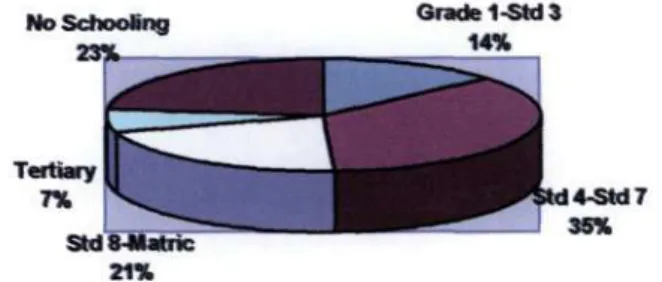
QGrade 1-Std 3 •SM4-SW7 DStd 8-Matric QTertiary • No Schooling
Figure 1: Educational level of Caregivers
Figure 1 shows that the majority 38% (45) of caregivers interviewed had an educational level between Standard 4 to Standard 7; 23% (29) had never received formal education; 20.6%
(26) had an educational level between standard 8 to Matriculation; 13.5% (17) had an educational level between grade 1 to standard 3 and 8% (9) mem had received tertiary educatioa This finding indicates that the majority of caregivers interviewed went to school up to standard seven, but a quarter of them
had never been to school. This may then have a bearing on how much value they put in education for their children.
4.2. Socio-Economic characteristics of the respondents
Respondents were asked to describe their position within their households. 45.2% (57) referred to themselves as 'mothers' within their households; 25.4% (32) said they were daughters-in-law within their households and 11.9% (15) referred to themselves as fathers within their households. The majority of female respondents either referred to themselves as 'mothers' or as 'daughters-in-laws'. This is not surprising as it is a common practice in rural areas for a daughter-in-law not to refer to herself as a mother, especially if being a mother signifies being a head of the household and a decision maker. It emerged also from the respondents who still reside with their mothers-in-laws that they sometimes do not have much of a say on the raising of their children, as this is a prerogative of a mother-in-law.
Having described their position within the household, respondents were then asked to rank themselves according to their contribution to the household livelihoods. Respondents were given three choices from which to choose, starting from being a primary breadwinner, secondary breadwinner or being none of these. 51.5% (65) referred to themselves as primary breadwinners, 17.5% (22) as secondary breadwinners and 31% (39) said they were neither primary nor secondary breadwinners. To the respondents, being a primary breadwinner meant being a provider, someone on which most family members look up to if they needed things such as food, clothing and other household necessities.
Table 1: Respondents" contribution in die household, by their position within die household
Position within the household
Household father Household mother Daughter-in-law Son
Daughter Total
Would you consider yourself Primary
Breadwinner
13 37 11 1 3 65
% 86.7 64.9 34.4 33.3 15.8 51.6
Secondary Breadwinner
0 12
5 1 4 22
% 0 21.1 15.6 33.3 21.1 17.5
as a...?
None of these
2 8 16
1 12 39
% 13.3 14.0 50 33.3 63.2 31.0
Total
15 57 32 3 19 126
% 100 100 100 100 100 100
Table 1 illustrates die relationship between die respondents' position within the household and their contribution to the household livelihoods. 86.7% (13) of those who referred to themselves as fathers also said they were primary breadwinners wifliin tiieir households.
Those who referred to themselves as mothers within tiieir households, 64.9% (37) of them said they were primary breadwinners in tneir households as well, 21.1% (12) of them were secondary breadwinners and 14% (8) were neither of die two. Table 1 also shows that 50%
(16) of tiiose who referred to themselves as daughters-in-law s said tiiey were neither primary nor secondary breadwinners witiiin their households. Tins finding also demonstrates how those who referred to themselves as daughters-in-law do not deem titemselves as primary breadwinners in their households.
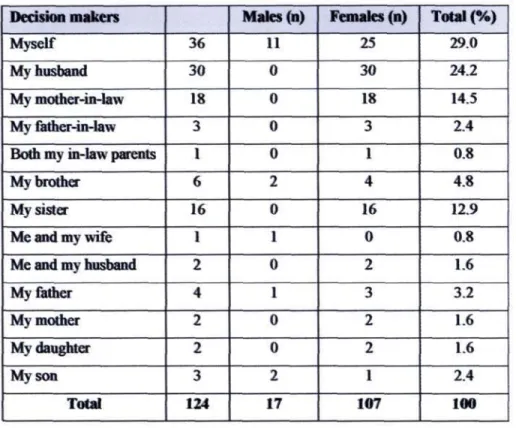
Respondents were men asked to state which person they regard as a principal decision maker witiiin the household. Tneir responses are as presented in Table 2.
Table 2: Principal decision-makers, by gender
Decision makers Myself
My husband My mother-in-law My father-in-law Both my in-law parents My brother
My sister Me and my wife Me and my husband My lather
My mother M\ daughter My son
Total
36 30 18 3
1 6 16
1 2 4 2 2 3 124
Males (n) 11
0 0 0 0 2 0 1 0 1 0 0 2 17
Females (n) 25 30 18 3 1 4 16
0 2 3 2 2 1 107
Total (%) 29.0 24.2 14.5 2.4 0.8 4.8 12.9
0.8 1.6 3.2 1.6 1.6 2.4 100
Table 2 shows that the majority of respondents 29% (36) referred to 'themselves' as principal decision makers within their households. Of those who referred to 'themselves" as principal decision makers, 64.7% (11) among males said so and 23.4% (25) among female respondents. 24.2% (30) of female respondents referred to their husbands as principal decision makers, other 14.5% (18) of female respondents referred to their mothers-in-law as primary decision makers, 12.9% (16) said their sisters make decisions.
Noticeable here is that husbands and mothers-in-law retain more power when it comes to decision making within the household. Mothers-in-law were reported to play this role by daughters-in-law who still share the homestead with their in-laws. Principal decision makers decide what needs to be done within the household and also regarding die raising of children.
including home work as children are expected to come back home and do other activities, like collecting water and cooking in the case of girls or looking after livestock in the case of boys.
Regarding the maintenance of livelihoods, 81% (102) of respondents said they had fields to plough. When asked how the fields contribute to their livelihoods, the frequent answer was that fields provide them with impuphu (mealie-meal); only 5 respondents said they sell the surplus to other people. 52.4% (66) said they had livestock in their households. When asked how the livestock contributes to their households' livelihood, they said cows provide them with milk and meat for household consumption. They sometimes use cows to plough the fields and to slaughter for ceremonial purposes. Only 28.6% (36) of the respondents said they had a vegetable garden in their households.
Respondents were asked to list other economic activities that they involve themselves in.
They had to choose from the given list of activities and state how each activity contributes to the household livelihoods. 13.5% (17) make and sell craft, 9.5% (12) sell craft that has been made by other family members. When asked if they do house thatching, only 12.7% (16) respondents said they do thatching. Women are also involved in house thatching, especially oqhugwane (Zulu huts). These women (9), when asked if they make any income from thatching, said they do not generate money from it; they do thatching only when they have been asked by their neighbours to come and assist. 10.3% (13) of the respondents said they sell fruits and vegetables, 4.8% (6) sell clothes, 6.3% (8) do hairdressing and 1.6% (2) respondents said they make a living by working in other people's homes. Selling clothes, hairdressing and working in someone else's household are not the common income generating activities among the respondents interviewed. Generally, the majority of
respondents interviewed do not engage themselves in other income generating activities, but subsistence agricultural activities. Economic activity shows low economic status of respondents.
People engage themselves in many activities whether for income generating purposes or not These activities are prioritised according to their importance within the household.
Therefore, caregivers were asked how they prioritise the execution of certain activities within their households. They had to state whether the execution of an activity was of low, medium or high priority in a household. They were given a list often activities, which had to be ranked according to their priorities of execution Extra space was provided to allow respondents an option to add activities if those were not included on the given list The responses are as shown in Table 3. The table also compare how male and female respondents prioritise the execution of these activities.
Tabic 3: Activities ranked in order of priority by respondents
Activity
Collecting wood Collecting water Doing household chores Building houses Working on the fields Working on the garden
Low Priority
% 26.2 13.5 10.6 46.2 26.9 61.5
F
% 26.6 10.1 11.9 53.2 25.7 63.3
M
% 23.5 35.3 5.9 52.9 11.8 58.8
Medium Priority
% 4.8 4.0 42.3 26.9 4.8 3.8
F
% 5.5 4.6 35.8 26.6 3.7 2.8
M
% 0 0 41.2
0 5.9 5.9
High Priority
% 69.0 82.5 47.1 26.9 68.3 34.6
F
% 67.9 85.3 52.3 20.2 70.6 33.9
M
% 76.5 64.7 52.9 47.1 82.4 35.3 F=% Females
M=% Males
Table 3 shows that bom male and female respondents prioritise water and wood collection.
them. Both male and female respondents gave high priority on working on the fields. Giving high priority on working on the fields might have been influenced by the fact that the respondents were interviewed during the summer months when they were mostly engaged in agricultural activities. Working on gardens was not given high priority, which is to be expected as the majority (71.4%) of the respondents said they do not have gardens.
4 3 . Caregivers' experiences with the mode of traveUing to school
Caregivers who said they went to school, when asked which mode of transport they used to get to school, 94.4% (90) walked; 5.6% (5) used public transport. They were asked about their experiences regarding travelling to school when younger. 63.4% (59) said how they got to school never affected their school or household activities; 23.7% (22) said it affected their household chores as one female respondent from KwaVimbukhalo puts it: "the distance really affected my household activities, especially in winter as the days are much shorter and so I would arrive late at home and not be able to do my household chores".
9.7% (9) said both their schoolwork and household chores were affected and 3.4% (3) said it affected their schoolwork. But generally, the majority 63.4% (59) of the respondents interviewed, both males and females, had no problem walking to school.
4.4. Modes of Transportation
Respondents were asked if they have any modes of transport available in their households.
These could be motorized or non-motorized modes of transportation. 12.7% (16) said they had a car/bakkie in the households. 87.3% (110) said they do not have either car or bakkie.
When asked who uses the car/bakkie, they said 'the owner' uses that mode of transport.
Asked to list the things in which the car/bakkie is used for, 6 said it is used as a personal transport by 'its owner', 4 said bakkies are used for water or wood collection and 6 said
bakkies are used to transport people to the Central Business District. The latter function of these vehicles suggests income-generating activities for those who own them.
5.6% (7) of the respondents said they have a tractor in the household. Asked who uses the tractor, respondents said its 'owner'. The question, however, did not specifically asked the respondents to clarify who 'the owner' was, but one assumed they referred to the person who bought that mode of transport. Only 6.3% (8) of Ihe respondents said they have a bicycle in their households and 93.7% (118) said there was no bicycle/s in their households. On who uses the bicycle, 3 female respondents said children use these bicycles to travel to school.
8.7% (12) had an oxen-drawn cart or sleigh in their households and 91.3% (115) said they do not have animal drawn carts. 3 male and 6 female respondents said the owner uses the cart.
42.1% (53) said they have a wheelbarrow in their households and 57.9% (73) said they had no wheelbarrows in their households. Responding on who uses the wheelbarrow, 96.2% (50) of them said everybody within the household uses the wheelbarrow; 3.8% (3) of them said 'the owner' uses the wheelbarrow. According to the respondents, the wheelbarrow is mainly used for water collection, building material and fertilizer.
The above findings indicate that the majority of the respondents do not have any mode of transportation in their households except walking. In addition, it seemed as none of the abovementioned modes of transport are primarily used to transport school children as none of the respondents mentioned that.
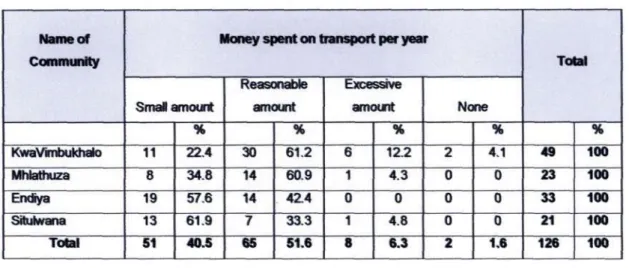
Table 4 presents the responses on how much money die respondents thought they spent on public transport per year by their community of origin.
Table 4: Money spent on transport per year, by respondents' community of origin
Name of Community
KwaVimbukhalo Mhiathuza Endiya Situlwana
Total
Money spent on transport per year
Smal amount
11 8 19 13 51
% 22.4 34.8 57.6 61.9 40.5
Reasonable amount
30 14 14 7 05
% 61.2 60.9 4Z4 33.3 51.6
Excessive amount
6 1 0 1 8
% 12.2
4.3 0 4.8 6.3
None
2 0 0 0 2
% 4.1 0 0 0 1.0
Total
49 23 33 21 126
% 100 100 100 100 100
In all four communities, respondents said they do not spend much money on public transport, as Table 4 shows. There could be many reasons for this. It might be that the respondents do not frequently visit die Central Business District, either to shop, go to work, look for a job or to do otiier activities that require diem to use public transport. It could also be mat even if public transport is available, they cannot afford it - hence opting to walk to their destinations.
4.5. Profile of school going children
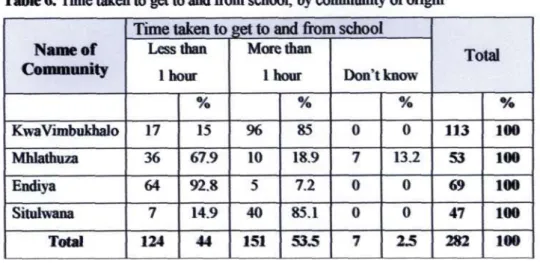
The total number of school going children for respondents interviewed was 285. More than half 53.6% (146) of these pupils were boys and 46.4% (139) of them were girls. The majority 40.1% (113) of them were from KwaVimbukhalo, 18.8% (53) were from Mhlathuza, 24.5% (69) from Endiya and 16.7% (47) were from Situlwana.
Grade 11-
M a*r i c GradeR-2
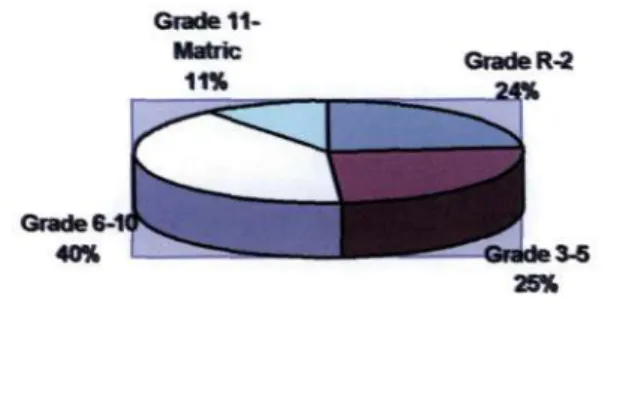
D Grade R-2 •Grade 3-5 DGrade6-10 DGrade 11 -Matric
figure 2: Children's school grades
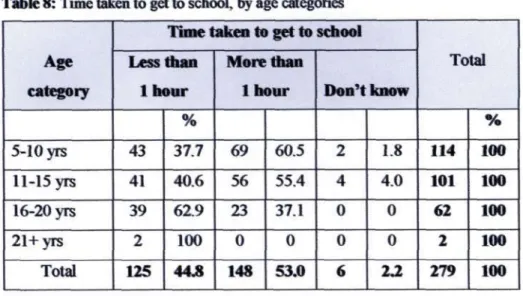
Figure 2 illustrates die grades these children are in as reported by the respondents. 40% (115) of the children were in grade 6 to grade 10; 25% (73) were in grade 3 to 5,24% (67) were in grade R to grade 2 and the remaining 11% (30) were in grade 11 to Matric. The majority 40.9% (114) of these children were between the ages 5 to 10 years; 36.2% (101) were between 11 and 15 years, 22.2% (62) between 16 and 20 years and 0.7% (2) of these children were 21 years and above.
4.6. Parental participation in children's education
Parents and teachers had different views and experiences regarding children's schooling. As they had done on ranking of activities within the household, parents were also given a list of
the activities that require them, as parents, to interact with the schools. Iheir responses are as presented in table 5.
Table 5: Parents rankings of school children related activities in order of priority Activity
Helping children with school work
Attending community meetings
Attending parents meetings at school Giving children time off to study
Low Priority
% 7.7 14.4 16.3 4.8
F
% 7.3 12.8 11.9 3.7
M
% 5.9 5.9 23.5 11.8
Medium Priority
% 7.7 21.2 24.0 13.5
F
% 5.5 16.5 20.2 11.9
M
% 11.8 23.5 23.5 23.5
High Priority
% 86.5 64.4 59.6 81.7
F
% 87.2 70.6 67.9 84.4
M
% 82.4 70.6 52.9 64.7 F= % Females
M=% Males
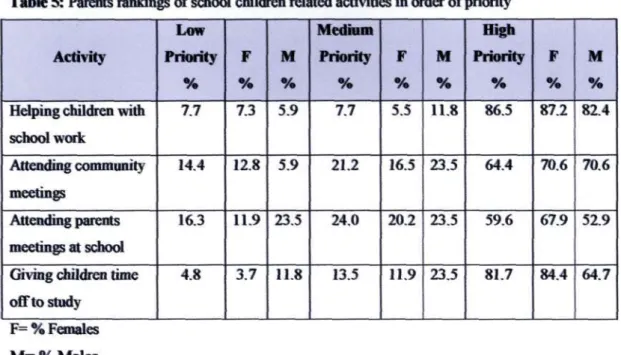
In Table 5, the majority 86.5% (109) of respondents said they give high priority to helping children with schoolwork. 81.7% (103) of them said giving children time off to do their schoolwork is also given high priority.
These statements might have been influenced by a number of factors. Firsdy, it might be mat respondents may have thought the researcher was looking for an answer mat corresponds with how they value education. Secondly, these responses might have been influenced by what they have learnt or expectations from the previous projects that were done in the area on child education prior to and during the execution of this study. For instance, when asked to rate the community members' (including themselves) involvement in their children's education starring from 'good' to 'very poor', 80% (100) of them said community members'
involvement in children's education was good, 14.4% (18) said they don't know, 3.2% (4) rated it as poor and 2.4% (3) rated community members' involvement as very poor. It should be pointed out that caregivers also seemed to equate community members' involvement in children's education as an ability to attend school meetings when called upoa
Teachers on the other hand, viewed parental interest in education differently. In their opinion, some parents do not seem to care much about education for their children as one high school teacher puts it: "Jah, I mean it's as if they don't see a need, you see... you even hear their responses, maybe if there are some problems you will hear things like 'ahi, it makes no difference my child, why should you study anyway', I mean lets say a child is only doing standard 4, and they would say "Ayi, mina umntanami ngiyamyekisa uyogana " ("No, my child has enough education now, she needs to get married") [Teachers' group: Mthende High School].
Teachers believed parents do not value education because they do not see its importance:
"ya, so what I can say is that parents here don't see a need why their children should get educated". Teachers also believed that parents who do not see the importance of educating their children, emanates from the fact that some parents do not believe that education can change their children's lives: "'they don't see any difference between someone who has been to school and someone who has never been to school, you know! [Teachers' group: Mthende High School].
Some teachers also seemed to relate parental involvement as having parents represented on school governing structures. For instance, teachers were asked to describe their relationship
with parents has to be through these established structures: "and the other thing is that we do now include parents in school committees, for instance like school governing bodies, so there are structures that we have here that also consists of parents" [Teachers group:
Mthende High School]. Teachers are also aware that the established governing bodies require that teachers know their communities very well: "Ehh, what is more important is that if we know our community, then we are able to work closely with the community members "
[Teachers group: Mthende High School].
Teachers also believed that their relationship with parents can be strengthened if they work together with parents: "Ohh, to put it short, what I can say is that our relationship with parents is not good, we don't work together." [Teachers group: Ezinyonyana Primary
School]. As a result, teachers experience resistance from parents to fully participate in school activities: "lets say sometimes you have given a child some homework and the parent would just say 'Ei, I don't get paid for doing this, what's the job of teachers 7 You see, ya... so I can
really say that our relationship with the children's parents is not that good at all" [Ibid].
Sometimes teachers would gauge parental involvement on how quick the parent responds when their child has a problem regarding performance at school: "it sometimes happen that a teacher has a problem with the child, and maybe in that case the teacher needs a parent to solve that problem and writes a letter informing the parent, and the response from the parent will be like, 'Ayi, I'm working, I don't have time to go to school" [Ibid].
For some teachers, lack of involvement was blamed on parents not having been to school themselves: "Ya, sometimes you see it in the way they do things, you see, you '11 find that they cannot really see what is going on, but not all of them, you see, because they are not