Within the personal banking segment, it has become important for banks to study segments such as students, graduates, 'new to work', adults and families. This therefore puts great pressure on retail banks to come up with new methods to attract and retain this growing customer segment. This study used a questionnaire to investigate the retail bank selection criteria of MBA students at UKZN, Westville campus, north of Durban.
- Introduction
- Background to the problem
- The Purpose of this study
- Need for the study
- Questions to be answered in the research
- Research design/methodology/approach
- Sample Size
- The Questionnaire
- Limitations to Study
- Structure of the study
The shortage of such research in the South African context makes this research necessary. A study that could have been relevant to this study would be a study conducted among students in Malaysia (Mokhlis, Mat & Salleh, 2008). The other limitation of this study is the paucity of literature on MBA students' selection criteria for retail banks outside and within the South African context.
- Introduction
- The South African Banking System
- Consumer Satisfaction
- Customers Banking Choice Criteria
- Customers Satisfaction as a contributor to Profitability
- Customer Relationship Management in the Banking Sector
- Trend: Seeking out and better serving emerging customer segments
- Trend: Creating deep business insight into customer preferences
- Trend: Responding to intensifying competition through revitalized offerings
- Trend: Safeguarding customer information
- Recommendations by the Global Survey 2012 on Customer Satisfaction
- Summary
The Bank was established in 1921 with the sole objective of achieving and maintaining price stability in the South African economy (South African Banking… 2010). There is a shortage of studies of this kind among MBA students in the South African context. Banks must realize that each individual in his/her own way is essential in the profit creation of the bank.
- Introduction
- Research Strategy/methodology
- Aim and Objective of the Study
- The Aim of the Study
- Objectives of Study
- Participants and Location of study
- Cross-sectional
- Sampling
- Population and Sample
- Sampling design/frame
- The need for sampling
- Deciding on Suitable Sample Size
- Advantages of Surveys and Sampling
- Disadvantage of Surveys and Sampling
- Data Collection in Descriptive Research
- Questionnaires as Method of Data Collection
- Types of Questionnaires
- Questionnaire design
- Administration of Questionnaires
- Interviews as Method of Data Collection
- The significance of high response rate
- Pretesting and Validation
- Assessing Validity of a Questionnaire
- Testing for Reliability of a Questionnaire
- Methods of Data Analysis
- Summary
It is thought that a sample should be the best representation of the characteristics of the population (Terre Blanche, 2006). This essentially means that 'it is possible to answer research questions and achieve objectives that require the researcher to statistically estimate the characteristics of the population from the sample' (Saunders et al. Primary data often refers to first-hand information that the researcher takes on the variables of interest for the specific purpose of the study (Sekaran & Bougie 2010:180).
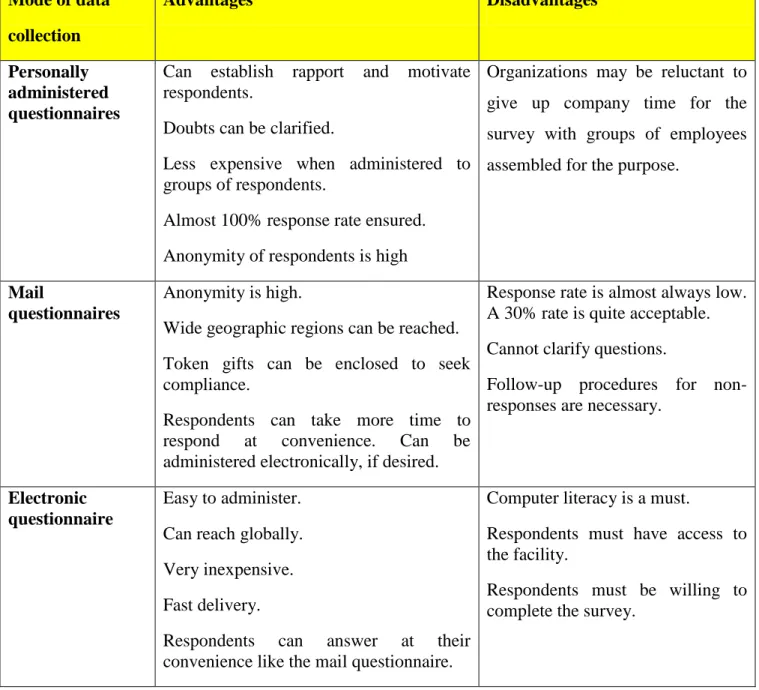
The design of the questionnaire often differs depending on how it is delivered, returned or collected, and the amount of contact the researcher has with the respondents (Saunders, et al. In this study structured questionnaires will be used as structured answers are expected due to the structured nature of the questionnaire The order of the questions can be varied depending on the flow of the conversation (Saunders et al, 2012).
In order to ensure that the researcher's data is representative of the population, it is essential that extensive work is done on the questionnaire to avoid bias in the questions asked. Internal validity in relation to questionnaires refers to the ability of the questionnaire to measure what the researcher intends to measure (Saunders et al, 2012). Content validity refers to the extent to which a measurement device relating to measurement questions in a questionnaire provides sufficient coverage of the research questions (Saunders et al, 2012:429).
Trustworthiness relates to the findings of the study and relates to the credibility of the findings (Welman et al. 2007).
Introduction
Treatment of data
For example, Likert scale responses were rated on a five-point scale, ranging from 1 representing strongly disagree to 5 representing strongly agree.
Demographic Profile of Respondents
Demographic Information
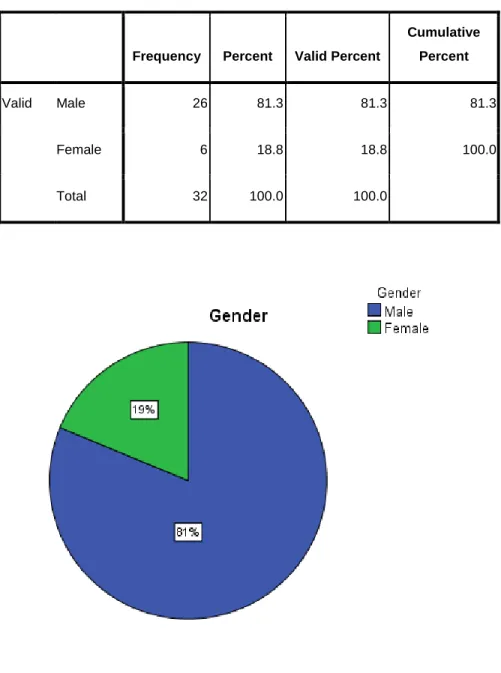
- Gender of the Respondents
- Age group of the respondents
- Marital status of the respondents
- Ethnicity (for Demographic Information purposes only)
- Level of Education of the respondents
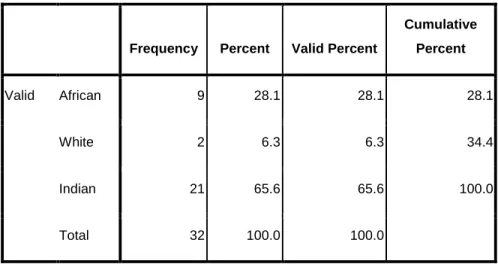
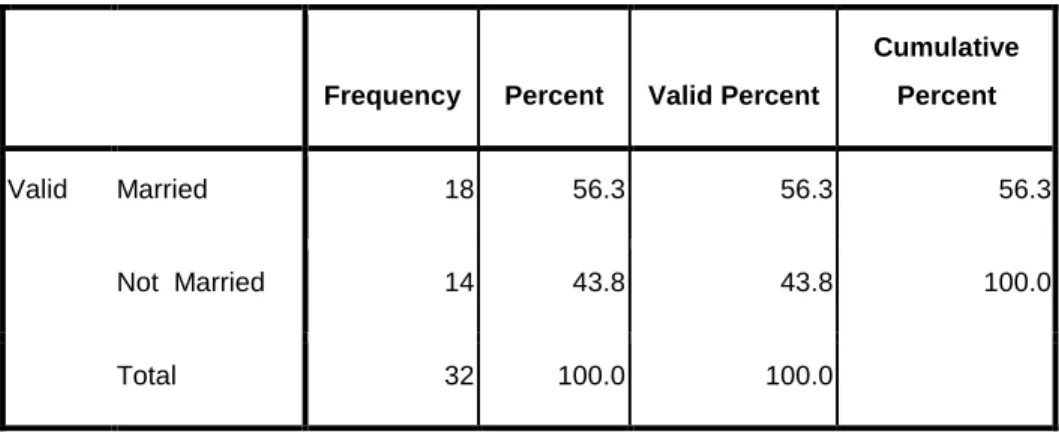
This question was asked to determine whether or not their selection criteria were in any way related to marital status. The results indicated that 66% of the respondents were Indian compared to 28% who were African and 6% who were White. The respondents were asked to indicate their level of education to determine if the educational background of the respondents had anything to do with the selection criteria they used to choose retail banks.
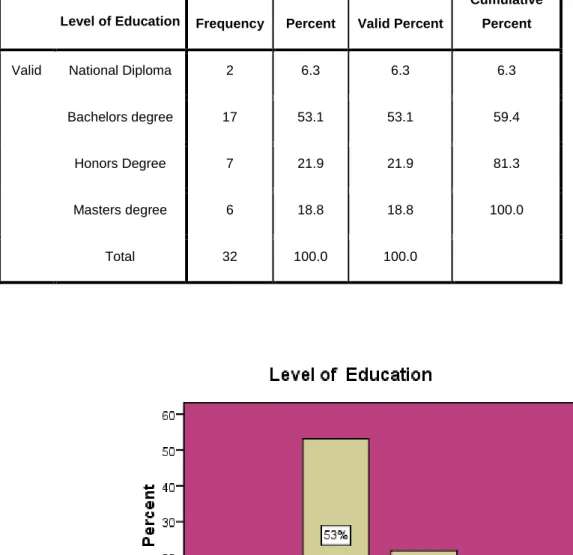
The results of the survey showed that 6% of respondents had national diplomas, while 53% had bachelor's degrees.
Objectives of Study
- The Selection criteria of respondents
- The location of the bank is important to me
- The presence of security personnel is important to me
- The parking facility is an important factor to me
- Easy access to the bank is important to me
- The professionalism in handling of problems is important to me
- Efficiency of resolving problems experienced by customers is important to me
- The views and feedback from customers who had complained and were satisfied with
- Being attentive to customer concerns is important to me
- The ability to resolve customer queries over the phone is important to me
- Offering apology for the poor service is important to me
- Parental influence is important to me
- Recommendation by others is important to me
- Promotional literature in branches is important to me
- Online advertising is important to me
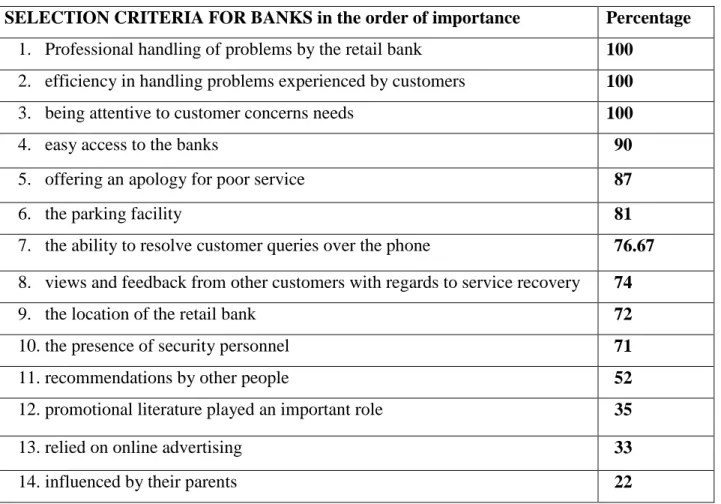
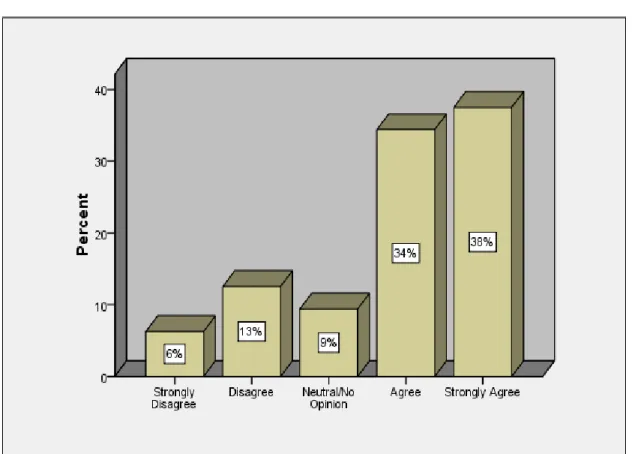
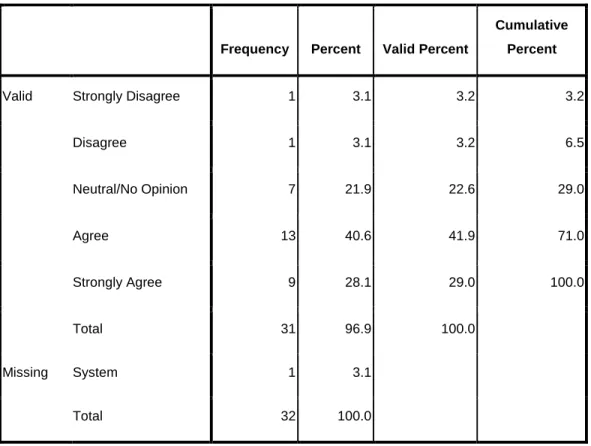
The survey results show that 71% of respondents agreed that the presence of security personnel played an important role in their selection criteria for retail banks. This question was asked to determine if the parking facility plays an important role in the selection criteria of the respondents. This question was asked to determine whether access to banking played an important role in the selection criteria of respondents.
Only 6% of respondents disagreed that this played an important role in retail bank selection criteria. The results showed that all respondents agreed that the retail bank's professional approach to problems played an important role in their retail bank selection criteria. The survey results showed that all respondents agreed that attention to customer concerns did indeed play an important role in retail bank selection criteria.
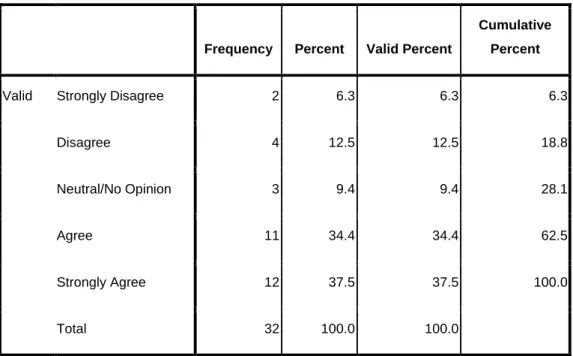
This question aimed to investigate whether recommendation from others played an important role in respondents' selection criteria for retail banks. Results from the survey showed that 52% of respondents agreed that their retail bank selection criteria is influenced by other people's recommendations. Results from the survey showed that 35% of respondents agreed that promotional literature played an important role in their selection of retail banks.
The results of the survey showed that 33% of respondents relied on online advertising in their criteria for choosing retail banks.
Cross tabulation
Introduction
Demographic Information
- Gender of the respondents
- Age of respondents
- Marital Status of Respondents
- Ethnicity of the respondents
- Educational Background
As stated in the data presentation, the age question sought to determine whether age contributes to MBA students' selection criteria for retail banking. This means that more younger people are getting involved in business, and the more the younger part of society gets involved in business, the better the economy in the country will be. The question of marital status was asked to determine whether marital status had any contributing factor to the selection criteria for retail banks by the respondents.
However, the results could not indicate which group between the two favored which selection criteria due to time pressure, which was limited to six months. As stated in Chapter 4, the results showed that the respondents were 66% Indian, 22% Black and 6% White. Although not part of this study, the results interestingly show that the Indian community is more involved in business than the other ethnic communities.
Another interesting factor about the results and the study in India by Rao & Sharma (2010) among Indian communities is that most of the findings in the literature can be related to this study. The question on educational background was asked because the previous studies on which this study is based were conducted among the educated sector of the community. Education, therefore, becomes an important factor as it can be calculated that the more educated the respondents are, the more important their selection criteria will be for retail banks as they constitute a more profitable market for the banks and the economy. .
As highlighted in chapter 4, the results of the survey showed that 6% of the respondents possessed a National Diploma, while 53% possessed a Bachelor's Degree.
The Selection Criteria of MBA final year students
This question was asked to determine whether the presence of security personnel played an important role in the respondents' selection criteria for retail banks. This means that the majority of respondents think that the presence of a security system has influenced their criteria for selecting retail banks. The results show that 90% of respondents agreed that easy access to banking has indeed influenced their retail banking selection criteria.
This question was intended to investigate whether professional handling of problems by the retail bank played a significant role in the selection criteria of the respondents. This question was asked to determine whether efficiency in dealing with problems experienced by customers played an important role in the selection criteria of retail banks by the respondents. The results indicated that all (100%) of the respondents agreed that efficiency in dealing with problems experienced by customers plays an important role in their selection criteria of retail banks.
The purpose of this question was to find out whether respondents' attention to customer concerns plays a key role in the selection criteria of retail banks. The results of the survey showed that 76.67% of respondents agreed that the ability to resolve customer queries over the phone played an important role in their criteria for choosing retail banks. The survey results showed that 87% of respondents felt that an apology for poor service was essential in their criteria for choosing a retail bank.
The results of the survey showed that only 22% of respondents were influenced by their parents in their choice of retail banks.
- Introduction
- Conclusions from the Study Objectives
- Selection criteria that post-graduate MBA consider important
- How these criteria are prioritized
- How these have impacted on the lives of MBA students
- Do MBA students form a homogenous group?
- Recommendations from this study
- Limitations of this study
- Summary
- APPENDIX 1
- QUESTIONNAIRE
The results in this study showed that about 72% of the respondents agreed that the location of the retail bank was really important to them. Most respondents agreed that the presence of security personnel played an important role in their selection criteria for retail banks. The results showed that 81% of respondents agreed that the parking facility was important to them.
This confirmed that most MBA students are heavily influenced by the availability of parking facility in the selection criteria of retail banks. The results showed that 90% of respondents agreed that ease of access to banks actually influenced their selection criteria for retail banks. The results of this study indicated that most (74%) of the respondents agreed that the views and feedback of other customers regarding service recovery played an important role in their selection criteria for retail banks.
The results of this study showed that the majority (76.67%) of the respondents agreed that the ability to resolve customer queries over the phone played an important role in their criteria for choosing retail banks. The results of this study showed that the majority (87%) of respondents felt that an apology for poor service was essential in their criteria for choosing retail banks. The results of this showed that 52% of respondents agree that their criteria for choosing retail banks is influenced by other people's recommendations.
The results of this study indicated that 35% of the respondents agreed that promotional literature plays an important role in their choice of retail banks.