UNIVERSITY OF KWAZULU – NATAL
Factors influencing the consumer’s choice of insurer when purchasing insurance risk products.
By
Nobuhle Malunga 992237865
A dissertation submitted in partial fulfilment of the requirements for the degree of Master of Business Administration
Gratuate School of Business & Leadership College of Law and Management Studies
Supervisor:
Christopher Chikandiwa
Year of submission 2014
i
College of Law and Management Studies
Supervisor’s Permission to Submit Thesis/ Dissertation for Examination
Name:
Nobuhle Malunga
Student No:
992237865
Title: Factors influencing the consumer’s choice of insurer when purchasing insurance risk products.
Qualification: MBA School: Graduate School of Business
Yes No
To the best of my knowledge, the thesis/dissertation is primarily the student’s own work and the student has acknowledged all reference sources
Turnitin Report % 8%
I agree to the submission of this thesis/dissertation for examination
Supervisors Name: Christopher Chikandiwa Supervisors Signature:
Date:
ii
Declaration
I declare that this dissertation is the product of my own work, that it has not been submitted before for any degree or examination in any other university, and that all the sources I have used or quoted have been indicated and acknowledged as complete references.
Signed……….
iii
Acknowledgements
I wish to express my sincere appreciation and gratitude to the following individuals, without whose assistance, this study would not have been possible:
My husband, Mlungisi Malunga for being the paramount source of strength and support during my studies. For pushing me when I needed it and for always believing in me.
My two handsome boys Ndumiso and Mangaliso Malunga, I did it for you. You inspire me to always strive for the best.
Mcebo Gwebu, thank you for being there for my boys when I needed to lock myself away and study. You made it all that much more manageable.
My amazing parents Thulani and Nozipho Mthembu, for always believing in me and encouraging me that the sky is the limit. You both have been the amazing role models.
The coolest siblings ever. Thank you Thabani and Nolwazi Mthembu for the motivational talks and for our ability to always convince each other that there is always light at the end of every tunnel.
To all my family and friends who took an interest in my study and always motivated me to make this study a reality.
My supervisor, Christopher Chikandiwa for his valuable insight and support.
Most sincere gratitude to all the respondents who took time to complete my questionnaire and in turn made this study a reality.
iv
ABSTRACT
South African insurance industry research conducted by KPMG (2014), indicates that the number of South Africans who own insurance risk cover is lower than the expected number, yet the insurance industry is one of the largest contributors to the South African economy. Research conducted by the Association for Savings and Investment South Africa (2013) cited in (Van der Merwe Life, 2013) revealed that South Africans were underinsured for death and disability by 60%. The shortfall between the consumer owned disability and life risk benefit and the actual risk benefit requirements of employed South Africans amounts to R24 trillion. This amounts to a risk benefit shortfall of R700 000 on average, per employed consumer.
The gap and shortfall due to South Africans being underinsured is a concerning one as the payment of policy benefits and claims by insurance companies stimulates the economy and facilitates financial markets. Insurance cover permits individuals and businesses to recover after life changing events. Insurers use factors within their control such as product assortment, advertising and pricing to influence customers’
buying behaviour.
The aim of this research is to understand which factors influence consumer’s choice of insurer when purchasing risk benefits. Under this study the main focus is to identify whether consumers are influenced by product features, advertising, pricing or brand relationship with insurance companies.
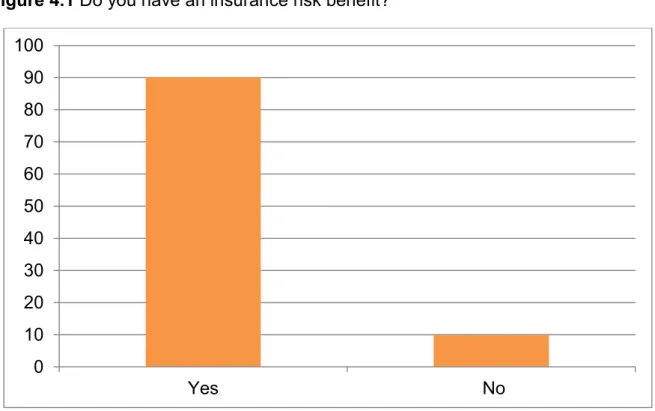
A random sample of 150 participants was drawn consisting of individuals who are 20 years or older; who have bought a risk insurance benefit and those that have not bought, but qualify to do so. From the sample, 90.12% own a risk benefit and 9.88%
do not. An electronic questionnaire was developed by the researcher as a tool for data collection for this study. The statistical analysis revealed that there is a significant relationship between age and premium as well as a statistical relationship between income and advertising as a factor that influences consumer’s choice of insurer. The statistical analysis further revealed that of the four factors: premium, advertising, product feature and brand image; brand image is considered by the participants of this study as the most influential factor when choosing an insurer from which to purchase a risk benefit.
v
Table of Contents
Description Page
Title Page
Supervisor’s permission to submit ……….. i
Declaration ……….. ii
Acknowledgements ……….. iii
Abstract ……….. iv
Table of Contents ………. v
List of Figures ………... ix
List of Tables ………... xii
CHAPTER ONE - Introduction to the research 1.1 Introduction ……….. 1
1.2 Motivation for the study ………. 2
1.3 Focus of the study……… 3
1.4 Problem Statement of the Study ……….. 4
1.5 Objectives ………. 4
1.6 Hypotheses ……….. 5
1.7 Significance of the study ……… 5
1.8 Chapter Summary ……….. 5
vi CHAPTER TWO – The factors of influence on consumer’s choice of insurer
2.1 Introduction ……….…. 7
2.1.1 The South African Insurance Industry ……… 7
2.2 Literature Review ……….…... 10
2.2.1 Consumer Buying Behaviour ………. 10
2.2.2 Price ………. 15
2.2.3 Advertising ………... 19
2.2.4 Product Feature ……….… 23
2.2.5 Brand Image ……….…. 27
2.3 Chapter Summary ………..…… 33
CHAPTER THREE – Research Methodology 3.1 Introduction ……….. 34
3.2 Aim and Objective of the study ……….. 34
3.3 Participants and Location of the study ……….. 35
3.4 Data Collection Strategies……….. 36
3.5 Research Design and Methods ……….. 37
3.5.1 Description and purpose ……….. 37
vii
3.5.1.1 Construction of the instrument ………. 38
3.5.1.2 Recruitment of study participants……….. 38
3.5.2 Pretesting and Validation ……….. 38
3.5.3 Administration of the Questionnaire ………. 39
3.6 Analysis of the Data……… 39
3.7 Chapter Summary ……… 39
CHAPTER FOUR – Presentation of Results 4.1 Introduction ………..… 40
4.2 Presentation ………..…. 41
4.3 Chapter Summary ………...… 69
CHAPTER FIVE – Discussion 5.1 Introduction ……….... 70
5.2 Chapter Summary ………. 87
CHAPTER SIX – Recommendations and Conclusions 6.1 Introduction ……….. 88
6.2 Summary ……….………. 88
viii
6.3 Conclusions to the study and recommendations.……….. 89
6.3.1 Recommendations ……….. 90
6.4 Implications ……….……….. 91
6.5 Limitations and areas for further studies ………. 92
6.6 Concluding remarks ……….. 93
References ………. 94 Appendix 1 Questionnaire and Informed consent
Appendix 2 Ethical clearance
Appendix 3 Certificate from professional editor
ix List of Figures
2.1 The model of consumer behaviour .………. 11
2.2 Maslow’s hierarchy of needs ……….………. 13
2.3 Dual step and dual process model of advertising effects ……... 22
2.4 The value - mix for products ………. 24
2.5 Rogers five factors ………... 26
2.6 Brand knowledge ………... 28
2.7 Brand resonance model ………..………..…………. 32
4.1 Do you have an insurance risk benefit? ………..………. 42
4.2 Which of the risk benefits do you have? ………. 43
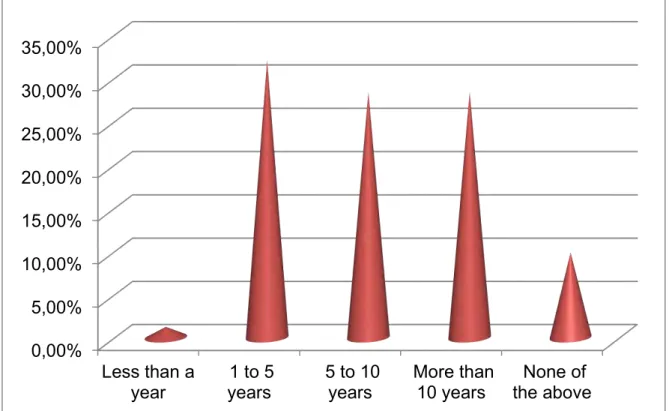
4.3 How long have you had a risk benefit? ……….. 44
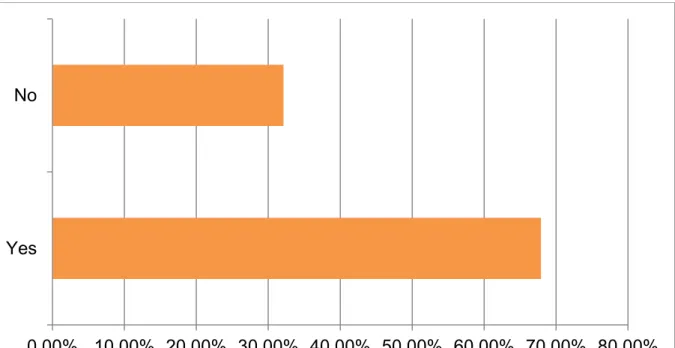
4.4 Are all your risk benefits with one insurer? ………. 45
4.5 Do you have a financial advisor? ……… 46
4.6 What are/ would be your main reasons for choosing an insurer? ... 47
4.7 Do you / would you research each insurer before you make your risk benefit decision? ……….…. 48
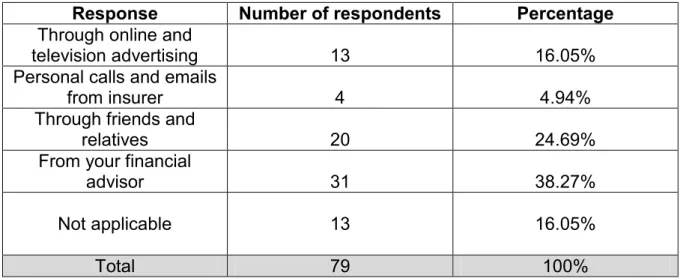
4.8 How did you know about the insurer of your choice? ………... 49 4.9 Do you / would you have a budget allocated for your risk benefits? … 50
x 4.10 I am willing to spend more than budgeted when committing to
a risk benefit. ……… 51 4.11 The premium of the risk benefit has / would have an influence on
my choice of insurer. ……….. 52 4.12 I have/I would purchase a risk benefit from a particular insurer
based on their premiums. ……… 53 4.13 Insurer perceived to have the best risk benefits premiums…………. 54 4.14 The amount of insurer’s advertisements of their product influences
my desire to purchase a benefit. ………... 55 4.15 I have / would purchase a risk benefit from an insurer based on
their advertising. ………... 56 4.16 An insurer’s advertising influences my choice of insurer when
purchasing a risk benefit. ………... 57
4.17 Which of the following insurers do you believe has the most effective advertising campaign for risk benefits? ………... 58
4.18 A product feature of a risk benefit has some influence on my
choice of insurer. ……….... 59 4.19 A product feature of a risk benefit has to fit in with my own
personal needs……….….. 60 4.20 The product features of a risk benefit influence my decision when
making my final selection of an insurer……… 61
xi 4.21 I research/ would research all the insurers’ product features of the
risk benefit before making my final purchase decision………….… 62 4.22 I have/ I would purchase/d a risk benefit from a particular insurer
based on their product features………. 63 4.23 Insurer perceived to have the best product features for risk
benefits……… 64 4.24 An insurers brand reputation influences and would influence
my choice of insurer when purchasing a risk benefit. ……... 65 4.25 I have and would purchase a risk benefit from an insurer based
on the insurers brand reputation………. 66 4.26 Brand reputation is important in my purchase decision making…….. 67 4.27 Which of the following insurer’s brands do you mostly relate to? …… 68 5.1 Factors affecting choice of insurer ………..……..………… 85
xii List of Table
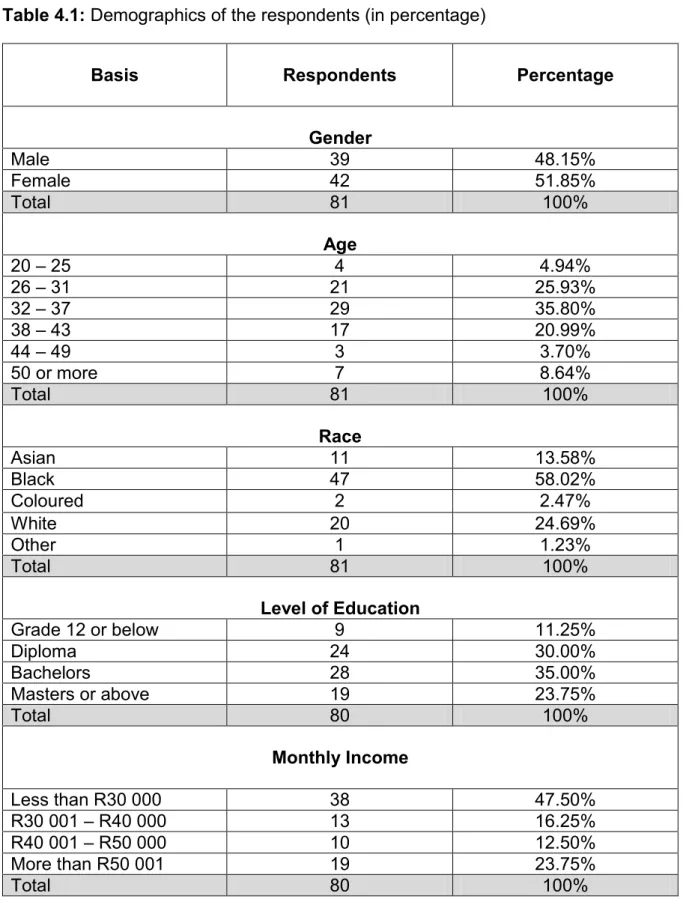
4.1 Demographics of the respondents (in percentage)……… 41
4.2 Do you have an insurance risk benefit? ………... 42
4.3 Which of the risk benefits do you have? ... 43
4.4 How long have you had a risk benefit? ……….. 44
4.5 Are all your risk benefits with one insurer? ……….. 45
4.6 Do you have a financial advisor? ……….. 46
4.7 What are/ would be your main reasons for choosing an insurer? ………. 47
4.8 Do you / would you research each insurer before you make your risk benefit decision? ………..……….. 48
4.9 How did you know about the insurer of your choice? ………….. 49
4.10 Do you / would you have a budget allocated for your risk benefits? ………. 50
4.11 I am willing to spend more than budgeted when committing to a risk benefit. ……… 51
4.12 The premium of the risk benefit has / would have an influence on my choice of insurer. ……….. 52
4.13 I have/I would purchase a risk benefit from a particular insurer based on their premiums. ……… 53
4.14 Insurer perceived to have the best risk benefits premiums ……... 54
4.15 The amount of insurer’s advertisements of their product influences my desire to purchase a benefit………. 55
4.16 I have / would purchase a risk benefit from an insurer based on their advertising. ……… 56
4.17 An insurer’s advertising influences my choice of insurer when purchasing a risk benefit. ……….. 57
xiii 4.18 Which of the following insurers do you believe has the most
effective advertising campaign for risk benefits? ……….. 58
4.19 A product feature of a risk benefit has some influence on my choice of insurer. ……….. 59
4.20 A product feature of a risk benefit has to fit in with my own personal needs. ………. 60
4.21 The product features of a risk benefit influence my decision when making my final selection of an insurer……….… 61
4.22 I research/ would research all the insurers’ product features of the risk benefit before making my final purchase decision….. 62
4.23 I have/ I would purchase/d a risk benefit from a particular insurer based on their product features………. 63
4.24 Insurer perceived to have the best product features for risk benefits………. 64
4.25 An insurers brand reputation influences and would influence my choice of insurer when purchasing a risk benefit………….. 65
4.26 I have and would purchase a risk benefit from an insurer based on the insurers brand reputation. ……….. 66
4.27 Brand reputation is important in my purchase decision making………. 67
4.28 Which of the following insurer’s brands do you mostly relate to? ………68
5.1.1: Risk Frequencies ……….. 71
5.1.2a: Gender vs. Premium ………... 71
5.1.b: Gender vs. Advertising ………..72
5.1.1c: Gender vs. Product feature ……… 72
xiv
5.1.1d: Gender vs. Brand image ……… 73
5.1.2a: Age vs. Premium ………. 74
5.1.2b: Age vs. Advertising ………74
5.1.2c: Age vs. Product Feature ………...75
5.1.2d: Age vs. Brand image ………...75
5.1.3.a: Income levels vs Premium ………..77
5.1.3.b: Income levels vs Advertising ………. 78
5.1.3.c: Income levels vs Product features ………..78
5.1.3.d: Income levels vs Brand image ……….79
5.1.4.a: Educational level vs Premium ………80
5.1.4.b: Educational level vs Advertising ………80
5.1.4.c: Educational level vs Product feature ………. 81
5.1.4.d: Educational level vs Brand image ………..81
5.1.5a: Race vs. Premium ……… 82
5.1.5b: Race vs Advertising ………83
5.1.5c: Race vs Product feature ………..83
5.1.5d: Race vs Brand image ………..84
5.1.6: Most influential factor ………...84
1
CHAPTER ONE
Introduction to the research
_________________________________________________________
1.1 Introduction
This study seeks to provide insights into the factors that influence the consumer’s choice of insurer when purchasing an insurance risk benefit. The current chapter outlines the motivation for the study, the focus of the study, the problem statement, the objectives and the hypothesis of the study.
Industry research conducted by KPMG (2014), indicates that the number of South Africans who own insurance risk cover is lower than the expected number, yet the insurance industry is one of the largest contributors to the South African economy.
Research conducted by the Association for Savings and Investment South Africa (2013) cited in (Van der Merwe Life, 2013) revealed that South Africans were underinsured for death and disability by 60%. The shortfall between the consumer owned disability and life risk benefit and the actual risk benefit requirements of employed South Africans amounts to R24 trillion. This amounts to a risk benefit shortfall of R700 000 on average, per employed consumer.
The claims statistics reflect the danger in the insured gap. In 2012, three of South Africa’s major insurers paid around R7 billion in life insurance claims. According to Ndzamela (2013), Liberty, Sanlam and Old Mutual had seen an increase in claims and pay-outs related particularly to cancer. In claims during 2012, Liberty paid out about R1.6 billion for life cover, of which R370 million was paid out for critical illnesses and R327 million for income protection. The total paid by Liberty in 2013 increased from 2012 to R2.71 billion – R1.86 billion being paid for life claims, R414 million for critical illness claims and R439 million for income protection.
Claims increased in 2013 with new industry entrants experiencing a large proportion of the claims. Risk insurer Altrisk for example paid out a R119 million in life claims in 2013; which was the highest sum it has paid since its inception in 1999.
2 Momentum group reported their largest death claim in 2013 as R34 million. Liberty Life‘s single largest claim in 2013 was R40 million. The newest entrant, Brightrock, which was launched in 2012, paid out their largest claim of R16 million in 2013 (Van der Merwe, 2014).
Discovery Life paid R1.1 billion in life cover benefits in 2013, of these 72% related to men, which was disproportionate to their share of the insurer’s life cover client base of 56% male and 44% female. The statistics mentioned above are evidence there is a significant gap in consumers insuring themselves and their families.
Payment of policy benefits and claims by insurance companies stimulates the economy and the financial markets (Naiker, 2013). Insurance cover benefits permit individuals and businesses to recover after major life changing events (Naiker, 2013).
The insurance industry is often misunderstood by consumers, with many of them seeing it as nothing more than a necessary evil. However in the modern world with its attendant risks, customers need more than ever to always be protected.
It is because of the information above that there is a need to investigate the factors that influence consumer’s choice of insurer.
1.2 Motivation for the study
A decade ago, customers were only exposed to a small number of insurers, but during recent years there has been an increase in insurers entering the industry, leading to an increased service provider range (PWC, 2014). These changes have increased competitiveness amongst large, long standing insurers, namely Discovery, Liberty, Momentum, Old Mutual and Sanlam; this requires them to develop competitive advantages that will sell their offerings better than that of competitors. Insurance industry role players argue that there are products available to consumers to lessen the financial load on their dependents should they pass on, be critically ill and or disabled (Mbetse, 2014).
Old Mutual’s savings and investment monitor survey (2014), reflects that 6% of South African households’ savings are through risk insurance products. Research by Old
3 Mutual (2014) shows 50% of South African baby boomers, who are born from 1964, use risk insurance benefits for savings. According to findings by the savings monitor Old Mutual (2014), this group uses bank consultants, financial advisors and word of mouth as a main source for insurance information and 92% of individuals with a high income, (income of R80 000 and above per month), own risk protection policies. This group in South Africa comprise 38% female and 62% male. The age demographics of this group are: 5% are individuals between 30 and 34 years old; 39% are individuals between 35 and 49 years old and 56% are between 50 and 64 years old (Old Mutual, 2014).
This study will be beneficial to insurance providers in that they will have an informed view of factors that influence consumers to purchase risk benefits. It is important that consumers have risk benefits, but often they are not convinced as to which insurer to trust and as such end up not associating with an insurer or end up associating with multiple insurers. This study will also benefit consumers as factors that influence their choice of insurer will be grown by insurers, thus offering more informed choices.
Through an increase in the purchase of risk policies, the economy will positively benefit and families will be better protected.
1.3 Focus of the study
Consumer choices have become a major concern of businesses and meeting customer needs are considered as the main objective of businesses.
This study will focus on four factors that play a role in a consumer’s choice of an insurer when purchasing an insurance policy.
The focus of this study was to identify the factors that influence consumers when they choose which insurer to purchase their risk benefit from. This study further looked at demographic elements and the relationship each has to factors that influence a choice of insurer.
4 1.4 Problem statement of the study
The growth in the risk benefit discrepancy over the years has been identified by researchers. In 2007, the estimated shortfall was R10 trillion. In 2013, the research represented a widened gap from R18.4 trillion in 2010 to R24 trillion in 2013. This indicated that the gap widened by 10 per cent a year. This is a problem for the insurance industry role players as well as the South African economy (Van der Merwe, 2013).
This study aimed to analyse the reasons the gap exists. This was achieved by investigating the factors that influence a consumer’s choice of insurer when purchasing a risk benefit. It was important to distinguish whether the gap exists because of consumers unwillingness to spend over their budgeted amount, whether advertising was not effective, whether the product features did not inspire behavioural change and if the brand image was not satisfactory.
1.5 Objectives
The main objective for this study was to investigate the impact of advertising, product features, pricing and brand image in influencing a consumer’s choice of insurer when purchasing an insurance risk benefit.
The objectives of the study are as per below:
Investigate the impact of advertising, product features, pricing and brand relationship between customer and insurance company on a consumer’s choice of insurer.
Determine the influence of demographic factors in a consumer’s choice of insurer when purchasing an insurance risk product.
To make recommendations to insurers to increase risk products sales.
5 1.6 Hypotheses
The hypothesis for this study were:
There is no significant relationship between gender and the different factors of influence i.e. price, advertising, product feature and brand image.
There is no significant relationship between age and the different factors of influence i.e. price, advertising, product feature and brand image.
There is a relationship between income levels and the different factors of influence i.e. price, advertising, product feature and brand image.
There is a significant relationship between educational levels and the different factors of influence i.e. price, advertising, product feature and brand image.
There is no significant relationship between race and the different factors of influence i.e. price, advertising, product feature and brand image.
1.7 Significance of the study
This study is significant to all insurers who sell risk benefits. This study is also of significance for the marketing and sales teams within the respective insurers as they would benefit from insights of what influences consumers in choosing their organisation to partner with as oppose to aligning with competitor insurers.
1.8 Chapter Summary
Insurance risk benefits are of great importance for the financial sustainability of consumers. Through these benefits, consumers are protected against unfortunate events that may result in negative financial impacts. Equally, it is important role players are aware of the dynamics that result in a consumer’s positive purchase behaviour; particularly understanding the factors that drive a consumer to choose one insurer over another. To bring this research to conclusion, the researcher considered literature review available on the four factors of influence. The literature review is based on available theory and academic journals. The methodology of
6 this research is outlined in chapter three. Research data is presented in chapter four and discussion of data in line with the hypothesis is outlined in chapter five.
Chapter six is the conclusion of the research including recommendations for future study.
7
CHAPTER TWO
The factors of influence on consumer’s choice of insurer
_________________________________________________________________
2.1 Introduction
This chapter aims to gain a proper understanding of the factors that influence consumers’ choice of insurer. The literature review will concentrate on the theory and academic articles available regarding factors that influence consumers’ buying decisions
In today’s tough competitive environment it becomes essential for risk insurers to highlight the importance of life cover benefits by having innovative products and solutions and providing these at a reasonable price. Insurers use a number of factors within their control to influence customers’ buying behaviour such as product features, brand image, advertising and pricing.
2.1.1 The South African Insurance industry
The Financial Supervisory Board (FSB) is aware of challenges faced by industry role players, which led to a statement being issued by it a number of years ago. The statement read: “In this type of business, despite good intentions, good faith and skills;
things can go wrong, and need to be actively watched and effectively managed at all times” KPMG (2013 p.4).
In 2008, the economic crisis in the country had a negative impact on the insurance industry. Insurers in South Africa suffered losses and customer perception of the insurance industry became one of suspicion. When consumers are asked about insuring their most important assets, they often respond by listing property, vehicles and households. They forget or neglect salaries and other forms of income are important insurable assets. Without earnings, one cannot pay for assets.
8 Old Mutual’s savings and investment monitor survey (2014), reflects that 6% of South African working, metropolitan households’ savings are through risk insurance products.
Research shows 50% of South Africans are baby boomers, which are individuals born in 1964 and earlier, use life assurance as a savings vehicle. Ninety two percent of individuals in the high income bracket, (personal income of R80 000 and above per month) own a risk insurance product; 14 % of which is used as a savings vehicle.
According to the findings by the Savings Monitor Old Mutual (2014), this group uses bank consultants, financial advisors and word of mouth as the main source for insurance benefits information. Ninety two percent of individuals in the high income bracket, (personal income of R80 000 and above per month), own risk insurance products. This group in South Africa comprises 38% female and 62% male. The age demographics of this group are: 5% are individuals between the ages of thirty and thirty four; 39% are individuals between the ages thirty five and forty nine and 56% are between the ages fifty and sixty four.
The large gap in the insured individuals is of concern. Research reveals that the most underinsured individuals are those who earn R150 000 per annum and more. The group that is likely to have sufficient risk benefits are the high income earners, who are 55 and older.
According to Friedlander (2014), around half of unnatural deaths were due to motor accidents; crime related deaths and suicide which were more evident in younger clients. The increased number of unnatural deaths further highlights the need for risk cover across age groups and health status. Severe illness was the second highest claim. These lump sum pay-outs are usually used to cover costs associated with severe illness; such as lifestyle modifications and home care. The leading causes of severe illness claims were heart and artery disease and cancer. Amounts paid out for disability cover are normally used to make modifications to homes, pay off debts and cover expenses. In 2013, Discovery Life paid R103 million in claims for income continuation benefit to clients who were unable to proceed with their daily tasks due to illness, injury or disability. According to a study by Friedlander (2014), the top five
9 occupations of the claimants were; business owners (who were top of the list), doctors, directors, medical practitioners and physiotherapists.
The figures mentioned above are evidence there is a need for South Africans to be diligent with their risk insurance portfolios to ensure they are adequately covered.
Successful insurers are aware of this opportunity and have accordingly placed customers and product delivery at the centre of their business. They now focus on leveraging opportunities with every interaction they make, to win over customers against competitors. Through this process, insurers are able to enjoy the following:
- Improved customer experience, which in turn creates a propensity for customers to buy additional products.
- Greater brand loyalty, customer persistency and referrals (Danckwerts, 2013.)
The perception of a good experience with an insurance product can only be realised after a claim.
According to Ibiwoye, Ideji and Oke (2010) Individuals engage insurance companies due to a demand for products that will serve as protection of their financial interests and that of their beneficiaries in the event the insured dies. The insurance products are thus a form of long term savings.
Are risk insurance options products or services? Kotler and Armstrong (2008 p.218), define a product as something that is offered to the market for acquisition, attention, consumption and use that may satisfy a need or want. Intangible goods can also be products. Services, as defined by Kotler and Armstrong (2008) as a form of product that consists of benefits, satisfaction and activities offered for sale that are intangible and do not result in ownership.
The purchase of a risk insurance product results in the ownership of the insured amount, which leads to the researcher’s conclusion that insurance companies sell products. Insurers create savings vehicles for insured individuals.
In South Africa, many insurance companies rely on intermediaries as a distribution channel; they also use agents. Du Plessis, et al. (2001) defines intermediaries as
10 individuals who promote and distribute organisations’ products and services to customers. The authors further stress the importance of a supply chain that is more effective than its competitors in order to be successful. It is therefore important insurers who rely on intermediaries create a superior value delivery network. Creating such a network requires insurers to partner with distribution channel intermediaries and to treat them as they would their best customers. The three main reasons for insurers to have close relationships with intermediaries that distribute and market their products to the market as outlined by the Du Plessis, et al. (2001) are:
- To secure the end customer, channel members should be convinced about the brand and its products such that value is built in their minds.
- Intermediaries can add value to products in a manner that goes beyond what product owners are capable of doing.
- Channel members have a role in ensuring worth is constantly generated while dropping external costs.
The complexity of this relationship arises in ensuring both parties (intermediaries and organisations), work together to achieve their goals, which are not often aligned.
2.2 Literature review
2.2.1 Consumer Buying Behaviour
There have been different, although with similarities, definitions of consumer buying behaviours. According to Kotler and Keller (2012 p.173), “Consumer buying behaviour is the study of how individuals or groups buy, use and dispose of goods, services, ideas or experience to satisfy their needs or wants.” Kotler and Armstrong (2008 p.130), defined consumer behaviour, “as the buying behaviour of final consumers, individuals and households who buy goods and services for personal consumption”.
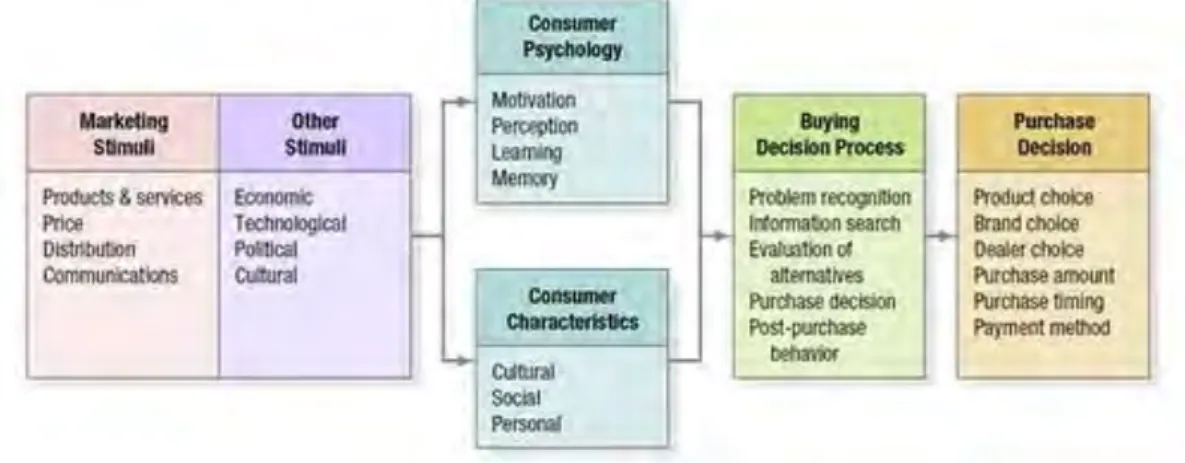
Kotler and Keller (2012), give a stimulus response model which outlines the marketing and environmental stimuli that enters a customer’s sub conscience and psychological processes in making purchasing decisions. The marketer’s mission should therefore
11 be to understand what happens in a customers’ consciousness from the entrance of the external marketing stimuli to the eventual purchase decision. These authors further identify four key psychological processes that influence customer responses:
perception, learning, motivation and memory.
Figure 2.1 The model of consumer behaviour
Source: Kotler and Kelly (2012 p.183)
According to the Kotler and Keller (2012), environmental and marketing stimuli enter a consumers’ consciousness and upon entering a consumer’s consciousness, these stimuli, together with a set of psychological progressions combine with some of the consumer’s characteristics and together they produce an individual decision making process and ultimately the end result is a purchase decision.
Kotler and Keller (2012), further elaborate that the onus is on the business and its marketing department to understand the processing and analyses of different factors in a consumer’s mind during the receipt of outside marketing information, which is aimed at motivating a sale and an eventual purchasing decision.
12 The consumer is influenced by four factors:
Cultural: These are the strongest drivers of an individual’s wants and behaviour.
Marketers must closely monitor and study cultural values in the different countries they operate in so as to best comprehend how to market existing products and identify prospects for innovative products. Humans display social associations; often in the form of social classes with individuals who share comparable values, behaviours and interests. Social class participants show diverse product and brand preferences. They also differ in media preferences (Kotler and Keller, 2012).
Social: A customer’s family background, status and social roles tend also to play a role in buying behaviour.
Personal: Personal characteristics that influence a customer’s buying behaviour are lifecycle stage, age, financial standing, occupation, personality and values.
Psychological Factors: These factors are best described by Maslow’s hierarchy of needs theory.
13 Figure 2.2 Maslow’s Hierarchy of needs
Source: Kotler and Kelly (2012 p.183)
These factors lead to a customer’s brand and product preferences. It’s therefore important that marketers understand these factors and the impact they have on customers, so as to develop a suitable and sustainable marketing mix that appeals to their target market.
According to Kotler and Kelly (2012), a consumer goes through five stages before making the final purchase decision. The stages are:
Stage 1: A consumer identifies a problem or a need and they realise they have a desire to solve the problem or satisfy the need.
• Self - actualization needs (self-development and realization)
• Esteem need (self esteem, status and
recognition)
• Social needs (sense of love and
belonging)
• Safety needs (security and
protection)
• Physiological needs ( water, food and
shelter)
14 Stage 2: The consumer then searches for products that are available to satisfy the need and or to solve their problem.
Stage 3: Consumers are always faced with making choices from one competitor to the other. The elimination and evaluation of competitor offerings is an important part of the process.
Stage 4: The consumer chooses a competitor and which product best suits their needs and best solves their problem.
Stage 5: The experience the consumer has after the purchase is important as it may result in making a purchase again or referring friends and families.
As discussed above, consumers go through a mental process and there are several factors influencing their buying decisions. It is for this reason businesses invest in various marketing initiatives to influence a consumer’s buying decision with the hope customers will respond positively. The marketing stimulus consists of the 4 Ps namely:
price, place, promotion and product. A buyer’s response comprises brand choice, product choice, purchase timing, purchase amount and product owner.
According to Du Plessis et al. (2001), a deep appreciation of customers’ needs, wants, perceptions, attitudes, beliefs, culture, decision making process, values, information processing, evaluation criteria and buying behaviour is crucial for any organisation.
Gathering information is the first step to organisations being able to assist in the development of an effective customer-connected strategy.
Marketers and product owners have to understand all consumers have different reference points when engaging with a product. These reference points are important to note as they represent an individual’s state of being, which impacts on how they perceive products and information. When an organisation understands their consumers’ reference points, they are able to know what the consumers’ perceived gains and losses are (Tang, 2013). Tang (2013), continues with the theory stating that knowing a consumer’s reference points allows organisations to build up product strategies that respond to consumer adoption barriers.
15 Why and what consumers purchase is more than just the product (Sandhu, 2013).
Consumers tend to purchase a solution to their needs and or requirements. Often price and distribution model and or channel plays a role in a consumers purchase choice.
2.2.2 Price
Price is the amount of money charged for a product or service. Price is the sum of all the values that consumers give up in order to gain the benefits of having or using a product or service (Kotler and Armstrong, 2008 p.284).
Significant research has been conducted on the role of price in a consumer’s product evaluation methods. Researchers have identified price as a fundamental factor in a purchase decision. Price is one of the main features that attract and influence customers’ buying decision. Price premiums are among the most important benefits of building a strong brand (Keller, 2013 p.191).
Du Plessis et al. (2001), emphasise the importance of price by stating a single pricing error can effectively nullify all other value-mix activities. According to Danziger, Hadar and Morwitz (2014) consumers’ purchase decisions are influenced by price opinions rather than by real prices. The effectiveness of a promoted reference price can be credited to the decision making strategy adopted by consumers. The appeal of an offer price is measured to likening it to an internal reference price, which is defined as a mental stored or constructed reference price (Kan, Lichtenstein, Grant, and Janiszewski, 2013). The perceptions are dependent and prone to circumstantial influences (Krishna et al. 2002) cited in (Danziger et al., 2014).
According to Keller (2013), consumers’ relationship with a perceived price are often a key factor in their purchase decisions, which results in many product owners adopting a value based pricing strategy. This strategy aims to sell products at a price linked to a consumer’s expectations. Theoretical economists have identified price as a gauge of the financial cost of a purchase decision. The greater the price, the higher the consumer’s perceived monetary sacrifice. This often leads to a negative relationship between purchase probability and price.
16 Du Plessis, Jooste and Strydom (2001), define the formulation of value as perceived benefits divided by price. The relationship reflects that at any given price, value increases as perceived benefits increase. Value will also decrease as perceived value decreases for any given price. Danziger et al. (2014), argue that product owners use numerous pricing strategies to encourage positive consumer price perception with the assumption they will influence choice.
According to Ahtola (1984) cited in Bornemann and Homburg (2011), behavioural research conceptualises the price perceptive sacrifice affiliation as a means associated perception. At this point, price is a negative factor as it shows what a consumer has given up to obtain the benefits associated with a product.
The role played by price in a customer’s price review is of great importance and businesses need to ensure their price strategy has a positive influence in customer reviews.
Xinxin and Hitt (2010), mention two reasons that lead to price having a role in customer reviews; the first being that customers’ reviews do not often reflect perceived quality of a product and or service, but often reflect customers’ perceived value. Price is a major influence on customer satisfaction in service industries (McGregor et al., 2007), cited in (Xinxin and Hitt, 2010). The second is when customers are uncertain about a product offering and the quality of it; then they are likely to use price as a signal of quality.
There are a number of pricing strategies that businesses can follow:
Full cost pricing: This price strategy takes one of three forms; mark-up pricing, break- even pricing and rate-of-return pricing.
• Mark-up pricing: occurs when the selling price of a product is determined by adding a set amount to the total cost of the product.
• Break–even pricing: is based on a per-unit fixed cost + the per-unit variable cost.
17
• Rate-of-return pricing: contains a mixture of both mark-up pricing and break- even pricing. In this strategy, price is set to obtain a pre-specified rate of return on investment.
Variable-cost pricing: This strategy is used when a business is operating below capacity and fixed costs constitute a greater proportion of total unit costs. The principle underlying a variable-cost strategy is that the relevant cost to consider is the variable cost and not the total cost. Variable cost is thus a form of demand oriented pricing strategy aimed at stimulating demand.
New- offering pricing: There are strategies companies may choose to work with when they introduce a new product to the market:
Price-skimming strategy: the price is initially set very high then gradually reduced.
Price-penetration strategy: a product is introduced at a low price.
Source: Du Plessis et al. (2001 p.347-348)
Insurance industries in South Africa use both the price - skimming strategies and the price – penetration strategies. The different strategies utilised by South African insurers for risk benefits are as follows:
The insured has the highest initial premium, but the lowest future premium increases.
The insured has a lower initial premium, but it increases every year according to the insured’s age.
The insured has the lowest initial premium of all the options. Annual compulsory increases maintain cover at a specified level as a client gets older.
Source: Pantelous, Frangos and Zimbidis (2009 p.2)
It is important consumers buy into a product’s price and associate same with the benefits of that product. An organisation may indicate in its advertisements the price of a product, which serves as an evaluation instrument for customers (Vranceanu, 2012). According to Bruno, Che and Dutta (2012), evidence by numerous researchers confirm consumers tend to evaluate products and base their purchase decisions on
18 comparing prices with internal standards. This is referred to as reference price. The value of an advertised reference price is dictated to by an individual consumer’s decision making strategy (Kan et.al, 2013). According to author Vranceanu (2014), the degree of a consumer’s price knowledge serves as an influence in the consumer’s internal reference price.
Della Bitta, Monroe and McGinnis (1981) cited in (Vranceanu, 2014) mention forms of comparative price factors that compare the advertised product price with a competitor’s price. Organisations need to be wary of the impact advertisements with pricing may have, as at times they may create confusion and sometimes mislead consumers.
Chandrashekaran (2012) cited in (Vranceanu, 2014), argues that the amount of involvement a consumer has with a brand, influences the reference price a consumer has with the product. The author expands on this notion by arguing highly involved consumers tend to know a product’s offerings and therefore evaluate prices using an expected price as a standard. Consumers who are less involved will tend to use one of two references; a market price and or the lowest price. Consumers use their last transaction price as their first reference price when making a purchase (Bruno et. al, 2012).
Research has demonstrated consumers who have high product knowledge have an increased confidence in their estimation of product prices with reference to low and high prices; whilst those consumers with low product knowledge have limited confidence. The low knowledge consumers place more reliance on their brand knowledge and relationship. These consumers are inclined to accept inflated prices for some brands (Vranceanu, 2014). Bruno et al. (2012), made an assumption in their research study that consumers compare the value a purchase will add to their lives and not necessarily compare the price of a product with a reference price.
19 2.2.3 Advertising
Authors Kotler and Keller (2012), define advertising as a cost effective method to circulate messages, whether with the aim of building a brand preference or to educate people. Advertising as an institution is an important economic and social force. Belch and Belch (2011) cited in (Jin and Lutz, 2013), define advertising as a paid for message from a known promoter in mass media with the aim of persuading.
Proponents of advertising have described advertising as a capitalistic virtue, which facilitates a free market economy and promotes consumer welfare (Jin and Lutz, 2013).
A customer’s reaction towards a firm’s marketing strategy has an impact on a firm’s success. Branding, strategic pricing and advertising are part of any business’s strategy towards maintaining product demand and increasing consumption. It is for this reason businesses strategically engage in advertising to assist in selling their products. Most customers are more receptive to advertisements for products they need. They filter information as it is relevant to them.
According to Buttner, Florack and Serfas (2014), the final goal for advertising is to influence consumers’ purchase decisions in favour of the advertised brand.
Advertising objectives should therefore align to an organisation’s decisions on a target market, marketing agenda and brand positioning (Kotler and Keller, 2012). The objectives of advertising are designed to persuade, inform, reinforce or remind the market about a product offering. Different advertising objectives are:
The end result of Persuasive advertising is the product is liked, preferred and purchased by the target market.
The end result of Informative advertising is consumers become more knowledgeable of the brand and its new, existing and revamped products.
The desired end result of Reinforcement advertising is to reaffirm to existing purchasers purchasing the product is the correct decision.
The desired end result of Reminder advertising is repeat purchasing of the product by existing consumers.
Source: Kotler and Kelly (2012)
20 Romaniuk (2012), argues that in advertising, more than all other factors, the brand has to compete for consumer attention. When a brand has strong distinctive assets, it possesses a wider branding pallet to be used in advertising, allowing it to have a wider range of creative options. It is however not often during the moment in which a consumer is confronted with an advertisement, the consumer is faced with making a purchasing decision. As a result, the authors further argue the main goal of advertising is for consumers to learn more about a brand, which then increases the probability of a consumer’s consideration of a brand as an option. According to (Taylor, Kennedy, McDonald, Ouarzazi, and Haddad (2013), advertising tends to reinforce consumer brand preference. When consumers have low brand loyalty, advertising will result in them responding mostly in the short term and those consumers who have a higher brand loyalty will respond less.
Personal experience along with advertising is a strong force of influence when creating brand equity. Zheng, Shen, Chow and Chiu (2013), mention one of the mechanisms of constructing brand equity via advertising is enhancing and creating a brand image.
The authors further argue advertising increases a consumer’s inclination to pay, which provides substance for persuasive approaches to advertising.
According to Jin and Lutz (2013), technology has separated the effects of advertising by print media, broadcast media, the internet and other marketing communication tools as conventional. Taylor et al. (2013), agree with this view as they acknowledge media practice has evolved to now include an increased amount of social media and more technology orientated elements which give a consumer additional control over that of an advertiser. According to Taylor et al. (2013), television is still an effective advertising element that drives sales despite the very active multiple media environment. Bart, Stephen and Sarvary (2014), argue mobile advertising is amongst the fastest growing advertising elements, but the result of its effectiveness according to the marketing industry remains mixed. Some marketers believe this element is an effective tool, whilst others are yet to be convinced. According to Chen and Stallaert (2014), the advancement of information technology worldwide has changed online advertising; allowing organisations to measure outcomes of advertising and also place specific targeted advertising based on consumer trends. Marketers are now able to
21 use behavioural targeting when advertising, which is based on using information from a consumer’s individual web browsing trends.
In practice, marketers believe for some products, reduced advertising efforts lead to negative market demand. Some products are beyond advertising and will be demanded even with little advertising, but the sustainability of their relevance is questionable. Targeted marketing has proven over the years to be a beneficial mechanism for businesses. According to Chen and Stallaert (2014), consumers have different advertisement preferences.
Businesses engage in targeted advertising through advertising to customers who have a strong preference and loyalty towards their product and brand; this strategy alienates those customers who are comparison shoppers and are prone to being attracted to competitors. According to Jin-Hui, Bin, Pui-Sze and Chun-Hung (2013), advertising less on comparison shoppers can be viewed as a means for businesses to increase differentiation in the market.
Studies have confirmed more consumers tend to consume multiple media types, thus emphasising the need for marketers to better understand advertising effectiveness across all media types (Zenetti, Bijimolt, Leeflang, P.S.H. and Klapper (2014).
According to Chang and Thorson (2012), cited in Zenetti et al. (2014), TV and banner advertising lead to positive interactive effects in consumers’ cognitive metrics, but have little impact on their cognitive or affective evaluations.
According to Zenetti et al. (2014), the extend a consumer relations to media channels can materialise if consumers are exposed to advertising from a variety of mediums for the reason that: (1) when comparing the effects of repeating an advertisement using one channel to advertising through a variety of channels, the latter results in consumers positively relating to media which leads to higher attention and more positive cognitive responses. (2) There may be less effectiveness of advertising through a second medium if consumers have previously been exposed to advertising through the first medium. This results in the effects of one advertising channel being substituted to some extent by the effects of another channel. The authors further argue that by presenting advertising messages differently through different mediums, the marketer enhances responses by consumers. Consumers are likely to process and
22 notice information from distinct sources with more attention, which results in positive relations effects between the various types of advertising.
It is important however that marketers avoid advertising clutter as this can negatively impact on the desired effect. According to Elliott and Speck (1998) cited in (Rosengren and Dahlen, 2013), perceived advertising clutter tends to make consumers negatively disposed to advertising and rend to avoid the medium in which the advertising is placed. Even as the entry of new media happens and the amount of advertising clutter increases, studies found that when consumers are exposed to television advertisements they are stimulated into short term sales.
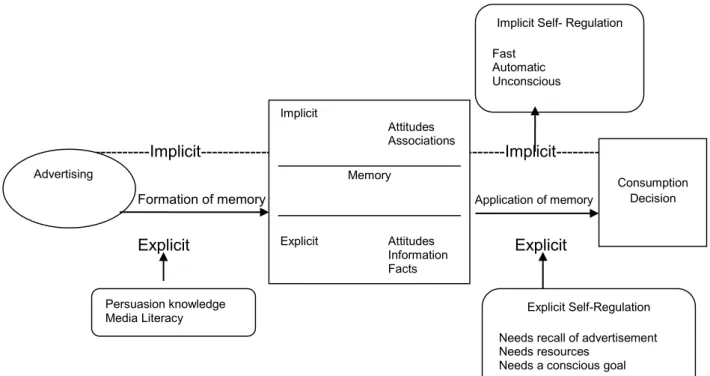
Figure 2.3 Dual step and dual process model of advertising effects
---Implicit--- ---Implicit---
Formation of memory Application of memory
Explicit Explicit
Source: Buttner et al. (2014 p.166)
The objectives of the above model are to represent advertising effects on consumers from the moment they are exposed to an advert to a final consumption decision. The model also represents the process of advertising effects on consumers using introspective understanding of advertising to the perception that emphasises the
Advertising
Implicit
Attitudes Associations Memory
Explicit Attitudes Information Facts
Consumption Decision
Explicit Self-Regulation Needs recall of advertisement Needs resources
Needs a conscious goal Implicit Self- Regulation Fast
Automatic Unconscious
Persuasion knowledge Media Literacy
23 essential processes that inspire positive advertising effects such as purchase of advertised product (Buttner et al., 2014).
According to Buttner et al. (2014), the model indicates the influences advertising has on behaviour. Advertising builds on brand knowledge and attitudes. Advertising also influences consumption decisions.
2.2.4 Product Features
Crawford and Di Benedetto (2014), define the attributes of a product as its functions for the consumer, the features of the product and the benefits the consumer realises through the product.
Businesses design, manufacture and sell products because they want to satisfy customer needs. Lee (2014), mentions the demand for a product is determined by its features as expressed by its functions, characteristics and problem solution. According to Matthews (2013), organisations that have a product to sell should be able to convince consumers of the uniqueness of their product.
In insurance business, it goes beyond this; products are there to uphold the corporate vision and embrace the interests of stakeholders. Product decisions are therefore of strategic importance to an organisation as they impact on a company’s ability to fulfil needs of new and existing customers. It is important for an organisation to note that consumers’ choice of product depends on their ability to differentiate between products when engaged in a decision making process (Jia, Shiv and Rao, 2014).
Companies develop marketing strategies which guides their design of an intergraded marketing mix. The elements that the marketing mix comprises of are price, promotion, product and place - the four Ps (Kotler and Armstrong, 2008, p 47). Du Plessis, et al., (2001), used different wording for the 4Ps by expanding them to a value mix which allows organisations to add value to their management of the 4Ps. These academics define value mix as a set of controllable variables an organisation can blend together in order to produce the response it requires from the target market.
24 Figure 2.4 The value-mix for products
Source: Du Plessis et al. (2001 p.334)
When planning a market offering, businesses and their marketing departments need to address five product levels. Each level, contributes to customer value (Keller, 2012).
The levels are:
Core benefit: product suppliers should have the consumer in mind when designing and creating a product. The benefit the customer will derive from the product purchase should be the driving force.
Products must have insights of target markets wants and needs so that product offerings are aligned to provide solutions.
Products should be in line with the customer’s attributes and psychological expectations. This is only possible if the product owner is well aware of the stimuli’s surrounding the product consumers.
Products should at all times meet and or exceed consumers’ expectations.
Product
Features Quality level
Packaging Branding Warranties
Promotion
Advertising Media type Types of ads Sales promotion
Publicity
Place
Channel type Exposure Intermediaries
Price
Price levels Terms Differentiation
Discounts
25
There must be a potential product, which includes all the likely transformations and augmentations the product might undergo in the future. There must be a potential product, which includes all the likely transformations and augmentations the product might undergo in the future.
The latter level is where most companies investigate options and new ways to satisfy consumers and distinguish their offering.
At the centre of all the levels and the most important, is the core benefit. This should at all times be aligned to consumers’ needs and expectations. According to Matthews (2013), consumers should know of the benefit of a product. Consumers need to know that owning a product will provide a sense of relief. In the case of an insurance risk product, consumers need to know that owning the product will be helpful in their lives and will serve as a valuable asset.
Authors Wouters, Workum and Hissel (2011), emphasise the importance of product architecture decisions, particularly where the product is complex, making it more difficult to predict customers’ preferences. When organisations are faced with the difficulty of being in an environment where all competitors have similar or equally complex products, the solution is to adopt a differentiation strategy. This strategy involves an organisation putting focus and emphasis on their differential offering, thereby ensuring consumers adapt and believe in their product and see it as different and superior to that of competitors.
Ordave (2014), mentions in his article, marketers often struggle to conceptualise a product’s attributes that drive a consumer’s adoption of a product. Rogers’ five factors framework provides background and understanding. According to Everett Rogers cited in (Ordave, 2014), consumers go through five product based factors before they adopt a product and what it has to offer.
26 Figure 2.5 Rogers’ five factors
Source: Ordave (2014 p.4)
(1) The greater the relative advantage; the faster the adoption.
(2) Consumers adopt products they believe are in line with their experiences and values faster than those they believe are not.
(3) When consumers find a product easy to understand, they adopt it quicker.
(4) Consumers want to know they can try out a product and if not satisfied, they can use another product. If consumers feel using a product will not bind them, they easily adopt it.
(5) Some consumers want their peers to know they use and have bought certain products and will therefore adopt a product that will allow them to show off.
According to Du Plessis et al. (2001), target markets can use differentiation methods to make a distinction between identical products to the extent they are regarded as separate products. If an organisation is able to achieve this, they have created a competitive advantage for themselves and their product. The value of a product is therefore enhanced, which may be reflected in the product’s price.
(1) Relative advantage
(2) Compatibility
(3) Complexity (4)
Trialability (5)
Observability
27 There are a number of differentiation methods an organisation may follow:
• Differentiation on the basis of product quality
• Differentiation by brand
• Differentiation by unique product characteristics
• Differentiation in distribution
• Differentiation by marketing communication
• Differentiation based on consumer orientation
• Differentiation by price
Elevating the benefits of a product and how they relate to your consumer’s life can serve as a basis for the uniqueness of a brand (Matthews, 2013). A product is at the centre and is the connecting factor of brand equity. Product marketers should therefore manufacture, design, market and deliver products in a manner that promotes positive brand image with positive and solid brand associations, which advance a higher level of brand resonance (Keller, 2013).
2.2.5 Brand Image
Kotler and Keller (2012), define a brand as a service or product whose proportions differentiate it in some way from other services and products intended to satisfy the same need. The authors’ further mention consumers will tend to assess products in a different way, dependent on how they are branded. Consumers learn about brands through previous experience of a product’s marketing program and through actual usage of the product.
Consumers have now become more sophisticated and aware of options available to them, which has led to more competitive industries. Organisations should not rely on products as a differentiation strategy if they hope to sustain their business. Consumers consider the ethical make up and the social environment of a brand they partner with.
A product provider’s brand as seen and perceived by a consumer can become a key force in creating competitive differentiation. A company’s culture, image and vision have become an important element of its selling proposition (Duckler, 2014).
Consumers are very concerned about brands that are behind the products they purchase. The demands consumers have on brands are considerable.
28 Customers will usually associate themselves with brands they believe match their personalities; thus using brands for self-expression. Customers are changing; in the new environment customers have more options and are more knowledgeable of their needs and the services they expect, which highlights the importance of customer–
brand relationship. It is important consumers rate the level of quality through credibility derived from the brand. Brand engagement showcases behavioural outcomes that result when customers meaningfully interact with a product (Keller, 2013). It is therefore important for a product owner to make customers’ post purchase behaviour a priority. Customer satisfaction should always be the desired result.
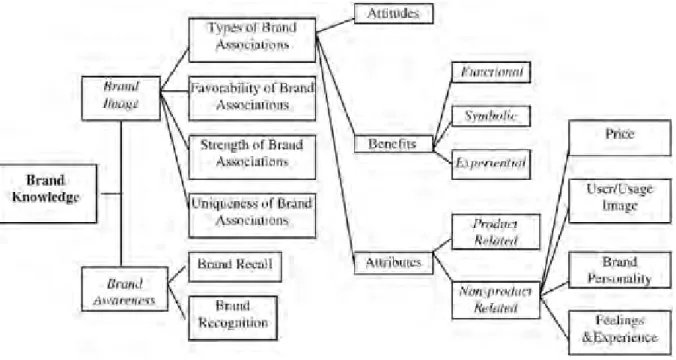
It is important marketers engage in getting their target consumers to learn more about their brand. Whilst brand owners have a view of their brands and what they stand for, the true and most valuable perception of a brand is that of the consumer. The effectiveness of all marketing activities and stimulus associated with a brand is compliant with the consumer’s knowledge of the brand as is in the mind of the consumer.
Figure 2.6 Brand Knowledge
Source: Keller (1998 p.548)
29 Managers of corporate brands now place an increased emphasis on brand experience management; as opposed to the activities that have traditionally been relevant in brand building processes such as, advertising and communication. Brand experience management focuses on delivering a consistent brand promise for all stakeholders with the aim of achieving greater preference and loyalty (Brakus et al., 2009), cited in (Iglesias, Singh and Casabayo, 2011).
The business world is complex and competitive, especially the financial world, as many customers are cash struck because of the economic crisis in South Africa.
Customers look at brands as a source of differentiating factors. According to Loveland, Smeesters and Mandel (2010), brands with a solid factor of constancy and acknowledged heritage seem to be of significance to consumers. Marketers and researchers alike agree that brands do the following: Dickson and Ginter, 1987; Keller and Lehmann, 2009; Sprott et al., 2009; Stahl et al., 2012 cited in (Franzak et al., 2014)
Brands provide competitive advantage;
Brand platforms provide a vehicle for growth;
Brands capture and transfer the experience of using a product which provides a source for customers and results in product relationships;
Brands have value.
A customer based brand equity approach, views the value of a brand as perceived by a consumer, through recognising the power of the brand lies in what consumers have heard, read, seen, learned, felt and thought about a brand.
There are a number of consumer based brand equity definitions. Customer based brand equity is, “the differential effect that band knowledge has on consumer response to the marketing of that brand. A brand has positive customer- based brand equity when consumers react more favourably to a product and the way it is marketed when the brand is identified” Keller (2013 p.69).
Mzungu, Merrilees and Miller (2010), argue that brand management should play an important role in the protection of brand equity. Kotler and Keller (2012) define