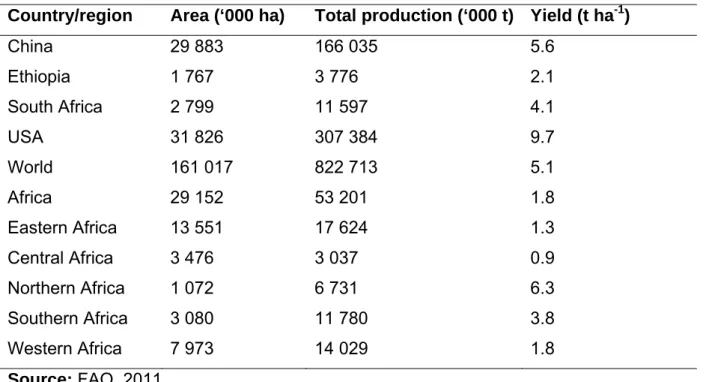
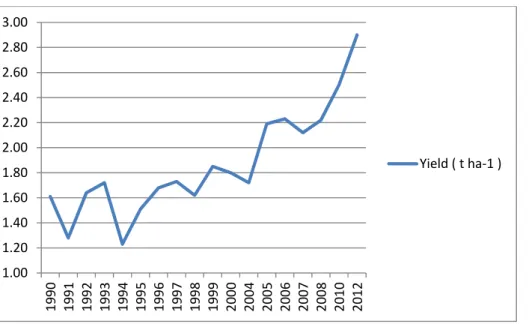
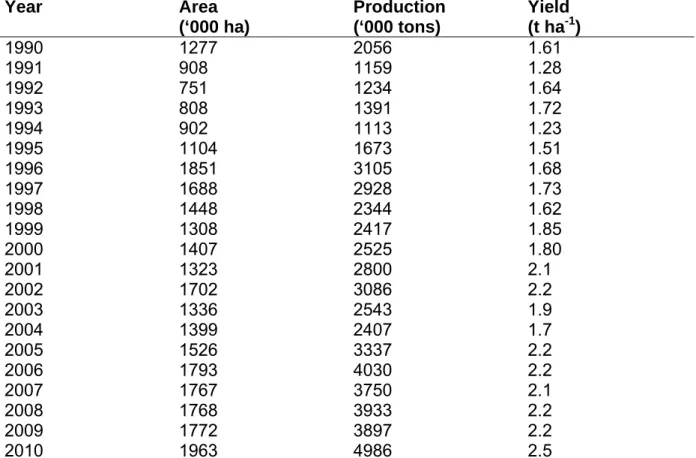
According to the United Nations Food and Agriculture Organization (FAO) (FAOSTAT, 2012), the world area of maize production was 176 million ha while that of wheat was 216 million ha and rice at 184 million ha during 2012. 3 Genetic variation of elite maize -inbred lines for resistance to Exserohilum turcicum in the mid-altitude sub-humid agroecology of Ethiopia.
Introduction
Origin and history of maize
The biology of maize
Importance of maize and production trends
The primary diseases of maize include seed and ear rot, seedling blight, root and stem rot and foliar diseases (Pandurange et al., 1994). In the country, maize grows across different agroecologies due to its broad environmental adaptation (Legesse et al., 2012).
Maize production constraints
- Abiotic factors
- Biotic factors
- Insect pests and weeds
- Diseases
Nitrogen is the most important nutrient limiting crop production in the tropics (Mosisa et al., 2002). NCLB is reported to be severe on most commercial corn varieties released in the country so far (Tewabech et al., 2002).
General distribution of NCLB
Symptoms of NCLB
Physiologic races and growth cycles of NCLB
Importance of NCLB in Ethiopia
Types of resistances for NCLB
Strategies to control NCLB
- Cultural practices
- Use of fungicides
- Use of resistant cultivars
Also, timely removal of overwintering infected crop residues will reduce the amount of available inocula at the beginning of the subsequent growing season. However, the success of disease management using qualitative resistance will depend on the breed of pathogen present.
Farmer preferences in maize breeding
Common breeding methods in maize
- Recurrent selection
- Mass selection
- Inbred line development
- Inbreeding and hybrid development
Mass selection has gained even greater importance due to the introduction of the high cross system. Due to the xenia effect, half of the oil content of the oil population is transferred to the sterile (female) version of the hybrid.
Heterosis and heterotic groups in maize
Combining ability studies
Mating designs in maize breeding
Genotype X environment interaction
- Stability of yield and yield components
- Additive Main Effects and Multiplicative Interaction (AMMI) model
- GGE biplot analysis
- Regression approach and its limitations in stability analysis
Significance testing is strongly recommended to determine the quality of stability estimates (Crossa et al., 1995). In the same vein, the stability of a cultivar depends on the set of cultivars evaluated; therefore, the application of the results of a regression analysis is limited to the specific set of environments and cultivars evaluated.
Conventional breeding approaches for disease resistance
Genetics of resistance to NCLB
Application of molecular markers in maize breeding
Knowledge of genetic diversity and relationships among maize inbred lines is indispensable for identifying promising combinations for exploiting heterosis and establishing heterotic groups for use as source material in a breeding program. Unlike morphological markers, their expression is not influenced by environmental factors; therefore, they reflect the actual level of genetic variation that exists between genotypes (Legesse et al., 2007).
Conclusion
Review of the past decade of research on pre-harvest insect pests of maize in Ethiopia. Genetic improvement of maize for lowland and subhumid agroecologies in Ethiopia.
Abstract
Introduction
This has led to the emergence of participatory plant breeding approaches in conventional plant breeding programs, which integrate farmers' preferences and constraints (Ceccarelli et al., 2001). Maize has become increasingly a popular crop in the country with steady increases in production area and yield (Doss et al., 2003). Mid-altitude, sub-humid agroecology is the most important environment for maize production in Ethiopia (Birhane and Bantayehu, 1989; Kebede et al., 1993).
Materials and methods
- Study sites and sampling
- Sampling procedures
- Data collection
- Administering questionnaire
- Data analysis
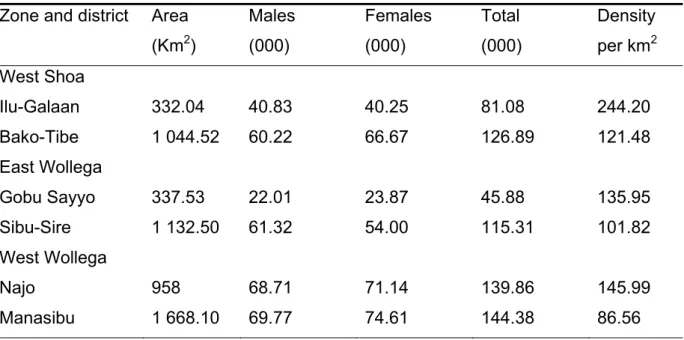
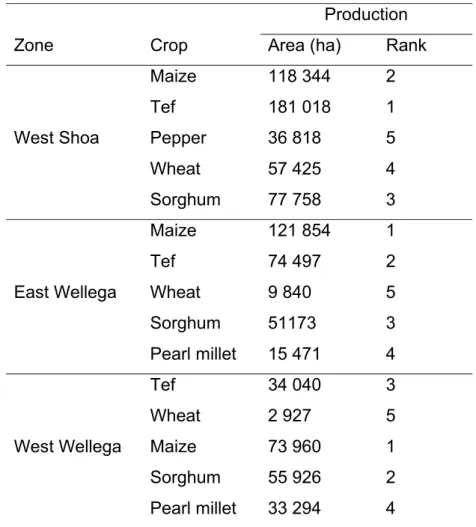
Therefore, the objective of the study was to assess the current importance and constraints of maize production and productivity in the mid-elevation subhumid agroecology of western Ethiopia. The study areas are located in a subhumid agroecology at mid-altitude where maize is grown as the dominant cereal crop. Secondary data were obtained from the zonal and district agricultural offices of the respective districts included in the study areas.
Results and discussion
- Demography, socio-economic characters and main food crops grown
- Maize varieties grown
- Farmers’ preferences of maize varieties
- Major constraints to maize production
- Focus group discussion
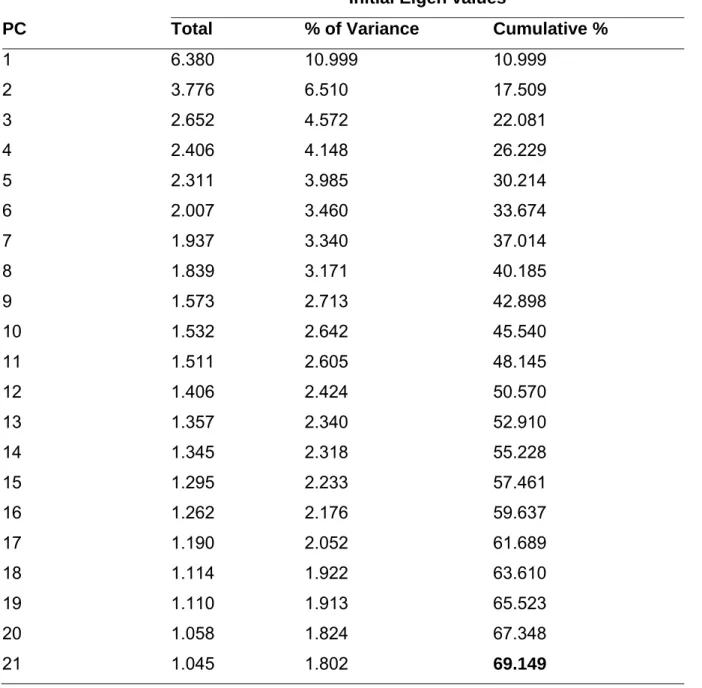
- Principal component analysis
Fluctuation of maize grain prices is also one of the main constraints in the maize market affecting maize production in the study areas. Farmers in the studied areas (80.8%) cited the unpredictable price of grain as the main financial problem (Table 2.8). Farmers identified, listed and ranked the problems according to their priority of limitation in the studied areas.
Conclusion
Assessment of losses in yield and yield components of maize varieties due to gray leaf spot. Adoption of maize and wheat technologies in East Africa: a synthesis of the findings of 22 case studies. Participatory Selection of Drought Tolerant Maize Varieties Using Mother and Baby Methodology: A Case Study in the Semi-Arid Zones of the Central Rift Valley of Ethiopia.
Abstract
Introduction
Therefore, strategic breeding for the development of resistant cultivars is crucial in areas where the disease reaches epidemic proportions (Girma et al., 2008). Typically, the resistance conferred by the Htn gene is expressed as a delay in lesion formation and the presence of fewer lesions (Gevers, 1975; Ogiliari et al., 2005). However, some commercial cultivars and elite parental inbred lines are reported to be susceptible to Turcicum leaf blight (Njuguna et al., 1990; Muthinda 1997; Welz and Geiger, 2000).
Materials and Methods
- Plant material and study site
- Field experiments
- Leaf blight inoculums collection and preparation
- Leaf blight inoculation
- Data collection and analysis
- Disease assessment
- The area under disease progress curve (AUDPC)
- Yield and thousand seed weight
- Data analysis
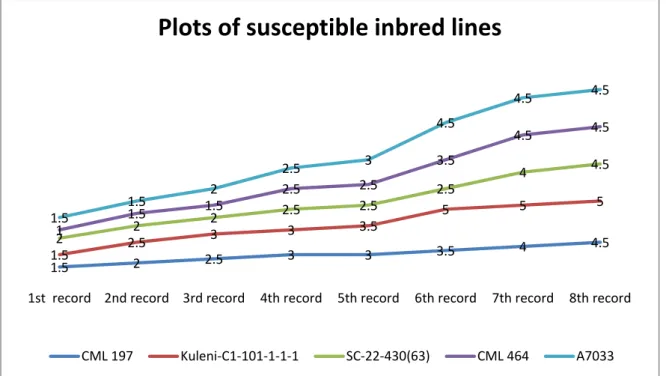
The selected lines can be used in resistance breeding programs to minimize losses due to Turcicum leaf blight in maize. Northern corn leaf blight was visually assessed in the field 2–3 weeks after inoculation during each year. Northern blight data were recorded at 10-day intervals starting from disease onset (7 times) each year throughout the growing season.
Results and discussion
- Disease development
- Lesion length
- Disease severity and AUDPC
- Correlation analysis
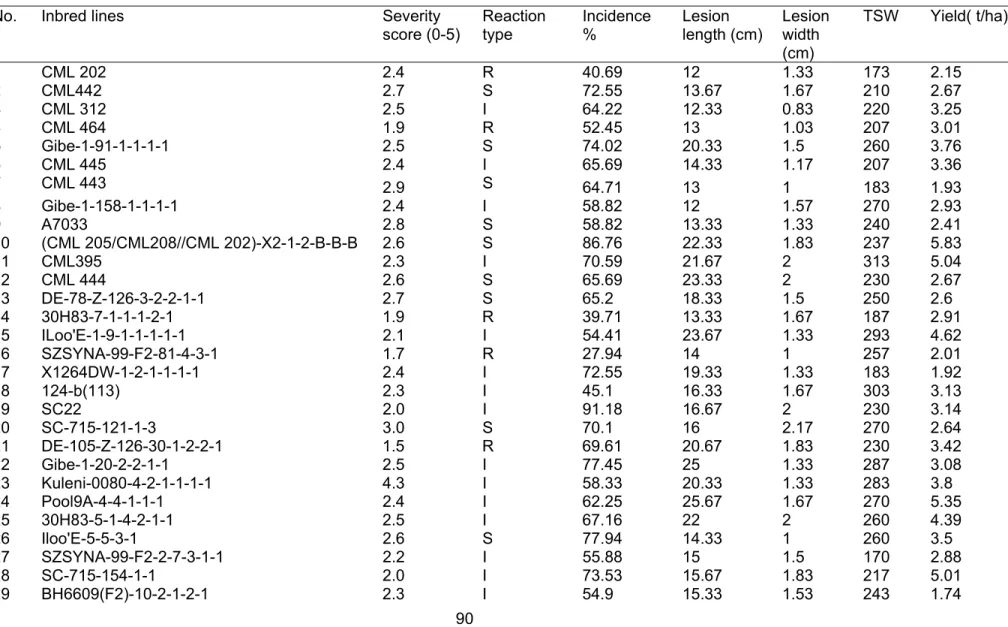
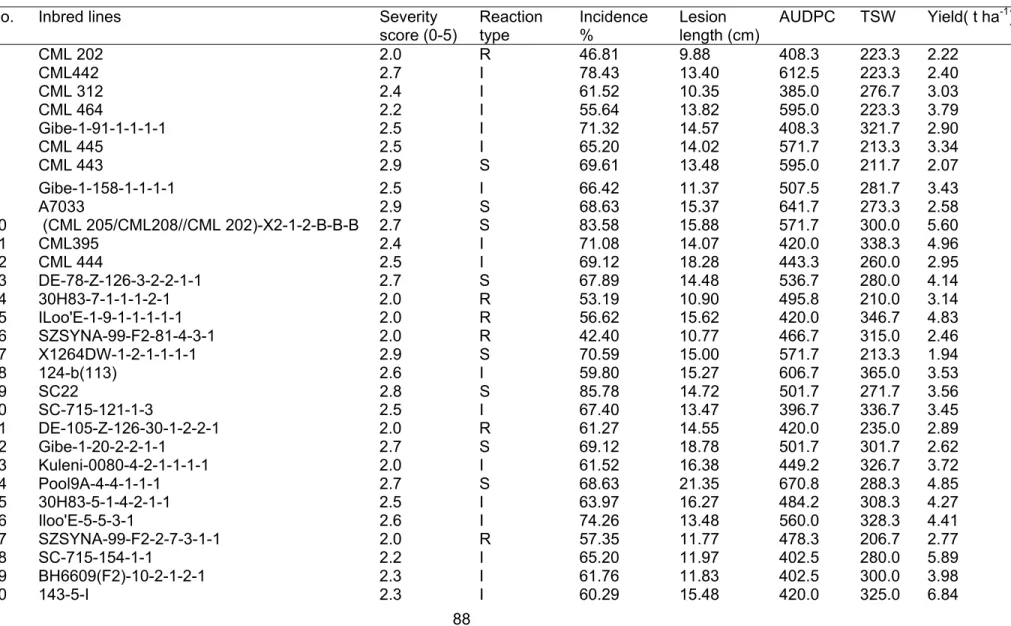
There were highly significant differences (p < 0.001) for lesion length among inbred lines tested in 2011 and 2012. The minimum spanning tree (Figure 3.3) grouped the tested inbred lines using the four disease parameters in this study (AUDPC, disease severity, incidence and lesion length) . The resistant inbred lines will be used for the creation of hybrids to incorporate NCLB resistance.
Conclusions
Combining the potential of maize inbred lines for grain yield and response to gray leaf spot. Preferences and constraints of maize farmers in the development and adoption of improved varieties in the mid-elevation sub-humid agroecology of western Ethiopia. Cloning and characterization of xylanase genes from phytophatogenic fungi with a special reference to Helminthosporium turcicum, the cause of northern maize leaf blight.
- Abstract
- Introduction
- Material and Methods
- Plant materials
- DNA sampling
- SSR analysis
- Results and Discussion
- Genetic polymorphisms
- Cluster analysis
- Conclusions
SSR analysis of genetic diversity among inbred maize lines adapted to cold regions of Japan. Comparative analysis of genetic similarity between maize inbred lines detected by RFLPs, RAPDs, SSRs and AFLPs. Comparison of genetic diversity among maize inbred lines based on RFLPs, SSRs, AFLPs and RAPDs.
Abstract
Introduction
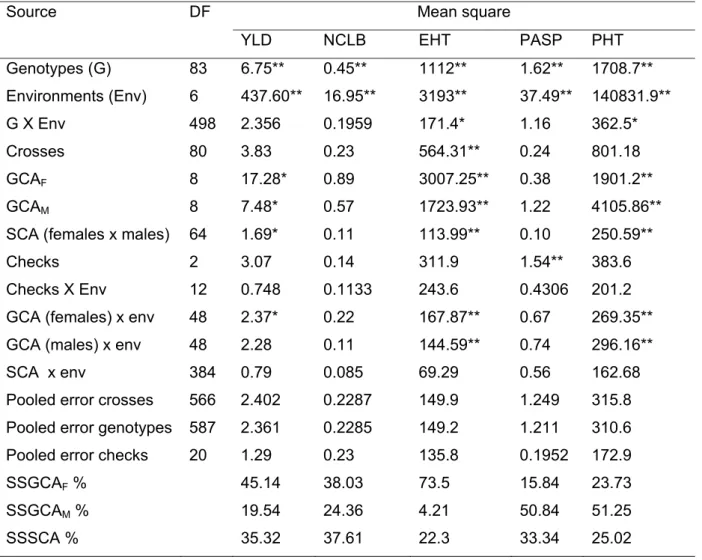
In maize hybrid programs, GCA and SCA effects are important indicators of the potential value of inbred lines and hybrids, respectively. Consequently, detailed information on the combining ability and heterosis of newly developed inbred lines must be determined for hybrid breeding. Therefore, the objective of this study was to determine the combining ability and heterosis among 18 elite maize lines and their hybrids in different mid-altitude tropical environments in Ethiopia.
Materials and methods
- Plant materials and mating design
- Description of experimental sites
- Experimental design and data collection
- Data analysis
- Estimation of combining ability effects
- Estimation of General Combining Ability Effects
- Estimation of specific combining ability effects
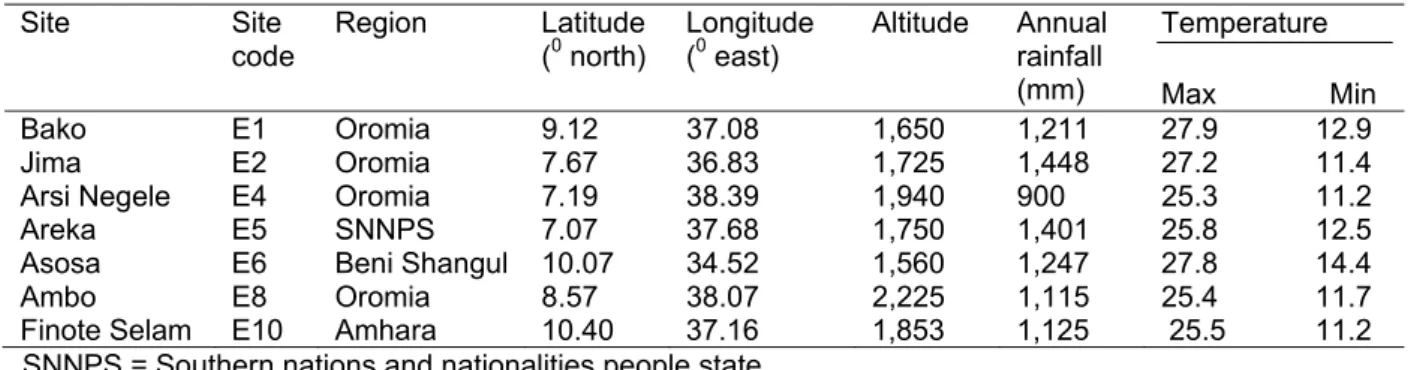
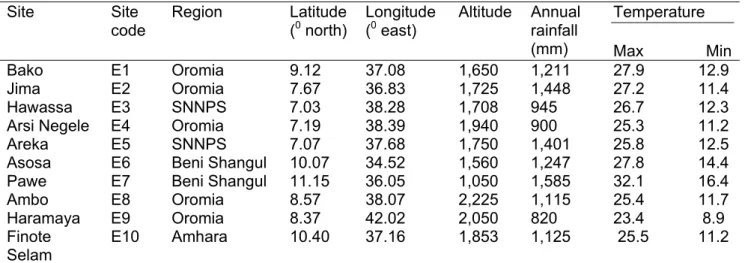
All locations are among the major maize evaluation sites in Ethiopia and are believed to represent the maize growing regions of the country. Trials were conducted under rain fed conditions and other management practices were followed as per site specific recommendations. Female and Male GCA effects were calculated as a deviation of the male or female mean from the all-hybrid mean following Singh and Chaudhary (1985).
Results and discussion
- Combined analysis of variance
- General combining ability of females
- General Combining Ability of males
- Specific Combining Ability effects
- Heterosis
The GCA effects of the nine female parents for grain yield, NCLB response, plant height, ear height, and plant aspect are summarized in Table 5.5. The GCA effects of the male parents on grain yield, NCLB response, plant height, ear height and plant aspect are shown in Table 5.6. Similarly, the GCA effects of the male lines on corn leaf disease response, plant height, ear height, and plant aspect are shown in Table 5.6.
Conclusions
Combining ability analysis for traits of agronomic importance in maize (Zea mays L.) inbred lines with different levels of resistance to gray leaf spot (Cercospora Zea maydis). Combining ability analysis for yield and yield-related traits in quality protein maize (QPM) inbred lines. Combining ability analysis for yield and related traits in quality protein maize (Zea mays L.) inbred lines.
Abstract
Introduction
Yield trials often have both significant main effects of genotype and environment and GEI (Zobel et al., 1988). Crossover interactions occur in evaluation trials when rankings of cultivars change across environments (Russell et al., 2003). The ordinary analysis of variance (ANOVA) fails to detect a significant interaction component, principal component analysis (PCA) fails to identify and separate the significant genotype and environment main effects, and linear regression (LR) only makes ' a small part of the interaction. sum of squares (Zobel et al., 1988).
Materials and methods
- Materials
- Description of the experimental sites
- Experimental design and data measurement
- Data analysis
The AMMI model, which combines standard analysis of variance with principal component analysis (Zobel et al., 1988), was used to investigate the nature of GEI. Biplots (GGE - biplot, 2009) were used to illustrate relationships between genotypes, environments and genotypes and environments. Both AMMI and GGE biplot methods were used to investigate the effects of G, E and GEI on grain yield of maize hybrids.
Results and discussion
- Combined analysis of variance
- AMMI biplot
- GGE biplot
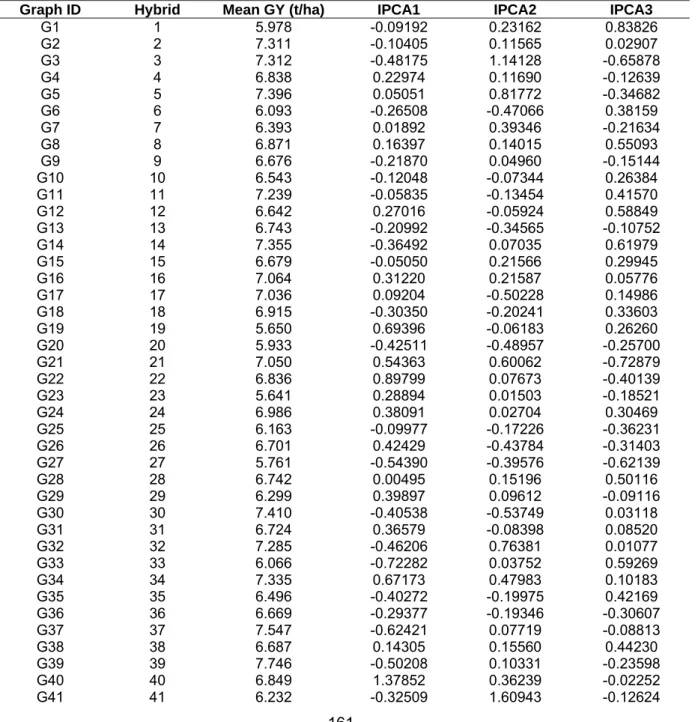
In Figure 6.1, the IPCA1 scores for both the hybrids (lowercase letters) and the environments (uppercase letters) are plotted against the mean yield for the hybrids and environments, respectively. The plot (Figure 6.1) of the hybrids and environments clearly shows the pattern of association. The IPCA scores for a genotype in the AMMI assay (Table 6.4 and Figure 6.1) are an indication of a genotype's stability across environments.
Conclusions
Léon (1988) stated that multivariate methods are too advanced to provide a simple measure of yield stability that allows ranking of genotypes. In the present study, the models clearly delineated the adaptation pattern of hybrids to the environment and can be used to identify the superior genotypes in relation to the environment. Three hybrids, namely G68, G40 and G52, were identified as stable hybrids by both AMMI-3 and GGE biplot methods for stability analysis, and therefore they can be recommended for further testing over the years or recommended for mid-altitude production, under humid conditions. areas of Ethiopia and similar environments in Sub-Saharan Africa.
Introduction and objectives of the study
Research findings in brief
- Assessments of the preferences and constraints of maize farmers in the development and
- The genetic variability of elite maize inbred lines for resistance to Exserohilum turcicum in the
- Genetic interrelationships among medium to late maturing tropical maize inbred lines using
- Heterosis and combining ability of grain yield and Northern Corn Leaf Blight resistance among
- Genotype by environment interaction and yield stability of maize hybrids developed to the mid-
To investigate genotype x environment interaction and yield stability of maize developed for the mid-elevation sub-humid agroecology. The study evaluated 81 newly developed maize hybrids and three local controls across 10 locations representing the mid-altitude sub-humid maize producing environments of Ethiopia. Overall, the study identified candidate single-cross hybrids such as G68, G2, G77 and G67 with high yield (> 7.5 t ha-1) and average stability for release in the mid-elevation sub-humid agroecology.
Implications of the research findings to breeding maize for higher yield and resistance to