General introduction
Background and identification of research question
Preliminary literature study and location of research
Research problem and objectives
Theoretical framework
Research design and methodology
Structure of the dissertation …
The meaning of healing in the Pentecostal and Charismatic Churches
Introduction
It became clear that the healing ministry had always been part of the RKK's mission. 63 An important reason for the records of the healing ministry of Jesus is to teach readers about him.
Background of Pentecostalism and Charismatic Movement in general
- Background of Pentecostalism in Cameroon
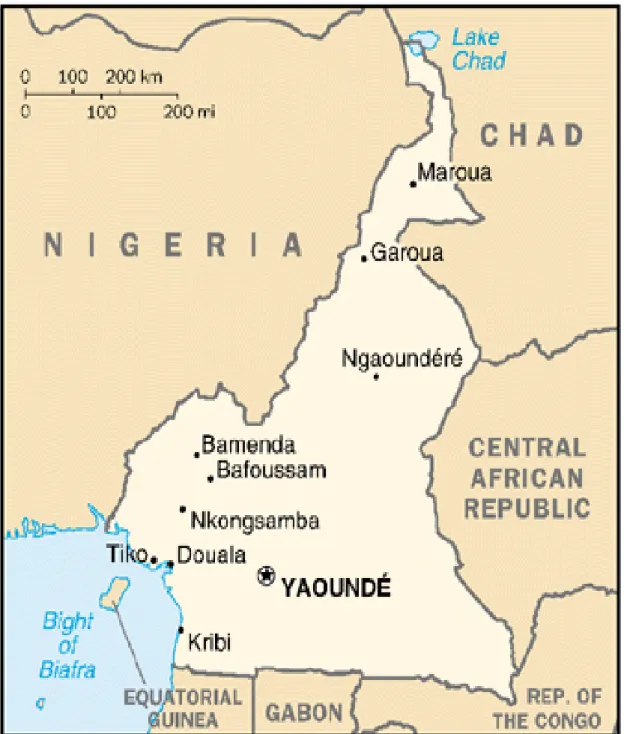
- Brief presentation of Cameroon
- Pentecostalism in Cameroon
Healing ministry in Pentecostalism
- African view on healing
Conclusion
But even [...] the Christian community had evidence of the healing power of Christ at work". He notes that the healing ministry is a symbiotic relationship between the priestly ministry and the ministry of healing – which is also the ministry of the sick. Because we are the Apostolic Church, and the Apostolic Church believes in the teaching of the apostles.
Therefore, understanding the mission of Jesus Christ is a key element in terms of understanding the importance of the healing ministry in the church.
Healing ministry in the RCC
Introduction
Jesus was the origin and raison d'être of the apostles' ministry in general and the healing ministry in particular. In the same way, there are many unauthorized healing priests who parade themselves in the Church and destroy the faith of the people. Because of the union with God, the healing service becomes a preparation for each individual to come to God.
It is a meeting place of two wills: the will of the healer and the will of God, the Healer.
Historical view on healing ministry in RCC
The healing in the sacraments
- The sacrament of penance and reconciliation
- The sacrament of anointing of the sick
- The sacrament of the Holy Eucharist
Internal challenge from the Catholic Charismatic Renewal
A return to the movement of the Holy Spirit became increasingly necessary because of the challenge of the PCC. As far as the RKC is concerned, the KKO movement has brought new insights or revived other aspects, including the central role of the Holy Spirit, a personal relationship with Jesus Christ, and an emphasis on the ministry of healing. Therefore, together with the Council's call for the renewal of the church and the CR, the first "CCR had a sense of mission in the Catholic Church" (Burgess 2003: 481).
One of the positive contributions of the SKR is the openness of the RKK to the ecumenical movement.
Conclusion
It is hoped that the new thematic concerns of the interviewees will help chart a more holistic, integrated, liberating and ecumenical trajectory for RCC's healing ministry. This Catholic priest traces the trajectory of the healing priesthood to the person of Christ and his divine mission. In light of this, the RCC becomes all the more suspicious of the healing ministry.
These themes, although less important than those discussed in this chapter, confirm that the ministry of healing is an important element in the life of the people and the life of the church.
Field work – Analysis and findings (Challenges to the RCC‟s mission)
Introduction
- Methodology
- Fieldwork report
One of these tools, which was used in this essay in the field of Theology, is the interview. For a number of reasons, only a few of the above themes will be discussed in the critical analysis section. First, not all of the topics are directly related to the purpose or goals of the essay; and secondly, because of the limitations on the space allocated for this dissertation.
The interviews took place in the house of the Pallottine Seminary, in the offices of some informants, in the verandas of private houses, in churches and in the libraries of institutions.
Content and critical analysis of the interviews
- Introductory remarks
- Thematic concern from the various interviews
- Dereliction of duty: Roman Catholic ministers and the healing ministry
- Healing a divine mandate
- Healing from witchcraft and evil machinations
- The business of healing: rapacious and dubious prophets
- Speaking in tongues
- The liberating power of healing
- Faith and healing
- Collaborative healing ministry: the spirit of ecumenism?
Every Roman Catholic priest should be interested [in the ministry of healing] because it is an integral part of the ministry. This is part of the mission of the one who wants to preach the good news. And in this direction, for me, I do not make a dichotomy between the life of a priest and life.
Additionally, Speaker Three notes that the Holy Spirit is the channel through which God communicates the healing touch: “Without the baptism of the Spirit, there is no healing ministry. Still on the subject of the difficulties experienced during the healing ministry, the twelfth speaker agrees with the Eleventh President that faith is an essential part of these difficulties. It is instructive to note that collaborative ministry is prioritized by a number of interviewees, as it paves the way for possible partnerships in the field of healing ministry between the two churches, that is, RCC and TACC.
Conclusion
From the incomprehension of healing and healing priests to the denial of miracle healing, from distrust to abuse of the ministry of healing, all affirm that the subject was worth investigating. This is a ministry for the healing of people in their entirety; This was a holistic healing ministry that brought smiles back into the lives of the people Jesus ministered to. Knowledge of God implies knowledge of the one who sent Jesus Christ.
This was to show everyone that the healing ministry and the healings that were accomplished were not intended to put on a show and draw people's attention to the person of the healer, nor to that of the healed. From Crisis to Kairos: The Church's Mission in the Time of HIV/AIDS, Refugees, and Poverty. How do you connect your ministry to the RCC's doctrine on healing and exorcism?
Theological Insights / reflection
Jesus the Healer
The healing mission of Jesus
Consequently, this goodness and innocence of all creation had to be restored after the fall. Saint Paul reminds: "we know that the whole creation has been groaning together in travail until now; and not only the creation, but we ourselves, who have the firstfruits of the Spirit, groan within as we await the adoption as children [sic], the redemption of our bodies” (Romans 8:22-23). 61 The Spirit of the Lord is upon me, because He has anointed me to bring glad tidings to the poor.
The will of the seeker, the sick, and the will of the healer, Jesus Christ, must be matched so as to produce the expected effects, bearing in mind that ultimately God is free to give healing or not; regardless of human involvement.
Why did Jesus heal? Healing: A foretaste of salvation?
This is an excellent summary of the guidelines for Jesus' healing activity, which any healing minister should follow and apply in their own ministry. The healing ministry in this case regains its original meaning which is the liberation and recovery of what was lost and then found, bringing Jesus and God back to the center and salvation as the climax of the healing ministry. Jesus' healing mission was to reveal God and draw the hearts of the people to God, not to focus on actual healing aspects, but rather to go to the source of healing and hope for life without pain in the kingdom, which salvation is.
Given the conditions prevailing on the African continent, many Africans yearn for healing and liberation.
The concept of wholeness/fullness in healing
They are asking for that moment of change, of transformation to happen in their lives, in their families, in their countries and in the continent at large. People want to feel better; they want to see change in themselves, in their families and in their environment, simply because this is the traditional African view of healing; to move from evil to a more acceptable state that encompasses the whole of life. 64 The healing that we want to define is essentially a supernatural work, a continuation of the liberating, saving and protective work of Jesus Christ [...] In our context healing means removing from a person a disturbance in life that acts as a deprivation of self-fulfillment and regarded as an unwanted parasite.
A holistic approach of the healing ministry is needed in the RCC in order to have a church consisting of liberated people who are active in their participation and are capable of a mature relationship with other Christians.
A call for unity through healing ministry
Just as you called me (for an interview), I never entered here, I only knew that this whole area was Catholic, but I never had the opportunity to enter here; but you called me. We talk and that's how it starts, we build a relationship gradually, tomorrow it grows and we start working together.
Conclusion …
What is needed is patience and forgiveness on the part of all and a greater awareness of the universal nature of the Church. Not only will they break down some barriers, but they will also create a forum of education for healing priests and believers. These recommendations are not based solely on observation, but are the result of data analysis.
I therefore give my permission for these conversations to be recorded and used for the purpose of the research.
General Conclusion
Introduction
This is why the healing ministry can include aspects such as healing memories, healing relationships, healing the wounds of sin, spiritual healing and of course physical healing. Asamoah-Gyadu provides an overview of the subject of this thesis, namely the healing ministry which is open to wholeness and the joy of God. One of the recurring questions during the fieldwork was that Scripture was identified as an area of equality between churches.
Many Catholic ministers agree that the revival of the ministry of healing within their church is indeed a challenge that comes to them through the Pentecostal and Charismatic Movement; and thus they are almost forced to adjust the mission and apostolate of their church by fitting healing elements within worship as well as using what is already needed.
Recommendations that emerge from the findings of study
Conclusion
The first point this dissertation makes is that there are many Catholics, both lay and ordained, who are involved in the healing ministry in Cameroon. This challenge comes with the rediscovery of many RCC healing priests that healing is not something that should be acquired separately, but is an integral part of their priestly ordination and therefore cannot be set aside. Future research and investigations can be conducted to deepen understanding of the factors associated with Christian involvement in healing ministry.
Healing and Salvation in Late Modernity: The Use and Implication of Such Terms in the Ecumenical Movement.”
Informed consent in French
Qualitative research tools
Speakers‟ denomination identifier