DO HOUSEHOLD COPING STRATEGIES MITIGATE PERCEIVED HOUSEHOLD FOOD INSECURITY AMONG SAMPLE HOUSHEOLDS IN DASSE ADMINISTRATIVE AREA,
GASH-BARKA ZONE, ERITREA?
January 2009
Yergalem Beraki
Submitted in partial fulfilment of the degree of MAgric (Food Security),
African Centre for Food Security,
School of Agricultural Science and Agribusiness, Faculty of Science and Agriculture,
University of KwaZulu-Natal,
Pietermaritzburg.
ii
ABSTRACT
This mini-dissertation sets out to examine the perceptions of farmers in the Dasse Administrative Area of Gash-Barka zone of the impact of agro-ecological, socioeconomic and infrastructural constraints on food insecurity, and the coping strategies employed by 101 sampled farm households in order to understand how these strategies increase vulnerability or mitigate the effect of food shortages.
Agricultural productivity was low and average cereal production provided only 39 per cent of annual household requirements. Self-sufficiency in grain obtained from own production sustained households for only four months a year. In line with this, the study examined the impact of agro-ecological, socio-economic, and infrastructural constraints to the problem of food insecurity as perceived by the farmers. Farmers perceived drought, erratic rainfall, and weed infestations as major agro-ecological constraints that hindered self-sufficiency in food production. Shortage of draught animals and labour and lack of cash and off-farm income, were most conceived socio-economic constraints that affected production. Lack of farm credit, health problem (malaria), and inadequate farmers advisory service were most perceived infrastructural constraints that affected production and household food security. This shows that food security interventions need to be built around mitigating these perceived causes.
The study also investigated coping strategies and their impact on increasing vulnerability or mitigating the effect of food shortages. The coping strategies applied by the studied households were largely consumption-based and non-erosive, indicating that households were relatively resilient to food security shocks. However, these strategies could be detrimental to the nutritional well being of household members, as they determined dietary intake. These coping strategies were particularly detrimental to household food security, as proper nutrition is critical for active and productive life. Thus, health and nutrition related interventions are highly required to address these problems. Food security interventions need to support livelihoods in ways that protect and buffer the natural resilience of households, providing direct assistance when erosive coping strategies are employed to ensure that households remain resilient to the fragile and variable situations in which they exist.
iii
DECLARATION
I, Yergalem Taages Beraki declare that:
• The research reported in this mini-dissertation, except where otherwise indicated, is my original research
• This mini-dissertation has not been submitted for any degree or examination at any other university
• This mini-dissertation does not contain other persons’ data, pictures, graphs or other information, unless specifically acknowledged as being sourced from those persons.
• This mini-dissertation does not contain other authors’ writing, unless specifically acknowledged as being sourced from other authors. Where other written sources have been quoted:
their words have been re-written but the general information attributed to them has been referenced
and their exact words have been used, their writing has been placed inside quotation marks and referenced
• This mini-dissertation does not contain text, graphics or tables that have been copied and pasted from the Internet, unless specifically acknowledged, and their source being detailed in the thesis and in the reference sections
Signed:
……… Date 30 January 2009
As Supervisor, I agree to submission of this mini-dissertation for examination.
Signed: ……… Date Prof Sheryl L Hendriks
iv
ACKNOWLEDGEMENTS
This study could not have been undertaken without the generous assistance of many individuals and institutions. I am grateful to a number of individuals who provided important support and comments in the course of the study, and for preparing this document.
I am especially grateful to my supervisor, Professor Sheryl Hendriks (Director: African Centre for Food Security) who unreservedly reviewed this document and provided me with constructive and insightful advice. Her patience and prompt reaction during all phases of preparation of this document are most appreciated.
I am also grateful to Mr. Eyob Ghezae (Socio-economist: United Nations Development Programme (UNDP) Eritrea) for his comments and advice that were so important in refining the methodological issues for the fieldwork. His unreserved comments on earlier drafts were also especially useful.
Mr Ephraim Tekleab (Deputy representative: Food and Agricultural Organisation of the United Nations (FAO) Eritrea) and Mr. Semere Ghebrehiwot (Director: Plant Health and Quarantine Department, Ministry of Agriculture, Eritrea) were instrumental at the early stages of defining this activity, and commented on an earlier draft.
Sincere appreciation goes to Ermias Beyene (Food Security Advisor: Oxfam Great Britain, South Sudan Programme) for his conscientious reading and constructive comments.
This document has also benefited from the considerable input of Mr Archangello Osman (Field Officer, United Nations Higher Commission for Refugees (UNHCR), Eritrea) and the field team who were involved in household interviews and focus group discussions.
v
Many thanks also to the staff of the Ministry of Agriculture of Gash-Barka zone for providing me with valuable data and information, as well as the transport support during my fieldwork in the zone.
My special thanks go to my wife Rahel Hailu for taking care of our children and bearing the family responsibilities during my study. Without her moral support and encouragements, I would not have been able to complete this work.
Special thanks are also due to my mother Tekea Ghebreweldi who has always been humbly supportive of all my undertakings, including this study.
Lastly, but most importantly, I would like to extend my deepest appreciation to all the households visited in Dasse Administrative area, without whose insights and kind participation this study would not have been possible.
vi
TABLE OF CONTENTS ABSTRACT DECLARATION ...III ACKNOWLEDGEMENTS ... IV LIST OF FIGURES ... VIII LIST OF TABLES ... IX CHAPTER 1: THE PROBLEM AND ITS SETTINGS... 1
1.1 Household food insecurity in Eritrea ... 1
1.2 Food insecurity in Gash-Barka zone... 4
1.3 Introduction to the research problem ... 6
1.4 Statement of the problem ... 7
1.5 Sub-problems ... 7
1.6 Study limits ... 8
1.7 Assumptions... 8
1.8 Organisation of the mini-dissertation... 8
CHAPTER 2: REVIEW OF RELATED LITRATURE ... 10
2.1 Conceptual framework for food security ... 10
2.2 Sustainable livelihoods and food security... 13
2.3 Understanding household coping strategies... 14
2.4 Food security in Africa ... 16
2.5 Food security in IGAD Sub-Region ... 19
2.6 Household food security coping strategies in Eritrea ... 22
2.7 Measuring household food security ... 23
2.8 Summary ... 25
CHAPTER 3: RESEARCH METHODOLOGY ... 26
3.1 Research design ... 26
3.2 Sampling ... 26
3.3 Data collection tools ... 27
3.4 Data analysis ... 29
CHAPTER 4: CHARACTERSTICS OF THE STUDY AREA ... 32
4.1 Country background... 32
4.2 Gash-Barka zone... 32
4.3 Characteristics of Dasse Administrative Area ... 36
CHAPTER 5: RESULTS AND DISCUSSIONS... 44
5.1 Agricultural production and household food security ... 44
5.2 Seasonality of food shortages ... 47
5.3 Perceived causes of household food insecurity ... 49
5.4 Household coping strategies ... 53
vii
CHAPTER 6: CONCLUSIONS AND RECOMMENDATIONS... 67
6.1 Conclusions... 68
6.2 Recommendations for improving household food insecurity... 69
6.3 Recommendations for further research ... 70
REFERENCES... 72
Appendix A: Household food security survey questionnaire ... 1
Appendix B: Check lists for focus group (FG) discussions ... 5
Appendix C: Source of food and income ... 7
Appendix D: Food aid distribution ... 8
Appendix E: Severity of coping strategies ... 9
viii
LIST OF FIGURES Figure 2.1 Sustainable Livelihoods Framework………...13
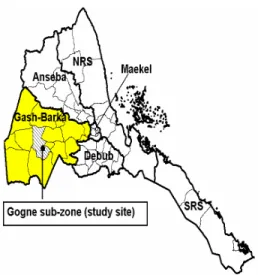
Figure 4.1 Map of Eritrea that locates the study area…...………...32
Figure 4.2 Photographs of agricultural activities in the study area………35
Figure 4.3 Cultivated area and productivity per unit of land of cereals...37
Figure 5.1 Months of severe food shortages as perceived by farm households………...48
Figure 5.2 Months of no food shortages as perceived by farm households………...48
Figure 5.3 CSI score by perceived agro-ecological causes of food security………..…....64
Figure 5.4 CSI score by perceived socio-economic causes of household food insecurity…….64
Figure 5.5 CSI score by perceived infrastructural causes of household food insecurity……....65
ix
LIST OF TABLES Table 1.1: Causes of food insecurity at national and household level in Eritrea... 3
Table 2.1: Causes of food crisis in Africa... 18
Table 2.2: Nutritional indicators in IGAD member countries ... 20
Table 3.1: Coping strategy questions... 30
Table 4.1: Cereal production in Gash-Barka zone between 1999-2003 ... 36
Table 4.2: Households’ composition by gender in Dasse Administrative Area ... 38
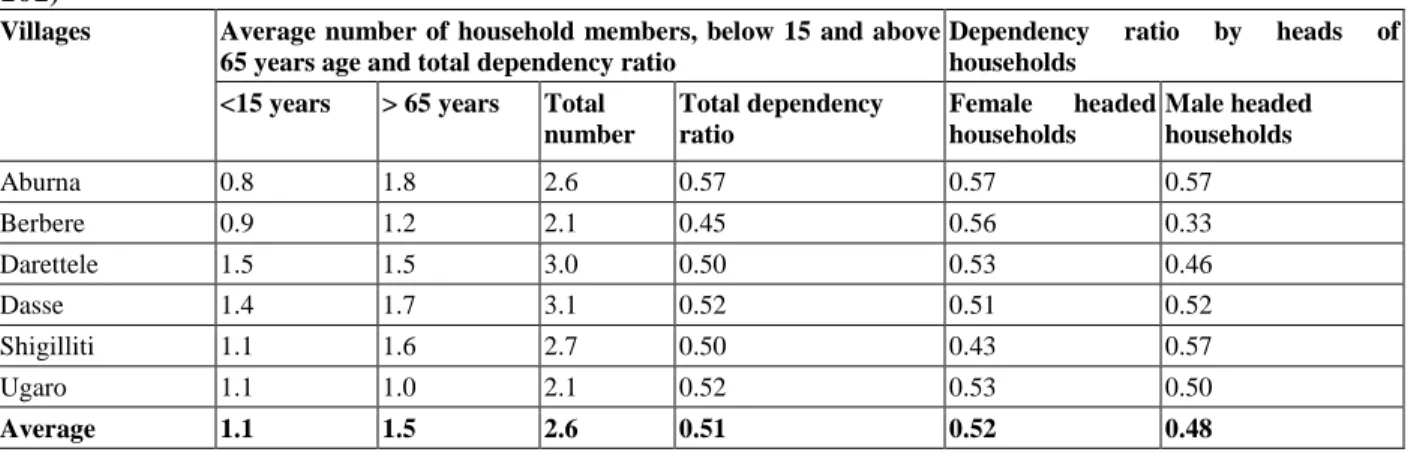
Table 4.3: Households’ age dependency ratio in Dasse Administrative Area... 39
Table 4.4: Education levels of the sampled households ... 40
Table 4.5: Productivity of major crops under good and bad year conditions ... 41
Table 4.6: Average landholdings in Dasse Administrative Area... 42
Table 4.7: Average land holding size by villages in Dasse Administrative area... 42
Table 4.8: Livestock holdings in Dasse Administrative Area ... 43
Table 4.9: Household average livestock holdings by villages, ... 43
Table 5.1: Demographic information of surveyed households ... 46
Table 5.2: Productive asset ownership and food security situation ... 47
Table 5.3: Price of sorghum in Barentu market 1998 -2005 average ... 49
Table 5.4: Farmers’ perceptions of agro-ecological constraints causing food shortage... 50
Table 5.5: Perceived socio-economic constraints causing food shortages to households ... 52
Table 5.6: Infrastructural constraints to agricultural production ... 53
Table 5.7: Frequency of coping strategies by households using coping strategies ... 55
Table 5. 8 Coping Strategy Index (CSI) in Dasse Administrative Area. ... 57
Table 5.9: Severity level and frequency of application of coping strategies ... 58
Table 5.10: Coping strategy categories commonly applied in the study area ... 59
Table 5.11: Coping strategy index by gender of household head ... 60
Table 5.12: Spearman’s correlation coefficient for coping strategies ... 62
Table 5.13: Correlations between CSI and household characteristics ... 63
Table 5.14: Correlations between CSI and perceived causes of household food insecurity ... 66
1
CHAPTER 1: THE PROBLEM AND ITS SETTINGS
1.1 Household food insecurity in Eritrea
According to the United Nations Food and Agricultural Organisation (FAO) and the World Food Programme (WFP) Crop and Food Supply Assessment Mission’s (CFSAM) 2004 report (FAO/WFP 2004) Eritrea is among the least developed countries that experience chronic food deficits in the world. The per capita Gross Domestic Product (GDP) (about US$200 in 2001) declined by an additional 1.2 per cent in 2002 after severe drought induced the collapse of agricultural production. The overall poverty estimate for Eritrea is 66 per cent (where 6.6 out of 10 persons are living below the minimum threshold standard of living). Among these, approximately 37 per cent are living in extreme poverty (National Statistics and Evaluation Office (NSEO) 2003).
In good years, the country produces about 60 - 70 per cent of its total food needs, while in low production years, not more than 25 per cent of food needs is produced (Ministry of Agriculture (MOA) 2001). During the last decade, the country’s per capita cereal production fluctuated from an annual low of 29 kg per capita in 1996 to 148 kg in 1998 (MOA 2001). Once in every ten years the country is threatened with famine. This national food insecurity translates into widespread household food insecurity (Government of the State of Eritrea (GSE) 2004) and leaves many farming households entirely dependent on food aid for most of their food needs (Hansen 1994).
On average, from 1993-2003, domestic food production met less than half of national requirements, and cereal production met only about 40 per cent of the total cereal requirements (140 kgs per person per annum). Food vulnerability has increased as a result of Eritrea’s extremely limited and declining commercial food import capacity on the one hand, and because people face increasingly stressful situations in trying to cope (FAO/WFP 2004) on the other.
Moreover, the GSE (2004) explained that increasing the food supply alone would not eliminate this problem, since it would not necessarily improve the incomes and purchasing power of the poor. The lack of food security is associated with a lack of purchasing power of people and nations. The scope and depth of poverty and food insecurity problems in Eritrea manifested
2
directly in the inadequacy of farm output by households, lack of access to food which is related to poor purchasing power of households, and the inadequacy of food intake, reflected by malnutrition and vulnerability to disease. The poor have the least access to resources, entitlements, employment opportunities and income. They are also the most vulnerable to acute food insecurity when external shocks, such as drought or migratory pests, such as locusts, cause food shortages. Thus, there is a strong convergence between the objectives of reducing poverty and increasing food security (GSE 2004).
Agriculture is the mainstay of Eritrea’s economy, with more than 80 per cent of Eritrean households depending on agricultural livelihoods. While explaining the negative effect of this situation, the GSE (2004) outlined that, due to heavy dependence on crop production, harvest failure leads to household food deficits. Concomittantly, food prices also rise, which makes vulnerability to food insecurity severe. According to GSE (2004) long-term factors such as the interaction between the environment, high population growth, diminishing land holding sizes, and a lack of on-farm technology innovation have led to a significant decline in productivity per household. The falling crop yields that characterise marginal areas are a result of the loss of massive quantities of topsoil throughout the country; declining soil fertility; a reduction in soil organic matter as manure is burnt for fuel; and shrinking holding sizes. These trends, combined with drought, have substantially eroded the productive assets of communities and households. A loss of community assets (e.g. pasture and forest) has led to increasing environmental degradation and increased pressure on farms, leading to declining investment in soil and water conservation practices. More importantly, households are less able to cope with shocks because they cannot accumulate savings (e.g. livestock holdings and food stores) even in good years.
(GSE 2004); this is mainly due to poor asset base and low levels of agricultural productivity.
Food insecurity and malnutrition are realities faced by rural households (GSE 2004). Iannotli et al. (1998) pointed out that the food and nutrition situation in Eritrea is complex, given the post- war context, ongoing drought and persistent poverty. Rates of malnutrition are among the highest in the world. The situation is especially tenuous for infants, children under three years and women. Micronutrient deficiencies, particularly vitamin A, iron and iodine, are also a serious problem. There are few income-generating activities in the country other than agricultural related
3
incomes to provide households with the means to additional food. Other problems related to the utilisation of food, such as disease, limited access to healthcare, and low levels of knowledge, also contribute heavily to malnutrition.
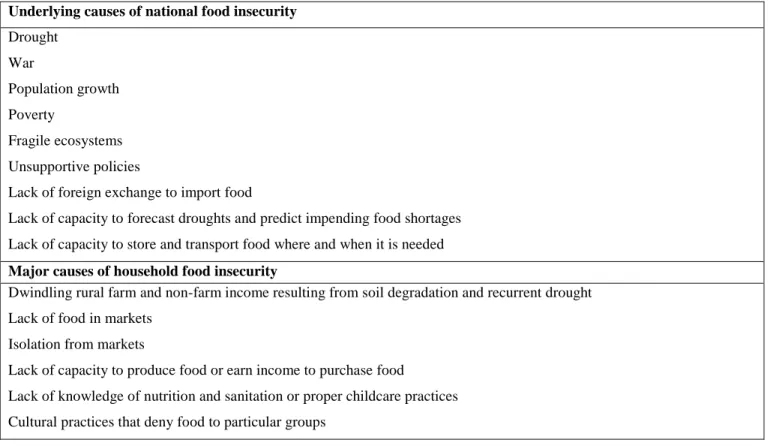
Soil degradation and recurrent drought lead to dwindling rural farm and non-farm income, resulting in a growing number of people migrating to urban centres, seeking opportunities for employment and income. The HIV/AIDS pandemic has led to increased food insecurity and vulnerability, in both urban and rural communities (GSE 2004). Generally, although drought and war are the main factors that have exacerbated the food security problem in Eritrea, there are other factors that cause food insecurity and are listed in Table 1.1.
Table 1.1: Causes of food insecurity at national and household level in Eritrea (MOA 2001, 2004) Underlying causes of national food insecurity
Drought War
Population growth Poverty
Fragile ecosystems Unsupportive policies
Lack of foreign exchange to import food
Lack of capacity to forecast droughts and predict impending food shortages Lack of capacity to store and transport food where and when it is needed Major causes of household food insecurity
Dwindling rural farm and non-farm income resulting from soil degradation and recurrent drought Lack of food in markets
Isolation from markets
Lack of capacity to produce food or earn income to purchase food
Lack of knowledge of nutrition and sanitation or proper childcare practices Cultural practices that deny food to particular groups
4 1.2 Food insecurity in Gash-Barka zone
Gash-Barka zone is part of the Sudano-Sahelian agro-climatic zone and covers 27 per cent of Eritrea’s total land area (IFAD 2002). With an area of 370,000 square kilometres (KM) it is the largest of the six zones in Eritrea. The majority of Eritrea’s national cereal stock comes from Gash-Barka zone, as represented by 37 per cent of the cultivated land and 40 per cent of national production (FEWS NET 2004). However, the people of Gash-Barka zone have experienced severe food insecurity, triggered by a combination of factors that include war, recurrent droughts and poor productivity of the agriculture and livestock production system (Eyob 1999, Hansen 1994, IFAD 2002).
This zone has faced thirty years of war, ending in 1991, a widespread severe drought that killed people and destroyed crops and livestock in 1984 - 85, and a less severe drought between 1989- 91 (Hansen 1994). The situation showed some improvement between 1991 and 1998. Due to its proximity to the border with Ethiopia, and as a major battlefield during the recent war and previous war for independence, the livelihoods of the people of Dasse Administrative Area are severely threatened by the death of people and livestock, migration of people, and destruction of farming and productive resources (Eyob 1999). This situation has been aggravated by recurrent droughts that adversely affect agricultural production, leading to fluctuations in per capita production, a constant consumption gap (Eyob 1999) and widespread poverty.
Gash-Barka zone has experienced long-term problems that affect food security. Due to the long- term wars for independence, many farmers have sacrificed their lives for independence and many others have migrated, leaving their families, villages and country. This has caused a tremendous increase in the number of female-headed households. Hence, women have taken over the responsibility for agriculture, including those tasks that were traditionally carried by males (Hansen 1994).
According to the International Fund for Agricultural Development (IFAD 2002) two-thirds of households in Gash-Barka zone categorise themselves as poor, and are unable to produce enough food to satisfy household food requirements. In years of average rainfall, just 10 per cent of
5
households are categorised as food secure. Livestock and crop production for household consumption are the main sources of income, although the poorest households - many of them headed by females - rely on cash or food-for-work programmes and food donations because they have no livestock and few labour resources. The role of women varies greatly among the ethnic groups and ranges from women doing most of the work around the homestead in some agro- pastoralist communities, to an almost complete seclusion of women in certain pastoralist communities (IFAD 2002).
Discussing the economic situation of the people in Gash-Barka, IFAD (2002) pointed out that the people of Gash-Barka are poor because they depend on low-productivity crop and livestock enterprises, have few other opportunities for generating income, and cannot easily gain access to essential social services. Low and unreliable rainfall, malaria, tuberculosis, diarrhoea and mother and child health problems generally constitute the greatest livelihood risks.
Livestock play an important social and economic role, not only for pastoralists and agro- pastoralists, but also for agriculturalists. They are a source of food and cash income, a means of capitalisation, and a source of wealth and work (as draught and pack animals). Livestock are also an important buffer/insurance against droughts and other crises (Bonfiglioli 1998). Bonfiglioli further stated that due to ecological fragility, seasonal extremes and variability of resources, livestock production has always constituted an important ecological adaptation, and for centuries has permitted communities to survive and develop.
For Eritrean agriculturalists and agro-pastoralists, seasonal mobility of animals is a strategy aimed at sourcing forage and/or escaping localised shortages of rangelands and feed (Bonfiglioli 1998). Its main purpose is to bring animals into areas where more abundant and better pasture may be found. Contrary to the transhumance of pastoralist groups, for the large majority of agriculturalists and agro-pastoralists, seasonal movement is limited. Hansen (1994) pointed out that there appear to be four general patterns of transhumance in Gash-Barka. The first pattern is total stability, when the village stays in one spot and the people remain in the same house all year. A second pattern involves the entire village moving seasonally from one site to the other.
The third pattern involves farmers moving to the fields during all or part of the cropping season.
6
The fourth pattern concerns people with more livestock, where one or more men live away from the village for part of the year herding the livestock (Hansen 1994).
1.3 Introduction to the research problem
While the food insecurity problem is recognised as a severe and major development challenge by the government, as stated in its National Food Security Strategy Paper (GSE 2004) adequate information on food insecurity is scant. Although local communities in Gash-Barka zone employ many coping strategies in response to the food crisis, these strategies are often damaging to livelihood sustainability and incur risks that may actually increase vulnerability to food insecurity in the long term (Hansen 1994). The effectiveness of food insecurity coping strategies in achieving food security in Eritrea has not been investigated. CARE/WFP/ERREC included coping strategies as one of the indicators in the 2003 Eritrea Rural Livelihood Survey, but no research into the impact of these strategies on household resilience has been conducted.
In order to plan appropriate food security interventions, decision makers need to appreciate why people are food insecure. People’s own perceptions of the causes and determinants of food insecurity are an important aspect of understanding household food security and how coping strategies perpetuate or mitigate household vulnerability. Policy and programmes designed to address food insecurity in sustainable ways need to recognise the diversity of food security strategies and support the natural resiliency of households. Policy priorities should provide households and individuals with choices regarding support that contribute to self-determination and autonomy in livelihood strategies (Chang 2005).
The aim of this study is to examine farmers’ perceptions of the impact of agro-ecological, socio- economic and infrastructural constraints on food insecurity and the coping strategies employed by farm households, in order to understand how coping strategies applied by the households increase vulnerability or mitigate the effect of food shortages in the Dasse Administrative Area of Gash-Barka zone. The study contributes to current knowledge of the food security situation in Gash-Barka zone, and develops an understanding of how household coping strategies affect future household food security – an element that food security and agricultural development
7
project reports, such as the IFAD Agricultural and Livestock Development Project report of 2002 and other documents, have failed to address.
This study, therefore, has both basic (academic) and applied (practical) purposes and will contribute to addressing the literature gap regarding the causes, duration and dimensions of food insecurity and coping strategies. It will contribute to improved food security information systems and improve knowledge and understanding of the livelihood systems required to better manage humanitarian interventions, and safeguard the food and livelihood security of vulnerable groups and households. It will thus also help the government’s policy and strategy development aimed at reducing food insecurity in Eritrea.
1.4 Statement of the problem
The aim of this study is to examine farmers’ perceptions of the impact of agro-ecological, socio- economic and infrastructural constraints on food insecurity and the coping strategies employed by farm households, in order to understand how coping strategies applied by the households increase vulnerability or mitigate the effect of food shortages in the Dasse Administrative Area of Gash-Barka zone.
1.5 Sub-problems
In order to address the above research problem, the researcher has identified the following sub- problems:
Sub-problem one: How do households perceive the impact of each of agro-ecological, socio- economic, and infrastructural constraints to the problem of household food insecurity?
Sub-problem two: What coping strategies do households employ and how do the coping strategies applied by the households increase vulnerability or mitigate the effect of food shortages in the Dasse Administrative Area of Gash-Barka zone?
8 1.6 Study limits
No substantial research in the area of food security at national and household levels has been conducted in Eritrea. Therefore, there is a dearth of adequate reference materials for comparisons and examination of historical trends.
This study relies on survey data that is limited by the memory of individuals from sample households, who could only recall the current situation and recent past. Moreover, due to the unstable socio-economic environment and the highly fragile eco-system with its climatic irregularity, the current study may not give an adequate retrospective overview of the food insecurity situation of the study area.
Due to the fact that the Gash-Barka zone is a relatively large region, the study focused on a few villages in the Dasse Administrative Area that are predominantly inhabited by the Kunama ethnic group. Hence, the study does not give a comprehensive picture of the situation in the zone as a whole. Due to difficulties in obtaining detailed livestock information, the study focused on crops data to determine the per capita energy intake, and may not give an all-round picture of the food insecurity situation in the study area.
1.7 Assumptions
The following assumptions were made in this study:
• Taking into account the high degree of homogeneity in the livelihood systems of the people of the study area, the sample size (10 per cent of total household number) has been assumed to be representative of people in the areas under investigation
• It was assumed that the information provided by people was honest and a true reflection of their circumstances
1.8 Organisation of the mini-dissertation
This mini-dissertation has six chapters. The first chapter has presented the problem and its settings. Chapter two will present a review of the related literature that includes food security concepts and definitions, livelihood concepts, dimensions of food security in Africa and IGAD
9
sub-region, food security measurement and coping strategy theory. Chapter three provides the research methodology and includes the methods and procedures employed to answer the research questions. Chapter four presents characteristics of the study area and describes the demographic and socio-economic situation. Chapter five presents the results and discussions. Finally, concluding remarks and recommendations are presented in chapter six.
10
CHAPTER 2: REVIEW OF RELATED LITRATURE
The literature review for the study is organised into seven major sections. First, food security concepts and definitions are presented. Second, the sustainable livelihood framework is outlined and its relationship to food security coping strategies is explained. Third, the food security situation in Africa and the IGAD region is presented. Next, the available literature on household coping strategies in Eritrea is summarised. Finally, the measurement of food security and coping strategies is explored in order to establish a theoretical base for the methodology presented in Chapter 3.
2.1 Conceptual framework for food security
To establish a common understanding of food security and a better understanding of why so many people are food insecure, this section will discuss food security concepts and definitions through a review of the available literature.
The most frequently cited definitions of food security revolve around that proposed over a decade ago by the World Bank that suggests that food security is “access by all people at all times to sufficient food for an active, healthy life” (World Bank 1986, pp 1), although some authors have counted as many as 200 different definitions (Smith et al. 1992). The World Bank definition is generally accepted as it includes not only food availability (adequate supply of food) but also food access through home production, purchases in the market or food transfers.
Hoddinot (1999a) notes that adequate access to food can be achieved without households being self-sufficient in their own food production. More important is the ability of households to generate sufficient income, which, together with their own production, can meet food needs.
More recent definitions of the concept of food security introduce a third dimension, utilisation, which refers to the appropriate biophysical conditions (good health) an individual requires to adequately utilise food to meet specific dietary needs. This is referred to as nutrition security.
Very recently the issue of sustainability has been (or has started to be) attached to food security.
The concept of sustainability stresses the temporal dimensions of food security, where the food supplies must be sustainable through seasons and from year to year in order to remove the fear of
11
food insecurity (Food and Agriculture Organisation(FAO)/World Health Organisation (WHO) 1992).
Benson (2004) outlines the fact that nutrition security is achieved when secure access to food is coupled with a good sanitary environment, adequate access to health services and knowledgeable care, to ensure a healthy and active life for all household members. In trying to differentiate nutrition security from food security, Chang (2005) points out that food security is necessary, but not sufficient for adequate nutrition. This is because individual nutritional status depends not only on how much food is consumed, but also on how the human body actually makes use of the nutrients in the food that is consumed.
In line with this concept, a comprehensive technical food security definition was given in a draft document prepared by the United Nations Administrative Committee on Coordination/Subcommittee on Nutrition (UN ACC/SCN) according to which “a household is food secure when it has access to the food needed for a healthy life for all its members’’ (UN ACC/SCN 1991, pp 6). The food security concept addresses people’s risk of not having access to adequate food. This risk could arise from low income and/or inadequate food production. Even in a normal situation, risks are typically higher the closer the household is to inadequate dietary intake (von Braun et al. 1992). Riordan et al. (2003) point out that people could be said to experience food insecurity when they fail to consume proper diets, even when food is available.
Similarly, food insecurity can occur when people consume proper diets, but poor health stands in the way of their bodies’ absorption of sufficient nutrients.
Based on the temporal dimension, two types of household food insecurity can be distinguished:
chronic and transitory. Riordan et al. (2003) suggest that chronic food insecurity is a consistently inadequate diet caused by the inability to acquire sufficient food. Riordan et al. (2003) further explain that chronic food insecurity is rooted in poverty, while transitory food insecurity is a temporary decline in a country’s or household’s access to food. At the country level, transitory food insecurity results from instability in food production or export earnings. At the household level, transitory food insecurity results from instability in production, household income or employment, or raised food prices. Chronic food insecurity translates into a high degree of
12
vulnerability to famine and hunger whereas ensuring food security eliminates this vulnerability.
With slight abnormalities in the food production-distribution-consumption process, vulnerable populations can reach the stage of famine. Therefore, in times of famine, there is always chronic food insecurity (Melaku 1997).
In the context of subsistence households, food security refers to the ability to establish access to productive resources such as land, livestock, agricultural inputs and family labour, to produce food (Diriba 1995). Consistent with this, Bonnard (1999) points out that with respect to the three components of food security, agriculture constitutes the most important factor in availability - a primary factor in access, where livelihoods are agriculture-based, and a complementary factor with regard to food quality and processing. In attempting to describe the function of aggregate food at a national level to household food security, Clover (2003) argues that food insecurity is no longer simply seen as a failure of agriculture to produce sufficient food at a national level, but instead as the failure of livelihoods to guarantee access to sufficient food at the household level.
In explaining the concerns of food security policy makers, Diskin (1994) points out that conventional wisdom among many policymakers who are concerned with food security has been that high degrees of correlation exist between food availability and access, between food access and consumption, and between food consumption and nutritional status. In other words, increased food availability leads to increased access, which leads to increased consumption, which in turn leads to increased nutritional well-being. Due in part to this "wisdom", efforts to solve the nutritional problems facing African countries have largely focused on strategies for promoting agricultural production, and sometimes income generation, with the implicit assumption that increases in production and incomes automatically lead to improved food consumption and nutritional welfare. However, Diskin (1994) points out that evidence in the literature suggests that, in many cases, and for many reasons, assumptions of strong and straightforward linkages along the pathway from food production to nutrition outcomes are not well founded. Many factors, other than household food production and income, for instance, may affect rural food consumption, for example intra-household resource allocation patterns. In addition, many factors other than food consumption may affect nutritional status, for example infectious diseases.
13 2.2 Sustainable livelihoods and food security
Agricultural production alone does not ensure food security, and very few households rely solely on own production for food security or their livelihoods. Instead, livelihoods consist of a mix of strategies aimed at mitigating risk and ensuring that multiple household goals are achieved.
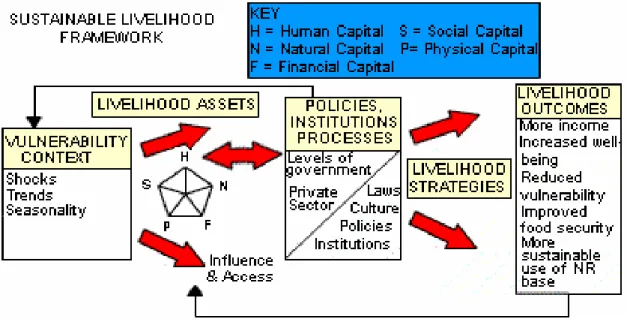
Among the outcomes of sustainable livelihoods is improved food security (as reflected in the Department for International Development (DFID) Livelihoods Framework presented in Figure 2.1).
Figure 2.1: Sustainable Livelihoods Framework (DFID 1999, pp 1)
The word livelihood can be used in many different ways. The following definition captures the broad notion of livelihood: ‘A livelihood comprises the capabilities, assets (including both material and social resources) and activities required for a means of living. A livelihood is sustainable when it can cope with and recover from stresses and shocks and maintain or enhance its capabilities and assets both now and in the future, while not undermining the natural resource base (DFID 1999, pp1).
The Sustainable Livelihood Framework (SLF) presented in Figure 2.1, has been developed by DFID (1999) to help understand and analyse the livelihoods of the poor. It is also useful in assessing the effectiveness of existing efforts to reduce poverty. The framework endeavours to
14
provide a way of thinking about the livelihoods of poor people to stimulate debate and reflection, as it presents people as operating in a context of vulnerability, but with access to assets that can help reduce poverty within their prevailing social, institutional and organisational environments.
The concept of livelihoods broadens traditional understandings of food security. In a livelihood system, the goal is to procure all the capabilities, assets and activities required for a means of living in which adequate food is a central concern, but not the only one (World Food Programme 1998). By investigating how poor households meet their basic needs and cope with shocks and stresses, the importance of adaptation and risk diversification in the battle against vulnerability is understood. The implication for policy-making is the realisation that increased agricultural productivity is not the only solution to food insecurity, but that supporting diversification of income sources and assets and promoting investments and activities, help households face shocks and reduce risks (WFP 1998).
While most food security assessment methods focus on food availability, the livelihoods approach focuses on food access (Famine Early Warning System Net Work (FEWS NET 2005).
Thirty years of food security research in highly food insecure countries has shown that poorer households in low-income countries rely on a balance of livelihood strategies to make a living and gain access to their basic needs, including food. Livelihoods analysis strives principally to clarify the mechanisms by which people obtain access to food and other essential resources, and services within communities (FEWS NET 2005).
2.3 Understanding household coping strategies
Households actively try to protect their livelihoods, adopting several actions and mechanisms when faced with shocks and stresses that affect their livelihood or livelihood outcomes, one of which is food security. These behavioural responses are termed “coping strategies” and encompass a wide range of economic, social, political and behavioural responses to declining food security or perceived threats to food security. They need to be understood in terms of strategies with easily reversible effects, versus strategies that incur unacceptable costs (Young et al. 2001, pp5).
15
Webb and von Braun (1994) discovered that coping mechanisms adopted by households form a continuum of strategies from “risk minimization” to “risk absorption” and finally to “risk taking”. Risk minimization involves asset accumulation, saving and income diversification. Risk absorption follows on from risk minimization and involves drawing on savings and existing food reserves, and often restriction of consumption of food and non-food items. The final stage is risk taking which involves households taking desperate measures, such as breaking up the family through migration, consumption of survival or famine foods and sale of private possessions.
Many of the household responses, especially during the last phase, clearly have irreversible impacts on household well-being, and conditions get worse unless external assistance arrives.
Due to the irreversible nature of the risk-taking strategies and their adverse impact on post-crisis recovery, households would be reluctant to sell assets, especially agricultural assets in an agrarian community, and would only do so as a measure of last resort (Webb and von Braun 1994).
Different studies present a variety of coping strategies that households are likely to adopt when faced with food shortages. For instance, when faced with famine, Ethiopian villagers were shown to draw on savings, use food reserves, diversify sources of income and reduce expenditure on non-food items in the initial stages on the famine, whereas during the later stages of the famine, they switched to consuming famine foods, and even migrated (Webb and von Braun 1994).
According to Corbett (1988) the sequence of responses farm households typically employ when faced with food crisis are divided into three distinct stages.
• Stage one: In the earliest stage of the crisis, households employ types of risk minimizing and loss management strategies. These typically involve a low commitment of domestic resources, enabling speedy recovery once the crisis has eased
• Stage two: As the crisis persists, households are increasingly forced into a greater commitment of resources just to meet subsistence. There may be a gradual disposal of key productive assets, making it harder to return to a pre-crisis state. At this stage the household’s vulnerability to food insecurity is extremely high.
• Stage three: Strategies are signs of failure to cope with the food crisis and usually involve destitution and distress migration
16
Maxwell et al. (2003) distinguish between two different classes of coping strategies: short-term adjustments to consumption patterns and more permanent adjustments to food production.
Davies (1993) discriminates between adaptive, diversification, and insurance strategies – which involve the expansion of the resource base and the means of acquiring food in order to minimize the risk of future disruption, and coping strategies – a set of responses to an atypical situation, often requiring a mortgaging of the means of production with a potentially irreversible impact on future livelihoods.
According to the International Fund for Agricultural Development (IFAD 1996) the determinants of coping ability are classified as follows: determinants that reduce fluctuations in income, and determinants that reduce fluctuations in consumption, given the fluctuation in income. Perhaps the most important determinant within the first category is the degree of diversification of a household’s livelihood strategy or, in other words, the way in which household members allocate their time in pursuit of various means of earning a living. Poor rural households seldom allocate the entire labour time of all their members to a single pursuit. The harsh experience of life has taught these people not to ‘put all their eggs in one basket’. Diversification is an essential feature of their livelihood strategy. However, the degree of diversification differs from one household to another, depending on household resource constraints and the constraints and opportunities presented by the external environment. The greater the degree of diversification, the better the ability to cope with temporary shocks. The second category, namely the scope for consumption- smoothing strategies, refers to the ability of a household to maintain the normal level of food consumption in the face of an income shock (IFAD 1996).
2.4 Food security in Africa
In Africa, food has become the most important item in any discussion of development during the last three decades. To this end, there have been attempts of varying degrees to find effective ways of ensuring that all Africans have access at all times to the minimum quantities of food necessary to lead active and healthy lives (Economic Commission for Africa (ECA), 1992). In spite of this intention, and the great emphasis on the food production sector, food deficiency remains a persistent problem in Africa, particularly in Sub-Saharan Africa. As a result, the number of hungry and malnourished people in the 1970s reached 80 million, which jumped to a
17
level exceeding 100 million in 1984 (Tekolla 1990). The corresponding figure in the 1990s was projected to be 140 million. Currently, Sub-Saharan Africa produces less food per person than it did three decades ago (FAO 1998).
Dittoh (2003) points out that food and nutrition insecurity is still very prevalent in almost all parts of Africa. Africa is the only region in the world currently facing widespread chronic food insecurity and persistent areas of hunger (Dittoh 2003). The most food insecure environments in Africa are arid and semi-arid zones, where drought is the major recurring factor. Benson (2004) points out that food and nutrition security remain Africa’s most fundamental challenges for human welfare and economic growth. Far too many people on the continent are unable to acquire and effectively utilise at all times the food they need for a healthy life. Undernutrition is the major risk factor underlying over 28 per cent of all deaths in Africa (some 2.9 million deaths annually) (Benson 2004). In explaining the severity of the food insecurity problem in the continent, Yambi (1999) points out that Africa remains the most malnourished region in the world: one in every three under the age of five years is underweight and about 42% are stunted.
The continuing human costs of inadequate food and nutrition are enormous, and aggregate costs of food and nutrition insecurity at the national level impose a heavy burden on efforts to foster sustained economic growth and improved general welfare (Benson 2004).
The causes of food crises in Africa are numerous, varied and complex (see Table 2.1). Clover (2003) indicates that analysts generally believe that Africa’s current food emergencies are the result of a combination of problems, and that no single factor is responsible. Southern Africa, for instance, Clover (2003) argues, is no stranger to natural hazards, but this time a very broad area has been affected by drought, and many countries did not have strategic grain reserves. There are also a far higher number of dependents and child-headed households because of HIV/AIDS.
What is undeniable is that “Africa’s persistent vulnerability is arguably due as much to a failure of understanding as to a failure of interventions” (Devereux and Maxwell 2001, pp 2).
18
Table 2.1: Causes of food crisis in Africa (After FAO 2004 and Clover 2003) Climatic hazards
Severe environmental degradation
Rapid population growth outstripping agricultural growth
Unstable macroeconomic environment and inappropriate government policies in some nations Low purchasing power of the people (poverty)
The absence of food security policies at national or regional levels Lack of storage facilities
Limited access to infrastructure and basic services Civil wars
Inappropriate incentives
Low productivity of agriculture resulting from insufficient fertilizer use and poor control of weeds
HIV/AIDS
Clover (2003) argues that the reasons why action plans to address food security have continued to fall short can be attributed to faulty analysis and faulty actions by governmental and non- governmental actors involved in food security interventions. What is needed is an understanding that goes beyond conventional, orthodox wisdom to work more strategically in developing and implementing effective, international, national and regional policies. Availability, access and affordability are all elements of food security; complex issues that encompass a wide range of interrelated economic, social and political factors, internal and external, which challenge Africa’s ability to address food security (Clover 2003).
Although progress has been made in reducing nutrition insecurity globally, estimates of reductions in malnutrition have been an unfortunate exception to these trends (de Onis et al.
2004). Over the period 1980 to 2000, stunting rates in Africa declined by less than four per cent, so that, with population growth, the actual number of stunted children actually increased by more than 12 million. Both relative and absolute numbers of underweight children in Africa increased over the same period. The African continent is now the continent receiving most food aid, with some 30 million people requiring emergency food aid in any one year. Sixty per cent of the WFP’s work now takes place in Africa (Clover 2003).
Benson (2004) concludes that food and nutrition insecurity is a critical constraint to economic growth in Africa and an immediate cause of widespread suffering. Millions of Africans seek
19
enhanced food and nutrition security. National governments and their development partners can do a great deal on many different scales to facilitate and ensure their citizens’ access to the tools that will allow them to meet their food and nutrition requirements.
2.5 Food security in IGAD Sub-Region
According to FAO (2000) , the horn of Africa is one of the most food-insecure regions in the world. The seven countries of the sub-region, which are also members of the Inter Governmental Authority on Development (IGAD)1, have a combined population of 160 million people, 70 million of whom live in areas prone to extreme food shortages (FAO 2000). Over the past 30 years, these countries have been threatened by famine at least once in each decade. In the sub- region as a whole, more than 40 per cent of people are undernourished, and in Eritrea and Somalia the proportion rises to around 60 and 70 per cent respectively.
Ahmed and Teka (1999) outline the fact that the horn of Africa is characterised by four broad based systems of land use. These systems are pastoralism, agro-pastoralism, rain-fed and irrigated agriculture. However, these four systems are closely interlinked through symbiotic relationships. High potential areas are normally put under agriculture, whether rain-fed or irrigated, and have a better chance of supporting the systems of livelihoods that use them.
Even in normal years, the IGAD countries do not have enough food to meet their peoples’ needs.
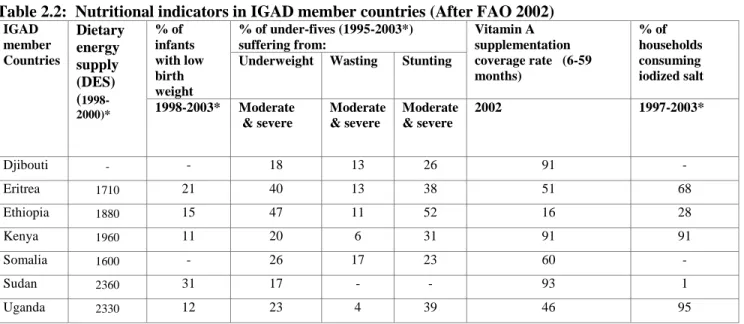
The sub-region, which is only 75 per cent self-sufficient in its food requirements, imports at least 1.5 million metric tones of cereals each year (FAO 2000). In four of them - Eritrea, Ethiopia, Kenya and Somalia - the average per capita dietary energy supply (DES) is now substantially less than the minimum requirement (Table 2.2). This has a devastating effect on children, in particular, who face lifelong physical and cognitive disabilities. Poor nutritional and health status indicators are another dimension of high food insecurity (Table 2.2).
1 The Inter-Governmental Authority on Development (IGAD), with its headquarters in Djibouti, was founded in 1996. IGAD member states include Djibouti, Eritrea, Ethiopia, Kenya, Somalia, the Sudan and Uganda. IGAD has a task of revitalising and expanding cooperation among member states. Its mandate is to coordinate the efforts of member states to advance their development goals in economic cooperation, political and humanitarian affairs, food security and environmental protection.
20
Table 2.2: Nutritional indicators in IGAD member countries (After FAO 2002)
% of under-fives (1995-2003*) suffering from:
% of infants with low birth weight
Underweight Wasting Stunting
Vitamin A supplementation coverage rate (6-59 months)
% of households consuming iodized salt IGAD
member Countries
Dietary energy supply (DES) (1998-
2000)* 1998-2003* Moderate & severe
Moderate
& severe
Moderate
& severe
2002 1997-2003*
Djibouti - - 18 13 26 91 -
Eritrea 1710 21 40 13 38 51 68
Ethiopia 1880 15 47 11 52 16 28
Kenya 1960 11 20 6 31 91 91
Somalia 1600 - 26 17 23 60 -
Sudan 2360 31 17 - - 93 1
Uganda 2330 12 23 4 39 46 95
According to FAO (2000), the main natural hazard affecting food security in the horn of Africa is drought. Large parts of the region are arid or semi-arid. The rainfall is low, unreliable and unevenly distributed and, although there have always been cycles of drought and flooding, there is evidence that the climate is becoming unstable and the weather more severe. Drought is frequent in the region, which the pastoralists regard as ‘an act of God’. A rough collection of recorded incidents in the previous century suggests major incidents occur every 10 years.
Droughts are remembered because they are usually accompanied by famine (Markakis 2004).
What all of this means is that crop cultivation using locally available technology cannot be relied upon to sustain a sizeable human population in the arid region. It does not mean that cultivation is not pursued, but it is a precarious and unreliable enterprise (Markakis 2004). Faced with this unstable environment, the people of the region have developed specific coping strategies.
Farmers, for example, stagger their crop planting and, when the situation is exceptionally bad, they may even resort to hunting and gathering. Pastoralists, too, have various options: they can split their herds, set aside pasture land to provide grazing reserves, or migrate to new pastures.
Nevertheless, even the best coping mechanism can be overwhelmed by an extended drought (FAO 2000).
In explaining the role of cross-border trade in food security of pastoral communities, Little et al.
(2001) points out that because most herders in the sub-region finance food purchases through the sale of livestock, any downward trends in cross-border commerce and prices would have a
21
negative effect on pastoral food security. Cross-border trade networks affect the food security situation in the border areas in one or more of the following ways: Firstly, cross-border trade broadens available market options for commodities produced in the area, and pastoralists benefit from increased demand for their animals. Secondly, people in the area consume food items produced elsewhere and imported across the border that could not be supplied officially or cheaply from domestic markets (Little et al. 2001).
The fact that almost 80 per cent of the population of the countries of the IGAD sub-region is rural and depends almost exclusively on agriculture for its consumption and income needs, means that measures to address the problems of poverty and food insecurity must mainly be found within the agricultural sector (FAO 2000). Furthermore, the United States Agency for International Development (USAID 1994) pointed out that at the root of this alarming description of food insecurity is an unstable social and political environment that has precluded sustainable economic growth. A number of factors have converged to create this instability: poor economic policies, retarded economic growth, growing population pressures, civil strife, scarcity of democratic institutions, uneven natural resource base and limited areas of high agricultural production potential (USAID 1994). The civil wars, droughts and famines of the last decade (1986-1996) have culminated in a widespread food shortage with intense human suffering and many deaths, especially among children, women and the elderly, due to malnutrition (Ahmed and Teka 1999). The farmers living at subsistence level in the higher rainfall areas form the sub- region’s largest group of food-insecure, who tend to have little land and very few assets, and typically work in remote areas far from markets. Also at risk are the 15 to 20 million pastoralists inhabiting the vast areas of arid and semi-arid lowlands. In times of drought, these herding communities not only go hungry, but can also lose their productive assets (FAO 2000).
Mochoge and Zziwa (2004) summarise the food security challenges facing the IGAD region and Africa at large as including (1) the determination of governments to make real change in implementing policies and strategies (2) proper planning in the use of resources in viable investments, institutions, infrastructure, storage facilities, and enhancing productivity (3) mainstreaming food security concerns in the ongoing Poverty Reduction Strategy Papers (PRSP) process.
22
2.6 Household food security coping strategies in Eritrea
As outlined in section 1.1 food insecurity is severe and a perpetual problem in Eritrea. However, Eritrean communities have developed indigenous social welfare systems and ecological coping mechanisms that protect the poor from hunger, starvation and death, even under the most difficult circumstances (GSE 2004).
When the normal agro-pastoral system of production faces difficulties, the community supports one another by rebuilding the herds of destitute families to the level at which they can be self- supporting. Whereas the ecological coping mechanisms are ultimately vulnerable to climatic hazards, the social mechanisms can continue to function during periods of crises. They begin to decline only when the extent of poverty is so pervasive and so deep that the well-off members of the community also become impoverished and the traditional safety net system buckles. The GSE (2004) distinguished the coping strategies employed by Eritrean rural households into social coping mechanisms and ecological coping mechanisms.
The social coping mechanisms include three groups of people. The first group includes those who look for alternative sources of income such as fetching gold and forest products, ploughing the fields of villagers who have neither plough animals nor labour to do the job, and collecting water or firewood and selling it in villages and towns. The second group includes those who seek jobs in towns and neighbouring countries, selling the remaining productive assets to keep the family alive, and, as a last resort, selling jewellery that was given to the women of the households on their marriage (GSE 2004).
Ecological coping mechanisms include three groups of people. The first group of people are the conservationists, who lived in the same environment for many generations and have a deep knowledge of the natural vegetation. For example, knowledge of the trees whose leaves are edible therefore becomes important, because such leaves are available year round and can compensate for the seasonally restricted availability of the green leafy vegetables. The second group are the pioneers who moved away from their original habitats during the last generation or two, and left their barren, degraded fields in the highlands to seek their fortune in the great river basins of the lower Mareb, the Gash, and the Barka rivers. They see their habitat as a production
23
site. The third group is pastoralists. The pastoralists have a highly protective attitude toward the riverine forests that give them fodder for their animals, supplementary food for humans, construction materials for their homes, and materials for their craft products. They have an adequate body of knowledge of trees and use it in times of drought and famine (GSE 2004).
2.7 Measuring household food security
Household food security is an important dimension of well-being. Although it may not capture all dimensions of poverty, the inability of households to obtain access to enough food for an active and healthy life is surely an important component of their poverty. It is important, therefore, to measure and monitor food security over time because it is fundamentally linked to wellbeing. Measurement is necessary at the outset of any development project to identify the food insecure, assess the severity of their food short fall and characterise the nature of their insecurity (seasonal versus chronic). Furthermore, it provides the basis for monitoring progress and assessing the impact of these projects on the beneficiaries’ food security (Hoddinot 1999b).
Kassa (2000) points out that the multiple dimensions of food security in both space and time (local and regional, chronic and transitory, short-term and long term) as well as in levels (global, national/regional, household, and individual) make assessment of food insecurity a difficult task.
The general tendency is, therefore, to work with indicators. Riely et al. (1999) point out that measures commonly reflect the various dimensions of food security, and that there are usually a number of ways of measuring any single indicator. For example, an indicator defined as the average energy consumption per capita may be measured through a detailed dietary intake survey based on weighing food portions, or from information based on a 24-hour recall.
Similarly, measures of household income can be derived as a lump estimate based on the recall of a household head over the past month, or as an aggregate of income from an individual household member’s activities, based on individual recall. Obviously, decisions regarding the measurement of indicators are critical to their eventual credibility, cost and interpretation (Riely et al. 1999).
Wolf and Frangillo (2000) explain that existing measures of regional or even local food availability are often inadequate for project level decision-making, since availability is only one
24
component of household food security. They further explain that other components, such as access to food and certainty of the food supply, are also important. Moreover, they suggest that one way to develop direct measures that include these components and compliment existing measures is to base them on an in-depth understanding of the experience of food insecurity at household level. Currently, the most common and well-recognised experiential food security assessment measurers include the United States Food Security Core Module (FSCM) and the Coping Strategy Index (CSI).
The Coping Strategies Index (CSI) is an indicator of household food security that is relatively simple and quick to use, straightforward to understand, and correlates well with more complex measures of food security. A series of questions about how households manage to cope with a shortfall in food for consumption results in a simple numeric score. In its simplest form, monitoring changes in the CSI score can indicate whether household food security status is declining or improving (Maxwell et al. 2003)
The FSCM scale is designed to yield a single score (from 0 to 10) denoting severity of household food insecurity over the past twelve months. Different types of experiences and behaviours indicate insecurity as measured by the FSCM, and this score serves as a useful starting point against which to assess other country and subpopulation experiences (Coates 2004).
Although currently there are a number of descriptors commonly applied to describe experiential measures, the most useful descriptor, which applies equally well to any of the questions in the FSCM scale and to several conceptually similar types of instruments (including the CSI) is experiential – derived from peoples’ experiences. The experiential food insecurity scale can be understood as a measure that quantifies a range of behaviours known to reflect food-related stress (Coates 2004). This 18-item scale, now called the Food Security Core Module (FSCM) or simply the United States Food Security Scale, essentially measures qualitative and quantitative compromises in food intake with declining household resources, recognising differences between adults' and children's experiences of resource constraints (Coates 2004).