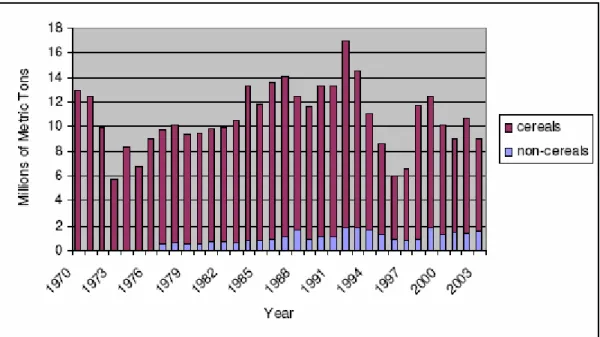
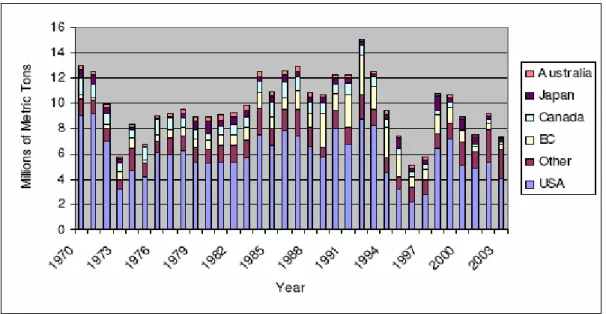
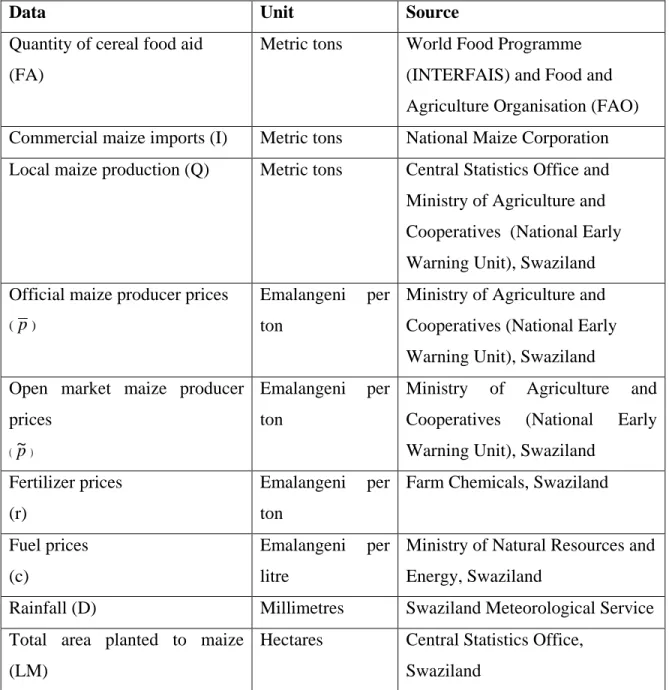
The study used secondary national data from 1985 to 2006 to analyze the impact of food aid on corn producer prices and the amount of corn produced. Appendix A: Data used to analyze the impact of food aid on maize production in Swaziland.
- Introduction and background
- Research justification
- Problem statement
- Sub problems
- Hypothesis
- Study limits
- Outline of the dissertation
The lack of evidence often leads to premature negative conclusions about the impact of food aid on the country's maize industry. Chapter three begins by reviewing literature on related food aid studies and the impact of food aid on maize production.
- Introduction
- Maize production
- Maize production by land tenure system
- Maize storage and marketing
- The National Maize Corporation
- Maize prices
- Maize policy and market interventions
- Maize import controls
- Price policy
- Farmer services
- Consumption of maize
- Constraints in maize production
- Overview of food aid program in Swaziland
Since independence (1968), the Swaziland government's intervention in the maize sector has been aimed at increasing self-sufficiency in the production of the country's staple food (Oxford, 1998). The issue of food aid is part of food security policy, with an emphasis on improving the effectiveness of food aid management.

- Introduction
- Defining food aid
- Importance of food aid
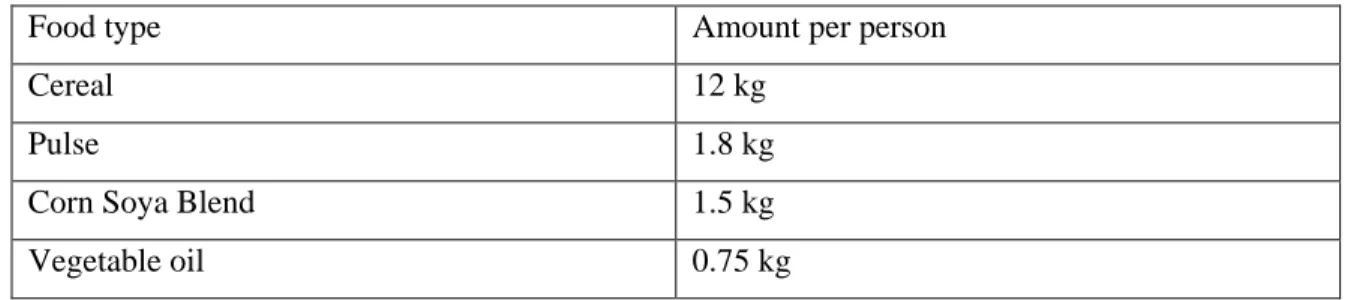
- Food aid commodities
- Donors
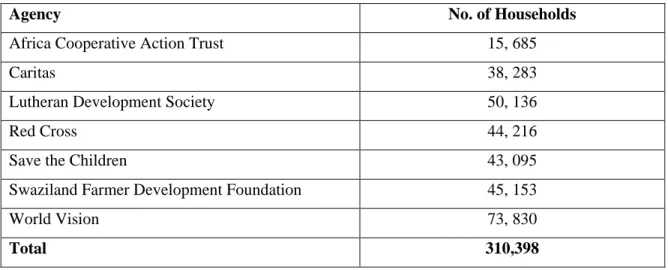
- Recipients of food aid
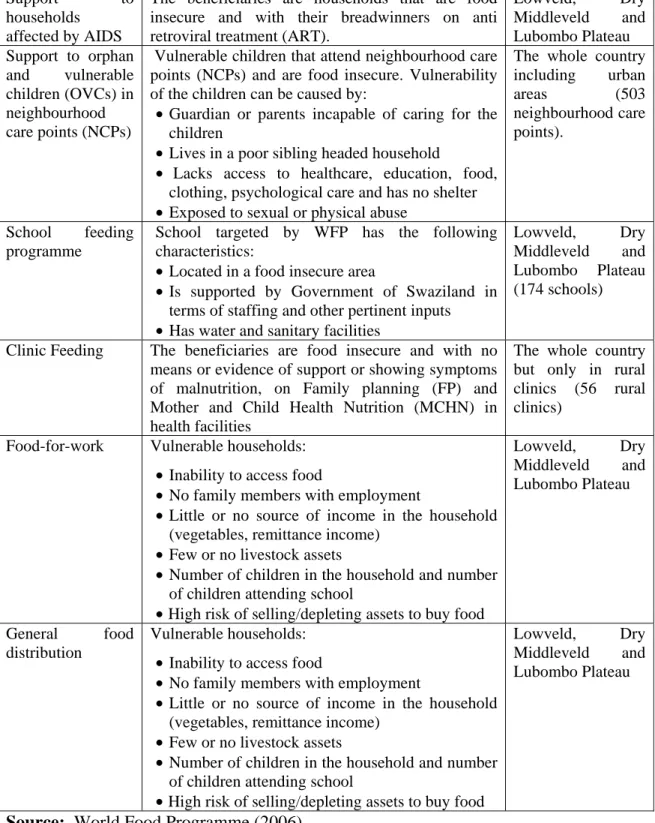
- Mode of distribution
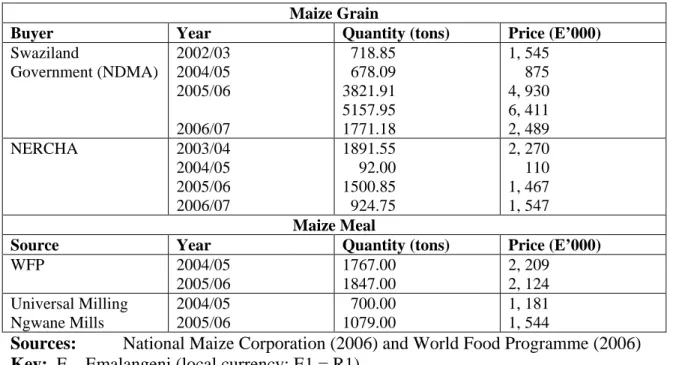
- Local and regional procurement of food aid
- Disincentive effects of food aid
- Food aid and commercial imports
- Quantitative methods of analysing the impact of food aid on agricultural
- Identifying the appropriate analytical tools for analysing the effects of food aid
- Summary
The International Food Aid Information System (INTERFAIS) dataset provides a list of 217 donors that include the United States of America (US), the European Commission (EC), 79 individual countries, the World Food Program (WFP) and non-governmental organizations (NGOs). China and India have also emerged as donors of food aid in recent years (Webb, 2003). Food aid can depress local (national) food prices in at least three ways (Barrett, 2006).
However, they believe that the negative effects of food aid can be realized only when certain conditions prevail. Tapio-Bistrom (2001) used a scaled-down market equilibrium model to analyze the impact of food aid on food production in Tanzania. Lavy (1990) and Abdulai et al (2004) used vector autoregression (VAR) analysis to examine the impact of food aid on food production in 33 and 42 sub-Saharan countries, respectively.
The estimation results showed that, on average, food aid has a positive impact on food production. Lowder (2004) also used a vector autoregression (VAR) analysis that differentiated the analysis for program and emergency food aid. The macroeconomic impact of food aid was analyzed using national time series data from.
A number of analytical tools have been used to examine the impact of food aid on agriculture.

- Introduction
- Research design
- Methods of data collection
- Data treatment and analysis
- Developing a maize production model
- Reduced-form market equilibrium model – at national level
Therefore, both demand and supply specifications were used to analyze the effects of food aid on the quantity of corn produced and the corn producer price. This chapter presents analytical results of the impact of food aid on maize production in Swaziland. This is followed by the impact of food aid on the quantity of maize produced and the maize producer price at the national level.
The impact of food aid on maize production in Swaziland was analyzed by solving simultaneous equations (quantity function and price function) using a two-stage least squares (2SLS) method. The coefficients for the amount of food aid (lagged by one year) and the average fuel price were significant at 10% probability. A two-stage least squares (2SLS) method was used to analyze the impact of food aid on the corn producer price and quantity of corn produced.
The Impact of Food Aid on Cereal Markets in Southern Africa: Implications for Addressing Vulnerability. Background document for a regional study on the impact of food aid on long-term food security.
Introduction
Does food aid act as a disincentive to domestic maize producers so that production levels decrease in subsequent seasons?
Estimation of a reliable country maize production model
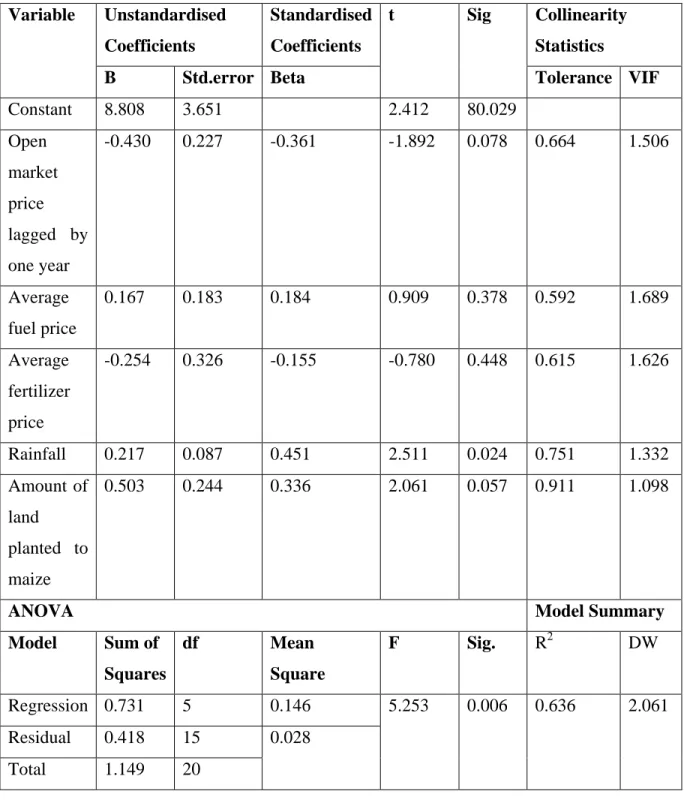
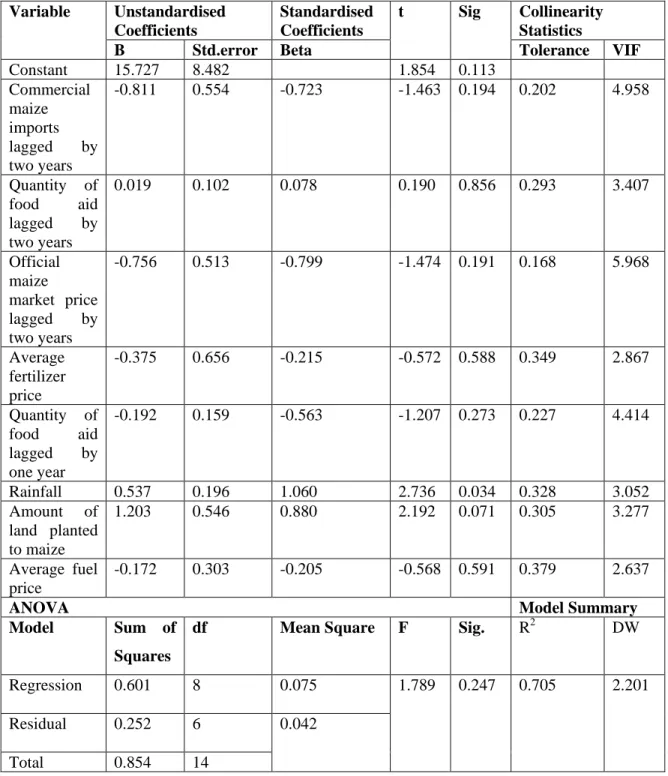
The results show that if the amount of rainfall received increases, the total maize yield in a given production season is also likely to increase. However, the open market price lagged by one year and the amount of land planted to corn was significant at the 10% probability level. The positive linear relationship between corn planted area and corn produced is as expected.
This may be due to the effects of frequent droughts experienced in Swaziland during the study period, which resulted in declining maize quantity due to reduced yields and total area planted with maize. Since the model was found to be statistically significant and with all variables, except for the open market price, showing coefficient signs in accordance with a priori expectations, the production function was then used as the basis to formulate the reduced form model for analyzing the impact of food aid on the country's maize industry.
Impact of food aid on maize quantity produced and maize producer price
Estimated quantity (Qˆt) was then substituted into the price function (4.14) and estimated price (pˆ~t) was similarly substituted into the quantity function (4.15) and the two equations were then solved simultaneously to analyze the impact of explanatory variables, including food aid , on the amount of corn produced and corn producer price. This is the same function that analyzed the impact of food aid, among other variables, on the amount of maize produced. The F-statistic of the corn quantity function was significant at the five percent level of probability with a goodness of fit of 87%.
Out of a total of six explanatory variables that were included in the model, only two turned out to be significant at the five percent probability level, namely, the estimated open market price, with a lag of one year, and the amount of land planted to corn. . If food aid had a negative effect on the amount of corn produced, the food aid variable would be significant and negative. However, the evidence presented in Table 10 proved otherwise as the food aid variable came out positive and significant at the 10% probability level, which suggests that there is no significant negative relationship between the amount of maize produced and food aid received from Swaziland.
Rather, it could mean that the reduction in local maize production increases the demand for food aid. This is the same function that analyzed the impact of food aid, among other variables, on corn producer price.
Improving the degrees of freedom
- Estimation of a reliable country maize production model
- Impact of food aid on maize quantity produced and maize producer price 58
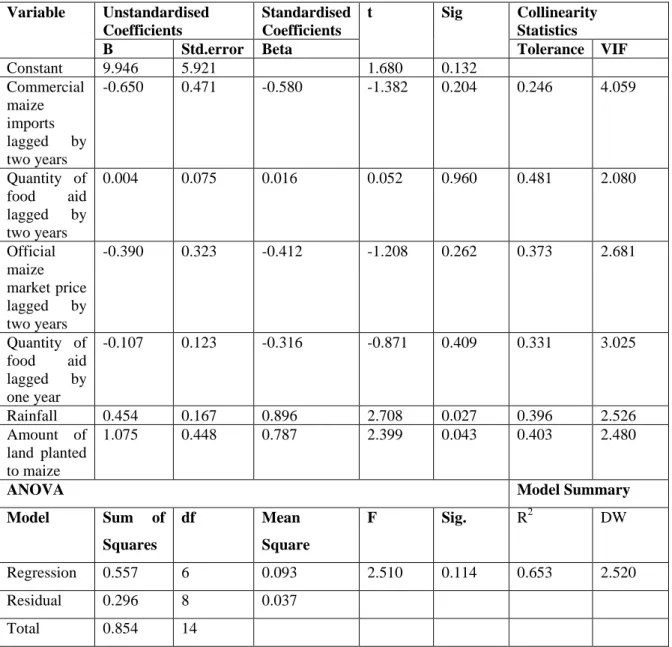
As the model was found to be statistically significant and with all variables, except the open market price, showing coefficient signs in line with a priori expectations, the production function was then used as the basis to formulate the reduced form model for analyzing the impact of food aid on the country's corn industry. The amount of food aid (lagged by one year) was not significant, while the estimated price was significant at the 10% level of probability. However, evidence shown in Table 15 showed otherwise (as the food aid variable emerged positive and not significant), suggesting that there is no significant negative relationship between the amount of maize produced and food aid received by Swaziland. not.
Because the model itself was not significant, none of the explanatory variables turned out to be significant, including the variable on the amount of food aid. The results therefore show that there is no significant relationship between food aid and the producer price of maize in Swaziland. Nevertheless, the results of the 2SLS model showed that food aid has no negative effect on either the quantity of maize produced or the producer price of maize in Swaziland.
Available data show that food aid has no negative impact on maize production and maize producer prices in Swaziland. There is a good chance that food aid entering the country will reach food-insecure households in areas severely affected by drought.
Conclusion
The results of the 2SLS model showed that food aid received by Swaziland does not have a negative effect on the amount of maize produced in subsequent seasons. The results also showed that food aid received by Swaziland does not lead to lower prices in the country's domestic maize market. Households in the Lowveld, dry Middleveld and part of the Lubombo Plateau produced cotton (under rainy conditions).
Cotton is no longer a sustainable dryland crop, mainly because of the current drought and very low returns for producers. Households located in the Lowveld, arid Middleveld and part of the Lubombo Plateau are now highly vulnerable to shocks such as drought and currently produce neither food crops nor cash crops, so they are food insecure and rely heavily on interventions of food aid. The fact that Swaziland still accepts commercial imports of maize grain and other foodstuffs proves that at the national level, the country has not yet developed a food aid.
Food-insecure households do not benefit from food assistance programs as they access food from commercial stores or through their own food production. The availability of food aid in the country has not exceeded a threshold that could disturb the balance between supply and demand.
Policy recommendations
Also, the concept of food security as opposed to food self-sufficiency should be fully embraced. Food security at the household level is primarily limited by access to food, which is closely related to household income. There is a need for a balanced mix of programs that address both food production and raising the real incomes of the poor, thus increasing their access to food.
In the event that the need for food aid continues, support agencies should be encouraged to procure locally produced food commodities. By doing so, the producer incentive in the country will not be lost as local producers, especially those not significantly affected by drought, will be guaranteed a reliable market. As part of a long-term strategy to reduce the country's vulnerability to external shocks, Swaziland needs to formulate a comprehensive disaster preparedness strategy framework.
The establishment of a national disaster preparedness strategy framework will contribute to improving capacity for timely delivery of food supplies to affected populations during emergencies and to minimize disruptions to long-term agricultural growth and development. Swaziland does not have a strategic food reserve, despite the fact that the country is very vulnerable to disasters such as drought and storms.
Recommendations for further research
Background document prepared for the Trade and Markets Division of the Organization for Economic Co-operation and Development. An assessment of the development impacts of food aid and the effects of its binding status. Food aid and food security in the short and long term: country experiences from Asia and sub-Saharan Africa.
Debating food aid in trade and development: Center for European Policy Studies Policy Brief.