31 Table 4.2 Condom use during the last sexual intercourse 32 Table 4.3 The relationship between forced sex and condom use 33 Table 4.4 The relationship between sexual initiation and condom use. Numerous studies suggest that sexual violence and coercion are also common in South Africa (see eg Richter, 1996, cited in Wood et ai, 1998; Jewkes, 1999; Wood and Jewkes, 1997).
Data and Variables
The survey question asking sexually active youth whether they used a condom with their most recent sexual partner was used to assess youth condom use. To measure young people's sexual communication, they were asked whether they had discussed condom use with their most recent sexual partner.
Methodology
Finally, as the Transitions report points out, KZN experienced periods of political violence in the mid-1980s and early 1990s (Rutenberg et al., 2001). Chapters three through six present the variables included in each model and a discussion of the results.
Sexual Decision-Making and Negotiation
A myriad of factors, apart from adolescents' knowledge of protected sexuality, influence their decisions about sexuality. Therefore, it is essential to understand the context of adolescent sexuality decision-making in order to design successful interventions, rather than focusing solely on sexuality education (Rosenthal and Lewis, 1996).
Gendered Power Differentials
Recent research in KwaZulu Natal suggests that because women often have less power in sexual relationships. Similarly, another KwaZulu Natal-based study found that men have "enormous power over sexual decision-making" and see the choice of whether to use a condom as their decision alone (Maharaj, 2001: 256).
Impact of Coercion and Forced Sex
Recent research in South Africa supports these findings, indicating that forced sexual initiation can "increase the risk of teenage pregnancy by 14 times" (Vundule et ai, 1999, cited in Jewkes, 1999). This research examines how young people's experiences of violence and coercion, both in and out of school, influence their subsequent sexual decision-making and negotiation.
Self-Efficacy and Locus of Control
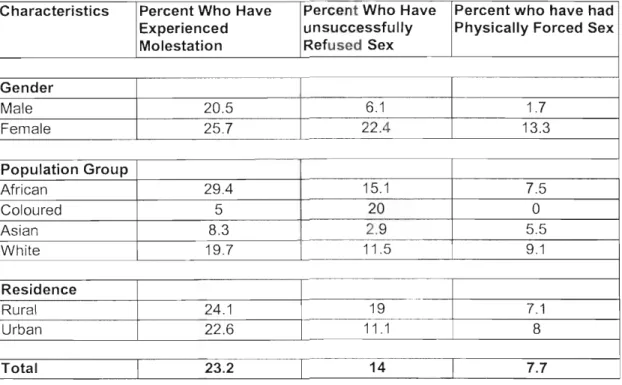
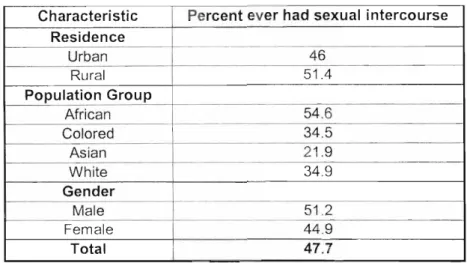
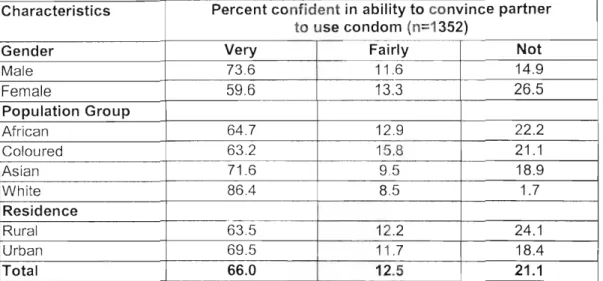
Similarly, 15.1 percent of Africans report experiences of unsuccessfully rejected sex, while Asian and white youth were less likely to report such experiences. Urban residents were slightly more likely to report physically forced sex, but rural residents were much more likely to report unsuccessfully refused sex (19.0 percent compared to 11.1 percent of urban youth). However, teens who have given something for sex are less likely to have experienced an unwanted one.
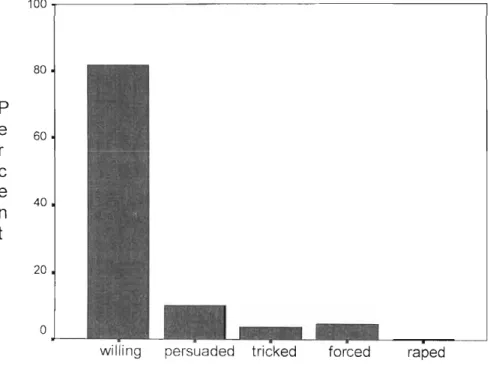
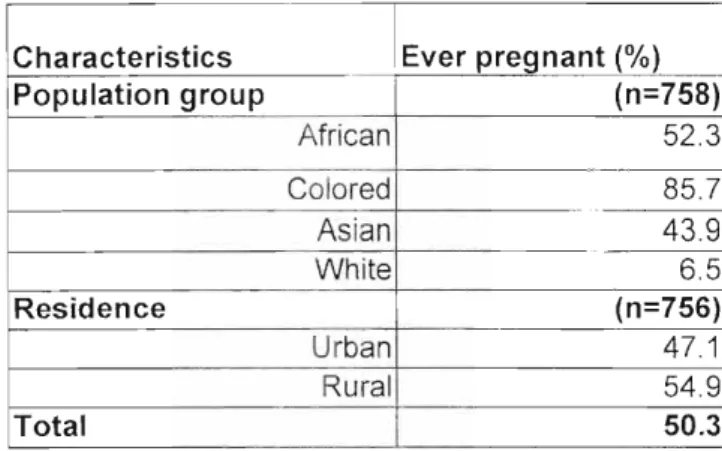
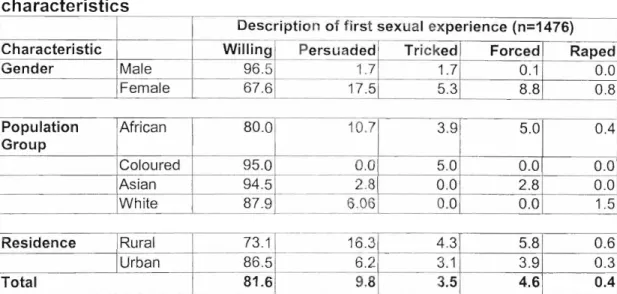
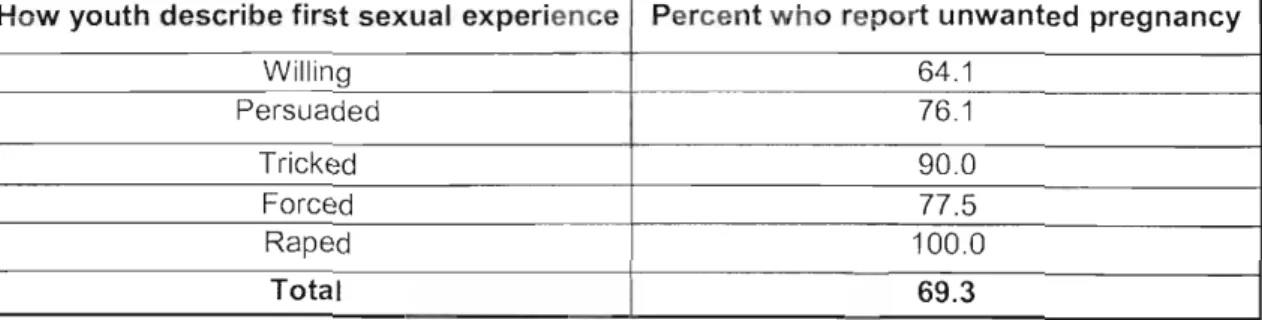
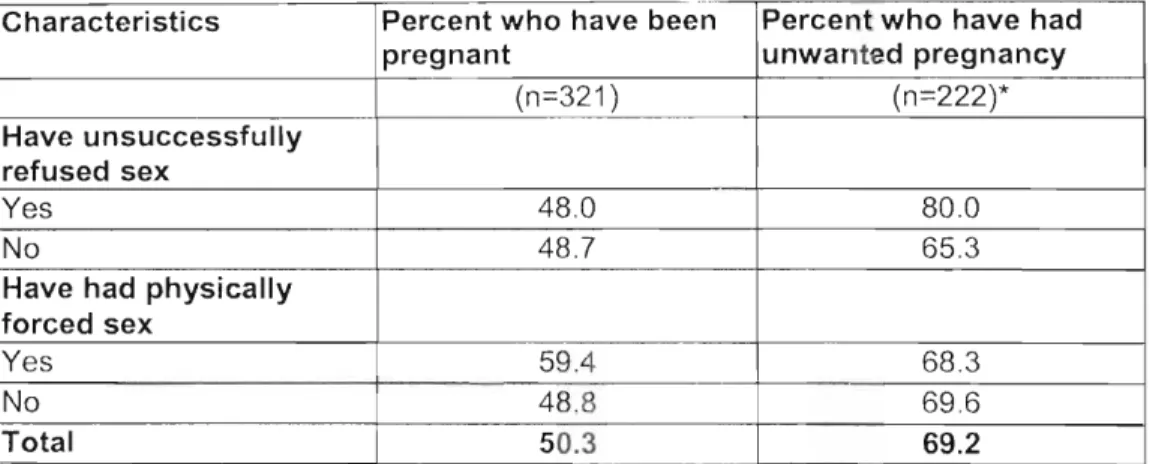
This is surprising, given that adolescents who have given some sex were less likely to report condom use than. Although abused youth are marginally less likely to report a pregnancy, they are marginally more likely to report an unwanted pregnancy (not shown). The young people who described their sexual initiation as 'forced' were more likely to report a pregnancy than young people who said their first sexual experience was 'willing' (59.7% and 48.8% respectively).
Young people who had unsuccessfully refused sex were not more likely to have been pregnant, but were more likely to report an unwanted pregnancy (Table 3.7).
School and Community Violence and Pregnancy Levels of violence in adolescents' schoo l and community
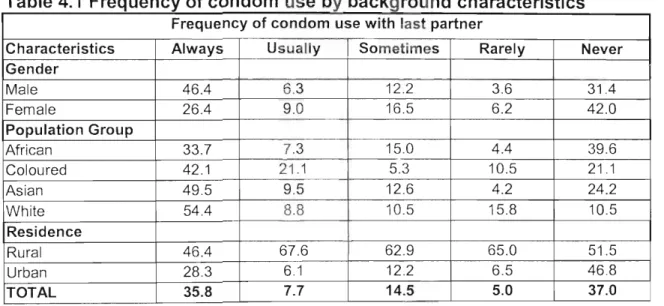
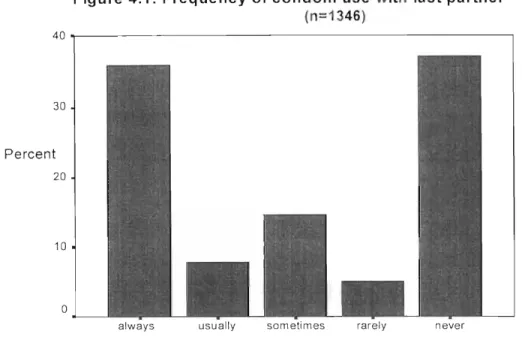
There were also some interesting differences in the frequency of condom use by place of residence (rural/urban), gender and population group (below in Table 4.1). The difference in condom use during last intercourse between youth who reported giving something for sex and those who did not was marginal (Table 4.3). Unwanted sexual experiences are also related to condom use during the last intercourse and the consistency of condom use.
The association between young people's experience of sexual violence and subsequent condom use is striking (Table of young people who have not experienced physical forced sex report condom use during last intercourse, almost two-thirds (63.2%) of those who have experienced forced sex . failed to use a condom during last sex. In particular, respondents who reported high levels of youth violence in their community were more likely to report condom use and more likely to be confident in their ability to convince their partner to use a condom (not Young people's perception of safety and crime in society was, however, not related to their condom use (not shown).
Bivariate analysis thus suggests that there is a correlation between experiences of sexual violence and coercion and subsequent condom use.
Results of Multivariate Logistic Regression
There are interesting differences in condom use between youth living in formal and informal housing in urban areas. Youth living in informal settlements in urban areas were 44 percent less likely to have used condoms during their most recent intercourse, after controlling for all other variables in the model. In addition, differences in condom use between youth living in formal housing and informal settlements in urban areas may be partially explained by attitudes toward condoms.
Similarly, young people living in informal urban settlements were more likely to agree that it is not necessary to use condoms in a serious relationship (not shown). These differences in condom attitudes may be partly due to differences in condom use between youth living in formal and informal urban housing. However, there was no significant one. As hypothesized, youth who had experienced unwanted sex were less likely to have used condoms during their most recent sexual intercourse.
However, the discrepancy in condom use between youth living in formal, urban housing and youth living in informal settlements is striking.
Sexual Communication
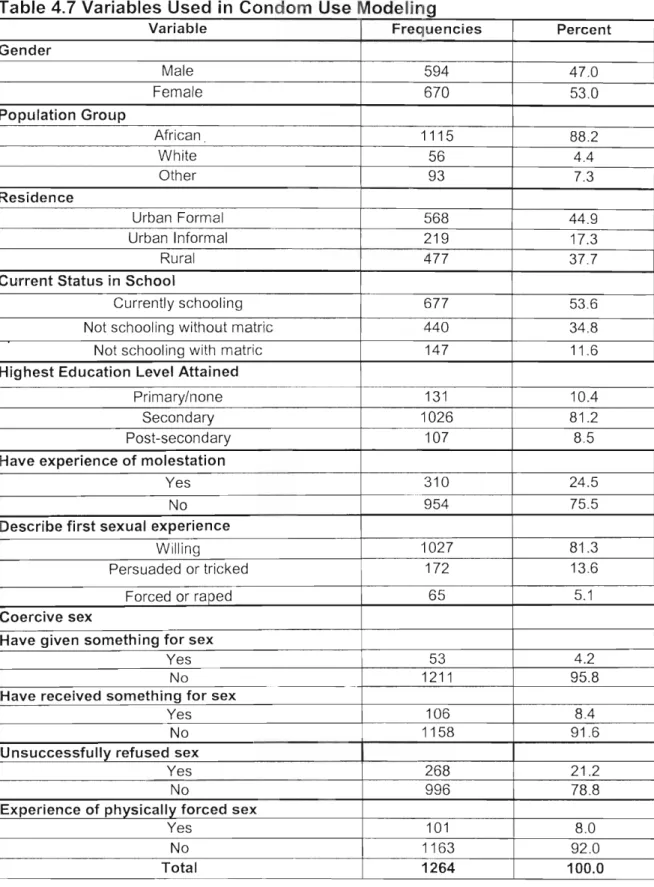
While youth who reported receiving something for sex were more likely to discuss avoiding sex, pregnancy, and HIV, there were only small differences in the likelihood that these youth discussed condom use and avoiding STOs. In particular, youth who have been physically forced to have sex are less likely to discuss condom use with their partners, as are those who have unsuccessfully refused sex. However, youth who reported sexual harassment at their schools were marginally less likely to discuss condom use with their partners and marginally more likely to discuss avoiding sex (not shown).
Surprisingly, the one exception is that those who reported youth violence in their community were more likely to report discussing condom use with their most recent partner (not shown). Bivariate analysis thus suggests that there is an ambiguous relationship between experiences of sexual violence and coercion and communication about condom use. Differences in educational attainment were also important in explaining young people's communication about condom use.
Youth who reported being abused were also no less likely to discuss condom use, and there was no evidence that whether or not they were willing to undergo sexual initiation influenced sexual communication about condoms.
Confidence in Sexual Negotiation
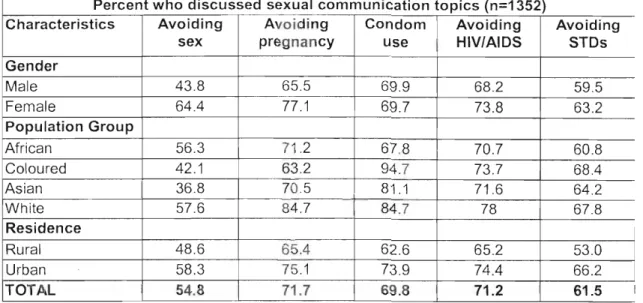
Young people who received something for sex were much more likely to report feeling "not confident" and less likely to feel "very confident" in their ability to convince a partner to use a condom. Young people who experienced sexual violence were less likely to have confidence in their ability to convince their partner to use a condom (Table 6.4). Both boys and girls living in informal, urban settlements were more likely to report feeling. confidence in their ability to convince their partner to use a condom as youth living in formal, urban housing.
The level of education achieved also influenced boys' confidence in their ability to negotiate condom use. Interestingly, these findings show that guys who are not currently in school but have earned a bachelor's degree are more than 70 percent less likely to report feeling "very confident" in their ability to convince their partner, to use a condom. White and black and Asian boys were about five times and twelve and a half times. more likely than African boys to report feeling "very confident" in their ability to get their partner to use a condom.
Similarly, the relationship between the degree of willingness of sexual initiation and girls' confidence in their ability to negotiate condom use is not as hypothesized.
Discussion of Major Findings
The findings of the third model also contradicted the hypothesis that experiences of bullying, unwanted sex, or coercion would negatively affect youths' confidence in their ability to negotiate condom use. Boys and girls who had experienced unwanted or coerced sex were more likely to report feeling confident in their ability to negotiate condom use. These findings suggest that youth with higher levels of education were more likely to report using condoms and more likely to have communicated condom use with their most recent sexual partner.
However, girls and boys with a higher level of education were less likely to indicate that they had confidence in negotiating. Youth living in urban, informal settlements were less likely than those living in formal, urban housing to report having used a condom and less likely to report having discussed condom use. However, the results of the final model suggest that girls and boys living in informal settlements are actually more likely to feel confident than their counterparts in formal, urban housing.
Boys living in rural areas were less likely to feel comfortable negotiating condom use.
Policy Recommendations
These results still suggest that efforts to promote condom use should be particularly targeted at young people living in informal urban areas. A greater emphasis in life skills programs on gender-based violence and sexual negotiation skills is essential. Additionally, only 55.7 percent of these youth reported discussing sexual violence and coercion, and only 51.1 percent discussed self-esteem and decision-making. Youth living in urban, informal settlements reported the lowest levels of condom use and sexual communication with their partners, were less likely than youth living in formal urban housing to report discussing each of these topics at school, as were youth living in rural areas.
Only by explicitly involving men in prevention programs will it be possible to address these power differentials and the sexual violence that characterizes many sexual relationships in KZN and South Africa in general. Including discussions about sexual violence, sexual negotiation, and decision-making in life skills programs in schools is an important first step, as is including men in prevention programs. However, additional research into the link between sexual violence and sexual decision-making is essential.
Given that this research suggests important differences in condom use between youth living in formal and informal urban settlements, future research is needed to explain how place of residence influences youth's sexual decision-making.
Frequency and correlates of intimate partner violence and forced sexual intercourse." African Journal of Reproductive Health. Jackson Consistency of self-reports of sexual activity among young adolescents in Jamaica.". domestic violence in Uganda.". He Forced Me to Love Him': Placing Violence on Adolescent Sexual Health Agendas." http://www.healthnet.org.za/nhris/gen/index (5 September 2001).
Ross HIV/AIDS prevention-related social skills and knowledge among adolescents in Sierra Leone, West Africa." African Journal of Reproductive Health. 34; Anthropology and AIDS: The cultural context of sexual risk behavior among urban Baganda women in Kampala, Uganda." . Aggleton (no date) "Adolescent Sexuality, Gender and the HIV Epidemic." http://www.undp.org/hiv/publications/gender/adolescence.
Jordaan Risk Factors for Teenage Pregnancy among African Adolescents in Metropolitan Cape Town: A Case-Control Study.” South African Medical Journal.