THE IMPROVEMENT OF BIOETHANOL PRODUCTION BY PENTOSE FERMENTING YEASTS PREVIOUSLY ISOLATED FROM HERBAL PREPARATIONS, DUNG BEETLES AND MARULA WINE
by
Mahlatse Ellias Moremi
Research Dissertation
Submitted in fulfillment of the requirements for the degree of
MASTER OF SCIENCE
In
MICROBIOLOGY
in the
FACULTY OF SCIENCE AND AGRICULTURE (School of Molecular and Life Sciences)
at the
UNIVERSITY OF LIMPOPO
(Turfloop Campus)
SUPERVISOR: Prof EL Jansen van Rensburg CO-SUPERVISOR: Dr. DC La Grange
CO-SUPERVISOR: Prof I Ncube
2020
ii
DECLARATION
I declare that the dissertation hereby submitted to the University of Limpopo for the degree of Master of Science in Microbiology has not been previously submitted by me for a degree at this or any other University, that this is my work in design and execution, and that all material contained herein has been acknowledged.
Moremi ME 27/07/2020
Surname, Initials (Mr) Date
iii
PUBLICATION AND PRESENTATIONS
Publication
M.E Moremi, E.L. Jansen van Rensburg and D.C. La Grange. The Improvement of Bioethanol Production by Pentose-Fermenting Yeasts Isolated from Herbal Preparations, the Gut of Dung Beetles, and Marula Wine. Published in the Hindawi, International Journal of Microbiology Volume 2020, Article ID 5670936, 13 pages https://doi.org/10.1155/2020/5670936
Oral Presentation
M.E Moremi, E.L. Jansen van Rensburg and D.C. La Grange. The Improvement of Bioethanol Production by Pentose-Fermenting Yeasts Isolated from Herbal Preparations, the Gut of Dung Beetles, and Marula Wine. Presented at the BioAfrica conference in Durban (Durban ICC), South Africa, August 2018.
M.E Moremi, E.L. Jansen van Rensburg and D.C. La Grange. The Improvement of Bioethanol Production by Pentose-Fermenting Yeasts Isolated from Herbal Preparations, the Gut of Dung Beetles, and Marula Wine. Presented at the University of Limpopo, Faculty of Science and Agriculture, 10th Annual Post-graduate Research Day, Fusion Boutique Hotel, Polokwane, South Africa, September 2018.
iv
DEDICATION
I dedicate this work to my wonderful and supportive mother, Motolla Salphinah Mabjalwa and my brothers Moremi Clement Sello and Moremi Thabo. Their gratitude and encouragement, motivated me to accomplish this study. This study is mostly dedicated to the late Prof I. Ncube (Co-supervisor), who trained me on the use of HPLC and GC analysis and his scientific contribution will forever be remembered.
v
Acknowledgements
First of all, I like to thank God for keeping me stronger through my studies even though sometimes it was tough for me to digest some challenges, but I made it with God’s power.
Many gratitude to my supportive and respectful supervisor, Prof. E.L Jansen van Rensburg for supporting me throughout my studies and some personal issues, without his persistent help this dissertation would not have been possible.
I would like to give much appreciation to my family for their endless support and for believing in me throughout my studies.
I would like to thank my laboratory colleague, Makulana Livhuwani for sharing her laboratory experience and also for her encouragement and motivations during this study.
I would like to thank Lekganyane Manape and the late Prof I. Ncube for the technical and analytic assistance.
I would like to acknowledge NRF for the financial support.
Lastly, I would like to thank the Biochemistry, Microbiology and Biotechnology staff and my friends for their scientific knowledge and contributions towards my study.
vi
ABSTRACT
Production of bioethanol from lignocellulosic biomass has gained significant attention worldwide as an alternative fuel source for the transportation sector without affecting food supply. Efficient conversion of pentose sugars (L-arabinose and D-xylose) produced during hydrolysis of hemicellulose to ethanol can enhance the economic viability. In this study, a total of 390 yeasts isolated from Marula wine, the gut of dung beetles, herbal concoctions and banana residues were screened for the ability to ferment L-arabinose and D-xylose. Fourteen yeasts were able to ferment both pentose sugars and ten strains were subjected to an adaptation process in the presence of acetic acid using L-arabinose as carbon source. Four adapted strains of Meyerozyma caribbica were able to ferment L- arabinose to ethanol and arabitol in the presence of 3 g/L acetic acid at 35 °C.
Meyerozyma caribbica Mu 2.2f fermented D-xylose, L-arabinose and a mixture of D- xylose and L-arabinose to produce 1.7, 3.0 and 1.9 g/L ethanol, respectively, compared to the parental strain with 1.5, 1.0 and 1.8 g/L ethanol, respectively, in the absence of acetic acid. The adapted strain of M. caribbica Mu 2.2f produced 3.6 and 0.8 g/L ethanol from L-arabinose and D-xylose, respectively in the presence of acetic acid while the parental strain failed to grow. In the bioreactor, the adapted strain of M. caribbica Mu 2.2f produced 5.7 g/L ethanol in the presence of 3 g/L acetic acid with an ethanol yield and productivity of 0.338 g/g and 0.158 g/L/h, respectively at a KLa value of 3.3 h-1. The adapted strain produced 26.7 g/L arabitol with a yield of 0.900 g/g at a KLa value of 4.9 h-
1. Meyerozyma caribbica Mu 2.2f could potentially be used to produce ethanol and arabitol under stressed conditions.
vii
Table of Contents
DECLARATION ...ii
PUBLICATION AND PRESENTATIONS ... iii
DEDICATION ...iv
ABSTRACT ...vi
List of figures ... x
List of Tables ...xi
Abbreviations ... xiii
CHAPTER 1 ... 1
INTRODUCTION ... 1
Aim ... 2
Objectives ... 2
CHAPTER 2 ... 4
LITERATURE REVIEW ... 4
2.1 Biofuel as an alternative to fossil fuels ... 4
2.2 Liquid biofuels ... 4
2.2.1 First generation liquid biofuels ... 4
2.2.3 Second generation liquid biofuels ... 5
2.3 Lignocellulosic biomass ... 5
2.3.1 Cellulose ... 7
2.3.2 Hemicellulose ... 7
2.3.2 Lignin ... 7
2.4 Lignocellulosic bioethanol ... 8
2.4.1 Pre-treatment ... 8
2.5. Inhibitors released from lignocellulose during pre-treatment ... 10
2.5.1. Carboxylic acids ... 10
2.5.2. Furans... 11
2.5.3 Phenolic compounds ... 12
2.6 Hydrolysis ... 12
2.6.1 Enzymatic hydrolysis of cellulose ... 13
2.6.2 Enzymatic hydrolysis of hemicelluloses ... 13
2.7 Fermentation ... 14
viii
2.7.1 Ethanol production from L-arabinose and D-xylose ... 14
2.7.2 Pentose fermenting yeasts ... 16
2.8 Conversion of pentose sugars to ethanol ... 16
2.8.1 Temperature ... 17
2.8.2 pH ... 17
2.8.3 Incubation time ... 18
2.8.4 Initial substrate concentration ... 18
2.8.5 Aeration ... 19
2.9 Adaptation or evolutionary engineering ... 20
Chapter 3 ... 22
Materials and Methods ... 22
3.1 Yeasts ... 22
3.2 Selection of D-xylose and L-arabinose fermenting yeasts ... 22
3.3 Yeast identification using ITS and D1/D2 sequencing ... 22
3.4 Determination of ethanol production from pentose-fermenting yeasts ... 24
3.5 Acetic acid and thermotolerance of pentose-fermenting yeasts ... 24
3.6 Adaptation (evolutionary engineering) of yeasts on L-arabinose. ... 24
3.7 Screening of adapted yeasts for ethanol production ... 25
3.8 Fermentation studies ... 25
3.9 Determination of volumetric oxygen transfer coefficient (KLa) ... 26
3.10 Analytical methods ... 26
3.10.1 GC analysis ... 26
3.10.2 HPLC analysis ... 27
3.10.3 Calculations of fermentation parameters ... 27
CHAPTER 4 ... 28
RESULTS ... 28
4.1 Identification and biochemical characterization of selected yeast ... 28
4.2 Ethanol production, acetic acid tolerance and maximum growth temperatures ... 33
4.3 Adaptation of selected yeast strains ... 36
4.4 Shake flask fermentation studies on adapted yeast strains ... 36
4.4 Comparison of the adapted and parental strains of M. caribbica Mu 2.2f ... 40
4.5 Effect of aeration on L-arabinose fermentation ... 43
ix
CHAPTER 5 ... 46
DISCUSSION AND CONCLUSIONS ... 46
5.1 DISCUSSION ... 46
5.2 CONCLUSIONS ... 53
REFERENCE ... 56
x
List of figures
Figure 2. 1 Lignocellulose structure. ... 6
Figure 2.2 Represent overall ethanol production from plant material and factors that hinders ethanol yields. ... 9 Figure 2. 3 Different types of lignocellulosic plant biomass and inhibitory compounds produced during pre-treatment. ... 10 Figure 2. 4 Bacterial and fungal pentose (L-arabinose and D-xylose) catabolism
pathway.. ... 15 Figure 2. 5 Various approaches to evolutionary engineering to obtain the desired
phenotype ... 21 Figure 4.1. Fermentation of L-arabinose by the adapted strain of M. caribbica Mu 2.2f at KLa values of 2.3 h-1, 3.3 h-1 and 4.9 h in the presence of 30 g/L L-arabinose at 35 °C with the addition of 3 g/L acetic acid... 44
xi
List of Tables
Table 2. 1. The composition of lignocellulosic biomass from different plant sources. ... 6
Table 4. 1 Identification of selected pentose fermenting yeast isolates ... 29
Table 4.2 Biochemical characterisation of selected pentose fermenting yeast strains . 30
.Table 4.3 Ethanol production from D-xylose and L-arabinose by fourteen yeasts able to ferment both sugars ... 34
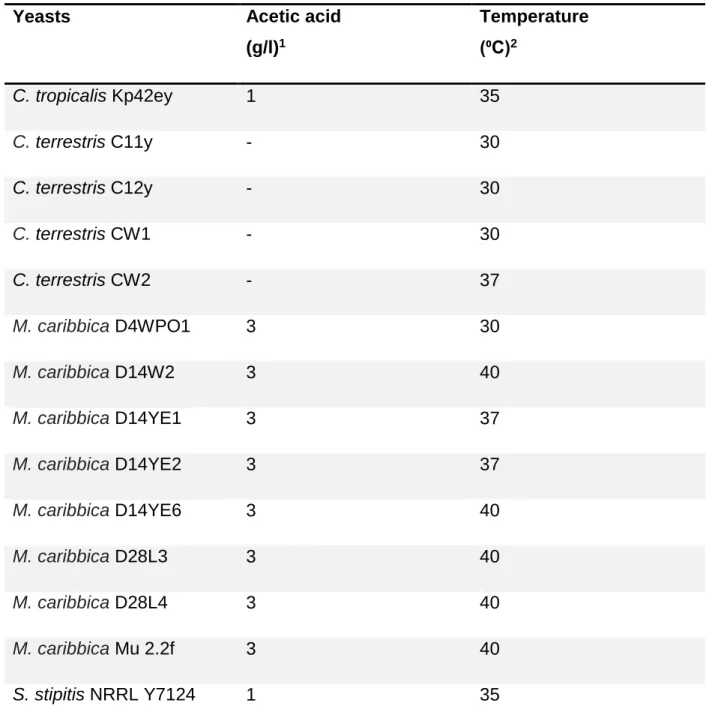
Table 4.4 Effect of acetic acid and temperature on growth of selected yeasts with L- arabinose as carbon source. ... 35
Table 4.5 Fermentation of L-arabinose by the adapted strains of M. caribbica in the presence of 3 g/L acetic acid at 35 °C. ... 38
Table 4.6 Fermentation of L-arabinose by the adapted strains of M. caribbica in the presence of 3 g/L acetic acid at 37 °C. ... 39
Table 4.7 Fermentation parameters of the adapted and parental yeast strains from M.
caribbica Mu 2.2f with D-xylose, L-arabinose or a mixture of the pentose sugars at 35
°C with or without acetic acid. ... ..42
Table 4.8 Fermentation of L-arabinose by the adapted strain of M. caribbica Mu 2.2f at different KLa values with the addition of 3 g/L acetic acid at 35 °C. ... 45
xii
Table 5.1 Comparison of ethanol production by the adapted M. caribbica Mu 2.2f with other reported L-arabinose fermenting yeasts. ... 54
Table 5.2 Comparison of arabitol production by adapted M. caribbica Mu 2.2f with
previously reported arabitol producing yeasts. ... 55
xiii
Abbreviations
KH2PO4 Potassium dihydrogen phosphate
MgSO4 Magnesium sulfate
HCL Hydrochloric acid
GC Gas Chromatography
HPLC High Pressure Liquid Chromatography
OD Optical Density
1
CHAPTER 1
INTRODUCTION
Biofuels are increasingly becoming a renewable alternative to fossil fuels and it is estimated that by 2035 approximately one-quarter of the world's energy will be generated from biomass (Kalyani et al., 2017). Bioethanol is a liquid fuel produced from biomass using different conversion technologies (Zhao et al., 2018). First generation bioethanol is produced from food crops, such as wheat, barley, maize, potato and sugarcane (Alfenore and Molina-jouve, 2018). However, first generation bioethanol raises a concern about environmental impacts and carbon balances, which sets limits in the increasing production of first generation biofuels. The main disadvantage of first generation bioethanol is the food versus fuel debate, which could lead to food shortages and rising food prices. Furthermore, this result in insufficient land required for food and feed production (Kumari and Singh, 2018). Second generation bioethanol is produced from lignocellulosic biomass, such as forest resources, agricultural residues, municipal and industrial wastes. These biomass sources are abundant, cheaper and do not compete with food resources (Nguyen et al., 2016; Kalyani et al., 2017; Guerrero et al., 2018).
Therefore, the conversion of abundant lignocellulosic biomass to transportation fuel will help improve energy security globally (Ramanjaneyulu and Reddy, 2019).
Lignocellulose is composed of three polymeric components namely, cellulose, hemicellulose and lignin. Hemicellulose and cellulose contribute up to 70% of plant biomass and are covalently linked to lignin (Kanta et al., 2017). Production of lignocellulosic-based ethanol involves pre-treatment, hydrolysis and fermentation. Pre- treatment of lignocellulosic biomass is necessary for enzymes to access the polysaccharides (hemicellulose and cellulose) in plant biomass in order to ensure efficient saccharification (Kalyani et al., 2017). Unfortunately, pre-treatment sometimes result in the release of toxic and acidic compounds, which has a negative effect on the yeasts in the fermentation step (Kumari and Singh, 2018). The hydrolysis or saccharification step involves the release of simple sugars (pentoses, mainly L-arabinose and D-xylose, and
2
hexose, mainly glucose, mannose and galactose) from the cellulose and hemicellulose components, which can then be converted to ethanol during the fermentation step (Aditiya et al., 2016).
Hemicellulose is a heterogeneous polymer composed mainly of pentose sugars, which are released after hydrolysis of hemicellulose by either hemicellulases or acids (Ahmed and Sarkar, 2018). D-xylose and L-arabinose released from hemicellulose generally constitute a significant fraction (nearly 16-19% and 3-15%, respectively) of lignocellulosic biomass. Therefore, their conversion to bioethanol is essential for an economically feasible production process. The concentrations of D-xylose and L-arabinose depend on the nature of lignocellulosic biomass and the type of pre-treatment employed (Alfenore and Molina-jouve, 2018; Koti et al., 2016). Fermentation of glucose to bioethanol by yeasts is well known, while the ability of microorganisms to convert D-xylose and L- arabinose to ethanol is often problematic. This is because of the lack of robust microorganisms that can ferment pentose sugars effectively in the presence of inhibitors and high temperatures (Chandel et al., 2011; Modi et al., 2018). One approach to improve pentose fermenting yeasts in the presence of inhibitors and high temperatures is adaptation or evolutionary engineering (Saini et al., 2018). Therefore, there is a need to develop yeast strains able to ferment a wide variety of sugars (pentoses and hexoses) in a highly inhibitory environment and high temperatures, while maintaining a high ethanol yield and production rate (Saini et al., 2017).
Aim
The aim of the study is to evaluate and improve yeasts isolated from the gut of dung beetles, herbal concoctions, Marula wine and banana wastes for their ability to ferment D-xylose and L-arabinose in the presence of inhibitors and high temperatures.
Objectives
To evaluate the ability of locally isolated yeasts to ferment pentose sugars (D- xylose or L-arabinose), previously isolated from the gut of dung beetles, herbal concoctions, Marula wine and banana wastes.
To adapt selected yeasts to improve ethanol fermentation at higher temperatures.
3
To optimise aeration for ethanol production in a bioreactor by the best-adapted yeast.
4
CHAPTER 2
LITERATURE REVIEW
2.1 Biofuel as an alternative to fossil fuels
Biofuels are defined as a liquid, solid or gas that is generated from biomass. Among the three renewable energies, liquid biofuels receive the most attention as it contributes about 40% of the total energy consumption in the world. Bioethanol (biofuel) is widely used in the world as an alternative fuel to fossil fuel. Bioethanol significantly contributes to the reduction of crude oil consumption, environmental pollution, global warming and the creation of job opportunities (Hajar et al., 2017). In an attempt to promote sustainability and independence from fossil fuel, lignocellulosic-based ethanol is now favoured as a blend or fossil fuel substitute (Aditiya et al., 2016). Lignocellulosic based ethanol can be generated from different sources of biomass feedstocks like molasses, wheat straw, grass and agricultural wastes (Jahnavi et al., 2017).
2.2 Liquid biofuels
Renewable sources used for the production of liquid biofuels (bioethanol) are classified largely into the first generation (sugar and starch), second generation (lignocellulosic biomass) and third generation (algae) bioethanol (Zabed et al., 2017). Bioethanol obtained from the edible feedstock, such as sugar cane, maize, wheat, rice, cassava and sweet potato is classified as first generation bioethanol. Second generation bioethanol is produced from non-edible feedstocks that includes wood, straw and grasses (Hajar et al., 2017). First and second generation bioethanol have potential on a commercial scale (Zabed et al., 2017). Production of third-generation bioethanol from algae is still in a developmental stage and limited to laboratory research.
2.2.1 First generation liquid biofuels
Ethanol (as liquid biofuel) produced from sucrose or starch is classified as first generation bioethanol. Sucrose from sugar cane and starch from maize have been used for bioethanol production in countries such as Brazil and the USA (Zabed et al., 2017). The
5
production of bioethanol from starch-containing materials consists of four steps; pre- treatment, fermentation, distillation and dehydration. The conversion of starch into fermentable sugars is a simple process compared to lignocellulosic material. Pre- treatment and the dehydration steps are the key steps that affect bioethanol production efficiency and the total cost of the process (Bayrakci et al., 2017). However, the use of edible biomass has limited the production of first generation bioethanol because the use of edible biomass results in a price increase in food suitable for human consumption (Ahmed and Sarkar, 2018; Kumari and Singh, 2018).
2.2.3 Second generation liquid biofuels
Second generation bioethanol is derived from lignocellulosic biomass, such as wood, straw and grasses. These feedstocks are abundant, cheap and do not compete directly with food production (Hajar et al., 2017; Kalyani et al., 2017). Bioethanol generated from these feedstocks is regarded as enviromentally friendly, safe and clean. Production of second generation bioethanol also involves four major steps; pre-treatment, hydrolysis, fermentation and distillation (Guerrero et al., 2018). Different pre-treatment methods have been applied to enhance enzyme accessibility to lignocellulose substrates. During the hydrolysis process, complex carbohydrates such as celluloses and hemicelluloses are converted into free monomer molecules (hexose and pentose sugars), which are further converted into ethanol by microorganisms during the fermentation process (Alfenore and Molina-jouve, 2018; Carrillo-Nieves et al., 2019).
2.3 Lignocellulosic biomass
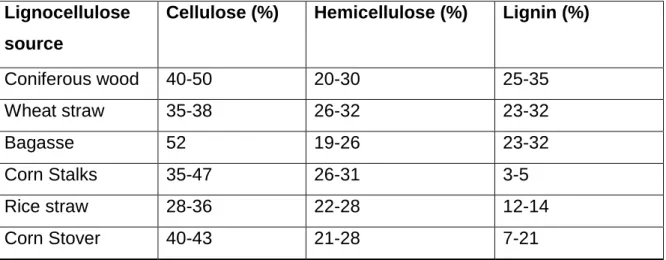
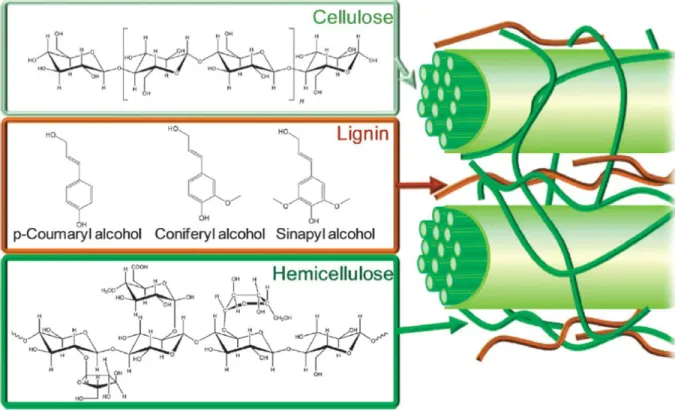
Lignocellulosic biomass is the primary building block of plant cell walls, which mainly consists of hemicellulose, cellulose and lignin (Fig 2.1) and the content of these molecules in the cell wall vary with different plant sources (Table 2.1). Lignin is covalently linked to hemicellulose and cellulose to form a complex network, which is highly robust and recalcitrant to depolymerisation (Zabed et al., 2016). This makes the production of ethanol from lignocellulosic biomass more complex than starchy raw material (Ishizaki and Hasumi, 2014).
6
Figure 2.1. Lignocellulose structure (Bach and Skreiberg, 2016).
Table 2.1. The composition of lignocellulosic biomass from different plant sources (Khattak et al., 2012; Ramanjaneyulu and Reddy, 2019).
Lignocellulose source
Cellulose (%) Hemicellulose (%) Lignin (%)
Coniferous wood 40-50 20-30 25-35
Wheat straw 35-38 26-32 23-32
Bagasse 52 19-26 23-32
Corn Stalks 35-47 26-31 3-5
Rice straw 28-36 22-28 12-14
Corn Stover 40-43 21-28 7-21
7 2.3.1 Cellulose
Cellulose is the most abundant component of lignocellulose in the environment and is a linear homopolymer consisting of D-glucose units that are joined together in a chain by β-1,4–glycosidic linkages. It constitutes 15 – 30% of the dry mass of the primary cell wall and up to 40% of the secondary cell wall in the plant cells (Zabed et al., 2016). Cellulose serves as the main carbon source for bioethanol production from lignocellulosic biomass followed by hemicellulose (Tian et al., 2018). Cellulose is present in both crystalline and amorphous forms, which makes it water-insoluble and resistant to depolymerisation (Zabed et al., 2016).
2.3.2 Hemicellulose
Hemicelluloses are a heterogeneous class of polymers representing 15 – 30% of plant biomass and contain a mixture of pentoses (mainly D-xylose and L-arabinose) and hexoses (D-mannose, D-glucose and D-galactose). Woody biomass is composed of a higher content of hemicellulose than those of herbaceous and agricultural waste (Luo et al., 2019). D-xylose and L-arabinose generally constitute a significant fraction (nearly 16- 19% and 3-15%, respectively) of lignocellulosic biomass and their utilization is essential for a feasible bioethanol production process. Hence, the importance to ferment pentose sugars along with glucose to make the process economically viable (Koti et al., 2016).
2.3.2 Lignin
Lignin is a phenolic polymer covalently linked with cellulose and hemicelluloses in plant biomass. Lignin contributes between 10 and 20% of the lignocellulosic biomass depending on the plant species. Lignin is composed of three phenylpropanoid monomers;
p-coumaryl, coniferyl and sinapyl. Alcohols contribute 15 - 35% (w/w) of the lignocellulose complex. Lignin plays a unique role in strengthening the plant structure and also protects both cellulose and hemicellulose from pathogens and insect attack (Kumari and Singh, 2018; Naidu et al., 2018; Carrillo-Nieves et al., 2019). The presence of lignin limits the rate of enzymatic hydrolysis by acting as a physical barrier and preventing the digestible parts of the substrate to be hydrolysed (Tian et al., 2018). Chen et al. (2006) have indicated that genetically engineered lignin in plants reduces the lignin formation and
8
enhances ethanol production, but reduces the plant’s resistance to pathogens and insect infestation.
2.4 Lignocellulosic bioethanol
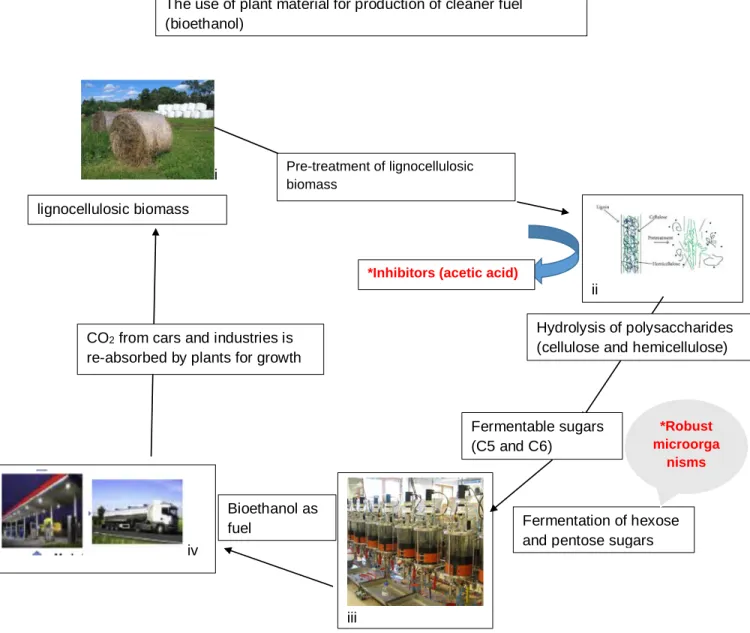
Bioethanol production from lignocellulosic biomass involves four steps, namely pre- treatment, hydrolysis of complex carbohydrates, fermentation, and distillation for product recovery (Kuhad et al., 2011) as indicated in Fig 2.2.
2.4.1 Pre-treatment
Lignocellulosic plant biomass has a complex and recalcitrant structure, which requires a pre-treatment step prior to enzymatic hydrolysis. The aim of the pre-treatment step is to degrade the lignin structure and disrupt the crystalline structure of cellulose to enhance the accessibility of enzymes to cellulose during the hydrolysis step (Bhatia et al., 2017;
Mohapatra et al., 2017). This increases substrate porosity with lignin redistribution in the cell wall and enables maximal exposure of cellulose surface area for the enzymes to attain effective hydrolysis with minimal energy consumption and maximal sugar recovery (Mohapatra et al., 2017).
Hemicelluloses are sensitive to some pre-treatment processes, such as steam explosion which degrade hemicellulose and generate toxic compounds that could affect the subsequent hydrolysis and fermentation steps (Alvira et al., 2010; Ge et al., 2018).
Temperature and retention times are the important parameters required to be controlled during the pre-treatment process to avoid the formation of unwanted inhibitors, such as furfurals and hydroxymethyl furfurals, which has a negative effect on the fermenting organism (Haghighi Mood et al., 2013).
9
Figure 2.2 Represent overall ethanol production from plant material and factors (marked in red) that hinders ethanol yields. (i), (iii) (Sun, 2015), (ii) (Sànchez Nogué and Karhumaa, 2015), (iv) (Ahmed and Sarkar, 2018)
i Pre-treatment of lignocellulosic biomass
lignocellulosic biomass
ii
Hydrolysis of polysaccharides (cellulose and hemicellulose)
Fermentable sugars (C5 and C6)
iii
Fermentation of hexose and pentose sugars iv
Bioethanol as fuel
CO2 from cars and industries is re-absorbed by plants for growth
*Inhibitors (acetic acid)
*Robust microorga
nisms The use of plant material for production of cleaner fuel
(bioethanol)
10
2.5. Inhibitors released from lignocellulose during pre-treatment
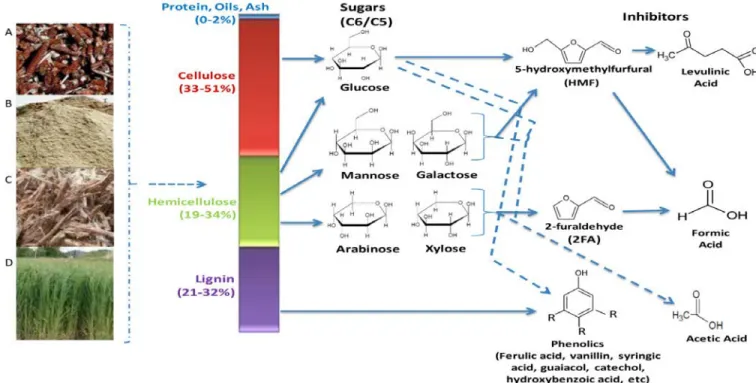
Dehydration of hexose and pentose sugars during pre-treatment results in the formation of the inhibitory compounds (Fig 2.3). These chemicals can affect the performance of microorganisms during fermentation. Formation of inhibitory substances depends on the type of pre-treatment used on lignocellulose. These inhibitors are classified into three groups: furans, carboxylic acids and phenolic compounds (Koppram et al., 2012).
Figure 2.3. Different sugars and inhibitory compounds produced during pre-treatment. (A) maize cobs (B) sawdust (C) sugarcane bagasse (D) fast-growing grasses (Ibraheem and Ndimba, 2013).
2.5.1. Carboxylic acids
The major carboxylic acids (also known as aliphatic acids) released during pre-treatment of lignocellulose are acetic acid, formic acid, and levulinic acid. Acetic acid is the most studied inhibitor due to its negative effect on fermentative yeasts and its inability to convert acetic acid to less harmful compounds as compared to other inhibitors (Wei et al., 2015;
Yuan et al., 2017). Acetic acid is produced during the hydrolysis of acetyl groups from hemicellulose (Fig 2.3). Formic acid is formed during the degradation of furfural and 5-
11
hydroxymethylfurfural (HMF), while levulinic acid is formed through the degradation of HMF (Fig 2.3) (Jönsson et.al, 2013).
Feedstocks, such as agricultural residues and hardwood have a high content of acetylated xylan, which releases high concentrations of aliphatic acids (more than 100 mM) and results in the inhibition of growth and fermentation. Softwood hydrolysate is composed of low concentrations of carboxylic acid (below 100 mM), which could improve ethanol production (Jeon et al., 2016). Palmqvist et al. (1999) showed that acetic acid significantly inhibited the growth of the yeast Candida shehatae NJ 23 when growing on a medium containing glucose as a major carbon source. A study by Hasunuma et al. ( 2011) indicated that the addition of acetic acid results in a reduction of D-xylose consumption and in the production of ethanol, xylitol and glycerol. Undissociated weak acids such as acetic acid diffuse across the plasma membrane into the cytosol, where the dissociation of the acids takes place due to the neutral intracellular pH. The dissociation of the acid results in the decrease in the cytosolic pH,which may lead to cell death (Fletcher et al., 2017, Palmqvist and Hahn-Hägerdal, 2000; Jönsson et al., 2013).
In order to retain the intracellular pH, more ATP is rapidly generated and hydrolysed for pumping out protons, which results in the loss of energy that affects cell growth of microorganisms negatively (Wei et al., 2013; Wang, et al., 2018).
2.5.2. Furans
Furfural and 5-hydroxymethylfurfural (HMF) are the main furan compounds derived from the dehydration of pentose and hexose sugars, respectively, during pre-treatment of lignocellulose Furan compounds inhibit the glycolysis pathways of many organisms by interacting with protein and RNA synthesis (Barakat et al., 2012; Luo et al., 2019;
Taherzadeh et al., 2000). Furfural negatively affected the specific growth rate of cells by inhibiting the glycolytic enzymes and causing damage to mitochondria, vacuoles, actin, and nuclear chromatin. Some microorganisms (such as S. cerevisiae) can convert furfural into less toxic compounds, such as furfuryl alcohol and furoic acid, which reduce the inhibition caused by furfural (Wang et al., 2016). Wang et al. (2016) indicated that Candida tropicalis continued to grow and consume D-xylose in the presence of furfural (3 and 5
12
g/L) implying that D-xylose transport or metabolism was not affected by furfural at low concentrations, while 9 g/L furfural was lethal for C. tropicalis.
2.5.3 Phenolic compounds
Phenolic compounds are formed from lignin (vanillyl alcohol, hydroxybenzoic acid and syringic acid) or sugars (catechol) during acid-catalysed hydrolysis or pre-treatment of lignocellulose (Larsson et al., 2000; Jönsson et al., 2013; Wang et al., 2018). Lignin content varies with the type of plant material used, therefore the concentration of inhibitors formed will also vary (Amen-chen et al., 2001). Phenolic compounds have an inhibitory effect on both microbial growth and ethanol yield (Palmqvist and Hahn-Hägerdal, 2000).
Phenolic compounds with low molecular weight are more toxic than those with higher molecular weight because they diffuse rapidly and easily through the cell and inhibit cell growth and ethanol production (Lin et al., 2015). The mechanism of toxicity has not been elucidated yet, but Keweloh et al. (1990) suggested one possible mechanism could be the interference with the cell membrane by influencing its function and changing its protein-to-lipid ratio. It seems yeast are able to convert the inhibitory state of the phenolic compounds into a non-inhibitory state. Larsson et al. (2000) studied the influence of aromatic compounds on oxygen-limited and ethanolic fermentation by S. cerevisiae. They indicated that S. cerevisiae was able to convert coniferyl aldehyde to coniferyl alcohol and dihydroconiferyl alcohol, which are less toxic compounds.
2.6 Hydrolysis
The hydrolysis process occurs after pre-treatment to convert polysaccharides (cellulose or hemicellulose) into fermentable sugars for ethanol production. The hydrolysis process is required since microorganisms used for fermentation can only ferment simpler sugars (Aditiya et al., 2016; Hajar et al., 2017).Two common hydrolysis methods used are acid or enzymes. Enzymatic hydrolysis is known for its economical challenge due to the high cost of enzymes and considered impractical for commercial purposes. However, in comparison with acid hydrolysis, enzymes work in a mild environment, hence lower equipment maintenance cost. Moreover, the disposal system for acid hydrolysis is essential to consider and it requires additional cost. Another major problem is the ability
13
of the acid to gradually degrade the sugar monomers once they are formed in a hostile acidic environment at high temperatures (Aditiya et al., 2016).
2.6.1 Enzymatic hydrolysis of cellulose
Cellulase is a complex of enzymes that act together to completely convert cellulose into monomeric glucose. The cellulase system is composed of three major groups of enzymes: endoglucanase, exoglucanase and β–glucosidase (Kumar et al., 2015; Zabed et al., 2017). Endoglucanase, randomly cleaves β–1,4 glycosidic linkages of cellulose, resulting in the decrease in chain length and release of free chain ends, while exoglucanase splits cellobiose units from the ends of cellulose molecules. The end result of both endoglucanase and exoglucanase are short cello-oligosaccharides and cellobiose, which are catalytically cleaved to produce glucose through the action of β– glucosidase (Qing et al., 2010). Cellulase yields 53 - 94% of glucose depending on the type of feedstock and pre-treatment technique utilised (Khattak et al., 2012). Cellulases are thermostable with an optimal temperature ranging from 50 - 60 ºC and are stable at a pH range of between 4.5 - 5 (Srivastava et al., 2018). Ko et al. ( 2015) obtained a 70%
glucose yield from celluloseusing Cellic Ctec2 at 50 ºC in 72 hours.
2.6.2 Enzymatic hydrolysis of hemicelluloses
Hemicellulose, unlike cellulose, is easier to hydrolyse due to its amorphous structure.
Xylan, as one of the most abundant components in hemicellulose, is a polysaccharide that is composed of pentose sugars (mainly D-xylose and L-arabinose). Degradation of xylan requires multiple enzymes broadly called xylanases (Aditiya et al., 2016; Zabed et al., 2017). Softwood hemicelluloses are composed of xyloglucans, arabinogalactans, arabinoglucuronoxylans and glucomannans while hardwood is composed of xylans and glucomannans (Sindhu et al., 2016). The xylanase system is composed of endo- xylanase, exo-xylanase, β–xylosidase, α–arabinofuranosidase, α–glucuronidase, acetyl xylan esterase, and ferulic acid esterase. Endo and exo–xylanase act on the main chains of xylans and hydrolyse them into smaller chains.The enzyme β–xylosidase attacks xylo- oligosaccharides and produces 69-77% of xylose. The α–arabinofuranosidase and α– glucuronidase act on the xylan backbone and removes L-arabinose (35%) and 4–o–
methyl glucuronic acid, respectively (Khattak et al., 2012; Zabed et al., 2016).
14
2.7 Fermentation
Fermentation is a metabolic process that converts simple sugars (pentoses and hexoses) into ethanol (Zabed et al., 2017). Pentose sugars (D-xylose and L-arabinose) generated from lignocellulosic biomass cannot be fermented by S. cerevisiae commonly used in the ethanol industry. Hence, other yeasts and bacteria are used to increase fermentation yields of ethanol derived from biomass sugars (both pentose and hexose).Hydrolysates derived from lignocellulosic biomass tend to contain fermentation inhibitors, such as acetic acid and furfural that lower ethanol yield. Therefore, robust strains that are resistant to inhibitors are required (Gray et al., 2006).
2.7.1 Ethanol production from L-arabinose and D-xylose
Bioethanol production from lignocellulosic biomass depends on the availability of robust microorganisms that can ferment all sugars available in the feedstock, including D-xylose and L-arabinose. Currently, S. cerevisiae is a robust ethanol producer of D-glucose, but cannot ferment pentose sugars (Bettiga et al., 2009).
The pentose sugars, L-arabinose and D-xylose enter the pentose phosphate pathway (PPP) after they are converted to D-xylulose 5-phosphate (Fig 2.4). In bacteria, L- arabinose is converted to L-ribulose, and then to L-ribulose-5-phosphate and finally to D- xylulose-5-phosphate (substrate of the pentose phosphate pathway), catalysed by L- arabinose isomerase, L-ribulokinase and L-ribulose-5-P 4-epimerase, respectively (Fig.
2.4).
D-xylose is directly isomerized to D-xylulose by D-xylose isomerase, followed by phosphorylation to form D-xylulose-5-phosphate that enter the pentose phosphate pathway (Bettiga et al., 2009; Chandel et al., 2011). Bacteria can convert D-xylose to ethanol under anaerobic conditions. The major drawback of using ethanologenic bacteria is the inhibition of the fermentation process due to high concentrations of ethanol and sugars and the production of unwanted by-products (Chandel et al., 2011).
In fungi, L-arabinose is converted to L-arabitol and D-xylose is converted to xylitol by the same enzyme aldose reductase. L-arabitol is converted to L-xylulose by L-arabitol
15
Figure 2.4. Bacterial and fungal pentose (L-arabinose and D-xylose) catabolism pathway. AI:
L-arabinose isomerase; ALX: L-xylulose reductase; AR: aldose reductase; LAD: L-arabitol dehydrogenase; R5PE: ribulose 5-phosphate epimerase; RK: ribulokinase; XDH: xylitol dehydrogenase; XI: D-xylose isomerase; XKS: xylulokinase, XR: xylose reductase (Kricka et al., 2015).
dehydrogenase, which is further reduced to xylitol by L-xylulose reductase.Thus, the L- arabinose pathway converges with the D-xylose pathway at the level of the achiral compound xylitol (Bettiga et al., 2009). Xylitol is converted to D-xylulose by xylitol dehydrogenase, which is further oxidized to form D-xylulose-5-phosphate (Fig. 2.4). D- Xylulose is further metabolized via the pentose phosphate pathway (PPP), in which the non-oxidative rearrangements of α-xylose-5-phosphate by ribulose phosphate-3- epimerase, transaldolase (TAL) and transketolase (TK) results in the generation of glyceraldehyde-3-phosphate and fructose-6-phosphate, which can be converted to ethanol by fermentative reactions of the Embden–Meyerhoff–Parnas (EMP) pathway.
Most fungi need microaerophilic conditions to ferment pentose sugars to prevent co-factor imbalances (Kuhad et al., 2011).
16 2.7.2 Pentose fermenting yeasts
The fermentation of pentose sugars from lignocellulosic biomass is critical for the economical production of lignocellulosic ethanol (Guarnieri et al., 2017). Traditional yeast (S. cerevisiae) can efficiently ferment glucose to ethanol, but cannot ferment D-xylose, which is a dominant sugar in hemicellulose (Kim et al., 2013; Sharma et al., 2017).
Yeasts isolated from different locations, such as tree exudates, wood-boring insects, decaying wood, rotten fruit and tree bark have been reported to produce ethanol from D- xylose. Known natural D-xylose fermenting yeasts include Scheffersomyces (Pichia) stipitis, Candida shehatae, Candida lignosa, Candida insectosa, Candida tenuis, Kluyveromyces marxianus, Pachysolen tannophilus, Spathaspora passalidarum and Spathaspora arborariae. Among these yeasts, S. stipitis and S. passalidarum are considered the best ethanol producers from D-xylose (Cadete et al., 2012; Hou, 2012).
However, these yeasts cannot produce ethanol from D-xylose effectively in the presence of inhibitors at elevated temperatures (Cadete et al., 2012; Romero-García et al., 2016).
Natural L-arabinose fermenting yeasts are poorly characterized by the limited information available (Fonseca et al., 2007; Silva et al., 2014). The study of McMillan and Boynton.
(1994) showed that S. stipitis, Schizosaccharomyces pombe, Candida tropicalis, and P.
tannophilus were able to utilize L-arabinose and produce L-arabitol as a major end- product, rather than ethanol. This study was supported by Nigam (2001a), who indicated that S. stipitis assimilated low amounts of L-arabinose, but could not ferment it. According to a study conducted by Fonseca et al. (2007), Candida arabinofermentans PYCC 5603T grew on fermentation medium containing 80 g/L L-arabinose and produce 2.4 g/L of ethanol after 48 hours
2.8 Conversion of pentose sugars to ethanol
The major factors that influence the conversion of pentose sugars to ethanol include aeration, temperature, pH, incubation time, initial substrate concentration and inhibitors present in the hydrolysate.
17 2.8.1 Temperature
Temperature is an important parameter and is regulated as it affects the performance of cells during fermentation. Most yeast fermentation processes operate in the temperature range between 20 and 36 °C (Imtiaz et al., 2013). High temperatures (above 45 °C) negatively affect the fermentation process. Yeast cells produce heat-shock proteins and inactivate its cellular ribosomes in response to this stress condition (Cazetta et al., 2007;
Zabed et al., 2017). Cazetta et al. (2007) reported that 40 °C was negative for the fermentative process, resulting in lower ethanol production. On the other hand, much lower temperatures (15 - 20 °C) during fermentation caused lower specific growth rates of the cells and resulted in lower tolerance to ethanol. The ideal temperature for bioethanol production differs depending on the yeast. The ideal temperature for S. stipitis, S. cerevisiae, and K. marxianus is 25 - 26, 30 and 45 °C respectively (Hajar et al., 2017;
Santos et al., 2016). However, finding a thermotolerant yeast able to ferment at high temperatures would potentially reduce cooling costs, increase saccharification and fermentation rates and minimise contamination (Signori et al., 2014).
2.8.2 pH
The pH is another key factor with a significant influence on ethanol fermentation, as it directly affects yeast cells and cellular processes (Masiero et al., 2014; Zabed et al., 2017). In the fermentation media, a pH below or above a certain level can alter the overall charge on the plasma membrane, which affects the permeability of some essential nutrients into the cells. A pH of 4.0 - 5.0 is normally the range for ethanol production by yeasts. The optimum pH range during the fermentation process may differ depending on the type of substrate utilised and fermenting yeast used (Lin et al., 2012a). Recent studies indicated that S. cerevisiae can grow sufficiently and produce ethanol from date juice at a pH of 3.8 (Louhichi et al., 2013). Dussán et al. (2016) reported that both S. stipitis and S.shehatae yeasts were able to grow on fermentation medium consisting of D-xylose with an initial pH of 6.50 and produced maximum ethanol concentrations of 7.34 and 18 g /L with a final pH of 6.98 and 6.91, respectively.
18 2.8.3 Incubation time
A short or long incubation time affect ethanol yields. Cadete et al. (2012) indicated that S. passalidarum strains and S. stipitis UFMG-XMD-15.2 produced ethanol optimally from D-xylose (18 and 12.3 g/L, respectively) in 24 hours. A study by du Preez et al. (1986) indicated that C. shehatae CBS 2779 consumed 100% D-xylose and 99% L-arabinose in 28 and 211 hours, respectively. Less ethanol was produced from D-xylose, while no ethanol was detected from L-arabinose. Scheffersomyces shehatae UFMG-HM 52.2 consumed 100% of pentose sugars present in the sugarcane bagasse and produced 10 g/L ethanol after 48 hours (Antunes et al., 2014). However, recently it has been reported that Meyerozyma caribbica continued to produce ethanol from L-arabinose when the fermentation time was increased from 72 to 96 hours (Sukpipat et al., 2017).
2.8.4 Initial substrate concentration
Initial substrate concentration has a direct effect on the rate of fermentation and the growth of yeast cells (Singh et al., 2014). The yeast starves and ethanol productivity decreases when the D-xylose concentration is below 1 g/L. A high sugar concentration (normally 150 g/L) causes the fermentation rate to increase. However, the use of excessive sugar (above 150 g/L) will cause a steady fermentation rate, since the uptake capacity of the microbial cells is at a maximum rate (Hajar et al., 2017). It should be noted that different fermenting microbes respond differently to the initial substrate concentration (Lin et al., 2012a).
Scheffersomyces guilliermondii PYCC 3012 did not produce any ethanol in complex medium containing 80 g/L L-arabinose under oxygen-limited conditions (Fonseca et al., 2007). Dien et al. (1996) showed that Ambrosiozyma monospora grew on media containing 80 g/L L-arabinose and produced 4.1 g/L ethanol after 12 days. It has been reported that S. stipitis NRRL Y-7124 consumed 90% of D-xylose when grown on fermentation media with 50 g/L D-xylose and produced a maximum ethanol yield of 0.35 g/g after 24 hours (Cadete et al., 2012). Modi et al. (2018) reported that C. tropicalis BE grew on fermentation medium containing 2% D-xylose and achieved a 74% ethanol yield.
However, ethanol yield of less than 10% was obtained when 9% of D-xylose was utilised.
The decrease in ethanol yield was due to osmotic stress implemented by a high sugar
19
concentration that acted as a fermentation inhibitor. Currently, no studies have been conducted on the effect of different L-arabinose concentrations on ethanol production.
2.8.5 Aeration
Aeration is important for pentose fermentation by yeasts because the aeration level sets the carbon flow division between cell growth and product formation (Dussán et al., 2016).
At low aeration or micro-aeration condition, yeasts produce either arabitol or xylitol instead of ethanol from D-xylose or L-arabinose. This scenario is due to the imbalance of the co-factors NAD+ and NADPH. NADPH is a co-factor for xylose reductase that reduces L-arabinose or D-xylose to arabitol or xylitol, respectively. Arabitol or xylitol is further oxidized to form xylulose via arabitol or xylitol dehydrogenase that uses NAD+ as co- factor. Therefore, the cell accumulates more arabitol or xylitol due to the insufficient conversion of NADH to NAD+ (Makhuvele et al., 2017; Martins et al., 2018; Seiboth and Metz, 2011).
Hou (2012) demonstrated that Spathaspora passalidarum produced a high ethanol yield, fast cell growth, and rapid sugar consumption with D-xylose being consumed after glucose depletion, while S. stipitis was unable to utilize D-xylose under anaerobic conditions. The reason for S. passalidarum to consume D-xylose under the anaerobic condition is that the strain preferred NADH (instead of NAPDH) as a cofactor for dual D- xylose reductase and NAD+ for xylitol dehydrogenase. Therefore, sufficient NAD+ required by xylitol dehydrogenase were generated through re-oxidation of NADH by xylose reductase. Unrean and Ngyen (2012) reported that D-xylose fermentation by S.
stipitis under micro-aeration increased the ethanol yield to 0.40 g/g from D-xylose. High oxygen levels resulted in an increase in specific growth rate and lower ethanol yields. Lin et al. (2012b) noted that S. stipitis produced a maximum ethanol yield of 0.44 g/g at an aeration rate of 0.05 vvm with an increase in aeration resulting in lower ethanol yields, with an increase in biomass.
Fonseca et al. (2007) indicated that C. arabinofermentans PYCC 5603(T) and P.
guilliermondii PYCC 3012 produced biomass when grown on media containing L- arabinose under aerobic conditions. When microaerobic conditions were applied, both yeasts produced L-arabitol of 0.09 g/g and 0.38 g/g, respectively, instead of ethanol. This
20
is normally due to insufficient regeneration of the cofactor NAD+ that is required by either xylitol or arabitol dehydrogenase.
2.9 Adaptation or evolutionary engineering
Evolutionary engineering or adaptation is a tool to enhance a trait of a microbial population under selective pressure (Parachin, 2011). One of the most interesting features of microorganisms is their ability to adapt rapidly to different environmental conditions.
Adaptive laboratory evolution has been used with great success to gain insights into the genetic basis and dynamics of adaptation (Portnoy et al., 2011).In addition, adaptation has also become widely used for biotechnological applications, improving yields, and reducing costs in industrial settings. The normal range of subculturing is between 50 and 100 repetitions (Harner et al., 2015; Huang et al., 2009).
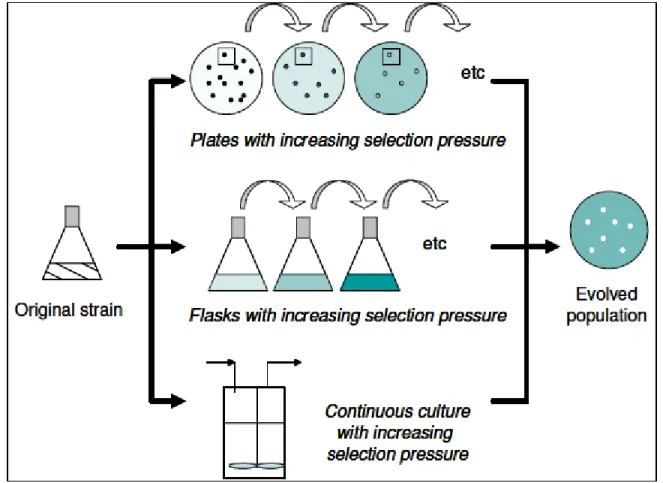
A classical method for evolutionary engineering is the development of a robust strain from the parental strain by direct sequential transfer of a strain on a solid culture medium (Fig 2.5) that provides the selective pressure, such as high inhibitor concentrations and temperatures (Çakar et al., 2012). Serial transfer in shake flasks or tubes (Fig 2.5) is another approach for yeast evolutionary engineering. Serial transfer selects for mutants with a higher maximum specific growth rate, and with improved rates of substrate consumption and product formation (Mans et al., 2018).
Adaptation of yeast strains to inhibitor compounds is an alternative approach to the detoxification of hydrolysates and will prevent the loss of fermentable sugars during detoxification (Alvira et al., 2010). Moreover, adaptation approaches have also been used to improve fermentation capabilities and ethanol yield in recombinant strains such as S.
stipitis and S. cerevisiae (Kuhad et al., 2011). Some of the recognized evolutionary approaches include an adaptation of microorganisms to whole fermentable sugars with high concentrations of inhibitors or to defined media composed of one or more synthetic inhibitors (Koppram et al., 2012).
21
.
Figure 2.5 Different approaches to evolutionary engineering to obtain the desired phenotype (Hahn-Hägerdal et al., 2005)
Silva et al. ( 2014) reported that a non-adapted S. stipitis consumed only 51% of D-xylose while an adapted strain consumed D-xylose 96% better than the non-adapted strain. Martı et al. (2007) showed that the adapted recombinant xylose-utilizing S. cerevisiae strain was able to consume D-xylose and produce ethanol in a shorter period as compared to the parental strain. The adapted strain was also able to convert fermentation inhibitors (furfural and HMF) faster to non-toxic compounds, as compared to the non-adapted strain (Martı et al., 2007; Silva et al., 2014). Morales et al. (2017) found that after 380 generations of adaptation for Spathaspora passalidarum it produced 5.8 g/L ethanol (0.31 g/g ethanol yield) in the presence of 3.5 g/L acetic acid in a synthetic medium containing a mixture of glucose and D-xylose. The native strain in comparison obtained an ethanol yield of 0.21 g/g. No studies for adapting fermenting yeast for L-arabinose fermentation have been found in the literature.
22
Chapter 3
Materials and Methods
3.1 Yeasts
Three hundred and ninety yeasts, previously isolated from banana waste, the gut of dung beetles, herbal concoctions and Marula wine were streaked on D-xylose or L-arabinose agar plates (10 g/L D-xylose or L-arabinose, 15 g/L bacteriological agar, 6.7 g/L yeast nitrogen base (YNB) and 0.2 g/L chloramphenicol) and incubated at 30 °C for 120 hours.
Freshly inoculated yeast malt agar (YM) slants (10 g/L glucose, 0.2 g/L chloramphenicol, 3 g/L malt extract, 3 g/L yeasts extract, 5 g/L peptone and 15 g/L bacteriological agar) with yeasts that grew on both D-xylose and L-arabinose were incubated at 30 °C for 24 hours and stored at 4 °C (Barathikannan et al., 2016). All the pentose sugars in this study were autoclaved separately and mixed afterwards with the rest of the medium to prevent caramelization. The purity of the yeast cultures was regularly checked by microscopic examination and colony morphology throughout the study.
3.2 Selection of D-xylose and L-arabinose fermenting yeasts
All yeasts able to grow on both D-xylose and L-arabinose agar plates were inoculated into test tubes with a Durham tube. The test tubes containing modified fermentation media described by Silva et al. (2012) consisted of 30 g/L sugar (D-xylose or L-arabinose), 5 g/L peptone, 3 g/L yeast extract, 2.3 g/L urea, 3 g/L KH2PO4, 1 g/L MgSO4 and 0.2 g/L chloramphenicol. The fermentation test tubes were incubated at 30 °C for 120 hours.
Positive results were noted by the presence of a bubble in the Durham tube.
Scheffersomyces stipitis NRRL Y7124 was used as a positive control for both D-xylose and L-arabinose fermentation. Experiments were performed in duplicates.
3.3 Yeast identification using ITS and D1/D2 sequencing
The isolated yeasts fermenting D-xylose and L-arabinose were identified by means of DNA sequencing. The yeast isolates were streaked on YM agar plates and incubated at 30 °C. The cultures were sequenced by Inqaba Biotechnical Industries (Pty) Ltd (South
23
Africa). The ZR Fungal/Bacterial DNA MiniPrepTM Kit (Zymo Research) was utilised for DNA extraction, according to the instructions of the manufacturer. The ITS1 region of all selected yeasts was amplified using the PCR primers ITS-1 (5’-TCC GTA GGT GAA CCT GCG G-3’) and ITS-4 (5’-TCC TCC GCT TAT TGA TAT GC-3’) (Barathikannan et al., 2016). Amplification was done in 25 µl reactions using the EconoTaq Plus Green Master Mix (Lucingen). The following PCR conditions were performed: 35 cycles including an initial denaturation at 95 ⁰C for 2 min. Thereafter denaturation was done at 95 ⁰C for 30 s, annealing at 50 ⁰C for30 s and extension at 72 ⁰C for 1 min. A final extension at 72 ⁰C for 10 min was followed by holding it at 4 ⁰C. The D1/D2 domain of the 26S rDNA region was also amplified for all yeast isolates using primers NL1 (5‘-GCA TAT CAA TAA GCG GAG GAA AAG-3') and NL4 (5'-GGT CCG TGT TTC AAG ACG G-3') as described above.
The DNA sequencing was done with ABI V3.1 Big dye according to the manufacturer's instructions on the ABI 3500 XL Instrument.
The sequences were cleaned using Chromas, followed by Bioedit to produce consensus sequences. The yeast isolates were identified by comparing the obtained sequences with that of the NCBI National Center for Biotechnology Information's searching databases (http://www.ncbi.nlm.nih.gov/BLAST/) using the BLAST sequence analysis tool. The ITS1 and D1/D2 sequences were compared using nucleotide-nucleotide BLAST (blastn) with default settings.
Biochemical properties of selected yeast isolates were identified using the VITEK 2 automated microbiology system as described by Pincus (2010). The VITEK 2 system was applied to compare the biochemical tests of the yeast isolates in these study with the reported biochemical tests of similar yeasts. The study was accomplished by suspension of a pure culture on to the test kit (VITEK 2 YST) and the kit was placed in the cassette which was incubated in the VITEK incubator. The test kit was specifically used for yeast biochemical tests and the biochemical reaction was analysed as the culture grow occurs in the VITEK incubator.
24
3.4 Determination of ethanol production from pentose-fermenting yeasts
A pre-inoculum was prepared in 250 ml Erlenmeyer flasks containing 25 ml of the modified fermentation media as described in 3.2 with D-xylose or L-arabinose used as carbon source. The flasks, inoculated with yeasts able to ferment both D-xylose and L- arabinose, were incubated at 30 °C and 200 rpm for 48 hours. The cultures were used to inoculate Erlenmeyer flasks (250 ml) containing 100 ml of the same media with a starting optical density (OD) of 0.1 at 600 nm. The flasks were incubated in the same manner as the pre-inoculum for a period of 96 hours. Two-millilitre samples were withdrawn at 24, 48, 72 and 96 hours to determine the ethanol concentration using gas chromatography (GC). Experiments were performed in duplicates.
3.5 Acetic acid and thermotolerance of pentose-fermenting yeasts
Pentose fermenting yeasts able to ferment both the pentose sugars were grown on slants containing 6.7 g/L YNB and 20 g/L of L-arabinose and incubated at different temperatures (35 °C, 37 °C and 40 °C, respectively) to determine the maximum growth temperature.
Different concentrations of acetic acid (1, 2 and 3 g/L) were added in the same media (used for temperature evaluation) to determine the ability of the yeasts to grow in the presence of acetic acid during incubation at 30 °C. Yeasts with acetic acid tolerance and thermotolerance were further used in the adaptation experiments. The experiments were done in duplicate.
3.6 Adaptation (evolutionary engineering) of yeasts on L-arabinose.
Yeast strains able to ferment both pentose sugars and grew in the presence of 3 g/L acetic acid were selected for adaptation. The combination of pentose sugars, higher temperatures and the presence of acetic acid were used to improve the selected yeasts.
The yeasts were inoculated onto agar plates containing 6.7 g/L YNB supplemented with 30 g/L L-arabinose and 3 g/L acetic acid and incubated at 35 °C for 24 hours at pH 5.0.
Colonies were re-streaked onto the same media and incubated at 35 °C for 24 hours and the process was repeated 50 times. The process was repeated 50 times at 37 °C followed by 40 °C under the same conditions as described for 35 °C. The process of re-streaking
25
for each of the changed parameters was done according to the method of Silva et al.
(2014).
3.7 Screening of adapted yeasts for ethanol production
The best adapted yeast strains (ability to ferment in the presence of acetic acid at elevated temperatures) were screened for ethanol production at different temperatures (35, 37 and 40 °C) in 250 ml Erlenmeyer flasks containing the same modified fermentation medium (3 g/L yeast extract, 2.3 g/L urea, 1 g/L MgSO4, 30 g/L L-arabinose, 5 g/L peptone, 3g/L KH4PO2 and 0.2 g/L chloramphenicol) with 3 g/L acetic acid. Each flask contained L- arabinose as carbon source and sampling was done every 24 hours for 120 hours.
The best-adapted yeast strain was selected based on high ethanol production along with the acetic acid tolerance and thermotolerance. The best-adapted yeast strain was then compared with its parental strain in 250 ml Erlenmeyer flasks using different pentose sugars in the presence and absence of acetic acid. The different pentose concentrations used in the flasks contained either D-xylose (50 g/L), L-arabinose (40 g/L), or a mixture of D-xylose (50 g/L) and L-arabinose (40 g/L) with or without the addition of 3 g/L acetic acid. The sampling was done regularly for 5 days and the experiments were conducted in triplicates. HPLC was used to determine D-xylose, L-arabinose, arabitol and xylitol concentrations, with GC used for ethanol determination.
3.8 Fermentation studies
The best-adapted yeast strain was further evaluated for ethanol production in a Bioflow New Brunswick Bioreactor using a three-litre fermenting vessel containing one litre of media. Control modules used included aeration, pH, agitation and temperature. The same fermenting media as indicated earlier (section 3.7) was used with L-arabinose as a carbon source. Fermentation in the bioreactor was conducted at a fixed pH of 5.0 by adding 3M HCl to prevent an increase in media pH at 35 °C. Aeration and agitation were tested using different fixed KLa values (2.3, 3.3 and 4.9 h-1). The experiments were conducted in triplicate for a period of 120 hours. Sampling was done regularly to determine the biomass, ethanol, L-arabinose and arabitol concentrations in the bioreactor. Biomass determinations were done using dry weight in grams, whereas sugar and ethanol
26
concentrations were determined using high-performance liquid chromatography (HPLC) and gas chromatography (GC), respectively.
3.9 Determination of volumetric oxygen transfer coefficient (K
La)
Various aeration rates and agitation speeds were used to determine the effect of oxygen on ethanol production by the selected adapted yeast strain. The dynamic gassing-out method was applied to determine the different KLa (2.3, 3.3 and 4.9 h-1) values. In this method, the oxygen concentration in the non-fermented medium was reduced to zero by gassing in nitrogen gas through the bioreactor. The deoxygenated medium was re- aerated and agitated at a fixed agitation speed and aeration rate using a calibrated polarographic oxygen sensor to measure dissolved oxygen in the medium. The polarographic oxygen sensor was previously calibrated at atmospheric pressure according to the instructions of the manufacturer. The concentration of dissolved oxygen in the medium was monitored using the equation:
𝑑𝑑𝑑𝑑L
𝑑𝑑𝑑𝑑 =KLa (C*L-CL) (1)
The KLa values were calculated using ln(𝐶𝐶∗𝐿𝐿− 𝐶𝐶𝐿𝐿) versus time, where CL is the concentration of dissolved oxygen in the fermentation broth and C*L is the saturated dissolved oxygen concentration in the fermentation medium (Bellido et al., 2013). The KLa values tested during fermentation of L-arabinose were 2.3 h-1, 3.3 h-1 and 4.9 h-1 with air that was introduced into the bioreactor at 0.1 vvm for all KLa values with the agitation speed at 100 rpm for 2.3 h-1, 150 rpm for 3.3 h-1 and 200 rpm for 4.9 h-1. The range of different KLa values used was the same as described by Silva et al., (2012) where D- xylose was used as carbon source.
3.10 Analytical methods
3.10.1 GC analysis
The ethanol content was determined by a GC-2010 Plus Shimadzu Gas Chromatograph.
A ZB-WAX plus column was used at a starting temperature of 40 °C and raised to 140 °C after sample injection at a rate of 20 °C/min. It was then raised to 200 °C at a rate of 50
°C/min and kept at this temperature for 2 min. Nitrogen was used as carrier gas at a flow
27
rate of 17.6 mL/min and at a pressure of 100 kPa. The temperature of the detector was set at 255 °C. For each sample, a volume of 1 µL was automatically injected onto the GC column using a split syringe AOC-20i + s. GC solution operation analysis database was used to process the data samples. The ethanol in the samples was measured by comparing it with the known ethanol standards (Nguyen et al., 2016).
3.10.2 HPLC analysis
A Shimadzu prominence 20 (Tokyo, Japan) high-performance liquid chromatography (HPLC) instrument equipped with a RID 10A Refractive Index detector was used to determine the D-xylose, L-arabinose, arabitol and xylitol concentrations. A Razex RHM monosaccharide H+ (300 mm x 7mm) column was utilised and deionized water was used as the mobile phase. The temperature was set at 85 °C and the flow rate was 0.6 ml/min.
A sample volume of 20 µl was injected into the HPLC using a SIL-20A autosampler. LC Solution Operation analysis was used to process the sample data. Known standards of D-xylose, L-arabinose, arabitol and xylitol were used to calculate the concentration of the samples (Makhuvele et al., 2017).
3.10.3 Calculations of fermentation parameters
The fermentation parameters, arabitol, cell biomass, ethanol and xylitol yield, ethanol productivity D-xylose and L-arabinose consumption were determined as described below.
Arabitol (g/g), ethanol (g/g) and xylitol (g/g) yields were calculated as described by Cadete et al. (2012), which correlated to the products generated (∆P arabitol, ∆P ethanol, ∆P xylitol) with the substrates (∆S L-arabinose, ∆S D-xylose) consumed. The ethanol productivity was calculated by the ratio between maximum ethanol concentration and fermentation time (h) at which high ethanol was generated. Cell concentrations were determined by correlating the optical density (OD) measurements spectrophotometrically at 600 nm with a standard curve of dry weight against optical density previously constructed. The biomass yield was determined by the ratio between cell concentration (g/L) and substrate utilised (g/L).
28
CHAPTER 4
RESULTS
In this study, a total of 390 yeasts, previously isolated from banana waste, the gut of dung beetles, Marula wine and herbal concoctions were evaluated for their ability to grow and ferment both D-xylose and L-arabinose. Twenty-seven yeasts were able to grow on plates containing either D-xylose or L-arabinose and 13 yeasts were able to ferment both sugars. Yeasts with preferred characteristics (growth at elevated temperatures and in the presence of acetic acid) were selected for adaptation experiments. The adapted yeasts were further evaluated to select the best ethanol producing yeast strain. The best adapted yeast strain was evaluated in a bioreactor to determine different rates of aeration for ethanol production.
4.1 Identification and biochemical characterization of selected yeast
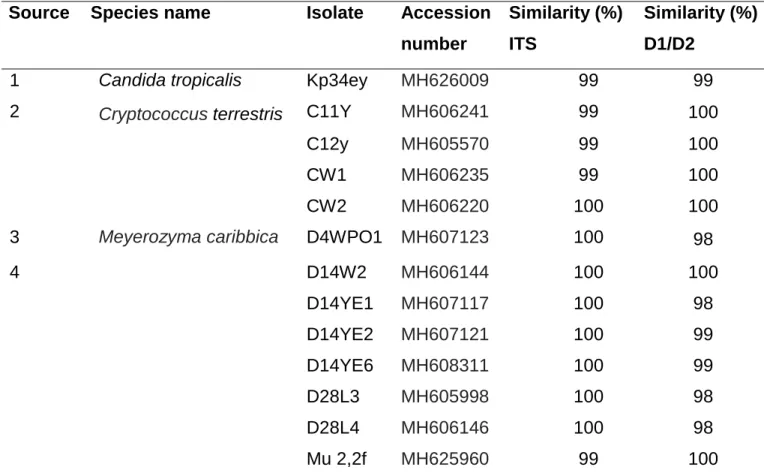
Thirteen yeast isolates capable of D-xylose and L-arabinose fermentation were identified using ITS-5.8S and D1/D2 domain sequencing (Table 4.1). The identified yeasts indicated 98 - 100 % similarities with that found on the GenBank database and the sequences (ITS1 and D1/D2) of all identified yeasts in this study were deposited in the GenBank database with accession numbers as indicated in Table 4.1. Most of the yeast isolates identified belong to Meyerozyma caribbica (D28L3, D14W2, D28L4, D14YE6, D14YE1, D14YE2, D4WPO1 and Mu2.2f) followed by Cryptococcus terrestris (C11Y, C12Y, CW1 and CW2) and Candida tropicalis (Kp34ey).
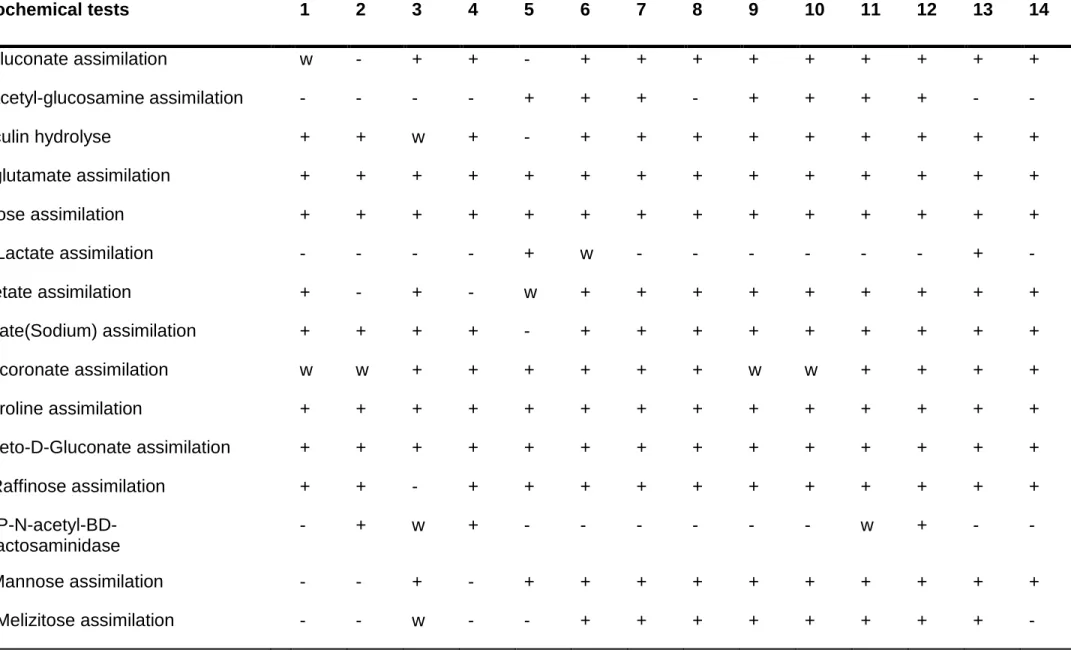
The identified yeasts were compared and confirmed using biochemical characteristics according to the VITEK 2 system (Pincus, 2010) and the results are depicted in Table 4.2. The biochemical profile for the Meyerozyma caribbica strains (D28L3, D14W2, D28L4, D14YE6, D14YE1, D14YE2, D4WPO1 and Mu2.2f) were comparable to that found by Kurtzman et al. (2010) and confirmed the utilisation of both D-xylose and L- arabinose. All the identified yeast strains were able to assimilate cellobiose, D-xylose, D- glucose and L-arabinose, found in lignocellulosic biomass. Cryptococcus terrestris C12y assimilated D-xylose, D-glucose and L-arabinose but failed to assimilate cellobiose.
29
Table 4. 1 Identification of selected pentose fermenting yeast isolates.
1 – Dung beetle, 2 - Herbal concoctions, 3 - Banana wastes, 4 - Marula wine Source Species name Isolate Accession
number
Similarity (%) ITS
Similarity (%) D1/D2
1 Candida tropicalis Kp34ey MH626009 99 99
2 Cryptococcus terrestris C11Y MH606241 99 100
C12y MH605570 99 100
CW1 MH606235 99 100
CW2 MH606220 100 100
3 Meyerozyma caribbica D4WPO1 MH607123 100 98
4 D14W2 MH606144 100 100
D14YE1 MH607117 100 98
D14YE2 MH607121 100 99
D14YE6 MH608311 100 99
D28L3 MH605998 100 98
D28L4 MH606146 100 98
Mu 2,2f MH625960 99 100
30
Table 4.2. Biochemical characterisation of selected pentose fermenting yeast strains.
.Biochemical tests 1 2 3 4 5 6 7 8 9 10 11 12 13 14
D-gluconate assimilation w - + + - + + + + + + + + +
N-acetyl-glucosamine assimilation - - - - + + + - + + + + - -
Esculin hydrolyse + + w + - + + + + + + + + +
L- glutamate assimilation + + + + + + + + + + + + + +
Xylose assimilation + + + + + + + + + + + + + +
D- Lactate assimilation - - - - + w - - - + -
Acetate assimilation + - + - w + + + + + + + + +
Citrate(Sodium) assimilation + + + + - + + + + + + + + +
Glucoronate assimilation w w + + + + + + w w + + + +
L-Proline assimilation + + + + + + + + + + + + + +
2-Keto-D-Gluconate assimilation + + + + + + + + + + + + + +
D-Raffinose assimilation + + - + + + + + + + + + + +
PNP-N-acetyl-BD- galactosaminidase
- + w + - - - w + - -
D-Mannose assimilation - - + - + + + + + + + + + +
D- Melizitose assimilation - - w - - + + + + + + + + -