IMPROVING THE CONSERVATION VALUE OF INVERTEBRATES THROUGH ECOTOURISM
COMPONENT A
by Philippa Huntly
Submitted in partial fulfilment of the academic requirements for the degree of
Masters of Environment and Development in the
Centre of Environment and Development, School of Applied Environmental Sciences,
University of Natal
Pietermaritzburg 2003
ABSTRACT
Invertebrates are suffering the greatest species loss in the current biodiversity crisis. These animals perform essential ecosystem functions upon which humanity depends yet they are largely ignored m conservation efforts. The malO challenges facing invertebrate conservationists, in terms of raising public awareness, are to change common negative perceptions regarding invertebrates and to apply some form of value to them. Conservation efforts can be improved by raising public awareness of, and appreciation for, invertebrates in the context of ecotourism.
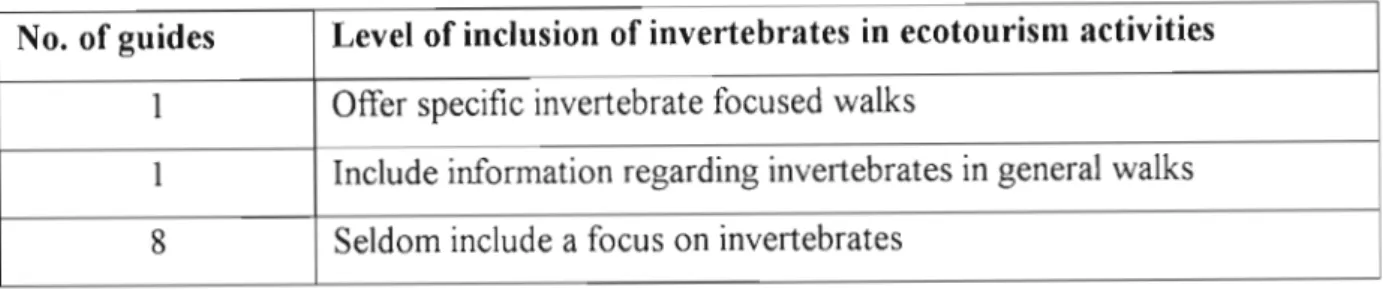
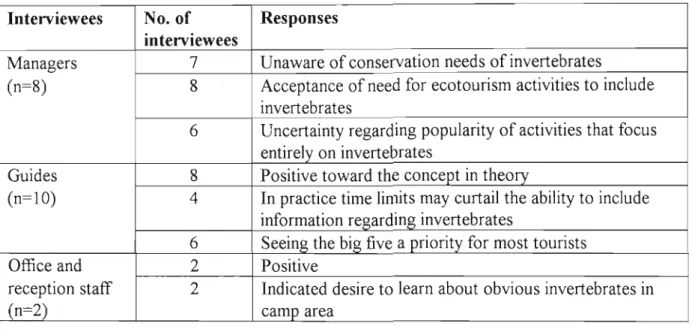
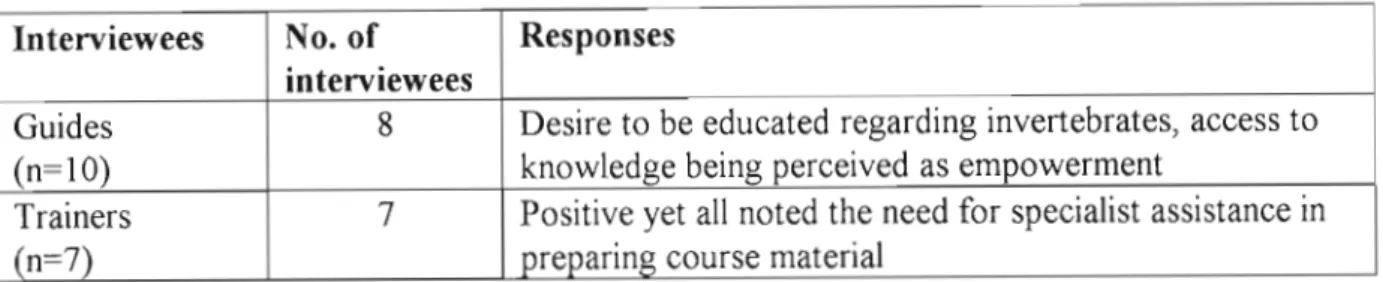
Current levels of inclusion of invertebrates in ecotourism activities were gauged, usmg qualitative research methods of participant observation and semi-structured interviews. The response of tourists to the concept of the inclusion of both western/scientific and indigenous knowledge regarding invertebrates into current and planned ecotourism activities was determined using the quantitative research method of a structured questionnaire. Canvassing of tourists was done at a popular ecotourism destination (Hluhluwe-Urnfolozi Nature Reserve) and 121 questionnaires were completed. In addition to tourists the opinions and attitudes of a range of people working in ecotourism and conservation were examined via semi-structured interviews. The respondents were specifically selected according to the positions they held in the ecotourism and conservation field and a total of eight people in management, ten ecotourism guides and seven ecotourism trainers were interviewed. The findings revealed that there is currently negligible information regarding invertebrates in ecotourism activities. There was an overwhelmingly positive response from tourists, with 95% indicating that they would like to see information regarding invertebrates included in ecotourism activities. Ecotourism service providers, such as tour guides and those in conservation management also indicated a positive attitude toward the concept. There is thus potential to increase levels of information regarding invertebrates in ecotourism and it is recommended that ecotourism include a focus on invertebrates. Recommendations on how to address the lack of invertebrate information in ecotourism are provided and examples of the types of invertebrates to include in specific ecotourism activities are given. Including a focus on invertebrates in ecotourism will serve the multiple purposes of placing value on invertebrates; raising public awareness and hence the conservation status of invertebrates, and finally will increase the scope of ecotourism.
PREFACE
The research described in this mini-dissertation was carried out at the Centre for Environment and Development, University of Natal, Pietermaritzburg, under the supervision of Dr Michelle Hamer.
This mini-dissertation represents the original work of the author and has not otherwise been submitted in any form for any degree or diploma at any university. Where use has been made of the work of others it is duly acknowledged in the text.
Pf~
PHILIPPA HUNTLY
DR MICHELLE HAMER
ACKNOWLEDGEMENTS
I would like to thank Dr Michelle Hamer for supervision, Dr Simon van Noort for assistance with field work and advice and Dr Tee Taylor for proof reading and advice. Ezemvelo KwaZulu-Natal Wildlife is thanked for granting permission to conduct the study in their protected areas and the participants are thanked for their time and co-operation. The National Research Foundation is thanked for sponsorship.
TABLE OF CONTENTS: COMPONENT A
Page
ABSTRACT 1
PREFACE 11
ACKNOWLEDGEMENTS iii
TABLE OF CONTENTS: COMPONENT A iv
PLACING COMPONENTS A AND B IN CONTEXT vi
1. INTRODUCTION AND PROBLEM STATEMENT 1
2. BIODIVERSITY AND INVERTEBRATE CONSERVATION 2
2.1 Biodiversity 2
2.1.a. Threats to Biodiversity and Need for Conservation 3 2.2 Relevance of the Research to National and International Environmental Policy and
Conservation Initiatives 5
2.3 Invertebrates and Conservation 9
2.3. a. Threats to Invertebrate Diversity .. 10
2.3. b. Inadequacy of Current Conservation Measures for Invertebrates in South Africa 12 2.3.c. Developments Regarding Conservation for Invertebrates 14
2.4 Raising Public Awareness Regarding Invertebrates 15
2.4.a The Need to Popularise Invertebrates \ 17
2.5 Conclusion 19
3. ECOTOURISM 20
3. 1 Background and Definitions 20
3.2 Debate about Ecotourism 21
3.3 The South African Situation 25
3.4 Community Based Natural Resource Management 25
3.5 Rationale Behind Invertebrates in Ecotourism 28
3.5.a. Indigenous Knowledge in Ecotourism 31
3.6 Conclusion 32
4. RESEARCH AIM, OBJECTIVES AND METHODS 33
4.1 Research Aim ,33
4.2 Research Objectives 33
4.3 ResearchMethodology 33
4.3.a Quantitative Methods 37
4.3.b Qualitative Methods 39
5. CONCLUSION AND BENEFITS OF OUTCOMES OF RESEARCH .43
REFERENCES .45
APPENDIX 58
PLACING COMPONENTS A AND B IN CONTEXT
This dissertation is made up of two independent components. Component A forms the background to the research, consisting of the literature review and an overview of the research methodology used.
Component B is written according to the criteria of a research paper, and must comply with the format of a relevant journal to which it will be submitted for publication. The journal selected is theJournal of Ecotourism and the paper has been written according to the journals stipulated requirements for publication. As Component B must be able to stand alone as a publishable journal, abbreviated sections of the background to invertebrate conservation and ecotourism from Component A have been included in Component B.
1. INTRODUCTION AND PROBLEM STATEMENT
Human survival and the global economy depend inextricably on invertebrate animals, however, human activities are systematically destroying countless species within this, the largest component of world biodiversity (Eldredge 1998). What is of concern and what is to be addressed here, is that the general populace is largely unaware of these facts.
Biodiversity is defined as the variability among living organisms from all sources and the ecological systems of which they are part (Bisby 1995). This includes diversity within species, between species and of ecosystems, and hence diversity can be measured at the level of genes, species or habitats (Bisby 1995). Biodiversity conservation is recognised nationally and internationally to be of crucial importance. Conservation measures are however, largely inadequate, particularly with regard to the specific conservation needs of invertebrates (Hamer
& Slotow 2002). Current and numerous threats to invertebrate diversity are largely human induced. While there are a number of factors that need to be addressed in order to improve invertebrate conservation, this research is aimed at examining means of raising public awareness about invertebrates, the crucial ecological functions they perform and their conservation needs.
Specifically the research focused on the potential to improve conservation efforts by raising public awareness of, and appreciation for, invertebrates in the context of ecotourism.
Ecotourism is defined as "nature based tourism that involves education and interpretation of the natural environment, improves the welfare of the local people and is managed to be ecologically sustainable" (Braithwaite 2001: 667). Ecotourism is becoming increasingly popular around the world, particularly in developing countries (Boo 1990). Within the international tourism industry, ecotourism is the fastest growing sub-sector, its growth rate being three times that of tourism overall (Burns & Holden 1995). The majority of foreign tourists to South Africa are attracted to its natural resources, with ecotourism specifically being one of the fastest growing businesses in the country (Holt-Biddle 2002).
The research aimed to investigate the potential for including information regarding invertebrates into ecotourism activities. The objectives of the research were to:
•
•
•
Obtain an overview of the current levels of the inclusion of information regarding invertebrates within certain types of ecotourism activities.
Determine the response of tourists to the concept of the inclusion of more information regarding invertebrates into current and planned ecotourism activities.
Examine the opinions and attitudes of selected people, working in the ecotourism field, to the concept of including more information regarding invertebrates into ecotourism activities.
• Provide recommendations on how to address the lack of invertebrate information in ecotourism and give examples of the types of invertebrates that could be featured easily in ecotourism, and the type of information that could be included about them.
2. BIODIVERSITY AND INVERTEBRATE CONSERVATION 2.1 Biodiversity
Biodiversity is defined as the variability among living orgarusms from all sources and the ecological systems of which they are part; this includes diversity within species, between species and of ecosystems (Bisby 1995). Hence biodiversity can be measured at the level of genes, species or habitats. Diversity consists of two major components: firstly the variety and secondly the relative abundance of species (Magurran 1988). Diversity measures take into account two factors: species richness (number of species) and evenness or equitability (how equally abundant the species are). High evenness, when species are equally abundant, is equated with high diversity (Magurran 1988). There are different measures for different aspects of biodiversity. Species richness refers to the number of species of a particular taxon that occur in the study area while species diversity is a measure of the number of species relative to the abundance of those species and is assessed using diversity indices. Alpha and Gamma diversity are inventory diversities, whereas Beta diversity measures the turnover of species between different areas (Magurran 1988). Alpha diversity is within-area diversity, measured as the number of species occurring within an area of given size. Gamma diversity is also a measure of within-area diversity, however, it usually refers to overall diversity within a large region such as
an island or a country (Magurran 1988). Beta diversity is the degree of change along a transect or a given habitat gradient. It is a proportional measure of between-area diversity and is expressed as a similarity index or as a species turnover rate (Magurran 1988).
Biodiversity inventorying and monitoring are important in that they provide fundamental and essential biological information used by many basic scientific disciplines such as systematics, population biology, behaviour and ecology and many applied sciences such as biotechnology, agriculture, forestry, fisheries, conservation and environmental science. Data from inventorying and monitoring are essential for identifying key issues for policy and management goals. In addition as is further noted in the section on the relevance of the research to national and, international environmental policy and legislation, countries that are signatories to the 1992 Convention on Biological Diversity have an international obligation to inventory their fauna and flora.
While mammals and birds are relatively well known to science, invertebrates are not. Itis within this major group of animals that estimates of the possible number of species on earth vary so much. It is, however, not even known how many species of plants, animals and microbes have been described. Estimates range from lA million (Wilson 1992) to 1.82 million (Hammond 1995). Nevertheless, most evolutionary biologists are in agreement that this estimate is less than one tenth of the number of species that actually inhabit the Earth (Wilson 1992). For example Stork (1988), based on tropical forest canopy fogging using knock down insecticides in Borneo, estimated that there might be as many as 80 million arthropods worldwide. Erwin (1988) proposed a figure of 30 million tropical insects using a bootstrap extrapolation from a study of beetles on a single species of tree in Panama. May (1989) estimated
la
million species based on an extrapolation of the relationship of body size relative to number of species in each size class. The latter is probably a likely estimate, but in reality we do not know the answer, not even to the nearest order of magnitude.2.1.a. Threats to Biodiversity and Need for Conservation
It is estimated that roughly 30 000 species of plants and animals become extinct every year due to human activities (Eldredge 1998). Species are being lost to extinction faster than
taxonomists can describe them. Already humans have caused the extinction of 5-20% of species in many groups and current rates of extinction are estimated to be 100-1000 times greater than pre-human times (Chapin, Zavaleta, Eviner, Naylor, Vitousek, Reynolds, Hooper, Lavorel, Sala, Hobbie, Mack & Diaz 2000). Most of these losses occur in the invertebrate group of animal life (Eldredge 1998). Transformation of land, over-harvesting, pollution, mono- agriculture, human introduced alien species, over-hunting, pesticides and herbicides cause changes in the composition richness and distribution ofbiodiversity. Itis estimated that 40-50%
of ice-free land surfaces have been transformed by humans into agricultural and urban systems (Chapinet al. 2000).
Paucity of effective conservation measures compounds the fact that existing knowledge is
"utterly minuscule compared with everything that remains unknown or not understood"
(Suzuki 1999: 27). World-wide there has been recognition that it is crucial, both in terms of the intrinsic value of biodiversity and for anthropocentric reasons, to conserve biodiversity. There are large and serious ecological and economic consequences of the current biodiversity crisis and threats to biodiversity should be minimized to keep options open for future solutions to global environmental problems (Chapin et al. 2000).
South Africa has an extremely rich biodiversity. It is ranked as the third most biologically diverse country in the world, after Brazil and Indonesia, and South Africa is also one of the megadiversity countries, which collectively claim within their borders more than two thirds of the global diversity resources (World Conservation Monitoring Centre 1992). While the majority of higher taxa occurring in South Africa are reasonably well known, less than 50% of the hyper-diverse insects have been described (Scholtz & Chown 1995). In terms of the numbers of insects, 43 565 species have been described (Scholtz & Chown 1995). The array of ecosystems and landscapes is rich and spectacular. The resources they provide contribute significantly to the country's economy and are the basis of millions of peoples' livelihoods, yet South Africa's biodiversity is one of the most threatened in the world (Wynberg 2002). As such, South Africa has a particular responsibility to conserving biodiversity.
2.2 Relevance of the Research to National and International Environmental Policy and Conservation Initiatives
National and international policy and legislation, agreements and conventions reflect recognition by governments of the biodiversity crisis, the direct threat to humanity's survival, and the need for intervention and management of human induced destruction of the environment.
Internationally the early 1990' s saw a number of new biodiversity issues emerging. The Rio Earth Summit of 1992 formally recognised that environmental issues were not only about conservation but also about social justice, equality, poverty and power relations and that these were global concerns (Wynberg 2002). The Rio Earth Summit formulated Agenda 21, the global plan of action for sustainable development. This provides an international framework within which all environmental policies need to be considered. The 1992 Convention on Biological Diversity was ratified by South Africa in 1995, its themes formed the basis for South Africa's 1997 White Paper on Biodiversity (Wynberg 2002). In addition, South Africa has signed numerous international agreements, treaties and conventions on biodiversity use and conservation. South Africa is party to 20 important international law treaties in the environmental sphere (Kidd 1997). International treaties to which South Africa is a signatory that are of relevance to this study include: The Convention on Wetlands of International Importance especially as Waterfowl Habitat of 1971 (Ramsar); The Convention on International Trade in Endangered Species of Wild Fauna and Flora of1973 (CITES); The Convention on the Conservation of Migratory Species of Wild Animals of 1979 and The Convention on Biological Diversity of1992 (Kidd 1997).
At a national government level in South Africa issues to do with the environment and tourism are dealt with by the Department of Environmental Affairs and Tourism (DEAT). The current research is relevant in terms of DEAT's overall vision and mission, which is defined as follows:" The vision of the DEAT is to lead environmental management and tourism in the interests of sustainable development and to contribute to the improvement of the quality of life of all South Africans by: promoting the sustainable development, utilisation and protection of
our natural and cultural resources; establishing responsible tourism that ensures environmental sustainability and which contributes to job creation and a better quality of life; harnessing the skills, experience and knowledge of the environment to all South Mricans; fostering equitable access to the benefits derived from our natural and cultural resources; empowering the South Mrican public, communities and organisations through participation, environmental education, capacity building, research and information services; working together with all relevant stakeholders and spheres of government in the spirit of good governance; ensuring that all international participation and obligations are undertaken in the context of South Mrica's environmental policies and principles." (Department of Environmental Affairs and Tourism 2003 a:1)
At a national level The Constitution of the Republic of South Africa underpins numerous national and regional conservation initiatives, a number of which are further examined below.
Within the Constitution of specific relevance to this research is the Environmental Right which states under section 24 b) that everyone has the right "to have the environment protected for the benefit of present and future generations, through reasonable legislative and other measures that i) prevent pollution and ecological degradation ii) promote conservation and iii) secure ecologically sustainable development and use of natural resources while promoting justifiable economic and social development" (Constitution of the Republic of South Africa No. 108 of 1996:78).
The current investigation into improving biodiversity conservation through increasing awareness of invertebrates is well in keeping with five of the six goals of the White Paper on the Conservation and Sustainable use ofSouth Africa's BiolOgical Diversity: "To conserve the diversity of landscapes, ecosystems, habitats, communities, populations, species and genes in South Mrica; to use biological resources sustainably and minimise adverse impacts on biological diversity; to expand the human capacity to conserve biodiversity, to manage its use, and to address factors threatening it; to create conditions and incentives that support the conservation and sustainable use of biodiversity and to promote the conservation and sustainable use of biodiversity at the international level." (Department of Environmental Affairs and Tourism 1997 a: 4-5). Further relevant policy is the White Paper on Environmental
Management Policy for South Africa. Specifically goal two which deals with sustainable resource use and management is of relevance and the supporting objectives of which are: "To promote the conservation of biodiversity through: conserving the diversity of landscapes, ecosystems, habitats, biological communities, populations, species and genes throughout South Africa; expanding human capacity to conserve biodiversity, to manage its use and to address factors threatening it". The current research investigates factors affecting biodiversity and explores means of expanding the human capacity to conserve biodiversity. Also of relevance is goal five, which deals with empowerment and environmental education. The supporting objectives are to: "Promote the education and empowerment of South Mrica's people; increase their awareness of, and concern for, environmental issues, and assist in developing the knowledge, skills, values and commitment necessary to achieve sustainable development".
(Department of Environmental Affairs and Tourism 1997 b: 11-12). The National Environmental Management Act (NEMA) No. 107 of1998 also relates to the research, the preamble of the Act indicating the need to promote conservation (NEMA 1998).
Currently there are a number of new bills and action plans being developed. It is crucial for effective biodiversity conservation that invertebrate conservation needs are included in current and future conservation planning. The National Environmental Management Biodiversity Bill has recently been submitted to Parliament. Some matters of concern have been raised regarding the Bill, three of which are noted here as they relate to invertebrate conservation: the Bill makes no provision for the rehabilitation of damaged components of biodiversity; bioprospecting is not adequately dealt with particularly with regard to the issue of bioprospecting for the purposes of developing commercial products from South Mrica's indigenous biodiversity and lastly the Bill does not deal with risk assessments pertaining to permits (KwaZulu-Natal Department of Agricultural and Environmental Affairs & Ezemvelo KwaZulu-Natal Wildlife 2003). Another relevant bill that has recently been submitted to parliament is the National Environmental Management Protected Areas Bill. The purpose of the Bill is to provide for the continued existence of South Mrican National Parks and the declaration and management of protected areas in South Mrica. Ithas received some criticism. Of concern are issues that relate to habitat protection: there is no system for identifying conservation priority areas; there is no clear provision made for preventing habitat loss in conservation priority areas and the Bill does
not promote the management of entire ecosystems (Botha 2003). The need for habitat protection is of specific concern for invertebrate conservation, as habitat destruction is one of the main threats to invertebrate biodiversity.
As a contracting party to the Convention on Biodiversity (CBD), South Africa is required to develop national strategies for the conservation and sustainable use of biodiversity. As noted earlier countries that are signatories to the CBD also have an international obligation to inventory their fauna and flora. TheNational Biodiversity Strategy and Action Plan (NBSAP) is currently being developed by national government to address this requirement. As with the above mentioned new Bills, it is crucial for overall effective biodiversity conservation that the NBSAP incorporates a focus on invertebrates and their specific conservation needs. Awareness raising is one of the key cross-cutting themes of the proposed NBSAP. Lastly, DEAT'sPoverty Relief Programme relates to the aspects of this research that highlight the potential for job creation in the ecotourism sector. The programme was started in the 199912000 financial year, with the goal to manage and administer poverty-relief proposals and spin-off projects in the tourism and environmental sectors (Department of Environmental Affairs and Tourism 2003 b).
Relevant national conservation programmes and initiatives include the Integrated National Protected Areas Programme. The scope of the current research falls directly within the aims of this programme which includes the strengthening of public outreach and education and the promoting and managing of nature-based tourism as a conservation compatible tool (Department of Environmental Affairs and Tourism 1997 c). The Bioregional Approach to Protected Areas in South Africa also relates as it emphasises the economic importance of South Africa's biodiversity and the need to explore the economic potential of protected areas in terms of tourism (Department of Environmental Affairs and Tourism 200112002). Highlighting the presence of certain endemic, threatened, charismatic or iconic species of invertebrates in protected areas and bringing them to the attention of the public and conservation officials, will contribute to maximizing the economic potential of protected areas.
The research also relates to various regional conservation planning projects and those dealing with prioritisation of conservation areas, such as: the Subtropical Thicket Ecosystem Planning
Project (STEP) of the Terrestrial Ecology Research Unit of the University of Port Elizabeth;
the C-Plan For Land Use Planning of Ezemvelo KwaZulu-Natal Wildlife; the Cape Action Plan for the Environment (CAPE) as co-ordinated via the Bioregional Planning and Implementation Programme of the National Botanical Institute of South Africa; the BioBase ProjectsofMpumalanga and Northern Provinces; theGAP Analysis Project of Gauteng Nature Conservation and the Succulent Karoo Ecosystem Planning Process (SKEP) co-ordinated through the Bioregional Planning and Implementation Programme of the National Botanical Institute of South Africa. Invertebrates are currently marginalized in these projects. This research is also aimed at raising awareness of the need to include invertebrate awareness amongst conservation practitioners and planners. It is vital that the conservation needs of invertebrates are included in conservation planning projects if these projects are to be effective in overall biodiversity conservation.
Various training programmes for ecotourism guides (government and non-government organizations (NGO) driven) are also relevant to the research and there are numerous new and on-going training programmes for community guides covering various activities, such as cultural tourism, nature tourism and adventure tourism (for example the training programmes of BirdLife South Africa and Entabeni Environmental Training School). There is scope to work with these programmes to maximize the opportunities for the inclusion of information on invertebrate biodiversity into current and future ecotourism activities.
2.3 Invertebrates and Conservation
The majority of the organisms in the kingdom Animalia are invertebrates, which comprise all the major phyla with the exception of the vertebrates. Invertebrates form an estimated 73.5% of life on earth (Hammond 1995). The current research focuses on the Phylum Arthropoda, which includes insects, crabs, spiders, scorpions and many less familiar groups. Insects and other land dwelling arthropods perform irreplaceable ecological functions upon which humans and all other land dwelling animals depend: pollination; waste disposal, consumption of pests; water purification; decomposition of plant matter, and in addition they are an essential part of almost all food chains (Eldredge 1998). Insects and other land dwelling arthropods are so important to
life that if all were removed humanity would probably only last a few months (Wilson 1992).
Invertebrates are considered the most significant component of biodiversity (Horwitz, Recher
& Majer 1999).
Vertebrates
Plants 2.7%
14.3%
Protozoans2.4%
Fungi 4.2%
Bacteria 0.2%
Viruses 0.3%
Invertebrates 73.5%
Figure 1. The 1. 7 million described species of animals and plants divided into the major groups (after Hammond 1995).
Despite the fact that invertebrates are the most successful animals of all time and have been on earth for at least 300 million years, they are currently under greater threat than before. In addition to natural extinctions, human actions are responsible for the extinction of many species and threaten many more.
2.3.a. Threats to Invertebrate Diversity
Itis generally agreed that invertebrate conservation efforts are inadequate, both in South Africa and world-wide (Samways 1994; O'Toole 1995; Gess 1996 and Hamer& Slotow 2002). Itis beginning to be realised that insect diversity is inextricably linked to a healthy environment with proper ecological functioning (Collins 1991). Current threats to arthropod diversity are largely
human-induced. McGeoch (2002) notes the following threats: rapid rates of land transformation due to agricultural practices; soil erosion; overgrazing; deforestation;
urbanization; expansion of exotic forestry plantations; changes to water regimes; invasive exotic flora and fauna; and the effects of climate change. To these should be added: the exclusion of invertebrates from conservation activities (Hamer & Slotow 2002); human perceptions of invertebrates (O'Toole 1995); the effects of pesticides and insecticides; lack of taxonomic knowledge of invertebrates (Evans, Bellamy, Watson, Galiano, & Wynne 1996) and lack of invertebrate taxonomists (Evans et al. 1996). A number of these threats to invertebrate conservation are further examined.
Agriculture has a significant effect on invertebrate populations. Gess and Gess (1993) examined the effects of different forms of agricultural land-use in the semi-arid areas of southern Africa on the diversity of aculeate wasp and bee fauna. They found that there were a number of adverse effects caused by: excessive stocking rates; heavy selective grazing or browsing;
excessive trampling; water pollution by stock; large scale impoundment of water; canalising of water; extensive replacement of natural vegetation by cultivated pastures; extensive replacement of natural vegetation by crop plants; use of insecticides for crop protection; the spread of invasive exotic plant species; bush cutting; and intensive removal of dry wood. They concluded that virtually the entire semi-arid Karoo has been transformed or disturbed to some extent. In addition, the number of areas suited to supporting the pollen bee and wasp communities is on the decline. These insects are habitat specialists not adaptable to change.
Continued and increased agricultural exploitation could result in a total loss of endemic species in this region. This is of concern in terms of ecosystem functioning and conservation because of the role bees and aculeate wasps play in these systems. As pollinators and predators their interaction with plants, spiders and other insects is crucial. Disturbances in abundance and species representation of aculeate wasps and bees will have a cascade effect which will inevitably affect the whole ecological system of the Karoo (Gess & Gess 1993).
Mono-agriculture has resulted in many invertebrate related problems. A monoculture is an inherently unbalanced ecosystem where typically certain types of insects can easily survive (and can become pests) while many others (including predators required to regulate the 'pests') are
eradicated (Evans et al. 1996). An example of this is the success of the boIl weevil - responsible for the destruction of cotton crops in the USA (Evans et al. 1996). The use of insecticides to control insect pests has resulted in many insects becoming resistant to insecticides. However, it is the far-reaching effects of insecticides in the ecosystem, which is of greater concern. Insecticides harm other invertebrates, plants, birds and mammals (including humans). As far back as 1963 Carson' s Silent Spring alerted the world to the overuse of insecticides. The current recommended approach to pest control is a combination of strategies such as chemical, mechanical and biological control, i.e. integrated pest management (Evans et al. 1996).
2.3.b. Inadequacy of Current Conservation Measures for Invertebrates in South Africa
Conservation in South African has been at best haphazard and to date it has centred largely on the needs of large mammals (Gess 1996). As such, habitat preservation has focused on the savannas - which are home to the charismatic megafauna (Evans et al. 1996). Hamer and Slotow (2002) stress that a major threat to invertebrate diversity, the major component of biodiversity, is the current exclusion of invertebrates from conservation management and planning strategies. They further conclude that this will lead. to the extinction of a large proportion of global biodiversity, which will in turn lead to the collapse of systems both inside and outside of protected areas. Not only is the current choice of areas to be conserved based on the needs of megafauna, but so are most conservation management measures, which focus largely on mammals, specifically ungulates. Certain methods, such as burning programmes, regularly used in the management of protected areas are potentially harmful to invertebrates (Hamer& Slotow 2002).
The inadequacy of conservation measures for invert~brates is not only a southern African phenomenon. In Victoria, Australia, the wildlife protection legislation has not only failed to aid invertebrate conservation but has even been detrimental and in many cases misleading (Butcher, Clunie & Yen 1994). Essential to improving invertebrate conservation is the recognition of invertebrates as wildlife, both by conservationists and the general public, and the associated
raising of public awareness of invertebrates and their conservation needs (Butcher, Clunie &
Yen 1994).
The main contributing factors to the exclusion of invertebrates are a lack of adequate data and expertise as well as the perceived difficulties of dealing with such an abundant and diverse fauna (Hamer & Slotow 2002). There is a popular perception that if the higher taxa (mammals) are protected, invertebrates will be automatically protected. The protection of vegetation types is also assumed to be an adequate surrogate for the conservation of invertebrate diversity (Hamer
& Slotow 2002). However, this is not always the case and studies have shown that there is little congruence between different taxa (Van Jaarsveld, Freitag, Chown, Muller, Koch, Hull, Bellamy, Kruger, Endrody-Younga, Mansell, Scholtz 1998). This means that areas designated for the protection of plants will not necessarily overlap with important areas for invertebrate protection (Van Jaarsveld et al. 1998). Studies of the current methods of conservation planning in New South Wales, Australia, (which are based on forest type and growth phases) were shown to be poor surrogates for terrestrial invertebrate distribution patterns and assemblages (York 1999). Many invertebrate taxa are more vulnerable to threats than vertebrates as they have smaller distributional ranges (Ponder 1999).
Current biodiversity conservation initiatives in South Africa generally exclude invertebrates (Hamer & Slotow 2002), as has already been examined in the section on relevant conservation programmes and initiatives. Apart from the need to include invertebrates in the current and future planned conservation initiatives, other factors that need to be addressed in invertebrate conservation include:
•
•
•
•
Funding for research into invertebrates and their needs (McGeoch 2002).
The need for more baseline data regarding species - their existence, locations and distributions, including seasonal variations (Davis 2002).
Mitigating measures for habitat loss and fragmentation (Samways 1994).
Increased research into the effects of fire on invertebrate populations, as the extent to which invertebrate populations are affected by fire is unclear (Parr, Bond &
Robertson 2002). This needs to be undertaken with particular reference to the burning schemes of the various conservation organizations.
• Control of invasive alien plants which out-compete indigenous flora and affect invertebrate populations (Lu & Samways 2002).
• Means of raising awareness of the public, educators and conservationists of invertebrates, their functions and conservation needs (Samways 1994; Berenbaum 1995; O'Toole 1995; Evans et al. 1996).
2.3.c. Developments Regarding Conservation for Invertebrates
In ancient times insects were revered (Berenbaum 1995). However, as agricultural practices intensified (particularly with the emergence of monoculture) insects were increasingly viewed as pests to be eradicated (Samways 1994). While this is still the dominant view of the mainstream general public, attitudes are beginning to change. World wide there is an increasing awareness (both amongst conservationists and increasingly among the general public) of the current rates of biodiversity loss and the need for biodiversity conservation, as well as an awareness of the environment as a whole (Samways 1994). As such, invertebrates are being incorporated into holistic conservation thinking. There is also an increased understanding of the beneficial and essential roles invertebrates play in ecosystems and in the human economy. Their importance is becoming recognised by the major conservation bodies. The IUCN (World Conservation Union, formerly the International Union of Conservation of Nature and Natural Resources) has an increasing number of invertebrate conservation activities (Samways 1994). Invertebrate conservation is a fairly recent addition to the IUCN's activities with the formation of a Lepidoptera Specialist Group in the late 1970's as the initial impetus and this was followed closely by the Invertebrate Red Data Book Project (New 1994). The Species Survival Commission now has several specialist groups and other groups are planned (Samways 1994).
Other large conservation organizations such as the World Wide Fund for Nature (WWF); The World Bank, the World Resources Institute and Conservation International are increasingly including invertebrate conservation into the scope of their work (Samways 1994). However this process is slow, whilst biodiversity (chiefly invertebrate) loss is rapid. There is thus an urgent
need to identify a wider range of means of improving invertebrate biodiversity conservation.
There has been an increase in insect conservation research within South Africa in the last 20 years (McGeoch 2002). The following initiatives are aimed at promoting the cause for, and improving the status of, invertebrate conservation in South Africa: the identification of bioindicators; ecological landscaping; the conservation of invertebrates in urban environments;
mapping of species' distributions, including invertebrates, for the identification of priority areas for conservation; increasing the number of articles on invertebrate conservation in journals and increasing the number of presentations on invertebrate conservation at congresses (McGeogh 2002). Formal insect conservation in South Africa dates back to 1976 with the inclusion of 16 butterfly species on the protected animal list (McGeoch 2002). Conservation efforts of the Lepidopterists' Society of South Africa have been productive: the initiation of numerous butterfly conservation projects; the proclamation of the Ruimsig Entomological Reserve in 1985; the nomination for Natural Heritage Site status of sites in which vulnerable species are found, and the establishment of management principles for vulnerable species (McGeoch 2002).
There is a growing awareness, although at this stage largely only amongst specialists, for conservation efforts to include a focus on invertebrates (McGeoch 2002). However, the focus of much invertebrate research is largely towards pest control (Berenbaum 1995; McGeoch 2002). A paradigm shift is essential to promote the future conservation of invertebrates.
Education and the raising of public awareness of the importance of invertebrates in ecosystems, and the need for their conservation, must form an integral part of all future conservation efforts (Samways 1994).
2.4 Raising Public Awareness Regarding Invertebrates
In a study of public interest in invertebrates, Czechura (1994) came to the following conclusions:
•
Not all taxa will inspire interest. Interest in invertebrates is usually highly specific with taxa that are perceived to be dangerous or spectacular in appearance attractingthe most attention. Means must be sought to use existing interest in certain groups to popularise other taxa.
• Traditionally amateur naturalists have been attracted to certain groups such as butterflies, cicadas, dragonflies, spiders and beetles. The enthusiasm of amateur naturalists should be encouraged and means sought to spread their interest to a wider percentage of the public.
• There is an overall lack of information available regarding invertebrates. There needs to be a wide and intense commitment to the provision and management of information regarding invertebrates so that popular interest can be encouraged.
• Negative perceptions regarding invertebrates abound. These need to be counteracted through education campaigns that focus on the benefits humanity receives from the ecosystem functions performed by invertebrates.
• There is a need for increased taxonomic research into invertebrates. Proportionally the amount of research dedicated to vertebrates is greater than that dedicated to invertebrates yet invertebrates comprise 95% of the animal kingdom.
• There is a lack of common names for the majority of invertebrates.
Aspects of these findings are examined in more detail below.
Many people in the developed first-world view invertebrates, particularly insects, with disgust, perceiving them to be dangerous, poisonous or carriers of disease (O'Toole 1995). There is apathy towards invertebrates in general unless they are responsible for large-scale destruction, which generates negative responses (Gess & Gess 1993). This is most marked in the agricultural sector. A third to a half of all food grown for human consumption is lost to insect damage, usually by plant feeding beetles, which are one of humanity's greatest competitors for food (Evans et al. 1996). It is largely ecologically unsound agricultural practices, such as monoculture, that are responsible for imbalances that result in large scale and persistent insect pest problems (Evanset al. 1996).
The media devotes more time to advertising campaigns to promote the eradication of invertebrate 'pests' than to highlighting their functionality and essential roles in the natural
environment and human economy (Smith 1999). The role of the media in reflecting and moulding public opinion is of significance to invertebrate conservation efforts. A large proportion of the general public has a fear of insects, known as entomophobia, and despite their essential environmental role, invertebrates are largely viewed with fear, aversion and antipathy (Evanset al. 1996). In addition invertebrates lack the widespread emotional appeal of the more charismatic vertebrates. For example the indiscriminate destruction of large numbers of insects during mosquito control programmes raises little response and is largely perceived to be benign or even beneficial (Czechura 1994). In contrast, vertebrates receive far more public sympathy.
For example, the shooting of flocks of migrating birds over Malta generated much international protest (French 1992 cited in Czechura 1994).
A survey conducted to ascertain the extent and possible reasons for the image problem of invertebrates among conservationists, scientists, farmers and lay people found that generally farmers and the public expressed fear, aversion and dislike for many groups of invertebrates;
butterflies, however, were considered to have aesthetic appeal (Kellert 1993). In addition to the negative attitudes is that of the tyranny of numbers. There is a perception that merely because there appear to be so many invertebrates they cannot possibly be in need of conservation (Horwitz, Recher & Majer 1999).
Although invertebrates are one of the most numerous forms of life on earth most people still relate to them more as they would an alien invader (Evans et al. 1996). The lack of public awareness and appreciation for invertebrates and their essential environmental and economic roles and conservation needs can be attributed to the fact that invertebrates "do not inspire the same feelings of sympathy that are elicited by the charismatic megafauna to which we seem to be inherently drawn" (Evans et al. 1996: 173). It is essential to educate the public regarding invertebrates if this situation is to be reversed and invertebrates are to be included in conservation plans (Samways 1994).
2.4.a The Need to Popularise Invertebrates
The need to raise public awareness of invertebrates and their conservation needs has been recognized by numerous researchers (Jelinek, Brittion & New 1994; Samways 1994; Czechura
1994; Hamer & Slotow 2002). Public support is an essential part of successful wildlife conservation and many conservation success stories can be attributed to public sympathy for, and interest in, the animals that are the focus of such programmes (Czechura 1994). For example as in the case of the Ruimsig Nature Reserve which was specifically established to protect the threatened Roodepoort Copper butterfly (Aloeides dentatis dentatis) (Henning &
Henning 1989). The need for invertebrate conservation efforts to include education and raising public awareness regarding invertebrates is starting to be recognised (Butcher, Clunie & Yen 1994). The process of popularising invertebrates needs to include a focus on the media, the public, educational institutions, the government and conservation organisations and there also needs to be a drive to ensure that invertebrate studies attain a higher profile in scientific and educational institutions (Ponder& Lunney 1999).
An example of an attempt to raise awareness of invertebrates is the Dragonfly Awareness Trail in Pietermaritzburg Botanical Gardens (Suh & Samways 2001). The social research prior to the implementation of the trail indicated that children showed the most interest in this concept, which is significant in that children are important targets to reach, being potential future conservationists (Samways 2002).
The proliferation of butterfly houses around the world (including South Mrica) represents an increasing public interest in butterflies. There is also an increasing interest in gardening to attract butterflies. However, Samways (2002) cautions that raised awareness does not necessarily equate with meaningful conservation. Most threatened species of butterfly for example have special habitat requirements which are not met by gardening to attract butterflies and in addition gardening for butterflies is also frequently associated with planting known alien invasive species such as Lantana camarawhich may be harmful to the environment (Samways 2002).
An effective way of increasing public awareness of invertebrates is to give them vernacular names (Czechura 1994; Samways 2002). Butterflies and moths have a long history of common names and this phenomenon is currently spreading to other insect groups such as dragonflies, as reflected in the recently publishedA Fieldguide to the Dragonflies of South Africa(Tarboton&
Tarboton 2002). The bird field guide format of facing pages of colour illustrations and text is
used and, as the authors point out, the guide attempts to make identification of South Africa's dragonflies easily accessible to anyone with a pair of binoculars. There is currently a growing interest in dragonflies in South Africa, while in other parts of the world, such as Germany, dragonfly watching has long been a popular outdoor activity. In Japan, there are nature reserves that have been created specifically to protect dragonflies, which play an important place in Japanese culture and folklore (Tarboton & Tarboton 2002). In the recently published Field Guide to Insects of South Africa (Picker, Griffiths & Weaving 2002) a broad -range of invertebrates are given common names which indicates that public interest in butterflies and dragonflies is spreading to other taxa.
Increased interest in invertebrates by the general public is borne out by the numerous new field guides that have been published in recent years. In South Africa examples of recent publications include: Spiders and Scorpions of Southern Africa(Hawthorne 1998);Butterflies and Moths of Southern Africa(van Noort 1999);Field Guide to Insects of the Kruger National Park(Braack 2000); Southern African Insects and Their World (Weaving 2000); The Emperor Moths of KwaZulu-Natal (Cooper & Cooper 2002); Field Guide to Insects of South Africa (Picker, Griffiths & Weaving 2002); A Fieldguide to the Dragonflies of South Africa (Tarboton &
Tarboton 2002) and Scorpions of Southern Africa (Leeming 2003). Internationally, the BBC television series and the accompanying book Alien Empire (O'Toole 1995) have proved popular around the world. The programme and book focus on the world of insects, what they are, how they live and the ecosystem functions they perform. They also challenge some of the common misconceptions regarding insects, stressing that very few of them are actually real pests and disseminators of disease. As O'Toole (1995: 9) states "we need to expand our conservation ethics to embrace those unsung toilers on whom we depend, the insects".
2.5 Conclusion
This chapter has dealt with a range of issues regarding biodiversity and invertebrates and the need for improved biodiversity conservation. Threats to biodiversity are largely human induced and it is estimated that roughly 30 000 species of plants and animals become extinct every year due to human activities (Eldredge 1998). The need for intervention and management of the
human induced destruction of the natural environment has been recognised at government level both nationally and internationally. The research has been placed in the context of relevant national and international policies and legislation as well as regional conservation initiatives.
With specific reference to invertebrates, it is estimated that they form 73.5% of life on earth (Hammond 1995). They perform essential and irreplaceable ecological functions upon which humans and all other land dwelling animals depend. Despite their importance, invertebrates are largely marginalized in general conservation efforts, which tend to focus exclusively on the needs of large mammals (Hamer & Slotow 2002). There are various factors that need to be addressed in order to improve invertebrate conservation. Numerous researchers have highlighted the need to raise public awareness of invertebrates and their conservation needs (Jelinek, Brittion & New 1994; Samways 1994; Czechura 1994; Hamer and Slotow 2002).
While there is an increasing interest in invertebrates, the public generally still regard invertebrates with apathy and frequently even antipathy (Gess & Gess 1993). There is a need to challenge current misconceptions about invertebrates and this research has focused on the need to raise awareness of the public, educators and conservationists, with regards to invertebrates and their functions and conservation needs.
3. ECOTOURISM
3.1 Background and Definitions
Ecotourism, or nature-based tourism, is becoming increasingly popular around the world, particularly in developing countries (Boo 1990). Within the international tourism industry, ecotourism is the fastest growing sub-sector (Bums & Holden 1995). In South Africa, the majority of foreign tourists come here to see natural resources, with ecotourism specifically being one of the fastest growing businesses in the country (Holt-Biddle 2002). Since the early 1990) s, with the political changes and the decline of the Rand, there has been a sustained increase in the number of foreign visitors to South Mrica (Ebersohn 1995). The growth in tourism to South Mrica is predicted to continue, specifically so in the case of ecotourism (Holt- Biddle 2002), which is significant when looking at the feasibility of recommendations related to
ecotourism activities. Many different activities, from whale watching to game drives, can be classified as ecotourism activities. This study focuses on activities such as game walks and drives in and around inland protected areas.
While the World Tourism Organisation (WTO) (2003) notes that there is no generally accepted definition for the term ecotourism, the definition used for the purposes of this research is that given by Braithwaite (2001: 667): "nature based tourism that involves education and interpretation of the natural environment, improves the welfare of local people and is managed to be ecologically sustainable". Regarding the relationship between biodiversity and tourism he continues: "Tourism's role in biodiversity might be to both build public support of biodiversity and help fund its conservation" (Braithwaite 2001: 667). The definition stresses education as an important aspect of ecotourism. In the WTO's summary of the general characteristics of ecotourism, the importance of education and interpretation are also higWighted (WTO 2003).
This aspect of ecotourism is of particular relevance to this research with respect to the recommendations regarding the inclusion of invertebrates in ecotourism activities. The WTO (2003) notes that another important characteristic of ecotourism is that it minimises negative impacts on the natural and socio-cultural environment. A further characteristic of ecotourism given by the WTO is that it supports the protection of natural areas. Burns and Holden (1995) support this positive stance toward ecotourism, stating that it embraces the principles of sustainability, recognizing the need for the environment and ecosystems to be conserved for future generations. Not all authors are as positive about the effects of ecotourism, however, as is further examined below.
3.2 Debate about Ecotourism
There is much debate about the perceived positive and negative aspects of ecotourism. Some see ecotourism as being a commercialisation of the environment (Ebersohn 1995). The debate about the desirability of ecotourism is an entire field of study in its own right and it is thus beyond the scope of this research. An overview is given of the more commonly noted positive and negative aspects of ecotourism. This is followed by a brief examination of various means of mitigating and addressing the concerns about potential negative aspects of ecotourism.
Those in favour of ecotourism argue that it combines conservation and human needs, particularly the needs of local communities, and can be beneficial to an area by providing employment and prosperity (Nuttall 1997). Local communities can benefit from ecotourism through being empowered by having access to information, and by being exposed to opportunities for learning and capacity building, particularly in terms of developing tourism related skills (di Castri & Balaji 2002). Tourism also plays an important role in strategies for environmental conservation. This can be for whole areas of a natural environment or it can focus on specific species that tourists are interested in. For example the threatened sea turtles in Tortuguero, Costa Rica, have increased in number since the locals have started seeing them as tourist attractions and not as food (Padget & Begley 1996). On a larger scale one of the less tangible but positive effects of tourism is that the tourist vision of the landscape and its components is based on a qualitative, aesthetic appreciation (Strang 1996). An example of this was highlighted in a study of the effects of tourism in Far North Queensland, Australia. The positive tourist vision of the landscape had a positive environmental impact in that it caused both Aboriginals and white stock workers to re-evaluate their surroundings and to become more open to ideas regarding protecting the local ecology. In terms of a wider positive impact, the tourist vision has helped to promote a concern for the environment throughout Australia, which has in turn created support for protective measures and new legislation (Strang 1996).
The consequences of ecotourism are thus positive in that it enables the preservation of both local cultural and natural heritage for tourists and the associated conservation planning that is needed for this to occur (Lea 1988).
Concerns have been raised about ecotourism, particularly regarding its relationship to sustainability. Possibly one of the most common criticisms of ecotourism is that it destroys the very resources upon which it depends: local culture and the environment (Nuttall 1997).
Employment opportunities for the local population are frequently sited as being a major benefit of ecotourism, however, this notion has been criticised. Mowforth & Munt (1998) note that the power imbalance between the tourism industry and its dependent destinations allows for exploitation of the local population. Locals do not always receive significant benefit and when they do get work it is largely low-level jobs (Padget & Begley 1996). Another concern raised
about the negative effects of tourism on the local population is related to the volatility of the tourism industry. Lea (1988) classifies tourism (along with banking and insurance) as an invisible export industry. He notes that the critical interplay among social, political, economic, and environmental elements is more marked than in any other international trading activity. This means that tourism can be a volatile industry with the numbers of visitors to an area fluctuating rapidly, which in turn has a destabilizing effect on the local community (Lea 1988).
Further concerns relate to the impact of tourism on the environment and this contentious issue has been the focus of numerous studies. Obvious negative environmental impacts come in the form of the infrastructure needed to accommodate tourists (for example buildings, roads, electricity and airports) and pollution, both from the generation of waste and pollution associated with increased infrastructure (Lea 1988). A related concern is that visitor overcrowding and environmental degradation may occur if parks are developed and promoted beyond their capacities, as is the case with Hwange National Park, Zimbabwe (potts, Goodwin
& Walpole 1996). Casagrandi and Rinaldi (2002) argue that it is difficult to formulate policies that guarantee that tourism can be maintained for a long time without severely impacting on the environment. This is of particular concern in fragile environments, which take a long time to recover from disturbances resulting from the introduction of tourism (Price 1996).
A more fundamental concern raised by McLaren (1998) is that of 'greenwashing' which refers to the strategy by tourism venture owners and operators to present their organisations as being environmentally friendly in order to capture the ecotourism market, which is frequently very lucrative. It is of concern that many tourism businesses claiming to be environmentally friendly in operation are not, but have merely hi-jacked the terms ecotourism and sustainability and the associated 'feel good' aspects that go with them.
Lea (1988) and Nuttall (1997) counteract the criticisms of ecotourism noting that not all anthropologists and sociologists researching tourism have concluded that it is has a negative effect on the local community and environment. In addition there are numerous environmental management strategies that can be implemented in a proactive manner to mitigate any negative
environmental effects of tourism (Tribe, Font, Griffiths, Vickery & Yale 2000). The following means of mitigating potential negative effects of ecotourism revolve around the need for co- operation and partnerships between the tourism industry; national and local authorities;
investors; NGOs and the host communities (Goodwinet at. 1998). Itis essential that close links are established between parks and local communities (Potts, Goodwin & Walpole 1996). The community must be a direct stakeholder in ecotourism ventures (Ebersohn 1995) and there must be local control of ventures (Lea 1988). This will address the criticism by Padget and Begley (1996) that local people do not get much more than low-level jobs out of tourism developments. The need for continuing consultation between all interested parties has been higWighted by (Ebersohn 1995) and this would be a means of ensuring that the interests of the community are addressed at all stages of the development of an ecotourism venture. Lea (1988) has stressed the importance of the community participating in all stages of tourism ventures and further notes the need for training and empowerment programmes for local communities.
In response to concerns about potential negative environmental impacts, numerous authors have noted the need for careful environmental management of ecotourism activities to ensure a minimum of negative environmental impacts (Burns & Holden 1995; Goeldner, Ritchie &
Mclntosh 2000). While it is acknowledged that there will be some unavoidable negative environmental impacts from tourism it is argued that this is preferable to greater environmental damage that occurs with alternative land uses such as agriculture, industry, infrastructure or rrunmg.
Inspite of the complexities of ecotourism, it is one of the few areas where there is a strong and clear link between the conservation of natural areas and economic development (Wearing &
Neil 1999). While conservation of biodiversity is essential it cannot be done in isolation from human needs. It is generally accepted that while conservation has become a global goal, it cannot be pursued without considering the development needs of the human population (Davis 2002). Tourism has emerged in many countries, particularly developing countries, as a means of providing the financial resources needed to conserve biodiversity, as well as increasing employment and providing foreign exchange (Goodwin, Kent, Parker, & Walpole 1998).
3.3 The South African Situation
The need for poverty alleviation and job creation, especially in the rural areas of South Mrica, hardly needs to be reiterated, neither does the urgent need for the conservation of South Mrica's rich and highly threatened biodiversity. In making recommendations for improved biodiversity conservation it is essential to take cognisance of the people-centred approach of South Mrica's policy and legislation.
Biodiversity conservation is increasingly under pressure to make itself relevant in the light of the current urgent social and economic needs of the people of South Mrica. For South Africa with its apartheid history, the environment is a deeply political issue. This is possibly even more so than is the case in other Mrican countries. The importance of conservation is sometimes questioned and the environment as an issue is often separated out from general development discourse and praxis, with the environment being seen as a secondary issue that is generally used to prevent development (Albertyn 2001 pers. comm.). To many, the big five of conservation need to be replaced by the big five of human needs: sanitation, water, health, employment and housing (Cock 1996). The population in South Africa is estimated at 43.05 million with a population growth rate of 2% per annum; unemployment is estimated at 23.3%;
there is high disparity between rich and poor and mY/AIDS related deaths are conservatively estimated to reach 0.5 million per annum in the next 10 years (McGeoch 2002). These factors, as well as the likely impacts of climate change, will affect conservation efforts in South Mrica (McGeoch 2002).
Conservation increasingly faces financial challenges and there are many competing demands for limited finance. State funds to conservation agencies, museums and universities have decreased (McGeoch 2002). With this in mind it is essential to find innovative and cost effective means of enabling conservation efforts within socio-economic and political constraints while also educating and raising awareness of the urgent needs for conservation ofbiodiversity.
3.4 Community Based Natural Resource Management
Many developing countries have realised the need to alter, both conceptually and practically,
overall economic perceptions of their biodiversity and the need to conserve it. Sustainable use of natural resources is seen as a means of doing this. "The overview of nature as a resource has evolved over several decades as the paradigm most likely to achieve the supreme goal of maintaining a developing country's biodiversity while enjoying the support of its electorate"
(Environmental Consultants (Pvt) Ltd, 1992: 14). The 'nature as a resource' approach attempts to resolve the conflict between aesthetic and ecological concerns on the one hand and social and economic on the other.
The concept of Community Based Natural Resource Management (CBNRM) and Community Wildlife Management (CWM) is gaining in popularity and has been progressing rapidly since 1992 when the Rio Summit stressed the importance of sustainable development initiatives.
CBNRM is a "human-centred Africanist approach which prioritises human well being and the right for humans to manage their resources" (Beinart 2002: 225). CBNRM is about recognising the needs of communities and ensuring that they benefit from living near protected areas (Ashley & Roe 1998). Literally this means giving members of local communities harvesting rights, ensuring that they are involved in ecotourism projects and that they benefit from community levies (Chadwick 1992). In terms of ecotourism, potentially the most sustainable, lowest impact use of a natural resource, the economic input of tourists visiting protected areas needs to reach the local population if that population is to have some vested interest in the continued protection of the natural resource (Ashley & Roe 1998).
CBNRM is currently being practised in various parts of southern and eastern Africa, for example in Kenya and Tanzania, around the Masai Mara Reserve (Chadwick 1992); in Zambia, for example around Luangwa Valley; in Zimbabwe (Ashley & Roe 1998) and in Namibia, as practised by Integrated Rural Development and Nature Conservation (IRDNC) (Murphy 200 I pers. comm.) In South Africa, conservation agencies such as Ezemvelo KwaZulu-Natal Wildlife have recognised the need to incorporate neighbouring communities into conservation planning and have a variety of projects and policies to expand community conservation partnerships (Hartley 2001 pers. comm.). Important and relevant to this research is the encouragement and facilitation of local communities' involvement in ecotourism activities.
An example of a CBNRM initiative is Zimbabwe's Communal Area's Management Plan for
Indigenous Resources (CAMPFIRE) (Ashley & Roe 1998). It is a programme designed and implemented to encourage local communities to conserve rather than exploit remaining natural resources, particularly wildlife, through sustainable utilization (potts, Goodwin & Walpole 1996). CAMPFIRE places emphasis on the need for incentive and participatory involvement of local people. Regarding the community surrounding Hwange National Park, CAMPFIRE is viewed as a success in terms of increasing local support for the Park, decreasing poaching and as providing a way of spreading non-consumptive tourism into surrounding areas. The local people surrounding the Park view the Park as an asset: they benefit financially and they benefit by having access to the improved infrastructure in the area. Community based wildlife tourism is a way of improving rural livelihoods and improving the state of the environment (Potts, Goodwin & Walpole 1996).
The central objective of the economic policy of South Africa is the need to create employment and a better life for our people (Erwin 2001). This is nowhere more needed than in South Africa's rural areas with their high rates of unemployment. Many of the popular ecotourism destinations in South Africa are also surrounded by rural communities. There is a pressing need for communities bordering areas of biodiversity conservation value to be part of conservation efforts (Chadwick 1992). Despite the high percentage of ecotourism in South Africa, the communities bordering on destination sites have, in the past, seen little benefit from the economic input of ecotourism (Hartley 2001 pers. comm.)To address this shortfall a number of community-focused initiatives have been developed. One of these is the training of local community members to become guides for tourists. This equips rural people to gain employment, encourages communities to conserve the biodiversity of communally owned areas of ecotourism potential and encourages a conservation ethos toward the protected areas adjacent to which many rural communities live (Howie 2001 pers. comm.)
While CBNRM is largely held to be the way forward in tourism in the Third World, it has not been without criticism. For example in Kenya government policies designed to share the benefits and responsibilities for managing tourism and conservation have, in certain cases, resulted in increased degradation outside parks where urbanization has taken place along tour routes and unplanned settlements near park gates have resulted in increasingly denuded land
(Berger 1996). Resource use (water and wood especially) has been intensified on private land as has resulted in the generation of waste. Degradation of land is particularly evident along the borders of the Masai Mara Reserve (Chadwick 1992). This is largely due to weak management and lack of regulation and not only is the situation environmentally harmful but is also harming the tourist industry as Kenya increasingly faces competition from countries with better environmental management track records (Berger 1996). There is a need for all tourism development projects to be carefully managed. Ecotourism is an important element of CBNRM: It is a non-consumptive use of natural resources; it has great poverty alleviation potential and it encourages an ethos of conservation of the natural resource (Chadwick 1992).
3.5 Rationale Behind Invertebrates in Ecotourism
As has been examined in the prior section on biodiversity and invertebrates the main challenges facing invertebrate conservationists are: the need to increase awareness of invertebrates and their conservation needs; the need to challenge common negative perceptions regarding invertebrates and the need to apply some form of value to invertebrates. Itis proposed here that a cost effective and efficient means of doing this, which has, to date, been largely unexplored, is to include a focus on invertebrates in existing and future ecotourism activities. This would be a financially expedient means of raising public awareness of invertebrates. It is further held that if the information given is not only of a western scientific nature, but includes indigenous knowledge, this would generate greater interest. In addition important aspects of local cultures would be highlighted.
The highlighting of marketable features such as rarity, endemicity, charismatic qualities and the cultural or medicinal significance of the invertebrate communities at ecotourism destinations adds to the attractions of that area. With reference to tourism, an attraction is defined as "a physical or cultural feature of a particular place that tourists feel meets an aspect of their leisure needs. Attractions are the main motivators for tourism trips and are the core of the tourism product. Without attractions there would be no need for other tourism products" (Braithwaite 2001: 667). All the different role players in the ecotourism business benefit by having more attractions to offer tourists. Destination managers: benefit in that the more attractions an area
can boast the more competitive it becomes in terms of marketability. As ecotourism ventures are highly competitive with one another in terms of attracting clients it stands to reason that having extra marketable features will be of benefit to ecotourism ventures. For service providers: the more knowledge a guide has the better the service (interpretation of the environment) they can provide, consequently gaining more remuneration for their services.