agriculture,
forestry & fisheries
in the agricultural sector
Careers
Careers
in the agricultural sector
Careers
Careers
ISBN 1-86871-193-5
2010
Printed and published by
Department of Agriculture, Forestry and Fisheries, Pretoia Compiled by
Directrate: Education, Training and Extension Services
C ontent
INTRODUCTION ... 1
SCOPE OF INFORMATION ... 1
SCARCE SKILLS IN AGRICULTURE ... 2
Agricultural Economics... 2
Bio-resource Engineering... 4
Food Science and Technology ... 7
Veterinary Science ... 9
Viticulture and Oenology ... 12
OTHER CAREERS IN AGRICULTURE ... 13
Agricultural Biotechnology... 13
Plant Pathology ... 16
Agricultural Technical Services ... 15
Agronomy ... 16
Animal Science ... 17
Biological Nitrogen Fixation... 19
Entomology ... 20
Grassland/Pasture Science ... 20
Horticulture and Hydroponics ... 22
Microbiology ... 23
Plant Pathology ... 24
Soil Science ... 24
Statistics ... 26
Weed Biocontrol Science ... 26
ANNEXURE ... 28
NOTES ... 28
I ntroduction
This document was developed to inspire and capture the interest and com- mitment of the South African youth, particularly young black people, to ag- riculture and agriculture-related opportunities that exist in the sector. Al- though the disadvantaged groups will be the primary focus of this initiative, other nontarget groups such as the white male youth will also be included.
The initiative also aims to develop support structures and incentive op- portunities for its target, where possible. The purpose of this document is more than just creating interest in pursuing agriculture as a career, but it is also about encouraging everyone who has an interest on embarking in agriculture-related activities.
Agricultural awareness, training and education are not adequately address - ed in primary or secondary school curricula. The inadequacies of Math- ematics and Science subjects at school for black students have minimised these students’ opportunities for acceptance into tertiary agricultural pro- grammes. It is at this level that children should be made aware of careers in agriculture, and that agriculture can be a career option worth taking. In order to achieve this, the Directorate: Education, Training and Extension Services came up with an Agricultural Career Awareness Programme to conscientise children about agriculture and to promote careers in agriculture.
It is critical to understand that learners make two choices during the course of their high school career which are: subject choices and career choices.
It is, therefore, very important that they make informed choices while decid- ing on a career path. This will also assist in changing the attitude students have towards agriculture.
S cope of information
Issues addressed under each career:
• An explanation of the career • Qualifi cations acquired
• School subjects required • Career or job opportunities
• University entry requirements • Qualifi cations acquired
• Career or job opportunities
s carce skills in agriculture
AGRICULTURAL ECONOMICS
Agricultural economics and agribusiness management form part of the effective functioning of an organisation concerned with the agricultural and agribusiness sector.
Agricultural economists analyse and advise on the op- timal use of production factors for the environmentally sustainable production of food and fi bre in an internation- ally competitive milieu. They have a broad knowledge of agriculture, commerce and social science and are capable of solving problems relating to agricultural development, mar-
keting and fi nance, agricultural policy and consumption affairs; agricultural sales and marketing; brokerage; market research; international trade and market development; fi nance; public relations; food manufacturing; process- ing; distribution and purchasing; as well as farm input industry. Students wishing to be considered for admission at fi rst-year level have to comply with the following entry requirements (Table 1).
Curriculum
Areas of study at university level include economics, agricultural economics, agricultural development planning, agricultural marketing, agricultural policy, accounting, labour law, business law and business management.
TABLE 1 Entry requirements for BSc/BCom Agricultural Economics
Career Universities Qualifi cation Duration Entry requirements Agricultural
Economist Stellenbosch Pretoria KwaZulu-Natal Free State
BSc Agri- cultural Eco- nomics
4 years Mathematics: 4 (50–59 %)
Physical Science: 4 (50–59 %)
Life orientation: 4 (50–59 %) (excluded when calculating the APS)
English/Afrikaans: 4 (50–59 %)
An additional language:
4 (50–59 %) BCom Agricul-
tural Econom- ics
3 years
f ble
mar-
ff i i lt l
t n or.
op-
Role of agricultural economists Agribusiness management
• Developing, designing and managing supply chains as well as value systems for specifi c products, industries and subsectors.
• Examining resources’ demand by business and their supply re- sponse.
• Farm planning and control, farm information systems, data analysis and budgeting, organisation of capital, farm machinery management.
• Economics, labour economics and management, fi nancial leverage, farm enterprises’ growth and liquidity, and risk management.
Marketing
• Production, processing and distribution of goods, thereby, focusing on the fl ow of food and fi bre to their fi nal destination and the determi- nation of prices at each stage.
• Commodity futures trading: trading commodities such as maize, wheat, citrus, etc. between farmers and the market.
• Market research, brand management, economic analysis (trend man- agement), surveys, import and export management, therefore, exam- ining foreign trade relationships for food and fi bre products.
• Agricultural statistics such as trend analysis in production, agricultural exports, prices; variations analysis, indices (CPI, PPI, Chain Index, etc.).
• Financial services (banks, fi nancial institutions and agribusiness in- dustries).
• Financial needs analysis, risk and valuation analysis, feasibility stud- ies, cash fl ow planning and profi t management.
• Financing and supply of capital to business.
Resource economist (focuses on the use and preservation of natural resources)
• The application of economic principles to issues such as air and water pollution, resource conservation, land-use policy, and the evaluation of environmental resources.
• Identifying and analysing policies and strategies for meeting the world food needs in ways that ensure sustainability of the natural resource base.
Agriculture and rural development
• Government programmes for specifi c commodities that will support in- comes of farmers and provide food and fi bre to low-income consumers.
• Business plan formulation, capacity building (training) and support for small-scale farmers and resource-poor farmers.
• Identifying and overcoming constraints to development of agriculture in developing countries.
Potential employers
Interesting and innovative careers and opportunities exist for agricultural eco nomic graduates in agricultural corporations, agribusiness fi rms, food and fi bre organisations, government institutions, NGOs and rural deve l- opment institutions, farming and ecotourism, fi nancial institutions (commer- cial banks), futures and commodity trading, research and policy institutions, international economic development and donor institutions, universities and consultation services.
BIO-RESOURCE ENGINEERING
Bio-resource engineering is the application of science and technology in agriculture, food and biological systems. The agricultural engineer’s fi eld of employment includes a wide spectrum of activities which are connected to nearly all other engineering disciplines. Students wishing to be considered for admission to the fi rst year have to satisfy the following entry require- ments (Table 2).
Curriculum
The university curriculum consists of water re- source management, which includes drought and fl oor planning, water quality, irrigation and drainage, and dam design. Engineering for food fi bre production includes design, development and the effi cient utilisation of machinery. Envi- ronmental engineering incorporates animal- friendly building and devices, soil conservation and animal waste management.
Role of agricultural engineers
Interesting and innovative careers and oppor- tunities exist for agricultural economic gradu- ates in: agricultural corporations, agribusiness fi rms, food and fi bre organisations, government institutions, NGOs and rural development insti- tutions, farming and ecotourism, fi nancial institu- tions (commercial banks), futures and commodity trading, research and policy institutions, international
economic development and donor institutions, universities and consulta- tion services, energy sources and mechanisation.
TABLE 2 Entry requirements for BSc in Agricultural Engineering (M-score 33–35) Career Universities Qualifi cation Duration Entry requirements Agricultural
engineer
KwaZulu-Natal BSc Agricultural Engineering
4 years Mathematics: 6 (70– 79 %) Physical Science: 6 (70–79 %)
English: 4 (50–59 %) Life Orientation: 4 (50–59 %)
And three other sub- jects (50–59 %)
nt
- dity
ational
i iti d lt
Bio-resources engineering goes well beyond the farm boundaries, into areas such as water resource management, forestry, mining re hab- ilitation, food processing, peri-urban and rural development, machi nery development and manu fac ture, waste management and ecology as well as agricultural vehicles and systems.
Energy sources and mechanisation
Through innovation, research and development sourcing/fi nding, agricul- tural engineers contribute to alternative sources of energy and machinery, and improvement of the existing machinery. Agricultural engineers select appropriate materials and manufacturing processes, to carry out construc- tion and testing of basic devices.
Farm structures
Agricultural engineers also contribute to environmental control for livestock and plants such as poultry, piggery and dairy structures, greenhouses and agricultural production systems. In addition, intensive meat, milk and egg production, storing, and egg production, storing, drying, refrigeration, and processing of a large variety of other agricultural products are also designs of agricultural engineers. These structures are created in accordance with the animal’s need and product demands.
Irrigation engineering
Irrigation engineers’ services involve the design of new and improvement of existing irrigation and pumping systems such as centre pivot, microjet, drip, sprinkler and fl ood irrigation systems.
Engineering and environmental hydrologists
Engineering hydrologists’ tasks encompass fl ood estimation, fl ow routing, dam design for agricultural and small catchments, spillway design, plunge and spray dip designs and water resource management.
Food engineer
Food engineers can make a meaningful contribution towards value add- ing and extension of the shelf-life of perishable products such as dairy products, meat, eggs, vegetables and fruit. This fi eld of work includes the
degree of cooling installations for milk products, long-term conservation of vegetables and fruit, milling and mixing processes as well as the spray dry- ing process used in the production of powdered milk.
Professional status
A BSc Agricultural Engineering degree is recognised as qualifying degree for registration as a professional engineer under the Professional Engi- neers Act, 1968. The degree is accredited by the Engineering Council of South Africa and the South African Institute of Agricultural Engineers.
Potential employers
The profession offers exceptional opportunities in aspects such as research, development, project management, consulting services and the establishment of own business enterprises and farming systems to the individual with the necessary entrepreneurial abilities and initiative.
Interesting and innovative careers and opportunities open to agricultural engineering graduates exist in the Department of Agriculture, Forestry and Fisheries (DAFF), agriculture, agricultural research institutes, universities, consulting and engineering organisations, food processing companies, agricultural equipment and systems manufacturers.
FOOD SCIENCE AND TECHNOLOGY Food Science
Food Science involves the application of scientifi c principles in the de- velopment and supply of healthy, safe, nutritious and affordable food for human consumption. Functions of the food scientist include the following areas; fi rstly, involvement in the development of many novel food products that are now freely available in shops, e.g. long-life milk, frozen and canned foods, snack foods and ready-to-eat meals. Secondly, food scientists are trained to meet the challenge of developing and supplying foods that com- ply with the ever-changing demands of the modern consumer. Finally, food scientists lead the fi ght against hunger and malnutrition through the devel- opment of affordable, nutritious foods. Examples are instant weaning por- ridges, components of cereals and legumes as well as vitamin and mineral fortifi ed staple foods. A food scientist must be knowledgeable about the chemical composition, structure and nutritional value of food, food process- ing and preservation techniques, and the chemical, physical and biological
TABLE 3 Entry requirements for BSc Agric Food Science and National Diploma in Food Technology (M-score 30)
Career Universities Qualifi cation Duration Entry requirements Food scientist Stellenbosch
Pretoria
BSc Agric Food Science BCom
4 years Mathematics: 4 (50–59 %)
Physical Science: 4 (50–59 %)
Two languages: 4 (50–59 %)
Two other subjects:
4 (50–59 %) Food
tecnologist
Cape Peninsula University of Technology
National Diplo- ma in Food Technology
3 years Mathematics: 4 (50–59 %) Physical Science: 4 (50–59 %)
Mathmetical literacy:
4 (50–59 %)
changes that occur in food during processing, pres- ervation and storage.
Food Technology
Food Technology is the study of the large-scale selec- tion, production, pro cessing and preservation of foods
as well as the development and analysis of foodstuffs in industrial food-processing facilities. It further involves packaging, distribution and the use of safe, nutritious and wholesome food. Food Technologists are involved in the following areas of food manufacture: quality assurance, processing technology, chemistry and microbiology. In
addition, they are trained to ensure that both legal and industrial food standards are monitored and maintained prior to marketing.
Food technologists are also part of research teams and have to solve technical problems when raw materials are converted into preserved foods in factories. Food technolo-
F tion
as
aa th
gists are concerned with aspects pertaining to the production, preserva- tion and development of high-quality foods. They also manage processing plants and quality assurance laboratories. They are charged with monitor- ing of food quality standards by government bodies, namely the SABS.
Students wishing to be considered for admission to the fi rst year have to satisfy the following entry requirements (Table 3).
Potential employers
With population growth, new scientifi c and technological challenges emerge daily in a career that can lead to rich rewards and excellent job opportuni- ties for both men and women. The food industry is South Africa’s largest manufacturing industry, and a degree in Food Science is your stepping stone to various exciting and challenging careers. Job opportunities exist as food production manager or assistant, fresh foods manager or assist- ant, food buyer, cookery school consultant, food stylist, consumer advis or, food promotion consultant, customer service manager and technical rep- resentative. Qualifi ed food technologists are employed in industrial food manufacturing concerns such as bakeries, beverage manufacturers (soft drinks, beer and wine), bottling plants, canning companies, dairies, fi sh and meat processors. They are involved in production, quality assurance and product development. Research opportunities exist in companies, as well as in research institutions.
VETERINARY SCIENCE
Veterinarians play an important role in the economy of South Africa. They contribute to the creation of wealth by controlling epidemic diseases of ani- mals and increasing the profi tability of commercial and small-scale farming enterprises. They also contribute to the production of sustainable sources of safe protein of animal origin, the prevention of the transfer of diseases from animals to humans, and they certify the disease (or disease-free) sta- tus of animals and the safety of products for local and international trade.
They attend to the veterinary needs and general welfare of animals, both those of commercial importance and those kept as companion animals.
Curriculum
The duration of the course is six (6) years (single degree structure). The core-elective programme is an internationally recognised and recommend- ed approach in which all candidates will complete a core curriculum over 4.5 years (9 semesters). They will then complete a chosen elective over four months which will give them increased competencies to enter the pro- fession in their chosen career paths. The training will be concluded with approximately 14 months of experiential training in the core and chosen elective components. The fi rst year of the programme will continue to be offered at the Hatfi eld campus of the University of Pretoria and students will only move to the Onderstepoort campus from the second year.
Students who complete the National Senior Certifi cate (NSC) in 2010 will not be considered for admission to BVSc I in 2011 but will be considered together with the 2011 cohort for admission to BVSc I in 2012. They may alternatively seek admission to BSc (Biological Sciences) in 2011 and then apply for admission to BVSc in 2012.
Role of veterinary scientist
Research: The veterinarian is also involved in re- search in a wide spectrum of areas (veterinary,
agricultural and biomedical sciences) in mat- ters relating to product development, animal improvement and monitoring the utilisation of animals for experimental purposes.
State veterinarians: They render essential regula- tory services relating to the diagnosis, surveillance,
monitoring, control, prevention and eradication of notifi able diseases. They are also responsible for matters relating to the import and export of animal products and for food safety and security.
The provision of routine or forensic services involving disciplines such as pathology, clini- cal pathology, microbiology and toxicology in the private, state and diagnostic laboratories.
Veterinarians are also involved in general mat- ters pertaining to the welfare of animals through the promotion of appropriate husbandry practices, Rol
R
St to
ma pr
t the
nutritional practices, disease prevention strategies and sound production systems.
Veterinary Public Health: Veterinarians are responsible for ensuring the maintenance of meat and milk hygiene in abattoirs and milk processing plants and the control of zoonotic diseases (diseases transferred from ani- mals to humans).
Private practice/Companion practice: provide veterinary services to pet owners (dogs, cats, exotic animals and birds); rural practice: provide vet- erinary services to farmers (sheep, goats, cattle, horses, pigs, poultry and game); breeders (dogs, pigs, sheep and goats) and animal welfare organis- ations, game reserves and zoos.
Selection of applicants
A total number of 140 students will be admitted to the programme. The faculty endeavours to meet the veterinary needs of the country and the specifi c requirements of higher education legislation through selection of applicants. The recruitment and selection process is therefore structured in such a way that it will refl ect national demographics and government policy. The procedure will be reviewed on an annual basis providing for the following categories:
• School leavers
• Students with tertiary exposure
• International students
Students with tertiary exposure are selected based on academic perform- ance, an institutional profi ciency test and an interview as required.
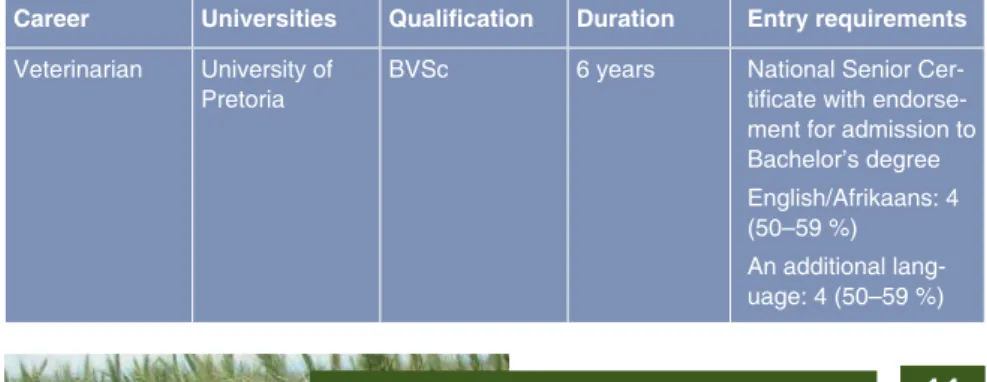
TABLE 4 Entry requirements for BVSc (M-score 30)
Career Universities Qualifi cation Duration Entry requirements Veterinarian University of
Pretoria
BVSc 6 years National Senior Cer- tifi cate with endorse- ment for admission to Bachelor’s degree English/Afrikaans: 4 (50–59 %)
An additional lang- uage: 4 (50–59 %)
Potential employers
The majority of veterinarians offer clinical services, disease prevention strategies, advice in nutrition, management, production and reproduction of animals. Employment opportunities are available in government institu- tions, research organisations and meat-producing organisations.
VITICULTURE AND OENOLOGY
Viticulture
Viticulturists apply scientifi c principles to manipulate the vine to produce the kind of grapes necessary for the production of different wine types and styles as well as augmenting both the quality and quantity of grapes. Viti- culturists share a mutual purpose, which is to make world class wines to accompany food for pleasurable drinking.
Viticulturists learn theoretically and practically how the correct methods of anatomy, morphology, physiology, ampelography of scion and rootstock cultivars, plant improvement, natural and artifi cial disorders of the grape- vine, spacing and trellising, pruning, canopy quality assessment and man- agement as well as selection of cultivar and terrain, grape handling and packaging can contribute to the desired product.
The production of wine is done by striking a balance between soil, climate, geography, winery “softness” and winery hygiene. Good wine delivers joy to the world. Students wishing to be considered for admission to the fi rst year have to meet the entry requirements (Table 5).
Oenology
Oenologists learn about the principles and practices of wine-making such as applied chemical and microbiological processes involved in producing
Career Universities Qualifi cation Duration Entry requirements Mathematics: 5 (60–69 %) Physical science: 5 (60–69 %)
Two other subjects: 4 (50–59 %)
wines, sweet wines, grape juice, concentrates and brandy, wine stabilisation as well as analysis and sensory evalu- ation of wine and brandy.
Curriculum
Different curriculum choices enable students to major in any one of the following: Viticulture and Oenology;
Viticulture and Soil Science; Viticulture and Entomol- ogy; Viticulture and Plant Pathology; Viticulture and Agri- cultural Economics; Oenology and Chemistry; or Oenol- ogy and Enterprise Management.
Potential employers
Qualifi ed viticulturists are employed in universities, the Agricultural Research Council, wine companies, estates, wine cellars, farms, consulting companies and marketing companies.
O ther careers in agriculture
AGRICULTURAL BIOTECHNOLOGY
Biotechnology
Agricultural biotechnology is a range of tools, including traditional breed- ing techniques that alter living organisms or parts of organisms to make
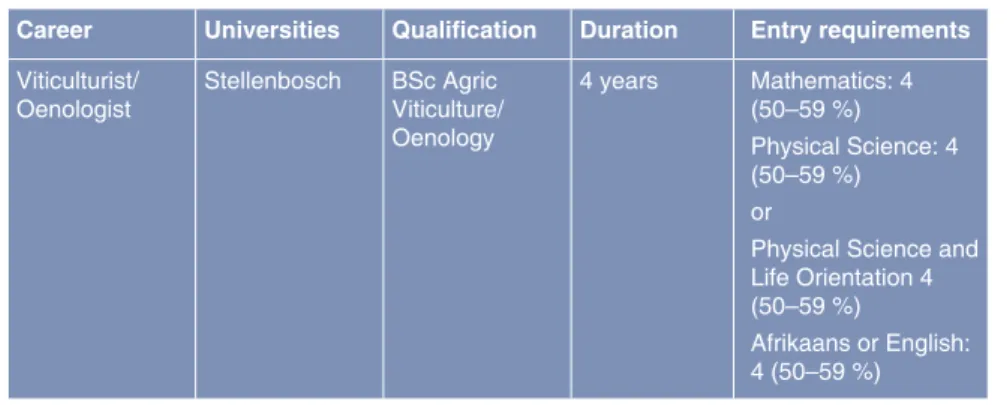
TABLE 5 Entry requirements for BSc Agric in Viticulture/Oenology
Career Universities Qualifi cation Duration Entry requirements Viticulturist/
Oenologist Stellenbosch BSc Agric Viticulture/
Oenology
4 years Mathematics: 4 (50–59 %)
Physical Science: 4 (50–59 %)
or
Physical Science and Life Orientation 4 (50–59 %)
Afrikaans or English:
4 (50–59 %)
e
- gri-
ol- randy,
lu-
As a biomedical scientist you should:
• have a scientifi c approach
• have an inquiring mind
• be able to show initiative
• be able to give attention to detail
• be precise and methodical
• be able to work as part of a team.
Curriculum
Different curriculum choices exist in the fi eld of biotechnology. Therefore, students should ensure that they major in biotechnology in order to be able to follow a career path in agriculture. In some institutions, this can only be done from second year, i.e. the University of Stellenbosch offers BSc Mo- lecular Biology and Biotechnology and students who wish to graduate in Biotechnology have to major on Biotechnology I & II from their second year of study. Rhodes University also offers Biotechnology at the postgraduate level.
or modify products, improve plants or animals, or develop microorganisms for specifi c agricultural uses. Modern biotechnology includes the tools of genetic engineering.
Role of biotechnologists
The biotechnologist applies biological processes to the production of a wide range of organic substances and to ways of recycling waste. Multi- disciplinary techniques applied in a number of scientifi c areas are used.
The biotechnologist can be concerned with microorganisms, genetic en- gineering or cell culture and may do some work on the development of new organisms. A biotechnologist can also design and develop systems for industrial manufacture of materials such as fuel, animal foodstuffs or antibiotics.
Requirements of biotechnologists
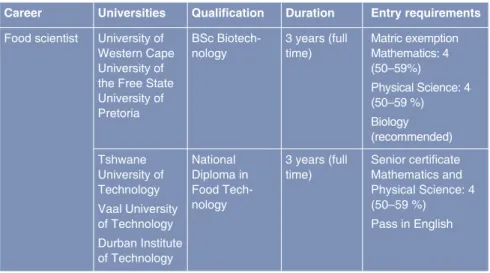
TABLE 6 Entry requirements for BSc/ND in Biotechnology
Career Universities Qualifi cation Duration Entry requirements Food scientist University of
Western Cape University of the Free State University of Pretoria
BSc Biotech- nology
3 years (full time)
Matric exemption Mathematics: 4 (50–59%)
Physical Science: 4 (50–59 %) Biology (recommended) Tshwane
University of Technology Vaal University of Technology Durban Institute of Technology
National Diploma in Food Tech- nology
3 years (full time)
Senior certifi cate Mathematics and Physical Science: 4 (50–59 %)
Pass in English
Potential employers
ARC, CSIR, other research institutions, government departments (national and provincial), food fermentation and pharmaceutical industries, private pathologists, SABS, universities and universities of technology.
AGRICULTURAL TECHNICAL SERVICES
Agricultural technician
Agricultural technicians assist agricultural scientists in their work and assist with the collection of information. They also give advice and information to the farming industry.
Agricultural resource technician
• Works together with the agricultural resource offi cer.
• Is involved in the classifi cation, description and plotting of a region’s natural resources.
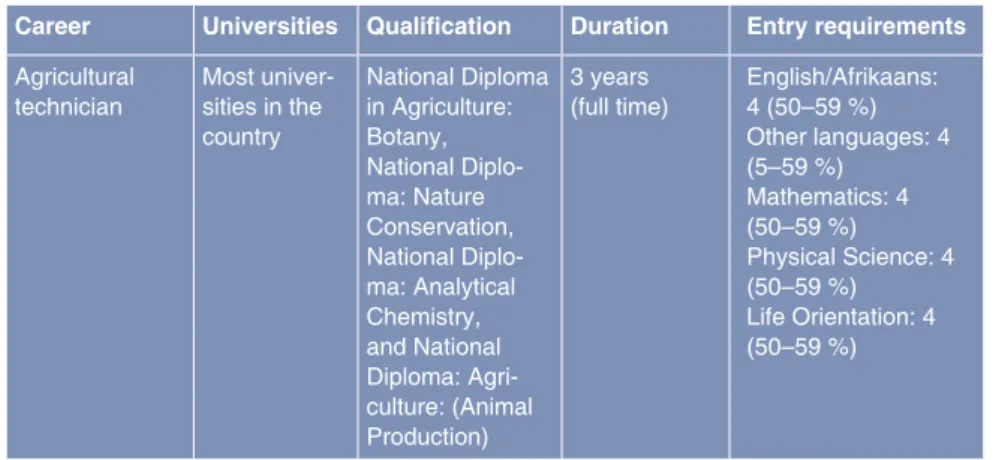
TABLE 7 Entry requirements for National Diploma in Agriculture (agricultural technician)
Career Universities Qualifi cation Duration Entry requirements Agricultural
technician
Most univer- sities in the country
National Diploma in Agriculture:
Botany, National Diplo- ma: Nature Conservation, National Diplo- ma: Analytical Chemistry, and National Diploma: Agri- culture: (Animal Production)
3 years (full time)
English/Afrikaans:
4 (50–59 %) Other languages: 4 (5–59 %)
Mathematics: 4 (50–59 %)
Physical Science: 4 (50–59 %)
Life Orientation: 4 (50–59 %)
• Assists the agricultural extension offi cer.
• Collects information to determine the needs of extension.
Agricultural extension technician
Potential employers
ARC, DAFF, DWAE, agricultural coopera t ives.
AGRONOMY
Agronomy is the integration of the disciplines of Agricul- tural Engineering, Agro-forestry, Crop Pro duction, Genet- ics and Plant Breeding, Horticulture, Plant Protection and Soil Science. All of these disciplines are supported by a strong foundation in the physical and biological sciences.
Special attention is given to the sustainable intensive and extensive production of food and fi bre crops, under rain-fed conditions or with irrigation, for local and export markets.
This degree covers the following: Overview regarding the grain industry and more specifi cally the small-grain
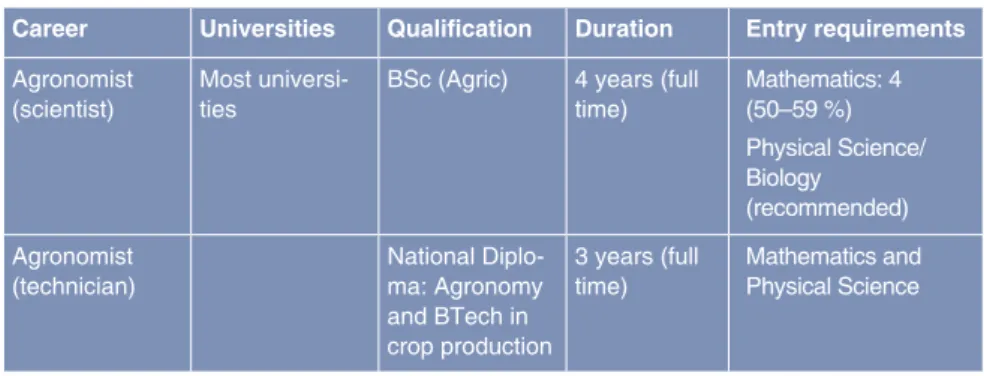
TABLE 8 Entry requirements for BSc and National Diploma in Agronomy
Career Universities Qualifi cation Duration Entry requirements Agronomist
(scientist)
Most universi- ties
BSc (Agric) 4 years (full time)
Mathematics: 4 (50–59 %) Physical Science/
Biology (recommended) Agronomist
(technician)
National Diplo- ma: Agronomy and BTech in crop production
3 years (full time)
Mathematics and Physical Science
industry; relationship between soil, climate, environment and production capacity; problem areas; marketing and market tendencies in the grain.
ANIMAL SCIENCE
Animal scientists are qualifi ed people involved in research and develop- ment, and they give advice to the livestock industry concerning the produc- tion of animals and their products.
Focus areas
These scientists’ focus area is as follows:
Agricultural Genetics (Plant or Animal Genetics)
This course covers breeds and breeding standards of animals as well as basic breeding principles, selection systems, and performance. It also in- volves the most important dairy and beef cattle breeds in
South Africa, qualitative and quantitative inheritance, responses to selection, methods of selection and selection system for dairy and beef cattle.
Animal Nutrition
Practical feeding of different farm animals and bal- ancing of feed rations are covered in this fi eld.
eds in e,
Dairy Science
Dairy Science involves the anatomy and physiology of the udder and the elements of milking procedure, the composition of milk, factors that infl uence the compo- sition of milk, machine milking, milk hygiene, bad taste in milk and dairy products.
Poultry Science
This fi eld involves behaviour and biology of poultry, poultry management, production of broilers, egg production, hatching of eggs and rearing of young hens and disease control.
Meat Science
The study of Meat Science involves growth, devel- opment and tissue composition and distribution in small and large stock. It also covers meat quality, meat processing and meat ageing.
Wool Science
The fi eld covers the biology of the wool follicle and physical characteristics of wool, shearing and shearing-pen organisation (management), class and class standards of wool, wool processing and wool products, as well as byproducts of wool. The
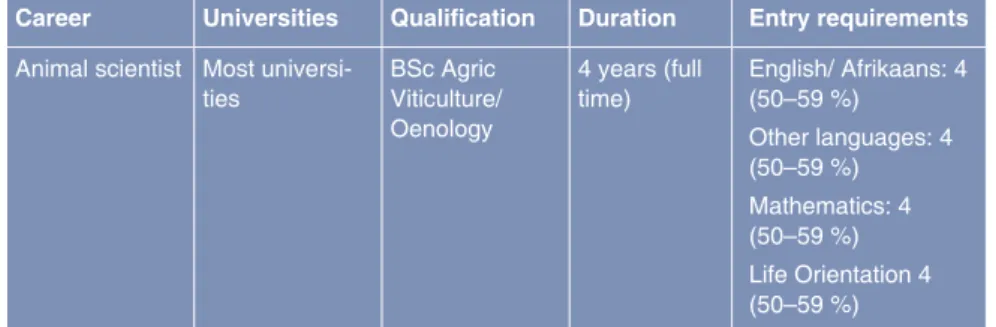
TABLE 9 Entry requirements for BSc Animal Science
Career Universities Qualifi cation Duration Entry requirements Animal scientist Most universi-
ties
BSc Agric Viticulture/
Oenology
4 years (full time)
English/ Afrikaans: 4 (50–59 %)
Other languages: 4 (50–59 %) Mathematics: 4 (50–59 %) Life Orientation 4 (50–59 %)
ity,
d The
of
d taste
marketing of wool and other natural and synthetic fi bres are also included in this fi eld.
Potential employers
The ARC, DAFF (national and provincial departments), universities, agri- cultural cooperatives and manufacturers of feeds.
BIOLOGICAL NITROGEN FIXATION
The biological nitrogen fi xationist should be a person with a strong interest in biology and research, and should love to work with the soil under uncom- fortable conditions.
What is Biological Nitrogen Fixation (BNF)?
The availability of nitrogen in the soil is probably the single most important factor limiting plant growth and crop yields. Some free-living and symbiotic bacteria directly infl uence the availability of nitrogen in the soil by conver- sion of atmospheric dinitrogen to ammonia in the process termed BNF.
Worldwide, BNF accounts for 65 % of the nitrogen used in agriculture, of which the symbiosis of legumes with nitrogen-fi xing rhizobia is by far the most important source.
Potential employers
The ARC, DAFF (national and provincial), universities, commercial inocu- lant manufacturers, and own company—consultant.
TABLE 10 Entry requirements for BSC in Microbiology (nitrogen fi xationist)
Career Universities Qualifi cation Duration Entry requirements Biological nitro-
gen fi xationist
Most universi- ties
BSc Agriculture or Microbiology
3 years (full time)
Biology, Agricultural Science and Chem- istry
TABLE 11 Entry requirements for BSc in Entomology
Career Universities Qualifi cation Duration Entry requirements Entomologist Most universi-
ties
BSc Entomol- ogy
3 years (full time)
English/Afrikaans: 4 (50–59 %)
Additional language:
(50–59 %) Mathematics: 4 (50–59 %) Physical Science: 4 (50–59 %) Life Orientation: 4 (50–59 %)
GRASSLAND/PASTURE SCIENCE
Grassland Science is divided into two categories: Rangeland and Grass- land Management.
Rangeland
Rangeland Management is a discipline and an art that applies an organ- ised body of knowledge accumulated by range science and practical expe- rience for two purposes:
Protection, improvement, and continued welfare of the basic resources, which in many situations include soils, vegetation, endangered plants and animals, wilderness, water and historical sites.
ENTOMOLOGY
The Entomologist is basically involved in research to en- sure plant protection. He has a strong interest in science studies and research. There are various categories such as Plant Pathology, Microbiology and Insect Di- versity.
Potential employers
Potential employers are the ARC, DAFF, and universities.
Optimum production of goods and services in com- binations needed by society. Rangeland Manage- ment requires selection of alternative techniques for optimum production of goods and services with no damage to the resources. While empha- sis is often placed on effects and management of domestic animals, the main goal is rangeland re- source rehabilitation, protection and management for multiple objectives, including biological diversity, preservation and sustainable development for people.
Grassland
Grassland Science entails the study of all aspects of the utilisation, conser- vation and improvement of the veld and cultivated pastures. The education of grassland scientists is essential for sustainable animal production, on rangeland and cultivated pastures.
Grassland Science not only plays an important role in the increasing de- mand for meat and other animal products, but it also make a large contribu- tion to soil and nature conservation, game farming and the future of game parks, which are important for the tourism industry.
Potential employers
The profession offers exceptional opportunities for employees in the ferti- liser and seed companies, the National Parks Board, various sections of nature conservation and the Department of Agriculture, Forestry and Fish- eries (national and provincial level).
TABLE 12 Entry requirements for BSc in Pasture/Grassland Science
Career Universities Qualifi cation Duration Entry requirements Pasture/grass-
land scientist
Most universi- ties
BSc (Agric) 4 years (full time)
Mathematics: 4 (50–59 %) Physical Science/
Biology (recom mended) Most universi-
ties of tech- nology
National Di- ploma: Nature Conservation
3 years (full time)
Mathematics: 4 (50–59 %) Physical Science
Plant knowledge
TABLE 13 Entry requirements for BSc Horticulture Science
Career Universities Qualifi cation Duration Entry requirements Horticulturist Most universi-
ties
BSc Horticul- ture
4 years (full time)
Mathematics:
4 (50–59 %) Physical Science: 4 (50–59 %) Agriculture: 4 (50–59 %) Tshwane
University of Technologyy
BTech Horticul- ture
3 years Mathematics Physical Science and Agriculture
• propagation techniques • production practices
Horticultural management
• plant names • production practices
• origins
• principles of horticultural enterprises/organisations
• management of personnel
• fi nancial management
HORTICULTURE AND HYDROPONICS Horticulture involves the application of scientifi cally based production systems of vegetables, fruit and ornamental plants. Hydroponics is a production sys- tem called soilless growing, in which fertilisers and minerals are added or mixed with water and supplied to plants.
Focus areas Plant production
d d to
Potential employers
The ARC, DAFF (national and provincial), universities, agricultural coop- eratives and seed companies.
MICROBIOLOGY
Microbiology is defi ned as the study of microorganisms such as bacteria, viruses and protista, which can only be seen with a microscope, and these are called or known as “unseen multitudes”.
A microbiologist mostly works in a labora tory or a place where a microscope can be installed. It can be anywhere in the fi elds of nutrition, medicine, ecology, phar macology, cosmetics, marine life or any place where animals and plants or people live. Identifi ca- tion is by means of DNA karyotyping.
Potential employers
Potential employers are the ARC, DAFF (national and provincial), food industries, wine cellars, uni- versities, and private companies.
logy lace a-
- sms
y
,,
TABLE 14 Entry requirements for BSc (Agric) Microbiology
Career Universities Qualifi cation Duration Entry requirements Microbiologist Most univer-
sities and universities of technology
BSc (Agric) Microbiology
4 years (full time)
English/Afrikaans: 4 (50–59 %)
Other language: 4 (50–59 %) Mathematics: 4 (50–59 %) Physical Science: 4 (50–59 %) Life Orientation: 4 (50–59 %)
TABLE 15 Entry requirements for BSc in Plant Pathology
Career Universities Qualifi cation Duration Entry requirements Plant patholo-
gist
Most universi- ties
BSc (Agric) Microbiology
4 years (full time)
English/Afrikaans: 4 (50–59 %)
Other language: 4 (50–59 %) Mathematics: 4 (50–59 %) Physical Science: 4 (50–59 %) Life Orientation: 4 (50–59 %)
SOIL SCIENCE
Soil scientists specialise in the origin of soils and the formation thereof:
origin/development and composition of soil and soil-forming factors. The fi eld also covers the most important physical characteristics of soil: texture, structure, colour, consistency, overall density, soil air, temperature and wa-
PLANT PATHOLOGY
Plant Pathology is defi ned as the study of the organisms and environmental conditions that cause disease in plants, the mechanisms by which these factors cause disease, the interactions between these causal agents and the plants (effects on plant growth, yield and quality), and the methods of managing or controlling plant diseases.
It also interfaces with knowledge from other scientifi c study fi elds such as Mycology, Microbiology, Virology, Biology, chemistry, Bioinformatics, etc.
Potential employers
The profession offers exceptional opportunities for research in the govern- ment (national and provincial departments), as plant pathologists in the ARC, agrochemical companies, seed companies, fertiliser companies uni- versities, farms, nurseries and pharmaceutical companies.
ase, he
ter, as well as problems arising as a result of tillage, soil compaction and crust formation.
Focus areas Soil Survey
This studyfi eld involves profi le pit observation by drilling mechanical augers and later conducting physical and chemical laboratory analyses.
The results obtained (also compiled as maps and aerial photographs) are used as vital information for infractural planning (urban planning, roads, pipelines, powerlines, etc.) and agricultural management purposes.
Soil Physics and Hydrology
Soil physicists and hydrologists study problems relating to water and soil interaction, soil air permeability, etc.
Soil Chemistry and Fertility
The soil chemistry is concerned with soil nutrient availability and defi cien- cies using specialised techniques for the purpose of compiling the most effective fertilisation programmes.
TABLE 16 Entry requirements for BSc in Soil Science
Career Universities Qualifi cation Duration Entry requirements Soil scientist Most universi-
ties
BSc (Agric) Soil Science
4 years (full time)
English/Afrikaans: 4 (50–59 %)
Other language: 4 (50–59 %) Mathematics: 4 (50–59 %) Physical Science: 4 (50–59 %) Life Orientation: 4 (50–59 %) Most universi-
ties of technol- ogy
National Diploma (Soil science)
3 years (full time)
WEEDS BIOCONTROL SCIENCE
Biocontrol scientists specialising in aquatic weeds regularly wade in popu- lated, weed-infested rivers or dams, wearing waders or use boats.
Role of a weeds biocontrol scientist
The fi eld involves searching for natural enemies (either insects or disease- causing organisms such as fungi) of invasive plants (weeds) in the weed’s country of origin, and studying the natural enemies in quarantine to deter-
TABLE 17 Entry requirements for becoming a statistician
Career Universities Qualifi cation Duration Entry requirements Statistician Most universi-
ties
BSc (Agric) Economics or BCom (Agric Economics)
4 years (full time)
Mathematics, Agri- cultural Science or Economics/Business Economics
Soil Biology
The focus of soil biology is on transformation by microorganisms.
Potential employers
The ARC, DAFF (national and provincial), universities, agricultural coop- eratives and manufacturers of fertilisers.
STATISTICS
Statisticians generate, collate, verify, maintain and disseminate statistical information on the agricultural sector, including monitoring and projection of trends in agriculture, food security and food utilisation.
Potential employers
Potential employers are the DAFF, commercial banks and other fi nancial institutions, and academic institutions.
TABLE 18 Entry requirements for becominga weed biocontrol biocontrol scientist Career Universities Qualifi cation Duration Entry requirements Weed biocon-
trol scientist
Most universi- ties
BSc or BSc (Hons) Ento- mology
4 years (full time)
Mathematics, Physi- cal Science or Agri- cultural Science
mine whether these have a potential use in controlling the invasive plant, and are host-specifi c.
The host-specifi c and damaging insects and fungi are released from quarantine and placed onto their target weeds in the fi eld. The release sites are regularly visited to see whether these insects or fungi have become established and are control- ling the weed.
Potential employers
The ARC, government departments, universities, private consultant, and private companies.
Department of Agricultural Economics, Extension and Rural Development University of Pretoria
PRETORIA 0002 South Africa
Tel: (012) 420 4127/3251 Fax: (012) (021) 420 4958 E-mail: [email protected]
The Faculty Manager
University of the Orange Free State P.O. Box 339
BLOEMFONTEIN 9301
Tel: (051) 401 2490 Fax: (051) 401 3728
E-mail: [email protected]
University of Stellenbosch
Department of Agricultural Economics Private Bag X1
MATIELAND 7602
Tel: (021) 808 4758 Fax: (021) 808 4670 E-mail: [email protected]
University of KwaZulu-Natal School of Agricultural Sciences and Agribusiness
Private Bag X01 SCOTTSVILLE 3209
Tel: (033) 260 5492/5493 Fax: (033) 260 5970 [email protected] or E-mail: [email protected]
Head of School
School of Bioresources Engineering and Environmental Hydrology
University of KwaZulu-Natal Private Bag X01
SCOTTSVILLE 3209
Tel: (033) 260 5490/ 5490 Fax: (033) 260 5818
E-mail: [email protected] or kunzs@
ukzn.c.za
A nnexure
CONTACT DETAILS FOR SCARCE SKILLS IN AGRICULTURE-RELATED COURSES
Agricultural Economics
Agricultural Engineering
Food Science and Food Technology
Veterinary Science
Department of Food Science University of Pretoria PRETORIA 0002 South Africa
Tel: (012) 420 3201 Fax: (012) 420 2839
E-mail: [email protected]
Department of Food Science University of
Stellenbosch Private Bag X1 MATIELAND 7602
Tel: (021) 808 3578 Fax: (021) 808 3510
E-mail: mailto:%[email protected]
Bellville campus
Cape Peninsula University of Technology P O Box 1906
BELLVILLE 7535
Tel: +27 +21 959 6569 Fax: +27 +21 959 6118 E-mail: [email protected]
Cape Town campus
Cape Peninsula University of Technology P O Box 652
CAPE TOWN 8000
Tel: +27 +21 460 3176 Fax: +27 +21 460 3217 E-mail: [email protected]
For specifi c information on the BSc (Veterinary Biology)
Academic Administration
Faculty of Natural and Agricultural Sciences University of Pretoria
Tel: +27 +12 420 2726 Fax: +27 +12 420 4581
E-mail: [email protected]
For information on the BVSc degree University of Pretoria
Student Administration
Marketing and Communication Division
Tel: +27 +12 529 8476 Email: [email protected] Tel:+27 +12 529 8498/36 Specifi c information on the BVSc degree
programme
Tel: +27 +12 529 8193
Email: [email protected]
Veterinary Science
Viticulture and Oenology
CONTACT DETAILS OF INSTITUTIONS OFFERING AGRICULTURAL COURSES
Colleges of Agriculture
Physical address
Department of Viticulture and Oenology Faculty of Agricultural and Forestry Sciences Stellenbosch University
JH Neethling Building, Victoria Street STELLENBOSCH 7600 South Africa
Tel: (021) 808 4545 Fax: (021) 808 4781 E-mail: [email protected] Website: http://www.sun.ac.za
Postal address
Department of Viticulture and Oenology Faculty of Agricultural and Forestry Sciences Stellenbosch University
Private Bag X1 MATIELAND 7602 South Africa
Tel: (021) 808 5450 Fax: (021) 884 4319
The Principal
Cedara College of Agriculture Private Bag X 6008
PEITERMARITZBURG 3200
Tel: (033) 355 9304 Fax: (033) 355 9303
E-mail: [email protected].
za
The Principal
Elsenburg College of Agriculture
P.O.Box 54
ELSENBURG 7607
Tel: (021) 808 5018 Fax: (021) 808 7705
E-m:ail: [email protected]
The Principal
Fort Cox College of Agriculture and Forestry
P.O.Box 2187
KING WILLIAM’S TOWN 5600
Tel: (040) 653 8033/4/5 Fax: (040) 653 8036 Cell 083 451 1553
E-mail: [email protected]
The Principal Glen College of Agriculture
Private Bag X01 GLEN
9360
Tel: (051) 861 1012 Fax: (051) 861 1122 E-mail: [email protected]
The Principal
Grootfontein Agricultural Development Institution Private Bag X529
GROOTFONTEIN 5900
Tel: (049) 842 1113 Fax: (049) 842 4352
E-mail: [email protected]
The Principal
Lowveld College of Agriculture Private Bag X11283
NELSPRUIT 1200
Tel: (013) 753 3064 Fax: (013) 755 1110 Cell 083 441 1550
E-mail: sekgota@[email protected]
The Principal
Madzivandila College of Agriculture Private Bag X5024
THOHOYANDOU
0950
Tel: (015) 962 7200 Fax: (015) 962 7239 Cell 082 883 4753
E-mail: [email protected]/
[email protected] The Principal
Owen Sithole College of Agriculture Private Bag X20013
EMPANGENI 3880
Tel: (035) 795 1345 Fax: (035) 795 1379
E-mail: [email protected]
The Principal
Potchefstroom College of Agriculture Private Bag X804
POTCHEFSTROOM 2520
Tel: (018) 299 6739 Fax: (018) 293 3925
E-mail: [email protected]
The Principal
Tompi Seleka College of Agriculture Private Bag X9616
MARBLE HALL 0450
Tel: (013) 268 9300/1 Fax: (013) 268 9305 Cell 082 883 4758
E-mail: [email protected] The Principal
Taung College of Agriculture Private Bag X532
TAUNG
8584
Tel: (053) 994 9800 Fax: (053) 994 1130 Cell 084 247 3832
E-mail: [email protected]
The Dean TUT
Private Bag X 680 PRETORIA 0001
Tel: (012) 382 5911 E-mail: [email protected]
HOD: Crop Science HOD: Animal Science HOD: Nature Conservation HOD: Horticulture
E-mail: [email protected] [email protected] [email protected] [email protected]
The Dean
CPUT P O Box 652 CAPE TOWN 8000
Tel: (021) 460 3186 Fax: (021) 460 3854 E-mail: [email protected]
HOD Tel: (021) 864 5213
E-mail: [email protected]
The Dean
CUT, FS
Private Bag X 20539 BLOEMFONTEIN 9300
Tel: (015) 507 3112 E-mail: [email protected]
HOD Tel: (015) 507 3113
E-mail: [email protected]
The Dean
Mantec P O Box 12363 JACOBS 4026
Tel: (031) 907 7630/70 Fax: (031) 9077611 E-mail: [email protected]
The Dean
NMMU
P.O.Box 7700
[email protected] PORT ELIZABETH 6031
Tel: (041) 504 2873/2369 Fax: (041) 504 2369
E-mail: [email protected]
The Dean
TUT
Private Bag X 680 PRETORIA 0002
Tel: (012) 382 5119/5919 Fax: (012) 382 4224 E-mail: [email protected]
Secretary E-mail: [email protected]
Universities of Technology
Universities
The Director
UNISA
Private Bag X 6 FLORIDA 1710
Tel: (012) 352 4170/4129/2839 Fax: (012) 352 4117/ 3557 E-mail: [email protected] www.unisa.ac.za
The Dean
Fort Hare University Private Bag X 1314 ALICE
5700
Tel: (040) 602 2232 Fax: (040) 653 1730 E-mail: [email protected]
HOD Tel: (040) 602 2333
E-mail: [email protected]
PA Tel: (040) 602 2333
E-mail:[email protected] www.ufh.ac.za
The Dean
North West University Private Bag X 2046 MMABATHO 2735
Tel: (018) 386 1321 Fax: (018) 386 2686
E-mail: [email protected] www.uniwest.ac.za
HOD: Crop Science Cell 082 2007 907 or 082 200 7951 E-mail: [email protected]
The Dean
University of Free State P O Box 339
BLOEMFONTEIN 9301
Faculty manager
Tel: (051) 401 2535 Fax: (051) 401 3728 Cell 083 309 7251
E-mail: [email protected]
The Dean
University of KwaZulu-Natal Private Bag X 1
SCOTTSVILLE 3209
Tel: (033) 260 5183 Fax: (033) 260 5969 E-mail: [email protected]
Assistant HOD Tel: (033) 260 5726 Fax: (033) 260 5816 E-mail: [email protected] Management Information Tel: (033) 260 7040/3076
E-mail: [email protected]
The Dean University of Limpopo
Private Bag X 1106 SOVENGA
0727
Tel: (015) 268 2142/2208 Fax: (051) 268 2893/ 3206 E-mail: [email protected]
Director Tel: (015) 268 2875/2203/2188
Fax: (015) 268 2892 E-mail: [email protected] HOD: Agricultural Economics Tel: (015) 268 2204
E-mail: [email protected] HOD: Animal Science Tel: (015) 268 2186
E-mail: [email protected]
HOD: Aquaculture Tel. (015) 268 2833/2294
E-mail: [email protected]
HOD: Geography Tel: (015) 268 2330
E-mail: [email protected]
The Dean
University of Pretoria
PRETORIA 0002
Tel: (012) 420 3201 Fax: (012) 420 3890 E-mail: [email protected]
HOD Tel: (012) 420 3239/02
Fax: (012) 420 2839
E-mail: [email protected]
The Dean
University of Stellenbosch Private Bag X1
MATIELAND 7602
Tel: (021) 808 4792 Fax: (021) 808 2001 E-mail: [email protected]
Secretary Tel: (021) 308 4792
E-mail: [email protected]
The Dean
University of Venda Private Bag X550 THOHOYANDOU 0950
Tel: (015) 962 8110/8310 Fax: (015) 962 8647
E-mail: [email protected]
HOD Tel: (015) 962 8408
E-mail: [email protected]
N otes
...
...
...
...
...
...
...
...
...
...
...
...
...
...
...
...
...
...
...
...
...
N otes
...
...
...
...
...
...
...
...
...
...
...
...
...
...
...
...
...
...
...
...
...