The informal sector is a thriving segment of the economy, a springboard from which many dynamic small businesses can upgrade to the formal sector over time. I would also like to acknowledge the contributions of the participants and key informants in the study.
BACKGROUND INFORMATION
Therefore the purpose of the present study is to fill this knowledge gap by finding the motivations that drive operators to engage in slum activities in selected cities in Ghana. Moreover, the present study seeks to determine the constraints of operators in slum activities and to discover the resources needed to induce a move into the formal sector.
RESEARCH PROBLEM
The problem is that there has been no conclusive evidence in Ghana on what motivates operators to engage in informal sector activities in slums, what factors hinder the growth of informal slum enterprises, what keeps them there and what will make them move into the slums. formal sector. The current study is therefore essential to help provide answers that will help policy makers reduce slum growth and help slum businesses grow.
RESEARCH QUESTIONS
According to the Organization for Economic Co-operation and Development [OECD] (2006, p. 28), formalizing informal sector activities is a long-term solution to poverty eradication. It is hoped that the findings of the study will help policy makers and development institutions responsible for enterprise development to formulate policies tailored to help slum enterprises develop and transition into formal enterprises.
RESEARCH OBJECTIVES
Specific research objectives
ORGANISATION OF THE STUDY
INTRODUCTION
BACKGROUND OF GHANA
POLITICAL EVOLUTION OF GHANA
Ghana was the first sub-Saharan country to gain independence and this feat was achieved under the leadership of Dr.
GHANA’S ECONOMY (1960-2014)
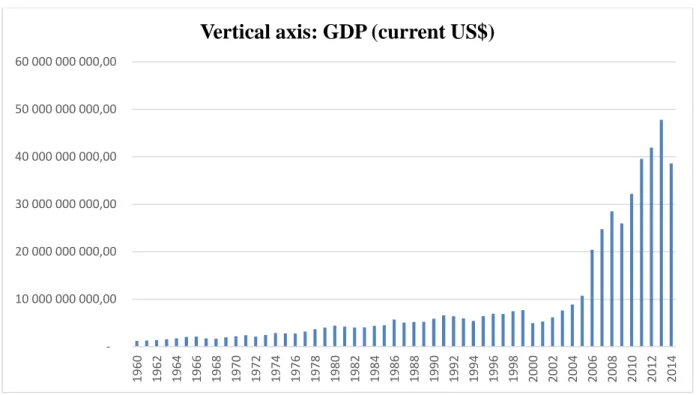
- Gross Domestic Product (GDP) growth
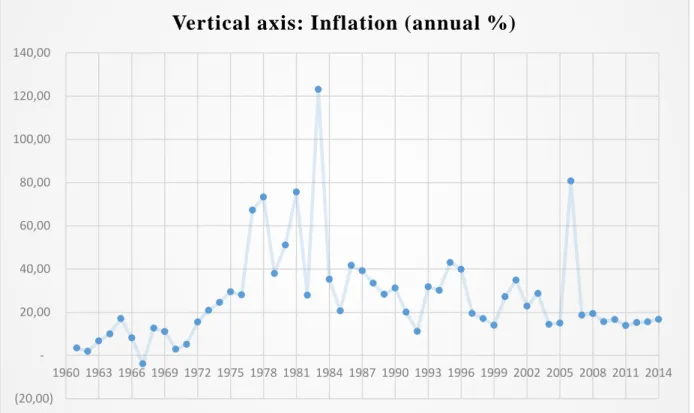
- Inflation
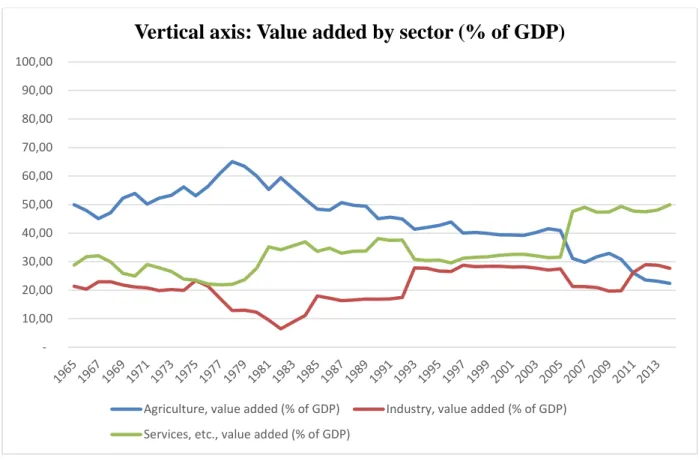
- Performance of sectors of the economy
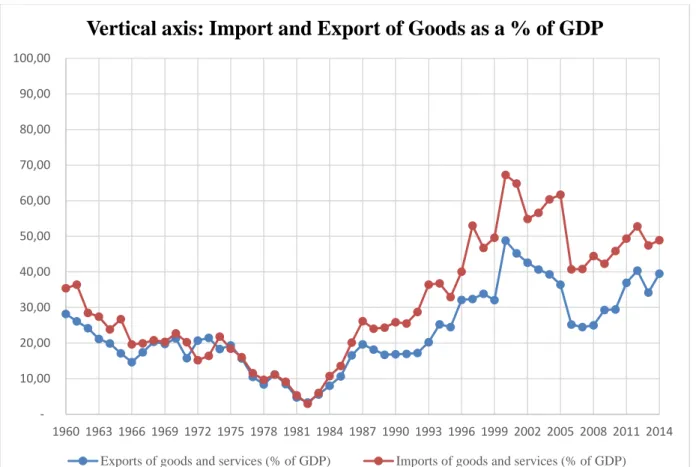
- International Trade
- Exchange rate
- External Debt
- Government Revenue
- Redenomination of the Ghana Cedis
- Rebasing of the Ghanaian Economy
- Unemployment
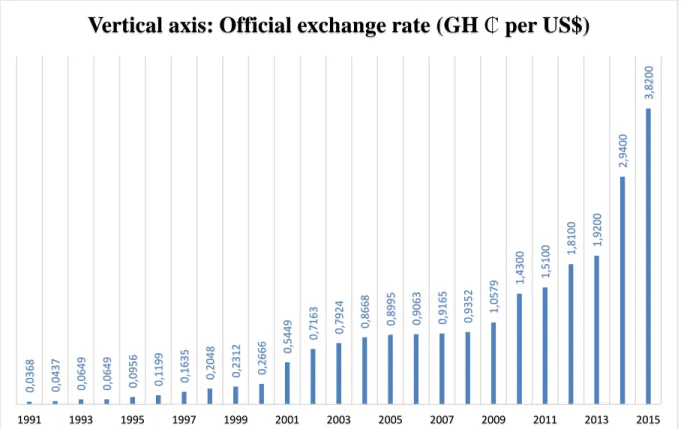
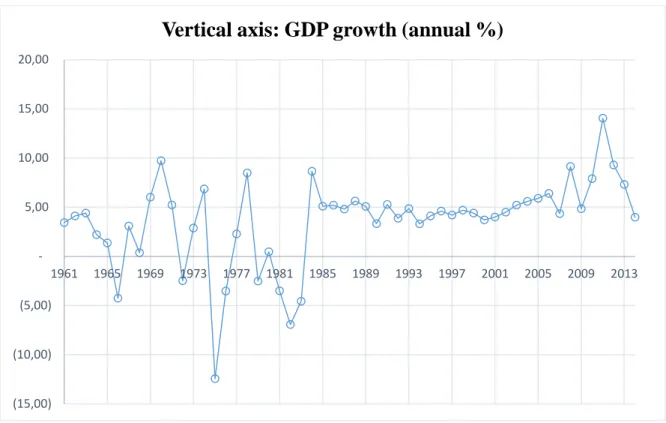
The main goal of the new growth policy (the "Better Ghana Agenda") was to ensure sustainable macroeconomic stability, achieve upper middle-income status by 2020 and also achieve the Development Goals of Millennium (NDPC 2010, p. 7). From independence until 2005 (Figure 2.6), the agricultural sector in Ghana was the highest contributor to GDP.
SYNTHESIS
Although the unemployment rate appears to be low, the number hides the high level of underemployment in the country. Ghana's economy was reimagined in 2010, earning the country recognition as a middle-income country.
CONCLUSION
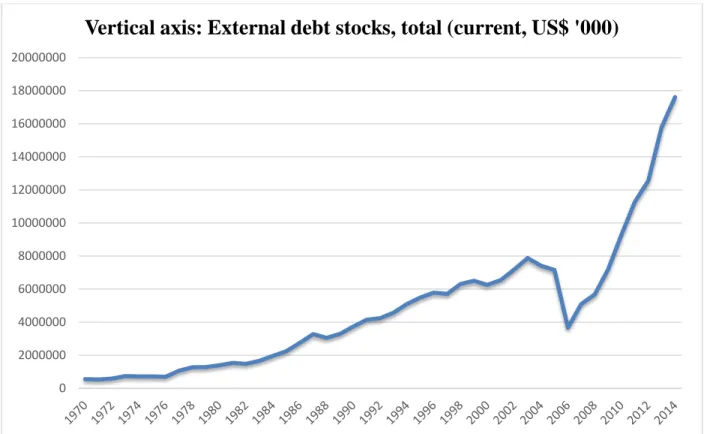
This lack of strategic direction has adversely affected the country as projects started by previous governments have been abandoned and the money spent on them has been wasted. These two events allowed the country to borrow more, and the country's external debt position increased from about US$9.3 billion in 2010 to US$17.6 billion in 2014.
INTRODUCTION
DEFINITION OF A SLUM
The severity of a slum's living conditions depends on the number of problems listed in UN-Habitat's definition present in a particular slum. The World Bank/UN-Habitat (2000), on the other hand, refers to a slum as deserted areas in cities with poor living conditions and housing.
FORMATION AND GROWTH OF SLUMS
- Population growth
- Migration and urbanisation
- Unemployment
- Housing
- Economic growth
- Legality of slums
- Informal economy
Factors related to the destination area of migrants – a migrant's destination also has some positive and negative factors that one evaluates before deciding to migrate. According to UN-Habitat, the majority of people working in the informal sector live in slums.
SLUMS SITUATION WORLDWIDE
Slum situation in Ghana
- Sodom and Gomorrah
- Akwatia Line
The slum consists mostly of people from northern Ghana and other West African countries who migrated to the slum through family and friends (network theory; Goss and Lindquist, 1995) (Ahlvin, 2012; Aseye and Opoku, 2015). According to King and Amponsah (2012), the slum was founded in 1998, mainly by migrants from northern Ghana in search of job opportunities in Kumasi.
SOME SLUM UPGRADING PROGRAMMES IN GHANA
The Sodom and Gomorrah slum is located next to one of the biggest flea markets in Accra called the Agbogbloshie market. Atlanta (USA), which focused on child education, waste management and strengthening the economic capacity of slum dwellers, failed according to Amoako and Cobbinah, (2011) as slum dwellers were not satisfied with the adequacy of intervention.
SYNTHESIS
HFC performs its role by collecting informal operators' savings and overtime on a daily basis; these operators could access credit from the bank. Rapid population growth, urbanization, unemployment, inadequate housing and the growth of the informal sector are other reasons for the formation and growth of slums.
CONCLUSION
Some of the shantytowns are considered to have potential for improvement to become formal settlements and are called shantytowns of hope. Others, called slums of despair because of their terrible degradation, will continue to remain slums.
INTRODUCTION
THE INFORMAL SECTOR
The birth and continued growth of the informal sector is due to many different factors. Schneider, (2002) argues that increases in tax and social security contributions, and the increase in government regulations in the formal sector are the main reasons for the continued growth of the informal sector.
INFORMAL SECTOR IN SELECTED COUNTRIES
Ghana
Ghana's informal sector does not adhere to government regulations, so they are constantly neglected by policy makers. The study found that most of the primary and intermediate inputs of the informal sector originate from the formal sector.
Bolivia
The interconnectedness is also expressed when the informal sector provides cheap wage goods and services to the urban population. The lack of production capacity leaves room for little formal employment, making the informal sector a necessary alternative for the poor.
India
Furthermore, in urban areas, the informal sector accounts for 80% of total employment opportunities (Hernani-Limarino et al., 2011). Although India is rapidly urbanising, the rural population will also grow significantly to about 804 people by 2050 (Bhagat, 2014).
INFORMAL SECTOR ACTIVITIES IN SLUMS
Slum tourism is also a vibrant sector in the slum of Dharavi (India), which is home to about half a million Indians. The Dharavi slum has become one of the largest producers of leather in the world and as a result, people are becoming much more aware that many healthy economic activities take place in the slums.
MOTIVES FOR ENGAGING IN INFORMAL SECTOR ACTIVITIES
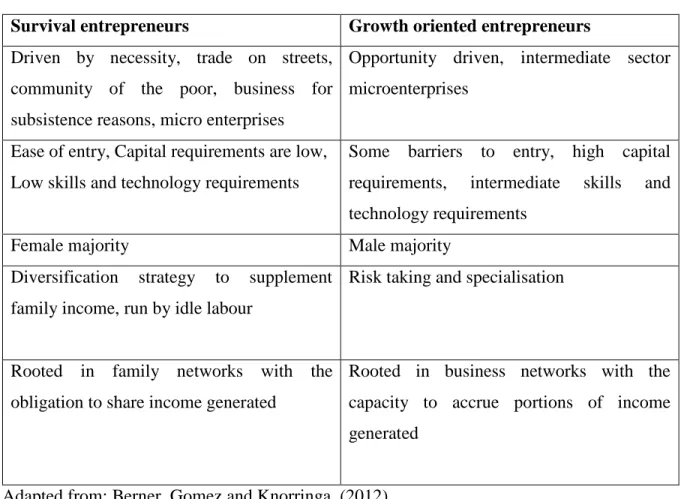
The main results of this research showed that the informal entrepreneurs involved did all this of their own free will. Adom and Williams' (2012) primary research on the informal sector in Ghana found that 65% are driven by necessity, while 35% are driven by opportunity.
FACTORS DETERMINING INCOME LEVELS IN THE INFORMAL SECTOR
Locus of Control (LOC)
A person is said to have a high level of internal locus of control if he or she has the impression that events depend on his or her own actions. On the other hand, a person with a high external locus of control perceives events as a result of luck, fate, or the actions of others.
CONSTRAINTS FACED BY OPERATORS IN INFORMAL SECTOR ACTIVITIES
In Ghana's informal sector, Aryeetey (2009, p. 7) found that limited access to finance inhibits the growth of these businesses. A crucial reason for the growth of informal sector activities is the strict and bureaucratic government regulations (Schneider, 2002).
FACTORS THAT KEEP OPERATORS IN INFORMAL ACTIVITIES
Subjective Wellbeing (SWB)
Canagarajah and Sethuraman (2001) and Aryeetey (2009) found that the informal sector worker or operator lacks social protection and land tenure security. f) Other factors. Blaauw et al.'s (2013) study of subjective well-being of operators in the informal sector in South Africa discovered that income is an important determinant of happiness.
FORMALISING THE INFORMAL SECTOR
Promotion of employment – lack of employment opportunities is one of the main reasons that led to the birth of the informal sector. Social dialogue – in policy-making processes for solving issues related to the informal sector, the opinions of operators in the informal sector are not taken into account.
CONCEPTUAL FRAMEWORK
Entry into slum activities
Studies have shown that slums are formed as a result of in-migration and the urban areas' inability to absorb such in-migrants (UN-Habitat, 2003, Roy et al., 2014). When they move, they find it difficult to find work in the urban areas and to find suitable shelter.
Operating in slum activities
However, the motivation to engage in slum economic activities in one area in Ghana has not been researched and the present study seeks to fill this knowledge gap.
Exiting from slum activities
SYNTHESIS
These economic migrants, who do not find employment opportunities in the slow-growing formal urban sector, tend to engage in economic activities outside the spectrum of formal permits. Since there is little formal employment in Ghana, economic migrants have to survive in the city by engaging in informal sector activities.
CONCLUSION
The informal sector operates outside the formal systems, therefore it does not contribute much to the generation of tax revenues and the development of economies and does not receive social protection from the government. According to Welch (2005) and ILO (2009) formalizing informal sector businesses can help them to be sustainable, provide employment and increase tax revenues.
INTRODUCTION
RESEARCH DESIGN
The nature of a study
- Exploratory research
- Descriptive Research
- Causal Research
Exploratory research is a technique used to investigate areas for which little research has been done or for which there is little existing knowledge. The present study is an exploratory study due to the scarcity of data on economic activities in the slums of Ghana.
DATA GATHERING
- Primary Data
- Secondary Data
- Target Population
- Sampling
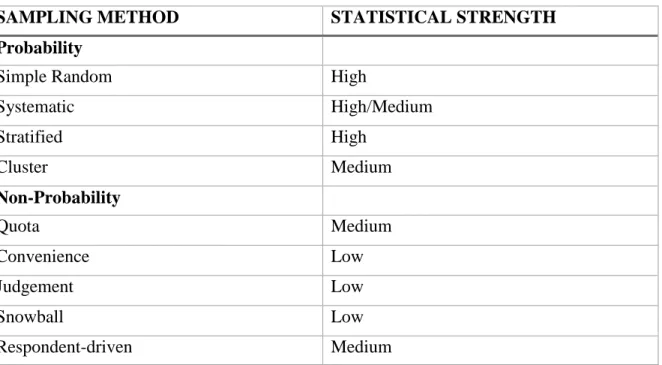
- Sampling technique
- Sample size
- Data Collection Method
The population of the present study consists of operators involved in informal sector activities in the slums of S&G in Accra and AL in Kumasi. The present study uses questionnaires to collect data from the informal operators in the AL and S&G slums.
VARIABLE SCALE OF MEASUREMENT
Nominal Scale
Ordinal scale
Interval scale
THE RESEARCH INSTRUMENT
- Questionnaire
- Contents of the questionnaire
- Pretesting of the questionnaire
- Distributing the questionnaire
Loaded questions should be avoided – loaded questions include questions that are made up of several other questions. After completing the questionnaires, they were coded in Excel for statistical processing and analysis.
DATA ANALYSIS AND HYPOTHESES TESTING
Data coding
Data coding involves the numerical representation of responses to a survey for the purpose of statistical analyzes (De Vaus, 2002, p.1). The statistical tools used in the current study are Statistical Package for the Social Sciences (SPSS) and STATA.
Data Analysis
- Descriptive analysis
- Inferential Analysis
This involves analyzing the various data collection techniques available and choosing the most appropriate one for the study. This is a crucial step as only a portion of the population is used for the analysis; therefore, the results must be verified to determine the level of their accuracy and how confident the researcher is about the inference.
Pearson’s Correlation Analysis
Fourth, the information obtained in the analysis phase is used to make inferences about the population.
Independent Sample T-Test
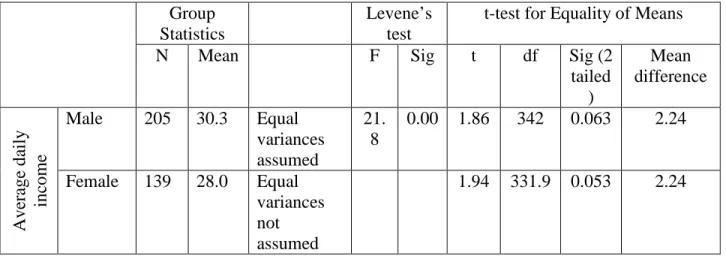
NH: On an average daily basis, there is no significant difference between the income of Men and Women. AH: On an average daily basis, there is a significant difference between the incomes of men and women.
Data Reduction Techniques
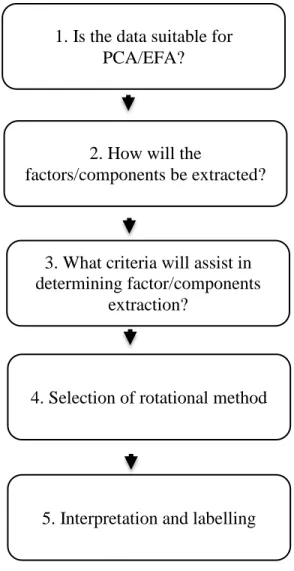
The data reduction techniques used in the present study are Principal Component Analysis (PCA) and Factor Analysis (FA). In the present study, principal component extraction was used for principal component analysis.
Regression Analysis
VALIDITY AND RELIABILITY OF THE MEASUREMENT INSTRUMENTS
- Validity
- Reliability
According to Peterson (2000, pp. 79-80), the validity of an instrument refers to its ability to measure what it purports to measure. Content validity refers to the extent to which the individual items of the instrument constitute a true representation of the construct it is intended to measure.
ETHICAL CONSIDERATION
Confidentiality: The researcher assured the respondents that questionnaires will be numerically coded to maintain anonymity. The use of the results: The researcher informed the participants that the results of the study will only be used for scientific purposes.
LIMITATIONS OF THE STUDY
Moreover, it was made clear that no names will be mentioned in the study. A major disadvantage of a cross-sectional study is that it cannot separate a cause from an effect overtime (Margetts, Vorster and Venter 2002, p. 70), hence the inability of the present study to draw long-term policy conclusions from those slum intervention programs.
CONCLUSION
As mentioned in section 5.3.1, the GSS does not have data on the number of operators involved in informal activities in the poor neighborhoods under study. Further, due to the lack of data on informal activities in slums in Ghana, a longitudinal study could not be conducted to look at the effects of previously implemented intervention programs (discussed in section 3.5) aimed at addressing limitations of slum operators in the areas under study.
INTRODUCTION
DEMOGRAPHIC CHARACTERISTICS OF SLUM OPERATORS
EDUCATIONAL BACKGROUND OF SLUM OPERATORS
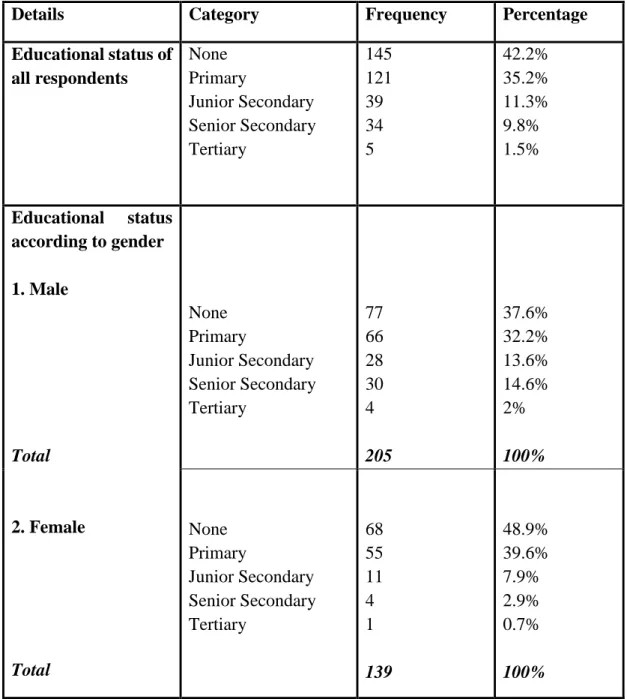
From the surveyed sample, it can be seen that men have attained a higher level of education than women. 62% of men have primary or higher education compared to 51% of female operators surveyed.
ECONOMIC ACTIVITIES AND INCOME GENERATED IN THE SLUMS
- Economic activities in the slums
- Income generated
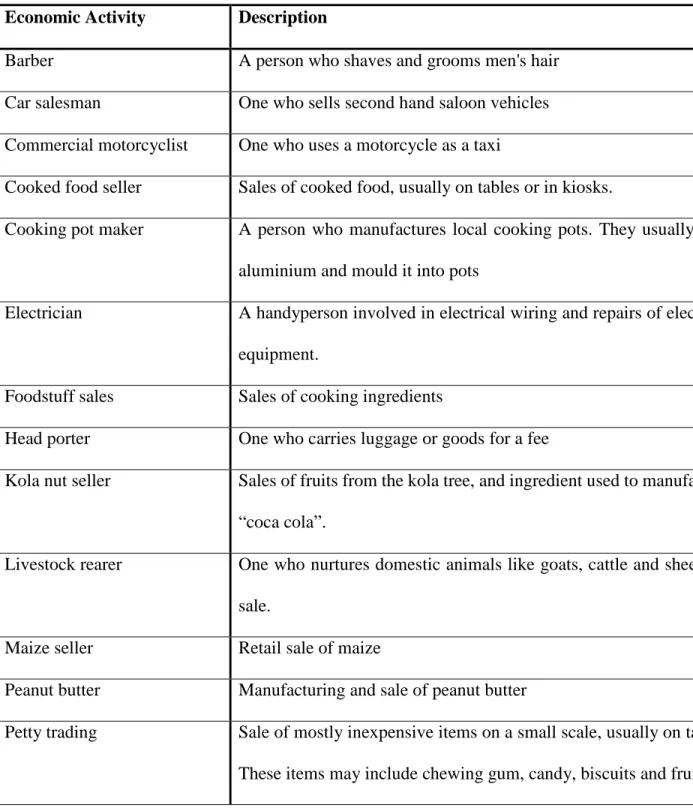
Car salesman One who sells second-hand saloon vehicles Commercial motorcyclist One who uses a motorcycle as a taxi. Lumber processor A person who processes wood into beams and boards Lumber seller Sales of processed lumber.
CHARACTERISTICS OF THE SLUM ENTERPRISE
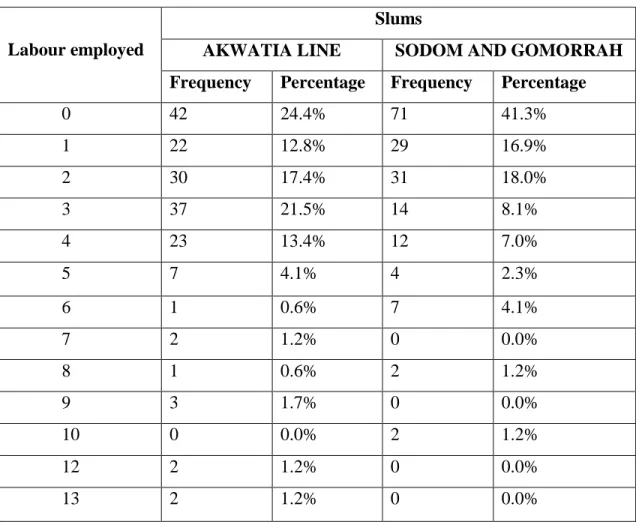
- Labour employed
- Payment of municipal levies
- Banking
- Consumption of products by people living outside the slum
- Ease of entry into the slum economic activity
- Level of competition in slum enterprises
External patronage refers to individuals outside the slum who consume goods and services offered by slum operators. The majority (over 90%) of the remaining slum operators' goods and services are consumed by individuals living outside the slum.
SYNTHESIS
CONCLUSION
INTRODUCTION
MOTIVES FOR ENGAGING IN SLUM ACTIVITIES
- FACTOR ANALYSIS
- DISCUSSION OF MOTIVES FOR ENGAGING IN SLUM ACTIVITIES
These two motives together have a Cronbach alpha of 0.724 (Table 7.4) and are labeled as 'Working in your own time'. The opportunities (loading, .629) that slum businesses offer are therefore a crucial motive for developing slum activities in Ghana.

DETERMINANTS OF INCOME
- Testing differences in income
- Multiple Regression
- Residual Analysis
- Discussion of determinants of income in slum activities
NH: On an average daily basis, there is no significant difference between operator income based on internal or external locus of control. It can therefore be concluded that there is a significant difference in the average daily income of operators based on the locus of control.
CONSTRAINTS TO ENGAGING IN SLUM ACTIVITIES
- PRINCIPAL COMPONENENT ANALYSIS
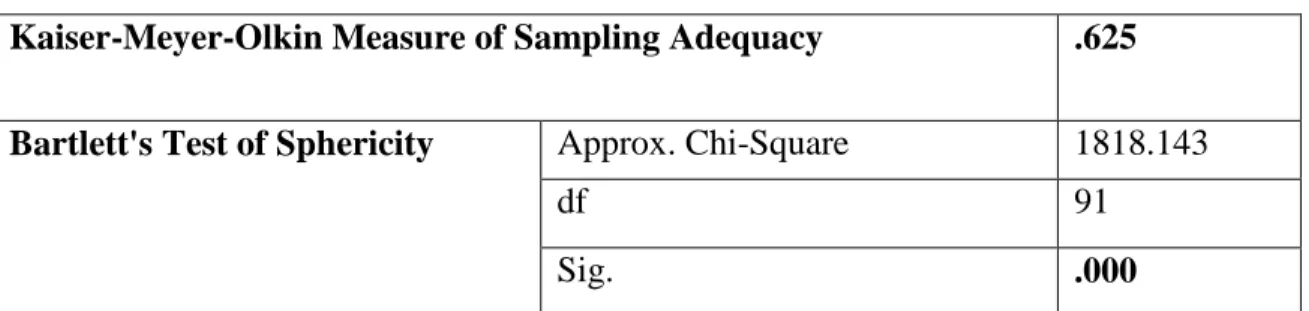
Accordingly, 6 components are extracted, which represent 77.2% of the total variation in the limitations of the functioning of poor settlements, as shown in Table 7.14. This component accounts for 13.66% (Table 7.14) of the total variation and is named as "Problems in accessing credit".
WILLINGNESS TO MOVE TO THE FORMAL SECTOR ACTIVITIES
- Generation of variables
- Logistic regression
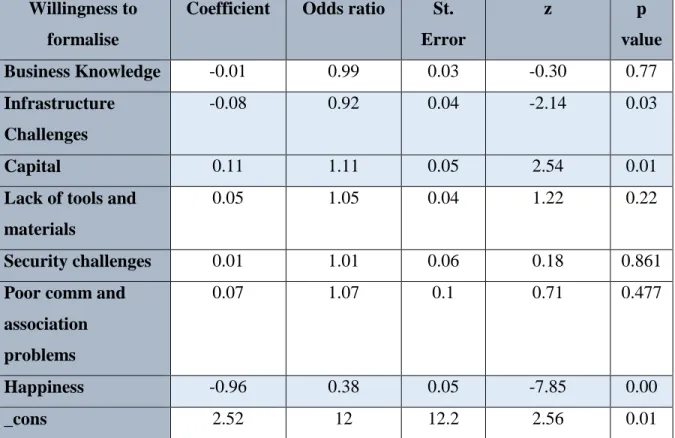
Logistic regression is conducted to determine which of the constraints, if addressed, will motivate slum managers to move to the formal sector. Small-scale manufacturing activities (microfiche): A study of the interrelationship between the formal and informal sectors in Kumasi, Ghana. 2009) 'The Informal Economy, Economic Growth and Poverty in Sub-Saharan Africa', Framework Paper, Consortium for African Economic Research.
SUBJECTIVE WELL-BEING
SYNTHESIS
Slum operators' lack of business knowledge was discovered to be the biggest constraint in slum activities in Ghana. However, supporting slum operators' access to capital was found to be the only way to help them move into the formal sector.
CONCLUSION
However, these slum operators pay daily taxes to the government, which means that these slum operators contribute to the development of the regions where they are located. In the previous chapter, it was established that slum operators create employment and earn income that is much higher than the national minimum wage in Ghana.
INTRODUCTION
SYNTHESIS
The first cluster, called “Lack of Business Knowledge,” accounts for about 19.9% percent of the total variation. In terms of infrastructural constraints, it was found that increasing the unit's efforts to address the slum manager's infrastructural challenges reduces their willingness to move by 8%, which is contrary to Van Rooyen and Antonites (2007) study of the informal sector in Johannesburg.
POLICY RECOMMENDATIONS
This stemmed from the various income generating capacities of the economic activities present in the slums. S&G found that the majority of operators are engaged in providing basic services, as we have already mentioned.
AREAS FOR FURTHER RESEARCH
Also, informal slum operators through formalization will allow them access to government programs and services. These will help policy makers create better policies and programs to help the informal sector thrive and slum operators transition to formal activities.
CONCLUSION
The Burden of Kayayei: Cultural and Socio-Economic Problems Facing Women Carriers in Agbogbloshie. Graduate unemployment in Ghana: A possible case of university programs' poor response to labor market demands.