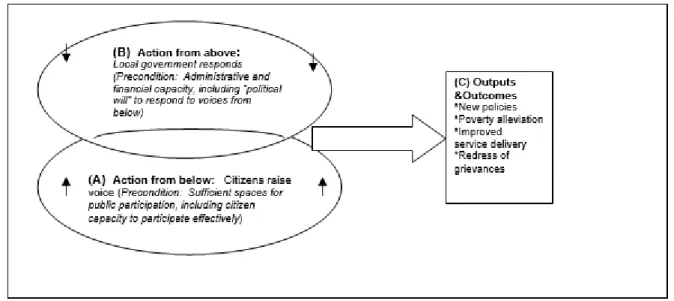
T. Botha, Municipal Manager of George Local Municipality for giving me permission to do this research. The study focuses on Integrated Development Planning (IDP process) as a means of facilitating public participation in George Local Municipality, located within the Eden District Municipality of the Western Cape Province.
- RESEARCH PROBLEM
- Main research problem
- OBJECTIVES OF THE STUDY
- KEY QUESTIONS PERTAINING TO THE STUDY
- RESEARCH METHODOLOGY
- Literature search
- Empirical survey
- Interpretation and articulation of the results of statistical analysis
- Submission of recommendations
- DELIMITATION OF THE STUDY
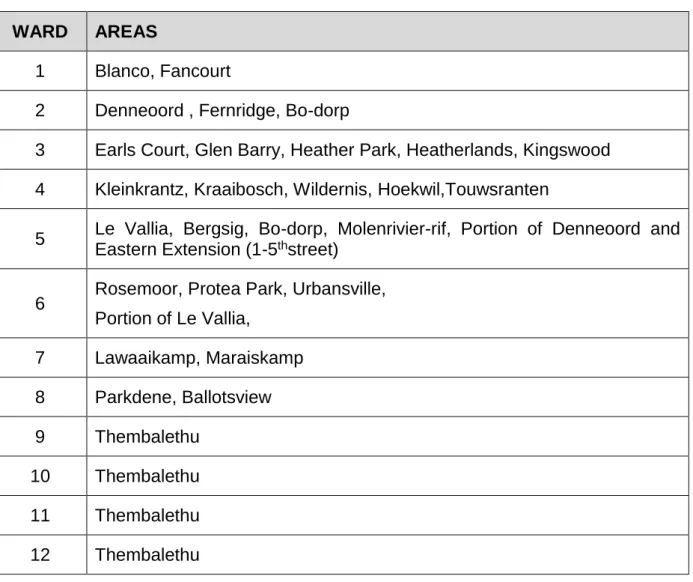
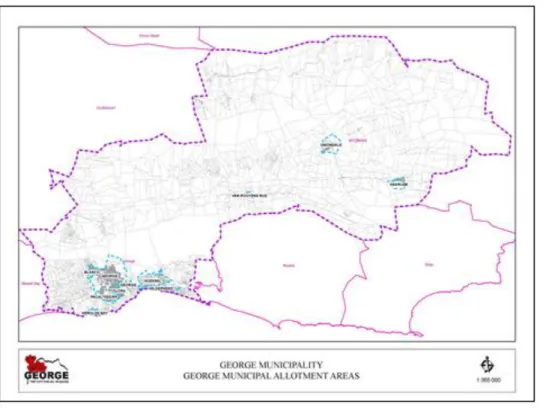
- The study area
- Theoretical boundaries of the study
- CONFIDENTIALITY AND ETHICAL CONSIDERATIONS
- DEFINITION OF KEY CONCEPTS
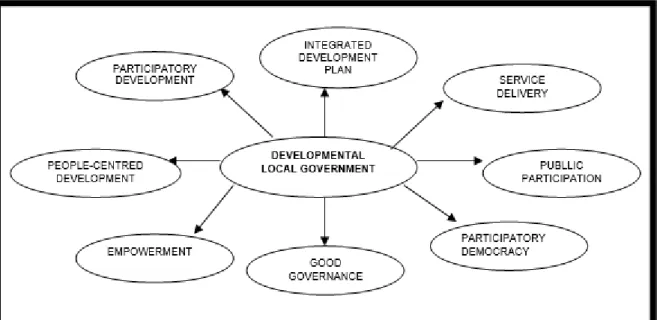
- Developmental local government (DLG)
- Integrated development planning (IDP) process
- Integrated development plan (IDP)
- Good governance
- Public participation
- People-centred development
- Participatory democracy
- Participatory development
- Empowerment
- Service delivery
- SUMMARY
Is the current selection of strategies for public participation of the George Local Municipality suitable for the IDP process. What is the level of accountability regarding the implementation of public participation in the IDP process of the George Local Municipality.
THEORY: DEFINING MEANING
In the case of the social sciences, the relationships of human behavior must be identified in relation to attitudes, problem solving, the political system, organizational culture, and existing social strata. At the same time, it can contribute to improving the quality of public administration practice by serving as warning sensors for the practitioner (Thornhill & van Dijk, 2010:98).
THE ROLE OF PHILOSOPHY IN THE SOCIAL SCIENCES
Philosophy of administration is a view of administrative concepts and practices as manifested in the executive organs of government (Hanekom & Thornhill, 1994:8). Other examples are when researchers lose confidence in the meaning of their findings and when previously obvious and self-evident principles no longer seem well-defined.
THE PHILOSOPHICAL BASIS FOR PUBLIC ADMINISTRATION
- Development of Public Administration as an academic discipline
This article served as the starting point for the formal study of public administration. Because of its challenges as an academic discipline, they wanted to rid themselves of Public Administration.
THEORETICAL UNDERPINNINGS OF PUBLIC ADMINISTRATION
- Theoretical evolution of the management theory
- The principles of management
- The public management environment
- Strategic management as a component of management
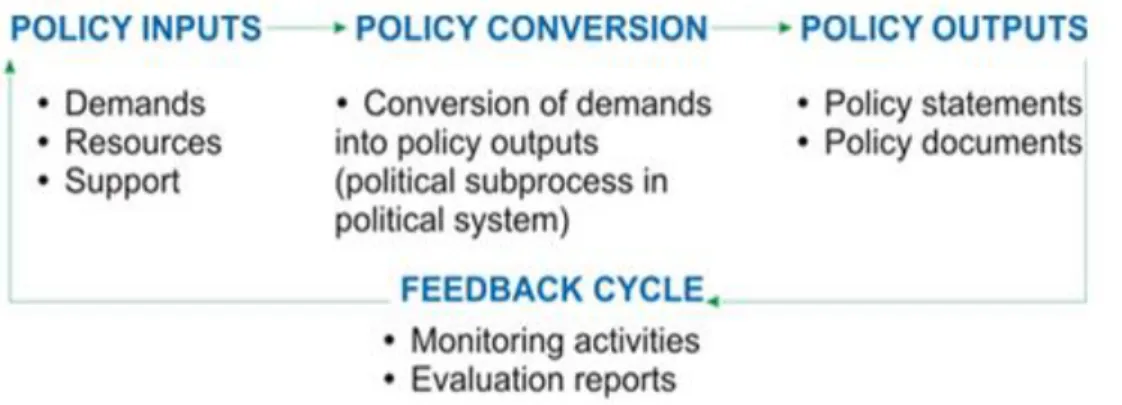
- A systems model/approach to policy-making
- New Public Management (NPM)
According to Fox et al. 1991:15) the distinctive nature of the public management environment has certain implications for both the theory and practice of public management. Strategic management adapted to the circumstances of the public sector should be flexible and facilitate thinking about options, stimulate.
MODELS OF PUBLIC ADMINISTRATION
- Classical bureaucratic model
- Neo-bureaucratic model
- Institutional model
- Public choice model
- Human relations model
- Entrepreneurial model
This model focuses more on the analysis and understanding of existing bureaucracies as opposed to designing efficient, effective or productive organizations (Osborne & Gaebler, 1993:19). The entrepreneurial model focuses on the professionalization of the public sector, in particular in the provision of services to communities.
THE THEORETICAL OVERVIEW OF SOUTH AFRICAN LOCAL
- Local government and the policy of separate development
- Black local authorities
- Indian and Coloured Management Committees
- Democratic theory and local government
The Interim Constitution of the Republic of South Africa Act 200 of 2003 redefined the role of local government in South Africa (Reddy, 1996: 57). The establishment of the LGNF was the first direct step towards the establishment of democratic local government in South Africa. These transition phases were known as the pre-interim, interim and final phases of local government restructuring (Reddy, 1996).
SUMMARY
Finally, and the most important value derived from the principles of democracy, is social equality. To achieve the objectives of democracy, the machinery of local government must be organized in a way that allows discussion and mutual engagement. The main attribute of social equality is the maintenance of high ethical and moral standards, and this requires advisers and officials with integrity.
PRINCIPLES OF DEVELOPMENTAL LOCAL GOVERNMENT (DLG)
CHARACTERISTICS OF DEVELOPMENTAL LOCAL GOVERNMENT
- Maximising social development and economic growth
- Integrating and coordinating
- Democratising development, empowering and redistribution
- Leading and learning
DEVELOPMENTAL OUTCOMES OF LOCAL GOVERNMENT
- Provision of household infrastructure and services
- Creation of liveable, integrated cities, towns and rural areas
- Local economic development
CATEGORIES OF MUNICIPALITIES
THE EMERGENCE OF INTEGRATED DEVELOPMENT PLANNING IN
- Integrated development planning (IDP) process
THE NEED FOR PUBLIC PARTICIPATION IN SOUTH AFRICA
THE NATURE AND PLACE OF PUBLIC PARTICIPATION IN THE
LOCATING PUBLIC PARTICIPATION IN THE IDP PROCESS
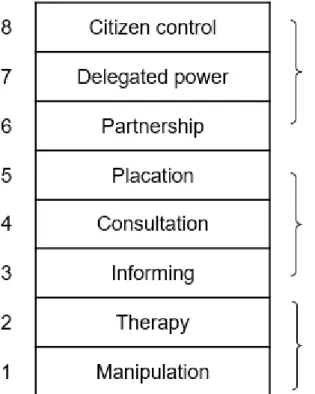
- Public participation
- Social learning process approach
- Capacity-building
- Empowerment
- Sustainable development
TOOLS AND MECHANISMS FOR ENHANCING PUBLIC PARTICIPATION
- Ward committees
- Participation of members of the public in oversight or municipal public
- Public participation policy
- Identification of interest groups
- Language policy
- Public participation resources
- Location and functioning of the public participation function
- Skills development for officials responsible for facilitating public
- Community-based planning
- Functionality of the IDP representative forum
- Structured public participation in municipal processes
- Feedback to communities
- Feedback from communities
- Effective municipal communication with local communities
SELECTED INTERNATIONAL PERSPECTIVES ON PUBLIC
- International Association for Public Participation
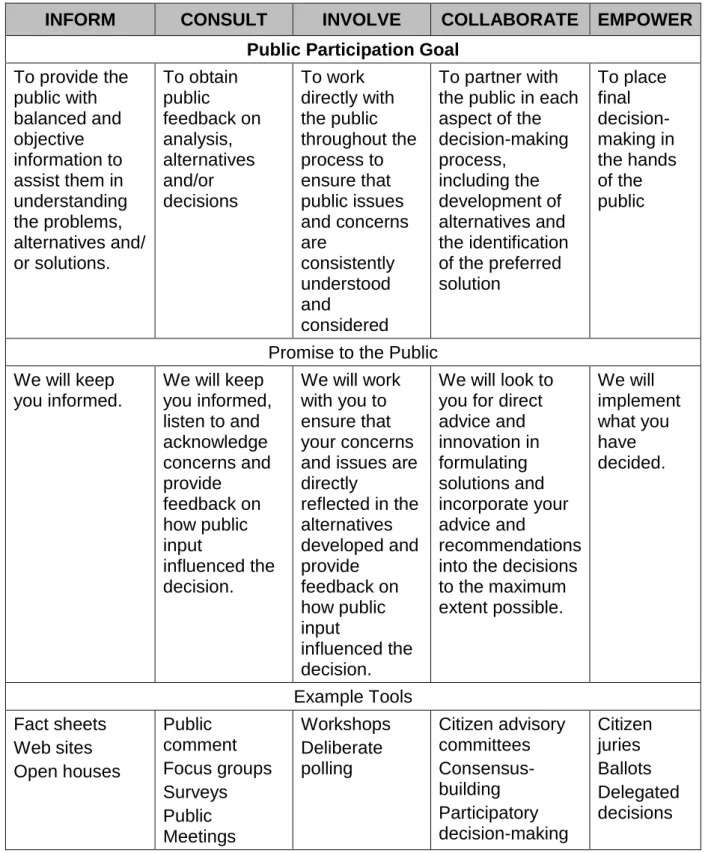
- IAP2 Core Values and the IDP process
- Manila Declaration on people’s participation and sustainable
SERVICE DELIVERY WITHIN THE CONTEXT OF DEVELOPMENTAL
- Local government service delivery mandate
- Integrated development plan (IDP): an instrument to address service
- Public participation in local government service delivery
SUMMARY
DEVELOPMENT FACILITATON ACT 67 OF 1995
Municipalities must also promote the Bill of Rights, which reflects the nation's values of human dignity, equality and freedom, and uphold the principles of the Constitution of the Republic of South Africa, 1996. The Constitution of the Republic of South Africa Act, 1996 provides a fundamental basis for local authorities can create opportunities for local communities to participate meaningfully in issues that affect their lives. Therefore, municipalities may adopt policies that are consistent with the Constitution of the Republic of South Africa, 1996.
WHITE PAPER ON TRANSFORMING PUBLIC SERVICE DELIVERY,
Transparency must be promoted by providing the public with timely, accessible and accurate information. h) Good human resource management and career development must be cultivated to maximize human potential. i) Public administration must be broadly representative of the South African people, with recruitment and personnel management practices based on ability, objectivity, fairness and the need to redress past imbalances to achieve broad representation. Service standards – citizens should be told the level and quality of services they will receive, so they know what to expect. Information – citizens must have complete, accurate information about the services they are entitled to receive.
LOCAL GOVERNMENT: WHITE PAPER ON LOCAL GOVERNMENT,
Openness and transparency – citizens must be informed about how service departments are managed, how much it costs and who is in charge (Khalo et al., 2013:41). As voters – to ensure maximum democratic accountability of the elected political leadership for the policies they are empowered to promote. As organized partners involved in mobilizing resources for development via for-profit businesses, non-governmental organizations and community-based institutions.
LOCAL GOVERNMENT: MUNICIPAL STRUCTURES ACT 117 OF 1998
LOCAL GOVERNMENT: MUNICIPAL SYSTEMS ACT 32 OF 2000
LOCAL GOVERNMENT: MUNICIPAL FINANCE MANAGEMENT ACT 56 OF
IDP GUIDE PACKS
NATIONAL DEVELOPMENT PLAN (NDP): VISION 2030
DRAFT NATIONAL POLICY FRAMEWORK FOR PUBLIC PARTICIPATION,
WESTERN CAPE THIRD GENERATION IDP DISCUSSION DOCUMENT
GEORGE LOCAL MUNICIPALITY’S PUBLIC PARTICIPATION POLICY,
GEORGE LOCAL MUNICIPALITY’S IDP AND BUDGET PROCESS PLAN . 111
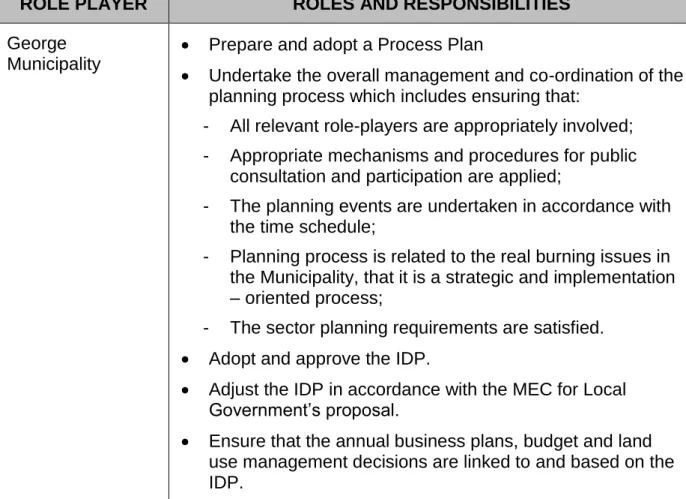
To ensure that the IDP process is managed effectively, the local municipality of George assigns the following internal roles and responsibilities (see table 4.1 below). Ensure that annual business plans, budgets and land use management decisions are linked to and based on the IDP. Check that the annual business plans and budget are based on and linked to the IDP; And.
FOUNDATIONS OF PERFORMANCE MANAGEMENT
- Definitions of performance management
- Objectives of a performance management system
- Principles of performance management
Khalo et al add that there is general agreement that performance management has seven key principles that should be applied in designing an effective performance management system (PMS). Focus: Performance management should primarily focus on the strategic goals of their institution, reflecting both the institution's core issues and the priority areas for improvement (Khalo et al. Ownership: Leaders at all levels of the institution must take ownership to ensure that performance management is more than a paper exercise.
MUNICIPAL PERFORMANCE IN CONTEXT
Continued monitoring is necessary to ensure that the measures remain relevant and that the information generated is useful (Khalo et al.). The responsibility for achieving the measures must be placed at the right level (Khalo et al. Democratic outcomes, the fifth dimension, according to Khalo et al. are about responsibility, fairness and participation.
STATUTORY AND REGULATORY REQUIREMENTS RELATED TO
- Constitution of the Republic of South Africa Act 108 of 1996
- White Paper on Transforming Public Service Delivery, 1997
- Local Government: White Paper on Local Government, 1998
- Local Government: Municipal Structure Act 117 of 1998
- Local Government: Municipal Systems Act 32 of 2000
- Performance Management Guide for Municipalities, 2001
- Local Government: Municipal Finance Management Act 56 of 2003 . 124
- George Local Municipality’s Performance Management Policy
Local Government Act: Municipal Financial Management 56 of 2003 provides for adaptation of the IDP and budget through the Service Delivery and Budget Implementation Plan (SDBIP). Pursuant to Circular No. 13 of the Municipal Financial Management Act (MFMA) 56 of 2003 (issued on 31 January 2005), an SDBIP constitutes a. The meaning of the municipality: Municipal performance regulations for municipal managers and managers with responsibility towards municipal managers, 2006 to.
MUNICIPAL SERVICE EXCELLENCE
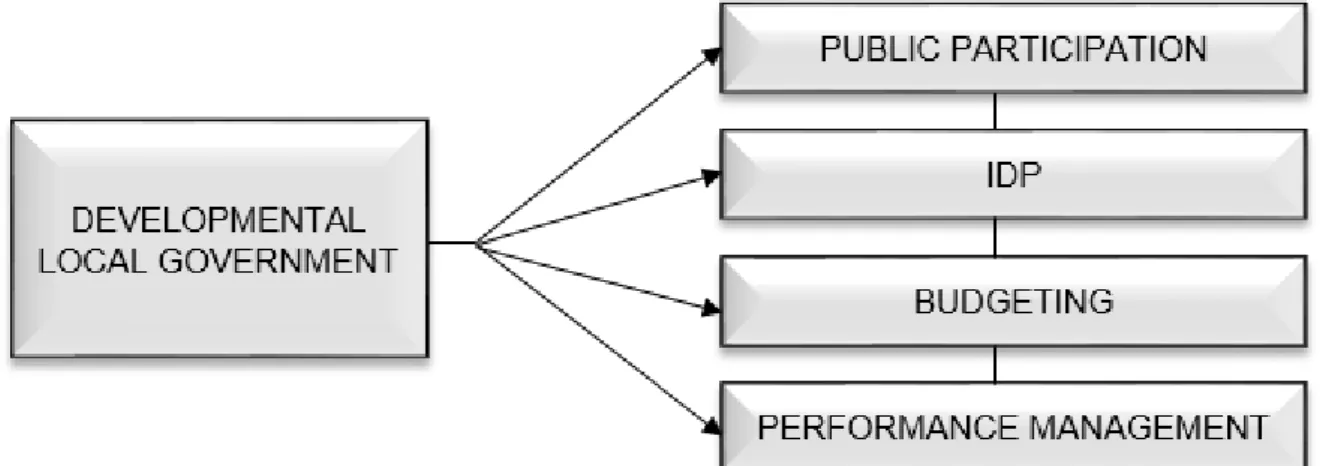
Steytler and de Visser (2013) mention that the Local Government: Municipal Planning and Performance Management Regulations, 2001 "clarifies strategic and planning objectives, indicator development for inputs, outputs and outcomes in the execution of the IDP and SDBIP". The purpose of this performance management policy framework is to serve as a guideline to assist George Local Municipality in implementing and maintaining a performance management system (PMS). Municipal service excellence through performance management is an attempt to balance institution-centricity (meaning the focus on maintaining bureaucratic systems and processes) with a customer focus (outward focus), and it incorporates issues such as productivity (outputs over inputs), quality, accountability and outcomes.
MEASURING MUNICIPAL PERFORMANCE
This will only be possible if the municipality's quality is managed and improved properly (Khalo et al. Incentive for increased output: Performance measurement should reward increased and improved output (that is, services and products) (Khalo et al. There seems to be a direct correlation between the introduction of performance management systems and an increase in an institution's output (Khalo et al.
MANAGING PEOPLE PERFORMANCE
- Factors affecting people performance
- Performance contracting and agreements
- Performance appraisals
- Personal development plans (PDPs)
Performance is influenced by a number of factors, all of which must be taken into account when managing, measuring, modifying and rewarding people's performance (Khalo et al. Furthermore, the agreement must assist management to determine the suitability of the employees for permanent employment to assess and reward them appropriately for good performance (Khalo et al. Appraisals should change a municipality's focus from best-effort practices (employees doing the best they can, however inadequate that may be) to a results-driven create climate (employees who achieve specific results) (Khalo et al.
MUNICIPAL PERFORMANCE REPORTING
- Performance budgeting
- Annual performance reports
Management of training and development in accordance with the requirements of the relevant national policies and legislation. PDPs are drawn up for individual employees, and the data collected from all employees in the municipality forms the basis for all training and education activities in the municipality in a particular financial year (Khalo et al. This will require municipalities to establish mechanisms for meaningful participation and input (Khalo et al.
DEVELOPING A PERFORMANCE MANAGEMENT SYSTEM FOR
- Conducting performance reviews
- Improving performance
While good and excellent performance must be continuously improved to meet the needs of communities and improve people's quality of life, it is poor performance in particular that needs to be improved as a priority (Carman & Conrad, 2000). This can be done by analyzing the causal and contributing reasons for poor performance. Stewart and Carpenter-Hubin (2002:38) state that poor performance is assumed to be the result of a prevailing 'culture of non-performance' citing that improvement within a performance management framework requires municipal management and politicians to identify so-called ' very catalyst for change ' that can work at the level of personal responsibility. The Performance Management Guide for Municipalities, 2001 provides guidance on the practical implementation of performance management systems.
PERFORMANCE MANAGEMENT MODELS, TOOLS AND TECHNIQUES . 137
Finally, the implementation of performance management systems and the use of performance management tools and techniques were explored. Implementing a performance management system should be seen as a learning process, where George Local Municipality continuously improves the way the system works to meet the system's objectives and address emerging challenges arising from a constantly changing environment. It is therefore important that George Local Municipality takes ownership of its performance management system with the help of experts.
OVERVIEW OF RESEARCH METHODOLOGY
- Literature search
- Empirical survey
METHODS OF DATA COLLECTION
- Elements of questionnaire and design
- Variables
- Qualitative approach
- Quantitative approach
- Triangulative approach
APPROACH FOLLOWED FOR THIS RESEARCH
SUMMARY
AN OVERVIEW OF STATISTICS
- Inferential statistics
- Descriptive statistics
Hypothesis tests are also known as significance tests which test a claim for the population by analyzing a sample (Kruger et al. state that descriptive statistics is concerned with the description and/or summary of the data obtained for a group of individual units of analysis. The descriptive statistics provide summaries of the given sample and the observations made.According to Tsatsire (2008b:238), the mode is the value of the variable that occurs most often.
INTERPRETATION, ARTICULATION AND PRESENTATION OF THE
- Questionnaire distribution
- Interpretation, articulation and presentation of the results of the
P1.4 The local community monitors and evaluates George Local Municipality regarding the implementation of the IDP. This result is an indication that the local community monitors and evaluates the implementation of the George Local Municipality's IDP. This result is a confirmation that the local community within George Local Municipality actively participates in providing feedback on the municipality's performance.
SUMMARY
The implementation of the IDP should be driven by the management team and systems within the George Local Municipality and should not be delegated to the IDP Process Management Office. This is done through recommendations in the next chapter, aimed at improving the facilitation of public participation through the IDP process. Conclusions and recommendations are presented regarding the IDP process as a means of facilitating public participation, based on the empirical research conducted.
THESIS OVERVIEW
RECOMMENDATIONS
- Recommendation 1 – Participation of local community in the
- Recommendation 2 – Afford the local community an opportunity to
- Recommendation 3 – Provide an opportunity for the local community
- Recommendation 4 – Local community to participate in the monitoring