INVESTIGATING THE EFFECT AND EFFICIENCY OF STEEL SLAG AS A SOURCE OF SILICON FOR PLANT UPTAKE
By
Adeel Dadabhay
Submitted in partial fulfilment of the requirements for the degree of Master of Science (MSc)
Discipline of Plant Pathology
School of Agricultural, Earth and Environmental Sciences College of Agriculture, Engineering and Sciences
University of KwaZulu-Natal Pietermaritzburg Republic of South Africa
February 2021
i Dissertation summary
Silicon (Si) is the second most abundant element on the planet, after oxygen, making about 25%
of the Earth's crust. Since it exists in the Earth’s crust, many plants can accumulate it in large concentrations, in amounts similar to macronutrients. Si enhances growth and yield of some annual and vegetable crops, promotes upright growth (stronger and thicker stems, shorter internodes), prevents lodging, promotes favourable exposure of leaves to light, provides resistance to bacterial and fungal diseases and decreases the effects from abiotic stresses such as: high or low temperatures, salinity, heavy metal and aluminium toxicity and water deficiency.
Si treatment effects on plant growth under disease and drought stress were analysed to determine the effectiveness of steel slag as a source of Si for plant uptake. Four Si treatments:
slag products (SP1.7 and SP5.0); Agri-sil granular (AGS); and potassium silicate (Pots) were tested on rye grass, maize, zucchini, green pepper, broccoli and beans under disease and drought stress.
Energy Dispersive X-ray (EDX) microanalysis was performed to determine the Si content within the leaves resulting from the different treatments over time. All treatments provided a positive Si uptake into the plant leaves. Maize had the highest rate of Si levels taken up into the leaves over a period of 180 days for all Si treatments, when compared to the other crops under disease stress. Si-treated plants accumulated Si into their leaves at a higher rate under disease stress than drought stress. Si treatments improved the growth of all test crops. Steel slag was an effective treatment for providing Si for the uptake in plants and to improve plant growth.
The effect of pre-harvest Si application to inhibit Colletotrichum capsici on post-harvest pepper fruit (Capsicum annuum L.) was analysed. Pepper fruit were harvested from pepper plants (Capsicum annum L. cv. Revelation) that were Si treated to provide Si for plant uptake. Si treatments used were: Pots, which was used as a positive control; SP1.7; SP5.0; and AGS. The area covered by infection (%) on the fruit was recorded every seven days for a period of 21 days, to determine the disease progress. All Si treatments significantly reduced the rate of infection by the pathogen. By day seven, the disease progress was inhibited, with a recorded area of infection being below 3.5% compared to the control, which was at 8.4%. By day 14, it was inhibited from
ii
33.6% (control) to below 16% and by day 21, it was inhibited from 57.4% (control) to below 31%
for all Si treatments. Area under the disease-progress curve (AUDPC) value (%days) was the lowest for the SP1.7 treatment, which means it enhanced post-harvest disease resistance by the greatest amount. SP5.0 had the highest AUDPC value from all Si treatments. Pre-harvest application of Si reduced post-harvest anthracnose disease in green pepper fruit.
The efficiency of steel slag as a source of Si for citrus and avocado uptake was analysed. Three different species: Citrus sinensis (Orange cultivars: Valencia and Navel); Citrus limon L. (lemon);
and Persea americana L. (avocado) were used for this study. Five Si treatments were tested:
Pots; AGS; Agri-sil liquid (ASL); SP5.0; and SP1.7. EDX was performed to determine the Si content within the leaves resulting from the different treatments over time. All Si treatments provided a positive uptake of Si into the citrus leaves. Valencia trees treated with the SP1.7 had the highest rate of Si taken up into the leaves, with an area under curve (AUC) value of 210.24%days, followed by SP5.0 with an AUC value of 195.48. SP1.7 and AGS provided the highest rates of Si uptake into navel orange leaves with AUC values of 187.02 and 187.92, respectively. Lemon trees treated with SP1.7 and AGS had the highest rates of Si taken up into the leaves. Citrus trees treated with SP1.7 had higher rates of Si taken up into the tree leaves, with the exception of the AGS treatment having the highest rate of Si taken up in lemon. Avocado trees treated with SP1.7 had the highest rate of Si taken up into the leaves, with an AUC value of 28.29. Steel slag was an efficient and effective source of Si for the uptake in citrus and avocado leaves.
iv
ACKNOWLDEGEMENTS
I would like to express my sincere gratitude and gratefulness to the following people and institutions:
My supervisor, Prof. Mark D. Laing, and co-supervisor, Dr. Iona Basdew, for their assistance, guidance, and constructive criticism throughout the study.
Dr. Kwasi S. Yobo for his support and guidance.
Mrs. Susan Van der Merwe for her assistance with the greenhouse and field trials.
Dr. Benice Sivpersad, Dr. Richard Burgdorf and Mrs. Mary Galbraith, from the Institute for Commercial Forestry Research (ICFR) for their support, guidance and technical assistance throughout my research.
Marylyn Christian, fellow student at the University of KwaZulu-Natal, for her assistance and support.
Phoenix Service LLC for their support to make this research possible.
v Dedication
I dedicate my work towards my loving wife, Aadila Dadabhay, for her support throughout my studies.
vi
Table of contents
Dissertation summary………...i
Declaration………..iii
Acknowledgements………iv
Dedication……….………v
Dissertation introduction ... 1
References ... 2
Chapter One ... 4
Literature review ... 4
1.1 Introduction ... 4
1.2 History ... 6
1.3 Silicon in soils ... 6
1.3.1 Silicon cycle in soil ... 7
1.4 Silicon in plants ... 8
1.4.1 Silicon uptake, transport and deposition in plant ... 8
1.4.2 Effects on plant growth ... 10
1.5 Disease stress ... 11
1.5.1 Mechanisms of silicon-enhanced resistance ... 11
1.6 Drought stress ... 16
1.6.1 Drought is an abiotic stress ... 16
1.6.2 Drought limits plant growth ... 16
1.6.3 Role of silicon on plant growth under drought stress ... 17
1.6.4 Mechanisms of silicon-mediated alleviation of drought stress in plants……….……….17
1.7 Introduction to sources of plant-available silicon ... 18
vii
1.7.1 Steel slag as a source of silicon for plants ... 19
1.8 Conclusion………..……19
1.9 References ... 20
Chapter Two ... 26
Determining the effectiveness of steel slag as a source of silicon using Energy Dispersive X-ray (EDX) microanalysis ... 26
2.1 Introduction ... 26
2.2 Materials and methods ... 28
2.2.1 Plant material ... 28
2.2.2 Treatment application ... 28
2.2.3 Drought and disease trials ... 28
2.2.4 Energy Dispersive X-ray microanalysis ... 29
2.2.5 Data analysis ... 29
2.3 Results ... 30
2.4 Discussion ... 38
2.5 References ... 39
Chapter Three ... 41
Effect of pre-harvest silicon application to inhibit Colletotrichum capsici on post-harvest pepper fruit (Capsicum annuum L.) ... 41
3.1 Introduction ... 41
3.2 Materials and methods ... 42
3.2.1 Cultivar and sample material ... 42
3.2.2 Disease inoculation ... 43
3.2.3 Data analysis ... 43
viii
3.3 Results ... 44
3.4 Discussion ... 44
3.5 References ... 45
Chapter Four ... 48
Determining the effectiveness of steel slag as a source of silicon for citrus and avocado uptake using Energy Dispersive X-ray (EDX) microanalysis ... 48
4.1 Introduction ... 50
4.2 Materials and methods ... 50
4.2.1 Plant material ... 50
4.2.2 Silicon fertilizer application ... 51
4.2.3 Energy dispersive X-ray microanalysis ... 51
4.2.4 Data analysis ... 51
4.3 Results ... 51
4.4 Discussion ... 54
4.5 References ... 55
Dissertation overview……… ………..57
1
Dissertation introduction
Silicon (Si) is the second most abundant element in the earth’s crust after oxygen (Rodrigues and Datnoff, 2015). The earth’s crust is largely composed of Si that is found as silicate minerals, aluminosilicates and various forms of silicon dioxide (Jones and Handreck, 1967). Despite the abundance of Si in soils, it is not an indication that there are sufficient quantities of soluble Si available for plant uptake (Jones and Handreck, 1967). Plants take up Si in the form of monosilicic acid (H4SiO4), which is present as a liquid and as an adsorbed phase of Si in soils (Jones and Handreck, 1967). The soil pH, clay content, minerals, organic matter, and Iron (Fe) and Aluminium (Al) oxides/hydroxides are components that have an influence on the concentration of monosilicic acid (Jones and Handreck, 1967). The fertilization process can rapidly increase the concentration of monosilicic acid in the soil solution, so Si fertilization had become a pivotal practice in areas with an intensive cropping system for those soils which inherently lack sufficient soluble Si quantities (Jones and Handreck, 1967).
The effects of Si on fungal pathogens, including the properties, spectrum of efficacy, and mode of action of Si, are still under intensive research. Under controlled hydroponic conditions, plant growth and development are affected by Si (Assis et al., 2013). When plants are exposed to various stresses, Si is evidently pivotal to plant health (Keeping et al., 2013). Primarily, resistance to plant diseases through the uptake of Si is considered to be due to both an accumulation of absorbed Si in the epidermal tissue, and the stimulation of metabolic or pathogenesis-mediated host defence responses (Keeping et al., 2013).
Drought stress results in a restriction in the uptake of water; Research shows that plants with Si maintained water uptake better than Si-deficient plants (Pereira et al., 2013). Si enhances yields under drought stress (Pereira et al., 2013). Wheat crops have an increased amount of hydrogen peroxide under drought conditions, when grown without Si applications (Pereira et al., 2013). Si enhanced the activities of superoxide dismutase and peroxidase in the wheat plant, creating a detoxifying mechanism (Pereira et al., 2013).
2
In agriculture, slags can be used as fertilizers and as a corrective of soil acidity (Ning et al., 2014). Slags are calcium and magnesium silicates, which show neutralizing action due to Si032-
base (Ning et al., 2014). Additionally, steel slags have been used as low-cost source to supply Si to rice plants (Ning et al., 2014).
The objectives of this study were to:
1. Investigate the efficiency of steel slag as a source of Si for uptake into plants.
2. Investigate the effect steel slag has on plant growth under disease and drought stress.
3. Investigate the effectiveness of steel slag as a pre-harvest Si treatment to control post- harvest anthracnose disease on green pepper fruit.
4. Investigate the efficiency of steel slag as a source of Si for uptake in citrus and avocado.
This thesis is presented in the form of five chapters. Individual chapters cover specific objectives of the study conducted. This dissertation follows a standard format that has been adopted by the University of KwaZulu-Natal because it facilitates the publishing of research out of the dissertation far more readily than the older monograph form of dissertation. As such, there is some unavoidable repetition of references, methods and some introductory information.
This research was undertaken in the Discipline of Plant Pathology, at the University of KwaZulu- Natal, Pietermaritzburg Campus, under the supervision of Prof. M.D. Laing and Dr. I. Basdew.
References
Assis, F., Moraes, J., Auad, A., and Coelho, M. 2013. The effects of foliar spray application of silicon on plant damage levels and components of larval biology of the pest butterfly Chlosyne lacinia saundersii (Nymphalidae). International Journal of Pest Management: 59(2): 128-134.
Jones, L.H.P., and Handreck, K.P. 1967. Silica in soils, plants, and animals. Advances in Agronomy: 19: 107-149.
3
Keeping, M. G., Meyer, J. H., and Sewpersad, C. 2013. Soil silicon amendments increase resistance of sugarcane to stalk borer Eldana saccharina Walker (Lepidoptera: Pyralidae) under field conditions. Plant and Soil: 363(1-2): 297-318.
Ning, D., Song, A., Fan, F., Li, Z., and Liang, Y. 2014. Effects of slag-based silicon fertilizer on rice growth and brown-spot resistance. PLoS One: 9(7): e102681.
https://doi.org/10.1371/journal.pone.0102681
Pereira, T.S., Lobato, A.K.S., Tan, D.K.Y., da Costa, D.V., Uchoa, E.B., Ferreira, R.N., Pereira, E.S., Avila, F.W., Marques, D.J., and Guedes, E.M.S. 2013. Positive interference of silicon on water relations, nitrogen metabolism, and osmotic adjustment in two pepper (Capsicum annuum) cultivars under water deficit. Australian Journal of Crop Science: 7(8): 1064-1071.
Rodrigues, F.A., and Datnoff, L.E. (Editors) 2015. Silicon and Plant Diseases. Springer International AG, Cham, Switzerland. 1: 20-24.
4 Chapter One Literature review
1.1 Introduction
The use of silicon (Si) in agriculture began in China 2000 years ago, where farmers incorporated rice straw with manure as a fertilizer to enhance plant performance and yield (Matichenkov et al., 2001). Si used to reduce blast on rice was first reported in 1917 by a plant chemist from Japan (Matichenkov et al., 2001). From the 1980s, Si’s potential to decrease the intensity of many diseases has been researched for a wide variety of plant species (Matichenkov et al., 2001). Si is known to play a major role in reducing plant diseases and improving drought tolerance (Kvedaras et al., 2010). Supplementing plants with Si is a simple, sustainable way to help maintain and enhance plant health in agriculture (Kvedaras et al., 2010).
The earth’s crust is largely composed of Si that is found as silicate minerals, aluminosilicates and various forms of silicon dioxide (Jones and Handreck, 1967). Despite the abundance of Si in soils, it is not an indication of the presence of sufficient quantities of soluble Si available for plant uptake (Jones and Handreck, 1967). Plants take up Si in the form of monosilicic acid (H4SiO4), which is present as a liquid and as an adsorbed phase of Si in soils (Jones and Handreck, 1967). The soil pH, clay content, minerals, organic matter, and iron (Fe) and aluminium (Al) oxides/hydroxides are components that have an influence on the concentration of monosilicic acid (Jones and Handreck, 1967). The fertilization process can rapidly increase the concentration of monosilicic acid in the soil solution, so Si fertilization had become a pivotal practice in areas with an intensive cropping system for those soils that inherently lack sufficient quantities of soluble Si (Jones and Handreck, 1967). The procedures established to determine the Si available for plants, the critical soil Si levels and soluble Si fraction in solid fertilizers were pivotal components contributing to the evolution in research on Si in agriculture in the twenty- first century (Teixeira et al., 2017). These measurements were the key components required for the development and implementation of effective Si fertilizer management in crop production (Teixeira et al., 2017).
5
The disease intensity of numerous plant diseases caused by both soil-borne and seed-borne pathogens has been effectively decreased in agronomic and horticultural crops when soluble Si fertilizers are applied (Keeping et al., 2013). Diseases such as wilts, root rots, and galling, caused by plant pathogens such as Fusarium, Pythium, Rhizoctonia and Meloidogyne, are less severe when Si is made available, resulting in a reduction in the rate of disease progress and a reduction in disease severity (Goussain et al., 2005). Bipolaris oryzae, which causes brown spot in rice and produces symptoms of severe grain discoloration, can be suppressed using Si (Han et al., 2015).
Reductions in the intensities of plant diseases result in healthier plants, which has an overall effect in terms of enhanced growth. In the Pyricularia oryzae (rice) model pathosystem, the mechanical barrier formed from Si polymerization underneath the cuticle layer and in the cell walls was the initial hypothesis used to investigate the role Si played in plants, in order to result in a reduction in the number and size of blast lesions (Hou and Han, 2010). Later research has provided evidence that disease resistance effect due to soluble Si may occur through priming of the host plant resistance mechanisms. The presence of Si results in a potentiated activation of the phenylpropanoid pathway, hence an increase in soluble phenolics and lignin within the plant (Camargo et al., 2008). Chitinases, β -1,3-glucanases, and defence enzymes are maintained at higher levels during the infection phases, and the transcription of defence- related genes occur at higher rates (Camargo et al., 2008). When Si-treated plants are exposed to a pathogen, this results in an activation of the antioxidant metabolism, which results in a suppression of the cytotoxic effect of the reactive oxygen species that causes lipid peroxidation in the cell membrane (Camargo et al., 2008). Leaf gas exchange parameters of Si-treated plants are higher upon pathogen infection for crops at the physiological stages, which indicates the ameliorating effect of Si on photosynthesis (Camargo et al., 2008). Despite the advances in research on the roles Si plays in disease resistance in plants, the exact mechanisms by which Si influences the plant physiology through the stimulation of host defence mechanisms still requires further investigation at the genomics, proteomics, and metabolomics levels.
6 1.2 History
The agricultural use of Si began more than 2000 years ago in China (Matichenkov et al., 2001).
The emperor ruling at the time decreed the incorporation of the use of rice straw and manure as a fertilizer to enhance the performance and yield of the crops (Matichenkov et al., 2001).
Around the 1800s, botanists began to measure the elemental composition of several species of plants and discovered Si present in substantial quantities in these plants in relation to other elements (Matichenkov et al., 2001).
Despite these discoveries, Si has been regarded as unimportant for plant development for many years. Davy (1819) was one of the initial scientists to investigate the form of Si present in the epidermis of various monocots. He theorized that the plant’s epidermis was siliceous and that this played a role in supporting and protecting the plant from biotic stresses. Liebig (1840) hypothesized that Si was involved in cereal stalk rigidity and that a deficiency in Si resulted in wheat lodging. He also investigated the use of sodium silicate as a fertilizer by conducting research with this source of Si on sugar beet development under greenhouse conditions.
Kreuzhage and Wolff (1884) initially studied microscopically the distribution and specific location of Si bodies in different leaf tissues of oats. Due to evidence showing that the cell lumen contained a high level of Si, they suggested that this element might be involved in resistance against plant diseases.
1.3 Silicon in soils
After oxygen, Si is the second most abundant element present in the earth’s crust (Almeida et al., 2009). The concentrations of Si range from 23–46.5% in rocks (Almeida et al., 2009). Si in smaller concentrations has also been found in carbonaceous rocks such as limestone and carbonites (Almeida et al., 2009). Si concentrations of above 46% have been recorded to be present in silcretes (Almeida et al., 2009). Si concentrations in the petrocalcic horizon are found to be lower than 8% when compared to silcretes (Almeida et al., 2009). Highly weathered minerals such as Oxisols have concentrations of Si lower than the petrocalcic horizon (Almeida
7
et al., 2009). Despite a general abundance of Si in soils, certain soils contain low concentrations of Si and especially Si in the form available for plant uptake (Almeida et al., 2009). Highly weathered Oxisols and Ultisols soils are acidic, and lack base saturation and mineral content, with extremely low levels of Si (Almeida et al., 2009). Soils that have a large component of quartz sand and have been used intensively for the production of crops are typically low in Si concentrations which are in a form for plant uptake (Almeida et al., 2009).
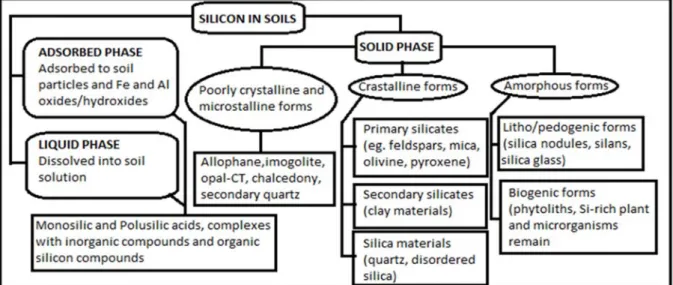
Si is grouped into three phases: the liquid phase, the adsorbed phase and the solid phase (Costa and Moraes, 2006). The compositions of these different phases are detailed in the classification of Si compounds in soils that is presented in Fig. 1.1.
Figure 1.1: Different fractions of Si in soils (Tubana and Heckman, 2015).
1.3.1 Silicon cycle in soil
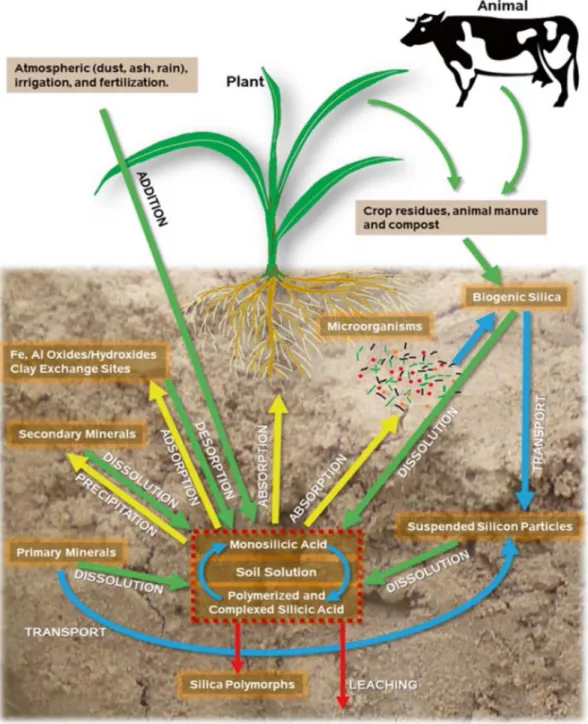
The solid, liquid, and adsorbed phases of Si are the key components of the Si cycle in soil (Fig.
1.2) (Rodrigues and Datnoff, 2015). The liquid Si phase contains monosilicic acid and is the only form that is absorbed by plants and microorganisms. It is estimated that 60–200 Tmol Si per year is stored in plants (Rodrigues and Datnoff, 2015). Si can be added to soils with applications of manure and compost, and the decomposition of Si-rich manure increases the level of Si (Rodrigues and Datnoff, 2015). The interaction of organic matter and Si is an extremely rare
8
occurrence but a formation of colloidal aluminium-Si polymers at several soil solution pH levels can occur (Rodrigues and Datnoff, 2015). The liquid phase is regulated by a number of processes which affect the chemical properties of Si; these are as follows: the dissolution of Si that consists of primary and secondary minerals; the absorption of Si in the soil solution by the plants and microorganisms; the desorption from various solid phases; the preservation of the stable Si in the soil; leaching; and additives due to agricultural practices (i.e., fertilization, irrigation, manure application) (Rodrigues and Datnoff, 2015). Irrigation water which is in its natural state may contain various forms of Si. The contribution of Si to the soil solution from the atmosphere is a fraction compared with the other Si inputs to the soil-plant system (Rodrigues and Datnoff, 2015).
1.4 Silicon in plants
1.4.1 Silicon uptake, transport and deposition in plant
Plants take up Si from the soil solution in the form of monosilicic acid (Cherry et al., 2012). The mechanisms by which the Si is absorbed by plants are described in three ways: active, passive and rejective (Cherry et al., 2012). The quantity of Si taken up by the active mechanism is generally greater than that estimated based on the mass flow and is correlated with the density of Si transporters in the rooting system that facilitate the absorption process across the integrated membranes of the rooting system’s cells (Cherry et al., 2012). Transporters mediate the radial transport and the xylem loading of Si in rice (Han et al., 2016). The transporters have been identified and coded by low-Si genes (Lsi1 and Lsi2 in roots and the Lsi6 in shoots) (Han et al., 2016). The Lsi1 gene may encode a membrane protein similar to the aquaporins proteins (Han et al., 2016). The quantity of Si uptake by the plant via the passive mechanism is dependent on mass flow (Cherry et al., 2012). In the rejective mechanism, the accumulation of monosilicic acid is a result of the low concentrations of Si that are absorbed by plants (Cherry et al., 2012).
Plant species may be categorized based on their levels of Si uptake (Cherry et al., 2012). The plants that rely mainly on the active, passive or rejective mechanisms were categorized as high,
9
intermediate- or non-accumulators, respectively (Cherry et al., 2012). High-accumulator plants have Si content in the shoot that ranges from 1.0% to 10% dry weight and are generally monocotyledons (Rodrigues and Datnoff, 2015). Due to the high-accumulators’ efficient Si-
Figure 1.2: Comprehensive cycle of Si in soil (green arrows represent the transformation processes which raise Si concentrations in the soil solution; yellow arrows represent the
10
transformation processes which reduce Si concentrations in the soil solution; red arrows represent processes that result in Si loss from the soil system or production of a stable, plant- unavailable form of Si; blue arrows represent the transformation processes of Si into a silica pool that contributes this element into the soil solution) (Tubana and Heckman, 2015).
uptake system, the Si levels taken up by the plant from the soil are higher than the uptake of most of the essential macro- or micronutrients (Rodrigues and Datnoff, 2015). Most dry land Gramineae plants are intermediate-accumulators with a shoot Si content that ranges between 0.5% and 1.5% dry weight (Rodrigues and Datnoff, 2015). Dicotyledons typically accumulate less than 0.2% shoot dry weight Si, and these are categorized as the low-accumulator group (Rodrigues and Datnoff, 2015). A lack of specific transporters to facilitate the radial transport and the xylem loading is described to be correlated with the low accumulation of Si in this group (Rodrigues and Datnoff, 2015). A passive diffusion mechanism is responsible for the transport of Si from cell to cell (Liang et al., 2005).
Phytoliths are vascular bundles present in silica cells and present in silica bodies in bulliform cells, fusoid cells or pricklehairs in rice, wheat, and bamboo (Rodrigues and Datnoff, 2015).
Phytoliths are classified as biogenic opal (Si-O-Si bonding) (Rodrigues and Datnoff, 2015). Si dioxide precipitation occurs generally in the epidermis of the shoots in plants (Rodrigues and Datnoff, 2015). The deposited silica is described as immobile and does not get transported to the meristematic tissues (Rodrigues and Datnoff, 2015). Transpiration is a pivotal process in Si transportation and deposition in plants; hence, the duration of plant growth correlates with the concentration of Si (Camargo et al., 2008). Older leaves have been found to contain larger concentrations of Si than younger leaves (Camargo et al., 2008).
1.4.2 Effects on plant growth
Much research has reported the benefits of Si on the growth of a wide variety of agronomic and horticultural crops. The beneficial effects of Si are more obvious when plants are under biotic or abiotic stresses. The beneficial effects of Si on plant growth and development are based on a
11
number of different mechanisms which include: the formation of a protective outer layer composed of silica deposits; the reactivity of the absorbed Si with the heavy metals ions; other compounds within plants; and the metabolic functions of Si in stressed plants (Rodrigues and Datnoff, 2015).
1.5 Disease stress
1.5.1 Mechanisms of silicon-enhanced resistance
The effects of Si on fungal pathogens, including the properties, spectrum of efficacy, and mode of action of Si, are still under intensive research. Under controlled hydroponic conditions, plant growth and development are affected by Si (Assis et al., 2013). When plants are exposed to various stresses, Si is evidently pivotal to plant health (Keeping et al., 2013). Primarily, resistance to plant diseases through the uptake of Si is understood to be due to both an accumulation of absorbed Si in the epidermal tissue, and the stimulation of metabolic or pathogenesis-mediated host defence responses (Keeping et al., 2013).
1.5.1.1 Physical defence
Si transported and deposited on the tissue surface serves as a physical barrier that protects plants from fungal infection and pests (Liang et al., 2005). The increase in resistance has been correlated with several factors: a dense layer of silicified cells in the epidermis of the leaves; a silica layer below the cuticle; a double cuticle layer; a silicon-cellulose membrane; and papilla formation (Liang et al., 2005). Si inhibits physical penetration by pathogenic fungi and pests, strengthens plants’ mechanical structure, and decreases plant cells’ susceptibility to enzymatic degradation by fungal pathogens (Liang et al., 2005).
Beneath the cuticle of leaves, after polymerization of monosilicic acid, a layer of silica forms, which is believed to be pivotal for inhibiting pathogen penetration (Malav and Ramani, 2015). Si forms complexes with organic compounds in epidermal cell walls; hence, this increases the resistance to degradation by enzymes produced by pathogenic fungi (Malav and Ramani, 2015).
12
Si is associated with lignin-carbohydrate complexes within the epidermal cell walls (Malav and Ramani, 2015).
It was reported that silicified epidermal cell walls correlate with a decrease in severity of the blast disease (Magnaporthe grisea L.) in susceptible and partially resistant rice cultivars (Yang et al., 2014). The thickness of the epidermal cell wall is not significantly influenced by the presence of Si (Yang et al., 2014). Foliar-applied Si on cucumbers were believed to have formed a physical barrier and had an osmotic effect (Cherif et al., 1994). It was concluded that Si in the rice leaf epidermis improved resistance against M. grisea appressorial penetration (Yang et al., 2014). Prophylactic effect against powdery mildew was lost when Si uptake was interrupted in cucumber plants (Cherif et al., 1994). These authors concluded that silicified epidermal cell walls in leaves are a pivotal factor for the decrease in severity of fungal plant diseases.
However, resistance to fungal pathogens in plants treated with Si is much more complex than simply a physical resistance, and root-applied Si was shown to result in enhanced systemic acquired resistance when crops were infected by powdery mildew (Christalcatalani et al., 2017).
1.5.1.2 Biochemical defence
The enhancement of biochemical resistance is due to increased activity of defence-related enzymes in leaves (polyphenoloxidase, peroxidase, phenylalanine ammonia-lyase, and glucanase); increased production of antifungal compounds (lignin, flavonoids, phytoalexins pathogenesis-related proteins); and an activation of various plant defence-related genes (Correa et al., 2005). When necrotizing pathogens infect a plant, many plants develop an enhanced resistance against further pathogen attack, which is referred to as systemic acquired resistance (SAR) (Rodrigues and Datnoff, 2015). Two mechanisms, which play a role in increasing the enzyme activity and antifungal compounds due to Si treatments on plants, induce defence responses similar to SAR (Rodrigues and Datnoff, 2015).
13
There are possibly other biochemical and physiological mechanisms which play a role in the Si- mediated resistance of plants to diseases. Higher levels of salicylic acid, jasmonic acid, and ethylene have been shown to be induced by Si enhancements in a number of host-pathogen interaction (Yang et al., 2014). These include powdery mildew of Arabidopsis caused by Golovinomyces cichoracearum and rice-brown spot caused by Cochliobolus miyabeanus (Yang et al., 2014).
1.5.1.3 Defence-related enzymes
Defence-related enzymes are pivotal to disease resistance. Several studies have shown that reduced disease intensity in the Si-treated plants was correlated with increased levels of defensive enzymes activity. Si drives a priming process for the plant to accumulate defence- related enzymes in plant leaves, which are then induced by fungal infection, resulting in a faster, stronger defence reaction by treated plants.
1.5.1.4 Molecular mechanism
Si serves as a modulator of host resistance to pathogens (Debnath et al., 2010). The biochemical and physiological mechanisms that are potentiated by Si are complex phenomena (Debnath et al., 2010). Resistance to infection is acquired during the infection process by the expression of a protein rich in proline integrated with silica at the site of pathogen penetration (Debnath et al., 2010).
Silicon triggers metabolite biosynthetic pathways such as the phenylpropanoid and terpenoid pathways for the accumulation of antimicrobial compounds or phytoalexins (Debnath et al., 2010). Silicic acid is involved in local and systemic resistance (Debnath et al., 2010). Genome- wide research on tomato, rice, Arabidopsis spp. and wheat grown in soil treated with Si and in relation to non-treated control plants, has demonstrated a differential expression of numerous genes involved in the host resistance (Almeida et al., 2009; Filgueiras et al, 2011; Nascimento et al., 2018).
14 1.5.1.5 Silicon effect on plant diseases
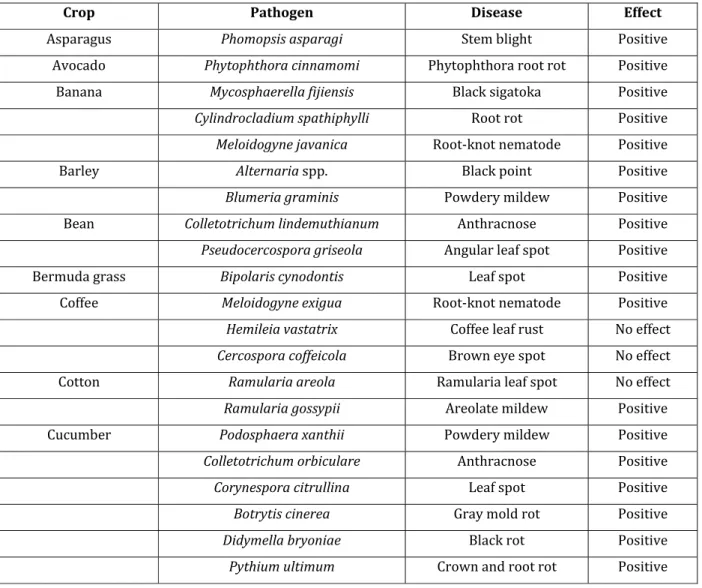
Plant pathogens, such as those causing damping-off, crown and root rot in horticultural crops, cause major reductions in crop quality and yield (Rodrigues and Datnoff, 2015). Several pathogens are known to have disease intensities reduced when plants have obtained adequate tissue level of Si (Rodrigues and Datnoff, 2015). Si is also known to decrease the intensity of numerous plant diseases caused by biotrophic, hemibiotrophic and necrotrophic pathogens in many crops of great economic importance (Rodrigues and Datnoff, 2015). Table 1.1 provides a list of plant diseases in horticultural and agronomic crops that were affected by Si treatments.
Table 1.1: Effect of silicon on plant diseases that affect various crops (Rodrigues and Datnoff, 2015).
Crop Pathogen Disease Effect
Asparagus Phomopsis asparagi Stem blight Positive
Avocado Phytophthora cinnamomi Phytophthora root rot Positive
Banana Mycosphaerella fijiensis Black sigatoka Positive
Cylindrocladium spathiphylli Root rot Positive
Meloidogyne javanica Root-knot nematode Positive
Barley Alternaria spp. Black point Positive
Blumeria graminis Powdery mildew Positive
Bean Colletotrichum lindemuthianum Anthracnose Positive
Pseudocercospora griseola Angular leaf spot Positive
Bermuda grass Bipolaris cynodontis Leaf spot Positive
Coffee Meloidogyne exigua Root-knot nematode Positive
Hemileia vastatrix Coffee leaf rust No effect Cercospora coffeicola Brown eye spot No effect
Cotton Ramularia areola Ramularia leaf spot No effect
Ramularia gossypii Areolate mildew Positive
Cucumber Podosphaera xanthii Powdery mildew Positive
Colletotrichum orbiculare Anthracnose Positive
Corynespora citrullina Leaf spot Positive
Botrytis cinerea Gray mold rot Positive
Didymella bryoniae Black rot Positive
Pythium ultimum Crown and root rot Positive
15
Pythium aphanidermatum Crown and root rot Positive
Eucalyptus Oidium eucalypti Powdery mildew Positive
Grape Uncinula necator Powdery mildew No effect
Kentucky bluegrass Sphaerotheca fuliginea Powdery mildew Positive
Lettuce Bremia lactucae Downy mildew Positive
Melon Podosphaera xanthii Powdery mildew Positive
Trichothecium roseum Pink rot Positive
Fusarium semitectum Fusarium Positive
Maize Ustilago maydis Corn smut Positive
Pythium aphanidermatum Pythium root rot Positive
Fusarium moniliforme Stalk rot Positive
Pea Mycosphaerella pinodes Leaf spot Positive
Peach Monilinia fructicola Brown rot Positive
Pearl millet Sclerospora graminicola Downy mildew Positive
Pepper Phytophthora capsici Phytophthora blight Positive
Perennial ryegrass Microdochium nivale Fusarium patch Positive
Pyricularia oryzae Gray leaf spot Positive
Potato Phytophthora infestans Late blight No effect
Pumpkin Sphaerotheca xanthii Powdery mildew Positive
Rice Meloidogyne spp. Root knot nematodes Positive
Pyricularia oryzae Leaf and panicle blast Positive
Bipolaris oryzae Brown spot Positive
Rhizoctonia solani Sheath blight Positive
Monographela albescens Leaf scald Positive
Magnaporthe salvinii Stem rot Positive
Xanthomonas oryzae Bacterial leaf blight Positive
Rose Sphaerotheca pannosa Powdery mildew Positive
Rye Erysiphe graminis Powdery mildew Positive
Sorghum Colletotrichum graminicola Anthracnose Positive
Soya bean Phakopsora pachyrhizi Asian soya bean rust No effect Phytophthora sojae Phytophthora root rot Positive Strawberry Pestalotia longisetula Pestalotia leaf spot Positive
Botrytis cinerea Gray mold No effect
Colletotrichum acutatum Anthracnose fruit rot Positive
Sugar cane Puccinia melanocephala Rusts No effect
16
Leptosphaeria sacchari Ring spot Positive
Tobacco Belladonna mottle virus BdMV Negative
Tobacco mosaic virus TMV No effect
Tobacco ringspot virus TRSV Positive
Tomato Oidiopsis sicula Powdery mildew Positive
Phytophthora infestans Late blight No effect Pythium aphanidermatum Pythium root rot Positive
Ralstonia solanacearum Bacterial wilt Positive
Wheat Fusarium spp. Foot rot Positive
Blumeria graminis Powdery mildew Positive
Septoria nodorum Septoria leaf blotch Positive
Pyricularia oryzae Leaf blast Positive
Puccinia triticina Leaf rust Negative
Drechslera tritici-repentis Yellow spot Negative
Oculimacula yallundae Eye spot Positive
Puccinia spp. Rusts No effect
Bipolaris sorokiniana Spot blotch Positive
Zucchini Podosphaera xanthii Powdery mildew Positive
1.6 Drought stress
1.6.1 Drought is an abiotic stress
Drought causes losses in agriculture, reducing growth and yields of agricultural crops. Drought is an abiotic stress which results when precipitation is below the minimum requirement for plant productivity.
1.6.2 Drought limits plant growth
Drought has a direct effect on the activity of photosynthesis of plants, negatively impacting the photosynthetic pigments and their components (Masoumi et al., 2010). Drought lowers the activity of carboxylation of Rubisco, the pivotal enzyme involved in the photosynthetic mechanisms (Masoumi et al., 2010). Drought in plants causes: an accumulation of reactive oxygen species in plants which disrupts the cell membrane, protein, nucleic acid, and lipids of plant cells, resulting in the death of cells; a diminution in stomatal conductance and an
17
escalation in the foliar temperature, which results in reduction of the photosynthetic rate due to the denaturing of different enzymes; a reduction in plant growth rate, osmotic potential, and leaf water potential; and a decrease in seed yield and seed quality (Masoumi et al., 2010).
1.6.3 Role of silicon on plant growth under drought
Si increases the activity of antioxidants, including superoxide dismutase, peroxidase, ascorbate peroxidase, glutathione reductase and non-enzymatic antioxidants (cysteine, glutathione and ascorbic acid (Sonobe et al., 2010). Superoxide dismutase detoxifies the reactive oxygen species by converting them into hydrogen peroxide. Si enhances water availability to plants and enhances the dry matter contents under drought conditions (Pereira et al., 2013).
Drought stress results in a restriction in the uptake of water. However, plants with Si augmentation maintain water uptake better than Si-deficient plants (Pereira et al., 2013). Si enhances yields under drought stress (Pereira et al., 2013). Wheat crops have an increased amount of hydrogen peroxide under drought conditions when grown without Si applications (Pereira et al., 2013). Si enhanced the activities of superoxide dismutase and peroxidase in the wheat plant, creating a detoxifying mechanism (Pereira et al., 2013).
1.6.4 Mechanisms of silicon-mediated alleviation of drought stress in plants 1.6.4.1 Increased uptake of essential nutrients
All plants need essential nutrients in adequate amounts to provide mechanical, biochemical, and physical strength to the plants (Masoumi et al., 2010). Nutrients in plants become imbalanced under abiotic stresses (Masoumi et al., 2010). Silicon plays a pivotal role in the uptake of nutrients that are restricted due to drought (Masoumi et al., 2010).
1.6.4.2 Regulation of gas exchange attributes
Stomata regulate the water level inside the plant and conserve water by controlling the transpiration rate (Ahmed et al., 2011). Si application enhances the net stomatal conductance in plants (Ahmed et al., 2011). Enhancement of Si accumulation in plants increases their
18
tolerance against drought by increasing the carbon dioxide accumulation, reducing the transpiration rate, and maintaining the leaf water potential by leaf adjustment (Sonobe et al., 2010). Si affects the stomata of plants; therefore, it improves the water use efficiency of drought-stressed plants by lowering the transpiration rate of the plant leaf (Sonobe et al., 2010).
1.6.4.3 Osmotic adjustments
Plants can maintain their optimum water potential under drought stress by osmotic adjustment (Romero-Arnada et al., 2006). Si causes the water potential inside the leaves to increase, due to enhancements of leaf thickness (Romero-Arnada et al., 2006). Si deposition inside the leaf inhibits the water molecules leaving the leaf surface, so these plants maintain their water contents under drought conditions (Romero-Arnada et al., 2006).
1.6.4.4 Modification in plant structure
Modification in certain attributes of plants, like regulating leaf size, enhancing root length, or rolling of leaves, aids in maintaining the osmotic adjustment to counter water deficiency (Moustakas et al., 2011). Application of Si partially alleviates the drought stress by altering the plant structure (Moustakas et al., 2011). Si application of calcium and magnesium silicates in plants increases the plant’s height, resulting in improved yields, and reducing the stem lodging under drought conditions (Abdalla and El-Khoshiban, 2007). Si application enhances the water potential of plants under drought stress through the formation of a silica-cuticle double layer on the leaves’ epidermal cells (Abdalla and El-Khoshiban, 2007).
1.7 Introduction to sources of plant-available silicon
Si sources for agricultural processes must demonstrate a number of features: high soluble Si content; low cost; balanced ratios and quantities of calcium and magnesium; enhanced phosphate mobility; suitable physical properties; simple application requirements; and the absence of heavy metals (Cha et al., 2006). For effective use of Si fertilizer in agricultural
19
management, an adequate knowledge of physical and chemical characteristics of Si sources, rates, and methodologies for application is required (Cha et al., 2006).
1.7.1 Steel slag as a source of silicon for plants
Si-rich, metallurgical slags have been evaluated; due to the high temperatures used in iron- making and steelmaking processes, Si is released from a crystalline form to a reactive form (Ning et al., 2016). This results in larger quantities of soluble Si forming, which can hence be absorbed by plants (Ning et al., 2016).
The slag produced in the hot metal desiliconization process contains primarily silica, and it has been used to develop potassium silicate fertilizers (Deus et al., 2018; Ning et al., 2016).
Development through the addition of potassium helps the desiliconization slag dissolve in water and in the organic acids released by plant roots (Ning et al., 2014). The potassium in the fertilizer is released at a very low rate and is efficiently absorbed by the plant (Ning et al., 2014).
In the desiliconisation process of the molten metal, the potassium carbonate (K2CO3) is continuously added into a ladle containing the hot metal (Ning et al., 2014). The uniformly melted slag that is recovered from the hot metal ladle is solidified by a process that involves cooling and granulizing the slag (Deus et al., 2018; Ning et al., 2014). This fertilizer has been demonstrated to be as effective as other commercial potassium silicate fertilizers and integrated potassium chloride-calcium silicate fertilizers (Deus et al., 2018; Ning et al., 2014).
1.8 Conclusion
Steel slags have been applied as a calcium silicate fertilizer where plant-available Si is deficient in the soil and is recognized as a cost-effective amendment to improve plant growth (Ning et al., 2016). Despite the recognition of its uses, the opportunity to research the full potential of steel slag and its role in plant growth is open.
Si has numerous amounts of benefits for plants and steel slag as a source of Si paves the way to a possibility of ensuring high economic value to the agricultural industry (Deus et al., 2018).
20
Only 10% of steel slag produced as a byproduct is recycled hence using steel slag in the agricultural industry is a benefit to the environment (Ning et al., 2016).
Steel slag provides an opportunity to damage to the environment while simultaneously increasing food security by improving plant growth.
1.9 References
Abdalla, M.M., and El-Khoshiban, NH. 2007. The influence of water stress on growth, relative water content, photosynthetic pigments, some metabolic and hormonal contents of two Triticum aestivum cultivars. Journal of Applied Sciences Research: 3(12): 2062-2074.
Ahmed, M., Fayyaz-ul-Hassen, B., Qadeer, U.M., and Aslam, A. 2011. Silicon application and drought tolerance mechanism of sorghum. African Journal of Agricultural Research: 6(3): 594- 607.
Almeida, G., Pratissoli, D., Zanuncio, J.C., Vicentini, V., Holtz, A., and Serrão, J. 2009. Calcium silicate and organic mineral fertilizer increase the resistance of tomato plants to Frankliniella schultzei. Phytoparasitica: 37(3): 225-230.
Assis, F., Moraes, J., Auad, A., and Coelho, M. 2013. The effects of foliar spray application of silicon on plant damage levels and components of larval biology of the pest butterfly Chlosyne lacinia saundersii (Nymphalidae). International Journal of Pest Management: 59(2): 128-134.
Camargo, J.M.M., Moraes, J.C., Oliveira, E.B.D., Penteado, S.D.R.C., and Carvalho, R.C.Z.D. 2008.
Effect of silicic applied on plants of Pinus taeda L., in the biology and morphology of Cinara atlantica (Wilson, 1919) (Hemiptera: Aphididae). Science and Agrotechnology: 32(6): 1767- 1774.
Cha, W., Kim, J., and Choi, H. 2006. Evaluation of steel slag for organic and inorganic removals in soil aquifer treatment. Water Research: 40(5): 1034-1042.
21
Cherif, M., Asselin, A., and Bélanger, R. 1994. Defence responses induced by soluble silicon in cucumber roots infected by Pythium spp. Phytopathology: 84(3): 236-242.
Cherry, R., Lu, H., Wright, A., Roberts, P., and Luo, Y. 2012. Effect of silicon on resistance to Augustine grass to southern chinch bugs (Hemiptera: Blissidae) and plant disease. Journal of Entomological Science: 47(1): 17-26.
Christalcatalani, G., Vieira, M.R., Camargos, L.S.D., Bomfim, N.C.P., and Agustini, J.A. 2017.
Effects of potassium silicate application on papaya plants in the two spotted spider mite population. Brazilian Journal of Fruticulture: 39(2): 1-9.
Correa, R.S., Moraes, J.C., Auad, A.M., and Carvalho, G.A. 2005. Silicon and acibenzolar-s-methyl as resistance inducers in cucumber, against the whitefly Bemisia tabaci (Gennadius) (Hemiptera: Aleyrodidae) biotype B. Neotropical Entomology: 34(3): 429-433.
Costa, R.R., and Moraes, J.C.J.N.E. 2006. Effects of silicon acid and of acibenzolar-s-methyl on Schizaphis graminum (Rondani) (Hemiptera: Aphididae) in wheat plants. Neotropical Entomology: 35(6): 834-8.
Davy, H. 1819. Elements of Agricultural Chemistry. Course of Lectures for the Board of Agriculture. Hudson and Company Printers, Hartford.
Debnath, N., Das, S., Brahmachary, R., Chandra, R., Sudan, S., and Goswami, A. 2010.
Entomotoxicity assay of silica, zinc oxide, titanium dioxide, aluminium oxide nanoparticles on Lipaphis pseudobrassicae. AIP Conference Proceedings: 2: 307-310.
Deus, A.C.F, Bertani, R.M.A., Meirelles, G.C, Soares, A.A.V.L, Moreira, L.L.Q, Bull, L.T., Fernandes, D.M. 2018. The comprehensive utilization of steel slag in agricultural soils.
IntechOpen. https://doi.org/10.5772/intechopen.81440
22
Filgueiras, C., Moraes, J., Santos, F.A., and Lopes, A.T. 2011. Evaluation of the time of induced resistance to the greenbug Schizaphis graminum (Rond.) (Hemiptera: Aphididae) on silicic acid- treated wheat plants. Agriculture Magazine: 86(1): 24-31.
Goussain, M.M., Prado, E., and Moraes, J.C. 2005. Effect of silicon applied to wheat plants on the biology and probing behaviour of the greenbug Schizaphis graminum (Rond.) (Hemiptera:
Aphididae). Neotropical Entomology: 34(5): 807-813.
Han, Y., Lei, W., Wen, L., and Hou, M. 2015. Silicon-mediated resistance in a susceptible rice variety to the rice leaf folder, Cnaphalocrocis medinalis (Lepidoptera: Pyralidae). PLoS One:
10(4): e0120557. https://doi.org/10.1371/journal.pone.0120557
Han, Y., Li, P., Gong, S., Yang, L., Wen, L., and Hou, M. 2016. Defence responses in rice induced by silicon amendment against infestation by the leaf folder Cnaphalocrocis medinalis. PLoS One: 11(4): e0153918.https://doi.org/10.1371/journal.pone.0153918
Hou, M., and Han, Y. 2010. Silicon-mediated rice plant resistance to the Asiatic rice borer (Lepidoptera: Crambidae): Effects of silicon amendment and rice varietal resistance. Journal of Economic Entomology: 103(4): 1412-1419.
Jones, L.H.P., and Handreck, K.A. 1967. Silica in soils, plants, and animals. Advances in Agronomy: 19: 107-149.
Keeping, M.G., Meyer, J.H., and Sewpersad, C. 2013. Soil silicon amendments increase resistance of sugarcane to stalk borer Eldana saccharina Walker (Lepidoptera: Pyralidae) under field conditions. Plant and Soil: 363(1-2): 297-318.
Kreuzhage, C., and Wolff, E. 1884. Distribution and specific location of silicon bodies in different leaf tissue of oats. Organ F Naturw Forschugen Landw Vers Stat Dresden: 30: 169–197.
23
Kvedaras, O.L., An, M., Choi, Y., and Gurr, G. 2010. Silicon enhances natural enemy attraction and biological control through induced plant defences. Bulletin of Entomological Research:
100(3): 367-371.
Liang, Y., Si J., and Römheld, V. 2005. Silicon uptake and transport is an active process in Cucumis sativus. New Phytologist: 167(3): 797-804.
Liebig, J.F. 1840. Organic Chemistry and its Applications to Agriculture and Physiology. Taylor and Walton, London.
Malav, J., and Ramani, V. 2015. Effect of silicon and nitrogen nutrition on major pest and disease intensity in low land rice. African Journal of Agricultural Research: 10(33): 3234-3238.
Masoumi, A., Kafi, M., Khazaei, H., and Davari, K. 2010. Effect of drought stress on water status, electrolyte leakage and enzymatic antioxidants of kochia (Kochia scoparia) under saline condition. Pakistani Journal of Botany: 42: 3517-3524
Matichenkov, V.V., Bocharnikova, E.A., and Datnoff, L.E. 2001. A proposed history of silicon fertilization. In: Datnoff LE, Snyder GH, and Korndörfer GH (Editors) Silicon in Agriculture.
Studies in Plant Science, Vol 8. Elsevier Science, Amsterdam.
Moustakas, M., Sperdouli, I., Kouna, T., Antonopoulou, C.I., and Therios, I. 2011. Exogenous proline induces soluble sugar accumulation and alleviates drought stress effects on photosystem II functioning of Arabidopsis thaliana leaves. Plant Growth Regulations: 65: 315- 325.
Nascimento, A., Assis, F., Moraes, J., and Souza, B. 2018. Silicon application promotes rice growth and negatively affects development of Spodoptera frugiperda. Journal of Applied Entomology: 142(1-2): 241-249.
Ning, D., Laing, Y., Xiao, J., Duan, A. 2016. Impacts of steel-slag-based silicate fertilizer on soil acidity, silicon availability and metals-immobilization in paddy soils. PLoS One: 11(12):
e0168163. https://doi.org/10.1371/journal.pone.0168163
24
Ning. D., Song, A., Fan, F., Li, Z., and Liang, Y. 2014. Effects of Slag-Based Silicon Fertilizer on Rice Growth and Brown-Spot Resistance. PLoS One: 9(7): e102681.
https://doi.org/10.1371/journal.pone.0102681
Pereira, T.S., Lobato, A.K.S., Tan, D.K.Y., da Costa, D.V., Uchoa, E.B., Ferreira, R.N., Pereira, E.S., Avila, F.W., Marques, D.J., and Guedes, E.M.S. 2013. Positive interference of silicon on water relations, nitrogen metabolism, and osmotic adjustment in two pepper (Capsicum annuum) cultivars under water deficit. Australian Journal of Crop Science: 7(8): 1064–1071.
Rodrigues, F.A., and Datnoff, L.E. (Editors) 2015. Silicon and Plant Diseases. Springer International AG, Cham, Switzerland,
Romero-Arnada, M.R., Jourado, O., and Cuartero, J. 2006. Silicon alleviates the deleterious salt effects on tomato plant growth by improving plant water status. Journal of Plant Physiology:
163: 847-855.
Sonobe, K., Hattorri, T., An, P., Tsuji, W., Eneji, A.E., Kobayashi, S., Kawamura, Y., Tanaka, K., and Inanaga, S. 2010. Effect of silicon application on sorghum root responses to water stress.
Journal of Plant Nutrition: 34: 71-82.
Teixeira, N.C., Valim, J.O.S., and Campos, W.G. 2017. Silicon-mediated resistance against specialist insects in sap-sucking and leaf-chewing guilds in the Si non-accumulator collard.
Entomologia Experimentalis et Applicata: 165(1): 94-108.
Tripathi, D.K., Singh, V.P., Ahmad, P., Chauhan, D.K., Prasad, S.M. 2017. Silicon in Plants. CRC Press, Northwestern, United States. 1: 30-36.
Tubana, B.S. and Heckman, J.R., 2015. Silicon in soils and plants. In Rodrigues, F.A., and Datnoff, L.E. (editors). Silicon and Plant Diseases. Springer International AG, Cham, Switzerland. 1: 7-39
25
Yang, G., Hu, W., Zhu, Z., Ge, L., and Wu, J.J.A.E.S. 2014. Effects of foliar spraying of silicon and phosphorus on rice (Oryza sativa) plants and their resistance to the white-backed planthopper, Sogatella furcifera (Hemiptera: Delphacidae). Acta Entomogical Sinica: 57(8): 927-934.
26 Chapter Two
Determining the effectiveness of steel slag as a source of silicon using Energy Dispersive X-ray (EDX) microanalysis
Reductions in water availability required for agriculture has been stimulated by global climatic changes. Drought and disease stresses are two factors influencing crop growth, development, and yield processes. An application of silicon (Si) is known to improve plant growth and health under abiotic and biotic stresses. Si taken up into plant leaves over time, and Si treatment effects on plant growth under disease and drought stress, were analysed in this study to determine the effectiveness of steel slag as a source of Si for plant uptake. Four Si treatments: slag products (SP1.7 and SP5.0); Agri-sil granular (AGS); and potassium silicate (Pots) were tested on rye grass, maize, zucchini, green pepper, broccoli, and beans under disease and drought stress. Energy Dispersive X-ray (EDX) microanalysis was performed to determine the Si content within the leaves resulting from the different treatments over time.
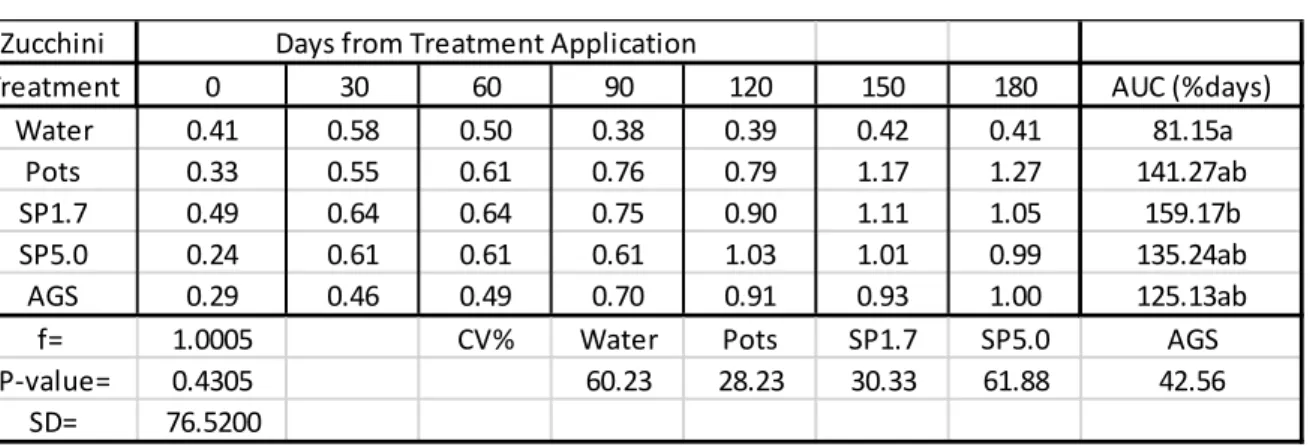
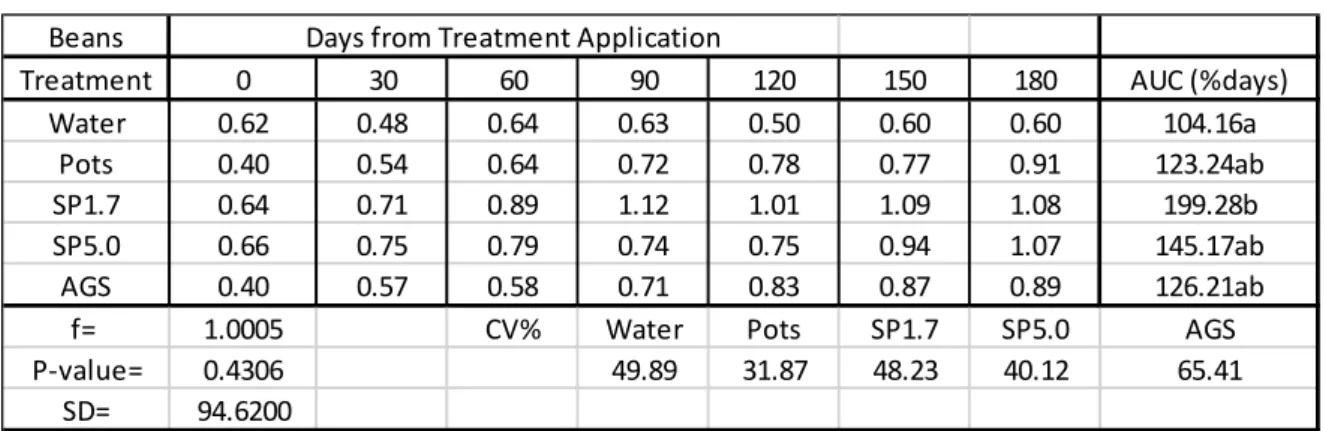
All treatments provided a positive Si uptake into the plant leaves. Maize had the highest rate of Si levels (>250%days) taken up into the leaves over a period of 180 days for all Si treatments, when compared to the other crops under disease stress (<250%days). Si-treated plants accumulated Si into their leaves at a higher rate under disease stress than drought stress. Si treatments improved the growth of all test crops. Steel slag was an effective treatment for providing Si for the uptake in plants and to improve plant growth.
2.1 Introduction
The greatest reduction in water availability required for agriculture has been stimulated by global climatic changes (Sonobe et al., 2010). Drought and disease stresses are two factors influencing crop growth, development, and yield processes (Masoumi et al., 2010). Drought stress is responsible for about a 20% decrease in crop yield worldwide (Masoumi et al., 2010). A decrease in leaf growth and an increase in root and shoot ratio as a consequence of drought stress have been observed in many plant species (Sonobe et al., 2010).
27
In plants, drought stress leads to a loss of turgor as well as stomatal closure, which affects the photosynthetic apparatus (Pereira et al., 2013). Stomatal and nonstomatal limitations are considered to be the component reducing photosynthetic rates under drought stress (Pereira et al., 2013).
Plant diseases are known to reduce yield and crop quality by impeding the physiological functions of plants (Rodrigues and Datnoff, 2015). Improving and enhancing productivity under various stress conditions is of prime importance in ensuring future food security (Rodrigues and Datnoff, 2015). It is also necessary to control and manage the available water supply and to seek suitable alleviators to achieve water and food security (Rodrigues and Datnoff, 2015).
Silicon (Si) has not been regarded as an essential nutrient for plants, despite an increasing volume of research evidence proving that Si is beneficial for plant growth, development, and resistance against abiotic and biotic stress. Si is taken up by plants in the form of silicic acid (H4SiO4) from the soil solution (Almeida et al., 2009). Si availability is low in highly-weathered soil owing to heavy desilication-aluminization (Almeida et al., 2009). Mono-cropping reduces plant-available Si in soil. Hence, a suitable and efficient source of Si to increase plant yields is of great importance (Almeida et al., 2009).
Steel slags contain several mineral elements, such as CaO, SiO2, MgO, Fe and MnO (Ning et al., 2014). Steel slag applications on agricultural land have an economic and environmental benefit (Cha et al., 2006). Steel slags have been applied as calcium silicate fertilizer in fields where plant-available Si is deficient in the soil (Cha et al., 2006). Application of a slag-based Si fertilizer not only enhances the fertility of degraded soils, it also improves the growth, yield, and resistance to plant diseases of crops (Cha et al., 2006).
28
This study analysed the effectiveness of steel slag as a source of Si to enhance plant growth under disease and drought stress, using Energy Dispersive X-ray (EDX) microanalysis to determine the Si content taken up by plants from the slag products being tested.
2.2 Materials and methods 2.2.1 Plant material
Rye grass (Lolium perenne L.), zucchini (Cucurbita pepo L. cv. Star 8021), broccoli (Brassica oleracea L. cv. Parthenon), bean (Phaseolus vulgaris L. cv. Red speckled), maize (Zea mays L. cv.
Revelation), and green pepper (Capsicum annuum L. cv. Sc701), provided by Sunshine Seedlings from Pietermaritzburg, were used as test crops in disease and drought trials which were carried out in greenhouse tunnels at the University of KwaZulu-Natal (UKZN). Seedlings were prepared in trays and transplanted into 2.5L pots (one plant per pot). Rye grass seeds were sprinkled into a 2.5L pots (no set number of seeds per pot). These trials were conducted once.
2.2.2 Treatment application
Four Si treatments were tested: Agrisil-granular (AGS); slag products (SP1.7 and SP5.0); and potassium silicate (Pots). Slag products were provided by Phoenix services LLC. Slag products were applied at a rate of 1t ha-1, Pots was applied at a rate of 500ppm per pot (5ml diluted into 50ml of water), and AGS was applied at 9.24g per pot. Each product was applied immediately after transplant as a once-off per growing season. Pots was applied once every four weeks, to maintain the Si concentrations in the growing media.
2.2.3 Drought and disease trials
Drought and disease trials were run simultaneously in separate greenhouse tunnels, with the same protocol described in 2.2.2. The disease trial was misted, regularly, with water via a misting irrigation system, and the drought trial was water restricted, in a separate tunnels from the disease trial, with no irrigation systems present. Temperature was kept consistent at 23˚C, in the tunnels throughout the experiment for both trials.
29
Four Si treatments (AGS, SP1.7, SP5.0 and Pots) were applied to each crop with five replications. Water only (no Si treatment) was used as a negative control and Pots as a positive control. Five Leaf samples were collected from each plant every 30 days from transplant for a period of 180 days. Plant heights for four of the crops (maize, green pepper, zucchini, and broccoli) in both trials were recorded at the end of the experiment to determine the effectiveness of Si on plant growth under abiotic and biotic stress.
For the disease trials, maize plants were inoculated mechanically by stapling an infected leaf onto the experimental plants. Maize was infected with Gray leaf spot (Cercospora zeina L.), provided by Pannar seeds (PTY) LTD, Greytown. Bean plants were mechanically inoculated with rusts (Phragmidium spp.) by rubbing infected leaves onto the experimental plants taken from disease plots in UKZN, broccoli was inoculated with blackrot (Xanthomonas campestris L.),taken from disease plots in UKZN, by adding infected soil into the experimental plants’ growing media. Green pepper and zucchini leaves were kept under humid conditions until Powdery mildew infected the plants. Rye grass acquired a rust (Puccinia graminis f.) infection, naturally, two months after planting.
2.2.4 Energy Dispersive X-ray microanalysis
Energy dispersive X-ray (EDX) microanalysis was performed to determine the Si content within the leaves resulting from the different treatments, at the Microscopy and Microanalysis Unit (MMU) at UKZN. Leaf samples were collected from each treatment and freeze dried. Si was then detected with an EDX detecting unit connected to a Philips XL 30 environmental scanning electron microscope (ESEM), operating at a voltage of 15kv.
2.2.5 Data analysis
Area under curve (AUC) over time was calculated on Microsoft Excel, using a trapezoid calculation, as described by Simko and Piepho (2012), to calculate the Si uptake rate (%days) in the plant leaves (fig. 2.1). AUC and plant height data were analysed by ANOVA, using the GenStat computer package at a 5% significance level.
30 AUC
Figure 2.1: AUC equation. (yi is an assessment of the data (percentage, proportion, ordinal score, etc.) at the ith observation, ti is time (in days, hours, etc.) at the ith observation, and n is the total number of observations.) (Simko and Piepho, 2012).
2.3 Results
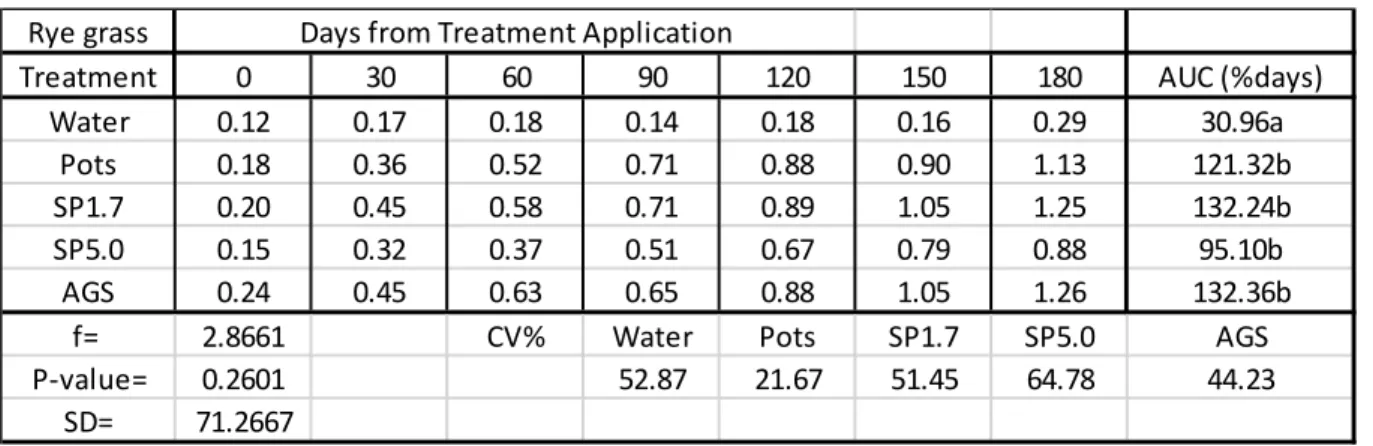
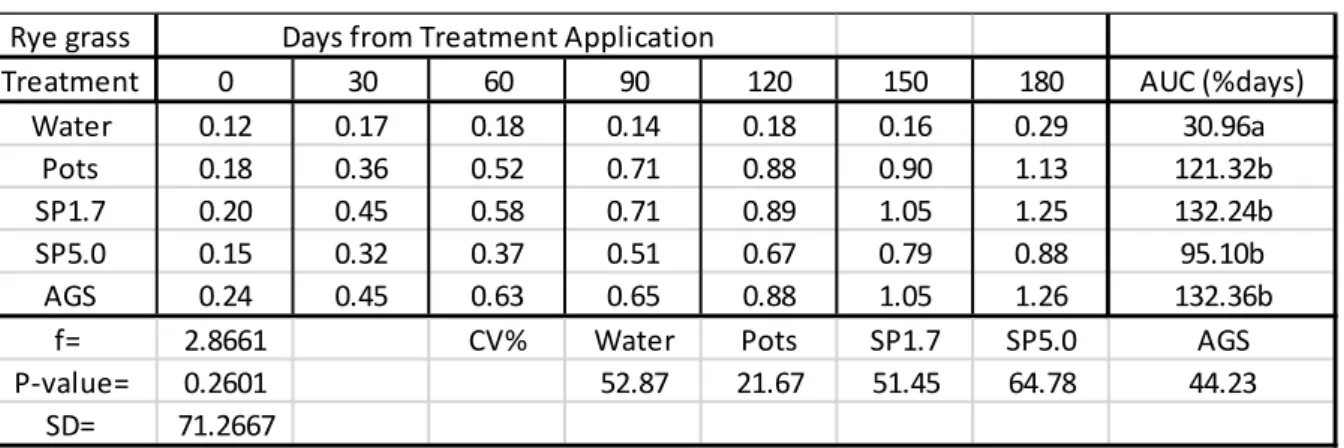
In Table 2.1, all Si treatments caused a positive uptake of Si into rye grass leaves which were significantly different from the control (water). There were no significant differences between the rates at which maize had taken up Si from the Si treatments. AGS provided the highest rate of Si that was taken up by the rye grass with a rate of 132.36%days followed by SP1.7 with a rate of 132.24%days. SP5.0 provided the lowest rate (95.10%days) at which Si was taken up into the rye grass leaves. The Si content in the green pepper leaves exceeded 1% for SP1.7, AGS and Pots after 180 days.
Table 2.1: Mean Si content (%) in rye grass leaves (disease trials).
AUC = Area under the Curve used to estimate the rate which silicon was taken up by the plant leaves as %days.
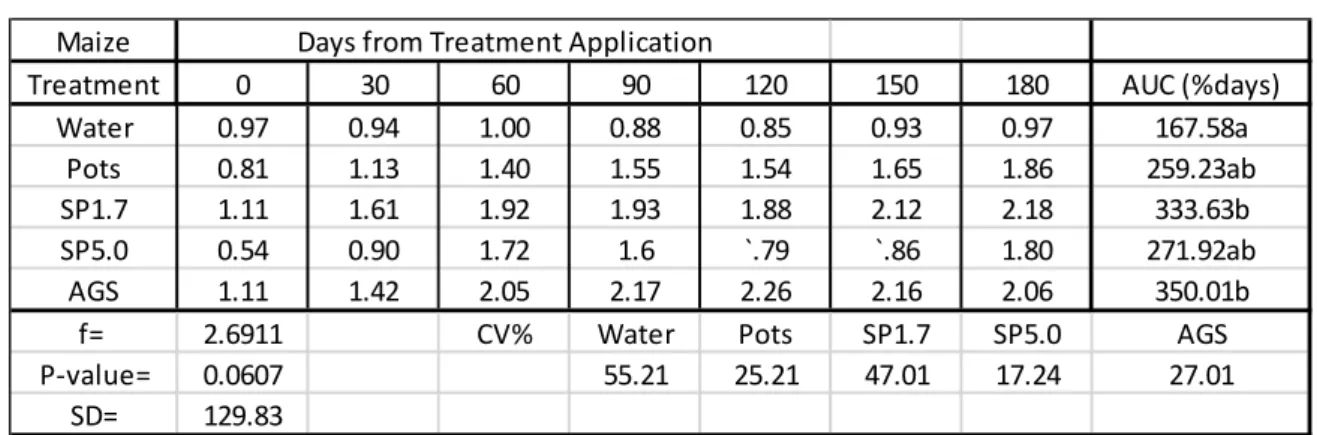
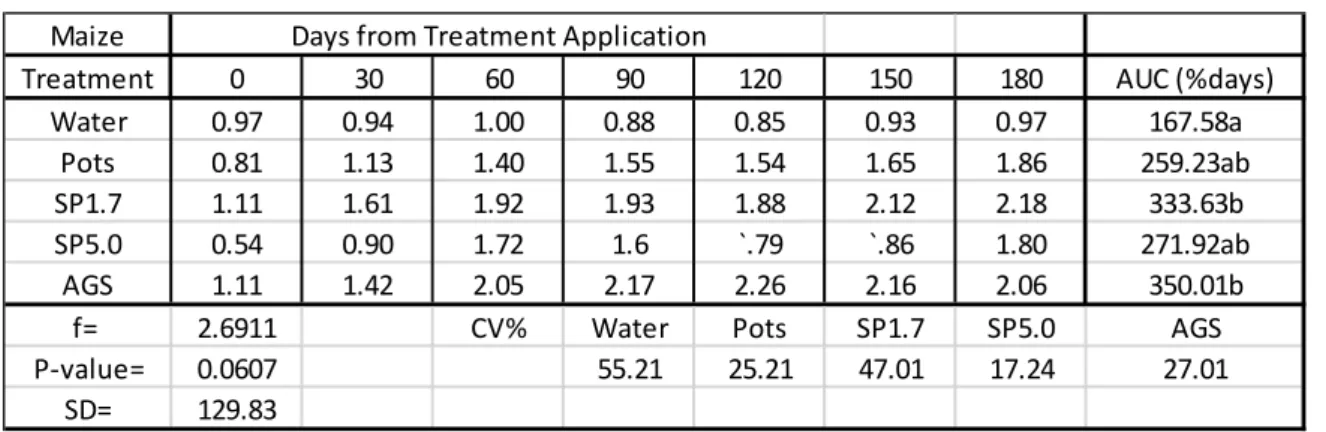
In Table 2.2, Si was taken up into maize leaves at the highest rates from AGS (350.01%days) and SP1.7 (333.63%) products, these rates were significantly different from the control (167.58%).
The rates at which Si was taken up from these treatments (AGS and SP1.7) were not significantly different from Pots (259.23%days) and SP5.0 (271.92%days).
Rye grass Days from Treatment Application
Treatment 0 30 60 90 120 150 180 AUC (%days)
Water 0.12 0.17 0.18 0.14 0.18 0.16 0.29 30.96a
Pots 0.18 0.36 0.52 0.71 0.88 0.90 1.13 121.32b
SP1.7 0.20 0.45 0.58 0.71 0.89 1.05 1.25 132.24b
SP5.0 0.15 0.32 0.37 0.51 0.67 0.79 0.88 95.10b
AGS 0.24 0.45 0.63 0.65 0.88 1.05 1.26 132.36b
f= 2.8661 CV% Water Pots SP1.7 SP5.0 AGS
P-value= 0.2601 52.87 21.67 51.45 64.78 44.23
SD= 71.2667
31
Table 2.2: Mean Si content (%) in maize leaves (disease trials).
AUC = Area under the Curve used to estimate the rate which silicon was taken up by the plant leaves as %days.
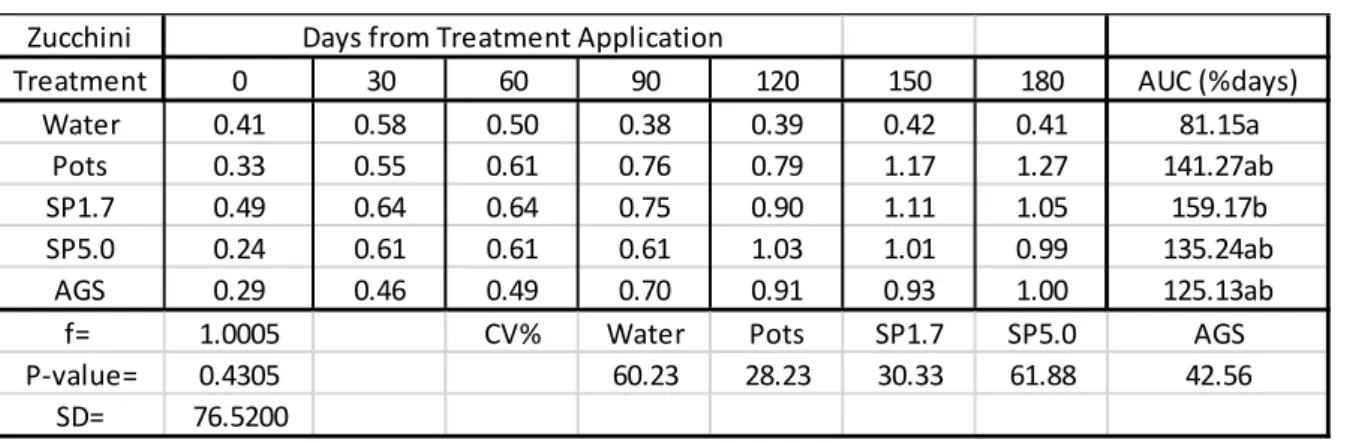
Table 2.3: Mean Si content (%) in green pepper leaves (disease trials).
AUC = Area under the Curve used to estimate the rate which silicon was taken up by the plant leaves as %days.
In Table 2.3, all Si treatm