UNIVERSITY OF KWAZULU-NATAL
AN INVESTIGATION INTO THE INCIDENCE AND REASONS ASSOCIATED WITH MANAGEMENT EMPLOYEES’ INTENTIONS TO LEAVE THEIR ORGANIZATIONS: PERCEPTIONS OF MBA STUDENTS IN KWAZULU-NATAL
` By
Rudolph. P. T. Muteswa 204505192
A dissertation submitted in fulfilment of the requirements for the degree of
Master of Commerce
School of Management Faculty of Management Studies
Supervisor: Dr Karen Ortlepp
November 2009
DECLARATION
I……….. ……declare that
(i) The research reported in this dissertation/thesis, except where otherwise, indicated is my original research.
(ii) This dissertation/thesis has not been submitted for any degree or any examination at any other university.
(iii) This dissertation/thesis does not contain other persons’ data, pictures or other information, unless specifically acknowledged as being sourced from other persons.
(iv) The dissertation/thesis does not contain other persons writing, unless specifically acknowledged as being sourced form other researchers. Where other written sources have been quoted, then:
a) their words have been re-written but the general information attributed to them has been referenced;
b) where their exact words have been used, their writing has been placed inside quotation marks, and referenced.
(v) Where l have reproduced a publication where l am author, co-author or Editor, l have indicated in detail which part of the publication was written by myself alone and have fully referenced such publications.
(v) This dissertation/thesis does not contain text, graphics or tables copied
and pasted from the Internet, unless specifically acknowledged, and the source being detailed in the dissertation/thesis and in the references sections.
Signed ………
ACKNOWLEDGEMENTS
I would like to thank my God for seeing me through this difficult project. I shall continue with my hard work and be persistent in everything I do in my life. I would like to give my special thanks to all the people who contributed to the completion of this project:
A special thank you to my Aunt, brothers and sisters for their continuous support and inspiration in my studies.
Dr Sean Ramroop for his assistance in my data analysis and inspiration in my studies.
Dr Ortlepp for her guidance in my dissertation.
Mrs Trish Mclean for proof-reading my dissertation.
Lastly, I would like to thank Dr Janet Hesketh, Dr Caroline Goodier, Ms Prim Naidoo and all my colleagues in the School of Management for believing in me and their continuous encouragement to carry on with my studies during difficult times.
ABSTRACT
Skills shortages in South Africa occur when demand for certain skills exceeds supply, South Africa has a high demand for mathematical, sciences and information technology (IT) related skills (Daniels, 2007:1). Factors such as HIV/AIDS, legislation (for example affirmative action), and rapid growth of the IT sector and the education system are contributing to the continuous increase in the skills shortages rate in South Africa (Daniels, 2007:1). As a result of the skills shortages, South African organisations find themselves competing with international organisations for managerial-level employees, resulting in a ‘war for talent’.
This study specifically focussed on the incidence and reasons associated with managerial- level employees’ intentions to leave their KwaZulu-Natal (KZN)-based organisations. In particular, the perceptions of MBA students studying at UKZN formed the focus of this study.
The study, both primary and secondary data were collected and analysed. In the study the targeted population were managerial-level employees who were currently working in KwaZulu-Natal-based organisations and who had met the entry requirements of UKZN’s Graduate School of Business (GSB). The purposive sampling technique was used and all the registered MBA students at the GSB of UKZN formed the target population that is, the target population comprised of all 1st year, 2nd year and 3rd year MBA students and there were approached following that same order.
In the study it was found that the three CFST sub-components that had the most influence on the managerial-level employees’ decision to leave were aspects of the CFST related to careerpath strategies, management/leadership style and rewards. These results were more clearly supported and given stronger evidence by the rankings of the high scoring samples of the intention to leave (ITL) scale and propensity to leave (PTL) scale which depicted the same three CFST sub-components. Recommendations were made based on the findings of the study that South African organisations have a strong influence on the respondent’s decisions to leave their organisations. It was also recommended that South African organisations should implement effective leadership/management style and should also offer their managerial-level employees competitive remuneration packages.
TABLE OF CONTENTS
Declaration ii
Acknowledgements iii
Abstract iv
Table of contents vi
List of Tables xii
List of Figures xiv
Chapter 1: Introduction ……….. ... 1
1.1 Aim of the chapter ………. ……1
1.2 Introducing skills shortages, the ‘war for talent’ …..………. 1
and the ‘brain drain’ 1.3 Managerial-level employee defined ………2
1.4 MBA focus and its managerial-level development ……….4
1.5 Purpose and aims of the study ……… 4
1.6 Research objectives ……… 5
1.7 Rationale for the study ……… 5
1.8 Structure of the dissertation ……… 8
Chapter 2: Literature Review ………10
2.1 Introduction ………. 10
2.2 Skills shortages in South Africa ………. 10
2.2.1 Factors contributing to skills shortages ……….. 12
2.2.1.1 HIV/AIDS ……… 12
2.2.1.2 Legislation ……… 13
2.2.1.3 Crime ……… 15
2.2.1.4 Education system ………. 17
2.2.1.5 Economic growth rate ………. 18
2.2.1.6 Technology and Telecommunications Sector Growth ………….. 19
2.2.2. The ‘Brain Drain’ defined ………. 20
2.2.2.1 South Africa’s Brain Drain ……… 21
2.2.2.2 Causes of the ‘Brain Drain’ in South Africa ……….. 22
2.2.2.3 Benefits of the ‘Brain Drain’ ………. 25
2.3 The ‘War for Talent’ ………. 27
2.4 Employee turnover ……… 29
2.4.1 Types of employer turnover ……… 30
2.4.1.1 Involuntary turnover ……… 30
2.4.1.2 Voluntary turnover ……….. 31
2.4.1.2.1 Reasons why employees leave organisations ……….. 36
2.4.2 Methods of measuring employee turnover ………. 44
2.4.3 Costs of employee turnover ……… 47
2.4.4 How do employees decide to quit ……….. 48
2.5 Talent management strategies in organisations ………. 51
2.5.1 Elements of talent management ……….. 52
2.5.1.1 Employee attraction strategies ………. 52
2.5.1.2 Generation X and Generation Y ……….. 59
2.5.1.3 Career Management development ……… 63
2.5.1.4 Role of training and development in talent management ………. 65
2.5.1.5 Employee retention strategies ……… 67
2.5.1.6 Conclusion ……… 69
Chapter 3: Research Methodology ………70
3.1 Introduction ……… 70
3.2 Research design ………. 71
3.2.2 Population and sample ……… 73
3.2.3 Data collection method ……… 73
3.2.4 Data analysis……….. 76
3.2.5 Location of survey ……… 77
3.2.6 Ethical considerations ……….. 77
3.3 Conclusion ……… 78
Chapter 4: Findings ……… 80
4.1 Introduction ……… 80
4.2 Sample demographics ……… 80
4.3 Descriptive statistics of measuring instrument ……… 87
4.3.1 Approach used in dealing with data collected in CFST instrument 87 4.3.2 Internal reliability of measuring instrument ……… 88
4.3.3 Descriptive statistics as per specific objective ……… 89
4.4 Presentation of results according to the specific aims of the study …. 90 4.4.1 To investigate the incidence of managerial-level employees’……… 90
leaving their organisations in KZN
4.4.2 To determine the level of value placed on both intrinsic and ………. 97
extrinsic rewards by managerial-level professionals in their consideration to leave an organisation 4.4.3 To establish the role of leadership/management style on …………. 105
managerial-level employees’ intention to leave an organisation 4.4.4 To investigate the level of influence career path strategies being…. 112 used by KZN organisations have on managerial-level employees’ intention to leave their current organisation 4.4.5 To determine the influence of work/life balance issues on ………….. 117
managerial-level employees’ intention to leave an organisation 4.4.6 To establish the level of influence an organisation’s training and ….. 123
development strategy has on KZN managerial-level professionals’ intention to leave their organisation 4.4.7 To establish the level of influence job satisfaction has on ………….. 131
managerial-level employees’ intention to leave their organisations 4.4.8 To determine the influence of having an MBA on managerial-level….. 135
4.4.9 To determine the level of intention KZN managerial-level ……… 137
employees have towards working in countries other than South Africa and working in regions other than KZN and factors influencing this 4.4.10 To investigate the factors unique to living and working in KZN …….. 144
influencing managerial-level employees’ intention to leave their organisations 4.5 Further analysis ……….. 145
4.5.1 Ranking of the total CFST sub-components ………. 145
4.5.2 Responses to open-ended questions ……….. 146
4.5.3 Relationships between research variables ……… 149
4.5.4 Demographic differences in the research variables ………. 150
4.5.5 Sub-sample with strong propensity to leave their organisation …….. 154
4.5.5.1 Ranking of means of the sub-sample with strong PTL ……… 156
4.5.6 Sub-sample with strong intentions to leave their organisations …….. 157
Chapter 5: Discussion of the findings ……… 161
5.1 Introduction ……….. 161
5.2 Demographic distribution of the sample ……….. 161
5.3 Specific aims of the study ……… 162 5.3.1 To investigate the incidence of managerial-level employees’…. 163
intentions to leave their organisations in KZN
5.3.2 To determine the level of value placed on both intrinsic and …….. 166
extrinsic rewards by managerial-level professionals in their consideration to leave an organization 5.3.3 To establish the role of leadership/management style on ……… 170
managerial-level employees’ intention to leave an organisation 5.3.4 To investigate the level of influence career path strategies being … 174 used by KZN organisations have on managerial-level employees’ intention to leave their current organisation 5.3.5 To determine the influence of work/life balance issues on…………..176
managerial-level employees’ intention to leave an organisation 5.3.6 To establish the level of influence an organisation’s training and …. 179 development strategy has on managerial-level professionals’ intentions to leave their organisations 5.3.7 To establish the level of influence job satisfaction has on …………. 182
managerial-level employees’ intention to leave their organisation 5.3.8 To determine the influence of having an MBA on managerial- level..184
employees’ intentions to leave their organisations 5.3.9 To determine the level of intention KZN managerial-level ………. 185
employees have towards working in countries other than South Africa and working in regions other than KZN and factors influencing this 5.3.10 To investigate the factors unique to living and working in KZN …. 189 influencing managerial-level employees’ intention to leave their organisations 5.4 Three most influential CFST sub-components on respondents with …. 191 high intentions to leave 5.5 Responses to open-ended questions ………. 194
5.6 Additional factors that would influence your decision to leave……… 198
5.7 Exploration of differences in demographics in research variables ….. 200
Chapter 6: Conclusions and Recommendations ……… 202
6.1 Introduction ……….. 202
6.2 Summary of key findings ………. 202
6.3 Recommendations ……….. 206
6.3.1 Improvement on current career path strategies ……… 206
6.3.2 Implementation of effective leadership/management style ……. 208
6.3.3 Offering of competitive remuneration packages ………. 208
6.3.4 Improvement of job satisfaction levels ……….. 210
6.3.5 Provision of effective training and development opportunities … 211 6.3.6 Effective management of work/life balance issues in ………. 213
organisations 6.3.7 Managing diversity ………. 214
6.3.8 Becoming the ‘employer of choice’ ………. 214
6.3.9 Building the ‘employer brand’ ……….. 215
6.3.10 Implementation of ‘rapid incorporation’ ………. 215
6.3.11 Reducing the negative impact of skills shortages in ………….215
South Africa 6.3.12 Offering employee assistance programmes ……… 215
6.3.13 Effective use of exit interviews ………. 216
6.4 Limitations of the study ……… 216
6.5 Recommendations for future research ……… 217
6.6 Concluding statement ……… 218
References ……… 220
Appendix A: Informed Consent……… 240
Appendix B: Questionnaire ……….. 241
Appendix C: Ethical Clearance ……….. 248
Appendix D: Kolmogorov Smirnov Test ……….. 248
Appendix E: Males and Females ……… 250
Appendix F: Number of employees ……….. 251
Appendix G: Job Titles ………. 253
Appendix H: Language groups ………. 254
Appendix I: Marital status ……… 255
Appendix J: Organisational sector ……….. 256
Appendix K: Educational qualification group ……… 257
Appendix L: Year of MBA ……… 258
Appendix M: Correlations of research variables ……… 259
LIST OF TABLES
TABLE 1: Estimated adult HIV-prevalence rate 2007 ………. 13
TABLE 2: Crime cases reported to SAPS in 2007/8 ……….. 15
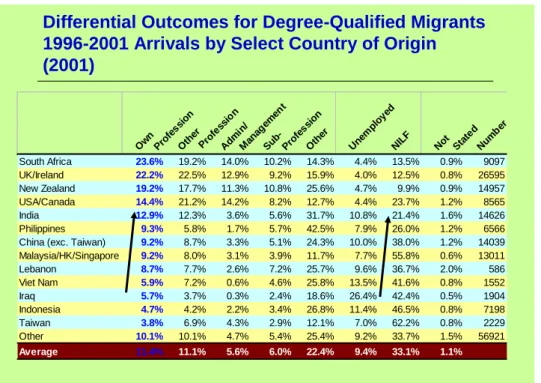
TABLE 3: Differential Outcomes for Degree Qualified Migrants’ Arrivals … 21 in Australia TABLE 4: Push and Pull factors ……… 23
TABLE 5: Key Labour Market Indicators ……….. 24
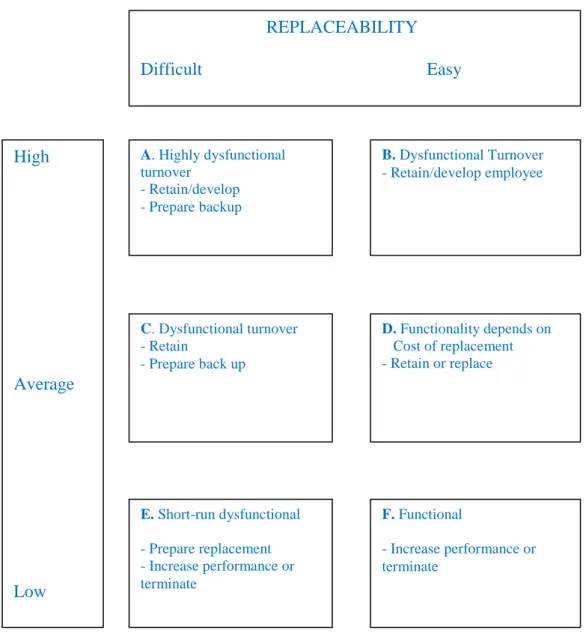
TABLE 6: Performance replaceability strategy matrix………. 33
TABLE 7: Leavers by level of service ………47
TABLE 8: Difference between quantitative and qualitative research ……… 71
TABLE 9: Home Language Percentages ………. 82
TABLE 10: Job Title Statistics ……….. 84
TABLE 11: Organisation’s Sector ……… 86
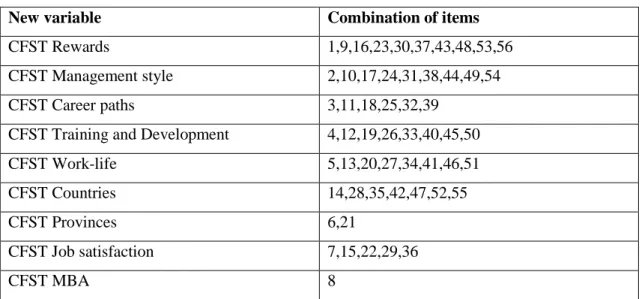
TABLE 12: Contributing Factors to Staff Turnover: sub-components and… 88 items TABLE 13: Cronbach’s Alpha Results ……… 89
TABLE 14: Descriptive Statistics ……….. 90
TABLE 15: Intention to leave scores ……….. 91
TABLE 16: Propensity to Leave ……… 94
TABLE 17: CFST Rewards Total ……….. 97
TABLE 18: CFST Management Style Total ……… 105
TABLE 19: CFST Career path Total ……… 112
TABLE 20: CFST Work/life Total ……….. 117
TABLE 21: CFST Training and Development Strategy Total ………… 124
TABLE 22: CFST Job satisfaction Total ………. 131
TABLE 23: CFST Completion of Post-Graduate Qualification Total ………...135
TABLE 24: CFST Provinces and Countries Total ………...137
TABLE 25: Factors unique to working in KZN ……….. 144
TABLE 26: Ranking of the 9 sub-components of the CFST Total ……….146
TABLE 27: The 5 factors that influence your decision to leave ………... 147
TABLE 28: Additional factors that influence your decision to leave ………… 149
TABLE 29: Correlations between research variables ……… 150
TABLE 30: Sample Demographic Differences ……… 151
TABLE 31: Marital Status Influence on 6 CFST Items ………..152 TABLE 32: Descriptive statistics of the sub-sample with a strong propensity..155
to leave their organisations
TABLE 33: Ranking of the 9 sub-components of the PTL sub-sample ……….156 TABLE 34: Descriptive Statistics of Sub-group with High ITL ……… 158 TABLE 35: Ranking of the means for the sub-sample with strong intentions.. 159 to leave
LIST OF FIGURES
FIGURE 1: Types of Employee Turnover ……….. 30
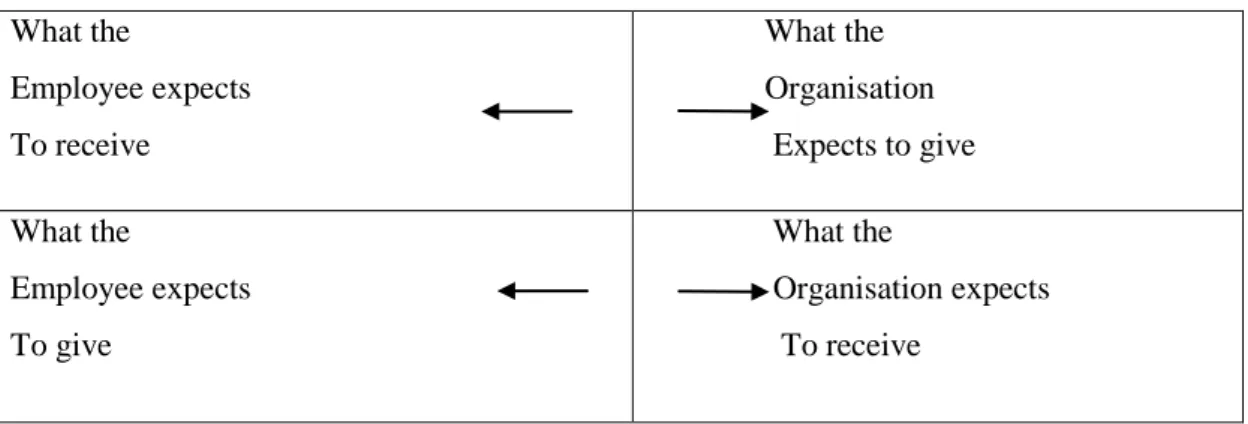
FIGURE 2: The Psychological contract: two parties, four sets of ……….. 42
expectations FIGURE 3: A survival rate curve ……….. 45
FIGURE 4: Traditional model of deciding to quit ……… 48
FIGURE 5: Elements of Talent Management ………. 52
FIGURE 6: The Total Compensation System ………. 61
FIGURE 7: Career development interrelationships with career …………. 64
planning and management FIGURE 8: Gender ……….. 81
FIGURE 9: Age ……….. 81
FIGURE 10: Marital Status ……… 82
FIGURE 11: Number of dependents ……… 83
FIGURE 12: Highest level of education ……….. 83
FIGURE 13: Year of MBA study ………. 84
FIGURE 14: Length of service within current organisation ……… 85
FIGURE 15: Number of employees in respondents’ organisations ……… 86
FIGURE 16: ITL 1 ………. 91
FIGURE 17: ITL 2 ……….. 92
FIGURE 18: ITL 3 ………... 93
FIGURE 19: PTL 1 ……… 94
FIGURE 20: PTL 2 ……… 95
FIGURE 21: PTL 3 ……… 96
FIGURE 22: Dissatisfaction with remuneration ………. 98
FIGURE 23: Pay-based on commission only ……… 98
FIGURE 24: Pay not linked to performance ……….. 99
FIGURE 25: Lack of work achievement recognition ………. 100
FIGURE 26: Poor working conditions ……….. 100
FIGURE 27: Lack of recognition for your qualifications through the……. 101
pay system FIGURE 28: Lack of recognition for experience through the pay system …. 102 FIGURE 29: Lack of freedom to act on the job ……… 102
FIGURE 30: Lack of challenging work ……… 103
FIGURE 31: Dissatisfaction with fringe benefits ……… 104
FIGURE 32: Authoritative leadership style of your manager ………. 106
FIGURE 33: Exclusion from decision making ………. 106
FIGURE 34: Lack of progressive leadership which allows you to do ……… 107
things differently FIGURE 35: Lack of involvement in management and business decisions … 108 FIGURE 36: Lack of clear expectations and direction from your …………... 108
immediate manager FIGURE 37: An unapproachable manager ……… 109
FIGURE 38: An unfriendly manager ……….. 110
FIGURE 39: Management’s lack of consideration of employees concerns …. 110 FIGURE 40: Management’s lack of implementation of employee’s ………… 111
suggestions FIGURE 41: Lack of a clear career path ……… 113
FIGURE 42: External employee hiring policies ………. 113
FIGURE 43: Poor use of performance criteria for promotion decisions …… 114
FIGURE 44: Lack of effective succession planning ……….. 115
FIGURE 45: Lack of employee career counselling workshops ……….. 115
FIGURE 46: Failure to achieve personal career goals ……….. 116
FIGURE 47: Work and personal life conflict ……….. 118
FIGURE 48: Lack of family/social life due to high work demand …………. 118
FIGURE 49: Lack of work/life balance assistance programmes in ………… 119
this organisation FIGURE 50: Lack of time for personal life outside of work ……….. 120
FIGURE 51: Inability to work from home ……….. 121
FIGURE 52: Lack of recreational facilities at work ……… 121
FIGURE 53: Lack of support from the organisation to deal with …………... 122
work/life balance challenges FIGURE 54: Inflexible work time schedule ……….. 123
FIGURE 55: Lack of training and development opportunities ……… 125
FIGURE 56: Lack of training on new technological systems ……… 126
FIGURE 57: Lack of opportunities for development in your area ……….. 126
of expertise FIGURE 58: Lack of exposure to experts in your profession ……… 127
FIGURE 59: Lack of fairness on how candidates are selected for training … 128 FIGURE 60: Poor timing of training and development programmes ……… 138
FIGURE 61: Ineffective on-the-job training methods ………. 129
FIGURE 62: Ineffective off-the-job methods ……….. 130
FIGURE 63: Job dissatisfaction ……… 132
FIGURE 64: Lack of respect and fair treatment ……… 132
FIGURE 65: Co-workers who have a bad attitude about working ……….. 133 in this organisation
FIGURE 66: Co-workers who do not support each other ……….. 134 FIGURE 67: Lack of team work and support ………. 134 FIGURE 68: Completion of your MBA degree ……… 136 FIGURE 69: Lower remuneration levels in KZN than offered by …………. 138 organisations in other countries
FIGURE 70: A job offer in another country other than South Africa …… 138 FIGURE 71: Higher living standards in countries other than………. 139 South Africa
FIGURE 72: Lack of restrictive legislation such as affirmative action ……. 140 in other countries
FIGURE 73: Better job security in other countries ………. 140 FIGURE 74: High costs of living in South Africa ……….. 141 FIGURE 75: High crime rates in South Africa ……….. 142 FIGURE 76: Lower remuneration levels in KZN than offered by ………….. 142 organisations in other provinces in South Africa
FIGURE 77: A job offer in another province other than KZN ……….. 143 FIGURE 78: The 3 most influential sub-components on the ITL and ……. 192 PTL sub-sample
FIGURE 79: Modern Compensation System ………. 209 FIGURE 80: Job Redesign Methods ……….. 211 FIGURE 81: Management Development Strategies ……… 212
CHAPTER 1: INTRODUCTION
1.1 AIM OF THE CHAPTER
The main research problem, the rationale for conducting the research and the specific aims the research intends to accomplish were discussed in this chapter. This chapter introduced the study topic by highlighting the level of skills shortages in South Africa. As a result of the high level of skills shortages in South Africa, there is a „war for talent‟ and a „brain drain‟ which has resulted in South African organisations adopting talent management strategies in order to reduce their employee turnover rates.
1.2 INTRODUCING SKILLS SHORTAGES, ‘WAR FOR TALENT’ AND THE
‘BRAIN DRAIN’
Skills shortages occur when there is a high demand for scarce skills which does not match the demand and a good example is the sciences and mathematical related fields (Daniels, 2007:1).
The literature review chapter identified these factors, including the following: HIV/AIDS, legislation (affirmative action), rapid growth of the information technology sector and the education system as contributing to the continuous increase in the skills shortage rate in South Africa. These factors lead to the continuous creation of vacuums of job vacancies in organisations and these vacuums are for people with highly specialised skills (Booysen, 2007:10).
As a result of the skills shortages, South African organisations end up competing with international organisations for talent and this leads to a „war for talent‟. South African organisations have become global players, hence they need to understand and be able to build a relationship with their highly skilled employees in order to avoid them from being poached by their global competitors (Kinnear and Sutherland, 2000:23). The emigration of skilled employees to other countries has accelerated the „brain drain‟ rate which also excerbates the skills shortages in the current South African labour market. “The irony of international migration today is that many of the people who migrate legally from poor to richer lands are the very ones that Third World countries can least afford to lose: the highly educated and skilled. Since the great majority of these migrants move on a permanent basis, this perverse brain drain not only represents a loss of valuable human resources but could prove to be a serious constraint on the future economic progress of Third World nations.” (Todaro, 1996 cited in Rapoport and Docquier, 2008:68). Most skilled professionals in South Africa are emigrating to other countries in large numbers (Herman, 2007). This results in the reduced
growth of South African organisations as they no longer have adequate skills to help them develop new products, implement new technology and processes (Nel, Werner, Haasbroek, Poisat, Sono and Schultz, 2008:2). Global competition for skills results in skilled employees having intentions to leave their organisations which is the first step leading to actual employee turnover (Herman, 2007).
Employee turnover occurs when an employee willingly resigns from an organisation that has provided him or her with remuneration for their employment services (Mobley, 1982 cited in Hom and Griffeth, 1995:4). There are various reasons that cause employee turnover in organisations. For instance, conflict with colleagues and immediate manager. In order to reduce the high employee turnover rates of skilled employees, South African organisations have begun to adopt various talent management strategies. Talent management mainly caters for highly talented individuals. It aims at developing their skills and maximising their potential to enable them to make outstanding contributions in achieving the organisation‟s goals and objectives (Smilansky, 2005 cited Armstrong, 2006:390). The current study will mainly focus on managerial-level employees and this will be discussed in the following section.
1.3 MANAGERIAL-LEVEL EMPLOYEE DEFINED
In the literature, „managerial-level employee‟ is defined in the context of talent management, that is, talented employees. Some authors refer to these employees as „knowledge workers‟.
According to a study conducted by Birt, Wallis and Winternitz (2004:25) the new power base in the labour market is a group of employees referred to variously as „knowledge workers‟ or
„talent‟. These are employees who have embraced a model which matches their needs for greater career freedom and who have sought-after knowledge and skills that place them in demand by organisations (Birt et al., 2004:25). A learning individual at the centre of transmitting knowledge and skills in an organisation is known as a knowledge worker (Brown and Duguid, 1996, cited in Kinnear and Sutherland, 1999:41).
“We apply the word „talent‟ indiscriminately when referring to a skill or aptitude, or to someone‟s intellect, achievement or interest, as an expression and even when referring to the ability of a group of people” (Joubert, 2007:6). The term „managerial-level employee‟, for the purposes of the current study, refers to individuals who have been accepted to study towards a Master of Business Administration (MBA) degree at the University of KwaZulu-Natal (UKZN) Graduate School of Business. „Managerial-level employees‟, for the purposes of this study, also include knowledge workers who are often employees who work in the information
technology and science industries and are aiming to be in senior management positions (Beckstead and Gellatly, 2004:12). The term also includes various professions such as teachers, nurses, marketers, human resources specialists, accountants, doctors, engineers, lecturers, administrators, supervisors and many other professionals aiming to be in senior managerial posts in their organisations.
The rationale for the adoption of the term „managerial-level employee‟ in the context of this study was as follows: the UKZN Graduate School of Business (GSB) Open Day 2008 drew more than 120 prospective MBA students including business executives of all ages from local industry. “GSB Head, Professor Anesh Singh, set the standard saying: „Only the best get in.
Last year, the Financial Mail survey showed us to be the third most difficult school to get into‟. We attract the best students who have potential to succeed”
(www.ukzn.ac.za/UKZNOnline). UKZN‟s MBA programme was ranked number 6 in 2008 in a study conducted by Professional Management Review (PMR) (www.pmrnet.com).
According to the UKZN Faculty of Management Studies (2008:84) in order for applicants to enter the MBA programme the following conditions apply:
1) As many requests for entry onto the MBA programme are received every year, entrance onto the programme is through a written entrance examination that helps to assess the abilities and intellectual capacity of applicants‟ levels of business decision making.
2) Applicants may write the entrance examination only if they possess the following:
a) Have a basic degree or tertiary education equivalent to NQF 6;
b) Have at least 5 years of working experience, a minimum of 3 years of managerial-level work experience; and
c) Applicants should not be less than 25 years of age when they apply.
3) There may be certain unique situations in which an applicant is supported by a School Board for them to be enrolled onto the programme. The UKZN Senate may allow such applicants, who fail to meet the requirements listed in 2(a), to be enrolled, as long as the applicants can justify that their intellectual capacity is sufficient for them to pursue a higher level tertiary qualification, as guided by Rule GR 7(b) (UKZN Faculty of Management Studies, 2008:84)
Skilled professionals who are able to meet the above entry requirements of an MBA therefore have specialised skills, a high level of intellect and a strong desire to develop their managerial skills. It is within the above context that the term „managerial-level employee‟ is defined and operationalised in this study. As such, the targeted group of participants for the current study were the students who were currently registered for the UKZN MBA programme.
1.4 MBA FOCUS AND ITS MANAGERIAL-LEVEL SKILLS DEVELOPMENT
During the current economic crisis most business schools globally received a large number of applications for their MBA programmes. This was revealed by the Graduate Management Admission Council which administers the graduate admission tests and it also further revealed that 77% of the full-time MBA programmes that started in 2009 were enrolling more students than in previous years such as the year 2007 (Ryan, 2009:1). As more people enrol with business schools around the world to study towards their MBA degrees, one of their aims is to improve their skills and their market value in order to prepare for the coming leaner times. For instance, many organisations will retain employees who possess the much needed critical skills and those who have potential to add value to their organisational systems, products, services and processes when they cut down on their costs of labour through retrenchments or organisational restructuring (Ryan, 2009:1).
By doing the MBA programme, managerial-level employees experience personal enrichment, they are stretched beyond their comfort zones, they learn how to effectively communicate and socialise with their peers, they study career-changing modules, they experience stimulating guest lectures from various industry experts, and learn how to generate and share business ideas that relate to the current South African context (Bick, 2009:3). “Self actualised people are self-aware, concerned with personal growth, less concerned with the opinions of others and interested in fulfilling their potential” (Wagner, 2009). This is the highest level of Maslow‟s hierarchy of needs and it is also one of the key needs in Maslow‟s hierarchy of needs. MBA students are at different levels of Maslow‟s hierarchy. Some need it to advance their careers, others want it for prestige and status. Thus, MBA students develop themselves and in return they are more likely to be promoted at work and receive high financial rewards (Bick, 2009:3). In the current global crisis, managerial skills are crucial (Williams, 2009:5).
South African organisations should ensure that they nurture and develop their talent in order to have high talent retention rates. The next section will outline the overall purpose of this study and the specific aims.
1.5 PURPOSE AND AIMS OF THE STUDY
The overall purpose of this study was to determine the incidence and reasons associated with managerial-level employees‟ intentions to leave their organisations. In particular, perceptions of MBA students studying at UKZN formed the focus of this study.
In particular this study aims:
1. To investigate the incidence of managerial-level employees‟ intentions to leave their organisations in KZN.
2. To determine the level of value placed on both intrinsic and extrinsic rewards by managerial-level professionals in their consideration to leave an organisation.
3. To establish the role of leadership/management style on managerial-level employees‟
intention to leave an organisation.
4. To investigate the level of influence career path strategies being used by KZN organisations have on managerial-level employees‟ intention to leave their current organisation.
5. To determine the influence of work/life balance issues on managerial-level employees‟ intention to leave their organisations.
6. To establish the level of influence an organisation‟s training and development strategy has on KZN managerial-level employees‟ intention to leave their organisation.
7. To establish the level of influence job satisfaction has on managerial-level employees‟ intention to leave their organisations.
8. To determine the influence of having an MBA on managerial-level employees‟
intention to leave their organisation.
9. To investigate the factors unique to living and working in KZN influencing managerial-level employees‟ intention to leave their organisations.
10. To determine the level of intention KZN managerial-level employees have towards working in countries other than South Africa and working in South Africa regions other than KZN and factors influencing this.
1.6 RATIONALE FOR THE STUDY
The „war for talent‟ is becoming more serious everyday (Taylor, 2003:6). “The phrase „war for talent‟ originated in the late 1990s as a means of highlighting the problems organisations were experiencing in attracting and retaining talented people” (Armstrong, 2006:26). Recent Hay studies indicated that almost one-third of the millions of people surveyed worldwide have intentions to resign from their jobs in the coming two years and in the past 5 years, employee attrition increased by more than 25 percent (Sherman, Alper and Wolfson, 2006:22). In some organisations, loss of managerial-level employees puts unbearable pressure on workflow management and leads to an increase in operating costs (Sherman et al., 2006:22). Due to the increase of turnover costs, organisations are establishing effective measures that can help them reduce their high turnover costs. When implementing these
corrective measures, organisational managers utilise facts and figures in order to effectively address the turnover problem. Thus, they end-up formulating strategies based on unreliable personal assumptions (Sherman et al., 2006:22). This shows that there is a need for quantitative data that will enable them to make accurate decisions based on facts (Sherman et al., 2006:22). The study will enable South African organisations to improve their talent retention efforts and be able to have empirically researched information on the reasons why managerial-level employees are perhaps considering leaving their organisations.
Another motivation for the study is that organisations that have high employee turnover rates are losing a great deal of their human capital investments. “Employee turnover is a critical organisational phenomenon that has evoked considerable managerial and scholarly attention for many decades. Though currently interested in the shrinkage rather than the retention of their workforce, organisations are still concerned about turnover amongst select sub- populations and may devote more attention to the matter in the coming years” (Hom and Griffeth, 1995:3). Therefore, the study covered an area of great concern to organisations and researchers as problems continue to spiral in the 21st century as a result of critical skills shortages experienced globally.
This study provided future benefits for employers who are being affected by the skills shortage in South Africa and who have to compete intensively to acquire and retain talent.
The study was crucial as the literature covered four sections, namely: skills shortages, the
„war for talent‟, employee turnover and talent management strategies. The study will highlight the potential influence of various factors on managerial-level employees‟ intentions to leave their organisations. This research will be of significant value to organisations as it provided information relevant to the design and support of talent management strategies that South African organisations may use to help them retain their managerial-level employees.
“KwaZulu-Natal is South Africa‟s third smallest province taking up 7,7 percent of South Africa‟s land area. It contributes R206,8 billion or 16,5 percent towards the country‟s Gross Domestic Product (GDP)” (Davis, 2008). Economic activities in KZN are centred in the Durban-Pinetown metropolis and Pietermaritzburg, with significant concentration in the lower Umfolozi area (Richards Bay/Empangeni), the Ladysmith – Emnambithi region and the Newcastle – Madadeni region (Coetzee, Economic and Business Report, January 2005). The continuous growth of KZN shows that there was a need for more managerial-level employees in KZN organisations and hence this study investigated the incidence and reasons associated with managerial-level employees‟ intentions to leave their KZN organisations. This research is beneficial to organisations in KZN during this time period of economic growth as they will
be able to know if their managerial-level employees are considering leaving in order for them to start planning new recruitment and retention strategies.
Another need for the study is the impact of the „brain drain‟ on South Africa‟s managerial- level employees. This study reviewed literature on the „brain drain‟s‟ effect on South Africa‟s economy and the rest of the African continent. Push and pull factors that were causing South Africa‟s managerial-level employees to emigrate to developed countries received attention and recommendations were made on how South African organisations can introduce employee retention strategies that can help reduce the „brain drain‟ on their managerial-level employees.
“Organisations have to ensure that they have a talented pool of employees to drive the organisation to the leading edge. There are insufficient skills in South Africa, hence organisations should try their best to develop and maintain the talent they have amongst their employees” (Potgieter, 2007:44). The study aims to make a contribution by exploring the incidence of managerial-level employee intentions to leave their organisations by highlighting the reasons that influenced employees in South African organisations to leave their employers. Recommendations will be made on how South African organisations can improve their current employee retention strategies.
This study will help highlight the various approaches contained in the concept of talent management, that is, attraction, talent retention, motivation, training and development, career management, job design and the implementation of effective leadership styles. Findings of the study were provided on how these talent management approaches are linked together to produce a more coherent whole that can be used as a vehicle for the development and implementation of coordinated and mutually supporting approaches that help South African organisations to get and to keep the managerial-level people they need (Armstrong, 2006:26).
The results of the study were outlined in greater detail the „push‟ and „pull‟ factors that influence managerial-level employees working for South African organisations considering leaving their employers. Work/life balance issues were outlined in the results of the study and how these issues influenced their decisions to leave organisations. Recommendations will be made in the study on how South African organisations can address some of the factors that influenced and caused managerial-level employees to leave.
1.7 STRUCTURE OF THE DISSERTATION
The study will consist of 6 chapters and these will be presented in the following section.
Chapter 1: Introduction to the research study
In the first chapter, key research concepts related to the „war for talent‟ and the „brain drain‟
were introduced. The study also presents the main purpose and aims of the study along with the rationale. The structures of the remaining chapters in this dissertation are outlined below.
Chapter 2: Literature review
In this chapter, the literature review covered four sections, namely: skills shortages, the „war for talent‟, employee turnover and talent management strategies.
Chapter 3: Research methodology
This chapter covered the research design, targeted population and sample size, data collection methods, data analysis, location of the survey, ethical considerations and anticipated problems of the study.
Chapter 4: Findings
The findings chapter presents the information collected which had been analysed using descriptive statistics, namely: mean, mode, standard deviation, variance, range, minimum and maximum. The study also consisted of a further analysis section which covered the following:
ranking of the CFST mean scores for the total sample, description of the responses to open- ended questions, relationships between research variables, exploration of differences in demographics in research variables, description of findings related to the sub-sample of respondents identified as having a strong intention to leave and description of the findings of the respondents who have a strong propensity to leave.
Chapter 5: Discussions
The discussions chapter focussed on linking the study findings to the literature reviewed in Chapter 2.
Chapter 6: Recommendations and Conclusions
In this chapter, recommendations were made according to the findings of the chapter and further readings that will be conducted by the researcher. Future research areas were also outlined in this chapter.
1.8 CONCLUSION:
This chapter introduced the study topic by highlighting the level of skills shortages in South Africa. As a result of the high level of skills shortages in South Africa, there is a „war for talent‟ and a „brain drain‟ which has resulted in South African organisations adopting talent management strategies in order to reduce their employee turnover rates. It also highlighted the reasons why managerial-level employees study towards an MBA degree. The rationale for the term „managerial-level employee‟ was covered in this chapter. In the following chapter the literature review will cover four sections, namely: skills shortages, the „war for talent‟, employee turnover and talent management strategies.
CHAPTER 2: LITERATURE REVIEW
2.1 INTRODUCTION
The first section of this chapter will cover the phenomenon of skills shortages within the South African context. Factors contributing to the high skills shortages in South Africa will be discussed. The third section will cover the „war for talent‟ amongst South African organisations and the strategies they are adopting to attract and retain managerial-level employees. Due to the „war for talent‟ employees with skills that are in short supply in the South African labour market are more likely to receive attractive job offers from various organisations and, if their organisations do not formulate effective retention strategies, they may end up deciding to leave leading to high employee turnover rates. Thus, employee turnover will be covered in the fourth section of the chapter. Skilled professionals in the South African labour market are in short supply and this will be discussed in the next section.
2.2 SKILLS SHORTAGES IN SOUTH AFRICA
“The term „skills shortage‟ is an amorphous concept that encapsulates many specific components, but at the heart of the matter is the idea that the demand for certain skills exceeds supply. In the discourse of labour economics, labour supply refers to the individuals who participate in the labour market with given endowments of human capital, whereas labour demand refers to the private and public entities that employ individuals” (Daniels, 2007:1).
In general there is a high skills shortage in South Africa. This is caused by two main reasons.
In the first place, South Africa‟s education system is not producing enough learners with mathematical, information technology and science related subjects leading to few learners enrolling at technikons and universities to further their studies in these fields. Secondly, some of the skilled professionals are emigrating to other countries (Nel et al., 2008:418). South African organisations that require more employees with science and technology education backgrounds are faced with a great challenge in the current South African labour market as the current education system is not producing enough graduates. South Africa has become a major player in the global economy, therefore its standards of education need to be uplifted to the maximum level (Erasmus, Loedolff, Mda and Nel, 2006:50). Hunter (2002:35) states that a study carried out by the Human Sciences Research Council amongst 273 organisations showed that 76% of these organisations were experiencing difficulties in recruiting skilled people. In particular, the shortages experienced were for engineers, technicians, information technology (IT) specialists, accountants, medical practitioners and managers.
In South Africa, long term planning and preparation was done to establish and agree on what encompasses „scarce skills‟ by the Department of Labour and other various government departments. The „scarce skills‟ list facilitates the establishment of the common „scarce skills‟
in the current South African labour market (Department of Labour, 2006/7:61). It consists of 11 major „families‟ of different occupations that are facing skills shortages and these are as follows:
1. Engineering 2. Health professions 3. Finance professions 4. Law professions 5. City planners 6. IT/ICT professions
7. Natural science professions 8. Management professions 9. Education profession 10. Transport professions
11. Artisans (Department of Labour, 2006/7:61).
According to the Department of Labour (2008:5), South Africa needs a total of 20 085 in various engineering fields (chemical, civil, electrical, telecommunications, mechanical, mining and miscellaneous), 16 430 (health diagnostics, health therapy professionals, midwifery and nursing professionals), 4270 finance professionals (accountants, auditors, corporate services, financial brokers and financial investment advisers), 1420 law professionals (solicitors and counsellors), 2590 city planner professionals (architects, landscape architects, cartographers, surveyors, urban and regional planners), 885 information and communications technology professionals, 13 760 natural and physical science professionals (agricultural and forestry scientists, chemists, environmental scientists, geologists, medical scientists, veterinarians and miscellaneous science and physical science professionals), 22 600 management professionals (advertising, marketing, sales, finance, human resources management, policy and planning managers, research and development managers, contract or project managers, construction managers, engineering managers, operations managers and supply and distribution managers), 41 615 education professionals (higher education lectures and school teachers), 14 320 transport professionals (air, marine, car, train, bus and truck drivers) and 23 810 artisan professionals (manufacturing and processing technicians, fabrication engineering, mechanical, panel beaters and trimmers) (Department of Labour, 2008:5).
“The credit crunch is going to call for real management skills: sustained responsibility for building and maintaining organisations and leading change” (Williams, 2009:5). Therefore, the current managerial skills shortages in South Africa will have a negative impact on organisations during this recession time period as they are in dire need of managers with vast knowledge in their operations or processes, who can also lead them effectively during this difficult time-period of the global crisis (Williams, 2009:5). The figures of the South African scarce skills shortages list will continue to grow due to the high number of managerial-level employees leaving organisations and other factors contributing to the increased skills shortages that was discussed in the following section. Thus, South African organisations need to establish the reasons why managerial-level employees may have intentions of leaving their organisations, in order to establish measures that may retain them for a longer period.
2.2.1 Factors contributing to the skills shortages
The environmental factors contributing to the high skills shortages in South Africa are the following: HIV/AIDS, legislation, crime, education system, economic growth rate and technology and the telecommunications sector. Some of these factors increase both skills shortages and the „brain drain‟. These are discussed further as follows:
2.2.1.1 HIV/AIDS
“HIV stands for Human Immuno-deficiency Virus. This virus enters the body through the blood stream or other body fluids and attacks the person‟s immune system which protects him or her from a wide range of infections” (Hunter, 2004:24). Apparently, it is estimated that 50% of people who acquire HIV/AIDS eventually contract tuberculosis (TB), thus their infection rate increases and eventually they will die of AIDS (Finnemore, 2002:56). The Human Immuno-deficiency Virus (HIV) is one of the factors contributing to skills shortages in SA. HIV/AIDS is eliminating both skilled and unskilled employees and this results in the reduced human capital realisation rates in South Africa (Erasmus et al., 2006:59). By 2010, it is expected that 15% of skilled professionals will have acquired HIV/AIDS (Finnemore, 2002:56). People with HIV can stay healthy for many years and most infected people do not even know that they are HIV positive as there are no visible warning signs.
HIV/AIDS is one of the biggest challenges facing South Africa with an estimated 5,6 million infected people, the highest infection rate in the world (Nicolay, 2008:1), and an estimated 1700 new infections everyday (Hunter, 2004:1). In South Africa, KZN has the highest infection rate of HIV/AIDS (Nicolay, 2008:4). HIV/AIDS is one of the leading causes of death in South Africa; there are so many differing predictions of the number of people who
die of HIV/AIDS everyday that organisations and government end up resorting to using guestimate figures (Nel, Van Dyk, Haasbroek, Schultz, Sono and Werner, 2004:29). In South Africa, HIV/AIDS kills 1500 people everyday and in Africa, economically active people, those between the ages of 25 – 35, are being eliminated (Nel et al, 2004:29). Some of these people would have received some degree of education and training. Thus, South African organisations are losing skilled employees to this deadly disease and the labour market supply of skilled labour has been drastically reduced.
“Life expectancy at birth is estimated at 48,4 years for males and 51,6 years for females. The life expectancy for both sexes is estimated at 50 years” (Statistics South Africa, 2007:2).
Statistics South Africa (2007:2) further states that the release of the life expectancy assumes a mother-to-child transmission rate (the proportion of babies born to HIV positive mothers who will also become HIV positive) of 32% if no HIV treatment programme is followed and 11%
if such a programme is in place. The average length of time a person has, who becomes HIV positive up until their death, is approximately 10 years (median time lapse from becoming HIV positive until death due to AIDS is estimated to be 10 years for both males and females).
The HIV prevalence ratio was estimated to be 1,2 in 2007 for both males and females (Statistics South Africa, 2007:2). The current South African estimated HIV-prevalence rates (the percentages of adults who are infected with HIV) are shown in Table 1 below:
Table 1: Estimated adult HIV-prevalence rate, 2007 Women
15 - 49
Women 20 - 64
Men 20 – 64
Adults 20 – 64
Adults 15 – 49
Total Population
20,4 18,1 17,7 17,9 18,8 11,1
Source: Stats SA, 2007:2.
Thus, with a high prevalence rate of approximately 11,1% of the total population many lives of managerial-level employees are lost as a result of the HIV/AIDS pandemic. The average life expectancy is 50 years and the average retirement age is 65 years. Many skilled employees face the prospect of not living up to their retirement age if the average age is 50 years old and this will greatly impact skills supply in the South African labour market.
2.2.1.2 Legislation
The „legal requirements needed to obtain work permits‟ are contributing to the skills shortages in the South African labour market. South Africa‟s economy is growing at a slow and steady rate and thus it will need to: improve its electricity supply rates (more engineers,
electricians and technicians are needed), improve skills availability (more teachers and lecturers), construct new road networks and stadiums for the 2010 World Cup (more civil engineers, architects and plumbers will be required in the labour market) and other specialists (who can help South Africa keep up with its rapidly expanding economy) (Isaacson, 2007:27). South Africa does not have adequate skilled professionals resulting in the option of recruiting skills from other countries. Many South African organisations, both small and large, are struggling to find appropriately qualified professionals to fill vacant posts and even though these vacancies are well advertised, they still do not receive applications from appropriately qualified applicants (Isaacson, 2007:27).
Due to the failure to find qualified South African managers, South African organisations resort to recruiting foreign nationals who meet the job requirements (skills and working experience) in order to supplement the local labour market. However, this alternative is greatly complicated by the current South African immigration laws that make it complex for foreigners to work in South Africa and assist it to reduce its high skills shortage gap (Isaacson, 2007:27). Even those managerial-level employees on the national scarce skills list are affected as they have to meet the Department of Home Affairs work permit application requirements. For instance, an employer must submit proof of advertising the vacancy, showing that the South African public has been made aware of the vacancy and the employer must also submit certification from a chartered accountant of the job description and that the position exists and is intended to be filled by a foreigner (Department of Home Affairs, 2008:4).
Isaacson (2007:27) contends that the challenges related to obtaining work permits are:
Confusing official information provided telephonically and on websites A lack of a strategic approach to recruiting foreign staff
Inconsistent information regarding the requirements for each permit Delays in processing permits (beyond the 30 days target time)
Problems encountered due to engagement of unregistered and inexperienced immigration practitioners
The application of „affirmative action‟ is another legislative factor leading to the high skills shortages and the „brain drain‟ of managerial-level employees in South Africa. “In its broadest meaning, the phrase affirmative action is now generally understood to refer to the practice of favourably considering an individual‟s status as a woman or as a member of a racial or ethnic minority group. Affirmative action is designed to aid those that suffered
historical and widespread mistreatment in the form of both de jure and de facto discrimination” (Starks, 1992 cited in Swanepoel et al., 1998:153). Therefore, affirmative action is a temporary tool currently being used by the South African government, organisations and universities as a way of ensuring there are fair, equal opportunities amongst all stakeholders (Starks, 1992 cited in Swanepoel et al., 1998:153).
Affirmative action is often used in the granting of business tenders, recruiting employees and in university admissions and awarding of scholarships (Swanepoel et al., 1998:153). It is estimated that more than one million white South Africans have left the country over the past 10 years (Van Aardt, 2006). The South African Institute for Race Relations (SAIRR) produced these statistics in one of its publications and it was clearly pointed out that mainly crime and affirmative action have caused over one fifth of white South Africans to emigrate to other countries (Van Aardt, 2006). Therefore, South African organisations are losing some of their managerial-level employees as they are emigrating to other countries where affirmative action policies are not being implemented.
2.2.1.3 Crime
The South African crime rates are excessively high. According to Hunter (2008:28), in 1996, the published figures on crime by Interpol showed that South Africa was ranked number one out of the 113 countries surveyed in terms of serious crimes, such as armed robbery, manslaughter and rape. Over the past fourteen years, the crime statistics have not improved (Hunter, 2008:28). Crime is one of the reasons why skilled managerial-level employees are leaving the country (Hunter, 2008:28). This has a negative impact on the labour market as the supply side of skilled professionals is reduced, leading to high skills shortages.
The following Table 2 depicts the crime cases reported to the South African Police Services (SAPS) during the period 2007/8:
Table 2: Crime cases reported to SAPS in 2007/8
Crime Type Cases Reported to SAPS
Murder
Attempted murder
Assault Grevious Body Harm (GBH) Common assault
Common robbery
18 487 18 795 210 104 198 049 64 985
Arson
Malicious damage to property Burglary at residential properties Motor vehicle theft
Stock theft
Illegal possession of firearms Drug related crime
Driving under the influence of alcohol Theft not mentioned elsewhere Commercial crime
Shoplifting
Culpable homicide Kidnapping Abduction
Neglect or ill-treatment of children Public violence
Crimen injuria Rape
Cash-in-transit robbery
7 396 136 968 62 995 111 661 28 775 13 476 109 134 48 405
395 296 65 286 66 992 13 184 2 323 2 728 4 106 895 33 064 36 190 395 Source: SAPS, 2008.
Table 2 outlines the number of cases of crimes and types of crime that have been committed and reported to the SAPS during 2007/8. All the above types of crimes have negative consequences on the South African economy as investor confidence drops and fewer investors are willing to invest because of the potential high risk of losing their investments.
Crime causes emotional pain and stress to the victims, their family and friends (Hunter, 2008:28).
“In South Africa crime emerged as the most frequent reason for professionals leaving the country in a study released by Grant Thornton. More than 80 percent of those surveyed cited
the high crime rate as a consideration for leaving South Africa permanently. No other factor received as many responses. National statistics for 2006 – 2007 show that aggravated robbery crimes, such as residential robberies, increased 24,4%, car hijacking 6%, business robberies 52,2%, bank robberies 18,6% and cash in transit heists 21,9%” (Temkin, 2008). Thus, crime is indeed a major contributor to the high skills shortages in the labour market as managerial- level employees are forced to emigrate to developed countries with lower crime rates than South Africa and better state security organs.
2.2.1.4 Education system
The South African education system is another of the factors contributing to skills shortages in the current labour market. The education system in South Africa is divided into: primary school (grades 1 - 6), secondary school (junior secondary school grades 7 – 9), Further Education and Training (grades 10 - 12) and higher education which offers certificates, diplomas, bachelors degrees, masters degrees and doctorates in various specialisations (Nel et al., 2008:428).
In secondary schools, learners were provided with an option to select from a list of 27 subjects such as economics, physical sciences and information technology (www.educationusa.gov). As a result of this education system, the subjects that were made optional to learners are the critical fields in the South African labour market (sciences and information or computer technology). This education system was not producing learners or matriculants with enough mathematical and science subjects (Nel et al., 2008:418). When matriculants enrolled at universities in science and mathematics field degrees, many of them dropped out or failed exams because they did not have proper education foundation in these subjects. This led to lower numbers of students graduating at universities in fields such as accounting, information technology (IT), engineering, medicine, chemistry, econometrics and physics. Hence, the supply of skilled professionals into the South African labour market was low, resulting in skills shortages (Hunter, 2008:31).
However, the South African Department of Education introduced the New Outcomes Based Education (OBE) curriculum in 2008, in which the Higher and Standard Grade options offer learners one set of courses. The curriculum‟s main purpose is to improve the critical thinking skills that are needed by learners to succeed at tertiary level (www.educationusa.gov).
However, the success of the new curriculum, which was introduced in 2008 in order to help reduce skills shortages in critical fields such as mathematics, information technology and sciences, is yet to be determined.
2.2.1.5 Economic growth rate
In order to predict the rate at which an economy is growing, the Gross Domestic Product is calculated. “The total value of all the goods and services produced in a country in a particular year is known as the Gross Domestic Product. This is calculated at what is known as factor cost that is, excluding subsidies and taxes imposed on any goods or services” (Hanson, 1986:283). The rapid growth of the South African economy since its independence in 1994 has led to an accelerated shortage of scarce skills in the local labour market. South Africa‟s Gross Domestic Product (GDP) increased by 4.9% in the second quarter of 2008 up from 2.1% during the beginning of 2008 (Hugh, 2008). The GDP has increased as a result of the South African government‟s strategies and priorities for economic growth.
The South African government has implemented a series of national policies such as Black Economic Empowerment (BEE) and through its Department of Trade and Industry (DTI), it developed an Integrated Small Business Strategy. The strategy seeks to improve government support for small businesses in order for them to create sustainable long-term decent jobs (permanent jobs with fringe benefits) in the small businesses sector (www.usaid.gov/sa). As a result of the small business strategy and BEE initiatives, many small businesses have been established in South Africa and more skilled managerial-level employees are needed to work and help grow these small businesses, resulting in further high skills shortages in South Africa.
Foreign Direct Investment (FDI) into South Africa in the past few years has led to an increased demand for skilled professionals in the economy. For example, Telkom is now partially owned by American and Malaysian organisations (Hunter, 2008:24). South Africa received a R33 billion cash inflow when ABSA bank sold a 60% stake of its ownership to Barclays Bank of England in July 2005 (Muneer, 2008). The current economic situation in South Africa is one of the major causes of the skills shortage. Various key economic indicators have contributed to accelerating the skills shortages. These are as follows:
(a) The “Exchange rate is the price of one country‟s currency (for example US dollar)”
(Mohr, 1998:147). The value of developing countries‟ currencies consistently fluctuates against major international currencies such as the United States of America dollar (US$) and the British pound (£) and South Africa‟s Rand currency is a good example (Mohr, 1998:147).
The strengthening of the developed nations‟ currencies attracts South Africa‟s managerial- level employees resulting in them emigrating to countries with stronger currencies to look for employment.