University
of Cape
Town
LIQUIDITY AND AGRICULTURAL LENDING IN MALAWI
A Dissertation Presented to
The Development Finance Centre (DEFIC), Graduate School of Business
University of Cape Town In partial fulfilment Of the requirements for the
Master of Commerce in Development Finance Degree By
Felix Benson Lombe (LMBFEL002) DECEMBER 2018
Supervisor: Abdul Latif Alhassan, Ph.D.
University
of Cape
The copyright of this thesis vests in the author. No Town
quotation from it or information derived from it is to be published without full acknowledgement of the source.
The thesis is to be used for private study or non- commercial research purposes only.
Published by the University of Cape Town (UCT) in terms
of the non-exclusive license granted to UCT by the author.
i LUGIARISM DECLARATION
Declaration
1. I know that plagiarism is wrong. Plagiarism is to use another’s work and pretend that it is one’s own.
2. I certify that I have read and understand the Commerce Faculty Ethics in Research Policy (http://www.commerce .uct.ac.za/pages/ComFac-Downloads).
3. I certify that I have read the General Rules and Polices Handbook (Handbook 3)
regarding Student Rules of Academic Conduct: RCS1.1 to RCS3.2 and Rules Relating to Examinations G20.1 to G22.2.
4. I certify that I have read and understand the document, “Avoiding Plagiarism: A Guide for Students”.
5. I have used a recognized convention for citation and referencing. Each contribution to, and quotation in this thesis from the work(s) of other people has been attributed, and has been cited and referenced.
6. This dissertation is my own work.
7. I have not allowed, and will not allow, anyone to copy my work with the intention of passing it off as his own or her own work.
8. I acknowledge that copying someone else assignment or essay, or part of it is wrong and declare that this is my own work.
Signature:
Felix Benson Lombe
ii TABLE OF CONTENTS
LUGIARISM DECLARATION ... i
LIST OF ABBREVIATIONS ... iv
LIST OF FIGURES ...v
LIST OF TABLES ... vi
ACKNOWLEDGEMENTS ... vii
ABSTRACT... viii
CHAPTER ONE: INTRODUCTION ...9
1.1 Background ...9
1.2 Statement of Research Problem ... 10
1.3 Research Objectives ... 12
1.3.1 Main Objective ... 12
1.3.2 Specific Objectives ... 12
1.4 Justification of the Study ... 12
1.5 Definition of Key Terms ... 13
1.6 Organization of the Study ... 14
CHAPTER TWO: LITERATURE REVIEW ... 16
2.1 Introduction ... 16
2.2 Contextual Overviews ... 16
2.2.1. Financial Institutions and Intermediary Services Landscape in Malawi ... 16
2.2.2 Malawi's Agricultural Landscape ... 19
2.2.2.1 Evolution of Agricultural Lending in Malawi ... 20
2.3 Theoretical Framework: Lending Behaviour and Mechanisms of Financial Institutions ... 24
2.3.1 Modern Financial Intermediary Theory ... 25
2.3.2 Amended Financial Intermediation Theory ... 28
2.3.3 Theory of Bank Liquidity Requirements ... 30
3.2.4 Theory of Credit Rationing ... 32
2.4 Literature Review and Analytical Framework ... 35
2.4.1 Agricultural Lending and Agricultural Development ... 35
2.4.2 Liquidity Reserve Requirement and Credit Creation ... 37
2.4.3 Bank Liquidity and Lending Levels ... 40
2.4.4 Liquidity Reserve Requirement and Agricultural Lending Levels ... 45
2.5 Conclusion ... 47
CHAPTER THREE: METHODOLOGY ...1
3.1 Introduction ...1
iii
3.2 Research Design ...1
3.3 Data Sources, Type and Sample Size ...1
3.4 Analytical Framework ...2
3.5 Definition and Measurement of Variables ...2
3.5.1 Dependent Variables: ...2
3.5.2 Independent Variables ...3
3.5.4 Control Variables ...5
3.6 Estimation Approach ...7
3.6.1 Random Effect (REM) and Fixed Effect Model (FEM) ...7
3.7 Limitations of the Study ...8
3.8 Conclusion ...9
CHAPTER FOUR: DISCUSSION OF RESULTS ... 10
4.1 Introduction ... 10
4.2 Descriptive Statistics ... 10
4.3 Correlation Coefficient ... 11
4.4 Total Liquidity Creation ... 12
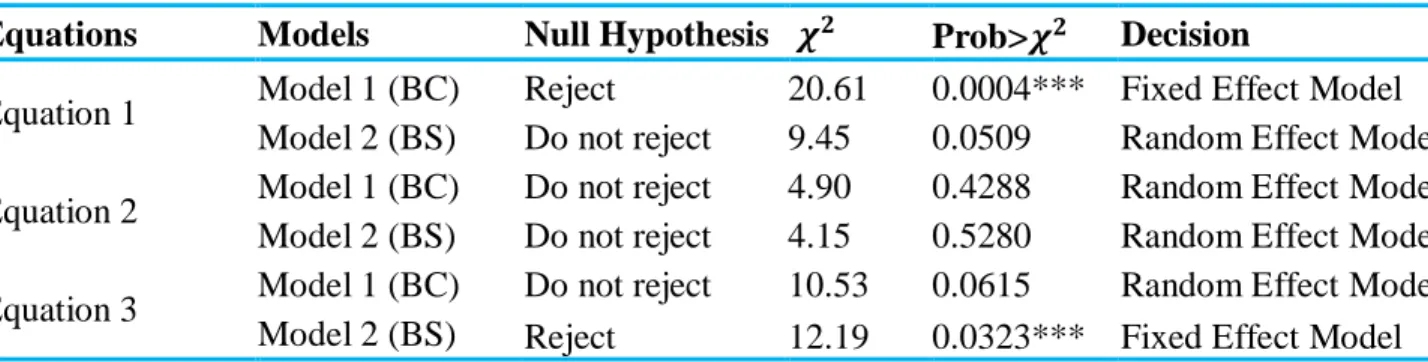
4.5 Hausman Test Results Summary... 12
4.6 Impact of Liquidity Reserve Requirement on Total Liquidity Creation ... 14
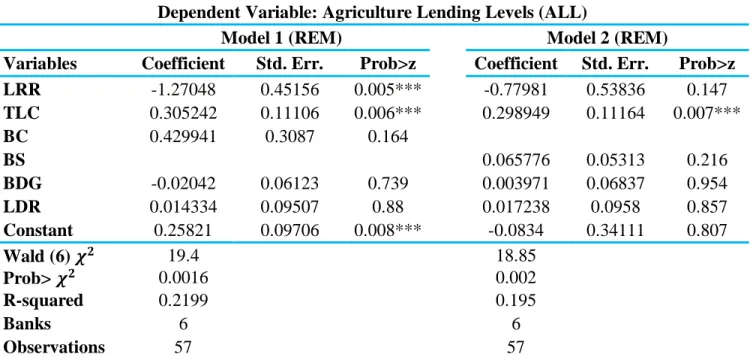
4.7 Impact of Liquidity on Agriculture Lending Levels ... 15
4.8 Total Credit Determinants ... 16
4.9 Conclusion ... 17
CHAPTER FIVE: CONCLUSION AND RECOMMENDATIONS ... 19
5.1 Introduction ... 19
5.2 Summary of Findings ... 19
5.3 Policy Recommendations ... 19
LIST OF REFERENCES ... 23
iv LIST OF ABBREVIATIONS
ACE Agricultural Commodity Exchange FEM Fixed Effect Model
REM Random Effect Model
AFIT Amended Financial Intermediation Theory AGRA Alliance for Green Revolution in Africa AICC African Institute of Corporate Citizenship ALL Agricultural Lending Levels
CR Credit Rationing
GDP Gross Domestic Product
GTPA Grain Traders and Processors Association IFAD International Fund for Agricultural Development IMF International Monetary Fund
LRR Liquidity Reserve Requirement
MFIT Modern Financial Intermediation Theory MMF Malawi Mudzi Fund
NGOs Non-Governmental Organization RBM Reserve Bank of Malawi
SACA Smallholder Agriculture Credit Administration TBLR Theory of Bank Liquidity Requirement
TC Total Credit
TLC Total Liquidity Creation USA United States of America
USAID United States Agency for International Development
WR Warehouse Receipt
v LIST OF FIGURES
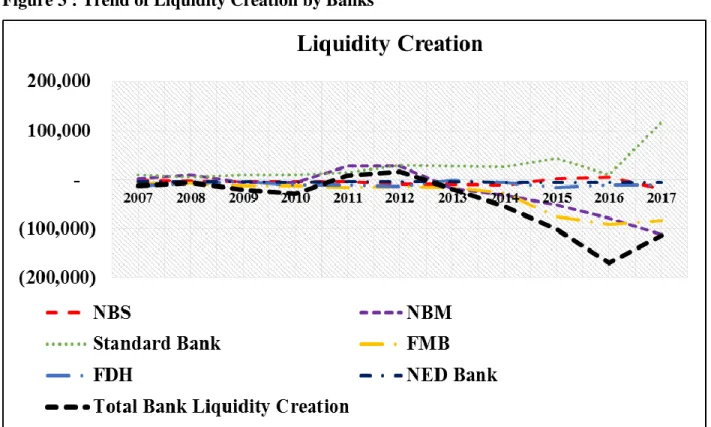
Figure 1 : Liquidity Reserve Requirement Trend for Malawi Banks ... 19 Figure 2 : Agriculture Lending Levels for 6 Banks in Malawi ... 24 Figure 3 : Trend of Liquidity Creation by Banks ... 12
vi LIST OF TABLES
Table 1: Summary of Banks’ Total Assets, Loans and Advances ... 16
Table 2: Lending Concentration Levels (2017) ... 17
Table 3 : Sectoral Share of GDP against credit concentration (2000 -2016 Averages) ... 23
Table 4 : (Stylized) Contemporary and Amended Theory of Financial Intermediation ... 30
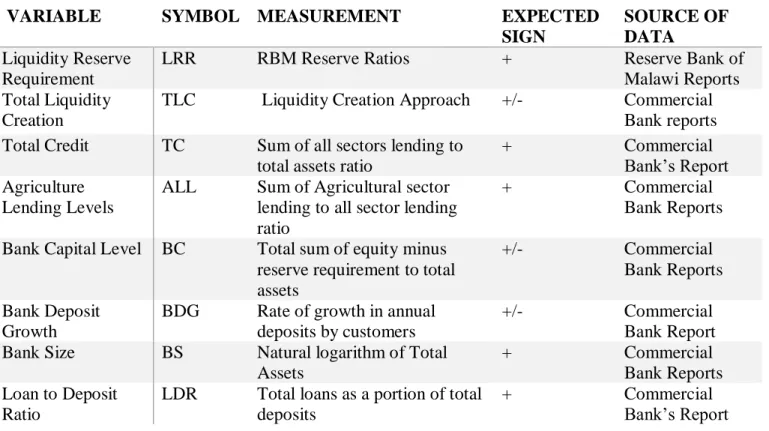
Table 5 : Definition of Variables ...7
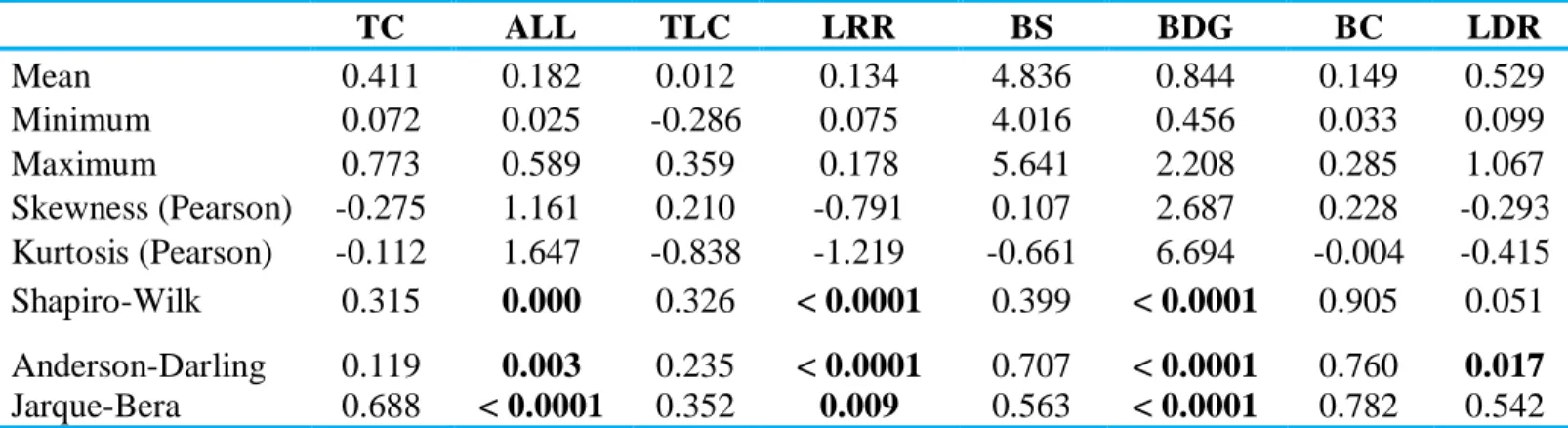
Table 6 : Descriptive Statistics ... 10
Table 7 : Pearson Correlation Coefficient Test Results Table ... 11
Table 8 : Summary of Hausman Test Results for Selected Model ... 14
Table 9 : Fixed Effect and Random Effect Models: Equation 1 ... 15
Table 10 : Results of Random Effect Model: Equation 2 ... 16
Table 11 : Results of Random and Fixed Effect Models: Equation 3... 17
vii ACKNOWLEDGEMENTS
I am as usual humbled by God the Almighty, for his abundant love and favour that have seen me this far. No level of self-effort can describe this journey. Lizzie Chimala, my beloved wife braced my fourth home absence in a space of 10 years just to allow me satisfy my unquenchable academic thirst. I can only hope that she will sustain this unique selflessness. Johannah “Jowala”. Rejoice
“Tamandani” and Gabriella “Babeya”, my beloved kids stood by me in this lonely journey. Thank you girls. I was lucky to be supervised by Dr. Abdul Latif Alhassan, a very committed scholar who obviously braced the irritation of both big and small errors, omissions and flaws in my several dissertation drafts. I am so grateful to him. My constant absence from Malawi was not only felt by family but equally so by my workplace, Church, Student Organization of Malawi and friends. I am thankful to all of them for their moral support. I benefited a lot from data collection assistance from Thocco Mpomba and Chinsinsi Chilimtsidya. Henry Mlinde, reviewed my statistical analysis and I am gratefully indebted to him. May God bless you Henry.
viii ABSTRACT
Malawi’s agricultural sector has remained the mainstay of Malawi’s economy since independence. Ironically, agricultural production and productivity are observantly below 50%
of their respective potentials. This is partly explained by low lending levels towards the agricultural sector by financial institutions. However, just as elsewhere, commercial banks in Malawi are under international obligations of ensuring financial stability by undertaking liquidity management framework and measures. One such liquidity management intervention is the liquidity reserve requirements (LRR). This study departed on the theoretical understanding that quantitative tightening through LRR affects the liquidity position (and funding needs) of the banking system which consequently affect lending levels towards the economy (Alper et al., 2016) and by induction, the agricultural sector. It is on these premises that this study sought to examine the impact of liquidity on agricultural lending levels in Malawi. The study employed secondary data from 6 commercial banks that have been in operation in the opted data period of between 2007 and 2017. Besides estimating total liquidity creation, three sets of relations were tested: the impact of LRR on Total Liquidity Creation (TLC); the impact of liquidity levels on Agricultural Lending Levels (ALL); and, the determinants of Total Credit (TC) in Malawi. To test the relationship between liquidity and lending the Malawian Banking sector, the study adopted the panel regression framework while fixed effects and random effects models were using in the estimations. The control variables included bank capital, bank asset growth, bank deposit growth and loan to deposit ratio. From the empirical analysis, the study shows that banks created liquidity of about 1.2% of total industry assets over the study period. For the period under observation, LRR positively affected TLC. Similarly, the impact of liquidity levels on ALL was positive. In general, TC was positively determined by Bank Deposit Growth and Loan Deposit ratios while LRR, TLC and Bank Capital affected TC negatively. This could imply that an increase in TLC does not automatically result into an increase of TC. The findings further indicate that LRR had a negative effect on ALL. In periods where LRR went up, ALL went down, possibly implying that banks shift to other sectors considered less risky even amidst rising liquidity levels.
.
9
CHAPTER ONE: INTRODUCTION 1.1 Background
Since independence in 1964 until the present, the agricultural sector has remained the mainstay of Malawi’s economy. As commented by African Institute of Corporate Citizenship (2017:1), “about 80% of the national employment comes from agriculture, making it not only an important springboard for any industrial efforts in Malawi but currently also the key source for the country’s economic development”. Ironically, “despite the majority being employed in the agriculture sector, only 40% of the Gross Domestic Product (GDP) – estimated at US$ 4.05 billion – comes from agriculture” (Economics Association of Malawi, 2018:3). This is so “because the yields for the main crops have always been below 50% of the potential levels” (AICC, 2017:1). The “main reasons for low productivity include the small landholding size which discourages the adoption of agricultural productivity-enhancing technologies as well as the erosion of soil fertility” (Chipeta, 2004:4). However, of utmost impact is limited access to agricultural finance by both smallholder and large scale farmers. “Beyond government's patches of direct intervention in agricultural lending, financial institutions' (commercial banks in particular) total lending towards the sector has been hovering around eight and twelve percent for the past 30 years” (AICC, 2017:4). The low lending levels towards the sector is largely attributed to the “risk nature of agriculture enterprises especially farming” (Bankers Association of Malawi, 2017:12).
On the other hand, commercial banks in Malawi and elsewhere, are under international obligations of ensuring financial stability by undertaking stringent capital and liquidity management. One such stringent capital and liquidity management intervention is the “systematic avoidance of highly risky loans such as agricultural loans” (Kalua, 2016:4). The liquidity reserve requirement (LRR) is “one such key financial framework which provided for the capital and liquidity management of commercial banks in Malawi” (BAM: 14). The primary motive for LRR is to ensure that liquidity risk is well managed. Specifically, LRR is considered as a preferable modality of managing liquidity risk due to a number of reasons. Firstly, it ensures that cash is maintained in advance which should save on liquidation costs (Alper et al., 2016). Secondly, as commented by Calomirisi et al (2012: 1) cash is observable and verifiable; and thirdly, “because the risk of cash is invariant to bankers’ decisions about whether to invest resources in risk management”. Calomiris et al (2012: 1) further argue that the primary benefits derived from LRR relate to “improvements in
10
bank risk profiles and incentives towards risk during normal times and the consequences of those behaviours for reducing probability of a liquidity crisis making banking systems more resilient from a default risk perspective”. However, different studies have generally confirmed that quantitative tightening through reserve requirements affect the liquidity position (and funding needs) of the banking system which consequently affect lending levels towards the economy (Alper et al., 2016, Calomiris, 2012). It is on these premises that this study sought to examine the impact of LRR on agricultural lending levels in Malawi.
1.2 Statement of Research Problem
As observed by (Calomiris et al., 2012: 4) “after the heavy reliance of banks on central bank lending during the 2007-2009 financial crisis, policy makers understandably would like to reduce the dependence of banks on the lender of last resort”, and “thus encourage banks to limit or self- ensure (through cash asset holding) some of their liquidity risk”. Minimum capital and liquidity reserve requirements are some of the modalities of ensuring that the dependence level on central bank as lender of last resort is minimized. Through LRR in particular, “a liquidity crisis in the economy is assumed to be reduced since the banks do not become weak enough to the extent of making their risk unimaginable” (Medina & Roldos, 2014:14). In addition, “the reaction of many economies to the recent surging capital inflow has been to keep policy rates at low levels in order to avoid excessive appreciation of the domestic currencies while engaging in macro prudential tightening to curb the rapid credit growth” (Calomirsis et al., 2012:5). The LRR has therefore been one of the most popular tools among unconventional monetary instruments (Medina & Roldos 2014). Most central banks—over 90 percent—oblige “depository institutions (commercial banks) to hold minimum reserves against their liabilities, predominantly in the form of balances at the central bank” (Gray, 2011: 65). The LRR is based on the belief that “banks with liquid assets and stable funding structures can effectively maintain their intermediation capacity amidst external negative economic shocks” (Medina & Roldos, 2014:14). As observed by Kalua (2016:56), “this ultimately builds a foundation for sustainable economic growth”.
The Reserve Bank of Malawi (RBM) periodically issues liquidity reserve directives whose objective is to use the LRR as “instrument of monetary policy while at the same ensuring flexibility in liquidity management” (RBM, 2017: 9). The LRR is observed in relation (or as a portion of) total deposit liabilities and other liabilities. Just in many countries, the LRR measure in Malawi is
11
implemented as a prudential measure, monetary control measure and liquidity management system (Gray, 2011). The latest 2015 directive has specific provisions for minimum LRR, deadlines for meeting LRR, penalty for non-compliance, use of funds for LRR and computation of LRR among other clauses. Presently, the LRR is 7.5% (of total deposits liabilites) which is expected to be observed as a minimum on daily basis. The link between LRR and credit growth in an economy has been a subject of vigorous research in the field of Banking and Finance (Kashyap & Stein:
2000; Kishan & Opiela, 2000, Alper et al., 2016). Gray (2011:56) confirms that “numerous studies have confirmed a direct impact of the increase or decrease in LRR on credit growth”. While some literature has confirmed bank liquidity as a factor that weakens the effectiveness of the traditional bank lending channel (Kashyap & Stein: 2000; Kishan & Opiela, 2000), others have considered liquidity requirement as a factor that enhances loan issuance (Cornett et al., 2011). The middle ground on the impact of liquidity requirement on bank lending is provided by Alper et al (2016:
12) who argue that “final effect of liquidity requirement on lending levels is dependent on the transmission mechanism of LRR on lending levels”. Depending on the assumptions around the substitutability of bank fund and bank deposits, the transmission mechanisms of LRR on lending levels are categorized into three channels namely: costs, interest rate risk and liquidity channels (Alper et al., 2016). Under cost channel, an increase in LRR ultimately leaves lending levels unchanged while under interest rate risk channel, an increase in LRR reduces loans (Alper, et al., 2016). The same applies for liquidity channel. Consequently, the “final impact of liquidity requirement on lending levels depend on the relative strength of the three channels” (Alper et al., 2016:13).
Liquidity creation remains one of the core roles of financial institutions (besides risk transformation). However, given that liquidity requirement impact bank’s liquidity creation and therefore lending ability (whether positively or negatively), it should follow that RBM’s LRR has some effect on commercial banks’ lending levels to the private sector. Whether the effect on total lending level or credit is the same on the agricultural sector or not was the core focus of this study.
Specifically, the study aimed at analysing the impact of liquidity on agricultural lending levels in Malawi. The proposed study departed on three sets of relationship as confirmed by literature: i) LRR has an impact on total liquidity creation; ii) total liquidity has an impact on total credit or lending levels (agriculture inclusive); iii) total credit has an impact on agricultural lending levels.
12 1.3 Research Objectives
1.3.1 Main Objective
In view of the above, the main objective of the study was to analyse the impact of LRR on agricultural lending levels in Malawi between 2007 and 2017.
1.3.2 Specific Objectives
To achieve the above objective, the following specific objectives were pursued:
i. To estimate the Total Liquidity Creation in Malawi.
ii. To examine the impact of Liquidity Reserve Requirement on Total Liquidity Creation.
iii. To analyse the impact of liquidity on total credit and agricultural Lending Levels in Malawi.
1.4 Justification of the Study
Although LRR have been implemented in many countries so far, the focus in many studies as observed by Horvarth et al (2012) has largely been on its impact on general lending levels across all sectors. There “has been little emphasis on the impact towards agricultural lending as compared to other economic sectors of the world” (Horvarth et al., 2012:4). It is imperative that an extra attention is given to agricultural sector not only in Malawi but also other Sub-Saharan countries that are largely dependent on agriculture and are at policy level baffled by low lending levels towards the agriculture sector.
Secondly, while the challenge of agriculture credit and finance has been extensively covered in literature, the focus has largely been on “other structural causes such as disorganized farmer groups, unpredictable weather patterns, price volatility of agriculture commodities and excessive controls by government in both import and export markets” (Mlinde, 2016: 23). There is scarcity of studies on the role of bank capital and liquidity on agriculture lending.
Thirdly, at the centre of Basel II capital requirement is the recognition that a “strong and resilient banking system is the foundation for sustainable economic growth since banks provide credit intermediation” (Basel Committee on Banking Supervision 2003: 5). Thus the accord is intended to “ensure both banks' solvency and liquidity creation” (Basel Committee on Banking Supervision
13
2003: 5). Given the multiple literature findings that confirm the possible reverse causality of liquidity and bank's solvency caused by Basel II capital requirement, it is critical that a special focus is given to the impact being created on lending levels towards countries' strategic sectors - agriculture in the case of Malawi especially at a time LRR is strictly being applied as a compliance to the Basel II.
1.5 Definition of Key Terms
The study frequently used a number of terms. To ensure proper localization of the study it is important that contextual definitions are provided at the onset. Some of the key terms used include in this study are bank capital, liquidity, liquidity creation, liquidity risk and maturity transformation.
Bank Capital as used in this study means the equity of the bank that serves as the “cushion needed to absorb any unreserved losses that the bank incurs thereby enabling the bank to operate as a going concern and thus avoiding the insolvency or bankruptcy during periods of market correction or economic downturn” (Gambacorta & Mistrulli, 2004:17). Regulatory capital therefore “is the minimum threshold levels required by regulators to protect against bank insolvency as well as to protect against losses to the deposits made by depositors “(Diamond & Rajan, 2000:43). Failure
“to maintain capital above regulatory thresholds leads to penalties and possibly bank closure”.
(Diamond & Rajan, 2000:43). “Regulatory capital thus runs contrary to economic capital which is an optimal level of capital that maximizes shareholder value in the absence of the regulatory requirements” (Gambacorta & Mistrulli, 2004:17).
Liquidity: while the general concept of liquidity implies the ability of an organization to make payments as they fall due, in banking realm, “liquidity implies the possibility or easiness of converting assets into cash without serious loss of time or money” (Whittlesey, 1945: 1). It therefore connotes the extent "relative to the volume and character of liabilities to which the bank holds assets that are either in form of cash or readily convertible into cash without material loss"
(Whittlesey, 1945: 1). Liquidity creation therefore is “the process by which banks transform liquid liabilities to illiquid assets” (Horvath et al., 2012). It indirectly determines the bank's ability to create loans.
14
Liquidity risk as used in this thesis means the risk that a “solvent bank (or financial institution) may find itself unable to manage its current flow of withdrawals from its own stock of liquidity and access to borrowed funds from others” (RBM 2017:3).
Liquidity reserves means the “eligible assets held by a depository institution for the purpose of satisfying the liquidity reserve requirement” (RBM 2017: 3).
Liquidity reserve requirement on the other hand is a “constraint imposed on all intermediaries (often in percentage or ratio form) that specifies the lower bound on the share of a short asset in the intermediary’s portfolio” (Farhi, et al., 2009:974). The regulator (central banks usually) do not need to “observe individual contracts signed by different agents with intermediaries but can only observe the aggregate portfolio allocation” (Farhi, et al., 2009:974).
Maturity transformation is a “process whereby assets are financed with liabilities of a shorter maturity” (Bhattacharya & Thakor, 1993: 29). The banks’ gains are twofold namely, a reword for bearing interest risk and a reward for the creation of liquidity.
Liquidity creation implies a process through which financial institutions create liquidity through among other channels, deposits, off-balance sheet guarantees, derivatives and other balance sheet and off-balance sheet financial activities (Berger & Sedunov, 2016). Liquidity creation is therefore in essence also a measure of financial intermediaries’ outputs.
1.6 Organization of the Study
The proposed study will be organized along five chapters as tentatively indicated below:
• Chapter 1: Introduction and Background: this chapter provide an introduction and background to the study. The problem statement, research objectives for the study and study chapter outline of chapter.
• Chapter 2: Literature Review: as a way of contextualising the impact of LRR on agriculture lending, this chapter undertake a literature review of empirical findings on the nexus between several variables namely LRR and total liquidity creation, total liquidity creation and total credit or lending levels as well as total credit and agriculture lending levels. The literature review is premised on the theoretical presentation on the role of financial institutions on lending process
15
as well as modalities in which lending processes are made possible.
• Chapter 3: Methodology: this chapter provide a detailed explanation of the research design, sources of data, types of data, data collection instruments, data analysis techniques and hypothesis testing techniques.
• Chapter 4: Discussion of Results: this chapter present and give an analysis of results based on the three specific objectives along the outcomes of hypotheses testing.
• Chapter 5: Conclusion and Recommendations: in this chapter a summary of study findings in line with the study's objective is provided. It draws implications and tentative generalisations on the impact of LRR on agriculture lending in Malawi. General recommendations along each of the major finding as they relate to development finance is provided.
16
CHAPTER TWO: LITERATURE REVIEW 2.1 Introduction
This chapter presents both Malawi’s banking system and agricultural landscape overviews. It presents two sets of theories: theories of financial intermediation and theory of bank liquidity. The first set aims at contextualizing the role of financial intermediaries and the mechanism through which the roles are discharged. The second set partly stems from the first set but goes further to discuss why and how liquidity reserve requirement is implemented by the financial intermediaries.
After a theoretical background, an analysis of literature along the study objectives is presented. It is the literature review in this chapter that informed model for analysis of data (in chapter 3).
2.2 Contextual Overviews
2.2.1. Financial Institutions and Intermediary Services Landscape in Malawi
Just as in many developing countries, “commercial banking system in Malawi forms most vital component of the financial sector responsible for accepting deposits and granting short-term credit to productive entities” (Mlinde, 2016: 34). The Reserve Bank of Malawi (RBM) is the core of the formal financial system responsible for ensuring the financial system’s soundness (Reserve Bank of Malawi, 2016). In Malawi, “the financial sector’s ability to grow and serve more markets is inhibited by key factors including high real rates of interest and uncertainty generated by macroeconomic instability” (IMF, 2015: 15). The financial sector in Malawi has nine commercial banks (providing savings, lending and other investment products) on top of other financial institutions namely National Bank of Malawi, Standard Bank, NBS Bank, First Merchant Bank, Ned Bank, Eco Bank, CDH Investment Bank, New Finance Bank, FDH Bank. Table 1 below presents a consolidated summary of total assets, credit and concentration levels.
Table 1: Summary of Banks’ Total Assets, Loans and Advances
2017 MALAWI KWACHA (MILLION
TOTAL ASSETS 1,572,300.00
LOANS AND ADVANCES 414,163.64
TOTAL DEPOSITS 995,500.00
Source: 2017 Malawi Financial Stability Annual Report
In terms of concentration levels, Agriculture came top with 22.3% in 2017 as shown in the Table 2 below although the preceding 10 years had agriculture on fifth position consistently.
17 Table 2: Lending Concentration Levels (2017)
Sector K’ MILLION %
Agriculture 97,358.3 22.03
Mining and Quarrying 1,102.0 0.25
Manufacturing 72,439.7 16.4
Electricity, water and gas 10,638.1 2.4
Construction and civil engineering 15,278.6 3.5
Wholesale and retail trade 103,889.9 23.5
Transport, storage and communication 26,069.3 5.9
Finance, insurance, real estate and business services 20,001.3 4.5
Community, social and personal services 46,613.8 10.6
Other sectors 28,341.05 6.4
Total 441,934.7 100
Source: 2017 RBM Financial and Economic Review
Private sector involvement in the financial sector, “including the entry of new players, has increased with financial liberalization measures” (BAM, 2017:2). Two banks, National Bank of Malawi and Standard Bank, dominate the sector with 58 percent of the sector’s assets, and 59 percent of its deposits (IMF, 2015: 5). The first foreign shareholders entered the market in 1994 following banking sector reforms. Majority of foreign controlled banks own over 46% of total assets in the sector, with most foreign owned investors entering the market through investments in new companies (RBM, 2016: 6). In recent years, other private firms including NBS, Leasing and Finance Company have expanded operations.
Around “95% of the total credit from the financial institutions is provided by the commercial banks, making their role in economic growth significantly critical” (RBM, 2017:5). In Malawi, Government Treasury Bills offer high real rates of return which consequently encourage their purchase. In addition to fiscal and monetary policies, “lack of competition in the banking sector has contributed to wide spreads between lending and borrowing rates (upwards of 20 percent) for the past five years” (IMF 2015:6). For example, minimum and maximum nominal lending rates of the two largest banks varied from 46 to 52 percent while the average nominal savings rate was 26
18
percent, representing a spread of 20 to 26 points in the past four years (Kalua 2016). It is in view of these dynamics that the banking sector in Malawi appears profitable with an average gross profit growth of 80 percent for the two major banks (Burritt, 2006).
Consequently, as commented by Kalua (2016: 18) “the high appetite by commercial banks to lend towards government's high deficits has continuously created disincentives towards private sector lending and for the development of the financial system in general”. For example, out of 78 percent of total credit by commercial banks, only 35 percent has been extended to private sector between 2005 and 2014 (IMF 2015). The very high rates of return to Treasury Bills “discourages banks from lending to the private sector besides discouraging banks from competing with each other to attract clients with services and competitive pricing that translates into lower real rates of interest for clients” (Kalua, 2016: 19).
The major casualty of low credit levels to private sector has been agriculture. AICC (2017: 23) estimates that “the average lending towards the sector has been consistently below 12% for the past 10 years”. There are at least four major reasons that possibly explain this outcome. Firstly, Commercial banks consider lending to the agricultural sector as a risky investment and prefers to lend to non-farm sectors (Malawi Government, 2017). “Product markets and input markets for agricultural growth are still functioning poorly” while with “respect to product markets, most smallholder farmers are poorly organized and lack of bargaining power over pricing of produce”
(AICC, 2016:14). As a result, transaction costs remain high due to low traded volumes of agricultural produce and lack of agriculture financing (Malawi National Agricultural Policy, 2017). Secondly, consistently high levels of interest rate increase non-repayment levels of loans by both farmers and other agricultural value chain players (ECAMA, 2018). Interest rates on loans in Malawi are far higher than in the other countries in the Southern African Development Community region (IMF, 2015). Thirdly, commercial banks in Malawi “are biased towards urban areas and town centers thereby denying the service to the agricultural value chain activities which are predominantly undertaken in the rural areas by rural dwellers” (Malawi Government, 2017:32) Finally, with poorly defined land rights in Malawi, “the ability of rural farmers to offer collateral to commercial banks as a condition for accessing credit is greatly hampered” (AICC, 2016:21).
19
However, although Malawi’s literature on Bank lending does not confirm the effect of Liquidity Reserve Requirement (LRR) on lending levels, evidence elsewhere shows its effect on general lending levels. In Malawi, the LRR set Reserve Bank of Malawi (RBM) through Monetary Policy Committee remained constant from 2009 to 2014 at 15% which was revised and reduced to 7.5%
as shown by Figure 6 below.
Figure 1 : Liquidity Reserve Requirement Trend for Malawi Banks
Source: Own Depiction from RBM Data
2.2.2 Malawi's Agricultural Landscape
Although agriculture is Malawi's backbone, the irony is that “175 inhabitants occupy one square kilometre of arable land, putting Malawi as one of most densely populated countries in Africa”
(IMF 2015:3). Ironic also is the fact that, despite having one short rainy season (of four to five months), farming is predominantly rain-fed. Within the agriculture sector, there are limited products, with maize dominating and grown by about 80% of smallholder farmers (AICC, 2016).
The main exports are consequently agricultural raw materials. Tobacco continues to be the main export (which alone contributes over 65% of the value of exports) followed by tea and sugar, along with a range of other food crops (AICC, 2016) – despite the international anti-smoking campaign.
Evidently but not surprising, “the sector suffers from myriad challenges ranging from weather conditions, small landholding size and fragmentation, low markets access and value addition besides access to finance” (Malawi Government, 2017: 4). These factors as commented by Mlinde
20
(2016: 32) “account for sub-optimal yield of 50% below the potential levels in all agricultural value chains”.
2.2.2.1 Evolution of Agricultural Lending in Malawi
During the colonial era, the Malawi Government provided farm credit “as part of colonial economic policy that promoted commercial production to supply the colonial administration”
(Mawaya, 1994: 14). Agricultural credit under the colonial regime targeted large-scale commercial farmer’s especially political leaders. This approach of farm credit, as commented by Kalua, (2016:
5) “neglected rural small-scale farm production and influenced post-independence rural credit policies”. This was the outcome, because after independence, “the government adopted this approach although the clientele was broadened based on a master farmer approach (Kalua, 2016:
5). However, due to high rate of default, “government failed to recover the loans it gave out to, hence made a decision of granting credit to large indigenous farmers” (Chirwa, 1995: 5). In late 1970s, farm credit was extended to small-scale farmers based on group lending approach with constraint to it. For a group to access the credit, it was required to deposit 10 percent of the requirement upfront as part of the contractual agreement. This scheme was consolidated into the smallholder agricultural credit administration (SACA) in the year of 1985/86 growing season (Kalua, 2016).
The credit division with the Ministry of Agriculture was transformed into the Smallholder Agriculture Credit Administration (SACA) was a department of the Ministry of agriculture that provided seasonal agricultural loans to smallholder farmers. (AICC, 2016) The project was introduced to support the country’s efforts to promote food security and expansion and diversification of smallholder production (Malawi Government, 2017). Smallholder families were anticipated to benefit from the increased crop production resulting from improved farm technology applied with the use of credit and extension (Kalua, 2016). SACA was providing credit to smallholder farmers. In its initial years it was able to meet its operating costs from its income (Kalua, 2016). This program was unsustainable because throughout the year of its operation, it faced administrative and operation burdens which resulted in the substantial financial losses (AICC, 2016). During implementation of SACA, the repayment performance was impressive with repayment rate of 79 percent in the years between 1985 and 1990 (Kalua, 2016). This performance was disrupted by political instability in 1991 season that led to the transition to multiparty democracy and subsequent drought that destroyed crops in 1991 bringing in difficulties in loan
21
repayments and economic recession which led to the collapse of SACA (Malawi Government, 1990).
Another well-known program was by Malawi Rural Finance Company (MRFC), this was a creation of the Malawi Government with funding from World Bank following the collapse of SACA. Since 1994, MRFC inherited the operations of SACA, its portfolio was giving loans to the state, besides that, MRFC’s target clientele was smallholder farmer’s organized into joint liability credit groups of 5 to 10 members (AICC, 2016). MRFC mostly provides seasonal agricultural loans for seed, fertilizer and pesticides for the crops. It also offered short-term and medium term loans for farm equipment (Malawi Government, 1990).
Malawi Mudzi Fund (MMF) was another initiative which was introduced in the agriculture sector.
This was a pilot credit and savings scheme, it was a separate World Bank funded agricultural credit project and also supported SACA (Kalua, 2016). MMF was supported by the International Fund for Agricultural Development (IFAD). The pilot scheme visualized a program to the rural poor following certain aspects of the Banglash Grameen Bank approach (Malawi Government, 1995).
MMF operated as a separate legal entity from SACA and commenced its functions in June 1990, a year behind schedule due to delays in positioning its staff and lack of coordination between the Ministry of Finance and the Reserve Bank of Malawi regarding the opening of a special account (World Bank 2000). At the beginning of the pilot, MMF was offering cheap credit to its beneficiaries and the program was sustained through the funds from donors. It was later discovered that in order to eliminate the subsidy, MMF was supposed to charge normal interest rates unlike what was charged (Chirwa, 1998). According to Hulme and Mosley (1996) there is evidence of positive association between access to credit and increase in income due to Malawi Mudzi Fund.
For example, the increase in income participants in the MMF credit program average percentage of the average income change of the control group was 117% (Hulme & Mosley, 1996: 21). On the other hand, the increase in participant’s income were higher at 9.1% in families above the poverty line compared to a decline among families below the poverty line (Hulme & Mosley, 1996:
21).
Warehousing receipt has been another venture of agriculture financing. Malawi’s first pubic warehouse receipt was issued at GSL silos in Kanengo, Lilongwe. The Agriculture Commodity Exchange for Africa (ACE) and Grain Traders and Processors Association (GTPA) implemented
22
the system. The Agricultural Commodity Exchange for Africa (ACE) has advocated for a Warehouse Receipt System (WRS) as an integral part of agricultural trade and financing since its incorporation in 2005 (ACE, 2011). ACE grain deposits are in turn backed by a warehouse receipt which can immediately be financed by a bank. This provides “buyers an opportunity to purchase more grain of a known quality and quantity, whilst at the same time providing the depositor the prospect of accessing funds to meet immediate needs, and at the same time, keeping ownership of the grain” (AICC, 2016: 27). A number of donors, common fund for commodities, EU, AGRA and USAID are funding diverse components of the system, ranging from software development, rural warehouse restoration, trainings, linking farmers and actual implementation. However, Malawi does not have a regulatory framework for warehouse receipts (WRs) so the system has to be built on contractual relationships between grain depositors, storage operators, financial institutions and ACE.
Over the last 10 years, development partners, NGOs and private sector players progressively recognized value chain as the key lens through which they understand farming, processing and distribution to consumption markets for a particular agricultural commodity. It is for that view, that the agricultural interventions by development partners, NGOs and private-sector players increasingly use (at least partially) the value chain approach and seek to facilitate the improved functioning of value chains (USAID 2007. In value chain approach, improving access to finance along the value chain is now recognized as essential component. However, Agricultural value chains collectively have needs and challenges that surpass the needs of particular actor, some of which can be met or alleviated in part by improving access to financial services.
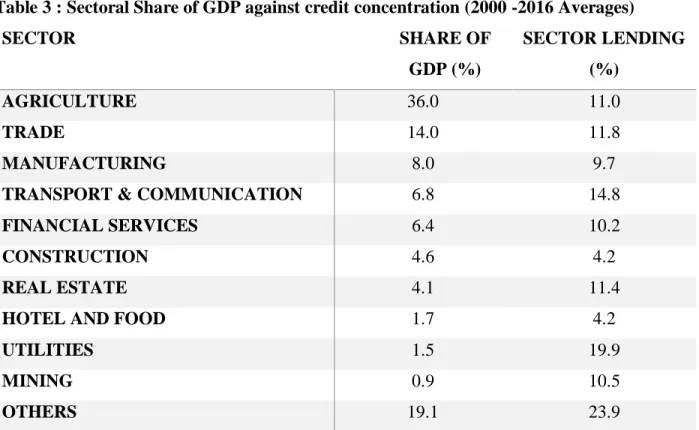
Presently, the occurrence of lending for agriculture is well below the share of the sector as a percentage of GDP. Table 3 below show sector’s share of GDP and Domestic private credit between 2000 and 2016.
23
Table 3 : Sectoral Share of GDP against credit concentration (2000 -2016 Averages)
SECTOR SHARE OF
GDP (%)
SECTOR LENDING (%)
AGRICULTURE 36.0 11.0
TRADE 14.0 11.8
MANUFACTURING 8.0 9.7
TRANSPORT & COMMUNICATION 6.8 14.8
FINANCIAL SERVICES 6.4 10.2
CONSTRUCTION 4.6 4.2
REAL ESTATE 4.1 11.4
HOTEL AND FOOD 1.7 4.2
UTILITIES 1.5 19.9
MINING 0.9 10.5
OTHERS 19.1 23.9
Source: Own compilation from RBM Economic and Financial Statements
Table 1, shows that only 11% of lending goes to agriculture, even though it accounts for around 36% of GDP and being the highest contributor to the GDP. In Malawi, “the agriculture sector employs 87% of the labour force, creates 36% of GDP (54% including distribution), and 90% of exports” (AICC 2017: 5). Smallholders dominate agricultural production and their share of total production relative to estate farms is growing (Kalua, 2016). Despite agriculture’s prominence in the economy, commercial bank advances in the sector has significantly fluctuated in the period under study with most banks registering a similar declining and increasing trend as shown Figure 2 below.
24
Figure 2 : Agriculture Lending Levels for 6 Banks in Malawi
Source: Authors Own Depiction Banks Balance Sheets and RBM
2.3 Theoretical Framework: Lending Behaviour and Mechanisms of Financial Institutions Understanding how LRR affect lending levels would require putting into perspective how and why lending institutions discharge their roles. With regard to the “how” lending institutions discharge their duties, Finance and Banking literature generally provides four key financial processes which are relevant to the understanding this role. These are financial mobilization, intermediation, maturity transformation, risk transfer and financial deepening and repression. Mobilization in finance is mainly concerned with “moving surplus funds form savers to those who have the need for funds but do not have them” (Kalua, 2016:32). Put differently, financial mobilization ensure that surplus funds are attracted from savers and are put into productive use (through invest ment lending). Intermediation on the other hand happens when “an individual, institution or market sources funds and then issues a claim against itself: the claim eventually end up as liabilities on the balance sheet” (Kalua, 2016:33). The claims that the supplier of funds acquires from the user of the funds appear as asset on the intermediary’s balance sheet. In this way, the intermediate serves as the link between those with loanable funds (savers) and user who do not have funds of their own (borrowers) but have investment opportunities. Maturity transformation helps “banks to borrow short term money and invest in long term duration projects: (Qi, 1998: 198). Banks by their very nature are best placed to be efficient in maturity transformation since they are able to raise
25
money through deposit mobilization (Jaffee & Modigliani, 1969). The fact that financial institutions have a large number of lenders or depositors reduces the risk of an expected upsurge in withdrawals (Qi, 1998). With regard to risk transfer, a bank “ensures a fair distribution of inherent risk and returns through taking one or two guarantees or through taking an equity stake in a given project” (Jaffee & Modigliani, 1969: 851). Finally, financial deepening occurs when
“the rate at which financial assets are accumulated is faster than the rate at which non-financial assets are accumulated” (Qi, 1998: 200). In the case of financial repression, government controls the cost of borrowing.
All the above processes are therefore relevant to the understanding of bank lending processes.
However, the intermediation role remains cardinal to the lending processes of the banks. Two theories of financial intermediation will therefore be examined in this study. With regard to why banks decide to or not to lend, bank liquidity reserve requirement and credit rationing are of cardinal importance in understanding the lending patter of banks. The theories of liquidity reserve requirement and credit rationing will therefore be examined below.
2.3.1 Modern Financial Intermediary Theory
The Modern Financial Intermediary Theory (MFIT) is built on the notion around the reasons for the existence of intermediaries. MTIF uses the foundations of modern theory of finance which has three pillars namely: optimality, arbitrate, and equilibrium (Scholtens & van Wensveen, 2003).
Optimality refers to the “notion that investors aim at optimal returns while arbitrage implies that the same assets has the same price in each single period in the absence of restriction” (Scholtens
& van Wensveen, 2003: 34). Equilibrium implies that markets are cleared by price adjustment – through arbitrage – at each moment in time. In the perfect market for capital or Arrow-Debreu world, as observed by Calomirisi and Kahn (1991: 42), the following criteria usually must be met:
- “No individual party on the market can influence price”
- “Conditions for borrowing/lending are equal for all parties under equal circumstances”
- “There are no discriminatory taxes”
- “Absence of scale and scope economies”
- “All financial titles are homogeneous, divisible and tradable”
- “There are no information costs, no transaction and no insolvency costs”
26
- All market parties have ex ante and ex post immediate and “full information on all factors and events relevant for the (future) value of the traded financial instruments”.
In the Arrow-Debreu market, “savers and investors find each other because they have perfect information on each other’s preferences at no cost in order to exchange savings against readily available financial instruments” (Qi, 1998: 204). In addition, the supply of capital is sufficiently
“diversified so as to provide the possibility of full risk diversification, courtesy of complete information and homogeneous expectations on market parties” (Calomirisi &Kahn, 1991: 42) Qi, (1998: 201) argues however that as “as long as the above factors do not hold and there are deviations from this perfect world, intermediation will creep in to exploit the situation”.
Intermediaries will creep in to bring savers and investors together and to create instruments that meet their needs. According to MTIF, “financial intermediaries are active because market imperfections prevent savers and investors form trading directly with each other in an optimal way” (Diamond & Dybvig , 1983: 45). MTIF argues that that there are three avenues or opening under which financial intermediation is made possible. These modes are in principle the core reasons for the existence of financial intermediaries. These are information problems (asymmetry), transaction costs and regulatory factors.
From an asymmetric information argument, “ex ante asymmetries (which lead adverse selection challenge), interim asymmetries (which cause moral hazard) and ex post asymmetries (which result into auditing and costly state verification and enforcement) jointly create market imperfections which results into some (transaction) costs” (Calomirisi & Kahn, 1991: 42). Financial intermediaries partly overcome these costs since they act as “coalition of depositor that provide household with insurance against idiosyncratic shocks that affect their liquidity position”
(Diamond & Dybvig , 1983: 45) Besides acting as coalition of depositors, banks also act information sharing coalitions as well as “delegated monitors on behalf of ultimate savers” (Qi, 1998:200). In case of” households that do not turn to intermediated finance but prefer direct finance, there is a still a brokerage role for financial intermediaries such as investment banks”
(Diamond & Dybvig, 1983: 45). Here the reputation effect is also at stake. In financing, “the reputation of the borrower and that of the financial are relevant” (Diamond & Dybvig, 1983: 45).
Information asymmetry studies focus on bank-transaction based lending and lender relation. In
27
transaction-based lending “class information that is relatively available at the time of loan origination is used while in relationship lending, data gathered over the course of the relationship with the borrower is used’ (Qi, 1998:204).
Under the transaction approach, the assumption of complete markets are not contradicted. The approach is based on the “non-convexities in transaction technologies” (Diamond & Dybvig, 1983:
45). Here the financial intermediaries act as “coalition of individual lenders or borrowers who exploit economies of scale or scope in the transaction technology” (Diamond & Dybvig, 1983:
45). The notion of transaction costs here is not restricted to monetary costs but also search costs, monitoring and auditing. Here the role of financial intermediaries is “to transform particular financial claims into other types of claims consequently offering liquidity” (Qi, 1998:200). Thus unlike in the information asymmetry approach, the reason for existence of financial intermediaries under transaction costs approach is exogenous.
The third approach focuses on financial intermediaries’ existence from the angle of regulation on money production as well as savings in the financing of the economy. It is argued that regulation affects solvency and liquidity with the financial institution. The activities of intermediaries inherently “ask for regulation”. This is so because “the banks by the way of their activities are inherently insolvent and illiquid” (Diamond & Dybvig , 1983: 45).
Despite the general usefulness of MTIF, there are inherent weakness that render its usefulness limited. Its inherent weakness stems from the fact that relies so much neoclassical concept of perfect competition (Qi, 1998). Three key flaws are conspicuous. Firstly, “in view of the liberalized and deregulated financial market, advancement in information technology, communication revolution as well as instant availability of important macroeconomic data and monetary data in real time on the global level, the theory would imply that financial intermediaries are becoming superfluous” (Qi, 1998: 204). However, evidence in the real world shows that their economic importance is higher than ever and appears to be increasing (Diamond & Dybvig, 1983).
Secondly, as others have observed, it is increasingly becoming evident that the “main determinant of the relative size of the country’s financial system is the separation of the functions of savings and investing among different economic units” (Qi, 1998: 205). Tremendous theoretical and
28
empirical studies find that a well-developed financial system is beneficial to the economy as a whole (Jaffee & Modilglian, 1969). Financial intermediation affects economic growth by acting on the saving rate – a fraction that goes towards productivity and investment (Qi, 1998). Besides determining the level of investments and savings, financial intermediation increases efficiency in the allocation of financial funds in the economic system.
Finally, even in the case where there is “evident substitution of bank held assets (loans) by securitized assets held by the public” (equity and bonds for example), this cannot be seen as a sign of “disintermediation process” (Qi, 1998: 205). In practice, banks are increasingly becoming essential in the processes of securitized instruments as they initiate, arrange and underwrite the floating of these instruments (Jaffee &Modilglian 1969).
2.3.2 Amended Financial Intermediation Theory
The amended financial intermediation theory (AFIT) departs on premise that in the “real world, financial intermediaries do not consider themselves agents who mediate between savers and investors by procuring information on investors to savers and by selecting and monitoring investors on behalf of savers” (Calomirisi & Kahn, 1991: 14). AFIT argues that this is not the job of financial intermediaries. Instead, they mainly deal in money and risk. Thus it is risk and risk management that drives value creation on the part of banks. “The nature of value added by financial intermediaries through financial instruments are not created by savers and investors themselves (individually) by rather by financial intermediary intensified by the competition in the market place between existing financial institutions and new entrants which strongly stimulates innovation of new financial products in order to compensate for profit erosion on existing standard products” (Qi, 1998: 200). AFIT argues that although risk management has become a key area of intermediation activity, MTIF has offered little to explain why institutions should perform this function. AFIT argues that under MTIF, risk appears as a negatively operating factor or peripheral.
It is considered to result in adverse selection, credit rationing and moral hazard “yet the absorption of risk is the function that bridges a mismatch between the supply of savings and demand for investments as savers are on average more risk averse than investors” (Qi, 1998: 201). Thus risk (maturity, counterparty, market, life expectancy and income) is the core business of financial
29
industry. Financial intermediaries can absorb risk on the scale required by the market because their scale so1.
AFIT argues that even with perfect information, “the time and risk preferences of savers and investors fail to be matched completely by the price (interest rate) mechanism thus it is the financial intermediary that has to with these missing links by managing risks in order to allow for the activities of other types of households within the economy” (Qi, 1998:201). It is argued that financial intermediaries diversify risk and exploit economies of scale especially when investors want to invest in firms. In such a scenario, “research, legal and organization costs associated with such investments can be prohibitive for a single investor but an intermediary can perform these tasks for a group of investors, thereby lowering the cost per investor” (Qi, 1998: 201).
AFIT does not deny the pivotal role information plays in financial intermediation process. On the contrary, “under the strong influence of modern communication technologies and of the world wide liberalization of financial services, the character of financial intermediation process is changing rapidly” (Qi, 1998:202). This has consequently caused a decrease in traditional form of financial intermediation, (on-balance sheet banking) and fastened the pace and intensity of counterpart of financial intermediation (capital markets where savers and investors deal in marketable securities) (Calomirisi & Kahn, 1991). AFIT argues that “capital market processes would be unthinkable in the absence of financial intermediaries’ bridging of difference risk preferences of market parties by means of derivatives” (Qi, 1998: 203). In summary, AFIT and MTIF have the following differences as shown by Table 4.
1 It is important to note that although information asymmetry includes risk, risk involves more than uncertainty by a lack of complete information. Risk refers to a chance that of unpredictable emergencies for both contracting parties.
In other words, not asymmetric distribution of information but no secure information at all even with perfect ad hoc information on both sides, on future events I the at the heart of financial business.
30
Table 4 : (Stylized) Contemporary and Amended Theory of Financial Intermediation
MTIF AFIT
Static: Perfect market differentiation Dynamic: market Development; market Market imperfections development Product innovation and market
Financial intermediary is an agent between savers and investors, monitors loans on behalf of depositors
Financial intermediary is an entrepreneurial provider of financial services
Efficient allocation of savings Qualitative asset information; risk transformation
Transaction costs Value creation
Asymmetric information Customer orientation, both to real investors and savers
Adverse selection, moral hazard, credit rationing, auditing
Risk Management, risk/reward optimization
Regulation as market imperfection Regulation for institutional and systematic risk control
Disintermediation Dynamics of intermediation (new markets, new products, new agents)
Source: Calomirisi & Kahn, 1991: 45
2.3.3 Theory of Bank Liquidity Requirements
The theory of bank liquidity requirements (TBLR) is grounded on the “rightfulness or appropriateness of cash requirement (reserves) as compared to capital for prudential regulation”
(Diamond & Dybvig, 1983: 65). It presents three justifications for cash holding as a prudential regulatory framework: i) “maintaining cash in advance saves on liquidation costs”; ii) “cash is observable and verifiable” (while measuring capita requires a valuation of the loan portfolio, measuring cash does not) and iii) “because the riskiness of cash is invariant to bankers’ decisions about whether to invest resources in risk management, greater cash holdings improve incentives to manage risk in the non-cash asset portfolio of risky assets held by the bank” (Qi, 1998: 2005) TBLR presents three scenarios under which liquidity reserves are equally necessary. The first scenario is “stand-alone autarkic banking equilibrium where cash is held voluntarily by banks as a commitment device to manage risk properly” (Diamond & Dybvig, 1983: 66). Under this
31
scenario, increasing cash holdings response to adverse news stems from depositors’ incentives to withdraw funds (Diamond & Dybvig, 1983). Thus although there is no regulation of liquidity in this scenario, voluntary choice of liquidity reserve level is important. The second scenario is where there are multiple banks. Under this scenario, there is diversified risk. The “coalition of banks will commit to lend each other funds in response to ban-specific needs to accumulate cash. In that equilibrium, cash requirement will be imposed by the group to prevent free riding on efficient interbank liquidity assistance and cash requirements will be less than cash holdings voluntarily held in the autarkic equilibrium” (Diamond & Dybvig, 1983:67). The third scenario has a government deposit insurance. In this set-up, “cash holding will be set higher than under either the autarkic or multiple bank equilibrium since in the presence of deposit insurance, higher cash requirements are necessary to prevent moral hazard and ensure proper risk management”
(Diamond & Dybvig, 1983: 67). TBLR argues that beyond insurance role, “liquidity requirements encourage good risk management making the banking system more resilient from a default risk perspective” (Qi, 1998: 2005). It argues further “that not only does cash mitigate the liquidity risks attendant to exogenous shocks, it also mitigates endogenous default risk” (Qi, 1998: 2005)
Just like MFIT, the starting point for TBLR is a perfect market scenario where there are no transaction or information costs. This is called Black-Scholes-Merton framework. In this framework, “all information that can be known is known equally to all parties and all securities are equally liquid and can therefore be sold for their true value without incurring liquidation costs”
(Qi, 1998:203). In that set-up, the only special feature of cash is that it has no risk. From the
“standpoint of prudential regulation, greater cash holding and greater reliance on equity finance each reduce default risk of the bank” (Qi, 1998: 203). More cash assets under this set up reduces asset risk while more equity reduces default risk for any given level of asset risk. Thus cash and equity (bank capital) under this framework are two alternative ways of reducing default risk. Given that the prudential goal of controlling default risk can be achieved through different combinations of the two, there is no optimal combination of cash-to-asset ratio and equity-to-asset ratio (Qi, 1998).
However, when the Black-Scholes-Merton assumptions are relaxed, the effects of cash and equity on default risk are not the same. For example, Diamond and Dybvig (1983) found that the physical costs of liquidation make liquidity risk costly which could motivate the holding of inventories of
32
liquid assets. As further observed by Calomirisi and Kahn (1991) depositors also receive noisy and independent signals about risky portfolio outcome of the bank. Thus by holding reserves, banks insulate themselves against the liquidity risk of a small number of misinformed early withdrawals in states of the world where the outcome is actually good. Without those reserves, “banks offering demandable debt contract would unnecessarily subject themselves to physical liquidation costs when they fail to meet depositors’ requests for early withdrawal” (Diamond & Dybvig, 1983: 68).
Since equity is undesirable means of controlling risk because of the hg costs of raising equity, cash holding is regarded as desirable because it is cost effective in reducing default risk (Qi, 1998).
3.2.4 Theory of Credit Rationing
Credit Rationing (CR) broadly “refers to any situation in which lenders are unwilling to advance additional funds to a borrower even at a higher interest rate” (Mlinde, 2016: 78). Jaffee and Modilglian, 1969: 850-851) define CR as a situation “in which the demand for commercial loans exceeds the supply of these loans at the commercial loan rate quoted by the banks”. By implication, changes in the interest rate cannot be used to clear excess demand for loans in the market which entails that CR is a supply-side phenomenon with the lender’s supply function becoming perfectly inelastic at some point. Thus, as observed by Jaffee and Modilglian (1969: 851), credit rationing occurs in circumstances where either:
a) “Among loan applicants who appear to be identical some receive a loan and others do not and the rejected applicants would not receive a loan even if they offered to pay a higher interest rate”; or,
b) “There are different identifiable groups of individuals in the population who with a given supply of credit are unable to obtain loans at any interest rate, even though with a larger supply of credit, they would”.
Practically, the above implies two situations. Firstly, the “one in which increases in the interest rate cannot clear excess demand in the loan market, whether this excess demand reflects a single borrower who would like a larger loan amount or any” (Kalua, 2016: 56). The second one as presented by Stiglitz and Weiss (1981), is where some borrowers are completely rationed out of the market, even though they would be willing to pay an interest rate higher than prevailing in the market.
33
The interest in CR has always emanates from the “role it plays in transmitting the macroeconomic effects of monetary policy on the economy and its role in explaining the development and underdevelopment of financial institutions in developing countries” (Munnell et al., 1996:12).
Interest in CR also emanates from its ability to explain bank fragility, especially bank-runs. Seen from this perspective, CR happens in a reversed way since customers decide on the quantity of deposits (to leave or give to banks) regardless of price of the deposit (Munnell et al., 1996). Finally, interest in CR has largely increased due to increasing interest in different loan denial rates across different groups. (Munnell et al., 1996).
As observed from Scott (1957: 45), the earliest discussion on CR viewed it as a “non-equilibrium phenomenon arising either because of exogenous interest rate rigidities or because of a lack of competition in the loan market”. Soon after Scott’s (1957) analysis, subsequent authors made a distinction between temporary CR (where market interest rates are slow to adjust to exogenous shocks such as changes in the lenders costs of funds or borrower demand) and equilibrium CR (which persists after the market has fully adjusted to these shocks. Of the two, equilibrium CR has been hard to explain. Hodgman (1960), was the first to explain it under what he called rational equilibrium framework. Under this framework, “lenders evaluate potential borrowers on the basis of the loan’s expected return-expected loss ratio” (Hodgman, 1960: 23). It further assumes that
“there is maximum repayment that the borrower can credibly promise, which effectively limits how much the lender will offer the borrower regardless of interest rate” and eventually the expected losses become too great relative to the expected return” (Mlinde, 2016: 81). Miller (1962) tried to beef-up Hodgman (1960) analysis by arguing that Hodgman’s analysis could be made consistent with rational expectation between the borrower and lender by incorporating bankruptcy costs that would be incurred by the lender upon the borrowers’ default. Freimer and Gordon (1965) resolved Hodgman’s (1960) and Miller’s (1962) analyses by showing that CR can occur with a risk-neutral lender if the borrower has a fixed-sized funding need. This was done with the assumption of an exogenous interest rate. Jaffee and Modigliani (1969) completed the picture by endogenozing the equilibrium interest rate by modelling both the supply and demand sides of the market.
From the modern perspective, while Akerlof’s (1970) article on adverse selection partly explained CR, it was Jaffee and Russell (1976) who provided an expected asymmetric information rationale