The problem and its setting
- The statement of the problem
- The statement of the sub-problems
- The hypotheses
- The limitations
- The definitions of terms
- The assumptions
- The importance of the study
- Research methodology
Data was collected and statistically analyzed to determine the main causes of delays in a ranking order with the help of the statistics department at the University of Pretoria. Data were collected and statistically analyzed to determine the methods used in programming with the assistance of the statistics department at the University of Pretoria.
Literature review
Delays
Failure by the contractor to give notice of a deadline extension in a reasonable time may result in the contractor losing its right to a revision of the date of practical completion. The Botswana government contract does not specify a time limit within which the contractor is required to give notice to request an extension of time after becoming aware of the potential delay.
Programming of resources
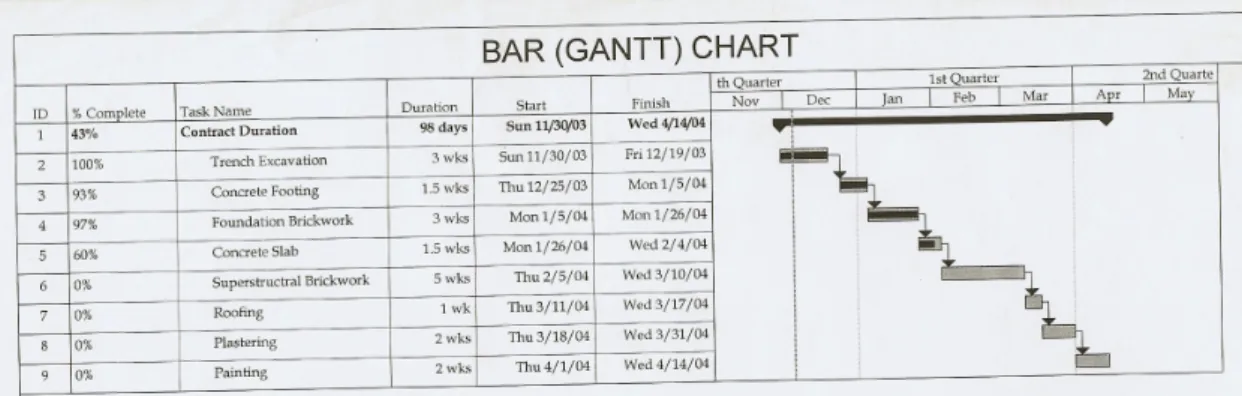
The critical path method has been most useful where the size and complexity of projects make bar charts inadequate. In other cases, the critical path method is used where it is imposed on the contractor by the contract terms.
Contract strategy
The management method is where the employer appoints a company (usually known as project managers) to manage and coordinate the design and supervision of the project. The all-encompassing method is where the employer appoints a company to undertake both the design and construction of the project.
Determination of contract periods
South Africa's public works department uses graphical methods to determine construction periods. It is important to note that when the procedure for calculating construction periods is established, its effectiveness must be checked.
Summary
CP de Leeuw (1988) has developed a formula for determining construction deadlines and this formula has been applied to most construction contracts in South Africa. CP de Leeuw has developed a formula for determining construction periods and this formula is used by most professionals in the built environment in South Africa.
Introduction
Data-collection method
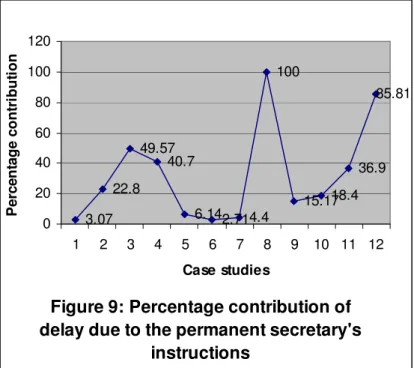
A list of delayed housing developments carried out by the State is shown in Appendix 7. To further clarify point (c) above, point 1 (scope of the contract) states the Permanent Secretary's instructions as follows:. i) Variation or alteration of the design, quality or quantity of the works or addition or omission or substitution of works (ii) any discrepancy in the drawings or between the bill of quantities. iii) removal from the site of materials brought there by the contractor and replacement of other materials therefore (iv) removal and/or re-execution of works carried out by. (v) the dismissal from the works and any person employed thereafter (vi) the opening for inspection of any covered work. vii) amendment and remedy of any deficiencies in accordance with clause no.
Results and data interpretation
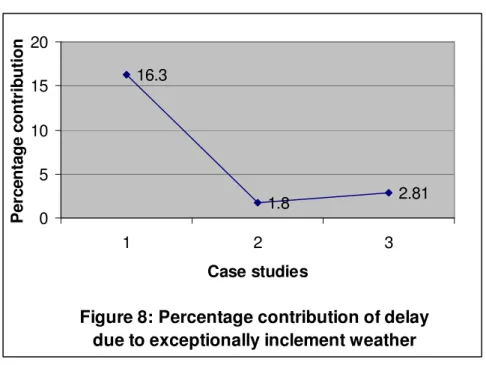
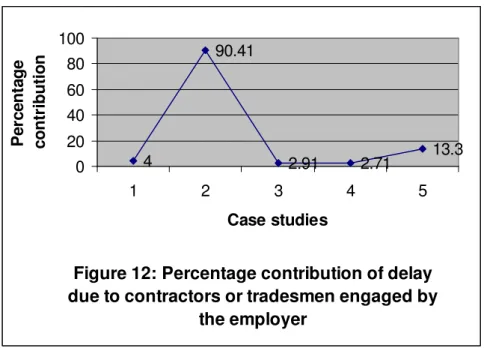
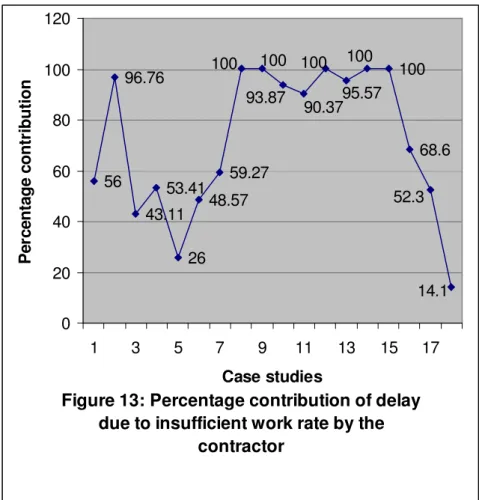
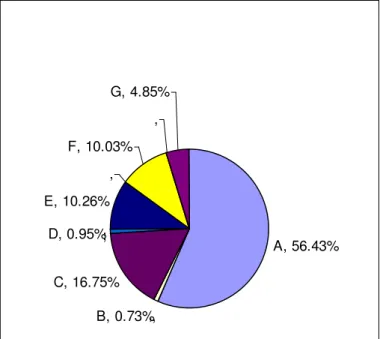
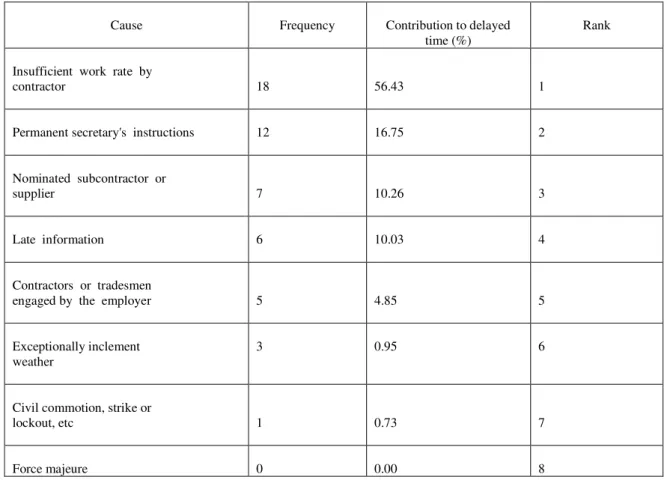
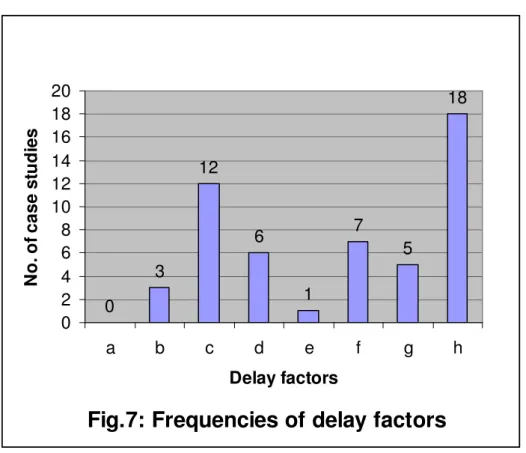
The average percentage of delay contribution due to contractors or tradesmen engaged by the employer was calculated as 4.85%. The average contribution of the percentage of delay due to an insufficient level of work by the contractor is 56.43%.
Analysis of the data
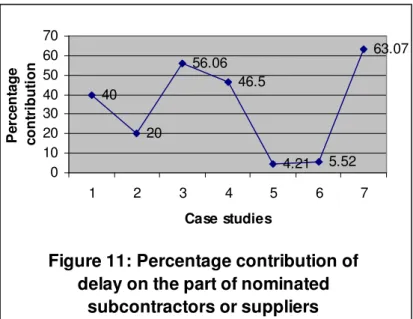
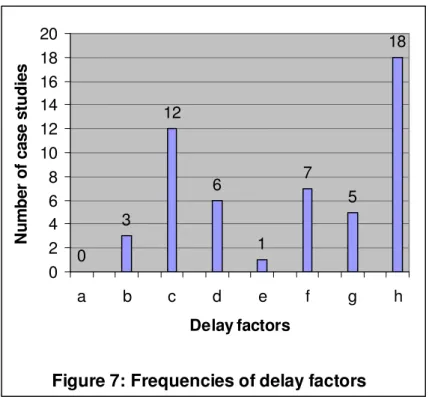
It can also be concluded from table 3.2 above that insufficient work pace by the contractor occurs most often (frequency) and makes the largest contribution in terms of delay. A = Insufficient pace of work by contractor B = Civil commotion, strike or lockout, etc. C = Instructions from the permanent secretary D = Exceptionally bad weather E = Nominated subcontractor or supplier F = Late information. Figure 14 above shows that insufficient contractor work rate contributes more than half of the total delay time.
Testing of the hypothesis
Summary
The research revealed that the main causes of delays on public housing projects in order are: -. The hypothesis postulated that the majority of delays appear to be caused by factors that are within the contractor's control (ie, insufficient work speed of the .contractor) is supported. The research attempts to find out how contractors schedule their resources and to determine whether the methods used are appropriate to achieve on-time completion or not.
Programming of resources
Introduction
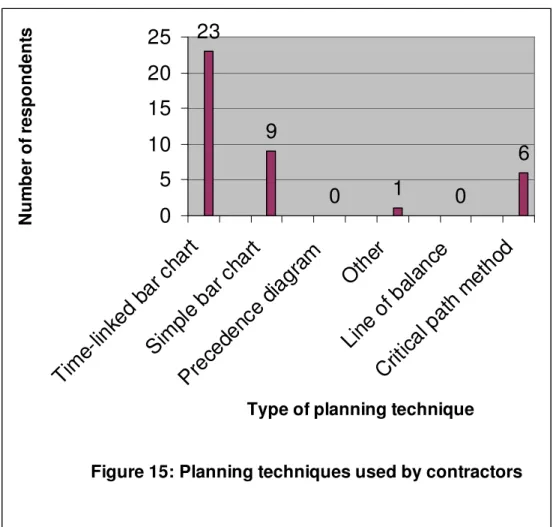
The results of the research indicate that the highest frequency was 4 (bachelor & . honors degrees). The results of the research indicate that the highest frequency was 2 (time linked/Gantt chart). Critical all my way tho d. The research results indicate that time-linked bar charts are more commonly used than any other type of contractors.
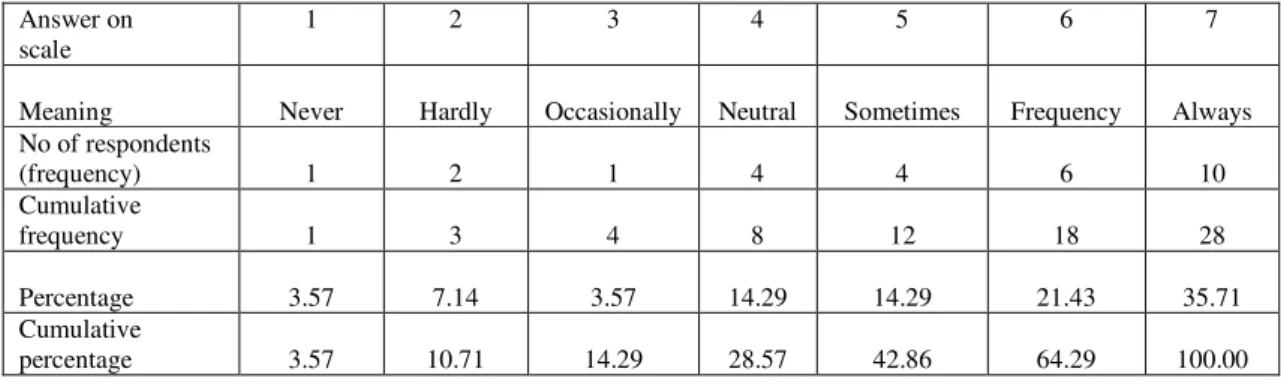
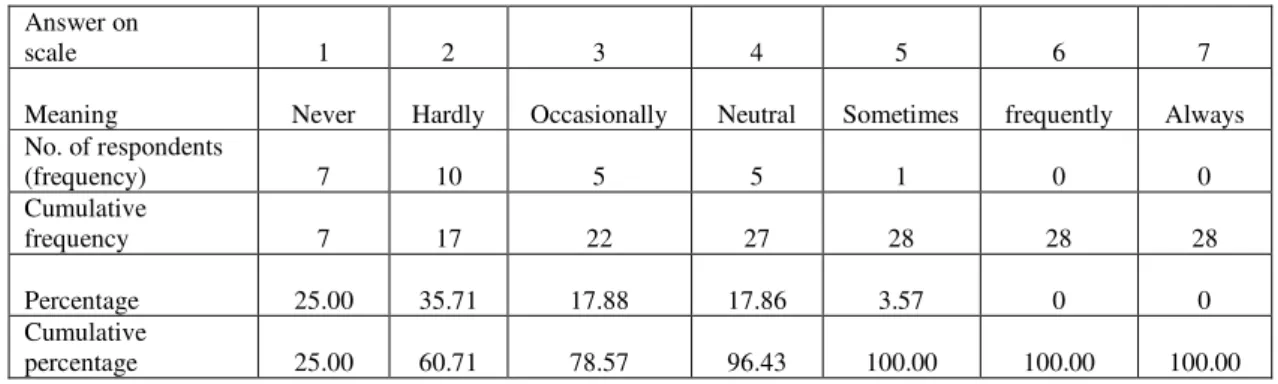
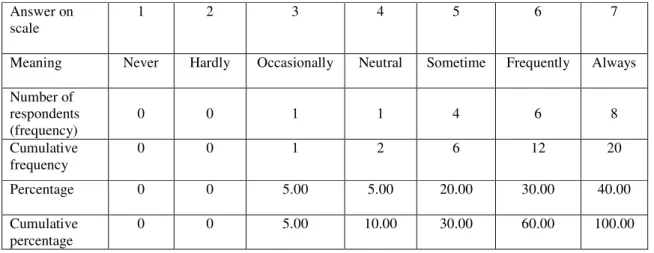
The response ranged from 2 to 7 on the Likert scale. The highest frequencies indicate a scale of 4 (neutral) and 5 (sometimes). The statement attempted to determine the extent to which the Diekman model is used by consultants in contractor selection. The results obtained are shown in Table 5.13. One respondent did not answer this question, hence the frequency of one missing. The response ranged from 1 to 7 on the Likert scale.
Data-collection method
Results and data interpretation
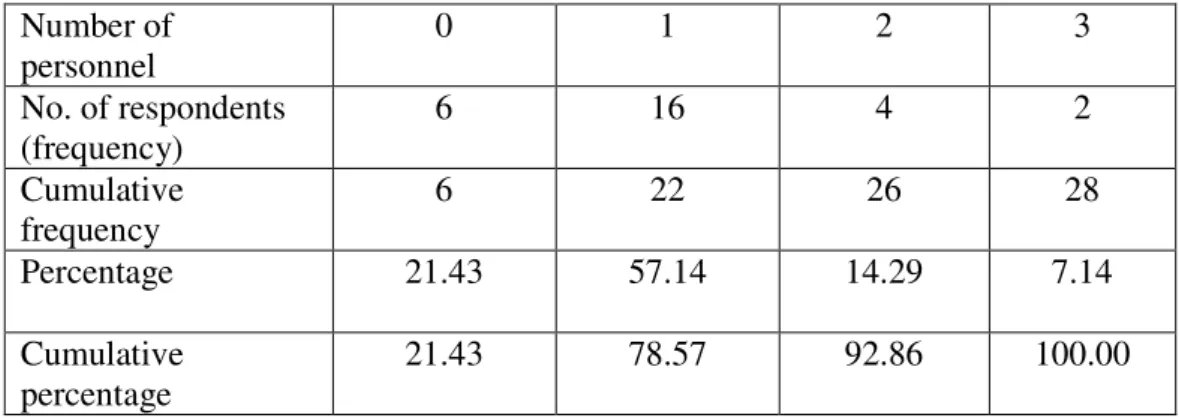
The research results as shown in Table 4.5 indicate that the highest frequency was one CEO/day manager. The research results as shown in Table 4.6 indicate that the highest frequency was one contract/project manager.
Analysis of the data
In most construction companies, the contract/project manager and the site agent are responsible for programming. Most construction companies indicated that the plant or equipment they rent is sometimes available when needed. Based on the above, the researcher found that none of the contractors use the most appropriate way of programming and people at the operational level, such as foremen, are not involved in the programming of construction projects.
Testing of the hypothesis
Summary
The study revealed that time-bound bar charts, which are not very suitable for mass housing projects, are mostly used. The line of balance technique, which is very suitable for mass housing projects, is almost never used by contractors. It attempts to determine whether the contract procurement strategy used is sufficient to detect potential delays.
Contract procurement strategy
Introduction
Quantity surveying firms and not architecture or engineering firms were selected for the questionnaire due to the fact that tender reports for government housing construction projects are prepared by quantity surveying firms. There are twenty-five (25) quantity surveying firms registered with the Government of the Republic of Botswana to carry out all aspects of quantity surveying.
Data-collection method
Results and data interpretation
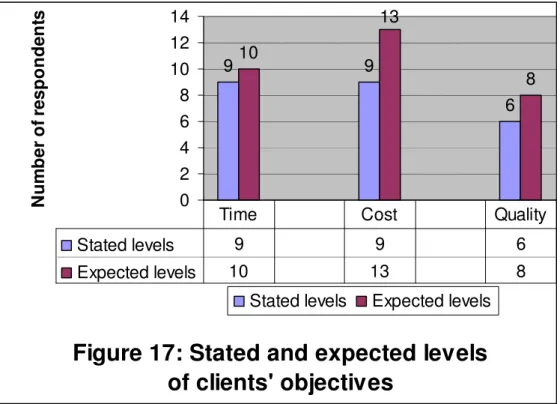
It is important for the client to state their goals for the project in terms of time. Most counselors felt that it is always important for the client to express their goals in terms of time. It is important for the client to state their goals for the project in terms of cost.
Analysis of the data
It can be argued that the customer does not have to set his objectives in terms of quality due to the existence of a government specification on quality and workmanship. It is clear from the above that factors such as plant resources and financial stability of the tenderer are sometimes considered. In light of the above, the researcher concludes that factors such as qualifications and experience of staff, Tenderer's experience, craftsmanship and ability, plant resources and financial stability are adequately taken into account.
Testing of the hypothesis
Summary
Factors such as experience, qualifications of staff, financial stability and plant resources of the tenderers are considered. A model for contractor selection is rarely applied, but tenderers get the opportunity to be shown their mistakes in the tenders which can adversely affect their cash flow. The hypothesis postulated that the employer's contract procurement strategy is not sufficient to detect potential delay is not supported.
Determination of contract periods
Introduction
Data-collection method
The purpose of the questionnaire to the contractors was to find out who they thought should determine the construction period and how they felt about unrealistic periods. The purpose of the questionnaire for advisers was to establish how construction periods are determined. The interval scale was from "never" (1) to "always" (7), and the consultants had to circle the appropriate number.
Results and data interpretation
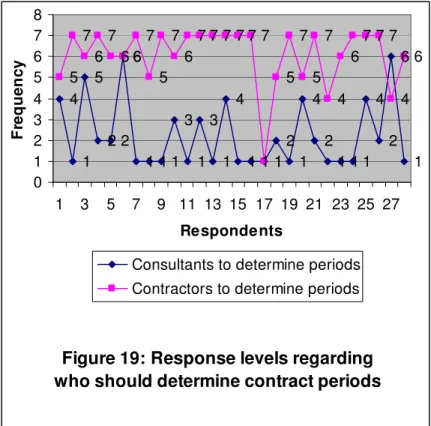
Most of the contractors are of the opinion that consultants should never determine and stipulate the contract periods in tender documents. Most of the contractors are of the opinion that contractors should always determine the contract periods. This statement sought to find out whether consultants consider the location of the project when determining construction periods.
Analysis of the data
It can be seen from the above that the reaction of the contractors that the contractors must determine the contract periods was greater than the reaction of the consultants who determined the contract periods. The highest frequency of responses received was 7 (always) when asked whether contractors should determine the contract periods themselves. When consultants were asked whether contractors complained about short contract periods, many consultants responded neutrally.
Testing of the hypothesis
One respondent indicated that another method used to determine the contract period is by taking into account the estimate of costs. The research findings indicate that when considering the contract periods, most consultants always consider the location of the project. Many consultants were again neutral when asked if they received time delay claims from contractors claiming that the set periods were short.
Summary
Introduction
Summary
Conclusions
Taking into account the analysis and interpretation of the findings related to sub-problem 1, the hypothesis was found to be affirmative. Although the contractor selection model is rarely used by consultants, the findings showed that almost all the attributes that should be considered when selecting a contractor are taken into account. Although the use of past experience is not scientific, it seems a realistic way to determine construction periods.
Recommendations and proposals
The investigation is limited to the causes of delays for which the contractor is entitled to an extension of the construction period under the construction contract of the Government of Botswana. The distinction between fines and damages depends on the intentions of the parties which can be deduced from the entire contract. The following are the relevant events, as stated in clause 20 of the Botswana government standard contract, entitling the contractor to an extension of time to the date of completion:.
Letter requesting architectural firms
Questionnaire to contractors
Questionnaire to consultants
The Botswana Government contract
List of delayed projects
List of citizen contractors
Letter from the chief quantity surveyor
Letter requesting Architectural firms
The Botswana government contract
Letter from the Chief Quantity Surveyor