The purpose of this study was to review the PV landscape in SA to address the PV challenges of these treatment programs. Dheda M : Principal contributor who contributed with all research and literature search, collection and writing of the manuscript. A cross-sectional baseline assessment of pharmacovigilance systems, processes and challenges faced by health professionals in three South African districts prior to pharmacovigilance training and program implementation.
Dheda, M.: principal contributor, contributed by doing the design, literature search, compilation and writing of the manuscript. Dheda, M.: principal contributor, contributed by literature search, compilation, preparation, data analysis, interpretation and writing of the manuscript. Events leading to the formation of the NPC 16 Current National FV activities in South Africa 18 The Decentralized Medicines Monitoring Program 19 Future perspectives on FV in Public Health Programs in SA 19.
Drug monitoring program in the public health sector in South Africa by descriptive analysis of adverse reactions submitted by health professionals.
GENERAL INTRODUCTION 1.1.1 Background
Clinical and Economic Burden of Adverse Drug Reactions
A Brief History of Pharmacovigilance
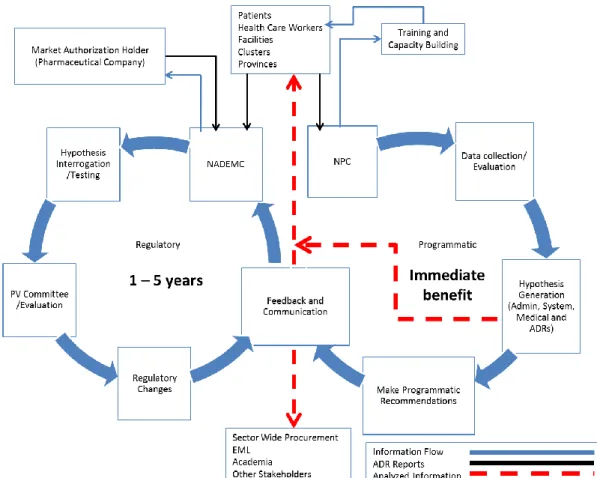
It has now been expanded into two complementary units, comprising a broad-based, collaborative public health program of research and monitoring of adverse effects and training of health professionals on the one hand, and regulatory PV on the other (Figure 1). The program component was established to fill the gap in the connection between public health facilities and patients. The new structure gives the NPC the ability to provide feedback to adverse reaction reporters, institutions and provinces in the public health sector.
The passive reporting system, also known as the spontaneous reporting system, remains the most common form of reporting. Spontaneous reporting is considered the cheapest and easiest mechanism to collect PV data. At a workshop in August 2012, key stakeholders identified that spontaneous reporting will be the approach to public health PV programs in the short to medium term.
At the time this study was conceived, there were no studies describing the evolution of PV in SA providing past, present and possible future perspectives, as well as suggesting possible interventions that would reduce under-reporting and/or or would develop systems and interventions that speak to SA's current public health challenges.
Problem Statement
Most PV systems around the world depend on spontaneous reporting systems to collect information on adverse reactions, where reports are submitted by voluntary reporters (HCPs). Although well documented in some developed countries, research on underreporting and the quality of reports in SA is not well documented. It is therefore imperative that a critical assessment of current PV activities in SA be carried out from a national perspective.
As in much of the PV system worldwide, SA's PV also suffers from the problem of under-reporting of ADR. ADR reports from Africa account for only less than one percent of global ADR reports, with SA providing the largest number of such reports(28). These reports also differ from the rest of the world in terms of the type of drugs reported(28).
The aim of this study was to investigate the decentralized approach to pharmacovigilance (PV) in support of key public health programs in South Africa.
Specific objectives
Significance of the Study
Conflict of Interest
Overview of the Thesis
Chapter 1: This chapter is the introductory chapter that provides an overview of the research presenting the general flow of the whole research project and organisation of
Published work)
Published work)
Manuscript Submitted and under review) Presented in the format requested by the journal
Manuscript Submitted and under review) Presented in the format requested by the journal
Areas where the PV program needs to be strengthened were identified as well as the successes the program has achieved. The main contributors to safety problems in the HIV and tuberculosis programs were also identified, the most common side effects, as well as the difference in the number of side effects experienced by men and women. This pharmacovigilance program demonstrated the potential to collect important data that can inform treatment guidelines for HIV and tuberculosis programs, identify trends, and generate hypotheses for further investigation.
Conclusion: This chapter describes the general conclusions drawn from the various findings in this study, identifies possible study limitations and highlights
Mortality due to adverse drug reactions in adult medical patients in four hospitals in South Africa: a cross-sectional study. Post-marketing withdrawal of 462 drugs due to adverse events: a systematic review of the world literature. Reporting on adverse drug reactions in Africa and a comparison of the characteristics of individual safety reports between Africa and the rest of the world: analyzes of spontaneous reports.
Perspectives on the Emergence of Pharmacovigilance in Public Health Programs in South Africa provides a systematic review of the pharmacovigilance literature relevant to the South African context. It outlines the evolution of pharmacovigilance in public health programs in South Africa and provides a perspective on the future. The review covers relevant aspects of the history and status of pharmacovigilance in the public health sector in South Africa.
A process that uses current public health structures to enable healthcare professionals (HCPs) to detect, assess and prevent adverse drug reactions (ADRs). Every stage of the paper process up to and including the publication stage; study design, implementation, analysis, interpretation, conclusion and publication were not allowed to proceed until consensus was reached by the supervisor. Chapter two (2) presented "Perspectives on the Emergence of Pharmacovigilance in Public Health Programs in South Africa", published in the Journal of Pharmaceutical Medicine.
This chapter traced the past, current and future perspectives of pharmacovigilance (PV) in South African (SA) public health programmes. This study was a literature review based on published and gray literature from a national perspective. The third chapter (3), published in PULA: Botswana Journal of African Studies and presented here in the format required by the journal, was a study entitled "A Cross-Sectional Mixed Method Baseline Assessment of Systems, Processes and Challenges with facing health care". Occupations in three South African districts prior to pharmacovigilance training and program development‖.
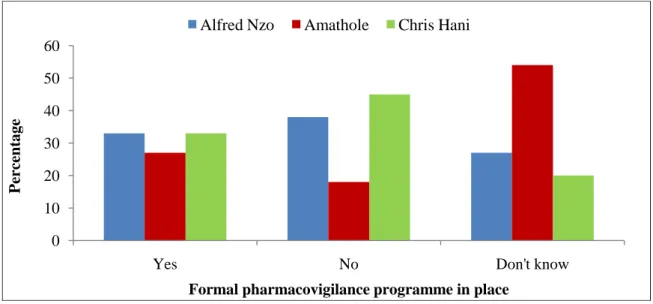
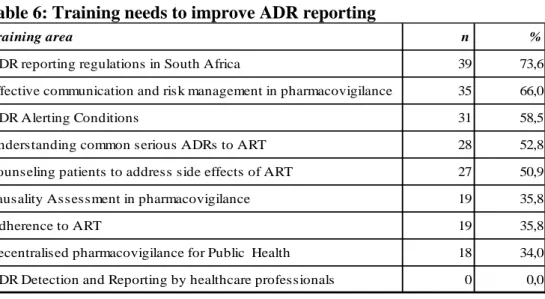
The baseline assessment indicated the need for an appropriate training intervention of HCPs to bridge the deficiencies identified and to ensure a successful implementation of the decentralized program. Understanding pharmacovigilance systems, processes and challenges facing healthcare professionals in three Eastern Cape.
Understanding of pharmacovigilance systems, processes and challenges faced by healthcare professionals in three Eastern Cape
The results of this evaluation revealed several challenges to the successful implementation of a decentralized pharmacovigilance program in the Eastern Cape province and highlighted key issues that require attention. It offered a brief overview of the knowledge, awareness and practice of pharmacovigilance in the target districts. There is an urgent need to evaluate the impact of the training offered as it is a key component of the national decentralized pharmacovigilance programme.
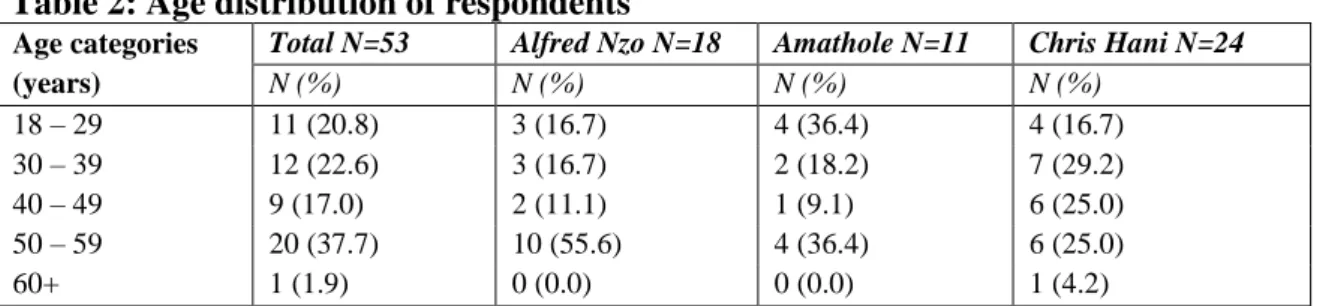
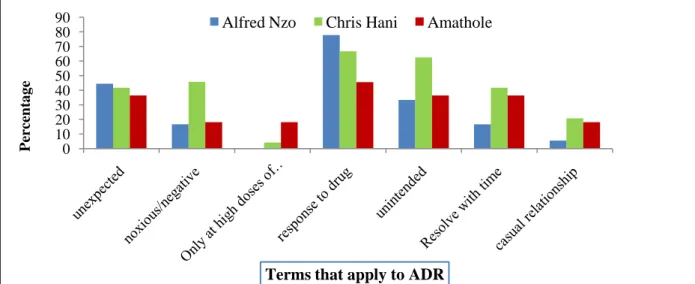
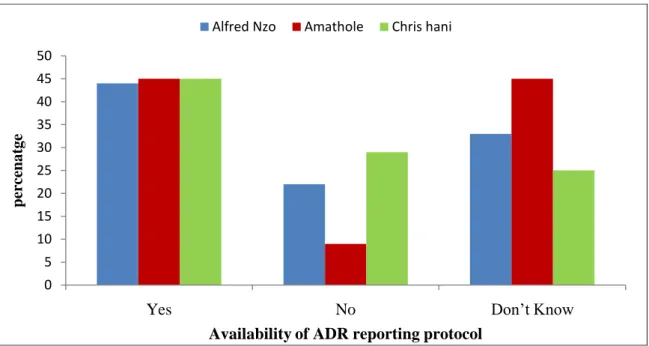
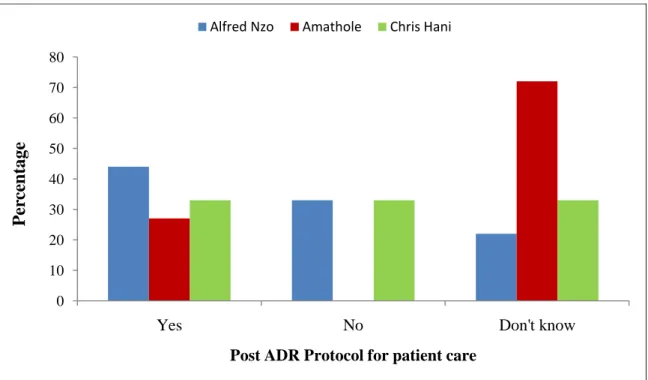
The training is expected to contribute to professional development and increased PV knowledge among the participants. This study used twelve relevant quantitative questions (questions 2 to 13) that directly related to the study's purpose. The statistics of the answers to the questions in the tool are presented in table 2.
Systems and processes in pharmacovigilance and its decentralization 3 Which of the following is/are responsible for monitoring. The proportions trained were found to be representative of the proportions of HCPs in districts. The participants were tested for their knowledge and awareness of the primary goal of pharmacovigilance, which is patient safety before (n) and after the training (n.
Which of the following is a requirement for proper reporting of an ADR to a PV center. Which of the following is/are responsible for monitoring adverse drug reactions in South Africa? Participants were tested on their awareness of the existence of the last and previous organs.
This question tested the awareness of program participants regarding the purpose of a decentralized PV program. Which of the following should NOT be a goal of the decentralized PV system in SA. However, this is the first study of the impact of the training currently provided to HCPs in the SA public health system.
This study investigated the impact of a one-day PV training provided during the opening of the PV program.

PRETEST
General Conclusions 1 Conclusion
- Aims and achievements
- Strengths and limitations .1 Strengths
- Limitations
- Further investigation/ follow-on studies
- References
- National Department of Health permission to use data
- Ethics Approval
- Hi Resolution of Figure 4 (Chapter 2)
Adverse events are reported to be the fourth to sixth leading cause of death in hospitalized patients (2,3). The thesis evaluated PV in public health institutions and programs from a national perspective, from its history to the current state, with the aim of addressing the challenges of PV in the face of rapidly growing public health treatment programs, new drugs and increased drug resistance. A clear reconstruction of PV development in SA from its inception in January 1987 to 30 September 2015 is presented for the first time.
A baseline assessment of PV activities among training-in-PV-naïve healthcare professionals (HCPs) identified gaps in PV knowledge, awareness, and practice among public HCPs. In the long term, the knowledge gained could be translated into an increase in the quality and quantity of adverse event reports, and if integrated into daily clinical practice could certainly improve patient outcomes. The analysis was used to identify the main drugs causing safety concerns in the treatment of HIV and tuberculosis, the most common side effects, as well as the difference in the number of side effects experienced by men and women.
It showed how information from this PV process can be used to identify trends and generate hypotheses for further investigation. A limitation of Chapter 2, the literature review, was that there is little published literature related to the history of PV in SA. The staff and number of participants could not be recruited as planned due to challenges that arose at the district level as there were many vacancies and even when staff were available they could not participate in the study due to other commitments.
Furthermore, the sample size was small and therefore not representative of all HCPs in the province. In addition, the limited timeframe for the completion of the exercise meant that there was no alternative day to revisit the field for further interviews. But the results provided insight into what needed to be considered when planning and implementing a solar plant in different provinces.
Finally, a before-after design is sometimes considered a weak design when evaluating the effects of interventions. In addition, incomplete files had to be used, some reports were old and because the analysis of the ADR reporting was done retrospectively, follow-up was not always possible.