A MODEL OF CO-OPERATIVE EDUCATION ON PEACE SUPPORT OPERATIONS IN AFRICA
LT COL PIERRE JUAN DE MONTFORT
FEBRUARY 2007
A MODEL OF CO-OPERATIVE EDUCATION
ON
PEACE SUPPORT OPERATIONS IN AFRICA
By
PIERRE JUAN DE MONTFORT
THESIS
Submitted in fulfilment of the requirements for the degree of Doctor of Technologiae
Human Resource Management
School for Entrepreneurship and Business Development, in the Faculty of Management Sciences
Central University of Technology, Free State
PROMOTER: DR K.J. DE BEER CO-PROMOTER: PROF H.J. LANGHOLTZ
DATE SUBMITTED: 01 FEBRUARY 2007
DECLARATION
I, PIERRE JUAN DE MONTFORT, with identification number: 561128 5019 088 and student number: 9739874, declare that this research project is my own, unaided work, submitted, in fulfilment of the requirements for the degree DOCTOR TECHNOLOGIAE: HUMAN RESOURCE MANAGEMENT to the Central University of Technology, Free State, not submitted for a degree or examination at any other University.
PIERRE JUAN DE MONTFORT
On this 1ST day of February 2007
ACKNOWLEDGEMENTS
First, I give all glory to God, the source of my strength, for granting me both the mental and physical endurance to complete this monumental task. Then, I would like to thank my entire family, especially my loving wife Anna-Marie, for her love patience, and understanding.
I would like to extend my sincere thanks and appreciation to my promoter, Dr K.J. de Beer, who encouraged and assisted me in so many ways. Without your help and compassion, I would have found this a far more difficult task. Thank you for believing in me and for your continued support and encouragement throughout the process.
Special thanks to Prof Harvey Langholtz. Thank you for friendliness, encouragement and above all your preparedness to assist.
The Central University of Technology, Free State for giving me the opportunity to enrol for a Doctoral study.
TABLE OF CONTENTS
Cover Page i
Declaration iii
Acknowledgements iv Table of Contents v
List of figures vii
List of tables viii
List of Acronyms ix Synopsis xvi CHAPTER 1: INTRODUCTION 1.1 Background ... 1
1.2 Rationale for the study ... 2
1.3 Statement of problem ... 9
1.4 General research design and methodology ... 12
1.5 Outline of the research report ... 13
CHAPTER 2: LITERATURE REVIEW 2.1 Introduction... 15
2.2 Definition of key concepts ... 16
2.3 Discussion ... 24
2.4 Conclusion... 63
CHAPTER 3: RESEARCH DESIGN AND METHODOLOGY 3.1 Introduction... 68
3.2 Design of the study ... 69
3.3 Sampling... 70
3.4 Description of measuring instrument ... 72
3.5 Data collection procedure ... 74
3.6 Data analysis … ... 77
3.7 Limitations of the study ... 77
3.8 Conclusion ... 79
CHAPTER 4: RESEARCH RESULTS 4.1 Introduction... 80
4.2 Section 1: Need analysis ... 81
4.3 Section 2: Job description and target group analysis... 100
4.4 Section 3: Formulation of outcomes ... 113
4.5 Section 4: Selection and sequencing of content ... 119
4.6 Section 5: Determine delivery method and learning aids... 126
4.7 Section 6: Learner assessment ... 143
4.8 Section 7: Programme evaluation... 154
4.9 Conclusion... 161
CHAPTER 5: FINDINGS AND RECOMMENDATIONS 5.1 Introduction... 163
5.2 Summary of findings and conclusions ... 163
5.3 Limitations ... 165
5.4 Recommendations ... 166
5.4.1 Programme overview ... 166
5.4.2 Curriculum content ... 178
5.5 Further research... 247
5.6 Larger relevance of the study ... 247
5.7 Conclusion... 251
LIST OF REFERENCES... 252
LIST OF FIGURES
Number Page
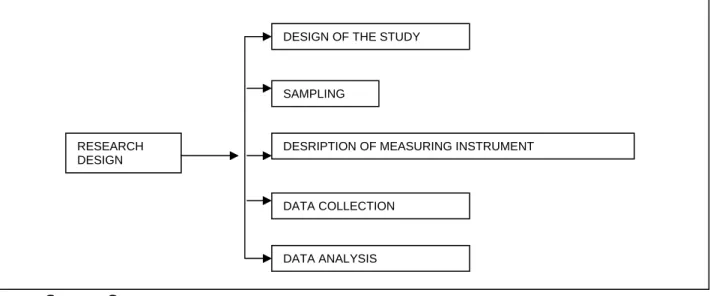
1 – Research design framework 70
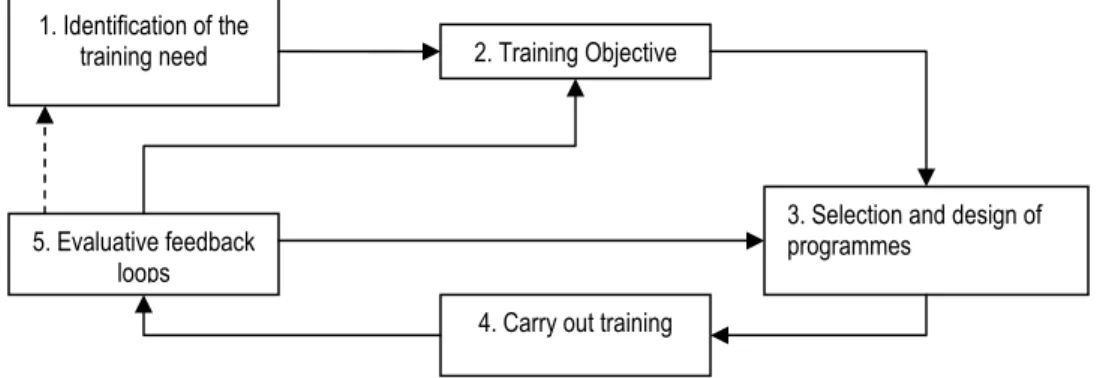
2 – ETD process 95
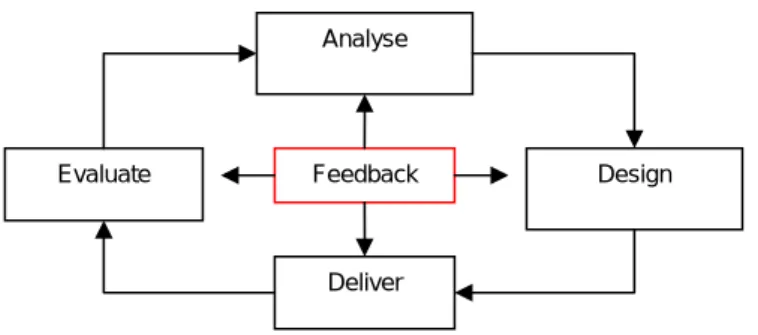
3 – Main elements of ISD 96
4 – PDA Model of Instructional Design 98
5 – ISD model integration 99
6 – Curriculum framework 118
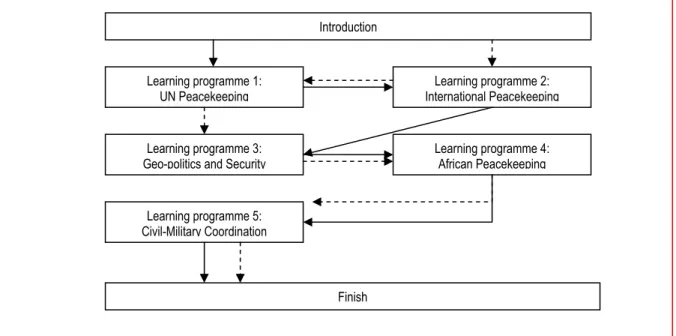
7– Sequence of learning programmes 124
8 –Selection of delivery method according to nature of the outcome 128
9 - Selection of delivery method according to target group 129
10 - Selection of delivery method according to content 130
11 - Availability of learners 131
12 - Levels of Training Evaluation 155
LIST OF TABLES
Number Page
1 - Survey results 82
2 – Target group analysis survey results 104
3 – Learner profile 112
4 – Selection of learning content 119
5 – Sequence of learning units 124
6 - Selection of delivery method 133
7 – Learning styles 137
8 - Selection matrix for learning aids 140
9 - Informal learner activities in outcomes-based assessment 142
10 - Assessment methods 146
11 – Articulation with other programmes 171
12 – Structure of the qualification 172
13 – Internal structure of qualification 172
14 – Exit level outcomes 173
15 – Levels, credits and learning components assigned to qualification 174
16 – Possible combinations of electives 176
LIST OF ACRONYMS
AC – Abstract conceptualisation
ADDIE - Analysis, Design, Development, Implement, Evaluate
AE – Active experimentation
AIDS – Acquired Immune Deficiency Syndrome
ASF – African Standby Force
AU – African Union
AWOL – Absence without official leave
C2 - Command and Control
CA - Civil Affairs
CAI - Computer Assisted Instruction
CE – Concrete experience
CIMIC - Civil-Military Coordination Process
CIVPOL – Civilian Police
COE - Contingent-Owned Equipment
COLET – College of Education Technology
CUT – Central University of Technology, Free State
CRI - Criterion Referenced Instruction
CRP – Command Research Paper
DDR - Disarmament, Demobilisation, and Reintegration
DOD – Department of Defence
DRC - Democratic Republic of the Congo
ECOWAS - Economic Community of West African States
ED Tech – Educational Technology
EOD - Explosive Ordnance Disposal
ELO – Exit Level Outcome
ETD – Education Training and Development
ETDP – Education Training and Development Practitioner
ETQA – Education Training Qualifications Authority
G8 – Group of Eight Countries
GPCT – General Purpose Combat Training
GEO-POL – Geographical and Political Studies
HA - Humanitarian Assistance
HIV – Human Immunodeficiency Virus
HQ – Headquarters
HR – Human Resources
ICRC - International Committee of the Red Cross
IDP – Internally displaced people
IED - Improvised Explosive Device
IFOR - Implementation Force
IHL - International Humanitarian Law
IO – International Organisation
IOM - International Organisation for Migration
IMPI - Indigenous Military Peace-building Initiative
IMAS - International Mine Action Standards
IRC – International Red Cross
ISD – Instructional Design
ISS – Institute for Strategic Studies
JA - Yugoslav Army
JSCSP - Joint Senior Command and Staff Programme
KLA - Kosovo Liberation Army
KSA – Knowledge, Skills and Attributes
LOAC - Law of Armed Conflict
MBT – Mine Ban Treaty
MILOBS – UN Military Observer
MILOPS – Military Operations
MSCA - Military Support to Civil Authorities
MOOTW - Military Operations other than War
MONUC - UN mission in the Democratic Republic of the Congo
MP – Member of Parliament
NATO - North Atlantic Treaty Organisation
NCO – Non-commissioned Officer
NEO - Non-combatant Evacuation Operations
NEPAD - New Partnership for Africa’s Development
NGO – Non-governmental Organisation
NIHE - Northern Cape Institute for Higher Learning
NQF – National Qualifications Framework
NRF – National Research Foundation
OBE – Outcomes Based Education
OSCE - Organisation of Security Co-operation in Europe
ONUSAL - The United Nations Observer Mission in El Salvador
ONUMOZ - The United Nations Operation in Mozambique
PBT - Performance-Based Training
PCM - Project Cycle Management
PDA - Plan, Develop, and Assess
PE – Peace enforcement
PfP - African Partnership for Peace
PK - Peacekeeping
PSO – Peace Support Operations
PTSD - Post-Traumatic Stress Disorder
PO – Peace Operations
POW - Prisoners of War
PVO – Private Voluntary Organisation
SA Army - South African Army
SAHMS - The SA Medical Health Services
SADC – Southern African Development Community
SANDF – South African National Defence Force
SANWC - South African National War College
SAARDHE - South African Association for Research Development
SAQA – South Africa Qualifications Authority
SAT - Systems Approach to Training
SASCE - South African Association for Co-operative Education
SEBO – School for Entrepreneurship and Business Development
SFOR - Stabilization Force
SSR – Security Sector Reform
STDs - Sexually Transmitted Diseases
TB – Tuberculosis
TCC – Troop Contributing Country
TEWT - Tactical Exercise without Troops
TUT – Tswane University of Technology
RDP - Reconstruction and Development Program
RO – Reflective observation
RSA – Republic of South Africa
RPD - Rapid Prototyping Design
RPL – Recognition of prior learning
UN – United Nations
UNEF - UN Emergency Force
UNISA - University of South Africa
UNTAG - United Nations Transition Assistance Group
UNTAC - The United Nations Transitional Authority in Cambodia
ONUC - UN Operation in the Congo
UNHCR - UN High Commission for Refugees
UNICEF - UN Children’s Fund
UNFICYP - UN Peacekeeping force in Cyprus
UNIFIL - UN interim force in Lebanon
UNITAR POCI – United Nations Institute for Training and Research Peacekeeping Operations Correspondence Instruction
UNOSOM I - The First United Nations Operation in Somalia
UNPROFOR - The United Nations Protection Force in the Former Yugoslavia
UK – United Kingdom
USA – United States of America
UXO - Unexploded Ordnance
WACE - World Association for Co-Operative Education
WFP – World Food Programme
WHO – World Health Organisation
WO – Warrant Officer
SYNOPSIS
A MODEL OF CO-OPERATIVE EDUCATION
ON
PEACE SUPPORT OPERATIONS IN AFRICA
By
PIERRE JUAN DE MONTFORT
PROMOTER: DR K.J. DE BEER
CO-PROMOTER: PROF H.J. LANGHOLTZ
DEGREE: D.TECH (DOCTOR OF TECHNOLOGIAE)
HUMAN RESOURCES MANAGEMENT
Summary
The focus of this study is on a Model of Co-operative Education on Peace Support Operations (PSO) in Africa.
PSO are multi-functional operations involving military forces and diplomatic humanitarian agencies. They are designed to achieve humanitarian goals or a long-term political settlement, and are conducted impartially in support of a UN mandate. These include peacekeeping (PK), peace enforcement (PE), conflict prevention, peacemaking, peace building, and humanitarian operations.
Since the advent of democracy in 1994, domestic and international expectations have steadily grown regarding a new South African role as a responsible and respected member of the international community. These expectations have included a hope that South Africa will play a leading role in a variety of international, regional and sub-regional forums, and that the country will become an active participant in attempts to resolve various regional and international conflicts.
Peacekeeping is becoming more and more important as South Africa plays a vital role in African missions, mandates, deployment and restructuring. The core of peacekeeping operations in Africa is no longer about the deployment of armed forces, but the focus is shifting towards a more integrated approach including reconstruction, development, stability, civilian involvement and humanitarian aspects. While skills required for peace operations overlap with those required for war, there is increasing recognition that additional peace operations training is needed to successfully conduct these missions.
The demand, advancement and application of peacekeeping evolve worldwide, especially in Africa, where enormous funding is being poured into local research and development, testing and training.
The market for Education, Training and Development (ETD) in the field of PSO is growing, as South Africa is becoming increasingly involved in peacekeeping missions on the African continent. At present, there is no Co-operative Education programme on generic PSO on the operational/strategic level presented by any of the major universities in South Africa in order to enhance other PSO training.
The objectives of this research project are in phase one:
• To determine the need for and feasibility of a Co-operative Education Program on PSO.
• To write a instructional design (ISD) report for a Co-operative Education Model on PSO and,
• To draft possible curriculum content.
• The second phase of the project could involve the development of learning material, and the evaluation of the proposed Co-operative Education Model on PSO by running a pilot programme.
The principal product (output) of this research will consist out of an ISD report on a Model for Co-operative Education on PSO in Africa, presented by means of Correspondence Instruction with contact sessions. The key factors in production of the learning program include geo-political and security studies in order to create an understanding of the African battle space, PSO as presented by UNITAR POCI, the assessment of international practice with regards to PSO in order to relate the information to operations in Africa, PSO on the African continent, and Civil-Military Cooperation.
The research team consists of D. Tech candidate, Lt Col P.J. de Montfort and the study leadership team of Dr K.J. de Beer and Prof H.J. Langholtz - Director of UNITAR POCI.
Other potential partners in this project include the Central University of Technology, Free State (CUT); the University of South Africa (UNISA); The SA National Defence Force (SANDF), The SANDF College of Educational Technology (SANDF COLET); The Northern Cape Institute for Higher Learning (NIHE), and the South African National War College (SANWC).
The target market of potential learners includes military practitioners from the SANDF and SADC countries, diplomats, civilian employees of ministries of defence, foreign affairs, employees of NGO’s, scholars and normal citizens who could benefit from a Co-operative Education Program on PSO. The typical customer of is someone who is working in the PSO and humanitarian relief related fields.
As PSO will increasingly play a significant role in foreign policy of South Africa, the under mentioned recommendations are offered for consideration:
• The non-availability of a Model of a Co-operative Education on PSO in Africa within Institutions of Higher Learning makes this a feasible project.
• Partnerships for co-operation should be formed with the Central University of Technology, Free State (CUT); the University of South Africa (UNISA); The SA National Defence Force College of Educational Technology (COLET); The Northern Cape Institute for Higher Learning (NIHE), the South African National War College (SANWC) and the Institute for Security Studies (ISS) in order to establish a sound knowledge base on PSO in Africa.
• Marketing strategy should be to aggressively enhance, promote and support the fact that the envisaged product will be unique, due to the fact that no Institution of Higher Learning in South Africa currently has a similar programme based on scientific instructional design.
• Sales strategy need to consist out of making the product available at a competitive price in order to capture market share before the entrance of other competitors especially from the international arena.
• Profit goals could be established later when the Institute of Higher Learning has a consistent sales volume and customer base. Financial projections indicate that the exit of investment will be achievable within one year.
• The SANDF could subscribe to the program in order to give its officers a higher learning qualification (tertiary) in an applicable field.
• The SANDF could subscribe to the program in order equip its members with non- combat skills that includes a wide variety of PSO subjects.
• The learning program would be of great assistance to educate the SA community and humanitarian aid organisations with non-combat skills on PSO.
• The Institute of Security Studies (ISS) could become an important role player in the compilation of instructional content focussed on the African continent.
• The ISS could form a partnership with the other mentioned role players to further, and enhance a culture of peace in the South African community.
• Offering the program to other African countries in line with NEPAD initiatives could enhance capacity building.
The consideration, development and adoption of these recommendations will provide the different stakeholders an avenue for the effective participation of Institutions of Higher Learning in the peace drive in Africa by presenting a Model of Co-operative Education on PSO in Africa.
The first research findings of this project were submitted for a competition of the National Research Foundation (NRF) at the Centre for Entrepreneurship and Business Development at the Faculty of Management Sciences of the Central University of Technology, Free Sate (CUT) in 2004. It obtained a third price in the business plan category after an internal and national assessment process and was verbally presented at the official prize giving event at the CUT.
A following chapter, namely, Co-operative Education in Peacekeeping Operations Correspondence Instruction, was subsequently submitted to the World Association for Co- Operative Education (WACE) international conference in Boston, June 2005. It was evaluated by international peer reviewers and presented by the Director of UNITAR POCI, Prof Harvey Langholtz, who is the co-promoter of this dissertation.
A command research paper (CRP) written by the researcher, and assessed by the Tswane University of Technology (TUT), on the topic “A Model of Higher Learning on Peace Support Operations in Africa” was awarded the price for the best CRP during the Joint Senior Command and Staff Programme (JSCSP) of 2005.
The promoter and the researcher also submitted posters and papers respectively to the South African Association for Research Development (SAARDHE) international conference at the KwaZulu Natal University in November 2005 as well as at the international conference of the South African Association for Co-operative Education (SASCE) in April 2006. All submissions were peer reviewed.
The poster session was prepared in collaboration with the Director Student Services of the University of South Africa (UNISA) in the Free State and Northern Cape, Dr J.W. Mostert, as part of a joint NRF focus area research project. Dr Mostert also presented a keynote address on this joint project at the plenary session of a national SASCE conference at the Tswane University of Technology (TUT) based on the research outputs of the promoter, DR K.J. de Beer and the researcher.
In the final stages of this research project, an abstract approved for the UNISA conference
“Contesting Spaces – The Curriculum in Transition”, the 1st African Conference on Curriculum Development in Higher Education, 19-21 September 2006.
CHAPTER 1 - INTRODUCTION
1.1 BACKGROUND
The primary purpose of the United Nations (UN) is to maintain international peace and security (UN Department of Peacekeeping Operations, 1995:3), and to end the “scourge of war” (Charter of the UN: 1945). According to Deen (2006:5) UN peacekeeping operations have become an indispensable weapon in the arsenal of the international community and there is growing confidence in UN peacekeeping as a means to help build stability after conflict.
Throughout the duration of the Cold War, UN peace support operations (PSO) were constrained by superpower rivalry and remained relatively small. Despite more than 80 wars fought world wide (James, 1990), only 13 UN peacekeeping and observer missions were conducted between 1948 and 1988 (Roberts, 1996).
After the Cold War, the number of UN peacekeeping or observer forces increased and, at the end of 1994, these missions were staffed by 77,783 civilian (Boutros- Ghali, 1996:4) and military personnel from over 82 different nations, serving on 19 missions (Liu, 1999:8). Now in 2006 the UN has recorded a historic high of 80, 976 soldiers and 15,000 civilian peacekeepers from 112 countries and is set to total 140,000 by 2007 (Deen, 2006:5).
The current trends of political, social, and economic globalisation has resulted in an increase in the number of conflicts, aggravated by instability, social and economic injustice, and political competition (Hårleman, 2003: 8).
The UN is confronted with a significant change in the nature of conflict. Instead of wars in which two nations with professional armies face each other, today’s conflict is typically an internal struggle with irregular forces, light weapons and guerrilla tactics. There are not merely two opposing forces, but include rival warlords, factional leaders, para-military forces and even organised criminal groups (Standard Generic Training Module, 2003: 3-4).
These so-called 'third generation' operations are triggered by the resurgence of suppressed and very old animosity. Conflicts are characterised by abuses of human rights. Moreover, consent may be absent, since authority has collapsed and is meaningless because of a large number of groups claiming power.
Agreements are non-existent or worthless and international law and conventions are openly disobeyed (Malan 1996:3).
In this environment, UN peacekeeping has become increasingly complex and multi-dimensional, requiring a variety of civilian, police and military actors (Higate, 2004:3). It is therefore essential that training is available to familiarize personnel with established doctrine. Such training must be standard, doctrinally correct, and easily delivered.
1.2 RATIONALE FOR THE RESEARCH
The security of Africa has deteriorated since 1989, when the Cold War ended.
Insurgents often gain power and some states involve themselves militarily in their neighbour’s affairs. Diminished foreign interest, a change in the nature of African conflicts and personal dictatorial rule in many African states have been the main causes of deterioration. Many African wars are rooted in ethnic quarrel (Kruys, 2004:35).
In addition, the end of the Cold War reduced the military-strategic importance of Africa in world politics and increased claims for democracy encouraged civil conflict in various African nations.
A high proportion of youth, rapid urban growth, low levels of cropland and excessive adult mortality, mostly due to high HIV and AIDS prevalence, are further factors increasing risks levels for civil conflict (Cincotta, Engelman and Anastasion, 2003:13).
Africa has emerged as a dangerous and challenging environment for the conduct of contemporary peace operations (Potgieter, 1996:1). The challenges and constraints of peacekeeping in African countries such as Somalia and Rwanda led to unwillingness by the major powers to become involved in peacekeeping efforts in Africa (Neethling, 1999:22-23). At the start of the 21st century Africa is unstable and rent by wars leading to famine, brutality, disease and failing economies (Kruys, 2004;15). There exists no doubt that Africa is brimming with poverty and underdevelopment. Africa has the lowest per capita income in the world (Daniels, 2005:4).
This state of affairs led to calls made by President Thabo Mbeki for an Africa- renaissance that amounts to Africans accepting responsibility for their own destiny (Steyn, 1997:12) and accountability for conflict prevention and resolution on the continent through co-operation at regional and sub-regional level (Thiart, 1997:12). Nelson Mandela put forward the national value: “South Africa cannot escape its African destiny” (Mandela, 1993).
Corresponding to calls for a renaissance the New Partnership for Africa’s Development (NEPAD) is arguable the most important socio-economic plan ever to emerge from Africa - an ‘African solution to African problems.’ The programme links aid to good governance and set preconditions for its success to include peace and security (Ramsbotham, Bah and Calder, 2005:2).
If NEPAD is to be viable, the role of African militaries will have to be acknowledged and defined (Engelbrecht, 2002:22). In reaction, the African Union (AU) proposed the establishment of an African Standby Force (ASF) and the G8 countries have pledged assistance to African peacekeeping efforts as part of their Africa action plan to support NEPAD (Fabricius, 2003:11).
South Africa has declared itself willing to contribute to PSO under the auspices of the UN, the AU and Southern African development Community (SADC) (Kent and Malan: 2003:1). The White Paper on Defence (1996:20) acknowledges the expectation for South Africa to participate in PSO. The Defence Review (1998:36) stipulates that the South African National Defence Force (SANDF) may become involved in PSO as part of a multinational peace force. The White Paper on Participation in International Peacekeeping Operations (1998:2) states that South Africa’s potential contributions may include the voluntary services of a diverse group of civilians.
In January 2001, President Thabo Mbeki told the world economic forum at Davos that the key priority for Africa was creating peace, security, stability, and democratic governance, as without which it would be impossible to engage in meaningful economic activity. South African Defence Minister Mosiuoa Lekota concurs that there will be no development without security (Heitman, 2005b:21).
In an interview with Helmoed-Römer Heitman (2005a:34) the Chief of the South African (SA) Army, Lt Gen Solly Shoke, said, “It’s our duty to participate in PSOs.”
Judging from the statements the Republic of South Africa (RSA) will remain involved in PSO in Africa for political, economic and moral reasons to help resolve conflicts on the continent, since ignoring them could mean instability that would impinge on South Africa economically and otherwise. Conflict, instability and a lack of security in Africa have been the key factors both in frightening off investment and in making self-funded economic development difficult (Morris, 2003:12).
The core of PSO in Africa does no longer merely entail the deployment of armed forces, but the focus is on shifting towards a more integrated approach including reconstruction, development, stability, civilian involvement and humanitarian aspects (International Quality and Productivity Centre: 2006).
Since 2000, SANDF soldiers have been deploying on the continent for peacekeeping missions (Tsedu, 2002:6). Jankielsohn (2003:21), a member of parliament, urges government to acknowledge that the SANDF has a limited capacity to deploy troops in PSO over long periods. It has neither the logistical nor the personnel capacity to do so. The SANDF has health problems arising from a 21% HIV/AIDS infection rate (Katzenellenbogen, 2004:3). According to Boshoff (Financial Mail, 2004:25) SANDF resources have stretched to the limit by its peacekeeping obligations, prompting a review of current policy.
An index published in the International Security Review is of the opinion that South Africa’s military potency is slipping (Trench, 1998:15). According to Heitman (2003:12), an army lives and dies literally by its training. Soldiers, units and formations must train frequently, regularly and thoroughly for an army to be effective. Any slippage in the training programme will eventually result in casualties.
Linking to this, one of the areas of greatest concern in South Africa is the extremely low level of education of the majority of the population (Jerling, 1999:12). More than 75% of the South African labour force is functionally illiterate in the sense that they do not have the skills that are required to perform most job tasks effectively and efficiently (Ernst, 2000:1). According to Harrison (1989:12), education directly and indirectly affects the development of knowledge and skills. Invariably, only people who are educated, trained and developed can be productive and contribute significantly (Erasmus and van Dyk, 1999: 15).
In an environment of rapid change, Education, Training and Development (ETD), has become the driving force for meeting the demand for skilled workers to manage the new social and economic challenges (Van Dyk, Nel, Loedolff and Haasbroek, 2001:5). Van der Westhuizen (1998:34) agrees by stating that countries and organisations will only be able to cope with a fast changing world if they adopt an innovative approach to ETD.
Allen (1998:2) says that training is fundamental in becoming more productive. As a result, to succeed the SANDF, other government and non-government organisations (NGOs) involved in PSO have no other alternative but to properly educate, train and develop its people (SA White Paper on Defence, 1996:10).
By using ETD as force multiplier, the SANDF will be able to meet future force demands (Van der Westhuizen, 1998:11), and create learning conditions to prepare South Africans to meet the demands of globalisation (Brown and Brown, 1994:3-39).
1.3 STATEMENT OF PROBLEM
The awareness of a problem base on the perception that not everything is as it should be (Wolmarans and Eksteen, 1987:8). There is a need for conceptual clarity on principles of doctrine for the conduct of increasingly complex peace operations - especially those where there are parties bent on using violence to derail the peace process.
Programs such as those of the UN Institute for Training and Research Peacekeeping Operations Correspondence Instruction (UNITA POCI) and Co- operative Education are important to help bridge the illiteracy gap. However, it is also important that the African doctrine for PSO not only derive from abroad.
African realities should inform military operations (MILOPS) that are inevitably different from the environment that has shaped European and American doctrinal development (Training for Peace, 2004:1).
The researcher knows from experience that, in preparing its forces for peace support missions, the SA Army relies almost exclusively on a core of general- purpose combat training, supplemented by mission-specific training during the pre-conflict phase. The reliance on general-purpose combat training base on the conviction that troops well trained for high-intensity warfare would be well prepared for any scenario falling short of combat, including peacekeeping. It assumes that peacekeeping draws on the same set of skills as conventional
warfare, but tests soldiers to a lesser degree and that any necessary training beyond general-purpose combat training is achievable within the relatively short period between the notice of mission and a unit's actual deployment.
Regrettably, this traditional approach to training is not adequate to give military personnel either the full range of skills or the appropriate orientation necessary to meet the diverse and complex challenges presented in African peace support operations. The topics relevant to training for PSO are many and complex and could possibly not be covered adequately in the pre-conflict phase, particularly in cases where that period measure in days. The failure of the formal training plan to provide satisfactorily for these non-combat skills arise primarily from the lack of doctrine recognising the need for such training and the lack of supporting training materials and standards.
According to Malan, (1996:11) doctrinal elasticity and attempts to train soldiers
"across the spectrum of conflict from stability operations to war,” must be avoided, for they imply a complex and confusing mix of the use of armed force on the one hand, with concepts such as neutrality, impartiality and the minimum use of necessary force on the other.
Southern Africa simply lacks the foundational capacity to create forces that are ubiquitous and capable of discharging tasks across the spectrum of 'peace operation' roles. A more realistic vision would be the creation of a readily available, multilateral pool of competent peacekeepers at the regional or sub- regional level to prevent the reigniting of conflict and the creation of a separate, effective and rapidly deployable multilateral enforcement formation able to stop conflict before it gets serious.
Van Dyk et al. (2001:175) differentiate between three types of problems:
managerial, systems and performance. The absence of models of co-operative education on PSO in Africa at South African tertiary institutions points towards a performance problem. According to Van Niekerk (1991:60) to solve, a performance problem such as the lack of ability to do a certain task is to give members additional knowledge, skills and attributes (KSAs).
For that reason, a much wider array of KSAs is required than is normally covered under general-purpose combat training. Broadening the KSA base through higher education is a means of shaping appropriate attitudes and setting the right expectations to help SA Army members and NGOs adapt to the demands of PSO. Langholtz, de Beer and Mostert (2003:7) acknowledge that direct supervision and field exercises are necessary to instruct hands-on technical skills. Yet, institutions of higher learning can provide co-operative education on PSO that are cognitive or knowledge based. This knowledge could include the UNITAR POCI courses, geo-political and security studies, international perceptions on PSO, international humanitarian law and the law of armed conflict, as well as other knowledge-based topics that peacekeepers need to understand in order to serve effectively on UN or AU missions.
The motivation for the research is evident from the discussion above and because no Institute of Higher Learning in South Africa is currently contributing to the field of PSO in Africa, this proposed Model of Co-operative Education on PSO in Africa could help to change the mindset of the major universities.
1.3.1 RESEARCH STATEMENT
A Model of Co-operative Education on PSO in Africa will satisfy the need for tertiary education, improved knowledge, changed attitudes and assist to solve conflict in Africa.
1.3.2 RESEARCH OBJECTIVES
The primary objectives for this research were to:
• Carry out a need analysis in order to determine whether there is a need among SA Army officers in the SANDF for a Model of Co-operative Education on PSO in Africa;
• Prepare an instructional design (ISD) report for a Model of Co-operative Education on PSO in Africa based on principles of scientific instructional design practice; and
• Draft curriculum content on PSO in accordance with the principles of curriculum design.
1.3.3 THE IMPORTANCE OF THE STUDY
The future continues to hold a high demographic risk of civil conflict in Africa.
South Africa is in a state of transition and will remain as such for some time to come. The international community expects South Africa to become more involved in peacekeeping missions.
The SA Army, however, has a limited capacity to deploy troops in PSO over long periods. It has neither the logistical, nor the personnel capacity to do so. The defence budget remains under pressure to such an extent that South African
military potency is slipping and will drop further if the lack of political will continues to hamper the effectiveness of the SA Army.
If South Africa wants to play a leading role on an unstable continent, it must have a focused and functional defence force. The expectation is that traditional training methods in the SA Army will not be able to satisfy all the present and future human resource development needs, especially the need for competent peacekeepers.
Within the overall educational philosophy of a combination of distance education and co-operative training, the nature of the proposed project is to fulfil the urgent need to change South African soldiers and other PSO stakeholders into unbiased diplomats.
Peacekeepers must be acquainted with the political, military and socio-cultural dynamics of the crisis area. UNITAR POCI, University of South Africa (UNISA) and the Central University of Technology, Free State (CUT), in collaboration with the SANDF, and institutions such as the ISS could use distance education andragogy to achieve the objectives of peace, security and economic stability in Southern Africa.
The focus of the SA Army from the onset should therefore be one of development in cooperation with other stakeholder organisations. Training peacekeepers via distance education is an inexpensive way for Institutions of Higher Learning to become involved and contribute. This could be a key step to assist in the development of a professional SANDF.
The researcher is of the opinion that a Model of Co-operative Education on PSO in Africa will provide training and education for a wide variety of learners, in order to improve their ability to participate in multinational peace support and humanitarian operations.
1.4 GENERAL RESEARCH DESIGN AND METHODOLOGY
1.4.1 RESEARCH DESIGN
The overall plan followed is a non-experimental design. Based on the four- dimensional framework, it becomes possible to categorise the study as one of an empirical nature using primary and secondary sources, numerical and textual data type with medium control (Mouton, 2001:146).
1.4.2 POPULATION, SAMPLE AND SAMPLING
The study included all officers in the SA Army (population) irrespective of rank, age or gender. In light of the size and complexity of the SANDF, the respondents (target population) selected from various units in the SA Army. A sample of approximately 90 officers randomly drawn from the SA Army reflects as closely as possible the characteristics of the entire population, although the selected sample can hardly ever be a mirror image of the population.
1.4.3 DATA COLLECTION METHOD
A survey determines the need for a higher learning programme and assists to analyse the target group. An instructional design model formed the blueprint for the design of the proposed learning programme and curriculum.
1.4.4 DATA ANALYSIS
The appropriate method for interpreting data will be descriptive statistics as described by SPSS computer software (SPSS, 1999). Data recorded as numerical values enables the analysis of data by statistical means.
Measurement took place on an ordinal level in order to rank data in terms of a formulated order. Descriptive frequencies converted to percentages illustrate the levels of agreement.
1.5 OUTLINE OF THE RESEARCH REPORT
Besides this introductory chapter, the report is organised into a further four chapters.
Chapter 2, the literature review, contains the theoretical framework that has informed this research. The review involves the constructs of international peacekeeping, geo-politics and security studies, PSO in Africa, civil-military coordination and UNITAR POCI learning programs. Throughout the review, a theoretical basis for these constructs develop and it culminates in a summary from the material reviewed.
Chapter 3 discusses the methodology that formed the foundation of the research.
The research strategy, sampling, measuring instruments, data collection procedure, data analysis and limitations of the study are discussed.
Chapter 4 presents the research results. Chapter 5 presents the conclusion and recommendations of this study. It argues the main findings by drawing together the results from the previous chapters into a programme strategy.
CHAPTER 2 - LITERATURE REVIEW
2.1 INTRODUCTION
This chapter contains the theoretical framework that has informed this research.
The literature reviewed includes the doctrinal approaches of the United Kingdom (UK), United States of America (USA), and Nordic countries, Netherlands, France and Canada. The learning programs of UNITAR POCI, papers from the Institute of Strategic Studies (ISS), journals, newspapers and internet searches produced valuable information. The review demarcated to include learning programs, doctrine and papers on issues of geo-politics, security studies, civil-military coordination (CIMIC), and PSO.
The chapter starts with the definition of key concepts from a variety of viewpoints.
The discussion begins with an overview of the approach to PSO during and post Cold War. It attempts to explain the evolution of peacekeeping operations during these periods and tries to illustrate the major consequences of doctrinal confusion.
Sections 1 is on international peacekeeping and discusses and compares the doctrine of the UK, Canada, USA, the Netherlands, France and the Nordic countries. For the potential peacekeeper in Africa it is important to have an international knowledge basis as starting point to project his/her own perspectives on PSO in Africa.
Section 2 gives an overview of geo-political and security matters in the international and national arena. This is necessary in order for the peacekeeper to understand the environment in which he/she is expected to operate.
Section 3 takes a brief look at PSO in Africa and the possible role of the SANDF in peace missions on the African continent. Section 4 discusses CIMIC and includes aspects of humanitarian operations. These are important issues, as the military is not the only role player in peace operations.
Section 5 introduces the UNITAR POCI system of correspondence instruction courses by giving an overview of the learning programmes available. The courses are of a generic nature and not aimed at a specific country or doctrine.
2.2 DEFINITION OF KEY CONCEPTS
Civilian and Military Cooperation (CIMIC) became necessary to find a mechanism that would improve interaction between civilians and the military (Hårleman, 2003:82), how civilian and military peacekeepers coordinate their efforts and work together to achieve the peace operations’ mandate and goals (Standard Generic Training Module 10, 2003:1).
The resources and arrangements which support the relationship between commanders and the national authorities, civil and military, and civil populations in an area where military forces are or plan to be employed (Netherlands Ministry of Defence, 2000:332).
Conflict prevention is action taken to prevent disputes from developing between parties, to prevent existing disputes from escalating into conflicts and to limit the spread of the latter when they occur (Department of National Defence Canada, 2000:6-1).
Preventive actions can prevent a crisis developing into an armed conflict and can serve to stabilise and perhaps improve the economic and social situation in an affected area and prevent suffering (Netherlands Ministry of Defence, 2000:170).
Consent. UN Peace-keeping Operations are established with the consent and cooperation of the main parties involved in a conflict (Standard Generic Training Module 1B, 2003:13).
UN Peacekeeping operations are established with the consent and cooperation of the main parties involved in the conflict (Department of National Defence Canada, 2000:6-1).
Demobilisation is the opposite of recruiting combatants for an armed group. In the military sense, demobilisation entails either disbanding an armed unit, reducing the number of combatants in an armed group, or it represents an interim stage before reassembling entire armed forces (Gleichmann, Odenwald, Steenken and Wilkinson, 2004:15).
Reducing the level of armed forces personnel and equipment present in the area of operations to the levels agreed in a peace settlement (Netherlands Ministry of Defence, 2000:333).
Disaster relief operations in general aim at easing the living conditions for populations severely affected by a natural disaster (Hårleman: 2003: 81).
Disarmament refers primarily to the reduction and eventual elimination of weapons of mass destruction such as nuclear, chemical and biological weapons.
Disarmament also refers to part of a demobilisation process often monitored by an international organisation (Hårleman, 2003:39).
Disarmament is the process whereby armed forces are relieved of their weapons in a controlled manner (Netherlands Ministry of Defence, 2000:333).
It is the assembly, control and disposal of weapons (Standard Generic Training Module 1B, 2003:13).
Humanitarian operations execute to relieve human suffering. Military humanitarian activities may accompany or be in support of humanitarian operations conducted by specialised civilian organisations (UK Ministry of Defence, 2004:1-1).
Most modern UN peacekeeping operations are deployed in response to complex emergencies. Complex emergencies usually imply large-scale human rights abuses, food shortages, and breakdown of basic social services like health and education, and people fleeing the conflict or searching for food and other basic needs, thus becoming refugees and/or internally displaced people (IDPs) (Standard Generic Training Module 9, 2003:3).
International Humanitarian Law (IHL) applicable to armed conflicts involves international rules established by treaty or custom, which are specifically intended to solve humanitarian problems that arise directly from international or non- international armed conflicts. For humanitarian reasons, these rules protect persons and property that are or may be affected by conflict (Bouvier, 2000:3).
Peace support operations (PSO) are multi-functional operations involving military forces and diplomatic humanitarian agencies. Their objective is to achieve humanitarian goals or a long-term political settlement and they are impartial in support of a UN mandate. This mandate includes peacekeeping, peace enforcement, conflict prevention, peacemaking, peace building and humanitarian operations (UK Ministry of Defence, 2004:1-1).
According to the Netherlands Ministry of Defence, (2000:333) PSO is impartial NATO military operations arising from an internationally recognised organisation’s request for military assistance to retain, establish or enforce peace in an area or region.
The Norcaps PSO manual volume 1 (2002:41) describes PSO as multi-functional operations conducted impartially in support of a UN mandate involving military forces and diplomatic and humanitarian agencies and are designed to achieve to achieve a long-term political settlement or other conditions specified in the mandate.
The term PSO should be used to refer to all military activities in support of a peace mission. This includes military activities in support of predominantly political activities such preventative diplomacy, peacemaking and peace building (South African National Defence Force: 2005: 1-2).
Peace operations are military operations to support diplomatic efforts to reach a long-term political settlement and categorized as peacekeeping operations (PK) and peace enforcement operations (PE) (USA Department of Defence, 1995: 40).
Peacekeeping (PK) is a UN presence in the field, with the consent of the conflicting parties, to implement or monitor the implementations of arrangements relating to the control of conflicts and their resolution or to ensure the safe delivery of humanitarian relief (UN Department of Peacekeeping Operations, 1995:5).
Peacekeeping was developed as a series of ad hoc practical mechanism used by the UN to help contain armed conflicts and settle them by peaceful means. The mechanism devised by the UN to ensure international peace and security is outlined in Chapters VI, VII and VIII of the Charter (Standard Generic Training Module 1b, 2003:5).
PK is operations which, with the consent of the warring factions, support political activities to maintain or achieve peace (Netherlands Ministry of Defence, 2000:333).
PK operations are undertaken under chapter VI of the UN Charter and are conducted with the consent of all major parties to a conflict to monitor and control implementation of a peace agreement (UK Ministry of Defence, 2004:1-1).
Peacekeeping is the containment, moderation and /or termination of hostilities between or within states through various mediums to complement the political process of conflict resolution and to restore and maintain peace (Shaw and Cilliers, 1995:2).
PK are military operations undertaken with the consent of all major parties to a dispute, designed to monitor and facilitate implementation of an agreement (cease fire, truce, or other such agreements) and support diplomatic efforts to reach a long-term political settlement (USA Department of Defence, 1995: 40).
Peace enforcement operations (PE) restore peace between warring parties which, in principle, do not all consent to the intervention of a peace force (Netherlands Ministry of Defence, 2000:341).
The SANDF describes PE as activities where, in terms of Chapter VII of the UN Charter, it is necessary to use armed force to maintain or restore international peace and security in situations where peace is threatened. The use of armed force will only be authorised when all other peaceful means have failed (South African National Defence Force, 2005:1-3).
When all other efforts fail, Chapter VII of the Charter provides authority for enforcement, and includes the use of armed force to maintain or restore international peace and security (Department of National Defence Canada, 2000:
6-2).
According to Shaw and Cilliers, (1995:2) PE define under Chapter VII of the UN Charter as using military means to restore peace in an area of conflict.
PE operations are coercive operations undertaken under Chapter VII of the UN Charter and are conducted when the belligerent parties may not consent to intervention (UK Ministry of Defence, 2004:3).
PE is the application of military force, or threat of its use, normally pursuant to international authorization, to compel compliance with resolutions or sanctions designed to maintain or restore peace and order (USA Department of Defence, 1995: 41).
Peacemaking covers the diplomatic activities conducted after the commencement of a conflict aimed at establishing a cease-fire or a rapid peaceful settlement.
They may include the provision of good offices, mediation, conciliation, diplomatic pressure, isolation and sanctions (UK Ministry of Defence, 2004:1-1).
Peacemaking is the range of diplomatic actions aimed at establishing a peaceful settlement once conflict is in progress or has resumed (Shaw and Cilliers, 1995:2).
Peacemaking is diplomatic action to bring hostile parties to negotiated agreements through peaceful means (Department of National Defence Canada, 2000: 6-1).
Peacemaking is a process of diplomacy, mediation, negotiation or other forms of peaceful consultation in order to end a conflict (Netherlands Ministry of Defence, 200:341).
Peacemaking is diplomatic actions to bring hostile parties to a negotiated agreement through peaceful means (The Norcaps PSO manual volume 1, 2002:41).
Peacemaking is the process of diplomacy, mediation, negotiation, or other forms of peaceful settlements that arranges an end to a dispute, and resolves issues that led to conflict (USA Department of Defence, 1995: 40).
Peace building is critical in the aftermath of conflict. It includes the identification and support of measures and structures that will promote peace and build trust and interaction among former enemies in order to avoid a relapse into conflict (UN Department of Peacekeeping Operations, 1995:5).
Peace building may occur at any stage in the conflict cycle, but is critical in the aftermath of a conflict. It includes activities such as the identification and support of measures and structures that will promote peace and build trust, and the facilitation of interaction among former enemies in order to prevent a relapse into conflict (South African National Defence Force, 2005:1-3).
Peace building is critical in the aftermath of conflict. It includes the identification and support of measures and structures, which will promote peace and build trust and interaction among former enemies, in order to avoid a relapse into conflict (Department of National Defence Canada, 2000: 6-2).
Peace building is actions taken after conflict to identify and support structures that strengthen and solidify a peace settlement in order to avoid a relapse into conflict (Shaw and Cilliers, 1995:3).
Preventive diplomacy involves diplomatic steps which are in effect taken before an expected crisis and are designed to remove the cause of the conflict. The aim is to prevent the use of force. Preventive measures may also be taken to prevent the spread or intensification of the limited use of force. Conflict prevention operations such as the preventive deployment of units can support the process with military assets (Netherlands Ministry of Defence, 2000:16).
Preventive diplomacy is action to prevent disputes arising between parties, to prevent existing disputes from escalating into conflicts, and to limit the spread of the latter when they occur (UK Ministry of Defence, 2004:1-1).
Preventive diplomacy consists of diplomatic actions taken in advance of a predictable crisis to prevent or limit violence (USA Department of Defence, 1995:
41).
Reintegration is defined here as the process by which ex-combatants acquire civilian status and gain access to civilian forms of work and income. It is essentially a social and economic process with an open time frame, primarily taking place in communities at local level. It forms part of the general development of a country and a national responsibility often necessitating external assistance (Gleichmann et al. 2004:15).
2.3 DISCUSSION
Consent is one of the important keystones of peacekeeping. Since the end of the Cold War, (1989-1990), however, peacekeeping has changed fundamentally.
Peacekeeping no longer limit only to military operations conducted with the consent of all major parties to a conflict to monitor and control implementation of a peace agreement. These changes have had major implications as concepts such as consent, no longer have a universally accepted meaning.
From the definition of key concepts it is clear that terms and definitions concerning PSO are sometimes mixed up whether talking political or military language. This leads to misunderstandings (Norcaps PSO manual volume 1, 2002:40).
Distinctions between concepts are often unclear (Shaw and Cilliers, 1995:2).
Within the PSO arena, experience has shown that different Government Departments and agencies, including vitally important Non-Governmental Organisations (NGO’s) frequently use the same terms and phrases but ascribe different meanings to them (South African National Defence Force, 2005:1-2).
In the absence of a uniform peacekeeping doctrine within the UN, different nations tend to emphasise different aspects of concepts. It is impossible to have a coherent peacekeeping mission, when troop contributors fail to agree on the purpose, strategy, and conduct of an operation. The challenge to multi-national PSO is thus obvious (Potgieter, 1996:1).
The development of UN peacekeeping divide in two distinct periods: during the Cold War (1945 to 1988) and post Cold War after 1989. The founders of the UN had not foreseen the possibility of engaging in peacekeeping operations; thus, it is not mentioned at all in the original UN Charter. However, just after World War II, tensions between the USA and the Soviet Union, known as the Cold War, emerged and significantly affected the operation of the UN. As a result of the increasing disagreement between the two superpowers, the original collective security system, which was based on peace enforcement by the Security Council and consensus by major powers, became unworkable. This led to the conception of peacekeeping (Liu, 1999: 1-123).
'First generation' operations, typical of the first forty years of UN peacekeeping, were characterised by unarmed or lightly armed troops. Peacekeepers deployed to stabilise cease-fires between the regular armies of states, while trying to find a political solution. These operations were predicated on the consent of the warring
parties, and dependent for success on the neutrality and impartiality of a UN force, which would only use arms to defend their lives or their mandate (Malan, 1996:3).
Before 1989, a gradual evolution of peacekeeping concepts is observable, as well as continuity in participating countries that trained their troops in the tasks of peacekeeping. The product of this development, the training and the continuity brought about by regular participants, is an unambiguous joint UN peacekeeping approach. The major troop contributing countries formed a significant consensus about what peacekeeping is and when to use it during the period preceding 1989 (Cilliers, 1996:2).
A fundamental change came about in 1989. 'Second generation' operations, after the Cold War presented the opportunity to end proxy Cold War conflicts through negotiated settlements. The UN and/or other multinational organisations guided the adversaries to political settlements based on compromise (Namibia, Cambodia, El Salvador, Mozambique and Angola). The UN became involved in ending internal conflicts through a multi-dimensional process that included activities such as the separation of combatants; the disarmament of irregular forces; the demobilisation and transformation of regular and irregular forces into a unified army; the establishment of new policing systems; and the monitoring of elections for new governments (Malan 1996:3).
So after forty years of relative clarity on the role and functions of UN peacekeeping, the 1990s have witnessed a peacekeeping debate of such complexity that it is difficult to figure out exactly what 'peacekeeping' is all about (Malan 1998:3).
Almost all of the post Cold War missions have been spoiled by ambiguous mandates, that may imply forceful action to enforce a settlement, without an clear command or the provision of appropriate troops and resources to use such a forceful approach (Cilliers, 1996:4).
The challenges and risks of peacekeeping missions after 1989 differ dramatically from prior ones. ’Third generation’ missions presently take place during civil wars that are far more difficult to resolve than interstate wars, and have a multitude of first-time political, humanitarian, and military components. These factors produced an unusual degree of complexity, volatility, and vulnerability for PSO in the 1990s.
Not only has the nature of peacekeeping tasks changed, the participants in peacekeeping operations have also changed. Until 1988, UN peacekeeping had a regular pool of contributing nations, consisting of the core states of Canada, Ireland, Italy, Australia and the Nordic countries (Finland, Norway, Sweden and Denmark). Canada is the only member state that has participated in all thirteen peacekeeping operations between 1948 and 1987. In the missions undertaken between 1989 and October 1993, the role-players changed. Canada remains the only country to participate in every UN peacekeeping mission and the rate of participation by the Nordic countries, Ireland, Australia and Italy remains high.
However, during this period Argentina participated in nine operations, France in eight operations, being the largest troop contributor during this time, the US and Austria each in seven operations, Russia in six operations, and the UK in four operations (Huldt, 1995: 106-107).
Currently, UN peacekeeping personnel come from 112 countries with the top 10 troop contributors: Pakistan, Bangladesh, India, Jordan, Nepal, Ghana, Uruguay, Ethiopia, Nigeria and South Africa. Over 67 percent of all UN military and police personnel come form the developing nations and less than 5.8 percent from the EU and about 0.5 percent from the USA (Deen, 2006:5).
These new contributing states have brought with them the complications arising from inadequate experience in peacekeeping missions. They often utilise idiosyncratic definitions of key terms, and adopt competing ideas of what peacekeeping is and how to execute it.
The infusion of new states in PSO and the changed tasks of peacekeeping have led to a proliferation of national peacekeeping doctrines. In order to understand how these doctrines deviate from traditional notions of UN peacekeeping, section one discusses and compares the peacekeeping approach of the Nordic countries, UK, Netherlands, Canada, USA and France.
2.3.1 SECTION 1: PSO FROM AN INTERNATIONAL PERSPECTIVE
2.3.1.1 Nordic PSO
The Nordic countries were regular participants in PSO before 1989. During the Cold War period the concept of peacekeeping was well defined and all participating parties had consensus. This suggests that their doctrine embrace traditional peacekeeping as described in the Nordic tactical manual of 2002 and is developed for use by Nordic troops.
The manual volume 1 and 2 by Buur, Vienola, Ohlsson and Terp (2002:5), is based on previous Nordic experience of UN and other PSO up to 2001. The aim of the manual is to standardise PSO tactics and techniques.
The Nordic approach to PSO includes the consent of the parties, neutrality and impartiality and the use of weapons in self-defence only. Peacekeepers are neutral observers and do not take part in hostilities (ibid, p.25).
Neutrality implies not taking sides in a conflict situation. The consent of parties is crucial to the success of peacekeepers in accomplishing their mission, because it signals the willingness of parties to cooperate. To maintain the consent of belligerent parties, peacekeepers must remain neutral and impartial. If one of the parties perceives that peacekeepers are taking sides, consent may be withdrawn and hostilities may start again, and peacekeepers might come under attack.
Concepts such as the non-use of arms, negotiation and mediation are basic principles to restore a situation of peace.
The Nordic approach to the use of force is that if force is to be used, the extent and range will be confined to what is strictly necessary. This approach is based on the experience of many UN operations and the principle that force generates force. By using more force than strictly necessary, the danger will be that tensions rises and the possibility of negotiations will lessen (ibid, p.55).
The Nordic countries have rejected the view that there is a grey area between peacekeeping and peace enforcement. According to them, the two kinds of operations clearly divide by the absence or presence of consent by the warring parties, and the limited use of force in self-defence (ibid, p.69).
2.3.1.2 United Kingdom (UK)
UK doctrine focuses more at the operational level. It concentrates on broad concepts and principles and is not intended to be prescriptive, recognising that doctrine has not been fully tested and is likely to require revision (UK, Ministry of Defence, 2004: V).
The UK took the basic peacekeeping philosophy in the Nordic Manuals and attempted to stretch it for adaptation by full-time professional armies, and to make it more robust and suitable for the more uncertain circumstances in which forces found themselves more frequently operating.
The UK military first defined PSO to cover PK and PE operations, but is now use it more widely to embrace not only PK and PE, but also those other peace related operations, for example, conflict prevention, peace making, peace building and humanitarian operations. UK PSO is increasingly in response to complex intra- state conflicts involving widespread human rights violations as opposed to more traditional PK. Such complex emergencies require a composite response, involving diplomatic and humanitarian agencies. According to UK doctrine without the active and willing involvement of the Host Nation, there can be no self-sustaining peace. UK military activities are conducted with either a PK or PE profile (ibid, p.1-1).
UK PSO considerations unavoidably draw to the fundamentals of consent, impartiality and their relationship with the application of force. Firstly, peacekeeping is dependent on the consent of the parties and the promotion of co-operation. The general notion that there is a boundary of consent, however, is only perceived as being relevant from the perspective of a lightly armed PK force.
For a combat-capable PSO force, consent is an important consideration but not as a boundary which cannot be easily and frequently recrossed. From a broader PSO force perceptive, there is no border line of consent. The concept of neutrality shifted to one of impartiality. The key difference is that neutrality suggests observation and passivity, while impartiality requires principled judgements in relation to the mandate and endorses consequential impartial responses (Wilkinson, 1998:6).
The British approach to the use of force evolved from ‘no use of force’ to
‘minimum use of force’, to ‘minimum necessary use of force’. The British see the need to define the grey area between peacekeeping and war, so as to offer policymakers a wider range of more appropriate options (ibid, p.8).
2.3.1.3 Netherlands
This publication focuses primarily on the actions at the operational and tactical level by formations (brigade, division) and units (battalions). It also gives guidance for operations at the lower levels, thus presenting a cohesive picture of peace operations (Amersfoort, Roozenbeek and Klep, 1999:13).
The Netherlands use allied joint doctrine, the military concept for the North Atlantic Treaty Organisation (NATO) on PSO and the British joint warfare publication on PSO as a common foundation for operating in a NATO context.
The Royal Netherlands Army operate in peace operations in a multinational setting, adhering to two relevant international approaches, namely that of the UN and that of NATO. These approaches can be regarded as complementary. The ability to work together (interoperability) during peace operations are thus enhanced (ibid, p.14).
Doctrine promotes a military approach to peace operations. The Netherlands doctrine differentiates between peacekeeping operations and acknowledges that it has changed considerably over the years. A distinction has therefore been made between traditional (‘first-generation’) and new (‘second-generation’) peacekeeping operations.
First-generation peacekeeping operations are operations in which an international organisation deploys a force between two or more (warring) parties who consent to this action. This gives the international community the opportunity to seek a political solution to the conflict. The activities of the peace force are mainly concentrated on the prevention of hostilities and, if possible, establishing a dialogue between the parties (ibid, p.74)
Second-generation peacekeeping operations are usually operations in which troops are deployed, again with the consent of the parties involved, in support of a political solution and to supervise the observance of a peace settlement. In second-generation operations, the force operates throughout the conflict area and not just in a buffer zone (ibid, p.75).
As far as the desired end state is concerned, the distinction between peacekeeping and peace-enforcing is irrelevant. Both are, after all, intended to achieve the same goal: a stable situation with a good chance of peace for the long term. The distinguishing criterion is the consent to the presence of and operations by the peace force.