i
MOLECULAR CHARACTERIZATION OF CHLAMYDIA TRACHOMATIS ISOLATES USING SEQUENCE VARIATION IN THE MAJOR OUTER MEMBRANE PROTEIN GENE (OMP1) AND EVALUATION OF THEIR SUSCEPTIBILITY PROFILE
By
Thobile Khanyile BSc [Hons, University of KwaZulu Natal (UKZN)]
210507845
Department of Health Science, School of Laboratory Medicine and Medical Science, University of KwaZulu-Natal, Durban, South Africa
Supervisors:
Prof Koleka Mlisana [UKZN, Inkosi Albert Luthuli Central Hospital (IALCH)]
Dr Ravesh Singh (UKZN, IALCH)
2019
ii PREFACE
The work contained in this thesis has not been previously submitted for a degree or diploma at any other higher education institutions to the best of my knowledge and belief. This thesis contains no material previously published or submitted for publication by another person except where due reference has been made.
Signed: TN Khanyile Date: 13 May 2019
iii DECLARATION 1: PLAGIARISM
I, THOBILE KHANYILE, declare that:
(i) The research reported in this dissertation, except where otherwise indicated, is my original work.
(ii) This dissertation has not been submitted for any degree or examination at any other university.
(iii) This dissertation does not contain other persons’ data, pictures, graphs or other information, unless specifically acknowledged as being sourced from other persons.
(iv) This dissertation does not contain other persons’ writing, unless specifically acknowledged as being sourced from other researchers. Where other written sources have been quoted, then:
a) their words have been re-written, but the general information attributed to them has been referenced;
b) where their exact words have been used, their writing has been placed inside quotation marks, and referenced.
(v) Where I have reproduced a publication of which I am an author, co-author or editor, I have indicated in detail which part of the publication was written by myself alone and have fully referenced such publications.
(vi) This dissertation does not contain text, graphics or tables copied and pasted from the Internet, unless specifically acknowledged, and the source being detailed in the dissertation and in the References sections.
Signed: TN Khanyile Date: 13 May 2019
iv
DEDICATION
I dedicate this thesis to my family. Their undoubtful support and encouragement that kept me going throughout this journey of my masters is humbly appreciated.
v
ACKNOWLEDGEMENTS
God made this possible! Thank You, Lord for enabling me to partake and successfully complete this research project.
I would like to extend my greatest appreciation to the following:
University of KwaZulu Natal for allowing me to embark on this journey with them.
National Health Laboratory Services, Department of medical microbiology at Inkosi Albert Luthuli central Hospital for warmly letting me use the laboratory and its facilities.
Prof K Mlisana, Department of medical microbiology, NHLS/UKZN for professional supervision in the successful completion of my research project, especially her support, patience, guidance and humility.
Dr R Singh, Department of medical microbiology, MHLS/UKZN, for his laboratory expertise and co-supervision regarding my research project
CAPRISA for the financial support they have provided me with throughout the journey of finishing my research project.
vi ABSTRACT
Chlamydia trachomatis infections are the most common bacterial sexually transmitted infections (STIs) in humans, worldwide. Due to asymptomatic nature of C. trachomatis, the need for sensitive, reliable and affordable laboratory methods for diagnosis is critical. The aim of this study was to ascertain if the genetic profiles of different C. trachomatis isolates associate with antibiotic resistance.
Two hundred and sixty-five Eswab™ clinical samples were screened for Ct using Anyplex™ II STI-7 Detection. We have applied High Resolution Melting Analysis (HRMA) for the genotyping of the Ct and applied it specifically to the 14 sexually transmitted infection-related genotypes: A- C, D-K and L1-L3. Based on the genotype of the OMP1 (Outer Membrane Protein) gene C.
trachomatis is grouped into different serovars, which present in different clinical manifestations;
with type A, B, Ba, and C causing trachoma, D-K cause urogenital infections and LI, LII & LIII associated with lymphogranuloma venereum (LGV). We confirmed the presence of the OMP1 gene with the conventional PCR. HRMA was performed to identify the C. trachomatis serovars on a Quantstudio 5 real – time PCR instrument and CDC control strains were included in the analysis. HRM analysis was done on the High-Resolution Melt Softwarev3.1. We identified the following serovars A, B, C, D, E, F, G, I, J, L3 and our prevalence for the above serovars were as follows 3.2%, 6.4%, 3.2%, 9.7%, 16.1%, 29%, 9.7%, 12.9%, 3.2% and 6.4%, respectively. None of the serovars: H, K, L1, L2 were observed.
A TaqMan real time PCR assay was also performed to measure the bacterial concentration of each C. trachomatis positive sample to elucidate if there is any association with the serovar type. D-K serovars had higher bacterial load compared to A-C and L3 serovars, (p =0.0045). We also performed sanger sequencing on ribosomal proteins (L4 and L22) to determine the presence of mutations that have been previously associated with drug resistance. The ribosomal protein L4 had mutations located in 7 different positions, significant mutations associated with macrolides resistance were observed at amino acid number 109 and 151. Ribosomal protein L22 had 21 samples with mutation at amino acid number 24, that has not been associated with resistance before. Based on our study and previous studies, it is clear that macrolide resistance in C.
trachomatis is multifactorial besides changes in the amino acids.
vii
TABLE OF CONTENT
PREFACE ………..…....ii
DECLARATION ...iii
DEDICATION ...iv
ACKNOWLEDGEMENTS ...v
ABSTRACT ………..vi
TABLE OF CONTENTS ……….vii
LIST OF TABLES………...…….ix
LIST OF FIGURES………....x
LIST OF ABBRIVATIONS ………...xi
1. INTRODUCTION………..1
1.1 Aim………...13
1.2 Hypothesis ………..………...13
1.3 Objectives ………...13
2. METHODS….………...15
2.1 Strains and Clinical samples ………..15
2.2 Extraction of the genomic DNA……….…15
2.3 Serovar typing ………....16
2.3.1 Amplification of the OMP1 gene ..………..…...16
2.3.2 Genotyping of C. trachomatis by High Resolution Melt Analysis (HRMA) ….16 2.3.3 Measurement of bacterial load of C. trachomatis……….…..18
2.4 Mutation Detection ………18
2.4.1 Amplification and sequencing of L4 and L22 genes………18
2.4.2 Purification of the PCR products……….18
2.4.3 Sequencing reaction preparation and conditions….………....19
2.4.4 Sequence product Clean Up.……….………..19
2.5 Sequence alignment………...…20
2.6 Statistical analysis………..20
3. RESULTS……….21
3.1Amplification of OMP1 gene of C. trachomatis………...……….21
3.2 Typing of C. trachomatis positive samples………22
3.3 Association between bacterial load and C. trachomatis serovar………25
3.4 Amplification of chlamydial ribosomal protein L4 and L22 gene……….…27
3.5 Sequencing results of chlamydial ribosomal protein L4 and L22 genes ………...…...….28
4. DISCUSSION………...34
5. CONCLUSSION………..…41
viii
6. REFERENCES……….42
ix
LISTS OF TABLES
Table 1: Primer sets for the amplification of OMP1 and Serovar typing……….17 Table 2: The Cycling Conditions for sequencing of L4 and L22 of C. trachomatis…………..…19 Table 3: Primer sets for C. trachomatis L4 and L22 genes amplification and sequencing for mutation detection………...………...…20 Table 4: Amino Acids change in the wild type resulting in the mutants in both ribosomal protein L4 and L22 after amplification and sequencing………29
x
LIST OF FIGURES
Figure 1: Life cycle of C. trachomatis in the Human body………11
Figure 2: The primary and nested primer sets……….17
Figure 3: The amplification of OMP1 gene VS1-VS4 of C. trachomatis………21
Figure 4: The HRMA strategy employed to determine serovars within the OMP1 gene…….….23
Figure 5: Graphic representation of prevalence of C. trachomatis serovars……….…...24
Figure 6: Graphic representation of C. trachomatis serovars found in our cohort and their association with bacterial load………25
Figure 7: The bacterial concentration of C. trachomatis in different serovars………...…26
Figure 8: Gel electrophoresis of L4 gene of C. trachomatis (Size 769bp).……….……….27
Figure 9: Gel electrophoresis of L22 gene of C. trachomatis (250bp)……….28
Figure 10: Graphical representation of amino acid alignment of L4 gene sequences………30
Figure 11: Graphical representation of amino acid alignment of L22 gene sequences………….31
Figure 12: Phylogenetic analysis of the study samples for L4 gene……….…….32
Figure 13: Phylogenetic analysis of the study samples for L22 gene………33
xi
LISTS OF ABBREVIATIONS
C. trachomatis : Chlamydia trachomatis
CDC : Centers for Disease Control and Prevention
DNA : Deoxyribonucleic Acid
EB : Elementary Body
EPT : Expedited Partner Therapy (EPT)
EtOH : Ethanol
HIV : Human Immunodeficiency Virus
HRMA : High Resolution Melt Analysis L4 (rplD) : Ribosomal protein 4
L22 (rplV) : Ribosomal protein 22
LGV : Lymphogranuloma Venereum
MgSO4 : Magnesium Sulphate
MIC : Minimum Inhibitory Concentration MOMP : Major Outer Membrane Protein
NAATs : Nucleic acid amplification tests (NAATs) OMP1 : Outer Membrane Protein 1
PID : Pelvic Inflammatory Disease PCR : Polymerase chain reaction
RB : Reticulate Body
rRNA : Ribosomal Ribonucleic Acid
SD : Standard Deviation
STIs : Sexually Transmitted Infections
VS : Variable region
1
1. INTRODUCTION
Chlamydia trachomatis (C. trachomatis) infections are the most common bacterial sexually transmitted infections (STIs) in humans, worldwide [1], with annually occurring new infections estimated to be 105,7 million [2] . In Africa, it is estimated that 92.6 million new cases of the curable STIs which include Chlamydia trachomatis, Neisseria gonorrhoeae, Treponema pallidum, and Trichomonas vaginalis, occur annually[3]. Bacterial vaginosis (BV) is also among the infections that increase the risk of acquiring STIs although it is not considered an STI [4] [5].
Bautista et al reported that BV an important risk factor to successive sexually transmitted infections including Chlamydia trachomatis and Neisseria gonorrhoeae, especially in high risk women[5] [6]. In one study, the STI prevalence has been reported to be 13% with the incidence of 20/100 women-years [7]. Similar STI incidence has been reported by other studies done in South Africa [7] [8]. According to World Health Organization, 101 million chlamydial infections are reported annually and in 2012 the prevalence was shown to be 4.2% among women, whilst 2.7% among men, globally [9]. STIs as a major health problem are also associated with increased acquisition and transmission of HIV infection, as people who are infected with STIs are vulnerable to HIV [10]. Up to 80% women and 50% men are asymptomatic, making it difficult to diagnose and treat thus enhancing transmission of STIs among their partners [9]. The chlamydial infection rates are higher among young women compared to men, necessitating screening programs that primarily target women [11]. Another study conducted in South Africa, looking at different communities, they reported regional differences with 42% prevalence of C. trachomatis in Cape Town while Soweto showed 18% [12]. Each year, about 65 million Chlamydia infections are estimated to occur amongst women [13]. When C. trachomatis remains untreated, it results in serious sequelae [2] that include pelvic inflammatory disease (PID) leading to ectopic pregnancy, tubal infertility, and chronic pelvic pain [9]. Approximately 10-20% C. trachomatis untreated women develop PID and 10-15% clinical PID cases result in tubal factor infertility [13].
2
Background
C. trachomatis is the species that belongs to the Chlamydiaceae family, which is pathogenic to human or/and animals. It is a gram negative, obligate intracellular pathogen [14]. The Chlamydiaceae have significantly condensed genomes (1.04 Mb encoding 895 open reading frames for C. trachomatis) which lack metabolic enzymes, making them greatly reliable on the host for their metabolic processes [15].
C. trachomatis is comprised of different serovars, which present in three distinct clinical syndromes; serovar A, B, Ba, and C causing trachoma, D-K serovars cause urogenital infections and LI, LII & LIII are associated with lymphogranuloma venereum (LGV) [16]. The trachoma biovar is known to be the leading cause of non-congenital blindness in the developing nations, with approximately 21 million patients globally [17], while the genital tract biovar is the most prevalent amongst the three [15]. Serovars D, E and F are the most prevalent genotypes in the urogenital chlamydial infections [18]. The LGV biovar causes either invasive urogenital or anorectal infections [15], and it can spread all over the body leading to arthritis or inflammation of the lungs when left untreated [19].
C. trachomatis has also been associated with acquisition and transmission of HIV infection, as people who are infected with STIs are vulnerable to HIV [10, 20]. The risk of a C. trachomatis- infected subject getting HIV is higher compared to the risk of a C. trachomatis-negative subject [21].It has also been proposed as an independent risk factor for development of cancer of the cervix [22]. Common risk factors associated with C. trachomatis are adults between the age of 14- 25, recent change in sexual partner or coinfection with another STI and chlamydia positive sexual partner [23] [24].
Non-barrier contraceptive or lack of consistence in using barrier contraceptive is also the risk factor of C. trachomatis [25]. Clinical manifestation of chlamydial infections includes pain during sexual intercourse commonly known as deep dyspareunia, abnormal vaginal discharge, lower abdominal pain, dysuria (difficult during urination) and intermenstrual or postcoital bleeding [26] [25]. Even though the incubation period of C. trachomatis infection is poorly described, it is estimated to be 7-21 days after which a person may start showing symptoms [25].
3
Syndromic management of C. trachomatis
The syndromic approach includes empiric treatment of signs and symptoms of a group of causative pathogens instead of treating the individual disease pathogen [27]. Vaginal discharge, lower abdominal pain and genital ulceration are amongst the main syndromic diagnoses and are treated with combination therapy to treat the likely underlying infections [28]. The syndromic approach used in most developing countries; where there are limited resources and lack of suitable laboratory services; is a key tool in the control of STIs and their sequelae [27] [29] [30].
Nevertheless, it is not adequate since significant pathogens such as C. trachomatis and Neisseria gonorrhoeae can exist without presenting with any symptoms, and therefore often go untreated [31]. This syndromic management approach often leads to over diagnosis and over treating thus wasting antibiotics [28] [31] [32]. It relies on the known organisms that cause a cluster of signs or symptoms characterizing a particular clinical condition; this means individuals presenting with these well recognized signs and symptoms, get treated for all the known associated pathogens [28].
Whilst dual infections are not uncommon, assuming all symptomatic individuals are infected by more than one pathogen results in gross overtreatment, especially in the light of antimicrobial stewardship [33].
Syndromic management of STIs, by definition, also results in significant under treatment as the asymptomatic individuals, who are the majority, are not treated [28]. Due to the asymptomatic nature of most of the STIs, both syndromic management and laboratory testing for specific organisms are critical and complementary, so that the appropriate treatment can be administered [34] [35]. It is necessary for pregnant women to undergo screening for STIs including C.
trachomatis since the infection may be transmitted from mother to the child [36]. Screening for C.
trachomatis and other STIs should be recommended for high risk populations so that the asymptomatic patients are identified and treated as they are the reservoirs of these infections.
Another short coming about syndromic management is that it is not easy to find and treat sexual partners appropriately, hence the need for expedited partner therapy (EPT) already implemented in other countries such as the USA [37]. Our country should consider moving from syndromic management to diagnostic management of STIs. Therefore, the importance of developing or improving the diagnostic method for C. trachomatis and other major STIs should be a priority [37].
4
Immunization against C. trachomatis
It has been difficult to successfully develop and approve C. trachomatis vaccines in the past years [38]. In the past, after isolation of the causative agent of trachoma vaccine studies were initiated [39]. Children were vaccinated with formalin-fixed chlamydial elementary bodies (EBs), which provided short-lived and partial serovar specific immunity. Efforts put on the studies of chlamydial vaccine over the past three decades led to discovery of numerous protective antigens [40]. Development of vaccine for genital chlamydial infection has been in the preclinical phase of testing for a while, but the first Phase I trials of chlamydial vaccine candidates are underway, and scientific developments promise for additional candidates to enter clinical evaluation in the coming years [13]. The existence of serologically distinct strains or serovars of C. trachomatis mandates a vaccine that will provide protection against multiple serovars [41].
Scientists at McMaster University have conducted a study that looks at a protective vaccine against the most common species of chlamydia commonly known as C. trachomatis [41].The findings from their study suggested that highly conserved proteins of the chlamydial type III secretion system (T3SS) may signify good candidates for a Chlamydia vaccine. Presently, no certified vaccine exists for C. trachomatis, but indication from animal models and human studies give suggestions that a vaccine is feasible [13]. Hafner et al reported development of protective vaccine against C. trachomatis and other genital tract infections is promiscuous and they believe there is a genetic toolbox for manipulating this obligate intracellular and infective agent [42]. Finding effective immunization for C. trachomatis infection is therefore well underway and with successful studies, approved vaccines may become available.
Diagnosis of C. trachomatis
Whilst C. trachomatis can be cultured, the culture method requires trained personnel, high maintenance and is labour intensive for routine purposes. Hence, the use of molecular methods is of high priority as they do not require live culture but the genetic content of the organism [43].
Possible methods to use for screening include GeneXpertR CT/NG assay. This is one of the methods that was used in the recent study by Garrett et al where they screened women visiting the STI clinic, Durban, South Africa [37]. This assay screens for both C. trachomatis and N. gonorrhea and the results found were compared with the ones found through screening with the Anyplex™
5
II STI-7 Detection, which detects 7 different STIs (C. trachomatis, N. gonorrhoeae, M. genitalium, U. urealyticum U parvum, M. hominis and T. vaginalis ) [44] [45]. The results found correlated well. Other studies used serological diagnostic assays, which they found not to be reliable as they lack specificity and sensitivity, and cross-reactivity of antibodies with other chlamydia species is observed [46]. Another study done by Brabin et al they used a laboratory method known as Roche COBAS TaqMan CT test to screen for C. trachomatis positive samples in which they confirmed positive patients using Artus C. trachomatis plus PCR kit [47]. All the above-mentioned methods are molecular based indicating that the Nucleic acid amplification tests (NAATs) approach for diagnosis of C. trachomatis is the current diagnostic as demonstrated by their improved specificity and sensitivity compared to cell culture [48]. Therefore, a need for molecular based diagnostic methods should be considered in clinics and healthcare facilities not only for C. trachomatis but also the other major STIs causative agents.
Treatment and Management
According to the Centers for Disease Control and Prevention (CDC)- 2015 Sexually Transmitted Diseases Treatment Guidelines - recommended treatment regimens are azithromycin 1 g orally in a single dose OR doxycycline 100 mg orally twice daily for 7 days [25]. Alternatively, erythromycin and fluoroquinolones can be given to individuals who cannot tolerate the preferred regime, and amoxicillin is recommended for pregnant women as per South African Health guidelines, 2018 [49]. LGV is also considered in the regime, but, with extended treatment plan [50] [51].
As much as C. trachomatis infection is cured with antibiotics, people on treatment should take precautions such as not engaging to sexual activities during treatment phase, thus preventing the spread to sexual partner(s) and sharing of medication is strictly prohibited since the person infected should finish the whole regime to ensure cure [52] [53]. Treatment of the sexual partner is also important in the course of treating the infected person to avoid things such as re-infections or persistence of the C. trachomatis infection [54] [55]. Avoiding treatment or not following orders in taking medication may end up resulting in the serious sequelae such as ectopic pregnancy and pelvic inflammatory disease in women [56].
6
Class and Mode of action of treatment Antibiotics
Azithromycin belongs to azalides class of macrolides antibiotics, containing nitrogen in the macrolide ring [57]. It is one of the antibiotics used in bacterial infections such as sexually transmitted infections including chlamydia and gonorrhea infections.Typically, these infections are susceptible to azithromycin, but the drug is broadly used as combination therapy due to a low barrier to development of resistance[58]. Azithromycin has relatively broad but shallow antibacterial activity[59]. It inhibits some Gram-positive and Gram-negative bacteria, and many uncommon bacteria. Azithromycin prevents bacterial from growing by distracting protein synthesis. It binds to the 50S subunit of the bacterial ribosome and therefore inhibits translation of mRNA[57].
Erythromycin as previously mentioned is an alternative for treatment of chlamydia infections in patients who cannot tolerate the preferred regime. It belongs to group of drugs known as macrolide antibiotics and alsoa pregnancy category B drug, meaning it is generally safe to use by pregnant women[25]. Erythromycin has less effective mechanism compared to azithromycin [25].
Erythromycin inhibits growth of bacteria, by binding to the 50s subunit of the bacterial rRNA complex, resulting in inhibition of protein synthesis and subsequent structure and function processes critical for life [60]. It interferes with aminoacyl translocation, preventing the transfer of the tRNA bound at the A site of the rRNA complex to the P site of the rRNA complex. Without this translocation, the A site remains occupied, thus the addition of an incoming tRNA and its attached amino acid to the emerging polypeptide chain is inhibited.
Doxycycline is an antibiotic that is used in the treatment of infections caused by bacteria such as chlamydial infections and presumptive Treatment of Chlamydial Infection in Gonorrhea Patients.
It belongs to tetracycline group of drugs [61]. Doxycycline is not recommended in the second and third trimesters of pregnancy as it may cause serious consequence, therefore alternative drugs are prescribed. It inhibits the synthesis of bacterial proteins by binding to the 30S ribosomal subunit, which is only found in bacteria [62]. This prevents the binding of transfer RNA to messenger RNA at the ribosomal subunit therefore amino acids cannot be added to polypeptide chains and new proteins cannot be synthesized. This inhibits bacterial growth allowing the immune system time to kill and remove the bacteria [62].
7
Amoxicillin is in the beta-lactam family of antibiotics and is used to treat a variety of bacterial infections including chlamydial infection. It is no longer recommended for some infection due to development of resistance [63]. This medication is a penicillin-type antibiotic. It is a recommended antibiotic for pregnant women as per South African Health guidelines [63]. It stops the growth of bacteria by inhibits cross-linkage between the linear peptidoglycan polymer chains that make up a major component of the bacterial cell wall [64].
Ofloxacin and levoflacin are antibiotics belong to fluoroquinolone family of medications, a large group of broad-spectrum bactericides that share a bicyclic core structure related to the compound 4-quinolone [65].These are alternative drugs other than effective azithromycin recommended by CDC for treatment of C. trachomatis [25]. works by interfering with the bacterium's DNA.
Increasing emergence of fluoroquinolone resistance in bacteria resulted in the limits usefulness of the drugs for infections [66]. Quinolones apply their antibacterial effect by preventing bacterial DNA from unwinding and duplicating [67]. Precisely, they obstruct the ligase activity of the type II topoisomerases, gyrase and topoisomerase IV which cut DNA in order to introduce supercoiling and with their ligase activity disrupted release DNA with single and double strand breaks which lead to the bacterial cell death [67].
General Mechanisms of antibiotic resistance
The major public health threat affecting humans around the world is the emergence of resistance among the most important bacterial pathogens [68]. Multidrug-resistant organisms have emerged not only in the hospital environment but often identified in community settings too, signifying that pools of antibiotic-resistant bacteria are present outside the hospitals [69]. There are different mechanisms that are generally used by bacteria to escape antimicrobial attack to avoid death and encourages spread.
Mutational Resistance
Many bacterial cells derived from susceptible population develop mutations in the genes affecting the activity of antimicrobial drug, thus resulting in the cell being able to survive in the presence of drug [69] [70]. Once a resistant mutant emerges, the antibiotics eradicate the susceptible population, leaving the resistant bacteria to predominate [69]. In many cases, change in the gene resulting in mutation that leads to resistance costs the cell by decreasing its homeostasis.
8 Horizontal Gene Transfer
This is the transfer of genetic material between unicellular or multicellular organisms other than by the transmission of DNA from parent to offspring (reproduction) [71] [72]. This mechanism is one of the most important factors in evolution of bacteria and commonly accountable for development drug resistance [69]. Antimicrobial agents used in medical practice are mostly derived or found in the environment (mainly soil), there bacteria sharing the environment with these agents carry the intrinsic genetic elements of resistance[73]. There is strong evidence suggesting that such interaction is a prolific source for the acquisition of antibiotic resistance genes in clinically relatable bacteria [74] [73]
Chemical alterations or destruction of the antibiotic molecule
Both gram negative and positive bacteria can produce enzymes responsible for introducing chemical change to the microbial molecule thus causing antimicrobial resistance [75]. This is commonly known as mechanism of acquired antibiotic resistance [76]. It is remarkable that most of the antibiotics affected by these enzymatic adjustments exert their mechanism of action by obstructing protein synthesis at the ribosome level [69]. The main mechanism of β-lactam resistance is depend on the destruction of these compounds by the action of β- lactamases [77].
These enzymes work by destroying the amide bond of the β-lactam ring, resulting in the antimicrobial ineffective.
Decreased permeability
Many antimicrobial agents depend on the channels of the organism to get inside the cell [78] [79]
. These channels are known as porins and they have different characteristics in terms of size, charge and number [78]. Hydrophilic antibiotics cross the outer membrane by diffusing through outer membrane porins. When the size of these porins reduce, antimicrobial agents have difficulties in gain access to the inside of the cell [74]. Reducing porin expression significantly, cause the reduction of so the concentration of antimicrobial in the cell thus contributing to resistance [80].
Efflux Pumps
Some of the bacteria escape antimicrobial drugs by producing of complex bacterial machineries capable of extruding the drugs out of the cell [81] [82]. This mechanism of resistance disturbs
9
variety of antimicrobial classes including protein synthesis inhibitors, fluoroquinolones, β-lactams, carbapenems and polymyxins [83] . These efflux systems may be substrate-specific or with broad substrate specificity[69].
Modification of the target site
This is the most common mechanism antibiotic resistance used by bacterial pathogens to escape nearly all antimicrobial agents [69] [81]. It also affecting almost all families of antimicrobial compounds. The target site is substituted or changes so that the normal organism functions continue as normal while the antimicrobial agent is unable to bind to and continue with its activity.
As a result of antibiotic pressure, the target modification can also arise by a slow process of evolution. Another modification of the target site is methylation of the ribosome by certain enzymes [69]. These enzymes are responsible for erythromycin ribosomal methylation of V domain of 50S ribosomal unit of 23S rRNA, resulting in impairment of the target binding site.
Resistance Due to Global Cell Adaptations
In order to survive the most unreceptive environment such as human body the bacteria have established sophisticated coping mechanisms to withstand environmental pressure and stressors [84] [85]. Bacteria must contend for survival in terms of nutrients and avoiding the attack of molecules produced by other rival organisms, to successfully live [86]. Within the host, bacteria are continuously attacked by the host’s immune system, so it is important to adapt and cope with these stressful conditions[84]. Hence, they have developed a very complex mechanisms to escape the interruption of essential cellular process like membrane homeostasis and cell wall synthesis [69].
Drug resistance and Mutations of C. trachomatis
Resistance to antibiotics treating chlamydial infections has been described and it is often associated with mutations in ribosomal protein genes, principally in L4 and L22, and with mutations in the peptidyl transferase region of the 23S rRNA gene [87]. The macrolide resistant strains that had mutations in the 23s rRNA were primarily reported in 2004 [88].
Besides resistant genes of C. trachomatis, resistance to antibiotics is also associated with developmental cycle as it consists of two stages: extracellular elementary body (infectious non-
10
replicative phase) and intracellular reticulate body (non-infectious replication phase) [89] [90].
Elementary bodies enter epithelial cells of the host via the process called endocytosis and transform into reticulate bodies in a membrane bound compartment, which multiply rapidly [91]
[92]. Reticulate bodies are expert in replication and providing nutrients, and they have high protein reservoirs that are involved in transportation of nutrients, synthesis of proteins and ATP generation [15]. During this stage the cross-linked complexes in the elementary bodies are reduced, providing the membrane with fluids which is essential for replication [93]. The Reticulate bodies re- differentiate back into elementary bodies and are released from the host cell, ready to infect neighboring cells [15] (figure 1). The epithelial mucosa is the initial site of infection of C.
trachomatis [26]. This bacterium targets epithelia that are often composed of a single layer of columnar cells or those found in the transformation zone in closeness with a stratified nonkeratinizing squamous epithelium, which includes the genital tract, the anorectum, and non- genital sites [94].
The elementary bodies are capable of binding into receptors on host cells and prompt uptake by the infected cell [95] [96]. They have the nature of withstanding harsh extracellular environment because they possess a spore-like cell wall made of the network of proteins that are crosslinked by disulfide bonds, known as outer membrane complex [96]. This type of cell wall provides the C.
trachomatis with resistance character towards osmotic stress and physical stress [15].
During treatment C. trachomatis may convert to elementary bodies which are non-replicative, infectious and antibiotic resistant, and that may result in persistent infection [97]. Even though the elementary bodies of C. trachomatis are known to be metabolically inactive, the studies have shown that they have high biosynthetic and metabolic processes and use D-glucose-phosphate as an energy source [98]. A quantitative proteomics show that the elementary bodies are rich in proteins which are required for glucose catabolism and central metabolism which maybe be used for a burst of metabolic activity during entry on host cell and initiate differentiation into reticulate bodies [99].
11
Figure 1: Life cycle of C. trachomatis in the Human body [19].
Not only is the resistance to macrolides affected by developmental stage of C. trachomatis but also associated with mutations in ribosomal protein genes, principally in L4 and L22, and with mutations in the peptidyl transferase region of the 23S rRNA gene [100]. According to Misyurina et al they proved that mutation on the peptidyl transferase loop in the position 2611 and 2058 results in the isolate being resistant to azithromycin, with A2058 mutations, which supposedly confer the highest levels of resistance [45] [88]. Beside these two position, 2057 and 2059 in the same 23s rRNA region are also associated with drug resistance against macrolides [88].
This region of the 23s rRNA gene plays a role in interaction of the macrolide and the C.
trachomatis during treatment [88] [81]. 23s rRNA has two segments which are major elements for binding of the antibiotics i.e. loop of hairpin 25 in domain II and domain V [101] [102]. Macrolides binds to the domains of the 23s rRNA of the larger subunit (50S) of the C. trachomatis ribosome and therefore inhibiting the translation of mRNA [103] . Many macrolides have an extensive interaction in this rRNA region, which is unquestionably associated with the respective manner in which these antibiotics interfere with protein synthesis, as aforementioned . But the macrolides- resistant strains may not have mutation in the 23s rRNA gene, which means there may be some other mechanisms responsible for resistance [88].
Other resistant mechanisms may include endogenous efflux system and macrolides inactivation[104] and all the previously mentioned mechanisms. Point mutations in ribosomal
12
proteins genes L4 (rplD) and L22 (rplV) give rise to resistance of the bacteria against macrolides [105]. These proteins bind primarily to the domain I of 23s rRNA but mutation on them changes the conformation in the domains II, III, V thus affecting the action of the macrolides [88] [106].
LGV biovar requires extended antibiotic treatment, unlike other biovars that have a short treatment plan. In this case that is why, genotyping is imperative for laboratory diagnosis of LGV [107]. Due to asymptomatic nature of C. trachomatis, the need for sensitive and reliable laboratory methods is arising [108].
Classification of C. trachomatis
In order to study C. trachomatis, it is better to work directly with the clinical samples because chlamydia is difficult to culture. This organism is an obligate cellular pathogen and required special cell lines (i.e. McCoy) for culture. Diagnosis of chlamydia relies mostly on nucleic acid amplification tests (NAATs) of specimens collected by vaginal or cervical swabs in women or as urine collection in men and women [13]. Many researchers have explored using short DNA sequencing for genotyping C. trachomatis using different methodological strategies. Recently, Kese et al used the pyrosequencing-based method which also targets the variable regions of the OMP1 gene [18].
In this study, we have used the genotyping method called High Resolution Melt Analysis (HRMA).
It is one of the techniques, originally introduced by Wittwer et al 2003, and has been shown to be sensitive, simple with low cost closed-tube approach for DNA analysis [109]. This method has been used widely and successfully for genotyping clinically important bacteria and viruses [109].
It is a real time nested PCR method, targeting the variable segment 2 (VS2) region of OMP1 for genotyping of C trachomatis [110]. The OMP1 is made up of 5 conserved regions and 4 variable regions (VS1, VS2, VS3 & VS4), and the variable regions are VS1 and VS2 are more distinct compare to other thus allowing construction of the specific synthetic oligonucleotides of the different serovars [110]. The OMP1 genotype examination is more sensitive [111] compared to other methods. The previous methods that have been used include RFLP, oligonucleotides array, sequencing, reverse line blot hybridization; and, fluorescence-labelled probe genotyping of C.
trachomatis which only focuses on LGV serovars and excludes the other serovars of C.
trachomatis [110]. Various techniques for classification of C. trachomatis have been used but they have disadvantages such as labor, easy contamination and time consumption.
13
Characterization of C. trachomatis strains can give imperative information regarding different serotypes circulating in the community and having better knowledge about the epidemiology of C.
trachomatis may provide more effective efforts against its spread.
1.1 Rationale
There is little or no information on antibiotic resistance in our current local population. Since C.
trachomatis is difficult to grow we adopted resistance gene sequencing as a surrogate marker of resistance. Also, different serovar types react differently to treatment outcomes and disease severity. To our knowledge this is the first study performed in this district to both look at serovars distributed, and mutations in L22 and L4. We also optimized an assay to sequence directly from patient samples.
1.2 Hypothesis
The genetic profile of different C. trachomatis isolates associates with antibiotic resistance markers.
1.3 Aim
In this study we confirmed the presence of C. trachomatis in previously screened CT positive samples from the stored vaginal Eswabs samples.
We performed genotyping of C. trachomatis with emphasis on OMP1 gene which codes for Major Outer Membrane Protein (MOMP) and compare the genetic profiles of the isolates amongst one another or/and with the reference strains to determine significant genetic variations (serovars) in community in KZN.
We compared the bacterial load of each clinical sample and observe their differences based on their serovar types.
We also amplified macrolides resistant genes: L4, and L22 and sequenced them to evaluate if there are any previously described mutations associated with drug resistance found in our cohort of samples.
1.4 Objectives
Amplify the OMP1 (VS1-VS2) gene using conventional PCR
14
Specifically amplify the OMP1 (VS2) gene for different serovars using Real-Time Nested PCR and evaluate High Resolution Melt curves (HRM) for detection of specific serovars
Determine the association between serovar typing and bacterial load.
To determine mutations in the following genes; Ribosomal protein L4 and L22; conferring drug resistance in C trachomatis using Sanger sequencing
15
2. METHODS
2.1 Strains and Clinical samples
Two hundred and sixty-five stored clinical samples collected by CAPRISA (083 Study) using EswabTM from HIV negative women aged 18-40 presenting for STI care at Prince Cyril Zulu Communicable Diseases Clinic in Durban, KZN were used in this study. Ethical approval for the
‘parent’ study was from the Biomedical Research Ethics Committee of the University of KwaZulu- Natal (BFC410/15), and permission to perform the study was granted by the eThekwini Municipality. The ethical approval for this study was also obtained from Biomedical Research Ethics Committee of the University of KwaZulu-Natal (REF: BE526/16).
The collected samples were screened for C. trachomatis using real time PCR, Anyplex™ II STI- 7 Detection (Seegene). The OMP1 gene of the CT positive isolates were amplified using the conventional PCR and the products were ran on the electrophoresis gel to confirm all positive C.
trachomatis samples. The reference strains A, B, C, C2, D, E, F, G, H, I, J, K, L1, L2, L3, DNA lysate, were kindly donated by the Centre for Disease Control and Prevention, Atlanta.
2.2 Extraction of the genomic DNA
Bacterial genomic DNA from the clinical swabs was extracted using crude DNA extraction method [112]. Briefly; 200µl of the specimen from the transport media of Eswabs was aliquoted into the eppendorf tube, span down in the centrifuge at 12388 x g for 5 minutes. The supernatant was discarded, the pellet was resuspended into 200µl of dH20 and 10µl of internal control was added.
The suspension was heated in the water bath at 55°C for 15 minutes and sonicated in the water bath sonicator for 15 minutes at 40Khz. It was then centrifuged for 5 minutes at 12388 x g and the supernatant was transferred into a new tube and store at -20°C. The concentration of the DNA was measured using a Nano-drop (Thermo Fisher Scientific). The reference strains from CDC were provided as DNA lysates.
16 2.3 Serovar Typing using HRMA
The HRMA method has been used widely and successfully for genotyping clinically important bacteria and viruses [109]. It is a real time nested PCR method, targeting the variable segment 2 (VS2) region of OMP1 for genotyping of C. trachomatis [111]. The OMP1 is made up of 5 conserved regions and 4 variable regions (VS1, VS2, VS3 & VS4), and the variable regions are VS1 and VS2 are more distinct compare to other thus allowing construction of the specific synthetic oligonucleotides of the different serovars [111].
2.3.1 Amplification of the OMP1 gene
The OMP1 gene of the positive C. trachomatis was amplified on a SimpliAmpTM Thermal Cycler (Thermo Fisher Scientific) using CT1 and CT2 primers (Table 1 & Figure 2). Briefly; two micro litres of genomic DNA were added into a 20µl reaction mixture consisting of 11,4µl H20, 4µl (5X) High Fidelity buffer, 0.16µl (25MM), Deoxynucleotide Triphosphate, 0.5µl of each forward and reverse primers (20 micromolar), 0.2µl (5U/ul) Phusion high fidelity Polymerase and 1.2µl MgCl2,
(50MM), (Thermo Fisher Scientific). The PCR conditions were as follows: 98oC for 30s, 98oC for 10s, 55oC for 1min and 72oC for 1 minute for 35 cycles followed by a final extension at 72oC for 5min. The presence and the size of the gene were confirmed by running the PCR product on the electrophoresis gel (1%) together with the DNA Molecular Weight Marker VIII 19 – 1114bp (Roche). Known controls for the serovars were also included, which were A, B, C, D, E, F, G, H, I, J, K, L1, L2 and L3.
2.3.2 Genotyping of C. trachomatis by High Resolution Melt Analysis (HRMA)
Amplification for HRM genotyping was performed to identify the C. trachomatis serovars on a Quantstudio 5 qPCR instrument (Thermo Fisher Scientific) and CDC controls were included in the analysis, using MeltdoctorTM HRM kit (4425557, Thermo Fisher Scientific).
Two nested PCRs for (C3and C4) and (GP-L and GP-U) where performed from a 1:10 dilution original PCR product (C1 and C2). Briefly; 1µl of diluted PCR product was added into a 4µl reaction mixture consisting of 2.5µl HRM mix, 0.5µl (20pmol) of each primer (CT3 and CT4) or (GP-L and GP-U) and 1µl H20. The conditions were as follows: 98oC for 30s, 98oC for 10s, 55oC for 1min and 72oC for 1 minute for 35 cycles followed by a final extension at 72oC for 5 minutes.
17
Amplification was performed on a Quant Studio 5 real time PCR machine; (Thermo Fisher Scientific). The experiment data was analysed using High-Resolution Melt Software v3.1 (Thermo Fisher Scientific). The unknown samples where matched to the control samples to determine the genotype. All assays where performed in duplicate. The primer sequences are listed below (Table 1).
Table 1: Primer sets for the amplification of OMP1 and Serovar typing.
Target genes Primer sets
Set 1:
Primary primers for VS1 and VS2 PCR
CT1: TGAACCAAGCCTTATGATCGACGGA CT2: CGGAATTGTGCATTTACGTGAG Set 2:
Nested primers for VS1 and VS2, and primary primers for VS2 PCR for HRMA
CT3: ACTTTGTTTTCGACCGTGTTTTG CT4: GATTGAGCGTATTGGAAAGAAGC
Set 3:
Nested primers for VS2 PCR for HRMA
GP-U: TCHGCWTCYTTCAAYTTAGT GC-L: CAYTCCCASARAGCTGC The primer sets for serovar typing were taken from J-H Li et al [109]
Figure 2: The primary and nested primer sets used for the whole OMP1 gene amplification and VS1&VS2 region for HRMA are CT1&CT2 and CT4&CT4, respectively. GP-U and GP-L as nested primers for nested VS2 PCR for HRMA [109].
18
2.3.3 Measurement of bacterial load of C. trachomatis
We also performed a TaqMan based real time PCR assay using Thermo Fisher Scientific Woman’s Health Panel Kit (Ba04646249_s1) to measure the bacterial concentration of each C. trachomatis positive sample to look for any association with serovar typing and observed the trend. Briefly;
reagents for 1 reaction were as follows; nuclease free water 1.5µl, Probe Primer mix 0.25µl (20X) and TaqMan 1.25µl(4X), and then 2µl of the DNA was added into the tube. The conditions were as follows: 98oC for 30s, 98oC for 10s, 55oC for 1 minute and 72oC for 1 minute for 35 cycles followed by a final extension at 72oC for 5 minutes.
2.4 Mutation Detection
2.4.1 Amplification and sequencing of L4 and L22 genes
PCR amplification and sequencing were done to identify if there are any mutations on the genes which are associated with macrolides resistance when mutated. To detect changes on these genes;
L4 & L22 primer sets (Table 3) were used to amplify L4 and L22 genes, respectively. All the PCRs were subjected to 98oC for 30s, 98oC for 10s, 65oC for 1 minute and final extension at 72oC for 5 minutes, for 35 cycles. The PCR products were ran on a 2% agarose gel to confirm the product size.
All the PCR products and the same primer sets were sent for sequencing by Inqaba Biotech. They confirmed the PCR products through electrophoresis gel followed by purification, sequencing, clean up and analysis, briefly:
2.4.2 Purification of the PCR products
Two volumes of Binding Buffer were added into 1 volume of PCR products and vortexed (i.e.:
if 4 µl was run on the gel then add 92µl of Binding Buffer to each tube). The products were then applied into the column and centrifuged for 1 minute at 3824 x g. The flow was discarded, and the volume of PCR products was transferred into new tubes. Six hundred and fifty microlitres of Wash Buffer was added into the column and centrifuged for 60 seconds at 15040g flow discarded, and the column was moved into a new collection tube. Column was transferred into a new Eppendorf tube. Thirty microlitres of Elution buffer was added and incubated at room temperature for 1 minute. The tubes were centrifuged for 1 minute at 15040
19
x g to elute the DNA and the column was discarded. The yield of extracted PCR amplicons was quantified using the Nano Drop spectrophotometer and the concentrations ranged between 10- 15ng/µl.
2.4.3 Sequencing reaction preparation and conditions
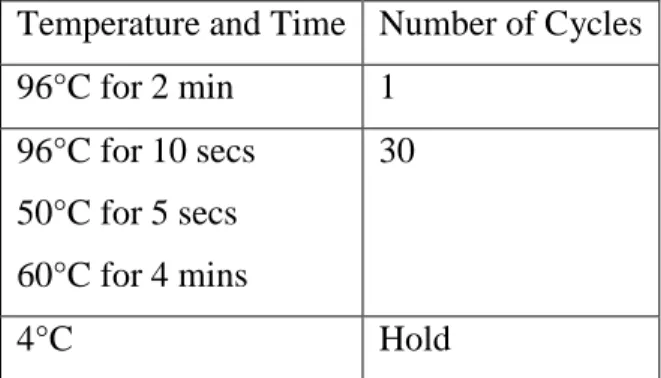
Master Mix was prepared and aliquoted into the respective wells; 14µl of template (PCR product), primers (20pmol) and water, 4µl big dye terminator and 5X big dye terminator dilution buffer. The primer sets used and cycling conditions are outlined in Table 2 and 3, respectively.
Table 2: The Cycling Conditions for sequencing of L4 and L22 of C. trachomatis.
Temperature and Time Number of Cycles 96°C for 2 min 1
96°C for 10 secs 50°C for 5 secs 60°C for 4 mins
30
4°C Hold
2.4.4 Sequence product Clean Up
After thermal cycling the plate was to equilibrate at room temperature and 75μL of 0.2mM MgSO4 Ethanol solution was added into each well with sequence products. This volume applies to sequencing reactions between 10 – 20μL in total volume. Mixed thoroughly by vortexing and allowed to sit at room temperature for 15 minutes to allow precipitation of the labelled products.
Span at room temperature for a minimum of 15 minutes at a maximum speed (longer incubation and spinning times will increase the precipitation of labelled products but may also precipitate un- incorporated dyes). Products were removed from the centrifuge and the plate was gently inverted over the paper towel for 1-2 minutes and 100μL of 70% EtOH was added into each well to wash the pellet, and re-span for 15 minutes using the same conditions as the first spin. The plate was
20
removed from the centrifuge and gently inverted over paper towels for 1-2 minutes. They were allowed to air dry. Then, they were analyzed on ABI 3500XL Genetic Analyzer (Inqaba Biotec).
Table 3: Primer sets for C. trachomatis L4 and L22 genes amplification and sequencing for mutation detection.
Ribosomal genes Primer sequences
ribosomal protein L4 L4-F 5’ACGTTCTTGCGGAGTAG 3’
L4-R 5’GCCTTCTCGGTCACATAATGTC3’
ribosomal protein L22 l22-f, 5’ AGCTGCAGGATTGATGAGAAA3’
l22-r, 5’ GTTAGATGACTCGTGCGCTTC3’
The primer sets for mutation detection were taken from Misyurina, O.Y., et al [113]
2.5 Sequence alignment
Sequences were aligned using ClustalW software using the default parameters. The aligned file was then imported into BioEdit and converted into the corresponding amino acid sequence. The amino acid sequence was used to generate a consensus neighbor joining phylogenetic tree using PAUP software. The tree was generated using 1000 boostrap replications to create the consensus tree.
2.6 Statistical analysis
Graph Pad prism 5 was used for graphing and statistical analysis. Predictive value (p) less or equal to 0.05 was considered statistical significant.
21
3. RESULTS
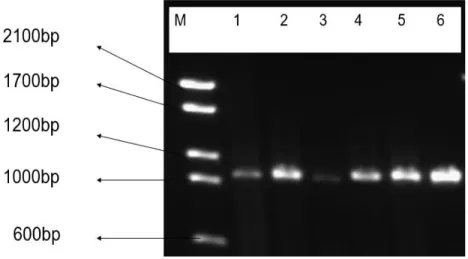
As aforementioned, this was a subset study, where we used stored samples previously collected by CAPRISA for their main study (083 STUDY). The demographic information from which the samples were taken has been previously published by Garrett al, 2018 [37]. In summary 267 women, median age 23 (IQR 21–26), were recruited and 88.4% (236/267) reported genital symptoms. STI prevalence was CT 18.4% (95%CI 13.7–23.0), NG 5.2% (95%CI 2.6–7.9) and TV 3.0% (95%CI 1.0–5.0). Out of hundred and sixty-five clinical samples used in our study, a total of 34 were screened positive for C. trachomatis by Anyplex™ II STI-7 Detection. All possessed an OMP1 gene, which is the unique gene for C. trachomatis isolates (Figure 3).
3.1 Amplification of OMP1 gene of C. trachomatis
The OMP1 gene is the unique gene in all C. trachomatis. It was amplified in all 34 (13%) samples that were found to be chlamydia positive during screening with Anyplex™ II STI-7 Detection, and CDC reference genotypes. The omp1 gene, approximately 1020 bp in length, was PCR amplified with CT1 and CT2 primers.
Figure 3: The amplification of OMP1 gene VS1-VS4 of C. trachomatis. M is a Molecular marker and Lane 1-5 represent the PCR products of the clinical strains and 6 is control, CDC laboratory strain (F).
22 3.2 Typing of C. trachomatis positive samples
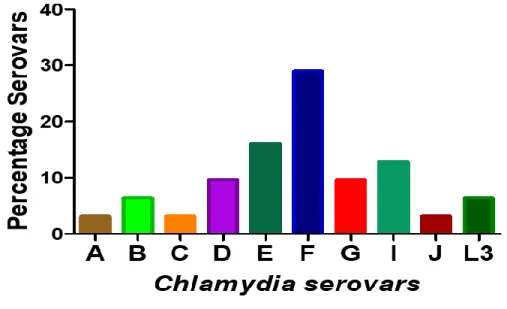
Out of 35 a total of 31 strains were successfully characterized into different serovars in comparison with the 15 CDC reference serovars. The isolates that belong to the same serovar-type have closer Melting temperature (Tm) as observe on the aligned melt curve (Figure 4). Different serovars (A- C, D-K and L1-L3) were clearly differentiated from each other since they had distinguishable melt peak and visualization (Figure 4D). The following serovars A, B, C, D, E, F, G, I, J and L3 were characterized and their prevalence were 3.2%, 6.4%, 3.2%, 9.7%, 16.1%, 29%, 9.7%, 12.9%, 3.2%
and 6.4%, respectively (Figure 5). None of these serovars: H, K, L1, L2 were presented.
23
Figure 4: The HRMA strategy was employed to determine serovars within the OMP1 gene using a Real Time PCR. The combinations of C3 and C4, and GP-U and GC-L primers were used for this assay. QuantStudioTM Design & Analysis software v1.4.3 and High-Resolution Melt software v3.1 were used for designing and analysis of these graphs.
The raw melt curves(A): raw data showing the amplification of different samples. The OMP1 for clinical samples and respective controls were successfully amplified. The fluorescence of different colours representing different serovars was observed. The aligned melt curve(B): The isolates that share similar or closer melting temperature are grouped together, allowing for visualisation of different variants, the unknown samples were grouped according the melting peaks of the controls (A, B, C, C2, D, E, F, G, H, I, J, K, L1, L2 and L3). The different colours exhibited represent the serovars of the same type. The derivative melt curves(C): different serovars distinguished from
A B
C D
24
each other by melt peak, again by visualization. Different serovars with similar or closer melt peak and same fluorescence are distinguishable from each other. The different plot curves(D): separate curves of the same variants from each other, this allow curves that could not be distinguished by melt peak to be now clearly separated from each other. This graph distinctly separate different serovars of the same type.
Figure 5: Graphic representation of prevalence of C. trachomatis serovars.
Detection of C. trachomatis was performed using a set of primers. Primers were specifically designed from highly conserved regions of genetic sequences of C. trachomatis, OMP1. The following serovars were identified: A, B, C, D, E, F, G, I, J and L3 and their prevalence were 3.2%, 6.4%, 3.2%, 9.7%, 16.1%, 29%, 9.7%, 12.9%, 3.2% and 6.4%, respectively. Serovar H, K, L1 and L2 were absent in this cohort.
25
3.3 Association between bacterial load and C. trachomatis serovars
The aim of this was to evaluate if there is any association between serovar types and bacterial load.
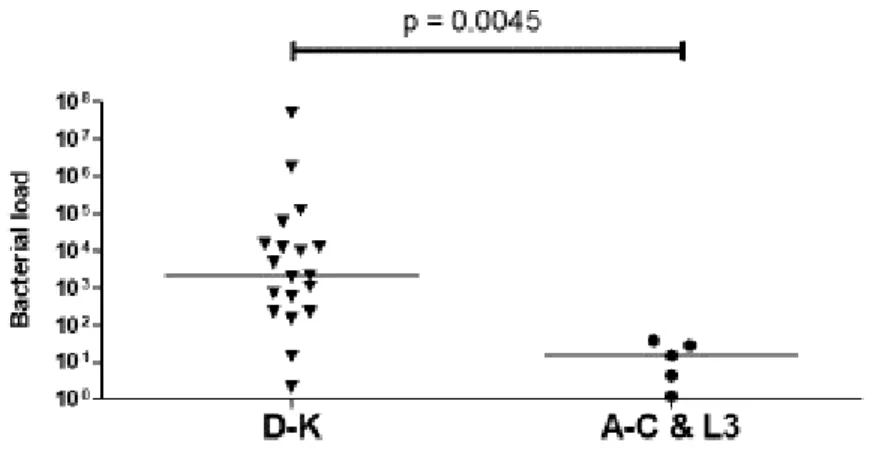
Bacterial concentrations of each C. trachomatis positive sample were measured and compared against different serovar groups. The bacterial loads of different serovars obtained during evaluation are represented in the graphs below (Figure 6 & 7).
Figure 6: Graphic representation of C. trachomatis serovars found in our cohort and their association with bacterial load. Detection of C. trachomatis was performed using a set of primers and TaqMan probe that was specifically designed from highly conserved regions of genetic sequences of C. trachomatis for the following gene Translocated actin-recruiting phosphoprotein, (Ba04646249_s1) which is part of the Thermo Fisher from existing Woman’s Health panels that screen 33 pathogens
The overall range of the bacterial load of the serovars was 1.214 - 51023900. The mean (SD) for the different serovars represented in figure 5B is as follows; A: 28.52, B: 20.04(26.62), C: 4.319, D: 5074(85102), E: 156.1(123), F: 6611000(17960000), G: 8594(9306), I: 8382(7257), J: 9790 and L3: 15.2. Varying bacterial loads were noticed for different serovars. The limit of detection for this assay was one copy.
Chymlamydia trachomatis Serovars
Ba c te ri a l lo a d
A B C D E F G I J L3
100 101 102 103 104 105 106 107 108
Chlamydia trachomatis serovars
26
Figure 7: The bacterial concentration of C. trachomatis in different serovars, i.e. D-K serovars, and A-C and L3 serovars. Unpaired t-test was performed to look at the different groups of serovars, a p-value < 0.05 was considered significant.
We grouped the serovar-groups based on the different expression of bacterial load i.e. highly (D- K) and least (A-C&L3) expressed, to evaluate the statistical significance. Differences between two groups of serovars, i.e. group D-K vs A-C and L3, was evaluated using an unpaired t-test. D-K group has significantly higher mean values i.e. mean(SD): 2793000(11690000) compare to A-C and L3 grouped together 17.62(15.98), p = 00045.
Chlamydia trachomatis serovars
27
3.4 Amplification of chlamydial ribosomal protein L4 and L22 gene
The aim of this was to amplify L4 and L22 genes of C. trachomatis to get enough products for sequencing. Sequencing of these genes was done to detect changes in their sequences that maybe be associated with macrolides resistance. Amplification of these genes was done and confirmed on an electrophoresis gel with fragments: 769bp and 230bp, respectively (Figure 8 & 9).
Figure 8: Gel electrophoresis of L4 gene of C. trachomatis (Size 769bp).
The genes were amplified using conventional PCR and the size was confirmed by running the samples on a electrophoresis gel, and sent for sequencing at Iqaba biotech to scan for any kind of mutation present. M is a Molecular marker and Lane 1-16 represent the PCR product of the amplified gene.
28
Figure 9: Gel electrophoresis of L22 gene of C. trachomatis (Size 230 bp)
The genes were amplified using conventional PCR. The size was confirmed by running the samples on a electrophoresis gel, and sent for sequencing at Iqaba biotech to scan for any kind of mutation present. M is a Molecular marker and Lane 1-11 represent the PCR products of the amplifiied L22 gene of the clinical isolates.
3.5 Sequencing results of chlamydial ribosomal protein L4 and L22 genes
Successfully amplified L4 and L22 genes (28) were sequenced by Inqaba Biotech. Ribosomal protein L4 had mutations was observed in 7 different positions and significant mutations associated with macrolides resistance were observed at amino acid number 109 and 151 (Figure 10). Table 4 shows the change in the amino acids of the wildtype giving rise to mutants in both ribosomal protein genes; L4 and L22.
Ribosomal protein L22 had 21 samples with mutation at amino acid number 24 (Figure 11) but it is not associated with mutations that were previous identified as the cause of macrolides resistance in C. trachomatis. Phylogenetic trees for L4 and L22 genes were generated using a PAUP software to compare relatedness of samples with the reference strain’s sequence (Figure 12 and 13).
29
Table 4: Amino Acids change in the wild type resulting in the mutants in both ribosomal protein L4 and L22 after amplification and sequencing.
Genes (Amino acid Positions)
Wild Type (Amino Acid)
Mutants (Amino Acid)
Wild Type Percentage
Mutant Percentage n = 28
Ribosomal Protein L4
76 S N 27 (96.4%) 1 (3.6%)
87 D N 1 (3.7%) 26 (96.3%)
109 P L 8 (29.6%) 19 (70.4%)
134 S P 24 (85.7%) 4 (14.3%)
151 P A 9 (32.1) 19 (67.9%)
189 F S 27 (96.4%) 1 (3.6%)
194 H Y 24 (85.7%) 4 (14.3%)
Ribosomal Protein L22
24 D G 3(12%) 21(84%)
NB: L4 - total number of amino acid 87 and 109 is 27 (1 amino acid excluded), and L22 - total number of amino acids 24 is 25 (3 excluded).
30
Figure 10: Graphical representation of amino acid alignment of L4 gene sequences.
Sequences were aligned using ClustalW software using the default parameters. The aligned file was then imported into BioEdit and converted into the corresponding amino acid sequence.
Significant mutations associated with macrolides resistance were observed at amino acid number 109 and 151, proline (P) to leucine (L) and proline (P) to Adenine (A), respectively. These two mutations were observed in 22 samples and they co-exist, and besides these mutations there were additional that were present, but these have not been associated with susceptibility of C.
trachomatis to antimicrobials.
. .
31
Figure 11: Graphic view of amino acid alignment of L22 gene sequences. . Sequences were aligned using ClustalW software using the default parameters. The aligned file was then imported into BioEdit and converted into the corresponding amino acid sequence.
Mutation at amino acid number 24 is observed but it is not associated with mutation that were previous identified as the cause of macrolides resistance in C. trachomatis. No mutation was present in amino acid number 77 and 55 known to cause resistance
32
Figure 12: Phylogenetic analysis of the study samples for L4 gene of C. trachomatis. The amino acid sequence was used to generate a consensus neighbor joining phylogenetic tree using PAUP software. The tree was generated using 1000 bootstrap replications to create the consensus tree.
Sample 10 and L3 cluster together with the reference strain sequence. The rest of the samples were clustered in different groups hence showing their distant relatedness to the reference sequence.
Majority of the samples belonged to one distinct group
Reference 10 L3 72 187
170 67
181 98 229 260
237 221 132 109 52 26 61 58 36 227 215 207 193 117 93 79 46
238 0.01
33
Figure 13: Phylogenetic analysis of the study samples for L22 gene of C. trachomatis.The amino acid sequence was used to generate a consensus neighbor joining phylogenetic tree using PAUP software. The tree was generated using 1000 bootstrap replications to create the consensus tree.
Sample 17 aligned together with the reference strain sequence. The rest of the samples were clustered in different groups hence showing their distant relatedness to the reference sequence.
Sample number 38, 229 and 181 have a closer relationship to reference sequence.
Reference 17 38 229 181 170 67 14
52 109 215 26
93 260
66 36
117 227 79
46 237
132 35
98 58
207 193 221
0.01
![Figure 1: Life cycle of C. trachomatis in the Human body [19].](https://thumb-ap.123doks.com/thumbv2/pubpdfnet/10698542.0/22.918.108.796.106.442/figure-life-cycle-c-trachomatis-human-body-19.webp)