River health monitoring of the Durban metropolitan area using freshwater aquatic invertebrates. I would like to thank Professor Peter Utting, head of the Department of Civil Engineering, for his understanding and guidance. 7 Rapid assessment techniques of biological monitoring (SASS 4 and IHAS) 1.8 Reasons for choosing the study area.
This study is aimed at all parties involved in the planning, management and utilization of the rivers in the Metropolitan Area of Durban. The economic and social opportunities of the river catchment systems may even be lost due to the reduced water quality that has led to an increased pressure in the DMA rivers. As more of the DMA's rivers are disturbed, habitats become smaller and more altered.
Organisms in this altered environment are struggling to survive, so the DMA's rivers are now threatened. Mondi in the DMA is one of the large users of fresh water in the DMA.
TYPES OF MEASUREMENTS OF WATER QUALITY .1 Chemical Measures of Water Quality
Warren stated that "organisms that live in water provide a more sensitive and reliable measure of conditions than physical and chemical measurements of water quality and can detect pollution problems that may no longer be apparent in the water sample". It can therefore be stated that the purpose of the biological assessment is to characterize the state of the water resource and to monitor trends in the state of biological communities associated with anthropogenic disturbance (Karr, . 1991). 34;To assess water quality on the basis of ecosystem health, it would be best to study the response of the entire aquatic community to stress" (Metcalfe-Smith, 1989).
34;Therefore, if the environmental factors that most commonly limit the species in question are known, the presence or absence of organisms will indicate specific environmental conditions" (Rosenberg and Resh, 1993). Another major use of rapid techniques is when a preliminary assessment of the condition of a waterway is required immediately management (Chessman, 1995). species is of concern" (Chessman, 1995).
It is not intended to categorize the degree of degradation in any detail or to identify the nature of the degradation (Chutter, 1994). No previous studies using the SASS version 4 and IHAS version 2c analysis methods had been conducted on the rivers in the DMA.
AIM OF STUDY
CHANNEL MODIFICATION
Canal systems facilitate the invasion of non-native species, which is certainly one of the most serious consequences. Engineering works can lead to changes in the physical and chemical dimensions of the habitat, resulting in the removal of biota. This change in habitat affects invertebrate fauna and flora, resulting in changes in species composition (Allan, 1995).
According to Keeffe and De Moor, prior to an inter-basin transfer from the Orange River completed in 1977, the Great Fish River of South Africa was characterized by an irregular seasonal flow of water with a high mineral content. 34;Inflow from the Orange River converted the Fish River into a permanent flow and reduced concentrations of sodium, magnesium, chloride and sulfate, but not calcium or total alkalinity" (0' Keeffe and De Moor, 1988). A more permanent flow and increased area of erosional habitat in the Fish River were the likely causes of these changes (O' Keeffe and De Moore, 1988).
Consequently, channel modification produces a different type of river and an unnatural one, and so the changes should be expected to be ecologically significant. In summary, it is anticipated that the use of an indicator potential of biological systems to identify or measure environmental stress may provide some indication of the effect of pollution sources on ecosystems.
SECTION B
THE ILovu RIvER
The Msimbazi River located in the southern regions of the city mainly drains undeveloped or agricultural areas. The Umgababa River is also located in the southern regions of the city limits, draining mainly undeveloped or agricultural area. The rivers of the Greater Durban Metropolitan Area were chosen as suitable sampling stations due to several characteristics.
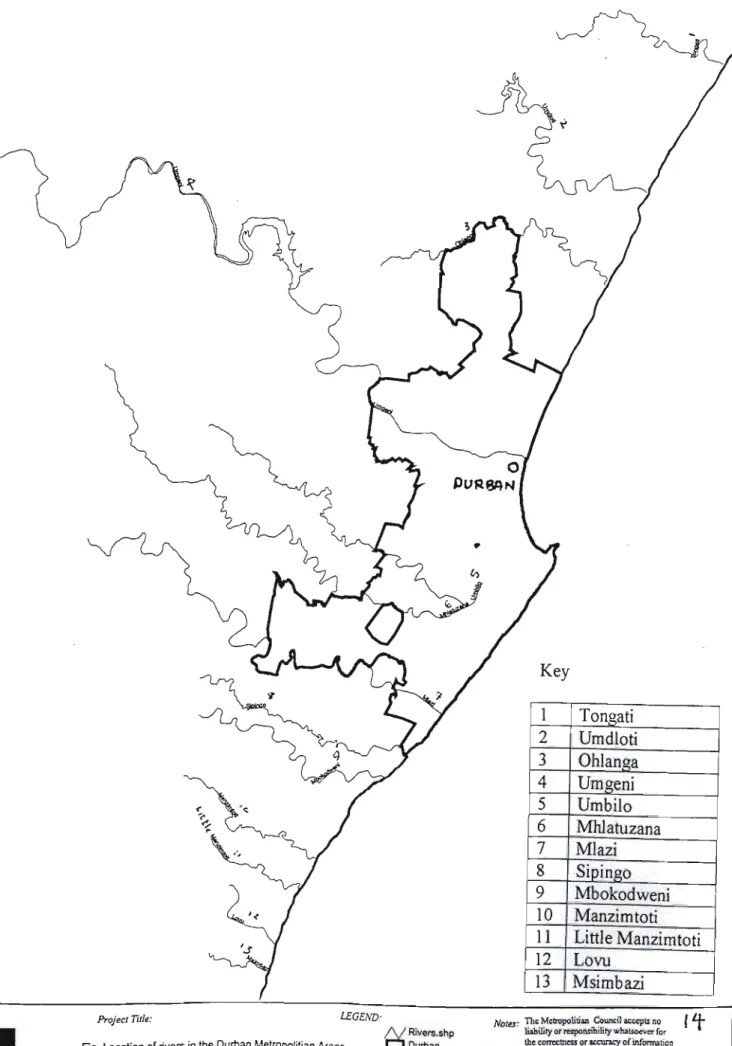
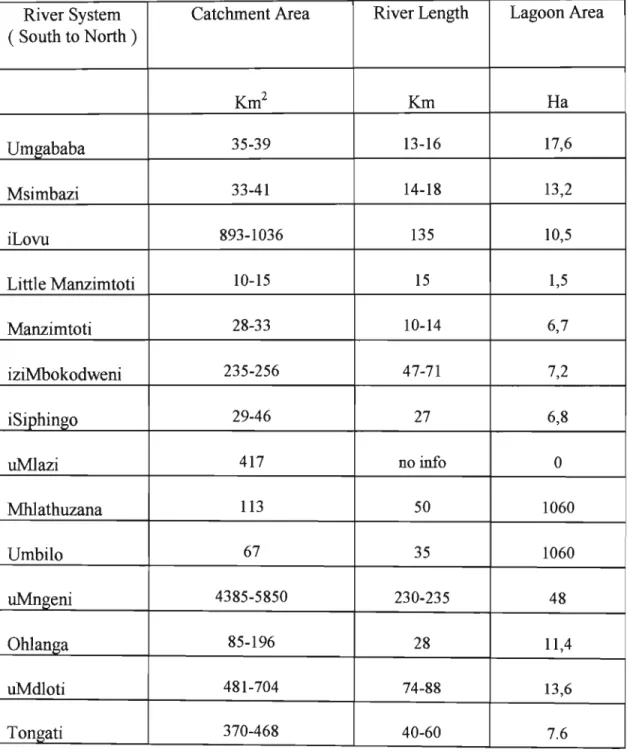
The rivers can be seen on the map of the Greater Durban Metropolitan Area, Fig. The associated hydrological and morphometric characteristics of the rivers of the Greater Durban Metropolitan Area are listed in Table 1 and the main uses of the Metro Rivers are given in Table 2 The ability of biological assessment methods to demonstrate differences in water quality was one of the core objectives of this study .
Two sampling sites were selected in each of the rivers surveyed, with the exception of the iziMbokodweni River where three sampling sites were selected. Three sampling sites were chosen for the iziMbokodweni River because of the variety of biotopes that were present. Sampling sites were chosen in relation to the effluent outlet, near areas of known natural and human disturbance.
Sampling sites on all rivers were selected as close to the roadside as possible given the constraints of accessibility and suitability. Sampling of the biotopes took place during periods of low flow, as the protocol required the maximum depth of 0.5 m. It was an important criterion to document the exact location of the selected sites chosen for biological analysis, for future assessments.
This chapter describes the fourteen rivers of the Durban Metropolitan Area with regard to the geographical characteristics of the catchments and the nature of the pollutants that can be found in the river systems. The cause of any impact on the biological status of the river could be predicted because the characteristics of the river and the sources of pollution entering the river are known. Collection of the biological data was therefore necessary and the selected procedures are described in the next chapter.
INTRODUCTION
This score was applied to SASS4 because it is independent of the number of taxa counted. It is simply a numerical evaluation of the habitat conditions affecting the stream at the sample point. A comprehensive documentation of the Integrated Habitat Assessment System (lliAS version 2c) is described in the user's manual (Moore and McMillan, 1993).
The "kick and sweep" sampling technique is the method used in the protocol to sample the rocks on the bottom of the stream. Each of the taxis at each location on the river was recorded on a SASS sheet specially designed for this purpose (see Appendix 1). The data collected relate to SASS4, ASPT and llIAS scores as well as the number of families present and the number of biotopes present at each of the selected river sites in the Durban Metropolitan Area.
The tables represent the number of taxa present at each site and their relative abundance and the biotopes present in addition to an overview of the health of the rivers in the DMA. The abbreviation of the monitoring stations as depicted in the graphs and tables in this section is classified in the List of Abbreviations. For this study, the habitat sampled in the different areas of the river was carefully selected to best represent the overall habitat condition.
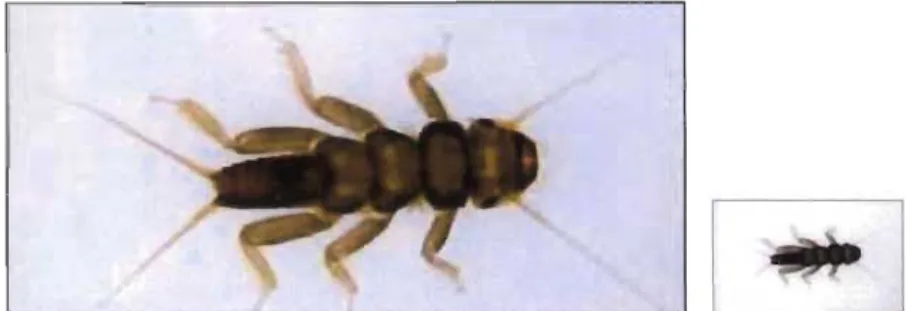
The presence of plecopters (stoneflies) in the iLovu River, site 01 and the small Manzimtoti River, site 02 and iziMbokodweni at site 02 (Table 6) suggested that the water quality in these sites was unmodified and that the available habitats were hospitable to to. their survival (Table 6). As previously mentioned, plecopterans (stoneflies) have a restricted occurrence in South Africa (Chutter, 1972) and are only found in well-oxygenated water and were rare in most rivers surveyed in the Durban Metropolitan Area. During the current survey, Odonata had a higher percentage of occurrence in the iziMbokodweni and Manzimtoti rivers than any other river surveyed.
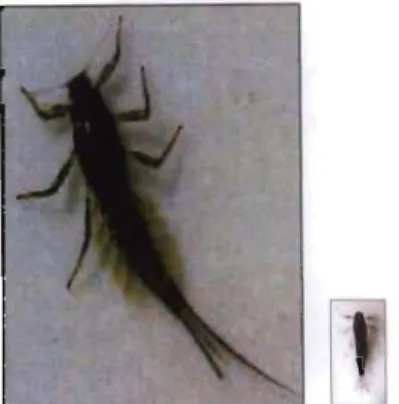
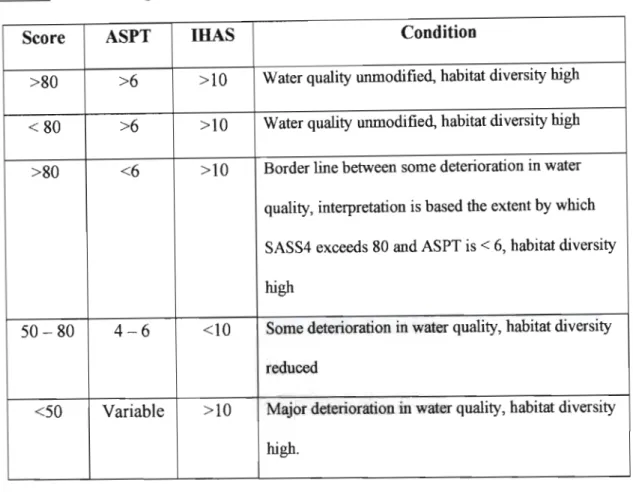
The results obtained using SASS4 and ASPT results (Fig. 13 and Fig. 14) in this study showed that most of the rivers were of modified (poor) water quality. Most of the intermediate water quality sampling sites (Umbilo River) were in polluted river reclamation areas. A discussion of SASS4 and ASPT and IHAS results at each river site and their implications is presented in Chapter 7.
DISCUSSION
Most biotopes in this river area (site 01) were sampled, except bedrock and out-of-stream stones (Table 5). Stream characteristic analysis showed that at location 02 the river was flowing, wide and moderately deep. An interesting result was obtained regarding the condition of the river at location 02.
The resulting macro-invertebrate community in this part of the river was one of the best sites examined throughout the study. The mud was well compacted and stable, which appeared to be reflected in the nature of the invertebrates (a number of chironomids, ceratopogonids and tipuilids were present). The low SASS4 (51) and ASPT (5.1) scores in this part of the river indicated some deterioration of water quality.
Discharging sewage into the river could have led to a deterioration in water quality to the point where there were obvious signs of pollution. The decline of intolerant species and the increase of tolerant species reflected the decline in water quality. As a result, much of the river was devoid of life and infamous for its smell.
The faunal analysis at site OJ and site 02 of the river indicated conditions of organic enrichment. At site 01, certain invertebrates were present in quite large numbers, consisting mainly of the highly tolerant Diptera (Simuliids and Chironomids), as well as Oligochaetes and leeches (Table 6). This may be due to the excellent river condition at this location and to the fact that all major biotopes were available for sampling (Table 5).
At site 01, the most remarkable result was the presence of large numbers of snails, simuliids, chironomids and Ceratopogonidae (Table 6). Riparian vegetation and bank cover were well developed in this part of the river. These wastes tend to cause high turbidity and consequently discolor the water.
Invertebrate abundance in the rivers of the DMA appeared to vary uniformly with variation in habitat. The effects of sand deposition on the macro-invertebrate fauna of the River Camel, Cornwall.
INTEGRATED HABITAT ASSESSMENT SYSTEM (IHAS)
GTI CD