1
Motherhood and Labour Force Participation: Evidence from National Income Dynamics Study Panel Data (2008 - 2012)
by
Katherine Reddy
Submitted
in partial fulfilment of the academic requirements for the degree of Master in Population Studies
in the School of Development Studies, University of KwaZulu-Natal
Howard College Campus Durban
July 2017
The financial assistance of the National Research Foundation (NRF) towards this research is hereby acknowledged. Opinions expressed and conclusions arrived at, are those of the author and are not necessarily to be attributed to the NRF.
2
Declaration
College of Humanities
I, Katherine Reddy, declare that
1. The research reported in this thesis, except where otherwise indicated, is my original research.
2. This thesis has not been submitted for any degree or examination at any other university.
3. This thesis does not contain other persons’ data, pictures, graphs or other information, unless specifically acknowledged as being sourced from other persons.
4. This thesis does not contain other persons' writing, unless specifically acknowledged as being sourced from other researchers. Where other written sources have been quoted, then:
a. Their words have been re-written but the general information attributed to them has been referenced
b. Where their exact words have been used, then their writing has been placed in italics and inside quotation marks, and referenced.
5. This thesis does not contain text, graphics or tables copied and pasted from the Internet, unless specifically acknowledged, and the source being detailed in the thesis and in the References sections.
Signed: Katherine Reddy
3
Abstract
By encouraging female labour force participation, South Africa will make progress towards the Sustainable Development Goals objective, advocating for gender equality and female empowerment. The study aimed to provide insight into the relationship between motherhood and labour force participation in South Africa, a topic that has been severely under researched. Additionally, other factors that influence females labour force participation after childbirth is discussed. Becker’s theory on allocation of time and household production provides a framework for understanding mothers time expended on childrearing and its effect on employment activities. The National Income Dynamics Study Wave 1 and Wave 3 dataset was utilised. Logistic regression in the form of bivariable and multivariable analysis were used to examine the study’s research questions. The main finding revealed that women with children were 162% more likely to decrease their labour force participation than women without children. The variables motherhood, age, and education were found to be statistically significant in relation to decrease in labour force participation. In terms of working hours, the findings of this study indicated that there is no significant association between motherhood and decrease in working hours.
4
Acknowledgements
Om Namah Shivaya
To my supervisor, Dr Kerry Vermaak, thank you immensely for your patience, support and insightfulness in helping me complete this dissertation.
A special thank you to Professor Posel, and financial assistance from NRF is gratefully acknowledged.
To my dear friends, I will be forever grateful for your time shared, encouragement and constant support.
To my dear brothers and sister, thank you for your endless support and motivation, I am truly grateful to all of you.
To my dearest parents, Johnny and Lutchmee Reddy, thank you for emphasizing the value of education. Your encouragement, advice and unwavering support for my academic endeavours played a fundamental role in my journey. It is to you that I dedicate this thesis.
5
Table of Contents
Declaration ...2
Abstract ...3
Acknowledgements ...4
List of Tables ...7
List of Acronyms ...8
Chapter One ...9
Introduction ...9
1.1 Problem Statement ...9
1.2 Objectives of the study and key questions asked ... 11
1.3 Theoretical framework ... 12
1.4 Organisation of the dissertation ... 13
Chapter Two ... 14
Literature review ... 14
2.1 Introduction ... 14
2.2 The effect of motherhood on labour force participation ... 14
2.2.1 International Literature: Developed Countries ... 15
2.2.2 International Literature: Developing Countries ... 20
2.2.3 National Literature ... 22
2.3 Other factors influencing labour force participation after child birth ... 25
2.4. Summary ... 28
Chapter Three ... 29
Methodology ... 29
3.1 Introduction ... 29
3.2 Data Source: National Income Dynamics Study (2008-2012) ... 29
3.3 Sample and weights ... 32
3.4 Description of variables ... 32
3.5 Data Analysis... 37
3.6 Limitations ... 38
3.7 Summary ... 39
6
Chapter Four ... 40
Results ... 40
4.1 Introduction ... 40
4.2 Sample Characteristics ... 40
4.3. Bivariable and multivariable analysis: Decrease in labour force participation ... 43
4.4. Bivariable and multivariable analysis: Decrease in working hours ... 48
4.5 Summary ... 52
Chapter Five ... 53
Discussion and Conclusion ... 53
5.1 Introduction ... 53
5.2 Discussion ... 53
5.3 Recommendations ... 61
5.4 Conclusion ... 62
References ... 63
Appendices ... 67
Appendix 1: Ethics approval letter ... 67
Appendix 2: National Income Dynamics Study Wave 3: 2012. Adult (15+) Questionnaire .... 67
7
List of Tables
Table 3.1 CSMs and TSMs successfully interviewed by wave……….31 Table 3.2: Reasons for Attrition……….31 Table 4.1 Distribution of sample characteristics by percentage for female age groups…42 Table 4.2: Motherhood and labour force participation status of all women at wave 1….43 Table 4.3: Decrease in labour force participation by selected variables………...47 Table 4.4: Decrease in working hours by selected variables……….51
8
List of Acronyms
CI Confidence Interval
CSM Continuing Sample Member
NIDS National Income Dynamics Study
OECD Organisation for Economic Co-Operation and Development.
PSUs Primary Sampling Units
SALDRU Southern Africa Labour and Development Research Unit SDGs Sustainable Development Goals
TSM Temporary Sample Member
UNDP United Nations Development Programme
9
Chapter One Introduction
1.1 Problem Statement
The Sustainable Development Goals (SDGs) 2030 Agenda came into effect in January 2016. This integrative framework consists of 17 goals and 169 targets (United Nations, 2015), and is a continuation of the Millennium Development Goals, albeit more target specific and devised through a wider consultative process (United Nations, 2015). In an effort to bring about positive change, countries have adopted the framework and are working towards meeting the targets of the SDGs. The growing interest in motherhood and the labour force participation of women can be aligned to Goal 5 of the SDGs initiative, which promotes gender equality and empowering women (UNDP, 2015).
For decades women have been subjected to traditional roles such as primary care-givers;
with most of their time taken up with domestic duties for a household, child bearing and child rearing (Poduval & Poduval, 2009; Esping-Andersen, 2009). These roles were traditionally the acceptable norms within societies. However, as the pursuit for gender quality, freedom of expression and independent decision making moves forward, greater numbers of women have been seen participating in the labour market over time (Lim, 2002). Casale and Posel (2002) provide evidence to suggest an increase of female labour supply in the South African Context. However, the authors note that “women continue to be over-represented in low-income, less secure employment” (p.1). With women participating in the labour force, they are able to independently empower themselves, assist their families financially, contribute to poverty reduction and the greater socio- economic sphere (World Development Report, 2012; UNDP, 2015).
10 By contrast, low female participation in the labour market can be perceived as a lack of effort towards promoting gender equality and empowerment of women. When considering motherhood and female labour force participation, the narrative becomes rather complicated. Motherhood embodies both physiological and sociological connotations, which ideally should be acknowledged in the workplace as they are an important demographic that contributes to the economy. Women raising a child while actively participating in the labour force face various challenges; such as gender discrimination at work, inflexible work schedules and lack of childcare support (Miani &
Hoorens, 2014; Grimshaw & Rubery, 2015). In modern society greater efforts are needed to counter the challenges experienced by working mothers. As such, it is imperative to understand the relationship of motherhood and labour force participation. This understanding would contribute towards better policies, encourage economic growth and decisions relating to increasing or maintaining a female workforce (OECD, 2012; The World Bank, 2012).
Within the South African context, minimal empirical evidence exists on motherhood and labour force participation. One of the key contributing factors identified is the lack of suitable survey datasets that contain detailed information on birth history which enables a link between a mother and a child (van der Stoep, 2008; Posel & van der Stoep, 2008;
Mlatsheni & Leibbrandt, 2001). Thus, motherhood and labour force participation has been severely under researched within the South African context. The need for a suitable dataset materialized in the form of South Africa’s first nationally representative household panel dataset, the National Income Dynamics Study (NIDS). NIDS questionnaires contain detailed information on labour force participation and personal identifiers (PIDs) which ensures that information is linked to an individual in each and subsequent waves. Therefore, it enables one to match women to their children and track events over time. This study seeks to address the gap in current literature and make a valuable contribution to the body of knowledge by investigating motherhood status and labour force participation, which has not been well documented in South Africa.
11
1.2 Objectives of the study and key questions asked
The following outlines the objectives of this dissertation:
• To determine the effect of motherhood on female’s participation in the labour force.
• To investigate other factors that influence female participation in the labour force after child birth.
This study aims to address the following key questions:
1. What is the motherhood and labour force participation status of all women of child – bearing age in wave 1?
2. Among women who did not have a child at wave 1 but with at least one child by wave 3, was there a significant association between child bearing and a change in labour force participation (employment status)?
3. Does the association between child bearing and a change in labour force
participation (employment status) remain significant when controlling for other factors (such as race, age, marital status, education and household composition)?
4. Among women who did not have a child at wave 1 but with at least one child by wave 3, was there a significant association between child bearing and a decrease in working hours?
5. Does the association between child bearing and a decrease in working hours remain significant when controlling for other factors (such as race, age, marital status, education, household composition)?
12
1.3 Theoretical framework
Gary Becker was an influential figure whose work of more than 20 years contributed to the greater understanding of phenomena in the field of economics and sociology.
Becker’s publication of ‘A Treatise on the Family’ encapsulates his vast contributions (Becker, 1993). Of particular importance to the conceptual framework of this dissertation, is his work centred on allocation of time within families and household production.
Becker (1993) highlighted the importance of time in the process of making decisions, which is characterised as a ‘scarce resource’ and its association with competing activities.
Time is allocated to different tasks in the household such as market based activities which permits the acquiring of commodities or non-market activities which do not provide a financial output such as childrearing or cooking (Becker, 1993). Within this context, it has been generally accepted that women’s time is allocated towards non-market activities upon childbearing and childrearing (Becker, 1993). As such, a child is considered to take up more non-market time of women, thereby negating their pursuit of commodities and market work, inclusive of raising ‘opportunity costs’. This can be interpreted as a career interruption, resulting in less time spent investing in their market work, which can then inhibit their career progression and wages (Becker, 1993). Therefore, the husband within the household unit, would typically assume the financial provider role in market work whilst mothers are responsible for child rearing and household duties (Becker, 1993).
Becker has received critiques for his theory, notably on emphasising that decisions made are for the primary good of the family unit and gender role divisions (Reid, 1977; Pollak, 2003; Grossbard, 2011). The decision-maker in this process would be considered an altruistic individual who would beneficently allocate individuals to the relevant activity (Becker, 1993). According to Pollak (2013) the theory may be biased as it disregards individual’s choices and characterises women in a primarily non-market serving role, with men primarily engaged in market based activities and have decision making power
13 over households. However, Becker (1993) postulated that these roles are based on a rational and time based perspective in that women would be more efficient in the household and childrearing activities than men.
Despite critiques associated with Becker’s theory, it is relevant to the study undertaken as the focus on allocation of time and household production elaborated above, encapsulates the relationship of motherhood and labour force participation. Specifically, it still holds merit in accounting for the opportunity costs women expend on childrearing than most economic theories (Mattila-Wiro, 1999).
1.4 Organisation of the dissertation
This dissertation is divided into five chapters. Chapter one provides background information on motherhood and labour force participation. In addition, it addresses the objectives, research questions and theoretical framework of the study. Chapter two presents a review of literature relevant to the undertaking of the research. Chapter three focuses on the research methodology, the data set used, description of variables and analysis techniques employed. Limitations of the study are included. Chapter four provides a discussion of the research findings whilst drawing on existing literature.
Chapter five concludes by providing a summary of the research, and possible future recommendations.
14
Chapter Two Literature review
2.1 IntroductionThe purpose of this chapter is to provide a review of literature on motherhood and labour force participation. This chapter begins by highlighting studies that have discussed the effect of motherhood on labour force participation, followed by international literature for developing and developed countries, as well as national literature. The chapter then explores other factors which have affected motherhood and labour force participation.
2.2 The effect of motherhood on labour force participation
According to Lim (2002) women enter into the active working population within their early twenties but exit temporarily due to child rearing, and later some return to the labour market as working mothers (Lim, 2002). Motherhood has usually been concerned with a perceived threat to career progression including job insecurity which would make motherhood a less attractive option (Poduval & Poduval, 2009; Grimshaw & Rubery, 2015). Mothers are also most often unable to work the hours required for a full-time job and often choose to reduce the amount of time spent in employment by selecting part- time work. As a result of moving from full-time employment to working reduced hours, they suffer loss in income and benefits that would generally be associated with full-time employment (Lim, 2002; The World Bank, 2012; Grimshaw & Rubery, 2015). Full-time employment provides the benefit of a stable wage, healthcare, pension and opportunities to advance in ones chosen career. Additionally, it is envisaged that the structural and/or organisational short-comings, continue to perpetuate a system in which women are
15 disadvantaged based on lower wage employment and lower career mobility (The World Bank, 2012; Miani & Hoorens, 2014). Despite the negative perceptions of part-time employment, it does present an opportunity for allowing mothers to balance their work role and parental role (Silim & Stirling, 2014). As a result they are able to partake in the workforce and fulfill child rearing demands. Generally, in society women have been depicted as domestic caretakers with the pursuit of a career being secondary to the role of a mother (Poduval & Poduval, 2009). Although evidence of motherhood and female labour force participation remains varied, Lim (2002) indicated that female labour force participation has increased with notable improvements made within developed nations rather than developing nations. This is due to a number of factors which will be discussed in the following sections.
2.2.1 International Literature: Developed Countries
Cukrowska-Torzewska (2016) conducted a study on twenty-eight European countries and a negative correlation between motherhood and employment was discovered in the majority of the countries under investigation. The probability of exiting employment and extended gaps in employment is higher for mothers located in countries within Central Eastern Europe than Western Europe countries (Cukrowska-Torzewska, 2016). Overall, the author acknowledged the variation in the results among the countries analysed; he suggested that the employment gap for mothers is larger in certain countries than others due to lack of childcare facilities and unsupportive leave policies (Cukrowska- Torzewska, 2016). The likelihood of women with a number of children entering the labour force again is slim because of extra time required for family responsibilities (Cukrowska-Torzewska, 2016). In addition, some countries revealed that motherhood had an effect on earnings as mothers earnings were lower compared to women without children (Cukrowska-Torzewska, 2016).
Alternatively, Geyer and Steiner (2007) analysed data from Italy, Denmark, United Kingdom and Germany which identified varying differences in the impact of child bearing and rearing on mothers employment. This was based on a range of governing
16 processes, regulations and family policies. When employment was viewed in the short and long term, Denmark and Italy indicated a negligible effect on motherhood and employment (Geyer & Steiner, 2007). However, the authors informed that it should be viewed contextually in light of low levels of working mothers (Geyer & Steiner, 2007).
United Kingdom and Germany revealed “very strong negative short-term effects on mother’s employment and working hours” (Geyer & Steiner, 2007, p. 22). Furthermore, when analysed long term, it appears that within these two countries, rates of mother’s employment adjust towards the levels attained before childbirth (Geyer & Steiner, 2007).
Germany’s employment levels are lower when children are younger and these employment levels increases upon the child commencing schooling (Geyer & Steiner, 2007).
In the case of Germany, the state does not provide adequate support for working mothers thus they are economically disadvantaged if they do not return to work soon (Geyer &
Steiner, 2007). Within Germany and the United Kingdom, during pregnancy and long term child rearing, mothers worked reduced hours to accommodate both roles; however in Italy and Denmark, there was little effect in change of hours (Geyer & Steiner, 2007).
The author’s findings are in keeping with the studies highlighted in this section, which provide varying evidence on motherhood and labour force participation. Overall, there are many factors to consider and it is of great importance to review the findings contextually within a country.
A study by Ma (2014) in South Korea provided interesting results when addressing women’s return to work after childbirth. The findings were viewed against a backdrop of the 1997 Asian financial crisis within the country. It revealed that women returned to work soon after childbirth given the unstable economy and job security fears (Ma, 2014).
The presence of a child did not hinder women’s employment; and their decision to return to work was amplified by the socio-economic crisis of the time and provision of job security. Ma (2014) reported that policies providing support to families assisted in mothers return to employment.
17 Mothers tend to seek employment with reduced working hours in order to cope with family responsibilities such as child rearing (Del Boca, 2002; Grimshaw & Rubery, 2015). The inclination towards part-time employment post child birth is stronger than compared to full time employment (Rønsen & Kitterød, 2012). Part-time employment allows women with children to still participate in the labour market thus proving to be beneficial in this regard; however it also has its disadvantages (Lim, 2002; Silim &
Stirling, 2014). Some studies have documented disadvantages associated with part-time employment, such as the negative impact on earnings and career progression (Del Boca, 2002; Evertsson & Duvander, 2011; Silim & Stirling, 2014). In Ireland, Netherlands and Belgium, the likelihood of moving from permanent employment to part-time employment after having a child is greater when compared to ceasing employment (Del Boca, 2002).
Alternatively, in Norway, high levels of part-time employment opportunities among mothers are attributed to the availability of such employment (Rønsen & Kitterød, 2012).
One of the major concerns with part time employment is that it is normally prescribed to lower level employment positions; there are relatively few senior or managerial positions which offer the option of part time work due to the nature of the position (Rønsen &
Kitterød, 2012; Silim & Stirling, 2014).
Silim and Sterling (2014) identified part-time employment as generally being associated with elementary occupations and less so with skilled occupations. The authors have suggested that due to lack of professional jobs in a part-time basis, mothers are demoted to roles not equal to their skill set; this disproportion of skills within an economy can have a negative impact on an organisation as well earning potential of mothers (Silim &
Stirling, 2014). Alternatively, Rønsen and Kitterød (2012) highlighted that women in established positions such as management or experts in their chosen professions, experience shorter career interruptions and most often resume full-time positions when compared to other occupations. Mothers in a self-employed capacity resumed part-time work sooner indicating flexibility within their line of work (Rønsen & Kitterød, 2012).
Within some countries mothers face a penalty in wages which is incurred when their
18 absence from employment is longer than expected (Grimshaw & Rubery, 2015).
However, when their absence from employment is relatively short, wages are not significantly affected (Grimshaw & Rubery, 2015). Thus, working mothers would resume employment as soon as possible to avoid a penalty in their income or occupational status and future progression.
Mothers upward mobility may further be stifled due to employer’s perception that the role of motherhood would distract from time invested into the job role (Gutiérrez- Domènech, 2002; Grimshaw & Rubery, 2015). Due to the role of motherhood and employment, women would need to split their time between these roles, thereby affecting their efficiency and perceived commitment to an organisation (Gutiérrez-Domènech, 2002; Grimshaw & Rubery, 2015). Progression in the labour market requires a substantial investment of time to gain promotions and have increased productivity (Gutiérrez- Domènech, 2002; Lim, 2002). Motherhood, however, would require a woman to increase time spent for childrearing, especially at the early ages, thus affecting time spent on employment tasks (Gutiérrez-Domènech, 2002; Baker & Milligan, 2008). This in turn has the potential to make female employee's less likely to be considered for work based benefits such as raises and promotions (Grimshaw & Rubery, 2015).
According to Vikat (2004), women’s income is positively associated with having a child in Finland. Thus, having a child is more likely to occur among working women. This could be due to welfare benefits which counterbalances the costs associated with childbearing (Vikat, 2004). In Japan and Korea regular employees receive more social benefits than non-regular employees (Kinoshita & Guo, 2015). In this case, it was found that non-regular employees would be less inclined to have children. In addition, a decline was evident in regular employment among women when the child allowance is higher (Kinoshita & Guo, 2015). Thus, it appears that a source of income in the form of child allowance discouraged women’s return to regular employment. Alternatively, Nordic nations are associated with higher regular employment rates and greater child allowance
19 (Kinoshita & Guo, 2015). In this context, child allowance can be seen as either enhancing or inhibiting women’s return to the labour market among varying countries. It is important to analyse the impact of child allowance so to ensure its objective of encouraging women’s labour market return.
Possible solutions with regards to role incompatibility between motherhood and employment opportunities are establishing affordable daycare facilities, which by virtue will encourage working mothers to re-enter the workforce as their children are taken care of (Del Boca, 2002; OECD, 2012; Rønsen & Kitterød, 2012; Cukrowska-Torzewska, 2016). The absence of adequate daycare facilities strains working mother’s participation in the labour market (Chevalier & Viitanen, 2002). Ma (2014) highlighted that in South Korea, labour policy regulations such as ‘job protected maternity leave’ is a potential reason to explain increased levels of mothers return to the labour market. Mothers continued employment is a source of additional income during economic insecurity thus positively shaping their role in the labour market and recognition among male counterparts (Ma, 2014). Furthermore, income generated from mothers employment is a welcomed increase in the gross household income (Del Boca, et al, 2003). This increase in the household income allows for greater resources and investment into the family; for instance, a child’s education, healthcare and overall consumption (Del Boca, et al., Labour market participation of women and fertility: the effect of social policies, 2003).
In keeping with supportive regulations and policies, Nordic nations are exemplary in their pursuit of gender equality and representation of women in the workforce (Karila, 2012).
The policies and employers thereof, are supportive of women with children by implementing childcare benefits and flexibility of working hours (Karila, 2012). These measures are enabling women to return to worker sooner, limiting the effect it would have on their career progression (Kinoshita & Guo, 2015). For instance, the care policy of 1990 ensured that children below age of 3 would receive day-care, this policy was amended in 1996 to include children not yet of school age (Karila, 2012). Overall, it is
20 apparent that day-care or childcare benefits are a major source for improving levels of female participation and continued participation in the labour market (Karila, 2012;
Grimshaw & Rubery, 2015) .
Although, immediate return to the labour market has been identified to significantly improve career progression among women (Ma, 2014); Cukrowska-Torzewska (2016) suggested that extended maternity leave that is compensated, promotes career interruption of women with children compared to women without children. Although this may extend the employment gap for some mothers, others have suggested that it has an overall positive impact in that it encourages women to re-enter the labour force rather than ceasing employment entirely (Del Boca & Locatelli, 2006; Baker & Milligan, 2008).
2.2.2 International Literature: Developing Countries
In developing nations, challenges in female labour force participation are pronounced (Chaudhary & Verick, 2014). According to Chadhary and Verick (2014) greater efforts are needed in order to improve quality education access and programmes geared towards training or upskilling. Legal and policy interventions catered to the promotion of childcare are imperative to women’s labour market integration (Chaudhary & Verick, 2014). Particularly, the types of occupations available for women are predominantly in the informal sector which lacks measures of job protection and overall safety (Chaudhary
& Verick, 2014; Schaner & Das, 2016). In addition, the societal norms which expect mothers to take care of their children and household duties are limiting factors in advocating for female labour force participation (Chaudhary & Verick, 2014; Schaner &
Das, 2016).
A study by Schaner and Das (2016) in Indonesia provided evidence to support the constraint of child care on mother’s employment activities. According to the authors, there is a low likelihood that women with young children would be employed in comparison to women who do not have children (Schaner & Das, 2016). As such, their
21 wage based employment is reduced and mothers may become self-employed or fall victim to unremunerated care work (Schaner & Das, 2016).
According to Piras and Ripani (2005) women in Latin America generally bear children during their time in the labour force. The author’s findings indicated that women with children of young ages, notably below age of seven were less likely to partake in employment activities as compared to women without a child (Piras & Ripani, 2005). A decrease in family responsibilities is observed with increases in a child’s age, thus permitting higher levels of participation in the labour force (Piras & Ripani, 2005).
Therefore, it appears that female employment is hindered or exacerbated by dual responsibilities of family and work. Alternatively a study by Agüero and Marks (2008) highlighted that a causal relationship does not exist between motherhood and labour force participation in Latin America, that is having a child does not affect women’s labour force participation. Another study by Agüero and Marks (2010), controlled for infertility in their study as a means to investigate a cause and effect relationship between children and females participation in the labour market. The study was based on twenty six developing nations and revealed that in lower income countries, remunerated work is affected by women and younger females with children, slightly (Agüero & Marks, 2010).
This is an interesting finding as Agüero and Marks (2010) further noted that “the presence of children affects neither the likelihood of work nor its intensity, but impacts the type of work a woman pursues” (p.1). Empowering women was seen as a possible explanation to account for their findings.
According to Cáceres-Delpiano (2012) the employment of women is negatively influenced by the presence of children. Consequently, determining the scale of this influence is dependent on the event such as multiple births and employment opporunities of an informal nature, where evidenced to be more likely impacted by larger family sizes (births) (Cáceres-Delpiano, 2012). This finding is most likely explained by women needing to invest more time into taking care of additional children thereby reducing their ability to invest time in the labour market.
22 Another study by Siah and Lee (2015) noted that in Malaysia, childbearing did not have an impact on women’s labour force participation. The author did not find any evidence to suggest children negatively affecting mothers return to employment and continuation thereof. This could be as a result of the increased demand for female employees in Malaysia, declining remuneration for males in elementary occupations from companies, and increasing living expenses, all of the factors mentioned contribute to encourage women to remain in the workforce after maternity leave (Siah & Lee, 2015). Therefore, in this context it appears that there are a number of factors which are the driving forces for mothers return to employment.
Overall, literature on developing countries as documented in this section also offers varied evidence on the role of motherhood and its effect on labour force participation.
Even though instrumental variables were implemented to control for endogeneity bias, one study found that the presence of children negatively affected employment of women (Cáceres-Delpiano, 2012). Whereas another study found that women’s employment and intensity of work is not affected by children (Agüero & Marks, 2010). Despite this finding, Agüero & Marks (2010) noted that among mothers and younger females within lower income countries, children affected remunerated work slightly based on twenty six countries analysed. Given that each country has its own unique structural underpinnings that shape labour force policies, socio-economic factors and social norms, it would then be best to understand motherhood and their participation in the labour force contextually.
2.2.3 National Literature
According to Yakubu (2010) during the past twenty years, there has been an increase in female labour force participation although these rates are considered low when compared to men. With regards to South African literature on motherhood and labour force
23 participation, minimal studies have investigated this relationship. A prominent reason is the lack of adequate national datasets that could match children to their mother (Mlatsheni & Leibbrandt, 2001; Posel & van der Stoep, 2008; van der Stoep, 2008). For instance, without survey data linking women to their child, it would be difficult to identify the number of children a woman had and more complex details pertaining to the relationship in research analysis. This accounted for motherhood and female labour force participation being severely under researched in the South African context (Mlatsheni &
Leibbrandt, 2001; Posel & van der Stoep, 2008; van der Stoep, 2008). Studies on this topic within South Africa have displayed that motherhood and labour force participation is not a simple correlation but an intricate and interconnected relationship that requires a representative dataset and clear definitions.
The Department of Women was created by the Presidency in 2014 as a concerted effort to address gender inequality and to promote female empowerment in South Africa.
Although a report released by the Department of Women (2015) provided interesting findings on a wide spectrum of factors relating to the status of South African women, it did not provide an analysis of motherhood and the labour market. However, motherhood was acknowledged in that report as it may interrupt women’s labour market based activities and as a result wages may be lower and work experience may be reduced (Department of Women, 2015). Importantly, the report indicated that despite increases in female labour force participation rates, these rates are lower when compared to male counterparts (Department of Women, 2015).
An investigation into multiple births and employment was conducted by Ardington et al.
(2015). The study analysed multiple birth occurrences from census 2011 data based on a sample of African women. The author noted a negative marked effect of women with children and their participation in the labour force (Ardington et al., 2015). In addition, the presence of more than one child was also negatively correlated to employment status (Ardington et al., 2015). Given the author’s findings, it is reasonable to assume that having more than one child requires mothers to invest more time caring for her young
24 children, thus negatively affecting time spent at work as well as highlighting the value of birth spacing when considering time required for employment and family responsibilities (Ardington et al., 2015).
A study by Mlantsheni and Leibbrandt (2001) investigated the relationship between the variables employment, education, labour market participation and fertility among a sample of African women. Although motherhood was not a clear objective of the study, it is important to include its findings. The relationship between a woman’s decision to participate in the labour market and the number of children she has is not significantly correlated (Mlatsheni & Leibbrandt, 2001). The authors noted that a plausible reason is that women want to provide for their children despite financial difficulties (Mlatsheni &
Leibbrandt, 2001). Therefore, they actively engage or search for work in the labour market (Mlatsheni & Leibbrandt, 2001). This highlights that financial stability is a priority as it is a means to provide and support their children.
Labour migration is an interesting concept when interlinked with female labour participation. A mother is able to actively work and provide financially but does not physically reside with their child (Posel & van der Stoep, 2008). Posel and van der Stoep (2008), analysed motherhood and labour force participation, providing evidence from a perspective of co-residency compared to African mothers not residing with their children.
Their findings suggest that co-residency does not take into account mothers that have moved away from the household for work (Posel & van der Stoep, 2008). Thus, this aspect has biased the results and overemphasized the negative association of motherhood and labour force participation (Posel & van der Stoep, 2008). The authors postulate that mothers not residing with their children have a higher probability of opportunity to partake in the labour force due to labour migration (Posel & van der Stoep, 2008). In this context, motherhood does not inhibit a woman’s ability to work as they are an active part of the labour market while financially supporting their child/children.
25 Van der Stoep (2008) can be regarded as the first to make an invaluable contribution to the body of literature based on her research on identifying motherhood in survey data and effects thereof. Van der Stoep (2008) highlighted the challenge of matching women to their children with the available datasets at the time. Using the General Household Survey 2002 and a sample of African women, her findings indicated a marked negative relationship between motherhood and labour force participation when controlling for co- residency, especially when the child/children are of young ages.
As indicated above, minimal studies have explored the effect of motherhood and labour force participation in South Africa. In addition, national literature has focused on a sample of African women. The research conducted seeks to include all race groups to gain a better understanding of demographic characteristics in South Africa. It is anticipated that South Africa’s first panel dataset, the National Income Dynamic Study will provide a better understanding of this phenomena due to its detailed labour force participation section and PIDs which enables individual’s information to be tracked.
2.3 Other factors influencing labour force participation after child birth
2.3.1 Race
According to Mlatsheni and Leibbrandt (2001), African women typically face financial constraints and due to the lack of financial supportive systems, they are forced to work in order to care for their young children. Alternatively, the authors suggest that White women would likely be able to phyiscally care for their young children based on their affluence (Mlatsheni & Leibbrandt, 2001). A study by Ardington et al. (2015) posited that among african women, a reduction in their participation in the labour force is evidenced when a mother has another child.
26 2.3.2 Age
According to Ma (2014), women aged 25-34 were found to have a severe reduction of their participation in the labour force. A study by Gunatilaka (2013) posited that mothers with children below the age of five face difficulty entering the labour market. Similarly, Piras and Ripani (2005) postulated that women with children below the age of seven are less likley to partake in labour market activities than women without children. Age proved to be an important factor in female labour force participation, as women age the probability of participating in the labour market increases (Piras & Ripani, 2005). Also, this phenomenon is noted with a decline in family responsibilities which could provide a possible explanation for the probability of increased labour market participation (Piras &
Ripani, 2005). Alternatively, Rønsen and Kitterød (2012) suggest that there is a positive correlation between full time employment entry and age of mothers, although older ages of mothers where viewed with a decline in entry into full-time employment.
2.3.3 Martial Status
Marital status is an important indicator for the possibility of female employment (Gasparini et al., 2015). According to Gasparini et al. (2015), marriage and the presence of children decrease the likelihood of women participating in the workforce. In addition, Del Boca (2002) highlights that married mothers in Italy face challenges in entering the workforce due to the incompatibility of job offerings being sought by mothers and job offerings that are available. Ewals, Knoef and van Vuuren (2011) stated, “the effect of having children is different for singles and for women part of a couple” p.749. When comparing married women without children and married women with children, women without children are more likely to partake in labour market activities (Piras & Ripani, 2005). Alternatively, when comparing single women and single mothers, the authors find that a single mother is more likely to be employed (Piras & Ripani, 2005). Interestingly, in the South African context women were less likely to participate in the labour market if they were married (Mlatsheni & Leibbrandt, 2001; Serumaga-Zake & Kotze, 2004).
27 2.3.4 Education
Education is a vital factor that creates greater employment opportunities for women and has the potential to encourage labour force participation (Gunatilaka, 2013;
Psacharopoulos & Tzannatos, 1989; Sackey, 2005). According to Bratti (2003), women with low levels of education are less likely able to find employment that enables them to work and take care of their children. Rønsen and Kitterød (2012) noted that highly educated mothers are more likely to gain employment either on a full-time or part-time basis, however tertiary level of education, especially those with at least five years of university education, were found to be a strong facilitator in entering full-time employment. Similarly, women with tertiary education in Korea are more likely to secure regular employment (Kinoshita & Guo, 2015). A study by Piras and Ripani (2005) found evidence to support higher education levels and mothers increased likelihood of employment when compared to non-mothers. Therefore, it is reasonable to assume that a mother’s educational level would play an important role in her employment profile.
2.3.5 Household composition
A study in South Africa by Posel and van der Stoep (2008) and van der Stoep (2008) provided the sole evidence on household composition. Household composition in this context is mothers living with their children (co-resident) compared to mothers not living with their children (not co-resident) (Posel & van der Stoep, 2008; van der Stoep, 2008).
The authors posited that African women may work away from their home or leave home in search of employment (Posel & van der Stoep, 2008; van der Stoep, 2008). As a result, mothers who are not living with their children are not included in the analysis. The findings provided evidence that mothers not co-resident are potentially partaking in labour market activities (Posel & van der Stoep, 2008; van der Stoep, 2008). Therefore, within the South African context it is important to consider co-residency and not co- resident mothers during analysis.
28
2.4. Summary
This chapter revealed recent developments on the topic of motherhood and labour force participation. Although findings on the effect of motherhood and labour force participation remain varied, it is clear that in order to address gender inequalities globally, each nation must be committed to the cause. Continuous advancements in policies among developed and developing countries are crucial to shaping an equitable outcome for its citizens, particularly mothers whom have been disadvantaged in the labour market in terms of access and desired job availability. In line with the global SDGs encouragement of women in re-entering the labour market is crucial in solidifying their financial independence, financial well-being, autonomy, and decreasing poverty.
This research attempts to address the lack of South African literature on motherhood and labour force participation through the use of the NIDS panel data. The following chapter will focus on the research methodology used for the study, including a discussion of variables and methods used for data analysis; as well as limitations of the study.
29
Chapter Three Methodology
3.1 Introduction
This study has two main objectives which are (1) determining the effect of motherhood on labour force participation; (2) investigating other factors that influence female participation in the labour force after child birth. The first part of the chapter provides a brief description of the secondary data source, namely the National Income Dynamics Study Wave 1 and Wave 3. The sample and weights used are described. Then, descriptions of variables are provided followed by an account of techniques used for the analysis of data. Thereafter, limitations of the study are documented, followed by a summary of the chapter.
3.2 Data Source: National Income Dynamics Study (2008-2012)
The study utilises the National Income Dynamics Study (NIDS) Wave 1 and Wave 3 data. In South Africa, NIDS is the first household panel study commissioned by the presidency in an effort to better understand phenomena such as mortality, fertility, migration, labour market participation, poverty, at an individual and household level; and to track these changes over time in South Africa (Woolard & Leibbrandt, 2006). The baseline wave, Wave 1, contained over 28 000 household residents and 7 305 households were enumerated (Woolard & Leibbrandt, 2006). The sampling frame was determined based on a 2003 master sample from Statistics South Africa which consisted of 3000 primary sampling units (PSUs) (Woolard & Leibbrandt, 2006). The NIDS sample was derived from the master sample and consisted of 400 PSUs (Woolard & Leibbrandt, 2006).
30
The NIDS was conducted by the Southern Africa Labour and Development Research Unit (SALDRU), which is located at the University of Cape Town. The public release dataset is easily accessible from the DataFirst portal. Secure datasets contain information such as primary sampling unit, employment coding and geo-coding.
SALRDRU seeks to collect data every two years. NIDS Wave 1 was released in July 2009, Wave 2 was released early in 2012 and Wave 3 in August 2013. During this process, updated versions of the available datasets were made available that have corrected for previous inconsistencies within the dataset. For instance, panel weights that were missing for some infants were rectified (De Villiers et al., 2013). The individual unique identifier (pid) and household identifier (hhid) maintains the consistency of matching individuals at each subsequent wave. In addition, individuals are recorded as Continuing Sample Member (CSM) and Temporary Sample Member (TSM). CSM is defined as “All resident members of the original selected Wave 1 household (including children) and any children born to or adopted by female CSM’s in subsequent waves”
(De Villiers et al., 2013, p.3). TSM is defined as “A person who is not a CSM but is co- resident with a CSM at the time of the interview (De Villiers et al., 2013, p.3).
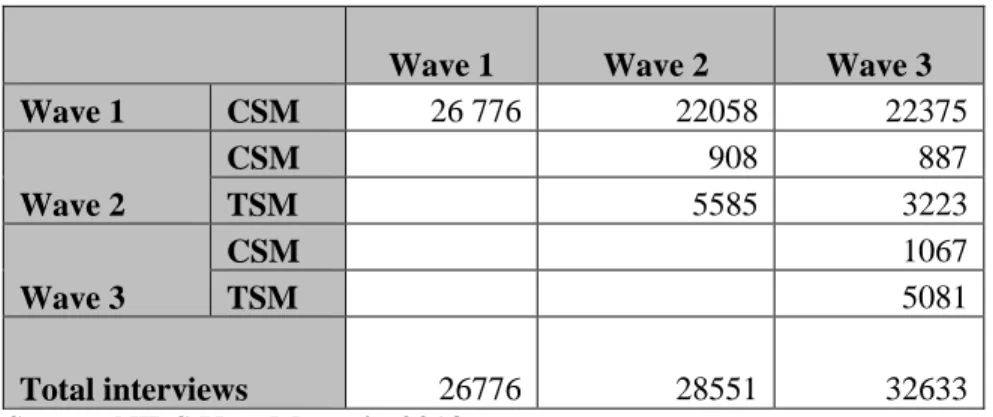
The NIDS Wave 3 User Manual (2013) provided insight into the attrition and response rates at Wave 3 compared to prior Waves. The following table highlights the successful interviews from Wave 1 to Wave 3, extracted from NIDS User Manual (p. 20):
31 Table 3.1: CSMs and TSMs successfully interviewed by wave
Wave 1 Wave 2 Wave 3
Wave 1 CSM 26 776 22058 22375
Wave 2
CSM 908 887
TSM 5585 3223
Wave 3
CSM 1067
TSM 5081
Total interviews 26776 28551 32633
Source: NIDS User Manual - 2013
Based on the Table 3.1, the number of successfully interviewed CSMs and TSMs had increased at Wave 3 when compared to Wave 2. The number of Wave 3 CSMs is 1067 and TSMs is 5081; whilst at Wave 2, CSMs and TSMs are 887 and 3223 respectively.
With regards to attrition, Table 3.2 is extracted from the NIDS Wave 3 User Manual (2013), indicating the reason for attrition based on successive waves (2 and 3). Based on the table, it appears that refusal and non – contact accounted for a major proportion of attrition (44.21% and 41.89% respectively).
Table 3.2: Reasons for Attrition
Reason Number Percentage
Refusal 2405 44.21
Non-contact 2279 41.89
Deceased 756 13.90
Total 5440 100.00
Source: NIDS User Manual - 2013
32
3.3 Sample and weights
For the study, the data files (individual and adult) from NIDS Wave 1 (2008) and Wave 3 (2012) were merged. The sample will be restricted to females within the 15 – 49 age group. Therefore, the sample consists of 7 533 observations in Wave 1. This age group accommodates for females who are of reproductive age and those participating in the labour force. The World Bank (n.d) uses 15 years + in a population when analysing labour force participation. The age group 50 – 60 will be excluded because it is reasonable to assume that children of mothers within this cohort would be at least over the age of 18, which is regarded as an adult.
In terms of weights, the data will be weighted using panel weights designed by SALRDU. The prescribed weights are created to correct attrition bias that likely occurs in panel data (De Villiers et al., 2013). Thus, it is important to take into consideration weights when conducting data analysis.
3.4 Description of variables
3.4.1 Dependent Variables
The study uses two dependent variables. The dependent variables are labour force participation in the form of a change in employment status and a decrease in working hours. Controlled variables are factors such as race, age, marital status, education and household composition.
3.4.1.1 Change in Employment Status
33 In order to assess a change in employment status , the dummy variable decreased employment was created. Decreased employment was categorised as: (1) remained the same (Wave 1 working – Wave 3 working/ Wave 1 not working – Wave 3 not working);
(2) decreased (Wave 1 working – Wave 3 not working). Bivariable and multivariable regression was used for analysis. A change in employment status was coded as follows:
• 0 = remained the same
• 1 = decreased
Section E of the NIDS adult questionnaire contains detailed labour force participation information; Question E1 – Are you currently being paid a wage or salary to work on a regular basis for an employer (that is not yourself) whether part-time or full time?
Thereafter, successive questions on primary occupation, secondary occupation, self- employment, casual work are detailed.
In this study, labour force participation is characterised based on the SALDRU derived variable, employment status (empl_stat). It is coded as: 0 – not economically active; 1 – unemployed discouraged; 2 – unemployed strict; and 3 – employed. A change in employment status, that is, a decrease in employment status from Wave 1 – Wave 3 will be the key dependent variable.
SALDRU has defined the categories listed above. Not economically active takes into account the extreme ages (too young or too old) of individuals and as a result are not able or unwilling to work (De Villiers et al., 2013). It also includes individuals that are housewives and those permanently disabled (De Villiers et al., 2013). A strict definition of unemployment is defined as unemployed persons who are willing and able to work and have been actively seeking work, whilst unemployed discouraged refers to those that are not actively seeking work (De Villiers et al., 2013).
34 3.4.1.2 Decrease in work hours
Employed women may decrease their labour force participation by reducing their number of hours worked. This may be measured by Question E11 - How many hours do you work at this job in a typical week? Hours of work was categorised as: (1) remained the same (no change in hours) or increased; (2) decreased (reduced number of hours).
Bivariable and multivariable regression was used for analysis. Decrease in working hours was coded as follows:
• 0 = remained the same or increased
• 1 = decreased
3.4.2 Key Independent Variable 3.4.2.1 Motherhood
The key independent variable is whether a woman had a child between surveys. In this study, motherhood refers to females (15-49 years) that have given birth to at least one child and that child is alive. Women who were pregnant and their child did not survive birth are excluded from this sample because the objective is to assess the effect of women with children on their labour force participation. Unique identifiers for individuals (pids) enables the link of women to their children. Section C of the NIDS adult questionnaire contains detailed birth history information; and questions asked are as follows: Question C1.2 - Have you ever given birth? Question - C1.3 Do you have any biological children to whom you have given birth who are currently living with you? Question - C1.4 - How many biological children are now living with you? Question C1.5 – Do you have any biological children who are still alive, but are not living with you? Question C1.6 – How many biological children are still alive, but do not live with you? There are slight variations in the numbering and formatting of questions within the questionnaire when comparing Wave 1 to Wave 3. Motherhood was coded as follows:
35
• 0 = Not mothers
• 1 = Mothers
3.4.3 Controlled variables
3.4.3 (a) Age
The best_age variable as defined by SALDRU was perused. This refers to the age of individuals within the dataset. According to the NIDS Wave 3 User Manual, “A number of key variables (sex, race, age, education, mother and father) have “best” variables created for them in the indderived file to indicate what the best estimate of the variable is given the information collected across the waves” (p.17). This is in keeping with sample characteristics analysis and regression analysis. Best_age was selected as the data is not categorised, limiting possible loss of detail/information.
3.4.3 (b) Population group / Race
South Africa’s historical background of segregation and inequality among population groups, forms a major demographic characteristic within society. As such, research most often includes a demographic question of population group. Indians and Whites represent a much smaller percentage of the sample. Specifically, the number of observations per population group is as follows: Indian - 79, White - 142, Coloured - 898, and African - 4836. Accordingly in terms of percentages, the African population represented 81.8% of the sample, Coloureds represented 8.8%, Indians represented 2.7% and Whites presented 6.7%. Due to the small sample size for Indians, the decision to group this population group with whites was based the notion of socio-economic similarities.
A report by Statistics South Africa (2017) indicated that after White-headed households, Indian-head households are the second highest in terms of households average income earned. This implies that Indians are the second wealthiest in terms of race group, after
36 Whites. When considering this socio-economic characteristic and in an effort to provide an analysis of all race groups in South Africa, Indian and White race groups will be grouped. In the NIDS questionnaire, Question B3 asks – What population group would you describe yourself as belonging to?
The population group variable was coded as follows: 1 = African; 2 = Coloured; 3 = Indian and White. The Indian and White population group were combined due to the small sample size.
3.4.3 (c) Marital Status
Marriage is an important variable when understanding motherhood and labour force participation. The landscape of marital status is changing in modern times, whereby coitous outside of marriage and cohabitation are socially acceptable norms (Aldous, 1996). Question B5 of the NIDS adult questionnaire asks – What is your current marital status?
Marital status was coded as follows: 1 = Currently married; 2 = Never married; and 3 = Previously married.
3.4.3 (d) Education
Higher educational levels are generally associated with better employment opportunities and higher earnings (OECD, 2012). Section H of the NIDS adult questionnaire has detailed information on educational history. The following questions are related to the education variable: Question H1 – What is the highest grade in school that you have successfully completed? Question H7 – Have you successfully completed any diplomas, certificates or degrees outside of school? Question H8 – If yes, what is the highest level of education you have successfully completed?
37 Education was coded as follows: 0 = No schooling; 1 = Primary education; 2 = Secondary education; 3 = Certificate/diploma less than grade 12; and 4 = Post – matric education.
3.4.3 (e) Household composition (co-residency of child)
According to Posel and van der Stoep (2008), household composition is an important variable when discussing motherhood and participation in the labour market. Section C of the NIDS adult questionnaire has the following questions relating to the household composition: Question 1.4 – Do you have any biological children to whom you have given birth who are currently living with you? Question 1.5 – How many biological children are now living with you? Question1.6 – Do you have any biological children who are still alive, but are not living with you? Q1.7 – How many biological children are still alive, but do not live with you?
Household composition was coded as follows: 0 = Mother not co-resident; and 1 = Mother co-resident.
3.5 Data Analysis
The study will adopt a quantitative methodology as it is based on secondary data analysis from the National Income Dynamics Study (NIDS) datasets. The most recent version of the datasets are used and were merged; Wave 1 (V6.0) and Wave 3 (V2.0). In light of the research’s objective, panel data (NIDS Wave 1 and Wave 3) are utilised. The quantitative software, Stata version 12, was used for the process of data analysis.
With regards to analysis techniques, descriptive statistics and logistic regression, namely bivariable and multivariable regression was used. The data was cleaned and dummy
38 variables for the sample, motherhood, marital status, education, race, household composition, decline in employment status, and decrease in working hours were created.
3.6 Limitations
With regards to limitations of the study, the dataset relies on self-reported information.
The main constructs of the study, namely labour force participation, hours of work and child/children’s birth history are self-reported. Therefore, a possibility of measurement error exists as information acquired from the respondent is unverifiable. For instance, women may report having a child in Wave 1 and in Wave 3, their response could be different.
NIDS Wave 1 is regarded as a nationally representative sample because it is a sample at a specific point in time (Woolard & Leibbrandt, 2006). Thereafter, in subsequent Waves, the representativity of the sample diminishes due to attrition (Woolard & Leibbrandt, 2006). Over time, an individual sampled in the first survey may not be included in subsequent surveys as a result of non -response error, mortality or migration (Woolard &
Leibbrandt, 2006).
Although the above is noted, there are measures employed to ensure the representivity of the sample. According to Woolard & Leibbrandt (2006), in order to achieve low attrition rates and high response rates the following are ascribed (p.7):
(1) Use of respondent incentives;
(2) A long field period;
(3) A committed and motivated interviewer workforce;
(4) A fieldwork agency that works to academic standards.
(5) Distributing marketing material in advance of each survey round
39 In addition, the sample would be refreshed at a time recommended by the NIDS committee to maintain representivity of the dataset. Despite the proposed solutions, high attrition was noted in Wave 3 in comparison to Wave 2 (De Villiers, Brown, Woolard, Daniels, & Leibbrandt, 2013). Therefore, this can be regarded as a limitation of the study.
3.7 Summary
The purpose of this chapter was to describe the research methodology and variables used in the study; to describe the weights implemented; and provide an explanation of the procedures used to analyse the secondary data. Using the first and third wave of the National Income Dynamics Study, the researcher is able to analyse the relationship between motherhood and labour force participation. In addition, decrease in work hours is analysed whilst controlling for other factors such as race, age, marital status, education and household composition. A few limitations of the present study were discussed. In the following chapter 4, a detailed review of the research results obtained from the study will be provided.
40
Chapter Four Results
4.1 Introduction
The purpose of this chapter is to outline the results obtained from data analysis. The first part of the chapter provides a description of sample characteristics. Secondly, bivariable and multivariable logistic regression analysis is utilised to understand the motherhood and labour force participation relationship, whilst controlling for other variables. Analysis of decrease in labour force participation by selected variables is presented, followed by an analysis of decrease in working hours by selected variables. The results are weighted using NIDS wave 3 panel weights to ensure representivity of the data. Lastly, this chapter concludes with a summary of the findings.
4.2 Sample Characteristics
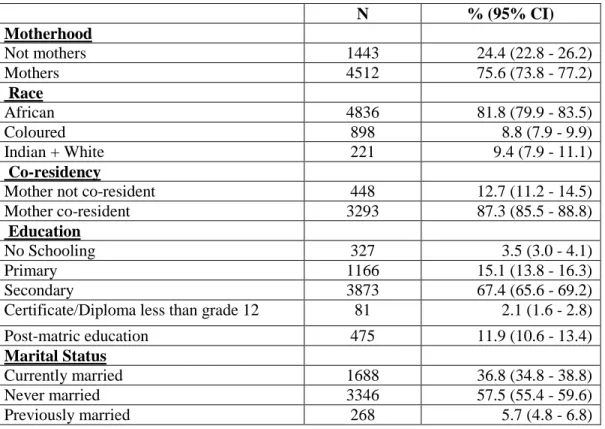
Table 4.1 shows the distribution of sample characteristics for female age groups 15-49.
This cohort represents women of reproductive years and of the working population group.
Results are presented below:
4.2.1 Motherhood
The sample is comprised of 75.6% females that are mothers and 24.4% of females are not mothers. Therefore, it appears that there is a higher percentage of mothers than women with no children.
41 4.2.2. Race
In terms of race, the African population group represents 81.8% of the sample, which is the majority of the sample. The Coloured population group represents 8.8% of the sample. The Indian and White population group represent 9.4% of the sample.
4.2.3. Age
Age is not presented in Table 4.2 as the mean is utilised for analysis. When using best age for the sample, the mean is 29.5081, CI (29.14 - 29.88). The standard error is .1881721.
The average age of the sample population is 30 years old.
4.2.4. Co-residency
Co-resident mothers represent the majority of the sample at 87.3%. Alternatively, 12.7%
of mothers are not living with their child/children.
4.2.5 Education
With regards to education, 67.4% of the sample has secondary level of education.
Thereafter, the sample reflects 15.1% of females with primary education level and 3.5%
have no schooling. Females with a certificate/diploma less than grade 12 represent 2.1%
of the sample. Post-matric includes Certificate and Diploma with grade 12, Bachelor’s Degree, Bachelor’s Degree and Diploma, Honours Degree, and Higher Degree (Masters Doctorate). This category represents 11.9% of the sample.
42 4.2.6 Marital Status
The percentage of never married females is 57.5%, whilst 36.8% are currently married within the sample. The previously married category represents 5.7% of the sample.
4.2.7 Employment Status
In terms of employment status, 36.9% of the sample is not economically active, whilst 34.9% are employed. Unemployed (strict definition) represents 20.3% of the sample and unemployed discouraged represents 7.9% of the sample. As indicated in chapter 3, the strict definition of unemployed is defined as unemployed people who are willing and able to work and have been actively seeking work (De Villiers et al., 2013). Whereas, unemployed discouraged is defined as people who have not actively sought employment but expressed an inclination to work (De Villiers et al., 2013).
Table 4.1 Distribution of sample characteristics by percentage for female age groups
N % (95% CI)
Motherhood
Not mothers 1443 24.4 (22.8 - 26.2)
Mothers 4512 75.6 (73.8 - 77.2)
Race
African 4836 81.8 (79.9 - 83.5)
Coloured 898 8.8 (7.9 - 9.9)
Indian + White 221 9.4 (7.9 - 11.1)
Co-residency
Mother not co-resident 448 12.7 (11.2 - 14.5)
Mother co-resident 3293 87.3 (85.5 - 88.8)
Education
No Schooling 327 3.5 (3.0 - 4.1)
Primary 1166 15.1 (13.8 - 16.3)
Secondary 3873 67.4 (65.6 - 69.2)
Certificate/Diploma less than grade 12 81 2.1 (1.6 - 2.8)
Post-matric education 475 11.9 (10.6 - 13.4)
Marital Status
Currently married 1688 36.8 (34.8 - 38.8)
Never married 3346 57.5 (55.4 - 59.6)
Previously married 268 5.7 (4.8 - 6.8)