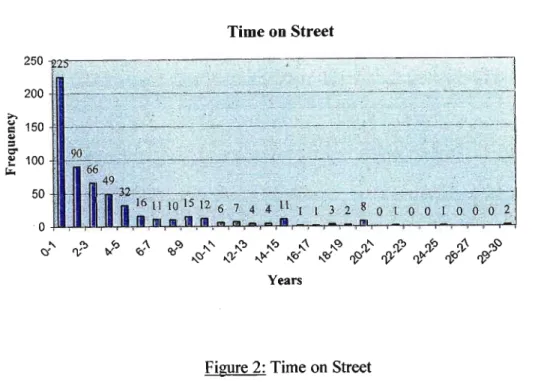
Opinions expressed and conclusions reached are those of the author and should not necessarily be attributed to the School of Development Studies. A quantitative and qualitative study was undertaken to present a description of both the objective and subjective conditions of the destitute and homeless population in central Durban. Furthermore, the majority of respondents report having been on the streets for less than two years.
By collecting and presenting both quantitative and qualitative data, this study hopes to create a better understanding of the destitute and homeless in central Durban; and provide a basis for the formulation of future studies and future interpretations of poverty in central Durban.
Conceptual Theoretical Framework
They arrive in the city, but they are not out of the city yet, as they have not been offered a job. The study will proceed with consideration of these issues and the desire to find out how they find coherence in the lived experiences of the urban poor. This study aims to gain an understanding of the objective and subjective characteristics of poverty in central Durban.
The aim of this study is to approach and answer these questions in the words of the respondents themselves, "providing a candid picture of social life that is true to the experiences of the people being studied" (Lawrence Neuman.
Literature Review
Objective versus Subjective
In October 1995, the South African government, after approaching the World Bank to undertake a collaborative poverty assessment, agreed to have the Poverty and Inequality Report conducted by South African researchers (May, 2000:3). The task was overseen by the Inter-Ministerial Committee on Poverty and Inequality, which was convened in September 1996 by the Vice-President. The PIR used different procedures than most other poverty estimates in other parts of the world. In August 1997, under the leadership of the South African NGO Coalition (SANGOCO), the National Anti-Poverty Forum was established.
Shortly after its conception, the War on Poverty Forum approached the government and asked to be allowed to participate in the preparation of the report on poverty and inequality (above).
The eThekwini Homeless Forum
The eThekwini Homeless Forum as an initiative
- Area Where You Live
- Street Name
- How long on Street
- Cityffown of Origin
- Previous Work Experience
This leads to the ideal vision of THF, rehabilitating the impoverished and homeless back into society and their families. The quantitative analysis was taken from primary data held by the eThekwini Inner City Friend of Destitute Association (TIFODA). Given that the vast majority of respondents who listed work experience listed more than one.
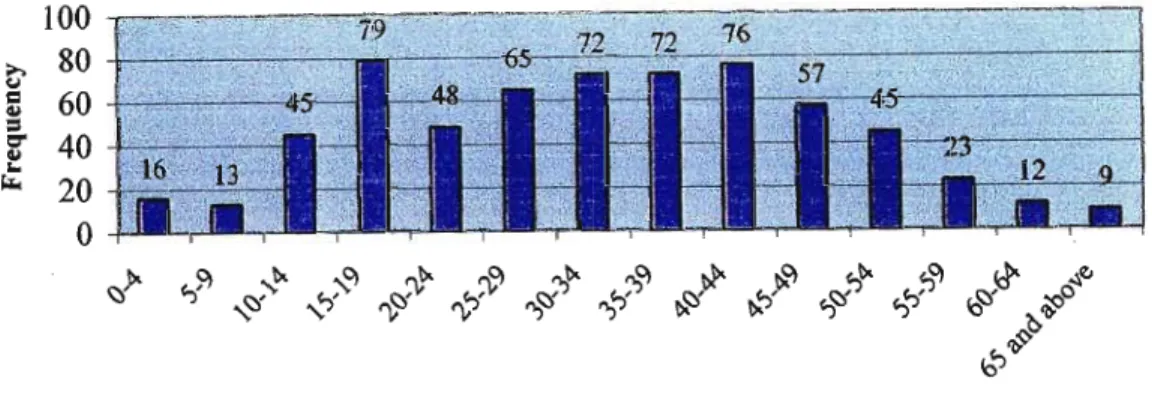
This is an important variable because it reveals a demographic characteristic of Durban's 'destitute' population. The most interesting feature of this variable is the high representation among the 15 to 19 age group, which has 79 (13%) members, compared to the 45 (7%) and 48 (8%) members of the preceding and following respectively categories. . Either this means that the majority of people on the streets can escape within the first few years, or
Support for the foregoing assumption can be gleaned from recent media coverage which reports massive swelling and mushrooming of the street child population in Durban (The Independent Saturday 30 November 2002:1&10). Of the 637 cases, there were 20 non-responses to this question and about 174 different answers were given. Regardless of the single response, the data still shows that 62% of the population who have ever been married were divorced.
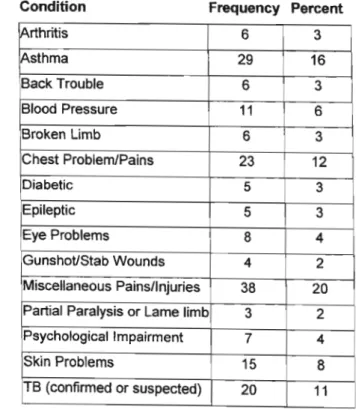
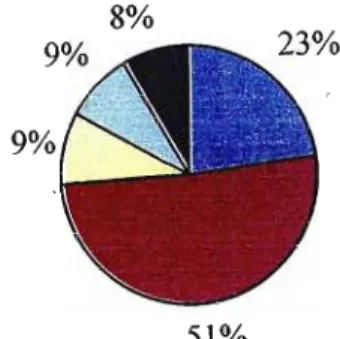
The frequency and percentage of these results are presented below. Men make up 72% of the population and. Over a quarter (29%) of the street population in central Durban surveyed for this variable are not from Kwa Zulu Natal; 5% of this population are not South African citizens at all. Most of the impoverished population in central Durban are therefore relatively close to their 'homes' or origins.
Although taken by continent, Africa is best represented with 20 (77%) of the 26 foreigners belonging to an African country.
The Qualitative Data
The Point
The Ministry has had a great reputation in the past, but currently an infamous one; this is my experience with the ministry. There is a collection of people walking around the corner and we later learn that it is a mix of 'street people' and people waiting to enter the ministry. She guides us through the process of admission to the ministry; the first phase is with the 55-day office.
This is an absolute criterion and if the potential resident is not ready to fulfill it, he is not welcome in the Ministry. Stepmother Lyn then takes us to the Ministry of Information office where, after a short introduction, she hands us over to Sam, who heads the Information Office. First and foremost, Sam tells us, "Ministry is not a shelter, it's a Christian ministry."
He gives a similar introduction to Pastor Lyn and then takes us on a tour of the Ministry complex. This is where residents who fall ill, or those who come to the ministry sick or injured, are cared for. As we enter another building in the Ministry complex, we are greeted by a man rolling out of the building; drunk on something.
The walls of the hallway and stairs leading to the Rehabilitation Center are lined with religious posters and quotes, as is the rest of the ministry. The center is separated from the rest of the Ministry and therefore has its own dining tables and kitchen.
Analysis of Qualitative iuterviews
The rehabilitation program lasts several weeks (it is only intended for men); and if a patient deviates from treatment, he is thrown out and must return at a later stage when he is more serious about rehabilitation and willing to exercise more self-discipline. Our visit to the rehabilitation center over, Sam's tour winds back through the hallways and past the quads to the administrative offices where we first met PastorLyn. We hope he will introduce us to Pastor Michael to learn more about his database on the website. Residents of the Ministry, unfortunately he is also gone; and so our visit to the Ministry comes to an end. Dave guards the car at the church on Sundays and certain weekday evenings when meetings are held at the church.
He does not mention an amount, but it is enough to cover his accommodation, food and cigarettes. Ashton claims he is in control of his life; choosing to stay in a shelter so that he can use the money his wife gives him for other things. He helped build the shelter, he is the longest resident and enjoys the friendship and support that the shelter offers.
He says that from time to time there is an offer of a weekly (for example) work contract; but they offer you payment only at the end of the work. Because of his ability to return to his wife, this is not the case for Ashton. Dave's main obstacle is that he feels he is now too old to return to the profession of his training.
Although Harry would be willing to take a contract job, he does not have the financial reserves to support himself through the days until payday. His involvement with a church was responsible for his initial sponsorship in the shelter; and he enjoys a reciprocal relationship with the managers - sharing their tasks and responsibilities in exchange for the occasions when he cannot pay them with money.
Discussion
Opportunities need to be made available that allow people to improve and create more direction in their lives than just dealing with daily survival. Therefore, the idea of a 'safe house' needs to be further explored and tested. Giving people a sense of their own worth, reducing poverty itself should be an important focus and desired outcome of any poverty research or implementation. This list will be valuable for future research of this kind, as well as for any initiative that would require the mobilization of the impoverished and homeless in Durban.
To use the example of the 'West Street' shelter; there was a strong almost 'family' atmosphere between the locals. It would also answer questions that arose in this study; such as the massive frequency of the first-year population due to a recent influx of destitute and homeless people, or is it a general phenomenon, perhaps indicating a high level of people escaping the streets in their first year. In addition to schemes and functions for the needy and homeless, the THF should offer events at the other end of the spectrum, with a view to not only fundraising, but awareness. Let teenagers watch musical performances organized by the THF while their grandparents attend an art exhibition organized. by the THF.
The THF should not only be an organization that organizes food programs for the needy and homeless, but should become a movement that involves all sections of the community. The merit of each approach is clear; the quantitative data provides a comprehensive background against which the individual details of the qualitative data can be placed. Furthermore, each method provides a foundation from which more informed future studies of the same or an alternative method can be initiated.
Elvin, on the other hand, exhibits none of the characteristics of a 'culture of poverty'; he is committed, smart and has ambitions for his future, but his poverty and criminal record keep him ostracized by the wider, more conventional society. There are opportunities, but they require social change and the psychological willingness, not only of the poor, but also of the non-poor, to respond to this call for action and positive change.