Where the work of others has been used, this is duly acknowledged in the text. It identifies patterns and shifts in cultural heritage conservation in the period between 1977 and 1999 in KwaZulu-Natal, and analyzes the motivations for cultural heritage conservation. Using specific case studies, I argue that political imperatives and ideas of economic development in KwaZulu-Natal have largely motivated cultural heritage conservation.
Initial thanks must go to Professor Tim Nuttall, my supervisor, for support that went far beyond mere supervision, and to all staff in the history discipline at the School of Human and Social Studies. The excellent undergraduate teaching and subsequent enthusiasm of all these historians has provided much of the energy for this study. Thanks must also go to staff at the Natal Museum, especially Frans Prins and Gavin Whitelaw for talking to me about my work.
I am also particularly grateful to the staff at the Amafa aKwaZulu Natali, the Natal Society Library, the Killie Campbell Africana Library, the Alan Paton Center and the Natal Museum Library. I also thank the Mellon Foundation for funding this research; without her help, the production of the research would have been impossible.

INTRODUCTION
Scaffolding for the Study: the 'Heritage' Concept, Motivations and the South African Academic Context
- Beyond Inheritance: Conceptualising Heritage
- Motivations for Heritage Preservation and Creation: Nostalgia, Politics and Business
- Nostalgia: the Comfortable Past and the Uncertain Present and Future In my exploration of nostalgia as a motivation for the preservation and creation of heritage, I
- Heritage and Tourism: Tourism Resurgence and Economic Development Heritage is also seen as an important economic resource. According to Tunbridge and
- Conclusion
- The Mavivane Execution Cliff: Tradition or Traders
I will then point to the origins of the Ondini project and the KwaZulu Monuments Council (KMC). One could say that this was the last phase in the official administrative creation of the KwaZulu homeland. Buthelezi, 'The approach of the KwaZulu Government to museums and the preservation of our cultural heritage', SAMAB Vol.
The KMC will have to work with the NMC to buy the site or be involved in the development. I indicated in the previous chapter that Buthelezi was very involved in the activities of the KMC.
Shifting National and the Provincial Cultural Heritage Stages: Policies, Structures, and Tensions 1994 - 1997
The result was a national initiative by the government to transform the heritage sector. Along with these developments were public expressions of the need in the "heritage sector" to adapt to these changes. Heritage was significant both politically and economically in the rebuilding of the South African nation.
With the creation of the coalition government, the Government of National Unity (GNU), the DACST was placed under the Inkatha Freedom Party (IFP) ministry. It was this new department that initiated the transformation of the 'heritage sector' in post-apartheid South Africa. The DACST's initial drive to transform the heritage sector was symbolized by the establishment of the Arts and Culture Task Force (ACTAG).
The guiding principle for drafting the document was that heritage should be linked to the Reconstruction and Development Program (RDP). The document further noted the narrowness of the term 'monuments' and indicated a preference for the term 'heritage resources'. Until 1995 there was no change regarding the transfer and control of the above countries.
There was therefore a possibility that the interest of the AKN would be supported by the ruling KwaZulu-Natal leadership. The projects identified by the KMC in the 1980s remained major projects of the AKN. In fact, during the pre-1994 period, the majority of the South African population was denied any participation in the formulation of heritage policy.
The ACTAG process was, therefore, a new trend in line with the requirements of the new dispensation. I have argued that these struggles were the result of demands placed on KwaZulu-Natal cultural heritage structures by national political changes. Rassool has emphasized that one of the discourses that emerged in South Africa after apartheid has.
National Priorities and the Battle of Ncome Project
- Ncome for Economic Development
In doing so, they concluded that there is no consensus interpretation of the Battle of Ncome. They acknowledged the idea that the explanation of the battle's origins was the subject of considerable debate. The panel offered Zulu interpretations of the battle by analyzing the origins of the battle.
This was important in reconciling views and balancing the representation of the struggle. Both the physical and intellectual effects of the battle were central to Ncome's state memorialism. Furthermore, the new Ncome Museum presented a reinterpretation of the battle that was clearly anti-conciliatory.
One historian in particular became influential in the exclusive presentation of the battle at the Ncome Museum. The Battle for Ncome project was seen as one of the areas where these leaders pursued their political party goals. The funding allocated to the project was an indication of the perceived importance of the battle within DACST.
Sithole, 'Changing images of the Battle of Blood River', paper presented at a seminar, University of Zululand, 31 October 1998, p.84Mzala, Gatsha Buthelezi: Chiefwith a Double Agenda (London, Zed Books, 1988), p. interpretation of the battle of Ncome. The paper was the product of rational analysis of the events leading up to the battle.
Maphalala, 'The re-interpretation of the War of Ncome (renamed B10ed River and Blood River by the Voortrekkers and the British respectively), December 16, 1838', pp. The Zulu people and the Voortrekkers are depicted as polarized opposites in Maphalala's reinterpretation of the battle. By depicting the Battle of Ncome the museum could have given a broader representation of the battle.
I have two reasons for advocating a wider inclusion of Tlokoa in 'Ncome memory'. The inclusion of Tloka cultural heritage in the depiction of the Battle of Ncome would appeal to the state's memorialization of the battle.
CONCLUSION
These aspects were synonymous with cultural heritage projects that were prioritized for creation and conservation. I have noticed tensions during the production of the publication entitled Fight Us In The Open. From the period from 1986 onwards, cultural heritage conservation began to take on economic significance for official heritage practitioners in KwaZulu.
However, I have argued that the connection between cultural heritage conservation and political ideas was an ongoing phenomenon. Also in this period, there was a shift in the management of cultural heritage at the regional level. Through the KwaZulu/Natal Heritage Liaison Committee, the KMC, the Natal Provincial Museum Services (NPMS) and the NMC were supposed to collaborate regionally in cultural heritage conservation.
I have argued that this cooperation was limited, as these authorities focused their heritage conservation energies on the development of places that seemed to celebrate particular histories. I have pointed out that these shifts have allowed tension to emerge in the cultural heritage sector in KwaZulu-Natal. In addition, the AKN (largely dominated by the former KMC) has emerged as the sole statutory body for cultural heritage conservation in KwaZulu-Natal.
The DACST which managed the promotion and preservation of cultural heritage was brought under the IVP ministry. I have pointed out in this study that Buthelezi, who was the founder of the contemporary IVP, was active in specific matters related to cultural heritage conservation. It also explains the importance of Zulu cultural heritage emerging in the national cultural heritage agenda.
Through this study, I have attempted to position academic historians within the discourse of cultural heritage conservation. Academic historians have constantly been invited to produce texts to support aspects of the heritage being promoted. Despite this, it is quite gratifying to see that specialist knowledge(s) are given a place within the production of history in the field of cultural heritage.
APPENDICES
Building huts, palisade; Gsttle enclosUTas, atc (Mr. Rawlinson, Mr. Stewart, work gang, . caretakers, material. Cetsh••yo's narrative as recorded by Ruscombe Poole on page 35-36, gives the impression that Prime Minister Mnyamana Buthele.zi .the King delivered to Mr. DPt_ap.p~e.sier the scientific fact that it is a mere repetition of the testimony oC.
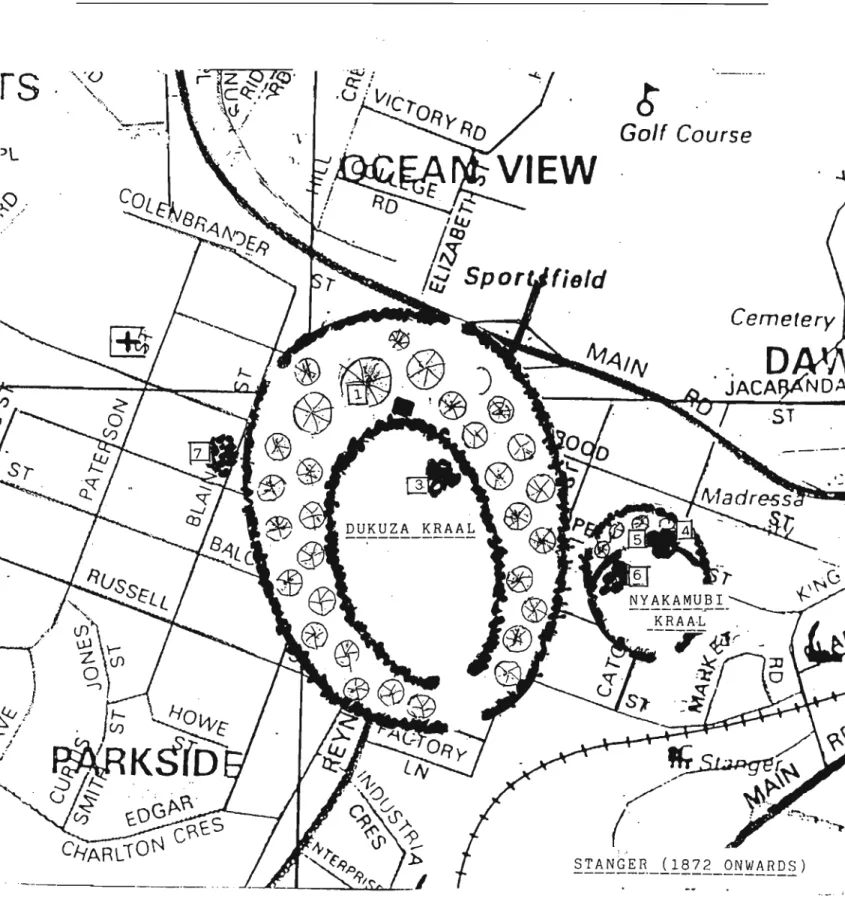
If Mr. Laband and your editorial committee would find this acceptable, I suggest that the last six (6) lines of King Cetshwayo's narrative on p. The second objection relates to Mpatshana's testimony on page 29 where he attributes the defeat at Khambule to Prime. Minister. Source - AKN, Ulundi, KMC reports, The KwaZulu Monuments Foundation, 'The Road to the Future: the Preservation, Restoration and Development of Monuments in KwaZulu' (undated).
LIST OF SOURCES
PRIMARY SOURCES
Archival Sources
- Official Documents and Reports
Speech at a celebration commemorating the Battle of Ulundi - the last battle of the Anglo-Zulu War in 1879. Memorial near the site where King Dingane was assassinated and a stone on his grave by King Zwelithini Goodwill kaBhekuzulu - the eighth king of the Zulu. Official opening of the KwaZulu Cultural Museum, before the unveiling of a memorial to King Cetshwayo and those who served him by His Majesty the King of the Zulus.
Minutes of the fifth meeting of the Ondini Restoration Planning and Research Committee, Cabinet Conference Room, Ulundi, 15 January 1981. Minutes of the opening meeting of the Ondini Restoration Planning and Research Committee, Cabinet Conference Room, Ulundi 11 March 1980. Gibb, Liaison Committee Natal Provincial Council/National Monuments: Report to the Natal NMC Regional Committee, 21 July 1987.
Hall, 'NMC Natal Region Memorandum, Statistical Analysis of the Relevance of Declared Monuments in the Natal Region', 2 May 1991. Minutes of the 15th Meeting of the KwaZulu/Natal Heritage Liaison Committee, NPA Museum Service Headquarters of, No. August 1, August 1. Affidavit on 'The Exact Situation of Tshaka's Grave', delivered before the Local Commissioner of Stanger Magistratel, Stanger, 4 December.
Towards a New National Museums Service: A Vision for the Restructuring of Declared Cultural Institutions, Report of the Review Committee, Oct. DACST, Generic Terms Reference and Process for the Evaluation of the National Museum, Bloemfontein and the Natal Museum, Pietennaritzburg, 1997 Report of a group of historians appointed by the South African Department of Arts, Culture, Science and Technology (Professors J.S. Maphalala, M. Kunene , J. Laband, C.A. Hamilton and Dr. J.E.H. Grobler), 1 Sept.
Steering Committee: Commemoration of the Battle of Blood River/Ncome, Work Schedule, Commemoration Structure (undated). Presentation of His Majesty the King of the Zulu Nation at the inauguration of the Monument to NcomelBlood River. Mangosuthu Buthe1ezi, Minister of Home Affairs, Speaker of the House of Traditional Leaders of KwaZulu-Natal and Undunankulu KaZulu.