Perceived Stress and Role Conflict in Dual-Career Couples - A Didactic Approach
By
FaheemaValli
Submitted in partial fulfilment of the requirements for the degree of
Masters of Social Science (Industrial Psychology)
In the School of Applied Human Sciences,
College of Humanities
University of KwaZulu-Natal
Supervisor: Professor J.H. Buitendach
Date Submitted: November 2012
i
DECLARATION
I declare that this dissertation is my own unaided work. All citations, references and borrowed ideas have been duly acknowledged. It is being submitted for the degree of Masters of Social Science in the Faculty of Humanities, Development and Social Sciences, University of KwaZulu-Natal, South Africa. None of the present work has been submitted previously for any degree or examination at any other University.
Faheema Valli
November 2012
Date
ii
ACKNOWLEDGEMENT
I would first and foremost like to thank my creator Allah, without whose divine intervention and mercy I would not be on this journey of acquiring knowledge. He has given me the strength and conviction to complete my dissertation.
I would like to extend my sincerest gratitude and appreciation to my supervisor, Professor Joey Buitendach for her guidance, direction and support throughout my research. Her wealth of knowledge and dedication to my research has proven invaluable.
I would like to acknowledge and thank my family: my parents Dr Suleman and Farida Valli and my brothers for their unwavering support and encouragement. A special thank you to Yazeed, for his motivation and support throughout my research. Their love and inspiration, has made this achievement possible.
I acknowledge my close friends as well as my classmates at the University of KwaZulu- Natal for their guidance. Last but not least thanks also go to my colleagues at Discovery Health for their support, during my efforts to fulfill the requirements for my Masters Degree.
iii
ABSTRACT
The objective of this research was to explore perceived stress and role conflict that dual- career couples are facing in South Africa. The relationship between work and family is a common topic in the field of Industrial and Organisational Psychology. Research has been conducted in other countries, in particular the United States; however not much research has been undertaken in South Africa. Hence, the purpose of this study was to explore the effect of stress and role-conflict on dual-career couples and the relationship on work-family balance in this context. This research aimed to look at gender differences on work-family conflict, in an attempt to understand perceived role conflict and the interplay of spillover on dual-career couples. A cross-sectional research design with a snowball sampling technique was used. The sample obtained for this research comprised of 105 participants who fulfilled the dual-career couple status. The Work Family Linkage Questionnaire (WFLQ) by Sumer and Knight (2001), with two additional questions on stress included by the researcher, were used as the measuring instrument. The results indicated that there were statistically and practically significant relationships between perceived stress and role-conflict in the different domains.
Although no statistically significant results were obtained in the gender experience of role- conflict, when looking at the mean scores it was evident that men and women experienced role conflict differently. There were no significant differences between dual-career couples with and without children across all the sub-scales. However, the descriptive statistics suggested that dual-career couples without children experienced higher stress caused by work life than their counterparts with children. For future research it is recommended that more questions on stress be added, and also that variance in sample size of gender and couples with children and without children be increased as this was also a limitation of the current research.
TABLE OF CONTENTS
DECLARATION i
ACKNOWLEDGEMENT ii
ABSTRACT iii
CHAPTER ONE: INTRODUCTION 1
1.1 Introduction 1
1.2 Rationale for the Study 3
1.3 Research Objectives 4
1.4 Research Questions 5
1.5 Chapter Outline 5
1.6 Summary 6
CHAPTER TWO: LITERATURE REVIEW 7
2.1 Introduction 7
2.2 Dual-Career Couples and Stress 10
2.3 Role-overload 13
2.4 Theoretical Framework 16
2.5 Compensation and Segmentation 19
2.6 Mood Spillover and Crossover 20
2.7 Previous research, results and findings on Spillover 23
2.8 Summary 24
CHAPTER THREE: METHODOLGY 25
3.1 Introduction 25
3.2 Research Design 25
3.3 Participants 26
3.4 Research Instruments 29
3.5 Research Procedure 31
3.6 Ethical Considerations 32
3.7 Data Analysis 32
3.8 Summary 35
CHAPTER FOUR: RESULTS 36
4.1 Introduction 36
4.2 Exploratory Factor Analysis 36
4.3 Descriptive Statistics 37
4.4 Pearson Correlation 39
4.5 Independent Samples Tests 43
4.6 Summary 48
CHAPTER FIVE: DISCUSSION 49
5.1 Introduction 49
5.2 Discussion of the Results 49
5.3 Summary 60
CHAPTER 6: CONCLUSIONS, LIMITATIONS AND RECOMMENDATIONS 62
6.1 Introduction 62
6.2 Conclusion 62
6.2.1 Conclusions in terms of the specific literature objectives of the study 62
6.2.2. Conclusions in terms of the specific empirical results of the study 63
6.3 Recommendations 65
6.4 Limitations 65
6.5 Contribution to Knowledge 66
6.6 Summary 67
REFERENCES 68
APPENDICES 82
APPENDIX A: LETTER OF INFORMED CONSENT 82
APPENDIX B: BIOGRAPHICAL QUESTIONNAIRE 85
APPENDIX C: WORK FAMILY LINKAGE QUESTIONNAIRE 87
LIST OF TABLES
Table 1: Characteristics of Participants 28
Table 2: Descriptive Statistics for subscales 38
Table 3: Pearson‟s correlations between all subscales for entire sample 40
Table 4: Pearson‟s correlations between all the subscales for males 41
Table 5: Pearson‟s correlations between all the subscales for females 42
Table 6: Descriptive statistics for males compared to females 44
Table 7: Independent sample T-tests for males compared to females 45
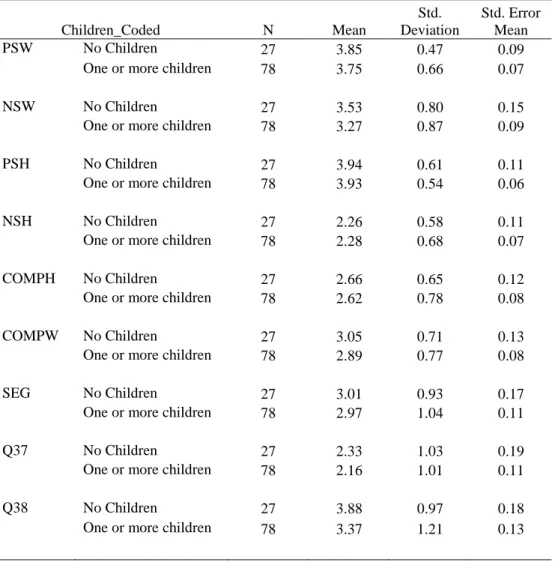
Table 8: Descriptive statistics for children vs. no children 46
Table 9: Independent sample T-tests for children vs. no children 48
1
CHAPTER ONE: INTRODUCTION
1.1 Introduction
Compared to the past it has become more common in society today for parents to have multiple roles which result in domain specific stress and work-family interference (Zedeck, 1992). Due to these multiple roles, balancing the demands of work and family has become a principal daily task for many as a result of the changes in employee demographics and societal attitudes about work and family (Zedeck, 1992). In a financial crisis downturn economy, due to inflation, more and more dual-career couples are emerging, as both couples need paid jobs for a family to survive. Stay-at-home mums are less frequent in modern cities and dual-earner couples have increased dramatically. However stress factors that stimulate role conflicts and influence dual-career couples lives, needs to be further researched in a South African context in order to find an amicable balance between work and home life (Haddock, Zimmerman & Ziemba, 2006).
This study focused on the gender differences in the experiences of work-family conflict as dual-career couples struggle with the demands placed on them by their work and family. This is an important issue for both the individual and organisation. This conflict, as a source of stress has resulted in negative outcomes including health issues for dual-career couples, poor performance and decreased satisfaction with work and family, demotivation in the work place, increased drinking, fatigue, high absenteeism rates at work, turnover intentions and decreased mental and physical health (Higgins, Duxbury & Lyons, 2010). The conflict can
2 also extend to domestic and marital strains and may affect the children of dual-career couples.
While Gove (1972) and Sieber (1974) have suggested that having multiple roles provides individuals with psychological benefits such as status and ego gratifications as well as increased self-esteem, many studies have found negative consequences resulting from work- family conflict. Cooke and Rousseau (1984) found that these very same individuals can suffer from role accumulation, role strain, psychological distress and have somatic complaints.
Howard (1992), states that dual-career couples balancing multiple roles are prone to stress and burnout. Wortman, Biernat, and Lang (1991) indicated that over 75 percent of married working women reported that they experienced conflict between the responsibilities of work and family every day. According to Higgins, Duxbury and Lyons (2010), increase in strains on dual-career couples have resulted in role-overload as they struggle to find work-family balance
Given the disparity in research findings and the clear gap that exists in the literature regarding the effects of role conflict on dual-career couples in South Africa, it was imperative that the researcher examined gender differences in the effects of role conflict in dual-career relationships.
3 1.2 Rationale for the Study
According to Greenhaus, Collins and Shaw (2003) and Lewis and Cooper (1995), family and work are the two essential parts in the life of an employed person. Additionally, previous research has shown that dual-career couples experience unique problems in their work, family and personal life (Hall & Hall, 1979; Moen, 1985) as the conflict arising from work and family life increases the risk of stress due to the couple having to balance the demands of managing two careers and a family (Gupta & Jenkins, 1985; Hall & Hall, 1979; Lewis &
Cooper, 1988; Sekaran, 1986). Couples are overwhelmed by trying to perform multiple roles which require time and energy and thus may experience conflict from work to family or family to work domains. Thus it is for this reason that the current study aimed to look at dual- career couples in South Africa and the challenges they face.
Previous research has focused on the inter-role conflicts of either married women, employed mothers or employed fathers leaving a gap in the literature for comparison studies between groups of men and women (Beutell & Greenhaus, 1983; Holahan & Gilbert, 1979a;
MacEwen & Barling, 1988; Barling, 1986). Existing studies which have examined work family stress amongst both men and women in dual-career relationships focused on inter-role conflict as a whole (Lewis & Cooper, 1987; Sekaran, 1985), and on conflicts between work and other specific roles such as professional versus spouse or professional versus self (Holahan & Gilbert, 1979a, 1979b). Higgins et al. (2010) explored overload and stress in men and women in dual-earner families and they commented that “given the prevalence of overload and its negative consequences, it is surprising that the concept has garnered
4 relatively scant research attention” (p. 847). Therefore it was necessary to consider this issue in further research in order to understand the impact of role-conflict and stress on dual-career couples within the South African context as this research has predominantly been conducted in the United States. The current study also focused on gender differences in the experience of role-conflict and stress. It was important to understand the burden placed on the couple and whether this was equally distributed. Spillover and its effect on work-family balance were also examined.
1.3 Research Objectives
The general objective of this study was to explore perceived stress and role conflict faced by dual-career couples in South Africa. The study aimed to explore the following specific objectives:
1.3.1 To determine the relationship between perceived stress and role conflict and which sphere of life (home or work) contributes more to stress.
1.3.2 To determine whether there are gender differences in the experience of role conflict.
1.3.3 To determine whether dual-career couples with children encounter more stress than their counterparts without children.
5 1.4 Research Questions
The following research questions were addressed:
- What is the relationship between perceived stress and role conflict, and which sphere of life (home or work) contributes more to stress?
- What gender differences are there in the experience of role conflict?
- Do dual-career couples with children report more stress than their counterparts without children?
1.5 Chapter Outline
The first chapter of this report provides the reader with an introduction to the research by providing an overview of the research problem and the rationale for the study. The research objectives have been highlighted for the reader and what the researcher hoped to achieve out of the research study.
The second chapter provides the reader with a literature review. This chapter discusses the current and past literature on perceived stress and role conflict in dual-career couples.
Additionally, the researcher explains why research in this particular topic is necessary and the theoretical framework is also highlighted. The researcher presents how the theory is applicable to the current research problem.
Chapter Three provides a detailed description of the research methodology. The chapter describes in detail sampling, data collection and data analysis. It also covers the research
6 design, a description of the participants and the instruments the researcher used and how they were constructed. In addition, this chapter discusses the procedures followed by the researcher in obtaining ethical clearance. The ethical considerations of the research study are also discussed.
Chapter Four is the presentation of the results, obtained from the statistical analysis of the data collected.
Chapter Five is the discussion of the results. It also provides the reader with a summary of the research study in terms of the aims and outcomes of the study.
Finally, the last chapter is the presentation of conclusions drawn, recommendations for future research are provided, and limitations of the current study are also discussed. Contributions to knowledge are also highlighted.
1.6 Summary
This chapter has given a brief overview of the topic, the aim and rationale for the study and questions that the study aimed to answer.
7
CHAPTER TWO: LITERATURE REVIEW
2.1 Introduction
In a changing society, men and women face the challenge of successfully combining their family life and work life (Wierda-Boer, Geris & Vermulst, 2009). According to Greenhaus and Beutell (1985), work-family interference is experienced when the demands and responsibilities of the different roles clash with each other. The relationship between the domains of work and home has become the centre of attention in the field of industrial and organisational psychology (Zedeck, 1992). This relationship is bidirectional, meaning that either one can have an effect on the other one; this is the basic premise of Spillover Theory which is an appropriate theoretical framework with which to understand the role conflict experienced by dual-career couples. Although some of the research on the stress and role- conflict dual-career couples face has been conducted many years ago, the findings are still relevant. Given the current economic crisis, we are seeing an increase in dual-career couples as it becomes virtually impossible for families to cope with the financial strain and resultant inflation (Haddock et al., 2006).
With inflation, it has become difficult for families to cope with only one bread winner; thus many married couples are living a dual-career life-style with both partners in stable full-time employment. This explains the increase in dual-career couples (Haddock et al., 2006).
8 The literature defines dual-career couples as “mixed-sex couples who are married or cohabiting and who are both currently employed outside the home” (Ugwu, 2009, p. 2239). It was estimated by Rice (1979) that in 1978 there were 3 million dual-career marriages in the United States with a seven percent increase per year. Deducing from these figures, it seems that by 1982, 15% of marriages (3.8million) would have been dual-career couples (Paddock
& Schwartz, 1986). According to Coleman and Coleman (2012), the percentage of dual- career couples rose 31% between 1996 and 2006 in the United States, increasing by 2012 to 47.5%. The percentage of dual-career couples in Canada is now 70%. No current statistical information could be found for South Africa, underscoring the importance and value of research in this area.
Given that to be economically viable, families require two pay-checks, the question arises regarding whether this has an impact on work-family balance (Haddock et al., 2006). Due to the changing demographics in the workplace, dual-career couples outnumber couples who conform to the traditional roles of the male being the breadwinner and the female taking on the role of the homemaker. By the turn of the century in the United States, dual-career couples outnumbered those who conformed to the traditional roles of male breadwinner and female homemaker by three to one (Hayge, 1990; U.S. Bureau of the Census, 2001).
Additionally, Haddock et al. (2006) noted an increase in the numbers of mothers with children under the age of one in the workforce. The number of mothers had increased from 49.4% in 1985 to 61.8% by 1998 (U.S. Bureau of Census, 1999). This increase would have an impact on both women as well as men, with a shift in roles.
9 According to Smit (2006), family roles are changing in terms of role structure and role content. Greenhaus and Beutell (1985, cited in Wierda-Boer et al., 2009, p. 6) report that “In most Western societies, men and women face the challenge of satisfactorily combining family life and work, and either partner may have difficulty reconciling these domains. When demands and responsibilities in one role conflict with the other, work-family interference is experienced”, and this can be especially true for men who no longer find themselves the main
“provider” of the family because wives have entered the labour market and have become less dependent on their husbands. Women have gained more decision making and bargaining power in the dual-career couple relationship (Smit, 2006). Smit (2006) further postulates that much of the focus of research in the past two decades has been on the changing nature of the role of the man in the family. According to a South African study conducted by Viljoen and Steyn (1996) husbands are no longer seen as the male authority figure, but rather as the head of the household, with the wife as junior or equal partner in decision making. Given this change, the current study examined whether there are gender differences with regard to stress and role conflict.
Researchers have made use of various theories to understand how people cope with both the domains (work and family) at the same time (Xu, 2009). The current study used the three models of work-family linkage, particularly the following theories: Compensation and Spillover Theories as well as Mood Spillover. Compensation Theory according to Lambert, (1990), operates on the idea that when individuals‟ needs are not satisfied at work, they engage in activities outside of work which satisfy these needs. Spillover Theory states that the leisure activities individuals engage in often have characteristics similar to their job
10 related activities and tasks (Wilensky, 1960). Mood Spillover is defined across two dimensions: domain and person. The experience of moods (positive/negative) can transfer from one life domain to another (work to home or home to work), or from one person to another, thus influencing each domain or person. The former is considered as spillover and the latter as crossover (Song, Foo & Uy, 2008).
This research focused on role-conflict, how it relates to the couple, and gender differences in the experience and management of this conflict. The study focused on both males and females in relationships since there is very little research in this area. In addition, the researcher explored stress and spillover and its relationship to work-family balance. In the next section, the relationship between dual-career couples and stress is discussed.
2.2 Dual-Career Couples and Stress
Stress is a broad concept, but for the purpose of the current study it is defined as an affective reaction to stressors (job and parenting stress) experienced in the work and family domain (Wierda-Boer et al., 2009). Stress impacts on dual-earner families as financial demands increase, with a concomitant increase in role-overload which is placed on dual-career couples by the responsibilities of their work and family lives (Higgins et al., 2010).
According to the findings of Williams, Suls, Alliger, Learner and Wan (1991), multiple role juggling is a daily stressor for employed mothers. Stress is felt as anxiety and fear and can be
11 positive or negative. As a positive action it can make us aware of new ideas, and certain people thrive under stress (Wierda-Boer et al., 2009). However, too many stressful factors may have a negative influence on the personal and work life of the person, such as feelings of rejection, anger, depression, headaches, poor performance and related symptoms and this is where Spillover Theory contextualises these experiences in the different domains (work/family) (Duxbury & Higgins, 2003). Thus dual-career couples may experience negative stress as they try to balance work and family life. Stress from one domain may influence the other domain as couples try to cope with the demands of the different environments. This research investigates the effect of role stress on the different life domains by determining which sphere of life causes more stress on the dual-career couple.
According to Folkman (1984, cited in Hancock & Desmond, 2001, p. 7), “Stress is a quality of transactions between personal and environmental demands”. Put simply, stress is how someone reacts to a situation. One‟s body, mind and personality are all affected by stress, and everyone reacts differently. In the current study, the researcher was interested in exploring how couples reacted to stress and how this influenced their relationship. According to Parker and Arthur (2004), balancing the demands of home and work life contributes to increased stress and coping resources in the dual-career couple relationship. The way these demands are managed by the dual-career couple impacts both marital satisfaction and conflict.
Stress is often a result of role-conflict between husband and wife (Paddock & Schwartz, 1986). This conflict often stems from a historical generalisation of the roles of the husband and the wife in society. “Nature defines a woman as a wife, a child-bearer, and a homemaker,
12 and not as a contributor to economic life” (Stellman, 1977, p. 3). However, in today‟s society, there is a change in attitude among many couples as they try to work out a solution to divide responsibilities equally. Women are no longer seen as the sole person responsible for the household. Women employed outside the home have to bear the burden of two jobs.
Household responsibilities are often not shared between husband and wife even if both hold jobs outside the home. Gender differences affect relationships between work and family as men place importance on their work role and women on their family role (Higgins et al., 2010).
Social support is one of the factors that research has shown mediates the relationship between demands of work and stress (Ugwu, 2009). According to Etzion (1984), women seek social support from family and friends whereas men tend to seek it in the work environment (cited in Hancock & Desmond, 2001). Social support at work clearly plays a key role in managing stress, so that it has less effect on the family. This research looks at the effect of differences in the experiences of role-conflict and stress in both spheres of life.
According to findings from research on women police officers, women experience the same sources of stress as male officers (Hancock & Desmond, 2001). However, women also report gender discrimination as a major source of stress that affects family life. Work stress affects partners, thereby affecting relationships. Far more important than the quantity of support received, is the quality of support (Rice, 1998). Individuals with a lot of support that is of low quality, experience greater loneliness than those with less support that is of high quality.
Social support is seen as a mechanism for reducing individuals‟ exposure to stress (Beehr,
13 1992). According to Carey (2002), having someone to whom one can open one‟s heart can reduce stress. Women tend to have more social support than men outside their homes (Shapiro, 1983).
Aspects that make a job dissatisfying and stressful to a man also make it dissatisfying and stressful to a woman. Higgins et al. (2010) reported a correlation for both men and women in terms of work demands and role overload. Their findings indicated that “work rather than family demands are the primary source of total-role overload for dual earner men and women” (p. 855). However, while women showed higher levels of overload and stress, work demands had a greater impact on men than they did on women, and this can be attributed to men placing greater emphasis on their work role. In light of the above, it is important to explore what the literature has to say on role overload and how men and women experience and handle it.
2.3 Role-overload
Role-overload can be defined as “a time-based form of role conflict in which one perceives that the collective demands of multiple roles exceed available time and energy resources, thereby making an individual unable to fulfil adequately the requirements of various roles”
and it “has numerous stress related outcomes” (Higgins et al., 2010, p. 847).
Ugwu (2009) found that dual-career couples that are experiencing role-overload and receive support from family or friends experience reduced stress levels, supporting the findings of
14 previous research by Cohen and Wills (1985). Dual-career couples living with children experience more role-conflict than those without children and the level of conflict also depends on the dependency of the child (Ugwu, 2009). Role-overload is also affected by the number of children in a household and the age ratio of these children. A high number of children in a home can also contribute to the demands placed on the couple as well as time spent on family work (Davis & Greenstein, 2004). The researcher aimed to evaluate the dynamics of stress on couples with children and their counterparts without children.
Researchers (Coverman, 1989; Frone, Russel & Cooper, 1997; Greenhaus & Beutell, 1985) have also found that the number of activities associated with family and work involvements has resulted in an increase in role strain. The experience of negative spillover from work to family has been attributed to the pace at which couples are required to get work-related tasks done. Temporal boundaries from work frequently get crossed and impact home life. Spillover is likely to occur as a result of a lack of time, which is found to be a significant issue in the lives of dual-career couples, as they seek to manage multiple roles (Grzywacz, 2000).
Dual-career couples display commitment to their careers and families. A sense of self is intertwined with both these quests, as a career-minded spouse will display both a strong career and professional identity. Threats to identity are very stressful and result in self- protection responses. Thus when career and family commitments compete, conflict arises as spouses try to protect their sense of identity. Finding a good balance in identity between these two roles is important for dual-career couples (Thoits, 1991).
15 The working woman is generally expected to be responsible for the efficient running of the home, and ensuring that children‟s needs are catered for; her absence from the home during working hours is replaced after work (Paddock & Schwartz, 1986). The pressure of the
“double shift” places a burden on the working woman, both physically and mentally. The multiple roles that she plays add to the pressures that she has to cope with (Saxbe, Repetti, &
Graesch, 2011). Some of these roles such as motherhood, the mentor-role for her children and husband, the role of wife and friend, the role of emotional leader and other responsibilities she faces are the mind map behind this research study. In addition, it has been assumed that the primary breadwinner is the male in the family, and should this role be reversed, the demands and conflict increase in the life of the working woman. It may also increase stress as the male partner perceives the female as more successful and a bigger contributor to the household (Higgins et al., 2010). In a study done in India, it was found that working woman, in dual-career relationships lose interest in household tasks as they feel that these tasks are a contributor to their stress if they continue to do them. And thus they reduce the hours spent doing household tasks because of their job responsibilities and time constraints (Panda, 2011).
Men also experience role-overload; however, the perception created that work and family issues exclude men is still very prevalent in many organisations (Perry-Jenkins, Repetti &
Crouter, 2000). Traditional gender role expectations often result in men placing more emphasis on their work, and women on their family. However, it is reported by Higgins et al.
(2010) that there are many other factors that play a role in men experiencing lower levels of overload and stress. According to findings by Higgins et al. (2010), men choose better coping
16 strategies than women, and the nature of demands on women and men differ. Blaire (1992, cited in Higgins et al., 2010, p. 855) indicates that “time spent in home chores and dependent care is not a good predictor of role overload for women. Rather, it may be the type of task”.
Better predictors of “total-role overload for women” (Higgins et al., 2010, p. 855) maybe the tendency to multitask (Beaujot, 2000), responsibility for family roles (Greenhaus &
Parasuraman, 1999), or parental overload (Frone et al., 1997). This research endeavoured to explore work and family demands on men and women and the levels of stress affecting both these domains.
Given the disparities in what the literature states regarding role conflict and stress in dual- career couples in terms of the theory, it is important to examine how the theories have previously been used to link role conflict and stress in dual-career couples.
2.4 Theoretical Framework
Having multiple roles often results in strain and overload for the individual involved as well as for their family (Sumer & Knight, 2001). The mutual effects between work and family have been studied for quite some time and the theory that best explains these effects is known as Spillover (Wilensky, 1960). This theory recognises that each of these systems may have spillover effects on the other (Staines, 1980). For example, being part of a dual-career couple who has to balance both work and family and in some cases children, may result in stress and overload which will “spillover” into other areas of your life (Sumer & Knight, 2001).
17 A tendency to excessively engage in work-related activities may result in negative effects on an individual‟s family life (Belsky & Eggebeen, 1991; Kelly & Voydanoff, 1985; Perry- Jenkins et al., 2000; Piotrkowski, 1979). In the current study the researcher examined whether stress in the one domain spilled over into the other domain. The experiences gained in one‟s family life may have an effect on one‟s work life (Belsky, Lang & Rovine, 1985;
Crouter, 1984). Kirchmeyer (1992), examined spillover between family and work, by sampling 110 men and women from a range of businesses. The outcome of the study displayed a stronger family to work spillover than work to family. The dynamics of the findings were based on the type of family domain, the quality of life, and the gender of the individuals in the different domains. Wilensky (1960) posits that the spillover hypothesis claims that satisfaction experienced in one life domain will result in the experience of satisfaction in other domains (Liou, Sylvia, & Brunk, 1990). Although evidence suggests the existence of a reciprocal and dynamically interacting relationship between the work and family domains, research has focused on the spillover of work experiences and outcomes to family. Empirical evidence suggests, however, that the experience of spillover from family life to work is a reality (Sumer, 2001, p. 3). Generally, the pattern formed by spillover effects tends to shift attention away from the effects of social institutions on each other to the effects that family members have on each other, ignoring the social and political consequences of the work and family context (Xu, 2009). However, there is a need for further attention and investigation of spillover between the two domains.
Spillover may be positive or negative. Positive spillover refers to satisfaction and achievement in one domain bringing about satisfaction and achievement in another domain
18 (Xu, 2009). Negative spillover refers to the experience of difficulty and depression in one domain bringing about similar experiences and emotions in another domain (Grzywacz, 2000). Negative events from one life setting, either work or family, may spill over and have a negative effect on another. Negative spillover between work and family, and work-family conflict have been found to undermine individual well-being and negatively influence work- family balance (Grzywacz, 2000). According to Sumer and Knight (2001), negative spillover appears to be most intense from the home to the work environment. However, a different dimension, the negative side of domain spillover is noted by Sieber (1974) and Thoits (1986).
The common perception of a multitude of domains results in the experience of role-overload and conflict. This has made it difficult to look at the positive aspects of a multitude of domains. The aim of the current research study examined the nature of spillover, positive and negative from the different domains (family domain and work domain), seen in the light of gender and role-conflict factors.
Supporting previous research Grzywacz‟s (2000) findings indicated that work-family spillover affects the health of both partners equally, and is not just an issue for women. Both positive and negative spillover has an effect on one‟s health and well-being. Negative spillover is associated with high levels of drinking and reduced physical activity. Positive spillover strengthens social ties and reduces negative impact. Negative spillover between work and family is viewed as stress (Grzywacz, 2000). The key factor in Grzywacz‟s (2000) study seems to be role accumulation which may add to a complex cognitive representation of the self. This may assist in moderating the outcome of stress. Similarly, Froberg, Gjerdingen,
19 and Preston (1986) found that the benefit of having multiple roles outweighs the strains. The current study intended to expand on these previous findings.
A theory that is often contrasted with Spillover Theory is Compensation Theory (Zedeck, 1992). This theory asserts that when an employee experiences compensation from work, they experience greater job satisfaction that leads to family satisfaction (Xu, 2009).
2.5 Compensation and Segmentation
The Compensation Model is defined as a negative relationship between work and non-work satisfaction. According to Sumer and Knight (2001), the Compensation Model suggests that work life and family life create opposing demands, indicating that there is an inverse relationship that exists between work and family. This theory has been used to explain why in some cases workers may seek greater contentment from their work or family life and it posits that they do this because they are dissatisfied with each other (Lambert, 1990). According to Lambert (1990), this theory provides a plausible reason as to why people exhibit greater involvement in work when experiencing difficulties in their home life. Attempting to compensate for demands not being met in one domain often results in an imbalance due to involvement increasing in one domain while decreasing in another (Lambert, 1990). The effects experienced in one domain usually have an outcome in another domain. Increased dissatisfaction in one domain causes an eager involvement or compensation in the other domain. Therefore a weakness in the one domain becomes a strength in the other. This theory
20 overlaps with spillover; the researcher investigated the correlation between compensation and spillover from one domain to the other.
“Segmentation has been operationalised as the lack of correlation between work and non- work attitudes” (Sumer & Knight, 2001, p. 653). According to segmentation, work and family domains exist independently and are unrelated. The outcome of the current research highlights which theory best supports the findings. Although there is research on all three models of work-family conflict the Spillover Model is supported more than other models (Sumer & Knight, 2001). However the Spillover Model also displays weaknesses which the current study aimed to examine.
2.6 Mood Spillover and Crossover
According to Song et al. (2008), affective experiences are important components of work and family domains as it is common for the mood of one partner to affect the other and be transferred. Song et al. (2008), state that according to numerous researchers (Demerouti, Bakker, & Schaufeli, 2005; Eckenrode & Gore, 1990; Larson & Almeida, 1999), the transfer of moods is characterised along two dimensions; namely, those of domain and person.
Previous research has found that there are significant relationships between moods, and work and family outcomes and this is due to work and family domains being interconnected (Fisher, 2002; Larson & Almeida, 1999; Watson, 2000; Zedeck, 1992). Simply put, positive and negative experiences have an effect of spiralling from one domain to another (referred to as spillover), and from one person to another (known as crossover).
21 Similarly, Song et al. (2008) state that studies indicate that there are controversial findings regarding daily mood spillover in so far as both positive and negative moods in both work and home domains are concerned. The different experiences in spillover are as a result of differing role identities in the two life domains. “Spillover is the mood transfer within a person but across domains. The process is likely influenced by individual difference factors, such as role identities associated with different life domains” (Song et al., 2008, p. 444).
Crossover is best described as a process whereby one person receives or transfers the effect of another person (Rusbult & Van Lange, 1996; Song et al., 2008) whereas Spillover Theory suggests that a person‟s experiences at work can filter through into the family domain and the converse can also occur. Crossover occurs by the transfer of experiences from one member to another (Westman, 2001; Zedeck, 1992). Crossover is prominent amongst individuals in close-knit relationships such as married couples because in these relationships one partner has the ability to influence affect, cognition and behaviour of the other partner (Rusbult & Van Lange, 1996). The difference between spillover and crossover is mainly that while crossover between spouses takes place within the family domain, spillover is inter-domain (meaning it takes place between two domains), and intra-individual (meaning that it occurs within the individual) (Westman, 2005).
The research conducted on mood spillover and crossover amongst dual-earner couples by Song et al. (2008) examined the nature of work and the effects of moods on work and family outcomes. The results displayed consistent mood transfer across spillover and crossover. It highlighted an individual psychological boundary and connected the different experiences
22 from life situations. The findings from the research indicated that “those with a stronger work orientation are more likely to bring home their negative affective experiences from work”
(Song et al., 2008, p. 448). The research shows that a strong career identity has a downside.
Those who spend long hours at work, put more effort into their jobs and chase salary increases and this eventually seeps negatively into the domain of family life. Therefore the proposed solution to negate the ill effects of too much of one over the other is suggested by the researchers: Employers are encouraged to build a family friendly workplace culture to reduce spillover. They should also encourage employees to partake in physical exercise and take short breaks from the office. Ill effects can also be reduced by being able to build a conscious, clear line between work and family.
Song et al. (2008) also indicated that having children assists in reducing the crossover of negative moods between married couples or parents. The current research explored mood spillover and its dynamics in order to gain a better understanding of the effects of spillover in the two domains. The study of mood transfer and role conflict in the form of spillover and crossover provides an understanding of how the family system functions and also how individuals set their psychological boundaries between their work and family domains with respect to their spouses (Larson & Almeida, 1999).
23 2.7 Previous research, results and findings on Spillover
Research conducted by Sumer and Knight (2001) on whether different models of work- family relationships could be applied to individuals with different attachment styles used the following four hypotheses to assess the relationship between work-family and attachment style: Individuals who possess negative self-images show a greater likelihood of experiencing negative spillover from the family to work domain than individuals with positive self-images;
individuals exhibiting preoccupied attachment patterns are more likely to experience negative spillover from the work to family domain than either secures and dismissings;
individuals exhibiting a secure attachment pattern are likely to experience positive spillover in both work and family domains; individuals displaying a dismissing attachment pattern show a greater likelihood of experiencing segmentation than members belonging to the other attachment groups.
Sumer and Knight (2001) also considered the conventional job satisfaction, life satisfaction and individual approach to work-family balance. The survey was completed by a sample of 190 men and 291 women within the age median of 43 years. The majority of the participants (85.4 %) were either married or in a relationship. The findings explain why certain individuals experience difficulty in keeping their personal lives from interfering with their work, go on to spread negative affectivity, and tend to be more prone to engaging in interpersonal conflict. The attachment style was the key factor in determining the ability of a person to handle stressful situations. A limitation of Sumer and Knight‟s (2001) study, however, was the measures used. Although the subscales appeared to have acceptable internal
24 consistency reliabilities and the factor analysis showed evidence of construct validity for the scale, additional research was suggested by Sumer and Knight (2001) to establish both reliability and validity of the WFLQ scale. Additionally, whilst the study provided an attachment style as a general framework to understand the interplay between work and family domains, it did not provide a comprehensive framework. However, the results suggested that an individual‟s self-image and interpersonal relationships are key factors that determine how the person tries to balance work and life (Sumer & Knight, 2001).
2.8 Summary
This chapter defined role-overload, stress, spillover and the theoretical framework used. It also highlighted previous research findings, and the relationship between role-overload and stress, as well as gender differences in the experience stress resulting from work-family conflict. The next chapter focuses on the methodology and design used in the current research.
25
CHAPTER THREE: METHODOLGY
3.1 Introduction
This chapter describes how the research problem was explored and how the participants of the study were selected. The procedure followed to gather data, as well as the ethical considerations that were addressed in conducting this research study, are also detailed. The measuring instruments as well as their psychometric properties are discussed and finally, the data analysis is explained.
3.2 Research Design
A quantitative research design was used. The quantitative research approach was most appropriate because a standardised questionnaire, guided by theories and previous research findings, was available. The relationship between the participants and researcher was limited and brief, in keeping with the quantitative approach, and the researcher remained as objective as possible. According to Struwig and Stead (2001), “Quantitative research examines constructs (variables) which are based on the hypothesis derived from a theoretical scheme”
(p. 4). The actual design used was a cross-sectional research design whereby groups of subjects at one specific time are studied concurrently, and the data collection survey method used collects information by means of questionnaires from the target population, with no repeat measures carried out (Burns & Grove, 1993).
26 3.3 Participants
Non-probability sampling, specifically snowball sampling, was used to conduct the research.
“In non-probability sampling, the probability of any particular member of the population being chosen is unknown” (Struwig & Stead, 2001, p. 111). “Snowball sampling refers to a variety of procedures in which initial respondents are selected by probability methods, but in which additional respondents are then obtained from the information provided by the initial respondents” (Struwig & Stead, 2001, p. 112). This technique was used as the questionnaire was sent out in a corporate setting to a few people and they were asked to refer more respondents to whom the survey applied.
A questionnaire package using Survey Monkey, an online survey tool, was sent to participants in a corporate setting, and couples were asked to forward on to other couples whom they knew. Participation in the study was voluntary and confidentiality was guaranteed as the survey was anonymous.
Respondents had to meet certain criteria. These criteria included working in a corporate environment, being married or cohabiting, and being in full time employment. Having children was a preferred criterion but couples without children were also included in the survey.
The sample was therefore made up of dual-career couples, with and without children, randomly selected from different corporate environments. The aim was to keep the survey
27 close to the target population as certain variables had to be covered in the target population to ensure validity and reliability of this study. They included:
1. Both spouses had to be working in a full time job as the research aim was to look at the gender differences and role conflict in both spouses and the effect on work and family.
2. Participants had to preferably be working in a corporate setting as this would add to the role-conflict and stress and the impact on work and family domains.
3. Another requirement was that participants should be married/cohabiting with or without children as the aim of the research is also to see the impact of stress on both partners and role strain as couples try to find balance from work to family life and vice versa.
A total number of 134 survey questionnaires were returned. However, only 125 were completed; of these, 3 were eliminated because spouses were working part time, and another 17 were discarded because respondents did not have spouses who were working. Thus the final study sample comprised 105 full time employees, 36% male and 64% female, with ages ranging from 24 to 54, and a mean age of 35.72 (SD=6.53). The majority of the participants (61%) age ranged from 30 to 39 years. A breakdown by race indicated that 8.6% of participants were Black, 8.6% Coloured, 17.1% Indian and 65.7% White. Only 25.7% of participants did not have children, while 74.3% of participants had between 1 and 6 children,
28 with the mean number of children being 1.36 (SD=1.10). The mean number of years of marriage among the participants was 9.10 years (SD=6.54). The language distribution among the participants was as follows: 72.4% were English speaking; 19.0% Afrikaans speaking;
5.7% Zulu speaking; 1.9% Sotho speaking, and 1.0% other. Table 1 below indicates the characteristics of the participants.
Table 1
Characteristics of Participants (N=105)
Item Category Frequency %
Gender Male 38 36.2
Female 67 63.8
Ethnicity Black 9 8.6
Coloured 9 8.6
Indian 18 17.1
White 69 65.7
Language Afrikaans 20 19.0
English 76 72.4
Other.... 1 1.0
Sotho 2 1.9
Zulu 6 5.7
Number of Children 0 27 25.7
1 28 26.7
3 40 38.1
4 8 7.6
5 1 1.0
6 1 1.0
Age Group 20-29 17 16.2
30-39 64 61
40-49 20 19
50+ 4 3.8
29 3.4 Research Instruments
A biographical questionnaire and The Work Family Linkage Questionnaire (Sumer & Knight, 2001) were used to obtain the data. The biographical questionnaire (Appendix B) did not require the name or other identifying details from the participants, ensuring that anonymity and confidentiality were maintained. Information required included gender, age, number of years married/cohabiting, employment type, employment status of spouse, job level and number of children.
The Work Family Linkage Questionnaire (Sumer & Knight, 2001) (Appendix C), a 27 item measure, assesses relative amounts of spillover, compensation and segmentation. The questionnaire adapted existing scales of Kirchmeyer (1992) and Kopelman, Greenhaus, and Connolly (1983) (Sumer & Knight, 2001). The WFLQ (Sumer & Knight, 2001) contains a 7 point Likert scale ranging from strongly disagree to strongly agree. However, a pilot study conducted by the researcher indicated that the seven point scale was too confusing to respondents and it was also difficult to analyse data effectively and efficiently with a large scale. Therefore, based on feedback from respondents, the scale in the questionnaire was reduced to a 5-point scale in which participants were asked to indicate to what degree they agreed with a statement, ranging from strongly agree, agree, unsure, disagree, to strongly disagree. Two additional stress questions were added at the end of the WFLQ questionnaire by the researcher. The additional questions added were Most of my stress is caused by work life and Most of my stress is caused by home life. These questions were added to the WFLQ scale to identify the domain that causes more stress.
30 The final version consisted of the 27-item version of the WFLQ which consisted of seven subscales and two additional questions on stress. Four spillover scales assessed: Negative Spillover from Work (NSW) consisting of 6 items (e.g. My work schedule often conflicts with my home life); Negative Spillover from Home (NSH) consisting of 5 items (e.g. My home life tires me out so I feel drained for work); Positive Spillover from Work (PSW) consisting of 4 items (e.g. My job gives me access to certain facts/information which can be used to improve my home life); and Positive Spillover from Home(PSH) consisting of 5 items (e.g. My home life develops skills in me that are useful at work). Two compensation scales assessed: Compensation of What is Missing at Work (COMPW) (e.g. If things are not going well with my job, I turn to my family/ “significant other” for fulfilment and development); and Compensation of What is Missing at Home (COMPH) (e.g. I become more involved in my work when I experience problems at home). The Segmentation scale consists of 2 items (SEG) (e.g. When I come home, I leave all the problems at work behind).
Sumer and Knight (2001) found the following Cronbach alpha reliabilities for the WFLQ and its subscales: Negative Spillover from Work contained 6 items with α=0.80; Negative Spillover from Home comprised 5 items with α=0.75 and Positive Spillover from Work contained 4 items with α=0.68; Positive Spillover from Home consisted of 5 item with α=0.68; and Segmentation contained 2 items with α=0.72.
31 3.5 Research Procedure
An initial pilot study was conducted in a corporate setting. The purpose of the pilot was to ensure that questions were clearly understood by respondents and covered all areas of the research. A questionnaire was sent to 10 participants. The package included, information about the research, contact details and a consent form informing the participants that the survey was voluntary and confidential (Appendix A). In addition, a link to the survey was provided. Those who volunteered to participate were requested to complete the biographical questionnaire which was used to obtain general information on the participants to assess suitability for inclusion in the survey.
The survey comprised of the Work-Family Linkage Questionnaire (WFLQ) with two additional questions on stress added to the questionnaire by the researcher. The pilot was approved by the researcher on the basis that the data analysis acquired from the questionnaire covers all aspects of the research and changes were made, including reducing the scale from a 7 point Likert scale to a 5 point Likert scale as respondents indicated that it was confusing.
The surveys from the pilot were also included in the research. For the final study, a sample of participants from a corporate setting was chosen and the survey was e-mailed to them. Follow up e-mails were sent to the initial participants who showed a willingness to complete the survey reminding them and their spouse to complete the survey, after a period of 2 weeks elapsed. The researcher did not want to pressurise participation within a short time frame in order to ensure reliability of information obtained and voluntary responses. Thereafter the snowball sampling technique was carried out from these participants.
32 3.6 Ethical Considerations
Ethical Clearance was obtained from the Principals of the various schools at the University to conduct the research study on „Perceived Stress and Role Conflict in Dual-Career Couples – A Didactic Approach”.
It is the ethical duty of the researcher to ensure that the confidentiality of the respondent as well as of the information is maintained. Thus the letter of consent summarised the purpose of the study, and included information with regard to the research being confidential and voluntary. The questionnaire was sent out using an on-line survey tool. Opening the supplied link was regarded as consent to partake in the survey. The respondent‟s confidentiality was maintained even in the biographical data sheet as no form of identification was captured.
Answering the questionnaire was regarded as consent to utilise the information. Although the consent form which included the survey link was initially sent to people utilising their e-mail addresses in a specific area in a corporate environment, the completed questionnaire did not contain this information. Hence, anonymity was still maintained, and the snowball sampling approach further ensured confidentiality.
3.7 Data Analysis
The data were edited and encoded and entered onto an Excel spreadsheet in order to render them more meaningful for interpretation. The data were then analysed with the use of the Statistical Package for the Social Sciences (SPSS version 20).
33
“Essentially, editing refers to the elimination of errors in the raw data, and encoding refers to the assignment of data to the appropriate categories” (Struwig & Stead, 2001, p. 151). This allows for the elimination of errors so that data can be placed into categories for tabulation and interpretation. Data were analysed using both descriptive and inferential statistics.
Descriptive statistics provide a summary of the research findings. Descriptive statistics, according to Sekaran (2003), describe the phenomena of interest. They summarise and classify data using measures of central tendency, and measures of dispersion of dependent and independent variables of the data. The mean, standard deviation, skewness and kurtosis were primarily used to describe the data. Cronbach‟s Alpha (α) was used as a measure of internal consistency for the WFLQ. Since it is the ratio of two variances alpha can vary from zero to one and can take on any values empirically less than or equal to one. Higher values are better. Nunally and Bernstein (1994) state that Cronbach‟s alpha reliabilities should be greater than or equal to 0.70 in order to be considered as acceptable. However for research purposes a much lower alpha is acceptable. Owen and Taljaard (1996) stated that a reliability as low as 0.3 can still be acceptable if used for research.
Inferential statistics is the use of sample of observations. Inferential statistics used included Pearson product-moment correlation, T-Tests and Factor Analysis.
Exploratory Factor analysis was conducted using principal component analysis with a Varimax rotation. “Factor analysis allows you to condense a large set of variables or scale items down to a smaller, more manageable number of dimensions or factors” (Pallant, 2005,
34 p. 96). Principal component analysis is regarded as a great statistical tool as it aims to explain the variables by reducing them to a limited number of components (Pallant, 2005). Factor analysis was conducted on the WFLQ as the questionnaire contains seven subscales, to determine how many factors best fits the data in the current study.
The 27 Questions in the WFLQ and the researcher‟s two additional stress questions were subjected to principal component analysis with a Varimax rotation. The 27 questions in WFLQ Questionnaire and the additional two stress questions can be divided into seven subscales: four Spillover (Negative Spill over from Work, Negative Spillover from Family, Positive Spillover from Work and Positive Spillover from Family); two compensation (Compensation of What is Missing at Work, and Compensation of What is Missing at Home); and one Segmentation (Segmentation).
Inferential statistics were also used to explore the relationships among variables and the differences and strengths between groups. Pearson product-moment correlation (Pearson r) was used. Pearson r “is used to determine the extent to which variation in one continuous variable explains the variation in another continuous variable” (Struwig & Stead, 2001, p.
160). This allows us to determine the relationship between two variables. Pearson correlation gives an indication of the strength and direction (positive or negative) of the relationship. In a positive correlation as one variable increases, so does the other. In a negative correlation, as one variable increases the other decreases (Pallant, 2005). For the purposes of this research the Pearson r was a suitable measure as it allowed the researcher to compare seven subscales.
Practical and statistical significance were examined. The level of statistical significance used
35 was ρ ≤ 0.01 and ρ ≤ 0.05. Cohen (1988) used the following criteria to assist in interpreting the correlation coefficient for practical significance: small effect > 0.10; medium effect >
0.30 and large effect > 0.50.
A T-test and Levene‟s test were also used. A T-test was used to measure statistical significance between the means of males and females. “T- Tests are used when you have two groups (e.g. males and females) or two sets of data (before and after), and you wish to compare the mean score on some continuous variable” (Pallant, 2005, p. 97). Levene‟s test was used to test for equality of variance. It is an inferential statistic used to test the equality of variances of scores for two groups. It tests the null hypothesis that the population variances are equal (Pallant, 2005).
3.8 Summary
This chapter explains the research design and ethical clearance. The research instrument used was a Biographical Questionnaire and the Work Family Linkage Questionnaire (WFLQ) with two additional stress questions added at the end. It also highlights the characteristics of the participants, procedure and statistical method used.
36
CHAPTER FOUR: RESULTS
4.1 Introduction
This chapter highlights the results obtained from the statistical analyses of the data collected.
It provides the descriptive and inferential statistics for the sample. The results of the exploratory factor analysis are presented, followed by descriptive statistics and finally inferential statistics using Pearson Correlation analysis and independent sample t-tests.
4.2 Exploratory Factor Analysis
Factor analysis was used to test the reliability of the scales and to identify factors that best represent the data obtained, as well as to see if the two questions added to the Work Family Linkage Questionnaire (WFLQ) Scale fitted logically into the existing seven factor structure.
Exploratory factor analysis was conducted on the Work Family Linkage Questionnaire (WFLQ), through the inspection of eigenvalues (≥1). Analysis confirmed that 7 factors emerged from the data and each question loaded on one subscale as per analysis done by Sumer and Knight (2001), except for four questions which were: questions 13 and 34 (loaded on positive spillover from work); question 21 (loaded on positive spillover from home); and question 35 (loaded on compensation of what is missing at home), and thus the current study could replicate the analysis done by Sumer and Knight (2001). The two additional questions on stress loaded on the right factors: Most of my stress caused by home life loaded on negative spillover from home; and Most of my stress caused by work life loaded on negative spillover from work. Factor loading is reliable as most of the variables load onto a factor with
37 a loading of 0.40 and higher, but mostly higher than 0.50. The seven factors explained 61.5 % of the variance.
4.3 Descriptive Statistics
The descriptive statistics for the sample are depicted in Table 2. As can be seen in the table all the variables have a skewness and kurtosis of smaller than 1.00. According to Struwig and Stead (2001, p. 159), “Skewness refers to the degree of deviation from symmetry, while kurtosis refers to how flat or peaked the distribution is”. The kurtosis values indicate that the distributions tend to be mesokurtic (approaching normal distribution) on average. As the skewness values for all the subscales except for Positive Spillover from Home (PSH) are in the range -0.5 to + 0.5, they are all approximately symmetric. PSH, is moderately negatively skewed as its skewness value is slightly over – 0.5. As can be seen in the table 2 below, all the scores have a skewness and kurtosis of smaller than 1.00 indicating that the distribution is normally distributed (Tabachnick & Fidell, 2001).
Cronbach‟s alpha coefficients were used to test the reliability of the WFLQ. According to Nunnaly and Bernstein (1994), Cronbach‟s alpha coefficients have to be greater than or equal to 0.70 to be regarded as reliable and acceptable. Table 2 reports the Cronbach‟s alpha coefficients for the questionnaire and the factors and are acceptable and close to the Cronbach‟s alpha scores reported in previous research. However, compensation (COMPW and COMPH) was not included in the previous research analysis. Compensation of what is missing at work consisted of only two items which resulted in a low Cronbach‟s alpha score