This thesis does not contain the writings of other individuals unless specifically acknowledged as being taken from other researchers. Due acknowledgment has been given where the work of others has been used in the text.
PUBLICATIONS
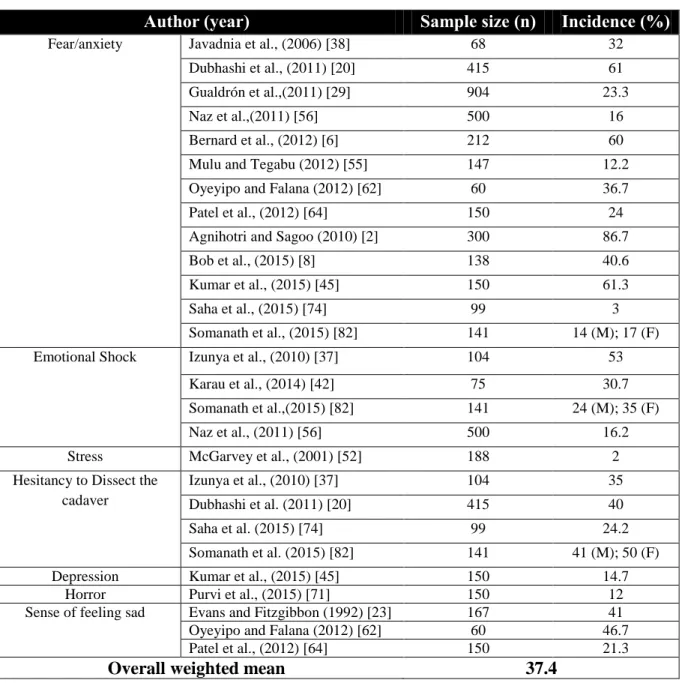
A calculated weighted overall mean of positive feelings (55 percent) compared favorably with the feeling of zeal and excitement as reported by Mulu and Tegabu (Table 2). Are you familiar with the visual learning program before the tablet device.
INTRODUCTION, MATERIALS & METHODS
The Spirit of Anatomy: Mapping the Anatomical Terrain
The context of this research is the University of KwaZulu Natal (Westville Campus and Nelson R. Mandela School of Medicine), where the School of Laboratory Medicine and Medical Sciences in the Faculty of Health Sciences is responsible for the teaching, learning and research of anatomy. The University of KwaZulu-Natal was established on 1 January 2004 as a result of the merger between the University of Durban-Westville and the University.
Background and rationale for the study
Introducing ‘me’
Absent left main coronary artery with variation in the origin of its branches in a South African population. Given the challenges I experienced in the discipline, I chose to tell my story through autoethnography, as it allowed me the freedom to highlight my research, teaching, and practice as an anatomy teacher.
Key questions of this research
Bits, grips and bones: An autoethnographic account of challenges in anatomy education: perceptions emerging from a selected South African University. Views of South African Academic Instructors to the Science of Teaching and Learning in Anatomy Education.

Materials and Methods
- Quantitative vs. Qualitative methodology
- Mixed methodology
- Autoethnography as method
- The use of memory in autoethnography
- Personal reflection
Some aspects of the study are flexible (eg adding, excluding or wording certain interview questions). I used memory and personal reflection to create the manuscripts entitled "Bits, bytes and bones: An Autoethnographic Account of Challenges in Anatomy Education: Perceptions Emanating from a selected South African University" and "Communities of practice: a new methodology in anatomy". research and teaching.".

Study context
Data sources and collection strategies
- Interviews
- Semi-structured interviews
- Questionnaires
- Reflective journals
One of the advantages of using a self-administered questionnaire is that all respondents are asked the same questions and there are no concerns about interviewer bias (O' Cathain and Thomas, 2004). At the end of the academic period, the journals were collected and analyzed as follows: All narrative interpretations were categorized and organized into themes.
Data analysis
Reliability
Validity
Transferability
Ethical clearance
Structure of thesis
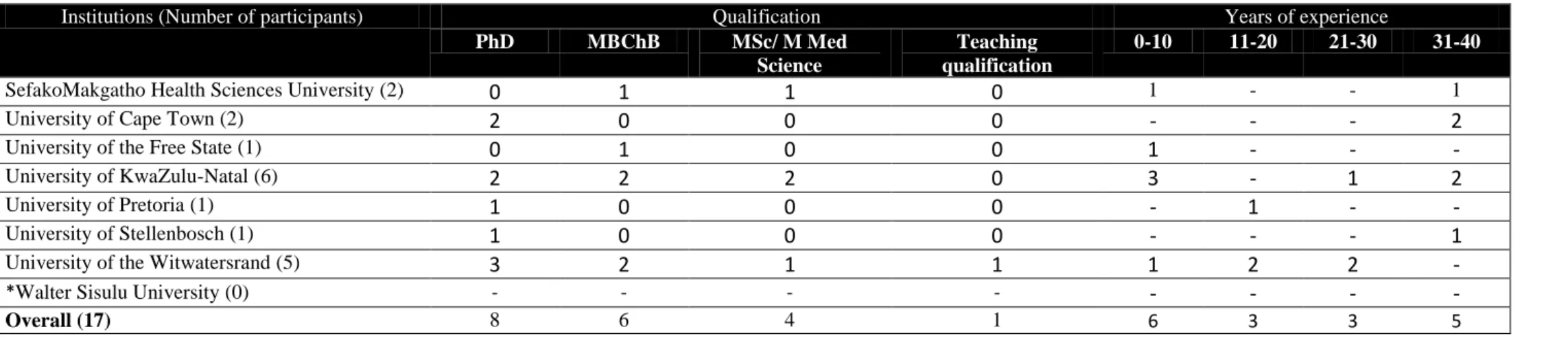
In South Africa, the literature relating to anatomical education has focused on the decline of the discipline in the medical curriculum[3], the clinical relevance of problem-based teaching[4], the relevance of clinical anatomy as a basis for clinical examination[5] , the challenges facing medical education in South Africa[6] and improving academic performance of medical students through the implementation of problem-based learning[7]. Response rates from faculty were poor; no staff from one of the medical schools in the country (Walter Sisulu University) responded to the questionnaire.
LITERATURE REVIEW AND THEORETICAL FRAMEWORK
Prelude to chapter
The review begins with a general discussion of autoethnography and its use in medical education, followed by the value of collaborative research. The assessment concludes with a review of educational theories as they are applied to anatomy education.
Autoethnography
- An ‘anatomical turn’ in medical education
The next section provides a review of the literature and theoretical components relevant to this study. The researcher conducts numerous rounds of writing and analysis as the “findings” of the research develop.
Research collaboration as professional praxis
Building research networks is important in connection with my discipline, where there are small research groups and scarce funds. The basic sciences are also believed to be important in preparing students for the future, as students who have a comprehensive knowledge of the structure and function of the human body (Leveritt et al., 2016) will probably best deal with advances in medical practice such as .eg such as new diagnostic technology and surgical approaches (Monkhouse and Farrell, 1999).
The Praxis and Research of Anatomy
- Definition of concepts
- Traditional vs. modern methods for teaching anatomy
- How much of anatomy do they know?
Students must also become accustomed to the overall aspect of the cadaver because of the color (Abu-hijelh et al., 1997). According to a recent South African study by Dachs et al. 2010), trainees showed particularly poor knowledge of anatomy in an assessment questionnaire.
Reflection in medical education
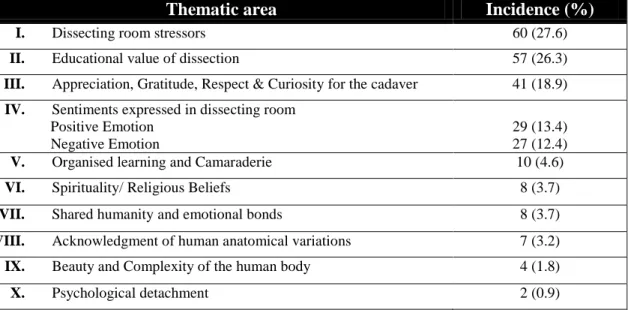
Furthermore, the course of dissection is generally considered to be the first encounter with dead human bodies (Alt-Epping et al., 2014) and therefore provides an appropriate opportunity to discuss issues such as death and dying. Fear of cadaver dissection eventually leads to professional curiosity over time (McGarvey et al., 2001).
The Use of Technology in Medical Education
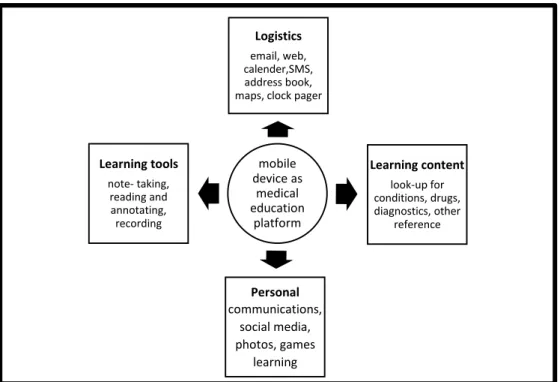
Mobile technology is claimed to support independent learning and the development of meta-cognitive skills or 'learning to learn' skills in young learners (Sha et al., 2012; Kearney et al., 2012; Wong, 2012). In the next section, the term "epistemology" is introduced with the idea of gaining greater understanding of the teaching and learning philosophies of human anatomy.
Epistemology of Teaching and Learning
- Social Constructivism
- Community of Practice
- Situated Learning
- Informal Learning
Dewey J (1933) How we think: a reformulation of the relationship between reflective thinking and the educational process. In addition to making the tablet available, take notes during the lecture. Ethical approval was obtained from the University of KwaZulu Natal Biomedical Research and Ethics Committee (Ethics number BE386/15).
How using a tablet to access anatomy-related content helps your clinical skills. In addition to providing the tablet, do you still take notes during the lecture?
FINDING THE SELF IN BIOMEDICINE
Bits, bytes and bones: An Autoethnographic Account of Challenges in Anatomy
Communities of practice: a new methodology in anatomical research and
COMPENDIUM OF ANATOMICAL TALES
Views of South African Academic Instructors to the Scholarship of Teaching
Reflective Journals: Unmasking student perceptions of anatomical education…. 115
SYNTHESIS, CONCLUSIONS & RECOMMENDATIONS
Synthesis
In all these manuscripts I demonstrate a pedagogical 'embeddedness' as a direct participant, researcher, teacher and reviewer in the field of human anatomy. This chapter briefly examines each of these manuscripts, highlighting the similarities that emerged from the two areas of research. I will also describe my findings in light of teaching and learning theories from the broad field of education, as well as the literature on teaching and learning human anatomy.
This discussion highlights important insights that have been drawn from the data and are presented using a conceptual framework.
Summary moments
Furthermore, the connection between research and practice within the domain of educational theory is demonstrated. A fundamental knowledge of anatomy is essential and learning objectives should be the same across universities, regardless of which teaching approaches are adopted in a curriculum (Figure 3), echoing the sentiments expressed by Chapius et al. In addition, by integrating mobile devices into higher education anatomy classes, the teaching and learning of anatomy has been enhanced as students have used active learning approaches as an alternative method of engaging with the discipline.
Such positive effects of mobile learning, as exhibited in this study, confirm those of Perez et al.
The epistemological glance
- Co-construction of knowledge
- Collaborative research in human anatomy
- Teaching and learning in context (praxis)
- Learning informally
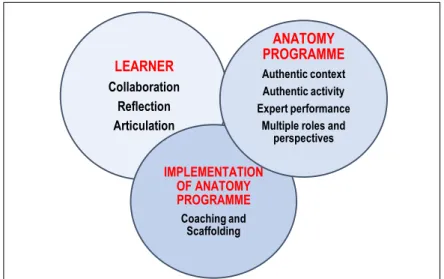
- Conceptual framework for research and praxis of human anatomy
- Anatomical symbolism of conceptual framework
In this study, autoethnography promoted a state of conscious awareness of the self as both questioner and respondent, as teacher and learner in the research and practice of human anatomy. The situated culture referred to in the manuscript entitled Views of South African Academic Instructors to the Scholarship of Teaching and Learning in Anatomy Education refers to the teaching and learning of human anatomy in various medical schools in South Africa. These sentiments are highlighted in the manuscript entitled Reflective Journals: Unmasking student perceptions of anatomy education.
Participation with fellow students extended the teaching and learning process in the laboratory and for.
Insights emerging from the study
Likewise, the output of these studies has been (a) distributed for publication, (b) recommendations have been made via these manuscripts to change the way human anatomy is taught and researched, (c) all of this has been captured in the format of this thesis with further recommendations for future studies. As an educator, I am involved in teaching and learning of human anatomy and the following three manuscripts viz. Third, research generation is inextricably aligned with teaching and learning in the generation of rules of inference, models, system, schemas, ideas, principles, concepts or beliefs (Egbert and Sanden, 2014) in anatomy.
Fifth, this study offers unique methodological insights into alternative approaches in the research and practice of anatomy education.
Closing thoughts
Despite these challenges, I firmly believe that there is a place for scientific anatomists in the teaching of the discipline. The lecture on the anatomy of the mouth and larynx fell under the theme Respiratory system. A young man with a video camera films my delivery of a lecture on the anatomy of the liver.
Therefore, having an understanding of the anatomy is a prerequisite to being able to perform corrective surgery.

The supervisors guided the design, provided logistical support during fieldwork, reviewed all drafts of the manuscripts, and provided critical comments.
This thesis is in manuscript format according to the guidelines of the College of Health Sciences of the University of KwaZulu Natal. Medical Science and 2nd year MBChB students at the University of KwaZulu Natal at the start of an academic term.
Students are able to visualize the actual structures of the human body (Mulu and Tegabu, 2012).
In the manuscript entitled Communities of practice: a new methodology in anatomical research and teaching, autoethnography via narrative storytelling functions as a repository of wisdom and is instrumental in the creation of new knowledge (Sole and Wilson, 2002). Students readily form small communities of practice in learning on their own as seen in the gross anatomy laboratory and echoed in the manuscript titled Reflective Journals: Unmasking student perceptions of anatomical education. The situated culture highlighted in the manuscript on "Bits, Bits and Bones: An Autoethnographic Account of Challenges in Anatomy Education: Perceptions Emerging from a Selected South African University" demonstrates the challenges faced as an anatomy -educator is experienced within a selected discipline at a higher education institution in South Africa.
The approach for generating a conceptual framework was positioned in the scientific context of the existence of knowledge and the identification of the epistemological lenses was derived from empirical data in Chapters 3 and 4 of this thesis.
Interview Schedule for Nodal Informers
Schedule of open ended questions for faculty
What is your opinion regarding the use of any additional teaching modalities in anatomy, for example the use of plastinated specimens, the use of computer software packages and radiological images. Also, do you have any suggestions of what teaching resources should be used to teach anatomy adequately. Do you have any suggestions to improve the delivery of anatomy knowledge at undergraduate and postgraduate level.
Tablet Technology in Medical Education Questionnaire
Amendment to protocol
Ethics Re-certification 2016
Gatekeeper Permission Letters
Ethics Training Certificate