The intensity of the problem varies depending on soil and climate factors and those of the farmers. About 67% of the world's acidic soils have limitations in crop production related to Al toxicity (Eswaran et al., 1997).
Introduction
In the world, breeding crops for tolerance to Al toxicity has received strong research support for decades. Basic studies on the mechanism of tolerance to Al toxicity, genetic control of tolerance to Al toxicity and screening methods have been conducted for all globally important crops.
Development of aluminium toxicity: An overview
Negatively charged clay particles can remove Al3+ from the soil solution and therefore reduce its toxicity to plants. Similarly, organic matter has many negatively charged carboxyl (-COO-) functional groups that can remove Al3+ from soil solutions by forming organic complexes.
Mechanisms of aluminium toxicity
Other complex inorganic anions such as SO42-, PO43+ and organic anions such as citrate, malate and oxalate can have the same effect (Delhaize and Ryan, 1995; Miyasaka et al., 2007). For example, when the concentration of Ca2+ is optimal for the requirements of a plant, then the toxic effect of Al3+.
Symptoms and effects of aluminium toxicity
Reduced branching of fine roots, suppression of root hair development and abnormal root morphology are consequences of long-term exposure of Al-sensitive plants to toxic concentration of Al (Vitorello et al., 2005; Miyasaka et al., 2007). In a study on wheat, liming increased shoot weight and grain yield of Al-sensitive genotypes by 60% and head number by 32% (Tang et al., 2001).
Breeding for tolerance to Al toxicity
Runoff pollution and the adverse effect of lime on calcium crops in rotation systems are negative side effects of lime applications (Wang et al., 2006). For example, The et al. 2006) reported that maize varieties tolerant to acidic soils gave 61% higher grain yields than Al-sensitive varieties.
Mechanisms of aluminium tolerance in cereals
Exclusion mechanism
Therefore, the goal of food security through increased productivity and production must use healthy and integrated methods to deal with acidic soil. The combined use of tolerant crop varieties, lime and organic fertilizers has a synergistic effect which will result in increased productivity and sustainable health of acidic soils.
Internal detoxification
Genetic control of Al-tolerance in cereals
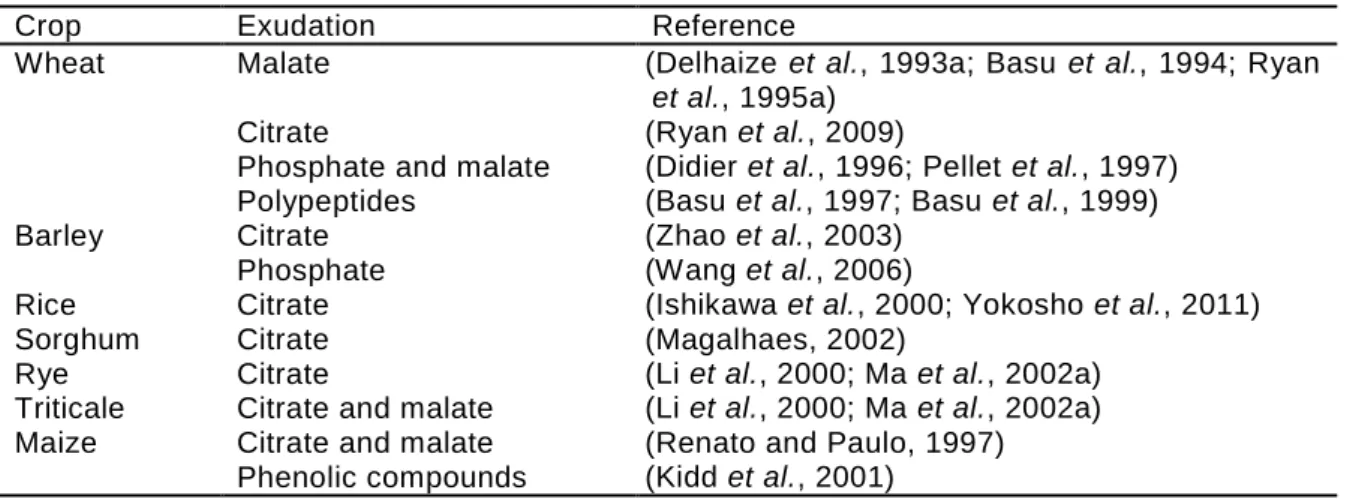
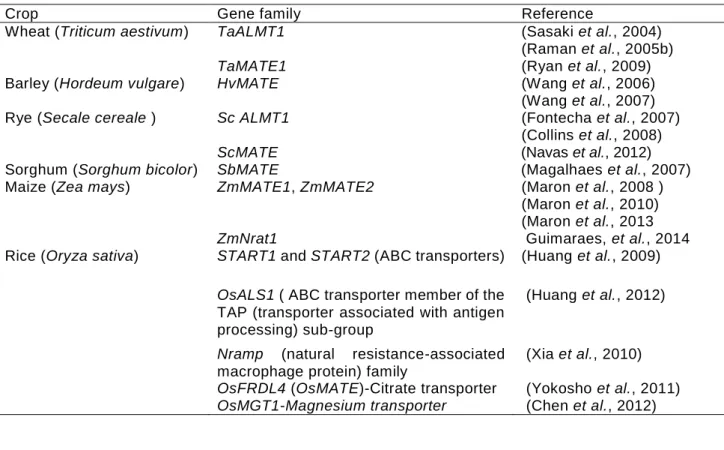
Nrat1 belongs to the Nramp (macrophage natural resistance-related protein) family and is a plasma membrane-localized transporter for trivalent Al (Xia et al., 2010). OsALS1 encodes a half-size ABC transporter that is a member of the TAP (transporter associated with antigen processing) subgroup ( Huang et al., 2012 ).
Breeding for Al-tolerance in cereals
OsMGT1 is a plasma membrane-localized transporter for Mg in rice and its expression is specifically enhanced by Al (Chen et al., 2012). Rice (Oryza sativa) START1 and START2 (ABC transporters) (Huang et al., 2009) OsALS1 (ABC transporter member of the.
Screening methods for Al-tolerance
- Nutrient solution culture
- In vitro (tissue culture) screening method
- Soil based screening
- Field evaluation
The root growth method takes into account two Al tolerance parameters: root growth (RG) and root tolerance index (RTI) (Baier et al., 1995). It is also important to germinate seeds and select uniform seedlings before assessing for Al tolerance (Hede et al., 2002).
Molecular marker assisted breeding for al-tolerance in cereals
Second, forms of aluminum precipitate with various nutrients in the environment, so it is difficult to control the availability and activity of toxic aluminum species in the environment (Ramgareeb et al., 1999). The advantage of using soil-based screening methods over nutrient solution culture is that they take into account other soil factors that may affect Al tolerance (Ring et al., 1993).
Conclusion
Locus ScAACT1 at the Qalt5 locus as a candidate for enhancing aluminum tolerance in rye (Secale cereale L.). Locus ScAACT1 at the Qalt5locus as a candidate for enhancing aluminum tolerance in rye (Secale cereale L.).
Introduction
Various studies also showed a correlation between farmers' knowledge and scientific evidence on the causes and indicators of land degradation related to the decline of soil fertility (Malley et al., 2006; Karltun et al., 2013; . Vaidya and Mayer, 2014). This research was conducted to assess soil acidity status in multiple land uses and to document farmers' knowledge and understanding of soil acidity.
Material and methods
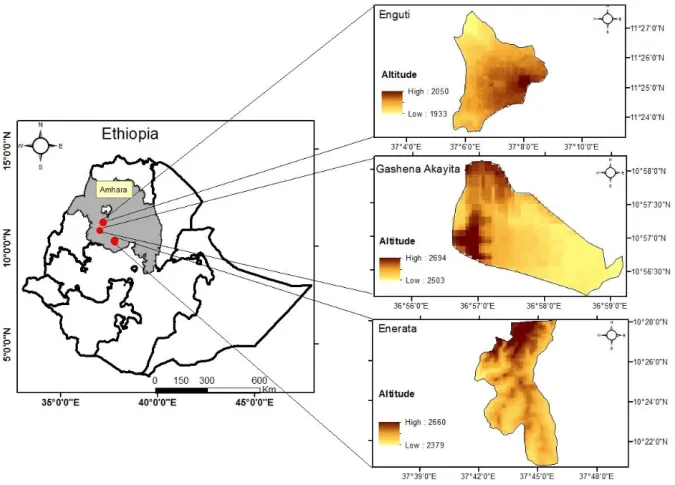
Description of the study sites
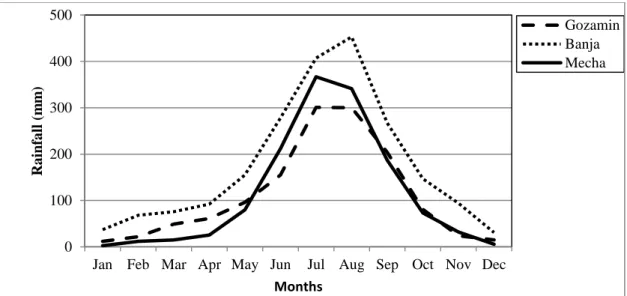
Enguti is warm and humid, which enables the production of a greater diversity of crop species than the other two sites. The average size of land holdings per household was 0.5ha for Banja, and 1.5ha for the Mecha and Gozamin districts.
Data collection
Particle size was determined using the hydrometer method (Bouyoucos, 1951). The pH (H20) was measured in a ratio of 1:2.5 soil to water to soil. The content of available phosphorus was determined by Olsen's method (Olsen et al., 1954). Total nitrogen was analyzed by the semi-micro Kjeldahl procedure of Hitchcock and Belden (1933).
Results
Predominant land-uses of the farming system
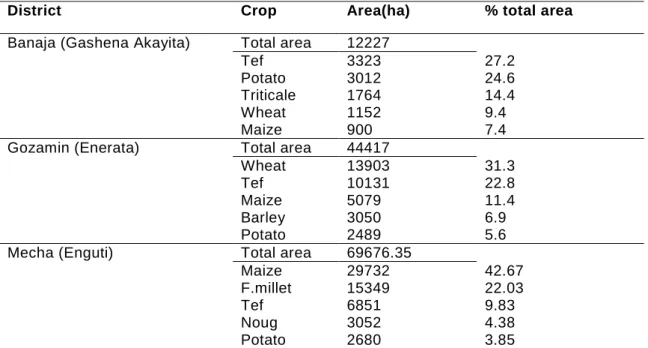
In the areas of Mecha and Gozamin, the proportion of natural forest was negligible and limited to the area around ancient churches and monasteries. Despite the smallest average land holding per household, encroachment on natural forests in the Banja area seems to be minimal.
Major crops grown
Triticale is classified as an acid tolerant crop due to the genes for tolerance to Al toxicity derived from the rye genome (Niedziela et al., 2012). However, its capacity to mobilize rock phosphate has been reported to be stronger than most cereals (Flack et al., 1987).
Farmers' perceptions and physico-chemical properties of the soils
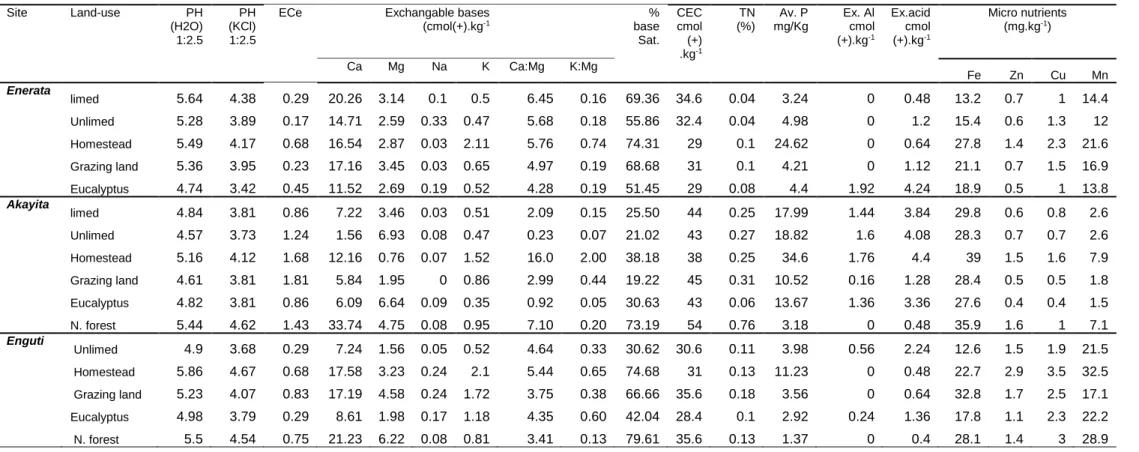
In this study, all the sites and the land uses had Mg levels above 0.5 cmol kg-1 soil. In this study, the exchangeable K content of the soil samples from all the study sites and land uses, including cropland, was above 0.4 cmol kg-1 soil.
Causes of soil acidity as perceived by farmers
Farmers' ranking of soil acidity among the top five constraints limiting crop production in the studied locations. For several years, di-ammonium phosphate (DAP) and urea accounted for 100% of the mineral fertilizers sold in the study areas.
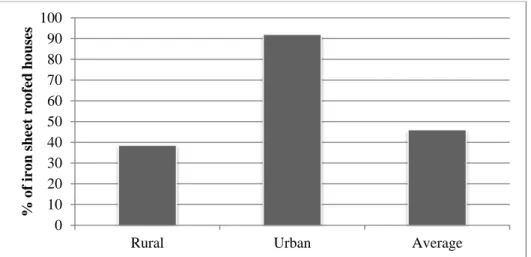
Indicators of soil acidity as perceived by the farmers
Among them, Saldinin and Temeje were disappearing faster, due to increasing levels of soil acidity. The effect of soil acidity on the diversity of crop genetic resources is pronounced in the mountainous areas, Enerata and Gashena Akayita, where the range of crop choices is already limited due to the low temperatures prevailing in these high altitude districts.
Coping strategies
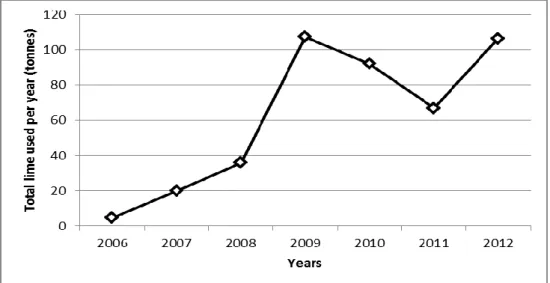
According to the farmers and key informants, farmers did not have money to purchase crop inputs due to low productivity and low market value of crops grown in the study areas. The use of organic matter in the form of manure and compost can reduce soil acidity (Haynes and Mokolobate, 2001; Wong and Swift, 2003).
Discussion
Continuous removal of basic minerals in the form of grain and biomass therefore exposes crops and pastures to increasing soil acidity (Murwira et al., 1993). Assimilation of these fertilizers results in the release of H + to the rhizosphere, increasing soil acidity (Marschner, 1995; Barak et al., 1997; Bolan and Hedley, 2003).
Conclusion
With the current resources available to farmers, the sustainable management of acidic soils and improving the productivity of the system seems highly unlikely. Institute of Tropical Soil Biology and Fertility of the International Center for Tropical Agriculture, Nairobi, Kenya.
Introduction
Use of organic matter in the form of manure and compost can significantly reduce soil acidity (Wong and Swift, 2003). The problem of soil acidity in cultivated land is further aggravated by the use of acid-forming fertilizers.
Material and methods
Genetic stock
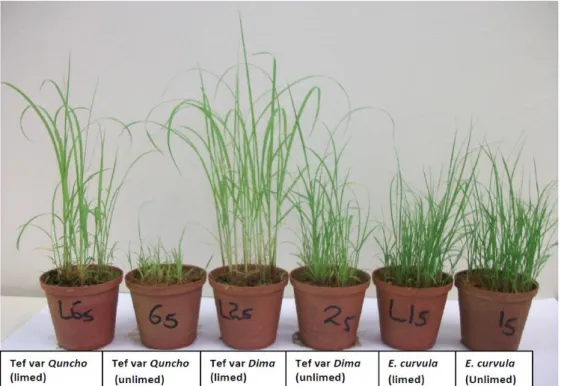
These fertilizers increase soil acidity when they are converted to nitrate nitrogen by releasing hydrogen ions (Barker and Bryson, 2007). However, a closely related forage species, common grass [Eragrostis curvula (Schrad.) Nees], is known to have a high degree of tolerance to soil acidity (Miles and de Villiers, 1989).
Experimental set up
Data collection and analysis
Results
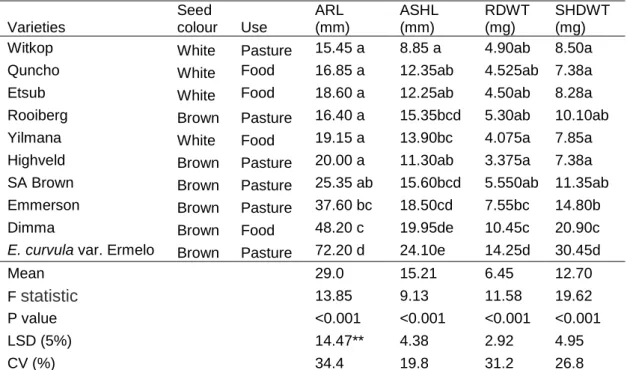
Genetic variability under unlimed treatments
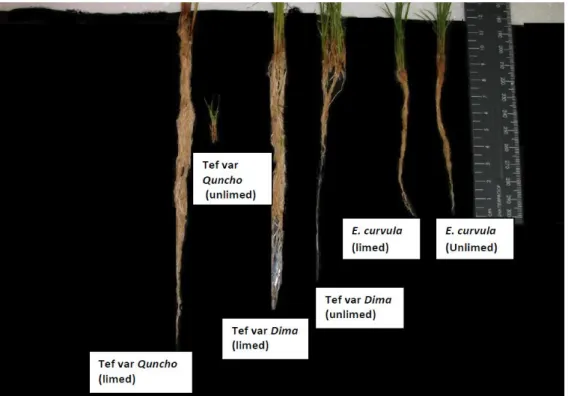
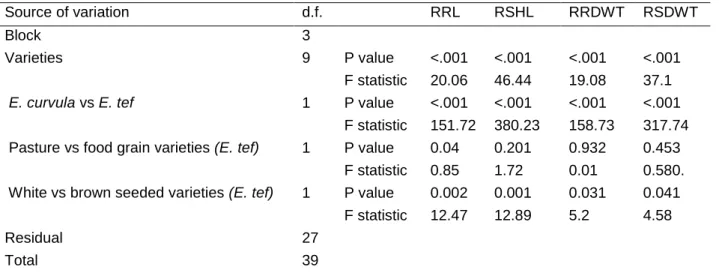
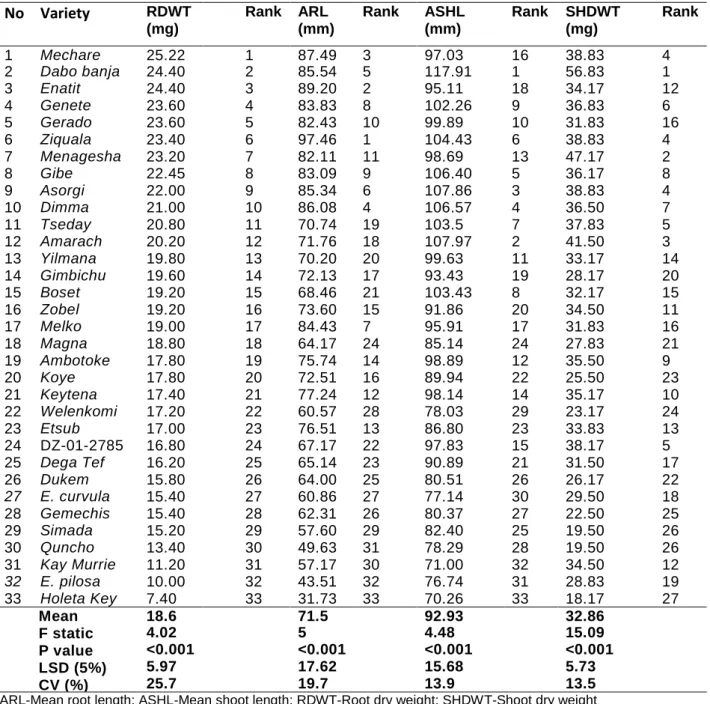
Similarly, considerable variability was observed among varieties for root dry weight and shoot dry weight (Table 3.3). For shoot dry weight, Quncho and Highveld gave the lowest weights of 7.38 mg, while the brown-seeded tef variety, Dima produced 20.9 mg.

Variability for tolerance indices (relative values) and shoot to root ratio
Relative root length; RSHL-relative shoot length; RRDWT-Root relative dry weight; RSHDWT-Relative dry weight of shoot; SH: RT- ratio of shoot to root; Dry weight DWT. ARL - average root length; ASHL-average shoot length; RDWT-root dry weight; SHDWT-Shoot dry weight.
Discussion
Under unlimed conditions, root and shoot growth of tef cultivars was generally lower than that of E. Since tolerance indices are the ratio of growth under unlimed (toxic) and unlimed (non-toxic) conditions, low tolerance indices of tef cultivars can be attributed to strong or weak cultivar growth tef in limed or non-limed state.
Conclusion
Amelioration of Al toxicity and P deficiency in acid soils with organic residue additions: A critical review of. Distribution of Acid Soils and Liming Materials in Ethiopia, Ethiopian Institute of Geological Survey, Ministry of Mines and Energy, Addis Ababa, Ethiopia.
Introduction
Crop genotypes can be screened for Al toxicity or soil acidity under field conditions or in controlled environment facilities. Therefore, the evaluation of selected genotypes for yield and other economically important traits under field condition is essential (Hede et al., 2001).
Material and methods
Greenhouse experiment
Compared to field-based techniques, controlled environment methods under laboratory and greenhouse conditions can be more rapid, accurate and non-destructive and can be applied at early stages of crop development (Howeler and Cadavid, 1976 ; Carver and Ownby, 1995; Hede et al., 2001). Under controlled environmental conditions, the relative seedling growth index, expressed as the ratio of growth under unrestricted conditions to lime conditions, has been widely used to identify tolerant lines (Bona et al., 1993; Hede et al., 2001). ; Liu, 2005).
Field experiment
Days to panicle emergence (DPE): Number of days from planting to panicle emergence on 50% of the plants in the plots;. Mass of panicle branches per panicle main shoot (NPBPPN): mean dry weight in grams of aboveground biomass of 5 pre-marked plants in each plot.
Statistical analysis
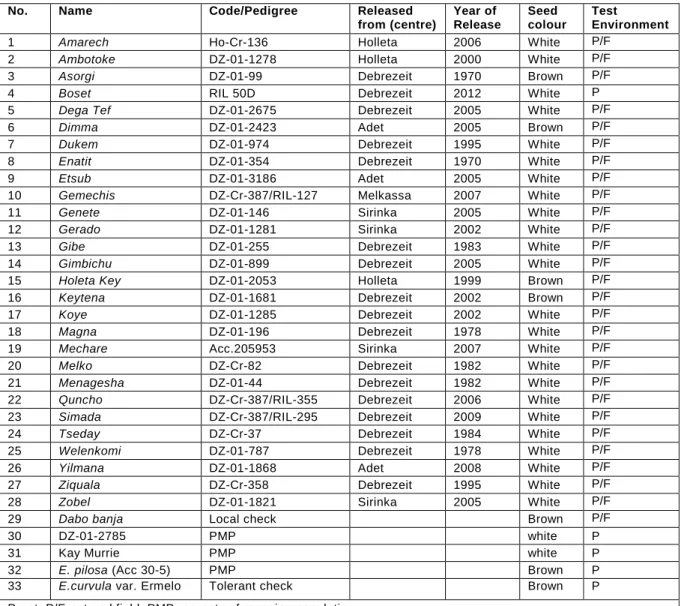
Farmer assessment of varieties: Twenty-five farmers in two groups of 12 and 13 assessed the varieties under unlimed conditions for various characteristics on November 3, 2014: The Dabo banja and Feso landraces served as benchmarks that the farmers could use as a basis for assessment. Dabo banja is a widespread and relatively late maturing landrace, while Feso is an early maturing landrace used in double cropping of tef after potato.
Results
- Response of tef genotypes to soil acidity in the pot experiment
- Response of tef varieties to soil acidity in field experiments
- Correlation between pot and field experiments
- Farmers’ assessment
The combined ANOVA showed highly significant differences (P<0.001) between the genotypes for grain yield under unlimed conditions and for all acidity tolerance indices. Summary of the combined ANOVA for soil acid tolerance indices of aboveground biomass from station and farm field experiments.
Discussion
A limitation to the separate use of relative acidity tolerance indices is the fact that they may misidentify group d genotypes (Rao et al., 1993; Hede et al., 2001). Such associations have contributed to the development of acid-tolerant lines used in various breeding programs (Rao et al., 1993; Gallardo et al., 1999; Hede et al., 2001).
Conclusion
Proceedings of the International Symposium on Adaptation of Vegetables and Other Food Crops in Temperature and Water Stress Tolerance, Asian Vegetable Research and Development Center. Effect of soil liming and vesicular-arbuscular-mycorrhizal inoculation on the growth and micronutrient content of the teff plant.
Introduction
Tef is one of the important crops affected by soil acidity in Ethiopia (Mamo and Killham, 1987; Mamo et al., 1996). Soil acidity and associated nutrient imbalances are known to influence the genetic diversity of plant species (Houdijk et al., 1993; Roem and Berendse, 2000).
Materials and methods
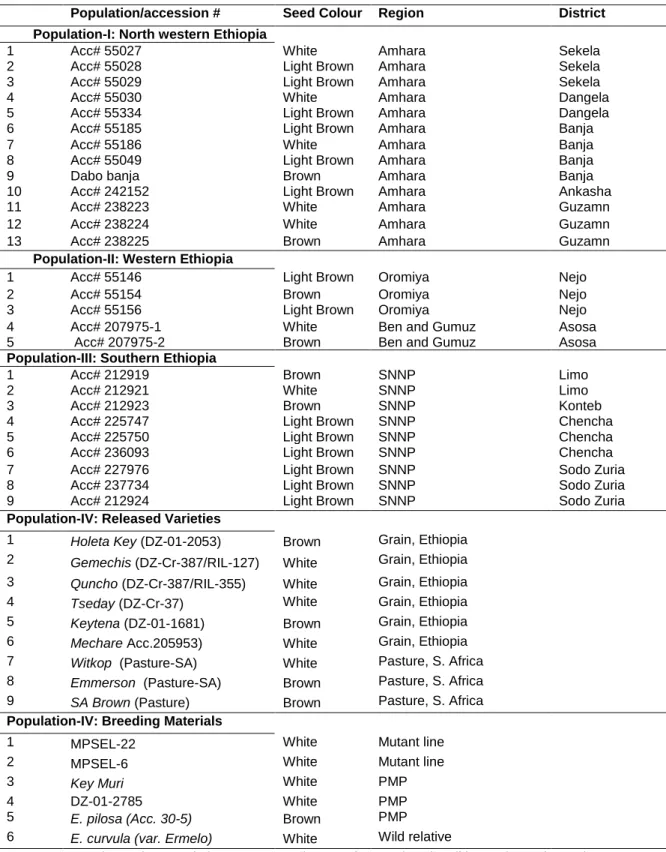
- Genetic stock
- DNA extraction
- PCR amplification
- Data analysis
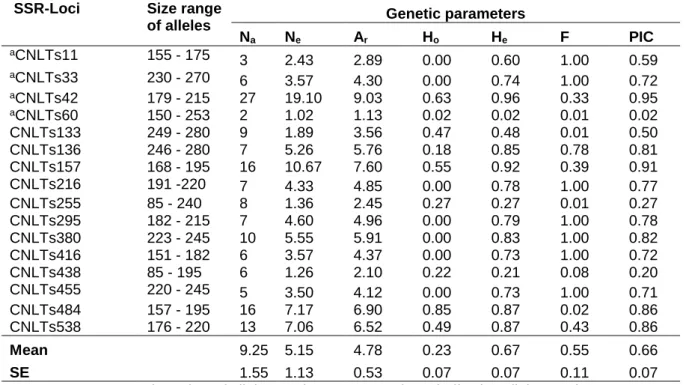
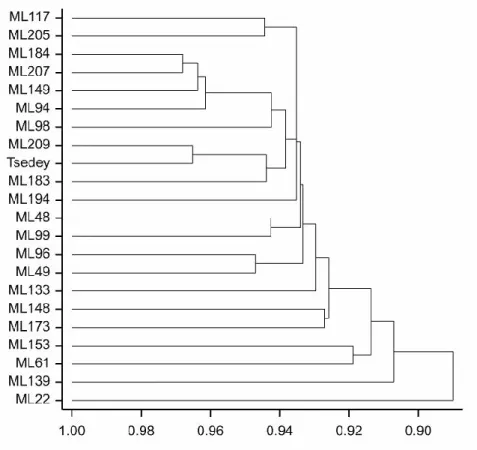
Sixteen highly polymorphic SSR primer pairs, including 4 EST-SSR markers from the tef genome (Zeid et al., 2012) were selected and used for amplification. The total number of alleles per locus (Na), the number of effective alleles per locus (Ne), the observed heterozygosity (Ho), the average gene diversity (unbiased) (He) and inbreeding coefficient (F) were determined using the protocol of Nei and Li (1979). The percentage of polymorphic loci was estimated for each predefined group, based on areas of collection.
Results
- Genetic diversity within and among tef genotypes
- Distance-based population differentiation
The accessions from western Ethiopia showed a high degree of differentiation compared to the accessions from southern Ethiopia (0.23), and the breeding materials (0.20) and the released varieties (0.23). According to Morjan and Rieseberg (2004) and Slatkin (1989), gene flow (Nm) between tef accessions from northwestern Ethiopia and the rest of the tef populations was high.
Discussion
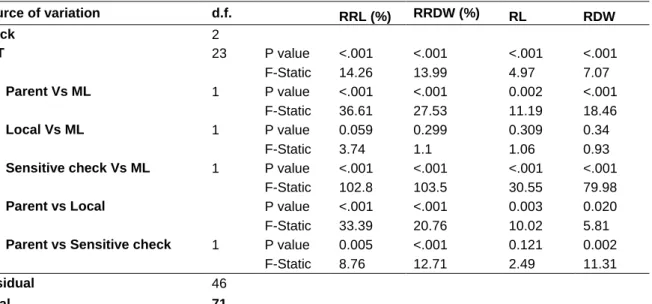
No difference was observed for most quality traits between parental and mutant lines. There were highly significant differences (P<0.001) between Al tolerance levels of tef genotypes.
Conclusion
Materials and methods
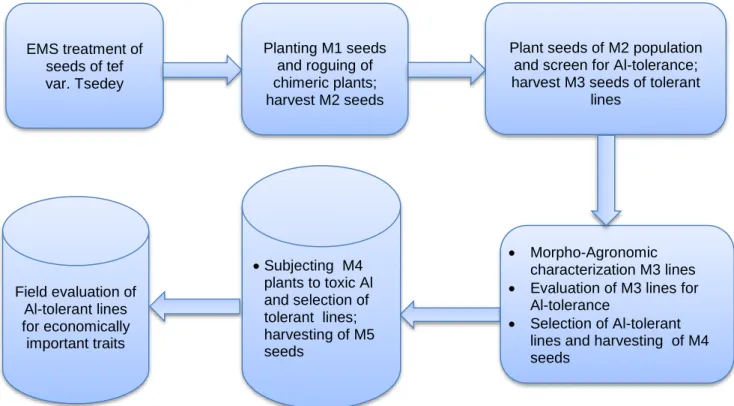
- Induction of mutation
- Selection of Al-tolerant mutants
- Evaluation of M 3 lines for Al-tolerance
- Morpho-agronomic characterization of mutant lines
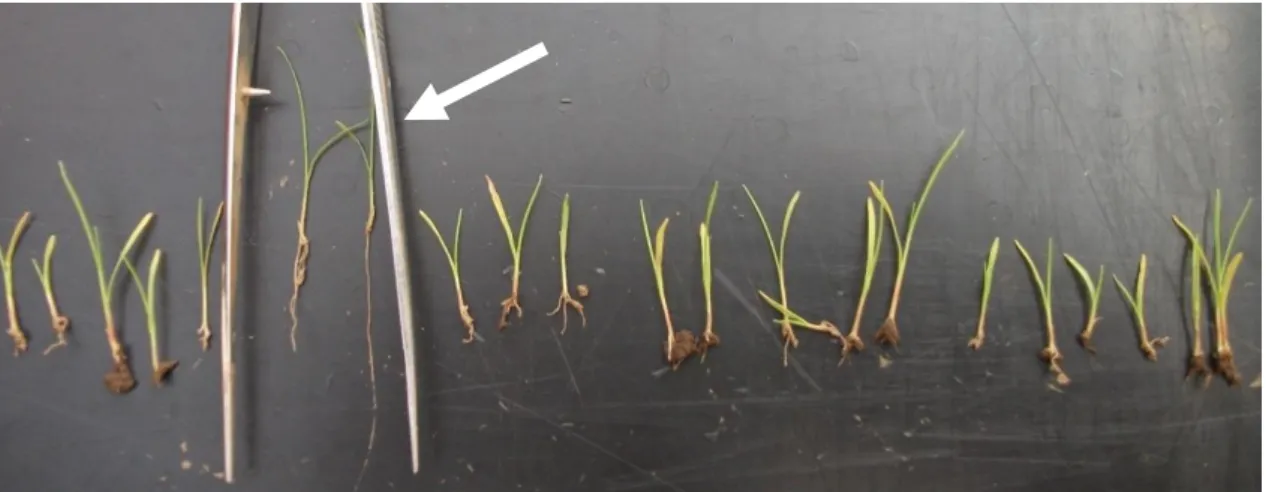
Twenty-eight days after planting, the soil was washed and the roots of the Al-tolerant landrace were measured. The mean plus the standard deviation of the root length of the Al-tolerant landrace was used as cut-off point to select the Al-tolerant mutant.
Results
- Variability for Al-tolerance
- Variability for morpho-agronomic traits
Consequently, except for ML99, all the mutant lines outperformed the parent and the sensitive check. But some mutant lines such as ML153 were distinct enough to develop an extremely loose panicle shape compared to the parent and most of the mutant lines (data not shown).
Discussion
Mutation induction has been used to increase genetic variability for Al tolerance in other plants. For example, Nawrot et al. 2001) have reported increased level of Al tolerance in barley after mutagenic treatment of four varieties with N-methyl-N-nitroso urea (MNH) and sodium azide.
Conclusion
Development of a hydroponic facility as a phenotyping platform to assess for Al tolerance in teff [Eragrostis tef (Zucc.) Trotter] using root growth measurements, and the hematoxylin staining technique. The aim of this study was to develop an appropriate phenotyping platform to screen for Al tolerance in teff.
Introduction
Due to the wide genetic diversity and agroecological adaptation of the crop, it may be possible to breed tef genotypes with Alltolerance. Development of a practical phenotyping platform such as the use of hydroponics technique combined with efficient assessment methods is a prerequisite for carrying out breeding activities for Al tolerance in tef.
Materials and methods
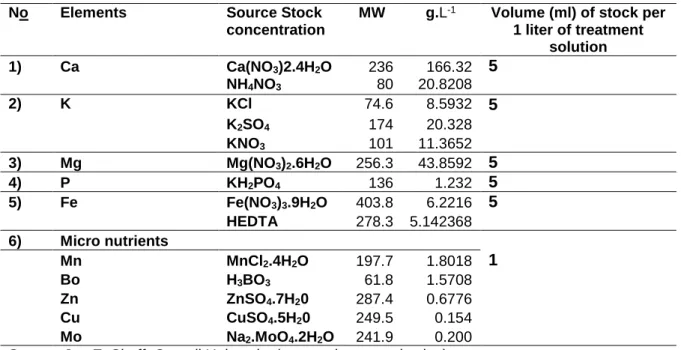
- Determination of the optimum Al concentration and evaluation of selected tef
- Assessment of haematoxylin staining
Ermelo was used to assess the response of the plants to hematoxylin staining after exposure to Al. Finally, the staining pattern of the primary root, i.e. the 1.5 cm tip, was viewed under an inverted Nikon microscope, and the degree of staining was scored on a visual scale of 0-5, with 0 being no stain and 5 the maximum stain. .
Results
- The hydroponics system as a phenotyping platform
- Selection of Al concentration for tef screening
- Screening selected tef genotypes for Al-tolerance
- Reaction of sensitive and tolerant E. tef genotypes to haematoxylin staining… 175
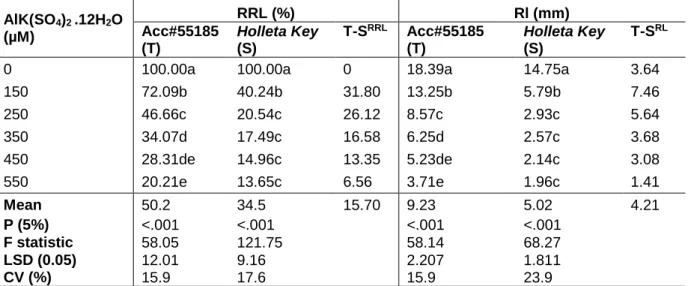
Such a trend was also observed with wheat and sorghum in a previous study (Famoso et al., 2010). Further, higher levels of Al have a tendency to overcome the inherent tolerance of genotypes (Polle et al., 1978; Cancado et al., 1999).
Conclusion
Biochemical mechanism of the toxicity of aluminum and the sequestration of aluminum in plant cells. Species and variety tolerance of soil acidity was found to be one of the most important factors influencing crop and variety choices by farmers.