UNIVERSITY OF KWAZULU-NATAL
Primary Science Teacher’s Experience and Understanding of the Problem-Based Learning Approach in the Shiselweni Region
by
Shabane Ncamiso January
(Student No: 214 524 364)
A dissertation submitted in partial fulfilment of the requirements for the degree of
Master of Education In the College of Humanities
Supervisor: Prof. Agreement Lathi Jotia
August 2017
i
TABLE OF CONTENTS
PRIMARY SCIENCE TEACHERS’ EXPERIENCE AND UNDERSTANDING OF THE PROBLEM-BASED LEARNING APPROACH IN THE SHISELWENI REGION
TABLE OF CONTENTS ... i
SUPERVISOR’S STATEMENT PAGE ... vi
DECLARATION OF OWN WORK ... vii
ACKNOWLEDGMENTS ... viii
DEDICATION ... ix
ABSTRACT ... x
LIST OF ABBREVIATIONS ... xi
TABLE OF FIGURES ... xii
CHAPTER ONE ... 1
1.0 INTRODUCTION TO THE STUDY……..………...1
1.1 Aims and Rationale of the study ... 3
1.2 Objectives ... 4
1.2.1 Key Research Questions ... 4
1.2.2 Problem statement ... 4
1.3 Significance of the study... 7
1.4 Limitation of the study ... 9
1.5 Theoretical background ... 10
1.6 Theoretical framework ... 10
1.7 Organisation of the dissertation ... 19
1.8 Definition of terms ... 20
1.8.1 Understanding is in our interaction with the environment ... 21
1.8.2 Cognitive conflict is the stimulus of learning ... 22
1.8.3 Knowledge evolves through social negotiation ... 22
1.9 Summary ... 23
ii
CHAPTER TWO ... 24
LITERATURE REVIEW ... 24
2.0 What is Problem-Based Learning? ... 24
2.1 Characteristics of PBL ... 25
2.1.1 Using Problems as Learning Stimulus ... 26
2.1.2 Teachers as Facilitators ... 28
2.1.3 Groups as Stimuli for Interactions... 30
2.2 The study’s adopted PBL model ... 30
2.2.1 Benefits and Limitations of Problem-Based Learning ... 33
2.2.2 Advantages of Problem-Based Learning ... 35
2.2.3 Limitations of Problem-Based Learning ... 37
2.2.4 Science Classes’ Interrelationship to Everyday Life through PBL ... 38
2.2.5 Comparison of Traditional Instructional Method with PBL ... 39
2.3 History of PBL ... 40
2.4 Aims of PBL ... 42
2.5 Location of PBL Approach ... 43
2.5.1 PBL Approach Promoting 21st Century Skills ... 44
2.6 Teaching Reforms ... 45
2.6.1 Current Teaching Method ... 46
2.6.2 Teaching Methods and Learning Styles ... 48
2.6.3 Change in Teaching Methods ... 49
2.7 Anticipated Difficulties ... 49
2.7.1 Time ... 49
2.7.2 Learners ... 49
2.7.3 Money ... 49
2.7.4 Teachers ... 50
2.8 PBL, a Successful Innovation ... 51
2.9 PBL and Science Education ... 52
2.10 Implementation of PBL in Science Education ... 52
2.11 Conclusion ... 53
iii
CHAPTER THREE ... 54
RESEARCH DESIGN AND METHODOLOGY... 54
3.0 Introduction ... 54
3.1 Learning as a Constructive Process ... 54
3.2 Learning as a Self-Directed Process... 56
3.3 Learning as a Collaborative Process ... 56
3.4 Learning as a Contextual Process ... 57
3.5 Location of Study Area ... 58
3.6 Research Design ... 59
3.6.1 Importance of using Case study method ... 58
3.6.2 The reasons of selecting Case study method ... 59
3.6.3 Exploratory Questionnaires ... 59
3.6.4 Semi-Structured Interviews ... 60
3.6.5 Participant-Observation ... 61
3.6.6 Document Analysis ... 62
3.6.7 Validity and Reliability issues ... 62
3.6.8 Data Storage... 63
3.6.9 Dissemination of participants’ feedback after study ... 63
3.7 Data Collection and Sampling ... 65
3.7.1 Sample Size of study ... 63
3.7.2 Research timeline ... 64
3.7.3 Study piloting ... 64
3.8 Sampling Method ... 67
3.9 Data Analysis... 67
3.9.1 Limitation of study ... 66
3.9.2 Ethical Consideration ... 66
3.10 Summary ... 68
iv
CHAPTER FOUR ... 69
Presentation of Findings ... 69
4.0 Introduction ... 69
4.1 Demographic information ... 67
Research question analysis ... 75
4.2 Teachers’ understanding and experiences of the PBL approach... 75
4.3 The extent of using PBL approach when teaching ... 93
4.4 The challenges of PBL approach ... 94
4.5 The impact of PBL approach on the learners’ performance ... 97
4.6 Participant’s reasons why they choose PBL approach ... 98
4.7 The higher order thinking skills developed by the PBL approach ... 98
4.8 Conclusion ... 103
CHAPTER FIVE ... 104
DISCUSSIONS AND RECOMMENDATIONS ... 104
5.0 Introduction ... 104
5.1 Study Summary ... 105
5.2 How PBL can positively impact learners’ interest in science ... 109
5.3 The PBL approach leads to the development of higher order thinking skills. ... 110
5.4 Degree to which teachers use or fail to use PBL ... 113
5.5 Implications of the PBL approach in the education system in Swaziland ... 114
5.6 Recommendations ... 116
5.7 Implications to Policy Formulation ... 117
5.8 Recommendations for further studies ... 120
5.9 Concluding remarks ... 120
REFERENCES ... 121
v
APPENDICES ... 138
Appendix 1 Admission letter ... 139
Appendix 2 Acceptance form... 140
Appendix 3 Research proposal and ethical clearance application form ... 141
Appendix 4 First intention to defend proposal form ... 142
Appendix 5 Second intention to defend proposal form ... 143
Appendix 6 Ethical Clearance ... 144
Appendix 7 Regional Education application letter conduct study ... 145
Appendix 8 Regional Education permit to conduct research ... 146
Appendix 9 Principals’ application letters requesting to conduct study ... 147
Appendix 10 Declaration of participants’ consent form ... 153
Appendix 11 Questionnaire for participants... 155
Appendix 12 Interview questions for participants ... 158
Appendix 13 Participants’ evaluation form ... 159
Appendix 14 Turn it in Origninality Report………...160
Appendix 15 Turn it in Editor’s letter...……...………...161
vi
vii
viii
ACKNOWLEDGMENTS
Firstly, I would like to thank Pastor Thulani Dlamini’s God of Tree of Life Church for being with me throughout this research. Secondly, I would like to extend my sincere gratitu de to the following people for contributing towards the completion of my research:
Professor Agreement Lathi Jotia, my supervisor, for his support, guidance, tireless patience, constant encouragement, assistance and motivation throughout the study.
I am indebted to his intellectual guidance and thoroughness.
Mrs. P. Dlamini, Mr. S. Ndlandla, Mr. S. Dlamini, Mr. V. Xaba and Mr. M.
Myeni. Thank you so much for your support and words of encouragement. I could not have made it without your unconditional support.
To all those who made it possible for me to complete my research, Mr. Graham
Zwane, participants (teachers), UKZN lecturers, my colleagues and the Faculty of
Education, I express my sincere gratitude. I am truly humbled by your support.
ix
DEDICATION
This thesis is dedicated to my family, my loving, tolerant, incredible and
supportive wife, Cebisile Precious Shabane (née Simelane), and my dearest
children Siphesihle Patience, Prosper Nontsikelelo, Celumusa Sibonginkhosi,
Nosipho Bliss, and Favour Promise Shabane, thank you so much for your patience,
understanding and belief in me. Family is the best thing that ever happened to me.
x ABSTRACT
The study aimed at investigating Primary School Science Teachers’ experience and understanding of the learner-centred Problem-Based Learning (PBL) approach which promotes active learner participation. A total of fifty one (N=51) science teachers from twenty one (N=21) different Primary Schools in the Shiselweni region of Swaziland were used in the study. In the Shiselweni region there has been a growing trend of learners performing poorly in science and lacking basic scientific skills and attitudes which, in most instances, could be acquired if learners were trained using the PBL approach. The study was guided by the constructivist theory and incorporated four key principles of learning which state that learning should be constructive, contextual, collaborative and self-directed. The constructivist theory was found appropriate for this study in that, in this theory, learning is supposed to take place when learners are given opportunities to actively engage with ideas and materials. The belief is that learning takes place when learners see it as constructive, contextual, collaborative and self-directed. The PBL approach incorporates both the constructivist theory and the above-mentioned key learning principles.
The study’s key findings were that teachers in the region have a clear understanding and ample experience of the approach although learners continue to perform badly in science. The reasons for this are that teachers found it very difficult to change from being “fountains” of knowledge to being facilitators of learning. They prefer to teach the twenty-first century class the way they were taught during their studies. They rely more on traditional teaching methods than on current ones which promote active learner participation in class. The researcher therefore recommends that views and perceptions on both educators’ and learners’ understanding and experience of the PBL approach must be gathered from secondary up to tertiary level.
xi
LIST OF ABBREVIATIONS
ECOS: Examination Council of Swaziland HOTS: Higher Order Thinking Skills
ICT: Information and Communication Technology JC: Junior Certificate
MoET: Ministry of Education and Training PBL: Problem-Based Learning approach REO: Regional Education Office
SAARMSTE: South African Association for Research in Mathematics, Science and Technology Education
SGSCE: Swaziland General Secondary Certificate in Education SPC: Swaziland Primary Certificate
STEM: Science, Technology, Engineering and Mathematics UKZN: University of KwaZulu-Natal
UNESCO: United Nations’ Educational, Scientific and Cultural Organization UNICEF: United Nation International Children’s Education Fund
WEF: World Education Forum
xii
TABLE OF FIGURES
Figure 1: Percentage distribution of informants according to gender………....70
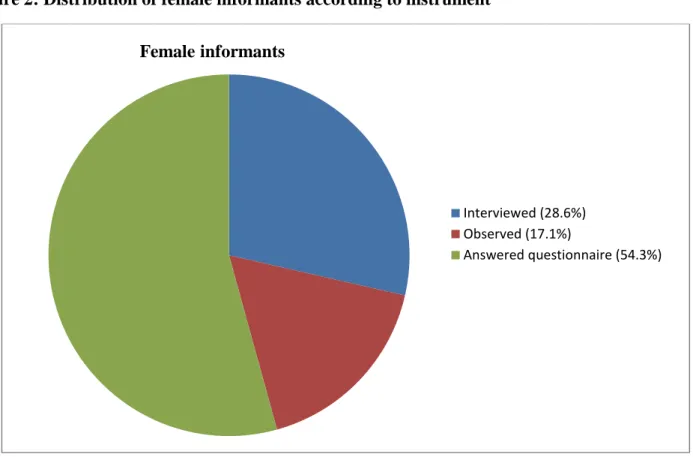
Figure 2: Distribution of female informants according to instrument ………..71
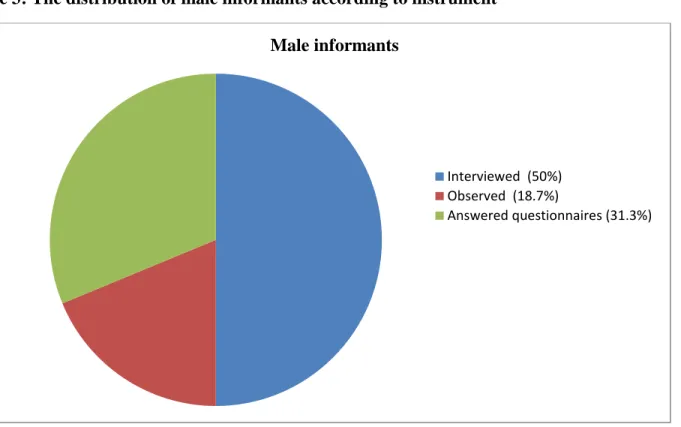
Figure 3: The distribution of male informants according to instrument ………..72
Figure 4: Total numbers of male and female teachers……….73
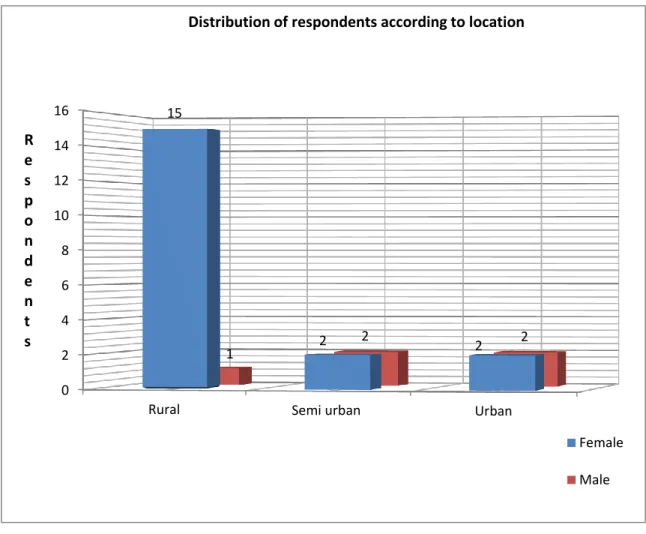
Figure 5: The distribution of respondents according to location of the school ...………...74
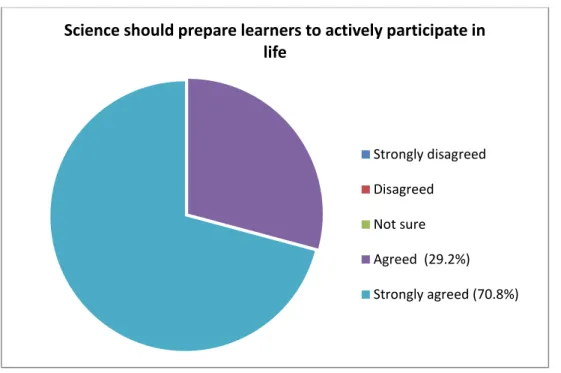
Figure 6: Reflections on science preparing learners to actively participate in life………....75
Figure 7: Science should prepare learners for independent engagement in career skill…..76
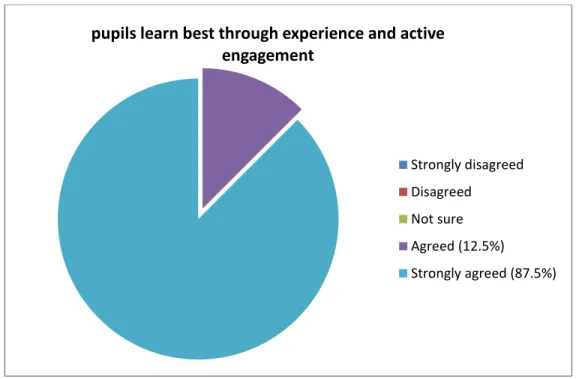
Figure 8: Learners learn best through experience and active engagement………....77
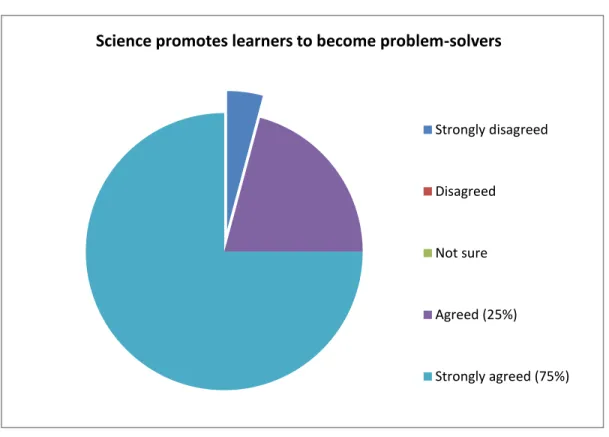
Figure 9: Science promotes learners to become problem-solvers………….…………..…....79
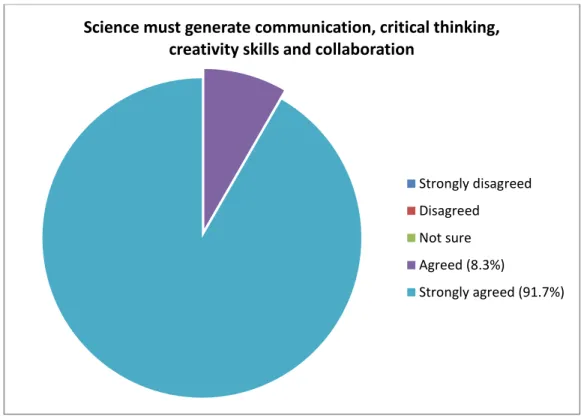
Figure 10: Science creates communication, critical thinking, creativity & collaboration....81
Figure 11: Science must be taught using learner-centred approach………...84
Figure 12: Informants’ responses when asked if they use PBL approach ………....…86
Figure 13: Teachers’ responses to the question if science include knowledge, skills, & attitudes……… ………..87
Figure 14: Teachers’ responses when asked if it was easy to change and become facilitator………...89
Figure 15: Teachers’ responses when asked if PBL promote learners to become problem- solvers ….………...90
Figure 16: Should learners sit quietly and listen in a science class………...92
Figure 17: Should teachers cover science content using lecture method only ………..94
Figure 18: Teachers’ responses when asked to what extent they use PBL approach………97
Figure 19: Teachers’ responses when asked what challenges they face with PBL approach……….……..…98
Figure 20: PBL improves learners’ performance ………..………101
1
CHAPTER ONE
1.0 INTRODUCTION TO THE STUDY
The process of education demands that learning be facilitated such that the learner is at the centre of the learning process. However, despite such assertion, reality on the ground holds that traditional styles of teaching are still dominant in Swaziland’s schools. Such a scenario has encouraged the researcher to examine the Shiselweni region Primary School science teachers’ experiences and understanding of the Problem-Based Learning (PBL) approach. The core reasons which were at the basis of this study can be summarized as follows: dissatisfaction with traditional lecturing because of: 1) low number of learners who pass the subject every year (Ruiz-Gallardo et al., 2011), 2) decry about unsatisfactory time allocation for the subject such that teachers are unable to finish the prescribed syllabus (Somukawa, 2012), 3) high number of drop-outs and learners who do not attend examination (Ruiz-Gallardo et al., 2011), 4) positioning learning in accordance with the Ministry of Education and Training (MoET) of Swaziland guidelines that suggest moving learning system to more learner-centred approaches, minimizing number of learners who have a poor scientific background, often complain that science is more difficult to learn than agriculture or consumer science, often hate learning science or develop a negative attitude towards science, and find it hard to apply science in their everyday life (Ghani, 2006).
Hence, it is useful to consider the PBL approach which has enhanced student learning in K-12 science education (Allen & Tanner, 2003; Bush & Saye, 2000; Perdersen & Liu, 2003). The PBL approach aims at promoting student-centred learning; the development of learners’ higher order thinking skills (HOTS) and the fostering of learners’ social skills. The latter allows learners to function as team
2
members and to learn cooperatively by sharing their acquired knowledge (Dolmans, Walfhagen, Van der Vleuten & Wijnen, 2001). In PBL, learners work collaboratively to solve ill-structured (does not yield a certain answer and mirrors real world) problems, identify their learning needs, and locate relevant information to address these (Ertmer & Simons, 2006).
The PBL approach emphasizes development of cooperation or collaboration skills amongst learners (Yeh, 2010; Ram, Ram & Sprague, 2004). It is a teaching technique that requires learners to solve problems in a given situation (Delisle, 1997). During the teaching/learning process learners frame a problem and use their knowledge to solve it (Engel, 1997). Eggen and Kauchhak (2010) claim that PBL strategies have the following characteristics: 1) lessons begin with a problem, and solving the problem is the focus of the lesson; 2) learners investigate the problem, designing strategies and finding solutions;
and 3) teachers’ facilitate or guide learners. PBL involves learners working cooperative groups and thinking about real world problems (Jorden & Porath, 2006).
PBL approach can help alleviate teachers’ outcry that time is not sufficient to finish subject syllabus as asserted by Somukawa (2012). Another important reason that made the researcher to embark on this study was the belief that the Problem-Based Learning approach could help minimize the challenges related to curriculum and learner performance. In the PBL approach subject content is provided in a problem-based context which, in a way, minimizes the required time to teach a lengthy syllabus (Maxwell et al., 2001).
The Problem-Based Learning approach can also replace the traditional content-driven syllabus, where learners lack HOTS, interest and motivation. The researcher observed that learners perform poorly in the
3
“external” (examination not set by subject teachers of schools) Swaziland Primary Certificate (SPC) examination, and fail science tests if questions are extracted from past examination papers. The outcome of this is the high number of failures in the region (website of Cambridge University IGCSE &
Swaziland Examination Council (ECOS) JC and SGCSE results, 2009 onward; Somukawa, 2012). The present study is therefore crucial in the sense that it helped explore the teachers’ understanding of the problem-based approach and its implementation (or lack of it). The study findings will contribute positively to the improvement of education in Swaziland, especially with reference to issues of curriculum and pedagogy.
1.1 Study Aims and Rationale
The case study aimed at exploring Primary Science teachers’ experience and understanding of the PBL approach which promote active learning of science. The participants engaged in various activities on how to develop appropriate higher order thinking skills (HOTS) in students, how to design and improve science lessons creatively through active interactions and sharing of experiences among group members.
The PBL approach study had the intention to equip teachers with skills in fostering an inclusive learning-friendly environment that can be attained through practical knowledge and understanding of PBL, meaningful learning in context, with more encompassing and holistic applications which are needed in meeting 21st century learning challenges.
This research focussed on how the PBL method can improve teaching quality and described some of the anticipated implementation difficulties. PBL is learning that is driven by a problem, not by an abstract concept, and, as such, its implementation or utilisation can yield positive results in the teaching-learning process.
4 1.2 Objectives
The objectives of the study are to:
1. Explore Primary School science teachers’ experiences and understanding of the PBL approach.
2. Examine how PBL can positively impact learners’ interest in science.
3. Investigate if the PBL approach leads to the development of higher order thinking skills (HOTS).
4. Explore the degree to which teachers use or fail to use PBL in their daily teaching-learning process.
1.2.1 Key Research Questions
In order to fulfil these objectives, the following key research questions were used to guide the study:
1. What are the teachers’ understandings of the Problem-Based Learning approach?
2. To what extent is the PBL approach used in the teaching of science in the Shiselweni region?
3. What are the challenges associated with the use of the PBL approach in the teaching of the science curriculum?
4. How does PBL impact on learners’ performance?
1.2.2 Problem statement
In the Shiselweni region learners often complain that science is the most difficult subject to learn and to apply in their everyday life an outcry similar to that observed by Ghani (2006). Learners find science content unpopular at Primary School level. They question their teachers, “why do I have to know all this information and how will I ever use it in future?” (Ipek, 2007, quoted by Hirça, 2011: 12). This question
5
is multifaceted and sends a signal, namely that learners have challenges in the learning of science, especially in Primary Schools.
Primary School learners have a weak science background and often hate learning science, very few students study physical science at High School level. They; develop a negative attitude towards science (Ghani, 2006). Since in traditional science lessons, teachers teach, and learners memorize and repeat what the teachers told them, word for word, the learners find it hard to apply the scientific information in their everyday life (Hirça, 2011). Hence, traditional approaches had paid little attention to the application of scientific concepts; therefore, introducing the problem-based learning approach in the study as an instructional pedagogy which develops higher order thinking skills (HOTS) (Selcuk, 2010) seemed appropriate to the researcher.
The use of learner centred approach like PBL should be encouraged more than the utilization of teacher centred ones which are time-consuming, as suggested by Education Sector Policy of Swaziland (2011).
Time constraint is certainly a challenge which calls for our attention. This study can help close the existing gaps in the teaching and learning of science in the Swaziland’s Shiselweni region. Since the problem-based learning approach is really more about how to learn science content, it will therefore better prepare learners who are problem-solvers and promote active learner participation in the science lessons (Newman, 2005). The Problem-Based Learning approach can also replace the traditional content-driven science teaching or learning settings, where students are no given the opportunity to develop higher order thinking skills (HOTS) and made to fear majoring in science careers. Therefore, many science teachers experience the learners’ lack of interest in science or motivation (Somukawa, 2012).
6
Furthermore, Junior Certificate results show low learning outcomes of students obtaining a C grade or above with an actual result of between 20% and 30%, whereas the percentage of students obtaining a C grade or above in IGCSE/SGCSE in biology and physical science is between 25% and 30%. The international average in IGCSE/SGCSE in biology and physical science is 60% to 70%. The world averages are in upward trends whereas Swaziland’s are in downward trends (website of Cambridge University IGCSE & Swaziland Examinations Council JC and SGCSE results, 2009 onward (http://www.cie.org.uk results 2009-2015; http://www.examscouncil.sz results 2009-2015). The given statistics speak to the fact that there is a problem which ought to be resolved insofar as the teaching and learning of science is concerned.
Swaziland’s junior and senior level science results are almost half the world’s averages. The gap between the world and Swaziland is widening year by year, especially in biology and physical science (website of Cambridge University IGCSE and Swaziland Exam Council JC and SGCSE results, 2009 onward (http://www.cie.org.uk results 2009-2015; http://www.examscouncil.sz results 2009-2015). The statistics of Swaziland Primary Certificate (SPC) results 2011-2015, according to the Examination Council of Swaziland (ECOS) webpage, showed that the pass rate has not increased since 2011, maintaining a constant rate of 87% in science. More specifically, the lowest pass rates in SPC science examinations were experienced in the years 2011 and 2014, namely87.03% and 87.04% respectively. In the years 2012 and 2013, the results showed a slight increase (87.67% and 87.74%) whereas in 2015 the results dropped to 87.48%. Similarly the percentage of learners obtaining a credit in science remained constant at 55%, with an even lower percentage in the Shiselweni region of 48%. The results for targeted schools where the study was conducted include the following schools for 2015: Phongolwane primary with a passing rate of 53.97%, Etjedze primary with a passing rate of 75%, Galile with a passing rate of
7
78% and different schools with a 100% passing rate namely Mbukwane, Evenly Baring, Nsongweni, Nyamane and Ngwane Practicing primary in the year 2015.
When comparing the numbers of intake in each school, they range from as low as 4 students per classroom up to 66 students. Urban, rural and semi-urban schools were represented, as well as new and old ones (Examination Council of Swaziland 2011-2015 website of SPC results statistics, http://www.examscouncil.org.sz results). When comparing the Junior Certificate (J.C) science results
with the SPC results, the J.C results seem to be inconsistent with a difference of 11.04% between a pass rate of 87.74% in 2009 and the lowest pass rate in 2012 of 76.70%. The pass rate in science at J.C level showed a decline of 1.53% in year 2013, a slight increase in 2014 showing a pass rate of 85.37% and drop in 2015 with a pass rate of 78.09% (http://www.examscouncil.sz results 2009-2015).
These statistics show that as the learners go from the primary education level to the secondary one, their performances in science decline or drop (Examination Council of Swaziland 2011-2015 website of JC results statistics: http://www.examscouncil.sz results 2009-2015). According to Somukawa (2012) the core problem that caused this anomaly is the learners’ negative attitude, their lack of motivation and lack of interest in the science subjects. In view of the above, this study aims at encouraging teachers to use the PBL approach when helping the learners grasp more than just a concept and gain an understanding of how and why to use that concept. Research shows that this approach constitutes the best way to help students learn to think scientifically, learn appropriate scientific knowledge, desired skills and profound attitudes of science (Hirça, 2011: 12).
8 1.3 Study Significance
Many participant teachers in this study expressed their need for in-service training about “teaching methods” which raise students’ interest or motivation in the science subject as a solution towards closing the gap observed in the SPC and JC examination results. For several decades learning has been based on didactic (instructional) teaching and few practical classes. The teacher in these classes is the source of information while students have to remember what they are told (Newton, Driver, & Osborne, 1999).
The traditional teaching approach has been to “transmit” new knowledge to the learners; students are seen as empty vessels that have to be filled with knowledge and they have little to contribute to the process of learning (Freire, 1970).
According to studies conducted in the USA, approximately 80% of the oral discourse in the classroom is taken up by teacher-talk and this is one way in which teachers control what happens in their classroom (Wertsch & Toma, 1995). This approach is focused on the learning of facts and encourages “rote”
learning, regurgitation of knowledge and little if anything about the significance of the topics learnt and their application in real-life situations is acquired (Gallagher, Stepien, & Rosenthal, 1992). Learning in this way does not motivate students to enquire, discover new learning principles, construct their own knowledge or practice what they have learnt (Hmelo-Silver, 2004). Equally important, this approach does not respond to recent societal changes or learners’ needs (Murray & Savin-Baden, 2000). The traditional teaching method seems to be designed for another time and evidence shows that it cannot keep students engaged or motivated for learning.
On the basis of the above, the PBL approach which has been reported to enhance students’ learning in the area of K-12 science education (Allen & Tanner, 2003; Brush & Saye, 2000; Gallagher et al., 1992;
9
Gallagher, Sher, Stepien, & Workman, 1995; Greenward, 2000; Pedersen & Liu, 2003; Hmelo-Silver, 2004; Torp & Sage, 2002) is important in any educational environment, especially in the teaching/learning of science. According to Hansen (2006), the PBL approach enhances students’
engagement, promotes active participation of learners in science and enables students to develop a number of cognitive skills. The present PBL case study urges teachers to review their instructional methods, philosophies and practices. This study is therefore significant in that it will bring in a new scholarly dimension of understanding the PBL approach in teaching which consequently can produce good students’ performance in Swaziland, especially in the Shiselweni region.
1.4 Study Limitations
According to Cook & Moyle (2002) and Margetson (1994), the PBL approach has been used in universities and, to date, its use has been largely limited to the more scientifically-based disciplines like medicine. The application of the PBL approach to teacher education is yet to receive the same degree of attention, with the literature in the field described by some authors as “scarce” (Murray-Harvey & Slee, 2000). Up to now, little research has been done about the use of PBL in primary school science and the analysis of teachers’ perceptions (views & understanding) about PBL has been limited to grades 1-7 in Swaziland as it was observed in Australia by Albanese & Mitchell (1993). Savery (2006: 11) listed six reasons for the possibly failure of the PBL approach when it comes to achieving the anticipated outcomes:
Confusing PBL as an approach to curriculum design with the teaching of problem-solving,
Adoption of a PBL proposal without sufficient commitment of staff at all levels,
Lack of research and development on the nature and type of problems to be used.
Insufficient investment in the design, preparation and on-going renewal of learning resources,
10
Inappropriate assessment methods which do not match the learning outcomes sought in problem- based programmes,
Evaluation strategies which do not focus on the key learning objectives and which are implemented and acted upon far too late.
Some of the above reasons had negatively affected the study of teachers’ experiences and understanding focusing on the Shiselweni region and using only the primary science teachers.
1.5 Theoretical Background
As a pedagogical technique, PBL evolved from the work conducted by Barrows and Tamblyn in the early 1980s in response to their concerns regarding the superficial nature of medical students’ learning that was seen to occur in more traditional, lecture-based and didactic teaching methodologies (Savin- Baden, 2001). They wanted to assist learners in acquiring knowledge that could be used in the immediate diagnosis (or problem-solving process) associated with identifying illness in patients.
Barrows and Tamblyn believed that medical students could be better served by an education that allowed them to actively participate in the identification and solving of medical problems than they could by an education through which they learned the separate systems of the body without initial reference to illness (Barrows & Tamblyn, 1980).
The concept of PBL was therefore one that centres on the nature of learning as an experience necessarily contextualized by the particular issues or “problems” that the trainee practitioners were likely to face in their profession upon graduation (Edens, 2000). The PBL approach is essential in the teaching of science in that it allows for both horizontal and vertical integration of different disciplines. Learning takes place in a meaningful and authentic context, using clinical cases, for example, students learn to connect
11
clinical phenomena to underlying basic science concepts. In this context, learning is organised around the investigation and resolution of authentic real-world problems (Van Wyk, & Madiba 2006). PBL has also been referred to as action-learning, inquiry-based or experiential learning (Torp, 2002).
1.6 Theoretical Framework
The philosophical underpinning of the PBL approach holds at its core those principles articulated by the constructivist and socio-constructivist views of learning and cognitive development (Charlin Mann, &
Hansen, 1998; McPhee, 2002). Here, the belief is that learning is actively constructed by learners as they interact and engage with other learners (and/or more competent peers). In addition, the exploratory nature of PBL is likewise consonant with the constructivist belief that learning occurs most readily when it is supported by opportunities for learners to engage with ideas and materials.
Therefore, as a pedagogical tool, PBL may be more readily described as an approach to learning rather than an actual teaching technique. Engel (1997: 15) defines PBL as “an approach to structuring the curriculum which involves confronting learners with problems from practice which provide a stimulus for learning. According to Engel this means that the emphasis in PBL “is on learning processes of enquiry which proceed by asking what needs to be known to address and improve a particular situation”
(idem). This means that students studying within a PBL context are required to focus their attention on the issues and constraints that comprise the problem situation and to determine how these might then be addressed. Margetson (1997: 39) argues that “a problem refers to what is problematic about a situation;
it is generally shorthand for a cluster, network or set of interrelated problems and related contextual conditions”. In responding to the particular issues within a given situation, learners are required to operate in a manner that promotes needs for questioning, critical thinking and synthesis of information.
12
There is an increasing current thinking that education should produce learners who are ready for the world of work with a focus on higher order abilities (problem-solving, critical thinking, etc.), as learner abilities must go beyond routine and exercise informed judgments (NASP resources, 2002).
Moreover, Hubbard (in Jotia, 2008) mentioned the need for an education system to be deeply democratised, an indication of a social system whereby people are given a platform to express their feelings creatively as well as to be responsible for their decisions. The institutionalisation and deepening of democracy in Swaziland’s education system is still inadequate. Past research, according to Zyngier (2008), has indicated that schools, in particular, and society, in general, are more effective and academically lively if the learners are engaged daily in the academic environment’s functions and operations. These are individuals who have to think outside the “box”, are open-minded, attempt to solve problems realistically, sincerely accepting opposing viewpoints, and are able to criticise while at the same time accepting criticism and the judgment of others.
Jotia (2008) further observes that schools cannot become fully functional if the masses are deemed passive consumers whose voices are marginalised or deliberately trampled upon. The curriculum should be seen to be covering from the dimension of promoting dialogue and critical decision-making. It must promote intellectual growth amongst learners in democratic societies by educating these to engage in problem-solving and be pragmatic enough to challenge so-called universal truths as they engage in critical thinking (Orstein & Hunkins, 2009). Making reference to Haber (1998), Jotia (2008) argues that, within democratic set-ups, there is a need to see democratic principles manifesting themselves within the education system whereby both teachers and learners experience democracy in the sense of having a say
13
over what is taught and learnt. In other words, it aims to give every voice a say in the affairs of the school (Haber, 1998; Abdi & Richardson, 2008; Jotia, 2008; Jotia & Boikhutso, 2015: 11).
According to Jotia (2015), quoting Zyngier (2012), there is a need to examine and conceptualise the principles of thin democracy versus thick democracy in education: in the case of thin democracy students are allowed to search for food, for example, whereas in thick democracy students are awarded more rights i.e. in addition to search for food they are also empowered to explore why they are hungry. Thick democracy is democracy is about involvement of citizens in decision-making as well as questioning o (Giroux, 2006; Zyngier, 2012). Democracy cannot work if citizens are not able to analyse merits and faults, autonomously, and exhibit independent qualities that are indispensable if they are going to make vital judgments and choices about participating in and shaping decisions that affect everyday life, institutional reform and governmental policy (Giroux, 2006: 76); Zyngier, 2012; Jotia & Boikhutso, 2015: 267).
In fact, Dewey envisages a situation where schools and the people involved in the management of education systems seen to be nurturing social attitudes which enhance cooperative and deliberative democratic engagement (Harber & Mncube, 2012). Jotia & Boikhutso (2015), citing Hooks (2003 &
2012) and making reference to education as the practice of freedom, concede that learners must be given an opportunity to embark on decision-making processes and move beyond boundaries as they seek solutions to problems. They further observe that authoritarian practices, promoted and encouraged by many institutions, undermine democratic education in the classroom. By undermining education as the practice of freedom, authoritarianism in the classroom dehumanises and thus shuts down the “magic”
14
that is present when individuals are active learners. It takes the “fun out of the study” and makes it repressive and oppressive (Jotia & Boikhutso, 2015: 268).
Hilderbrand, Mulcahy and Wilks (2001) identified a three-phrase process through which students working within a PBL scenario are likely to pass, including: (1) encountering the problem; (2) working out the solution of the problem and (3) drawing it all together (Hilderbrand et al., 2001). Since the focus of the present study is on Primary School science teachers’ understanding and experiences of PBL, teacher education is an area suited to the pedagogical goals and methods involved in PBL. In this area the focus has leaned increasingly towards the development of teachers who are capable of accessing, evaluating and critically appraising information for use in their own teaching and decision-making process.
The constructivist theory of learning suggests that prior knowledge is used as a basis on which to construct new knowledge. For instance, participants enter the research with great differences in their prior understanding and experiences of PBL initially. PBL is a pedagogical approach which embraces theory, support new learning and integrate new learning with prior knowledge. As well as having different prior learning, participants may also vary in the way they learn.
Research on PBL signals an attempt to make learning more meaningful to learners, incorporating principles of constructive learning (Hmelo-Silver, 2004), self-direction (Colliver, 2002), life-long learning (Miflin et al., 2000; Stefani, 2004; Van Wyk, 2009), and the research is premised on the notion that Primary School science teachers would support learners to become independent, deep learners (who
15
uses higher order cognitive skills such as ability to analyse, synthesize, solve problems and think meta- cognitively in order to construct long-term understanding (Giggs, 1994; Rushton, 2005).
Vygotsky and Dewey, working within the constructivist tradition, believed that learners do not learn in isolation from others. Cognitive psychology established that people naturally learn and work collaboratively in their lives (Petraglia, 1998). Therefore, interaction is a critical component in a constructivist approach. In addition, the change from a traditional lecture to a more learner-centred approach such as PBL or cooperative learning has an impact on the education system (Ruiz-Gallardo et al., 2011).
Recently, there has been a tendency in science education to move from learners’ passivity into more active learners’ participation in the teaching/learning process (Breton, 1999; Peterson, 1997; Vardi &
Ciccarelli, 2008). The idea that learners have to be responsible for their own learning construction is becoming more accepted every day (Ruiz-Gallardo et al., 2011). This means that learners take responsibility of their learning and are given the opportunity to make decisions about various dimensions of the learning process and to perform self-regulation (Alçikgöz, 2003). In such an active learning process, learning is no longer a standard process, but it transforms into a personalised process.
Here, the skills of problem-solving, critical thinking and learning to learn are developed. Humans face various problems in their lives and try to find particular ways to solve them. In this respect, it is important for students to be prepared for the future by facing real or real-like problems in their learning environment and producing appropriate solutions to these problems. What is expected from education is that it enables individuals to become effective problem-solvers in their actual lives (Walker & Lofton,
16
2003; Chin & Chia, 2004). Problem-solving is to learn how to apply instead of just recalling information. Knowing how to solve problems enables learners to think critically. The most convenient approach with regard to teaching this aim in teaching and learning environments is the problem-based learning which takes part in active learning (Aķinoğlu, Özkardeş & Tandoğan, 2007).
In fact, guidelines on education encourage teachers to introduce instructional styles in which they reduce their leading role and become a learning guide rather than a knowledge instructor. In the same line the departments of education and training in Swaziland highlight the importance of graduates demonstrating professional skills, which cannot be acquired by traditional memorisation or understanding of what is taught.
Student acquisition of generic, interdisciplinary, field-specific and subject-specific skills is becoming especially important (EC, 2005a) to better prepare them for the work environment (Vardi & Ciccarelli, 2008). The reasons that led the researcher to investigate about Primary School science teachers’
understanding and experiences can be summarised as:
Dissatisfaction with the traditional teaching style because of :
1. The low numbers of learners that pass the science subject every year, 2. The high rate of learners dropping out of schools,
3. The number of learners who do not write examinations
Positioning learning more in accordance with the MoET guidelines which suggest that learning systems should include more learner-centred teaching methods.
17
Learners’ acquisition of high-quality learning outcomes wherein specific and general skills are developed remains a challenge for Primary School science teachers. This is difficult with the traditional teaching approach (Vardi & Ciccarelli, 2008).
Hmelo-Silver (2004) concretises the fact that PBL is an instructional method in which students learn through facilitated problem solving. Learners work in collaborative, small groups where a given open-ended problem is a simulation for the learning process (Spronke-Smith, 2005; Vardi &
Ciccarelli, 2008). The learners plan and learn by themselves, which is necessary to solve problems (Hmelo-Silver, 2004). Thus, they learn both content and thinking strategies; the role of teacher is that of a guide in this process.
With PBL, learners foster a higher level of skills (Biggs, 2005). Students express greater levels of motivation towards learning than did their traditional counterparts. They show more motivation and satisfaction to learning because of the learning independence afforded by the PBL method. The constructivist theory of learning is essential in this study in that it promotes active learner engagement with materials as it happens in PBL approach. Like in PBL, learners are expected to apply information in solving problems in future, that is to say work out solution of a problem on their own which is associated with the constructivist approach. The learners become creative which is also a skills developed by learners when taught using PBL approach. Therefore, PBL approach like constructivism promotes skills like creativity and problem-solving.
PBL approach fits well within the constructivist theory as it encourage that learners should be provided with opportunities re-discover information while developing critical thinking and
18
evaluation skills through analysis of real-life problems (Sonmez, Lee & Hyonyong, 2003).
According to Sonmez, Lee & Hyonyong (2003) proponents of PBL put emphasis on improving cognitive learner abilities (such as thinking) and learning skills. According to the authors, PBL- trained learners are frequent users of libraries (other information resources) which support independent learning. The authors further concur that learners acquire life-long study skills, in their early years of study, giving rise to sustained learning. They observed that PBL-educated learners have a more holistic approach to their subjects, they more readily integrate new information, adapt to change and work well as members of a group.
In conclusion, PBL appears to increase student interest in and enjoyment with the subject, and enhance students’ development (Sonmez, Lee & Hyonyong, 2003: 150). Savery and Duffy (2001) argued that PBL is consistent with the principles of constructivism as it sought to provide a clear link between theory and practice. According to these authors, some of the features of the PBL environment include that learners are actively engaged in working at tasks and activities which are authentic to the environment in which they will be used.
The focus is on learners as constructors of their own knowledge in a context which is similar to the context in which they would apply that knowledge. The learners are encouraged and expected to think both critically and creatively, and to monitor their own understanding, i.e. to function at a meta-cognitive level. In the PBL tutorial groups social negotiation is an important part of the problem-solving; facts are accepted as facts once the group had discussed them and make a decision that they are. Another important factor of the problem solving process is the nature of the team structure (Savery & Duffy, 2001).
19
According to Dochy et al. (2003), PBL produces positive effects on learning principles that underline the application of knowledge. Moreover, studies like those of Hallinger & Lu (in press), Major & Palmer (2001), Norman & Schmidt (2000) and Smith et al. (2005) suggest that PBL produces a more engaging, motivational learning environment for learners, which leads to higher rates of students’ retention, more rapid programme completion, and the development of more productive attitudes towards current and future learning.
1.7 Organisation of the dissertation
Chapter one consists of the introduction to the whole study. It also includes the study aims and rationale; study objectives and research questions; theoretical background and constructivist framework of the study which make PBL’s instructional model explicit. It also details the significance of the study, its limitations and gives a definition of terms which will assist in giving more clarity and direction to the whole study.
Chapter two is the review of related literature which will basically give an overview of research findings with regard to the use of the PBL approach. This will help the researcher to compare previous study findings with those of the present study.
Chapter three states the research design and methodology which describe how the research was conducted and what instruments were used in the data collection process.
Chapter four contains the findings and discussions which are guided by both the study objectives and research questions.
20
Chapter five gives the summary, conclusions and recommendations. Recommendations offer a signpost for further studies on the same topic.
1.8 Definition of terms
PBL approach: Hmelo-Silver (2004) defined the PBL approach as “an instructional method in which students learn through facilitated problem-solving”. Here students learn by solving problems and reflecting on their experiences (Barrows & Tamblyn, 1980). These problems are presented to the students as difficult (Spronke-Smith, 2005; Vardi & Ciccarelli, 2008). Students have to plan and learn by themselves, which is necessary to solve problems (Albanese & Mitchell, 1993; Hmelo-Silver, 2004;
Solomon & Finch, 1998). Thus, they learn both content and thinking strategies, and the role of the teacher is that of a guide in this process. Hmelo-Silver (2004) also noted that students work in collaborative groups to identify what they need to learn in order to solve a problem, engage in self- directed learning, apply their new knowledge to the problem, and reflect on what they learned and the effectiveness of the strategies employed (http://www.pbl.org/pbl/generic_pbl.htm).
Conventional or traditional approach: this refers to the standard lecture method of teaching mostly used at the higher education level (mostly universities & colleges), especially when the teacher- to-student ratio is high (Biggs, 2005). For instance a study developed in Spain showed that 60% of the professors almost always use the lecture method (Baena et al., 2004). The lecture method has received criticism (Azer, 2009): there are few opportunities to reflect on learning, it does not foster creativity or critical skills, it is not motivating and it does not ensure the application of learning in practice (Ruiz- Gallardo, Castano, Gomez-Alday & Valdes, 2011). The lecture method is also not a suitable
21
instructional method for teaching children at primary grades as these learn more by engaging in various pupils’ activities (Leach & Scott, 2000).
Higher order thinking skills (HOTS): these are creative and critical thinking skills. HOTS are built from the lower order thinking skills. According to Bloom’s taxonomy or hierarchy of the cognitive domain (1956), HOTS are placed in a higher position; they are presented in the following enhancing order: content knowledge, comprehension, application, analysis, synthesis, and evaluation. The higher they are placed on the taxonomy, the more difficult they are to learn and acquire, and as a result the higher they are the more they are worth. For example, synthesis means putting together content knowledge, its understanding, application and analysis, and then creating something new. Creativity is a mental ability to invent something novel from some existing knowledge, after comprehending and applying it (Tat, Preechaporn, Kin & Kheong, 2011). Creativity brings about innovations, which sustain and boost a society’s economy.
Constructivism: Savery & Duffy (2001) defined constructivism in PBL as a philosophical view on how we come to understand or know. Their philosophical views were based on the work of Rorty (1991) and Von Glaserfeld (1989). They characterised their views in terms of three primary propositions:
1.8.1 Understanding is in our interactions with the environment.
This is the core concept of constructivism. We cannot talk about what is learned separately from how it is learned, as if a variety of experiences all lead to the same understanding. Rather, what we understand is a function of the content, context, learner activity, and, perhaps most importantly, learner goals. Since understanding is an individual construction, we cannot share understandings but rather we can test the
22
degree to which our individual understandings are compatible with experiences. An implication of this proposition is that cognition is not just within the individual but rather is a part of the entire context, i.e.
cognition is distributed.
1.8.2 Cognitive conflict or puzzlement is the stimulus for learning and determines the organisation and nature of what is learned.
When we are in a learning environment, there is some stimulus or goal for learning – the learner has a purpose of being there. That goal is not only a stimulus or goal for learning, but it is a primary factor in determining what the learner attends to, what prior experiences the learner brings to bear in constructing an understanding, and, basically, what understanding is eventually constructed. In Dewey’s terms it is the “problematic” that leads to and is the organiser of the learning (Dewey, 1938; Rochelle, 1992). For Piaget it is the need for accommodation when current experience cannot be assimilated in existing schema (Piaget, 1977; Von Glaserfeld, 1989). Piaget (1977) and Von Glaserfeld (1989) prefer calling the learner’s “puzzlement” as the stimulus and organiser for learning since this more readily suggests both intellectual and pragmatic goals for learning. The important point, however, is that it is the learner’s goal that is central in considering what is learned.
1.8.3 Knowledge evolves through social negotiation and through the evaluation of the viability of individual understandings.
The social environment is critical to the development of our individual understanding as well as to that of the body of propositions we call knowledge. At the individual level, other individuals are a primary mechanism for testing our understanding. Collaborative groups are important because we can test our own understanding and examine the understanding of others as a mechanism for enriching,
23
interweaving, and expanding our understanding of particular issue or phenomena. As Von Glaserfeld (1989) noted, other people are the greatest source of alternative views to challenge our current views and hence to serve as the source of puzzlement that stimulates new learning.
1.9 Summary
The researcher’s aim in this chapter was to introduce the PBL approach as a learner-centred approach and explain how, if adopted in the teaching method, it could promote active learner participation and stimulate learners’ interest or motivation to learn science subjects. The major challenge in our classrooms today is that most teachers are still using traditional methods of teaching which do not raise motivation in learners. Such traditional teaching methods have been criticised a lot (Azer, 2009).
In this chapter the objectives of the study were stated, the problem statement defined as well as the study significance noted. The study’s theoretical background was also outlined. The next chapter will review the relevant literature.
24
CHAPTER TWO
LITERATURE REVIEW
2.0 What is Problem-Based Learning?
Yeh (2010) describes Problem-Based Learning (PBL) as an instructional learner-centred technique in which learners try to solve problems and reflect on their experiences via interactions; according to him it can be an ideal approach to community building (Yeh 2010; Yang, Wang, Shen & Han, 2007). Hmelo- Silver (2004) and Gallardo, Castano, Gomez-Alday & Valdes (2011) concur that PBL is an instructional strategy in which students learn through facilitated problem-solving, where the problems are presented to the learners as difficult (Spronke-Smith, 2005; Vardi & Ciccarelli, 2008). In a sense, it is an instructional pedagogy which gives learners a platform to exercise their intellectual freedom during the teaching-learning encounter as argued by Vardi & Ciccarelli (2008). Spronke-Smith (2005) holds that it gives the learners a chance to engage as individuals or as a collective group to solve problems. Basically, PBL is an empowering approach which mandates learners to be at the centre of the teaching-learning process (Sonmez, Lee & Hyonyong, 2003).
In the PBL approach, learners plan, learn by themselves and foster a higher level of skills (Biggs, 2005).
Hmelo-Silver (2004) stressed that PBL trained learners are equipped not only with the current scientific body of knowledge but also with scientific processes e.g. problem-solving. The PBL approach has been advanced in recent decades as an alternative to learning through the traditional lecture method. The benefits of the PBL approach include that it assists students to acquire and retain relevant information (Hwang, & Kim, 2006). Research conducted on PBL instructional pedagogy by Sonmez & Lee (2003) has shown that learners gain more knowledge and have higher motivation towards learning when compared to instances where traditional approaches of learning are used.
25 2.1 Characteristics of PBL
According to Akınoğlu & Tandoğan (2006) the most outstanding feature in the PBL approach is that it initiates the learning process with a problem (trigger) which may be evidently critical or still unsolved.
The authors warn that the subject matter being studied must not be too difficult, because this could discourage learners. Yaman & Yalçin (2004) stressed that both the contents and practices must include situations which attract the learner’s attention. Yaman & Yalçin (2004) concluded that, in PBL, teachers must be willing to relinquish their leading roles as vessels of information and become mere tutors, guides or facilitators of learning (Akınoğlu & Tandoğan, 2006).
The learners on one hand must be given enough time to think or gather information, to set up their strategies on how to solve the assigned task and their creative thought in this process must be encouraged (Yaman & Yalçin, 2004). According to Taşkiran et al. (2001) a comfortable, relaxing and safe learning environment must be established in order to develop learner’s thinking and problem solving skills. Çuhadaroğlu et al. (2003) agreed that the PBL approach must begin with a problem chosen from real world problems, and must be open-ended. They pointed out that the problem must arouse a sense of curiosity and should focus on only one issue.
They stressed that the problem must teach good ethical behaviour rather than negative behaviour and also help students to freely reflect on prior experiences and express themselves. Learners must be given the opportunity to treat the problem as if it were their own problem and be willing to solve it (Akınoğlu
& Tandoğan, 2006).
Savery (2006: 22) described PBL as a learner-centred pedagogy which empowers learners to conduct research, integrate theory and practice, apply knowledge and skills to develop a solution to a problem.
26
Torp & Sage (2002) described PBL as focused, experiential learning organised around the investigation and working out solutions for the real-world problems. Duch, Groh & Allen (2001) and Savery (2006) described the methods used in PBL and the skills developed, such as the ability to think critically, analyse, solve problems, to find, evaluate and use appropriate learning resources, to work cooperatively, to demonstrate effective communication skills, and to use content knowledge and intellectual skills to become continual learners. According to Hmelo-Silver (2004) and Savery (2006) in PBL learners learn through facilitated problem-solving. These authors noted that learners work in collaborative small groups while solving the problem, they engage in self-directed learning, apply new knowledge and reflect on what they have learned. Consequently, only three characteristics of the PBL principle are essential, namely the problem, facilitator and small group work (Greenwald, 2000; Taşkiran et al., 2001;
Parim, 2002; Çuhadaroğlu et al. 2003 Yaman & Yalçin, 2004; Akınoğlu & Tandoğan, 2006).
2.1.1 Using Problems as Learning Stimulus
In order to stimulate student learning, learners in PBL are confronted with problems first, according to Dolmans, De Grave, Wolfhagen & Van der Vleuten (2005). The authors stressed that these problems consist of a description of phenomena which need to be explained. According to these researchers, when learners are attempting to explain the phenomena of the problem, they not only discover what they already know about the problem, but they also find out what they do not yet know (learning knowledge) or which questions still need to be answered and require further study.
Newman (2005: 15) described problems as the driving force behind student learning in PBL as these are used to engage learners actively in their own learning. In fact, the author emphasised that in the PBL approach, problems stimulate learners to actively construct new knowledge which strongly links with
27
their previous knowledge. According to him, the actual problem is the focus for acquiring knowledge and fostering flexible thinking. Taşkiran et al. (2001) agreed that the problems used in PBL are often realistic ones presented in the context of the lesson which make learning a constructive and contextual process. In the literature on PBL, the terms “problem”, “trigger” and “scenario” are used to refer to the materials presented to learners in order to initiate learning. The authors further contend that the term
“problem” plays four roles; firstly, in the construction of the learning environment; secondly, it serves as an encouragement to activate relevant prior knowledge through discussion; thirdly, it arouses students’
interest or intrinsic motivation to learn, and, lastly, it sets a context for learning of knowledge similar to what future usage will require.
According to Sonmez, Lee & Hyonyong (2003), science education’s major goal is to develop scientifically literate citizens who can function as adults, equipped with skills necessary for life-long learning. Barrows (1997) contends that teachers, in the PBL approach, attempt to catalyse student learning through critical thinking and an increased ability to seek or find out information related to problems or situations. According to Sonmez, Lee & Hyonyong (2003), student learning in this context develops useful skills, like collaboration, self-directed learning, and finding solutions to authentic problems or situations. Greenwald (2000) observes that when learners encounter an “ill-defined”
problem (unclear problem) this raises the following three questions, namely “what is known?”, “what needs to be known?” and “how can the answer be found?” According to the author, because the problem is unclear, there are many ways to solve it, and the solutions are influenced by one’s understanding and experiences.
28
The ill-defined problem, as Greenwald (2000) argues, can be introduced to the learners within the context of a larger and more realistic scenario. The teacher asks questions about what is interesting, puzzling, or important to find out in relation to the problem(s); typically, s/he asks learners open-ended questions which create a discussion environment for making interesting observations (Barrows, 1997;
Greenwald, 2000; Sonmez, Lee & Hyonyong (2003). The point here is that, during the learning process, the teacher offers different problem-finding strategies for identifying and clarifying problems, s/he poses inquiry-guided questions that help students when strategizing and planning their investigations (Barrows, 1997; Greenwald, 2000; Sonmez, Lee & Hyonyong, 2003). On the basis of the above, the challenge in Swaziland’s Shiselweni region is that teachers must ensure that learners developed the scientific skills stated above as like PBL trained ones.
2.1.2 Teachers as Facilitators
According to Dolmans, De Grave, Wolfhagen & Van der Vleuten (2005), the second important PBL feature is that teachers are facilitators who stimulate learners towards self-directed learning. They state that a tutor’s task is to keep the learning process going, to probe students’ knowledge deeply, to ensure that all learners are involved in the learning process, to monitor educational progress of each learner in the group and to modulate the challenge of the problem. The tutor’s role is to scaffold student learning, according to Hmelo-Silver, Duncan and Chinn (2007), which implies that the tutor stimulates elaboration, integration of knowledge and interaction between students by means of asking questions, asking for clarifications and application of knowledge.
29
In order to stimulate learners towards self-directed learning, the authors insisted that a tutor should not transmit his expert knowledge to the learners, but should probe learners’ knowledge by encouraging specific kinds of cognitive activities. They describe the tutor’s role as that of a facilitator of the learning process who makes learning in PBL a self-directed process (Dolmans, De Grave, Wolfhagen & Van der Vleuten, 2005; Hmelo-Silver, Duncan & Chinn 2007).
According to Newman (2005: 15), different terms are used to indicate the role played by teachers in the PBL approach context, including “tutor”, “guide” and “facilitator”. He further describes the facilitator’s or tutor’s role as that of a more knowledgeable member of a community. The author asserted that socio- cultural approaches like PBL emphasise the teacher’s role as acculturating learners into a specific community of practice (for example, internalisation of the community’s language, attitudes and values).
He described PBL as a cognitive approach which emphasises the teacher’s role as facilitator of community knowledge and skills development.
Then he further observed that in PBL classrooms, the teacher employs his or her knowledge of the
“subject” area to support learners’ cognitive or metacognitive development processes. Dolmans, De Grave, Wolfhagen & Van der Vleuten (2005) suggested a number of techniques which teachers may adopt in their interactions with learners. The authors note that these techniques include the adoption of particular role or personae, or forms of communicative action. Teachers require preparation and support for both the change and maintenance of these role personae, in particular visible institutional support in the form of recognition of the high level of skill required, the additional time to prepare for and carry out their role.
30 2.1.3 Groups as Stimuli for Interactions
A third important PBL characteristic is that learning takes place in small groups according to Dolmans, De Grave, Wolfhagen & Van der Vleuten (2005). In PBL, problems are discussed in small groups of learners. The above authors elaborate that, in this collaborative learning environment, students learn by interacting with each other, for example, by explaining the materials to each other, by asking and answering