This study consisted of two components: 1) Exploring the conceptual understanding of teachers teaching basic mathematics in primary schools in KwaZulu-Natal Province who had been successful in their mathematics modules in the National Professional Diploma in Education (NPDE) teacher upgrading programme, and 2 ) Exploring the influence of their mathematical life history on their understanding and personal philosophies about mathematics. None of the teachers demonstrated an understanding of the fundamental mathematics concepts being assessed that could be considered 'in-depth'.
Introduction to the Study
- Teachers of the Rainbow Nation – Still in the Shadow of Apartheid
- Teacher Training as it occurred in Apartheid South Africa and its consequences
- Status of Mathematics Teachers in the Democratic South Africa
- The NPDE upgrading qualification
- Teachers’ Mathematical Understanding
- The Success of the Few – Against all Odds?
- The Significance of the study
- The focus of the study
- Research Questions
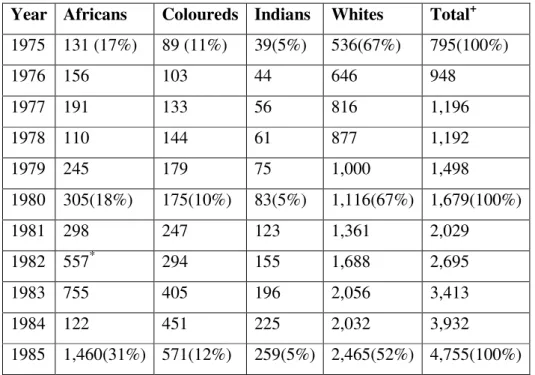
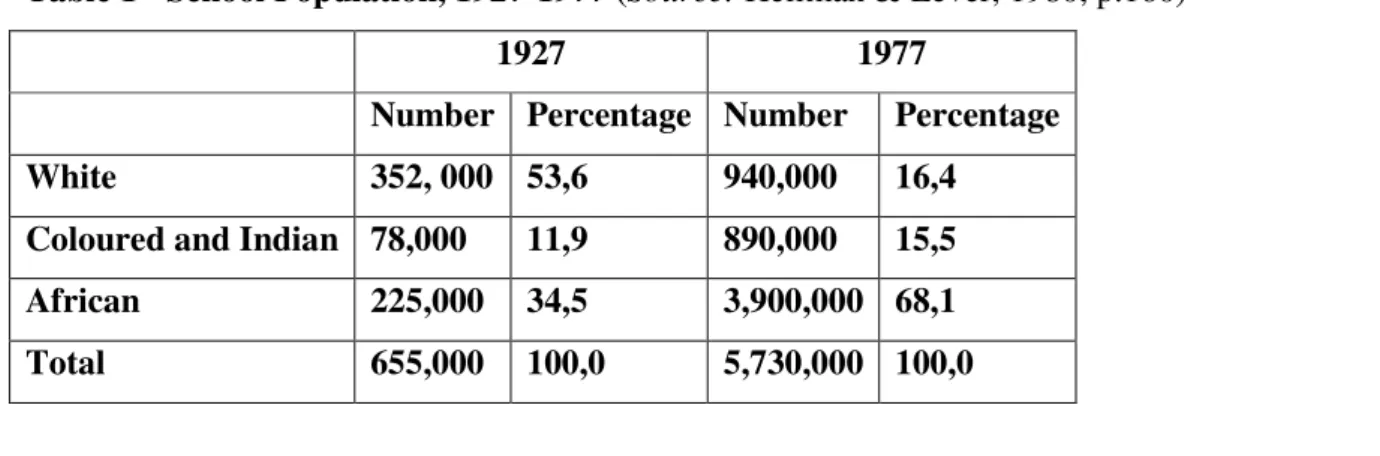
The government at the time (apartheid government) was not enthusiastic about so-called Bantu education and therefore did not allocate large sums of money to the training of black, black and Indian students and teachers (Jansen & Taylor, 2003). The study could reveal potential flaws in the curriculum design of the NPDE and ACE courses.
Literature Review
Introduction
- Subject Matter
- Conceptual Knowledge/ Procedural Knowledge/PUFM/SUFM
Procedural knowledge is knowledge of the skills needed to perform mathematical tasks and problems. The quality of the textbooks is strictly controlled by the Chinese National Department of Education.
Pedagogic Content Knowledge / Mathematical Content Knowledge for Teaching &
- Pedagogic Content Knowledge
- Mathematical Knowledge for Teaching/ Mathematics for Teaching
Thus, instead of pedagogical knowledge for teaching, they look at mathematical knowledge, which is necessary for teaching. They argue that mathematical-knowledge-for-teaching could be considered as a special branch of mathematics.
The South African Point of View
- Articles about Teacher Knowledge
- Articles about the NPDE programme
Wildeman also disclosed the fact that this course was funded to the tune of R50 million (approximately US$6.2 million) for scholarships for 10 000 teachers in rural areas to complete the NPDE. From his findings he concluded that educators were satisfied with the assistance provided by the NPDE program.
Identities of Mathematics Teachers
Jita and Vandeyar (2006) looked at teachers' identities by investigating their life stories and observing their classroom practices. The identity of the teachers will be checked in relation to their answers in the interview.
Life - Histories
- An over view of Life -Histories
- South African Articles about Life Histories
- International Articles
The extent to which general studies of teacher life histories would be relevant to this study depends on whether or not they address teachers' disciplinary and pedagogical knowledge. Carroll's study is very close to this study, firstly in that both explore the life histories of elementary school teachers who teach mathematics.
Conceptual Framework
- A profound understanding of fundamental mathematical knowledge
- Procedural and Conceptual Knowledge
- Elementary Mathematics/ Foundational Mathematics
- Life Histories
- Conclusion and Conceptual framework
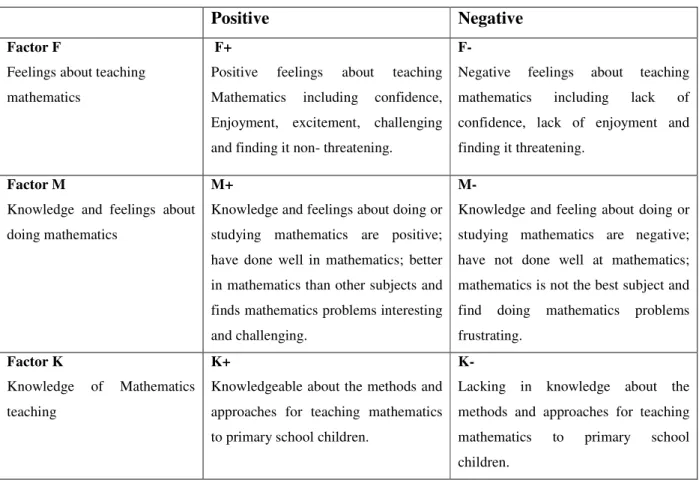
These teachers are teachers who demonstrate a mathematical attitude and are especially aware of the “simple but powerful basic concepts and principles of mathematics” (Ma 1999, p.122). Students will not see the interconnectedness of the subject and thus never notice the complexity of mathematics. In order to draw conclusions about teachers' PUFM, research had to be conducted on teachers' ability to make connections between mathematical concepts.
Carroll's aim in his analysis was to identify events, experiences and people that contributed to teachers' professional development. The second key aspect of this study is the analysis of the teachers' mathematical life stories. It will look at how methods were used to bring out these and other concepts from the educators who were interviewed.
Methodology
- Introduction
- Case Study as a Research Method
- The Research tools
- The Questionnaire
- The Interview
- The Sample
- The Sampling strategy
- The Specific Sample
- The Instrument
- Questionnaire 1
- Questionnaire 2
- The Interview Schedule
- Conclusion
The research project is a case study of some of the teachers who studied mathematics on the NPDO course run by the University of KwaZulu Natal, Pietermaritzburg. I will also look at how each part of the instrument reveals different aspects of interest to the study. So I mimicked the procedure Mom used by using the TELT interview questions.
The focus of this part of the study is more to ascertain whether teachers with high scores on the NPDE course actually have a PUFM. The second questionnaire looked more at the pedagogical knowledge of the teachers involved in this study. However, it became clear upon reading the transcripts that there were several themes that were apparent.
Analysis of Teachers’ PUFM
The Selected Candidates
Barend only taught for 4 years during his studies, as before that he was the sports director of the school. He considered his education privileged compared to that of many racial groups in the country. After two and a half years of struggling in college, he dropped out and pursued a career in prison services.
Daya is an Indian teacher who teaches mathematics at a predominantly Indian Primary School in the Pietermaritzburg area. He also teaches in the area where he grew up and completed his schooling at a local secondary school where he studied mathematics up to grade twelve. He completed his schooling in 1996 and is therefore relatively young compared to the other teachers in the sample.
Teachers’ PUFM
- Questionnaire 1 and Questionnaire 2
To me, he offered very little to indicate that he has a deep understanding of the concept of regrouping. If we consider the complexity of his understanding, it is noted that his understanding of the concept is limited to the understanding of the algorithm. Although this would be a logical extension of this topic, it is merely the application of the method he suggests.
She also saw that understanding number value was 'key' to understanding subtraction. She certainly had a procedural understanding of the subject and is aware of the underlying concepts that support the concept. Basic ideas: The teacher believes that the following concepts are important for understanding this concept: place values, number decomposition and multiplication of single-digit numbers.
Analysis of Teachers Mathematical-life Histories
Introduction
The Thematic Approach to analysis of the data collected in the interviews
- Theme 1: Experiences as Learners
- Theme 2: Teacher Training
- Theme 3: Personal Philosophy
- Theme 4: Significant influences
The purpose of the interview was to examine the teachers' recall of this area of the study. It aimed to get a broad overview of the experiences these teachers had as student teachers both during their basic training and their training on the NPDE course. From the level of mathematics covered in these 'colleges', it can be noted that the mathematical knowledge of these teachers did not extend beyond the grade 10 level, as this was the level at which many of them left school to start their life as a student teacher.
Here we see that he became a student teacher due to the influence of a friend who studied at the Faculty of Education. I (have) always loved math; mathematics has always been my favorite subject." He believes that mathematics should not be seen as difficult, because it is "part of us", it is part of our everyday life. It seems like it's been too long since she's done anything since high school math.
Conclusion
Discussion and Conclusions
Introduction
Part One – Teacher Understanding (PUFM)
- Conclusion Part One
34 His procedural understanding of the algorithm was clear, but he showed a lack of understanding of the concept of division by a fraction. So I am of the opinion that he did not have the conceptual knowledge of the relationship between perimeter and area to really refute this claim. The flow diagram she drew up indicated that she was aware of the longitudinal coherence of the various interconnected concepts.
However, this showed a lack of understanding of the concept of dividing the shape into halves. Although this was pedagogically acceptable, it does not provide a clear picture of teachers' understanding of this topic. Again, there is no clear indication that the teachers have a deep understanding of the relationship between perimeter and area.
Part Two: Teachers Mathematical-life histories and influences
- Type of Education they were exposed to
- Type of mathematical teaching/ Influence of Teachers
- The Influence of their Personal Philosophies
- Teacher Identities
- Conclusion to Part Two
Most of the teachers' comments about their teachers were consistent with the findings of Nkhoma, (2002), discussed on page 46. The next common factor from the interviews was that most of the teachers enjoyed the subject and reflected this in their teaching. Many of the teachers under this theme indicated that they felt they were inclined towards mathematics or had a natural ability to do this subject.
Jita and Vandeyar introduced us to the "Master of the Basic's" and "Learner and Teacher of Mathematics" identities. Looking at the teachers interviewed, I found that many of the teachers (Tr. Belinda, Tr. Dumisani and Tr. Barend) felt that they were 'mathematically inclined'. The teachers scored high on the NPDE but failed to indicate an understanding of the basic concepts that could be considered to be in-depth.
Final Observations
Short Comings of the Study
I think that a study of teachers' beliefs and identity could be a possible extension of this study. Paper presented at the annual meeting of the North American Section of the International Group for the Psychology of Mathematics Education. How do we understand the tacit knowledge of mathematics teacher educators and teachers, in research design and curriculum practice.
Ed.), Proceedings of the Eighth Annual Meeting of the South African Association for Research in Mathematics and Science Education. Paper presented at the Eighth Annual Meeting of the North American Section of the Psychology of Mathematics Education Study Group, East Lansing, MI. Knowing and teaching mathematics: Teachers' understanding of basic mathematics in China and the United States.
123
130
As a teacher, do you believe in giving students a set of rules they must follow when teaching a section. How would you assess whether a student has achieved an appropriate level of understanding of multiplication of two-digit numbers.
132
Did your parents or any of your siblings study at a higher education institution? Would you consider yourself a hardworking student who is determined to achieve good results? If your answer is yes, then what do you think motivates you to work hard?
What do you think were the school experiences that motivated you to follow the path you did. When you remember the teachers who taught you math from elementary school to high school, you think there was a specific teacher who made a lasting impression on your math knowledge and ability. If so, what do you remember the teacher doing that made this impact on you.