1 | P a g e
Provincial Differences in the Number of Antenatal Care Visits for Pregnant Women in South
Africa: Evidence from the 2016 South African Demographic and Health Survey.
Final Zimkhitha Juqu
Student number: 220112438
Submitted in partial fulfilment of the academic requirements for the degree of Masters in Population Studies
School of Built Environment and Development Studies, College of Humanities, University of KwaZulu-Natal, Durban.
March 2021.
Supervised by Dr Kerry Vermaak
2 | P a g e
COLLEGE OF HUMANITIES
DECLARATION - PLAGIARISM
I, ……….………., declare that
1. The research reported in this thesis, except where otherwise indicated, is my original research.
2. This thesis has not been submitted for any degree or examination at any other university.
3. This thesis does not contain other persons’ data, pictures, graphs or other information, unless specifically acknowledged as being sourced from other persons.
4. This thesis does not contain other persons' writing, unless specifically acknowledged as being sourced from other researchers. Where other written sources have been quoted, then:
a. Their words have been re-written, but the general information attributed to them has been referenced
b. Where their exact words have been used, then their writing has been placed in italics and inside quotation marks and referenced.
5. This thesis does not contain text, graphics or tables copied and pasted from the Internet, unless specifically acknowledged, and the source being detailed in the thesis and in the References sections.
Candidate: Final Zimkhitha Juqu
Signature: _______________________________
Date: ___________________________________
3 | P a g e
Dedication:
“An investment in knowledge pays the best interest”- Benjamin Franklin This paper is dedicated to my parents; Nomalizo Juqu-Manitshana and Sikhumbuzo
Manitshana, who have supported me throughout this journey.
To my niece Lathitha Juqu and nephew Alunamida Ginya, may this paper be an inspiration to you, for you to always aim high, always work hard and reap the wonderful benefits.
4 | P a g e
Acknowledgements:
I appreciate my ancestors for allowing me to live their wildest dreams and the almighty God for giving me the opportunity to start and complete this research.
I am indebted to my supervisor, Dr Kerry Vermaak for her guidance, endless patience, and useful critiques of this research work. This paper would have not materialized without her
invaluable contribution that I will always be grateful for.
I would further like to express my appreciation towards the members of the department of Populations Studies for their valued feed-back to my progress throughout the year which in turn helped me in the completion of this project. Thank you to the University of KwaZulu-Natal
for the access to resources that have added in the search of this project.
Lastly, I would like to thank my Parents; Nomalizo Juqu-Manitshana and Sikhumbuzo Manitshana for teaching me the value of education, for supporting me in all my dreams, their financial support, prayers, and consistent encouragement. May you live long to reap the fruit of
your labour.
My siblings Siviwe Juqu, Nolusindiso Juqu and Lulamile Juqu for their emotional support and for being my pillars of strength.
uThixo anibusise
5 | P a g e
Abstract:
The aim of this study was to analyse the levels of antenatal care in South Africa, investigate the provincial differences in antenatal care visits, and examine the sociodemographic and socioeconomic factors associated with antenatal care visits in South Africa. Producing these will makes it possible for the government to have a more justice focused approach to undertaking antenatal care services in every place of need, which will in turn make previously underprivileged groups receive greater priority when addressing increase in antenatal care services.
This study used the 2016 South Africa Demographic and Health Survey. Univariate, bivariate, and multivariate analysis was conducted using Stata 14.
The findings of this study revealed a significant association between provinces and antenatal care visits and that there are differences between provinces in terms of number of antenatal care visits. Maternal age, maternal population group, and maternal place of residence were also significantly associated with the maternal report of four or more antenatal care visits.
Based on the objectives of this study, this study suggested that there should be a special focus on provinces that are geographically challenged and socioeconomically lagging to address inequalities, mobile clinics should be placed in rural areas, and lastly, further research should be conducted.
6 | P a g e
Abbreviations and acronyms:
ANC- Antenatal Care
BANC- Basic Antenatal Care
CHPIP- Saving Children Report for the Child Health Identification Program FANC- Focused Antenatal Care
NCCEMD- Saving Mothers Report by the National Committee on Confidentiality Enquiry into Cases of Maternal Deaths.
PPIP- Saving Babies Report of the Perinatal Problem Identification Program UNICEF- United Nations Children’s Fund
SADHS- South Africa Demographic Health Survey SDG- Sustainable Development Goals
SSA- Sub- Saharan Africa StatsSA- Statistics South Africa WHO- World Health Organisation
7 | P a g e
Table of contents
DECLARATION - PLAGIARISM ... 2
Dedication: ... 3
Acknowledgements: ... 4
Abstract: ... 5
Abbreviations and acronyms: ... 6
Table of contents ... 7
List of Figures ... 9
List of Tables ... 10
Chapter 1: Introduction: ... 11
1.1 Background of study: ... 11
1.2 Study significance:... 13
1.3 Justification of study: ... 15
1.4 Aim and objectives of study: ... 16
1.5 Statements of hypothesis ... 17
1.6 Dissertation outline:... 17
Chapter 2: Literature review: ... 19
2.1 Introduction: ... 19
2.2 Sociodemographic factors: ... 19
2.2.1 Maternal province:... 20
2.2.2 Maternal age: ... 22
2.2.3 Maternal marital status: ... 25
2.2.4 Maternal population group... 27
2.2.5 Maternal place of residence: ... 28
2.3 Socioeconomic factors: ... 30
2.3.1 Maternal education attainment: ... 30
2.3.2 Maternal household wealth status: ... 33
2.3.3 Maternal employment status: ... 36
2.4 Provincial differences: ... 39
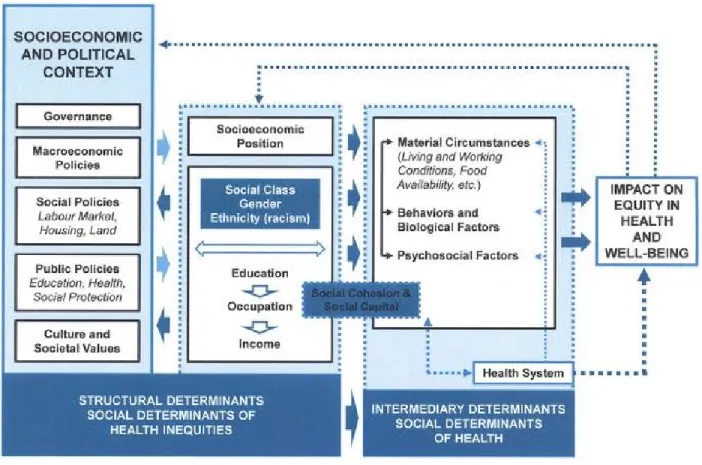
2.5 Theoretical framework: ... 40
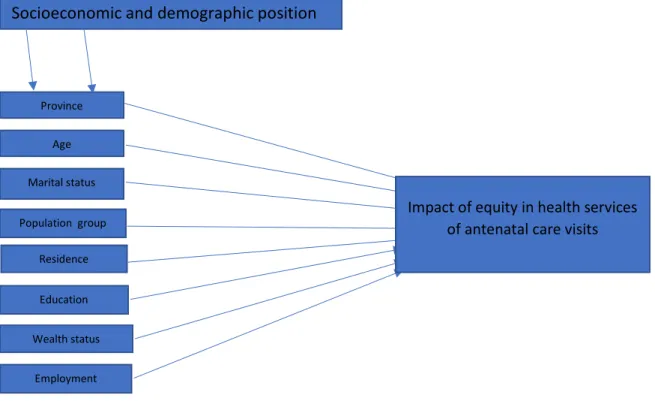
2.6 Conceptual framework: ... 42
8 | P a g e
Chapter 3: Methodology: ... 44
3.1 Introduction: ... 44
3.2 Study description: ... 44
3.3 Description of the data source:... 44
3.4 Study population: ... 45
3.5 Questionnaire design: ... 45
3.6 Fieldwork and data processing: ... 46
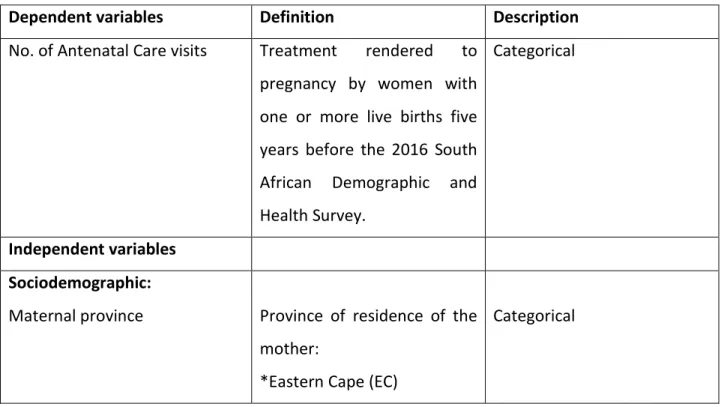
3.7 Variables used in study: ... 46
3.7.1 The dependent variable: ... 46
3.7.2 The independent variable: ... 47
3.8 Data management: ... 50
3.9 Data analysis: ... 50
3.10 Ethical issues: ... 51
Chapter 4: Results: ... 52
4.1 Introduction: ... 52
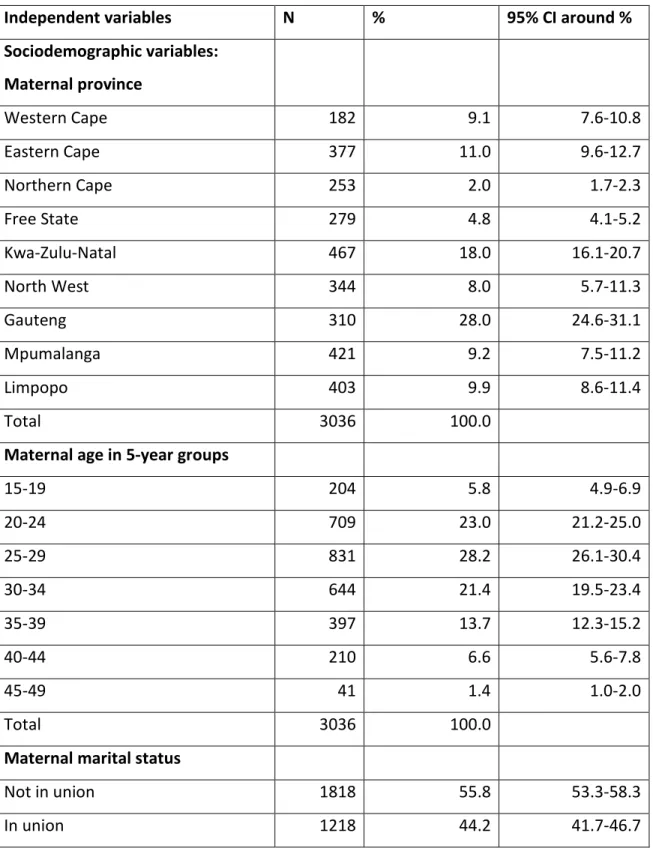
4.2 Univariate analysis: ... 52
4.3: Bivariate regression model: ... 59
4.4 Multivariate regression model: ... 65
Chapter 5: Discussion: ... 67
5.1 Introduction: ... 68
5.2 Levels of antenatal care visits in South Africa: ... 68
5.3 Provincial differences in number of antenatal care visits within South Africa: ... 70
5.4 Discussion on sociodemographic factors associated with antenatal care visits in South Africa: ... 74
5.5 Discussion on socioeconomic factors associated with the provincial differences in antenatal care visits in South Africa: ... 80
5.6 Conclusion: ... 82
5.7 Recommendations: ... 84
5.7.1 Policies: ... 84
5.7.2 Further research: ... 84
5.8 Limitations of study... 85
Reference list: ... 87
9 | P a g e
List of Figures
Figure 2.1. The Commission on Social Determinants of Health Conceptual Framework (Solar and Irwin, 2010). ... 42 Figure 2.2. Conceptual Framework Adapted from Solar and Irwin’s Conceptual Framework for Action on the Social Determinants of Health (2010). ... 43
10 | P a g e
List of Tables
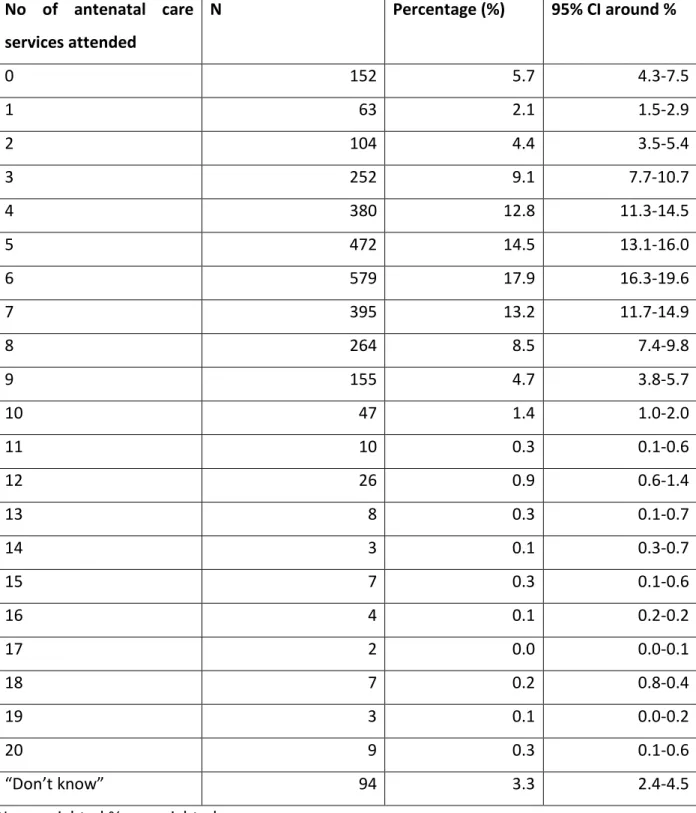
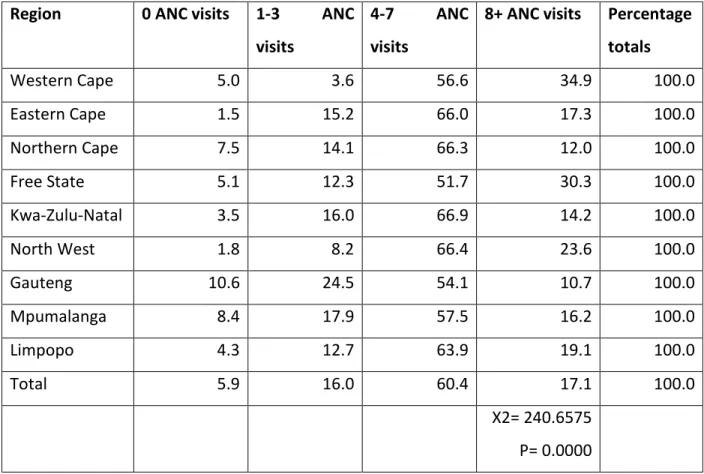
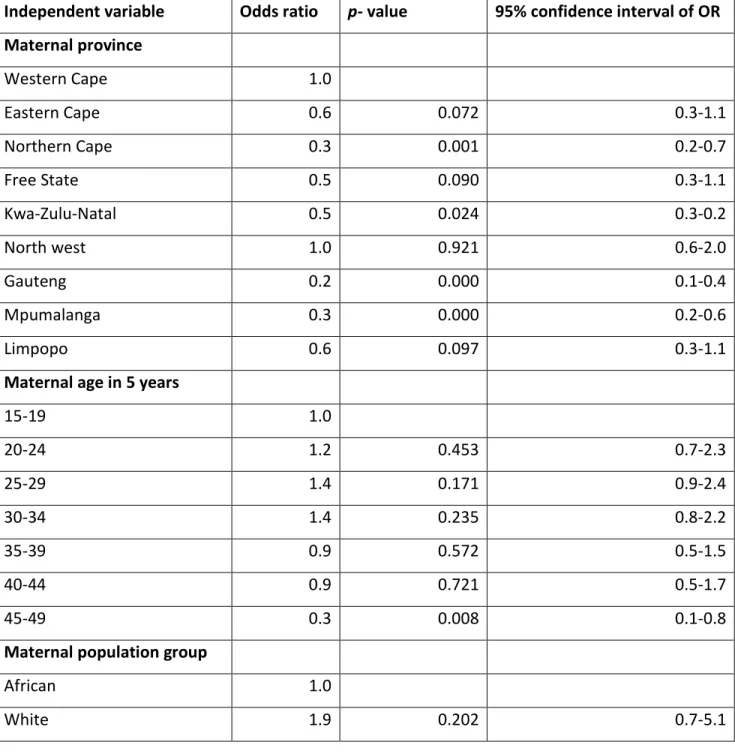
Table 3.1.The main variables used in the study, variable definitions and variable descriptions. 48 Table 4.1 Frequency and percentage distribution of women who had given birth in the five years preceding the SADHS survey data collection by demographic and socioeconomic background characteristics, South Africa, 2016. ... 54 Table 4.2 Frequency and percentage distribution of women who had given birth in the five years preceding the SADHS survey data antenatal care attendance, showing 95% confidence interval, South Africa, 2016. ... 57 Table 4.3 Percentage distribution of women who had given birth in the five years preceding the SADHS survey data antenatal care attendance of 0, between 1 and 3, between 4-7 and 8+ visits, South Africa, 2016. ... 59 Table 4.4 Analysis of sociodemographic and socioeconomic factors by the number of antenatal care visits among women who had given birth in the five years preceding the SADHS survey data, South Africa, 2016 ... 62 Table 4.5 Multivariate analysis of sociodemographic and socioeconomic factors statistically significant to antenatal care visits among women who had given birth in the five years preceding the SADHS survey data, South Africa, 2016. ... 66
11 | P a g e
Chapter 1: Introduction:
1.1 Background of study:
Over 13.6 million women have died in the 25 years between 1990 and 2015, globally (UNICEF, 2018), equating to more than 300 000 women dying per year and over 830 women dying per day, due to pregnancy related and childbirth related avertible causes (WHO, 2019). In addition, there are almost 2.4 million deaths of babies that die every year during their first month of life. Many of these deaths and morbidities are due to easily preventable or avoidable diseases. (WHO, 2020).
In the year 2017, maternal mortality was the second highest leading cause of death of women in reproductive ages (15-49 years) (WHO, 2020). More than 95 percent of these deaths occurred in low income and lower-middle-income countries, while more than 65 percent occurred in the African region (World Health Statistics, 2019). A large majority of preventable pregnancy related, and childbirth related deaths attributed to poor Antenatal Care (ANC) utilisation, defined as a description of medical care and medical procedures provided to pregnant women through their pregnancy until childbirth (WHO, 2020). Antenatal care services are aimed at detecting problems that may develop during pregnancy, to the mother or the baby (WHO, 2020). This study aims to examine levels of antenatal care visits within South Africa and to observe the discrepancy between provinces due to a variety of determinants.
Antenatal care is a health care service that is provided to pregnant women to distinguish already prevailing problems or problems that may develop during the pregnancy which may affect the pregnant woman and/or the unborn baby (WHO, 2020). This service consists of numerous screening tests, prophylactic treatments, and diagnostic procedures, routinely offered. ANC services are not only done to detect and manage complications during pregnancy, but also to encourage and uphold the social and physical health of both the baby and the mother, to develop birth readiness and complication preparedness plan and to prepare the woman for normal puerperium (Ngxongo, 2019). Further, antenatal care contributes towards the prevention and treatment of malaria, management of anaemia and screening and treatment of sexually
12 | P a g e
transmitted infections (Ngxongo, 2019). The World Health Organization (WHO) identified antenatal care as one of the most extensively used strategies to improve child and maternal health (WHO, 2019). Initially, the WHO recommended that pregnant women attend at least four antenatal care services. In November 2016, this number was increased to at least eight antenatal contacts which was seen as a strategy to improve quality. This was based on the belief that good quality antenatal care could reduce both perinatal and maternal mortality and increase survival and health of women and children (WHO, 2019).
Antenatal care services were also seen as effective in achieving the Sustainable Development Goals (SDGs) (WH0, 2019). Goal 3.1 in the SDG goals agenda through 2030 is to pledge healthy lives and endorse wellbeing for people of all ages. Goal 3.2 is to decrease global maternal mortality to fewer than 70 maternal deaths per 100 000 births and for countries to further reduce their maternal mortality rate by at least 66 percent from their 2010 maternal mortality rates.
Goal 3.3 of the SDGs is to end preventable deaths of new-borns and all countries aiming to reduce neonatal mortality to as little as 12 deaths per 1 000 births. Goal 3.4 is to reduce premature mortality of new-borns from non-communicable disease by one third by 2030, through treatment and prevention of diseases (WHO, 2018b). Equal access to maternal health facilities would assist in achieving Goal 3.7, which is to ensure widespread access to sexual and reproductive health care services and goal 3.8 that aims to achieve universal health coverage and access to quality essential health care (WHO, 2018b).
Non-attendance of antenatal care health service carries almost four times the risk of maternal and child deaths (Ngxongo, 2019). Of the almost 2 and a half million babies that die as still births during the last weeks of pregnancy, over 900 000 die in Sub-Saharan Africa (SSA). The deaths of babies before the onset of labour or rather antepartum are typically the consequence of maternal infections such as syphilis and pregnancy complications, while new-born deaths are caused by preterm birth and restricted fatal growth as well as congenital infections and fatal alcohol syndrome, among other causes (Lincetto, 2019).
Deaths of babies that die within the first 28 days of birth (neonatal mortality) are typically consequences of suffering from conditions and diseases associated with lack of quality care at
13 | P a g e
birth, or skilled care and treatment immediately after birth and in the first days of life.
Intrapartum-related complications such as birth asphyxia, infections, preterm births, and birth defects were the leading causes of neonatal mortality in 2017 (World Health Statistics, 2019). In pregnant women, maternal deaths were due to causes such as antepartum haemorrhage and hypertension (pre-eclampsia and eclampsia). Malaria, HIV/AIDS, anaemia, and malnutrition are associated with increased maternal and new-born complications as well as death when the prevalence of these conditions is high, (Lincetto, 2019).
The utilisation of antenatal care services differs by social strata, but the burden falls disproportionately on disadvantaged women who have less access to health care and differ per geographical location (UNICEF, 2018). In settings that have poor resources, where fertility rates are usually high and the risks of dying in labour are just as high, the lifetime risk of dying from maternal causes is greatly amplified (UNICEF, 2018). According to the World Health Organization (2020), maternal mortality is higher in women living in rural areas and among women in poorer communities, with more than half of maternal deaths having occurred in fragile and humanitarian settings (where natural disasters tend to occur). There are also large disparities between countries, but discrepancies are also visible within countries and between women with high income countries versus those in low-income countries and among rural versus urban areas (WHO, 2020). These differences and inequalities surrounding maternal health, child health, maternal mortality and child mortality have raised a growing concern for the public health community. Health care policies that seemed effective and strategic were mandated by leaders of different nations, and maternal health and child health was prioritized to ensure that maternal mortality will be reduced significantly (WHO, 2020). However, globally levels remain high and in South Africa, health access inequalities in regions are stark, where provinces with a mostly white population seem to have better health access than others (Igwe, 2015).
1.2Study significance:
Achievements have been obtained in the mortality and health of women and children and in antenatal care utilisation, however, the least improvement was in Sub-Saharan Africa (WHO, 2020). Globally, maternal mortality reduced from 342 deaths per 100 000 births in 2000, to 211
14 | P a g e
deaths per 100 000 births in 2017. Neonatal mortality decreased from 38 deaths per 1 000 births in 1990 to 17 deaths per 1 000 births in 2019, in the world. In South Africa, the reduction of maternal mortality was from 160 deaths per 100 000 births in 2000 to 119 deaths per 100 000 births in 2017 (UNICEF, 2020). Neonatal mortality also decreased in South Africa to 11 deaths per 1 000 births in 2019, from 19 deaths to 1 000 births in 1990 (UNICEF, 2020). Over 69 percent of women have attended at least one ANC visit in Africa (Lincetto, 2019). However, there seems to be a slow incline in the number of four or more antenatal care services in South Africa, from 74 percent in 1998, to 76 percent in 2016 (StatsSA, 2020b).
Additionally, three reports focusing on maternal and children’s health in South Africa, namely:
the Saving Children Report for the Child Health Problem Identification Program (CHPIP), Saving Babies Report of the Perinatal Problem Identification Program (PPIP) and, Saving Mothers report by the National Committee on Confidentiality Enquiry into Causes of Maternal Deaths (NCCEMD), highlighted the available causes and recommendations to improve quality of care required for babies, children and women and they further highlighted the importance of the antenatal care visits in reducing perinatal, children and maternal health (Ngxongo, 2019). This showed that South Africa still has to work on the utilisation of sexual and reproductive health services.
There have been many monumental achievements in South Africa during the early era of democracy, but many inconsistencies still remain. These incorporate the high numbers of maternal mortality South Africa has compared to developed countries and other developing countries, with a maternal mortality ratio of 119 deaths per 100 000 births (UNICEF, 2020), while other developing countries, such as Brazil have 44 maternal deaths per 100 000 births (Smith, 2016). South Africa’s maternal mortality rate has been assessed as too high for a country that classified as a middle-income country and with a great ability to provide public services (Bomela, 2020).
Although South Africa has prospered socially and economically, there is prominent variance within provinces. Statistics reveal that health inequalities have grown (Igwe, 2015). This growth in health inequalities corresponds with an increase in income inequalities, for example, in the Western Cape Province where the white population in South Africa are mostly based, compared
15 | P a g e
to Mpumalanga where the population is predominantly Black, health access inequalities and income inequalities are blunt (Igwe, 2015).
The findings of antenatal care visits at lower geographical and administrative units are vital for South Africa for policy planning and for the evaluation of the effectiveness of intervention programmes that have been put in place prior, therefore, a study on the impact of sociodemographic and socioeconomic determinants on antenatal care visits will be important for relevant government bodies and policymakers as it will indicate inequalities within provinces, per sociodemographic and socioeconomic conditions. This study also indicates the level of access to maternal health care in provinces and will thus make it easier for health policies to be improved upon. In academia, the results obtained will add to existing literature on levels of antenatal care attendance within South Africa as well as the sociodemographic and socioeconomic challenges and determinants of antenatal care visits.
1.3 Justification of study:
In Africa, inequality in the attendance of antenatal care visits persists, with every four in five women in the richest quintile accessing four or more ANC visits, while only 48 percent of the poorest women have the same level of access (Lincetto, 2019). Poor quality of ANC clinics, poor service utilisation and poor quality of care is common in Africa. This is often related to a lacking number of skilled providers, particularly in rural and remote areas, lack of standards of care and protocols, few supplies and drugs, and poor attitudes of health providers (Lincetto, 2019).
Health access within South Africa has been found to be much lower amongst the disadvantaged population groups and within certain geographical areas (Igwe, 2015) this includes access to sexual and reproductive health utilities (Tsawe and Susuman, 2014). South Africa has been recognised as a global leader in the development and conceptualisation of the primary health care approach, however, the attainments had an incomplete impact because of inadequate policy interventions and the hostile state interventions throughout the apartheid era. Despite the governments obligation and structural reform to achieve health care targets, obstacles have continued to limit the full implementation of health care (Visagie and Schneider, 2014). The
16 | P a g e
inability to fully implement health care service targets includes inequalities in the distribution of resources, it is also inclusive of health worker shortages, the shortcomings of leadership in medical health, public sector and political leadership and a complex and prolonged health transition (Visagie and Schneider, 2014). More investment is required towards primary health care and efforts should not only address these persisting challenges but must also incorporate innovative health system designs (Kautzy and Tollman, 2008) to change this primary care system that is not allowing for differences in the utilisation of antenatal care services in provinces.
Studies done in different countries and regions have shown that the geographic distribution of problems of health access and the relationship with risk factors can be vital for cost effective intervention preparation (Woldegiorgis, 2016). In order to work towards evident increases in the number of four or more antenatal care visits, it is important that the same effort that is put into inequalities in health services in countries is also put in inequalities in health care services among smaller geographical units such as provinces.
Biological factors are not the only important determinants of maternal mortality, sociodemographic factors and socioeconomic status may also contribute significantly to high or low and unequal levels of antenatal care services use. Most maternal deaths are caused by diseases that are treatable through cost effective interventions or diseases that were easily preventable to begin with. Cost-effective action can be taken by expanding effective curative or preventive interventions that will in turn save women and children’s lives (You et al, 2015). This study has therefore focused on national and provincial estimates of antenatal care visits as well as the sociodemographic and socioeconomic factors associated with differences in antenatal care attendance, it has also attempted to better understand why there are provincial differences in the attendance of antenatal care visits despite the government’s efforts to encourage four or more recommended ANC attendance.
1.4Aim and objectives of study:
This study aims to examine sociodemographic and socioeconomic determinants and how they influence the level of antenatal care visits, using women of reproductive ages by the provinces of
17 | P a g e
South Africa as the study population. The primary aim of this research was to investigate antenatal care visits levels for South Africa using the 2016 South African Demographic Health Survey (SADHS) and to study the antenatal care visits provincial differentials in relation to a variety of socioeconomic and sociodemographic determinants. The study aimed to achieve three specific objectives. First, it described the number of reported antenatal care visits in South Africa.
Secondly, it investigated the provincial differences in number of antenatal care visits within South Africa. Lastly, it investigated which other sociodemographic and socioeconomic factors were associated with the reported number of antenatal care visits in South Africa.
From this, three main research questions were:
1. What were the reported number of antenatal care visits in South Africa?
2. Were there significant differences in reported number of antenatal care visits between provinces in South Africa?
3. What were the other sociodemographic and socioeconomic factors associated with the reported number of antenatal care visits in South Africa?
1.5 Statements of hypothesis
Ha: There were significant provincial variations in reported antenatal care visits, controlling for other demographic and socioeconomic factors in South Africa.
Ho: There were no significant variations in reported antenatal care between provinces, controlling for other sociodemographic and socioeconomic factors in South Africa.
1.6 Dissertation outline:
This study is organized into five chapters. The first chapter is the introduction. This chapter introduced the study by providing a background of antenatal care followed by the importance and justification of the study. The significance of this study was demonstrated through aims and objectives. The second chapter is the literature review. This chapter reviewed literature relevant to this study. Theoretical and empirical evidence of antenatal care in different nations was
18 | P a g e
reviewed and so were the estimates and trends in South Africa’s antenatal care attendance.
Chapter three is methodology. This chapter provided information of the study population, variables that were manipulated for the analysis as well as the models and methods applied to achieve the three objectives of this study. Additionally, descriptions of the utilisation of statistical tools to examine the relationship between variables were discussed. Chapter four is the results chapter. This presented the results of this study in detail, the analysis of the results and further elaborated on the results obtained and produced. Chapter 5 is the discussion chapter. It provided detailed discussion and conclusion that are inferred from the study along with limitations and further research suggestions.
19 | P a g e
Chapter 2: Literature review:
2.1 Introduction:
South Africa has extremely high maternal mortality levels compared to developed countries and even other developing countries. According to UNICEF (2020), 119 women per 100 000 live births died in South Africa in 2017 due to pregnancy and childbirth related causes. In Sweden, fewer than 5 women per 100 000 live births died from the same cause while in Brazil, the estimated mortality was 44 women per 100 000 live births (Smith, 2016).
From the onset of its implementation in the early 1900s, South Africa has been using the approach of the traditional antenatal care model until the end of 2007. The approach assumed that frequent ANC visits and the classification of women into high and low-risk groups by predicting possible obstetric difficulties was the best way to provide health care for both the mother and the baby (Ngxongo, 2019). In 2002, the WHO adopted the Focused Antenatal Care (FANC) approach which succeeded the traditional approach. Later, South Africa modified and adopted this model to suit the society’s circumstances and referred to it as the Basic Antenatal Care (BANC) approach. According to Ngxongo (2019), the change for South Africa to adopt the BANC approach came after the National Department of Health evaluated the effectiveness of the traditional approach and realised it was not being effective in the particular social context of the country.
Attendance of ANC differs by social strata (UNICEF, 2019), that includes sociodemographic and socioeconomic factors. Globally, policymakers and researchers have long sought not only to improve overall population health and reduce the burden of disease, ill-health, and disability, but also to reduce or eliminate health differentials. Omotoso and Koch (2018) show that to achieve these aims the following sociodemographic and socioeconomic factors need to be considered, such as gender, geography, race, ethnicity, and socio-economic status.
2.2 Sociodemographic factors:
20 | P a g e
2.2.1 Maternal province:
Geographical location defined in terms of the first level administrative divisions of a country;
typically referred to as states, provinces, regions; is one of the variables that may influence the utilization of antenatal care. Particularly in developing countries, these first level administrative divisions are not the same in terms of resources and infrastructure, with some clearly better equipped in terms of service availability (Abor et al, 2011).
Province of residence is similarly effective in explaining antenatal care since various provinces may have diverse levels of socioeconomic progress, demographic composition and may be traditionally varied, thus resulting in differences in the antenatal care visits (Palamuleni, 2011).
A study conducted in Nepal, using data obtained from the 2016 Nepal Demographic and Health Survey found a significant association of four or more ANC services with the residential province and whether the women came from a rural or urban region (Neupane et al, 2020). Two thirds of the total pregnant women who resided in provinces whose provincial GDP per capita was below the Nepals national average of $718 went for four or more ANC visits. Other provinces of Nepal encompass of more developed districts and therefore had a higher percent of women access more antenatal care services. The economically backward and geographically remote regions had women who were less likely to use 4 or more ANC visits (Neupane et al, 2020).
Research carried out by Prusty et al (2015) on factors associated with utilization of antenatal care services in Cambodia yielded results that show that full ANC coverage was found highest among women from Plain regions, consisting of 32 percent, followed by Tonal sap region (31%), Plateau and mountain region (25%) and the Coastal region (23%). The lowest use of full antenatal care use was in provinces from the North-Eastern parts of Cambodia with less than 15 percent, while Banteay Meanchey and Phnom Penh had the highest percentages of 45 and above of women receiving full ANC. Huge regional variation had been found in terms of visiting facilities for ANC four or more times. (Prusty et al 2015)
The relation between a woman’s province and ANC visits can further be seen through this particular study that was conducted in Kenya, using data obtained from the 2014 Kenya
21 | P a g e
Demographic and Health Survey. The study yielded results that showed that pregnant women in Central Kenya were five times more likely to attend the recommended four ANC visits compared to those in Northern and Eastern Kenya (Wairoto et al 2020). Additionally, in Angola, Luanda and Zaire regions provided greater ANC coverage whereas regions such as Cuanza Sul, Mexico and Lunda Norte had lower ANC usage (Shibre, 2020).
Rahman et al (2017), found that the maternal province of residence also had an influencing contribution for four or more ANC utilisation. The likelihood of those utilizing ANC was seen using data from the 2014 Bangladesh Demographic and Health Survey. Women in the Sylhet division where the Rajshahi and the Khulna division had a positive association in both survey the authors used (Rahman, et al, 2017). Further, women in the Capital city of Dhaka reported more proportion of 4 or more ANC than Sylhet. High fertility rate, low female educational attainment and relatively having difficult to reach areas could be considered as the main reasons for low level of 4 or more ANC utilisation for the Sylhet division (Rahman, et al, 2017).
Every province has a large and steady increase in the proportion of women with at least four ANC visits in Nepal (Sapkota, et al, 2021), the author found this using data from the 2001, 2006, 2011 and 2016 Bangladesh Demographic and Health Survey. The increasing trend was found to be higher in Sudurpaschim Province, were ANC of four or more attendance had increased to almost 70 percent (69%), followed by Lumbini Province where the attendance of at least four visits had increased to 60%, the same as Bagmati Province. The authors in this research claimed that poorer provinces had the least odds of women attending four or more ANC visits than richer provinces, in terms of socioeconomic development (Sapkota et al, 2021).
In Ethiopia, women from Somali (85%), Afar (67%) and Amhara regional state (44%) were less likely to attend ANC, while women in Addis Ababa were 2.6 times more likely to complete four or more ANC visits compared to women in Tigray regional state (Muchie, 2017). The author attributes this to the lower socioeconomic status, isolated environments, lack of access to health services and the variety of ethnic minorities in majority of areas of these regions (Muchie, 2017).
Khatib et al (2020) linked disparities in the underutilization of ANC services with regional disparities in socio-demographic factors such as education, wealth status, age, and employment
22 | P a g e
in Nigeria. Further, Wairoto et al (2020) claimed that regions that were disadvantaged with respect to access to ANC services bore several other disadvantages; hence geography is a critical determinant of health inequities in Kenya. These areas have a higher proportion of households classified as poor, in addition to having a higher percentage of uneducated women compared to the rest of the country. (Wairoto, et al, 2020).
In South Africa, disparities exist in between the nine provinces and fifty-two health districts.
Different rates on health care spending provision have been noted, with a standard correlation between higher rates of maternal mortality and districts with lower capita spending on district health services (Amnesty International, 2014). Provinces see varying maternal mortality rates in health care facilities, highlighting low rates of less than 10 deaths per 100 000 live births in Western Cape and higher rates of over 150 deaths per 100 000 live births in provinces like Limpopo, while Mpumalanga showed an increased in maternal mortality. Substantial difference persist in sexual and reproductive health services and outcomes are also found between and within provinces (Amnesty International, 2014), this is reflected in the various rates of maternal and child deaths
2.2.2 Maternal age:
Research completed in South Africa by Tsawe and Susuman (2014) found that age is significantly associated with the use of antenatal care services. A multivariate analysis revealed that women in ages between 35-39 years and 40 and above were five times more likely to utilise four or more antenatal care services than women aged 15-19 years. Similarly, a study using a sample of 556 women in rural areas in Zambia found that women above the age of 35 were more likely to use antenatal services, showing a positive association between the age of women and the use of ANC (Jacobs, et al, 2017).
Rurangiwa et al (2017) asserted that women above 30 years were 78 percent more likely to attend adequate antenatal care services than women aged 30 years or less in Rwanda. Research in Ethiopia also revealed that older women have higher chances of ANC visits (Yaya, et al, 2017).
Jacobs et al (2017) claimed that the older generation seems to be more well-informed about
23 | P a g e
health-care services, they also have greater decision-making power than younger women, and thus benefit more from using such services, hence the higher likelihood of utilization. In addition, older age as a predictor of utilization of ANC services could also be related to greater likelihood of having a previous birth and interaction with services (Jacobs, et al, 2017).
Research conducted on higher education attainment associated with optimal antenatal care visits among women of childbearing ages in Zambia also revealed that the higher the age of the woman, the higher the chances of full ANC coverage. Women above 35 years were 70 percent more likely to attend four or more ANC visits compared to women between 15-19 years (Myunda, et al, 2016). Similarly, Khatib et al (2020) stated that older women are sensitive to ANC utilisation, therefore the likelihood of insufficient ANC visits was more common among the younger cohorts of women when compared with the older age group in Nigeria
Using the Indonesia Demographic and Health Survey, 2016, Laksono et al (2019) found that that women in the age group of 15–19 years had 70 percent less chances of making four or more ANC visits compared to women in the age group of 45–49 years and the age group of 20–24 years had 33 percent less chance of making 4or more ANC visits compared to women in the age group of 45–49 years. This showed that the youngest age group had a lower possibility of adequate ANC visits than the oldest age group. (Laksono et al, 2019).
Prusty et al (2015) also found that the frequency of full ANC services was found to be higher among women whose age at childbirth was 20-24 years and to women between 35-49 years in Cambodia. The authors assumed that the older the woman at childbirth, the more the awareness and ability to accessing the recommended number of ANC services and therefore leading to higher usage of ANC for Cambodian women. This is linked to the uniqueness of Cambodian family structure. In Cambodia, extended families have family members from older generations that have traditional and cultural beliefs and ides on pregnancy which in turn have a negative influence on the use of ANC by pregnant women (Prusty et al, 2015).
In contrast to these findings, a distinctive feature that emerged from a study conducted in Bangladesh, authors claimed that pregnant women below the age of 35, from 20 to 34, were more likely to have had 8 ANC visits and a higher mean of ANC frequency than their older
24 | P a g e
counterparts (>35 years) and younger than them (<20 years) (Islam and Masud, 2018). Further, in Botswana, 3 out of 5 mothers who used antenatal care services were of a younger generation of mothers of ages less than 35. The likelihood of women using ANC services reduced as women approached 35 to 49 years, from the 2007 Botswana Family Health (Mathe, 2017). Wilunda et al (2015) also declared that the odds of attending ANC reduced with increasing age in Ethiopia.
Afaya et al (2020) concluded that in Ghana, women who were aged 21–30 years had four times the chances to utilise ANC services four or more times compared to those aged 20 years and below. In South Africa as well, women between 20 and 34 years had more ANC visits compared to women less than 20 years of age (Ousman, et al, 2019). Data obtained from the Ethiopian Demographic and Health Survey, 2018, also showed that there were higher odds of at least four ANC attendance in women between ages 20-24 and 25-29 than those younger and older (Muchie, 2017). The odds of completing the recommended number of antenatal care services was higher in women in the age cohort of 24-29 years than their older counterparts in African countries (Tessama and Miniyuhn, 2021).
In contradiction, in a Bangladesh context, Rahman et al (2017) argued that less parous and younger women had more odds of attending four or more ANC visits than older women. These women are less experienced on birthing issues on which they then see more prenatal visits.
Moreover, higher prevalence of four or more antenatal care service utilisation among women aged 20–29 years can be better explained by the predominance of childbearing at the ages 20- 29 in a Bangladesh context (Rahman, et al, 2017).
In contradiction, women who were less than 20 years at the time of delivery had significantly higher odds ratio of four or more ANC services as compared to women in the 20–34-year age group in Tanzania (Gupta, et al, 2014). The percentage of four or more ANC visits was highest among the age cohort 15-19 years, 74 percent, and lowest among women older than 35 years, 54 percent in Nepal as well (Neupane, et al, 2020). Younger women might prefer to visit often, mainly to be reassured that the baby is growing well and is in proper position, women with higher age at birth usually have high parity and might rely on their experiences from previous pregnancies and not feel the need for antenatal check-ups (Gupta, et al, 2014).
25 | P a g e
There seems to be almost the same chances of all age cohorts in attending four or more ANC services. In explaining the differences in Botswana, Mathe (2017) states that the younger generation, because of their education and exposure to social amenities that educates on modern health trends, are more informed of ANC, while their older counterparts are tied to traditional and cultural values that restrict the discussion on delivery experiences. While Islam and Masud (2018) claim that older women may also be likely to have other children, and in the absence of child-care, as a result may be less likely to attend ANC in Bangladesh. Tessama and Minyihun (2021) further assert that older women have probably had earlier pregnancies and have gained more experience and awareness about the benefits of visiting health facilities 2.2.3 Maternal marital status:
Childbearing typically occurs in the context of marriage in the African context (Mathe, 2017).
Unmarried women were 1.5 times more likely to use ANC services than those who were married in Nigeria. Women who were household heads had more antenatal care visits than those of male- headed households. This may be attributed to married women having challenges to obtain permission to seek health care (Nwosu and Ataguba, 2019). A study that corresponds with this is that of Tessama and Animut (2020), who also asserts that women who were not in unions had a higher likelihood of attending four or more ANC services than their counterparts in Africa. The author agreed that men are considered as the decision makers in family life spheres, including reproduction, therefore, women probably face problems getting permission from their spouses to attend antenatal care (Tessama and Animut, 2020). Additionally, in Ethiopia, Africa, most women are socioeconomically dependant on male partners who make decisions and influence maternal health care services (Tessama and Animut, 2020).
In a contrast, a study in Botswana maintained that antenatal care services increased with marriage, arguing, that 24.2 percent women in unions attended care services, especially in the early stage of pregnancy, compared to 19 percent in women who were never in unions (Mathe, 2017). Tessama and Minyihun (2021) also argued that odds of completing four or more antenatal care visits among married mothers increased by 11 percent when compared with single mothers
26 | P a g e
in East Africa. These authors found that women who do not have partners tend to experience financial difficulty that might prevent them from attending ANC regularly (Tessama and Minyihun, 2021).
Two-thirds of women who were in unions went for at least four antenatal care visits, while 40 percent of those who were not went for five and more in South Africa (Tsawe and Susuman, 2014). Further, in Rwanda, women who were single, widowed, divorced, separated, or not married to the household head made 3 times less ANC visits than married women (Rurangiwa, et al, 2017). The reason for married women to make more visits to ANC may be explained by the support married and cohabitating women in Rwanda receive from their husbands or partners as a result of ANC attendance sensitization campaign, which equally targets men and encourage them to follow their wife or partner to the clinic. Alternatively, a husband may also stay in charge of the household when the wife travels to the ANC clinic (Rurangiwa, et al, 2017).
Tizazu et al (2020) carried out a study in Ethiopia that corresponded with married women having higher chances of full ANC coverage through their husbands support and approval, compared to their counterparts. The possible reason might be due to women feels confident and increase their health-seeking behaviour, this encourages them to attend more antenatal care visits (Tizazu et al, 2020). In Indonesia, women who have a husband or a partner were 2 times higher chances of making four or more ANC visits compared to women were not in any unions. Women in unions claimed that their partners provided support on their healthy lifestyles (Laksono, et al, 2019).
Women who were not in unions were 70 percent less likely to utilise ANC services at least four times compared to those that were married in Ghana (Afaya, et al, 2020). In Ghana, women who were not married were expected to remain virtuous until marriage in order to prevent public ridicule, therefore some women who got pregnant without a husband avoided ANC visits to prevent public ridicule (Afaya, et al, 2020). A systematic review on determinants of ANC utilisation in Sub-Saharan Africa by Alex et al (2019), showed that married women were more likely to utilise four or more ANC visits than those that were not currently married or never married. The authors showed that being married conferred a protective effect on ANC utilisation as a predisposing factor. Married women had higher odds of attending the recommended
27 | P a g e
services due to psychosocial and financial support they received from their husbands (Alex, et al, 2019). Similarly, Afaya et al (2020) stated that unmarried women, especially those from low socioeconomic status were likely to lack financials means such as travel costs and may therefore be affected when it comes to meeting the required number of ANC care services during their pregnancy term in Ghana (Afaya, et al, 2020).
In contrast, Sumankuuro and Wang (2017), found no association between marital status and antenatal care services in Ghana. They found that some partners and husbands felt that they had no responsibility to help expectant mothers to reach a suitable health facility for ANC, whether it be by providing transport, finances, or company. For fear of the partner, some expectant mothers comply with the partner and receive few ANC visits before childbirth. In some cases, men could not see the point of attending ANC services. Therefore, there was no difference whether women were married or not to attend the recommended number of antenatal care (Sumankuuro and Wang, 2017).
2.2.4 Maternal population group:
In this study, maternal population group refers to either race or ethnicity of the mother.
In Benin Republic, Dansou et al (2017) found that ethnicity had a significant influence on antenatal care service utilization, from data obtained from the 2011/2012 Benin Demographic and Health Survey. The authors claimed that the persistence of underlying cultural beliefs and value systems in various ethnicities continued to shape ANC services uptake amongst pregnant women (Dansou, et al, 2017). Additionally, in Cambodia, population group played a significant role in the utilization of four or more ANC services. The results revealed that Buddhist women had a higher chance of 60 percent of attending ANC visits compared to non-Buddhist women.
The authors claimed that the Buddhist community was at an advantageous position in the community (Prusty e al, 2015). In Vietnam as well, there was growing inequity in maternal health services, primarily along the lines of ethnicity (Malqvist et al. 2013).
A systematic review in Sub-Saharan Africa found that ethnic differences influenced attending at least one ANC visit in countries differently. (Alex, et al, 2019). Wabiri et al (2017) found that, compared with other races, Black African women had poorer access to services and therefore
28 | P a g e
less visits of at least four or more antenatal care services in South Africa. Statistics South Africa (2020) also revealed that Asian or Indian women along with women in the White population reported higher proportions of women attending four or more visits, while on the other hand, Black or African women had less chances of completing for our more visits.
In Nigeria the results on ethnicity showed that Hausa women and other women from minority tribes were less likely to report for antenatal care services when pregnant, even less likely to meet the recommended number of visits compared to the Yoruba and Igbo women (Nghargbu and Olvania, 2019). In Nairobi as well, there were ethnical differences in attendance of four or more antenatal care services, with women who were Kikuyu or Kamba being more likely to attend all recommended four services compared to women from other ethnic groups (Rossier, et al, 2014)
Contrary, in Lesotho, ethnicity was not found as an influencing factor because almost the whole population (99.7%) are Basotho and only a small portion (0.3%) encompass other ethnic groups such as Xhosas, Asians, Europeans and, Zulus (Mathe, 2017).
2.2.5 Maternal place of residence:
Residence refers to a place in which individuals or an individual resides. In this study, residence refers to rural and urban residence.
In Sub-Saharan Africa, rural residence negatively impacted utilisation of antenatal care services.
This was attributed to sparse distribution of health services in rural areas, long distances to travel and travel related costs that discourage the frequency of antenatal care services utilisation (Alex, et al, 2019).
A study conducted on determinants of frequency and contents of antenatal care visits in Bangladesh found that mothers in rural areas were 2.6 times less likely to use the suggested antenatal care visits, or more, than mothers in urban areas. The average number of visits among women in rural areas was 2.4 visits while it was 1.3 more in urban areas, being 3.7 visits. Further, women in urban areas claimed to have received good quality services from medically trained providers, compared to their rural counterparts. (Islam and Masud, 2018). Jacobs et al (2017),
29 | P a g e
also asserted that there is a negative trend towards ANC utilization amongst women in rural areas. Women in rural areas had a reduction of 44 percent in the odds of having inadequate ANC visits in Ethiopia (Yaya, et al, 2017).
Further, research by Mathe et al (2017) found that more than a quarter of women in urban areas not only had more frequency of antenatal care, but also attended early compared to a fifth of those in the rural area. In Ethiopia, 72 percent of urban residents attended four or more ANC visits, while only 23 percent of women in rural areas attended the recommended eight antenatal care services. The results revealed that urban women were 65 percent more likely to complete for our more ANC services than women in rural areas (Muchie, 2017). In another study carried out in Ethiopia, on spatial distribution and determinants of an optimal ANC visit among pregnant women in Ethiopia, the results revealed that only 27 percent of rural respondents completed four or more ANC visits, while 63 percent of women in urban areas completed the same ANC visits.
The authors claim that this is due to socioeconomic inequalities and health differences in health services between urban and rural areas (Tessama and Animut, 2020).
In Angola as well, urban residents attended ANC services more than rural residents (Shibre, 2020). Pregnant women who lived in urban areas utilized ANC services 1.8 more times than rural women. The author associates this to women having to traverse long distances to receive maternal health services in rural areas and the lack of transport (Shibre, 2020). A corresponding study was a study by Mekonnen et al (2019) conducted in Ethiopia. The authors asserted that respondents stated that distance to health facilities was a major barrier to reaching health facilities, the lack of these facilities also contributed as a hindrance along with limited finances and transport services. The results, using four surveys also revealed that rural women were less likely to utilise at least four antenatal care visits compared to urban women (Mekonnen, et al, 2019).
In South Africa, the attendance of both women in rural and urban areas improved, but women in rural areas still attended four or more antenatal care visits less than their urban counterparts.
In 2011, women in rural areas had 55 percent fewer ANC visits and 21 percent fewer in 2016, with variations across administrations (Ousman, et al, 2019). Additionally, in Nigeria, the odds of
30 | P a g e
less than a minimum of four visits were higher among rural residences, compared with those from urban residences. This is apparently due to Nigeria having more health facilities situated in urban areas than rural areas, therefore urban women have better access (Khatib, et al, 2020).
Noh et al (2019), found that in Pakistan, women residing in large cities had a greater proportion of attending four or more antenatal care visits, than those in smaller cities. Then women in smaller cities had a greater chance of the recommended ANC visits than women in rural areas (Noh, et al, 2019). The authors attribute this to better access to health care services in urban areas, while women in rural areas depended only on primary health care (Noh, et al, 2019).
A greater proportion of rural women underutilized ANC compared to their urban counterparts in Nigeria (Adewuyi, et al, 2018). These findings were linked to rural respondents being generally disadvantaged in respect of access to healthcare facilities. Where facilities exist, inaccessibility due to the poor road network, lack of efficient transport system and distance barrier may co- exist in the residence. Traditional beliefs are also a factor which contributed to underutilization of maternal healthcare services like ANC in rural residence (Adewuyi, et al, 2018).
In contradiction, an analysis done in Indonesia showed that there is no difference between urban and rural areas in ANC utilization in Indonesia. (Laksono, et al, 2019).
It seems that in most developing and middle-income countries, due to inequality in respondent’s socioeconomic status, means of transportation, distance and knowledge to health care facilities, women from rural areas had less exposure to four or more ANC visits.
2.3 Socioeconomic factors:
2.3.1 Maternal education attainment:
Maternal education has a significant positive association with the mean of ANC visits and the proportion of women who had four and more visits. Educated Zambian women were between 2.5 times more likely to attend ANC than their uneducated counterparts (Jacob, et al, 2017).
Research by Khanal et al (2015) in Timor-Leste found that mothers with little education were less likely to attend the recommended number of four or more ANC services. This is attributed to
31 | P a g e
educated mothers having better knowledge on the importance of ANC and ability to decide when and where to seek health care (Khanal, et al, 2015).
The mean of ANC visits was found to be 1.5 visits among women with no education compared to 4.5 visits among women with higher levels of education. Higher levels of the mother and husband education led to more ANC visits than of unions with no education, in Bangladesh (Islam and Masud, 2018). Women who had higher or secondary or primary education had a significantly higher probability of going for four or more ANC check-ups in Nepal (Neupane, et al, 2020).
Data obtained from the Zambian Demographic and Health Survey found that educated women were more likely to have suitable knowledge on ANC services and understood the importance of attending the recommended number of services, thus they had higher chances of attending four or more ANC visits than uneducated women in Zambia (Myunda, et al, 2016).
Over 60 percent of Ethiopian women with high-level literacy completed four or more ANC visits compared to 29 percent of women with middle level literacy and 14 percent of women with low level literacy (Muchie, et al, 2017). The authors attribute this to educated women having better access to information and ability to overcome cultural barriers of ANC utilization. Illiteracy leads to poor quality interactions between a pregnant and service provider consequently discouraging utilization of ANC services (Muchie, 2017). Further, Tizazu et al (2020), revealed that the usage of at least four ANC visits were higher among women with higher education compared to uneducated women in Ethiopia. The reason was: education creates a better chance to access through different sources, understand and utilize pieces information of regarding maternal and child health care as well as a better understanding of the importance of completing ANC visits and the consequence of danger signs on pregnancy (Tizazu, et al, 2020).
Laksono et al (2019) found that in Indonesia, women with primary education had 2.5 times the chances of making four or more ANC visits compared to women who had no education at all and women with secondary education were 4 times more likely to make four or more antenatal care services compared to those with no education and lastly, women with higher education were also four times more likely to attend four or more ANC visits than women with no education. The likelihood of more ANC visits increased with higher educational attainment (Laksono, 2019). In
32 | P a g e
Benin Republic as well, compared to uneducated women, those with primary level of education were three times more likely to attend at least four ANC visits (Dansou, et al, 2017).
In South Africa, women who reported that they had attained secondary level education were 2.9 times more likely to use ANC than women who had no education (Tsawe and Susuman, 2014).
Over a quarter of women who attended antenatal care on the onset of pregnancy had secondary or higher education, while only 15 percent had lower education (Amnesty International, 2014).
A nurse in Kwa-Zulu-Natal, South Africa, claimed that the high number of girls out of school in the rural communities with low levels of educational attainment made it hard for her to help them comprehend the advice she would give on antenatal care; therefore, the attendance was low (Amnesty International, 2014).
In Nepal, women with tertiary education had one-and-half times greater odds of receiving good quality ANC compared to those with primary education (Joshi, et al, 2014). The authors stated that female education empowers women, it improves wealth and reduces gender disparity therefore increasing levels of education of women is linked to increased odds of receiving four or more ANC visits, which was highest among women with tertiary education compared to those with primary education (Joshi, et al, 2014). Additionally, research on determinants of subnational disparities in antenatal care utilisation using data obtained from the Demographic and Health Survey data in Kenya showed that women with tertiary education were three times more likely to utilise four or more antenatal care services compared to those with no education (Wairoto, et al, 2020).
Afaya et al (2020) carried out research on women’s knowledge and its associated factors regarding optimum utilisation of antenatal care in rural Ghana. The author declared that the respondent’s educational level was found to have a strong influence on the utilisation ANC services for four or more times. The results revealed that women who had tertiary educational attainment were more likely to use ANC services 10 times more than those without education.
Participants who had tertiary, secondary and basic education were more likely to use ANC services compared to those who had no education. (Afaya et al, 2020).
33 | P a g e
A study conducted in Nigeria found not only a positive association between maternal education and the number of ANC visits, but with that of the spouse too and that the higher the spouse’s educational attainment, the more the ANC visits of the mother (Nwosu and Ataguba, 2019).
Additionally, data obtained from Nepal demographic and health survey 2016, revealed that 77 percent of women with educated partners went for four or more ANC visits (Neupane, et al, 2020).
Educated women are more likely to meet the minimum requirements of four ANC visits than the uneducated, specifically, women with higher level education attainment and tertiary education attend more ANC visits those with primary and those with no education. Shibre et al (2020) suggested that in Angola, health knowledge remains the important factor that explains the observed association between higher level of maternal education and use of maternal health care services including ANC. The evidence further asserts that as a woman acquires more accurate information about a wide range of information on different health topics, she is more likely to use maternal health services (Shibre, 2020). In general, it can be explained that the more educated a person is, the easier it is to receive new health information and understand the risks and dangers of good or bad behaviours that have an impact on health. Education has also been shown to play a role in one’s insight of the value of quality of health services (Laksono, et al, 2019). The overall patriarchal society in Timor- Leste and low level of maternal education might have contributed to their lack of household decision making, resulting in a high rate of non- utilization of ANC services (Khanal, et al, 2015)
2.3.2 Maternal household wealth status:
The odds of receiving any ANC visits among the richest mothers were 1.48 times higher than the mothers who were poorest in Bangladesh (Islam and Masud, 2018). Similarly, in Ethiopia, it was found that respondents of the high economic class had higher odds of adequate ANC visits (Yaya, et al, 2017). Nwosu and Ataguba (2019) further claimed that the number of visits recorded by women increased for richer women relative to poorer women. This could also be due to the costs involved in antenatal care visits, such as food and transport.
34 | P a g e
A study conducted in Indonesia by Laksono et al (2019) also found that the higher the wealth status background of the woman, the higher the probability of attending four or more ANC visits, with the richest women being 3.6 times more likely to attend the recommended number of ANC visits compared to the poorest women. Similarly, in Nepal, the odds of women from wealthiest quintiles attending four or ANC services were three times more likely than women from the poorest quintile (Joshi, et al, 2014).
In Ethiopia as well, women in the wealthiest quintile had three-and-a-half-fold higher odds of attending ANC compared to women in the lowest wealth quintile (Wilunda, et al, 2015). Dansou et al (2017), also found that the richest women were 11 times more likely to receive over four ANC services and about three times more likely to receive four antenatal care services. The authors claimed that the medical treatments costs were amongst the reasons for self- medications and no ANC attendance among the poorer women in Benin Republic (Dansou, et al, 2017).
In another study conducted in Nepal, women from wealthy backgrounds were more likely to attend four or more ANC services. Not only did they believe that the deity would be angry for them giving birth at home instead of animal sheds, but they also believed it would be angry had the pregnancy been known of, and therefore they attended less four or more ANC visits (Neupane, et al, 2020). However, another study on the socioeconomic and demographic determinants of antenatal care services utilisation in central Nepal found no association between the women’s financial background the utilisation of antenatal care (Pandey and Karki, 2014).
The same odds of wealthy women being three times more likely to attend four or more ANC visits are presented by a study conducted by Mekonnen (2019), in Ethiopia. A distinctive feature, however, is that in Ethiopia, both women from wealthy and middle-income backgrounds had the same likelihood of attending four or more ANC visits (Mekonnen, et al, 2019).
Further, Ousman et al (2019), in agreement with the studies, stated that household wealth index was significantly associated with the number of ANC visits in South Africa. Women from middle wealth indices households had 39 percent in 2005, 23 percent in 2011 and 27 percent more visits than women in low wealth indices in 2016, while women in high indexed households had 84
35 | P a g e
percent in 2005, 51 percent in 2011 and 16 percent more visits in 2016 compared to from low wealth index households (Ousman, et al, 2019).
Sanogo and Yaya (2020) in a study conducted on wealth status, health insurance, and maternal health care utilization in Africa in Gabon, found that women from the richest households were more likely to have health insurance coverage and therefore are 2.5 times more likely to adequately utilized antenatal care services, attending four or more visits, while their counterparts are more likely to not have health insurance coverage and in addition attend less four or more antenatal care services (Sanogo and Yaya, 2020).
The highest percentage of one to three ANC visits was found in the poor level households backgrounds, while the likelihood of four or more visits was pointedly higher among women from middle and rich households in Tanzania (Rwabilimbo, 2020). The author claimed that this is because women from wealthier households had better access to substantial resources such as money and cars which in turn ease access to ANC services and had better access to standard health facilities (Rwabalimbo, 2020). In Angola, disparities favouring the advantaged subpopulation as compared to the disadvantaged poor subpopulations were evident, this mean that full ANC coverage of four or more visits was among the richest populations, higher by 54 percent, compared to the poorest and 26 percent higher in women from middle income households than the poorest (Shibre, 2020).
A study that was carried out in Bangladesh, by Rahman et al (2017), using two surveys found that the richest women were 1.8 times more likely to utilize four or more ANC visits in 2011 and 3.6 times more likely in 2014, compared to the poorest group. In Timor-Leste, Khanal et al (2015), concluded that mothers from lower wealth status households were at higher risk of not making the recommended four or more ANC visits and claimed that the economic hardships that restrict these women were access and pay for the expenses associated with ANC services. In Cambodia, 19 percent of poorer women, 22 percent of poor women, 29 percent of women in middle income households, 37 for rich women received four or more antenatal care services, while every second woman from the richest quintile had full four ANC visits (Prusty, et al, 2015).
36 | P a g e
A study on factors associated with the use of antenatal care in Sindh province, Pakistan, found that household wealth was strongly associated with ANC utilization revealed that women in the poorest quintile were six times less likely to make the recommended four ANC visits than women in the richest quintile (Noh, et al, 2019). Khatib et al (2020), also found that for wealth index quintiles comparison with the poorest quintile, the higher the wealth index quintile the lower the likelihood of less than four ANC visits in Nigeria. In Kenya as well, the odds of four or more ANC utilisation were two times higher in the least poor quintile (rich) than the poorest wealth quintile (Wairoto, et al, 2020).
The poor women category consisted of 17 percent of women who attended the minimum ANC visits, 32 percent from the middle-income household and 57 percent in the rich households attended four or more antenatal care visits, in a study on quality of antenatal care services and completion of four or more antenatal care visits in Ethiopia carried out by Muchie (2017). Women in the middle household were 78 percent more likely to complete for our more visits, while women in the rich index were 85% more likely, compared to their counterparts (Muchie, 2017).
The results obtained for ANC visits by household wealth index showed that a substantial gap exists between the well-off and the disadvantaged. Women from wealthy household quintiles were more likely to attend four or more ANC than women in the middle-income households, who more likely to complete the ANC coverage compared to their poor counterparts. Distance, costs, and transport were the main reasons for poor antenatal care utilization among the economically less fortunate.
2.3.3 Maternal employment status:
In South Africa, seven out of ten women who reported they were self-employed went for the 2016 recommended number of antenatal care visits of at least four (Tsawe and Susuman, 2014).
Data obtained from the Ethiopian Demographic Health Survey showed that there were higher odds of inadequacy, of four less antenatal care visits, in women who engaged in unskilled labour and the informal economy, such as agriculture, housekeeping, and other jobs, while women who were not working attended more than them (Yaya, et al, 2017). Further, Joshi et al (2014) showed