This thesis does not contain other persons' data, pictures, graphs or other information, unless it is specifically acknowledged that it comes from other persons. This thesis does not contain other people's writing, unless it is specifically acknowledged that it comes from other researchers.
A BSTRACT
T ERMS USED
C HAPTER 1
I NTRODUCTION AND METHODOLOGY
I NTRODUCTION
The development of African languages as languages of learning is an imperative to which we must all commit ourselves. Reading research in African languages is crucial to the development of African languages as languages of instruction.
Perhaps because of this, and the lack of information about reading in indigenous African languages, it seems that there is one. This suggests that strategies that are effective when reading in English may not be effective when reading in isiZulu.
D IFFERENCES BETWEEN E NGLISH AND ISI Z ULU ORTHOGRAPHY
Due to the irregular relationship between the phonemes of spoken English and the letters used to represent them in spelling, English spelling has been described as 'opaque'. English is a non-agglutinative, disjunctive language, which means that, apart from tenses and plurals, modifiers in meaning usually take the form of single words, such as 'not'.
M EASURABLE COMPONENTS OF SILENT READING
While awaiting the development of this package, I used the Visagraph eye tracker in a pilot study described in Chapter 3 of this thesis. In this pilot study, I replaced English texts in the Reading Plus program with texts in isiZulu and used them to record the eye movements of thirteen adults who considered themselves competent readers of isiZulu.
P URPOSE OF THIS STUDY
The main data collection exercise that followed this pilot project and is reported on in Chapters 4, 5 and 6 was designed to avoid these problems and focused exclusively on reading in isiZulu.
R ESEARCH D ESIGN
Another change in the process is related to the method used to check readers' understanding of the text. Quantitative data in the form of recorded eye movement patterns were collected, recorded and analyzed using Visagraph and Reading Plus programs.
L IST OF R EFERENCES
Use E-Z Reader to model the effects of higher-level language processing on eye movements during reading. A case study of initial reading instruction in a mainstream South African school (PhD thesis).
A PPENDICES
C HAPTER 2
C ONTEXT OF THE DEVELOPMENT OF
B ACKGROUND
Although indigenous African languages are spoken in the homes of 78% of the population (Statistics SA, 2001), in practice speakers almost never claim the right to have their home language used in the public sphere. Therefore, as in many ex-British colonies spanning areas of more than one indigenous language group, public communication is in the language of the ex-colonizer.
P ROMISE AND FORFEIT : T HE CHOSEN FEW
Initially they were nicknamed 'WaBenzi' because of the Mercedes-Benz cars they favored. Many have moved from black townships to suburbs previously reserved for whites. Where they shift their speech, or 'linguistic productions' (Bourdieu, 1991, p. 82), to the language of those in power, they echo Bourdieu's description of the French petty bourgeoisie, who 'seek to appropriate the qualities of those who are dominant” (Bourdieu, 1991, p. 83).
T HE DISPOSSESSED AND BETRAYED
Adding to the gloom is the fact that only half of South Africa's youth are in training or employed. In 2007, it was estimated that almost 3 million of the 6.7 million South Africans between the ages of 18 and 24 were neither in training nor in employment, and despite affirmative action policies, 86%.
T HE SIREN SONG
The language policy in education during apartheid was that the medium for the first four years of education was to be the mother tongue, and that where this was an original African language, the medium was then to switch to English or Afrikaans – the two official languages at the time. In both my class 9 and class 10, he was the only person in the class who had copies of the novels prescribed.
S URRENDER TO THE SIREN
Current policies are trying to deal with the problem, and in "The Education Roadmap", the government's 2009 plan for improving education, the first point is: "1. With Rapatahana in the introduction to this book, one is reminded of Bourdieu's concept (1984. p. 255 ) on “the power of the dominant to impose, by their very existence, a definition of excellence that is none other than their own. way of existing is bound to appear at once distinctive and different, and therefore both arbitrary (since it is one among others) and necessary, absolute and natural.”.
P LOTTING A COURSE TO THE FUTURE
Their perception of the relative values of dominant and native languages in the "language market" reflects and contributes substantially to the reality of this market. My husband and I always speak Zulu to them – they answer in English most of the time.
C ONCLUSION
Language, class and power in post-apartheid South Africa. university.net/macmillan/apartheid/apartheid_part1/alexander.pdf. 2008) The Imperial Tongue: English as the Dominant Academic Language. The importance of an Agricultural Framework in decision-making Statistics South Africa Paper presented during the 57th session of the International Statistics Institute.
C HAPTER 3
P ITFALLS THAT JEOPARDISE STUDIES OF READING IN DIFFERENT LANGUAGES
W HAT THE RESEARCH SAYS ABOUT EYE MOVEMENT IN READING
If this were the case for Zulu readers, they would exemplify Ziegler and Goswami's psycholinguistic theory of granularity, where they rely on small granular units of text as the most effective strategy for reading orthographically consistent language. Relying on small granular units of text can also be an effective strategy when reading languages that have the complex agglutinative structure typical of Zulu.
T HE BASIS FOR THIS STUDY
For the English text (column 5), this figure shows the average number of words recognized or processed in each visual fixation. Overall, the scores revealed that the number of fixations made did not appear to depend on the language of the text (and hence the spelling).
F LAWS IN THE STUDY
However, what this strategy cannot control for is the different levels of reading competence between first languages and additional languages in the same person. Some of the factors listed above may account for an anomaly in the results that will be immediately apparent to anyone familiar with this form of reading testing.
C ONCLUSIONS
Beginning reading across different languages on orthographic consistency: Comparing the effects of noncognitive and cognitive predictors. Comparing English and Thai reading - The role of spatial segmentation of word units in distributed processing and eye movement control.
C HAPTER 4
A PROFILE OF COMPETENT READERS OF ISI Z ULU
The purpose of the study was to profile the reading processes currently exhibited by proficient adult readers of isiZulu in the light of special features of its orthography. In contrast, the study reported in this paper was designed to avoid the pitfalls of the previous study; it required participants to demonstrate a high level of reading competence prior to participation, is based on a sample size large enough to reach statistical significance and used Reading Plus's isiZulu package (described below), which allowed the researcher to collect more comprehensive and accurate data , than had been possible in the 2011 survey.
F EATURES OF THE ORTHOGRAPHY OF ISI Z ULU
It is not uncommon for complex words to contain five or more morphemes that change meaning, for example, the second word in the sentence: Pidky. In comparison, the average overall word length in The Mercury, a popular English newspaper in KZN, is 4.85 letters (based on a collection of 5184-word articles from November 2013 issues).
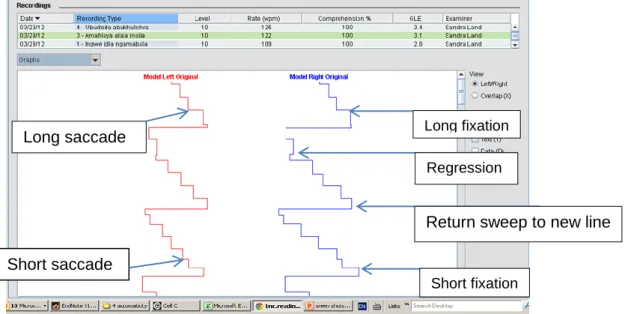
D ATA FROM EYE MOVEMENT RECORDINGS
Thus Le nkomo ingahlatshwa1 can mean "this cow must not be killed" (if -nga- has a low tone) or "this cow can be killed" (if -nga- has a high tone), an ambiguity that with apparently he would leave her. receiver in a small problem if the communication was sent in a note. The recognition space is always asymmetric, biased towards the direction in which the text is read, and therefore apparently dependent on the orthographic context (Liversedge & Findlay, 2000).
M ETHODOLOGY
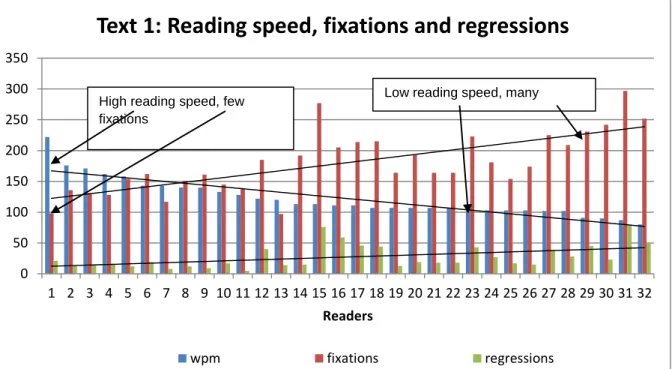
Reading speed, fixations and regressions
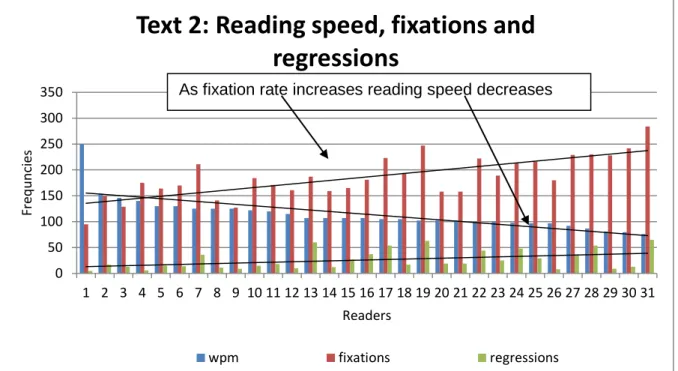
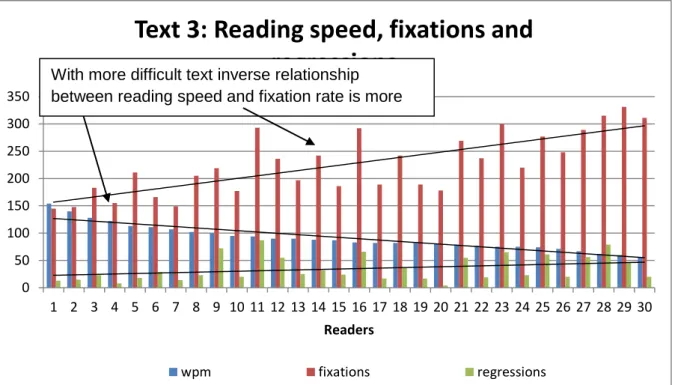
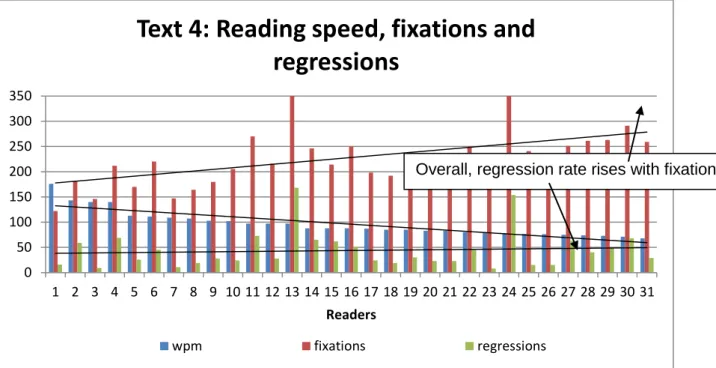
A comparison of the graphs above (which show readers' performance on the two easier texts) with the two below (readers' performance on the two harder texts) shows that readers'.
Reading speed, fixations and regressions
Reading speed, fixations and regressions
Reading speed, fixations and regressions
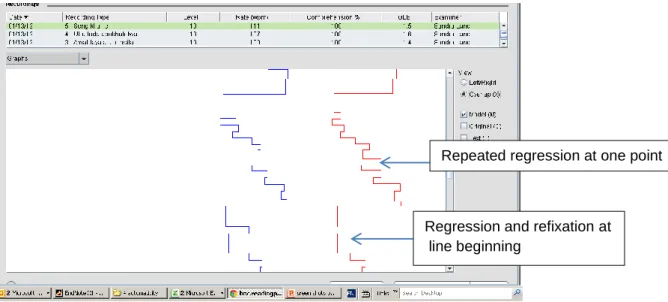
As mentioned earlier, repeated repetition of certain strings of letters is a feature of the orthography of isiZulu. Ellis NC, Natsume M, Stavropoulou K, Hoxhallari H, van Daal VHP, Polyzoe N. The effects of orthographic depth on learning to read alphabetic, syllabic and logographic scripts.
C HAPTER 5
A UTOMATICITY IN THE READING OF ISI Z ULU
When the eyes are moved to a new location on the printed page, visual features of the input are propagated from the eyes to parts of the visual system that extract their shapes and locations to generate visual representations of both individual letters and words (McCandliss , Cohen, & Dehaene, 2003). At some point while this is happening, enough information will have been gained from the fixation to justify moving the eyes to a new location; at this point, the oculomotor system uses the word boundary information available in peripheral vision to begin programming a saccade to move the eyes to another location.
T HE ATTAINMENT OF AUTOMATICITY
Children who learn to read in languages with consistent, transparent orthographies (such as Italian, German, Greek, Spanish, and Finnish) can read words accurately by the end of first grade (Ziegler et al., 2010). There are greater variations in individual progress in learning to read in languages with inconsistent orthographies, with more cases of dyslexia among their readers (Seymour et al., 2003).
E YE MOVEMENT AND AUTOMATICITY
As with overlooked words, immediate perception may be facilitated by the partial view readers take of the word shortly before it is directly focused on (Rayner 2009, Paterson, et al., 2011), and recognition may be aided by anticipated associations of words. However, when reading entire passages of text, readers' word recognition is likely to be aided (or hindered) as they anticipate much of the text on the basis of familiar associations, prior knowledge, process-activated assumptions of reading and their construction. the meaning of the text read so far, as well as the information obtained from the text read just before the one in focus (Rapp . & van den Broek 2005).
R EADING AND ISI Z ULU ORTHOGRAPHY
This suggests that popular assumptions that regressions and rereading lead to scrambled processing of words are incorrect, and that readers maintain a sense of the meaning structure in text they are reading, even as they shift their gaze to different parts of sentences to search for information. to search to help their construction of meaning (Paulson, 2005). As a result, skilled readers of the language are likely to automatically read words like these at the moment they are focused on "with little cognitive effort or attention" (Penner-Wilger, 2008), recognizing a range of "polysyllabic and whole". words” (Verhoeven, et al., 2011).
R ESEARCH QUESTIONS IN THIS STUDY
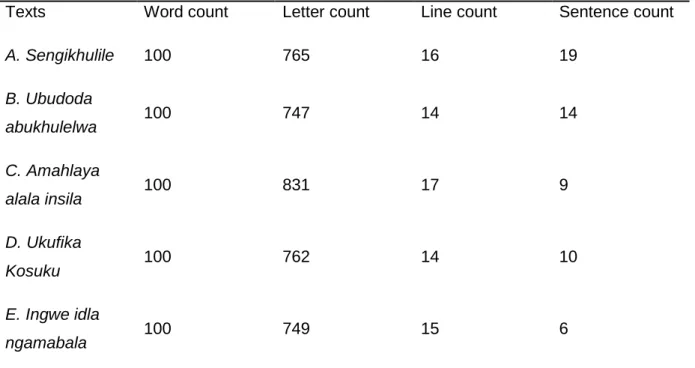
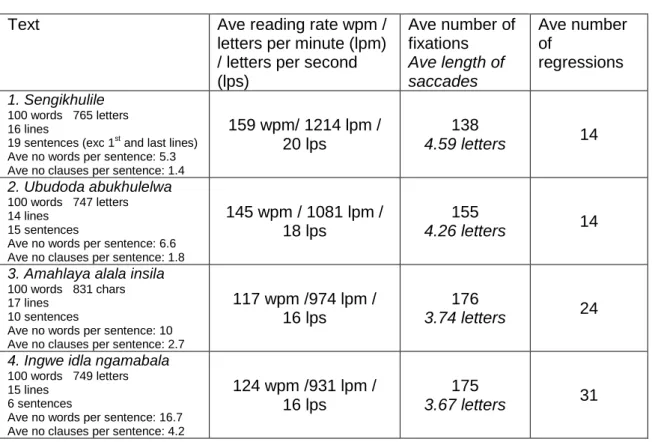
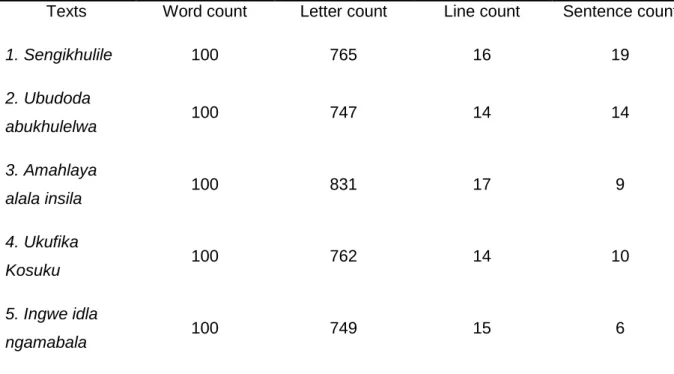
One of the two texts rated as more difficult had 10 sentences with an average of 2.7 clauses per sentence, and the other only 6 sentences with an average of 4.2 clauses per sentence. An analysis of the reading patterns of the entire group is discussed in another article (Land, 2015).
F INDINGS
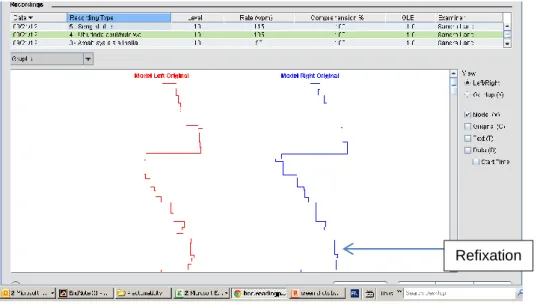
Here, only 3 of the 400 words in the four texts were skipped in at least half of the recordings. Many of the words that were read with one short fixation at some points in the text were read with multiple fixations at other points.
L IMITATIONS
34;Playing Soccer Without a Ball: Language, Reading, and Academic Achievement in a High-Poverty School.” Journal of Research in Reading 30(1): 38–. 34; Eye movement control during reading: Effects of word frequency and orthographic familiarity .” Journal of Experimental Psychology: Human Perception and Action.
C HAPTER 6
P ROCESSES AND S TRATEGIES USED BY COMPETENT READERS OF ISI Z ULU
Currently, children learn to read in their home language in the first three years of school and their average results on the Annual National Assessment (ANA) were below 40% in 2013 and 2013 (Department for Basic Education, 2012 and 2013). However, it is difficult to see how this policy proposal to add a second language to the curriculum will facilitate this, especially when students are clearly struggling to read in their home languages.
R EADING PROCESSES THAT EDUCATORS SHOULD UNDERSTAND
In contrast, readers of opaque, unstable orthographies such as English develop other strategies because the letters do not always represent the same sounds (Georgiou et al., 2008). This suggests that letter clusters relied on by readers of obscure and inconsistent orthographies to reconstruct language are significantly larger than letters.
R EADING AND THE ORTHOGRAPHY OF ISI Z ULU
This could contribute to the high number of regressions noted among competent readers of isiZulu (Land, 2015). Nieuwe et al., 2006; Miellet et al., 2009), indicating that competent English readers process text units at large grain sizes;
D O COMPETENT READERS OF ISI Z ULU EFFECTIVELY USE PARTICULAR DECODING PROCESSES AND READING
STRATEGIES ?
The difference in tone with which this reader is concerned here is essential to her construction of the meaning in the text. Readers' continued focus on the meaning of text was evident in their descriptions of building mental representations of the meaning in the texts as they read.
I MPLICATIONS FOR EDUCATORS
These strategies could be incorporated into reading programs and brought to the awareness of reading teachers. Readers' experience of reading Zulu text and their perception of how they recognize words or components of words and other parts of the text.
C HAPTER 7
O VERALL SUMMARY OF FINDINGS AND CONCLUSIONS
I N WHAT CONTEXT DO READERS OF ISI Z ULU DEVELOP AND PRACTICE THEIR READING SKILLS ?
In the field of publishing, the lack of available reading material in indigenous languages is widely lamented. With a well-supported publishing industry, and better understanding and practice of reading instruction in isiZulu, the language can survive and develop alongside English.
W HAT CAN EYE MOVEMENT RECORDS TELL US ABOUT READING IN AN AGGLUTINATIVE , ORTHOGRAPHICALLY
The paper referred to above reports on a pilot study which aimed to compare eye movement patterns of readers of isiZulu with benchmark eye movement patterns established for English readers, and to investigate any differences that emerged in the comparison. Because of this, and because of the strong link between attention and fixations, a study of eye movement records is a key route to gain insight into the subskills involved in silent reading.
H OW DO READING PATTERNS SHOWN BY COMPETENT READERS OF ISI Z ULU COMPARE WITH READING PATTERNS
HOW DO THE READING PATTERNS DISPLAYED BY ISI WITH ULU COMPETENT READERS COMPARE TO THE READING SAMPLES. Average saccade length 4.05 characters, suggesting that readers' recognition span is relatively narrow and that readers appear to rely on small granular units of text to reconstruct language during reading.
H OW DOES AUTOMATICITY FUNCTION IN COMPETENT READING OF ISI Z ULU AS AN ORTHOGRAPHICALLY
Saccades tended to be longer on texts with short sentences and familiar vocabulary, indicating a higher rate of automatic recognition in these texts. In this regard, position within a line of text was found to be significant, but surprisingly, as reading speed was lower on texts with longer sentences, position within a sentence was not significant.
A RE THERE PARTICULAR TEXTUAL FEATURES OF THE ORTHOGRAPHY OF ISI Z ULU THAT FACILITATE THE