UNIVERSITY OF KWAZULU-NATAL
REINVENTING AN ORGANIZATION THROUGH ITS CULTURE TO DRIVE BUSINESS SUSTAINABILITY
By
Kavisha Nandhlal Student Number: 200000296
A dissertation submitted in partial fulfilment of the requirement for the degree of
Master of Business Administration
Graduate School of Business & Leadership College of Law and Management Studies
Supervisor: Dr. M. E. Hoque
Year of Submission: 2017
ii
DECLARATION
I, Kavisha Nandhlal (Student no: 200 000 296) declare that:
The research reported in this thesis, except where otherwise indicated, is my original work.
This thesis has not been submitted for any degree or examination at any other university.
This thesis does not contain other persons‟ data, pictures, graphs or other information, unless specifically acknowledged as being sourced from other persons.
This thesis does not contain other persons‟ writing, unless specifically
acknowledged as being sourced from other researchers. Where other written sources have been quoted, then:
a) their words have been re‐written but the general information attributed to them has been referenced;
b) where their exact words have been used, their writing has been placed inside quotation marks, and referenced.
c) Where I have reproduced a publication of which I am author, co‐author or editor, I have indicated in detail which part of the publication was actually written by myself alone and have fully referenced such publications.
d) This thesis does not contain text, graphics or tables copied and pasted from the Internet, unless specifically acknowledged, and the source being detailed in the thesis and in the References sections.
Signed:
iii College of Law and Management Studies
Supervisors Permission to Submit Thesis/ Dissertation for Examination
Name: Kavisha Nandhlal No: 200 000 296
Title: Reinventing an organization through culture to drive business sustainability
Qualification: MBA School: GSB&L
Yes No
To the best of my knowledge, the thesis/dissertation is primarily the student‟s own work and the student has acknowledged all reference sources
The English language is of a suitable standard for examination without going for professional editing.
Turnitin Report %
Comment if % is over 10%:
I agree to the submission of this thesis/dissertation for examination
Supervisors Name: Dr M. E. Hoque Supervisors Signature:
Date:
iv
Acknowledgements
I wish to express my sincere appreciation and gratitude to the following individuals, without whose assistance, this study would not have been possible:
My friends and family whom have always been a pillar of support.
My supervisor, Dr Muhammad Hoque for your academic guidance.
The Pollution Research Group for allowing me to conduct my study there and for participating. Especially to Mrs Merlien Reddy for your timely assistance.
v
Abstract
South Africa has faced many challenges in recent years with regards to the supply and demand of water. A concerted effort is much needed from all contributing stakeholders in order to address issues threatening South Africa‟s water supply.
Research and development plays an imperative role in creating new knowledge and methodologies through innovative projects. Sustainability of research organizations entails a multidimensional approach that focuses on people, profits and the environment encouraging higher productivity and the retention and attraction of skilled people. A core enabler of sustainability is innovation. A culture of innovation leverages the innovativeness of an organization by developing people and the organization. The objectives of this study were to determine the impact culture has on sustainability and to identify the building blocks of a culture of innovation. This was a cross – sectional study conducted among the whole population of 20 members of a research group. An online questionnaire with Likert type questions was used to conduct the survey. The mean analysis was used to determine the overall innovativeness of the organization as well to identify strengths and weakness of various factors. Correlation analysis was used to establish positive relationships between culture building blocks. It was found that the stability of sustainability can be achieved in individuals, the organization and the external environment by implementing a culture of innovation within the organization.
vi
Table of Contents
Acknowledgements ... iv
Abstract ... v
List of figures ... x
List of tables ... xi
CHAPTER ONE ... 1
Introduction ... 1
1.1 Introduction ... 1
1.2 Background ... 1
1.3 Motivation for the study ... 2
1.4 Focus of the Study ... 2
1.5 Problem Statement ... 2
1.6 Purpose and Objectives ... 3
1.7 Research Questions ... 4
1.8 Expected Outcomes ... 4
1.9 Structure of Study ... 4
1.10 Summary ... 6
CHAPTER 2 ... 7
Literature Review ... 7
2.1 Introduction ... 7
2.2 Sustainability... 7
2.2.1 Concept of Sustainability ... 8
2.2.2 Enterprise Resistance ... 9
2.2.3 Enterprise Excellence ... 10
2.2.4 Sustainability Enterprise Excellence Resilience Model ... 12
2.2.6 Sustainability oriented innovation ... 13
Figure 2.3: SOI dimensions (Adams et al, 2016)... 15
2.3 Organizational Culture ... 16
2.3.1 The Importance of a strong Organizational Culture ... 16
2.3.1.1 Employee Retention ... 17
2.3.1.2 Reputation ... 17
2.3.1.3 Productivity ... 17
vii
2.3.1.4 Quality ... 18
2.3.2 Characteristics of Organizational Culture ... 18
2.3.2.1 Depth... 18
2.3.2.2 Breadth... 19
2.3.2.3 Integration ... 19
2.3.2.4 Structural Stability ... 20
2.3.3 Building Blocks of a Culture of Innovation ... 20
2.3.3.1 Values ... 21
2.3.3.2 Behaviours ... 22
2.3.3.3 Climate ... 22
2.3.3.4 Resources ... 22
2.3.3.5 Processes ... 23
2.3.3.6 Success... 23
2.4 Conclusion ... 23
2.5 Summary ... 24
CHAPTER 3 ... 26
Research Methodology ... 26
3.1 Introduction ... 26
3.2 Research Approach and Design ... 26
3.2.1 The Selected Research Approach ... 26
3.2.2 Research quality plan ... 27
3.2.3 Sampling ... 28
2.2.3.1 Study setting ... 28
3.2.3.2 Sampling techniques ... 29
3.2.3.2.1 Probability sampling ... 29
3.2.3.2.2 Non-Probability sampling ... 30
3.2.3.3 Selection of sampling technique ... 30
3.2.3.4 Selection of sample size ... 31
3.3 Data Collection ... 31
3.3.1 Data Collection Instrument ... 31
3.3.2 Data Collection Procedure ... 31
3.3.3 Measurement Scale ... 32
viii
3.3.4 Pretesting of the Questionnaire ... 33
3.4 Data Analysis Methods ... 34
3.4.1 Frequency Distribution ... 34
3.4.2 Mean... 34
3.4.3 Correlation ... 35
3.5 Reliability ... 35
3.6 Validity ... 36
3.7 Ethical Considerations ... 37
3.8 Summary ... 38
CHAPTER 4 ... 39
Presentation of Results ... 39
4.1 Introduction ... 39
4.2 Survey Participation Statistics ... 39
4.3 Presentation of Results ... 40
4.4 Summary ... 55
CHAPTER 5 ... 56
Discussion ... 56
5.1 Introduction ... 56
5.2 Research objectives overview ... 56
5.3 Key Findings ... 56
5.3.1 Objective 1 ... 57
5.3.2 Objective 2 ... 64
5.4 Summary ... 68
CHAPTER 6 ... 69
Conclusion and Recommendations ... 69
6.1 Introduction ... 69
6.2 Conclusion ... 69
6.3 Implications of this Research ... 71
6.4 Limitations of the study ... 71
6.5 Recommendations to solve the Research Problem ... 72
6.6 Recommendations for future studies ... 73
6.6 Summary ... 73
ix
References ... 74
Appendix A: Letter of informed consent ... 80
Appendix B: Research Questionnaire ... 81
Appendix C: Ethical clearance approval letter ... 84
Appendix D: Turnitin report ... 85
x
List of figures
Figure 2.1: Sustainable Enterprise Excellence model 11 Figure 2.2: Springboard to SEER2 Sustainability model 13
Figure 2.3: SOI dimensions 15
Figure 2.4: Culture building blocks and elements 21
Figure 5.1: Culture characteristics and building blocks framework 67 Figure 6.1: Achieving sustainability through culture 73
xi
List of tables
Table 3.1: Questionnaire response codes 35
Table 4.1: Survey Participation Statistics 42
Table 4.2: Frequency distribution of the Values building block 44 Table 4.3: Frequency distribution of the Behaviours building block 46 Table 4.4: Frequency distribution of the Climate building block 48 Table 4.5: Frequency distribution of the Resources building block 50 Table 4.6: Frequency distribution of the Processes building block 52 Table 4.7: Frequency distribution of the Success building block 54
Table 4.8: Innovation quotient 55
Table 4.9: Correlation values relating all culture building blocks 56 Table 4.10: Correlation values relating culture building blocks to innovation 56
1
CHAPTER ONE Introduction
1.1 Introduction
The introduction chapter contextualises this study with respect to the industry and relevant aspects pertaining to the topic. The background touches on challenges in the water sector followed by a descriptive overview of organizational sustainability and culture. The motivation for this study emphasizes the importance this research has on the progress in the South African water industry. The focus of this study identifies specific research areas relevant to organization and industry. The problem statement identifies a problem within the study area which forms a basis for this study. The purpose, objectives and research questions outline the key goals of this study and direct the research toward solving the problem statement. The structure of the study provides a brief overview of each chapter.
1.2 Background
In recent years South Africa has had rapid growth in urbanization, industrialization and informal settlements which has caused immense strain on basic needs.
(Kotze, 2014). Water is a renewable source however the available resources are becoming rapidly polluted by harmful compounds. Further to this, water shortages have also been due to widespread droughts with 2015 being one of the driest years ever experienced (Landie, 2016). The effects of a high demand coupled with supply limitations create an increasing awareness to protect and sustain the environment.
Elkington in 1994, constructed the sustainability related concept of the triple bottom line (TBL) to broaden focus of business success to managing profits, people and the environment (Alhaddi, 2015). Achievements within these dimensions are highly dependent on the output of an organizations workforce. Actual behaviour of employees is impacted on, to a degree of specificity, by values and behavioural
2
norms which are characteristic of an organizations culture (Brettel et al, 2015). Thus it can be derived from the aforementioned that culture can be used as a means to drive organizational sustainability.
1.3 Motivation for the study
South Africa has recently faced many challenges meeting water supply with its demand. Increasing difficulties have been experienced across the country as a result of water shortages. Research institutes based at universities make a meaningful contribution towards public and private sector research advancements which have the ability to address the needs of domestic, industrial and agricultural water requirements. Greater participation and the generation of innovative ideas are imperative.
1.4 Focus of the Study
The focus of this study was twofold with considerations towards internally maintaining an organization‟s sustainability whilst contributing to advancements and productivity in the external industry. Sustainability was viewed in relation to the triple bottom line and focused specifically on achieving this as an outcome. The external industry, being the global wastewater treatment and alternative sanitation industry, was used as a platform to source new ideas and contribute to existential problems.
1.5 Problem Statement
President Zuma‟s address at the World Water Day Summit Expo painted a bleak picture of the global water situation and prioritized improvements in services and innovation as crucial measures (Mokgothu, 2017). A major focus on elements from existing external ideology was revealed from many journal publications with a significant dearth in creating value through integration and commercialization of new ideas (West et al, 2014).
3
Research and development play an integral role in advancing toward innovative and sustainable solutions. Improvements in current technologies and the development of new methodologies are highly sought after globally. The Pollution Research Group (PRG), located in Durban KwaZulu-Natal, is an independent research group who specialize in wastewater and alternative sanitation research. Research organizations, such as PRG, are reliant on external funding for their future sustainability.
PRG consists of Senior Researchers, Post Doctorates, Postgraduates and visiting Researchers. The composition of the group changes constantly as projects and funding are short term. As a result of this succession planning, attracting and retaining researchers become challenging. Therefore creating a culture within the organization lays the foundation for stability and continuation. A study on the behavioural effects of sustainability oriented systems has shown that there is a moderating effect between people‟s intended behaviour and a sustainable oriented incentive system which results in enhanced employee attraction, motivation and cooperation (Huber et al., 2017).
1.6 Purpose and Objectives
The purpose of this study is to identify aspects of organizational culture that will enable PRG to utilize resources more effectively on a continuous basis and to create an environment that contributes positively to the consistent future profitability and longevity of the group.
Objectives:
Investigate how organizational culture impacts on sustainability.
Determine the culture building blocks for a culture of innovation.
4 1.7 Research Questions
How is sustainability linked to an organizations culture?
What aspects of organizational culture promote innovation?
1.8 Expected Outcomes
The significance of this study is to create an awareness of eminent global water crisis and coax people, through culture, to become more innovative and work towards solutions and advancements in their respective industry. The expected outcome of the study will be a model outlining how sustainability can be achieved through organizational culture that will ensure long term profitability. All organizations strive to maximise profitability as a major business goal, therefore any organization will stand to benefit from the outcome of the study.
1.9 Structure of Study
The structure of the research study and description of individual chapters are outlined below.
Chapter 1: Introduction
This chapter gave a description of the background to the research. It had identified a problem statement and suggested research questions and objectives with which to address and solve the problem. The purpose of the study was outlined with expected outcomes and how it will contribute towards greater good in the industry. The chapter concluded with a brief description of each chapter which highlighted the structure of the thesis.
5 Chapter 2: Literature review
The focus of the literature review was on conducting a review of sustainability and culture. An integrated sustainability model, inclusive of enterprise excellence and resistance, was discussed with innovation as a key enabler. The benefits of a strong organizational culture were highlighted as this was a key factor in addressing the problem statement. The literature review sought out to establish a dependency relation between sustainability and culture. The building blocks for a culture of innovation provided the conceptual model from which the key outcome variable of innovation was determined in chapter 3.
Chapter 3: Research methodology
The aim of this chapter was to develop a research methodology that was suitable to measure and analyze the research data from the study area. The literature review highlighted aspects of the dependent variable sustainability and the independent variable culture. A culture of innovation building blocks was shown as key elements towards attaining sustainability.
A research instrument was designed to collect the relevant data with accuracy. The data was collected following an ethical protocol with extra measures to ensure that the data was reliable and valid. The data was analysed using a statistical tool from which relevant conclusions were presented in chapter 4.
Chapter 4: Presentation of results
This chapter presented the research data that was obtained using the developed and administered in chapter the research methodology. The raw data collected was analysed using frequency distribution, mean and correlation. The results from the analysis were tabulated with a summarised discussion.
6 Chapter 5: Discussion
This chapter was an integrated discussion based on concluding evidence from the results presented in chapter four and the literature review in chapter two. The chapter starts with a review of the objectives of the study. This was followed by a discussion of the key findings which aims to satisfy the objectives. The discussion in this chapter also highlighted aspects of practical applications of the study that can be beneficially applied by stakeholders.
Chapter 6: Conclusion and recommendations
This chapter highlighted concluding aspects from the study and drew from the research study on how the problem statement could be solved. Limitations of the study were identified. Recommendations for future studies were put forward.
1.10 Summary
This study undertook to investigate how organizational culture impacts on sustainability whilst also determining the building blocks for a culture of innovation. In order for PRG to attain structural stability and retain valuable skills for increased research output, they can strive toward building a sustainable organization with attention to the triple bottom line of people, profits and the planet. The outcome of this study will provide in-depth knowledge on how sustainability can be achieved through building a culture of innovation in the organization. The following chapter presents a review of literature pertaining to sustainability and culture.
7
CHAPTER 2 Literature Review
2.1 Introduction
The literature review first looked at the concept of sustainability in relation to measuring sustainability in terms of the triple bottom line. Sustainability co-exists with enterprise excellence and enterprise resistance. Sustainable oriented innovation is a key enabler for achieving the triple bottom line and ultimately the triple bottom line. Developing a culture of innovation within an organization can be used as a management tool to drive an outcome of sustainability.
Several management theories have preconceived ideas that the aim of the organization is to maximise profits in relative to capacity constraints. There is a significant variation in ways in which organizations pursue profit maximisation; some place more emphasis on short term rather than long term. Eccles et al (2014) conducted a comparative study on high and low sustainability organizations by tracking their eighteen performances. It was concluded that high sustainability organizations outperformed low sustainability organizations with regards to annual performance, return on equity and return on assets.
2.2 Sustainability
There is a growing demand from business stakeholders to receive more information about the current standing and future of a business since their input is vital. This has encouraged the inclusion of sustainability information. Efforts into implementing sustainability initiatives vary from competitiveness to legitimacy (Searcy, 2014).
Since its emergence more than two decades ago as a business paradigm, sustainability has gained momentum as high priority on the corporate agenda thus it can no longer be considered as a fringe issue but rather entrenched into global business consciousness.
8
The effectiveness of sustainability is not achievable without developing a capacity to excel across all critical domains with a degree of resilience and robustness.
Challenges and competitive shocks will not pose an immediate threat as resilience has the ability to self renew through innovation, changing and reinventing itself by adapting to its responses (Edgemen, 2014). Innovation for sustainability implies that a crucial component of enterprise innovation activities are derived from ecologically and societal sources. Social ecological innovation is a resultant of a culture of innovation and is attained by embedding innovation for sustainability into values and behaviours (Lenssen et al., 2013).
2.2.1 Concept of Sustainability
Sustainability in simple terms refers to the capacity with which to endure and remain resilient or resistant to changes in various factors. The process of endurance entails structuring the way things are done to measure value and progress. In a business context sustainability takes into account the bigger picture by viewing the world around it. The origin of sustainability may have been developed some 130 years ago but it has progressed over the years to gain significant popularity (Alhaddi, 2015).
The intrinsic nature of the idea of sustainability remained as a focus on outweighing needs irrespective of limitations; this despite its evolution over the years. In a business context sustainability is known as the market-oriented success and the integration of social, economical and environmental organizational challenges (Schaltegger et al., 2013). The growing number of articles on sustainability over the last decade is proof that sustainability has become a central issue for organizations and academia (Weber et al., 2012).
The 3 major steps through its evolution have been the by Brundtland (1987), John Elkington (1997) and lastly by the Global Reporting initiative (Beckmann et al., 2014). The Brundtland definition, contained in her report Our Common Future, is
9
unspecific about the details and nature of sustainability however it lends itself to a more vague impression of looking toward the wellbeing of future generations (Bartlet, 2012). The second phase by John Elkington outlines the triple bottom line (TBL) in which the economic, social and ecological pillars are set out as a sustainability model that measure an organizations success (Beckmann et al., 2014). The third is the Ecological, Social and Governance (ESG) sustainability dimensions which were developed by the Global Reporting Initiative (Beckmann et al., 2014). The ESG criteria introduce a governance dimension in order to guarantee the integrity of internal management processes and of the organization.
2.2.2 Enterprise Resistance
The concept behind the word resist may be considered to be a blend of revive, thrive, survive and strive. Revival is restorative strategy and action which is suggestive of refreshing the natural environment. Striving is essential as environments are fraught with human influenced problems. Survival doesn‟t have an assurance or the expectation of eternity but is basically continued existence with the hope of longevity. Thriving simply implies flourishing and is highly desirable but is not perpetually guaranteed (Costanza, 2012).
These four connotations of resistance can be connected to synonymous enterprise aspirations. Resistance holds the ability to repeatedly adapt to changes with strategic responses (Haeckel, 2013). The advancements on the path towards these aspirations are insufficient in itself to occur since competitive landscapes influence viability. Resilience and revival are interconnected in that resilience is an enterprises ability to reinvent itself as a response to stimuli from challenges in its competitive market by self-renewing through innovation.
10
Survivability is related to resilience, thriving to excellence and sustainability to both resilience and excellence. Sustainability, resilience and excellence often move in a similar direction however strategies, practices and policies aiming at optimising one doesn‟t necessarily optimise the others. This promulgates the desire to simultaneously leverage synergies for an integrated and aligned approach.
Sustainability is an enterprises ability to create and maintain such that, in both its short and long terms, enterprises sustainability is its survival capacity. If so then excellence is its capacity to strive and thrive across performance areas that comprise of results and impact.
Although resistance can be perceived negatively such as clinging to ineffective beliefs irrespective of proven superior alternatives, its elements here are interpreted positively which suggest solid competitive grounding and future superior footing. The notion of resistance is derived as navigating circumstances with wisdom toward a more prosperous future. The approach toward this relevant to enterprise resistance is through an integrated viable strategy aimed at sustainable excellence (Edgeman et al, 2014).
2.2.3 Enterprise Excellence
Sustainable enterprise excellence (SEE) reaches beyond becoming only sustainable but rather cultivating to become continuously relevant and responsible. The inclusion of the triple top line (TTL) and triple bottom line (TBL) communicates their connective nature and drives the alignment and convergence between sustainability and enterprise excellence. An ethical, efficient and effective governance (3E) and TTL strategy lays the foundation for TBL performance of people, profits and planet (3P).
Therefore SEE aims to optimise performance and organizational progress (Edgeman et al., 2014). The SEE model in figure 2.1 shows common business model
11
components such as customer segments, service and product offerings, cost structures and revenue streams.
Figure 2.1: Sustainable Enterprise Excellence model (Edgeman et al, 2014)
The adaptability and fit of an organizations structure to its needs is configured through organizational design. Sustainable innovation contributes to financial wellbeing of the organization and is regular and systematic. Innovation for sustainability targets societal considerations and is sometimes referred to as green innovation. A strategic integration from the TTL and TBL of sustainable innovation and innovation for sustainability results in socio – ecological innovation (Edgeman et al., 2014).
12
2.2.4 Sustainability Enterprise Excellence Resilience Model
Declining resources and environmental degradation are realities that have to be confronted whilst simultaneously emphasizing enterprise longevity and financial security. Organizational elements that are critical to its health and vitality have commonly been treated as distinct rather than interrelated. There are integrated synergies in the construct of resistance among revival, survival, striving and thriving.
However with regards to sustainability and excellence the same can‟t be said; this often leads to a failure in understanding aspects of their competing and complementary nature.
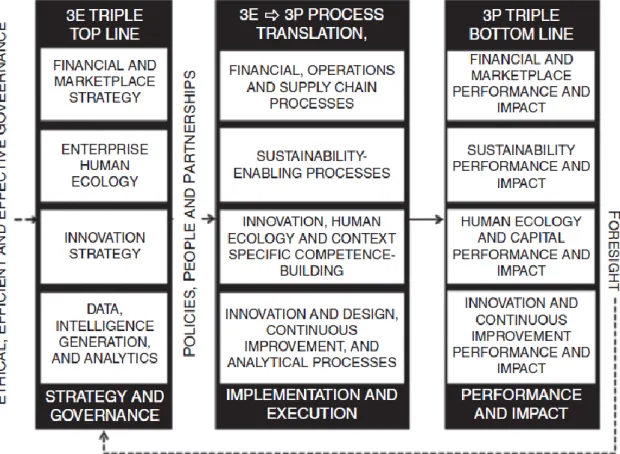
The sustainable enterprise excellence resilience model (SEER2) creates a unified path to maximise synergies and minimize dissonance among elements of sustainability, excellence and resilience for the purpose of simultaneously advancing these and to further generate economic, societal and ecological benefits (Faaji et al, 2013). For this approach to be viable joint enablers need to be identified. Enablers of SEER2 are inclusive of human relations, operational proficiency, governance and, general and social ecological innovation (Malhotra et al, 2013). The SEER2 model has merged enterprise excellence with enterprise sustainability by driving a triple top line strategy to produce the triple bottom line.
Sustainable competitive positioning followed by long term success is leveraged by a balance in competing and complementary interests of key stakeholders, the environment and society through sustainable enterprise excellence, resilience and robustness (Edgeman, 2014). SEER2 makes prior assumptions toward ongoing responsible, strategy, governance, performance, actions and subsequent impact.
Ethical, effective and efficient (E3) strategy and governance is pursued through SEER2. Enablers of strategy and governance such as innovation and organizational design, shown in figure 2.2, leads to superior performance and impact elements such as financial and marketplace.
13
Figure 2.2: Springboard to SEER2 Sustainability model (Edgeman, 2015)
2.2.6 Sustainability oriented innovation
Sustainability oriented innovation (SOI) entails tailoring an organizations values, products and processes in order to create and realize ecological and societal value with the addition of an economic benefit (Adams et al, 2016). The incremental shift towards a more sustainable society and economy has been a result of increasing concerns with over-consumption of resources, environmental degradation and social inequity. Fluctuating markets and economic agents are generally part of the problem thus requiring positive changes to the economic paradigm positioned toward
14
sustainability. Therefore innovation is an integral enabler that can help businesses transition toward achieving sustainable economic growth.
It is widely understood that innovation plays an important role in renewing the organization whilst also refreshing products and services. The key link to sustainability is determining innovation activities that an enterprise would typically engage in to become sustainable. This implies continuous organizational change with different models of activity whereby ideas can be usefully captured through the transitions. In order to address this, an initial architecture can be constructed to give contexts of SOI (D‟Este et al., 2012).
This architecture is part of framework synthesis approach where the initial architecture is iteratively developed as it shaped and tested (Thomas et al., 2013).
The SOI model was designed to respond to regulatory stimuli with an incremental change at the level of the enterprise. The three dimensions of SOI that emerge from Adams (2016), draw on theories from fields cognate to sustainability to form the building blocks for an initial SOI conceptual framework. The dimensions, represented in Figure 2.3, are technical/people, insular/systematic, stand-alone/integrated.
15 Figure 2.3: SOI dimensions (Adams et al, 2016)
Innovations focus is usually technical and product oriented. Contrasting this is the sustainability socio – technical challenge where the focus shifts to more people centred innovation. The stand alone/integrated dimension extends internally across the enterprise and lends itself to SOI thinking either as „stand alone‟ within individual departments or integrated throughout the enterprise. In this dimension SOI is seen as moving towards a strategic sustainable behaviour by diffusing throughout the enterprise (Klewitz et al., 2013). The insular/systematic dimension looks at the enterprise relative to wider society beyond its immediate boundaries.
Progressive SOI enterprises‟ have been noted to facilitate change in external systems by possibly engaging with NGOs and governments (Schiederig et al., 2012).
It can be concluded from the SOI dimensions (Figure 2.3), that the dimensions make a progressive shift towards sustainability the centric focus is on people and the organization. Following a study based on 759 companies in 17 markets, it was concluded that organizational culture was the most important driver innovation rather labour, government, national culture or capital (Rao et al, 2013). An enterprise supports a culture of sustainable innovation by systematically, rigorously and
16
persistently pursuing innovation and whilst leveraging strategic importance to enterprise impact and performance.
2.3 Organizational Culture
The culture of an organization is expressed as assumptions that a group learns and share during its problems of external adaptation and internal integration (Venter, 2014). A collection of values and norms have been established as a valid behaviour in relation to the organization and are therefore taught to new members as the appropriate manner in which to perceive, think and feel. It will also govern the response groups will have to envisage changes. It is these underlying values and beliefs that serve as a foundation for management systems and practices to be built upon and the expressed behaviour reinforces and exemplifies those basic principles (Wang et al., 2014).
2.3.1 The Importance of a strong Organizational Culture
As a result of increasing speed and scale of changes in organizations, new ways of securing employees commitment are constantly sought after (Liou et al., 2012).
Every organization will have a culture, irrespective of its size. This refers to the values and attitudes of employees. A weak culture will cause employees to act to their own benefit as individuals, performing their duties to meet their own needs, such as for a salary. A strong culture creates a sense of togetherness where each employee in the organization feels valued regardless of their job function, which results in an alignment of an employee‟s personal needs and the company‟s needs thus working as a team to satisfy both the company‟s needs along their own personal needs simultaneously. Management controls can be used to bring forward employees to undertake sustainability activities that were previously no go areas by creating core values. A strong culture improves the performance of an organization in a numerous ways such as employee retention, reputation, productivity and quality.
17 2.3.1.1 Employee Retention
Employees will most likely experience high morale and a positive attitude in an environment where their efforts and contribution towards the business is valued.
Some of the most valued factors resulting from feeling valued are self realization and status enhancement which correlated strongly to career management (Chaturvedi, 2013). A sense of loyalty towards the organizations develops in employees with a positive attitude which reduces workforce turnover. High costs relating to recruitment, hiring and training will be controlled. A strong culture can contribute towards retaining highly valued employees and reduce costs in human resources.
2.3.1.2 Reputation
A strong organizational culture portrays a company with having a good reputation with prospective employees. This could attract talented individuals who are highly skilled workers to the organization. Reputable companies within an industry are generally well known. A well regarded business reputation forges a preconceived relationship with prospective customers where higher prices for products and services are acceptable; and in turn increases the company‟s financial value in the market. A good reputation also creates a solid bond of customer confidence where customers take preference with whom to conduct business with and influences the way they buy (Gorenak et al., 2012).
2.3.1.3 Productivity
A strong organizational culture has the ability to develop the internal capacity of an organization to be effective in its endeavours throughout the short, medium and long terms (Kelepile, 2015). This signifies a link between organizational culture and productivity. The morale of employees greatly improves within an organization with a strong culture which increases productivity. The business stands to benefit from this increased productivity with an increased financial well being and profitability. This highlights productivity as a measure of effectiveness and efficiencies. As a result of
18
increased productivity and profitability, employees stand to benefit with higher salary increases and more benefits.
2.3.1.4 Quality
The way in which an organization develops products and provides customer services are positively impacted on by a strong culture (Kelepile, 2015). Good culture systems and environments encourage employees to output quality products and provide quality services. Organizations with cultures that benchmark high standard create an atmosphere for employees to meet those expectations by delivering products and services that meet or exceed those standards. These standards of excellence are an imperative factor in the ongoing development of a respected reputation for high quality.
2.3.2 Characteristics of Organizational Culture
Organizations that hold a strong identity support their outlined principals thus thrive well in its business environment. Whilst there are many concepts relating to ideology of sharing and holding in common, the word „culture‟ adds many crucial elements such as depth, breadth, integration and structural stability (Schein, 2004).
2.3.2.1 Depth
Culture manifests itself in the deepest, often unconscious parts of the group and less tangible and visible than other parts. One of the fundamentals of organizational culture is its impact on the growth of individuals within the organization (Gorenak et al., 2012). It is essential to recognize that employees are first individuals then members of the organizations. It is with identifying individuality that a common ground can be formed in order to transform individual employees to a common group that identify with being similar individuals of an organization. This is important in
19
crafting a culture as values are deeply embedded resulting in the manner of the group‟s natural behaviours.
2.3.2.2 Breadth
Once a culture has been crafted it covers all functioning of the group and extends itself across the breadth of the enterprise. It influential in an enterprise‟s internal operations as well as in various related environments and the manner in which primary tasks are addresses. Not all groups interpret culture in this context however the concept suggests that culture of a group encompasses all of its operations. The realization of organizational goals strongly relies on employees having common goals and contributing towards team efforts (Goic, 2013). Strong organizational cultures encourage project and process structures that enable the interpretation of common goals and feature a formalization of roles and duties. This provides organizational direction towards efficiency and effectiveness.
2.3.2.3 Integration
Culture further lends itself to stability by tying the various elements through integration onto a larger paradigm on a deeper level. It implies that elements such as values, behaviours and climate are interlinked and together form a coherent whole.
Ultimately human need derives a sense of order in our environment. The culture that is initially shaped to define an organization can be reshaped repeatedly to suit the needs of the organizations fluctuations. Disorder can make people anxious so they will work at reducing anxiety by developing consistency and predictability. Effective and efficient management of employees is greatly influenced by norms and values which suggest that organizational culture improves performance by integrating values management controls such as resources and processes (Awadh et al., 2013).
20 2.3.2.4 Structural Stability
The term „cultural‟ not only implies shared but also defines the group as being stable.
A major stabilizing force cannot easily forgo once a sense of group identification has been established. Culture remains fixed although group members may come and go. The stability that culture enforces is valued by group members since it becomes predictive in nature thus making it difficult to change (Schein, 2004). It is also important to note that if something is has depth and is deeply embedded it also gains stability.
2.3.3 Building Blocks of a Culture of Innovation
A culture of innovation is constructed from six building blocks; values, behaviours, climate, resources, processes and success (Rao et al., 2013). Enterprises have given substantial consideration towards resources and processes in measuring success out of convenience. Lesser attention has been given to the harder to measure people oriented building blocks; climate, values and behaviours. Anything that involves values, behaviours and climate are intangible with a slight difficulty in controlling however these have the greatest power to create a culture of innovation and a sustained competitive advantage.
21
Figure 2.4: Culture building blocks and elements (Rao et al., 2013)
Each building block comprises of 3 elements which makes innovative culture less abstract and easier to measure and manage (figure 2.4). Each element can be
quantified with relative questions. An average score from all six building blocks yields an innovation quotient which can be a useful benchmark.
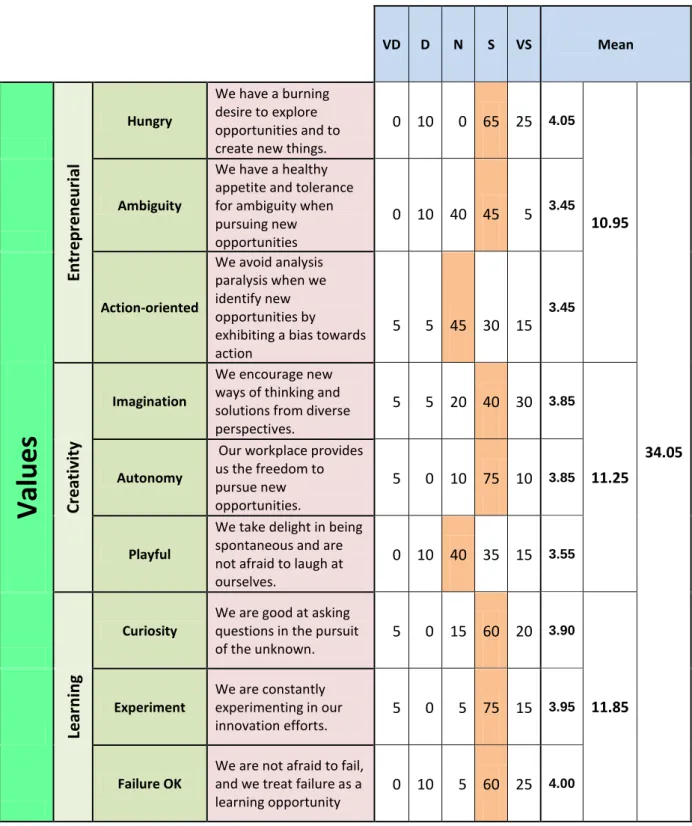
2.3.3.1 Values
Values that are constituted from an organizations culture play a vital role in guiding the actions of the organizations members through the perception of a common goal and collective best interest (Buschgens et al., 2013). Decision making and prioritisation are highly influenced by values and is a reflection on how an enterprise spends their time and money. Values are seen more in what leaders invest in and do rather than in what they say and write in periodic reports. Thus values are more evident in how people behave and spend rather than how they speak. Core values prompt employees to search for actions that are in line with their purpose (Jollands et al., 2015). Enterprises that have an innovative inclination promote creativity, spend generously on entrepreneur advancements and encourage continuous learning. Values and practices collectively prescribe the environment where people
22
interact by establishing ground rules for communication and behaviours (Wiewiora et al., 2014).
2.3.3.2 Behaviours
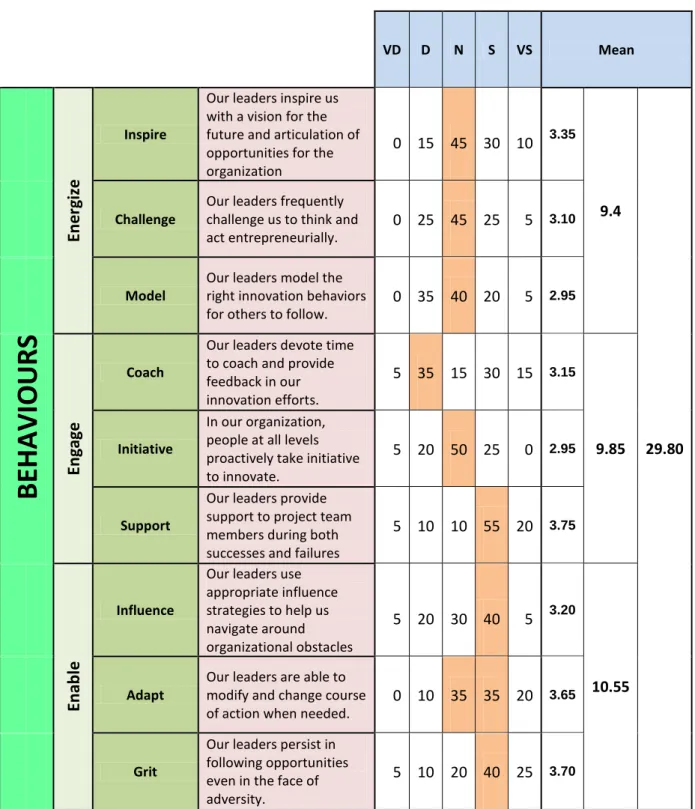
Culture is inclusive of morality and outlines the manner in which things should be carried out. Irrespective of the domain within the organization, culture has a positive influence on the nature of employees contribution towards business development (Militaru et al., 2012). Behaviours describe the actions of people especially relative to innovation for a culture of innovation. Leaders‟ actions include developing new and better products with continuous improvement always at the forefront. They energize subordinates with descriptive future horizons and encourage them to break through barriers. Employees act in favour of innovation by overcoming technical roadblocks, optimising resources when budgets are low and listening to customers so that the most viable products are developed.
2.3.3.3 Climate
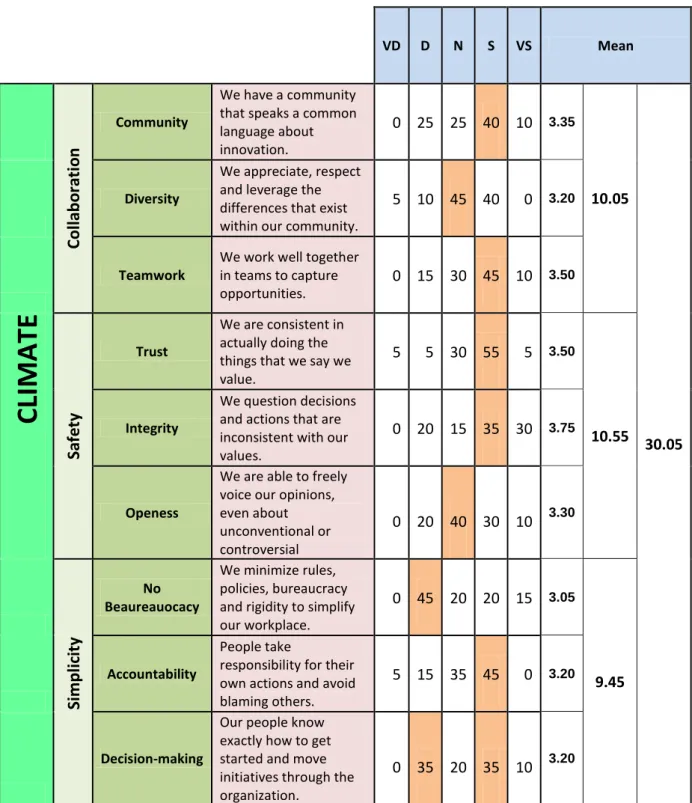
The tenor of a workplace environment is its climate. Aspects of an innovative climate are engagement and enthusiasm. It encourages people to explore risk taking within a safe environment. An innovative climate encourages independent thinking and fosters learning. An employee understanding of the organizations culture is the responsibility of management which should ultimately lead to improved performance.
Learning should always be at the forefront of management‟s agenda (Shahazad et al., 2012).
2.3.3.4 Resources
Resources include people, systems and projects. The most critical resources are people who are known as the innovation champions since they contribute the most to values and the climate. Recruiting and retaining individuals that are highly talented
23
and are the best fit form an integral role in developing a culture that is engaged and ambitious (Momani et al., 2015).
2.3.3.5 Processes
Processes are the path innovative efforts follow through as they achieved. This may be inclusive of capturing ideas, reviewing and prioritizing projects. Managerial control that lead to specific outcomes are initially aimed at influencing an employee‟s behaviour which suggests that these controls are related to processes that involve the generation of new ideas, the implementation of practices and the incorporation of artifacts within organizations (Buschgens et al., 2013).
2.3.3.6 Success
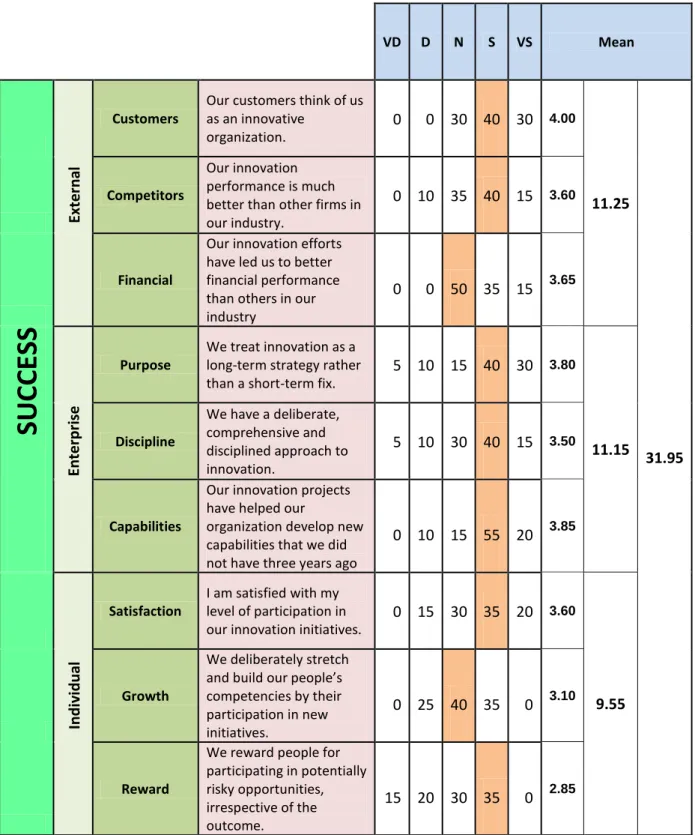
An enterprise that gains success with innovations does so in three categories; the external environment, enterprise and organizational individuals. The external environment is recognition relative to competitors and customers with the level of financial benefit. Success reinforces values and behaviours which has a positive influence on subsequent actions and decisions on recruitment, rewards and project approvals.
2.4 Conclusion
Sustainability has gained increasing popularity over the years and has been highlighted as the strategic imperative of the new millennium and key to long term success (Galpin et al., 2015). A systematic approach to sustainability is therefore required to ensure a competitive standing over a long period. Without a concerted effort to support the sustainable strategy the successful implementation within the organization will be severely hindered.
24
Organizational sustainability activities signal positive organizational values and norms which portray perceptions of a company in a good light. Current and prospective employees may feel a sense of enhanced self-concept from pro- sustainable organizations which lead to positive outcomes. On the basis of social identity it is assumed that a sustainability oriented system will contribute positively to the attraction of new employees and retention of existing employees, employee motivation and cooperation through of an association of enhanced self concept and self image (Huber et al., 2017).
Leaders who foster a culture of sustainability within the organization create beneficial outcomes for the environment, society and the enterprise by developing innovative sustainable solutions. Innovation embraces change by not only responding to change but also creating a capability to adapt to changes. Although the focus of innovation is usually technically oriented with new initiatives towards products and services it is the workforce of an organization that is responsible for generating and executing ideas.
Culture influences employee performance and integrates across the organization, therefore it is imperative to address each level. Although culture is initiated by top level management it must complemented processes and resources for it to permeate throughout the organization (Atkinson, 2012). Developing a culture of innovation within an organization contributes towards advancements in innovation efforts.
2.5 Summary
The literature review focused on sustainability and culture whilst a common thread was established to link the two paradigms. The concept of sustainability was discussed relative to the triple bottom line. Sustainability was also described to co- exist with enterprise resistance and enterprise excellence. Enterprise resistance was discussed as the ability of the organization to gain a degree of resilience to maintain
25
stability of the organization. Enterprise excellence highlighted the importance of staying relevant and responsible by optimising performance and progress.
The SEER2 model was chosen as a proposed structure for sustainability which discussed an ethical, efficient and effective strategy and governance in order to achieve the implementation and execution of the triple bottom line. A key enabler of the SEER2 model was found to be innovation. Sustainable oriented innovation noted a shift from a technology basis toward people and the organization as the organization moves towards sustainability.
A culture of innovation was sought as a strategic tool that develops people and the organization for the purpose of leveraging innovation. The characteristics of culture as well as its benefits were discussed to extend an understanding of the nature of culture. The building blocks for a culture of innovation brought forward an integrated approach towards influencing innovation performance. The next chapter presents the methodology for the research study.
26
CHAPTER 3
Research Methodology
3.1 Introduction
The literature review highlighted aspects of culture and sustainability. The possible relationship between these variables could prove that culture can be used as a driving force to attain sustainability. The research methodology outlines the design with which dependent and independent variables are related and interpreted for this study.
A sample that was representative of the population was selected in order to draw conclusive evidence and reasoning of the study. A suitable research design instrument was administered to participants of the sample to gather the required data. This data was transferred to a statistical analytical tool from which conclusive results were obtained. The research methodology that was designed for this study aimed to measure and interpret research variables in a manner to which was aligned towards attaining conclusive results for the research questions.
3.2 Research Approach and Design
3.2.1 The Selected Research Approach
There are three types of research approaches outlined by Cresswell (2014);
quantitative, qualitative and mixed methods. Qualitative and quantitative approaches both include a single description of interpreting data. Quantitative designs are derived from psychology or an applied behaviour analysis where the results are quantified and represented by numerical figures. Qualitative designs originate from sociology, anthropology and humanities and utilize methods such as case studies and narratives as its interpretation.
27
An imperative parameter from a study on the culture of innovation is a determination of the innovation quotient of the test environment. It was therefore decided to utilize a quantitative research design. The quantitative method is very suitable for statistically analysing correlations and test obtaining pre-determined outcomes. The two types of quantitative designs outline by Cresswell (2014) are experimental and non-experimental designs. Experimental aims to decipher an outcome from specific treatment influences. An example of a non-experimental design is survey research;
this quantifies trends, opinions or attitudes with a numeric description. Survey design was selected as the most apt choice for this study as it was aligned with the gaining a numeric description from participants regarding their opinions on aspects of culture in the respective study environment.
3.2.2 Research quality plan
The accuracy of results and findings of any study are highly dependent on the quality of its research methods (Creswell, 2014). Research quality considerations are therefore imperative component in the research design. The three effects that posed potential risks were identified as mortality effects, history effects and selection bias effects (Sekaran and Bougie, 2013).
Mortality effects refer to the lifespan of answering the questionnaire. The questionnaire was relatively lengthy with 54 questions; this may have resulted in participant losing interest and opting out of the survey prior to completion. This was overcome by clearly dividing the questions into sections and phrasing each question to the point for ease. In addition the online survey settings made all questions compulsory as a condition to completing the survey. The participants responded by selecting options on a Likert scale, this simplified answering the questions (Sekaran and Bougie, 2013).
28
History effects from longitudinal studies were noted to be common (Creswell, 2014).
The nature of longitudinal studies involves research over a period of time which increases the chances of occurrences during this time that may hinder the survey responses. This was overcome by opting to carry out a cross sectional study within a specified time frame.
Selection bias was not possible to achieve if randomization was not used (Sekaran and Bougies, 2013). This was overcome during this study by using the whole population as the sample. This gave all members of the study area an equal opportunity to participate in the study.
Ethical considerations were of importance in this study. This entailed respecting all participants confidentiality through anonymity. No personal details of the participants were recorded during the online survey, they remain anonymous and all responses are safely stored. Responses were generated through a Likert scale thus no responses could be linked to any participant.
3.2.3 Sampling 2.2.3.1 Study setting
The Pollution Research Group was chosen as the study area. The time constraints of the MBA did not accommodate the search for other water professional bodies.
The chosen study area was familiar to the researcher and permission was granted to conduct this study, based on these factors it was selected as the study area. The group comprises of Postgraduates, Junior Technical staff, Senior Technical staff, Postdoctrate Researchers and Senior Researchers. The group‟s core function is technical research associated with national and international research institutes.
29 3.2.3.2 Sampling techniques
A cross sectional study measures a unit of analysis instantaneously whereas a longitudinal study measures a unit of analysis over a period of time (Creswell, 2014).
Types of probability and non – probability sampling techniques were discussed and considered in this section. This study entailed gathering opinions from participants based on pre-selected study areas and not on observing trends. Therefore a cross sectional was an ideal choice over a longitudinal study.
3.2.3.2.1 Probability sampling
The probability sampling design is used when the chances of elements in the population are chosen as subjects in the population are nonzero and known.
Probability sampling can be classified into having a nature of being either restricted or unrestricted (Sekaran and Bougie, 2013). Unrestricted probability sampling includes simple random sampling and restricted probability sampling includes complex probability sampling. Simple random sampling involves every element having a known and equal chance of being selected from a population as subject.
Complex random sampling can obtain more information thus improving efficiency.
The most common designs of complex probability sampling are double sampling, area sampling, systematic sampling, cluster sampling and stratified random sampling. Double sampling involves collecting additional information further to the study. Cluster sampling first divides the sample in clusters from which random clusters are drawn. Area sampling is a form of cluster sampling that confines sampling to a designated area. Systematic sampling randomly chooses elements during sampling by drawing every nth element in the population. Stratified random sampling first segregates then randomly selects subjects.
30 3.2.3.2.2 Non-Probability sampling
The non-probability sampling designs cannot be strongly generalized to the population since probabilities are not attached to sample subjects being chosen from elements in the population (Sekaran and Bougie, 2013). Non-probability sampling also offers a more time and cost effective manner of obtaining information with a lesser concern towards a broader generalizability. The common types of non- probability sampling designs are convenience sampling and purposive sampling.
Convenience sampling makes reference to gathering information from participants who are most easily accessible. Purposive sampling aims to collect information from specific target groups. The two main types of purposive sampling are judgement sampling and quota sampling. Judgement sampling calls for making a judgement in the choosing particular subjects who may be advantageously placed or could provide the best information. Quota sampling identifies subgroups in the population and ensures that particular groups have adequate representation by the assigning of a quota in the study.
3.2.3.3 Selection of sampling technique
The most suitable sampling technique was identified as convenience sampling. The chosen population was easily accessible. The culture of the group extends across all members therefore it was assumed that all members identified with the content of the survey. Although the population was fairly small all members had the ability to respond to all areas of the survey. Therefore all members of the group were chosen as the sample out of convenience.
31 3.2.3.4 Selection of sample size
The population of the Pollution Research Group is 20. This was considered to be a fairly small population. The number of members with similar job titles varied with very small denominations in each. The time and cost of searching for alternative populations or populations that could add to the Pollution Research Group was considered and found to be unfavourable. It was therefore decided to include all 20 members of the Pollution Research Group in the selected sample to ensure a better sample representation.
3.3 Data Collection
The data was collected using the most suitable instrument and procedures as outlined in this section.
3.3.1 Data Collection Instrument
An online questionnaire was selected as the data collection instrument. This was the most accurate and feasible method of collecting all the data within the desired time frame. It is also very easy method to administer since respondents have easy access at any time with anonymity. Although the online questionnaire covered a vast array of questions it was designed to take 15 – 20 minutes to complete, encouraging maximum participation.
3.3.2 Data Collection Procedure
The survey questions were divided into six main sections with nine questions per section. This was captured on QuestionPro surveys by the researcher. The data collection period was anticipated to be two weeks or less pending the completion of the questionnaire by all participants. All communication was made via a designated
32
individual through email who then distributed the email communication to all participants in the sample population.
The questionnaire was administered in a three stage process. An initial email with details of the study was sent in order to prepare and inform participants prior to the questionnaire. The second email sent contained a direct link to the survey. Finally a reminder email was sent one week later urging participants who had not yet completed the survey to do so by the end of the week.
3.3.3 Measurement Scale
Each question in the questionnaire was quantified by means of a uniform measurement scale. This entailed a graphical representation in QuestionPro which ranged from strongly disagree to strongly agree. This particular type of measurement scale is an example of an ordinal scale where answers are rank-ordered in a meaningful way (Sekaran et al, 2013). This was chosen since each question denoted the participants preference from best to worst. The ordinal scale aids the researcher in determining the percentage of participants‟ preferences towards selected culture characteristics.
Preferences were coded to rank from 1 – 5. A five point Likert scale was used to interpret this code in order to quantify the behavioural responses. Participants were given the freedom to choose a neutral answer since some participants may have been part of the study area for a much shorter period than others which may not have allowed them enough exposure to all cultural aspects of the group. The numerical value of each answer is shown in Table 3.1.
33 Table 3.1: Questionnaire response codes
Code Questionnaire Response
1 Strongly Disagree
2 Disagree
3 Neutral
4 Agree
5 Strongly Agree
3.3.4 Pretesting of the Questionnaire
It is important for the survey instrument to be pretested to ensure that that all questions are clearly understood by the participants and that there are no issues with the phrasing or measurement of questions (Sekaran et al., 2014). After the questionnaire was designed, 5 participants were randomly selected from the study area. They were requested to complete the online questionnaire and note any difficulties in answering the question with respect to time and clarity. All participants reported that the questions were phrased clearly and were well structured in appropriate sections; the time to time complete the survey was also reported to be manageable. No changes were made to the questionnaire as the pretesting proved to questionnaire to be acceptable.
34 3.4 Data Analysis Methods
The three statistical methods selected to analyse the data were frequency, mean and correlation. This was generated using SPSS. The raw data collected from the online survey was used as input data to SPSS.
3.4.1 Frequency Distribution
A frequency distribution represents various outcomes by categorizing counts. Each category contains the frequency of the occurrence of values within a chosen group.
The data that was collected was categorised accordingly with the frequency distribution, this ensured that each question clearly highlighted highest and lowest frequency of counts for accurate interpretation. Highlighting the frequency of counts within each question helps identify strengths, weakness and inconsistencies in the organizations innovation culture (Rao et al., 2014).
3.4.2 Mean
The mean is a statistical descriptive that approximates the average counts within a particular category which describes the central tendencies of a sample. The mean was used to find the average score of all factors, elements and building blocks. The mean of all building blocks was used to identify the innovation quotient of the overall sample. This innovation quotient is an imperative value that benchmarks innovation within the company. In addition the innovation assessment has the ability to create a scorecard with which to identify factors and elements that support innovation and allows for strengths and weaknesses to be identified in an organizations innovation culture (Roa et al., 2014).
35 3.4.3 Correlation
Correlation describes a relationship between two variables. This was ideal as correlation is indicative of a predictive relationship that can be utilized in actual practice. Several correlation coefficients are available however the Pearson correlation coefficient was selected as most apt since it only identifies linear dependencies between variables. Although the Pearson correlation coefficient does not entirely characterize a relationship between two variables it provided the required information of the strength of their linear relationship which was sufficient.
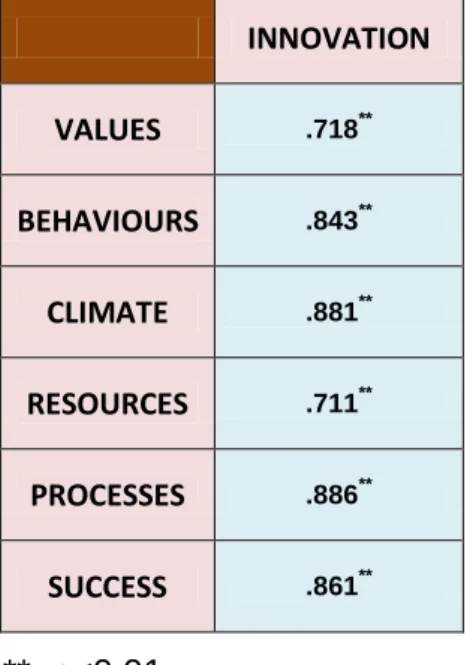
Two independent correlation data analyses were performed. The first correlation test involved relating all six building to each to other in order to identify which two building blocks hold a linear relationship to each other. The second correlation test was performed by relating each of the building blocks to the overall innovation in order to identify whether a strong relationship existed between any of the buildings and the overall innovation.
3.5 Reliability
Reliability of measurement is the extent to which data is error free thus ensuring consistent measure across time and various items within the research instrument (Sekaran et al., 2013). Therefore reliability of an instrument measure can be considered as an indication of the consistency and stability of the concept and assists in ascertaining the goodness of a measure.
Reliability of the research instrument was assured by pretesting the questionnaire.
The five participants that answered the online questionnaire during pretesting reported that the sentences were clearly phrased and could be well understood. It was also reported that the questionnaire was well structured and could be answered
36
within a reasonable time. All these factors were considered. No changes were made to the research instrument and the research instrument was accepted to be reliable.
3.6 Validity
Validity measures the accuracy with which the designed research instrument tests the actual research objectives in relation to its intended objectives (Creswell, 2014).
It is the best approximation to the strength of our conclusions ensuring that the right concepts are measured by the research. There are several types of validity tests which are denoted by terms however validity tests can be grouped under three broad headings of construct validity, content validity and criterion-related validity (Sekaran and Bougie, 2014).
Criterion – related validity can be determined by establishing the strength of the measure of the differentiation between two individuals who have been predetermined to be different. This can be achieved by predictive validity and concurrent validity.
Concurrent validity is achieved when individuals are discriminated against by the scale although they are known to be different.
Content validity ensures that there are adequate materials from which the concept can be explored from. The concept validity of the research instrument will increase significantly as the volume of material that represents the concept increases. This study has drawn upon a vast array of topics that represent areas of the concept. The literature review has included an empirical review of prior studies has represented such concepts within those studies. The questionnaire was divided into six main sections each of which was further divided into three elements and further into three factors each. Each question gave a fair representation to the content.