i
NON-HEALTH SYSTEM RELATED FACTORS AFFECTING TUBERCULOSIS TREATMENT OUTCOMES: A CASE-CONTROL STUDY. UMGUNGUNDLOVU
HEALTH DISTRICT
Submitted to
NELSON R. MANDELA SCHOOL OF MEDICINE
UNIVERSITY OF KWAZULU-NATAL DURBAN
SOUTH AFRICA For
DISSERTATION IN PARTIAL FULFILLMENT FOR THE REQUIREMENTS OF THE MASTER OF PUBLIC HEALTH
By
ZANELE S. I NDWANDWE: 205511245
Supervisor: Dr S.E Knight Co-Supervisor: Dr E. Lutge
ii ABSTRACT
KwaZulu-Natal province records the highest number of tuberculosis cases diagnosed in the country, but less than 50% of these were cured in 2008, and fewer in those from rural areas and informal settlements where inadequate health care continues.
HIV and AIDS associated tuberculosis frequently require labour-intensive methods of monitoring and combating for any success to be achieved. The socio-economic context wherein these diseases occur further limit their control.
The low proportion of tuberculosis patients currently with successful treatment outcomes in Umgungundlovu Health District makes essential an in-depth
investigation to establish the factors that are associated with these poor outcomes.
This study investigates the factors affecting the current poor treatment outcomes in new patients with tuberculosis in a high disease burden district of KwaZulu-Natal in 2011.
Methods
A retrospective case-control study was conducted comprising 300 adult cases of tuberculosis who failed to complete 6 months of ambulant therapy and 300
frequency matched controls who completed therapy. A random sample of 15 primary health care clinics was selected from where consecutive cases and controls were selected with probability proportional to the number of tuberculosis patients seen at the clinic. Data was extracted from patient records and interviews. Processed data was analysed to identify risk associations using multivariate logistic regression.
Results
After adjusting for confounding statistically significant risk factors associated with poor tuberculosis treatment outcomes were unemployment (Odds Ratio (OR) 16.0;
95% CI: 6.7 to 37.8); living in a rural area (OR 14.3; 95% CI: 1.1 to 18), distance from home to clinic (OR 1.4; 95% CI: 1.3 to 1.6), living with HIV (OR 2.3; 95% CI: 1.1 to 4.7) and being very ill (OR -5.0; 95% CI: 2.1 to 11.9).
iii Discussion
The principal findings are that non-adherence to TB treatment is significantly associated with a number of non-health systems issues. Determinants of poor TB treatment outcomes in patients receiving six-month ambulatory care are diverse and multifactorial. After adjusting for confounding variables, unemployment, distance from patient home to the clinic, living with HIV and being very ill during TB therapy remained significantly associated with a poor TB treatment outcome.
Conclusions
Although determinants of poor tuberculosis treatment outcomes in patients receiving six-month ambulatory care are diverse and multifactorial, poor tuberculosis treatment outcomes are significantly associated with identifiable factors independent of the health system. Rigorous intervention strategies should prioritize at least these five major risk factors.
Recommendations
The TB control programme should go beyond the health systems issues to include inter-sectoral collaboration to address socio-economic and other non-health system barriers to adherence to TB treatment. Further research is recommended in this field.
iv
DECLARATION I, Zanele Ndwandwe, declare that:
(i) The research reported in this dissertation, except where otherwise indicated, and is my original research.
(ii) This dissertation has not been submitted for any degree or examination at any other university.
(iii) This dissertation does not contain other persons’ data, pictures, graphs or other information, unless specifically acknowledged as being sourced from other persons.
(iv) This dissertation does not contain other persons’ writing, unless specifically acknowledged as being sourced from other researchers. Where other written sources have been quoted, then:
a) their words have been re-written but the general information attributed to them has been referenced;
b) where their exact words have been used, their writing has been placed inside quotation marks, and referenced.
(v) Where I have reproduced a journal publication of which I am an author, I have indicated in detail which part of the publication was actually written by myself alone and not by other authors, editors or others.
(vi) This dissertation does not contain text, graphics or tables copied and pasted from the Internet, unless specifically acknowledged, and the source being detailed in the dissertation and in the References sections.
Signature of Student:
Signature of Supervisor:
Dr Stephen Knight Department of Public Health Medicine,
Nelson R Mandela School of Medicine
University of KwaZulu-Natal, Durban, South Africa Date: 28 November 2012
v
ACKNOWLEDGEMENTS
My eternal gratitude and appreciation go to the following people;
Dr S. Knight my supervisor forhis guidance and encouragement. I learned a lot including computer skills;
Dr E. Lutge my co-supervior for her guidance, support and gentle coaching and mentoring;
Mrs T. Esterhuizen, bio-statistician for stastistical guidance and coaching;
My loving husband Nkosinathi for his unwavering support, and my children;
Operational Managers of various clinics where the study was conducted;
Twelve field workers who collected data; and
Ms Gugu Mofokeng who assisted with capturing of data.
vi
ABBREVIATIONS AND ACRONYMS ABET Adult Basic Education and Training AIDS Acquired Immune Deficiency Syndrome ART Antiretroviral Therapy
CAM Contemporay Alternative Medicine CHC Community Health Centre
CHW Community Health Worker CI Confidence Interval
DHER District Health Expenditure Review DHIS District Health Information System DOT Directly Observed Treatment ETB Extra-pulmonary tuberculosis HIV Human Immunodeficiency Virus
KM Kilometres
KZN Kwazulu-Natal Province
MDRTB Multidrug Resistance Tuberculosis PHC Primary Health Care
TB Tuberculosis
WHO World Health Organisation
vii
TABLE OF CONTENTS
Table of Contents
ABSTRACT ... ii
DECLARATION ... iv
ACKNOWLEDGEMENTS ... v
ABBREVIATIONS AND ACRONYMS ... vi
TABLE OF CONTENTS ... vii
LIST OF TABLES ... xv
LIST OF FIGURES... Error! Bookmark not defined. 1 CHAPTER 1: INTRODUCTION ... 1
1.1.1 Introduction ... 1
1.1.2 Background ... 1
1.1.3 Statement of the Problem ... 5
1.1.4 Research Questions ... 5
1.1.5 Purpose of the Research ... 7
1.1.6 Specific Objectives of the Research ... 7
1.1.7 Assumption Underlying the Study ... 7
1.1.8 Operational Definitions Used in the Study ... 7
1.1.9 Organisation of the Report ... 9
1.1.10 Summary ... 10
viii
2 CHAPTER 2: LITERATURE REVIEW ... 11
2.1 Introduction ... 11
2.2 Purpose of Literature Review... 11
2.3 Scope of Literature Review ... 11
2.3.1 Sources of Literature Reviewed ... 12
2.3.2 Literature Reviewed ... 12
3 CHAPTER 3: METHODS ... 28
3.1 Introduction ... 28
3.2 Type of Research ... 28
3.2.1 Study Design ... 28
3.2.2 Study Setting ... 29
3.2.3 Target Population ... 29
3.2.4 Study Population ... 29
3.2.5 Sampling ... 30
3.2.6 Sampling Method ... 30
3.2.7 Size of Sample ... 31
3.2.8 Data Sources ... 32
3.2.9 Measurement Instruments/ Data Collection Techniques ... 32
3.2.10 Data Abstraction ... 33
3.2.11 Data Handling... 33
ix
3.2.12 Variables ... 34
3.2.13 Validity of Data Sources ... 35
3.2.14 Bias and Limitations ... 35
3.2.15 Social Desirability Bias ... 36
3.2.16 External Generalisability ... 36
3.2.17 Confounding Factors ... 37
3.2.18 Statistical Considerations ... 37
3.2.19 Descriptive Methods ... 37
3.2.20 Analytical Methods ... 37
3.2.21 Ethics ... 38
3.2.22 Permissions ... 38
3.2.23 Pilot Study ... 39
3.2.24 Summary ... 39
4 CHAPTER 4: RESULTS ... 41
4.1.1 Introduction ... 41
4.1.2 Demographics ... 41
4.1.3 Socio-economics ... 42
4.1.4 Residential Area, Housing, Water Source and Sanitation ... 43
4.1.5 Alcohol, Drug Use and Smoking among Adult TB patients ... 44
4.1.6 Directly Observed Therapy for Tuberculosis ... 44
x
4.1.7 HIV and AIDS ... 45
4.1.8 Severity of Illness of Adult TB Patients ... 45
4.1.9 Other, Health Seeking Behaviour, Knowledge, Attitudes and Practices of Adult TB Patients ... 46
Continuous Variables ... 48
4.1.10 Distance to Clinic, in Kilometres and Taxi fare in Rands ... 48
4.1.11 Number of people in the household and number of sleeping rooms . 48 p<0.05 ... 50
p<0.05 ... 50
p<0.05 ... 50
p<0.05 ... 50
p<0.05 ... 50
p<0.05 ... 51
p<0.05 ... 51
p<0.05 ... 51
p<0.05 ... 51
p<0.05 ... 51
p<0.05 ... 51
p<0.05 ... 52
p<0.05 ... 54
p=.5 ... 54
xi
p=.5 ... 54
P=.5 ... 54
Continuous Variables ... 58
Distance from Home to the Clinic and Transport Cost ... 58
Number of sleeping rooms and number of people in the household ... 58
Multivariate Analysis Results: ... 59
Methodology: ... 59
Employment: ... 59
Distance from Clinics: ... 59
HIV Status: ... 60
Severity of Illness: ... 60
Summary ... 61
CHAPTER 5: DISCUSSION ... 62
Introduction ... 62
Sex, Age, Marital Status and Level of Education ... 63
Sex ... 63
Age ... 64
Level of education... 65
Socio-economics: Employment Status ... 66
Income per Month ... 67
xii
Going to Bed without Food ... 67
Residential Area ... 69
Type of house ... 70
Water source ... 70
Sanitation ... 71
Alcohol ... 71
Smoking ... 72
Drug Abuse ... 73
Directly Observed Treatment ... 74
Access to Directly Observed Treatment ... 74
Choice of Directly Observed Treatment ... 75
Frequency of DOT support ... 76
Self-Administered Therapy ... 77
HIV and AIDS ... 78
HIV Status ... 78
Severity of Illness... 80
Treatment Default, Number of Months and Reasons ... 80
MDRTB Positive ... 81
Physical Status during TB treatment ... 82
TB treatment and side effects ... 82
xiii
This is further supported by results of a systematic review which state that anti- tuberculosis medication side effects were also found to be significantly
associated with defaulting, and were responsible for termination of therapy in up to 23% of patients during the intensive phase (Awofeso, 2006). Treatment side effects were found to be an independent risk factor for non-adherence to TB
therapy in this study. ... 83
Other, Health Seeking Behaviour, Knowledge, Attitudes and Practices... 83
Type of alternative medicine and practitioner consulted ... 84
Tuberculosis Knowledge ... 85
Distance to Clinic, in Kilometres and Taxi fare in Rands ... 86
Number of People in the Household and Number of Sleeping Rooms ... 87
Major Risk Factors ... 87
Validity ... 88
Internal Validity... 88
External Validity ... 89
Bias and Limitations ... 89
Summary ... 90
5 CHAPTER: CONCLUSIONS AND RECOMMENDATIONS ... 92
Introduction ... 92
Conclusions ... 92
Recommendations ... 93
Recommendations for Further Study ... 96
xiv
Summary ... 96
6 REFERENCES... 97
APPENDIX B CONSENT DOCUMENT (ENGLISH) ... 123
Consent to Participate in Research ... 123
xv
LIST OF TABLES LIST OF TABLES
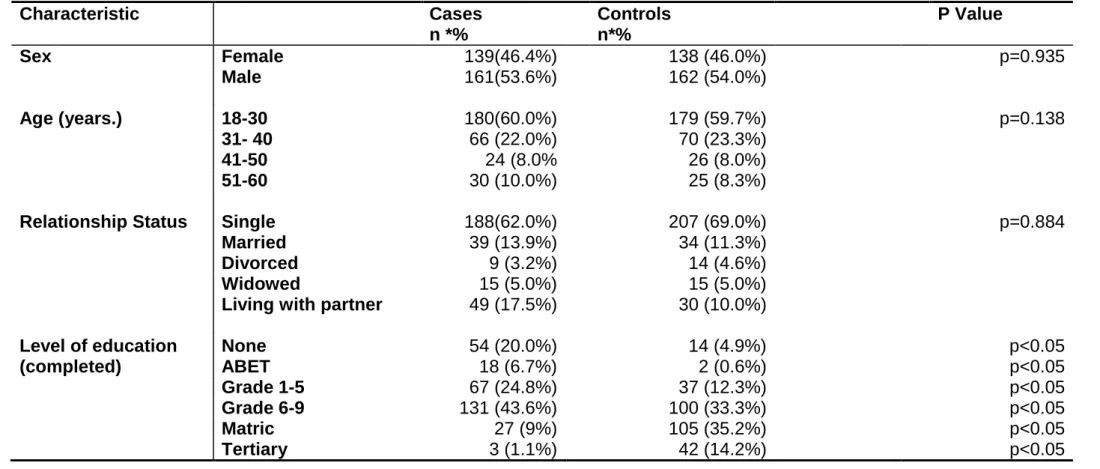
Table 1: Distribution of Population per Local Municipality in Umgungundlovu Health District in 2006………4 Table 2: Comparison of Sex, Age, Marital Status and Level of Education of Adult TB patients (Cases and Controls) in Umgungundlovu Health District,
2011………. 47
Table 3: Comparison of Employment Status, Income and Going to Bed without Food of Adult TB patients (Cases and Controls) in Umgungundlovu Health District,
2011……….. ……….48 Table 4: Comparison of Residential Area, Housing, Water Source and Sanitation of Adult TB patients (Cases and Controls) in Umgungundlovu Health District,
2011………. 49
Table 5 Comparison of Alcohol, Smoking and Drug Use in Adult TB Patients (cases and controls) in Umgungundlovu Health District,
2011……….. 50
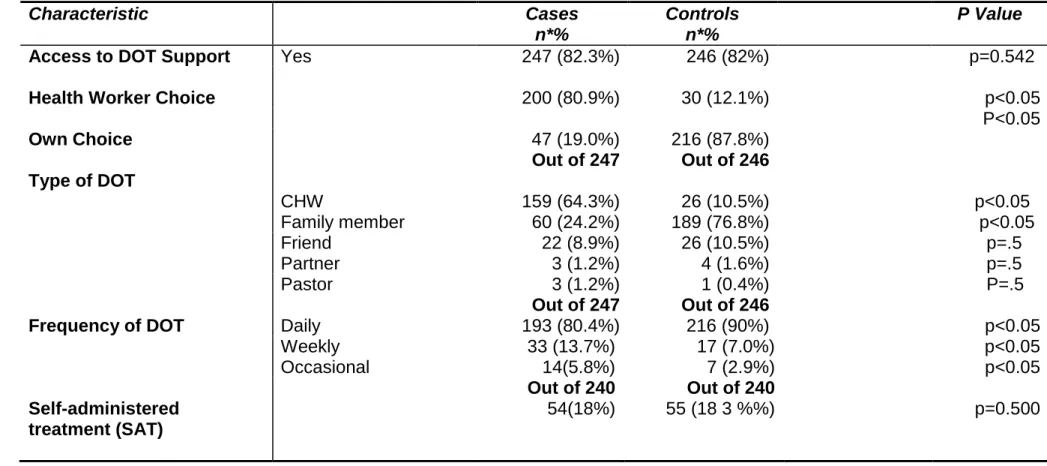
Table 6: Comparison of Directly Observed Therapy for Tuberculosis (Cases and Controls in Umgungundlovu Health District,
2011………. 51
Table 7: Comparison of HIV and AIDS among Adult TB patients (Cases and Controls) in Umgungundlovu Health District,
2011………. 52
Table 8: Comparison of Severity of Illness of Adult TB patients (Cases and Controls) in Umgungundlovu Health District,
2011……… 53
xvi
Table 9: Comparison of Other, Health Seeking Behaviour, and Knowledge, Attitudes and Practices of Adult TB patients (Controls) in Umgungundlovu Health District,
2011……… 54
Table 10: : Comparison of Distance to Clinic, in Kilometres and Taxi fare in Rands for Adult TB patients (Cases and Controls) in Umgungundlovu Health District,
2011………. 55
Table 11: Comparison of Number of people in the household and number of sleeping rooms for Adult TB patients (Cases and Controls) in Umgungundlovu Health District,
2011……… 55
Table 12: Multivariate
Analysis………. 57
xvii LIST OF FIGURES
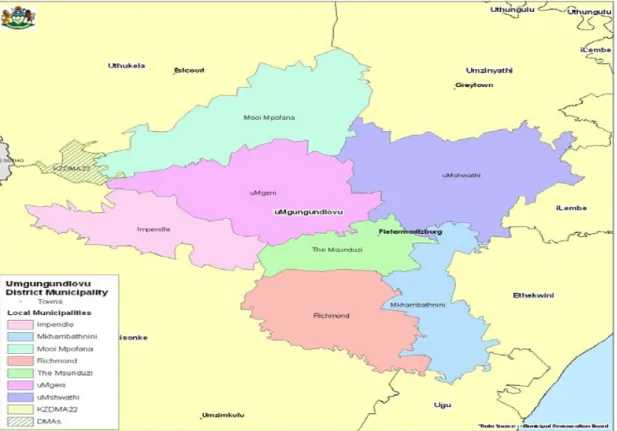
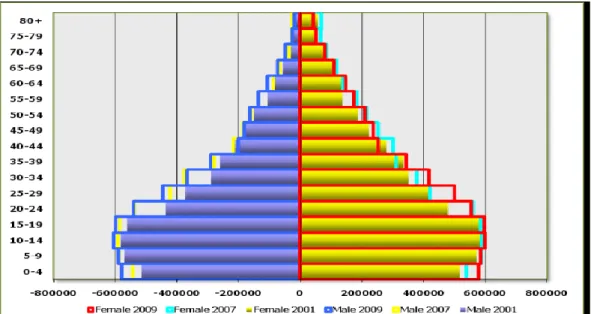
Figure 1: Map of Umgungundlovu Health District in 2006 District…………... 3 Figure 2: Population Pyramid of KwaZulu-Natal Province in 2001………….. 5
1
1 CHAPTER 1: INTRODUCTION 1.1.1 Introduction
Tuberculosis (TB) has received heightened attention in the past two decades owing to its dramatic resurgence as a major public health threat in many low-income
countries. South Africa experiences one of the worst TB epidemics in the world. The World Health Organization (WHO) ranked South Africa fourth among 22 severely affected TB countries in the world in2008 (Stevens, 2008).
The above finding is confirmed in the Management Sciences for Health (2004) Annual Report which states that South Africa continues to endure one of the worst TB epidemics in the world. Factors such as poverty, the Human Immunodeficiency Virus (HIV) and Acquired Immune Deficiency Syndrome (AIDS) and attendant poor health infrastructure contributes to the high disease burden of TB and accentuates the low levels of cure achieved. Rural areas feature among the most severely afflicted (Management Sciences for Health, 2004).Such a finding is confirmed when the numerous challenges to access health care in rural areas are accounted for and taken into consideration.
1.1.2 Background
1.1.2.1 Overview of Tuberculosis in South Africa
The resurgence of pulmonary tuberculosis in South Africa, a development that is further exacerbated by the HIV and AIDS epidemic now poses as a major challenge to the relevance, appropriateness, and effectiveness of those current TB
management programmes being implemented. It is thus essential that these TB programmes need to be re-evaluated, especially in relation to their applicability in rural areas (Dodor, 2004).
Nair et al. (2010) supports the contention that the observed rapid escalation of TB in sub-Saharan Africa reflects the increase in the prevalence of HIV infection in this
2
region. Approximately two million deaths from TB are recorded annually in sub- Saharan Africa (Nair et al., 2010).
The burden of TB exerted upon the nation’s health services is overwhelming.
Despite South Africa’s investment in TB control, progress toward reaching the
programme objective has remained frustratingly slow and treatment success remains low compared with other African countries (USAID, 2006).
“The incidence of detected tuberculosis has tracked trends in the prevalence of HIV since 1994. Although the incidence of new cases of smear positive pulmonary TB has not increased as sharply, this is mainly due to the high rate of smear negative TB and late detection of TB, especially among newly infected people living with HIV, (meaning that people often present first with TB complications other than lung
infection “ ( Harrison, 2009).
KwaZulu-Natal (KZN) province records the highest number of TB cases in the country (Cullinan 2004).In 2002, 36% of those diagnosed with TB were cured. Two years later, there was an improvement with a figure of 49% being achieved; a statistic that still ranks far below the WHO target of curing 85% of cases (Cullinan, 2004). Currently, the TB cure rate in KZN is a mere 42% (Monticelli, 2008).
At least two million of 9.4 million KZN residents living mostly in rural areas and informal settlements continue to lack adequate health care in the most populous province of South Africa. The combined impact of epidemics such as HIV and AIDS and TB frequently require labour-intensive methods of monitoring and combating for any success to be achieved. In addition, the socio-economic context wherein these diseases occur further inhibits any discernible progress in their control being
achieved (Cullinan, 2004).
Umgungundlovu Health District was declared a “TB Crisis Emergency Area" by the National Health Department due to the high incidence of the disease in 2006. The aforementioned region constitutes the district impacted by the second highest burden of TB in the province after Ethekwini Health District (National Department of Health 2006).
3
In uMgungundlovu only 35% of TB cases where cured in 2005. Currently the figure stands at 58%, a statistic, which remains below the specified 85% target (DHIS, 2010). The low proportion of TB patients currently being cured in Umgungundlovu Health District and recorded in recent history makes essential an in-depth
investigation to establish the patient-related factors that contribute to the attainment of such undeniably inadequate TB treatment outcomes in the course of combating this scourge.
1.1.2.2 Overview of the Research Setting.
Umgungundlovu Health District is the second largest health district in KZN province with a population of 980 000 to 1 million. It has seven local municipalities. The
majority of the population in Umgungundlovu Health District is African (83%) followed by Asian (9%), White (6%) and Coloured (2%). Females comprise 53% of the
population (Tang, 2008).
Figure 1: Map of Umgungundlovu Health District in 2006 District.
Source: Department of Local Government and Traditional Affairs, 2006).
4
The map shows the distribution of seven local municipalities in Umgungundlovu Health District. In this study, data was disaggregated per municipality.
Table 1: Distribution of Population per Local Municipality in Umgungundlovu Health District in 2006.
Municipality Population % Population
uMsunduzi 568606 59
UMshwathi 93052 10
uMngeni 76354 8
Mkhambathini 69503 7
Richmond 63602 7
Mooi Mpofana 53435 8
Impendle 31757 8
Source: Department of Local Government and Traditional Affairs, 2006.
Over half of the population in Umgungundlovu Health District lives in Umsunduzi local municipality hence most of the study sites for this research were located in this municipality. The other local municipalities combined comprised nearly the same size of population. The number of households is estimated to be between 240 000 to 260 000. About 48% of the households (115 500) live in poverty (Umgungundlovu Municipality, 2006).
5
Figure 2: Population Pyramid of KwaZulu-Natal Province in 2001 Source: Annual Report Department of Health KZN 2002
The age-sex distribution in UMgungundlovu Health District is similar to that depicted in the population pyramid of KZN, which is typical of a developing or low income country. The target population for this study was adults between 18 and 70 years of age.
The budget allocation in 209/10 financial year for Umgungundlovu Health District was approximately R1.6 billion, an amount required to cater for 8 hospitals and 42 clinics (District Health Expenditure Review, 2010).
1.1.3 Statement of the Problem
New adult TB patients on the six month first line TB treatment regimen have poor treatment outcomes, a factor which impacts adversely on the proportion of TB cases being cured in Umgungundlovu Health District.
1.1.4 Research Questions
a. Why is the proportion of TB cases completing treatment low in new patients receiving TB treatment for six months in Umgungundlovu Health District?
6
b. What are the non-health system related barriers to patient adherence to TB treatment in this area?
7 1.1.5 Purpose of the Research
The purpose of the study was to investigate non-health system related factors that lead to poor TB treatment outcomes in Umgungundlovu Health District in 2010.
1.1.6 Specific Objectives of the Research The specific objectives of the study were:
1) To identify those non-health system factors that contribute to poor treatment outcomes in TB patients;
To describe the socio-demographic characteristics of these patients;
To assess patients’ knowledge of and attitudes towards TB and TB treatment; and
2) To determine the extent of support received by patients on TB treatment;
1.1.7 Assumption Underlying the Study
Non-health system factors contribute to successful or unsuccessful treatment
outcomes in patients on ambulatory TB treatment, independently of the quality of the TB management programme.
This study will provide service providers and health planners with information that will assist in the re-design and improvement of the prevailing six-month ambulatory TB management services. It will further serve to allocate resources efficiently and equitably. It will also generate other useful research topics.
1.1.8 Operational Definitions Used in the Study New case:
A patient who has never had treatment for TB or who has taken anti-tuberculosis drugs for less than four weeks (WHO, 2003).
Treatment Outcome:
8
Treatment outcomes include bacteriological cure: patients with a positive smear or culture before treatment and negative bacteriological results at the end of TB
therapy. It includes endpoints such as cure, treatment completion, treatment failure, default and interruption (WHO, 2003).
Bacteriological Cure:
Such a phenomenon concerns patients with a positive smear or culture before treatment and negative bacteriological results at the end of their therapy (WHO, 2003).
Treatment Completion:
Patients who complete treatment without bacteriological proof of cure or failure (WHO, 2003).
Treatment Defaulter:
The World Health Organization defines a TB treatment defaulter as a patient whose treatment was interrupted for two consecutive months or more (WHO, 2003).
Treatment Interruption:
A patient who interrupts treatment for two weeks or more, and returns to the health service with smear-positive sputum (sometimes smear negative but still with active TB, as judged on clinical and radiological assessment) (WHO, 2003).
Treatment Failure:
Patients who fail to achieve bacteriological conversion within five months after commencing treatment, which become smear or culture positive again during treatment after previous conversion, or who are identified with multi drug-resistant TB (WHO, 2003).
9 Adherence:
The extent to which a person’s behaviour relating to the taking of medication, following a certain diet and/or success in executing lifestyle changes corresponds with agreed recommendations from a health care provider (WHO, 2003).
Multidrug Resistant Tuberculosis (MDR-TB)
It is defined as a specific form of TB that is resistant to the two most powerful first line anti TB antibiotic drugs, namely, isoniazid (INH) and rifampicin. MDRTB is a laboratory diagnosis of resistance of the Mycobacterium tuberculosis to INH and rifampicin (WHO, 2006).
1.1.9 Organisation of the Report
This dissertation is divided into six chapters.
Chapter one provides an overview of TB treatment and cure in South Africa and in the Umgungundlovu Health District with special reference being devoted to non- health system related factors that contribute to successful or unsuccessful TB treatment outcomes. This chapter outlines the research setting, research questions, main objectives and purpose of the study. This chapter also provides definitions of concepts used in this research and report.
Chapter two outlines the body of knowledge related to TB treatment outcomes and highlights the particular risk factors associated with poor TB treatment outcomes.
Information is derived from empirical research reported in the literature.
Chapter three describes the methods used in this research study. The study design, study population, data sources, sampling methods, variables and statistical analysis applied in this study are further explored in this chapter. The reliability and validity of the study and handling of bias and limitations are also described.
Chapter four focuses on the results of the research study. The overall study
population concerns the cases that yielded poor TB treatment outcomes due to non-
10
adherence to TB treatment compared to controls that had successful outcomes. Risk factors associated with low TB cure are determined.
Chapter five outlines the findings of the study and discusses these results in relation to previous studies and importance of these results for South Africa.
Chapter six provides recommendations and conclusions based on the results of the study.
1.1.10 Summary
TB remains a major contributor to the burden of disease profile in South Africa and poor TB treatment outcomes continue to undermine all the efforts to achieve a cure of 85% of new TB cases, the target as set by WHO. There are numerous reasons for this and they include many non-health system related factors.
11
2 CHAPTER 2: LITERATURE REVIEW 2.1 Introduction
The current TB control programme has not been able to achieve an annual 85% cure rate in Umgungundlovu Health District in KZN province. The proportion of TB cases cured per annum has been as low as 29% in the past, and it is currently at 58% per annum. Such a figure is typical of many low income countries for new cases
receiving ambulatory care, instead of hospitalization. The recommended treatment protocol for newly diagnosed ambulant TB cases involves six months of TB
treatment.
There are many who barriers to successful TB treatment outcomes and many of these are non-health system factors. This is supported by Atkins (2011) who states that a recent systematic review indicated structural factors, patient-related factors, the social context and health service related factors as important factors influencing treatment adherence and successful TB treatment outcomes.
In this literature review the contribution of non-health system related factors described in the literature was assessed. This study assessed a number of these factors and their interrelatedness, thus contributing to a holistic picture of the problem.
2.2 Purpose of Literature Review
The purpose of the literature review was to establish the current extent of knowledge and awareness regarding non-health system factors that contribute to TB treatment outcomes, in order to draw inferences from empirical research.
2.3 Scope of Literature Review
Literature assessing factors related to poor TB treatment outcomes in new adult patients receiving six-month TB treatment were reviewed. The purpose thereof is to determine non-health system related risk factors associated with poor treatment outcomes.
12 2.3.1 Sources of Literature Reviewed
The PubMed database was searched for studies pertaining to risk factors related to TB treatment outcomes between 1990 and 2011 in new adult patients on six-months of ambulant TB treatment. The following search terms were used to access citations related to risk factors: “TB treatment outcomes”, “factors associated with non-
adherence to TB treatment”, “effectiveness of DOT support”, “TB and HIV”. Library sources were also used to retrieve information on what is already known about the topic. It was also undertaken to identify the most appropriate theoretical framework to support the basis for this study.
2.3.2 Literature Reviewed
2.3.2.1 Tuberculosis Diagnosis and Treatment
According to the Health Systems Trust (2008), the annual cure rate for new smear positive patients is regarded as the key indicator to assess a TB programme in a high-burden country. South Africa is working towards achieving the accepted WHO target of curing 85% of new smear positive TB cases.
The process of TB diagnosis includes the following procedure: the patient presenting with both TB signs and symptoms is examined at a primary health care clinic and asked to supply a sputum sample on two consecutive days. These samples are forwarded to a laboratory and the results usually become available in less than 48 hours. Only one of the above needs to record a positive result to confirm TB infection. (Department of Health, 2001).
If the smear result is indeed positive, the patient will receive counselling and be advised on the inherent benefits of participation in the TB control programme. If both sputum samples are positive, TB treatment is given immediately. Furthermore, an X- ray may also be taken, but the sputum tests may be enough to confirm the diagnosis (Department of Health, 2001).
According Schaaf et al. (2009), TB can only successfully be cured if the full course of treatment, encompassing as much as six months duration of TB therapy is
13
completed. They further state that interruption of treatment is likely to enhance the development of multi-drug resistance, creating further complications in treating the disease, and can indeed be fatal.
The classic presentation of TB is characterized by several weeks extending to a period of months of chronic cough, weight loss, fatigue, fevers, night sweats and haemoptysis. “Fever is a classically diurnal with an afebrile period early in the morning and a gradual rising temperature throughout the day, and culminating in a fever peak in the afternoon or evening. Nighttime defervescence is often
accompanied by diaphoresis leading to drenching night sweats” (Schaaf et al., 2009).
“Physical examination is usually non-specific. Classic findings are pallor, cachexia, tachycardia and post-tussive crackles over the affected lung Treatment occurs in two phases “(Schaaf et al., 2009).The intensive phase involves the provision of four different drugs in tablet form for five days a week, for a period of two months. To facilitate the process of swallowing, the new combination drug Rifafour has been introduced (rifampicin, isoniazid, ethambutol and pyrazinamide) (Schaaf et al., 2009).
The second phase is the continuation phase, where two drugs are supplied to the patient for five days a week for a period of four months. First-time TB patients must be treated for six months but for those on repeat treatment the duration of therapy is longer (Department of Health, 2011).
Short course chemotherapy of six months duration, including rifampicin, at least provided in the intensive phase, can achieve a cure rate of 97 to 99%, and a relapse in less than 6%.
Vasankari et al. (2007) recognized that early diagnosis of TB and then providing effective treatment constitutes the key elements involved in the reduction of
transmission of infection and the final achievement of the goal of the elimination of TB. They emphasize that treatment outcome monitoring forms a core part of surveillance necessary to succeed in tuberculosis elimination.
14
TB drugs like any other medication have side effects, which can be very severe, and may cause patients to default treatment. Nausea was identified as one of the serious side effects of TB treatment that requires emergency attention (Solis, 2011).
Schoenstadt (2006) states that occasionally, the medication used to treat tuberculosis may cause side effects. Some side effects cause minor problems;
others are much more serious. The latter author states that serious side effects from TB medication may include, but are not are limited to lack of appetite, and symptoms of nausea and vomiting. In the study conducted by Elbireer et al. (2011) the side effects of treatment (OR 5.5; 95% CI: 2.3–13.6), was highlighted as a factor contributing to treatment default.
In another study conducted by Munro et al. (2007), it was highlighted that complex regimens with potentially severe side effects cause non- adherence and poor TB treatment outcomes. This is further supported by Awofeso (2006) who asserts that anti-tuberculosis medication side effects were also found to be significantly
associated with defaulting.
2.3.2.2 Tuberculosis Treatment Outcome
There is a consensus among authors that TB treatment outcomes include being cured, completion of treatment, treatment failure, default or death of the patient. In a study conducted on factors determining the outcome of treatment of adult smear- positive tuberculosis cases in Gambia in 1994 and 1995, data was analysed on 1357 patients and treatment outcome was recorded as the following: cured, completed treatment, failed, defaulted or died (Lienhardt et al., 1998).
In another retrospective study that investigated factors associated with poor
treatment outcome in the Southern Region of Ethiopia from 2002 to 2007 a sample of 6547 patients was categorized as having successful (cured or completed) or poor treatment outcome (failed treatment, defaulted or died) (Munoz-Sellart et al., 2010).
Findings by JhaUm et al. (2006) findings were that amongst the large number of re- treatment patients in India, default occurs early and often. Atkins (2011) argues that
15
adherence to TB treatment is a complex issue and it is closely connected with larger societal and historical forces. He draws a conclusion that adherence is therefore related to social inequalities and their impact on health and health care.
Extensive research has been conducted on TB treatment outcomes. However, most studies have focused on health systems issues. Unfortunately, very little attention has been devoted to non-health system related factors contributing to treatment outcomes, yet there are three groups of non-health system constraints in the management of TB. These include: patient related factors, which concern the inability to access health services, a disadvantage which is likely to increase treatment interruption; lack of household income, lack of money for food and
transport; and perceived social stigma. Other factors include contextual factors and health system factors (Naidoo, 2006).
This is supported by Amuha et al. (2009) who state that non-adherence to treatment is a problem in tuberculosis management, similar to that applicable to other long- term illnesses. They argue that a number of factors associated with non-adherence have been cited in the literature. These include health system, condition-related, patient-related, socioeconomic and therapy-related factors.
The key to an effective TB control programme involves ensuring adherence to therapy. Adherence increases the likelihood of successful TB treatment outcomes including cure and reduces the risk of drug resistance, and is determined by a multiplicity of both internal and external factors (Wilkinson, 1997).
2.3.2.3 Tuberculosis Treatment Outcome, Sex Age and Socio- Economic Status
Authors have different views about the sex of the patient and treatment outcome. A prospective study conducted in England found that the risk factors for poor treatment outcome included being a male (Ditah et al., 2006). Whereas a retrospective study conducted in South Africa, found that the proportion of women (64%) who did not adhere to TB therapy was higher than for men (36%) (Mashimbye, 2009). Another South African based retrospective study showed that successful treatment outcomes
16
were significantly associated with male patients (Odour, 2006). Findings of a case- control study conducted by Jhaum et al. (2006) in Indian in 2006 revealed that defaulters were more likely to have been male (OR 1.4; 95% CI: 1.2-1.7) Findings of another retrospective study, which reviewed TB patient records in Effia-Nkwanta Regional Hospital in Ghana in 2001, revealed that default from treatment was also significantly associated with the male gender (Dodor, 2004).
In yet another study, multivariate analysis showed that the males were a predictor of a negative treatment outcome, after controlling for other significant socio-
demographic and health related variables. (Bashour et al., 2003).The findings of the study by Dooley et al. (2011) state that male sex, and substance use, appeared to be the principal risk factors for default.
Another interesting finding of a study conducted in Yemen, concerned the fact that the role of male relatives positively influences treatment outcomes for female
patients (Date et al., 2005). Such a fact highlights the complex role which a specific variable such as sex could of itself, form the framework for further research. The results of the study by Gupta et al. (2011) highlighted that PTB was significantly more common in male patients and unemployed people.
Age does not seem to affect TB treatment outcomes. Findings of a retrospective study conducted on adults infected with TB in the United States between 1993 and 2008, involving 250 784 participants, revealed that older patients who were on TB therapy, had similar treatment outcomes to those of younger adult TB patients (Pratt et al., 2011). Age had no bearing on the treatment outcome. I
In a case-control study on new smear-positive pulmonary TB patients conducted by Pakasi et al. (2009) the prevalence of malnutrition and being unemployed were very high among TB cases. Socio-economic status also affects a person's access to effective healthcare in Ireland (Luddy, 2007). Socio-economic status would have a negative impact on the TB treatment outcomes, as those who are poor have less chances to adhere to TB therapy because of out of pocket expenses to cover transport and food.
17
Findings of a cohort study of 727 new TB cases between 2004 and 2009 conducted in Morocco revealed that a low income level remained significantly associated with treatment failure TB (OR 3.2; 95% CI: 1.1-9.3) (Tachfouti et al., 2011).
Findings of a retrospective study conducted in Zambia in 2001 on 202 adult patients with pulmonary TB demonstrated that existing financial constraints and additional unrecognized patient costs, including special food expenditure, and travel distances served as barriers to a successful TB treatment outcome (Needham et al., 2004).
A study conducted by Ogboi et al. (2010) revealed that most of the patients
presenting with tuberculosis are in the economic productive age with unemployment and low literacy level being potent risk factors for tuberculosis.
In a case-control study on new smear-positive pulmonary TB patients findings showed that the prevalence of both malnutrition and being unemployed ranked very high among TB cases (Bumburidi et al., 2006).
Findings in another study highlighted homelessness, migration, alcohol and drug abuse, previous incarceration, unemployment, and urban residence as risk factors that lead to poor treatment outcomes (Greene, 2004).The findings of the study by Muniyandi et al. (2008) also highlighted an association between TB and poverty, in terms of income, standard of living, house type and social class.
There is yet further evidence to support the notion that the patient’s perspective, including socio-economic status and cultural environment, is an important
consideration affecting the success of tuberculosis control programmes. Barriers to the completion of long-term treatment regimens include socioeconomic status, the health system and the condition itself (Garner et al., 2007).
This is further supported by Hargreaves et al. (2011) who state that TB cases continue to cluster among disadvantaged groups such as the poor and the hungry.
They further state that National TB incidence rates appear more closely correlated with social and economic determinants such as the human development index, access to water and sanitation (Hargreaves et al., 2011).
18
A similar observation was made by Cosgrove (2007) who demonstrated that poverty has an important influence on health and despite continuing economic growth, poverty and health inequalities persist. Needham et al. (2003) state that within poor resource settings, patients face financial constraints specifically related to travel distances and transportation costs, which create a significant burden on patients.
Findings of a study conducted in South Africa also highlighted that deteriorating socio-economic conditions among already vulnerable populations is an important barrier to effective TB control (Weyer et al., 2007). Day et al. (2009) refer to the accompanying social environment which includes housing conditions, and rural versus urban settings. They state that deprivation is, however, concentrated in specific areas within the country and is correlated with ill health. Poverty is reported as a contributor to non- adherence to TB treatment (Day et al., 2007).
Sachdeva (2011) argues that it is not clear as to what extent these differences result from biological factors and socio-cultural contexts. The literature, however, suggests that an overemphasis of cultural difference without further exploration of other social dimensions of health care delivery can obscure a practical understanding of relevant factors related to treatment outcomes. These include the hidden costs of treatment, poor access to care, ethnic discrimination, and prior poor treatment furnished by the health system.
This argument is strengthened by a further study on adherence to tuberculosis treatment conducted in 2002 in India. Here, the argument is postulated that the reasons for default stem primarily from a poor correlation between patient and programme needs and priorities, and from characteristics of the disease and its treatment (Jaiswal et al., 2003).
2.3.2.4 Tuberculosis Treatment Outcome and Level of Education
A meta-analysis of studies identified illiteracy as a confounding variable associated with treatment outcomes (Munro et al., 2007). It can be asserted that lack of
education does not hinder patients from receiving both a TB diagnosis and treatment. However, the traditional perceptions of illness may cause a longer
19
diagnostic delay among illiterate patients, as patients may perceive such illness as being of supernatural causation.
Cheng et al.(2005) showed that lack of education and distance from home to a township health centre were significantly associated with delay in seeking care from service providers. This is further demonstrated by a prospective cohort study
conducted in South Africa, which found that illiterate patients were more likely to interrupt treatment (Mashimbye, 2009).
2.3.2.5 Risky Social Behaviours: Alcohol, Smoking and Drug Abuse and Non- adherence to Tuberculosis Treatment
Findings of a four year retrospective study that was conducted in Switzerland based on a computerised database and a review of medical records for 252 patients, revealed that alcohol abuse (OR 21; 95% CI: 2-288) and smoking were associated with unsatisfactory outcomes, and was also significantly associated with cavitatory pulmonary TB (Kherad et al., 2009).
Findings of a cross sectional study conducted on 153 268 TB cases from 1997 until 2006 in the United States showed that there was a significant association between drug and alcohol abuse and treatment failure (Oeltmann et al., 2009).A retrospective study conducted in Kasturba Hospital in South India also highlights smoking and alcoholism as risk factors for poor TB treatment outcomes (Gupta et al., 2011).
The study by Dujaili et al. (2007) further reaffirms that tobacco smoking is a predictor of poor TB treatment outcomes. The findings of the study by Kherad et al. (2009) confirm that smoking appears as a possible risk factor.
According to Gelmanova et al. (2007) in a multivariate model, substance abuse was identified as the only factor that was strongly associated with non-adherence with an odds ratio of 15 (95% CI: 4–70).
This is further supported by Creswell’s (2011) findings that alcohol and injection drug use were the only independent risk factors for non-adherence and default that we identified. These findings echo those of numerous previous studies that found
20
substance abuse to be the single major factor associated most strongly with non- compliance with TB regimens and resulting poor TB treatment outcomes.
Dodor (2004) states that despite the clear need for new approaches to this problem, and to date there has been relatively little research on those treatment options for patients with chronic infectious diseases and who practise concomitant substance misuse.
2.3.2.6 Tuberculosis and HIV and AIDS
The HIV epidemic has significantly increased the incidence of TB, in high prevalence and poor resource settings. “The concomitant epidemics of HIV and tuberculosis present a major public health problem in South Africa” (Abdool Karim et al., 2007).
Findings of a meta-analysis conducted in 2006, which focused specifically on long- term adherence to TB treatment, revealed that TB and HIV present a particular challenge to adherence. Both are chronic infectious diseases that mainly affect the most vulnerable populations in terms of their being disadvantaged and the fact that they involve complex treatment regimens (Munro et al., 2007).
A retrospective study conducted in KwaZulu-Natal, showed a high uptake of HIV testing for TB patients. The study reported HIV testing uptake on a monthly basis.
More than 80% knew their HIV status (Wallrauch et al., 2010).However in another cross-sectional study conducted in the Free State Province only a third (32%) of TB patients had not undertaken HIV testing, due to a combination of individual related factors, and also health systems limitations including non-offer of HIV testing (Kigozi et al., 2011).
This outcome is echoed by the findings of the study conducted in Spain by Diez Ruiz-Navarro et al. (2005) who showed that the outcome for tuberculosis treatment greatly deteriorates in those living with HIV. Abdool Karim et al. (2004) argue that with the high rates of HIV co-infection (60%), the impact of HIV on outcomes of these patients is substantial.
21
This was also confirmed by Schaaf et al. (2009) who found that in southern African countries, where HIV prevalence is highest, more than half of new TB cases are living with HIV. In South Africa this was corroborated in a study that showed that HIV associated TB- co-infection was approximately 55% in 2002 (Gasa, 2009).
Heysell et al. (2010) contend that those living with HIV (PLHIV) are prone to
malabsorption and are at higher risk for low drug levels.This is echoed by Nahid et al. (2007) who state that PLHIV- were significantly more likely to develop drug
resistance (4.2% in HIV-infected versus 0.5% in HIV-uninfected) to rifampicin, and to experience adverse reactions to TB treatment regimens.
Findings of a retrospective study of 700 patients with TB, conducted in San Francisco from 1990 to 2001, revealed that TB relapses were found to be significantly higher in people living with HIV on a standard six-month therapy
compared to those HIV-uninfected patients. According to the authors, the current TB treatment guidelines do not distinguish between those infected with HIV and those who are uninfected, in terms of the length of treatment. They argue that a standard six-month therapy may be insufficient to prevent relapse TB associated HIV (Nahid et al., 2007).
Results of a South African based article review Naidoo et al. (2007) also showed that treatment interruption rates are much higher in patients living with HIV who have TB than HIV negative patients. This is likely due to the burden of co-infection.
Sebastino et al. (2009) state that the immune recovery associated with antiretroviral therapy (ART) results in dramatic clinical benefits. The still believed that using ART might not be appropriate during the first weeks of anti-TB therapy in HIV-infected patients due to immune reconstitution problems (Sebastino et al., 2009).
Initiation of ART during anti-TB treatment can lead to immune reconstitution disease (IRD) manifested as worsening of symptoms and signs or appearance of new TB lesions. The majority of cases have been reported to occur within the first two months of ART (Schaaf et al. 2009).
22
On the contrary Lonnroth et al. (2009) state that ART reduces risk of poor TB treatment outcomes in patients living with HIV. This is further supported by Nahid (2007) who found that the use of ART during TB treatment was associated with a faster Mycobacterium tuberculosis negative culture conversion, and an improved survival.
2.3.2.7 Tuberculosis Treatment Outcome and Directly Observed Therapy Treatment success achieved in the 2005 Directly Observed Treatment (DOT) cohort yielded over two million patients scoring 84.7% success on average; close to the 85% target. Global targets for TB control refer to treatment success for new smear- positive cases treated under DOT (WHO, 2006).
In a study conducted by Dudley et al. (2011) in South Africa it is reported that community health worker support contributed to better TB control programme performance than an approach based exclusively on health facilities.
Findings of a study evaluating directly observed therapy for tuberculosis in KZN in 2009 revealed that districts that had received high DOT coverage had recorded better cure rates (Ntshanga et al., 2009).The findings of a controlled trial on DOT, conducted in Thailand on 836 patients diagnosed in 1998, were in agreement with above findings (Kamolratanakul et al., 1999).
According to a WHO report treatment success rates tend to be lower in patients without DOT support and those on self-administered therapy (SAT) than those for new cases treated under DOT (WHO 2008).This is echoed by Jasmer et al. (2004) who reported thatlevels of cure was significantly higher in those treated by DOT compared those on self-administered therapy. (98% vs. 89%, p < 0.002).
Conversely the findings of the study conducted in South Africa by Zwarenstein (1998) suggest that treatment for tuberculosis was more successful among self- supervised patients (60% of patients) than among those on DOT (54% of patients).
23
Garner et al. (2007) argues that models that involve either family or community members provide an opportunity to tackle existing social and family barriers
contributing to poor TB treatment outcomes, including encouraging family members to complete treatment. There was also a strong association between the frequency of DOT support and TB treatment outcome.
Hargreaves et al. (2011) confirm that DOT has significantly reduced TB morbidity and mortality, and remains one of the most cost-effective public health interventions ever implemented, although findings of a study conducted in Nepal indicated that community DOT and family-member DOT achieved success rates of 85% and 89%
respectively (Newell et al., 2006).
A cluster randomised trial conducted in Senegal found that decentralization of treatment and patient choice of DOT supporter led to improvement in patient outcomes compared to the usual TB control procedures (Thiam et al., 2007). A South African based study also found that DOT was 2.8 times cheaper to deliver than the conventional treatment (Floyd et al., 1997).
2.3.2.8 Multidrug Resistant Tuberculosis (MDRTB)
A South African based case-control study has investigated both favourable and unfavourable outcomes, in order to compare determine which factors, lead to better adherence to MDR-TB treatment. The study conducted by Moodley et al. (2011) in KZN highlighted the fact that 20% of patients had cultures positive for MDRTB.
Sturm (2010) states that, the number of MDR per 100 new cases is 14.8 in Umgungundlovu Health District.
Results of a systematic review indicate that TB treatment outcomes were substantially worse in the presence of initial drug resistance (Lew et al., 2008).
Consensus among authors is that the low levels of treatment success, has resulted in an increasing MDR-TB burden. The appearance and growth of resistance to anti- tuberculosis drugs threatens the success of the tuberculosis DOT programme and the ART distribution programme (Abdool- Karim et al., 2009).
24
A retrospective 10 year review of patients diagnosed with MDR-TB conducted in Victoria found that the number of patients diagnosed with MDR-TB increased, and if sustained, the increase will have important implications for public health policy and planning (Lavender et al., 2009). Brust et al. (2011), in another study, revealed that 80% of MDR-TB patients were HIV co-infected. Another study conducted by Kliiman et al. (2009) highlighted that one of the risk factors for poor treatment outcome in MDRTB was HIV infection.
2.3.2.9 Knowledge, Beliefs and Practices of TB Patients
The literature shows that patients’ knowledge of TB has been assessed previously, including knowledge of signs and symptoms of TB, mode of transmission and TB drugs. Findings of a cross-sectional study conducted in Vietnam revealed that sex;
occupation, economic status, education and sources of information were significantly associated with level of TB knowledge (Hoa et al., 2009).
Previous studies have also investigated use of contemporary and alternative medicine during TB therapy. Findings of qualitative research conducted in Zambia highlighted that patients often consider the advice of respected individuals and use of herbal self-treatment of their symptoms. TB patients paid the equivalent of 10% of their monthly income for consultation with a traditional healer, while others tried self- medication with drugs from a local pharmacy (Needham et al., 2003).
In sub-Saharan Africa, traditional healers outnumber medically qualified doctors eighty-to-one. It also remains a region in which most people turn first to traditional healers on becoming ill. Traditional healers also usually provide immediate
treatment, whereas clinics may have lengthy waiting lists and eligibility criteria tests (Hsiao et al., 2003).
A quarter of the patients in KwaZulu-Natal consulted a traditional healer sometime during their illness and once they knew they had TB. Sixteen per cent of the patients went to a traditional healer as their first choice of care. Of those who went to a
traditional healer, 72% were male (Loveday et al., 2007).
25 2.3.2.10 Conceptual Framework
Bandura’s Cognitive Social Learning Theoretical framework was used to explain adherence behavior in this study. Munro et al., (2007) argue that theories play a role in the design of behavioural change interventions by promoting an understanding of adherence behaviour.
Bandura (1986) argues that human behaviour is learned observationally through a process of modeling. One forms an idea as to the means whereby new behaviours are developed, derived from observing other actors. Furthermore, such coded information serves as a guide for action (Bandura, 1986).
According to Bandura (1986), observational learning incorporates four components:
attention, retention, motor and motivational processes that help to understand why individuals imitate socially desirable behaviour.
He further suggests that other factors involved herein are the influence of social groups, and the structural arrangement of human interactions. Retention processes deal with the ability to remember the observed model, as well as mentally organizing and rehearsing the particular behaviour concerned. Motor reproduction comes through trial and error, observation of behaviour or skill (Bandura, 1986).
The latter author states that motivational processes explain why people usually enact those behaviours that seem to be effective tools for other people. There exists a greater inclination to adopt modeled behaviour if it results in outcomes which are valued, rather than if it results in unrewarding or punishing effects (Bandura, 1986).
Bandura argues that people operate cognitively on their social experiences. These conditions then influence behaviour and development. The influences of behaviour, namely individual, cognitive, and environmental factors determines how people both interact and learn from each other. Human behaviour is explained as a dynamic and correlated interaction between the person and the environment (Bandura, 1986).
26 BEHAVIOUR
Personal Factors Environmental Factors (Cognitive, affective, and biological events)
Figure 3: Conceptual model Source: Boeree & George, 2008
One of the main tenets of Bandura’s theory is that personality is an interaction between three factors: the environment, behaviour, and a person’s psychological processes.
According to this particular theory, people are definitely not driven by inner forces nor are they automatically shaped and controlled by external stimuli. Such an argument is very relevant in relation to the investgation into contributory factors leading to TB treatment outcomes.
As a result the proposition demonstrates that internal motivation to adhere to treatment is not in itself a sufficient factor to produce a cure. Internal motivation in some patients may be sufficient. However, in others, it may well be overshadowed, or even eroded, by external circumstances and social contexts. It is on the basis of this theory that the study attempted to investigate those multiple factors that
influence TB treament outcomes.
The above notion is also supported by Benson’s Behavioural model as cited by Bandura (1986). The assumption of this model is that human behaviour is a product of multiple dynamic factors that develop synergistically in combination with genetic,
27
psychological and environmental vulnerabilities. Predisposing factors include personality and coping style.
2.3.2.11 Summary
This chapter presented the findings of previous studies that have relevance and significance to the study that has been conducted. The common trend was that most of the studies were retrospective observational studies. This is similar to the
research design used in this study and has sound scientific basis. It remains
appropriate to highlight factors associated with poor TB treatment outcome. Similar non-health system related factors have been identified as affecting TB treatment outcomes, regardless of the country wherein the study was conducted.
Although the emphasis on the majority of the studies was on health systems performance in relation to TB treatment outcomes, some of the studies highlighted non-health system factors were identified in this particular study. These include significant association between low socio-economic status and non- adherence to TB treatment. Other factors include smoking, alcohol, and drug abuse. Other significant factors identified were HIV infection, MDR-TB and DOT support.
The limitation of these studies is the tendency that exists of investigating different factors in isolation, for example examining factors such as drug abuse, culture or poverty, independently of other variables. Such research might answer the question as to why some patients exposed to a similar social milieu can still be cured, whilst others are not. Further analysis will also be facilitated in understanding how these contributory variables interplay to result in either a favourable or an unfavourable outcome.
The study also draws from the theoretical framework as it has used Bandura’s cognitive, social learning theoretical model to assess patient related factors that contribute to TB treatment outcome. Relevant terms were defined in this chapter.
28
3 CHAPTER 3: METHODS 3.1 Introduction
The resurgence of TB combined with low levels of cure in Umgungundlovu Health District warrants an in-depth investigation into non-health system related factors that contribute to poor TB treatment outcomes. This study explored the following relevant issues: demographic characteristics, socio-economic status, harmful social
behaviours, immunologic and pathological characteristics, DOT support programme, and the health seeking behaviour characteristics of new adult TB patients who have been exposed to six-month TB treatment.
In this chapter, the type of research undertaken and the study design are outlined.
The chapter further describes the study population, sampling strategy, data sources, data management, statistical methods and analysis, as well as bias and limitations of the study design and findings.
3.2 Type of Research
This study was an epidemiological research study.
3.2.1 Study Design
An observational analytical study using a case-control design was used. This study design was appropriate for the primary objectives as it provided comprehensive data on the cases that had poor TB treatment outcomes and who had not completed six months of therapy in the six-month period, since their period was prolonged beyond six months because they had either interrupted or defaulted treatment, and returned to the health system for further management with or without smear positive result upon their return. According to WHO (2003) the endpoints of treatment outcome include cure, treatment completion, treatment failure, interruption or default. These cases that interrupted or defaulted TB treatment were judged to be having active TB clinically and by radiological examination. These were thereafter compared with those controls that had indeed had successful completed six months of treatment in the prescribed time.
29
The study quantified the extent of non-health system- related factors affecting poor TB treatment outcomes by investigating are factors that could contribute to this. The study will provide service providers and planners with information that will help them design TB control programmes and allocate resources efficiently (Katzenellenbogen et al., 2002).
3.2.2 Study Setting
The study was conducted in the primary health care facilities in Umgungundlovu Health District in KwaZulu-Natal.
3.2.3 Target Population
The results of this study could be generalized to new adult TB patients who received six-month TB treatment in other districts in South Africa, which are similar to the Umgungundlovu Health District in KwaZulu-Natal.
3.2.4 Study Population
The study population constituted the entire aggregate of TB patients both those who had completed their ambulatory TB therapy within the prescribed 6-month period.
The accessible population for the study comprised those TB patients who were attending the local health facilities and were conforming to designated criteria as participants of the study.
Inclusion criteria:
The study included adult patients (18 years and above) who were diagnosed with pulmonary tuberculosis (PTB) in a health facility and, therefore, would have had the opportunity to complete a six-month course of TB treatment on an ambulatory basis.
Patients who had completed six months of treatment within the time period constituted the controls.
The cases were those who had started treatment but had either interrupted or
defaulted therapy and failed to complete six months of therapy within the time period
30
and were re-introduced back to the health system and therefore were unable to finish TB treatment within six months. Those who interrupted treatment had not taken TB treatment between two weeks to one month, and those who defaulted had not taken TB treatment for two consecutive months or more’ Cases and controls were
obtained from the local TB registers in the clinics of the same district population of UMgungundlovu Health District during the study period.
Exclusion criteria:
Hospitalized TB patients were excluded from the study. Although this was a captive population, hospitalized patients were not representative of the reference population due to a number of factors. Hospitalized patients may not necessarily be residing in Umgungundlovu Health District because of the occurrence of a cross boundary flow of patients having been referred from EThekwini, Thukela, UMzinyathi and ILembe Districts. Many hospitalized patients may be more ill than those who are on
ambulatory treatment, and the administration of TB treatment in a hospital is very different from what pertains in a clinic. Therefore, factors relating to completing therapy timeously would be different in hospitals, from those in primary health care settings.
3.2.5 Sampling
3.2.6 Sampling Method
Mulistage sampling was conducted.
1.The first stage of sampling involved the selection of 15 out of a total of 42 clinics.
Clinics were categorized as urban, semi-urban and rural. Urban clinics are those situated in a settlement that is legally proclaimed within a municipal or local authority boundary as urban, and they have formal, informal and other facilities built according to municipal by-laws. Semi-urban clinics are situated in an area that is not part of a legally proclaimed urban area, but adjoins it. Rural clinics are part of the area that falls outside of legally proclaimed urban areas, and include commercial farms, small settlements and rural villages (Census 96).
31
A proportional random sample of each category of clinic was selected so that there were a total of 15 clinics. This ensured a balance of urban, semi-urban and rural clinics. The study sites randomly selected were: Ashdown Clinic, Caluza Clinic, East Boom Community Health Center (CHC), Imbalenhle CHC, Gomane Clinic,
Mafakathini Clinic, Mpumuza Clinic, Ndaleni Clinic, Ntembeni Clinic, Nxamalala Clinic, Pata Clinic, Richmond Clinic, Sondelani Clinic, Songonzima Clinic and
Taylor’s Clinic. Selecting 63% of the clinics (15) from a total of 42 clinics would allow for an adequate sample size required for the study, and it was based on the
estimated population that is served by these clinics in Umgungundlovu Health District.
2. The second stage of sampling involved a probability proportional to size random sampling of TB patients and who were new smear positive cases, within those selected clinics. An unmatched control on a one to one basis was selected from each clinic register. The selection was done consecutively. Cases were selected first and the next immediate patient who completed treatment functioned as the control.
The next person listed on the TB register who had not completed six months of therapy was selected as the next case until the required sample population was available.
3.2.7 Size of Sample
A biostatistician was consulted before undertaking the study to give guidance as to sample size, and the power of the study. There was no existing data to calculate sample size. However, based on the assumptions and established trends that Umgungundlovu Health District has the second highest number of TB patients, and the fact that the proportion of cases cured is low. There were 3913 TB patients on the TB registers at the beginning of this study in the 15 selected clinics. The highest proportion was in bigger clinics that serve a larger population. The study size was set at 300 cases and 300 controls to control for at least 10 confounding factors.
The sample size calculations were based on a cure of 35% in Umgungundlovu Health District, and a minimum detectable odds ratio of 1.5. The power of the study