Religion and Transnationalism: Exploring knowledge acquisition about African traditional religion among international semester
abroad students at UKZN
Rowald Quinton Marlowe (213565366)
Submitted in partial fulfilment of the academic requirements of
Masters in Religion and Social Transformation
in the
Sociology of Religion at the School of Religion, Philosophy and Classics College of Humanities at the University of KwaZulu-Natal,
Pietermaritzburg
March 2016
Supervisor: Dr F.G Settler
ii
Declaration
I, Rowald Quinton Marlowe, declare that this dissertation is my own original work. All citations, references and borrowed ideas have been acknowledged. I submit it this work to the programme of Sociology of Religion which is under the School of Religion, Philosophy and Classics in Pietermaritzburg, South Africa. There are no parts of this presentation that have been submitted to another University or higher education institution for degree or examination purposes. Unless it is stated within the text, this is wholly my own work.
___________________________________
Rowald Quinton Marlowe 18 March 2016
As candidate supervisor I hereby approve this dissertation for submission
________________________________
Dr F.G Settler
18 March 2016
iii
Acknowledgements
This dissertation would not be possible without the assistance, support and endless encouragement coming from various individuals.
Firstly, I am very grateful to my supervisor, Dr F.G Settler for all his hard and tireless efforts to ensuring the completion of this dissertation. Thank you for leading and guiding me through this venture and the many discussions and laughs in times of difficulty. You have genuinely been a profound inspiration to me because of the ways you have challenged me academically.
I acknowledge the School of Religion, Philosophy and Classics, Sociology of Religion programme for their scholarship award to me for it made it possible for the completion of this dissertation.
To the Christie family, Dr Nigel and Annette your continuous support in my life goes unravelled. You have been a source of encouragement, your spiritual, moral and financial support made this academic venture possible. I am forever grateful for the impact you have had in the process of this dissertation and you remain an inspiration to me.
I wish to thank my colleagues in the programme for their support, and in particular I want to thank DR Mari Haugaa Engh for her critical reading during the final phases of completion.
To my family and friends particularly the Marlowe and McLeod family the love and concern you have awarded to me during this process gave me the strength to continue striving for success. Thank you for being a shoulder I could cry on and the encouragement you were always willing to give me.
Finally, I wish to acknowledge the National Research Foundation for their financial support through the Thuthuka funding instrument.
iv
Abstract
The mobility of students is a phenomenon which is rapidly growing globally. This study is located at the intersection of migration studies and religion, with a specific consideration of how semester-abroad learn about other cultures and religions. The internationalisation of universities, and appetite for international education have made the mobility of students an increasingly engaging area of study. With the end of Apartheid, South Africa and its universities have become a desirable destination for students from all over the world.
International education is a major contributor for student mobility and it is premised on the idea that once a student leaves their country of origin to study abroad amongst different cultures they develop a better way of reflecting on their own country, their education and that they also develop a better perspective concerning the host country. Most semester abroad students travelling to South Africa are interested in the country’s cultural, linguistic and religious diversity, while many other wish to be part of the development of the country’s emerging democracy. It is precisely in the light of this focus on diversity and development that this study seeks to establish the kind of contact international students have with indigenous religions and practices, and how such experiences shape their orientation towards African Traditional Religion.
This will be achieved through interviewing undergraduate semester abroad students who are a part of campus at the University of KwaZulu-Natal. Firstly, inquiry focused on the role of religion in international programmes that the students were a part off. Secondly, it interrogated what kind of contact did the students encounter with African traditional religion and how did it reflect on their religious literacy.
Considering the pervasiveness of religion in South Africa, religion does not feature enough within semester abroad programmes. It does not go beyond a ‘tourist’ visit which means that students learn about African traditional religion in very stereotypical ideas.
Key Terms: African traditional religion; Transnationalism; Migration; International Education; International students/Student Migrants
1 Table of Contents
CHAPTER ONE: INTRODUCTION AND LOCATION OF THE STUDY ... 3
1.1 Introduction ... 3
1.2 Research questions... 7
1.3 Methdology ... 8
1. 4 The Significance and contribution of the study ... 9
1.4 Key terms and concepts ... 10
CHAPTER TWO: LITERATURE REVIEW ... 12
2.1 Introduction ... 12
2.2 Migration and transnationalism ... 12
2.2.1 Transnationalism ... 12
2.2.2 Migration and religion ... 14
2.2.3 Migration into South Africa ... 16
2.2.4 Migration and education in South Africa ... 18
2.4 African Traditional Religion in South Africa ... 19
2.4.1 Debates and contestation over African Traditional Religions in South Africa ... 20
2.5 Conclusion ... 22
CHAPTER THREE: INTERNATIONAL EDUCATION IN SOUTH AFRICA ... 23
3.1 Introduction ... 23
3.2 International education: key strategies and concepts ... 23
3.3 Colonialism, Apartheid and the making of higher education in South Africa ... 28
3.4 Recent history of international education in South Africa ... 30
3.5 Current practices of international education in South Africa ... 32
3.5.1 International Education/Students at the University of KwaZulu-Natal ... 35
3.6 Conclusion ... 36
4.1 Introduction ... 37
4.2 A phenomenological approach... 37
4.3 Research procedures ... 38
4.3.1 Description of the research process ... 39
2
4.3.2 Sampling process ... 40
4.3.3 In-depth interviews ... 41
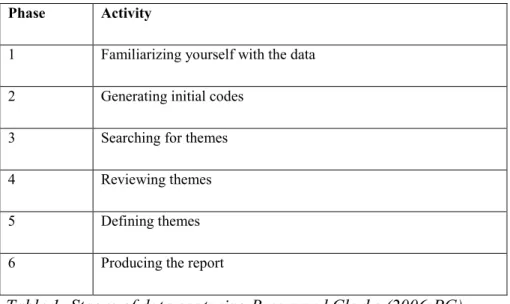
4.3.4 Process and method of data analysis ... 42
4.4 Reliability and validity ... 44
4.5 Ethical considerations ... 44
4.6 Delineation and limitations... 45
CHAPTER FIVE: STUDENTS’ REFLECTIONS OF MIGRATION, EDUCATION AND RELIGION .... 46
5.1 Introducing the participants... 46
5.2 Motivational factors and effects of international exchange ... 49
5.3 Religious literacy among study abroad students ... 52
5.4 Orientations towards African Traditional Religion ... 55
CHAPTER SIX: ANALYSIS AND DISCUSSION ... 58
6.1 The role of religion in migration and international education programmes ... 58
6.2 Semester-Abroad students’ learning experiences about religion ... 60
6.3 Imaginaries of African Traditional Religion among semester abroad students ... 62
6.3.1 Ancestors and spirits ... 64
6.3.2 Is it really a religion? ... 65
6.3.3 African Traditional Religion vs. African Initiated Churches ... 66
6.3.4 Africans are traditional and very religious ... 67
6.3.5 Religious literacy and tolerance ... 68
6.4 Conclusion ... 69
CONCLUSION ... 70
BIBLIOGRAPHY ... 72
3
CHAPTER ONE: INTRODUCTION AND LOCATION OF THE STUDY
1.1 Introduction
South Africa, as a nation, has been isolated from the rest of the world on the because of the racially discriminatory system of Apartheid. Apartheid was constituted through rules, regulations and laws determined employment, residence and movement along racial lines.
The Group Areas Act, which was passed in 1950, made a particular race groups live within designated areas. This act was instituted to reinforce segregation on racial basis and to restrict the movements of people of colour.
Tati (2008) argues that during the Apartheid era, migration to South Africa was largely in the form of labour migrants from neighbouring countries. Migration into the country was restricted by the government legislation which controlled and facilitated labour migration in South Africa. This legal framework permitted migrants to work in the mining and agriculture sector. Further, due to international sanctions against Apartheid South Africa, most international institutions and governments refused to trade with South Africa, which significantly affect people’s migration to the region, whether permanent or temporary. Like all other forms of anti-Apartheid activism, that sought to boycott South Africa at the time, many universities and colleges across the world also enforced an academic boycott which restricted student and academic staff interaction with Apartheid universities. This resulted in South African higher education institutions developing in isolation from their international counterparts.
During the early 1990’s the Apartheid regime was dismantled, and it was followed with the unprecedented movement of people both within and into the country. This period also saw the significant increase in people from across Africa, and the world, travelling to and through South Africa. This same trend can also be seen through the marked increase of international students coming into South Africa, since the end of Apartheid, through various study abroad programmes (Crush, Williams and Peberby 2005). This increase in student and academic mobility represented a brain gain into the country, adding skills and knowledge that South Africa did not have access previously.
4 According to Teferra and Altbach (2004), African Universities are under considerable pressure to perform in a global context. This demands a significant degree of international cooperation, characterised by the exchange of ideas and physical mobility. Hahn (2003) argues that despite the commitment to global exchange of people and ideas, the internationalization of higher education continues to impact significantly on ideas of the nation, who ‘belongs’, and who does not. In South Africa, migration and academic mobility further reinforces ideas about, and divisions between, nationals and non-nationals, and has at times found expression through xenophobia.
There seems to be two responses to migration that emerged after the dismantling of Apartheid. On the one hand the economy has relied heavily on tourism, while on the other hand there has been an increasing anxiety towards migrants from the continent. Landau (2014:1) argues that “after 20 years we are not only backtracking on promises of tolerance, but also on those of an accountable, law-bound government able to realise the physical and economic security South Africa so desperately needs”.
With the end of Apartheid, increasing numbers of international students would come to South Africa. During South Africa’s early democratic years the most popular topics for international education and study abroad programmes were focused on Apartheid and reconciliation. South Africa was one of the forerunners in depicting ways of peace and reconciliation, and as such most international education programmes were around such topics. As the South African democracy grew so did the programmes of international education. In the immediate aftermath of 1994, South Africa was attractive to such iinternational education migrants for a number of reasons. From interests in the Truth and Reconciliation Commission, to national academic programmes on transitional justice, public health, and emerging economies, South African universities attracted a large number of migrants over a short period. This is made all the more evident from the fact that between 1994 and 2006 the number of international student in South Africa increased from 12, 557 to 53, 686. UNESCO has suggested that by 2009 this figured increased further to 61, 000, which suggests and annual increase of approximately 3000 international students to South Africa. It is therefore not surprising that the OECD reports that South Africa is ranked 11th in the world as a destination for international students.
5 According to Knight (2006) the internationalization of higher education refers to “the movement of people, programs, providers, knowledge, ideas, projects and services across national borders”. Students who participate in educational programmes at a geographical setting different from their own, often find that they enhance personal growth and development. One such student, Carolyn Valtos, a participant in the Institute for the International Education of Students (IES) in Adelaide, said that: “Overall, I learned a lot more about myself in that one semester than I did in the three and a half years in my home school because of the unique space in which I learned, experienced, and spent exploring another culture”.1 Thus, we can assume that through international exchange programmes, people become more culturally aware, and able to contribute to harmonious societies in which differences, also in belief and faith, can be respected. In this study, I take as a starting point the idea that an increased understanding of different religions plays a vital role in how individual students understand their host country, and in the development of a tolerance for indigenous traditions.
My study focuses on the nature of international students’ contact with, and knowledge of, African Traditional Religion in the province of KwaZulu-Natal. To do this, I interviewed international students that had participated in exchange programmes to the University of KwaZulu-Natal. The University of KwaZulu-Natal considers an international student as someone who spends a semester, or more, at the institution, and pays fees to the host institution. These students variously participate in undergraduate or postgraduate studies, or take part in short-term programs that are specialised to meet the needs and interest of international groups and students. The University of KwaZulu-Natal is home to approximately 2000 international students. According to Statistics South Africa, of the 106 173 temporary residence permits issued in 2012 by the South African Department of Home Affairs, 16 928 were for study purposes (StatsSA 2012). Consistent with the national distribution, at UKZN international students make up between 5-7% of the total student population during any one year, with the highest concentrations reportedly found in the humanities, and in science and agriculture.
1 The Benefits of Study Abroad, Mary Dwyer and Courtney Peters. (n.d.) http://www.iesabroad.org/study- abroad/news/benefits-study-abroad#sthash.3wRvlQhR.aww1kwNW.dpbs.) accessed 12 April 2015
6 In South Africa, the Constitution of 1996 states that “everyone has the right to freedom of conscience, religion, thoughts, beliefs and opinion… provided that those observances follow rules made by the appropriate public authorities; they are conducted on an equitable bases;
and attendance at them is free and voluntary” (SA Constitution of 1996, Chapter 2 Section2).
However, although the post-apartheid administration regards all religions as equal, Christianity continues to dominate the religious landscape (Denis 2006:310). Thus, despite the legal recognition of all religions, including African Traditional Religions, many indigenous traditions continue to be perceived as primitive, anti-modern and consisting of cultic superstition.
In recent years, African Traditional Religion has been at the centre of a number of legal and social debates about religious freedom. The controversies have revolved around initiation schools for young men in the Eastern Cape (Mbiti 2004), as well as virginity testing in Kwa- Zulu Natal (Hans 2013). In 2007 for example, the South African, disgraced politician, Tony Yengeni and his family performed a very public ritual to restore his position in the community. On this occasion a number of cows were slaughtered in line with traditional ancestor ritual practices. However, the SPCA rasied objections to this traditional practice provoked and a national debate around African Tradition Religion and its practices ensued.
The SPCA based their charges against Yengeni upon animal cruelty (Behrens 2008). When Tony Yengeni was released from prison, his family sought to do a cleansing ceremony that would integrate him back into the community. The ceremony involved the slaughtering of cows in a traditional African ancestral ritual. As part of this ritual it is believed that the cow has to make a certain noise, when it throat is cut, as it is believed that this indicates that the ancestors accept the sacrifice. While the SPCA charged Yengeni with cruelty to animals, state institutions defended the actions of the Yengeni family practice on the grounds of freedom of religion. What emerged during this and other similar debates about indigenous religions is a widespread ambivalence towards, and lack of interest in seeing African Traditional Religion flourish in the post-apartheid public space.
While these controversies show social anxiety about certain indigenous practices, they also demonstrate the presence, resilience and post-apartheid re-emergence of African Traditional Religion (Denis 2013, Masondo 2011). Mndende argues for increased legal provision for African Traditional Religion, and she insists that “it seems that a colonial heritage is still dictating the relationship between law and religion” (2013:82). Mndende’s objections relates
7 the negative perceptions and treatment that African Traditional Religion receives in the media and in society.
Despite the contestations over the legal status and public practice of African Traditional Religion it remains, after Christianity, the most widely practiced religious tradition(s) in South Africa (Mndende 2013). Considering the pervasive practice of traditional religion, it is my contention that international students are bound to come into contact with some form of African Traditional Religion, or media reports about it whilst living in KwaZulu-Natal, South Africa.
1.2 Research questions
It is in the context of such contestation over the status, and practices, of African Traditional Religion in post-Apartheid South Africa that I sought to examine the extent to which international students’ migration challenge or reinforce their ideas about African Traditional Religion. This study seeks to ascertain what, and how, international students learn about African indigenous religion during their tenure at the University of KwaZulu-Natal, and how this shapes their knowledge and attitude toward African Traditional Religion.
My interest in international education lies with a wish to investigate student exchange programmes facilitate learning concerning African Traditional Religion. Many scholars have argued that religion plays a vital role in the fabric of many South Africans (Diamond 1994, Mbiti 1990). Thus, I hope to examine how semester abroad students, when they migrate into a country with high religious adherence, interact with and grow to understand role and prevalence of African religion and culture. I do this to ultimately ascertain something about the relationship between international education, as a form of migration, and religion. I seek to gain insight into how this form of migration shapes the experiences and perceptions of African Traditional Religion among semester abroad students – whether through formal or informal contact with indigenous religion.
The main research question for this study is:
What are the processes through which (international) semester abroad students learn about African Traditional Religion, and how does this learning shape their perceptions of this religious tradition in South Africa?
8 The sub-questions for this study are as follows:
- What is the role and significance of religion in migration through international education programmes to SA?
- What are UKZN semester abroad students’ experiences of, and reflections about African Traditional Religion during their stay in SA?
- How does formal and informal contact with indigenous religions shape and international students’ perception and knowledge acquisition about facilitate African Traditional Religion?
1.3 Methodology
I interviewed five international students from a North-American country. These students are from a broad range of academic disciplines. Three are from an organised Theological programme. These are students that come from a Christian university in North America into a Theological exchange programme with the University of KwaZulu-Natal. Two are from a prearranged internship programme, where students have an opportunity to complete their internship with various organisations in South Africa. These students are part of any religiously-based exchange programme. The fifth student came to South Africa on her own as an exchange student, and is not part of an organised exchange or internship programme. With such an array of students I was seeking to receive a broad perspective of what students are thought, and learn, about African Traditional Religions in South Africa.
My aim is to investigate what the students knew about African Traditional Religion before they arrived in South Africa. In this, I also explore whether, and how, their religious affiliation prevented or encouraged religious dialogue and learning. Moreover, I aim to explore if the way in which students learn about African Traditional Religion fosters any prejudices, or whether it increases their knowledge base and tolerance.
9 1. 4 The Significance and contribution of the study
One of the most challenging issues that the post-Apartheid government of South Africa faces is how to foster religious tolerance in a nation with visible and widely celebrated religious diversity. Statistics South Africa has indicated that in 2001 that majority of the population identified themselves as Christians 79.8%, 1.5% as Muslim, 1.2% as Hindu, 0.3% as followers of African Traditional Religion, 0.2% as Jewish, 0.6% as ‘other’ and 1.4% as
‘undetermined’, while 15.1% declared that they did not follow or adhere to any religion or faith community.
Mwakabana (2002) has suggested that, statistically, African Traditional Religion may look as if it is invisible, yet in reality this is misleading as many people practice African Traditional Religion unconsciously, without recognising that they are doing so. Although African Tradition Religion has always been a part of Africa while Christianity, Judaism, Islam and other religions came to the region through migration of settler communities, African Traditional Religions nonetheless suffered denial, suppression and even rejection during the colonial period (Chidester 1999). Thus, is not surprising that there are postcolonial efforts to recover elements of these religions in South Africa as legitimate religions (Masondo 2011).
What seems to be missing in the existing literature is more empirical work concerning African Traditional Religion, and more from an African Traditional Religion perspective without incorporating a Judeo-Christian perspective. Mndende (2013) argues that most scholars who write about African Traditional Religion have done so through a Christian theological lens, often leading to claims that Christianity is an extension of African Traditional Religion.
This dissertation aims to explore the intersection between migration and international education, and how such migration shape experiences and perceptions of African Traditional Religion among (non-African) international semester abroad students. As such, this dissertation contributes to scholarship concerning international education and the processes through which learning about, and in, new contexts takes place. Moreover, this dissertation contributes to scholarship about migration, through examining student migrations, and religion in South Africa. The dissertation also explores perceptions and representations of African Traditional Religion in postcolonial and democratic South Africa.
10 This research project was conducted through interviews international students, resident in South Africa through their participation in international student exchange programmes. The interviews were conducted over a period of three weeks, and each interview lasted for approximately one hour. The primary objective of these interviews was to explore the various ways and processes through which (international) semester abroad students learn about African Traditional Religion, and this shape their perceptions of this religious tradition in South Africa
The final significance of the study relates to the ways that religion is located in international education programmes, and the question whether international study exchange programmes facilitate tolerance and education, or whether they reinforce stereotypes by fetishising and commodifying indigenous religions and cultures.
1.4 Key terms and concepts
The following key terms and concepts are relevant to the present study:
African Traditional Religion:
There are debates and contestations about whether it is religion in the singular or religions in the plural sense. However, like some scholars (Mndende 2013) I align myself with Awolalu (1975:) who has explained African Tradition by saying that “When we speak of African traditional religion we mean the indigenous religion of the Africans. It is the religion that has been handed down from generation to generation by the forebears of the present generation of Africans. It is not a fossil religion (a thing of the past) but a religion that Africans today have made theirs by living it and practicing it”.
Transnationalism:
This is a broad concept because there seems to be many definitions that have emerged over the years. Bailey (2001) argues that scholars of migration studies are now turning to the idea of the ‘transnational’ because people are keeping strong ties with their home land after having migrated away. Moreover, transnational processes are rooted in the institution of the nation- state and derive some of their distinctiveness by transcending the nation (Bailey 2001).
11 Therefore, Levitt (2004) argues that central to transnationalism is the reformation of society because people are no longer restricted to national borders. She convincingly shows that migrant’s lives are embedded within multi-layered and multi-sited transnational fields, a facet that should be considered and integrated into all migration-centred research.
Internationalization of education
According to Knight (2006) the internationalization of higher education refers to “the movement of people, programs, providers, knowledge, ideas, projects and services across national borders.” Yet, because much of internationalization holds the nation state as its primary frame of reference (Hahn 2003) universities are increasing under internal and external pressure to adopt innovative strategies that destabilizes this notion and to present themselves as transnational entities that exist and function outside the frame of the modern nation state.
12
CHAPTER TWO: LITERATURE REVIEW
2.1 Introduction
In this chapter, I will provide an overview and review of the areas of scholarship that have informed and supported the development of this thesis. In order to do so, my literature review will deal with migration and transnationalism. This will show the importance of transnationalism in migration studies. Migration is no longer understood in a linear fashion because migrants are belong to and participate in two countries or more at the same time. I will also outline some aspects of African Traditional Religion as this the particular religion that provides the starting poitn for my examination of how international exchange students learn about religion. This section provides a brief history of African Traditional Religion in Post-Apartheid South Africa, and introduces some debates and contestation over the status and role of African Traditional Religion in public life South Africa.
2.2 Migration and transnationalism 2.2.1 Transnationalism
Transnationalism is a concept, and a field of inquiry, which is concerned with social processes that are grounded in, and transcend the borders of nation-states (Bailey 2001). It seeks to illustrate how the mobility of people challenge the notion of geographical boundaries because they are actively involved in two or more states at the same time. Nina Glick-Schiller (1992), in her article “Transnationalism: a new analytic framework for understanding migration” illustrates the shift that migration studies have taken over time, and the importance of using a transnational lens in studies of migration. This is supported by Vertovec (2002) who argues that once the social sciences began to see migration through transnational lenses significant new aspects of the activities of migrants could be seen.
Vertovec (2002) explains transnational activities are made possible by the ease that migrants are finding with staying in contact with their homeland even after migration, through transnational networks and relationships. Levitt and Jaworksy (2007), in their review of scholarship on transnationalism and migration, illustrate how migrant transnationalism has transformed domains of society such as economics, religion, politics, social life and culture.
13 Transnationalism is different from other approaches to migration because it challenges the traditional understanding of migration that has been focused on three concepts; assimilation, integration and incorporation. According to Brown and Bean (2006) the process of assimilation begins with the first generation of migrants. It then continues to subsequent generations and takes approximately four generations, after full assimilation, for integration to occur. The longer a migrant lives in the host country it is assumed that they will become more like the residents of their host country. Hence, these traditional understandings of migration work according to a linear logic and often does not provide a coherent frame for understanding other, more temporary forms of migration.
Levitt and Glick-Schiller (2004) argue that transnationalism is not a lasting risk to assimilation because even though a migrant might be concerned with the issues and concerns of their home country it does not mean they are disinterested in daily operations of their host country. They show that for migrants who are embedded and actively involved in two or more countries simultaneously “home means more than one country” (Levitt and Glick- Schiller 2004).
Transnationalism can be understood through two main concepts; transnational social fields and transnational networks. Levitt and Glick-Schiller (2004) have argued that in order to understand the complexity of transnationalism scholars need to think of it as a social field.
Transnational social fields encompasses those who remain in their country of origin and those who emigrate. Glick-Schiller (2005:442) defines a social network “as an egocentric set of ongoing social relationships. A social field is a network of networks…that stretch across the borders of nation-states”. People in different places create social relations that are important together. Even though they may be in different countries with other people, they can still create a social space where daily interactions can occur; that is transnational social fields.
A social field understanding exposes different ways of being and ways of belonging, transnationally. Transnational ways of being “are the actual practices that individuals engage in” (Glick-Shiller 2004), such as when a migrant sends remittances back home or watches a home country television channel from a different country. Transnational ways of belonging, however, refers “to practices that signal or enact identities which demonstrate a conscious connection to a particular group” (Glick-Schiller 2004).
14 2.2.2 Migration and religion
According to Hagan and Ebaugh (2003) scholars of migration and religion, particularly in the United States, have tended to neglect the role of religion and spirituality in the process of international migration. In explaining the significance that religion plays in the lives of migrants; they illustrate the role of religion in the various stages of the migration process. The physical moving to the host country is only the final stage in the migration process (Hagan and Ebaugh 2003). Religious institutions assist greatly in preparing migrants to immigrate;
“migrants actively make use of existing cultural institutions, such as the church and religious practices, throughout the various stages of the migration process, from the decision to migrate to the development of transnational communities, [and these] are critical to understanding contemporary international migration” (Hagan and Ebaugh 2003:1159). For most migrants belonging to a particular religious community makes it easier to immigrate, particularly if the host country has an already established community that the migrant can join. Making use of existing institutions assists migrants to adapt to their host country easier and helps them establish a transnational identity. Adogame (2010) has argued that African migrants frequently take their religion or at least some aspect of it with them when they travel.
Religion can be used as a tool that assists migrants with incorporation into their host country because “many religious institutions were founded on universal claims and have always been worldwide in scope” (Levitt 2007:13). Irrespective of where a migrant originates from once they migrated and are a part of this worldwide institution they can get assisted with their incorporation, through getting information about the migratory process. Religion provides a space where migrants can get assistance with solving many of the problems that come with being a migrant, such as obtaining legal documentation. Religion serves as a space for social capital for migrants because they get to participate in celebrations, create networks which can assist new migrants to deal with the pressure of being a migrant. In religious institutions you can find people that are at various stages of their immigration process. This is beneficial because it can assist newly arrived migrants. It is in these relationships that migrants begin to help each other to survive in the host country. Information is shared in these spaces, livelihood is a joint endeavor and the well-being and safety of the other is of importance. As a result a community of mutual respect and trustworthiness can be formed through religious networks and institutions (Menjivar 1999; Schiffauer 2006). Places of worship and religious
15 participation can provide for immigrants the opportunity for finding support, information and building friendship which strengthens their social capital within the host country (Baas 2010).
Adogame and Spickard (2010) have also considered the importance that religion plays in the lives of migrants. They argue that religion is not an isolated phenomena or an abstracted aspect of an individual’s life. It forms part of their human fabric. We find that most migrants would go to a place of worship when encountering a challenge in their host country. In South Africa many migrants found refuge in churches and mosques during xenophobic attacks, for example during the attacks that took place in 2008 (Amisi, Bond, Cele, and Ngwane, 2011;
Robins 2009; Peberdy and Jara 2011).
Based on a study of transnational migrants’ religious practices in the United States, Levitt (2003:865) asserts that “religious institutions differ from other immigrant institutions in that they see themselves as embodying universal and timeless truths. They provide members with a moral compass and orients them to act upon these values in particular settings in particular ways”. Religion is believed to be one of many institutions that reinforce moral values that assist in fostering human unity. ‘Love thy neighbor’, for example; which is largely a Christian concept is a value that is embodied in South Africa. Most migrants found refuge in churches and Mosques during xenophobic attacks which began in 2008 by many religions and encourages migrants and non-migrants to love to each other which will foster peace and acceptance among them. Speaking into the context of Pentecostalism and South-South migration Van De Kamp and van Dijk (2010) argue that religion “encourages stability in situation of mobility and provides for cultural continuity”. This is done through allowing migrants to feel comfortable and have a sense of being at home even though being away from home. Many religious institutions are places where migrants and host citizens gather – although in most contexts such interaction relates to the dominant monotheistic traditions..
Garbin writing about African Initiated Christian Churches shows how Congolese people have managed to establish a “symbolic geographic of the sacred”… [this] relate to the ways in which worshippers and religious experts/leaders define, produce, or imagine translocal fields of religious presence, flows, and mobility” (Garbin 2011:145). This is seen through the many churches that are viewed as international. The author then challenges the notion of territorial identity being a fixed and static notion by arguing that many adherents see their local church as a geographical sacred space elsewhere even though the ‘main’ church is located in the Democratic Republic of Congo. Therefore, even though a migrant is resident in England s/he
16 may still identify with their Congolese co-nationals because they practice the same religion.
In the book “Travelling Spirits Migrants, Markets and Mobilities”, Huwelmeier and Krause (2010) examine how migrants maintain and forge religious ties and identities across borders to maintain links with both the host and the home country. Jackson (2012), in his article
“Place makes a big difference to young people’s attitudes to religious diversity in the UK”, found that “local patterns of residency, migration and religious practice have an impact upon young people’s attitudes to others” (2012). Moreover, he asserts that preconceived ideas and prejudices can be nullified or reinforced through a local context and religious practices have the potential of building a peaceful society that is receptive to migrants. Significantly, Levitt reminds us that religion does not take place within a vacuum; it lives through specific people in a particular organisation and with a specific community “transnational religious life occurs within organizational context” (2003:854).
2.2.3 Migration into South Africa
Under the Apartheid regime South Africa was largely excluded from the international community, organisations and competitions. This exclusion happened through international boycotts which condemned the apartheid regime. According to Davenport (1987:478) in the 1960’s South Africa was forcefully excluded from world organizations such as the World Health Organization and others because of its racist policies. Internally, the system and structures of Apartheid controlled and monopolized the movement of people. Black people movement was particularly controlled and hindered through the Group Areas Act of 1950 which restricted the movement of people. The Apartheid system was largely race-driven and gave greater liberty to the white population. This had an effect on the immigrants into the country and made it difficult for people to emigrate as well.
After 1994 migration emerged as a major asset as well as a challenge to South Africa. Crush, Williams and Peberdy argue that “despite the importance of both cross border and internal migration to the region, pro-poor policies of governments, the region and continent, as well as donor agencies and countries that include migrants are lacking” (2005:28). They argue that policies that are put in place have a loophole in the sense that they do not cater for people looking for humanitarian refuge. In a book on xenophobia, Crush (2014:8) asserts that current
“policies actively diminishing rights and entitlements for migrants and refugees strengthen
17 institutionalized discrimination and widen the gap between citizens and migrants”. In South Africa it seems to be difficult to obtain residence permits because of the complex, and seemingly corrupt, system that is in place. Landau (2014) argues that South Africans do not seem to be very welcoming of their African counterparts. This is evident from the xenophobic attacks which occurred in 2008, and again flared up in early 2015. Crush argues that the struggle against xenophobia has become more of a structural battle and that this is evident from the ways that “officials continue to react to foreign and domestic migrants by implicitly denying their presence, excluding them from developmental plans or tacitly condoning discrimination throughout the government bureaucracy and police” (2014:13).
Elsewhere, Crush (2014) argues that there are no strategies and plans that are in place to integrate migrants into South African society. For Crush this failure is what lies at the heart of the conflict between migrants and citizens, which he argues have limited any chance of cohesion between the two groups. Crush (2014) goes as far as to say that there is xenophobia denialsm in South Africa. In seeking to expose this denialism Crush argued that South Africa
“ignores or sidelines the evidence that most South Africans hold extremely negative views about migrants and refugees and wants the state to exercise greater coercive power to purge the country of their presence” (2014:3). In line with Crush’s concern about denialism in the face of ongoing xenophobic attacks, Landau (2014) argues that South Africa has overlooked the impact the migrants have had on bolstering international trade and relations with neighboring countries. Landau shows that as a result of South Africa’s failure to deal with xenophobia, various countries have begun to refuse to trade with South Africa because of the ill-treatment that South Africa has shown towards their citizens. Furthermore, Landau (2014:1) states “after 20 years we are not only backtracking on promises of tolerance, but also on those [promises] of an accountable, law-bound government able to realize the physical and economic security South Africa so desperately needs”. For Landau (2014) the major challenge in combatting xenophobia is addressing South Africa’s structural and systemic orientation against migrants, and a sluggish attitude towards addressing economic poverty. Finally, Landau argues that is precisely because of increasing poverty and social alienation that South Africans resort to making claims that migrants are competing with them with the scarce resources they require in their pursuit of economic freedom.
Crush (2011) argues that although most of the migrants into South Africa are temporary labour migrants coming from neighboring countries, South Africa is still experiencing a
18
‘brain drain’ because “surveys of the skilled and professional population and of students in professional programmes show high levels of dissatisfaction and a very strong inclination to emigrate” (2011:25). Crush argues that this paradoxical trend shows some of the important migration trends which have occurred in South Africa since the end of the Apartheid regime and also shows the complexity of policies which are meant to assist migrants.
2.2.4 Migration and education in South Africa
During the last 10 years South Africa has emerged as one of the top destinations for tourists, seeing an estimated 2 million tourists arriving in the country during the first quarter of 2015.
However, with the introduction of new policies and regulations regarding migration into South Africa, many believe that it has contributed to the decrease in tourists and students coming into the country. Despite this, several South African universities continue to be ranked in the top 400 higher education institutions, with the University of Cape Town also breaking into the top 100. This assist in making south Africa not only a tourist destination but also attractive for students from other countries.
Dolby (2011) argues that internationally, most of the study abroad programmes in the 1980’s was a phenomenon which was occurring amongst the elite of Europe. This was because it was only individuals who had the financial ability to go abroad engaged in such phenomena.
More recently universities have started investing enormously in international education so as to enhance both the international status and visibility of institutions (Altbach, Reisberg and Rumbley 2009). South Africa has not been immune to this trend and Zeleza (2012) argues that South African universities increasingly rely on and promote the internationalization of education within the region through promoting semester-abroad and other forms of academic exchange programmes According to Mazzarol and Soutar (2002) some of the push-pull factors in international migration relates to students seeking quality education. Mazzarol and Soutar (2001) have argued that in countries with struggling economies, the social status of internationally educated students are high which for them result in a better chance to climb the economic ladder and contribute to the development of their own economies. Elsewhere, Cubillo, Sanchez and Cervino, (2006) shows that employment opportunities in the host country after completion of a degree is a significant pull factor for students’ decision about on where to go and study.
19 Whatever the reason and the final place of desired settlement, Hansen (2002) argues that the benefit of international education comes through migration where “the personal contact with people from other cultures forces [semester abroad students] to react immediately, in real time. These meetings are more likely to have an impact in a personal way than if the same facts had been learned in a classroom” (Hansen 2002:6).
2.4 African Traditional Religion in South Africa
African Traditional Religion is one of the oldest religions in sub-Saharan Africa (Lugira 2008). According to Lugira (2009) African people have always lived in a close relationship with the land because they usually stayed in isolation from their neighbours. The religions that were developed addressed their particular lives and needs. African Traditional Religion may differ from region to region but there are similarities that bind them together (Awolalu 1976; Lugera 2009; Beyers 2010). However, Amoah and Bennett (2008) remind us that since colonial times African Traditional Religion has been generalized, with little recognition of the diversity in Africa. This, they believe, has resulted in African Traditional Religion being seen as ‘merely’ animism or ancestral worship (Amoah and Bennett 2008).
In his book Savage Systems: Colonialism and Comparative Religion in Southern Africa, Chidester (1996) asserts that religion was but one of the ways that colonialism strived to control and categorise native peoples. Chidester argues that “comparative religion was conducted in frontier battlefields. Comparisons were not merely intellectual exercises; they were entangled in the European conquest and subjugation of African” (1996:219).
Furthermore, Chidester states that the construction of the African Traditional Religion in the form that we have it today was largely a product colonial comparative science and indigenous reaction thereto. Historically African Traditional Religion has been constructed through a Western perspective of religion (Ranger 1997; Beyers 2010).
In examining Max Muller’s life and interest in South Africa and India, Chidester (2004) shows that knowledge and power are significant components in the construction of religion.
This has been the driving force in showing that Africa is a continent of no “true” religion.
This was because missionaries were using their Christian lenses in identifying religion in Africa. African Traditional Religion was not named before settlers entered the colonial frontier. Africans had long practiced it as a way of life and not necessarily named it.
20 According to Ekeke and Ekeopara (2010) it is the misunderstandings over the concepts of God, divinity and spirits in Africa that has led many scholars to believe that Africa does not worship a Supreme Being. Even this latter idea of a ‘Supreme Being’ emerged as a Western attempt to measure African religious concepts through Christian theological classifications.
2.4.1 Debates and contestation over African Traditional Religions in South Africa
There are many debates and contestations regarding the status of African Traditional Religion in South Africa. Scholars such as Nokuzula Mndende (1999; 2013), Sbusiso Masondo (2003) and David Chidester (2013), for instance, seem to agree that post-Apartheid South Africa brought about a revitalization of African Traditional Religion. In her article Law and Religion in South Africa: An African Traditional perspective, Mndende (2013) argues that even though African Traditional Religion has been recognized in the country, the laws and the policies of South Africa are still in favor of Christian traditions. She argues that major public holidays that the country celebrates such as Christmas and Easter holidays are commonly known as Christian holidays. Thus the dominance of Christianity has resulted in the perception of indigenous traditions as not only secondary to monotheistic traditions but also as primitive, anti-modern and cultic superstition (Adomo 2011, Olupona 2004).
Anthropologist of Religion, Rosalind Hackett (n.d) in her article, “Has Religious Freedom Served Or Failed Africa Traditional Religion” claims that South Africa is one of the best contexts to investigate current debates concerning African Traditional Religion. For Hackett, South Africa is modern, democratic and postcolonial state which has provided recognition and protection of African Traditional Religion in public life. Similarly, Amien (2013) has argued that African Traditional Religion has enjoyed not only legal recognition since the advent of democracy, but also that it has seen increasing visibility and acknowledgement in the media, education, and South African society at large.
Since African Traditional Religion is not an institutionalized or a formally organised religion in the way that Christianity, Islam and Judaism are, it is easily placed in the peripheries of society where it continues to occupy an ambivalent space in society irrespective of increased visibility. In his “Citizenship, Religion and Human Rights” Settler (2002) argues that the history of religion in South Africa has been characterized by the simultaneous denial of indigenous religion and the increasing institutionalization an evangelizing Christian church.
21 As such, African Traditional Religion has continued to receive ambivalent treatment both in education, and in the media in general. This leads Beyers (2010) to conclude that the more South Africa seems to be secularized, the more people seem to think that there would be a demise of African Traditional Religion.
The term “religion” has been one coined in the West which has resulted in the Christian Western understanding within the scholarly field. Based from a Western understanding of religion African Traditional Religion has been viewed as being primitive, anti-modern and cultic superstition (Beyers 2010, Mndende 2013). As a result there seems to be little room to for the recognition of religions which is perceived to be primitive. Philippe Denis (2006) argues that since the advent of democracy in South Africa there has been a rise and more visibility of African Traditional Religion, especially in places like KwaZulu-Natal and the Eastern Cape. This the author argues concerning African Traditional Religion that it has the ability to adopt as to accommodate the times it finds itself in. Increased visibility has been evidenced by the formal recognition of African Traditional Religion, culture and legal regimes. Since 1994 the post-Apartheid State has established the National Council of Traditional Leaders in recognition of traditional polities, and the state has introduced a number of laws that recognize and incorporate indigenous healers, and healing practices.
More popularly, state events are increasingly opening with traditional praise-singing and accompanied with the slaughtering of sacrificial animals – an event presided over by a Sangoma, a sacred specialist. Since there is no recorded dogma like other religions it is a phenomenon largely practiced at home, or in the family homestead. The new political conditions in South Africa produced a context which is eminently favorable to the expressions of African Traditional Religion. Mulago’s essay African Traditional Religion and Christianity (1991), argues that indigenous religion has been a vital religious force in Africa and has had a long relationship with Christianity.
Adama (2001) in Christianity and the African traditional religion(s): The postcolonial round of engagement calls for a critical dialogue between African Traditional Religion and Christianity. The author argues that for serious dialogue to commence there are vital components which need to be such as finding a common ground, and creating religious harmony. This dialogue would assist in the understanding of African Traditional Religion and allow practitioners of it to do so freely. The dialogue will allow for interaction between individuals and have positive repercussions on creating peace.
22 Sibusiso Masondo (2003) outlines and gives descriptions of instances of contestations over African Traditional Religion that has occurred in KwaZulu-Natal which has been in the media because of their conflict with civil society. For Masondo, most of these objections are in relation to the performance of ancestor ritual (traditional slaughtering of a sacrificial animal) which is often objected to as cruelty to animals. Similarly other traditional rituals are objected to on the grounds that they are health risks or they are regarded as demeaning and prejudiced against women.
Jacob Olupona (2004) in his Beyond Primitivism argues that the resilience of African Traditional Religion is seen through its ability to adapt to the situation of the person who forms part of it. He suggests that most scholars are of the opinion that people practice Christianity and African Traditional Religion simultaneously. He concludes that in these contexts indigenous cultures are not entirely discarded and that basic beliefs of indigenous traditions are retained in the postcolonial context. Chidester (1992) argues that within the study of the religion itself there are certain terms such as “traditional” that need clearer explanation as to fully comprehend African Traditional Religion. Ultimately Chidester contends that the history of African religion is best understood in terms of colonial and Apartheid practices of denial, and then of discovery of indigenous religion(s).
2.5 Conclusion
This chapter outlined some of the important trends of migration, that people are no longer bonded by two borders which are their home and host countries. Migrants are forming part of social fields that go beyond nation-state binaries and it is within such that migrants’ activities need to be studied. When migrants travel they do not do so in a vacuum manner but one of the things they take with is their religion. Religion is an important factor in migration studies because it changes geographical landscapes. When migrants arrive at their host country they also meet with the religion of their host people.
23
Chapter Three: International Education in South Africa
3.1 Introduction
This chapter seeks to provide a historical overview of international education in South Africa, and then show the current practices that are taking place within international education by outlining the kinds of degree programs that international students enroll for. Lastly, this chapter outlines the role that the University of KwaZulu-Natal is playing within international education in South Africa. A key objective of this chapter is to illustrate that international education, and migration in education, is not a new phenomenon in South Africa. In fact, education at the colonial frontier, and during Apartheid, was a fundamentally international phenomenon. It was, however, a form of internationalization of education that depended upon and reinforced racial segregation. Hence, it is only in post-apartheid South Africa that we find policies and approaches to international education that enable all sections of South African society the possibility to participate in international education programmes. Claims about international education programmes in South Africa need to keep this history in mind, as it is only in the last 20 years that international education has aimed to benefit and contribute to cross-cultural and racial learning, respect and cooperation.
3.2 International education: key strategies and concepts
One fundamental aspect of international education is the mobility of students, this is an aspect that assists greatly in the internationalisation of institutions of higher education (Sehoole 2006; Huisman and van der Wende 2007). An institution cannot see itself as being international if there are no international students within it, or if it does not send students abroad. The movement of students and staff contributes to establishing an international institution, because they go and represent that particular institution. UNESCO, in 2012, argued that student mobility is becoming one of the most visible forms of cross-border movement in higher education. Furthermore, UNESCO indicates that worldwide there were approximately 1.1 million mobile students in the 1980s, but in the 1990s that number rose to 1.3 million. It is expected that by 2020 there would be 8 million mobile students worldwide.
Increasingly universities are empowering their students to be able to move around the world and study in different contexts. The mobility of students is a phenomenon which is understudied within migration studies, despite the fact that it is a growing trend
24 internationally. Formally structured and organised study abroad programmes is a small aspect of a bigger phenomenon commonly referred to as student mobility. Institutions perceive study abroad as a vital component that educates students on global issues, and provides opportunities for experiencing different contextual across the world. Dolby (2010) argues that for most higher education institutions, having a study abroad programme serves to promote an institutional image of global orientation and concern.
Chidester argues that education assists students in becoming global citizens, “which is formed on the basis of universal rights and transnational loyalties, has been promoted by an array of social movements, non-governmental organizations and international initiatives…global citizenship..[is] an essential component of citizenship education to prepare students for a globalizing world” (2002:13). Similarly, Ramphele argues that as students get involved with international education they meet and connect with people from different backgrounds experience different cultures, which helps them develop an understanding of their place and role in the world.
According to the Institute of International Education (2012), international education is based on the premise that once a student leaves their country of origin to study abroad, in a different culture, they develop a better way of reflecting on their own country and their education.
They also gain a better perspective about the host country through interaction with local culture, language and worldview. Some scholars have suggested that travelling to, and studying in a different geographical area, and connecting with people from diverse backgrounds seem to lead to increased tolerance. (Boaz 1986; Hayden and Thompson 1995).
The mobility of students is something that has not been given much attention in migration studies, it is a phenomenon that is rapidly growing and becoming a part of the higher education experience. UNESCO suggests that higher education globally is becoming a competitive field because more and more students seek international tertiary education.
International relations offices within universities are also becoming more and more sophisticated as to attract international students by offering degrees that are internationally recognized; by providing internships that provide more practical experience. Institutions of higher education are actively working towards recruiting international students.
25 Most international students are temporary migrants who return to their home country after completing their programme. Many, however, also choose to stay in their host country after they have completed their degree. The mobility and settlement patterns of migrant students are, hence, varied. There are various push-and-pull factors that motivate international students. Students decide on becoming international students for several reasons and there are certain pull-push factors that contribute to student mobility. There are different approaches to international education and Donohue-Bergeler (2011) argues that students travelling abroad should do so with a mind-set of going beyond sightseeing; learning should not be reduced to the classroom setting alone. Depending on the structure that an international programme has, would lead to a particular goal. Most international programmes have an in-class structure of learning which does not necessarily allow learners to full experience the country they are in.
Hence, Donohue-Bergeler (2011) strongly recommends that excursions be incorporated into international education programmes. Excursions allow for possibilities where students can authentically experience the sensual emotions connected with that county, in ways that cannot happen in a traditional classroom setting. A classroom largely teaches through literature which does not necessary show the physical effect of that particular subject. Having the ability to combine theory and practice allows for a greater learning experience. Donohue- Bergeler (2011) concludes that the learning process includes the transition from a local to a cosmopolitan view and understanding of the world. Advocates of international education believe that when students are able to experience a context other than their own that enhances their awareness of how different the world is from their own. This helps with enhancing tolerance and acceptance of ‘the Other’. Student migrants learn formally inside the university and they learn more informally about their host country through general social interaction with people. It is through such interactions that they get exposed to practices of African Traditional Religion and have the opportunity to develop an understanding of the religion.
Within South African universities the majority of international students come from the continent itself (MacGregor 2014; ICEF 2013). There is a majority of African internationals occupying higher education institutions than any other internationals in South Africa. South Africa allows students from the SADC region pay the same amount of fees as South African Students. The political stability and a currency which is stronger than most countries in Africa, South Africa attracts Africans to study in the country. Some African students are drawn to South Africa because of courses that are not offered in their home country. The
26 SADC region has made large investments in education, according to Kotecha (2012). In 1970 the region used 5% of its GDP, but by 2010 the region was using the most finances in compared to the rest of the world.
Mattes, Crush and Richmond (2000) in their article “The Brain Gain: Skilled Migrants and Immigration policy in Post-Apartheid South Africa”, argue that South Africa host many countries within its higher education institution. These students contribute in the production of knowledge. Their impact and contribution in university life is great and yet there are no clear policies that can facilitate the integration of international students in the institutions of higher education in South Africa. Clear and precise policies are needed because, as Ramphele (1999:5) argues, South African universities are transnational, transcultural and transcontinental institutions; this is to say that institutions of higher education in South Africa are transcending borders. Ramphele further argues that “although universities are international, they are also integrated into a given society and region, and social, political and economic system” (Ramphele 1999). It is then imperative that they are inclined towards their local context in which they find themselves. This will facilitate the relevance students’
education into civil society yet also being competitive internationally. The knowledge that students achieve on a tertiary level ought to bring about upliftment to the locality that these students find themselves. It should be added that international students do not only assist in the life of higher education but society at large. As they begin to spend money outside of the university, they also contribute to the economy of South Africa. Students add to the economy through spending money for residences outside of the university, traveling expenses and living cost. Their contribution to the larger economy is imperative.
Research conducted by the ICEF Monitor (2013) indicates that South Africa is an important hub for international students, and especially students from the rest of the African continent.
According to the country profiles on the UNESCO, South Africa hosted 61 000 international students within its institutions of higher education in 2009. This high number also indicates that international education in South Africa is flourishing this is due to its reasonably resourced public institutions and the transformation which began in the 1990s under the auspices of the Higher Education Act of 1997 (Dolby 2011:17). According to the UNESCO South Africa is rated among the top twenty counties who is a host to international students globally.