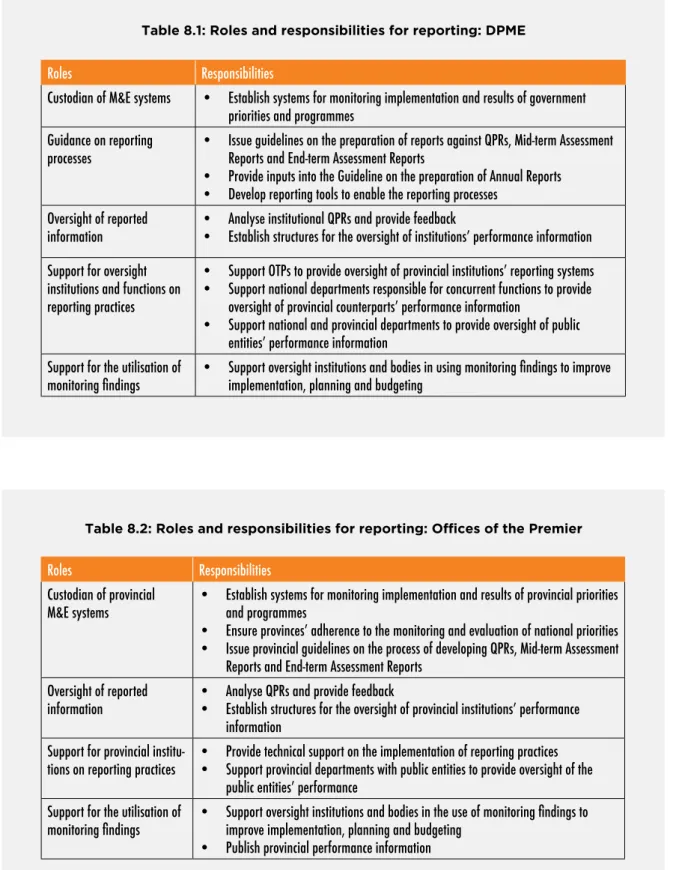
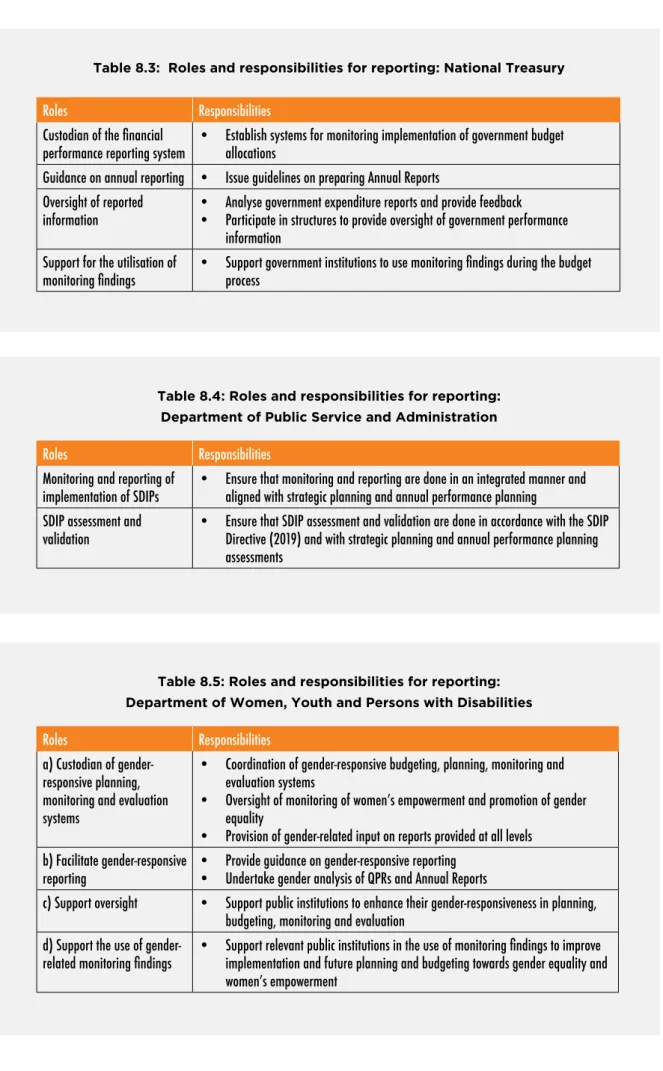
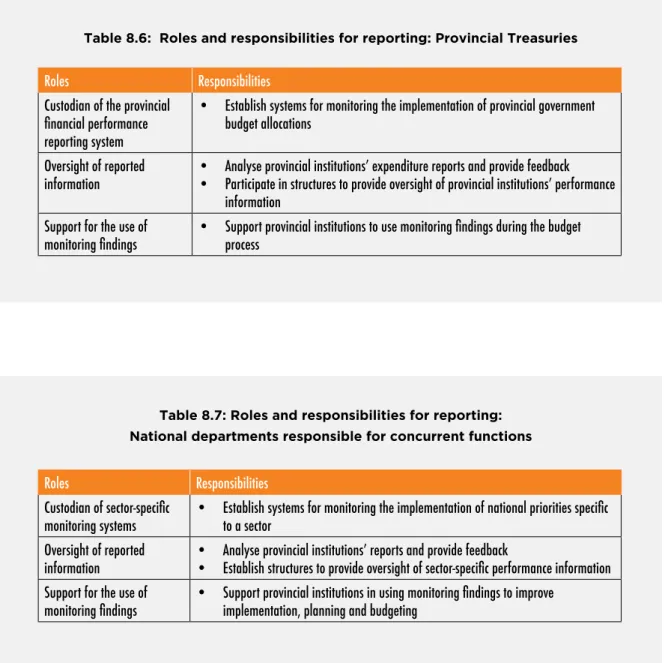
National departments responsible for concurrent functions 62 Table 8.8: Roles and responsibilities for reporting: Departments with public entities 62 Table 8.9: Roles and responsibilities for reporting: Institutions as per Section 1.3 of the Revised Framework for Strategic Plans and Annual Performance Plans 63. M&E monitoring and evaluation MEC Member of the Executive Council MTBR Medium-term Expenditure Framework MTSR Medium-term Strategic Framework NDP National Development Plan. To indicate the importance of effective government planning, the name of the Department of Performance Monitoring and Evaluation was changed in 2014 to the Department of Planning, Monitoring and Evaluation (DPME), responsible for the production of the Medium Term Strategic Framework (MTSR).
The purpose of the revised framework is to build on the foundation of the 2010 framework for strategic plans and annual performance plans, confirm planning logic and institutionalize planning to enable better service delivery. The revised framework is to be implemented together with the Guidelines for Implementing the Revised Framework for Strategic Plans and Annual Performance Planning, which provide the formats for institutional short- and medium-term plans as an easy-to-use reference during planning processes.
Introduction 16
Introduction 17
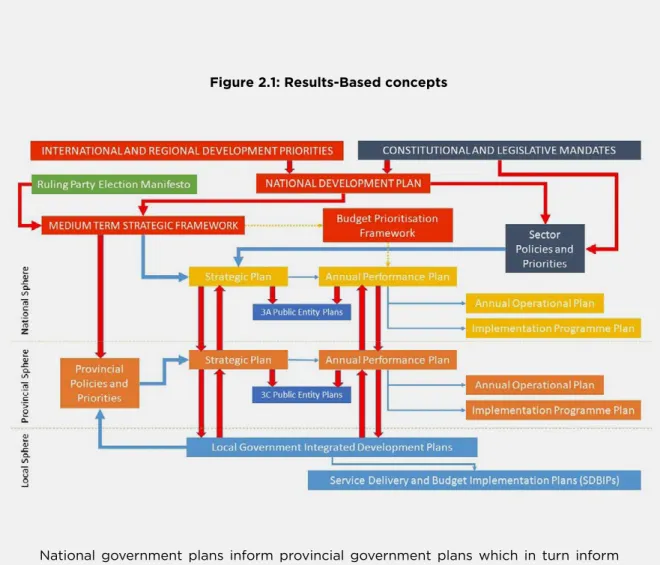
The Revised Framework for Strategic Plans and Annual Performance Plans provides direction to national and provincial government institutions on short and medium term planning. This chapter describes the purpose of the Revised Framework and identifies the legislation, regulations and other directives that govern the development of short and medium term plans. An important component of the chapter is the description of the results-based approach that provides the planning logic to be institutionalized through the implementation of the Revised Framework.
Purpose of the Revised Framework for Strategic Plans and Annual Performance Plans 17
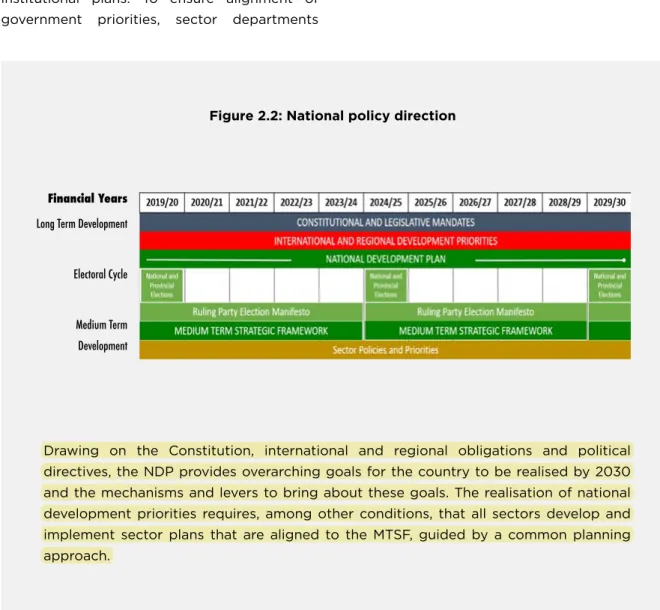
It also describes the medium and long-term government policy direction which, together with an institution's mandate, determines how it carries out its planning.
Applicable legislation 17
- Constitution of the Republic of South Africa, 1996 17
- Service Delivery Improvement Plan Directive, 2019 18
- Treasury Regulations for Departments, Trading Entities, Constitutional
- Statistics Act, 1999 18
- Spatial Planning and Land Use Management Act, 2013 18
- Local Government: Municipal Systems Act, 2000 19
- Construction Regulations, 2014 19
Article 153 states that municipalities must structure and manage administrative, budgetary and planning processes to give priority to the basic needs and social and economic development of the community; and participate in national and provincial programs. The purpose of the Promotion of Equality and Prevention of Unfair Discrimination Act (PEPUDA) is to implement the letter and spirit of the Constitution and, in particular, to promote equality, non-racism and non-sexism;. The purpose of the Government Real Estate Administration Act (GIAMA) is to provide a uniform framework for the management of real estate held or used by national or provincial departments and to ensure that the use of real assets is coordinated with the service delivery objectives of these departments.
Applicable policies 19
- Policy Framework for the Government-wide Monitoring and Evaluation System, 2005 19
- Budget Prioritisation Framework 20
- National Evaluation Policy Framework, 2011 20
- Spatial Development Frameworks 20
- United Nations Sustainable Development Goals 20
- Agenda 2063 20
- South African Statistical Quality Assessment Framework, 2010 21
- Standard for Infrastructure Procurement and Delivery Management, 2015 21
- Relevant court rulings 33
- Vision 33
- Mission 33
- Values 33
- Situational analysis 34
- External environment analysis 34
- Internal environment analysis 34
- Institutional performance information 35
- Impact 35
- Outcomes 35
- Outcome indicators 35
- Outcome indicator baseline 35
- Five-year target 35
- Explanation of planned performance over the five-year planning period 35
- Key risks 35
- Public entities 35
- District Development Model 35
The RB approach can be used with other planning tools to ensure that all factors contributing to the achievement of the. Institutional planning processes are a critical part of planning and form the basis for developing the content of short- and medium-term plans. Institutions should focus on programs and policies that contribute to the achievement of NDP priorities.
It also helps the government ensure that budgets are aligned with the implementation of the MTSF priorities and assists the medium-term expenditure committee in making recommendations to the Minister's Budget Committee and to Cabinet. Offices of the Premier (OTPs) must ensure that deliverables in the MTSF are consistent with provincial priorities and that local government priorities are taken into account when developing provincial priorities. The Intergovernmental Relations Framework Act (2005) states that "the three spheres of government are distinct, interdependent and interrelated".
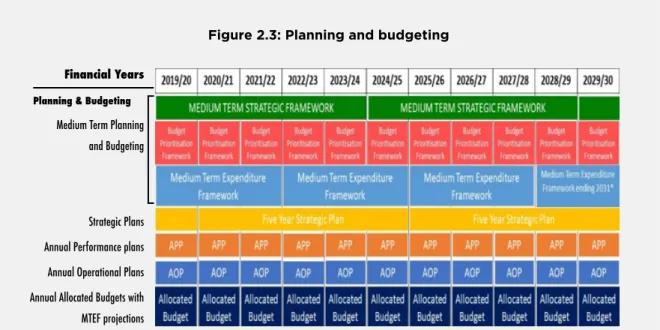
The SP informs the PPA of the institution, whose strategic focus should be related to the budget allocated based on its mandate. The values identify the principles of the institution's behavior in carrying out its mission. Where available, information on demand for services and other factors that inform SP development.
The status of the institution in responding to interventions related to women, youth and persons with disabilities. Provide an impact statement of the institution's intended impact as stated in its legislative or policy mandate. Technical Indicator Descriptions (TIDs) should be provided for each outcome indicator in the format specified in the Guidelines for the Implementation of the Revised Framework for Strategic Plans and Annual Performance Plans.
Processes for the development, approval and revision
- Processes for the development of the Strategic Plan 36
SPs that are reviewed and approved by the executive in the course of a fiscal year, after the original SP was filed, must be resubmitted in the legislature. This must be submitted to the relevant OTP within one month after (re)submitting the SP. The OTP submits the submitted plans to the AP within two weeks of receipt.
Institutions must reflect the revisions of the SP by re-submitting the entire SP or presenting an appendix to the APP. If the changes in policy, service delivery environment and planning methodology result in the revision of the vision, mission, values and impact statement, results, performance indicators or targets, the institutions must undertake a comprehensive revision of the SP, which must be reproduced in the relevant legislature. . ii. If the changes are minimal, such as changes in the results, performance indicators and targets, the institutions must reflect such revisions to the SP as an annex to the APP, which must be presented in the relevant legislature. b) The reproduced SP must be shared with the stakeholders, including the Legislative Assembly, DPME, OTP and relevant state treasuries.
Annual Performance Planning 38
- Introduction 39
- Content of the Annual Performance Plan 39
- Relevant court rulings 39
- Updated situational analysis 39
- Institutional programme performance information 40
- Public entities 41
- Infrastructure projects 41
- Public-Private Partnerships 41
- District Development Model 42
- Annexures to the APP 42
- Processes for developing, approving and revising
- Processes for developing the APP 42
- Processes for tabling APPs: national institutions 42
Where applicable, provide updated information on the relevant legislative and political mandate of the institution in the SP. In the first year of the five-year planning cycle, the situational analysis in the APP must be the same as that in the SP. APP, with changes in the institution's internal and external environment driving the development of APP.
The statement of the purpose of the program must be the same as stated in the appropriations bill. Where applicable, Part B of the APP shall include a table listing the public entities and their relevant outputs overseen by a department. The table should be formatted as specified in the Guidelines for Implementing the Revised Framework for Strategic Plans and Annual Performance Planning accompanying this document.
The table should be formatted as indicated in the Guidelines for Implementing the Revised Framework for Strategic Plans and Annual Performance Plans accompanying this document. Where applicable, part B of the APP should include a table listing the public-private partnerships (PPPs) the institution has entered into to achieve the required results. The table should be formatted as indicated in the Guidelines for Implementing the Revised Framework for Strategic Plans and Annual Performance Plans accompanying this document.
The APP approved by the institution's Executive Authority must be tabled in the relevant legislature. ii.
Annual Operational Planning 44
- Introduction 45
- Content of an Annual Operational Plan 45
- Programme name 45
- Programme outputs 45
- Activities 45
- Processes for developing the Annual Operational Plan 45
- Processes for revising the Annual Operational Plan 45
- Introduction 47
- Steps in planning for Implementation Programmes 47
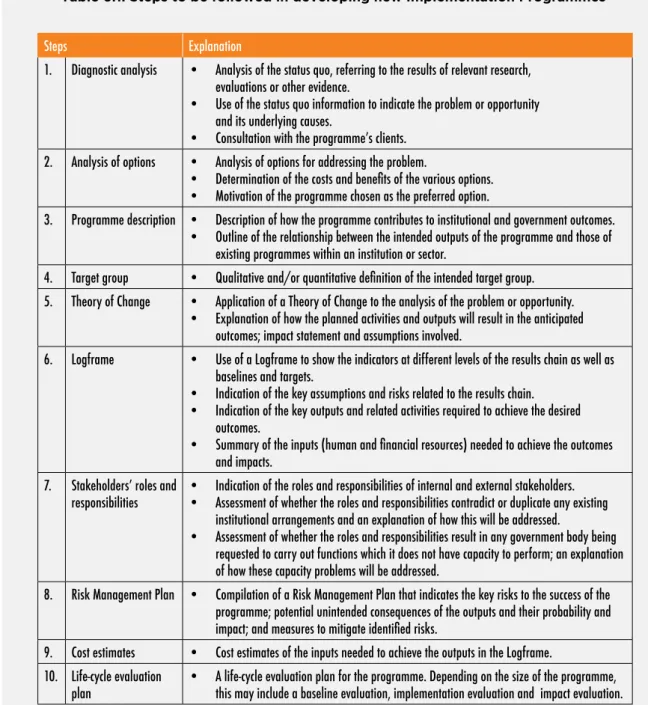
An annual operational plan (AOP) describes the activities and budgets for each of the outputs and output indicators in the APP. The content of the AOP must be informed by the SP and APP planning processes and must use relevant planning tools. Diagnostic analysis • Analysis of the status quo, with reference to the results of relevant research, evaluations or other evidence.
Use of the status quo information to identify the problem or opportunity and root causes. Sketch of the relationship between the intended output of the program and that of existing programs within an institution or sector. Theory of Change • Application of a Theory of Change to the analysis of the problem or opportunity.
Summary of the inputs (human and financial resources) required to achieve the results and impacts. responsibilities • Indication of the roles and responsibilities of internal and external stakeholders. Depending on the scope of the programme, this may include a baseline evaluation, implementation evaluation and impact evaluation. These should be reflected in the institutions' short- and medium-term plans. e) Monitoring the progress of the implementation program plan.
This must be carried out by the lead institution in accordance with the relevant regulations. f) Approval of the completed implementation program plan by the lead institution's accountant.
Infrastructure Planning 50
Introduction 51
Infrastructure consists of public and private facilities and systems, such as roads, water supply, sewerage, electrical grids and telecommunication systems that serve a country, city or any area for the functioning of the economy. Infrastructure planning is a process to ensure that the infrastructure needs of an area keep pace with its development, and is part of short and medium term planning processes aimed at achieving government priorities. It must take into account all relevant NT guidelines and regulations, as well as legislation and policies governing infrastructure planning.
This chapter provides information on how institutions should approach infrastructure planning and how infrastructure planning processes should align with their overall short- and medium-term planning processes.
Relationship between infrastructure planning and spatial planning 51
- Key focus areas in aligning Strategic Plans and Annual
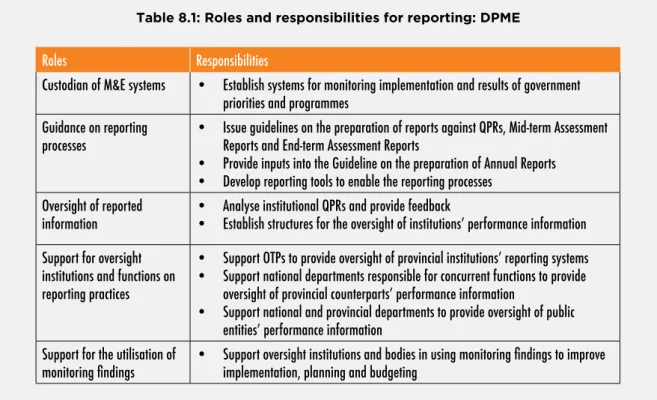
REVISED FRAMEWORK FOR STRATEGIC PLANS AND ANNUAL PERFORMANCE PLANS .. a) The NSDF informs the development of the MTSF in relation to spatial priorities. These findings should be used to inform management, oversight bodies and the public about the progress of plan implementation. The reports are synchronized with .. the reporting requirements of the institution's various plans and their findings should be used to inform the development or review of the SP.
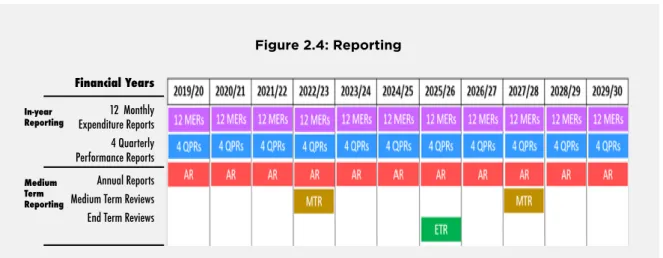
Institutions must report on progress against outcomes in the SP.. semester Assessment reports must be completed by the end of November in the third year of implementation of the SP within a specific planning period and must reflect outcomes during the first two and a half years of SP. the planning cycle. Institutions must establish processes to use mid-term evaluation reports to inform the development of the APP in the next financial year and the SP in the following planning cycle. Institutions must establish processes to use end-of-term assessment reports to inform the development of the APP for the next fiscal year and the SP for the next planning cycle.
Institutions should establish procedures for implementing feedback recommendations to ensure action is taken on monitoring findings to improve APP implementation. As stated in section 40 of the Financial Assets Management Act, annual reports must be completed within five months of the end of the financial year. Institutions should establish procedures to use annual reports to inform APP developments for the following financial year.
Reporting on the PAZ provides information about progress in implementing the plan in a given financial year. Reporting progress in the implementation of the PZA with special reference to monitoring results and activities. Final assessments must be completed by the end of July of the first financial year of the new planning cycle.