An increased understanding of the impact of water on the livelihoods of rural dwellers is important for sustainable development. DWAF Department of Water Affairs and Forestry DWERG Development Welfare and Research Foundation FAO Food and Agriculture Organization.
Background
Access to clean water is thus a critical development issue, globally and in South Africa, especially in rural areas. Improving the water supply will have a positive impact on the individual's income and will alleviate the overall poverty of the beneficiary household.
Definition of terms
Water pollution: Water is considered polluted if it is unusable for a specific purpose. In South Africa, as everywhere else in the world, water is becoming a scarce and crucial resource (Stone.
Research Problem
Water Scarcity: Is the lack of sufficient water resources to meet the requirements of water use within a region. Reduced numbers of cattle and reduction in, and often complete abolition of, agricultural food production are the result of a lack of water for irrigation.
Research question
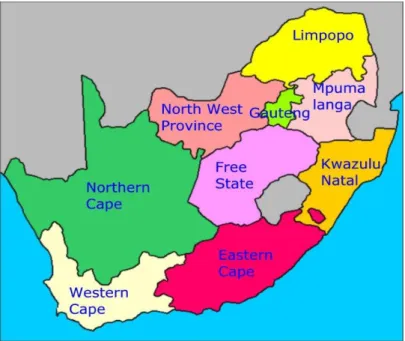
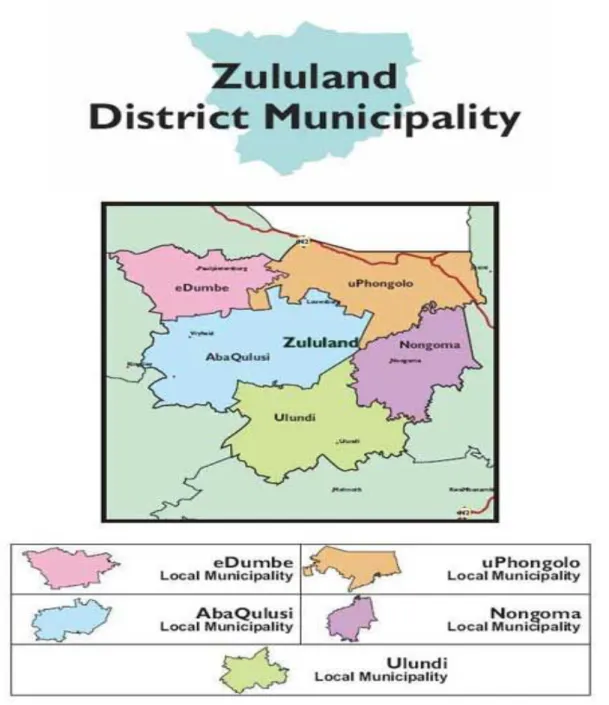
Using an in-depth case study, this dissertation will highlight how rural water resources impact rural households, especially in the context that the problem is escalating at an alarming rate as rainfall continues to decline in the Zululand region, where the study area. This has forced large numbers of rural residents to agree to minimum prices when selling their products.
Objectives
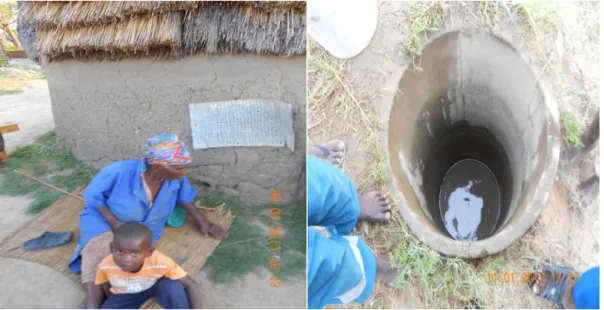
It is made worse by the fact that most water sources are unprotected. This part of the study examined the prevalence and causes of water pollution in the study area.
Ethical considerations
Structure of the dissertation
Water in an economic perspective is also discussed in this chapter, which is further divided into water and food security and water and income generation. The implications of water in society and at the household level are studied, as are water and tradition and belief.
The State and Water
- KwaZulu-Natal and Water
- The National Water Act (No. 36 of 1998)
- The Constitution Act of 1996
- Water Service Act 108 of 1997
- The role of water in society and households
- Water and tradition and beliefs
- Water and gender
- Water and age and disability
- Water and conflict
The project is part of the Ingwavuma Bulk Water Jozini Scheme – a key priority of the National Department of Water and Sanitation. As part of water system sustainability, it is important for water system users to understand their water system.
Water from an economic perspective
Water and food security
Wenhold also said that water is one of the essential resources required for food production, making it a critical factor in food security. Household food security exists when all members have access at all times to enough food for an active, healthy life.
Water from a health perspective
The burden of carrying water
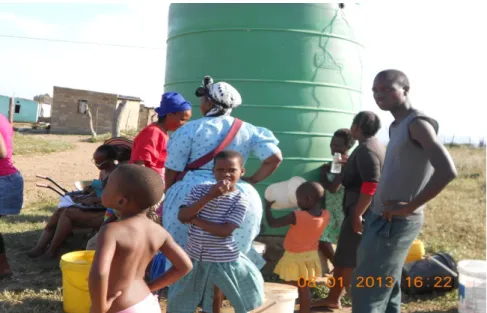
These water containers can be clay pots, gourds, plastic buckets, drums, jerry cans and many more. In mountainous areas, it becomes difficult to balance water containers on the head, and an alternative is to carry a container on the back, which can cause back injuries (Kerr.
Hygiene behaviour
In sub-Saharan Africa, collecting and transporting water and firewood over considerable distances can mean that women can sleep only a few hours a night during the dry season. Improvements to existing water handling methods and their use in the home can make a big difference to people's health.
Sanitation
Waste management systems are basically of two types; those who treat waste as waste and those who treat waste as a resource. Disposal and storage systems and flushing and emptying systems treat waste as something to be disposed of.
Water from an environmental perspective
This resulted in an evolution of waste management systems (the most hygienic of which are water-based) and in the development of various cleaning products designed to improve human hygiene. Ecological sanitation is an alternative approach to dealing with sanitation that considers feces as a resource; it has systems designed to recover valuable nutrients and recycle them into fertilizers for food production (Rylander, 1991:92).
Water sources
- Dams
- Rivers
- Streams
- Springs
- Boreholes and Wells
- Reticulated water
- Rainwater harvesting
- Water tankers
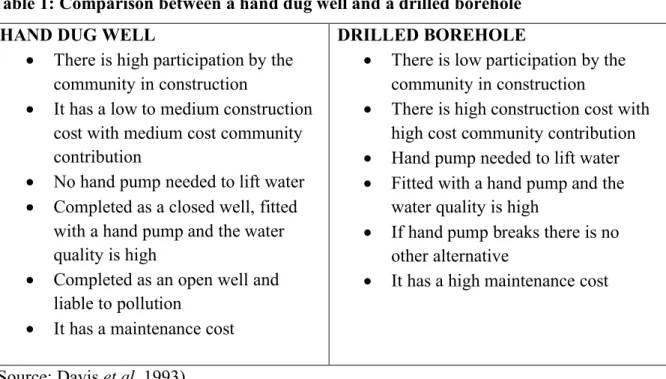
Depending on the purpose of the well, the pumping equipment must be able to pump the required amount of water. The water is often relatively clean (low in minerals and bacteria), especially in rural areas.
Water and Climate Change
Populations do not migrate in search of food during prolonged droughts, but they will look for new or different water sources. During droughts, water quality is usually an issue as water sources remain under pressure, many of which may lack protection (Oats, Conway & Carlow, 2011:3).
Livelihoods
Concept of livelihoods
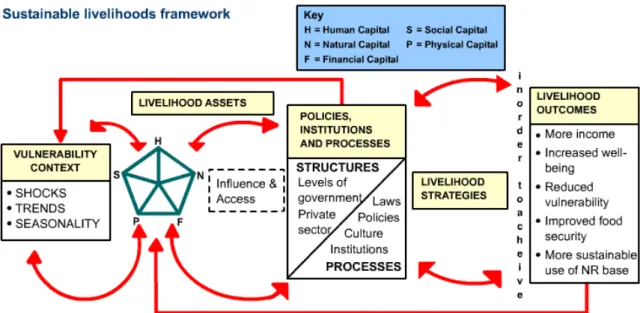
In application to water issues, livelihoods analysis helps to better understand the many ways in which people use water. Involving the poor in decision-making processes is essential as they are isolated and voiceless in all sectors of government in terms of livelihoods.
Vulnerability
There is a need for a rethink by policy makers at all levels of government regarding the dry land irrigation scheme. He further stated that about 75% of the population in African countries, especially in rural areas, are smallholder farmers and that these farmers in sub-Saharan Africa are mostly poor.
Towards a theoretical framework for studying water sources
- Health
- Vulnerability and livelihoods
- Vulnerability and water sources
- Water sources and water quality
- Vulnerability and the State
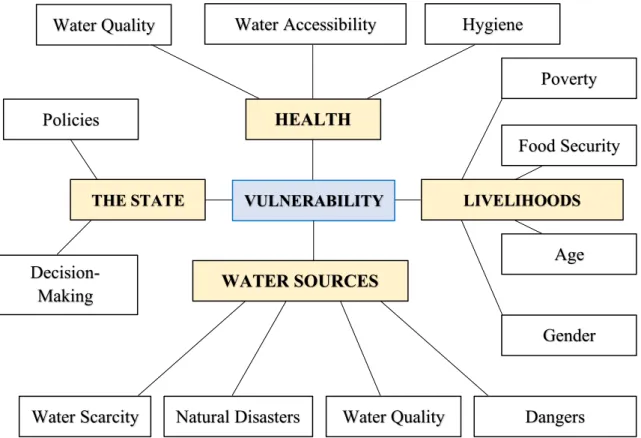
The third element of the theoretical framework shown in Figure 5 is the direct impact of water resources on vulnerability. Rural communities remain vulnerable to degradation and historical misallocation of water.
Research Design
Research Approach
Second, qualitative research is used in studies among individuals or groups within a given society, group or organization. Qualitative research is generally used to study matters such as people's understandings and interactions (Silverman 2005:9) and is thus highly relevant to studying the nature of water conflict and cooperation.
Case study
Focus group discussions were held with 18 participants from KwaNsele, Kwa Ndasi (subdivision at Ivuna), Esgangeni and Evuna to develop themes for the main survey. The main survey involved 100 respondents who were sampled from the population of the study area by means of random sampling within cluster sampling.
Focus Group Discussions
This was also used to understand the real situation of water sources in the study area to avoid conducting the study with preconceived ideas. Kitzinger explained that focus groups are used as a data collection method where information can be shared and discussed between research participants to produce data.
Survey
- Survey Sampling
- Data Collection by Survey interviews
- Testing of Interview Schedule
- Data Analysis
- Reliability and Validity
It is important for the researcher to know in advance whether the study will provide the information she is looking for. Pre-testing focused on the interview schedule and its ability to produce data that would assist the researcher in achieving the objectives of the study.
Description of the study area
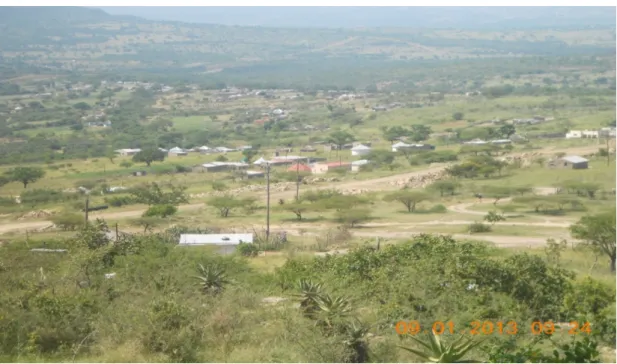
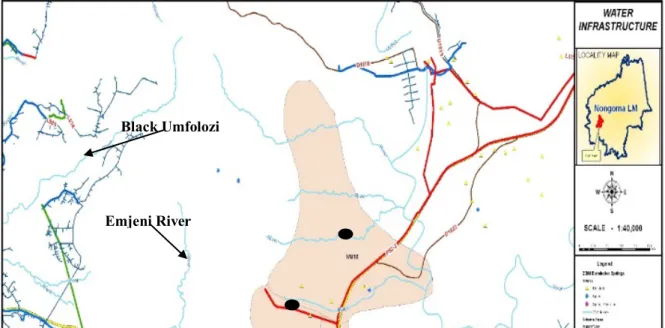
To ensure the validity of the study, a focus group from the Kwa-Nsele area was used informally where the researcher concluded that what had been previously investigated produced similar results. Therefore, there is a severe water shortage in Ivuna, so the community depends on the mercy of rain during the summer, and for those who do not have enough water storage containers, it is very difficult to cope with the winter droughts.
Why Ivuna was selected as the study site
The Rationale of the Study
Improving the water supply will have a positive impact on the individual income and poverty situation of the beneficiary household. This chapter presents the results of the study based on data collected using the methods described in chapter three.
Demographics of the respondents
- Gender
- Age and citizenship
- Marital Status
- Educational level
- Household heads
- Employment Status
All respondents were South African citizens, but one of the respondents was originally from Swaziland. This is important because 69% of respondents in this study did not have an adult partner, indicating that they are alone in caring for their family.

Water sources
- Types of water sources
- Household access to water services and respondent preferences
- Problems experienced with water sources and current solutions
- Water quality hazards
- Causes of water shortages
Fifteen percent (15%) of respondents dig new ponds to divert clear water when the water is cloudy, while 31%. It should be noted that not all threats cited by respondents are related to water quality.
Water Collection and Use
Water collection
This part of the study further investigated the level of participation by both genders in water collection. This part of the study sought to determine what social interactions occurred (if any) during water collection.

Water use
Although there is a shortage of water in the area, most community members are unwilling to pay for water. To improve water supply, 19% of respondents believed that there should be an equal water supply for all households.
Water Management
- Managing water quality
- Managing access and off-take quantities
- Management of “used” water
- How/when water sources are affected?
- Addressing water shortages
- Presence of water committees
- Conflict and conflict resolution
- Ensuring water availability at all times
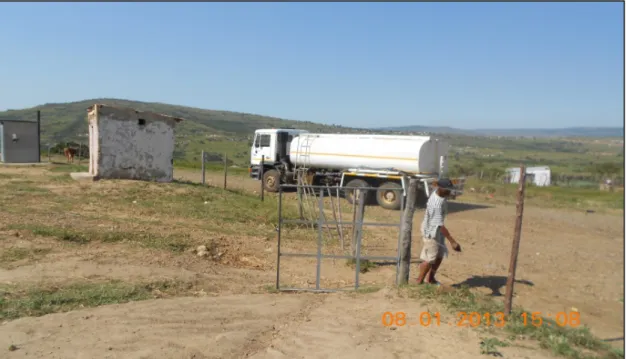
About 86% of the respondents also indicated that they do not manage the quality of the water in rivers. All the respondents (100%) felt that the quality of the water delivered by the municipality through water jugs is managed.
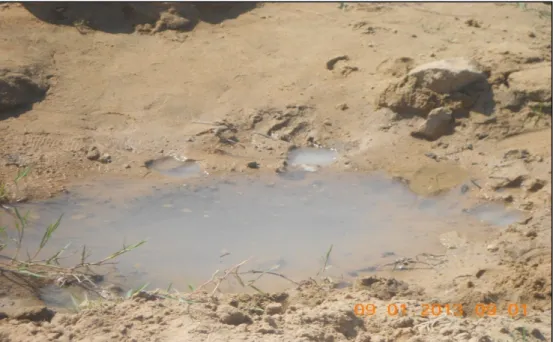
Conclusions from the key findings of the study
Conclusions regarding water sources
As communities in the study area are highly dependent on flowing rivers and streams, the need for treated water appears to be particularly urgent. Related to this is the impact of the drying up of natural resources in the study area.
Key findings regarding water collection and use
These household heads traditionally do not have a voice in the community when decisions need to be made about water. A third important finding was that although culture plays less of a role in the water problem than in the past, it is still present.
Conclusions about water management
The study further highlights that most water sources are not managed (they are unprotected and uncontrolled) in terms of quality and hygiene. How/when water sources are affected: The responses showed that lack of proper sanitation is the main factor.
Summative Conclusions from the key findings (presented in Chapter 4)
The quality of the water from these water jugs is also a concern, as there are suspicions that unreliable sources are being used for this water. Poor management of natural water resources can result from the distance to most water sources, which can lead to a lack of control over withdrawal rates.
Increased vulnerability
This means that rural communities can no longer rely on the existing natural water sources in their current state. An integrated approach to address such abnormalities of water supply in rural communities is needed.
Social changes
- Men collecting water
- Child-headed households
- Neglect of community elders
- Mode of water collection: from head to wheel-barrow
- Social cohesion
- Conclusions about social changes
There are substantial social changes in the study area that are directly related to water issues. The use of the sustainable livelihoods framework provided a more coherent and integrated approach to understanding poverty in the study area.
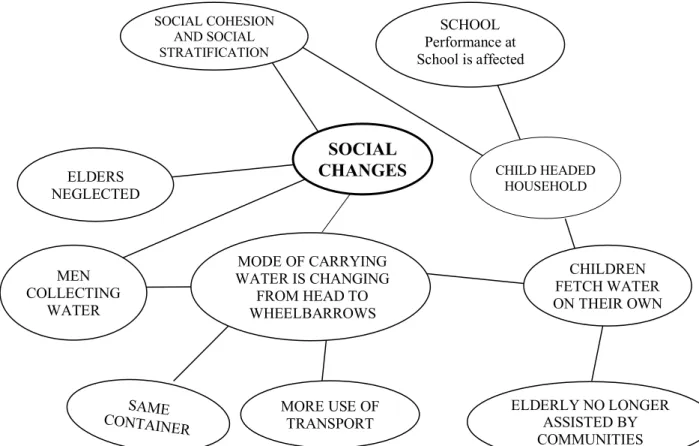
Drawing on the livelihoods assets
- Natural and physical capital
- Social Capital
- Human Capital
- Economic Capital in the study area
The findings from this aspect of the study provide a basis for addressing limitations in the community under study. Lack of water promotes individualism in the sense that it appears to be survival of the fittest.
SUMMARY OF THE THESIS
Summary of key findings
Concretely, the study also showed that society in the study area has experienced significant social and economic changes in light of agriculture and increased vulnerability in relation to water. In the study area, it also emerged that access is hindered by a lack of skills and resource management.
Objectives of the study
- The impact of water scarcity on the households of the people at Ivuna
- Aspects of the households are particularly affected by water scarcity
- The nature of vulnerability in the study area related to water scarcity
Water scarcity increases the risk of food insecurity by (a) reducing the capacity to grow food, and (b) converting money intended to purchase food into the purchase of water. Because these households have less power in the community, they are more affected by water scarcity and have fewer resources to address the challenge.
Scope for future work
Unpublished MA thesis for the Bachelor of Development Studies, University of Kwa-Zulu Natal, Durban, South Africa. Water Rights and Market Approaches in South Africa, Sustainable Livelihoods in South Africa.