THE RURAL-URBAN DICHOTOMY EFFECTS OF SOCIAL GRANTS ON POVERTY ALLEVIATION IN THE POLOKWANE LOCAL MUNICIPALITY, SOUTH AFRICA
By
Edwin Mwasakidzeni Mutyenyoka
Dissertation
Submitted in Fulfilment of the Requirements for the Degree Masters of Development (Planning and Management)
to the
Department of Development Planning and Management,
in the
Faculty of Management and Law (School of Economics and Management)
at the
University of Limpopo
Supervisor: Professor J.P. Tsheola 2016
ii | P a g e Declaration
I declare that The Rural-Urban Dichotomy Effects of Social Grants on Poverty Alleviation in the Polokwane Local Municipality, Limpopo Province hereby submitted to the University of Limpopo, for the degree of Master of Development (Development Planning and Management) has not previously been submitted by me for a degree at this or any other university; that it is my own work in design and in execution, and that all material contained herein has been duly acknowledged.
Mutyenyoka, E.M. (Mr) Date...06 July 2016
Signature: ………
iii | P a g e
Acknowledgements
The journey to deliver this project has not only been a concoction of sweat, joy, stress, lessons, revelations, frustration and mental development, it has left me forever indebted to many a people and the Almighty God.
Secondly, I wish to take my hat off to the personified wisdom that my supervisor, Professor J.P. Tsheola, is. Sessions with him throughout this project were guaranteed of the same process which crafted the academic I regard myself as today. The process systematically, and yet always dynamic, started with lashes which would gradually graduate into robust motivation. Indeed, “wisdom is a non-grey self-selection and self- determination.”
Thirdly, I would like to appreciate my family, Akomenemwi, for setting academic and behavioural standards and values high enough to challenge me and provisioning complementing moral support and financial resources to help me match them.
Last, but by far not least, the support structures of the University of Limpopo, through mainly the Department of Development Planning and Management and its vibrant cohort will remain major stakeholders in this research project and many other academic works they inspired out of me.
iv | P a g e
Dedication
This milestone would have made my late father, Enock Mutyenyoka, a very proud man. Baba, you saw my potential to achieve this and more before I could even imagine it myself and for that, this dissertation is dedicated to your prophetic vision about my life journey.
Abstract
v | P a g e
The purview of this project is to interrogate the alleged rural-urban dichotomy effects of social grants on poverty alleviation. One major problem that sophisticates rural-urban comparative studies is that there is no universally agreed upon definition of "urban" or
"rural". By virtue of their contrasting contexts, rural and urban areas are diametrically divergent in terms of their characteristics. These inherent contrasts are critical to the applicability and effects of concerted interventions due to the diversity of actors, agendas, underlying intentions and so on. On one hand, people in rural areas are characterized by socio-economic homogeneity and thus they enjoy communitarianism.
On the other, urbanites generally belong to different castes, creeds, religions and cultures, thus they rarely share same social statuses, norms and values. Socio- economic narratives are thereby intrinsically distributed among rural and urban households as well as societies and so are the effects of intervention strategies such as social grants. Literature documents increased blurring of urban-rural distinctions in developed countries, but a multidimensional characterization of settlement type based on style and density of housing, predominant commercial and agricultural activities, and access to services still vividly demonstrates the rural-urban dichotomy in South Africa.
The study, thereby, puts the Polokwane Local Municipality on the spotlight to argue that by virtue of contrasting contexts and divergent characteristics between rural and urban areas, social grants have dichotomous effects as strategy for poverty amelioration. The study engages on a scholarship synthesis of characteristics and contexts of the rural- urban dichotomy, roles and types of social grants and dimensions and dynamics of poverty in rural and urban areas prior to a presentation a resume of theoretical and empirical findings from the cross-sectional survey in the Municipality. Employing snowballing to sample a total of a hundred grant-receiving households, the study qualitatively and quantitatively analyses and interprets data from the two study areas.
The key finding emanating from the core of the research problem was that despite arguments about modern rural areas across the globe experiencing factors traditionally associated with the urban environment and the ensuing increased blurring of urban- rural distinctions, a multidimensional characterization of settlement type based on style and density of housing, predominant commercial and agricultural activities, behaviour and access to services in South Africa still vividly demonstrates the rural-urban
vi | P a g e
dichotomy. In the same line of thought, the study concludes that not only are the effects of social grants dichotomous between rural and urban grantees but the effects empirically show dissimilarities at different levels of analysis, including individual, household, location and cash values of various grants.The conclusion also consolidates recommendations revolving around the augmentation of rural-urban effects of social grants so as to synchronize poverty alleviation.
Table of Contents
vii | P a g e
ITEM DESCRIPTION PAGE
Declaration ii
Acknowledgements iii
Dedication iv
Abstract v
Table of Contents vii
List of References xii
List of appendices xii
List of Tables xii
List of Figures xiii
Acronyms xv
CHAPTER ONE
INTRODUCTION, BACKGROUND AND RESEARCH DESIGN FOR THE RURAL- URBAN DICHOTOMY AND SOCIAL GRANTS
Contents Pages 1.1. INTRODUCTION AND BACKGROUND 1
1.2. STATEMENT OF RESEARCH PROBLEM 3
1.3. RESEARCH QUESTIONS 4
1.4. RESEARCH AIM AND OBJECTIVES 4
1.5. DEFINITION OF TERMS 5
1.6. RESEARCH DESIGN AND METHODOLOGY 5
viii | P a g e
1.6.1. Research Design 6
1.6.2. Kinds of Data Required 6
1.6.3. Description of Study Area 7
1.6.4. Target Population and Unit of Analysis 8
1.6.5. Sampling Design 9
1.6.6. Data Collection Methods 10
1.6.7. Data Analysis Methods 10
1.6.8. Validity and Reliability 11
1.7. SIGNIFICANCE OF THE STUDY 12
1.8. ETHICAL CONSIDERATIONS 12
1.9. STRUCTURE OF THE DISSERTATION 13
1.10. LIMITATIONS OF THE STUDY 14
CHAPTER TWO
THE CONCEPTUAL FRAMEWORK OF RURAL-URBAN DICHOTOMY EFFECTS OF SOCIAL GRANTS ON POVERTY ALLEVIATION
Content Page
2.1. INTRODUCTION 15
2.2. CHARACTERISTICS AND CONTEXTS OF THE RURAL-URBAN
DICHOTOMY 16
2.3. THEORIES, ROLES AND TYPES OF SOCIAL SECURITY STRATEGIES 18
ix | P a g e
2.3.1. The Esping-Andersen Theory of Welfare State Regimes 18
2.3.2. Roles of Social Protection Policies 20
2.3.2.1. Elevation of Welfare, Consumption and Access to Basic
Services 21
2.3.2.2. Economic Gains: Risks Management, Savings and Investments 22
2.3.2.3. Empowerment of the Poor 23
2.3.2.3.1. The Empowerment Theory 24
2.3.3. Types of Social Security Strategies 27
2.3.3.1. Children-Oriented Grants 27
2.3.3.2. Grants/Pensions for the Old Age 29
2.3.3.3. Grants for the Disabled 30
2.4. DIMENSIONS AND DYNAMICS OF POVERTY IN RURAL AND URBAN
AREAS 31
2.4.1. Income Based Approaches 32
2.4.2. The Multidimensional Poverty Index (MPI) 34 2.5. RURAL-URBAN EFFECTS OF SOCIAL PROTECTION STRATEGIES 36
2.5.1. Social Grants and Human Welfare 40
2.5.2. Economic Effects of Social Grants in Rural and Urban Areas 43 2.5.3. Social Empowerment through Social Grants 44
2.6. CONCLUSION 46
x | P a g e
CHAPTER THREE
SOCIAL GRANTS AND POVERTY ALLEVIATION IN A SOUTH AFRICAN CONTEXT
Content Page
3.1. INTRODUCTION 48
3.2. RURAL AND URBAN AREAS: CHARACTERISTIC AND
CONTEXTUAL DICHOTOMIES 48
3.3. ROLES AND TYPEDS OF THE SOUTH AFRICAN SOCIAL GRANTS
SYSTEM 50
3.3.1. Child Support Grant (CSG) 52
3.3.2. State Old Age Grant (SOAG) 55
3.3.3. Disability Grant (DG) 57
3.4. DIMENSIONS AND DYNAMICS OF POVERTY IN RURAL AND URBAN
SOUTH AFRICA 58
3.4.1. The Income Perspective of Poverty 60
3.4.2. Dynamics of Poverty: Rural versus Urban Poverty 64 3.4.3. Dimensions of Poverty: Chronic versus Episodic Poverty 67 3.5. RURAL-URBAN DICHOTOMY EFFECTS OF SOCIAL GRANTS IN
SOUTH AFRICA 68
3.5.1. National and Provincial Social Grant and Poverty Profile 69
3.5.2. Food Security and Health 72
3.5.3. Social Capital 74
3.5.4. Gendered Effects of Grants in Rural and Urban Areas 76 3.5.5. The Efficacy of Grants in Rural and Urban South Africa 78
xi | P a g e
3.6. CONCLUSION 79
CHAPTER FOUR
ANALYSIS AND INTERPRETATION OF THE POLOKWANE LOCAL MUNICIPALITY EMPIRICAL DATA
4.1. INTRODUCTION 81
4.2. RURAL-URBAN BACKGROUND OF THE POLOKWANE LOCAL
MUNICIPALITY 82
4.2.1. Seshego Township (Ward 8) 82
4.2.2. Ga-Maja Village (Ward 3) 83
4.3. DEMOGRAPHIC PROFILES OF GA-MAJA VILLAGE AND SESHEGO
TOWNSHIP 83
4.3.1. Household Population Size, Age and Grantee-Non Grantee Ratios 84
4.3.2. Educational Levels 87
4.3.3. Employment statuses in Ga-Maja Village and Seshego Township 89 4.4. CHARACTERISTICS AND CONTEXTS OF THE RURAL URBAN
DICHOTOMY 91
4.4.1. Distance and Expenses to Access and Utilise Grants 91
4.4.2. Gender issues 93
4.4.3. Measuring Social Capital in Ga-Maja Village and Seshego
Township 95
xii | P a g e
4.5. TYPES AND ROLES OF SOCIAL GRANTS 97
4.5.1. Non-Grant Income among recipient households 98 4.5.2. Overarching Utilization of Grants Beyond Grantees’ Needs 99
4.5.3. Gendered Role of Social Grants 101
4.6. DIMENSIONS AND DYNAMICS OF POVERTY IN RURAL AND URBAN
AREAS 105
4.7. RURAL-URBAN DICHOTOMY EFFECTS OF THE SOCIAL
GRANTS ON POVERTY ALLEVIATION 108
4.7.1. Social Capital 108
4.7.2. Empowerment 112
4.7.3. Dependency 115
4.7.4. Fertility Rates 118
4.8. CONCLUSION 124
CHAPTER FIVE
FINDINGS, RECOMMENDATIONS AND CONCLUSION ON THE RURAL-URBAN DICHOTOMY EFFECTS OF SOCIAL GRANTS ON POVERTY ALLEVIATION
5.1 INTRODUCTION 125
5.2. RESEARCH FINDINGS 126
5.3. RECOMMENDATIONS 130
5.4. CONCLUSION 131
xiii | P a g e
List of References 132
Appendix 1. Semi-Structured Questionnaire 141
Appendix 2. Interview Schedule 156
Appendix 3. Ethics Clearance Letter 158
Appendix 4. Data Collection Permission Letters 159
List of Tables
Description Page
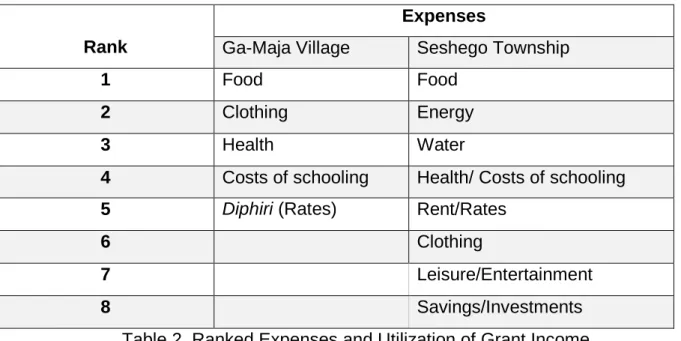
Table 1: Distance and Expenses to Access and Utilise Grants 92 Table 2. Ranked Expenses and Utilization of Grant Income 103
List of Figures
Description Page
xiv | P a g e
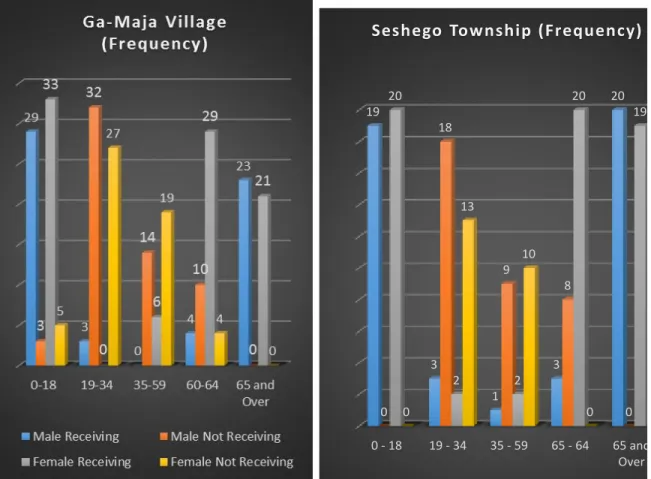
Figure 4.1. Distribution of Social Grants: Gender, Age, Eligibility 85 Figure 4.2. Educational Levels in Ga-Maja Village and Seshego Township 88 Figure 4.3. Employment Statuses Ga-Maja Village and Seshego Township 90 Figure 4.4. Gendered Decision Making on the Utilisation of Grants 94
Figure 4.5. Sharing Habits between Households 96
Figure 4.6. Types of Social Grants 97
Figure 4.7. Social Grants as the Only Source of Household Income 99
Figure 4.8. Utilization of Social Grants 100
Figure 4.9. Gendered Effects of Social Grants 102
Figure 4.10. Hierarchies of Needs in Ga-Maja Village and Seshego Township 106 Figure 4.11. Grant Income as a Main Determinant of Household Welfare 107 Figure 4.12. Sharing of Resources and Communitarianism 110
Figure 4.13. Social Grants and Social Capital 111
Figure 4.14. Non-Grant Income Dynamics in Grant-Receiving Households 113
Figure 4.15. Frequency of Borrowing Money 114
Figure 4.16. Grants as the Main Source of Income 116
Figure 4.17. Non-Grant Income in Households 117
Figure 4.18. Age Constitution of Child Support Grant Recipients in Ga-Maja
Village 118
Figure 4.19. Grant Income and High Fertility Rates 120
Figure 4.20. Social Grants, Savings/Investment and Employment Ratios 121 Figure 4.21. Effects of Social Grants on Poverty Alleviation 123
Acronyms
AIDS: Acquired Immune Deficiency Syndrome
xv | P a g e
CSG: Child Support Grant
CDM: Capricorn District Municipality DA: Disability Grant
DCG: Dependency Care Grant
DSD: Department of Social Development
LEAP: Livelihood Empowerment Against Poverty FBS: Free Basic Services
FCG: Foster Care Grant GEI: Gender Equality Index GHS: General Household Survey HIV/AIDS: Human Immunodeficiency Virus IES: Income and Expenditure Survey IMF: International Monetary Fund KZN: KwaZulu Natal
KIDS: KwaZulu-Natal Income Dynamics Study MDG: Millennium Development Goal
NSPS: National Social Protection Strategy ODI: Overseas Development Institute PPP: Purchasing Power Parity
PSDF: Polokwane Spatial Development Framework RSA: Republic of South Africa
xvi | P a g e
SASSA: South African Social Security Agency StatsSA: Statistics South Africa
SOAG: State Old Age Grant
SPSS: Statistical Package for Social Sciences UN: United Nations
UNDP: United Nations Development Programme UNICEF: United Nations International Children Fund WHO: World Health Organisation
1 | P a g e
CHAPTER ONE
INTRODUCTION, BACKGROUND AND RESEARCH DESIGN FOR THE RURAL- URBAN DICHOTOMY AND SOCIAL GRANTS
1.1. INTRODUCTION AND BACKGROUND
A combination of social, economic and environmental factors has collectively compounded the scourge of poverty in developing countries (World Bank, 2013;
Christiaensen and Todo, 2014). Whilst the incidence, depth and severity of poverty has gradually become identical between rural and urban areas (Pasha, 2014), there remains sets of plights which are unique to each of the two geographical contexts (Alem, 2015).
With surveys showing that low income households are more vulnerable to poverty, income has substantially earned acceptability as the proxy for welfare both in rural and urban areas especially in free market economies (Pan and Yang, 2011; Cheng, 2014).
Subsequently, income-based poverty lines and consumption thresholds have been orthodox denominators in the identification of “deserving” beneficiaries of public and private relief strategies such as social grants in welfare states. However, the solicited uniformity of goals and output off the social security system is allegedly compromised by rural-urban dichotomous effects of social grants on poverty alleviation (van der Berg, 2010). Baker and Schuler (2009) postulate that the social grant approach tends to turn a blind eye on the fungibility of relief funds (cash, food vouchers) and unsolicited distribution of benefits per capita within households, mostly among urban recipients.
Furthermore, there is relentless allusion to pitiable rates of beneficiaries’ graduation from “indigence status” and generational overlaps of dependency on free basic services and social grants, especially in rural areas (South African Social Security Agency (SASSA), 2015). This could be viewed as the root of chronic poverty and as testimony to the failure and unsustainability of the means-tested cash transfers (Reddy and Sokomani, 2008; van der Burg, 2010; Stren, 2014). The study, thereby, argued that virtue of contrasting contexts and divergent characteristics, social grants have dichotomous rural-urban effects as strategy for poverty amelioration.
2 | P a g e
Regardless of the aforementioned, social relief in form of cash transfers and food programmes have been exponentially improved over the years to counter global financial crises and income inequalities especially in (aspirant) welfare states such as Brazil, the Gulf region, Ghana and South Africa, to mention a few (Finmark, 2009;
Neves, 2013; World Bank, 2013). The Ghanaian National Social Protection Strategy (NSPS) acknowledges that economic growth alone is not sufficient for the fight against, especially, rural poverty (NSPS, 2007). The main component of the NSPS is a social grants programme called the Livelihood Empowerment Against Poverty (LEAP) programme which provides social grants to beneficiaries chosen from extremely poor households in Ghana to supplement the basic subsistence needs of the target groups and link them up with complementary services. Since poverty in Ghana is noted to be a predominantly rural phenomenon with about two-thirds of the poverty-stricken population living in rural areas, the LEAP has proportionally committed a bigger fraction of its safety net to rural Ghana (Osei, 2011). In her own part, South Africa recently announced an additional R7.2 billion (to the already apportioned R120 billion) to upsurge the monthly social grant per capita and to subsequently reduce a fairly high economic inequality rate (0.7 Gini coefficient). These efforts are regardless of apparent dichotomous rural-urban effects of these safety net programmes on poverty alleviation being consistently recorded in South Africa. The study methodologically examined social grant policy designs in tandem with poverty dimensions in one of the country’s most indigent provinces. (Chowdhury and Mukhopadhaya, 2012; Republic of South Africa (RSA), 2015; South African Social Security Agency (SASSA), 2016).
Limpopo Province, being the poorest and predominantly a rural region, has prominently featured as a priority target of public and private anti-poverty initiatives (Gyekye and Akinboade, 2003; Statistics South Africa (StatsSA), 2015). The majority of the population in the province resides in rural and underdeveloped areas, whilst rampant (e)migration has transferred poverty onto its urban peripheries, slums and townships.
The Polokwane Local Municipality is deeply marked by multi-dimensional and spatially- unique deprivations all revolving around low quality, scale and speed of service delivery,
3 | P a g e
crime, illiteracy, spatial injustices among other ills. As such, social grants have been traditionally a principal intervention strategy and the main income source for indigent households which are “fortunately” home to either children, old people and/or the disabled (Todaro, 2013). Whilst the indicators and processes used to determine eligibility to various social grants do not only under-count the deserving poor in rural areas, the aggregation of rural-urban poverty profiles have allegedly left vast non- monetary, incalculable and yet intractable dimensions of poverty unrelieved in the Polokwane Local Municipality (Tacoli, 2012; Polokwane Local Municipality, 2010).
Hence, the Polokwane Local Municipality is no exception to the rural-urban dichotomous effects of social grants. This study sought to contextualize and disaggregate socio-economic narratives intrinsically distributed between rural and urban households as well as the rest of the societies in order to evaluate and appraise the effects of the social grant strategy on poverty alleviation in the municipality (Seshego Township and Ga-Maja Village).
1.2. STATEMENT OF THE RESEARCH PROBLEM
High incidence of poverty in Limpopo Province aggravates entrenched complexities in the measurement of the efficacy of public and private concerted intervention action, let alone juxtaposing the imbedded rural-urban narratives (Todaro, 2013). As one of the poorest provinces in South Africa, Limpopo’s poverty profile is epitomized by only 24 per cent of its population attaining a grade 12 qualification or more and only 5.7 per cent having a tertiary qualification, the highest population growth rate (3.9 per cent per annum) in the country and socio-economic development in the province being poorer and slower than elsewhere (Polokwane Municipality, 2010; Polokwane Spatial Development Framework (PSDF), Statistics South Africa, 2013). It is, therefore, not surprising that the Polokwane Municipality is home to up to 60 per cent (2 315 499) of its population depending on various types of social grants as the main source of household income (1 699 494 on the Child support Grant, 430,368 on the State Old Age Grant, 93 428 on the Disability Grant) (SASSA, 2016). Meanwhile, the Socio-Economic Impact Assessment Study of the Integrated Development Planning in the Capricorn
4 | P a g e
District Municipality (2010) and the StatsSA (2015) documented spatially-spread household welfare status quos, income levels and socio-economic behaviors between rural and urban clusters in the Municipality. Whilst these contextual variances underline the rural-urban dichotomy, evaluations of the effects of social grants on poverty alleviation in the Polokwane Local Municipality are seemingly superficial and largely aggregated rather than dissected into rural or urban contexts. The study, thereby, argued that by virtue of contrasting contexts and divergent characteristics, social grants have dichotomous rural-urban effects as strategy for poverty amelioration. The study made a comparative appraisal of the effects of the social grant strategy on poverty alleviation through normative cross-sectional surveys in Seshego Township (urban) and Ga-Maja Village (rural), both under the Polokwane Local Municipality.
1.3. RESEARCH QUESTIONS
The general research question of this study was: How does the social grant strategy affect poverty alleviation in rural and urban contexts?
Specific research questions drawn from the general research question were:
What are the characteristics and contexts of the rural-urban dichotomy?
What are the roles and types of social grants?
What are the dimensions and dynamics of poverty in rural and urban areas?
What are the rural-urban dichotomy effects of the social grant strategy on poverty alleviation?
1.4. RESEARCH AIM AND OBJECTIVES
The aim of the study was to investigate the rural-urban dichotomy effects of the social grant strategy on poverty alleviation.
Objectives formulated from the aim were as follows:
To expose the characteristics and contexts of the rural-urban dichotomy;
To establish the roles of the social grant strategy in rural and urban areas;
To investigate the dimensions and dynamics of poverty in rural and urban areas;
5 | P a g e
To evaluate the rural-urban dichotomy effects of the social grant strategy on poverty alleviation; and
To recommend measures which can enhance and synchronize rural-urban effects of the social grant strategy on poverty alleviation.
1.5. DEFINITION OF TERMS
This section defines concepts which were frequently used in the study. Whilst the definitions are drawn from a global literature base, they were inclined towards the contextual bias of the study.
Social Grants: Globally and consistent with this study, social grants and their equivalents are viewed as means-tested cash transfers targeted at the poor, vulnerable and marginalized citizens who are deemed unfit to fully participate in the labour market or undertake remunerative work (particularly children, old people, the disabled and the unemployed) (Overseas Development Institute (ODI), 2005; SASSA, 2015).
Poverty Alleviation: Whilst poverty is generally understood as deficiency in an individual’s socio-economic capabilities. Its manifestations include factors such as income, access to basic services, access to assets, information, social networks or social capital (Department of Social Development (DSD), 2015). This study refers to poverty alleviation as a process of enabling the largest number of poor people to achieve better quality of life in their social, economic, political and environmental realms (Gyekye and Akinboade, 2003; Bread For The World Institute, 2015).
1.6. RESEARCH DESIGN AND METHODOLOGY
A research design is a plan, structure and strategy for a study which provides the overall framework for data collection and the subsequent presentation and analysis.
Thus, a research design provides a format for the detailed steps taken in the study. The function is to provide for the collection of relevant data with minimal expenditure of
6 | P a g e
effort, time and money, whilst comprehensively responding to research questions (Creswell, 2009). A research design allows for the specification of methods and procedures to be applied in gathering and analysing data, with a vision set on optimising the validity of research findings and conclusions. This segment discusses methods and tools employed in this study namely; the research design, description of the study area, kinds of data required and unity of analysis, target population, sampling design, data collection methods and data analysis methods.
1.6.1. Research Design
Based on a normative design, the comparative study evaluated: firstly, several characteristics and contexts of the rural-urban dichotomy; secondly, roles of social grants in rural and urban areas; thirdly, the multi-dimensional nature of poverty; and finally, rural and urban effects of social grants as a strategy for poverty alleviation. The quest to acquire raw perceptions and appraisal from the stakeholders of the social grant programme on the ground prompted a cross-sectional field survey to be taken. Whilst both quantitative and qualitative approaches were utilized in the collection and analysis of data, the study was more biased towards the latter so as to cater for a spectre of confounding variables which were at work simultaneously with social grants in society.
This approach thrived to moderate the conundrum around explicitly pin-pointing correlational and causal relationships between the cash transfers and poverty alleviation. Ultimately, elicited and appraised data on the effects of social grants on poverty alleviation in Seshego Township and Ga-Maja Village were juxtaposed so as to affirm or deny the alleged rural-urban dichotomy effects of the grants as a poverty alleviation strategy.
1.6.2. Kinds of Data Required
The study required a concoction of primary and secondary sources from which facts, opinions, experiences and perceptions were acquired through literature review, grants stakeholders and key informants. Characteristics and contexts of the rural and urban
7 | P a g e
dichotomy were drawn from documented Polokwane Local Municipality empirical surveys such as the 2010 Socio-Economic Impact Assessment Study of the Integrated Development Planning. SASSA annual reports provided secondary qualitative and quantitative data on the roles, the geographical distribution and the disaggregated effects of social grants in rural and urban Polokwane Local Municipality. Whilst poor prior knowledge of the study areas and the subjects exacerbated vulnerability to unequivocal intentions of the latter (lies, self-deceptions, delusions), covert observations allowed for the acquisition of contextual and complementary data. Not only did intuitive, contextualised and covert observations of the living conditions and general welfare of designated beneficiaries enhanced careful interpretation of the underlying implicit and explicit meaning of factual and opinion data solicited from the grants stakeholders, they further satisfy the qualitative bias of the study.
1.6.3. Description of the Study Area
The Polokwane Local Municipality is located at the heart of Limpopo Province within the Capricorn District Municipality. It hosts a fast-growing capital city of the Limpopo Province (Polokwane City), along the N1 which extends from Pretoria to Zimbabwe. In terms of its physical composition Polokwane Municipality is 23 per cent urban and 71 per cent rural. (SASSA, 2014). Since data about the Polokwane Local Municipality is aggregated in terms of wards, the comparative study juxtapose precisely Ward 8 of Seshego Township (urban) and Ward 3 of Ga-Maja Village (rural). These areas are visibly marked by rural-urban dichotomous social, economic and environmental status quos as well as behaviours (Polokwane Municipality, 2010).
Seshego Township lies 10km directly northwest of Polokwane CBD although the development of the Seshego Complex almost makes the Township autonomous and self-sufficient in terms of the provision of most goods and services to the residents.
According to the Polokwane Local Municipality the Basic Level of Services in the township is Category 2 which implies that there is piped water inside dwellings, flush toilets connected to sewage system or ventilated pit latrines, refuse removal at least
8 | P a g e
once a week and houses are connected to the electricity grid. Whilst up to 35 per cent of the Seshego Ward 8 population completed grade 12/standard 10 and the official unemployment rate is in the regions of 45 per cent, up to 52 per cent of the residents earn no remuneration income (Polokwane Municipality, 2015).The 2015/16 SASSA Annual Report recorded about 3500 Old Age Grants, 450 DG and 6000 CSG recipients in the ward who travel an average of 3km to the pay points (SASSA, 2016).
Ga-Maja Village is remote area located around 45km away from Polokwane City with fares for one trip ranging between R30 to R60 depending on whether it is a public or private transport mode. With only 7 per cent residents of the village possessing post- high school qualifications and an expanded unemployment rate in the regions of 86 per cent, it is not surprising that only 20 per cent of Ga-Maja Ward 3 live above the upper- bound poverty line (Polokwane Municipality, 2012). Rurality of the village is reflected by the poor basic level of services such as water sources being a river and communal tapes which are located further than 200m from most households, poor and few sanitation facilities, wood and paraffin as the main energy sources and long distances to main service centres (45kms). Around 5 000, 700 and 11 000 people receive the Old Age Grant, Disability Grant and the Child Support Grant in the ward, respectively (SASSA, 2015). Monthly, mobile pay points are stationed for three days to allow villagers to collect grants, however, reports of poor sanitation and facilities have been recorded.
1.6.4. Target Population and Unit of Analysis
The target population of the study are the total groups of individuals who receive various types of social grants. Whilst registered individual social grant recipients would be ideal units from which data would be elicited, some of them are children, old age people and physically or mentally impaired people who may be unable to fully participate in the study. Moreover, effects of various grants go beyond designated recipients to encompass entire households to which they belong. This prompted the study to include registered recipients themselves and also primary caregivers (parents, custodians and
9 | P a g e
guardians), household representatives and/or key informants as individual units of the population. Having primary caregivers as the majority of the units of analysis aggravated the risk of deceptive, dishonest and paranoid responses especially in societies where the fungibility of social grants has been implicitly attributed to them (Reddy and Sokomani, 2008; Narsey, 2012). There are around 9 000 and 15 600 recipients of various grants in Seshego Township [Ward 8] and Ga-Maja Village[Ward 3]), respectively.
1.6.5. Sampling Design
The grant-receiving population is too large for the study to exhaust, however, a small but carefully selected sample was used to represent the population from which they were selected. Since the study sought to appraise rural and urban data, quotas were purposively created from two of the five clusters in the Polokwane Local Municipality - thus Seshego Township and Ga-Maja Village (selected based on rural-urban categorisation by the Polokwane Local Municipality). Wards 8 of Seshego Township and Ward 3 of Ga-Maja Village were then purposively selected also based on their higher composition of grant recipients in each of the rural and urban contexts. Within the wards, snowball sampling were employed to identify and survey grant recipients. It is noteworthy that; firstly, poor prior knowledge of both the subjects and the study area as well as unavailability of the grant recipients’ database made it virtually impossible to use probability sampling designs in the study. Instead, snowballing (non-probability) helped in the identification of grant recipients in close proximity of other subjects. However, the level of social capital in the study areas determined the chances of success of the snowball. This is so because, generally, African cultural beliefs make it taboo to talk about or refer strangers to neighbouring households without their knowledge. Secondly, whilst a probability sampling approach such as stratified sampling would enhance equitable chances of units being in the sample, quota sampling is its “non-probability version” allowed the creation of homogeneous strata grouped in terms of the types of social grants (OAG, DG and CSG). Moreover, considering the time constraints of the cross-sectional study, poor prior knowledge about the subjects and the imperativeness
10 | P a g e
of intuitions and observations in describing, interpreting and making meaningful connections, non-probability sampling best suited the qualitative approach taken in the cross sectional study.
1.6.6. Data Collection Methods
The study collected combinations of primary, secondary, quantitative and qualitative data using, predominantly, literature review (documentations), semi-structured questionnaires, interviews and observations. Literature review (academic journals, books, government and institutional publications, conference presentations and speeches) were the main source of the theoretical background, frameworks and guidelines on past and contemporary discourses on the rural-urban dichotomy effects of social grants on poverty alleviation. Non-arbitrary observations were done to gather qualitative primary data from interview sessions and own-direct observation of behaviours, actions, circumstances and/or physical characteristics of relevant grant stakeholders in their natural settings. In the study, questionnaire and interviews conducted in gathering primary data from social grants stakeholders thus institutions and household representatives. Instant response and face to face nature made the interview the most ideal qualitative, comprehensive and exhaustive tools of soliciting information from the SASSA official who preferred to remain anonymous. Merits of the interview revolved around their overlapping leverage to probe or ask follow up questions or to use vernacular language especially in interacting with subjects with low level of education when administrating semi-structured questionnaires (especially Child Support Grant and Old Age Grant recipients).
1.6.7. Data Analysis Techniques
The process of data analysis involves structuring and bringing logical order to the large amount of data collected. Qualitative (descriptions, classification and making connections) and quantitative (statistical description, analysis and prediction) approaches, in tandem, were applied to analyze the collected data. Whilst most data on
11 | P a g e
the effects of grants on rural and urban recipients were qualitatively resolved into constituent components to reveal characteristic elements and structure, this study also analysed quantitative data using a coding process. Quantitative data was coded using a combination of the IBM Statistical Package for Social Sciences (SPSS) software, the 2010 Microsoft Excel Software and manual tallying. Software was used to present and analyse data through frequencies, descriptive statistics, generating graphs, charts and tables. These supplemented qualitative intuitions and provided adequate basis for objective descriptions, classifications and making connections off elicited comparative perceptions and narratives on the effects of social grants as strategy for poverty alleviation in rural and urban Polokwane. The evaluative-comparative nature of the study required unequivocal quantification of two sets of rural and urban data ensued by substantive appraisal and objective qualitative interpretation of underlying meaning of the data in relation to the alleged dichotomous effects of social grants in rural and urban societies. Various household surveys, Statistics South Africa (Poverty Profiles) and the Capricorn District Municipality (CDM) data collected for The Socio-Economic Impact Assessment Study of the Integrated Development Planning in 2010 was analyzed and synthesized to account for poverty measures, statuses and projections in the study areas.
1.6.8. Validity and Reliability
Validity questions the research instruments and tools to gauge the results’ sufficiency and truthfulness in relation to the requirements of the scientific research methods.
Reliability refers to the consistency, accuracy and dependability of instruments and the subsequent results and whether they can remain representative of the target population over time (Dey, 2003). The validity and reliability of the study were drawn from concept use, data collection and analysis methods. Whilst there has not been wealth of literature on the rural-urban dichotomy effects of social grants as strategy for poverty alleviation, much has been written about social grants and poverty alleviation by well- established scholars and institutions such as van der Burg (1997), Case, Hosegood and Lund (2003), Barreintos (2008), Armstrong and Burger (2009) and The World Bank
12 | P a g e
(2014) using research designs and methodologies which are similar to the ones employed in this study, such as the normative approach, cross sectional and evaluation research or appraisals. This study has confirmed consistency and systematic eliciting of results through thorough analysis of monographs and longitudinal studies by monographers and seasoned researchers such as Reddy and Sokomani spanning the period post 2003, Bhorat and van der Westhuizen over the period since 2006 and The World Bank since at least 1990. The reliability of the comparative study, or its consistency, is therefore a hallmark of the validity of the measurements and methods applied. The above mentioned authors and more have embraced the complementary application of qualitative and quantitative approaches in the collection and analysis of comparative data.
1.7. SIGNIFICANCE OF THE STUDY
The study, theoretically, was targeted at substantially contributing to the social grant- poverty alleviation discourse and literature base. General paucity of disaggregated effects of individual social grants to various units of society would benefit from this study. Pragmatically, the contribution exposes rural-urban dichotomy effects of social grants on poverty alleviation in order to understand whether the rural-urban dichotomy effects of grants is a myth or a reality. Such understanding has, not only, the potential to adequately, exhaustively and dynamically conceptualize rural-urban status-quos, but also to enhance and synchronise the efficacy of social grants.
1.8. ETHICAL CONSIDERATIONS
The nature of this study warranted serious consideration of ethical issues. Resultantly, respondents from the targeted population were guaranteed anonymity and the freedom to choose as to whether to offer interviews and/or answer questionnaires or not. The data collection process ensured that neither emotional harm was caused nor devious means was used to elicit data. Employment of the normative research design also warranted that social research ethics were adhered to by neither controlling nor
13 | P a g e
influencing social grant recipients’ behaviour and responses prior or during the survey.
The plan is to also share the results of the study with various stakeholders, especially the beneficiaries, government agencies (SASSA) and Non-Governmental Organizations which are actively involved in social welfare and human development.
1.9. STRUCTURE OF THE DISSERTATION
The dissertation consists of five chapters including this introductory one, these chapters are structured as follows:
Chapter 1: Through the Introduction and Background, Statement of the Research Problem, Research Questions and Aim and Objectives, the chapter introduces and outlines the concern and purpose of the study. To map out a systematic investigation into the social grants-poverty alleviation discourse, the chapter structures a detailed Research Design and Methodology which is attentive and sensitive to Ethical Considerations and Limitations of the Study.
Chapter 2: Sprouting from the introductory chapter (1), this chapter engages international and local literature with the aim of conceptualizing and analyzing theories and models which guide the social welfarism. The chapter probes the rural-urban dichotomy, roles and effects of social security across the globe.
Chapter 3: With the conceptual framework set in the preceding chapter, chapter 3 accounts for the contextual rural-urban dynamics, background, roles and effects of the South African social grants system.
Chapter 4: This chapter provides a robust engagement with the empirical data collected from samples in the Polokwane Local Municipality. Key debates in the discourse are tested against pragmatic responses elicited from the study areas in a bid to affirm or deny the thesis statement expressed in chapter 1 and theoretically debated in chapters 1 and 2
14 | P a g e
Chapter 5: After the triangulation of primary and secondary data in the preceding conceptual and empirical analyses of the rural-urban dichotomy effects of social grants on poverty alleviation prompts this closing chapter presents findings, recommendations and a conclusion.
1.10. LIMITATIONS OF THE STUDY
The limitations of this study are two-fold. Firstly, a spectre of confounding variables which were at work simultaneously with social grants in society compound the conundrum around explicitly pin-pointing correlational and causal relationships between the cash transfers and poverty alleviation. Secondly, the effects of various grants go beyond designated recipients to encompass entire households to which they belong.
This prompted the study to include registered recipients themselves and also primary caregivers (parents, custodians and guardians), household representatives and/or key informants as individual units of the population. Having primary caregivers as the majority of the units of analysis aggravated the risk of deceptive, dishonest and paranoid responses especially in societies where the fungibility of social grants has been implicitly attributed to them. However, triangulation of the debate through theoretical and empirical consolidation thrived to enhance the validity and reliability of the results and findings of the study.
15 | P a g e
CHAPTER TWO
THE CONCEPTUAL FRAMEWORK OF RURAL-URBAN DICHOTOMY EFFECTS OF SOCIAL GRANTS ON POVERTY ALLEVIATION.
2.1. INTRODUCTION
The preceding chapter introduced the broader background of the discourse revolving around social security and poverty alleviation. Beyond clarification and adoption of the conceptualization and contextualization of concepts employed, the previous chapter exposed the knowledge gap to be tentatively filled by the study. In order to operationalize the testing of the research gap (which motivates this investigation) and the thesis statement (which spearheads the enquiry), chapter one drew research aim and objectives of the study. To maximize the chances of success and minimize risks concomitant with typical normative studies, a research design provided the plan, structure and strategies as methodological data collection and analysis mechanisms.
The chapter also located the significance of this study in the discourse without turning a blind eye on ethical considerations and research ethics.
With the overall framework of the study well set out in the first chapter, this one interrogates narratives, models and theoretical discourses around the rural-urban dichotomy effects of social grants on poverty alleviation. Themes will be developed courtesy of the aim and objectives outlined in the preceding chapter so as to engage in a detailed discussion on the characteristics and contexts of the rural-urban dichotomy, the roles and types of social grants, the dimensions and dynamics of poverty in rural and urban areas and the rural-urban dichotomy effects of the social grant strategy on poverty alleviation. The conclusion to this chapter remains preliminary and subject to confirmation or rejection by the contextual and empirical evidence embodied in chapters three and four, respectively.
16 | P a g e
2.2. CHARACTERISTICS AND CONTEXTS OF THE RURAL-URBAN DICHOTOMY One major problem that sophisticates rural-urban comparative studies is that there is no universally used definition of "urban" or "rural" (Ralston, 2016). It has since been noted that among 228 countries for which the United Nations has data, about half use administrative definitions of urban (e.g., living in the capital city), 51 use (population) size and density, 39 use functional characteristics (e.g., economic activity), 22 have no definition of urban, and 8 define all (e.g., Singapore) or none (e.g., Polynesian countries) of their population as urban" (Vlahov and Galea, 2002: 54; United Nations Development Programme (UNDP, 2015). In the past, urban and rural environments were clearly different, but modern "rural" areas are now experiencing factors traditionally associated with the urban environment and the result is "increased blurring of urban-rural distinctions" (Champion and Hugo, 2004). Additionally, patterns of urbanization vary between regions (Kasarda and Crenshaw, 1991; Matz, David, Stieb and Brion, 2015), resulting in equally varied settlement types and a great deal of heterogeneity among urban areas across the globe and even within countries (Champion and Hugo, 2004). Some alternative measurements are worth noting here:
the use of remote sensing to measure urbanicity (Tatem and Hay, 2004; Weeks, Getis, Hill, Gadalla, and Rashed, 2004); a survey instrument to measure the built environment (Weich, Burton, Blanchard, Prince, Sproston and Erens, 2001); an assessment tool for collecting information on urban neighborhood characteristics (Caughy, O'Campo and Patterson, 2001); and a multidimensional characterization of settlement type based on style and density of housing, predominant commercial and agricultural activities, and access to services (Adair, Vanderslice and Zohoori, 1993; Devereux, 2016).
By virtue of their contrasting contexts, rural and urban areas are diametrically divergent in terms of their characteristics. The inherent contrasts are critical to the applicability and effects of interventions due to the diversity of actors, agendas, underlying intentions and so on (Ellis and Freeman, 2015). On one hand, people in rural societies are characterized by socio-economic homogeneity and thus they enjoy communitarianism.
On the other, urbanites belong to different castes, creeds, religions and cultures, thus
17 | P a g e
they rarely share same social statuses, norms and values. Socio-economic narratives are thereby intrinsically distributed among rural and urban households as well as societies and so are the effects of intervention strategies such as social grants (Chowdhury and Mukhopadhaya, 2012).
While the incidence, depth and severity of poverty in low income countries gradually became identical between rural and urban contexts, there remain economic, social and environmental plights which are uniquely endured in the two contexts (Reddy and Sokomani, 2000, 2008, 2014). Due to the capitalistic environment inherent in recession- hit cities, the urban poor are left out of the formal economic activities and receive low wages of which a bigger fraction is spent on food, and essential non-food commodities such as education, rates, health and socialising, which often go unfulfilled. Conversely, with agricultural livelihoods such as crop farming, gardening, wild gathering and livestock rearing representing the main sources of food within rural households, income often plays a complementary role in rural food security (Alem et al., 2015). Furthermore, assets possessed by an individual urban household determine its aptitude to enhance economic productivity and the transformation of these assets into income or other basic needs. In rural contexts, big household sizes seem to be regarded as an asset with which wealth can be accumulated, either through labour in agricultural activities or lobola payments or headcount safety nets (Todaro, 2013). Whilst urban female-headed households are more vulnerable to the prevailing antagonistic attitudes towards female employment, they have a superior chance of accessing and controlling income than their culturally-grounded rural cohorts (Stren, 2014).
Despite the length of urban residence being noted as a significant factor for urban adaptations, skills transfer and the eventual employability, educational levels between the rural and urban poor are similar (Heller, 2013). This common plight is seen to manifest in financial illiteracy and misuse of funds (wages, remittances and grants) by the rural and urban poor. Some studies have rushed to the defence of the literacy levels of the urban poor, however a lot of studies have confirmed that the urban poor are unable to live on their limited earnings and are often forced to take loans from various
18 | P a g e
sources (Hossain, 2007; Reddy and Sokomani, 2008; 2014). A study conducted by the World Bank (2015) in Senegal found that the urban poor have very limited access to formal sources of credit due to their unstable and vulnerable socio-economic status quo.
As a result they mostly rely on credit from informal “loan sharks.” An estimated half of the urban poor in Dhaka City chronically relied on informal loans, on which they paid exorbitantly unregulated interest rates (Osei, 2011). This logic ostensibly confirms that whilst the depth, incidence and severity of poverty in low income countries gradually became identical between rural and urban areas, the risks as well as risk-spreading tactics which characterize the rural and urban poor are not only divergent and dichotomous but contextually parallel.
2.3. THEORIES, ROLES AND TYPES OF SOCIAL SECURITY STRATEGIES
Various types and roles of welfare state owe their origins to different historical forces and find explanation in a combination of different political, economic and ideological factors. Silva (2013) claims that social welfare policies are products of the histories of different countries. That each country has implemented this system in its own way, with its human and financial resource shaped by a specific culture and set of customs, based on its system of government and political institutions (Silva, 2013; Alves, 2015). Below the most common models upon which the roles of various social security strategies are formulated in welfare states will be critically discussed.
2.3.1. The Esping-Andersen Theory of Welfare State Regimes
The most usual way to compare different welfare systems has been the construction of typologies which try to differentiate and cluster countries according to specific criteria.
Several authors have theorized the variations in social provision across countries by constructing models of social policy and welfare state typologies (Esping-Andersen 1990; Castles and Mitchell 1993; Ferrera, 1996; Devereux, 2016). One of the most influential contributions to comparative welfare state analysis was elaborated by Esping- Andersen (1990). Using statistical data from the 1980s, Esping-Andersen (1990)
19 | P a g e
developed a comparative empirical study of 18 European countries proposing a classification into three types of welfare regime: Liberal, Conservative Corporatist and Social Democratic. Two main dimensions underpinning his typology are as follows:
variations in de-commodification, which refers to the ability to enjoy an acceptable standard of living independently of market participation and, therefore, without reliance on income earned in the market sphere; and, second, the type of stratification created by social policies. Even the ideologies that inspired the creation of the welfare states, as well as the relationships between the state and market in social provision were analyzed. The role of reciprocity or the mutual help provided by family and friends was disregarded by this model (Silva, 2002). Using these dimensions, and a main analytical focus on the three most important cash benefit programmes (pensions, sickness and unemployment), Esping-Andersen constructed three types: the liberal regime, the conservative corporatist regime and the social democratic regime, which will be briefly discussed below.
Firstly, the social democratic regime, with higher levels of de-commodification in access to social resources, is characterized by well-funded public welfare benefits and services that are universal and financed by taxes. Secondly, the liberal regime is characterized by reliance on the market showing the lowest level of de-commodification. It is also shaped by fragmented forms of social protection, and by moderate economic transfers, and is restricted to individuals with greater and means-tested needs. The conservative corporatist regime is identified as the intermediate level of de-commodification, in which the level of social protection is based essentially on the history of paid contributions (World Bank, 1990; Arts and Gelissen, 2002; Silva, 2002, Arcanjo, 2011; Devereux, 2016).
This “three worlds of welfare state” typology opened a new field for debate around the statistical data and methods used in processes of classification of the different country groups; the representativeness of each welfare state system in the welfare state regimes model, and the differences between the real and the ideal worlds of welfare state. On this matter, Palier and Martin (2007) argue that instead of trying to read
20 | P a g e
Esping-Andersen’s typology as a description of real worlds of welfare capitalism, it is useful to conceptualize it as isolating ideal-types, differentiated both in terms of policy goals (logic of conception) and policy instruments (ways of doing, institutions) and rural- urban dichotomies (Palier and Martin 2007: 536; Ralston et al., 2015). An example of normative/ideational elements presented by the authors are equality as the central element of the Nordic welfare regime, security as the main aim of the corporative welfare systems, and poverty alleviation in the case of the liberal countries. However, Alves (2015) probes the applicability of this model, alluding to the longstanding discourses about contextual dichotomies between regions it succeeded (Europe) and elsewhere, just like all the other western ideologies. For example, the three dimensions of analytical focus of this model (pension, sickness and unemployment) tend to overlook the vulnerability and composition of children and the disabled in, especially, third world countries and that fuels debates on the comprehensiveness and applicability of the ostensibly Eurocentric models (Matz, et al., 2015). There continues to be paucity in ideological models of social policy that go beyond the traditional emergency food aid, public works projects, vulnerable group feeding programmes and cash transfers to encompass contextualised rural-urban social security systems. Moreover, whilst the model is consistent with the social welfarism as the epitome of “social contract and state of nature”, it trivialises the significance of various levels of empowerment, thus – subjective, objective and competence empowerment. Overlooking these extends of empowerment tends to generalize roles of concerted action such as social protection in society.
2.3.2. Roles of Social Protection Policies
The roles of social protection policies are aligned to specific human, financial and cultural resources and contexts but yet commonly delineated into three domains in welfare states: firstly, the elevation of welfare, consumption and access to basic services (education, health); secondly, potential economic gains such as management of risks, insecurity and facilitating savings and investments; and lastly, empowerment of grantees in a social context thus - income redistribution through social grants is
21 | P a g e
perceived as a sign of post-colonial equality (for former colonies) and renewed social compactness between state and citizens (Barchiese, 2007; Osei, 2011; Neves et al., 2013; Oduro, 2015).
2.3.2.1. Elevation of Welfare, Consumption and Access to Basic Services
Most literature converge at the idea that social grants reap more welfare for the designated grantees and their household at large if a woman is the final decision maker on the utilization of the respective grants (Amis, 1995; Samson et al., 2008; Todaro, 2013; Narsey, 2014). Based on the school of thought that the probability of optimising the impact of grants at the household level is higher if the recipients were women, the level of autonomy and independency intrinsically inherent in literate urban women gives them and their households a superior aptitude to extract more out of a prism of social grants than their rural and often patriarchal cohorts (van Driel, 2009). Neves et al.
(2009) assert that a larger proportion of rural and informal urban resident women indicate being involved in financial decision-making than women in formal urban areas, a dynamic that probably reflects the greater likelihood of resident male partners in the latter group. This assertion remains arguable especially when there ostensibly is historical and contemporary evidence that rural societies and households have been and remain more patriarchal societies than their urban cohorts (Todaro, 2013).
Moreover, given the availability of grants, mothers may now more often prefer to keep children with them (rather than leaving them with their grandmothers in rural areas) and therefore to themselves receive the grant in the urban areas, with the result that more poor people may migrate to the urban areas. Whether this is better for welfare or not is ambiguous.
Comparative findings demonstrate that whilst social grants have positive effects on food security, access to services (education, health) human capital, social reciprocity and investments in rural agricultural livelihoods, the utilization of the same grants slightly differs in urban areas (Case and Deaton, 1998; Samson et al., 2008). Higher costs of living (accommodation, food, transport) and higher intensity of capitalism in urban areas
22 | P a g e
aggravate complexities and spatially distributed differentials in the expenditure of social grants (Case, Hosegood and Lund, 2003; Bhorat, Van der Westhuizen and Jacobs, 2009). With the rampant “migration of poverty” into city cores (Todaro, 2015: 145), grants have emerged to be almost solemn hope of welfare for the structurally, cyclically and chronically unemployed urbanites. In the process, recipient urbanites are prompted to invest in profit generating livelihoods such as vending, so as to supplement the grant, survive the highly capitalistic urban environment and ultimately boost their household (income) welfare (Posel, Fairburn and Lund, 2004; Arne and Abebe, 2014). Questions raised on the need to synchronize effects of social grants as a strategy for poverty alleviation between rural and urban areas also emanate from recounted evidence of rural households receiving social security being poorer, having lower educational attainment and higher unemployment levels than their rural counterparts (Neves et al., 2013; Poverty Trends, 2014; Booysen, 2015).
2.3.2.2. Economic Gains: Risks Management, Savings and Investments
Risk and vulnerability have been rediscovered as key features of, especially, rural livelihoods and poverty, and are currently a focus of policy attention globally. The poor themselves try to manage uncertainty using a variety of risk management strategies, and through community support systems, but these are both fragile and precarious (Devereux, 2001; 2016). Whilst economically damaging, one of the common objectives of social protection around the globe is to reduce the risk of poverty among groups which are not expected to participate fully in the labour market, and therefore vulnerable to low income: the elderly, those with disabilities, and children (Inter-Regional Inequality Facility (IRIF), 2006). Social security systems provide protection against risks of income loss due to contingencies such as old age, unemployment, disability, or injuries sustained at work. Moreover, the aptitude of social grants to redistribute income between generations, amongst the insured according to risk and vulnerability, and across time satisfies their consumption smoothing function.
23 | P a g e
The World Bank (2000) and the United Nations Development Programme (2009) promised to develop their own programme of work on social risk management. These agendas had vowed to advance the debate on appropriate interventions for livelihood shocks and instability beyond the conventional menu of emergency food aid, public works projects, vulnerable group feeding programmes and cash transfers. To date, however, the extension of social security or consumption-smoothing measures to the rural poor in developing countries remains – because of fiscal and administrative constraints, political instability or lack of political will – a distant ideal (Holzmann and Jørgenson, 2014; Devereux, 2015).
The old age pension fund, for example, cushions the risk of falling into the poverty trap as one ages and attritions. A household survey in Ghana reported 60% of persons over 65 years of age to be living more or less close to the upper-bound poverty line (Ghana Statistical Services (GSS), 2013). When the survey isolated rural from urban areas, figures on aging citizens being the poorest age group ostensibly increasing in the latter.
Osei (2011) further juxtaposes the effects of Ghana’s principal social grant called the Livelihood Empowerment Against Poverty (LEAP) between rural and urban poor and concluded that due to the general poor living conditions, higher prevalence of HIV/AIDS, poor legibility for pension funds (due to high unemployment rates in rural areas), the grant seems to cater for one too many household expenses. However, Alem, Kohlin and Stage (2013) counter this by asserting that the capitalistic nature of the urban context compromises the effectiveness of old age social protection funds in urban Ethiopia, bearing in mind that urban poverty in Ethiopia is projected to surpass rural poverty in the next half a decade (Reddy and Sokomani, 2014).
2.3.2.3. Empowerment of the Poor
Contemporary theories explicitly using the term empowerment continues to be fragmented. The loci of empowerment types are not consistent themselves and informs types and outcomes of strategies (Roch, 1997). Examples are community psychology and political sciences where they principally focus on change within an individual and